
Sandi Ward's Blog, page 4
December 14, 2017
Writing About Illness and Disability
My career as a medical writer has enriched my fiction, because I’m influenced by the patient journeys I read and write about at work every day. In my novels, I’ve written stories about characters with a range of medical and mental health conditions, including bipolar disorder, alcoholism, total hearing loss and multiple sclerosis. I’ve come to recognize how much drama, stress and conflict an illness can bring to a family—and to a dynamic story.
Whether it’s a parent battling cancer or a young man learning to cope with paralysis after a car accident, writing characters with health challenges can require research. Authors must ensure that facts are correct for the most part, and that the attitudes of affected characters are realistic and not based on assumptions.
Relying on accurate sources
As a medical writer, I know web sites like Wikipedia and chat rooms might provide a start—but they aren’t really reliable sources of accurate medical facts. There is a lot of bad information out there, so take what you read with a grain of salt. Good sources of health information on the internet include the sites of government agencies (like the CDC or NIH), hospitals, and national patient support groups. You can also access articles from the newspaper or medical journals. Look at several sources before drawing conclusions.
Photo by {artist}/{collectionName} / Getty Images
Get feedback from real sources
You may find inspiration in videos that patients upload to You Tube—not for medical facts, but rather for real-life anecdotes and emotionally-charged stories about coping with an illness. It’s important to understand not just what steps patients have to go through as they move toward recovery or acceptance, but how they feel about it and what obstacles they face.
It’s also helpful to find early readers with the illness or situation you are writing about, as a reality check against misguided assumptions. For example, many people with physical challenges do not see themselves as disabled, but rather as differently-abled. People are surprisingly resilient! They become members of supportive communities that are essential to them. Make sure you understand the full experience of what you’re writing about.
Don’t go for the easy solution
Does anyone who is paralyzed want to read about a character who is miraculously able to walk again? Probably not. For many illnesses and disabilities, there is no cure. There is only management of symptoms. But that doesn’t mean those characters cannot experience joy and comfort in their situation as they learn to live with their challenges. People don’t get “fixed” thanks to a new relationship or their loving family. Rather, they adjust and change just like other characters.
Make sure characters are multi-dimensional
In the same vein, no one wants to be defined by an illness or physical challenge. Infuse every character with many contradictory facets, and they will remain true to life. Love, pride, sadness, secrets—whatever else your characters must struggle with, their illness or disability is just one of many aspects to their lives. A physical or medical challenge can break down character, or build it up. But it might not be the most important factor in a character’s journey.
Recognize that the story trumps all
At the beginning and the end of John Green’s novel The Fault in Our Stars, he includes an Author’s Note where he asks readers not to find fault with the way he characterizes cancer and its’ treatment. He reminds readers that the novel is fiction, and not meant to be taken literally in every detail. I agree with this approach. While you want to be realistic enough in your depictions that readers aren’t questioning the truth of it, it’s important to also give yourself a little room to dramatize and create the best possible story.

Photo by {artist}/{collectionName} / Getty Images
Example: creating a life-and-death emergency
In my novel Something Worth Saving (Kensington Books, 2018), I wanted to write a scene where the reader could watch two characters, Mark and Kate, fall in love without having them confess anything out loud. I wanted their feelings to be demonstrated through their actions.
At work, I was writing about anaphylaxis and learned that a severe allergic reaction can be a sudden, unexpected life-and-death situation—from which a person can walk away unharmed in the end. It seemed like a perfect vehicle for my story.
In my novel, Mark is attacked by a swarm of bees and has a severe reaction. As he watches his friend Kate attend to him, he begins to see how much she cares about him. And because of the shock, he opens up and tells her more about his past. I’m happy with the scene because it not only captures the immediacy of a serious medical situation, allowing for a dramatic moment, but it’s also infused with romantic tension. By the end of the chapter, the emergency has passed—but both Mark and Kate have changed internally.
A well-informed, open-minded approach to writing about illness and disability will ensure that characters are true to life and help craft a poignant story that inspires readers.


November 30, 2017
Book Club Time!
I had a great time at the CHS PSFA Book Club meeting this week. It's funny—I love books and I read all the time, but I've never joined a book club.
People seem to have different experiences with book clubs. Some think their club spends too much time socializing and not enough time discussing the book; others are there primarily for the food, drinks and company. And sometimes it can be hard to get everyone to agree on what book to read, because everyone has different tastes.
I guess you have to find the book club that suits your own personality and has a mix of people you like hanging out with. And really, what's not to like? Any group that gets together with the goal of talking about books sounds good to me.
The New York Times says there are 4 to 5 million book clubs in the US. So there's probably one out there for you, no matter what your preferences!
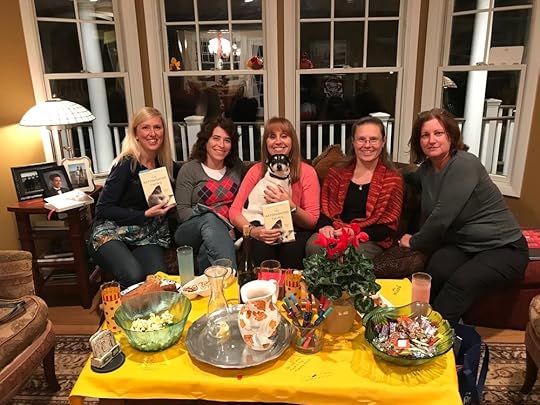
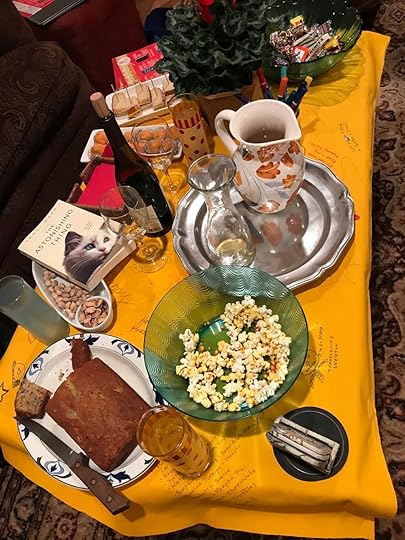
The group read The Astonishing Thing, and it was fun to be able to hear feedback in person and answer questions. They also told me they like to prepare food that relates to (or appears in) the book they're reading. Of course, in The Astonishing Thing, the Sullivans don't fare so well in the food department after Carrie leaves, and have to fend for themselves. So the book club host had prepared "Sullivan dysfunctional-family food": little sandwiches, popcorn and some leftover Halloween candy. That was such a great idea—I loved it!!
November 7, 2017
The Boat Runner by Devin Murphy

The Boat Runner is a heartfelt, harrowing and well-researched story about a boy named Jacob who comes of age just as his small Dutch town is plunged into the horrors of World War II. It’s very exciting—full of more action than any book I’ve read this year. The subject matter is dark, to be sure, because the story is about the destruction and devastation caused by World War II and the ways families were torn apart. Once the war gets going, Jacob spends much of the novel surrounded by death, with few recourses to relieve his suffering and few explanations as to who the real enemy is, since all sides bring grave violence upon the innocent Dutch. I held out hope that our hero Jacob would escape with his life and hopefully most of his sanity. The beautiful, sensitive writing about brutal and shocking events keeps you reading, in the same manner of some of the great books I’ve read about the war in Vietnam.
You can read more about Devin Murphy on his website. The Boat Runner is his debut novel.
October 26, 2017
Writing in Multiple Points of View: Not As Easy As it Seems?
Being a mentor in the 2017 Pitch Wars contest was not only exciting, it was also instructive. I had the chance to read the query letter and first 10 to 50 pages of almost 200 novels from authors looking to be published. I think the experience will help improve my own writing. By critiquing the work of others, I gained insight into what worked (and what didn’t work quite so well) in a number of different genres.
So, what was the greatest issue that I saw writers struggle with in this contest?

Photo by Okssi68/iStock / Getty Images
In the submissions I received, many writers wrote in multiple first-person points of view. I have heard that agents aren’t always enthusiastic about debut novels written with multiple POVs, because this format is very hard to pull off! Yet many writers today are obviously inspired to write stories this way.
The biggest problem I saw was writers jumping abruptly back and forth from inside one character’s head to another, in the middle of a scene. Writers should be aware that the execution needs to be polished in order for multiple POVs to work. If you’re going to try writing in multiple first person points of view for the first time, I’d suggest that you:
Study the format used by a successful published author like Jodi Picoult.Stick to one point of view per chapter, so the reader can settle in for an entire scene from start to finish.Resist the urge to switch POVs in the middle of the action. You might be able to get away with this once or twice at a very dramatic point, but otherwise it can be confusing and make the scenes feel disconnected.Make sure each character voice is unique—distinct and believable. Each character should have his/her own insights, knowledge, personality, and journey throughout the novel.Here you can listen to Jodi talk a little about working with this literary device:
Here is another very helpful article, from Jane Friedman’s website. This article was written by Jordan Rosenfeld:
Using Multiple Points of View: When and How Is It Most Effective?
I think using multiple first-person points of view is creative and interesting, and can help craft a compelling story. I admire writers who can do it well! In fact, my mentee in the Pitch Wars contest, Krista Riccioni (On the Verge of Breathing) uses this device to great effect. Her primary characters Leela, Erin and Paul don’t just speak differently—they look at the world differently. Each character is sympathetic and fascinating, for different reasons.
Last but not least, don't get frustrated. This is a technical issue. If you haven’t got it quite right the first time, you may be able to fix it with a re-write. Good luck!
October 19, 2017
The Frankfurt Book Fair
The Kensington Twitter account posted a few photos of the Frankfurt Book Fair last week. I was excited to see THE ASTONISHING THING not only sitting on a shelf (back wall, top shelf), but also on a big poster. I’m very excited that Boo the cat is now a world traveler!
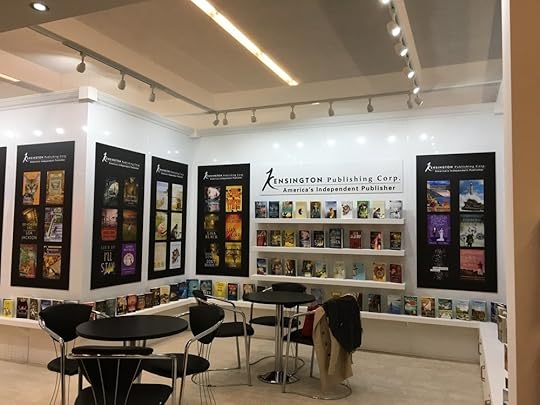
What is the Frankfurt Book Fair? I did not know much about it myself, but here is a little information from the website: “The Frankfurt Book Fair is a meeting place for the industry’s experts and the most important marketplace for books, media, rights and licences worldwide. Be they publishers, booksellers, agents, film producers or authors — each year in October, they all come together and create something new."

September 19, 2017
THE SWEET LIFE Launch: Win a Kindle Paperwhite, Amazon gift card and more!
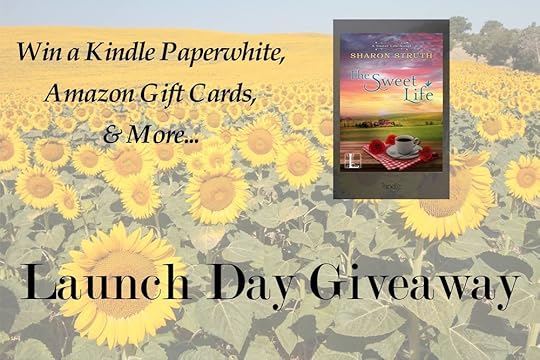
To celebrate the launch of her book THE SWEET LIFE, Kensington author Sharon Struth has an amazing giveaway going on right now on her blog!
CONTEST DATES: 9/19/17 through 9/22/17
You can win:
A Kindle Paperwhite e-readerA $50 Amazon gift card2 $10 gift cards4 fantastic e-booksAnd... a signed paperback copy of my debut novel THE ASTONISHING THING, which won't even be in stores until October 31st!Enter now! And read more about THE SWEET LIFE below.
Thanks to Sharon for running this contest!
In Italy, the best attractions are always off the beaten path . . .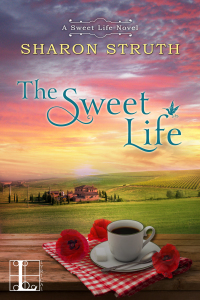
Mamie Weber doesn’t know why she survived that terrible car accident five years ago. Physically, she has only a slight reminder—but emotionally, the pain is still fresh. Deep down she knows her husband would have wanted her to embrace life again. Now she has an opportunity to do just that, spending two weeks in Tuscany reviewing a tour company for her employer’s popular travel guide series. The warmth of the sun, the centuries-old art, a villa on the Umbrian border—it could be just the adventure she needs.
But with adventure comes the unexpected . . . like discovering that her entire tour group is made up of aging ex-hippies reminiscing about their Woodstock days. Or finding herself drawn to the guide, Julian, who is secretly haunted by a tragedy of his own, and seems to disapprove any time she tries something remotely risky—like an impromptu scooter ride with a local man.
As they explore the hilltop towns of Tuscany, Mamie knows that when this blissful excursion is over, she’ll have to return to reality. But when you let yourself wander, life can take some interesting detours . . .
Acclaim for The Sweet Life
"Struth's novel is a great debut for a potential series...The story overall is intriguing, and of course, a setting in Italy is always something that makes for a great book. It comes with a strong recommendation and is worth picking up for a nice treat." RT Reviews
"The sights, the sounds, the smells and the food. Oh, the food! I had to make spaghetti and meatballs the day I started the book. Sharon Struth puts you right in Tuscany in a way that not only transports you to the crowded streets and vineyards, but surrounds you with them. Masterfully done." Goodreads 5-star Review
"You will like this if you'd like a nice tour of Tuscany (food, wine, just delightful), a little romance, and a happy ending. Perfect relaxation..." Goodreads 5-Star Review
Buy on Amazon or go to Sharon's blog for more ways to purchase THE SWEET LIFE and enter the contest!
September 11, 2017
The Wild Woman's Guide to Traveling the World by Kristin Rockaway
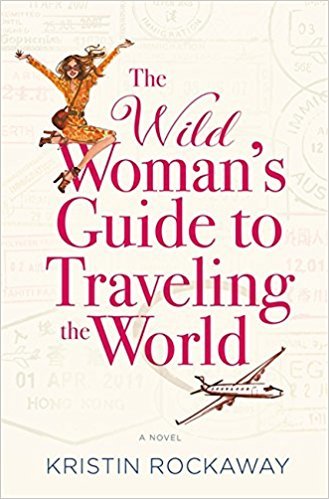
This novel offers a fun ride through New York and Hong Kong with romance, adventure and soul-searching. Our protagonist Sophie has achieved her childhood dream of traveling the world—or has she? While her stressful job in NYC allows her to travel, it’s dictated her employer and she spends far too much time and energy on work. She’d love to travel on her own terms, but how to achieve that?
Enter Carson, who is more than a typical fling. Like Sophie, he’s passionate about travel, but he’s also a free spirit and an artist with no big plans. Sophie falls briefly under his spell before real life beckons and she’s forced back to her job and her well-ordered but boring life.
I enjoyed the fact that Sophie is independent, and she decides to make big life changes on her own. Her new man inspires her, but she doesn’t go chasing after him. She’s the Manager and CEO of her own dreams and desires, and is a solid role model for any woman wondering: where did my passion for life go? When and where did I lose my way? (And what the heck can I do about it?) It’s never too late!
Learn more about the author at www.kristinrockaway.com
September 4, 2017
PitchWars Round-Up: What Else Can I Do While Revising My Manuscript?
Thanks again to everyone who submitted to me in Pitch Wars 2017. Whether you found a mentor or not, you may now be asking: what should I do next?
If you need a break from revising your manuscript and query, there are many other things you can do now to prepare for your career as an author! So what are you waiting for? Let’s get started!
Note that much of what I’m going to suggest here is free or low cost.
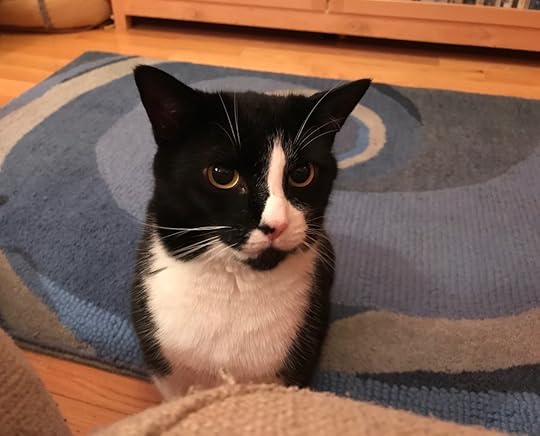
Mama is editing again? When's playtime?
Learn more online about writing and publishing
One of my fave websites is JANE FRIEDMAN: WRITING AND PUBLISHING IN THE DIGITAL AGE. She publishes great articles on writing and publishing—everything you need to know, and more. I’ve heard Jane speak at writer’s conferences, and she is very smart and knowledgeable. Go take a spin around her site, and learn something! (Did you know you can also hire her to critique your work and/or query? Read more on her site.)
Another great free resource is WRITER’S DIGEST. This site includes examples of successful query letters, interesting articles by guest authors, information on contests, creative writing prompts, and a lot more. Prefer print? You can subscribe to their magazine or order one of their books from the site.
Get your list of agents in order
This can be stressful and time-consuming. I know. I’ve been there. You will need to make a detailed list (maybe a spreadsheet) of each agent you want to submit to, and research each. Agents provide their likes/dislikes and individual submission requirements on the website for their agency. So devote some time and thought to your list.
Don’t know where to start? Perhaps look at the Acknowledgements section of comp books and see who the agents are for your favorite current stories. Or, visit author websites where you can often look up the agent for your favorite authors.
You can also get a subscription to Publishers Marketplace to see who is making deals right now in your genre. (Some information you can access free; otherwise, a subscription is $25/month.)
Work your social media
You are going to be asked to do this anyway by your editor, agent or publicist, so why not start now? You will need a website. Get that started! I could write an entire article on different hosting companies and what elements are needed for your site, so I won’t go into all of those details here. There’s information online, and I’ll try to write more about this in separate blog post. But think about it and do some research in the meantime.
You will need a domain name. Do a check: is your name available (www.MyName.com)? If not, see what other authors have done to customize their site name (for example: add a middle initial; or perhaps add the word “author” or “books” to the end of your name).
If you are part of Pitch Wars, you’re probably already on Twitter, which is a good start. You’ll probably be asked to join all social media platforms, and have the same name across all of them (I am sandiwardbooks on Twitter, Facebook, Instagram, and Pinterest). You’ll probably find one or two that you like to use, and you should secure your name across the other platforms in the meantime.
Join author groups
There are many Facebook and Twitter groups and other venues (individual websites) for authors. Join a few, see what people are posting, start to interact, and find your people! Sharing information with other authors is extremely valuable for newbies trying to get up to speed. And the more you promote your fellow authors, the more they’ll be willing to help you out when you have a project that needs love and attention.
You can also go to Meet Up and see what writing-themed groups are meeting in your area—yes, face to face! Some writing groups meet once a month over coffee or at a library just to chat. Others meet to simply write silently in the proximity of others, which can be a way to get out of the house and a) write in peace if you have a noisy house full of kids, or b) meet up with other people if you spend a lot of time writing alone.
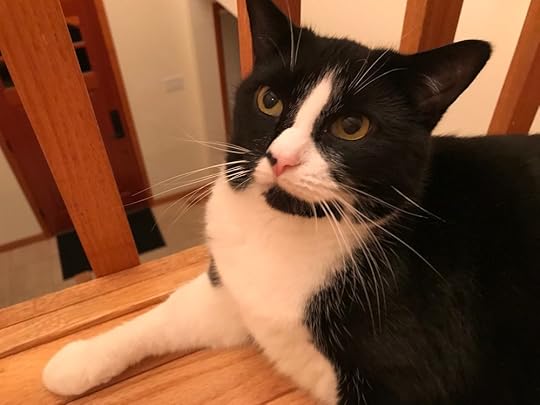
You want my suggestion? Stay home and take a nap!
Take a class or attend a writer’s conference
Okay, now I’m going to get into a few items that require a time and financial commitment. But if you wanted to change careers—become a chef, or an architect—wouldn’t you spend some time and money getting the right training? I think you’d have to at least consider it.
Some classes are offered online (there’s a lot available, so do your research and see what other authors recommend). Or, look up what’s available at a local college. Some people pursue a Master’s Degree in Creative Writing, but that’s only something you should look into if you are very serious and can’t live without it. You have to be willing to make a major investment with no guarantee of future pay-off (in other words, you have to want to do it for fun as well as for the learning component). You can also research writing retreats (these require only a week-end or week-long commitment), which are sometimes coupled with group or expert feedback.
Writer’s conferences often take place in big cities and require travel. But they are tremendous fun, and there are often non-stop workshops over a couple of days where you can learn more about all aspects of writing, publishing, agents, publicity, social media, and all that good stuff.
Consider a critique partner or professional editor
Critique partners are other authors who are willing to read and review your work-in-progress while you do the same for them. They can alert you to areas where your manuscript might need work. Sometimes we all get too close to our own material to see the flaws.
Keep in mind that one person’s opinion is just that—one person’s opinion. So think about it before making a change, because your book represents your vision. But personally, I generally assume that if one person has a suggestion, they’re right about it—and if two or more people make a suggestion, they’re definitely right about it. Don’t get defensive. It doesn’t help your manuscript.
I also always hire a professional editor, even before my manuscript goes to my editor at the publisher. My book represents me, and I want it to be the best it can possibly be. Editors can be expensive, so do your research carefully.
Don’t hire a proofreader unless you know you need one—what most authors need is not a proofreader but a developmental, “big picture” editor. You need someone very experienced, a professional who has seen and critiqued many manuscripts and will write you a report with suggestions. My editor is author, editor and creative writing teacher Susan J Breen.
If you’re lucky enough to get a mentor through a program like Pitch Wars, you can win a full critique for free. So check back at Brenda Drake’s website for more contest info!
Read
Yep. I said it. Go read some books! Look at current debut novels. Why were those books successful? Why did they sell? It’s worth some thought.
And check out helpful books on writing, like Stephen King’s aptly named book: On Writing.
Good luck!
August 26, 2017
Almost Missed You by Jessica Strawser
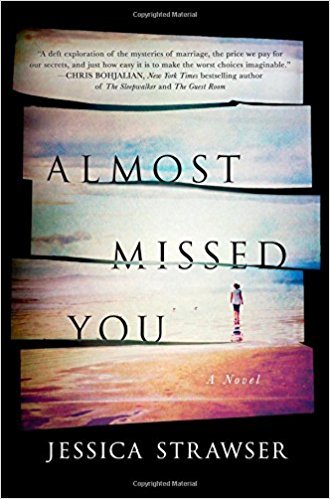
This book falls into one of my favorite categories: it’s a suspenseful domestic drama. Almost Missed You reminded me of a Liane Moriarty novel—full of heart-wrenching emotional scenes between friends and family, and revelations about the secrets people keep from even their closest confidants.
Why would an otherwise loving husband up and disappear with a toddler in the middle of a peaceful family vacation? It’s a mystery that I wanted to solve, and as I dove deeper into this novel I got hooked and was flipping pages late into the night. The author keeps a tight focus on three main characters: Finn, his wife Violet, and his best friend Caitlyn. The reader gets a good look into the motivations of each. The author also handles jumps in time well, as we flash back to the “original sins” of each character.
I enjoy realistic, contemporary fiction that delves into the complexities of human behavior. Sometimes we hurt those nearest to us, often without meaning to and without thought of the consequences. Our harmful actions may be due to foolish impulses and selfishness, or they may be simply accidents or inertia. That’s life! And I love reading about it in a well-structured novel.
There was more than one time where I thought I knew exactly where this story was going but was proven wrong, which is fun for me as a voracious reader. I highly recommend this novel, a strong debut in 2017.
Learn more about Jessica Strawser at: https://jessicastrawser.com
August 17, 2017
Girl Last Seen by Nina Laurin

This book was very scary! I brought it along on a trip where I was often on a plane or train or bus, and it helped the hours fly by. It's a suspenseful story where I remained suspicious of everyone's motives until the end. But Laine is a main character I always trusted, even when she seemed to be unraveling. She has demons to fight, and must slay them just to get through each day. I wanted justice for her, and was satisfied at the ending, although she still has a long road to recovery ahead of her. This is a gritty, dark thriller, not for the faint of heart, with a heroine who perseveres to overcome the most horrible of circumstances.
Learn more about author Nina Laurin on her Web Site: https://thrillerina.wordpress.com


