Linda Shenton Matchett's Blog, page 38
June 8, 2022
Talkshow Thursday: Welcome Chris Posti!
Talkshow Thursday: Welcome Chris Posti
 Linda: Welcome to my blog! Congratulations on your debut novel, Falling Apart, Falling for You. It sounds fantastic. Where did you get your inspiration for the story?
Chris: Chairing my own 45th high school reunion served as the germ of the story, but of course, the Lord provided every single word and idea.
LM: What sort of research was required for the book?
Chris: The novel’s setting is near my home, and it’s a contemporary story, so except for looking up where “red-dog” driveway stone came from (the coal mines), there was no need for research.
LM: How did your former career as a career executive coach, newspaper columnist, and radio show host prepare you to be an author?
Chris: Writing a novel requires a vivid imagination, and the more experiences an author has to draw from, the easier it gets. In my case, I was fortunate to have had the opportunity to interact with people from all levels in business and from all walks of life. These experiences enabled me to make my characters more realistic.
LM: You’ve also written two non-fiction books. How was writing a novel different? The same?
 Photo: Pixabay/
Dariusz SankowskiChris: Writing a novel is much, much, much harder! Nonfiction is factual; the information can be arranged in a variety of ways. The writing is simpler, with fewer constraints. Fiction requires so much more from the author – I had no idea how difficult the transition would be! I spent hours reading comps and books on craft, listening to podcasts, and attending webinars and conferences. Then the real work began: applying what I’d learned!
LM: What advice do you have for fledgling writers?
Chris: First, learn as much as you can. Before beginning your story, write your logline and synopsis. This will save you much time, pain, and suffering later on.
LM: Here are some quickies:
Chris:Favorite childhood book: Harold and the Purple Crayon
Favorite Bible verse: Romans 12:2 “Do not conform any longer to the pattern of this world, but be transformed by the renewing of your mind. Then you will be able to test and approve what God’s will is—His good, pleasing and perfect will.”
 Photo: Pixabay/
SophieLayla ThalFavorite place to vacation: I was raised in Pennsylvania, but I’ve also lived in Lausanne, Switzerland, and Carmel, California, and I’ve traveled much more than most. At this point in my life, I am content to stay put—except I would like to return to Poland, where I was once able to visit some of my relatives. I would love to see my cousin again!
LM: What other projects are on the docket for you this year?
Chris: At the moment, I’m deep into the promotion of Falling Apart, Falling for You, and later in 2022, I expect to write the second book in this series of three.
LM: Where can folks find you on the web?
Chris: My book website is https://chrisposti.com/.
About Falling Apart, Falling for You:
 With their lives in a free fall, three women gather for their 40th high school reunion in tiny Port Mariette, Pennsylvania. At 57, is it too late for them to make a fresh start?
Suzanne After spending most of her adult life working as a traveling trainer for an airline, untethered and mildly content, Suzanne feels a stirring in her heart for a seemingly perfect guy. But when she abruptly loses her job, she lands in surprising new territory.
Rachel Seeking distraction in the wake of her husband’s sudden passing, Rachel helps organize her class’s first reunion in 40 years. Stunned by an old friend’s shocking secrets, she struggles to learn forgiveness as she tiptoes into her new-found freedom.
Marla After selling her thriving business, Marla revisits high school friendships and her mysterious past. Seeking family and a renewed purpose, she adds her marketing expertise to the group’s strategy for revitalizing the blue-collar town that brought them back together.
Purchase Links:Amazon: http://www.amazon.com/dp/B09YGLLD65B&N: https://www.barnesandnoble.com/w/falling-apart-falling-for-you-chris-posti/1141388509?ean=9781649495648
 Linda: Welcome to my blog! Congratulations on your debut novel, Falling Apart, Falling for You. It sounds fantastic. Where did you get your inspiration for the story?
 Chris: Chairing my own 45th high school reunion served as the germ of the story, but of course, the Lord provided every single word and idea.
LM: What sort of research was required for the book?
Chris: The novel’s setting is near my home, and it’s a contemporary story, so except for looking up where “red-dog” driveway stone came from (the coal mines), there was no need for research.
LM: How did your former career as a career executive coach, newspaper columnist, and radio show host prepare you to be an author?
Chris: Writing a novel requires a vivid imagination, and the more experiences an author has to draw from, the easier it gets. In my case, I was fortunate to have had the opportunity to interact with people from all levels in business and from all walks of life. These experiences enabled me to make my characters more realistic.
LM: You’ve also written two non-fiction books. How was writing a novel different? The same?
 Photo: Pixabay/
Dariusz SankowskiChris: Writing a novel is much, much, much harder! Nonfiction is factual; the information can be arranged in a variety of ways. The writing is simpler, with fewer constraints. Fiction requires so much more from the author – I had no idea how difficult the transition would be! I spent hours reading comps and books on craft, listening to podcasts, and attending webinars and conferences. Then the real work began: applying what I’d learned!
LM: What advice do you have for fledgling writers?
Chris: First, learn as much as you can. Before beginning your story, write your logline and synopsis. This will save you much time, pain, and suffering later on.
LM: Here are some quickies:
Chris:Favorite childhood book: Harold and the Purple Crayon
Favorite Bible verse: Romans 12:2 “Do not conform any longer to the pattern of this world, but be transformed by the renewing of your mind. Then you will be able to test and approve what God’s will is—His good, pleasing and perfect will.”
 Photo: Pixabay/
SophieLayla ThalFavorite place to vacation: I was raised in Pennsylvania, but I’ve also lived in Lausanne, Switzerland, and Carmel, California, and I’ve traveled much more than most. At this point in my life, I am content to stay put—except I would like to return to Poland, where I was once able to visit some of my relatives. I would love to see my cousin again!
LM: What other projects are on the docket for you this year?
Chris: At the moment, I’m deep into the promotion of Falling Apart, Falling for You, and later in 2022, I expect to write the second book in this series of three.
LM: Where can folks find you on the web?
Chris: My book website is https://chrisposti.com/.
About Falling Apart, Falling for You:
 With their lives in a free fall, three women gather for their 40th high school reunion in tiny Port Mariette, Pennsylvania. At 57, is it too late for them to make a fresh start?
 Suzanne After spending most of her adult life working as a traveling trainer for an airline, untethered and mildly content, Suzanne feels a stirring in her heart for a seemingly perfect guy. But when she abruptly loses her job, she lands in surprising new territory.
Rachel Seeking distraction in the wake of her husband’s sudden passing, Rachel helps organize her class’s first reunion in 40 years. Stunned by an old friend’s shocking secrets, she struggles to learn forgiveness as she tiptoes into her new-found freedom.
Marla After selling her thriving business, Marla revisits high school friendships and her mysterious past. Seeking family and a renewed purpose, she adds her marketing expertise to the group’s strategy for revitalizing the blue-collar town that brought them back together.
Purchase Links:Amazon: http://www.amazon.com/dp/B09YGLLD65B&N: https://www.barnesandnoble.com/w/falling-apart-falling-for-you-chris-posti/1141388509?ean=9781649495648


June 7, 2022
Western Wednesday: Medicine in the Olden Days
Western Wednesday: Medicine in the Olden Days
 Photo: Pixabay/Steve BuissinneGot a headache? Grab some aspirin or other pain reliever. How about bronchitis or strep throat? The doctor will give you a prescription for an antibiotic. But it hasn’t been that long since an infection, even a minor one, could conceivably kill its victim. Penicillin was accidentally discovered in 1928, but it would be nearly twenty years before the drug was fully developed and available on a wide scale (thanks mostly to the need generated by WWII).
So what did folks do before modern drugs?
Medicine in the 1700s: Headaches, dropsy (swelling), and stomach pains: teas infused with lavender, rosemary, wormwood, sage, foxglove, and mint. Fever: Wine “sharpened with lemon juice” or water gruel, orange whey, or weak chamomile tea Bleeding was also a popular “cure” that often created more problems than it solved!
1800s: Itchy skin and/or infection prevention: Camphor Diarrhea: Opium. Arthritis: Apple pectin mixed into juice. Insect stings: Honey Burns: Cloths soaked in tea Indigestion: baking soda solutionCoughs (and many other ills): Castor oil Sore throat: Saltwater gargle (still used today!) Pixabay/Terri CnuddeThen there were solutions for “female problems” such as motherwort tea to “calm the nerves.” Painful menstruation was treated with a tea made from red raspberry leaves. This was also thought to cure infertility. Labor pains were treated with blue cohosh and menopause with black cohosh. Fainting spells were treated with a tablespoon of vinegar. Calendula tea was used to cure bladder infections, and chamomile tea was used as a cure-all for everything from menopause to insomnia.
A frightening “cure” that was part of medicine for nearly five hundred years was mercury. Thought to rejuvenate the body, it was most popular for sexually transmitted diseases such as syphilis. Unfortunately, it eventually caused deformities before killing the patient.
Another common remedy was a mustard poultice. Used for chronic aches and pains as well as to ease chest congestion, the poultice (a soft moist mass) was made from mustard seed powder spread inside a protective dressing. The key was not to leave it in place for too long because it could cause first-degree burns! The vapor could cause nausea. Other poultices were created with dried crumbled bread mixed with sweet milk. Sometimes egg whites, crushed boiled onions, cornmeal or wheat bran were added.
 Pixabay/ArtActiveArtThe wife/mother was typically responsible for the health of the family, and many eventually learned the healing properties of the various herbs native to their location. It is debatable whether the home herb garden or vegetable garden was more important. I can’t imagine having to crush, cook, or infuse my medicine all the while wondering if it would work.
___________________
 She’s running for her life. He needs a trophy wife. They didn’t count on falling in love.
Ellie Wagner is fine being a spinster school teacher. Then she witnesses a bank hold up and can identify the bandits. Fellow robbery victim Milly Crenshaw happens to run the Westward Home & Hearts Matrimonial Agency so she arranges for Ellie to head West as a mail-order bride. But her groom only wants a business arrangement. Can she survive a loveless marriage?
Banker Julian Sheffield is more comfortable with numbers than with people, but he’s done well for himself. Then the bank president tells him that in order to advance further he must marry in six weeks’ time. The candid, unsophisticated woman sent by the agency is nothing like he expected, but time is running out. When her past comes calling, does he have what it takes to ensure their future?
Purchase Link: http://www.amazon.com/dp/B09QZ14KKZ
 Photo: Pixabay/Steve BuissinneGot a headache? Grab some aspirin or other pain reliever. How about bronchitis or strep throat? The doctor will give you a prescription for an antibiotic. But it hasn’t been that long since an infection, even a minor one, could conceivably kill its victim. Penicillin was accidentally discovered in 1928, but it would be nearly twenty years before the drug was fully developed and available on a wide scale (thanks mostly to the need generated by WWII).
 So what did folks do before modern drugs?
Medicine in the 1700s: Headaches, dropsy (swelling), and stomach pains: teas infused with lavender, rosemary, wormwood, sage, foxglove, and mint. Fever: Wine “sharpened with lemon juice” or water gruel, orange whey, or weak chamomile tea Bleeding was also a popular “cure” that often created more problems than it solved!
1800s: Itchy skin and/or infection prevention: Camphor Diarrhea: Opium. Arthritis: Apple pectin mixed into juice. Insect stings: Honey Burns: Cloths soaked in tea Indigestion: baking soda solutionCoughs (and many other ills): Castor oil Sore throat: Saltwater gargle (still used today!)
 Pixabay/Terri CnuddeThen there were solutions for “female problems” such as motherwort tea to “calm the nerves.” Painful menstruation was treated with a tea made from red raspberry leaves. This was also thought to cure infertility. Labor pains were treated with blue cohosh and menopause with black cohosh. Fainting spells were treated with a tablespoon of vinegar. Calendula tea was used to cure bladder infections, and chamomile tea was used as a cure-all for everything from menopause to insomnia.
 A frightening “cure” that was part of medicine for nearly five hundred years was mercury. Thought to rejuvenate the body, it was most popular for sexually transmitted diseases such as syphilis. Unfortunately, it eventually caused deformities before killing the patient.
Another common remedy was a mustard poultice. Used for chronic aches and pains as well as to ease chest congestion, the poultice (a soft moist mass) was made from mustard seed powder spread inside a protective dressing. The key was not to leave it in place for too long because it could cause first-degree burns! The vapor could cause nausea. Other poultices were created with dried crumbled bread mixed with sweet milk. Sometimes egg whites, crushed boiled onions, cornmeal or wheat bran were added.
 Pixabay/ArtActiveArtThe wife/mother was typically responsible for the health of the family, and many eventually learned the healing properties of the various herbs native to their location. It is debatable whether the home herb garden or vegetable garden was more important. I can’t imagine having to crush, cook, or infuse my medicine all the while wondering if it would work.
 ___________________
 She’s running for her life. He needs a trophy wife. They didn’t count on falling in love.
 Ellie Wagner is fine being a spinster school teacher. Then she witnesses a bank hold up and can identify the bandits. Fellow robbery victim Milly Crenshaw happens to run the Westward Home & Hearts Matrimonial Agency so she arranges for Ellie to head West as a mail-order bride. But her groom only wants a business arrangement. Can she survive a loveless marriage?
Banker Julian Sheffield is more comfortable with numbers than with people, but he’s done well for himself. Then the bank president tells him that in order to advance further he must marry in six weeks’ time. The candid, unsophisticated woman sent by the agency is nothing like he expected, but time is running out. When her past comes calling, does he have what it takes to ensure their future?
Purchase Link: http://www.amazon.com/dp/B09QZ14KKZ
June 2, 2022
Fiction Friday: New Releases in Christian Fiction
June 2022 New Releases
More in-depth descriptions of these books can be found on the ACFW Fiction Finder website
Contemporary Romance:
[image error] An Unlikely Alliance by Toni Shiloh -- To save her animal shelter, she’ll have to work with her biggest foe. With her emotional support dog at her side, Jalissa Tucker will do whatever it takes to ensure the survival of the local animal rescue—even ally herself with her nemesis, firefighter Jeremy Rider. As working together dredges up old hurts, putting the past aside could be the key to their future joy. But can Jalissa resist falling for the man she’s always considered the enemy. (Contemporary Romance from Love Inspired/Harlequin)
 A Time for Singing by Carol James -- Charlee Bennett is running from her past. Once deserted by her musician ex-fiancé, she's vowed to avoid anything that reminds her of the pain of his betrayal. Chance Jackson is starting over. Hoping to redeem the mistakes of his earlier life, he wants to become the music and worship pastor of the largest church in Crescent Bluff. Charlee tries to convince herself she should not be attracted to Chance. But then she discovers an old letter hidden in the secret drawer of an antique desk. The pain expressed by its author resonates deep within her. Can the words of long ago soften Charlee's heart and help her to discover that there is a time for singing? (Contemporary Romance from White Rose Publishing/Pelican)
 Destination: Romance by Amy R. Anguish -- It’s not every day you bring a boyfriend back as a souvenir. Katie Wilhite is ready to settle into her new job as a librarian now that college is through, but friends Bree and Skye want one more girls’ trip, and when Bree insists this is her bachelorette fling, Katie agrees. What she didn’t agree to was allowing fun and flighty Skye to dictate the itinerary or for her anxiety to kick in harder than ever … right in front of a cute guy. Camden Malone had no idea when he agreed to be the voice of reason on his cousin Ryan’s vacation that the trip wouldn’t stay in New Orleans as planned. But when Ryan plots with Skye so that the guys can tag along with the girls all week, he isn’t nearly as upset as he should be. Not with Katie’s fiery temper and flashing eyes intriguing him more by the minute. (Contemporary Romance from Scrivenings Press)
[image error] Finding her Amish Home by Pamela Desmond Wright -- What she wants more than anything could also be the most dangerous. After her twin sister’s death, Maddie Baum flees to Wisconsin Amish country with her nephew in tow in the hopes of protecting him from his criminal father. Befriending Amish shopkeeper Abram Mueller gives her a glimpse of the happiness she’s been yearning for all along. Can she find a fresh start with Abram—or will old sins tear them apart? (Contemporary Romance from Love Inspired/Harlequin)
 Rebuilding Hearts by Carolyn Miller -- Who knew a bank robbery could show a girl that good guys still exist? Tim Franklin. Quiet, shy, almost incapable of speaking to a girl, and a budding horticulturist. Oh, and he survived a bank robbery five years ago, not to mention its resulting trauma. Bookworm Bella Dwyer just wants to feel safe, and Tim’s actions during the robbery made her believe there might be guys who live up to her fictional heroes. Trouble is, a chance with Tim seems as remote as this year’s celebrity heartthrob. Instead, she settled for a relationship with a guy who’s commitment-phobic. (Contemporary Romance from Celebrate Lit)
[image error] The Help of a Cowboy by Elsie Davis -- Once a cowboy...always a cowboy. But when life delivers Chad a chance to hang up his boots and spurs, he's all in. He's newly single, bored, and ready to move to the city to shake things up. She’s recently divorced, tired of the fast pace, and looking to settle in the country. When their paths cross, the two must work together if they have any hope of following their dreams. The ranch is an albatross around Chad's neck. Hard work and little time for fun. When his sister gets married and moves into town, the timing is perfect to sell the ranch and move on with his life. Diana is on the road to nowhere, looking to escape her past and find a special place to call home for her and her daughter. When she spots a ranch for sale just outside of Crossroads Creek, she knows in her heart it’s perfect. There’s only one problem…she doesn’t know the first thing about ranching. (Contemporary Romance from Sweet Romance Publishing)
[image error] Winning Julia’s Heart by Narelle Atkins -- Can a former bad boy be redeemed? Sean Mitchell has left his past behind, but his new boss, Julia Radcliffe, isn't so sure. A year ago, Sean walked out on his brother's wedding and her. Now the bad boy with the surfer good looks is back and determined to make a new life with Julia. She wonders whether she can truly trust that he's a changed man. It took time and faith, but Sean is finally on the right path. And his feelings for Julia have only grown stronger. But when Sean's past threatens to jeopardize their future, can he convince Julia they both want the same thing; a love that can overcome every mistake? (Contemporary Romance, Independently Published)
General Historical:
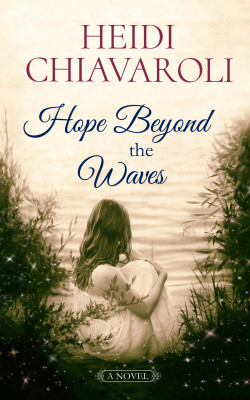 Hope Beyond the Waves by Heidi Chiavaroli -- Massachusetts, 1993: After making a grievous mistake that will change her life forever, Emily Robertson is sent away to live with her grandmother on Cape Cod. When Emily finds a timeworn photograph buried in a drawer, she realizes her grandmother has concealed a secret even bigger than her own. Will convincing Gram to reveal their family history help Emily make the most important decision of her life or will it prove her parents right—that family scandal is better off buried and forgotten? Massachusetts, 1916: Atta Schaeffer plans to marry the man of her dreams and whisk her little sister away from their abusive father. But when she is diagnosed with a dreaded malady, Atta is forced into a life of exile, leaving her sister in harm’s way. On Penikese Island, Atta’s best hope lies with Harry Mayhew, a doctor who seeks a cure for his patients at any cost. But when experiments fail, Atta runs from Harry—and from God. Can she return to her sister before it’s too late? Or will her illness consume both her body and soul? (General Historical, Independently Published)
Historical Romance:
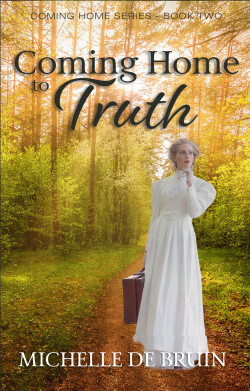 Coming Home to Truth by Michelle De Bruin -- Lacy Jones, a graduate of her small high school, knows her whole world is about to change. She dreams of freedom from the struggles with her health, and of the independence that comes with a steady job. When her friend invites her to share the journey to visit the teacher from their country school days, Lacy finally gets the chance to chase her dreams. But when the girls get separated along the way, Lacy is left to make the trip alone. Arriving in a strange town, Lacy is reunited with old friends who introduce her to a new life, new relationships, and a new way of seeing herself. (Historical Romance from Scrivenings Press)
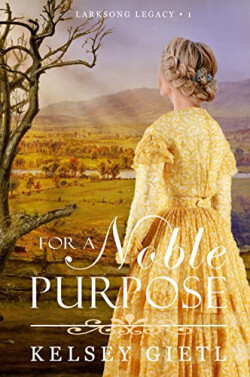 For a Noble Purpose by Kelsey Gietl -- Anxious to be free from a family legacy he would rather not claim and a slave-built society he doesn’t support, Tobias Lark believes the only way to find his perfect town is to create it himself. Joined by his three brothers, he sets out for the Washington Territory with a collection of carefully curated supporters, all determined to build a new life in the West. When a young plantation widow unexpectedly joins their party, he fears the curse she carries will crack the solid foundation upon which all his plans are built. (Historical Romance, Independently Published)
[image error] Season of My Enemy by Naomi Musch -- The realities of WWII come to a Wisconsin farm bringing hope and danger. Only last year Fannie O’Brien’s future shone bright, despite the war pounding Europe. Since her father’s sudden death and her brothers fighting overseas, Fannie must now do the work of three men on their 200-acre farm--until eight German prisoners arrive as laborers and, just as Fannie feared, trouble comes too. Captain Wolfgang Klonginger is relieved that his boys are off the warfront, keeping busy working the O'Brien farm until they can go home again and he can return to his teaching position in Germany. Crops take precedence, even as "accidents" happen around the farm. Could a saboteur be among them? Fannie is especially leery of the handsome German captain who seems intent on cracking her defenses. Can she manage the farm and hold her family together through these turbulent times, all while keeping the prisoners—and her heart—in line? (Historical Romance from Barbour Publishing)
 The Burning Sands by Carole Lehr Johnson -- After a year, Olivia Griffin still drowns in grief from losing her beloved husband in a tragic accident. To cope with his death, she loses herself in her art and genealogy research that follows her grandmother’s lineage to Trerose, a small fishing village on the Cornish coast of England. In a bid to start fresh, she travels to Cornwall to discover more about her grandmother’s past, where she is captivated by an old tavern and the story of a young woman who lived there in the seventeenth century. In the autumn of 1671, Grace Atwood and her brother still mourn the loss of their childhood friend while they struggle to protect their mother and siblings from their abusive father, who operates The Burning Sands Tavern. Grace's life sinks further into turmoil after her father arranges her marriage to a local merchant with secrets of his own. When two strangers arrive in the harbor and the village is set alight with rumors, Grace finds herself caught between her family’s secrets and a romantic interest in Rig, a mysterious young man who is determined to help save her family. (Historical Romance from Ink Map Press)
Mystery/Cozy:
 Boughs of Folly by Sandra Orchard -- After spending two decades of Christmas seasons in California, Jillian Green celebrates returning to her family’s antebellum mansion in Georgia by joyfully decking the halls for the upcoming Moss Hollow Merry Mansions Tour. However, Jillian’s holiday cheer takes a nosedive when she discovers her great aunt’s new friend Herbert dead at the base of a tree while he’s helping them string lights. Although his death appears to be a tragic accident, her great aunt insistently blames foul play, and handsome local coroner Hunter Greyson confirms her suspicions. Needled into action by her aunt, Jillian quickly realizes this case is more tangled than a strand of twinkle lights, and lead after lead winds up in a dead end. (Mystery: Cozy from Annie’s Fiction)
Thriller/Suspense/Romance:
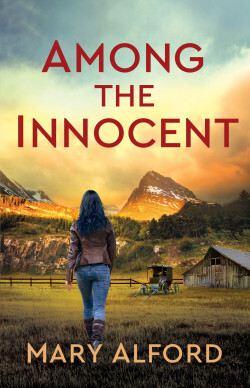 Among the Innocent by Mary Alford -- When Leah Miller's entire Amish family was murdered ten years ago, the person believed responsible took his own life. Since then, Leah left the Amish and joined the police force. Now, after another Amish woman is found murdered with the same MO, it becomes clear that the wrong man may have been blamed for her family's deaths. As Leah and the new police chief, Dalton Cooper, work long hours struggling to fit the pieces together in order to catch the killer, they can't help but grow closer. When secrets from both of their pasts begin to surface, an unexpected connection between them is revealed. But this is only the beginning. Could it be that the former police chief framed an innocent man to keep the biggest secret of all buried? And what will it mean for Leah--and Dalton--when the full truth comes to light? (Thriller/Suspense/Romance from Revell/Baker Publishing)
 Cold Case Killer Profile by Jessica R. Patch -- The desert can hide many secrets…including murder. Searching for the perfect morning landscape to paint leads forensic artist Brigitte Linsey straight to a dead body—and a narrow escape from the Sunrise Serial Killer still on the scene. Now she’s become unfinished business and new prey. Working with FBI special agent Duke Jericho could mean putting the murderer away for good. However, it’s just a matter of time before this diabolically clever predator turns his hunters into the hunted… (Thriller/Suspense/Romance from Love Inspired/Harlequin)
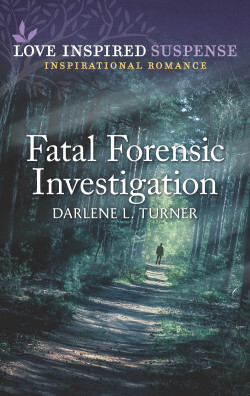 Fatal Forensic Investigation by Darlene L. Turner -- Remembering a serial killer’s face…could be deadly. While interviewing the Coastline Strangler’s only surviving victim, forensic artist Scarlet Wells is attacked and left with amnesia. Now she’s his next mark and has no choice but to work with constable Jace Allen to unlock the criminal’s true identity trapped in her mind. Will they be able to recover the hidden memory and hunt down the killer before he strikes again? (Thriller/Suspense/Romance from Love Inspired/Harlequin)
 Vanished Without a Trace by Sarah Hamaker -- After nine years searching for his missing sister, attorney Henderson Parker uncovers a clue that leads him to Twin Oaks, Virginia—and podcaster Elle Updike investigating the case. Partnering with the journalist is the last thing Henderson wants, until mysterious thugs make multiple attacks on both their lives. Now they’ll have to trust each other…before the suspected kidnappers make them disappear for good. (Thriller/Suspense/Romance from Love Inspired/Harlequin)
Plus check out these recent additions to Fiction Finder published within the past month:
A Mother for His Son by Betty Woods, A little boy’s love changes everything. (Contemporary Romance)
Boulevard of Confusion by Sandra Merville Hart, In times of war, is anything as it seems? (Historical Romance)
Midnight’s Budding Morrow by Carolyn Miller, Can real love grow between a wallflower and an unrepentant rogue? (General Historical)
Peyton’s Promise by Susan G. Mathis, Can she ignore the prejudices and persevere or lose her job, forfeit his love, and forever become the talk of local gossips. (Historical Romance)
Secret Guilt by Lynne Waite Chapman, Some secrets are meant to be kept. Buried. Unfortunately, if you dig too hard, they resurface. (Mystery: Cozy)
The Dark Guest by Sarah Hamaker, Can Violet and Henry uncover the secrets of the past before one of them ends up as The Wolf’s next victim? (Thriller/Suspense/Romance)
More in-depth descriptions of these books can be found on the ACFW Fiction Finder website
Contemporary Romance:
[image error] An Unlikely Alliance by Toni Shiloh -- To save her animal shelter, she’ll have to work with her biggest foe. With her emotional support dog at her side, Jalissa Tucker will do whatever it takes to ensure the survival of the local animal rescue—even ally herself with her nemesis, firefighter Jeremy Rider. As working together dredges up old hurts, putting the past aside could be the key to their future joy. But can Jalissa resist falling for the man she’s always considered the enemy. (Contemporary Romance from Love Inspired/Harlequin)
A Time for Singing by Carol James -- Charlee Bennett is running from her past. Once deserted by her musician ex-fiancé, she's vowed to avoid anything that reminds her of the pain of his betrayal. Chance Jackson is starting over. Hoping to redeem the mistakes of his earlier life, he wants to become the music and worship pastor of the largest church in Crescent Bluff. Charlee tries to convince herself she should not be attracted to Chance. But then she discovers an old letter hidden in the secret drawer of an antique desk. The pain expressed by its author resonates deep within her. Can the words of long ago soften Charlee's heart and help her to discover that there is a time for singing? (Contemporary Romance from White Rose Publishing/Pelican)
Destination: Romance by Amy R. Anguish -- It’s not every day you bring a boyfriend back as a souvenir. Katie Wilhite is ready to settle into her new job as a librarian now that college is through, but friends Bree and Skye want one more girls’ trip, and when Bree insists this is her bachelorette fling, Katie agrees. What she didn’t agree to was allowing fun and flighty Skye to dictate the itinerary or for her anxiety to kick in harder than ever … right in front of a cute guy. Camden Malone had no idea when he agreed to be the voice of reason on his cousin Ryan’s vacation that the trip wouldn’t stay in New Orleans as planned. But when Ryan plots with Skye so that the guys can tag along with the girls all week, he isn’t nearly as upset as he should be. Not with Katie’s fiery temper and flashing eyes intriguing him more by the minute. (Contemporary Romance from Scrivenings Press)[image error] Finding her Amish Home by Pamela Desmond Wright -- What she wants more than anything could also be the most dangerous. After her twin sister’s death, Maddie Baum flees to Wisconsin Amish country with her nephew in tow in the hopes of protecting him from his criminal father. Befriending Amish shopkeeper Abram Mueller gives her a glimpse of the happiness she’s been yearning for all along. Can she find a fresh start with Abram—or will old sins tear them apart? (Contemporary Romance from Love Inspired/Harlequin)
Rebuilding Hearts by Carolyn Miller -- Who knew a bank robbery could show a girl that good guys still exist? Tim Franklin. Quiet, shy, almost incapable of speaking to a girl, and a budding horticulturist. Oh, and he survived a bank robbery five years ago, not to mention its resulting trauma. Bookworm Bella Dwyer just wants to feel safe, and Tim’s actions during the robbery made her believe there might be guys who live up to her fictional heroes. Trouble is, a chance with Tim seems as remote as this year’s celebrity heartthrob. Instead, she settled for a relationship with a guy who’s commitment-phobic. (Contemporary Romance from Celebrate Lit)[image error] The Help of a Cowboy by Elsie Davis -- Once a cowboy...always a cowboy. But when life delivers Chad a chance to hang up his boots and spurs, he's all in. He's newly single, bored, and ready to move to the city to shake things up. She’s recently divorced, tired of the fast pace, and looking to settle in the country. When their paths cross, the two must work together if they have any hope of following their dreams. The ranch is an albatross around Chad's neck. Hard work and little time for fun. When his sister gets married and moves into town, the timing is perfect to sell the ranch and move on with his life. Diana is on the road to nowhere, looking to escape her past and find a special place to call home for her and her daughter. When she spots a ranch for sale just outside of Crossroads Creek, she knows in her heart it’s perfect. There’s only one problem…she doesn’t know the first thing about ranching. (Contemporary Romance from Sweet Romance Publishing)
[image error] Winning Julia’s Heart by Narelle Atkins -- Can a former bad boy be redeemed? Sean Mitchell has left his past behind, but his new boss, Julia Radcliffe, isn't so sure. A year ago, Sean walked out on his brother's wedding and her. Now the bad boy with the surfer good looks is back and determined to make a new life with Julia. She wonders whether she can truly trust that he's a changed man. It took time and faith, but Sean is finally on the right path. And his feelings for Julia have only grown stronger. But when Sean's past threatens to jeopardize their future, can he convince Julia they both want the same thing; a love that can overcome every mistake? (Contemporary Romance, Independently Published)
General Historical:
Hope Beyond the Waves by Heidi Chiavaroli -- Massachusetts, 1993: After making a grievous mistake that will change her life forever, Emily Robertson is sent away to live with her grandmother on Cape Cod. When Emily finds a timeworn photograph buried in a drawer, she realizes her grandmother has concealed a secret even bigger than her own. Will convincing Gram to reveal their family history help Emily make the most important decision of her life or will it prove her parents right—that family scandal is better off buried and forgotten? Massachusetts, 1916: Atta Schaeffer plans to marry the man of her dreams and whisk her little sister away from their abusive father. But when she is diagnosed with a dreaded malady, Atta is forced into a life of exile, leaving her sister in harm’s way. On Penikese Island, Atta’s best hope lies with Harry Mayhew, a doctor who seeks a cure for his patients at any cost. But when experiments fail, Atta runs from Harry—and from God. Can she return to her sister before it’s too late? Or will her illness consume both her body and soul? (General Historical, Independently Published)Historical Romance:
Coming Home to Truth by Michelle De Bruin -- Lacy Jones, a graduate of her small high school, knows her whole world is about to change. She dreams of freedom from the struggles with her health, and of the independence that comes with a steady job. When her friend invites her to share the journey to visit the teacher from their country school days, Lacy finally gets the chance to chase her dreams. But when the girls get separated along the way, Lacy is left to make the trip alone. Arriving in a strange town, Lacy is reunited with old friends who introduce her to a new life, new relationships, and a new way of seeing herself. (Historical Romance from Scrivenings Press)
For a Noble Purpose by Kelsey Gietl -- Anxious to be free from a family legacy he would rather not claim and a slave-built society he doesn’t support, Tobias Lark believes the only way to find his perfect town is to create it himself. Joined by his three brothers, he sets out for the Washington Territory with a collection of carefully curated supporters, all determined to build a new life in the West. When a young plantation widow unexpectedly joins their party, he fears the curse she carries will crack the solid foundation upon which all his plans are built. (Historical Romance, Independently Published)[image error] Season of My Enemy by Naomi Musch -- The realities of WWII come to a Wisconsin farm bringing hope and danger. Only last year Fannie O’Brien’s future shone bright, despite the war pounding Europe. Since her father’s sudden death and her brothers fighting overseas, Fannie must now do the work of three men on their 200-acre farm--until eight German prisoners arrive as laborers and, just as Fannie feared, trouble comes too. Captain Wolfgang Klonginger is relieved that his boys are off the warfront, keeping busy working the O'Brien farm until they can go home again and he can return to his teaching position in Germany. Crops take precedence, even as "accidents" happen around the farm. Could a saboteur be among them? Fannie is especially leery of the handsome German captain who seems intent on cracking her defenses. Can she manage the farm and hold her family together through these turbulent times, all while keeping the prisoners—and her heart—in line? (Historical Romance from Barbour Publishing)
The Burning Sands by Carole Lehr Johnson -- After a year, Olivia Griffin still drowns in grief from losing her beloved husband in a tragic accident. To cope with his death, she loses herself in her art and genealogy research that follows her grandmother’s lineage to Trerose, a small fishing village on the Cornish coast of England. In a bid to start fresh, she travels to Cornwall to discover more about her grandmother’s past, where she is captivated by an old tavern and the story of a young woman who lived there in the seventeenth century. In the autumn of 1671, Grace Atwood and her brother still mourn the loss of their childhood friend while they struggle to protect their mother and siblings from their abusive father, who operates The Burning Sands Tavern. Grace's life sinks further into turmoil after her father arranges her marriage to a local merchant with secrets of his own. When two strangers arrive in the harbor and the village is set alight with rumors, Grace finds herself caught between her family’s secrets and a romantic interest in Rig, a mysterious young man who is determined to help save her family. (Historical Romance from Ink Map Press)Mystery/Cozy:
Boughs of Folly by Sandra Orchard -- After spending two decades of Christmas seasons in California, Jillian Green celebrates returning to her family’s antebellum mansion in Georgia by joyfully decking the halls for the upcoming Moss Hollow Merry Mansions Tour. However, Jillian’s holiday cheer takes a nosedive when she discovers her great aunt’s new friend Herbert dead at the base of a tree while he’s helping them string lights. Although his death appears to be a tragic accident, her great aunt insistently blames foul play, and handsome local coroner Hunter Greyson confirms her suspicions. Needled into action by her aunt, Jillian quickly realizes this case is more tangled than a strand of twinkle lights, and lead after lead winds up in a dead end. (Mystery: Cozy from Annie’s Fiction)Thriller/Suspense/Romance:
Among the Innocent by Mary Alford -- When Leah Miller's entire Amish family was murdered ten years ago, the person believed responsible took his own life. Since then, Leah left the Amish and joined the police force. Now, after another Amish woman is found murdered with the same MO, it becomes clear that the wrong man may have been blamed for her family's deaths. As Leah and the new police chief, Dalton Cooper, work long hours struggling to fit the pieces together in order to catch the killer, they can't help but grow closer. When secrets from both of their pasts begin to surface, an unexpected connection between them is revealed. But this is only the beginning. Could it be that the former police chief framed an innocent man to keep the biggest secret of all buried? And what will it mean for Leah--and Dalton--when the full truth comes to light? (Thriller/Suspense/Romance from Revell/Baker Publishing)
Cold Case Killer Profile by Jessica R. Patch -- The desert can hide many secrets…including murder. Searching for the perfect morning landscape to paint leads forensic artist Brigitte Linsey straight to a dead body—and a narrow escape from the Sunrise Serial Killer still on the scene. Now she’s become unfinished business and new prey. Working with FBI special agent Duke Jericho could mean putting the murderer away for good. However, it’s just a matter of time before this diabolically clever predator turns his hunters into the hunted… (Thriller/Suspense/Romance from Love Inspired/Harlequin)
Fatal Forensic Investigation by Darlene L. Turner -- Remembering a serial killer’s face…could be deadly. While interviewing the Coastline Strangler’s only surviving victim, forensic artist Scarlet Wells is attacked and left with amnesia. Now she’s his next mark and has no choice but to work with constable Jace Allen to unlock the criminal’s true identity trapped in her mind. Will they be able to recover the hidden memory and hunt down the killer before he strikes again? (Thriller/Suspense/Romance from Love Inspired/Harlequin)
Vanished Without a Trace by Sarah Hamaker -- After nine years searching for his missing sister, attorney Henderson Parker uncovers a clue that leads him to Twin Oaks, Virginia—and podcaster Elle Updike investigating the case. Partnering with the journalist is the last thing Henderson wants, until mysterious thugs make multiple attacks on both their lives. Now they’ll have to trust each other…before the suspected kidnappers make them disappear for good. (Thriller/Suspense/Romance from Love Inspired/Harlequin)Plus check out these recent additions to Fiction Finder published within the past month:
A Mother for His Son by Betty Woods, A little boy’s love changes everything. (Contemporary Romance)
Boulevard of Confusion by Sandra Merville Hart, In times of war, is anything as it seems? (Historical Romance)
Midnight’s Budding Morrow by Carolyn Miller, Can real love grow between a wallflower and an unrepentant rogue? (General Historical)
Peyton’s Promise by Susan G. Mathis, Can she ignore the prejudices and persevere or lose her job, forfeit his love, and forever become the talk of local gossips. (Historical Romance)
Secret Guilt by Lynne Waite Chapman, Some secrets are meant to be kept. Buried. Unfortunately, if you dig too hard, they resurface. (Mystery: Cozy)
The Dark Guest by Sarah Hamaker, Can Violet and Henry uncover the secrets of the past before one of them ends up as The Wolf’s next victim? (Thriller/Suspense/Romance)
May 25, 2022
Talkshow Thursday: Welcome Amy Walsh
Talkshow Thursday: Welcome Amy Walsh
 Linda: Welcome to my blog! Congratulations on your recent release, His Brother’s Atonement. What was your inspiration for the story?
Amy: Thank you, Linda! Several things, really. One of my co-teachers, Nikki, camped throughout Wyoming last summer and had so many things to say about the beauty of nature and the lovely small communities. After conversing with her, I started paying more attention to contemporary novels set in the western states and began following the Whispers in Wyoming page on Facebook. I ended up writing His Brother’s Atonement during the nights I stayed with my grandmother in hospice. Honestly, the story just seemed to write itself through my fingertips, the characters coming alive to tell a story of God’s amazing ability to redeem even terrible situations in beautiful ways.
Linda: How did the opportunity come about to be part of the Whispers in Wyoming series?
Amy: After I was finished writing Aubrey and Shane’s story, I started to look for a home for it. I approached WiW and asked if they would consider taking me on as an author. When I heard that they thought I would make a good fit to their team, I was ecstatic! I am so honored to be part of a project that has a gospel-centered and heritage-based theme!
LM: What sort of research did you have to do for this book?
 Photo: Pixabay/Sharon Kehl CalifanoAmy: Well, I picked Nikki’s brain, and would run ideas by her. For instance, Aubrey, who works as a
designer, gets to create the aesthetic for a restaurant in their small town of Engelmann. Nikki and I hashed back and forth over what sort of food would go over well in some of the towns she visited. By the time we were done conversing, I wanted to move out there and start my own 1 Arroyo Drive bistro! I already had a good inkling from all the contemporary and historical westerns I devoured over the years. I watched many videos and went on rabbit trails about ranching life and the history of Wyoming. I did a lot of zooming all over Wyoming via Google Earth.
LM: How do you choose character names and places for your stories?
Amy: It all depends. Sometimes names just pop into my head as I am imagining characters. Sometimes I look for names that have meanings that match certain character traits. Most often, I look through lists of names to get ideas. When I am writing my fantasies for the Dolls of Mahogany Manor series, most of my names are Latin-based, which is fun and easy. Vastaterra was the name of the country, and it just means “large land.” Fascinare (fascinating), one of the main characters, has amazing powers and is mesmerizing.
LM: As a female, what is the most difficult thing about writing male characters?
Amy: I have the same difficulty as I have writing other characters when I haven’t walked their walk. Part of their character development is to do the research I need so I can get into their minds. I also have two amazing resources, my husband and my dad. I have rewritten many times because my husband has said things like, “A man would never say that.” Or, “That is just not how a man thinks.” One difficult thing when I am writing romances is that that the heroes that so many romance readers seem to adore would probably not make the most wonderful husbands! Mr. Hot and Moody might be super-hard to live with for multiple decades – ha ha! I loved the challenge of writing a male character who wasn’t hot and moody and making the reader fall in love with him anyway in the novel, A Misplaced Beauty!
LM: What books are on your TBR pile?
Amy: I honestly have a couple hundred TBR books that I have downloaded on my Kindle over the past couple of years: novels written by author friends, books that were free or on sale that looked good, and research books. I prioritize my reading quite a bit because I have limited time as a full-time teacher, mother/wife/friend, and author! I mainly read novels to support other writers for their book launches or if an author is being spotlighted on my blog. I also read books that I think my students would like. These books are at the top of my TBR pile right now: Violet’s Vow by Jenny Knipfer, Big Apple Atonement by Carolyn Miller, Just the Way You Are by Pepper Basham, Journey to Joy by Anne Perreault, and A Promise for Faith by Stacy T. Simmons.
LM: What would you tell your younger writing self?
Amy: I would tell myself to get started earlier, to force myself to make time for something that I love so much. And not to give up so easily. I was writing pretty heavily when my children were very young, hoping to support myself with my writing and stay at home. However, I discovered I was so obsessed with writing that I was mentally spending more time with my characters than with my children. I didn’t want to shortchange them or miss out on precious moments. I decided to put writing to the side for over a decade -- until my kids were older. I probably could have done better with being self-disciplined, instead! I would also tell myself to spend more time studying the writing of the authors I admire – to read with more awareness of literary aspects instead of purely for enjoyment. I wish I would have made time to go to at least one writing conference a year and looked for a local writers’ group that met regularly. I just feel like I put a major part of what makes me aside for a very long time!
LM: What’s next for you?
 Photo: Pixabay/
amritagraceAmy: I have so many exciting projects coming up! In October, my novel Voices in the Sanitorium will be releasing. The story involves the West Mountain tuberculosis hospital where Dick Smith wrote the song “Winter Wonderland” in the 1930s. It is a women’s fiction novel with some suspense. I am working on the second book in the London Debutante’s series and a contemporary novel that involves two sisters on a ‘get-to-know-you’ tour of the Scottish Highlands. I had the blessing of being able to do so in-person research in the United Kingdom in May. I wasn’t able to leave as expected because I came down with COVID, just as I was about to leave for home and had to be quarantined in Edinburgh for an additional ten days. The extended-stay gave me the opportunity to research other book ideas! But that’s another story! I am also looking forward to continuing to collaborate with other authors in Whispers in Wyoming, the Brides of Pelican Falls series, and a couple other multi-author series that have yet to be announced!
Linda: Where can folks connect with you?
Amy: Website: https://walshmountainpublishing.com/blog/ Facebook: https://www.facebook.com/walshmountainpublishing Instagram: https://www.instagram.com/amylynn_walsh/
His Brother's Atonement:
 Shane Phillips had given up hope of ever meeting the nephew born to the woman his brother assaulted. After checks he sent to Aubrey Anders were returned, Shane decided the most he could ever do was pray for the Anders family. When Shane discovers that he and Aubrey work for the same graphic arts company, he must find a way to assure her he means no harm before both Wyoming branches meet for a conference.
Aubrey thinks she has worked through most of her trauma with the help of her psychologist and loving community. However, meeting Shane Phillips seems to have unleashed suppressed anxiety and insecurity. But as their paths continue to intersect, Aubrey begins to wonder if Shane could be part of God's plan for her despite their painful connection.
His Brother's Atonement is a standalone novel as are the other novels in the Whispers in Wyoming multi-author series.
Purchase Link: http://www.amazon.com/dp/B09XKNR9NM
 Linda: Welcome to my blog! Congratulations on your recent release, His Brother’s Atonement. What was your inspiration for the story?
 Amy: Thank you, Linda! Several things, really. One of my co-teachers, Nikki, camped throughout Wyoming last summer and had so many things to say about the beauty of nature and the lovely small communities. After conversing with her, I started paying more attention to contemporary novels set in the western states and began following the Whispers in Wyoming page on Facebook. I ended up writing His Brother’s Atonement during the nights I stayed with my grandmother in hospice. Honestly, the story just seemed to write itself through my fingertips, the characters coming alive to tell a story of God’s amazing ability to redeem even terrible situations in beautiful ways.
Linda: How did the opportunity come about to be part of the Whispers in Wyoming series?
Amy: After I was finished writing Aubrey and Shane’s story, I started to look for a home for it. I approached WiW and asked if they would consider taking me on as an author. When I heard that they thought I would make a good fit to their team, I was ecstatic! I am so honored to be part of a project that has a gospel-centered and heritage-based theme!
LM: What sort of research did you have to do for this book?
 Photo: Pixabay/Sharon Kehl CalifanoAmy: Well, I picked Nikki’s brain, and would run ideas by her. For instance, Aubrey, who works as a
designer, gets to create the aesthetic for a restaurant in their small town of Engelmann. Nikki and I hashed back and forth over what sort of food would go over well in some of the towns she visited. By the time we were done conversing, I wanted to move out there and start my own 1 Arroyo Drive bistro! I already had a good inkling from all the contemporary and historical westerns I devoured over the years. I watched many videos and went on rabbit trails about ranching life and the history of Wyoming. I did a lot of zooming all over Wyoming via Google Earth.
LM: How do you choose character names and places for your stories?
Amy: It all depends. Sometimes names just pop into my head as I am imagining characters. Sometimes I look for names that have meanings that match certain character traits. Most often, I look through lists of names to get ideas. When I am writing my fantasies for the Dolls of Mahogany Manor series, most of my names are Latin-based, which is fun and easy. Vastaterra was the name of the country, and it just means “large land.” Fascinare (fascinating), one of the main characters, has amazing powers and is mesmerizing.
LM: As a female, what is the most difficult thing about writing male characters?
Amy: I have the same difficulty as I have writing other characters when I haven’t walked their walk. Part of their character development is to do the research I need so I can get into their minds. I also have two amazing resources, my husband and my dad. I have rewritten many times because my husband has said things like, “A man would never say that.” Or, “That is just not how a man thinks.” One difficult thing when I am writing romances is that that the heroes that so many romance readers seem to adore would probably not make the most wonderful husbands! Mr. Hot and Moody might be super-hard to live with for multiple decades – ha ha! I loved the challenge of writing a male character who wasn’t hot and moody and making the reader fall in love with him anyway in the novel, A Misplaced Beauty!
LM: What books are on your TBR pile?
Amy: I honestly have a couple hundred TBR books that I have downloaded on my Kindle over the past couple of years: novels written by author friends, books that were free or on sale that looked good, and research books. I prioritize my reading quite a bit because I have limited time as a full-time teacher, mother/wife/friend, and author! I mainly read novels to support other writers for their book launches or if an author is being spotlighted on my blog. I also read books that I think my students would like. These books are at the top of my TBR pile right now: Violet’s Vow by Jenny Knipfer, Big Apple Atonement by Carolyn Miller, Just the Way You Are by Pepper Basham, Journey to Joy by Anne Perreault, and A Promise for Faith by Stacy T. Simmons.
LM: What would you tell your younger writing self?
Amy: I would tell myself to get started earlier, to force myself to make time for something that I love so much. And not to give up so easily. I was writing pretty heavily when my children were very young, hoping to support myself with my writing and stay at home. However, I discovered I was so obsessed with writing that I was mentally spending more time with my characters than with my children. I didn’t want to shortchange them or miss out on precious moments. I decided to put writing to the side for over a decade -- until my kids were older. I probably could have done better with being self-disciplined, instead! I would also tell myself to spend more time studying the writing of the authors I admire – to read with more awareness of literary aspects instead of purely for enjoyment. I wish I would have made time to go to at least one writing conference a year and looked for a local writers’ group that met regularly. I just feel like I put a major part of what makes me aside for a very long time!
LM: What’s next for you?
 Photo: Pixabay/
amritagraceAmy: I have so many exciting projects coming up! In October, my novel Voices in the Sanitorium will be releasing. The story involves the West Mountain tuberculosis hospital where Dick Smith wrote the song “Winter Wonderland” in the 1930s. It is a women’s fiction novel with some suspense. I am working on the second book in the London Debutante’s series and a contemporary novel that involves two sisters on a ‘get-to-know-you’ tour of the Scottish Highlands. I had the blessing of being able to do so in-person research in the United Kingdom in May. I wasn’t able to leave as expected because I came down with COVID, just as I was about to leave for home and had to be quarantined in Edinburgh for an additional ten days. The extended-stay gave me the opportunity to research other book ideas! But that’s another story! I am also looking forward to continuing to collaborate with other authors in Whispers in Wyoming, the Brides of Pelican Falls series, and a couple other multi-author series that have yet to be announced!
Linda: Where can folks connect with you?
Amy: Website: https://walshmountainpublishing.com/blog/ Facebook: https://www.facebook.com/walshmountainpublishing Instagram: https://www.instagram.com/amylynn_walsh/
His Brother's Atonement:
 Shane Phillips had given up hope of ever meeting the nephew born to the woman his brother assaulted. After checks he sent to Aubrey Anders were returned, Shane decided the most he could ever do was pray for the Anders family. When Shane discovers that he and Aubrey work for the same graphic arts company, he must find a way to assure her he means no harm before both Wyoming branches meet for a conference.
 Aubrey thinks she has worked through most of her trauma with the help of her psychologist and loving community. However, meeting Shane Phillips seems to have unleashed suppressed anxiety and insecurity. But as their paths continue to intersect, Aubrey begins to wonder if Shane could be part of God's plan for her despite their painful connection.
His Brother's Atonement is a standalone novel as are the other novels in the Whispers in Wyoming multi-author series.
Purchase Link: http://www.amazon.com/dp/B09XKNR9NM
May 24, 2022
Wartime Wednesday: The U.S. Draft
Wartime Wednesday: The Draft
 WikiImages
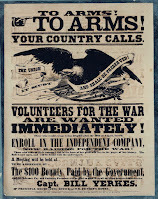
Conscription, more commonly known as the draft, has been used by the U.S. federal government since the early days of the country. In colonial times, a militia system was used, and after the nation received its independence, militia laws continues. “Able-bodied men” were required to enroll in the militia, undergo training, and serve for certain periods of time during war or times of emergency. By 1778, Congress recommended that each state draft men from their militia for a one-year period of service in the Continental Army. However, the program was inconsistently applied and failed to fill the ranks.
An article in the newly-ratified Constitution allowed Congress to conscript and call the Militia to “execute the laws of the Union, suppress insurrections, and repel invasions.” Additionally, Congress could organize, arm, and discipline the Militia. The President was commander-in-chief. The Second Militia Act of 1792 further defined the group who could be called up as “free and able-bodied white male citizens between the ages of 18 and 45.”
National conscription didn’t occur until the Civil War. However, the large majority of Union troops were volunteers, with only about 2% draftees and another 6% paid substitutes. The Confederacy didn’t have much more success with resistance being widespread. Many Southerners equated conscription with slavery.
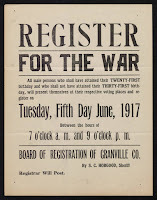 WikiImagesDuring The Great War (WWI), the Selective Service Act of 1917 was crafted to remedy the defects of the Civil War system, only allowing exemptions for dependency, essential occupations, and religious “scruples.” The act established “a liability for military service of all male citizen, with a selective draft of all those between 12 and 31 years of age (later expanded to 18-45). The draft was universal and included African-Americans on the same terms as whites, however, they served in different units.
Draft boards were local, and unfortunately, many based their decisions on social classes, with the poorest conscripted more often. The most common tactics to avoid the draft were dodging and desertion, with some communities sheltering their draft dodgers as heroes.
By the summer of 1940, Germany has conquered France, and most Americans knew the U.S. would eventually be drawn into the conflict, therefore supported the return of the draft. Wilson’s WWI plan served as a model, but the 1940 law instituted conscription during peacetime, requiring all men between the ages of 18 and 35 to register. When President Roosevelt signed the bill, it became the first peacetime draft in the nation’s history. The bill also established an independent agency, the Selective Service System, to be responsible for managing the draft.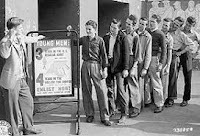 Photo: Courtesy of National Archives Initially, a cap of 900,000 men who could be in training at a given time, was set, and service was limited to twelve months unless “Congress deemed it necessary to extend such service in the interest of national defense.” An amendment in August 1941 added eighteen more months to the service period, then the law was amended again after the attack at Pearl Harbor to extend the term of service to the duration of the war plus six months, and expanding the age range to include men ages 18 to 64.
The World War II draft operated from 1940 until 1946 when inductions were suspended. The bill’s legislative authorization expired in 1947 without extension from Congress. During this time, more than ten million men had been drafted into military services.
________________
The Mechanic & The MD
 All’s fair in love and war. Or so they say.
High school and college were a nightmare for Doris Strealer and being an adult isn’t much better. Men won’t date a woman of her height, and they don’t understand her desire to repair car engines rather than work as a nurse or a teacher. When her father’s garage closes, and no one will hire a female mechanic, she joins the Red Cross Motor Corps, finally feeling at home. Until she comes face to face with her past in the form of Van Toppel, the most popular boy in school.
On the brink of a successful career as a surgeon, Van Toppel’s plans crumble when he’s drafted and assigned to an evacuation hospital in England, the last place he expects to run into a former schoolmate. The gangly tomboy who was four years behind him in high school has transformed into a statuesque beauty, but a broken engagement in college leaves him with no desire to risk his heart ever again.
Will the hazards of war make or break a romance between this unlikely couple?
Purchase Link: https://books2read.com/u/3RNpjY
 WikiImages
Conscription, more commonly known as the draft, has been used by the U.S. federal government since the early days of the country. In colonial times, a militia system was used, and after the nation received its independence, militia laws continues. “Able-bodied men” were required to enroll in the militia, undergo training, and serve for certain periods of time during war or times of emergency. By 1778, Congress recommended that each state draft men from their militia for a one-year period of service in the Continental Army. However, the program was inconsistently applied and failed to fill the ranks.
An article in the newly-ratified Constitution allowed Congress to conscript and call the Militia to “execute the laws of the Union, suppress insurrections, and repel invasions.” Additionally, Congress could organize, arm, and discipline the Militia. The President was commander-in-chief. The Second Militia Act of 1792 further defined the group who could be called up as “free and able-bodied white male citizens between the ages of 18 and 45.”
National conscription didn’t occur until the Civil War. However, the large majority of Union troops were volunteers, with only about 2% draftees and another 6% paid substitutes. The Confederacy didn’t have much more success with resistance being widespread. Many Southerners equated conscription with slavery.
 WikiImagesDuring The Great War (WWI), the Selective Service Act of 1917 was crafted to remedy the defects of the Civil War system, only allowing exemptions for dependency, essential occupations, and religious “scruples.” The act established “a liability for military service of all male citizen, with a selective draft of all those between 12 and 31 years of age (later expanded to 18-45). The draft was universal and included African-Americans on the same terms as whites, however, they served in different units.
 Draft boards were local, and unfortunately, many based their decisions on social classes, with the poorest conscripted more often. The most common tactics to avoid the draft were dodging and desertion, with some communities sheltering their draft dodgers as heroes.
By the summer of 1940, Germany has conquered France, and most Americans knew the U.S. would eventually be drawn into the conflict, therefore supported the return of the draft. Wilson’s WWI plan served as a model, but the 1940 law instituted conscription during peacetime, requiring all men between the ages of 18 and 35 to register. When President Roosevelt signed the bill, it became the first peacetime draft in the nation’s history. The bill also established an independent agency, the Selective Service System, to be responsible for managing the draft.
 Photo: Courtesy of National Archives Initially, a cap of 900,000 men who could be in training at a given time, was set, and service was limited to twelve months unless “Congress deemed it necessary to extend such service in the interest of national defense.” An amendment in August 1941 added eighteen more months to the service period, then the law was amended again after the attack at Pearl Harbor to extend the term of service to the duration of the war plus six months, and expanding the age range to include men ages 18 to 64.
 The World War II draft operated from 1940 until 1946 when inductions were suspended. The bill’s legislative authorization expired in 1947 without extension from Congress. During this time, more than ten million men had been drafted into military services.
________________
The Mechanic & The MD
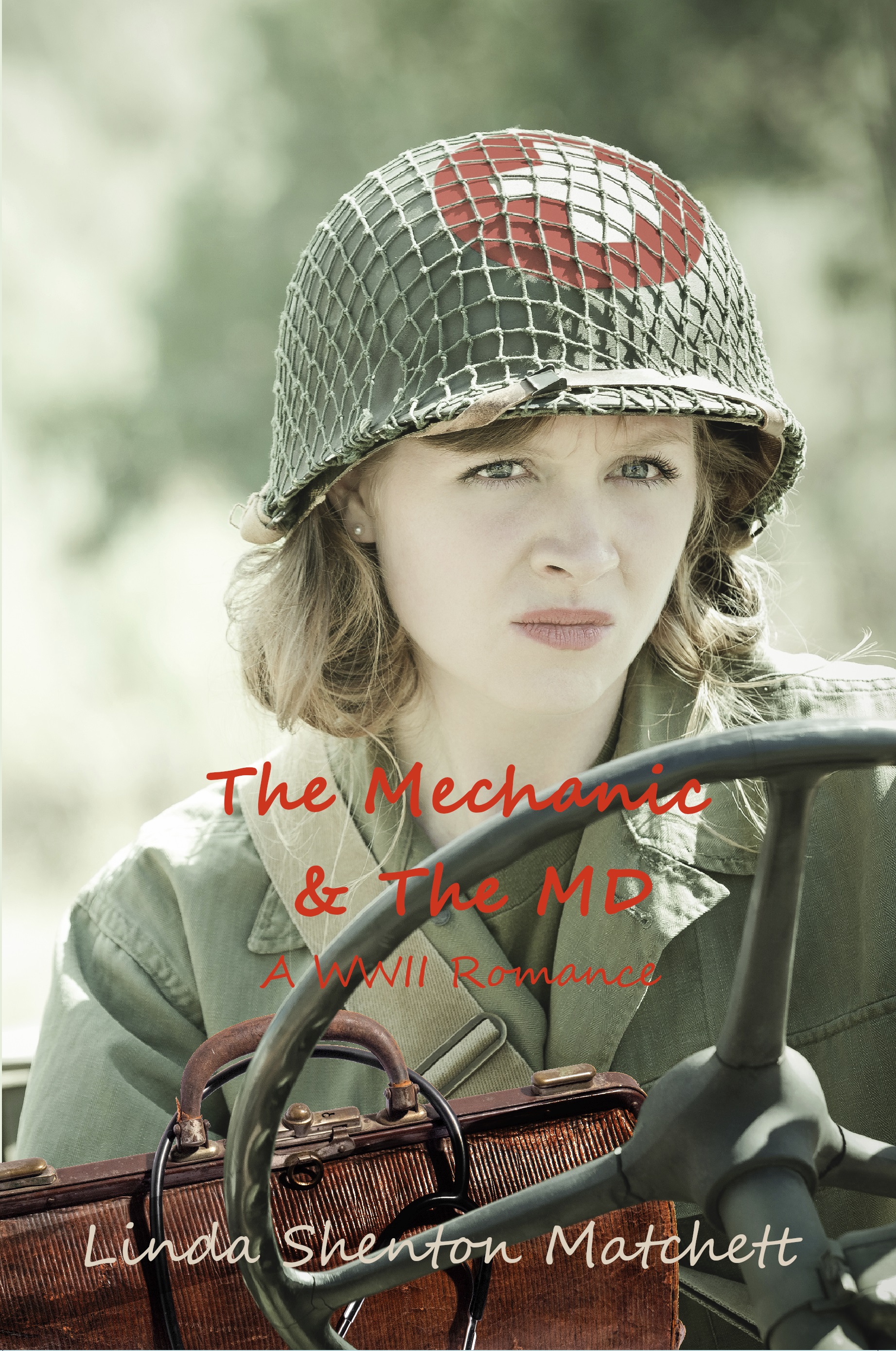 All’s fair in love and war. Or so they say.
 High school and college were a nightmare for Doris Strealer and being an adult isn’t much better. Men won’t date a woman of her height, and they don’t understand her desire to repair car engines rather than work as a nurse or a teacher. When her father’s garage closes, and no one will hire a female mechanic, she joins the Red Cross Motor Corps, finally feeling at home. Until she comes face to face with her past in the form of Van Toppel, the most popular boy in school.
On the brink of a successful career as a surgeon, Van Toppel’s plans crumble when he’s drafted and assigned to an evacuation hospital in England, the last place he expects to run into a former schoolmate. The gangly tomboy who was four years behind him in high school has transformed into a statuesque beauty, but a broken engagement in college leaves him with no desire to risk his heart ever again.
Will the hazards of war make or break a romance between this unlikely couple?
Purchase Link: https://books2read.com/u/3RNpjY
May 22, 2022
Mystery Monday: Great WWII Mysteries
Mystery Monday: Great WWII Mysteries
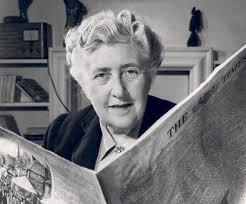 Mystery fiction written during World War II either provided an escapist novel with no mention of the war or a plot intricately tied to the war. Most of the authors popular during the Golden Era of Detective Fiction that encompassed the 1940s did a little of both. Three such authors are Agatha Christie, Christiana Brands, and Dorothy M. Hughes.
N or M, published by Christie in 1941 featured the first novel of a “grown-up” version of Tommy and Tuppence Beresford, husband and wife amateur sleuths who first appeared in 1922. The title is taken from a catechism in the Book of Common Prayer which asks “What is your Christian Name?” Answer: N or M; the initials representing the Latin “nomen veil nomina” meaning “name or names.”
Years have passed since the couple’s career with British intelligence, and the Second World War has broken out when they are approached by a secret agent to go undercover to find German spies and fifth columnists. Filled with cryptic messages and clues, Tommy and Tuppence make their way to the fictional seaside town of Leahampton to investigate the situation. Twists and turns abound, but the Beresfords eventually find their man…and woman.
Reviews of the book were glowing including one by E.R. Punshon touting “Mrs. Christie shows herself as ingenious as ever, and one admires especially the way in which the hero snores himself out of captivity.” Sounds intriguing, doesn’t it?
Interestingly, Christie was the subject of an MI5 investigation after naming one of the novel’s characters Major Bletchley. Their fears were unfounded as she revealed the as one of her “least lovable characters,” the man had been named area of Milton Keynes where she’d been stuck during a train journey.
 Another fantastic novel is Christiana Brands 1944 Green for Danger. Set in a rural British wartime hospital, the story was heavily praised for its clever plot and interesting characters. The head nurse is killed after reporting that the death of a patient under anesthesia was not accidental. Another near murder leaves a nurse dangerously ill, so Inspector Cockrill re-stages the operation to reveal the killer. The entire time German V-1 rockets shower the countryside and all must remain calm. The title for the book refers to the color-coding used on anesthetists’ gas bottles.
The third and final novel is a thriller published in 1943. The Blackbirder follows the exploits of a young woman who has fled occupied Paris and her Nazi-sympathizer uncle and finds herself as an illegal immigrant in New York City. Because of her status she tries to keep a low profile, but when a man she knew in France is found dead outside her apartment, she must once again flee for her life. In order to leave the country, she must find The Blackbirder, a man who guides people across the US-Mexican border, but in the meantime, she must stay ahead of the Gestapo and the FBI she thinks is trailing her. Plenty of shadowy figures come and go, and tension is high as readers wonder who is trustworthy.
 Hughes wrote fourteen novels and a volume of poetry, but she also held positions with the Los Angeles Times, (New York) Herald Tribune, and (Albuquerque) Tribune as a professional crime-fiction reviewer. The Blackbirder is one of the author’s few novels with a white, female protagonist, instead preferring to create characters vastly different from herself such as psychotic men, black men, Spanish men, Native Americans, jazz musicians, soldiers, and doctors.
What’s your favorite mystery novel published during WWII?
______________________
About Under Cover
 It’s been six months since Ruth Brown followed clues to England and discovered the identity of her sister’s killer. War continues to rage as Ruth reports on food shortages, the black market, the evacuation of London’s children, and the bravery of the British people.
When a bombing raid destroys her home and unearths a twenty-year-old skeleton in the cellar, her reporter’s senses tingle in anticipation of solving another mystery. Unfortunately, the by-the-book detective inspector assigned to the case is not interested in her theories. As Ruth investigates the case on her own, she butts heads with the handsome policeman.
Will she get to the bottom of the story before the killer strikes again?
Purchase Link: http://www.amazon.com/dp/B083C61SJT
 Mystery fiction written during World War II either provided an escapist novel with no mention of the war or a plot intricately tied to the war. Most of the authors popular during the Golden Era of Detective Fiction that encompassed the 1940s did a little of both. Three such authors are Agatha Christie, Christiana Brands, and Dorothy M. Hughes.
 N or M, published by Christie in 1941 featured the first novel of a “grown-up” version of Tommy and Tuppence Beresford, husband and wife amateur sleuths who first appeared in 1922. The title is taken from a catechism in the Book of Common Prayer which asks “What is your Christian Name?” Answer: N or M; the initials representing the Latin “nomen veil nomina” meaning “name or names.”
Years have passed since the couple’s career with British intelligence, and the Second World War has broken out when they are approached by a secret agent to go undercover to find German spies and fifth columnists. Filled with cryptic messages and clues, Tommy and Tuppence make their way to the fictional seaside town of Leahampton to investigate the situation. Twists and turns abound, but the Beresfords eventually find their man…and woman.
Reviews of the book were glowing including one by E.R. Punshon touting “Mrs. Christie shows herself as ingenious as ever, and one admires especially the way in which the hero snores himself out of captivity.” Sounds intriguing, doesn’t it?
Interestingly, Christie was the subject of an MI5 investigation after naming one of the novel’s characters Major Bletchley. Their fears were unfounded as she revealed the as one of her “least lovable characters,” the man had been named area of Milton Keynes where she’d been stuck during a train journey.
 Another fantastic novel is Christiana Brands 1944 Green for Danger. Set in a rural British wartime hospital, the story was heavily praised for its clever plot and interesting characters. The head nurse is killed after reporting that the death of a patient under anesthesia was not accidental. Another near murder leaves a nurse dangerously ill, so Inspector Cockrill re-stages the operation to reveal the killer. The entire time German V-1 rockets shower the countryside and all must remain calm. The title for the book refers to the color-coding used on anesthetists’ gas bottles.
 The third and final novel is a thriller published in 1943. The Blackbirder follows the exploits of a young woman who has fled occupied Paris and her Nazi-sympathizer uncle and finds herself as an illegal immigrant in New York City. Because of her status she tries to keep a low profile, but when a man she knew in France is found dead outside her apartment, she must once again flee for her life. In order to leave the country, she must find The Blackbirder, a man who guides people across the US-Mexican border, but in the meantime, she must stay ahead of the Gestapo and the FBI she thinks is trailing her. Plenty of shadowy figures come and go, and tension is high as readers wonder who is trustworthy.
 Hughes wrote fourteen novels and a volume of poetry, but she also held positions with the Los Angeles Times, (New York) Herald Tribune, and (Albuquerque) Tribune as a professional crime-fiction reviewer. The Blackbirder is one of the author’s few novels with a white, female protagonist, instead preferring to create characters vastly different from herself such as psychotic men, black men, Spanish men, Native Americans, jazz musicians, soldiers, and doctors.
 What’s your favorite mystery novel published during WWII?
______________________
About Under Cover
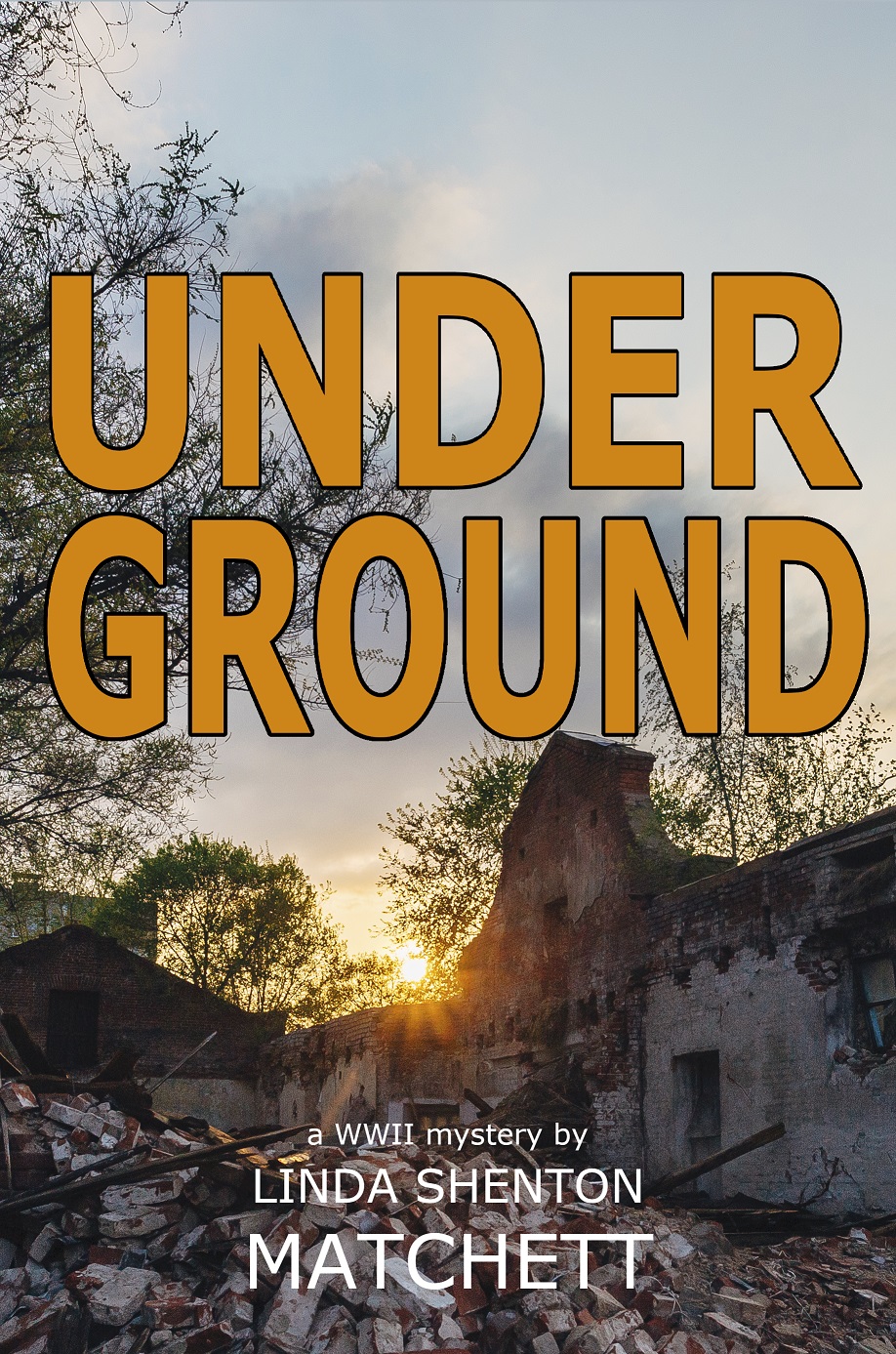 It’s been six months since Ruth Brown followed clues to England and discovered the identity of her sister’s killer. War continues to rage as Ruth reports on food shortages, the black market, the evacuation of London’s children, and the bravery of the British people.
 When a bombing raid destroys her home and unearths a twenty-year-old skeleton in the cellar, her reporter’s senses tingle in anticipation of solving another mystery. Unfortunately, the by-the-book detective inspector assigned to the case is not interested in her theories. As Ruth investigates the case on her own, she butts heads with the handsome policeman.
Will she get to the bottom of the story before the killer strikes again?
Purchase Link: http://www.amazon.com/dp/B083C61SJT
May 18, 2022
Talkshow Thursday: Welcome back, Sherri Stewart!
Talkshow Thursday: Welcome Back, Sherri Stewart!
 Linda: Thanks for joining me today. Congratulations on your recent release, A Song for Her Enemies Where did you get the inspiration for the story?
Sherri: My publisher wanted to do a collection of stories about real female heroines from a fictional character’s point of view. My heroine has always been Corrie ten Boom, so I signed up to write a book about Neelie Visser, someone like Corrie, from the viewpoint of one of the Jewish guests she hid in her home during WWII. Since it had to be from a fictional character’s point of view, I wrote about Tamar Kaplan, a Jewish aspiring opera singer, who learned about Neelie’s God through their time together in hiding, then at the camps.
LM: What is it that draws you to the World War II era, and when did you first develop the interest?
Sherri: My interest in World War II fiction has grown since visiting holocaust museums in Israel and Washington D.C., reading Corrie ten Boom’s books, as well as other novels about that time, and visiting Vught Concentration Camp in the Netherlands. I am appalled at how one evil man could change the course of modern history. Most of the survivors have passed away, but their stories need to survive their deaths; otherwise, the world will let it happen again.
LM: You’re working on the sequel, In Her Enemies House. Did you set out to write a series? What was your inspiration for this story?
 Photo: Pixabay/
Helena Jankovicova KovacovaSherri: I didn’t start out to write a series, but after I wrote A Song for Her Enemies, it occurred to me that the story of the holocaust survivors didn’t end when the war ended. People were physically alive, but the emotional scars they carried had long-term effects on their lives. In the Netherlands, a lot of survivors chose “the Conspiracy of Silence,” which meant they refused to talk about what happened. Since all their choices had been ripped away from them, silence was the one thing nobody could rip away. In the sequel which occurs three years after the war, Tamar Feldman craves justice, but all around her people are living as if the holocaust never happened, including her husband, Daniel, who tells her to bury the past and get on with life.
LM: How long does it take you to write a book, and can you tell us about your process?
Sherri: It all depends on the word count. A long book—95000 words—usually takes me a year to write because I spend hours every day editing my clients’ books, so my eyes get a bit tired. My general rule is to write 500 words a day, 6 days a week. Then the editing starts, which adds another month or two to the process. I’m a plantser, which means I have a general idea of where the book is headed, but I leave room for God to take me in all kinds of directions.
LM: What did you edit out of this book?
Sherri: What a great question! One thing I deleted was about the three-year-old son of Tamar’s nemesis, Margot, who had Amblyopia, a lazy eye. Tamar asked her husband, who’s a doctor, what could be done for the boy, and he mentioned wearing a patch, then surgery later. It seems I didn’t follow up on it. My sister who’s one of my beta readers noticed, and we decided that it didn’t move the story forward. Also, Margot doesn’t have much to commend her to the reader, but I don’t like my antagonists to be totally bad. Then they just become comic-book characters.
LM: What is your next project?
 Photo: Pixabay/Arek SochaSherri: Right now I’m working on a romantic suspense novella for a collection of books coming out in the fall of 2022. The working title is The Girl with ‘Deer in the Headlights’ Eyes. When I was in law school, I wrote my third-year research paper on Tarasoff v. Regents of the University of California, which is about an attorney’s or counselor’s duty to warn the victim if they know their client might pose a threat to the victim. My book is about a girl who is being stalked by an obsessive guy, so she moves to Bar Harbor, Maine to get away from him.
LM: Where can folks find you on the web?
Sherri:
Amazon Author Page: https://www.amazon.com/author/sherristewart/ Quarterly newsletter signup: http://eepurl.com/gZ-mv9 Blog/website: www.stewartwriting.com Facebook: https://www.facebook.com/sherristewartauthor Twitter: https://twitter.com/SherriS34447622 If you like historical tidbits, go to http://www.hhhistory.com
About A Song for Her Enemies:
 After Nazi soldiers close the opera and destroy Tamar Kaplan’s dream of becoming a professional singer, she joins the Dutch Resistance, her fair coloring concealing her Jewish heritage. Tamar partners with Dr. Daniel Feldman, and they risk their lives to help escaping refugees. When they are forced to flee themselves, violinist Neelie Visser takes them into hiding.
Tamar’s love for Daniel flowers in hardship, but she struggles with the paradox that a loving God would allow the atrocities around her. When Tamar resists the advances of a Third Reich officer, he exacts his revenge by betraying the secrets hidden behind the walls of Neelie’s house. From a prison hospital to a Nazi celebration to a concentration camp, will the three of them survive to tell the world the secrets behind barbed wire?
A Song for Her Enemies is the story of a talented young opera singer and the bittersweet love that grows amid the tyranny and fear of World War II. Set against the backdrop of neighbors willing to risk their lives in the German-occupied, war-torn Netherlands, A Song for Her Enemies is an inspiring and beautiful novel celebrating the resilience of the human spirit and the determination of Christians in the face of persecution. It is a novel for everyone seeking to understand the pain of the past and be inspired to embrace hope for the future.
Purchase Link: http://www.amazon.com/dp/B08Q8HF7Y5
 Linda: Thanks for joining me today. Congratulations on your recent release, A Song for Her Enemies Where did you get the inspiration for the story?
 Sherri: My publisher wanted to do a collection of stories about real female heroines from a fictional character’s point of view. My heroine has always been Corrie ten Boom, so I signed up to write a book about Neelie Visser, someone like Corrie, from the viewpoint of one of the Jewish guests she hid in her home during WWII. Since it had to be from a fictional character’s point of view, I wrote about Tamar Kaplan, a Jewish aspiring opera singer, who learned about Neelie’s God through their time together in hiding, then at the camps.
LM: What is it that draws you to the World War II era, and when did you first develop the interest?
Sherri: My interest in World War II fiction has grown since visiting holocaust museums in Israel and Washington D.C., reading Corrie ten Boom’s books, as well as other novels about that time, and visiting Vught Concentration Camp in the Netherlands. I am appalled at how one evil man could change the course of modern history. Most of the survivors have passed away, but their stories need to survive their deaths; otherwise, the world will let it happen again.
LM: You’re working on the sequel, In Her Enemies House. Did you set out to write a series? What was your inspiration for this story?
 Photo: Pixabay/
Helena Jankovicova KovacovaSherri: I didn’t start out to write a series, but after I wrote A Song for Her Enemies, it occurred to me that the story of the holocaust survivors didn’t end when the war ended. People were physically alive, but the emotional scars they carried had long-term effects on their lives. In the Netherlands, a lot of survivors chose “the Conspiracy of Silence,” which meant they refused to talk about what happened. Since all their choices had been ripped away from them, silence was the one thing nobody could rip away. In the sequel which occurs three years after the war, Tamar Feldman craves justice, but all around her people are living as if the holocaust never happened, including her husband, Daniel, who tells her to bury the past and get on with life.
LM: How long does it take you to write a book, and can you tell us about your process?
Sherri: It all depends on the word count. A long book—95000 words—usually takes me a year to write because I spend hours every day editing my clients’ books, so my eyes get a bit tired. My general rule is to write 500 words a day, 6 days a week. Then the editing starts, which adds another month or two to the process. I’m a plantser, which means I have a general idea of where the book is headed, but I leave room for God to take me in all kinds of directions.
LM: What did you edit out of this book?
Sherri: What a great question! One thing I deleted was about the three-year-old son of Tamar’s nemesis, Margot, who had Amblyopia, a lazy eye. Tamar asked her husband, who’s a doctor, what could be done for the boy, and he mentioned wearing a patch, then surgery later. It seems I didn’t follow up on it. My sister who’s one of my beta readers noticed, and we decided that it didn’t move the story forward. Also, Margot doesn’t have much to commend her to the reader, but I don’t like my antagonists to be totally bad. Then they just become comic-book characters.
LM: What is your next project?
 Photo: Pixabay/Arek SochaSherri: Right now I’m working on a romantic suspense novella for a collection of books coming out in the fall of 2022. The working title is The Girl with ‘Deer in the Headlights’ Eyes. When I was in law school, I wrote my third-year research paper on Tarasoff v. Regents of the University of California, which is about an attorney’s or counselor’s duty to warn the victim if they know their client might pose a threat to the victim. My book is about a girl who is being stalked by an obsessive guy, so she moves to Bar Harbor, Maine to get away from him.
 LM: Where can folks find you on the web?
Sherri:
Amazon Author Page: https://www.amazon.com/author/sherristewart/ Quarterly newsletter signup: http://eepurl.com/gZ-mv9 Blog/website: www.stewartwriting.com Facebook: https://www.facebook.com/sherristewartauthor Twitter: https://twitter.com/SherriS34447622 If you like historical tidbits, go to http://www.hhhistory.com
About A Song for Her Enemies:
 After Nazi soldiers close the opera and destroy Tamar Kaplan’s dream of becoming a professional singer, she joins the Dutch Resistance, her fair coloring concealing her Jewish heritage. Tamar partners with Dr. Daniel Feldman, and they risk their lives to help escaping refugees. When they are forced to flee themselves, violinist Neelie Visser takes them into hiding.
 Tamar’s love for Daniel flowers in hardship, but she struggles with the paradox that a loving God would allow the atrocities around her. When Tamar resists the advances of a Third Reich officer, he exacts his revenge by betraying the secrets hidden behind the walls of Neelie’s house. From a prison hospital to a Nazi celebration to a concentration camp, will the three of them survive to tell the world the secrets behind barbed wire?
A Song for Her Enemies is the story of a talented young opera singer and the bittersweet love that grows amid the tyranny and fear of World War II. Set against the backdrop of neighbors willing to risk their lives in the German-occupied, war-torn Netherlands, A Song for Her Enemies is an inspiring and beautiful novel celebrating the resilience of the human spirit and the determination of Christians in the face of persecution. It is a novel for everyone seeking to understand the pain of the past and be inspired to embrace hope for the future.
Purchase Link: http://www.amazon.com/dp/B08Q8HF7Y5
May 16, 2022
Traveling Tuesday: German Resistance
Traveling Tuesday: German Resistance
 Photo: Pixabay/
Brigette WernerTalking about the German WWII home front is tricky. Even after almost eighty years, the topic can produce strong emotions and opinions. But the bottom line is that the German people suffered, and many of them felt “sucker punched” by Hitler and the ensuing conflict.
It can be difficult to imagine how Hitler made it into power, but one must study the surrounding circumstances. The German people were humiliated after The Great War (now WWI). They had been dragged into a war they didn’t want, and were embarrassed by the outcome. They were told they couldn’t build a military which made them feel defenseless. Millions of families had lost sons, fathers, brothers, and other relatives. Inflation was so bad that a wheelbarrow full of Reichsmarks wouldn’t buy a loaf of bread, and unemployment was at an all-time high.
Rather than the two-party system common in the United States, there were multiple parties pushing their agendas in the decade and a half before WWII. Most touted their ability to solve the public’s financial troubles and rebuild the nation into a country its citizens could be proud of. Because of the number of parties in the election, the vote was splintered, meaning that a “majority” win by a particular party wasn’t truly a majority - they simply came out on top with the most votes.
 Like him or hate him, Hitler was a charismatic speaker, and he toured the country far and wide before the election, rallying the people to his party’s rhetoric. Knowing that food shortages had destroyed civilian morale and disorders and riots were factors in the Kaiser’s abdication, Hitler sought to convince the German people that should his party be elected, life would improve a hundred-fold. He even claimed he had no desire to go to war again, although anyone who’d studied his book, Mein Kampf, would have known differently.
Once elected, Hitler stressed the successes of his party to regain the Saarland, remilitarizing the Rhineland, uniting with Austria, and reclaiming the Sudetenland. By 1939, he knew he could begin to execute his plans to take Germany into war and contrived a story that allowed him to attack Poland, setting off a war that would absorb nearly every country on earth.
What many people don’t realize is that there was German resistance to Hitler and his nefarious plans. A group of young people known as the Edelweiss Pirates attacked members of Hitler Youth and sang anti-Nazi songs. They also managed to kill a Nazi chief. Nearly 800 of these youth were arrested and twelve were publicly hanged as a result. Another group, called The White Rose published anti-Nazi leaflets and protested at Nazi events. Wing Youth and Jazz Youth groups were formed as well. Adults also protested, hid Jew and other “undesirables,” and helped downed airmen to escape. Opposition also came from the church leaders such as Martin Bormann and Dietrich Bonhoeffer, and interestingly, Hitler allowed them to denounce his activities until well into the war.
 Photo: WikiImagesThere were two efforts to remove Hitler during the war. After plans were drawn up to attack France, Admiral Canaris staged a coup because he thought the attack would fail. Instead support for the plan fizzled, and Hitler remained in power. In July 1944, a group of Army officers tried to assassinate Hitler and replace him with a government led by General Beck. The bomb did not kill Hitler, and those involved were executed immediately. Field Marshal Erwin von Rommel was accused of being associated with the assassination attempt and forced to commit suicide as punishment. It would not be until May 1945 that Hitler would realize his Thousand-Year Reich would not come to fruition and killed himself.
________________
About Love's Belief
 Midwife Pia Hertz and her mother Sabine have been delivering babies long before the Nazis came to power. Now, the Third Reich has implemented mandates that require Jewish babies and other “undesirables” to be killed as part of The Final Solution. Is Pia’s new faith in Christ strong enough to defy the laws of man?
Despite the agony of the injury at the Battle of Drøbak Sound that took his arm, Dieter Fertig is relieved he’s no longer part of Hitler’s army. He returns to Berlin and discovers Jews are being deported by the thousands. When he realizes the Nuremburg Laws require his best friend’s baby girl to be killed, he must find a way to spirit the child out of Germany before the Nazis discover her existence.
Inspired by the biblical story of Shiprah and Puah, the midwives who saved Jewish babies during Pharaoh’s reign, Love’s Belief shows how one person’s actions can change the world.
Purchase Link: http://www.amazon.com/dp/B07QJ7VN9K
 Photo: Pixabay/
Brigette WernerTalking about the German WWII home front is tricky. Even after almost eighty years, the topic can produce strong emotions and opinions. But the bottom line is that the German people suffered, and many of them felt “sucker punched” by Hitler and the ensuing conflict.
It can be difficult to imagine how Hitler made it into power, but one must study the surrounding circumstances. The German people were humiliated after The Great War (now WWI). They had been dragged into a war they didn’t want, and were embarrassed by the outcome. They were told they couldn’t build a military which made them feel defenseless. Millions of families had lost sons, fathers, brothers, and other relatives. Inflation was so bad that a wheelbarrow full of Reichsmarks wouldn’t buy a loaf of bread, and unemployment was at an all-time high.
Rather than the two-party system common in the United States, there were multiple parties pushing their agendas in the decade and a half before WWII. Most touted their ability to solve the public’s financial troubles and rebuild the nation into a country its citizens could be proud of. Because of the number of parties in the election, the vote was splintered, meaning that a “majority” win by a particular party wasn’t truly a majority - they simply came out on top with the most votes.
 Like him or hate him, Hitler was a charismatic speaker, and he toured the country far and wide before the election, rallying the people to his party’s rhetoric. Knowing that food shortages had destroyed civilian morale and disorders and riots were factors in the Kaiser’s abdication, Hitler sought to convince the German people that should his party be elected, life would improve a hundred-fold. He even claimed he had no desire to go to war again, although anyone who’d studied his book, Mein Kampf, would have known differently.
 Once elected, Hitler stressed the successes of his party to regain the Saarland, remilitarizing the Rhineland, uniting with Austria, and reclaiming the Sudetenland. By 1939, he knew he could begin to execute his plans to take Germany into war and contrived a story that allowed him to attack Poland, setting off a war that would absorb nearly every country on earth.
What many people don’t realize is that there was German resistance to Hitler and his nefarious plans. A group of young people known as the Edelweiss Pirates attacked members of Hitler Youth and sang anti-Nazi songs. They also managed to kill a Nazi chief. Nearly 800 of these youth were arrested and twelve were publicly hanged as a result. Another group, called The White Rose published anti-Nazi leaflets and protested at Nazi events. Wing Youth and Jazz Youth groups were formed as well. Adults also protested, hid Jew and other “undesirables,” and helped downed airmen to escape. Opposition also came from the church leaders such as Martin Bormann and Dietrich Bonhoeffer, and interestingly, Hitler allowed them to denounce his activities until well into the war.
 Photo: WikiImagesThere were two efforts to remove Hitler during the war. After plans were drawn up to attack France, Admiral Canaris staged a coup because he thought the attack would fail. Instead support for the plan fizzled, and Hitler remained in power. In July 1944, a group of Army officers tried to assassinate Hitler and replace him with a government led by General Beck. The bomb did not kill Hitler, and those involved were executed immediately. Field Marshal Erwin von Rommel was accused of being associated with the assassination attempt and forced to commit suicide as punishment. It would not be until May 1945 that Hitler would realize his Thousand-Year Reich would not come to fruition and killed himself.
 ________________
About Love's Belief
 Midwife Pia Hertz and her mother Sabine have been delivering babies long before the Nazis came to power. Now, the Third Reich has implemented mandates that require Jewish babies and other “undesirables” to be killed as part of The Final Solution. Is Pia’s new faith in Christ strong enough to defy the laws of man?
Despite the agony of the injury at the Battle of Drøbak Sound that took his arm, Dieter Fertig is relieved he’s no longer part of Hitler’s army. He returns to Berlin and discovers Jews are being deported by the thousands. When he realizes the Nuremburg Laws require his best friend’s baby girl to be killed, he must find a way to spirit the child out of Germany before the Nazis discover her existence.
Inspired by the biblical story of Shiprah and Puah, the midwives who saved Jewish babies during Pharaoh’s reign, Love’s Belief shows how one person’s actions can change the world.
Purchase Link: http://www.amazon.com/dp/B07QJ7VN9K
May 11, 2022
Welcome Back, Julie Arduini
Welcome Back, Julie Arduini!
 Linda: Welcome back! It’s great to chat with you again, and I look forward to hearing about your latest book, Anchored Hearts. What was your inspiration for the story?
Julie: I’m a fan of the TV show, This is Us. I was so impressed by the magnitude it took to create a series involving multiples and how an event from the past affected everyone for decades. I thought it was a good challenge to explore a unique birth story. My sister pitched to me donor families, but I’m not ready for that yet. I decided on a family of sextuplets with the challenge---what would happen if a family with a unique birth story stayed in the national spotlight because of tragedy?
LM: What sort of research did you have to do for this book?
Julie: I read a lot on the McCaughey septuplets for starters. I researched morning shows and various aspects of a news station. The series is set in the Finger Lakes Region of Upstate NY, specifically, the Elmira-Corning area. That’s my hometown, so I didn’t need too much research there. I did change some things for fiction, though.
LM: How do you choose character names and places for your stories?
 Photo: Pixabay/
Oliver CardallJulie: I remember Jerry Jenkins talking about the name process, and I tend to follow it. I try not to get too complicated, and will use common names or objects. In future books it will be revealed that sextuplets #4 and #5 were names patriarch Paul Hart chose, and they were named James and Kelly in honor of his favorite Buffalo Bills quarterback, Jim Kelly. As for places, I use Upstate NY settings for my romances. I spent 34 years in Upstate NY and there are so many small towns and areas that few know about. When I wrote the YA/Women’s series with my daughter, Surrendering Stinkin’ Thinkin’, I used Ohio as a setting since we have lived in NE Ohio for 18 years.
LM: As a female, what is the most difficult thing about writing male characters?
Julie: I have wonderful critique partners who catch a mannerism I use or phrasing, and they know it’s a feminine trait. I’m thankful for them.
LM: What books are on your TBR pile?
Julie:. So many. I tend to read by author. I find one I enjoy and I’ll go through everything they have. Late last year I discovered Jess Mastorakos. She writes sweet and inspirational military romances, and I love that.
LM: What would you tell your younger writing self?
 Photo: Pixabay/Stock SnapsJulie: Stop overthinking it and just do it. My weakness is grammar and I let that hold me back for decades. Now I have a solid team of critique partners, editors, proofreaders, and Beta readers to help me.
LM: What’s next for you?
Julie: Surrendering Hearts is a six-book series featuring each Hart sextuplet. Ryan is the second-born, so he’s next with Repairing Hearts. I am SO excited.
Linda: Where can folks connect with you?
Julie: The easiest way is to find me on Link Tree at http://linktr.ee/JulieArduini. All my links are included there. I love to connect, so please reach out!
About Anchored Hearts:
 Can two go-getters surrender their need to control and find a happily-ever-after?
Jordyn Bell Hart succeeds in everything she does. Her promotion to morning show co-anchor blossoms her career in the same way her mother’s work had. Jordyn keeps tabs on her family and enjoys helping them grow. When life around her starts to change, can she surrender her desire to control?
Spencer Collins knows how to balance a busy life. He has his work as a reporter, his time caregiving for his grieving father, and looking out for his little brother. When he learns he’s the new co-anchor of a morning show with Jordyn Hart, can he handle working with a celebrity who brings a lot of challenges to life on and off the set?
Pre-order Link: http://www.amazon.com/dp/B09XH1KVXD
 Linda: Welcome back! It’s great to chat with you again, and I look forward to hearing about your latest book, Anchored Hearts. What was your inspiration for the story?
 Julie: I’m a fan of the TV show, This is Us. I was so impressed by the magnitude it took to create a series involving multiples and how an event from the past affected everyone for decades. I thought it was a good challenge to explore a unique birth story. My sister pitched to me donor families, but I’m not ready for that yet. I decided on a family of sextuplets with the challenge---what would happen if a family with a unique birth story stayed in the national spotlight because of tragedy?
LM: What sort of research did you have to do for this book?
Julie: I read a lot on the McCaughey septuplets for starters. I researched morning shows and various aspects of a news station. The series is set in the Finger Lakes Region of Upstate NY, specifically, the Elmira-Corning area. That’s my hometown, so I didn’t need too much research there. I did change some things for fiction, though.
LM: How do you choose character names and places for your stories?
 Photo: Pixabay/
Oliver CardallJulie: I remember Jerry Jenkins talking about the name process, and I tend to follow it. I try not to get too complicated, and will use common names or objects. In future books it will be revealed that sextuplets #4 and #5 were names patriarch Paul Hart chose, and they were named James and Kelly in honor of his favorite Buffalo Bills quarterback, Jim Kelly. As for places, I use Upstate NY settings for my romances. I spent 34 years in Upstate NY and there are so many small towns and areas that few know about. When I wrote the YA/Women’s series with my daughter, Surrendering Stinkin’ Thinkin’, I used Ohio as a setting since we have lived in NE Ohio for 18 years.
LM: As a female, what is the most difficult thing about writing male characters?
Julie: I have wonderful critique partners who catch a mannerism I use or phrasing, and they know it’s a feminine trait. I’m thankful for them.
LM: What books are on your TBR pile?
Julie:. So many. I tend to read by author. I find one I enjoy and I’ll go through everything they have. Late last year I discovered Jess Mastorakos. She writes sweet and inspirational military romances, and I love that.
LM: What would you tell your younger writing self?
.jpg) Photo: Pixabay/Stock SnapsJulie: Stop overthinking it and just do it. My weakness is grammar and I let that hold me back for decades. Now I have a solid team of critique partners, editors, proofreaders, and Beta readers to help me.
Photo: Pixabay/Stock SnapsJulie: Stop overthinking it and just do it. My weakness is grammar and I let that hold me back for decades. Now I have a solid team of critique partners, editors, proofreaders, and Beta readers to help me. LM: What’s next for you?
Julie: Surrendering Hearts is a six-book series featuring each Hart sextuplet. Ryan is the second-born, so he’s next with Repairing Hearts. I am SO excited.
Linda: Where can folks connect with you?
Julie: The easiest way is to find me on Link Tree at http://linktr.ee/JulieArduini. All my links are included there. I love to connect, so please reach out!
About Anchored Hearts:
 Can two go-getters surrender their need to control and find a happily-ever-after?
 Jordyn Bell Hart succeeds in everything she does. Her promotion to morning show co-anchor blossoms her career in the same way her mother’s work had. Jordyn keeps tabs on her family and enjoys helping them grow. When life around her starts to change, can she surrender her desire to control?
Spencer Collins knows how to balance a busy life. He has his work as a reporter, his time caregiving for his grieving father, and looking out for his little brother. When he learns he’s the new co-anchor of a morning show with Jordyn Hart, can he handle working with a celebrity who brings a lot of challenges to life on and off the set?
Pre-order Link: http://www.amazon.com/dp/B09XH1KVXD
May 10, 2022
Western Wednesday: Shopping in the Old West
Western Wednesday: Shopping in the Old West
 Photo: Pixabay/
Sabrian EickhoffWhat do you think of when you hear the term “Old West?” Probably cowboys or ranches. Maybe saloons. But one mainstay of life in the towns that sprang up across the country during the 1800s is the general store, also known as a mercantile. Unlike the cities of the time that featured specialized boutiques, these small hamlets were remote, serving a population that had little time for shopping and often limited funds.
The goal of the general store was to provide whatever the locals needed. Patrons could find tobacco, cigars, hardware, jewelry, buggy whips, horse tack, lanterns, pails, foodstuffs, fabric and sewing notions, household items, tools, small farm implements, soap, crockery, dishes, guns and bullets, clothing, candy, coffee, toiletries, school supplies such as slates and chalk, and patent medicines (most of which were untested and alcohol-based!).
Merchandise could be purchased with cash or barter items, such as milk, eggs, or surplus produce. Shopkeepers also extended credit as necessary. In 1853, customers could expect to pay eight to ten cents per pound for rice, eleven cents per pound for pork versus nine cents per pound of salt beef. Fresh beef could be had for five cents per pound, whereas lard would run them up to twelve cents per pound.
Many general store owners began as roving peddlers. After accumulating enough capital and inventory, they would establish a permanent location in a growing settlement. Others specifically sought one of the boomtowns such as a mining camp or railroad town. Sometimes, the mercantile would be the first business in a new settlement.
 Photo: Pixabay/
Brigette WernerIn addition to providing for the physical needs of the community, the general store was often the social center. A collection of chairs encircled the massive woodstove that was often located in the middle of the store. Some merchants offered inexpensive snacks such as soda crackers to allow folks to “sit a spell.” In his book, Pill, Petticoats, and Plows: The Southern Country Store, Thomas Clark indicated “Fox races, tobacco, cotton, horses, women, politics, religion—no subject is barred from the most serious and light-hearted conversation.”
As the communications center of the town, the general store was typically the location of the post office with the owner acting as postmaster, sometimes even town clerk, Justice of the Peace, and/or undertaker. In later days, the mercantile was the first or only place in the town with a telephone. Less formal communication included a wall filled with lost and found notices, event flyers, election information, auctions, and “wanted posters” for outlaws.
Keeping the shop clean would have been a challenge. With unpaved roads, customers tracked in dirt and other detritus, and the wood stove produced soot that settled on the goods. One report I found indicated it was not unusual to discover rodents foraging inside the store.
 Photo: Pixabay/
flockineThe late 1800s saw the advent of the mail order catalog business with Tiffany’s Blue Book considered the first in the U.S. In 1872, Aaron Montgomery Ward sent out his first “catalog,” a single sheet of paper showing merchandise for sale and including ordering instructions. Twenty years later, he was sending out a 540-page illustrated book selling 20,000 items, including prefabricated kit houses. Sears followed in 1888, and the decline of the general store began. The coming of the automobile in 1910 gave farmers and ranchers greater mobility, and as towns grew in size, the population was able to support specialized shops.
There are remnants of general stores scattered around the U.S., and you may be pleasantly surprised to find one near you.
This article is a reprint of a guest post I did in February 2021.
__________________
Gold Rush Bride Tegan
 She’s out to prove herself. He’s only looking for adventure. Neither one realizes they’ll find more than gold “in them thar hills.”
Tegan Llewellyn has always been different than her adopted family, except Grandmother Hannah, a prospector during the 1829 Georgia gold rush. Now, seventy years later there are reports of gold in Nome, and the opportunity is too good to pass up. But Tegan doesn’t count on the dangers that strike from the moment she steps off the steamer, including the threat of losing her heart.
Elijah Hunter has prospected for gold all over the US and Canada and likes being on the move. The last thing he expects to find on his latest search is a lady miner who proves to be nothing but trouble. Can he convince her that leaving is for her own good before it’s too late...for both of them?
Purchase Link: http://www.amazon.com/dp/B09R3VNY95
 Photo: Pixabay/
Sabrian EickhoffWhat do you think of when you hear the term “Old West?” Probably cowboys or ranches. Maybe saloons. But one mainstay of life in the towns that sprang up across the country during the 1800s is the general store, also known as a mercantile. Unlike the cities of the time that featured specialized boutiques, these small hamlets were remote, serving a population that had little time for shopping and often limited funds.
The goal of the general store was to provide whatever the locals needed. Patrons could find tobacco, cigars, hardware, jewelry, buggy whips, horse tack, lanterns, pails, foodstuffs, fabric and sewing notions, household items, tools, small farm implements, soap, crockery, dishes, guns and bullets, clothing, candy, coffee, toiletries, school supplies such as slates and chalk, and patent medicines (most of which were untested and alcohol-based!).
Merchandise could be purchased with cash or barter items, such as milk, eggs, or surplus produce. Shopkeepers also extended credit as necessary. In 1853, customers could expect to pay eight to ten cents per pound for rice, eleven cents per pound for pork versus nine cents per pound of salt beef. Fresh beef could be had for five cents per pound, whereas lard would run them up to twelve cents per pound.
Many general store owners began as roving peddlers. After accumulating enough capital and inventory, they would establish a permanent location in a growing settlement. Others specifically sought one of the boomtowns such as a mining camp or railroad town. Sometimes, the mercantile would be the first business in a new settlement.
 Photo: Pixabay/
Brigette WernerIn addition to providing for the physical needs of the community, the general store was often the social center. A collection of chairs encircled the massive woodstove that was often located in the middle of the store. Some merchants offered inexpensive snacks such as soda crackers to allow folks to “sit a spell.” In his book, Pill, Petticoats, and Plows: The Southern Country Store, Thomas Clark indicated “Fox races, tobacco, cotton, horses, women, politics, religion—no subject is barred from the most serious and light-hearted conversation.”
As the communications center of the town, the general store was typically the location of the post office with the owner acting as postmaster, sometimes even town clerk, Justice of the Peace, and/or undertaker. In later days, the mercantile was the first or only place in the town with a telephone. Less formal communication included a wall filled with lost and found notices, event flyers, election information, auctions, and “wanted posters” for outlaws.
Keeping the shop clean would have been a challenge. With unpaved roads, customers tracked in dirt and other detritus, and the wood stove produced soot that settled on the goods. One report I found indicated it was not unusual to discover rodents foraging inside the store.
 Photo: Pixabay/
flockineThe late 1800s saw the advent of the mail order catalog business with Tiffany’s Blue Book considered the first in the U.S. In 1872, Aaron Montgomery Ward sent out his first “catalog,” a single sheet of paper showing merchandise for sale and including ordering instructions. Twenty years later, he was sending out a 540-page illustrated book selling 20,000 items, including prefabricated kit houses. Sears followed in 1888, and the decline of the general store began. The coming of the automobile in 1910 gave farmers and ranchers greater mobility, and as towns grew in size, the population was able to support specialized shops.
There are remnants of general stores scattered around the U.S., and you may be pleasantly surprised to find one near you.
This article is a reprint of a guest post I did in February 2021.
__________________
Gold Rush Bride Tegan
 She’s out to prove herself. He’s only looking for adventure. Neither one realizes they’ll find more than gold “in them thar hills.”
 Tegan Llewellyn has always been different than her adopted family, except Grandmother Hannah, a prospector during the 1829 Georgia gold rush. Now, seventy years later there are reports of gold in Nome, and the opportunity is too good to pass up. But Tegan doesn’t count on the dangers that strike from the moment she steps off the steamer, including the threat of losing her heart.
Elijah Hunter has prospected for gold all over the US and Canada and likes being on the move. The last thing he expects to find on his latest search is a lady miner who proves to be nothing but trouble. Can he convince her that leaving is for her own good before it’s too late...for both of them?
Purchase Link: http://www.amazon.com/dp/B09R3VNY95