Lynn McLaughlin's Blog, page 5
October 12, 2022
TRANSCRIPT OF BENJAMIN YEH | THE POWER OF IMAGINATION VOICE AND INTUITION...ALIGN YOUR MIND, BODY AND SOUL!
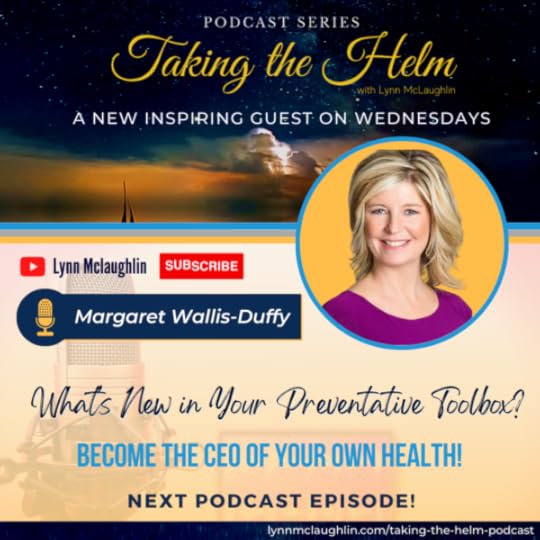
[MUSIC INTRO 00:00:04]
Are you facing a crisis in your life or business? It's time to steer yourself in the right direction through the real experiences, passion and courage of our guests. We're taking the helm with your host, Lynn McLaughlin.
[00:00:20]
Hello and thanks again for joining us. We are most certainly going to take the helm today with our guest, Benjamin Yeh. Ben Yeh. Oh my gosh. He's blown my mind and I think he's going to blow yours too.
[00:00:31]
Benjamin left two careers after he saw a vision and he followed his vision, as difficult as it was from a left brain person to someone who's discovered his connection to the mind, body and soul. And now he's helping us do the same as an entrepreneur. Hi, Benjamin, thanks for taking the home with us today. It's such a pleasure to be here, Lynn, and I'm very grateful to share this time with you. I just want to share with people.
[00:00:59]
Just before Benjamin I hit record here, he asked me what my intention was for this podcast and 104 guests. I've never been asked that before. Benjamin shared his intention, I shared mine. And we are in sync. And I really love the way that we did that, Benjamin, because you're right, it kind of brought our energies together, didn't it?
[00:01:18]
It's interesting because it was one of the techniques I learned and we'll probably go into a little bit later, but back when I was an investment officer, the head of HR, I remember there was this really difficult conversation we're going to have with one of our partners and we brought in the head of HR to also have to be with us in this conversation. And he started a conversation in the very beginning to say, hey, I just want to declare my intention for today's call and my intention here is to create a win win, but to really be authentic with you in terms of what can we do to share what's happening, but what's the resolve and something about setting that intention. And he also even said anything I say, anything response that I have is going to be in line with that intention. I just want to be upfront with you on that. And when you do that, it just completely shifted and changed the energy.
[00:02:19]
In a conversation where knowing from a different conversation, it wasn't like from anger or from anything was because the intention anchored what the energy want to hold. And so ever since I learned that technique, it's like, wow. Especially the work that I do now, it's all about energy and it's all about how to raise that vibration. I just found it a beautiful way to like, hey, why don't we just do that in the beginning? Because it also, like I said, it harmonizes a bit on what the energy frequency is for any conversation, any meeting, any interview.
[00:02:49]
And I've been on the side of the table like you have as well. And wow. I can just see the tension in the room would just drop immediately because there's no dismissal, there's no termination, there's no breaking of the contract. We're here to find a solution. I absolutely love that.
[00:03:03]
So thank you for introducing me to that today. No worries. Benjamin, tell us about yourself. Thank you so much, Lynn. Oh, gosh.
[00:03:14]
Where I begin. So I am in my third chapter of my career. First started off with my first chapter as a real estate hospitality consultant. So essentially live out of a suitcase for about four Yehhars, right. Different time zones, depending on where the clients and the projects may take me.
[00:03:32]
And I remember it was the day before Christmas in 2008 where I was driving into work and I had this gut feeling where I'm going to be laid off today. I remember going in and sure enough, I got laid off, which was lovely, heading into the holidays with that.
[00:03:57]
And what's interesting is usually when one door closes, another one opens up if you're just being present, looking at the right way. Right. And sure enough, I had a really amazing opportunity that popped up to be an investment officer for a family office. And so family office is just a fancy term for investment team, usually for high net worth individuals or family that has come into wealth. Right.
[00:04:25]
And I happen to work for the principals that made their wealth and continue to grow their wealth in the restaurant business. And so that's when I embarked on my second chapter of my career as an investment officer, where basically all the money they generated in a restaurant group. We bought a lot of real estate because that was predominantly in my background, but also investing in companies, start ups, private equity venture, I mean, anything under the sun, you name it, I've probably seen. And in that capacity, we invested well over a billion in the span of seven years. Right.
[00:04:59]
And it was a lot of money, a lot of energy. And back then, if you hadn't met back then, when I was very much left brain, very much 100% logic based. And what was very interesting is I was very grateful to meet my wife there. So met my future soulmate and we got married. And halfway through in that second chapter, when I was on maternity leave, I was forced to turn off my BlackBerry because I had no incoming email coming in, so I was forced to unplug.
[00:05:34]
And usually when you're put in those situations, it gives you time to reflect, which normally sometimes you might not, right, depending on the pace of life that you're in. And I remember very vividly, it was the second week of my maternity leave, I was laying BENX, my wife, staring at the ceiling, and had this vision come in. Really odd because I was seeing a house with a front yard and two kids were running around. I was there with my wife and I, everyone seems very happy. And I knew this vision was a vision of the future because at the time, my wife and I were still living in an apartment, and we just had our first child.
[00:06:14]
But what was very conflicting and odd as I was watching this vision play out, was everyone was seeing very happy, but on the inside, I was feeling empty. Wait a minute. Why is what I'm feeling internally not matching with what I'm seeing in this vision? And it took time for me to sit with it, to really understand that. And my breakthrough was that, wow.
[00:06:41]
I think the path that I was on was really a path created by others, by society, by my parents. It wasn't a path that my soul wanted to be on. And when I came to that realization I'm getting into chills right now even saying this, but when I came to that realization, it's like, what do I do with that? You walk away from a career that's serving you so well financially. Right.
[00:07:09]
If my intention was to be an investment officer for a billionaire Ford 500 family, this is it. There's absolutely no better people to work for. And they were so loving, and it was such a great environment to nurture. But in my gut, I knew this is what my soul wanted to create, wanted to be on. And it wasn't until a few years later that I took that leap of faith, and I was like, okay, my kids are still young, or my child at the time just had one at the time, but was still young.
[00:07:41]
But I needed to take that leap of faith because I knew I wanted my life to be more meaningful than a number. A number just being IRR, internal rate of return. I wanted to be more impactful. And so after close to seven years that's when I decided to leave and start my third chapter as entrepreneur to really figure out what is it that my soul really wants to create. And in the third chapter of creating different businesses with different partners, what I came back to and this is my wife being more intuitive than I am, but also always being right, she shared that, you know, Ben, I see your soul always lit up when you're coaching people.
[00:08:23]
And she was right, because back as an investment officer, when you're investing into companies and you're betting on the CEO and management companies because you want them to succeed, right? Sure. We'll talk about KPIs. KPI stands for Key Performance Indicators. Right?
[00:08:40]
Scorecards. And from a logic sense, how to improve your business economics. But I always see more of myself as a holistic perspective because at the time I met my wife, that's when I started really embarking on my spiritual journey. My family is Buddhist, but I wasn't like a daily practitioner. But I got experience.
[00:09:02]
What's? A Reiki healing session. What's beta healing, right? And it opened a beautiful can of worms and it really opened up my eyes in the spiritual journey that I started to embark on. And the best way to describe what I do now when I coach and empower entrepreneurs and career professionals is how do I help them sort out what's really your true north?
[00:09:26]
What's the direction that your soul is yearning to go towards knowing that, then how do you build success in alignment with your mind, body and soul? And it's a convergence of my personal, my professional, my spiritual journey into really this one path. Because I really see things from a lot of different perspectives and dimensions. And how do I share that in a language for people to understand? Because looking at my 30 year old self, I was very left brain, I was very logic based.
[00:09:58]
And having those moments of feeling stuck, it's like, what do you do with that? There was no language out there for me to really comprehend, how to kind of sort it out internally. And that's what led to my coaching, to my Building Vision podcast and really kind of how I reached out to you because I love the name. Name has energy behind it. And taking the helm was like, oh my God, there's so much alignment with that when I share.
[00:10:21]
And here we are today. Okay, I want to unpack a couple of things because I've shared with people the last year, I've really been on a quest to be more intuitive, to be more in touch with my own spirituality, meeting people like you and oh my gosh, so many along the way. I'm about to do a retreat. It's so exciting. But how do we and this is why.
[00:10:43]
This is why you're doing what you're doing. You have to figure it out yourself. Then, as a left brain person, how do you watch for those signs? How do you follow? How do you know that, oh, I'm supposed to go this way, I'm supposed to go that way.
[00:10:57]
What do we do? Give me just one thing that we could do to tap into our intuitiveness in a better way and an easier way. Oh, man, that's a beautiful question. And we could probably go 2 hours deep into this. Not too big.
[00:11:11]
I know one little thing. Well, let me zoom out a little bit and show it in this context because everything is interconnected and it's good to at least understand what those bearings are. Let me explain it this way, Lynn. So what I share in my show is that there are three core pillars in building a strong mindset. And those three core pillars are imagination, voice and intuition.
[00:11:37]
So you're talking about intuition piece, but all three are really interconnected. So what I mean by imagination, voice, intuition, imagination is what we see mentally. The voice or the inner voice is what we hear mentally. Intuition is what we feel internally, what we see, what we hear, what we feel, completely creates your inner world. That then amplifies you out of reality.
[00:12:02]
So if you know how to strengthen what you see, what you hear, what you feel internally, then you're really strengthening your inner world that they can translate to what the world you want to create an outer reality. And you have to bring those three into alignment. Because sometimes what we see and what we hear in our mind is not what we feel we should be doing that's right. The easy way to break that down, if I go one level deeper is your imagination, for example, right? Are you imagining on an eight and a half by eleven piece of paper or are you imagining that the world is your canvas?
[00:12:42]
How expansive is your imagination? The voice or intervals, right? Are you your best cheerleader or are you your worst critic? How I define that further is I think Dr. Bruce Limpton has shared that 5% of our data is really operated by a conscious mind, but 95% of it is from my subconscious.
[00:13:06]
And the best way I describe it is in terms of subconscious. It's that autopilot programming, right? There's times where I'd be driving down the same path in the same road where I'd take my drop off my kids to school on the weekends. I impose of your right to go to the market or the farmer's market. But if I'm deep in thought I'm on autopilot, I'm going to veer left as if I'm dropping my kids off to school.
[00:13:30]
And then once I take the turn, I realize, oh my gosh, I was supposed to go, right? I was on autopilot. My kids will call me on my dad, are you on autopilot? That's my subconscious operating. And how it defines subconscious is SOS subconscious operating system.
[00:13:47]
We get the programming from earlier really on age from zero to seven in terms of what we absorb through our parents, through our environment. And those programming that I share with my audience but also my clients is have you spent time to have the awareness of the existing program you have? Is it serving you and where you want to go? Or do you need to upgrade or. Do you need to leave some of it as baggage?
[00:14:12]
Right? Some of them stick with us and you got to let that go too. So upgrade, ditch some things. Yeh that's exactly right. And to go even further of that baggage, I love how you brought that up.
[00:14:22]
Lynn, is that in business or even career? Everyone's thinking about if cars a metaphor of the vehicle of your business. Everyone wants to upgrade your car. Everyone wants to upgrade from a camera to a Ferrari, like today. Right.
[00:14:36]
I don't want to go faster or they always want bigger, faster, or whatever it may be. And what I explained is like, look, at the end of the day, it's never about the vehicle. It's always about the driver because you can upgrade your car today. But guess what? That 10,000 pound lime belief baggage that you have in your trunk that gets transferred over to your new car regardless of whether you want it or not, and by virtue of recognizing what baggage you might have in your trunk and letting that go, by virtue of that, you're going to already go faster.
[00:15:08]
I love that analogy. That's an awesome analogy. It's time to take a short break.
[00:15:16]
When a child, you know, feels worried or scared, do they have the tools they need to make positive decisions? The Power of Thought children's book series. Winner of the Mom's Choice Award is what you've been looking for. The children on the planet Tesla cannot hide their emotions because they haven't learned how to control them. Imagine glowing in the color of how you are feeling.
[00:15:36]
Each book in the series begins with a conflict that every child can relate to and teaches an evidence based strategy that adults can model. Children will learn in a fun way how to problem solve to find positive solutions to everyday situations. The Power of Thought Children's Book Series has been developed alongside clinicians, educators, and parents to use as a proactive resource in teaching children emotional literacy. We are Tasmanians who hover and live on a planet made of crystals. Join us and have some fun.
[00:16:06]
You can become an alien to read these imaginary and practical books to your child, your grandchild, or to your students so they can start practicing the strategies right away. Check it out at Lynn Mclaughlin.com under the books. Tab. Now let's get back to our guest. Okay, I want to talk about Boom Vision, your podcast.
[00:16:26]
I've listened to several episodes. I got to say, I love your voice as well as well as the work you're doing and the messages that you're helping us all kind of grapple with. How did you come up with the name? I think I've shared with you taking the helm, how that all came about. How did you come up with Boom Vision?
[00:16:40]
Yeh, it's a really interesting story. This is one of the times in the universe telling me that this is the name. So when I decided to create a podcast because my intention for creating a podcast was, I wish I had language out there that I can comprehend, and then because I couldn't find it, why not just created, right? And as I was thinking about name, because there's energy behind the words for you. So I wanted the name to be very symbolic of what it represents.
[00:17:09]
And if I think about, okay, what is it that I'm representing here? It's about building and thriving on mind, body, and soul. But to strengthen the mind, it's imagination, voice, and intuition. So if I take those five words imagination, voice, intuition, body, and soul, if I take the first two letters of those five words and I scrabble it. Either you get vision, boom.
[00:17:34]
Or you get boom vision. And I was like, oh, that's interesting. And I remember sitting in this office, I was like I said out loud, I was like, well, is it vision, boom, or is it boom vision? And right when I said, that a bird, because I have a window right in front of my office, a bird literally smacked right into my window. I was like, what?
[00:17:56]
And I even took a picture of it because there's still feathers stuck to the windows. No one's going to believe them. I say that. I was like and the birds okay. Right?
[00:18:04]
It was very random, but I was like, okay. I looked up and said, Universe. Got it. It's boom vision. Hear your loud and clear.
[00:18:12]
Oh, wow. No, mine was not that clear, but wow, that's awesome. It's interesting how we all come up with names to represent what we're trying to do and say and portray all of it. Okay, Benjamin so how we start our day off very often is how we align how things are going to happen, either angry or upset or happy or having gratitude. You've got some steps to share with us.
[00:18:36]
How should I start tomorrow? Yeh, no, great question. Lynn so I have a ritual, morning ritual that can help really set not just the intention, but to anchor the energy you want to create for that day, right? And so it's four simple steps. So the first step is being able to get into a comp state.
[00:18:58]
You got to be able to come what I call quite the wind tunnel, because there's always 10,000 things going on in your head. And it's like, wait, how do you calm that first? And then you can get that clarity and what is it that you want to create for that day, that week, that month, and that year? So the first step is getting into the calm state. And I actually created a 1 minute breathing exercise for people that can play, that can share with you at the end, too, where people can just download, because everyone has different ways of calling.
[00:19:26]
Like, if you're telling me to meditate for half an hour and sitting cross legged, I'll fall asleep within a six minute because that method doesn't work with me. But at least you can sit cross-legged for half an hour. Some of us would need a chair.
[00:19:40]
So it's really about how to keep it simple. Because if it's simple, then it's a lot easier for you to adapt. So whatever it is, it can compensate. The second step is setting your intentions, right? We set our intentions before an interview.
[00:19:52]
And so what's? In one phrase, you can say out loud in setting your attention. So a simple statement could be, my intentions for achieving X is why? Because it makes me feel Z. My intentions for achieving X is Y, because it makes me feel Z.
[00:20:09]
Now, this is going to make you think about what X, Y and Z is in that statement. Because I'm going to do something because of what it is, because it makes me feel that way. That will give you clear why you're doing it.
[00:20:25]
Exactly. Because the thing about intuition, you got to feel it. It's a feeling. If you don't practice that sensory of feeling, then guess what? It's hard for you to tap into it.
[00:20:35]
So this statement is really the starting to practice of how do you set that intention? Right? And then once you make that declaration out loud, when you know that feeling, I want to achieve X because of Y, because it makes you feel Z, then now that you have that feeling, hey, what music can you listen to to raise your vibration that matches that feeling? So then the third step is picking the song. What song will raise your vibration?
[00:21:01]
That's complimentary, and that would harmonize that feeling that you stated when you set the intentions. Do you need higher energy? Do you need to feel more confidence? Do you need to feel love, whatever it may be, what's going to support you in accomplishing those intentions? So the first step is listening to a song.
[00:21:19]
Song could be like four or five minutes, right? And then the fourth and final step is making a declaration out loud. I am dot, dot, dot. I am powerful. I am worthy.
[00:21:32]
I am love. I am confident. Whatever that word you feel associated, that will help you reach your intentions. Now, why is I am so powerful of a decoration? I am, I am I stands for intentions.
[00:21:47]
A stands for actions. M stands for manifestation. What I put my intentions to, what I backed up with, my actions I manifest. And by saying it out loud with conviction, I am. That's literally the actions you're taking to make sure that intentions you have in your mind is being declared out to your outer reality.
[00:22:08]
And that's what I want to create. What you just shared resonates with me.
[00:22:16]
I really have struggled with the word meditation huge. So for me, meditating for me is walking in nature, sitting in my back yard, closing my eyes and using all of my senses rather than just vision to be in present and be in the moment. And I struggled with that for a lot of yoga. Okay, Yeh, to a point, Yes. But then when you pull in music, oh, my gosh.
[00:22:38]
That just lifts me up right away. Benjamin because music is I mean, I crank the music to clean my house just to get through it, that kind of thing. And that's a very simplistic example. But now I think you told me you have a playlist to help us choose those songs. Yes
[00:22:54]
No In the website, listeners. It's basically my website, so it's https://www.benjaminyeh.com/
[00:23:05]
Thankyou you're. Able to download and if you subscribe to the Boom Vision community, you're able to download a 1 minute breath rough exercise to help you in that calm state where I just walk you through breathing exercise. Breathe in, breathe out. It just takes 1 minute. And then doing that I have three curated playlists, one for high energy, one for confidence, one for self love and whatever song that you feel you're gravitated towards to help you support that intention you want to create.
[00:23:32]
There are songs already there for you to be able to pick and pick one that just resonates, that becomes like your anthem for the year, for the quarter, whatever it is, and helping to raise that vibration. Oh, I love it. Okay, I'm tuning in as soon as we log off. And I wanted to share a little something funny before we I asked Benjamin, is it Ben or Benjamin? And he said, well, you could call me Ben.
[00:23:51]
Yeh like the French dessert, beignet I had to share that as we were laughing on the side. I have learned so much from you. I'm sure that our viewers and listeners have as well. And if nothing else, everyone please take the first step. Go to Benjamin site, maybe try the breath work, maybe just play a song to find out what resonates with you.
[00:24:12]
But take that first step into becoming more happy and fulfilled and tapping into your soul. I think maybe that links I'm trying to link as well as I can with you, Ben. Thank you. Thank you. And one thing I'll just share too is that if the language of imagination, voice, intuition resonates with you too, I have my Boom Vision podcast that's available on all podcast directories.
[00:24:34]
And so I invite you to also listen and chime in because it's really about how do you create a thriving life at an alignment with your mind buying soul. So I share frameworks, interview folks and experts to help you get different perspectives. That's all it is. And I love how you title your episodes with questions so you can scroll through and find something that resonates with you as a first time listener. So thank you so much.
[00:24:57]
No, thank you. One thing I'll just add to that too is that when you start asking different questions, you start getting different answers that then profoundly can impact the reality you want to create. And so that's really the intentionality behind that. So now we have to learn to ask the right questions.
[00:25:17]
Thank you again. And everything will be in the show notes, everyone, to go and check out what you need to for Ben. Thank you. I'm very grateful to be here. Lynn, thank you so much for having me.
[00:25:27]
Well, I guess there's always something new to learn, isn't there? I suppose that's where the expression lifelong learner comes from. Alison Livingston is our next guest and if you got a combative strong-willed child, you'll want to listen in. A lot of us have been through that experience. She coaches parents and understanding their child's strong emotions.
[00:25:48]
And she has a Five Steps to Connect framework which she's going to share with us. We'll see you in two weeks. Stay healthy and safe, everyone. Thanks for tuning in and posting your review of taking the helm on your favorite platform. We'll give you a shout out in a future episode to be inspired by people who are steering us in the right direction.
[MUSIC OUTRO 00:26:09] Thanks for tuning in and posting your review of taking the helm on your favorite platform. We'll give you a shout-out in a future episode to be inspired by people who are steering us in the right direction. Go to Lynnmclaughlin.com, where you can search previous guests by the topic of your choice. And while you're there, download Lin's gift. There's more than one way to get through a crisis.


August 24, 2022
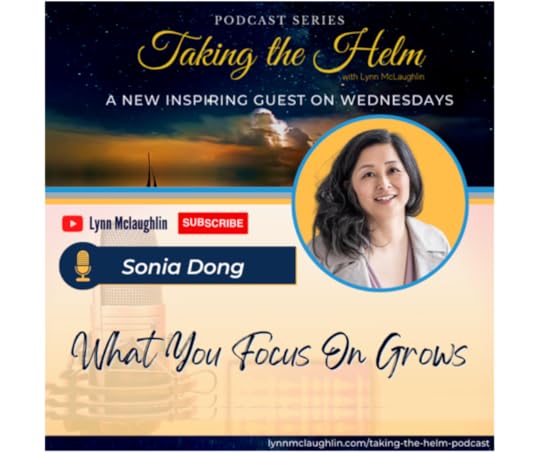
TRANSCRIPT OF SONIA DONG | WHAT WE FOCUS ON GROWS … FROM CRISIS TO CREATING A FASION REVOLUTION!
[MUSIC INTRO]
Are you facing a crisis in your life or business? It's time to steer yourself in the right direction through the real experiences, passion and courage of our guests. We're taking the helm with your host, Lynn McLaughlin.
[00:00:20]
Hey, and welcome back to Taking the Helm. I want to start with some congratulations because as you may know, we just celebrated our 100th episode on Taking the Home. And our guest for that day was Kiran Diol, who is a family and child nutritionist and she offered a 1 hour free consultation. So I want to congratulate the winner, which is Lissa Morris. And I've connected you, Kiran with Lissa. Also, Sandra Lowry will be meeting with me to talk about all things marketing and book launching. And congratulations to Andre Blanchett who has been mailed copies of I Have Choices and J’ai des choix.
[00:01:08]
So, congratulations to all of you and just thrilled to be moving on to, I think, our 102nd episode today. And with that, our guest today is Sonia Dong. She's written part of a book called Mama's Got to Grow. She speaks about perfectionism, control and gratefulness. Sonya is an earth loving mama of two girls who runs Henkaa. It's a socially impactful Toronto clothing brand. And through Henkaa, she's creating a fashion revolution where one time you special occasion dresses and tops become a thing of the past. With Henkaa, the size is all inclusive and women and girls can wear the clothing through all seasons of life. Sonia is going to be speaking about the tragic loss of a friend who was also the founder of the company and what she had to grapple with to not only pay tribute to her friend and her friend's vision, but to keep the company going. Thanks, Sonia Dong joining us on Taking the home. Thanks, Glenn. Thanks for having me.
[00:01:55]
Oh, my goodness. You have a lot to share and I know you'll be helping many of our listeners and viewers. And let's go back as we always do in our podcast, every single episode, guests like you, Sonia, who have had to reset because of a crisis in their life for their business. And you certainly had to do so to get to where you are today with a very successful business. And as a mother, let's go back to that time, as challenging as it was, because it can take us to the possibilities.
[00:02:25]
Yeah, it was about 2019. Our founder at Tanka actually passed away, Joanna, I call her Joe. And she was a really good friend of mine and also, at the time, my boss. But she became ill a couple of years before that and it was just a lot to. I guess.
[00:02:50]
Intake and trying to help make sure the business was still running. But then also trying to separate but not being really able to separate that business part from that business relationship. From that personal relationship and then just really believing the whole time that she would get better. And that I was just like a steward for the company while she was away. Basically.
[00:03:22]
And just saying. Okay. Well. I'm just going to keep it going the way it is. Status quo.
[00:03:28]
Until she comes back. And that was always the thought that was in my mind. And it was like I didn't even entertain the thought of what would happen if she didn't, how would I feel personally, how would I handle the business, that kind of thing. And then the unimaginable happened and she passed. And then it was just this almost like a barrage of people asking questions and not me not having that time to just decompress or to grieve or.
[00:04:07]
The grieve that you love. Yeah. And I think that was the first time. It was the first time that I had ever lost somebody who was close to me in terms of not a family member as well. I had lost older family members before who had lived fuller lives, you know, like the longer life ban and that kind of thing.
[00:04:31]
So it still came as such a surprise to me and I just kind of shut down and as a person who is my husband will say, I'm very empathetic, I feel strong emotions and to at that time just kind of shut it off and say, okay, I just have to answer these questions from people. I have to answer questions around, I have to fill, make sure that the staff are okay and that everybody else was okay. And I didn't really look inside into myself.
[00:05:11]
It took a long time. And when she passed away in July 2019, and then the pandemic happened a few months, not even a year later. And so I was just coming out of that really hard grief and teasing around my emotions and like separating them and dealing with them one by one. And then the pandemic happened, and I just was like, oh my gosh, something else is happening. And again, went through that similar kind of questioning, do I keep the company going?
[00:05:55]
Am I keeping the company going for me or for her? And there are all these questions that were swirling around, and I started seeing a therapist and it was online because of covet and so just started doing a lot of work in terms of self-compassion and looking at my life long, I guess, struggle with perfectionism and how that was influencing me. And also seeing that I was putting so much into my work and feeling guilty about not that I wasn't looking after the children, but not in a way that I wanted to be present for them. Right? Yeah.
[00:06:40]
Okay. Wow. We can go on a few different directions. First of all, my condolences. 2019 seems like a long time ago, but it certainly wasn't. So, on the passing of Joanna. But I see three different trajectories here that we can talk about. First of all, could you clarify what your role was at the time that you stepped in? Were you a co-founder? Were you a manager? What was your role?
[00:07:01]
When Joanna became sick, I was a manager. Okay. So, I wasn't a co-founder. She was the sole founder, and she brought me on after my maternity leave in 2012. The company started in 2010, so I had been following along. She actually wore her first dress. It's a convertible dress that you can tie in different necklines. She actually wore her first one to my wedding. Yeah, we have to talk about Henkaa and what Henkaa is. You can get back to that one. That one's a very happy, fun story. But after I had my first child, she was like, Come and work with me. And I really believed in the business and what she was trying to do to empower women and help them find freedom in their fashion choices.
[00:07:53]
I had joined, and it was a small company, so I was doing a lot of different things, and I would just kind of fill different roles as was needed and kind of growing along the way. And then when she became sick, I was the program manager, and I don't even remember my role, my title anymore. But I was in a position, I guess, where, because she wasn't there, I could oversee things. Right. And I wanted to be able to do that for the company as well. I just want to explain the reason for asking, because I think for business owners, for small business owners, for growing businesses, we may think we're young and we're invincible, but transition planning is really important, right? So to train people in these very important things so that when something happens, god forbid things happen every single day a broken leg, a diagnosis, a car accident, who knows? Bereavement so that someone can step into the role and maybe not face the same pressures that you did during that time. That's one piece of it.
[00:09:07]
And then the emotional piece where you're attached to someone as someone you love. And the professional thing, I don't know, Sonia, that anybody could have separated the two. So, I hope you've forgiven yourself for that piece. But is it even possible when the pressures of a company are now on your shoulders and you've got to find time to grieve, you've got to find time to take care of yourself, but to take the chance that the company goes under or suffers a loss, those pressures must have been enormous at that time. Yeah, they really were.
I kept on thinking a lot of the things that went through my head were like, oh, my gosh, I'm not ready for this point. The succession planning and the training and also things coming up that were externally outside of my control. Right. Definitely something out of my control. So these past few years, I've really learned to try to separate that part, even though I couldn't really separate my emotional attachment to the business or to Joanna or any other part of my life. Really learning to sit and reflect on things that were happening in my life and thinking, okay, what is in my zone of control and what is outside of my control? And what can I do to just help myself in those areas that I do have control in? Right.
[00:10:37]
I love the way you frame that, because too often we get caught up on things that we don't have any we worry, we worry. We worry about things we have no control over. So focusing on what we do and making those conscious choices is so critical. But it's not easy. It's not an easy thing to do. Everything going on around us. I'm sure Joanna will be absolutely thrilled with what you've taken the company from, gotten it through Covet. Let's talk about Henkaa now. Sure. Yeah.
[00:11:05]
So the name of the company actually means change in Japanese. That's how when she was looking for a name for the company, it really represents the company's whole ethos in terms of understanding that we are always changing throughout life. And that is the only thing that is constant, is change. Right. And how do we approach that? How can we be more resilient with that? And with Henkaa, it's through a fashion lens. It's through clothing. So Joanna had been going she was building her professional career. She was traveling.
[00:11:49]
She was going to a lot of weddings. So she was just buying a lot of clothes that she had to spend a lot of money on. I get it. My son just got married. I got three more weddings on the horizon.
[00:12:01]
So yeah, this is really interested in what you're about to share. Yeah. She had all these things in her closet, and she could only wear one time. Like, maybe it goes out of fashion. Somebody has already seen her wear it.
[00:12:15]
She doesn't fit into it anymore. All the things that we go through as a woman, and it's like that movie with Catherine Heigl 27 Dresses, where she has a whole closet of 27 dresses because she's been a bridesmaid that many times. A useless closet right. With things that are just wasteful. Right.
[00:12:41]
You spent your money. You can't use it anymore. It's also something where who knows if anybody wants to wear it anymore? So she found out about this convertible dress idea, and she was like, I want to make it even better, because one of the core problems that we have as women is our bodies do change throughout our life, and so our weight fluctuates no matter what our journeys are. So she was like, I'm going to make a dress that is stretchy and comfortable, so that when you put it on, it conforms to your body.
[00:13:15]
Instead of you having to change yourself to fit into something, that dress should fit to you. And it really is. It's like stretchy and comfortable. And so the main dress that we have, the one that she started off with as she worked my wedding, it only has two size ranges, a zero to 14 and a 14 to 24. So you're telling me that I no longer have to have those sizes that I might fit into again sometime in my life off to the side of my closet?
[00:13:44]
Exactly. You know that it's one of those things that you can have in your closet that you can always put on. And for me, after having two children, my Henkaa addresses are the only things in my closet I still have.
[00:14:05]
It's time to take a short break. When a child, you know, is feeling worried or scared, do they have the tools they need to make positive decisions? The power of thought. Children's book series is what you've been looking for. The children on the planet Tesla cannot hide their emotions because they haven't learned how to control them yet. I Have Choices, the first book in the series begins with a conflict that every child can relate to and teaches an evidence-based strategy that adults can model for everyday use. Children will learn in a fun way how to problem solve and find positive solutions to everyday situations.
The Power of Thought Children's Book Series has been developed alongside clinicians, educators, and parents to use as a proactive resource in teaching children emotional literacy. We're Tezranians who hover and live on a planet made of crystals. Join us and have some fun. You can become an alien too read this imaginary fun and practical book to your child, your grandchild, or to your students so they can start practicing the strategy. If I have Choices right away, check it out atlynnmclaughlin.com under the books tab. Now let's get back to our guest.
[00:15:22]
Even though I had things that I could fit into again, you know, as a mom, right, your body still changes. Different parts of your body sit differently after you have children, right? So even if something fits, it doesn't look right anymore. But because the hank addresses do adjust your body, they still fit me. And the other thing about it is that they are so versatile and you can tie them into different necklines so that it can transform into a completely different dress. It's like a Transformer or a convertible car. It's like very visually, when you see that transformation happen, you're like, oh my gosh, how did you even do that?
And that's exactly what she did when she came to my wedding in 2009. She wore a purple dress and a one shoulder. She wore it in a one shoulder version. She came to the table and somebody else was wearing a one shoulder purple dress. And normally you'd say, oh my gosh, what am I going to do? I look exactly the same as somebody else. She said, no problem, I'll be right back. I'm just going to go to ladies room. And she changed it into, like, a high neck halter dress. And people saw her in the washroom and said, Where do I get that dress?
And she said, I'm going to make it. It's coming soon. And I always say that if my wedding was a few months later, my bridesmaids could have had hank dresses, too, because it was such a headache trying to find dresses to fit all their different styles and body sizes. And my understanding is you also have the accessories to change it up so it never looks the same way twice. Yeah, exactly.
[00:16:48]
We do have some jewelry and necklaces. We have tube tops to provide more coverage, and sashes, which are pieces of fabric that are kind of like flexible belts. And then it's really easy to accessorize from your own closet as well. So you can pair it with, like, a jean jacket or a leather jacket or with different types of shoes and purses, and you'll get different looks. And you can do things like wear it to work or wear it on travel just by changing the accessories that you wear the dresses with.
[00:17:24]
Well, like I said before, I'm sure Joanne is very proud of what you've done with the business and carried on her legacy and her vision. To me, this meets a lot of needs, not just in terms of women's attire, but equity, inclusion, all of those kinds of things. Yeah. It's really important to us that we are inclusive in our sizing. Way back, I think it was in 2013, we actually did something called equality pricing. So a lot of plus size clothing is actually more expensive than smaller size clothing, which we find is very inequitable. And so we said we're going to make everything the same price. We're going to make sure that whenever we make new dresses and styles, that they're going to fit up to size 24. And then we also want to represent women of different shapes and sizes and different ethnicities and life journeys in our marketing. So you'll see that when you look on our Instagram or on our website, we don't have just size women who are size two wearing the dresses.
[00:18:40]
And my guess is the dresses are not a $600 dress that you would typically be looking at if you were standing in a wedding. Yeah, most of our dresses are under $250, and they're also made in Canada. Oh, that's good to know. Yeah. And because their size flexible and stretchy, you don't have to go through that nightmare of going to the alterations multiple times and spending more money on that, too, because what happens a lot is you buy a dress that's $300, then you're going to have to pay $150 for alterations. Then it can only be dry cleaned, and there's all these things. Right. And then you can't wear it again. The cost per wear of our dresses is really great because you can wear it to a wedding and then you can wear it to a different event later on. You can wear it out on date night, so it's very versatile.
And then you can also it's machine washable as well, so it's easy to take care of. We just want to make life easier for women. It sounds like you most definitely are, and I will certainly check it out. Sonya, you're also an author. You've written a chapter in the book called Mama's Got to Grow, and you called the chapter perfectly Grateful, and you had some really wonderful insights into perfectionism control.
[00:20:04]
Tell us a little bit about what your main message is without giving up too much, because we want people to read the entire book. Yeah, it was looking at how perfectionism has affected my life since being a young girl and knowing that I mean, I come from an immigrant Chinese family, so when I was growing up, my parents really focused on education, and they really wanted us to have really good grades so we can get higher education that they weren't able to have. And so they would say things that were seems innocuous, but it gets kind of ingrained into a child's brain. Right. They would say things like, oh, my gosh, you got an A, where's the plus?
[00:20:55]
Or you got 92, where's the other 8%? And you're always thinking of, okay, well, if I get that, then I'm perfect, right? And that it's just not good enough if I'm not. And so you're also always chasing that perfectionism, and that's just kind of been ingrained into my body and my brain. Right.
[00:21:19]
As my coauthor says, my niece, who's also a social worker, she coauthored the children's book series with me. It's the self-talk that starts from the time you're a child all the way through, that you're not good enough. You've made a mistake. Oh, I should have done better. And it just that becomes tough as you grow older.
Yeah. And how that perfectionism really affected me when I became a mom. Because as a mom. And when you have social media and you have movies and you see all these women and they're so happy and glowing when they're pregnant and everything's going so well. And they're so happy when the baby comes out and the baby sleeps and.
[00:22:02]
All these stories it's a fairy tale. Not total fairy tale. And I always thought, Why isn't this working? And because I was, like, reading books, so I was reading all these parenting books with all this advice, and nothing was working, and I thought I was really failing as a mom and so thinking about how I can be. And then because I was also a working mom, after my maternity leave, I went back to work and just feeling like I was not perfect at work and not perfect as a mom and all of that all of that going on. And so what I talked about in the book was some of the methods that I had used to overcome that perfectionism and that gratitude is something that has been a really great tool for me to learn how to let go of that perfectionism. You flip your focus, right? Yeah. Instead of the self-doubt and the critical thinking, you flip it to what you're thankful for and what things are going well. Right.
[00:23:11]
It's a totally different mindset. Yes. And that shift in the mindset was really, really helpful, not only with my children, but also with my relationship with my husband, because a lot of people know after you have kids, your relationship can really suffer with your partner because you don't have time for that relationship as much anymore. You don't make that time because you're so focused on the children, not to. Mention everything else on your plate. Right. Yeah. So attitude really helped us in that sense, too, to rebuild our relationship and help it grow at that point.
Okay, since we're talking about childhood and I'm on a quest right now in terms of children's mental health and everything that's happened over the last couple of years is certainly we're really on the brink of a crisis for a lot of reasons. So you're a fairly new parent. You go back to what you learned as a child and what you wish maybe didn't happen. What would you say to parents today that maybe would help us avoid starting to begin that self-doubt and becoming a perfectionist? What do you think?
[00:24:27]
Yeah, for sure. I'm thinking about my kids because sometimes they will do things where they're drawing a picture, and then all of a sudden, they'll just cross it off and throw it out and say, that wasn't good. I didn't like it. It's not perfect. And I say, it's okay, you're going to make mistakes.
It doesn't need to be perfect. We try to stress hard work versus and actually saying things are not always effortless. Of course, sometimes things do come easily, but having some difficulty in your life is okay. It's how you approach that difficulty. And asking for help is always good. Also recognizing that it's okay that you're not getting 100%. Right. Yeah. I'm going to put on my educator hat here, too, just to jump. Sorry, I shouldn't move on in front of me.
[00:25:29]
I'm going to put on my educator hat and my mom hat here, too. And this goes with all the principles of behavioral reinforcement and all of those things that we learn as educators. But boy, do kids respond to positive reinforcement, even the tiniest, tiniest little things. So as opposed to saying, well, that's okay, you'll do better next time. That is a wonderful what do you think you want to change for next time? You put it back on their plate and make it so that they're doing the goal setting. So I think if we can do more of that as parents, I wish I could go back in time, but I can't, and that's okay. But we can only help others to maybe think differently, and everybody thinks differently based on their background, their culture, and how they were raised themselves. So thanks for answering that. I appreciate it.
[00:26:16]
Yeah, no problem. And I was going to say, too, with my own gratitude practice, I try to encourage the kids to also have a gratitude practice, so that's what I talk about in the book is at nighttime, when we do bedtime, we will say, what did you like the most about today? Or what were you thankful for? So that they go to sleep with something positive in their head. I love it.
[00:26:40]
I love it. And another thing that my coauthor, Amber, has taught me self compassion. Huge self compassion and modeling. As a parent, we make mistakes, and what's wrong with saying to our kids, oh, I raised my voice. I shouldn't have raised my voice. I'm sorry, I'm really having a bad day. I shouldn't have done that. Because what happens on the other side, as Amber explains so eloquently, is that the kids start to think or behave that way. Mom, I blew up. I really had a bad day at school. I'm sorry. I shouldn't have taken out at you. And we model that. Yeah. We're all human, and it just becomes a healthy part of being.
[00:27:17]
Yeah, definitely. We shouldn't hide our feelings from our children. They're like a reflection of us. Right. So if we're doing what we want them to do and what you're saying, modeling, I think it's really helpful for them to learn how to do that as well and not to hide their feelings or bottle them up. Agreed. Okay, so I'll put you on the spot for closing comment here in terms of what is your role now with Henkaa?
[00:27:48]
So my role now is I am a co owner and managing director. And after Joanna passed, her husband and I decided that we wanted to continue with the business because we feel like more people need to know about what the message of Henkaa is and how we're helping women. So what advice would you have for other people who are business owners at this point so that they don't make the same mistakes that possibly happened in Henkaa? Yeah, I think really what happened with me was because I was feeling so much self doubt and so much grief, and I felt really alone, and I went into myself, and this is something similar that happened when I had the children and I was feeling really talented, I kind of set myself off from other people. But my advice would be, don't do that.
Reach out. You know, I did go see a therapist. In the end, that was really helpful for the business. It's been really helpful to seek other small business owners and speak to them, because what I found was that internally, I felt like people would judge me or that I was not doing enough or not doing things right. But then when you start talking to other people, you find out that they've made mistakes as well.
[00:29:15]
And there's like that common humanity there, and that support, because with small businesses, people really want to help each other. And I found that was really wonderful. And being able to connect with people and make those connections. I'm a very strong introvert, so I don't like big networking things. But being able to find a few people to talk to once in a while, to share insights, to vent, to help each other out with support has been really, really helpful.
[00:29:52]
God forbid another entrepreneur loses a partner or the owner of the business, etc, etc. But lots of things happen, as we learned over the last couple of years with Toby, that make us take a total divert, a total change. I don't like the word pivot anymore. It's overused. But your words of advice are so true because, yes, we may be in charge of a business, and our income relies on that, and our family's future relies on that. And that's a lot. That's a heavy, heavy burden to take. But we're never alone. And I've got counseling several times in my life in different forms of counseling. I've learned meditation, I'm now doing pool, yoga, all these kinds of things that help us to stay grounded and on track. But we should never feel like we're alone. And I'm so pleased that you shared those words. Small business owners are a community, and I don't know anybody. If you had reached out to me or anyone else who says, lynn and I need some help, I'm here. What can I do for you?
[00:30:47]
And vice versa. I know there's people I can call too, so I guess I would add to what you're saying, Sonia. If you don't have a network already, start to look for those, likeminded, businesses, like minded people. The business actually might look totally different than yours, but your philosophy and your belief system might be totally in line. I just had lunch two weeks ago with a woman I met online, and we are like, there's three of us and we are so connected. And I'd say there's about four people that I've met online in the last three or four years that we've now met in person, and we've become friends and that's a new network. So, yeah, anyone is listening. And never my business owner. Even for your own personal well being, have people in your life, not your children, not your spouse? Well, yes, those, of course, but to.
Have the other people who kind of expand your horizons or different people in your life provide different types of support and help to you. Right. And you can provide different types of health and support to them as well. Yeah, and I think that's really important. Excellent.
[00:31:52]
Excellent. Okay, Sonya, where can people find you. So they can find me at Henkaa. So the website is www dot. Henkaa Henkacom.
[00:32:05]
Our instagram is Henkaa. And I'm also on LinkedIn. Sonia Dong. O-N-I-A-D-O-N-G. All right?
[00:32:14]
Fantastic. We always put those links in our podcast notes and something we started, I think, three episodes ago. We're now doing full transcriptions that are available on my website, too. So trying to think about how to get the message out to people in different ways who maybe don't have the time to sit and watch or are too busy. And, you know, I'm hearing from a lot of people who are listening to not just this podcast, but are becoming podcast gurus. When we're out walking, when we're driving in our car, instead of listening to the news, you put on a podcast that inspires you, that makes you think a little bit differently. So I hope people are going to reach out to you at Henkaa. Are there any deals on the horizon, anything people can look forward to? Yeah, we do have a section that is for clearance products. We are planning a little bit of a summer clear out soon as well.
[00:33:04]
If you want to try us out. Check us out. You can go on our website and get onto a mailing list and that's the best way to be the first one to know about any kinds of promotions and new products and any kind of new inspiration and also styling tips because we have tons of videos and tons of tips for people on how to style the dresses and reuse them. We have a place here in Kingsville called Cindy's where they sell scarves and they have videos of, I don't know, 20 different ways to use a scarf and I never even thought of half of them. So I look forward to taking a look at those tips as well.
[00:33:40]
Thank you again, Sonia Dong joining us today, and all the best of health and happiness to you. Thank you, Ellen, I appreciate it. Okay, now introducing our next guest. Wouldn't it be amazing if each of us joined a mission to become the CEO of our own health? Incredible.
[00:33:57]
That's what our next guest, Marg Wallace will be talking about. She's the founder of Wallace for Wellness. She's going to be talking about some game changing technology that is quietly gaining acceptance across Europe, has been approved by Canada Health and puts us in a much more proactive place. Now, I can't let the cat out of the bag, but taking a couple of weeks off. We'll see you with Margaret on the 28 September.
(MUSIC OUTRO) Thanks for tuning in and posting your review of taking the helm on your favorite platform. We'll give you a shout out in a future episode.To be inspired by people who are steering us in the right direction. Go to lynnmclaughlin.com where you can search previous guests by the topic of your choice. And while you're there, download Lynn's gift. There's more than one way to get through a crisis.
August 9, 2022
TRANSCRIPT OF MONTY RITCHINGS | SHIFT THE NEGATIVE ENERGIES AROUND US TO THOSE OF LOVE RATHER THAN FEAR
Listen Link
[MUSIC INTRO]
Are you facing a crisis in your life or business? It's time to steer yourself in the right direction through the real experiences, passion and courage of our guests. We're taking the helm with your host, Lynn McLaughlin.
[00:00:20]
Now, I'm just coming down off cloud nine. We had our Ontario reception for my son and new daughter-in-law just about a week ago and they were wed on the East Coast.
It was a beautiful ceremony. But here in Ontario, we have a very large family. My husband has five siblings, I have five, and we were all able to come together for a day of celebration. And in this episode with our guest Monty, I share a very powerful insight into a moment in time where I could have made a decision which would have not been a very good one. But instead, because I was present, I made the right decision and enjoyed some fabulous time with my children and husband altogether.
[00:01:35]
And that doesn't happen very often anymore. Now, let me introduce today's guest, Monty Richlings. He's always had a passion for the esoteric world. He studied core belief, engineering, mind dynamics, heart residence therapy, Jitsu and Reiki. He's developed a connection with source.
[00:01:52]
He has a never ending quest to understand the human mind and its impact on people's lives from an intuitive perspective. His passions are personal evolution, nature and traveling. He is the author of six books. We're going to talk about Aquarius, rising mind management, conscious parenting, and Monty and I will be bantering back and forth because of our different belief systems. Welcome to taking the helmet, Monty.
[00:02:18]
Hi, Monty. Thanks very much for joining us today. Wonderful to see you again. All right, well, listen, we're going to have a conversation that might be unsettling for many people, but I think it needs to happen. Monty and I will agree or won't agree on many points, and that's what a conversation is all about, right? Yeah. You know what I love? Monty and I have spoken on the phone. We've had to get to know you call. And I think a large part of our society has lost the ability to listen, to understand and graciously and respectfully disagree with each other rather than this road rage rage and this anger that seems to be surrounding us. Well, I can't agree with you more on that, Lynn. Wow. Okay, well, let's get right into it. So, Monty, I asked you earlier, taking the helm is all about crises that people have experienced in their work or in their personal lives.
[00:03:13]
And we've got a crisis that's facing our children. Absolutely. Jump right into it from your perspective, please. Well, the biggest thing that I see in society, Lynn, is being older. I can look back at the way that things were and the way that things operate and how I see things operate today.
[00:03:32]
And the biggest issue that I see is people are operating lives. It's like running your video tape at three times the speed that it can properly record at. And because of that, they can't input with themselves properly, never mind their children. They can't input with their children properly. And the problem is that psychologists say that children learn how to live their lives in the eight years prior to their 7th birthday.
[00:04:04]
So eight years because we have to include the gestation period. Okay? So if the parents are so busy running three times the speed that they can just to survive, where do they get the energy and the focus to raise their kids properly? And then we've got these lobby groups out there that are busy trying to fill in how would I say it? They're mind bending us in ways that are their supposed truth, but there's a lot of them and no value to them.
[00:04:41]
The only value to the people that are the lobbyists in these things are the people that they're trying to gain some power. And it's an artificial power rather than learning about true power, which is being inside yourself, knowing your own truth, and be able to stand there and say, look, this is not the way that I'm going to raise my children. I'm going to raise them this way. One of the defining factors in society is having rules, and we all need to abide by those rules. However, when a government, or especially one that's run by lobbyists, gets in the way there and forces rules into the system that are incorrect and do not support us to live in an ethical, growth-oriented way, and we sure can't help our children properly, then we need to break the law.
[00:05:39]
Absolutely. We need to force them to change the way that it's going. And I know that in both Canada and the United States, the laws that are being forced right now are absolutely abhorrent to the correct raising of children in the best way.
[00:05:20]
My mind is racing, as I'm sure our listeners and viewers are as well, because so many possibilities are coming to my head. So let's talk about one specific law. And I certainly wouldn't encourage people to break the laws that are in my head, but I don't think that's what you're referring to. What's one specific law that you're referring to that is harming our ability to raise our children?
It's the right to have honest communication with your children. There are things that are appropriate and there are things that are not appropriate. My daughter had a child at 16, and a child raising a child is really tough. So when her daughter was in grade six or seven, I guess it was, they had a tough relationship. My daughter was at home and her daughter came in and they got into a bit of a discourse and my granddaughter turned around and smacked her mother across the face. And my daughter just stepped back and went, what do I do? So she stopped and moved away. She went to see the principal at the school the next day because she wanted some information about how do I deal with this situation. Do you know what the principal's answer was? Suck it up.
[00:06:30]
Well, as a retired school administrator, I have to tell you that never would have happened if your daughter had come to me. My goodness, when someone comes to you and discloses something so personal, you don't slough that off. That person is desperate for help.
[00:07:00]
So my only recourse I had for having any input on the kids was with the Family Maintenance Enforcement Program. So I had to pay whatever amount it was every month. And the Family Maintenance Enforcement Program said, we want you to give us a check, and we want you to give us a bulk check for every year ahead of time. So we just process them. And I said, no, I'm not doing that. I'm going to give you one check a month, and I'm only going to give that to you if the stipulations in our divorce agreement how to raise the children are met. And she was not happy about it, neither was my wife. And I said, that is the way that's going to be. I am going to pay. I'm not a dad beat dad.
I will pay every month providing the rules are met. And so my daughter got a little on the wild side and she started not showing up for school and mother wasn't doing anything about it. So I phoned the FMEP, I said, daughter is not in school. No cheque this month. The rules say she has to go to school. And at the end of it, this was several years later, my son was around 14 provincial children's organizers, I don't know what you call them, the government agency that looks after kids. They had come in and taken my son out of the family because they lived far away from where I lived, and he had gone to live with it, with her brother. My wife was an alcoholic, and that lasted for about two years, and it was just horrific for my son. And finally one day they phoned me up and they said, monty, will you please make room for your son and your life? And I said, I bought a two bedroom condo. His bedroom is waiting for him.
[00:08:46]
Again. I'm kind of all over the place because I'm going to put on my other hat. Not giving a check that month. Did that stop her from being able to pay the rent, to put food on the table? I'm thinking all of those things, and I'm sure when you make those decisions no, I think your point is there are laws, there are societal norms that are not necessarily black and white, and sometimes we have to find our ways around them for what we believe is the best for our children and our families. Absolutely. Is that what you are trying to say in a more direct way.
The big model that I'm working on right now is that parenting is a full time, 168 hours week job for the rest of your life. You don't stop teaching your children once they're adult. I thoroughly believe that we have to stay in their lives and because as they grow older, they start to want to understand who they are as human beings. And the way that you do that is by being there and being able to explain who they are and why things are the way they are. I just came back from Calgary last night.
[00:10:15]
I was with my new sister. My new sister is five years older than me, and I met her three years ago, and it's been absolutely fabulous. There is just no qualming about the fact that she's related. She is identical to my cousin over in Mission. There's just no argument at all. And she and I are so much like she's also an author. And so one of the things that we're pushing right now is for our family members, we're reaching out to them and saying, hey, you need to understand the dynamics, particularly the genetic history of our families, so that you can understand why you are making the choices that you are. It's one of the factors that's in there. So you've got this genetic history and you've also got the day-to-day choice history. And the day-to-day choice history is the part I'm most adamant about because we need to be able to recognize that we have far more ability in this world.
[00:11:05]
That's why I wrote The Ascenders Return to Grace, because we have more ability in this world than we're led to believe. And I want people to step back and say, is that belief that I have really valued? Is it a right belief? And it's your prerogative to step back and say, no, that is not correct, and then to take steps to fix it. Okay, I got a couple of questions to jump in here. You're new sister. Are you going to go further with Ancestries.com just to check about the DNA connection? That's how we found her. Oh, that's how you found her. Okay, miss that part 95.4%.
[00:11:48]
Oh, that's fantastic. But you're so right. When we go back and you go back to your childhood and like you said, all of your morals and all of that, that is instilled in us in the first eight years of life, however you wanted to find that to be those experiences are a very large part of who we end up being and what we believe in and what we portray. So you mentioned Ascenders Returning to Grace, and that's your book that I read back in March and the title of my review is, it's time to shift the negative energies around us to those of love rather than Fear. And I have to tell you, as I was reading the book, it was so unpredictable because you take us to these realms of I couldn't even imagine where you took the characters to and what they were able to do by tapping into, I want to call it unconsciousness, a higher level and all of those kinds of things that you wouldn't even possibly imagine.
And what I loved about the book is whether or not readers agree or disagree or say, oh, this is a load of crap, this could never happen. It still makes you reconsider where you are in your life right now and what your beliefs are. Is that not what your bottom line was, what your purpose was? Absolutely. There you go.
[00:12:55]
Talk a little bit more about your book. Well, I actually channeled the book. That was really cool. I was working with a friend of mine who has a coaching program called The Intuitive Life, and as I was talking with her, all of a sudden I got this female voice, intuitive anyway, this female voice in my head just starts ragging on me. So after I got finished, we're working with her a few minutes later.
A male voice would be ragging on you too, though, right? Absolutely. We're not being biased about this, but it was a female voice. And so I closed my eyes and I said, what do you want? And she said, get on your computer. You're going to write a book. It's called the Ascenders Return to Grace. And I said, okay. And fortunately, in my work, I travel to Vancouver Island frequently, so that's what I would do on the island. I get so excited about getting on the boat because I can get my computer open.
How is it going to come out today? I had no idea how the story was going to evolve, and so it was really cool as each of the pieces came out. But this is what I've written about. I've got, what, seven books or something like that out now. And the whole basis of the centers is just exactly what you said in there. It's about recognizing how the way that we have been raised in this world and how we interact in our present time we have created, and we maintain position of severe limitation. And my goal through these books is that people don't do anything except step back and say, hey, am I living the best life that I can? It's not about going out and getting wealthy and whatever like that. We came to this lifetime to grow and to learn to be part of the universal source. That's how it grows.
[00:14:48]
And by stepping back and saying, is it really important to me that when my friend tells me the color is red and I say, It's fushia, is it really important that I have to hold my ego in place in order to win with that? It's not important.
Yeah, there's so much. If I could share a quick little story. My kids are I have one in Nova Scotia, I have one in Niagara, and one who's just moved back home. And we had a family celebration. My oldest son got married. Long story short, we were all together in Ontario for a reception last weekend. And I have really been trying Monty for the last year to be in tune and more present. And after the reception, my house was a disaster area. But my husband, myself and my three children were sitting in the backyard having a conversation. I stood up to go and do dishes and I caught myself because we're getting into conscious parenting, even though my kids are adults, I thought, when is the next time the five of us and my daughter-in-law who joined us, are going to be able to be together, to just enjoy each other's company and share stories and memories? It was the most beautiful time, and I almost got up and left.
[00:17:51]
Being aware, being aware of what is important around us. The dishes could wait. my house could wait. It didn't matter. One thing about dishes is they never go away.
[00:16:28]
It's time to take a short break.
When a child you know is feeling worried or scared, do they have the tools they need to make positive decisions? The power of thought. Children's book series is what you've been looking for. The children on the planet Tesla cannot hide their emotions because they haven't learned how to control them yet. I Have Choices, the first book in the series begins with a conflict that every child can relate to and teaches an evidencebased strategy that adults can model for everyday use.
Children will learn in a fun way how to problem solve and find positive solutions to everyday situations. The Power of Thought Children's Book Series has been developed alongside clinicians, educators, and parents to use as a proactive resource in teaching children emotional literacy. We're Tasmanians who hover and live on a planet made of crystals. Join us and have some fun. You can become an alien too.
Read this imaginary fun and practical book to your child, your grandchild, or to your students so they can start practicing the strategy of I Have Choices right away. Check it out@lynmclachlan.com under the books tab. Now let's get back to our guest.
[00:17:20]
Okay, so let's talk about conscious parenting, which obviously has a direct connection to my podcast, Taking the Helm which is about making conscious choices. So you know that I'm writing a children's book series with my niece who is a social worker, and our whole premise is moving to a proactive place where we can give children the tools they need, that are evidence based, that are grounded in research that they can use every single day when facing problems in their lives.
If you could say and you have so many different things in terms of conscious parenting, whatever you'd want to say, what are some guiding words that we can give to people who are maybe about to become parents or going, I'm not doing a great job of this. What do I need to change? What would you say, Monty?
The number one thing I would say right off the bat is you need to stop. We don't stop in this world. We get out of bed and we go until we drop back into bed at night time. Again, we need to stop. We need to take the time to actually sit on a chair on the couch or whatever like that and have some quiet time. And a big part of that quiet time, most of us don't breathe properly. And you learn this in yoga.
When you take a deep breath, always move your belly because it allows your full lungs to be able to function. If you only breathe with your lungs, there's three sections to the belly, to the lungs, and the toxins sit in the bottom of the lungs. If you're not moving your abdominal muscles when you breathe, you're not clearing those toxins out of your belly, having a hard time with that one out of the bottom of your lungs. And so when you take the next breath, it's going right back through those toxins again. So how could you possibly relax if you're breathing toxic fumes right from your own body?
And the next thing is we don't drink enough water. We are 80 whatever it is, percent water. We need to keep our water supply up. If we drink I'm a coffee drinker. If I drink coffee, I always try to make sure that I extra supplement my body because coffee is a diuretic. And then we need to focus on, okay, this is my day. So now we've got children. You cannot say, well, I'm not going to participate with my children today. They don't exist. That doesn't happen.
[00:19:43]
Even if you're going to work, you're still a parent. That's all there is to it. And even if you're not in front of your children, what choices you make still impact your children. Right. Are you saying that by … and I never did this as an early parent, taking care of ourselves? We always put everybody else first, right? Absolutely. We have to ground ourselves. We have to be relaxed. We have to be because then we can be conscious and say, this is important to me.
That's not important to me. Yes, I'm going to actually have a conversation with my family around the dinner table rather than just serving, serving, serving, getting up and going. Yeah, right. It's the moments and being present that is so important. Yeah.
[00:22:14]
And sitting down with your spouse when you are raising children. And I'm going to get into a whole lot of trouble for this because it's not socially acceptable these days, but I'm going to say it anyway. God created men and women. That is the only way you produce children. And whether you want to raise them in a homosexual relationship or whatever, it is secondary.
The bottom line is that we all carry male and female components of ourselves and we need to honor both the male and the female side in every individual. Children need to learn from both genders in order to be completely fulfilled children and become that way as adults. When we are determining, we want our children to be the absolute best humans that they can be. That's initially amongst us. But we need to step back before we start making decisions about our children and ask, are we projecting onto our children?
[00:23:18]
That something that we want, it may not be theirs. Are we looking at what are the attributes of that child? Do they show any special skills that we can build on? But are there deficiencies in the way that that child is acting that we need to address? And are those deficiencies that child is expressing, are they a reflection of what we're communicating to our child.
[00:23:43]
Well the questions you just asked I am totally in line with because I’ve caught myself, many of us have caught ourselves projecting what we want on our children gathering than letting them discover what’s right for them. And that means letting them take falls and tumbles. And what you say about the difference between the male and the female influence, absolutely. I agree with that, too. There's a lot of research to support it. But I want to go back to what you said about the parenting piece and in the introduction as well.
[00:22:30]
You know as we all know that what a family looks like today is very different than the past and certainly not what we would call traditional in many ways. Same sex marriages and partners, single-parent families shared parenting. I don’t think someone has to be living in my home to have a positive influence on my children. It could be a brother or sister, a lesbian or queer friend. It could be anyone whose going to help my children see things through different lenses. And the way your wrote your book Monty, it really did open up endless possibilities. I don’t want to give away any spoilers but you did a lot with the male, female characters crossing genders etc etc. So I guess I want to ask if we can think about role models in a more global way.
I'm sorry. I didn't include that in there, because that's exactly right. If a woman is raising her child as a single parent, what I'm saying is, having a good male friend, you don't have to be intimately involved with this person, but somebody who will commit for the long term to be there as a role model for that boy or the girl, because girls need it, too. We have organizations like Big Brothers and Big Sisters absolutely like that as well. Yes, absolutely.
And that's that one more piece of that. Get your bloody kids off those computers. Especially young kids. When kids are under seven years old, they need to have direct input with other people.
[00:23:40]
So let’s give that a context Monty. Let’s say we’re in a restaurant with our family, whatever that looks like and we see it every day. Children on devices and parents on cell phones. Ask yourself a question. When you’re out with your family is that a time that provides an opportunity for us as parents maybe to ask questions, to celebrate to give them positive reinforcement we know that every child craves. If we could catch ourselves in those moments before we take out our phones before we hand them a device and ask ourselves what’s the most important thing to me right now and make a conscious choice, my guess is that most of us, except in the case of emergencies of course, we’re going to decide it’s the children sitting in front of us.
You cannot be in your power in the future. You can't be in your power in the past. And when you're in your power in the present, if you're sitting in a restaurant, if you're sitting on your cell phone, your present time is a distraction. There's another level. That's why I wrote healthy kids only need Three things.
[00:24:47]
There's another level that goes with it. That's really cool. I'm a member of the Rosicrucian Order. It's a mystical organization. I've been a member for 40 years. So we work with the non physical universe. Really simple thing to do when you're dealing with kids. You want to input positive energy into your child. Wait until they go to bed and they're asleep and go in very quietly with all the love and intention that you possibly can muster. Sit down with them and say to them positive statements, I love you. I'm glad that you're here. I'm glad that you chose to be with me. I wish you the very best. I will give you the very best and then walk away.
Well, I need to know they're in a different level of consciousness. They still hear you. They still feel that. I love that. I want to jump in about Aquarius rising. The effects of living at this time as we move into the Age of Aquarius.
Help me understand that Monty. You know what? It's all the fault of the fifth dimension. Do you remember the band back in the 1960s? Okay. They brought out a song, the Dawning of the Age of Aquarius. Oh, yes. Okay.
In between, in any kind of an age, whether it's in the monthly astrology or whatever, there are what are called a cusp, and it's the crossover energy between the two time slots. So I'm not a Bible person, but I know just enough to be dangerous. So in the Old Testament, I think it was Solomon or Abraham or something, they talk about him killing the Ram, what they were referring to. That when you're dealing with ages, the astrology signs go backwards to the way that they do when you're doing your annual. So it doesn't go Capricorn, Aquarius, PISCES. And so that goes the other way. So the killing of the Ram signified the end of the Age of Aries. And Aries was about government and total structure. What happened in Egypt was a prime example of what Aries was about.
[00:27:04]
So now we move into the Age of PISCES. That's when Jesus was born. When Jesus was born, it was about exploring the world. The representative of PISCES is the hands. So we took our hands and we learned about the world. And through our hands, we also learned about philosophy, and we learned about religion and we developed these religions and so on. So what's happened is we're now in 2022. So an age is 2000 years long, give or take a couple of years. So back in about probably the late 1950s, we started to move into the cusp between PISCES and Aquarius. Aquarius is about the big picture. It's about attaining Christ consciousness. It's about seeing the world is much larger than the way that we see it. Now. A cusp is about 350 years long, so we have a long way to go through this process. So the reason why I wrote the ascendant the reason why I wrote the other books that I write, it's about understanding what moving into Aquarius is about.
[00:28:210]
So the reason why I wrote the ascendant the reason why I wrote the other books that I write, it's about understanding what moving into Aquarius is about.Yeah, okay. We got 350 years to go before we're in Aquarius, but we need to be in a position to accept being there to do it. Because if we don't move forward, you think that the hell in the Bible, that it is bad, wait till you see what's there. Because the reason why it's going to be helped is because if you show up in a paint shop with your salad plate, you're not going to fit. That's basically what it's about.
Moving into Aquarius is about becoming more conscious. Okay. There's nothing to do with religion in that at all. It's basically what we've been talking about already. We need to step back and say, is this the right way for me to be doing this?
Does the belief that I have support me in making my life the best place that I can possibly be living in Vancouver? I tell you, it drives me nuts. You watch people going down the road and they're zipping in and practically killing people just to get a block ahead. People walk out in front of cars and pedestrians demanding that they stop. Those are belief systems that are not supportive.
[00:29:40]
We need to stop. They're certainly not building love and acceptance and understanding. Yeah. You have two choices, love and fear. Which one do you want to live in?
Now the next step is to ask yourself, what does that mean? We all live in fear because we learned it. But now we have the opportunity. Our society we have today is the first time in the existence of mankind on this plane that we have the support in the system to allow us to not just have to survive, we can thrive. We have the ability to step back and say, you know what? I need to reframe how this is going because it's not going I can feel it inside myself that it's not going right. And so being able to get back to that and say, okay, if it's not feeling right, it's nice if you know the why, but it's about being able to take the steps, breathing properly, drinking water, taking a minute to sit down.
Yeah, And realizing that we're bigger than our physical selves. Right. Absolutely. and if we can open up our minds to the possibility of that higher level of consciousness, of the source, as you refer, to whatever you want to call that the higher power, that higher being, that intuitiveness, that enlightenment, whatever. Then there's other possibilities, and I think we just get caught up in this rat race, and there are many reasons for that. The last couple of years with Kova didn't force us to take some time to realize, and it sure did for me, what is important and what is not. And those things that you used to think were like, they're just inconsequential. And I learned this lesson with my brain tumor nine years ago. But, you know, it does start to come back into your life where you forget about things and you have to stop. Like you said, Monty, you have to stop and say what is important to me, and then this is the hard part, the stuff that's not or the people that are not important to you or bringing in that negativity, you’ve got to find a way to push that away. And it’s not that easy. If you’ve got a job you rely on for financial reasons, is there a way you can ground yourself every day? I'll tell you, I can't meditate by sitting here and doing the grounding thing, but I can meditate when I'm walking in nature.
Absolutely. Yes. You and I are twins that way. I'll tell you, one of the things that I've also done through my writing of books and stuff is on my website. I have some recorded visualizations on there.
[00:32:02]
And one of the techniques that is really good for dealing with issues that are really hard to deal with and I have to be really upfront about this. I totally support, and I tell people directly, if you're going to do growth work, get support, get yourself a good counselor, one that works for you, the one that is there for you to help you move through the stuff. What I do is I provide really good tools to help you to move through it faster. So in this one visualization, basically what you do is if you've got something that's really nagging at you, what causes that? It has two components.
One is the thought, the other is the emotion. As long as the two of those are melded together, you're not going to do anything, because that emotion is going to continually feed it all the time. And that comes from the ego. What you have to do is go through it, and you have to turn off the emotion. When the emotion is turned off, it's just a thought.
Then you can replace the thought with what you want.
Oh, that's funny.
[00:33:15]
It's terrible. No offense to people who are called Henrietta. I don't think a lot of them anymore. But when I start to have that, I say, that's Henrietta talking. That's not rational. That doesn't make any sense. And I push Henry out aside. See you later. And there are many facets of counseling that will help people get there. And sometimes it takes a long time to do that, but once you can recognize that that's not right and slap it aside, it just becomes so much easier, doesn't it?
Yeah, but it's amazing how so many people these days, a lot of times their belief systems are just cop outs. You need to step back and say, why did this happen, and what did I do to help cause it? And sometimes, you know what?
[00:34:00]
Excuse me expressing, but shit happens. I tell a story about my husband and I. It doesn't even matter the circumstances, but we were driving. We were near Boston. We're Canadian. We're coming home. We're towing an empty trailer. I felt like the trailer was planning behind us, and I was getting very nervous. My husband is a retired OPP officer. He's driven in all kinds of weather. But I kept saying, Hon, would you please drive? Would you please slow down? And he wasn't slowing down. And finally I thought stop. Because all I was doing was raising the tension in the truck. I took out a Sudoku puzzle. I looked down, I trusted him, and we got through it just fine. But I was feeding the anxiety because of my fear in that situation. Once we can be aware of that and then change our own behaviors, man, is it powerful? Absolutely.
We are all powerful, no matter what. And when we have this incessant need to control all the time, we undermine everybody's ability to have any power in this situation. Had you continued doing that, nobody would have had power over the situation because your husband would have just had his emotional levels going through the roof, and his ego would have kicked in and said, screw you. I'm going to do this the way I want to do it, and the. Vacation would have been ruined.
Or worse yet, we would have had an accident. Absolutely. Yeah. So you did the right thing by just stopping and taking a breath and got into the snowcu. Yeah.
[00:35:20]
All right, Monty. Wow. We've talked about so many things. I'm going to ask you how people can reach you, what you have to offer, and then closing comments to wrap it up.
Okay.I have two websites that are related to this. One is Ascendersbooks.com is the official book or the official website for the Ascenders Return to Grace series, and it's strictly about the books link to it is my main website, which is called Power for You, Power for Me, and it's a resource website. At this point, I'm not doing any workshops or anything like that. I do intend to do that in the future. But what I do provide on there is information about my books that are available on Amazon and various other places like this, and videos with visualizations and so on that people can go on for free. And learn these visualizations. So they've got tools teaching them how like we were talking about how to shut that emotion off to get that thing that thought down to a tolerable level. And I do different videos. I'm building a resource panel in there or resource page in there for other organizations that I support in that process.
[00:36:38]
I do a lot of work with. a friend of mine does body code and it's just an amazing program for doing healing work. I even didn't even have to go get an access done on my right upper tooth here, which would have cost me $2,800 by doing one section of body code that cost me $85. Because everything in your body has emotions tied to it. Because the Chinese talk about the meridians and so on like that. And there was in an hour that the abscess was gone and I've never had it again.
Through this website, I'm putting out the resources for other people that can support people in their journey and also understanding why the website is called Powerful You. Powerful me. In order to truly empower yourself, you need to empower other people without selling yourself short. And that's the key to it. You cannot empower people by overpowering them and you can't help people by reducing your own power.
And so it's going to expand from there. The websites are up now, so we're working on these. And as I can, I'm going to start doing some workshops on teaching people how to understand, first of all, how you can change your belief systems. And believe me, in my life I have had and do have to work through on a daily basis trying to deal with the issues that pop up. And I come from a very dysfunctional childhood. My father was a person who provided a lot of fodder for growing and I'm very fortunate that I have chosen to move in that direction to learn rather than to let what he provided embedded to myself as a human. And as the layers come up, I try to deal with them. I want other people to have the same tools that I have to be able to do that. So powerful you Powerful me got born.
[00:38:40]
Awesome. Beautiful closing comments too. And you know what? As I said at the very beginning, you said some things that may have stirred the pot and that's okay. If you are listening and viewing and you're a little upset or taken aback or think, I hope you're taking this to the point where you say, I want to read a little bit more about that. I want to understand about that. And yes, I might emphatically still disagree with you, Monty, but at least I've listened to better understand. If we could all do that, we're going to be in a much better place moving into the Age of Aquarius.
Absolutely. And that's why I wrote the Sanders Return to Grace in a way that they're written is because they're fun. It's a fun story. It's fantastical. It's magical realism and all that. But it's got truth in it for you to step and stop and say, hey, maybe I can do this or maybe it's crap. I don't care. Read the book and at least think about it.
[00:39:37]
Let me just read a part of the review at the very end that I wrote on Amazon. We each have an impact on everyone we touch. Imagine what it would be like if we fully embrace our higher levels. This book has truly impacted me personally, and it is with gratitude that I thank you, Monty, for this gift and the gift that you're giving us today with your words. Thank you very much, lynn, I really enjoy working with you. You're such a great person and a great influence to the world and to my life.
I appreciate that. Thank you. Yeah, absolutely. Next week's guest is Sonia Dong. She's an author, entrepreneur, philanthropist and a mom of two. On a quest to make life less stressful and more joyful, she co authored the best selling book, Mama's Got to Grow, sharing her story of her struggles with perfectionism and how a gratitude practice saved her. And we'll find out more about Henka as she's the co owner and managing director. Stay healthy and safe and we'll see you in two weeks.
(MUSIC OUTRO) Thanks for tuning in and posting your review of taking the helm on your favorite platform. We'll give you a shout out in a future episode.To be inspired by people who are steering us in the right direction. Go to lynnmclaughlin.com where you can search previous guests by the topic of your choice. And while you're there, download Lynn's gift. There's more than one way to get through a crisis.
July 29, 2022
TRANSCRIPT OF KIRAN DEOL | STRUGGLING TO REACH OPTIMAL HEALTH FOR YOU AND YOUR CHILDREN? (Copy)
Listen Link
(MUSIC INTRO) Are you facing a crisis in your life or business? It's time to steer yourself in the right direction through the real experiences, passion, and courage of our guests. We're taking the helm with your host, Lynn McLaughlin.
[00:00:20]
Hello to you today. This is a very special celebration. Today is our 100th episode of Taking the Helm. I can't believe it. When I think back to all of the amazing guests that we've had on the show that have made connections, that are helping people change lives because of the crisis that they went through themselves and their personal or their business lives, it just warms my heart, and I'm so proud to continue hosting this show.
[00:00:47]
Now, be sure to stay tuned to the end of the episode after we speak with Kiran Diol today. She's a holistic nutritionist CEO of Key to Health, Nutrition and Counseling. She is a childhood nutrition advocate because her own daughter's health was suffering after her birth, Kiran also made changes to her own diet after the discoveries she made. Now stay tuned to the end, or I guess you can fast forward. I hope you don't. Kiran has something to give away. For those of you who are interested in nutritional health, I have something to give away to authors. And of course, you can guess there's going to be a book giveaway as well. Welcome, Kiran, our 100th guest on taking home. Thank you.
[00:01:26]
Thanks for having me today. Lynn, I'm so excited to be your 100th guest. Excellent. Okay, well, Taking the Helm, as we've talked about Kiran, is all about a time in our life where we face some type of a crisis personally or professionally. And for you, it was the health of you and your daughter. Can you take us back to where that period of time was and what happened?
Yes. So when my daughter was born, I had all those hopes and dreams that every parent has of having this super chubby, healthy baby. And in all other respects, she was healthy, but she was always kind of on the skinnier side, and it was very difficult to keep her weight up. So getting to the doctor's office and getting those weight check ups, it was just a very stressful experience because as parents know, you have that way in your child every so often, and it's very frequent when they're very young.
[00:02:17]
And initially we were actually told, okay, bring her in a little bit more often because we want to keep an eye on her because her weight is on the lower end of the percentiles and on the growth curve. And it was nerve wracking because I couldn't figure out why she wasn't gaining weight and I was nursing her. She was nursing around the clock. That's what it seemed like. And she wasn't really gaining enough weight, and she was really fussy.
[00:02:41]
She was spitting up a lot. She seemed like she had some tummy pain. And so I went to luckily, where I lived, they had a free clinic. The nurses had a free clinic to teach you about breastfeeding and give you pointers. So I went there for help.
[00:02:57]
They did help some with latch and all those issues, but that wasn't really the root of the issue, and so it didn't, unfortunately, take care of the problem. And then I went to a few different doctors. We tried her GP, we tried a couple of different pediatricians, and we just got Bandaid medication offers of, okay, we can put her on. It sounds like she's got the massive reflux. We can give her this medication.
[00:03:22]
And then I looked at the side effects and I said, well, I'm not really comfortable with that. I don't really want to just put a Bandaid on it. I want to figure out why does she have this problem in the first place? And so when she started solids, I thought, great, this is going to fatten her up, and all my worries will be gone. And no, that did not happen.
[00:03:43]
She still struggled, and certain foods seemed to make it worse. And then I realized that even when I was nursing, that certain foods that I ate in my diet would make her tummy issues worse. So that was really kind of a big clue there as well. So I really started to do a lot of my own research. I started to just do a lot of Googling, trying to figure out what the issue was.
[00:04:05]
And I knew she had heard that acid reflux, that's what the doctor had said, but just trying to figure out how to manage it and what to do. So Google did help me somewhat. I learned what foods to kind of avoid, to avoid these symptoms, but it didn't really help me figure out how to get to the root and kind of eliminate that problem. So I was just getting more and more frustrated because as we all know, when you try to Google something, especially anything health related, nowadays, it is information overwhelmed. It is just complete overload.
[00:04:39]
And we don't have Google Doctors. Well, I guess you do actually have online Google Doctors or people who claim to be online Google Doctors, but that's certainly right. It is, and it's a slippery slope when you go down there. And so I was really just confused, and I thought, you know what? This is just I'm trying all of these different things, and it's a lot of trial and error, and I need to just kind of cut to the chase and figure out what I need to do.
[00:05:03]
So I started to look into nutrition programs, and I found this wonderful holistic nutrition program. It was local, and I thought, well, this is great. This is something that will really help me. And so I did that program, and then a couple of years later when I finished it, by that time, I really had a good understanding of okay, this is what's going on in my child's gut. And I just had this you get that feeling of, if only someone had told me all of this sooner, I could have saved a lot of grief for the both of us.
[00:05:33]
If only someone had just mentioned that health just those two words to me while I was pregnant, I could have looked into that sooner and hopefully prevented some of these issues. But better late than never. And she's happy and healthy and thriving and no longer has got issues. And I'd say she's generally just sort of symptom free. She doesn't have allergies or any of a lot of these other symptoms that plague so many kids these days.
[00:06:01]
And I really think it would have been the opposite if I hadn't really delved into the nutrition and the nutrition aspect and figuring out how to really reverse those issues that she was having with her gut. So, you didn't go through what we would refer to as an elimination diet to try to figure out what triggers were while you were nursing? You just jumped right over to this holistic nutritional program? Yes, that's what I did. And in a way, the elimination diet, because she was so young and because I was very aware and in tune of just mindful of keeping an eye on what foods were bothering her when she started solids, I knew right away if the food was bothering her because I started them one at a time with a few days in between.
[00:06:45]
And so we can't do that as adults, you can't just stop eating and then introduce the time. But with babies who are just starting solids, it's a great way of figuring out what foods work for them, which ones don't, and if there are a lot of foods that don't work for them, that's a big red flag that something is going on in their gut, because no one should have multiple food sensitivities. That's a big sign that there's something else going on there. So that made it easier in a sense, if I'd waited and I just ignored the problem and thought, okay, it'll just go away. I'll just slap on these band aid medications, wait for the problem to go away, and then realize a few years later, wait, this isn't going away, then an elimination diet would have probably been necessary, and that would have been more difficult, but still necessary.
[00:07:33]
Even though no one ever mentioned gut health to me early on during my pregnancy or when she was a baby, I am fortunate that I came across that world soon enough. And we know now gut health is related to it's not just something physical. When you have children with behavioral challenges, when you mentioned allergies emotional, all of those things are all linked to gut health. And we don't think of it that way. We think there's something in the environment that's affecting us.
[00:08:00]
Let's try to figure out what that trigger is when it's very often what we're ingesting or our children are ingesting, right? Yes, it's very often internal. I mean, of course there are external factors as well that can influence all that, but a lot of the time it is very internal, especially with children. Children haven't gone through life and developed all these traumas, and they don't have all of the stresses that adults have. They do have more stresses than children did once upon a time.
[00:08:27]
Unfortunately, just due to the nature of society these days. But generally, with children, it's more of an internal struggle and it's more of something going on inside their body. When we see these behavioral issues and disorders and just mood and stability. And even with my daughter, when I would give her these foods, that was one of the first signs I would notice. So there would be constipation and GI issues, but also just irritability.
[00:08:51]
She was just so fussy and irritable, and I could tell that something was not sitting well with her, and she wasn't able to communicate because she was just a baby, but that was her way of communicating and letting me know that food did not sit right with me. Okay, so now we understand why you changed the whole nutritional piece for your daughter, but once you were done nursing, why did you make that change for yourself? So, I was vegetarian for a long time prior, but I had a heavy dairy based diet, so I ate a lot of cheese, a lot of yogurt.
[00:09:28]
I can't emphasize enough how much cheese I ate. I probably ate more cheese than anybody else that I've ever met, and I didn't realize that that was harming my gut health. Yes, I know cheese is so hard to I didn't say it very loud. But I love cheese. We adore cheese.
[00:09:42]
Some evenings we'll have cheese and cabassa and crackers for dinner and I know don't jump through the screen at me, no judgment. I've been there too. And so, I really started to, through my daughter, through the transformation with her, start to realize, oh, okay, when she has too much dairy, it really affects her. She starts to get more congested. She starts to get more of these GI issues.
[00:10:04]
She gets more constipated with her. She had an issue with gluten as well. But again, I just want to say that it's a myth that everybody needs to cut out gluten. It's a very small percentage of the diet that actually does genuinely have issues with gluten. But she did and does.
[00:10:20]
And I realized through her because I was eating the way she was then, because it's just simpler to cook one meal for the whole family because I started eating the same way she was. So, I started eating gluten free and with less dairy and all of that, I started to feel better, but I didn't even know that I wasn't feeling great. So, my brain fog went away, which I had no idea I had. I had it for so long that I was just going through life thinking, this is normal. Yeah, I used to get eczema since I was a kid on my hands and sometimes on my arms.
[00:10:53]
And I would always just put a band aid cream on it and that went away as well. And it was just amazing. And I thought, oh my goodness, this is you know, my energy levels also went higher as well. And I had no idea that it was the food that was causing me to feel that way or that I wasn't even supposed to feel that way. When you mention allergies, I was thinking immediately.
[00:11:15]
Asthma, those kinds of things, but skin rashes, that makes me think of so many possibilities and people I know and people around me. My gosh, yes. And there are so many people that I've met either through work that I've worked with as clients and just friends and family who have also said that, oh my goodness, we had no idea that this is not how we were supposed to be feeling. And unfortunately, almost everyone these days has some sort of symptom. And I really just like to emphasize that just because symptoms have become so common doesn't make them normal in society.
[00:11:52]
We've unfortunately just become complacent and decided, okay, this is normal. Everybody has either intense hay fever or they've got seasonal, or they've got other allergies or food allergies, or asthma or rashes, or chronic headaches, chronic migraines, or just chronic fatigue. We've normalized all of these symptoms and they're really not any type of chronic symptom is not normal. And if you do have a chronic symptom, there are things you can do through your diet and your lifestyle to really improve your quality of life. And I just wish more people knew that.
[00:12:26]
What are the benefits of only having a plant-based diet? And I heard you use an expression; I'm going to say I am plant curious. Yes. So, I always like to welcome everyone into my community, whether they are fully plant based or just kind of going that way, or just not even going that way yet. But they're just curious about it.
[00:12:43]
They want to learn more about this way of eating. So, some of the benefits are you do reduce that heavy saturated fat load. So, animal products tend to be higher in saturated fat, which is hard on our digestion. They are also void of fiber. And this is the big one.
[00:13:00]
So growing up, whenever I heard about fiber, it was more like men and mule or something, a supplement. You see that OK, if someone's constipated give them a fiber supplement, you don't really think about all the different types of fiber that are in our food. And that's really key to gut health. And that's what we're learning more and more about, is that the wider variety of plant foods that we get in our diet, the wider variety of gut microbes we have. And so our gut microbiome is this collection of little critters, I like to call them.
[00:13:31]
So it's bacteria, yeast, viruses, fungi, and they are there for a reason. Most of them are beneficial. Some of them are the ones that aren't so beneficial. Unfortunately, they're still there, but we want to keep them in small numbers. And so, the way to do that is to feed the good ones, the beneficial ones, and we feed them with fiber and with plant foods.
[00:13:53]
And so it's really important that we increase the plants in our diet. So even if your intention is not to go fully plant based, just increasing the plants in your diet and the diversity of plants in your diet can go a long way in improving your gut health. What do you say to people in my own family that you're not going to get proteins, you're not going to get some of those minerals and nutrients that you need if you're only plant based. So you can still get protein on a plant based diet, you just have to be mindful of including the protein rich plant foods. So those are your nuts and seeds, your legumes, which includes tofu and edamame, any soy products, as well as sorry, when I say soy products, I mean like your tofu or tempo.
[00:14:37]
I don't mean soy sauce. That's not a protein. Right, understood. Yes. And beans and lentils and all of those wonderful foods.
[00:14:45]
And those are also foods that are predominant in the Blue Zones. I don't know if you've heard of. Blue Zones where I heard one of your Facebook lives. You were speaking about Blue Zones. Yes.
[00:14:56]
And so that is where people have studied. They've gone to study these people who live in these communities where for some reason they have a far greater number of centenarians or people who live past 100 than we do in general society. And it's not just their lifespan. They're not over 100 completely bedridden and unable to function. Their health span is also increased.
[00:15:20]
So they're still walking about and moving around and functioning and living their lives. And so when they go to study them, beans and legumes are predominant in their diet. And we do know that these foods are necessary for gut health and for feeding a wide variety of these little critters in our gut that really help us. And so just to give you some idea of what they do, they help us digest our food better, so they help us create some nutrients. They also help us create serotonin.
[00:15:52]
So 80% of our body serotonin is actually created in the gut. It's not created in the brain like most people would assume. Absolutely. That's my understanding. Yeah.
[00:16:01]
The serotonin is that feel-good, happy hormone, and it's actually created in the gut. And GABA as well, is a neurotransmitter that helps with anxiety. Our body is created and a lot of it is created in the gut by our gut microbes. And so, it's very interesting, all of these new research is coming out where we're finding out that our gut microbes actually it's not just serotonin and GABA. They make tons of other neurotransmitters as well.
[00:16:28]
And so they really communicate with the brain and really, in a sense, control the brain in that way. And so, if you or your children are experiencing mood and stability and irritability and anxiety and depression and there's really no external factor, this is something to consider. It may be your gut health that needs some work. Now, as the CEO of Key to Health Nutrition Counseling, I'm sure you're speaking to parents and guardians on a regular basis about the issues that they're observing and seeing in their children and helping them through a possible remedy. What advice would you give to someone, Kiran, who's just listening to this today for the first time and thinking, oh, I really need to think about this?
[00:17:06]
What should they do? I would say you need to start being more mindful of what your children are eating, so pay attention to what they're eating and how they're feeling. You notice that when they eat a certain way, they also feel a certain way, or they act out more, or their mood changes. These are signs. Keeping a food journal is great with kids because it can be hard to remember a lot of these foods.
[00:17:27]
It's not a direct impact. So, if you eat something that doesn't sit well with you, if it's a full blown allergy, yes, you will notice something immediately or shortly. But if it's something else where it's more of a sensitivity, or it's just something going on in the gut where it just doesn't sit well, you might not see these symptoms until a couple of days later and you might not remember what your child had a couple of days earlier. So keeping a food mood journal is what we call it is really helpful in that sense because then you can see, OK, you know what, this is what my child feels like consistently when they eat these foods a day later or two days later. And it really helps you to get that picture.
[00:18:03]
But I also like to point out that food sensitivities are a sign of something bigger going on because we shouldn't have multiple food sensitivities. So, some people might genetically be predisposed to say celiac disease or gluten sensitivities. Not everybody, though. Not as many as people think. But we do need to be mindful of the fact that if someone has multiple food sensitivities, that's not normal.
[00:18:29]
Our bodies should be able to digest most food, if not all food. And if it's not able to do that, then we need to take a deeper look at what's going on. And that's really what we need to focus on gut health and improving gut health. And if there's some dysbiosis going on in the gut, which is that imbalance of good bacteria to bad bacteria, we need to address that. It could be inflammation in the gut.
[00:18:53]
It could be inflammation of that gut lining. And so, we really need to focus on that as well. Or it could just be that we're not getting enough of the nutrients we need to keep our digestive system functioning properly. So let me give you a scenario. My child is ten years old, and I'm just discovering, oh, my goodness, there's some food sensitivities here.
[00:19:13]
I'll say. And I'm starting to remove let's just say it's red meat. I'm removing red meat from my child's diet. My guess is that a ten-year-old isn't going to jump right into legumes. No.
[00:19:25]
What might that transition look like for people who might be thinking about starting this? So, we want to focus on adding more in rather than taking stuff out. Because if you tell your children we're going to remove all of these foods, they're not going to be on board. If you sort of just start to sneak more of these plant foods in, if you start to just add more to their plate, you start to include more of them into whatever meals you're making, and you slowly increase the amount. We never want to, especially with children, do a drastic overnight haul where you just completely change their diet.
[00:20:01]
Any parent knows that your child will not be on board with that, and you will not be able to get them to eat it. It's really important to keep that in mind as well and make it a slow transition as well. When you do reduce animal foods and increase plant foods because of that increased fiber that a lot of people aren't used to and we do, unfortunately, there is a widespread fiber deficiency which people are just unaware of. Most people are not getting as much fiber as they need to be. When we increase fiber too fast, you will get bloating and indigestion and really uncomfortable GI symptoms.
[00:20:35]
And that's not a sign that you have food sensitivities to those foods. That's just a sign that your gut microbiome hasn't adapted. So, you need to increase it low and slow to small amounts, and you slowly increase to give the gut microbiome time to adapt and adjust to that higher fiber amount in your food. Okay, let's talk about bread. I mean, clearly, we all know that white bread I mean, I hope we all know that white bread is not something what about all these mixtures of grains?
[00:21:00]
Are they healthy for us or not? Whole wheat multigrain, those kinds of things. I'm referring to, yes, whole grains are perfectly healthy. I know that there's a lot of misinformation out there about how we shouldn't be eating grains at all, and humans aren't meant to eat grains. When we do look at these diets of people in the Blue Zones.
[00:21:20]
They're eating a predominantly plant based whole food space diet. It's their legumes, their grains, their fruits and vegetables. They can be part of a healthy diet, and they should be part of a healthy diet because we do get lots of minerals from them. We do get a variety of fiber from them as well. And I really cannot kind of drill that in enough that we need to get a variety of fiber sources because that's really key to maintaining a diverse gut microbiome.
[00:21:46]
And we are seeing over time that over generations, we've lost diversity of the gut microbiome, and that is likely leading to a lot of these other health issues that we're seeing because these gut microbes have a protective effect, the good ones at least, and we want to make sure that we're not losing that diversity. Fascinating. And much of this research and information you've got posted on your website for references, correct? Yes. Okay.
[00:22:11]
And I do on Instagram, I do my post there as well to share information. And then I have the Facebook group for parents specifically, that is specifically geared towards children. Yes, I was just going to jump into that. And so, the name of the Facebook is called Raising Healthy Plant Powered Kids. And so, every week you do a.
[00:22:30]
Live yes, I do, yes. And a couple of the ones that jumped out to me, I mean, you did one, and I was honest with you. As we were setting up for this podcast, I listened to one a couple of days ago about Fight Tates and Lectins, and I thought, I don't even know what the word phytates meant, but, I mean, very informative and one that was fascinating to me as a lifelong educator, which children with behavioral issues in our classes, every single one of them right. How to Co Regulate Your Child's Emotions, goes hand in hand with our diets and our nutrition. Fascinating.
[00:23:00]
To me. Isn't this an incredible topic to be discussing for the 100th episode? Setting ourselves off to be healthier as whole human beings, not just physically, but emotionally gut health, all of it's connected, right? Yes, of course. And as a holistic nutritionist, I am a big proponent of focusing on the whole body and the mind as well.
[00:23:22]
It's all intertwined. You can't really work on one without working on the other as well. Very true. All right, so you have so many things to offer, Kiran. Let's just talk about all the things that are on your website to start.
[00:23:36]
Sure. So, my website is www.ketohealthnc.com. I offer one on one private nutrition counseling for kids and adults. Of course, with the kids, I work with the parents, not the children.
[00:23:50]
And so I offer help with whatever chronic symptoms you have. And if you're unsure of how I can help you, I do offer complimentary discovery calls just 15 to 20 minutes calls where we can chat. And if I don't think I can help you, or if I don't think you actually have a legitimate concern, I will let you know. I have turned people away and said you really have nothing to worry about. And if that's the case, there's no harm done in just setting up a call and chatting with me about it.
[00:24:18]
And if you do have concerns that I feel I can help you with, I will let you know as well. And I also offer a group program. It's a six-month group program for plant-based families. And we work on picky eating, we work on gut health, and it's specifically geared towards plant based kids. So you don't have to be completely plant based, but if you're heading in that direction, it's a great program.
[00:24:39]
And we work on mental health and mood and sleep and environmental health as well, and everything we need to watch out for. So it's sort of this all-encompassing program. And then I also offer a course for people who are just transitioning to a plant-based diet and lifestyle or even people who have already been plant based for a while, but they kind of just did it on their own on a whim and they're not really sure if they're doing it right. And that's just a shorter six-week course that just gives you kind of the basics about the nutrients you need, the food you need to be eating, meal planning, meal prepping, a little basic intro to gut health and that's more of just a smaller kind of version of my larger program. And you also do weekly Facebook lives.
[00:25:24]
If we're curious, we can join your group. Yes, I do. So I have a Facebook group called the Raising Healthy Plant Powered Kids. Facebook group? And I do weekly lives on a different topic, and I take suggestions from my audience as well.
[00:25:36]
So if you're in the group, you are always welcome to send me a message or a DM with topic suggestions. And many of my weekly live topics do come from members within the group who are curious about something. And I say, hey, we'd like to know more about this. And so, I'll turn that into a weekly live. And I just like to do these weekly little tidbits of information and things that either I may come across that I'm noticing is comment.
[00:26:01]
It might be something that my clients bring up a lot, something I see online a lot, or something that the members of the group bring up as a concern of theirs. So, let's just pick one off the top of your head. I put you on the spot. I know, but what's a common concern? A common concern is the basic nutrients.
[00:26:20]
So a lot of parents are just worried that they don't know if their kids are getting the basics and they don't even know what the basics are oftentimes okay, All right. And you can help with that. All right. Lots of different ways to contact you. They're all going to be in the Show Notes, and we just started something new on Taking the Home.
[00:26:38]
You can get the entire transcript by going to my blog and that entry, that link will also be in the Show Notes. So, Kiran, let's do the drum world. This is the 100th episode of Taking the helm. And what are you giving away today? I'm giving away a free 1-hour nutrition counseling session with me.
[00:26:57]
So the lucky winner will get to chat with me through zoom. So it doesn't matter where you are in the world, you can enter for this and you can chat with me one on one and we can go over your nutritional concerns. I can look over whatever it is that you're eating now and give you pointers and advice on how to tweak your diet and any other concerns that you have. You can pick my brain for an hour. That is absolutely fantastic.
[00:27:19]
And I too am offering a 1-hour free consultation. And that's for aspiring authors who want to make a decision. You've got something, you've got an idea, you're starting to write, but you don't know if you should do traditional, hybrid, self-published, all of the different publishing options. I can help you look at the pros and cons. So, 1 hour there.
[00:27:39]
And my coauthor and I are also giving away one free book of I Have Choices, the first book in our Children's Power of Thought series, which you heard about halfway through this interview in our little promotion. So email lynn@lynnmclaughlin.com. That's lynn@lynnmcLaughlin.com and your name will be put in the draw. And if you would kindly put in the subject line 100-Episode Giveaway, then Kiran and I will know that you're entering the contest and we'll draw the names for three different prizes.
[00:28:15]
And if you are the lucky winner, you will be informed by email, and we'll give you the contact information on how you can claim your prize. Good luck to each one of you. And I thank you today for joining us and setting us off in the right direction with episode 100 of Taking the Home. Thank you so much for having me, Lynn. Now, our guest in two weeks is Sarah de Felicia.
[00:28:35]
She also goes by Deflow, and because of a series of experiences in her own life, she is now passionate about helping creatives, heart centered businesses and way showers share their true essence and gifts. She has been obsessed with the use of a video since she was ten years old and uses it to make art and a tool of self-reflection and expression. And I love the quote she refers to on her website by Maya Angelou. There is no greater agony than bearing an untold story inside of you. Hope you'll join us next time.
[00:29:09]
Stay healthy and safe, everyone.
(MUSIC OUTRO) Thanks for tuning in and posting your review of taking the helm on your favorite platform. We'll give you a shout out in a future episode. To be inspired by people who are steering us in the right direction. Go to lynnmclaughlin.com, where you can search previous guests by the topic of your choice. And while you're there, download Lynn's gift. There's more than one way to get through a crisis.
July 27, 2022
TRANSCRIPT OF KIRAN DEOL | STRUGGLING TO REACH OPTIMAL HEALTH FOR YOU AND YOUR CHILDREN?
(MUSIC INTRO) Are you facing a crisis in your life or business? It's time to steer yourself in the right direction through the real experiences, passion, and courage of our guests. We're taking the helm with your host, Lynn McLaughlin.
[00:00:20]
Hello to you today. This is a very special celebration. Today is our 100th episode of Taking the Helm. I can't believe it. When I think back to all of the amazing guests that we've had on the show that have made connections, that are helping people change lives because of the crisis that they went through themselves and their personal or their business lives, it just warms my heart, and I'm so proud to continue hosting this show.
[00:00:47]
Now, be sure to stay tuned to the end of the episode after we speak with Kiran Diol today. She's a holistic nutritionist CEO of Key to Health, Nutrition and Counseling. She is a childhood nutrition advocate because her own daughter's health was suffering after her birth, Kiran also made changes to her own diet after the discoveries she made. Now stay tuned to the end, or I guess you can fast forward. I hope you don't. Kiran has something to give away. For those of you who are interested in nutritional health, I have something to give away to authors. And of course, you can guess there's going to be a book giveaway as well. Welcome, Kiran, our 100th guest on taking home. Thank you.
[00:01:26]
Thanks for having me today. Lynn, I'm so excited to be your 100th guest. Excellent. Okay, well, Taking the Helm, as we've talked about Kiran, is all about a time in our life where we face some type of a crisis personally or professionally. And for you, it was the health of you and your daughter. Can you take us back to where that period of time was and what happened?
Yes. So when my daughter was born, I had all those hopes and dreams that every parent has of having this super chubby, healthy baby. And in all other respects, she was healthy, but she was always kind of on the skinnier side, and it was very difficult to keep her weight up. So getting to the doctor's office and getting those weight check ups, it was just a very stressful experience because as parents know, you have that way in your child every so often, and it's very frequent when they're very young.
[00:02:17]
And initially we were actually told, okay, bring her in a little bit more often because we want to keep an eye on her because her weight is on the lower end of the percentiles and on the growth curve. And it was nerve wracking because I couldn't figure out why she wasn't gaining weight and I was nursing her. She was nursing around the clock. That's what it seemed like. And she wasn't really gaining enough weight, and she was really fussy.
[00:02:41]
She was spitting up a lot. She seemed like she had some tummy pain. And so I went to luckily, where I lived, they had a free clinic. The nurses had a free clinic to teach you about breastfeeding and give you pointers. So I went there for help.
[00:02:57]
They did help some with latch and all those issues, but that wasn't really the root of the issue, and so it didn't, unfortunately, take care of the problem. And then I went to a few different doctors. We tried her GP, we tried a couple of different pediatricians, and we just got Bandaid medication offers of, okay, we can put her on. It sounds like she's got the massive reflux. We can give her this medication.
[00:03:22]
And then I looked at the side effects and I said, well, I'm not really comfortable with that. I don't really want to just put a Bandaid on it. I want to figure out why does she have this problem in the first place? And so when she started solids, I thought, great, this is going to fatten her up, and all my worries will be gone. And no, that did not happen.
[00:03:43]
She still struggled, and certain foods seemed to make it worse. And then I realized that even when I was nursing, that certain foods that I ate in my diet would make her tummy issues worse. So that was really kind of a big clue there as well. So I really started to do a lot of my own research. I started to just do a lot of Googling, trying to figure out what the issue was.
[00:04:05]
And I knew she had heard that acid reflux, that's what the doctor had said, but just trying to figure out how to manage it and what to do. So Google did help me somewhat. I learned what foods to kind of avoid, to avoid these symptoms, but it didn't really help me figure out how to get to the root and kind of eliminate that problem. So I was just getting more and more frustrated because as we all know, when you try to Google something, especially anything health related, nowadays, it is information overwhelmed. It is just complete overload.
[00:04:39]
And we don't have Google Doctors. Well, I guess you do actually have online Google Doctors or people who claim to be online Google Doctors, but that's certainly right. It is, and it's a slippery slope when you go down there. And so I was really just confused, and I thought, you know what? This is just I'm trying all of these different things, and it's a lot of trial and error, and I need to just kind of cut to the chase and figure out what I need to do.
[00:05:03]
So I started to look into nutrition programs, and I found this wonderful holistic nutrition program. It was local, and I thought, well, this is great. This is something that will really help me. And so I did that program, and then a couple of years later when I finished it, by that time, I really had a good understanding of okay, this is what's going on in my child's gut. And I just had this you get that feeling of, if only someone had told me all of this sooner, I could have saved a lot of grief for the both of us.
[00:05:33]
If only someone had just mentioned that health just those two words to me while I was pregnant, I could have looked into that sooner and hopefully prevented some of these issues. But better late than never. And she's happy and healthy and thriving and no longer has got issues. And I'd say she's generally just sort of symptom free. She doesn't have allergies or any of a lot of these other symptoms that plague so many kids these days.
[00:06:01]
And I really think it would have been the opposite if I hadn't really delved into the nutrition and the nutrition aspect and figuring out how to really reverse those issues that she was having with her gut. So, you didn't go through what we would refer to as an elimination diet to try to figure out what triggers were while you were nursing? You just jumped right over to this holistic nutritional program? Yes, that's what I did. And in a way, the elimination diet, because she was so young and because I was very aware and in tune of just mindful of keeping an eye on what foods were bothering her when she started solids, I knew right away if the food was bothering her because I started them one at a time with a few days in between.
[00:06:45]
And so we can't do that as adults, you can't just stop eating and then introduce the time. But with babies who are just starting solids, it's a great way of figuring out what foods work for them, which ones don't, and if there are a lot of foods that don't work for them, that's a big red flag that something is going on in their gut, because no one should have multiple food sensitivities. That's a big sign that there's something else going on there. So that made it easier in a sense, if I'd waited and I just ignored the problem and thought, okay, it'll just go away. I'll just slap on these band aid medications, wait for the problem to go away, and then realize a few years later, wait, this isn't going away, then an elimination diet would have probably been necessary, and that would have been more difficult, but still necessary.
[00:07:33]
Even though no one ever mentioned gut health to me early on during my pregnancy or when she was a baby, I am fortunate that I came across that world soon enough. And we know now gut health is related to it's not just something physical. When you have children with behavioral challenges, when you mentioned allergies emotional, all of those things are all linked to gut health. And we don't think of it that way. We think there's something in the environment that's affecting us.
[00:08:00]
Let's try to figure out what that trigger is when it's very often what we're ingesting or our children are ingesting, right? Yes, it's very often internal. I mean, of course there are external factors as well that can influence all that, but a lot of the time it is very internal, especially with children. Children haven't gone through life and developed all these traumas, and they don't have all of the stresses that adults have. They do have more stresses than children did once upon a time.
[00:08:27]
Unfortunately, just due to the nature of society these days. But generally, with children, it's more of an internal struggle and it's more of something going on inside their body. When we see these behavioral issues and disorders and just mood and stability. And even with my daughter, when I would give her these foods, that was one of the first signs I would notice. So there would be constipation and GI issues, but also just irritability.
[00:08:51]
She was just so fussy and irritable, and I could tell that something was not sitting well with her, and she wasn't able to communicate because she was just a baby, but that was her way of communicating and letting me know that food did not sit right with me. Okay, so now we understand why you changed the whole nutritional piece for your daughter, but once you were done nursing, why did you make that change for yourself? So, I was vegetarian for a long time prior, but I had a heavy dairy based diet, so I ate a lot of cheese, a lot of yogurt.
[00:09:28]
I can't emphasize enough how much cheese I ate. I probably ate more cheese than anybody else that I've ever met, and I didn't realize that that was harming my gut health. Yes, I know cheese is so hard to I didn't say it very loud. But I love cheese. We adore cheese.
[00:09:42]
Some evenings we'll have cheese and cabassa and crackers for dinner and I know don't jump through the screen at me, no judgment. I've been there too. And so, I really started to, through my daughter, through the transformation with her, start to realize, oh, okay, when she has too much dairy, it really affects her. She starts to get more congested. She starts to get more of these GI issues.
[00:10:04]
She gets more constipated with her. She had an issue with gluten as well. But again, I just want to say that it's a myth that everybody needs to cut out gluten. It's a very small percentage of the diet that actually does genuinely have issues with gluten. But she did and does.
[00:10:20]
And I realized through her because I was eating the way she was then, because it's just simpler to cook one meal for the whole family because I started eating the same way she was. So, I started eating gluten free and with less dairy and all of that, I started to feel better, but I didn't even know that I wasn't feeling great. So, my brain fog went away, which I had no idea I had. I had it for so long that I was just going through life thinking, this is normal. Yeah, I used to get eczema since I was a kid on my hands and sometimes on my arms.
[00:10:53]
And I would always just put a band aid cream on it and that went away as well. And it was just amazing. And I thought, oh my goodness, this is you know, my energy levels also went higher as well. And I had no idea that it was the food that was causing me to feel that way or that I wasn't even supposed to feel that way. When you mention allergies, I was thinking immediately.
[00:11:15]
Asthma, those kinds of things, but skin rashes, that makes me think of so many possibilities and people I know and people around me. My gosh, yes. And there are so many people that I've met either through work that I've worked with as clients and just friends and family who have also said that, oh my goodness, we had no idea that this is not how we were supposed to be feeling. And unfortunately, almost everyone these days has some sort of symptom. And I really just like to emphasize that just because symptoms have become so common doesn't make them normal in society.
[00:11:52]
We've unfortunately just become complacent and decided, okay, this is normal. Everybody has either intense hay fever or they've got seasonal, or they've got other allergies or food allergies, or asthma or rashes, or chronic headaches, chronic migraines, or just chronic fatigue. We've normalized all of these symptoms and they're really not any type of chronic symptom is not normal. And if you do have a chronic symptom, there are things you can do through your diet and your lifestyle to really improve your quality of life. And I just wish more people knew that.
[00:12:26]
What are the benefits of only having a plant-based diet? And I heard you use an expression; I'm going to say I am plant curious. Yes. So, I always like to welcome everyone into my community, whether they are fully plant based or just kind of going that way, or just not even going that way yet. But they're just curious about it.
[00:12:43]
They want to learn more about this way of eating. So, some of the benefits are you do reduce that heavy saturated fat load. So, animal products tend to be higher in saturated fat, which is hard on our digestion. They are also void of fiber. And this is the big one.
[00:13:00]
So growing up, whenever I heard about fiber, it was more like men and mule or something, a supplement. You see that OK, if someone's constipated give them a fiber supplement, you don't really think about all the different types of fiber that are in our food. And that's really key to gut health. And that's what we're learning more and more about, is that the wider variety of plant foods that we get in our diet, the wider variety of gut microbes we have. And so our gut microbiome is this collection of little critters, I like to call them.
[00:13:31]
So it's bacteria, yeast, viruses, fungi, and they are there for a reason. Most of them are beneficial. Some of them are the ones that aren't so beneficial. Unfortunately, they're still there, but we want to keep them in small numbers. And so, the way to do that is to feed the good ones, the beneficial ones, and we feed them with fiber and with plant foods.
[00:13:53]
And so it's really important that we increase the plants in our diet. So even if your intention is not to go fully plant based, just increasing the plants in your diet and the diversity of plants in your diet can go a long way in improving your gut health. What do you say to people in my own family that you're not going to get proteins, you're not going to get some of those minerals and nutrients that you need if you're only plant based. So you can still get protein on a plant based diet, you just have to be mindful of including the protein rich plant foods. So those are your nuts and seeds, your legumes, which includes tofu and edamame, any soy products, as well as sorry, when I say soy products, I mean like your tofu or tempo.
[00:14:37]
I don't mean soy sauce. That's not a protein. Right, understood. Yes. And beans and lentils and all of those wonderful foods.
[00:14:45]
And those are also foods that are predominant in the Blue Zones. I don't know if you've heard of. Blue Zones where I heard one of your Facebook lives. You were speaking about Blue Zones. Yes.
[00:14:56]
And so that is where people have studied. They've gone to study these people who live in these communities where for some reason they have a far greater number of centenarians or people who live past 100 than we do in general society. And it's not just their lifespan. They're not over 100 completely bedridden and unable to function. Their health span is also increased.
[00:15:20]
So they're still walking about and moving around and functioning and living their lives. And so when they go to study them, beans and legumes are predominant in their diet. And we do know that these foods are necessary for gut health and for feeding a wide variety of these little critters in our gut that really help us. And so just to give you some idea of what they do, they help us digest our food better, so they help us create some nutrients. They also help us create serotonin.
[00:15:52]
So 80% of our body serotonin is actually created in the gut. It's not created in the brain like most people would assume. Absolutely. That's my understanding. Yeah.
[00:16:01]
The serotonin is that feel-good, happy hormone, and it's actually created in the gut. And GABA as well, is a neurotransmitter that helps with anxiety. Our body is created and a lot of it is created in the gut by our gut microbes. And so, it's very interesting, all of these new research is coming out where we're finding out that our gut microbes actually it's not just serotonin and GABA. They make tons of other neurotransmitters as well.
[00:16:28]
And so they really communicate with the brain and really, in a sense, control the brain in that way. And so, if you or your children are experiencing mood and stability and irritability and anxiety and depression and there's really no external factor, this is something to consider. It may be your gut health that needs some work. Now, as the CEO of Key to Health Nutrition Counseling, I'm sure you're speaking to parents and guardians on a regular basis about the issues that they're observing and seeing in their children and helping them through a possible remedy. What advice would you give to someone, Kiran, who's just listening to this today for the first time and thinking, oh, I really need to think about this?
[00:17:06]
What should they do? I would say you need to start being more mindful of what your children are eating, so pay attention to what they're eating and how they're feeling. You notice that when they eat a certain way, they also feel a certain way, or they act out more, or their mood changes. These are signs. Keeping a food journal is great with kids because it can be hard to remember a lot of these foods.
[00:17:27]
It's not a direct impact. So, if you eat something that doesn't sit well with you, if it's a full blown allergy, yes, you will notice something immediately or shortly. But if it's something else where it's more of a sensitivity, or it's just something going on in the gut where it just doesn't sit well, you might not see these symptoms until a couple of days later and you might not remember what your child had a couple of days earlier. So keeping a food mood journal is what we call it is really helpful in that sense because then you can see, OK, you know what, this is what my child feels like consistently when they eat these foods a day later or two days later. And it really helps you to get that picture.
[00:18:03]
But I also like to point out that food sensitivities are a sign of something bigger going on because we shouldn't have multiple food sensitivities. So, some people might genetically be predisposed to say celiac disease or gluten sensitivities. Not everybody, though. Not as many as people think. But we do need to be mindful of the fact that if someone has multiple food sensitivities, that's not normal.
[00:18:29]
Our bodies should be able to digest most food, if not all food. And if it's not able to do that, then we need to take a deeper look at what's going on. And that's really what we need to focus on gut health and improving gut health. And if there's some dysbiosis going on in the gut, which is that imbalance of good bacteria to bad bacteria, we need to address that. It could be inflammation in the gut.
[00:18:53]
It could be inflammation of that gut lining. And so, we really need to focus on that as well. Or it could just be that we're not getting enough of the nutrients we need to keep our digestive system functioning properly. So let me give you a scenario. My child is ten years old, and I'm just discovering, oh, my goodness, there's some food sensitivities here.
[00:19:13]
I'll say. And I'm starting to remove let's just say it's red meat. I'm removing red meat from my child's diet. My guess is that a ten-year-old isn't going to jump right into legumes. No.
[00:19:25]
What might that transition look like for people who might be thinking about starting this? So, we want to focus on adding more in rather than taking stuff out. Because if you tell your children we're going to remove all of these foods, they're not going to be on board. If you sort of just start to sneak more of these plant foods in, if you start to just add more to their plate, you start to include more of them into whatever meals you're making, and you slowly increase the amount. We never want to, especially with children, do a drastic overnight haul where you just completely change their diet.
[00:20:01]
Any parent knows that your child will not be on board with that, and you will not be able to get them to eat it. It's really important to keep that in mind as well and make it a slow transition as well. When you do reduce animal foods and increase plant foods because of that increased fiber that a lot of people aren't used to and we do, unfortunately, there is a widespread fiber deficiency which people are just unaware of. Most people are not getting as much fiber as they need to be. When we increase fiber too fast, you will get bloating and indigestion and really uncomfortable GI symptoms.
[00:20:35]
And that's not a sign that you have food sensitivities to those foods. That's just a sign that your gut microbiome hasn't adapted. So, you need to increase it low and slow to small amounts, and you slowly increase to give the gut microbiome time to adapt and adjust to that higher fiber amount in your food. Okay, let's talk about bread. I mean, clearly, we all know that white bread I mean, I hope we all know that white bread is not something what about all these mixtures of grains?
[00:21:00]
Are they healthy for us or not? Whole wheat multigrain, those kinds of things. I'm referring to, yes, whole grains are perfectly healthy. I know that there's a lot of misinformation out there about how we shouldn't be eating grains at all, and humans aren't meant to eat grains. When we do look at these diets of people in the Blue Zones.
[00:21:20]
They're eating a predominantly plant based whole food space diet. It's their legumes, their grains, their fruits and vegetables. They can be part of a healthy diet, and they should be part of a healthy diet because we do get lots of minerals from them. We do get a variety of fiber from them as well. And I really cannot kind of drill that in enough that we need to get a variety of fiber sources because that's really key to maintaining a diverse gut microbiome.
[00:21:46]
And we are seeing over time that over generations, we've lost diversity of the gut microbiome, and that is likely leading to a lot of these other health issues that we're seeing because these gut microbes have a protective effect, the good ones at least, and we want to make sure that we're not losing that diversity. Fascinating. And much of this research and information you've got posted on your website for references, correct? Yes. Okay.
[00:22:11]
And I do on Instagram, I do my post there as well to share information. And then I have the Facebook group for parents specifically, that is specifically geared towards children. Yes, I was just going to jump into that. And so, the name of the Facebook is called Raising Healthy Plant Powered Kids. And so, every week you do a.
[00:22:30]
Live yes, I do, yes. And a couple of the ones that jumped out to me, I mean, you did one, and I was honest with you. As we were setting up for this podcast, I listened to one a couple of days ago about Fight Tates and Lectins, and I thought, I don't even know what the word phytates meant, but, I mean, very informative and one that was fascinating to me as a lifelong educator, which children with behavioral issues in our classes, every single one of them right. How to Co Regulate Your Child's Emotions, goes hand in hand with our diets and our nutrition. Fascinating.
[00:23:00]
To me. Isn't this an incredible topic to be discussing for the 100th episode? Setting ourselves off to be healthier as whole human beings, not just physically, but emotionally gut health, all of it's connected, right? Yes, of course. And as a holistic nutritionist, I am a big proponent of focusing on the whole body and the mind as well.
[00:23:22]
It's all intertwined. You can't really work on one without working on the other as well. Very true. All right, so you have so many things to offer, Kiran. Let's just talk about all the things that are on your website to start.
[00:23:36]
Sure. So, my website is www.ketohealthnc.com. I offer one on one private nutrition counseling for kids and adults. Of course, with the kids, I work with the parents, not the children.
[00:23:50]
And so I offer help with whatever chronic symptoms you have. And if you're unsure of how I can help you, I do offer complimentary discovery calls just 15 to 20 minutes calls where we can chat. And if I don't think I can help you, or if I don't think you actually have a legitimate concern, I will let you know. I have turned people away and said you really have nothing to worry about. And if that's the case, there's no harm done in just setting up a call and chatting with me about it.
[00:24:18]
And if you do have concerns that I feel I can help you with, I will let you know as well. And I also offer a group program. It's a six-month group program for plant-based families. And we work on picky eating, we work on gut health, and it's specifically geared towards plant based kids. So you don't have to be completely plant based, but if you're heading in that direction, it's a great program.
[00:24:39]
And we work on mental health and mood and sleep and environmental health as well, and everything we need to watch out for. So it's sort of this all-encompassing program. And then I also offer a course for people who are just transitioning to a plant-based diet and lifestyle or even people who have already been plant based for a while, but they kind of just did it on their own on a whim and they're not really sure if they're doing it right. And that's just a shorter six-week course that just gives you kind of the basics about the nutrients you need, the food you need to be eating, meal planning, meal prepping, a little basic intro to gut health and that's more of just a smaller kind of version of my larger program. And you also do weekly Facebook lives.
[00:25:24]
If we're curious, we can join your group. Yes, I do. So I have a Facebook group called the Raising Healthy Plant Powered Kids. Facebook group? And I do weekly lives on a different topic, and I take suggestions from my audience as well.
[00:25:36]
So if you're in the group, you are always welcome to send me a message or a DM with topic suggestions. And many of my weekly live topics do come from members within the group who are curious about something. And I say, hey, we'd like to know more about this. And so, I'll turn that into a weekly live. And I just like to do these weekly little tidbits of information and things that either I may come across that I'm noticing is comment.
[00:26:01]
It might be something that my clients bring up a lot, something I see online a lot, or something that the members of the group bring up as a concern of theirs. So, let's just pick one off the top of your head. I put you on the spot. I know, but what's a common concern? A common concern is the basic nutrients.
[00:26:20]
So a lot of parents are just worried that they don't know if their kids are getting the basics and they don't even know what the basics are oftentimes okay, All right. And you can help with that. All right. Lots of different ways to contact you. They're all going to be in the Show Notes, and we just started something new on Taking the Home.
[00:26:38]
You can get the entire transcript by going to my blog and that entry, that link will also be in the Show Notes. So, Kiran, let's do the drum world. This is the 100th episode of Taking the helm. And what are you giving away today? I'm giving away a free 1-hour nutrition counseling session with me.
[00:26:57]
So the lucky winner will get to chat with me through zoom. So it doesn't matter where you are in the world, you can enter for this and you can chat with me one on one and we can go over your nutritional concerns. I can look over whatever it is that you're eating now and give you pointers and advice on how to tweak your diet and any other concerns that you have. You can pick my brain for an hour. That is absolutely fantastic.
[00:27:19]
And I too am offering a 1-hour free consultation. And that's for aspiring authors who want to make a decision. You've got something, you've got an idea, you're starting to write, but you don't know if you should do traditional, hybrid, self-published, all of the different publishing options. I can help you look at the pros and cons. So, 1 hour there.
[00:27:39]
And my coauthor and I are also giving away one free book of I Have Choices, the first book in our Children's Power of Thought series, which you heard about halfway through this interview in our little promotion. So email lynn@lynnmclaughlin.com. That's lynn@lynnmcLaughlin.com and your name will be put in the draw. And if you would kindly put in the subject line 100-Episode Giveaway, then Kiran and I will know that you're entering the contest and we'll draw the names for three different prizes.
[00:28:15]
And if you are the lucky winner, you will be informed by email, and we'll give you the contact information on how you can claim your prize. Good luck to each one of you. And I thank you today for joining us and setting us off in the right direction with episode 100 of Taking the Home. Thank you so much for having me, Lynn. Now, our guest in two weeks is Sarah de Felicia.
[00:28:35]
She also goes by Deflow, and because of a series of experiences in her own life, she is now passionate about helping creatives, heart centered businesses and way showers share their true essence and gifts. She has been obsessed with the use of a video since she was ten years old and uses it to make art and a tool of self-reflection and expression. And I love the quote she refers to on her website by Maya Angelou. There is no greater agony than bearing an untold story inside of you. Hope you'll join us next time.
[00:29:09]
Stay healthy and safe, everyone.
(MUSIC OUTRO) Thanks for tuning in and posting your review of taking the helm on your favorite platform. We'll give you a shout out in a future episode. To be inspired by people who are steering us in the right direction. Go to lynnmclaughlin.com, where you can search previous guests by the topic of your choice. And while you're there, download Lynn's gift. There's more than one way to get through a crisis.
July 13, 2022
TRANSCRIPT OF TORIE HENDERSON | HOW TO AVOID FALLING DOWN THE PARENTING WELL
(MUSIC INTRO) Are you facing a crisis in your life or business? It's time to steer yourself in the right direction through the real experiences, passion and courage of our guests. We're Taking the Helm, with your host, Lynn McLaughlin. Hi there and thanks for joining us as we take the helm once again.
As you know, if you post a review of Taking the Helm, we're going to give you a shout out in a future episode. And it's time to give one to Sonya YD, who posted this on Apple podcasts. Love hearing all the personal stories and journeys of each guest on his podcast. The conversations are insightful and uplifting and I come away after each episode inspired. Thanks, Lynn. No, thank you very much for that review.
Now, our guest today is Tori Henderson. She's a breast cancer survivor. She's the host of the podcast called Super Mom is Getting Tired. She's a life coach, a teacher, a parent educator, and we're going to talk all things parenting today. Super mom, super dad, super parent. How many of you have children that just don't listen? You're feeling burnt out? Tory and I are going to talk about ways that we can get ourselves out of those situations, how we can empower our children to make better choices for themselves, and how we can be healthier and happier ourselves. Torie, I can't wait to jump into this conversation with you.
Thanks for having me. I'm really happy to be here. Well, I'm just going to do a little bit of I went on your website and I spent so much time because there's just so much to offer and I love this thing that just jumped out to me at me right away. You said you love your kids, you love being a mom. Why aren't you happier now? My kids are in their twenties. I know you've got teenagers, you support people all the way back from having toddlers. And I mean, I'm a mother of adult children and I learned so much from you and I think, okay, now I have better tools from when I'm a grandma.
Yeah. No, I think becoming a parent for the first time is life changing and it's a huge transition and there's a lot of people that work in that space and helping support new moms. So I really like to work with moms who have school aged kids where it kind of feels like I said, the way the mind goes is it should be easier by now. Right. I've gotten out of the intense survival mode of the baby and toddler years and they're in school now. There's a kind of a routine to their days or schedule and yet it's still difficult. So that's kind of where I like to work is with preteens teenagers, young adults or parents who are just like, I've got the life I wanted. Why am I not enjoying it as much as I should be?
I guess the context I'm using is I listened to your podcast, super mom is Getting Tired, and specifically the webinar. Stop nagging and repeating yourself. And I mean, what you taught us, it was just so fascinating to listen to all the context that you shared. Speak a little bit more about this. But at the end, what I love, Tory, is concrete. There's a lot of philosophical stuff out there. There's a lot of try this, try this, but you were step by step by step in terms of how many times do I have to ask my children to hang up their coats when they come home? And there's a process that you used. I thought, Oh my gosh, that's just so helpful. And I was thinking, that could take us all the way back down to little people. But I love your questions.
Okay, for sure it works. But I was teaching on that webinar is what I call the energy of leadership. How do you know? But there's certain qualities that kids are wired to respond to. And I kind of talked about how I wanted to become a teacher. And I worked with kids my whole life, but I'd never been in the leadership role with them. I'd always been like a teacher's aide. And so when I was younger, growing up, and then I went to college, I had to manage a classroom. I had to get them all to listen to me and obey me all at the same time. And I did not have the skill set. I love listening to it as an educator. Still teaching at post secondary, you took me back to my beginning teaching days, too. Yeah, yeah, we've all been there. What's so great about teaching? I started a substitute teaching. And substitute teaching is a very fast way to learn what doesn't work when it comes to kids and getting them to listen to you because you get immediate feedback. So what I've learned after twelve years of coaching Moms, particularly, is that nagging and repeating yourself is one of the biggest energy drains. I call it a kryptonite. What robs them of their ability to enjoy raising their kids is to be constantly feeling like they have to nag them. They're not being heard. Kids aren't respecting me. They're not doing what I asked them to do. And it gets you stuck in this very disempowered state where you just don't feel energized and you're not able to kind of enjoy it because you can't master this one skill called getting the kids to listen to me, to do what I'm saying right. Because we have their best interests at heart. We're trying to get them to brush their teeth and go to bed and get off to school in the morning and all of these things. And that just affect our daily life and the quality of our daily life. And so I really wanted to teach people there is a skill set that is not taught this is the thing, Lynn, like, why isn't this taught to us while you're teaching us now? There you go. There is a certain thing and I had to learn it the hard way of how to get kids to listen to me. And it's all this nonverbal language, right? So much of the largest portion of communication happens non verbally. And so as soon as kids start talking, we forget that. We think, oh, they've got words now. They can hear me and listen to me. And we rely solely on the words. And we forget about posture, eye contact, voice tone, the balance. It's so weird that these things but the closest I've ever seen somebody to teaching the energy of leadership is Caesar Milan, the dog whisperer. He focuses on that. He says, you've got to have your posture, right? And you've got to imagine the dog doing what you want them to do. And that's what helps parents too, as you can imagine the kids going to turn off the video game and go and empty the dishwasher. If you can picture that happening, then you're getting yourself into this energy that makes them respond without having to nag them.
It's great for them and I have talked about those pros and on both sides, because when we can empower our children, when they have that positive reinforcement and they know that they can do it, it just sets them up for future success. Let's just talk more about your podcast. Super mom is getting tired. You're in your third year. If I tuned in today and I have followed you and I have written a review of the webinar that I listen to yes, absolutely. What kinds of things can I learn from you? And a myriad. You're going to have to pick and choose here. Yeah. So I've been doing well before I was a life coach for parents, which I've been doing for the last twelve years. I worked in the classroom as a classroom teacher, always kept 1ft in the schools. I just love hanging out with the kids and in some smaller capacities, I've been raising my kids. I was a parent educator before I became a life coach and I've been writing a blog since like, 2011, I think. But when I decided to record the podcast, it was actually my motivation for this was because I got breast cancer and I thought, okay, my days here might be shorter than I anticipated and how do I want to let this diagnosis affect my future? Right? I'm a life coach. We are the most optimistic bunch on the planet. I've had life coaching friends who said, oh, breast cancer was the best thing that ever happened to me because I turned my life on a different trajectory. I'm thinking, okay, I kind of want that. I want it to be significant and impactful. But I already liked my life and I'd already done my life coaching and so everything was how I wanted it. So I thought, okay, what am I going to do? And I thought, I'm going to record a podcast because if I'm not around when my kids are raising kids, I want them to hear my voice giving all the parenting advice that I have to offer because they certainly do not want to listen to it at whatever, they were 16 and 20 years old or something when I got sick. So that there's no way they want to hear all my parenting wisdom now. And so I thought, I will record it for posterity and then some day in the future they'll have that wisdom. Even if I'm still around to watch the parent, they don't have to tell me that they're listening to my podcast. I've spoken to many people in my years of podcasting as well, in collaboration. I don't think I've ever heard that specific reason for someone starting a podcast. I think it's brilliant and it's beautiful and what a gift to the future, hopefully. Because as teenagers, they don't really see that. They don't even know I did that. They don't know what my reason for doing that. So in the meantime, what I've turned it into is just a Q and a podcast. So people write in their questions and I answer it with kind of the traditional wisdom of what I call parent educator answer of like, here's the information that you need. Because there's information as a diamond dozen, you Google your problems. The problem with that is that people can't implement it. And that was certainly where I was as a parent. I read parenting books like crazy, devoured them, and I would be good for a couple of days, maybe five days, and then I would slip back old patterns, right? So that's where the life coaching answer is. What gets in our way from implementing it, from taking this advice? Why can't we make that change? And that's where the life coaching is super powerful. I love it. Okay, so I'm going to jump over because when you and I were speaking just a short time ago, we talked about the challenges of teenagers and mental health and anxiety and all of the things that are facing so many of our kids these days.
And you asked me a question which I've been kind of grappling with, and I think, let's talk about this because there's a lot of people going through this. The question is let me give you context first, right? So I have a child who had debilitating anxiety. We've gone through that. She's doing brilliantly. I was in a position where I was a controlling mother because I wanted my child to do exactly the way I thought it should be done. Big, big mistakes. In the end, I was enabling. I wasn't helping her to become well. So the question you asked me was, do we rescue or do we accommodate our children? And we went back and forth on this. Where's the line? What do you think? Where is the line? So my son may be similar to yours. He always kind of had sensitivities, probably predisposition for anxiety, but he didn't know it when he was younger. He had, like, sensory motor integration issues. And so we basically just adopted our lifestyle was our first born, so we adopted our lifestyle to accommodate his sensitivities. We didn't go to noisy restaurants. We didn't go to festivals with lots of people. And that was fine, right? It wasn't a huge accommodation. We avoided basketball games with that super loud buzzer. Like, my brother-in-law was a basketball coach, and we would go watch his games. But then when we had a baby, it was like one of us had to stay home. So we accommodated his sensitivities and stuff. But then when he hit middle school, he really struggled. And it's kind of like this, the way I think of it, is like, your child falls down a well. So whether they're struggling we're just going to use this metaphor. If he's fallen down a well, he is not good. For me, this works because we didn't know what was going on. We didn't know why he was struggling. He just was. And so I just like, Okay, he's falling down a well. The way in which most parents try to help is they either, as you're describing, tell them what to do. I see you're down a well. Here's what you need to do. Step A, step B. Like, you need to call you. I'll help you here. We're going to make this happen. And we really got to move into their life and tell them exactly what they need to do to get out of the well. And we can get very intensely focused on this. It makes us feel better because we feel like, I have the answers. I can help. This is not a powerless situation, right? But it doesn't make us feel better because it doesn't work very well, and it makes the kids feel worse because they feel like they can't solve their own problems, right? When they're young, it's okay, but when they get older, they want to be able to solve their problems. And so the other way in which we try to help that doesn't help very well is we fall down the well with them, and we're sitting at the bottom of the well going, it's dark and cold down here, and it's miserable, and I don't like it. But it doesn't make them feel better in the long run, because now they have the responsibility of their mom's happiness on their shoulders. And it doesn't make us better because we're sitting at the bottom of a well feeling powerless and helpless. So these are the kind of two ways in which we try to help our struggling teens, tweens, young adults, kids, whatever. So they had changed for me was my son was really I remember he said this was kind of cataclysmic for me. He says, it's not that I want to kill myself. I just see no point in me living like twelve stop. Everything stops. Everything stops in those moments. So I had been doing this. I call put on my super mom cape. I had gone all in. I mean, I was helping him, doing everything I could possibly think of to help this child. My marriage was not doing well because my husband and I were on different pages with this. And I was making as many appointments as I could and just reading as much as I could and just doing all the things I was like. So in that moment, I was like, okay, super on cape is still on, right? We're going to fix this. We're going to make it happen. Like, I said the right things. I did the right thing. But then I heard Dr. Phil say on TV, I don't know, it was like in passing, he says, you are only as happy as your least happy child. I thought, what a horrible message to send to a mom. That's a lot of weight on our site. That is not okay with me because I've been working with moms at this point for a long time, many years. And I thought, you want to send that message to moms who are living with struggling teens and tweens like, that is not going to happen.
That's where I shifted focus. I still did what I could to help my son. Turned out, by the way, he had a brain injury and we didn't know it. That's what caused him to fall down the well, because he'd always have these sensitivities. I kind of thought like, is this just adolescence? Is this the normal trajectory? But we ended up one of the things I tried with him was neuro therapy, and they did a q EEG of his brain and they said, this shows signs of trauma. Takes us back to the day all started, and that's how we found out. So he ended up treating it as a concussion. We didn't know that that's what he was dealing with. So anyways, I kind of switched my focus from managing him to managing myself. How can I be happy even when my child isn't? How can he be at the bottom of the well and I can sit above the well on the ground enjoying the fact that I'm healthy through the blue sky. It's a beautiful day of like, I have a good life. Everything's going well for me, but I could still be there and be like, yeah, that looks terrible and dark, and I can see how gloomy it is down there, and that must be terrible. And if you want help, I am so here for you. You just ask and I will throw you a rope and just learning what that looks like in real life. How do I do that, how do I focus on myself and my own happiness while still being there for my son? And what I came up with was the mantra, love more, care less. Wow, I've had to think about that one quite a bit myself. Because when you have a child, love and care are very intertwined, right? I'm getting up in the middle of the night to feed you because I love you. I'm caring for you because I love you. I'm changing your poopy diapers because I love you. So they're very much the same, but when they get to adolescence, you don't want to be caring for them in the same capacity. Right. We want them to start caring for themselves, and we learn to love more. So increase the amount of love while we decrease the amount of care. And this works with healthy teenagers. This is not just for teenagers who have fallen down a well. This is for when tweens start pushing back and saying, mom, leave me alone. I got this. You're hovering. Stop micromanaging. They don't want to hug you anymore, and they don't want to sit next to you like all that, that's the love more careless, hot mess that your kid is today. Rather than saying, I can't love you, I can't access love until you are physically, mentally healthy, until you're doing the way I want you to do it. Like we withhold the love, because love unchecked turns into need, dependency, and control. But I do love him, and I need him to get good grades so that I can continue to love him. I do love him, and I need him to take his medication or go to therapy or just turn off the Xbox and then I can love him. Right? That need, dependency, and control. That's not love. That's not love. And so many of us have been there. Absolutely. And why do we feel the need to control, right? Because we think we know how to do it. Right. We're talking about someone totally different, a totally different person. When we do that, we're basically taking away their power. We're taking away their ability to solve their own problems. And then what happens is they become dependent on us to solve their challenges in everyday situations, as opposed to saying, like you said, hey, he's got this, she's got this. Go great. He doesn't have this, and that's okay. And if they're stuck in the well for a little longer, they're stuck in the well for a little longer. But when they get out, wow, imagine how that makes them feel, as well as you for allowing that to happen. As opposed to saying, I'm going to save them. And there's something really beautiful that happens with the struggle and the kind to get the well. That's where they build well. First of all, recognizing nobody's going to rescue me and I have to solve my own problems, that's a beautiful place for our kids to be sure is of like, okay, this is on me to figure out if it wasn't your kid's problem to solve, then it would have worked. All the stuff that we're doing, all the advice people are giving, whatever, like, if it wasn't your child's problem to solve, then all that stuff would have been helpful, but it wasn't. So here we are, kids problem to solve as they learn the steps required to climb out of the well and push and struggle and pressure climb and building the muscles it requires, right? Asking for help, saying, I can't do this on my own, those are the life skills that they need in order to survive as an adult in this world. And so for us to rescue them from that, it robs them of their ability to build those muscles. But you asked a really good question of like, why do we control?
Why do we try to tell them what to do? It's all fear every time you see someone trying to control it because we're scared. And so it's scary to watch your child struggling and not feel like there's anything you can do about it. And so if we can calm down our own fears and make peace with that was a really hard thing to do. I had to make peace with the question I asked myself was, if the worst thing that happens, if my sentiment, which to me was like the worst case scenario, how can I still believe I was a good mother? Right? Because that's where the fear was. I have to prevent this so I can continue to believe I did everything possible. I was a good mom, you know? And so what would it take for me to believe I was still a good mother even if I didn't get the result that I wanted? Because with that that mom guilt, that parent guilt, it's always there, isn't it?
Tory, I think you're telling us that there is a way that we can move past that. And I've had a lot of trouble with that in my own life. And I know there are many people listening right now. They're saying, okay, how could we possibly do that? Well, if you think about the guilt is just coming from a thought in our head, it's just something that we're thinking, and usually that goes on subconsciously. We're not aware of what we're thinking about, but if you can find it and go, what is it I'm really believing about myself that's making me feel so good or so guilty or whatever. And it's probably something like, I haven't done everything I could do or whatever, or if I was a good mom, my child wouldn't have these problems. Or it's something that's probably not even true, right? So once we can find the belief that you're thinking, like, a good mom wouldn't have a child who's struggling, whatever, something like that, then we can question that and be like, well, is that true? And the work that I did was trying to figure out, like, okay, is it possible that there's another mom out there whose kid commits suicide? And I look at her and I'm like, wow, she was a really good mom. Like, I totally admire the way she handled that. And it was like, absolutely, that's possible. And what were the qualities I would be seeing and admiring in that mom? And it was pretty much the love, more careless. That's what I would admire. Like, someone who's just very loving and compassionate and present and resourceful and helpful, but not pushy or control. There would be an element of kind of live and let live, and just not every problem is my problem to solve.
Yes. That's a tricky one to figure out. I had to have some help with that, too. What's the line? What's the line that says, no, that's not going there. Not going there. And when do you, you know, and I had to go for counseling for that. That was a really tricky one to figure out. And we got to dig deep because a lot of our own beliefs and what we feel is intrinsic coming back from previous experiences, which were probably very often, I would say, not even aware of. So sometimes it is about going back and digging, why am I control freak? Okay? And then how can I let go of that? So I'm so happy that I'm thrilled, actually, Tory, that there are people like you out there who've had the personal experience, who have the qualifications, who is also an educator, who can help us figure these things out, because there's lots of different possibilities out there. A lot of people oh, I won't a lot of people, whatever age, don't want therapy, don't want counseling. They want to make changes, but they don't want to do the traditional approach. So having someone like you to guide us along the way, even by listening to your podcast, is incredible, and I thank you very much for doing that.
And I think the difference is, like, therapy is more kind of past focused and, like, why you are the way you are and kind of like, healing old traumas. And I get a lot of people come to life coaching who've been through therapy, and they feel like it's just not doing much. It's not giving me the real world practical skill sets I need, you know, and so that's where life coaching is really helpful because it's more present and future focused. It doesn't really matter why you guys came. This like, how is it preventing you from getting what you want today and how to do it? And I like to think of it as a simple way to think about it is most of us have sort of a default emotion that's very easy for us to go to. I have no problem feeling frustrated and angry, and I'm a yeller. Anger is not a hard one for me. But we also all have sort of like a hidden emotion that we really avoid. And for a lot of people, that shame, embarrassment, stuff like that. So when that emotion gets triggered, we often resort to our default. So for me, every time I yell at my kids, it's pretty much because I was embarrassed or ashamed of something. Like, I don't know, just even something silly like being late. You're like, Oh, my God, I can't believe it. You guys took so long and now we're in the car, we're going to be late. Whatever. Like, so what? Why am I freaking out about this? So what? Yeah, it's because I'm embarrassed of what other people are going to think. I'm disrespecting their time or whatever. Right? And so you can kind of look at it as that, well, I've got some emotions I try not I try really hard not to feel. And then when they get triggered, that's when I go to controlling or I get mad or I get scared or something like that. But you're aware of it, and when you're aware of it, then you can flip to something else more positive. The very first thing that happens is that awareness, and it's definitely the first step in a very helpful one. Yeah. Okay, so I want to talk about connectivity. Our kids will go back to our kids who are having challenges, our teens or young adults, and that connectivity. And the line about you have on your website supportive text to send your teen. It goes back to what we said before, where's the line, what to do, what not to do. And that is so powerful to me. Just explain. Maybe take one of those and give us context. You can go to my website and find 15 texts to send your team to reduce their stress and make them nicer, because we can get so caught up in our kids ‘behavior. They're rude, they're snarky, they won't be nice to me. They just spend all day in their room. They won't talk to me. Open that. We're very focused on their behavior, and we forget that there might be a reason why people act the way they act. Right. We get controlling because we're scared. They act dismissive or whatever just because they might be stressed or they feel like they have to push us away because we won't go away naturally on our own. So these are texts to kind of, like, tune into. Just say something supportive like, hey, thanks for putting up with me. I've never raised a teenager before. Your tolerance is appreciated, or, I really admire the way you handle this. I could never do what you did. I was such a hot mess at your age. It's so impressive how you got your act together. Just stepping outside of that normal daily, like, Oh, my God, why won't they do this? And giving them some words through text that are just acknowledging the stage of life that they're in and how challenging it could be. Almost confirmations, almost like, whether it's like, from someone else. And I also like what you said about taking the pressure off. Yeah. And helping them see us as humans, too. We're not the whoa. The mother who knows it all and does it all. In humans, we make mistakes. I have a leading your teen class, it's called. And it's a lot about, like, kind of shifting the authority, right, from, like, I'm the parent, you're the kid, I know what's best, to kind of shifting this to becoming more of, like, a coach to your kids and saying, like, hey, how can I support you and your goals? That's what the coach is there for with the players, right? Like, what do you want? I'm going to help you make that happen. And that's why I think the parents can kind of shift into that role instead of, I am steering this ship. And how do you do that? Right? Certainly if your kid teenager is starting to resist you, then you know it's time. But there are signs before that we can start making those steps of asking them, what do you need? How can I support you? What role would you like me to play in your life? And just kind of starting to renegotiate that and saying, I don't know what's right and wrong. Do you want us to be really close? Do you want us to be dominant, to back off?
I mean, I remember my husband, my son was, like, 14, and it was right. I swear he changed on a dime. Best buds. And like I said, he was really unwell during middle school, and so I was super mom, and he and I got really tight and I feeling all the feels together. And then all of a sudden, he started high school and he's like, you're fired. Your job is done, and you've been made redundant. Like, I no longer need you. And I was left just floundering, like, okay, but you aren't totally fixed yet. You've still got a problem. Like, you are a hot mess. Like, how am I supposed to let go and trust you're going to be fine when and you're fine? So I remember going out to dinner with my husband, and he was trying to explain it to me. It's my energy. He's like, Your energy is off-putting. Your energy is making him not want to be around you. And I'm like, I don't understand what you mean by this. This is before I figured out how to teach the leadership energy stuff, too. I was like, what? Do you get it? And he's trying to find all these words, and finally he's like, Tory, it's like you're his stalker. No, there's a line there's. Be the nicest mom in the world, but nobody wants to be nice to their stalker. Got it? Yeah. And I was like, that's a great analogy. I see the problem that could really help me get it. I was like, because it doesn't matter what I say, what I do, if my energy is in, I need you. I need you to be happy. I need you to be healthy. I need you to be nice to me. I need you. That was just so off-putting that I had to learn how to pull back my energy, let them be love more, care less, all that jazz. And it was not a smooth transition, but I was determined as I was going through it, I'm like, I am going to teach other moms how to do this. Because that was like my motivation through all of middle school. And when he was struggling and I went all in in super mom mode, I was like, I'm going to help other moms. No other mom's going to have to go through this alone because this totally sucks. And I felt very alone. It was very hard. Oh, I remember creeping. I remember creeping. I remember there was a period of time where I was so concerned and I was looking on the phone and actually, I will admit this and all my kids know this now, I would send a stupid question, oh, I'm not really figuring out how do you do this on? IG I knew the answer, but I wanted to see the response. Oh, she's okay right now. Seriously. So you can pay attention to your own those things. When you're doing that kind of thing, you're not well. You're not well yourself. And that's another thing. Alignment wasn't stalking. Yeah, different way of stalking. And they didn't know it at the time, but certainly stalking.
I so appreciate what you're doing, Tory, and I encourage everyone who's listening or viewing to go and listen to your podcast. Go and check out your website, lifecoachingforparents.com. What closing comments do you have for us today? And I understand you have something to offer to people. Oh, yes. So I guess closing comments, I realized I never really answered your question, so let's tie that one up. Is accommodating versus rescuing. Oh, all the way back to the beginning. All the way back. Right? Okay. How do you know where's the line right? And so I would say because when your kid has sensitivities and anxieties or whatever growing up, of course you want to accommodate because you want to make it easier for them to live in this world. If they have panic attacks every time you go to a crowded place and you're like, no, we're going to keep going to crowded places so that you learn how to not have panic attacks. It's like, okay, that's a lot of work. Is that really the most important thing? But then you really have to prioritize. And I think every kid is individual. And so if school is like, for after the pandemic, a lot of kids have been stressed out by school, just going back to school, being around people, sitting in a classroom, it's triggering anxiety. Right. So the question is, do I keep them in school and help have them figure it out and learn or do I bring them home, home school and make it easier? I just think everyone is individual and it's just really helpful to have somebody else's outside perspective to support you as the parent to kind of figure that out. I don't think there's a one size fits all.
I would agree with you. And I'm teaching post secondary right now and I certainly saw that. I mean, those students who were coming into college hadn't been in person really since the end of grade ten on a regular basis. So I saw that as well. And my caution, I guess, for people is if you say it's okay to stay home permanently and it's always going to be home schooling, those things that step by step by step by step, that could set up our children for future success in that setting, they won't have the experiences. So there's lots of other solutions as opposed to is this or that. There are baby steps in the middle. It could be one class in person, three classes online. If you're in secondary, for example, it could be a balance. It could be that I'm going to stay home in the mornings and I'm going to go in in the afternoons, depending upon what the days look like. It could be that there's a safe person at the school that they go to first to say, hey, how are you feeling today? Can I help you get to your classroom? There's lots of different ways and it's not easy to figure that out on our own. So I agree with you. Speaking with people like you or people who don't have that immediate connection can help us to see all of the options out there. It's not black and white. Yes. And I think as long as there's always needs to be an element of growth yes.
Right. So you don't want to remove every trigger, every potential hazard or problem, but you also don't want them to try to overcome every if there's 100 different anxieties, you won't have to deal with them all at once. Right, exactly. So you need to make sure that they're always learning and growing and they're doing just enough of a triggering activity to work on it and understand that managing your brain is something we all need to learn and it's a brilliant life skill and you might as well start at as young as possible. If you know your triggers. Like for example, let's say walking into a crowded room is a trigger, you can set yourself ahead of time. I always go to the corner. I always have my back in the corner. I'm always looking at people. If I have someone beside me. You set yourself up. I know people in my circle of friends that will not sit with their back to the public behind them because of previous experiences or professionals or whatever, but that doesn't stop them from doing it. They just intentionally find a seat with a wall behind it. You got to develop coping skills, and so you need to have enough of triggers around you in order to force the development of coping. Awesome. So that's what I wanted to follow up with, but yes, I would just say that if you are struggling with living with somebody who's not happy and you find yourself falling down the well with them or trying really hard to get them to climb out of the well and it's not working, then I'm happy to offer a free coaching call, just a discovery call, where we can kind of talk about your individual situation, see if life coaching is a fit for you, or just feel like you get some support because it's very isolating and it's very frustrating and confusing because there isn't a one size fits all answer for every situation. So I just really think that for a parent to have support during that time and it really doesn't matter how old your kid is, I mean, gosh, it could be if your husband's falling down a well, you need some heart anyway, your family member. If you're struggling because you can't get them to do what you want them to do, then I think life coaching is a really good fit for that. And it's all about love more, care less. But I want to say it's not just about your loved one. Love them who they are today instead of wishing they'd go back, but love yourself, too. Like making sure that you're putting that love on you and thinking, how can I take excellent care of me while my child or my loved one is falling down a while?
Exceptional closing comments. And I encourage everyone to go to Tory's website. The link is in the podcast notes. Take a look at her free resources. Take a look at those text messages for teenagers. Book a free consultation. Call and read the blog post and listen to your podcast. There are many, many things that you offer us. There is? Yes. Thank you so much for having me, Lyn. It was a nice day. Our pleasure. Thank you.
Our next guest on July 27 will be Karen Dial. She's a holistic nutritionist and the CEO of Key to Health Nutrition Counseling. She helps women and children leverage the power of plant-based nutrition to get to the root of unwanted symptoms so they can truly thrive. And her passion for helping others achieve optimal health comes from her own journey in overcoming her daughter's health challenges as well as her own. We look forward to speaking with Karen in two weeks. Stay healthy and safe, everyone. We'll see you next time.
(MUSIC OUTRO) Thanks for tuning in and posting your review of taking the helm on your favorite platform, we'll give you a shout-out in a future episode. To be inspired by people who are steering us in the right direction. Go to lynmclaughlin.com, where you can search previous guests by the topic of your choice. And while you're there, download Lin's gift. There's more than one way to get through a crisis.
May 28, 2022
“Frustration is the fuel that can lead to the development of an innovative and useful idea.” Marley Dias

Back in February, I was more than excited to share that our team was getting ready to launch the first book of our children’s series, The Power of Thought. We all know as authors, that promoting our books before the launch is a must! We were so close. Not so much!
I published Steering Through It in 2019 through the expertise of a consulting company in Ontario, Trimatrix. For my second book Jackson, I chose Friesen Press out of British Columbia which is a cross between hybrid and traditional publishing. This time, my brilliant co-author Amber Raymond (also my niece) and I decided on the DIY (Do It Yourself) approach. I had been guiding aspiring authors for almost three years, after all, so what could go wrong?.
Full honesty and disclosure - the first book is exceptional and a truly collaborative venture between Amber, me, and our creative illustrator, Allysa Batin. But my previous books were fiction and non-fiction. None of us had any experience publishing a children’s book. From the beginning, I joined expert groups on social media platforms, followed YouTubers, and learned from the best. Nice try but…
The first book titled, I Have Choices/J’ai des choix had been written, edited, and illustrated. We purchased a template to use that met the criteria for IngramSpark uploads. We sought feedback from advanced readers and made changes based on their input. We were sailing along! Then, full stop. We were faced with one setback after another. Rather than cause ourselves incredible stress, we pushed back the launch date.
We know we have to be strategic when we decide as INDIE authors what platforms we will sell our books on. Many use their own websites only. Worldwide distribution with the option of running our own author ads was our priority. We uploaded the digital book to KDP (Amazon) and other platforms directly. We chose IngramSpark for the print versions for a number of reasons. We can now use the Amazon advertising option and have worldwide distribution. It’s the best of both worlds!
Meet Zirco, our main character.
The challenges we began to face were with the print books and the wait times for support at IngramSpark, all due to user errors. My errors! I accidentally checked a field titled, “right to left content” which can only be rectified through an email for support. The solution was to duplicate the book, upload it again and delete the “first try”. Onward Bound! What I didn’t know is that once an IngramSpark representative deletes a book, it stays on your account for 180 days.
One problem solved. Another one was created because the book’s ISBN was locked in for 4 months. I logged on to my ISBN Canada account and asked for a new ISBN. It took less than a minute to do. Again, another email to IngramSpark support and a three-day wait to resolve. There were several other glitches and we worked through each one. For someone with an A-type personality, Amber, a clinically practicing social worker, kept me grounded.
Just when you think you’ve reached the top of the mountain…
The supply shortage is everywhere. We are all dealing with it in some way. The cost to print a book has skyrocketed, as one would predict. Authors are waiting over three months to receive print orders. We always have the option of ordering digitally printed copies, but not for 1,000 books. Our solution? We ordered enough digitally printed copies to get us started until the large order arrives in June.
The frustrations not only caused us to hit the “pause” button more than once, but they also allowed time to make additional changes to the content/format. The final products are well worth the wait. We’re excited to beam children to the fictitious planet Tezra where every child can find their place as they learn to understand and manage their emotions in a fun and entertaining way. Finally!
February 13, 2022
WE'RE ON THE PLANET TEZRA HELPING CHILDREN LEARN TO MANAGE THEIR EMOTIONS ...
Last summer, while out for a walk, I called my niece, Amber Raymond on a whim. “Hi hon. How would you like to write a children’s book series with me?” Imagine hearing that question! My niece was just about to graduate with her Master of Social Work and as a life-long educator, I thought we’d make a great team. She didn’t hesitate and in no time, we were brainstorming all possibilities. Our goal from the beginning, without question, was to give children the tools they need to problem solve and find positive solutions for everyday situations in life. We both have countless professional and personal experiences which makes this such passionate work for us. Amber did a full Literature Review (posted on the webpage) and our goal was validated.
Ultimately, by developing our children’s book series titled The Power of Thought, we are offering evidence-based approaches where children will learn to understand, handle and express their emotions appropriately while building social skills, empathy, self-awareness, and self-regulation.
Enter Allysa Batin, our talented illustrator. Allysa is a recent graduate of Kennedy Collegiate and is currently attending the University of Windsor. Amber and I were immediately captivated by her creativity and imagination.
With three minds collaborating, our wondrous planet Tezra and the main characters emerged. It has been such fun seeing our vision come to life, in ways we couldn’t even imagine when Amber and I spoke on the phone almost a year ago. How do children learn to manage their emotions when they feel angry, worried, disappointed, surprised, lonely, or happy? Each book is fun, introduces emotional vocabulary, and includes a guide outlining the strategies children can use and adults can model. We’re publishing in both the French and English languages.
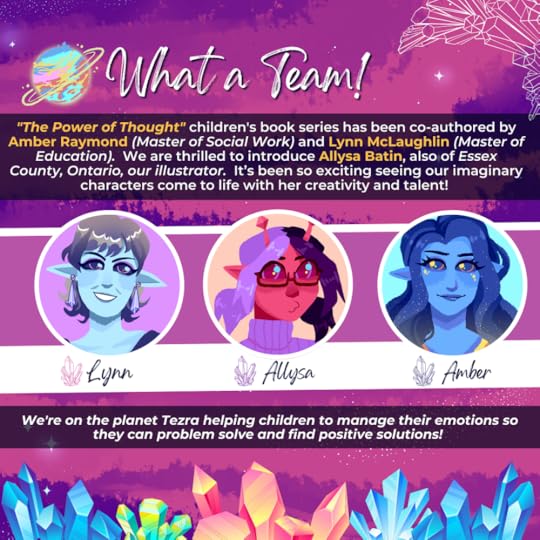
Our exceptionally talented illustrator, Allysa Batin created this caricature sketch of our team.
Meet Zirco!
Zirco and their friends Nyx, Carnuli, Epido, and Lazu, are all children who live on the planet Tezra. Their forms are quite different from humans as they are not identifiable by gender and they hover rather than walk. What is most unique is that the children cannot hide their emotions because they haven’t learned to control them yet. As beings, when their emotions change, they glow in the colour of how they are feeling. Trine and Opal are the guiding adult figures in the book, and are mysterious themselves!
We all feel many emotions and that’s OK! We can help children to see when each character’s feelings are changing by the look on their faces, by body language, or the words they are using. Maybe children can start to tell by the colour of the glow that surrounds our characters. “I Have Choices” is the first book in our series. It introduces emotional vocabulary and includes a guide outlining the strategies children can use and adults can model. Zirco learns to make choices and turn scary thoughts into happy ones.
Do you see a common theme in the names we chose? Like you, every crystal is unique. Some look like simple rocks, and others look like they're from another planet. No matter their appearance, they all make you feel a sense of wonder when you see the way they shine. Working with crystals can help you transform into the most powerful version of yourself by guiding you to see how incredible you truly are. What crystal do you think Zirco is named after?
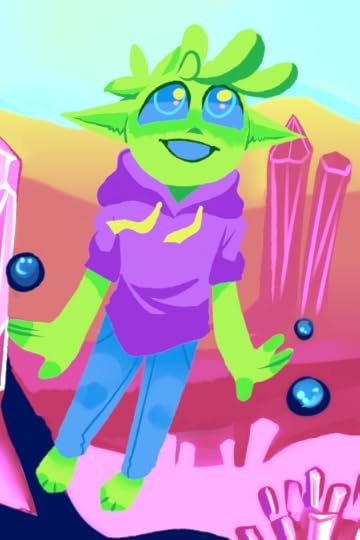
Meet Zirco, the main character of the children’s book Series, The Power of Thought
This series is particularly topical for parents/guardians who want to be proactive or are looking to teach their children how to cope with worry and anxiety. It is also an excellent resource for early years and primary educators who teach these skills and those who provide preventative or early intervention to children who may experience mental health challenges. Our full Literature Review is posted on my website.
Our exceptionally talented illustrator, Allysa created the caricature sketches of our team. We thought we’d make things fun and invite you to enter a draw. Allysa will do a caricature sketch of the winner and at the same time, we’ll keep you posted on when our first book, I Have Choices will be launched in the coming weeks.

Thank You!
A shout out to fellow educators Karen Nagy-Tompkins and Megan Simon-Beaudoin for introducing Amber and me to Allysa, an up-and-coming freelance illustrator!
We're on the Planet Tezra Helping Children learn to Manage Their Emotions …
Last summer, while out for a walk, I called my niece, Amber Raymond on a whim. “Hi hon. How would you like to write a children’s book series with me?” Imagine hearing that question! My niece was just about to graduate with her Master of Social Work and as a life-long educator, I thought we’d make a great team. She didn’t hesitate and in no time, we were brainstorming all possibilities. Our goal from the beginning, without question, was to give children the tools they need to problem solve and find positive solutions for everyday situations in life. We both have countless professional and personal experiences which makes this such passionate work for us. Amber did a full Literature Review (posted on the webpage) and our goal was validated.
Ultimately, by developing our children’s book series titled The Power of Thought, we are offering evidence-based approaches where children will learn to understand, handle and express their emotions appropriately while building social skills, empathy, self-awareness, and self-regulation.
Enter Allysa Batin, our talented illustrator. Allysa is a recent graduate of Kennedy Collegiate and is currently attending the University of Windsor. Amber and I were immediately captivated by her creativity and imagination.
With three minds collaborating, our wondrous planet Tezra and the main characters emerged. It has been such fun seeing our vision come to life, in ways we couldn’t even imagine when Amber and I spoke on the phone almost eight months ago. Each book is fun, introduces emotional vocabulary and includes a guide outlining the strategies children can use and adults can model.
Our exceptionally talented illustrator, Allysa Batin created this caricature sketch of our team.
Meet Zirco!
Zirco and their friends Nyx, Carnuli, Azuli, Lazu, are all children who live on the planet Tezra. Their forms are quite different from humans as they are not identifiable by gender and they hover rather than walk. What is most unique is that the children cannot hide their emotions because they haven’t learned to control them yet. Trine and Epsa are adult figures in the book, and we never see their identifying features. Do you see a common theme in the names we chose?
Meet Zirco, the Main Character of the Children’s Book Series, The Power of Thought
How do children learn to manage their emotions when they feel angry, worried, disappointed, surprised, lonely or happy? Each of our books introduces emotional vocabulary in a fun and entertaining way and includes a guide outlining the strategies children can use and adults can model. This series is particularly topical for parents/guardians who want to be proactive or are looking to teach their children how to cope with worry and anxiety. It is also an excellent resource for early years and primary educators and those who provide early intervention to children experiencing mental health challenges.
Our exceptionally talented illustrator, Allysa created the caricature sketches of our team. We thought we’d make things fun and invite you to enter a draw. Allysa will do a caricature sketch of the winner and at the same time, we’ll keep you posted on when our first book, I Have Choices will be launched in the coming weeks.
A shout out to fellow educators Karen Nagy-Tompkins and Megan Simon-Beaudoin for introducing Amber and me to Allysa, an up-and-coming freelance illustrator we are excited to introduce!
November 17, 2021
Have You Considered Gifting an Inscribed Book For the Holidays? It's Easier Than You Might Think!
With the holiday season upon us, it’s the perfect time of year to gift a book to a friend, family member or colleague. As an author, I’m thrilled to offer inscribed copies of both of my published books. Jackson is a #1 Amazon Best-Seller and Steering Through It is a multiple award-winner!
You are invited to place your order and I’ll be happy to ship the book (books) directly to you. If you prefer ebook or audiobook formats, please jump to the bottom of this blog post.

“With unwavering empathy, Jackson is a bold and unforgettable story of a family navigating through the terrifying waters of mental illness. While there is no simple fix with a kiss to the forehead, will Jackson learn to hear the chatter in his head and know what to do about it? Will love and hope prevail?“An important book for anyone going through challenging times with a teenager.”
“A must-read, especially for parents, teachers, and social workers.”
“I have been on both sides of this story so it really resonated with me. I have no doubt that there are many people who might recognize at least some part of themselves in Jackson or his parents or even his friends.”
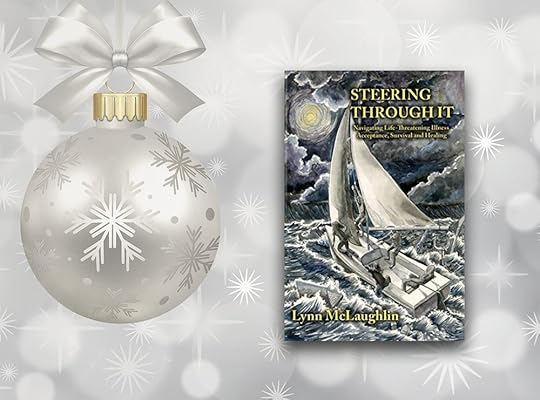
“A life-threatening illness crushes the world around you and around those you love. How do we cope with diagnosis physically, emotionally, and spiritually? How do we move on? What are the most helpful ways to support others in crisis? In the end, what does it all mean?“
“A beautiful memoir that will make you want to laugh and cry. Very well written – I read it all at once, couldn’t put it down. Highly recommend EVERYONE read this book!” … “I found a tremendous amount of hope and inspiration in the author’s voice, and admire the author’s instinct to blend the narrative with inner thought. Well done."
"I could really picture myself in her shoes and it was riveting and brought me to tears. She and her family handled what happened next with humanness and grace.”
BONUS - TEN inscribed paperbacks of Jackson are also being given away on Goodreads. Enter here to win!
Both books are also available in ebook and audiobook formats. See below!
If you would prefer to gift an audiobook or ebook, it’s easy to do! Go to Amazon.ca (or the country you live in) and find the book. Click “give as a gift”. You can choose to e-mail the e-book with a future delivery date, or print out a voucher (which you might love to place in a holiday greeting card. Here are the links:
Jackson… Demons and Desperation/Love and Hope
All the best of health and happiness to you and yours!