Patrik Edblad's Blog, page 12
October 4, 2019
Keystone Habits: How to Change Your Life the Easy Way
Have you ever noticed how some habits tend to “spill over” and affect other behaviors? In his book, The Power of Habit, Charles Duhigg refer to these behaviors as “keystone habits.”
For example, sleep is a huge keystone habit of mine. Whenever I get good sleep, a bunch of positive knock-on effects follow. I’m way more productive, I choose healthier foods, I work out more, and I enjoy life more in general.
Much like a keystone at the top of an arch holds the other stones in place, sleep is the keystone habit that holds the rest of my life in place:

The Power of Keystone Habits
If I just make sure to get good sleep, I don’t have to force myself to get things done, I don’t have to think about eating better, and I don’t have to drag myself to the gym. All of those things will take care of themselves.
That’s a very valuable insight, and it’s why I always recommend starting any behavior change endeavour with identifying your keystone habits. In the words of Charles Duhigg:
“Where should a would-be habit master start? Understanding keystone habits holds the answer to that question: The habits that matter most are the ones that, when they start to shift, dislodge and remake other patterns.”1
Unfortunately, not all keystone habits are beneficial. Just like a good habit can influence other behaviors in a positive way, a bad habit can influence other behaviors in a negative way.
For example, I often feel the urge to open my email first thing in the morning. And whenever I do that, a slew of negative knock-on effects follow. It shatters my focus, ruins my morning writing session, and creates a lot of unnecessary stress as I play catch-up for the rest of the day.
What Are Your Keystone Habits?
If you put a good keystone habit in place, it will support other good habits. If you knock a bad keystone habit out of place, other bad habits will come crashing down with it.
So, whenever you’re trying to change your behavior, begin by identifying your keystone habits. Ask yourself what behaviors has had the most positive and negative ripple effects on your life in the past.
Work on those habits first, and everything else will follow as a natural side effect.
Footnote
The Power of Habit: Why We Do What We Do, and How to Change by Charles Duhigg, page 101
Image by lapelusodesigns from Pixabay
The post Keystone Habits: How to Change Your Life the Easy Way appeared first on Patrik Edblad.


September 27, 2019
Mindset: How to Be Successful in Life
Until the 1960s, researchers believed that changes in the brain only were possible during infancy and childhood. By early adulthood, the brain’s physical structure was considered permanent.
But modern research has proven that idea wrong. Today, we know that the brain is “plastic”, meaning that it creates new neural pathways and alters existing ones all throughout life. As long as you’re alive, your brain is developing1.
Still, there are widespread beliefs that certain qualities are “set in stone”. And, interestingly, people who have those beliefs tend to be less successful compared to people who don’t.
Fixed Mindset vs Growth Mindset
In her book, Mindset, psychologist Carol Dweck explains why that is. She tells us that there are two types of mindsets2:
The fixed mindset, in which you believe that your basic qualities such as intelligence or talent are fixed traits.
The growth mindset, in which you believe that your basic qualities can be developed through dedication and hard work.
The problem with having a fixed mindset is that it makes you feel like you constantly have to prove yourself. If you only have a set amount of intelligence and talent, you’ll want to show you have a lot of it (or at least not less than others). That desire to look smart makes you avoid challenges, give up easily, ignore useful feedback, and feel threatened when others are successful. Since you consider your basic qualities fixed, efforts to change them will appear fruitless. And, as a result, you’ll likely plateau early and achieve less than your full potential.
A growth mindset, on the other hand, creates no need to prove yourself. If your intelligence and talent is malleable, you won’t feel like you’ll have to hide your current deficiencies. Free from a need to look smart, you can take on challenges, persist in the face of setbacks, learn from criticism, and find valuable lessons in the success of others. Since you consider your basic qualities flexible, efforts to change them will seem worthwhile. And, as a result, you’ll consistently take action, improve, and grow.
So, it turns out there’s a lot of truth to Henry Ford’s aphorism “Whether you think you can or you think you can’t, you’re right.”
Stop Judging & Start Supporting
The good news is that you can change your beliefs. By shifting your internal monologue from a judging one to a growth-oriented one, you can reshape your approach to challenges and goals. Here are Carol Dweck’s four steps to change your mindset3:
Learn to hear your fixed mindset “voice.” Pay attention to limiting beliefs. For example: “There’s no point in trying. You’ll just fail.”
Recognize that you have a choice. You can choose to interpret challenges in a fixed or growth mindset. It’s completely up to you.
Talk back with a growth mindset “voice.” Refute and replace limiting beliefs with more empowering ones. For example: “Of course I should try. Anything worthwhile requires failing along the way.”
Take growth mindset action. Practice hearing both voices and acting on the growth mindset. Over time, you’ll learn to choose which voice to follow.
You’re capable of great things, but only if you’re willing to believe you are. So, switch from being your own worst critic to being your own best friend. Stop dragging yourself down and start pulling yourself up. Cultivate a growth mindset, and you’ll be amazed at what you’ll achieve.
Footnotes
What Is Neuroplasticity?
Mindset: The New Psychology of Success by Carol Dweck
How Can You Change from a Fixed Mindset to a Growth Mindset?
The post Mindset: How to Be Successful in Life appeared first on Patrik Edblad.
September 19, 2019
Antifragility: How to Thrive in Chaos
In his book Antifragile, statistician and philosopher Nassim Nicholas Taleb writes:
Some things benefit from shocks; they thrive and grow when exposed to volatility, randomness, disorder, and stressors and love adventure, risk, and uncertainty. Yet, in spite of the ubiquity of the phenomenon, there is no word for the exact opposite of fragile. Let us call it antifragile.1
Taleb makes the case that people, organizations, and systems can be described in one of three ways: fragile, resilient, or antifragile. To understand the difference between these categories, imagine three packages that are being sent in the mail.
Fragility, Resilience, and Antifragility
The first package says “Handle with care.” If you’re not careful, everything inside the box will break. It’s fragile.
The second package says “Robust.” This box can take some hits before the contents inside break. It’s resilient.
The third package says “Handle roughly.” The stuff in this one actually gets stronger if you kick it around. It’s antifragile.
Here’s the takeaway: You don’t want to be fragile. At the very least, you want to be resilient. And ideally, you want to be antifragile. Let’s look at some ways you can move from fragility to robustness to antifragility in your life:
1. Follow Via Negativa
According to Taleb, “The first step towards antifragility consists in first decreasing downside.”1 You can do that through via negativa, which is Latin for “the negative way.” Instead of asking yourself what to add to your life, you invert the question and ask yourself what to remove. For example, get out of debt, stop eating junk food, and quit smoking.
2. Manage Your Stress Response
When a stressor shows up in your life, there are two ways you can perceive it: as a threat or as a challenge. These different views create very different thoughts, emotions, and behaviors.2 A threat response makes you fragile, while a challenge response makes you antifragile. So, develop a “Bring it on!” mentality, and stress will strengthen you.
3. Practice Voluntary Discomfort
The Spartan warriors had a creed that stated, “He who sweats more in training bleeds less in war.” You can prepare yourself for the battles of life by practicing voluntary hardship. Occasionally take cold showers, live on a tight budget, drink water only, and so on. Get comfortable being uncomfortable, and the inevitable blows of life won’t be as devastating.
4. Create Redundancies
Nature is filled with redundancies. For example, animals have two lungs, two kidneys, and two testicles, even though one of each would do just fine. But since one in a pair of organs can become disabled through disease or trauma, it pays to have a spare. You can use the same strategy to decrease fragility of the systems in your life. Start an emergency fund, have a spare tire in your car, use an external hard drive to back up your work, and so on.
5. Use the Barbell Strategy
Taleb describes “the barbell strategy” as “a dual attitude of playing it safe in some areas and taking a lot of small risks in others, hence achieving antifragility.”1 For example, you can keep your day job while working on a side hustle at night. If your side hustle doesn’t work out, you still have an income stream, but if it does work out, you might create a more fulfilling and profitable career.
Always Strive for Antifragility
Philosopher Friedrich Nietzsche once said, “That which does not kill us, makes us stronger.” Set yourself up for antifragility, and you’ll find that famous quote to be true.
Footnotes
Antifragile: Things That Gain from Disorder by Nassim Nicholas Taleb
Threat and Challenge: Cognitive Appraisal and Stress Responses in Simulated Trauma Resuscitations
The post Antifragility: How to Thrive in Chaos appeared first on Patrik Edblad.
September 12, 2019
Margin of Safety: How to Protect Yourself From Costly Mistakes
Imagine that you’re an engineer building a bridge. You know that, on an average day, the bridge will need to support about 10,000 tons of traffic at any given time. Would you build it to withstand exactly that weight?
Hopefully, your answer is “no.” What if your estimates or calculations are slightly off? What if the bridge gets heavier traffic than average on certain days? What if your building materials are weaker than expected?
To account for all that, you decide to build a bridge that comfortably supports 50,000 tons. In engineering terms, the additional 40,000 ton capacity is a “margin of safety.” It’s the ability of your bridge to withstand challenges greater than expected.1
And that principle is very useful, not just in construction and engineering, but in many areas of life. Let’s have a look at some examples.
Time Management
If you’re always running late, it’s because you’re living your life without a sufficient margin of safety. The planning fallacy makes you overoptimistic, and you perpetually overlook that life is full of unexpected delays. To overcome that tendency, you can add extra buffer time before each task in your schedule.
Strength Training
If you push yourself to lift as heavy as you possibly can in the gym, you’re eliminating your margin of safety. By instead finishing each set with at least one more repetition in you, you can execute every lift with proper form and reduce the risk of injury.
Personal Finance
If you spend every dime you earn each month, you don’t have a financial margin of safety. There’s no protection for unexpected expenses. Conversely, if you can get by on 90 percent of your income, the remaining 10 percent can provide a helpful financial buffer.
Investing
If you buy a stock because you consider it slightly undervalued, your investment has a poor margin of safety. Predicting the future is extremely difficult, and that’s why famous investors like Warren Buffett usually only buy stocks that are excessively underpriced.
Stress Management
If you don’t take care of yourself, you won’t have a buffer to deal with the inevitable stressors in life. Good habits like sufficient sleep, healthy eating, regular movement, and mindfulness practice provides an emotional margin of safety for unusually bad days.
Always Have a Margin of Safety
All information contains some amount of error. The future is uncertain and, as I’ve covered in another article, entropy makes it ever more complicated. By using a margin of safety, you get a cushion that protects against incorrect estimates, unforeseen events, and plain bad luck.
Always account for the hidden errors. Always leave room for the unexpected. Always be stronger than you need to be. That will make you confident and unshakable—even when things get extraordinarily difficult.
Footnote
Margin of Safety Definition and Examples used in Safety Basis Documents and the USQ Process
The post Margin of Safety: How to Protect Yourself From Costly Mistakes appeared first on Patrik Edblad.
September 5, 2019
Newton’s Laws of Motion: How to Increase Your Productivity
In 1687, Isaac Newton published his revolutionary book, The Principia: Mathematical Principles of Natural Philosophy,1 in which he stated his three laws of motion.
The Principia formed the foundation of classical mechanics and is to this day considered one of the most important works in the history of science.
And, as we’ll see in this article, Newton’s laws of motion can be used as helpful models to create progress in our lives.
Let’s have a look at the three laws and use my author career as a simple example for each one.
The First Law of Motion:
Objects in motion tend to stay in motion, and objects at rest tend to stay at rest.
Whenever you’re procrastinating on something, you’re experiencing the pull of this law firsthand. Objects at rest tend to stay at rest.
Luckily, it works the other way around, too. If you just get started, you’ll generally keep going. Objects in motion tend to stay in motion.
When I started writing, I was constantly fighting this law. I only wrote sporadically and, as a result, getting started was a continuous struggle.
It wasn’t until I got a regular writing routine down that I could start to benefit from this law.
Over time, writing first thing in the morning has become second nature. My new homeostasis, if you will.
And you can do the same thing in any area where you’d like to make progress. Get moving, and you’ll keep going.
The Second Law of Motion:
F=ma. Force equals mass times acceleration.
There is one important takeaway in the F=ma equation. The force, F, is a vector. Vectors have both magnitude (the amount of effort put in) and direction (where that effort is applied).
If you want an object to accelerate in a particular direction, the amount of effort and the direction of that effort will both affect the outcome.
So whenever you want to make progress, it’s not just about how hard you work (magnitude), but also about where you apply that work (direction).
As a writer, it’s not just the number of quality words I write every day (magnitude) that affects the results in my business.
My decisions about whether to work as a freelancer, ghostwriter, or author (direction) are equally important.
Everything we do has an opportunity cost, so make sure that all your hard work is applied in the most beneficial direction.
The Third Law of Motion:
For every action, there is an equal and opposite reaction.
Much like this law describes, your progress is a balance of opposing forces in your life.
There are supporting forces like energy, focus, and motivation. And there are opposing forces like fatigue, overwhelm, and discouragement.
Whenever you want to make more progress, you have two options: you can add supporting forces, or you can remove opposing forces.
As a writer, I’ve added supporting forces like my daily writing routine, a high-quality writing application, and regular contact with other authors. I’ve also removed opposing forces like email notifications, desktop clutter, and most social media accounts. As a result, the progress I want to make every day now comes much more easily.
Nudge yourself in the right direction, and your behavior will spontaneously adapt.
Quick Summary
Whenever you want to create progress in your life, keep these ideas in mind. Get moving, and you’ll keep going. Apply your hard work in the most beneficial direction. And modify the opposing forces in your life. Use Newton’s laws of motion to your advantage, and they will naturally carry you forward.
Footnote
The Principia: Mathematical Principles of Natural Philosophy by Isaac Newton
The post Newton’s Laws of Motion: How to Increase Your Productivity appeared first on Patrik Edblad.
August 30, 2019
Entropy: How to Get Your Life in Order
The second law of thermodynamics states that “as one goes forward in time, the net entropy (degree of disorder) of any isolated or closed system will always increase (or at least stay the same).”1
That’s basically a long way of saying that all things tend to move from order to disorder. This is one of the fundamental laws of the universe, and you can see its effects everywhere.
Entropy in a Cup
As a simple example, imagine that you walk into a café and order a cup of coffee. Normally, we don’t think twice about a simple cup of coffee, but there’s actually a lot of time and effort that’s gone into it.
The barista reaches for a cup he has cleaned and someone else has made. He then pours water that a power company has heated over coffee beans that got there due to the work of many people. Airplanes, ships, and trucks burned fuel to get them to the café, as well.
Once you get the cup of coffee in your hand, it’s a highly ordered structure in the universe. Its entropy is low.
Now, instead of drinking it, imagine what would happen if you just let it sit on the table for 30 minutes. After a while it gets cold. The heat energy moves from the cup and out into the room. That’s a gain in entropy.
If you leave the cup for several days, some of the water you paid for will evaporate. It will move from the cup and turn into water vapor in the room. That’s another gain in entropy.
Let the cup sit for years, and the material it’s made of will eventually break down and fall apart. This, too, is yet another gain in entropy.
From Order to Chaos
It’s the natural tendency of all things to lose order. Left to their own devices, everything will become less structured. Gardens get weeds. Cars rust. People age. Civilizations fall. Ancient ruins crumble. Even great mountains gradually erode and disappear.
And the same relentless force is present in all areas of your life. If you don’t move your body, you’ll lose muscle mass. If you don’t answer your emails, your in-box will flood. If you don’t nurture your relationships, they will eventually die out.
But the good news is that it’s possible to fight back against entropy. The barista can clean the cup and get it ready for the next customer. And you can expend the energy needed to maintain order in your life. It’s hard, but also meaningful, work. As psychologist Steven Pinker puts it:
The Second Law of Thermodynamics defines the ultimate purpose of life, mind, and human striving: to deploy energy and information to fight back the tide of entropy and carve out refuges of beneficial order.2
Pick Your Battles
Knowing that everything naturally moves from order to disorder, you can deliberately simplify your life. Let go of everything unimportant so you can spend your limited energy where it truly matters. Carefully choose the areas where you want to fight entropy and tend to them consistently.
Not only will it make you more focused and efficient, but also happier and more fulfilled.
Footnotes
The Arrow of TimeThe Second Law of Thermodynamics
The post Entropy: How to Get Your Life in Order appeared first on Patrik Edblad.
August 22, 2019
Fight or Flight: How to Make Good Decisions Under Stress
Imagine that you’re a member of a nomadic tribe of hunter-gatherers living somewhere in North America during the Ice Age. You’re out pursuing a bison when, suddenly, a sabre-tooth tiger jumps out in front of you. At the sight of this threatening environmental stimulus, your body immediately launches into what’s called the fight-or-flight response. Stress […]
The post Fight or Flight: How to Make Good Decisions Under Stress appeared first on Patrik Edblad.
August 16, 2019
Evolution by Natural Selection: How to Win the Game of Life
In the nineteenth century, Charles Darwin and Alfred Russel Wallace simultaneously had what’s been called “the greatest idea anyone ever had.” They both independently realized that species evolve through random mutation and differential survival rates.
Those best suited for survival in their environment tend to be preserved. This process, where Mother Nature decides the success or failure of particular mutations, is called…
Evolution by Natural Selection
To understand how this works, imagine a population of red beetles living in a garden.1 Birds can spot and eat them pretty easily. But one day, a random mutation—a small change in genetic instructions—occurs, and a green baby beetle is born.
Purely by chance, the green beetle is nearly impossible for the birds to see. Thanks to its accidental camouflage, it can survive, reproduce, and pass on its genes more easily than the red beetles.
As a result, the green color becomes increasingly common in the population. And if this process continues, eventually, all the beetles in the garden will be green.
Survival of the Fittest
After reading Charles Darwin’s The Origin of Species, English philosopher Herbert Spencer used the term “survival of the fittest” to describe natural selection. This expression is still widely used today and often misunderstood.
Many people think “fittest” means the best physical specimen of the species and that only those in the best shape will survive in nature. But that’s not always the case. “Fittest,” in this context, simply means the one best suited for the immediate environment.
And that idea applies in many other areas outside biology. Businesses, for example, are subject to their own kind of evolutionary arms races. To survive, a company constantly needs to adapt to an ever-evolving world and continually changing marketplace. Consider, for instance…
Netflix vs. Blockbuster
When Netflix launched in 1997, Blockbuster was the undisputed champion of the video rental industry. Between 1985 and 1992, the brick-and-mortar rental chain had expanded from its first location in Dallas, Texas, to over 2,800 locations around the world.
By the time Netflix came along with their rental-by-mail service, it looked like a classic David versus Goliath scenario. Still, they upended the video rental industry from day one. They had no late fees or shipping charges. If you lost a DVD, you got a new one in the mail with no questions asked.
Blockbuster tried to follow suit, matching service for service, but it was too late. In 2010 they filed for bankruptcy. Meanwhile, Netflix is still evolving, having gone from sending DVDs by mail, to streaming of other’s content, to now streaming of their own content.
Their ability to adapt quickly to the ever-changing needs and preferences of their customers makes Netflix the “fittest” in their industry. Much like the green beetle in the garden, they are the ones best suited for their environment.
Adapt to Win
Evolution by natural selection is useful to understand because it explains what it takes to survive and thrive. To be successful, you need to embrace change. You have to pay attention to the ever-changing environment and rapidly adapt to it. If you do that, you can gain a critical advantage that puts you way ahead of the competition.
Footnote
Natural selection
The post Evolution by Natural Selection: How to Win the Game of Life appeared first on Patrik Edblad.
August 7, 2019
Incentives: How to Motivate People
At the time of French colonial rule of Hanoi, Vietnam, the government was worried about the number of rats in the city, so they created a bounty program that paid a reward for every rat killed. The arrangement was simple: provide a severed rat tail, and you’ll get a bounty.
It seemed like a decent enough incentive system. But soon, colonial officials noticed something peculiar—rats without tails started to show up in Hanoi.
In a striking demonstration of the importance of second-level thinking, rat hunters would capture rats, sever their tails, and set them free. That way, the rats could procreate and increase the revenue of the rat hunters.
The government had requested rat tails, and they got exactly what they asked for. But in the process, they motivated the wrong behavior and failed miserably in achieving their intended goal. And that makes the Great Hanoi Rat Hunt1 a great example of an incentive system gone awry.
The Psychology of Incentives
Incentives matter a lot. They lie at the root of many situations we face, and yet we often fail to account for them. To get a deeper and more structured understanding of incentives, we’ll turn to behavioral psychology.
If we like the consequences of an action we’ve taken, we’re more likely to do it again. And if we don’t like the consequences of an action we’ve taken, we’re less likely to do it again.
That’s the basic assumption behind what psychologists call operant conditioning: “a learning process through which the strength of a behavior is modified by reinforcement or punishment.”2
If you want to change behavior, there are two primary tools at your disposal, reinforcement, which strengthens the behavior, and punishment, which weakens the behavior. You can think of them as a carrot and a stick.
Reinforcement is the Carrot
Research shows that consistency and timing are crucial for reinforcement. The best way to learn a new behavior is through continuous reinforcement, in which the behavior is reinforced every time it occurs. Meanwhile, the best way to maintain an already established behavior is through intermittent reinforcement, in which the behavior is reinforced only some of the time.
Let’s say, for example, that you want to teach your dog to sit. Initially, the best strategy is to reward every successful attempt. Later, when your dog knows how to sit, it’s better to reward it sometimes.
Punishment is the Stick
Punishment has several issues that generally make it less effective than reinforcement. Firstly, behavior tends to return when the punishment is removed. Secondly, punishment tends to lead to increased fear, stress, and aggression. And thirdly, punishment is a poor guide because it doesn’t tell you what to do—only what not to do.
So when you feel tempted to punish a behavior, remember that it’s usually more effective to manipulate the reinforcers involved instead.
If you want to stop your dog from begging for food, it’s a good strategy to ignore every attempt (no matter how cute) and instead reward it when it doesn’t beg.
“What Are the Incentives Here?”
You generally get the behavior you reward, so whenever you want to change behavior, carefully consider the incentives in play. Create an effective incentive system, and the desired behavior will follow.
Footnotes
Of Rats, Rice, and Race: The Great Hanoi Rat Massacre, an Episode in French Colonial HistoryOperant Conditioning
The post Incentives: How to Motivate People appeared first on Patrik Edblad.
August 2, 2019
The Eisenhower Matrix: How to Be More Productive
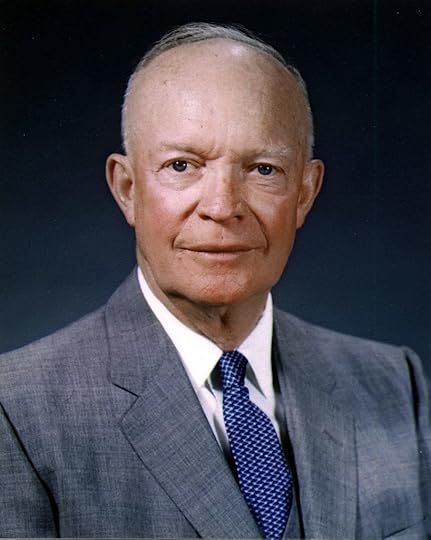
Dwight D. Eisenhower lived a remarkably productive life.
From 1953 to 1961, he served two terms as President of the United States. During that time, he initiated several programs that directly led to, among many other things, the development of the Interstate Highway System, the launch of the internet, and the establishment of NASA.
Before his time in office, he was a five-star general in the United States Army. Serving as Supreme Allied Commander in Europe during the Second World War, he was responsible for planning and executing invasions of Germany, France, and North Africa.
At other points during his career, Eisenhower also served as president of Columbia University as well as the first ever Supreme Commander of NATO. And, as if all that wasn’t enough, he also somehow made time for hobbies like golfing, cooking, and oil painting.
The Eisenhower Matrix
Considering his incredible ability to get things done, it’s no surprise that his time management methods are still being taught to this day. His most famous productivity strategy is called the Eisenhower Matrix,1 and it’s a very useful model for prioritizing your tasks. To use it, you sort your tasks into four categories depending on their importance and urgency:
Important and urgent – Tasks you will do immediately.Important but not urgent – Tasks you will schedule for later.Not important but urgent – Tasks you will delegate.Not important nor urgent – Tasks you will eliminate.
The key here is to distinguish between important and urgent tasks. So what’s the difference? Important tasks are things that contribute to your long-term goals. Urgent tasks are things that require immediate attention. To give you an example of what an Eisenhower Matrix might look like, here’s mine for today:
1. Important and urgent:
Writing article on the Eisenhower Matrix.
2. Important but not urgent:
Doing research for my next book.Reviewing my book marketing campaigns.Going to the gym.
3. Not important but urgent:
Answering the phone.Replying to most e-mails.Responding to Facebook messages.
4. Not important nor urgent:
Watching television.Checking social media.Browsing the internet.
The great thing about this matrix is how widely applicable it is. You can use it as you plan out your year, day, or next hour. No matter the time frame, it helps you filter out the noise so you can focus your limited time, energy, and attention where it truly matters.
Connecting it to mental models I’ve covered previously, the Eisenhower Matrix helps you uncover your 80/20 tasks, stay within your circle of competence, and reduce the opportunity costs that comes with doing what’s urgent instead of important.
Important or Urgent?
As you decide what to do next, ask yourself, “Is this important or urgent?” If it’s truly important, go ahead and do it now or schedule it for later. But if it’s just urgent, try to delegate or delete it altogether.
That way, you’ll make more efficient choices, minimize unnecessary stress, and increase your productivity.
Footnotes
Introducing the Eisenhower Matrix
The post The Eisenhower Matrix: How to Be More Productive appeared first on Patrik Edblad.