Brett Ann Stanciu's Blog, page 50
February 19, 2022
Holy Language.
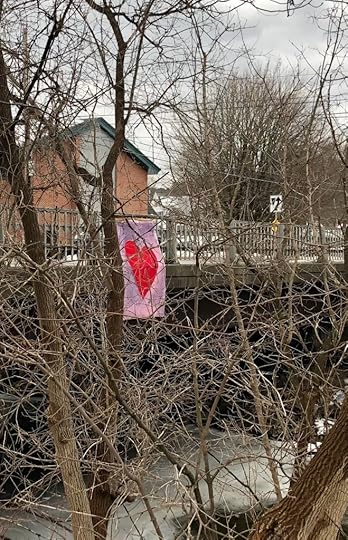 Montpelier, Vermont
On a rainy day last week, I parked on a Montpelier side street and walked into town to attend an opioid summit as a writer.
The last time I had been in the conference space in the Plaza Hotel was nearly precisely two years ago, when I attended a conference as a journalist, charged by my editor to “make connections,” and spent most of it drinking coffee and eating sugar cookies and talking with a para-educator at my daughter’s high school about his experiences. Like darn near everyone else in Vermont, he has a side gig for income, and runs a seasonal bakery.
I sat at a table with people I admire who I’ve met through writing. For those few hours, I had the nearly heady experience of meeting new people; I had remember that deep pleasure. Years ago, I traveled on a train from Charlottesville, VA, to Chicago, and sat beside a man from West Virginia. We talked off and on for those hours. It’s been so long since I had that experience of just listening and talking with people.
For a few hours, I listened to stories about addiction and struggle, about suffering and redemption, about profound loss and grief. Listening, my heart grew full. Our stories and words, the act of telling and listening, of sharing the hard and the beautiful things in our lives, bound us together. The summit began and ended with singing. I’ve never been one for group activities, for open sharing, but at that moment, I utterly understood; I got it. The melody of our language and experiences pulled us together, acknowledging both the beautiful and the terrible about human life, and made our world shine brighter.
…. Grateful to have a terrific piece about Unstitched run in the Brattleboro Reformer and the Manchester Journal by Gena Mangiaratti. And The Rumpus included my essay about the backstory of Unstitched in their Voices On Addiction column this month.


February 17, 2022
The Black Plague. Our Pandemic. Working Life.
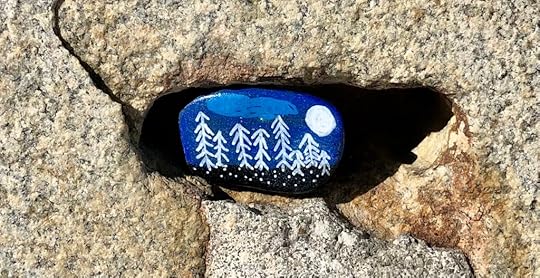
A small art find in Montpelier above….
In my morning coffee and reading this morning, I read Tobin Anderson’s Guest Essay in The New York Times about the Black Plague, Covid, and working.
Working has been a steady source of conversation in our house for this past week for a complexity of reasons. As Anderson writes, human lives are caught up in the sweep of human history — at this particular time, a decidedly less fun moment in history. Nonetheless, our individual small lives matter. (See enchanting tiny landscape above, in the granite block.)
Given where we are right now, it’s worth paying attention to the chain of events that led, link by link, from pandemic to panic to bloody uprising.
— M. T. Anderson
February 15, 2022
Bald Eagles. Vermont State House.
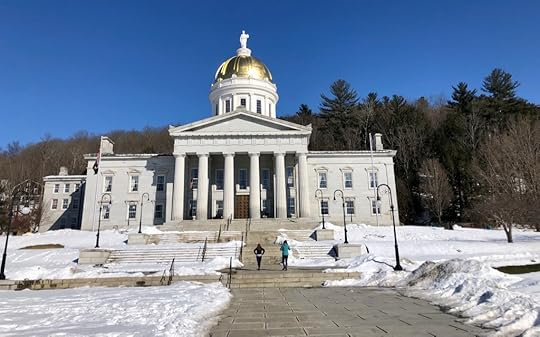 Montpelier, Vermont
Sunday, we bought coffee and pastries in Montpelier (for a change of venue, a change of scene) and ate outside in the cold. There’s a pandemic, after all, and bakeries open on the weekend had closed their indoor seating anyway. None of us complained or even remarked — something I silently noted.
On this cold morning hardly anyone was walking. We passed a man sitting beside an apartment building, flossing his teeth. My youngest pointed out a bird gliding high above the state house. “Bald eagle.”
Bald eagles have recently been removed from the endangered species list in Vermont. I noted again how eagles are now part of our life. Last summer, in particular, we saw eagles frequently. I grew up in New Hampshire and never saw either an eagle or a loon my entire childhood. Now loons (also removed from the endangered species list) have always been part of my daughter’s life.
We walked up the street and then returned. The eagle was still silently gliding on its immense wingspan.
Like eagle that Sunday morning
Over Salt River…
Breathe in, knowing we are made of
All this…
February 12, 2022
Unexpected Phone Call. Driving.
My friend who has no cell phone (yes, indeed) phones me from someone else’s phone when she needs a ride, due to being “in a pickle.” I don’t get the message, as I’m on the phone with a hard-working journalist who’s graciously writing about my book.
Since it’s my lousy cell phone, I get the message about 20 minutes later, as messages are conveyed to my cell phone via carrier pigeon. I phone the stranger, who’s no help at all, but really darn nice.
I get in my car and go search for my friend, listening to a replay of Vermont Public Radio’s Brave Little State about the housing crisis. I pull into Montpelier and get out to look for my friend right around the time the podcast delves into interest rates and their role in this actual Real Life problem.
My friend is fine and home by then, and I sit on the steps of a closed restaurant and talk to her for a good long while. It’s dark, but not late, and the air is warm. I’m in this tiny little city that smells deliciously of something spicy, not sweet like cinnamon, but spicy like hot chili oil. I’m across from my beloved public library, closed up now, where I worked so many lovely long days, pre-pandemic, with never a thought that those days might cease for me. Since I have no real place to be, and my friend is ebullient to be home and safe, I tell her about the night so many years ago when I stood with my baby just down the street and contemplated renting a room in the inn and never going home. I’ve thought about that night and those crossroads in my life for years now, but when I tell my friend this story now, I imagine that long ago night lifting on little dove wings and fluttering over the roof tops.
I turn off my phone and drive home under the starlight.
February 8, 2022
Overheard.
Far enough after twilight that the darkness has set in for the night, I walk up to the library to leave my returns in the book drop. The bitter cold has snapped, worn down by the day’s warmth. Cold in February will return — it nearly always does — but the tide of winter has pushed over.
Spring in Vermont is a long ways off. This is a rude truth, and it’s also true that this is the time of year I begin hungering for green. I take my time, walking back through a neighborhood. Hardly anyone is out, save for a man standing on his back step, drinking a beer and smoking. The smoke curls upward in the lamplight just above his head. Down the street, a small child comes running at me, his or her head hung down a little, tired perhaps. The child wears a knit cap and a dark coat and hurries along, keeping a wide berth from him. At the house with the man and the cigarette, the child leaps the snowbank. The man says, “Hey now, been waiting.”
The boy rambles about “sledding gone soft.” As I turn the corner, the man’s deep voice follows me. He says kindly, “Wait a week, kiddo.”
Good advice for kiddo, I think. I follow the steep street up to my house, where the cat is waiting in the windowsill for me, and the daughter is solving math equations.
Collectively, I think, we’re all in a waiting period.
February 6, 2022
February.
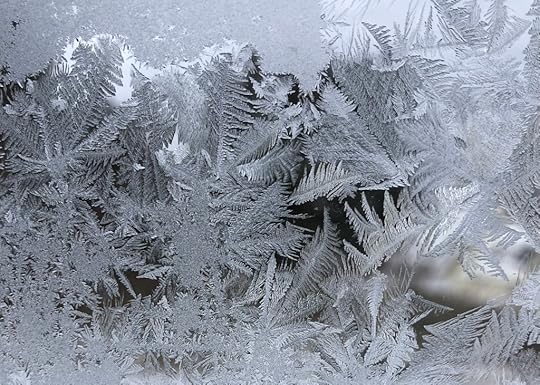
View from our front porch. Which pretty much sums up where we are now.
… oh voiceless trees
Under the wind, I knew
The eager terrible spring
Hidden in you.
— Sara Teasdale
February 4, 2022
Snowfall.
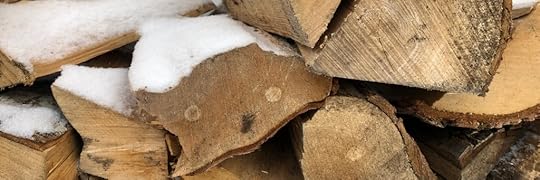
We’ve had so little snow this winter in Vermont that this morning’s deep snowfall comes almost as a kind of surprise. The day before, a cold rain fell all morning. As I bent into work, I kept glancing through the windows, glad of the indoor work that morning.
This snow is the classic, pillowy powder of the most magical childhood memories. Sure, spring is far in the offing on a day like this, but the billows and mounds embody winter’s profound silent beauty.
A decade ago in my life, this kind of storm would have whooshed in with a number of worries — will the sugarhouse collapse before the roof is raked? How long can I endure cooped-upness with small children? Will our firewood hold out? These days, my worries are different, as my life is in another place. But I’ve changed, too. We’ll do what needs to be done. What doesn’t get done, perhaps doesn’t need to be done. And some sun is in the forecast for this weekend, too.
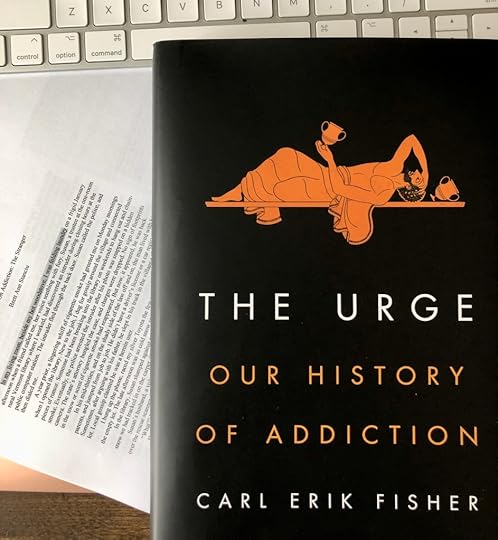
[The 1800s opium epidemic in China] was once widely interpreted as a story of a once noble society destroyed by a powerful drug, but more recent scholarship has argued that this simplistic explanation overlooks the turmoil, poverty, and widespread dislocation caused by the wars themselves which in turn exacerbated the epidemic.
Carl Erick Fisher, The Urge
February 2, 2022
Sugar. Salt. Stars.
The air has turned this morning when I step outside in the dark with my bucket of hot stove ashes. Even without my coat, I’m not immediately shivering, and the cold doesn’t come at me with daggers on my face.
Beneath the starry sky, I gazed up at Ursa Major, a single gauzy cloud suspended overhead, as if in water. I’m reminded of frog’s eggs, those cushiony pillows I sought with my daughters when they were little. Every spring, we found clusters in ponds and in the ditches along our dirt road. We’d visit these clusters every day on our wanders. Sometimes the eggs hatched. Sometimes the clustered disappeared.
On this early February morning, beneath the stars, I stood for a few more quiet moments, thinking about stars and frogs’ eggs. Snow’s expected to move in soon, too.
As water given sugar sweetens, given salt grows salty,
we become our choices.
~ Jane Hirshfield
January 30, 2022
Book Rec.
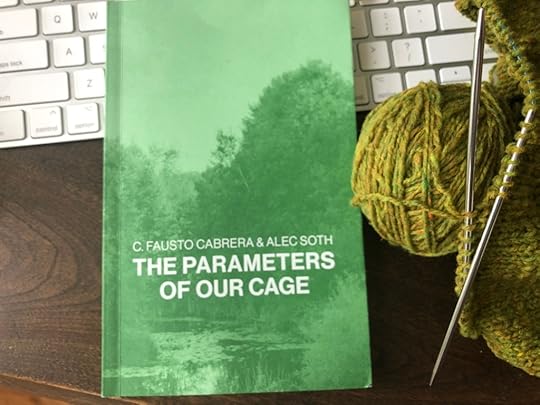
By chance, I start reading a book of letters exchanged between a photographer and a prisoner, an exchange in 2020 that opens a view into these two men, into our country, and into art. I devour the book. The book’s title is The Parameters of Our Cage, and I keep thinking about the cages culture constructs and we construct in our own lives. It’s a question I’ve returned to, over and over in my life. So much of my life’s hours have been devoted, in one way or another, to writing. As the pandemic has created higher walls and sturdier cages, writing, art, human imagination, are increasingly powerful. Utterly necessary.
I wake to a perfect zero degrees this morning. Our house is thankfully warm and pleasant, but the cold is ever present. There’s immense snow south of here, but again the storm has sheered off to sea.
The most profound art is generated out of the depths of a personal place, then becomes an entity in its own right thus developing a different layer of function that requires a social aspect or nature.
C. Fausto Cabrera
January 27, 2022
January. Twenty Below Zero.
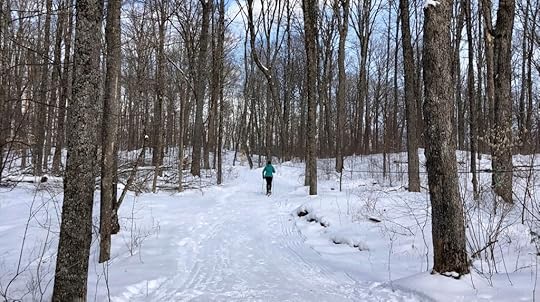
Daughter and sap line
20 below this morning as I head out to start my car. The moon hangs in a crescent over our house, visible through the smoke from our wood fire. In January, Vermont, the days creak along with the cold.
In an evening meeting, it’s just me at the town hall, holding that physical place as an open meeting law requirement, everyone else virtual from their living rooms or home offices. From the hallway, I pick through a box of cast-offs and take a pair of Teva sandals. A kind of promise, for another season.
Tonight as it gets cold
tell yourself
what you know which is nothing
but the tune your bones play
as you keep going.
— Mark Strand