Stephen H. Provost's Blog, page 9
August 5, 2017
This is a writer's most precious commodity
A writer’s voice is like his or her soul.
No offense to ghostwriters. I don’t mean to suggest you’re selling your soul by trying to sound like someone else. Everyone’s got to make a living, right?
Maybe that’s the problem, though. Writing is such a difficult way to make a living, that sometimes, it might seem like the best way to do so is to sound like someone else. I’m not just talking about ghostwriters. I’m talking about authors across the spectrum who can't help but feel the pressure to write the "next" Twilight or Lord of the Rings or Harry Potter.
I have three words of advice: Resist that pressure.
Because ...
Someone’s already done it better than you possibly could, even if you were the best writer in the known universe, because the person who did it first was the original.Apart from that, another "someone else" out there can probably do it better than you can, too. No offense, but in a world of 7 billion people, there are probably just a few writers who are more gifted than you are.Most fans of established authors aren’t looking for the “next J.K. Rowling.” They’re looking for the next book from J.K. Rowling.Trying to emulate another author too closely isn't much more creative than filling in the blanks on a Mad Libs game (remember those?). We all try to emulate successful and talented authors; at a certain point, however, a line is crossed between inspiration and mimicry that's like comparing a bus stop to a bus. To put a finer point on it: Even if it feels like you're spinning your wheels, that's far better than not having any.And, most importantly, if you’re writing like someone else, you’re not writing like yourself. Which is not only a big loss for your readers (because no one else can write like you can), it’s can also be personally demoralizing. Is there anything that puts a bigger damper on the creative instinct than the feeling that you can only find success by imitating someone else? Maybe there is, but I can’t think of one.Your voice is your most precious commodity as a writer. You may feel like, as an author, you're on a leaky lifeboat in the middle of a storm-tossed sea (and what author hasn't felt that way at one point or another?) In such moments, the last thing you should throw overboard is your voice. That's your life-preserver.
Day jobsThe good news is that, contrary to what many readers believe, the vast majority of authors don’t make their living writing books. They’re journalists, science teachers, medical doctors, public relations professionals, website designers … you name it. Even many of those who have won awards use writing to supplement their incomes rather than to pay the rent.
This may not sound like good news, especially to the large number of authors who would love to quit their day jobs and make a living from their writing. But consider this: If you have a day job, it gives you the same kind of freedom authors like Rowling and King and Patterson have —the freedom to write whatever the hell you want.
If you’re a mid-range writer on a contract who’s struggling to make ends meet, you might have a lot of people telling you that you need to write specific things that sound like a specific someone else.
How much fun is that?
“I could never be a novelist because then I would have to stop being a ‘write-for-TV-sometimes-ist’ or whatever the things are that I want to work on,” bestselling author, scriptwriter, etc. Neil Gaiman said in a 2014 interview. “I have the freedom to write whatever I want, for example children’s books.”
Gaiman is, in fact, a novelist, and he’s written some very good fiction. His point is, he isn’t just a novelist. He’s other things, too, and he can afford to be those things because he's "made it."
What those of us with day jobs often fail to realize is that we can do the same thing. We may not be free to write as much as someone at the top of the pyramid, like Gaiman, but we do have the same kind of freedom. So instead of trying to “make it” by writing like someone else — and becoming entrenched in a less-than-creative process of grinding out the next not-quite-so-great fill-in-the-blank title, why not exercise that freedom?
Original spinI have a day job, and I don't make enough to live off writing books. Would I like to? Sure. But I’m luckier than most because my day job involves writing (I’m a newspaper editor/reporter) and exposes me to plenty of fodder for my off-the-clock writing.
That’s allowed me to, like Gaiman, explore a diverse array of topics and genres. I've written (as Stifyn Emrys) books that are philosophical and inspirational, and (under my own name), I've tackled speculative fiction and historical nonfiction.
As long as I don’t get caught up in worrying about “making it,” the process is a lot of fun. Plus, I get to keep my own voice.
My foremost criterion in writing each of the books I’ve written for Linden Publishing — Fresno Growing Up, Memortality and Highway 99 — has been originality. People had written about Fresno’s pioneer years before, but they hadn’t focused primarily on the Baby Boom generation. There are tons of books out there about Route 66, but Highway 99, which was similarly important out here on the West Coast, had received little such attention. As to Memortality, I have yet to run across another story that pairs the concept of a person’s eidetic (photographic) memory with a supernatural ability to raise the dead.
What fun is it to cover the same old ground, anyway?
Imitation may be the sincerest form of flattery, but I’ve never been interested in flattering anyone. I’ll stick to plain ol' sincerity and hope someone else likes what I’m putting out there. If so, I’ll be ecstatic. If not, I’ll still have had a ton of fun along the way.

Photo by Ray Dumas.
Value your voice
A good editor will:
Fix errors in spelling, grammar and usage.Point out inconsistencies and content gaps.Suggest ways to tighten and punch up your writing.Give you ideas about where to take a story.Suggest changes in style where they may slow down or confuse the reader.But a good editor will never simply change your voice without consulting with you. Changing your voice without asking or just because it sounds better to the editor’s ear is not OK. (Your ear matters as much as or more than the editor’s — suggestions are fine; wholesale changes without consultation most definitely are not.)
If you come across an editor who wants to significantly change your voice, my advice is to run like hell, don't look back and keep on writing.


May 14, 2017
"Memortality," the movie: Hypothetical casting call
No one has signed up to make a movie about Memortality (at least not yet!), but authors are often asked whom they’d choose to play various roles if someone requested film rights.
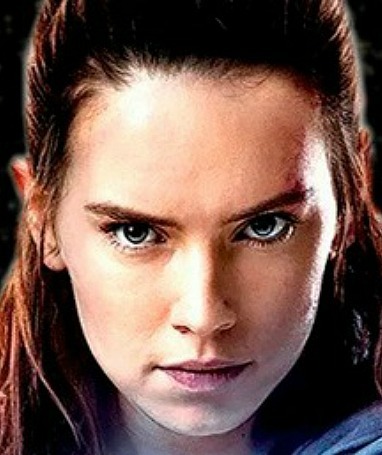
Daisy Ridley
As a movie buff, I thought it would be fun to cast a hypothetical Memortality feature film. The result would be so far over budget it would likely never get made because I chose a lot of big-budget stars. Not to mention the fact that many of them probably wouldn’t be the right age anymore by the time such a hypothetical film got made.
But who cares? As I said, it’s hypothetical, so why not have fun with it? Here are my choices as of May 2017. Feel free to chime in with your own suggestions.
Minerva: Not only does she look like the Minerva I envisioned, but ’s performance as Rey in Star Wars: The Force Awakens went a long way toward Minerva’s toughness and determination.
Raven: This one was perhaps the hardest for me. I envision someone who’s heroic but vulnerable who can play off Minerva’s character well. I don’t see a Hollywood “hunk” in the role. A couple of possibilities occurred to me: , who played Percy Jackson, and from Fantastic Beasts. I’m definitely open to suggestions on this one, though, as long as they don’t include Robert Pattison (who’s too old now, anyway) or Channing Tatum.
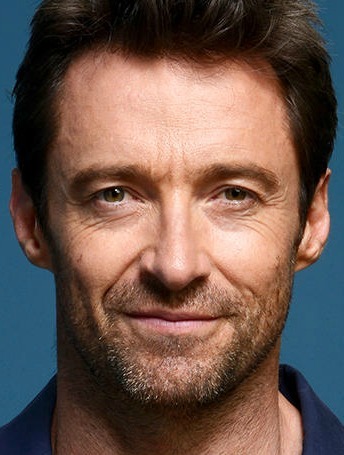
Hugh Jackman
Carson: The actor I really want for this, , is probably a tad long in the tooth, but otherwise, I think he’d be great in the role. He’s got the whole intense-but-wounded-and-refusing-to-show-it thing down pat, which is what Carson’s all about. Given Neeson’s age, I’d probably go with , or . Jackman's Wolverine remains the definitive X-Men character, and since Minerva and Raven are similar to mutants, casting Jackman in the role just seems to make sense. But I think they’d all be great. I can just picture Butler shouting, "This is Los Angeles!" Well, maybe not. But Crowe's "What we do in life echoes in eternity," would fit nicely.
Jules: , in her red-haired incarnation, came to mind here, largely based on her portrayal of Black Widow in the Avengers series. She’s knows how to play dangerous and volatile. I think she’d be perfect.
Josef: . If you’ve seen this guy’s performances in Django Unchained and Inglourious Basterds, you won’t have to ask why he’s perfect for the role of a sociopathic mad scientist with aspirations to grandeur that may be more than delusions. Besides, apart from the gap-toothed smile, he really looks the part … and Hollywood makeup artists could make the tooth problem disappear (or appear?) without a problem.
Amber: . Amber is basically an uber-achiever, and Lawrence just fits that role for me.
Henry: would bring the perfect British sensibility to the role of the physician who finds himself caught up in something he neither wanted nor imagined.
Jessica: I’m not sure why I think would do a great job playing a thoroughly unlikable, self-centered, chain-smoking woman on the make. But I do.
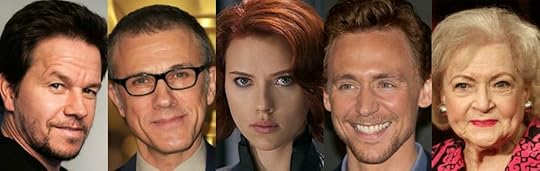
Mark Wahlberg, Christoph Waltz, Scarlett Johansson, TomHiddleston and Betty White
Jimmy Corbet: ’s Boston tough-guy would fit this role pretty well, I think. Or maybe it’s just because the character’s name (and believe it or not, I just realized this) is almost identical to that of turn-of-the-century heavyweight champ James J. Corbett … and Wahlberg once played Irish Mickey Ward in a film called The Fighter. It certainly is not because he was in a mediocre Planet of the Apes remake or because he started his career as a singer called Marky Mark.
Sharon Corbet: I think , who won an Oscar for A Beautiful Mind, would do well in this role, even though the character wouldn’t get much screen time.
Mary Lou Corbet: . Because, Betty White.

Jason Momoa
Actors I’d love to cast but don’t really fit any of the characters include , and the late , who would have given Waltz a run for his money as Josef (even so, I think I still would have chosen Waltz for this particular role). I might have roles for Cooper and Downey in the sequel, though, and would be perfect for another character introduced in the second installment. There’s also and , either of whom would do well as a character in the third book, which I’m writing now.
Who would they play? I'm not giving that away. You'll have to wait until the sequel comes out early in 2018. Then have fun guessing!
May 13, 2017
How to write a mystery without even knowing it
Fleetwood Mac released an album in 1973 titled "Mystery to Me." The cover featured a cartoon baboon sampling a cake, having apparently already taken a bite out of a book.
Four months have passed since the release of "Memortality," and readers have taken their first bite (not literally, I hope) out of this, my debut novel on Pace Press. I'm happy to say the reactions have been positive: a series of 4- and 5-star Amazon reviews, along with praise from respected literary magazines such as Amazing Stories and Foreword Reviews.
Many readers don't know how to categorize it. Is it fantasy? Science fiction? Horror? A spy novel? That's because I wrote to the story, not to the genre. I've never liked labels, so when my publisher called the novel "genre-breaking," it made me smile. I'm all about breaking down artificial boundaries, even if it makes things harder for booksellers to find the proper shelf for my novel.
I wasn't even sure whether to call it YA, new adult or adult fiction. Truth is, I wanted it to be all of the above. Hey, if J.K. Rowling could impress my then-octogenarian dad with a series of books written for kids, I figured that was a pretty good role model.
The true mystery of the world is the visible, not the invisible.
— Oscar Wilde
But one thing did surprise me most about the readers' reaction: Some classified it as a mystery. I definitely didn't set out to write a mystery. I've even been known to remark that I didn't think I'd ever write a mystery. For one thing, it's been my impression that good mysteries are elaborate exercises, and I'm mostly a "pantser," which is to say I write by the seat of my pants. I don't create elaborate outlines before sitting down to write a book. I start with a general concept and let the story take me wherever it wants to go.
When people say the word "mystery," I tend to thing of Ellery Queen, Agatha Christie and the like. But mystery, in the broader sense is about keeping the readers guessing; it's about sprinkling enough clues around in the plot to foreshadow a twist without giving it away. And I do love twists. If you haven't read "Memortality," it's got a great twist toward the end, if I do say so myself.
So maybe I did write a mystery, after all, even if, to quote that old album title, it wasn't a mystery to me.
March 12, 2017
Me a workaholic? Give me a break!
You keep using that word. I do not think it means what you think it means.
— Inigo Montoya (Mandy Patinkin) in "The Princess Bride"
My name is Stephen, and I am not, repeat not, a workaholic.
It might look like I am at times, but these days, it’s easy to mistake someone who’s conscientious, driven and passionate about what he does for a workaholic.
What’s wrong with that, you ask?
If people think you’re doing something because you’re addicted to work, they’re likely to tell you to “take a load off,” “relax” or, my favorite, “Don’t take life too seriously.”
I have an offbeat (some might say warped) sense of humor, but I like a good laugh as much as the next person. If there’s anything I might be addicted to (other than caffeine), it’s puns. But addicted to work? You’ve got to be kidding me. That’s like accusing me of being addicted to exhaustion and stress, two of my least favorite things.
Another problem with being mistaken for a workaholic is that people overlook the real reasons you work as hard as you do. Here are a few:
You want to make sure a task is done well.You want to meet a deadline.You don’t want to make others do the work that’s your responsibility.You want to succeed. This point is particularly true of the self-employed and small-business owners, who frequently get classified as workaholics. But their motivations aren’t a love of work for its own sake. It requires a tremendous amount of work and dedication to pursue success apart from the established corporate structure, simply because there’s no established support framework. You have to build one from scratch, which requires a lot of work on top of the typical workweek. What most people in this category want is independence. The work is merely a means to that end.You want to feed yourself, contribute to your family’s success and maybe, just maybe, have a little bit left over for (gasp) playtime! (Workaholics don’t have playtime, so if you’re looking for a way to distinguish the conscientious, driven worker from the workaholic, this is a great bullet point to remember.)All of the above apply to me. As a journalist, I want to make sure my newspaper contains high-quality content and is delivered on time, and I know it’s up to me and my reporter to make that happen.
As an author, I’m trying to establish a support framework (fellow authors and others in the industry; and, most importantly readers) in addition to doing the actual work of writing.
In order to give all this a chance to work, I have to establish clear boundaries. My work as a journalist comes first, because that’s my primary source of income. So, I make sure those goals are met first.
Sometimes, that means working outside the "normal" workday to cover a meeting or respond to breaking news. But that doesn’t mean I go out looking for extra work just for its own sake. I have books to write and market, too. So, on the weekends, I don’t do journalism unless 1) there’s a crisis involving breaking news, 2) my boss asks me to or 3) I need to in order to ensure the aforementioned quality and timeliness standards are met.
I became an author (and a journalist, for that matter) because I love to write. Most of the time, writing isn’t work to me; it’s pleasure. The stuff that goes along with it – the marketing, promotion and the networking – is necessary work. If I were a workaholic, I’d love that stuff. I don’t. Not even close.
Yes, it’s fun to meet other authors and talk to readers, but nine-hour drives to conventions aren’t kind to a 53-year-old body, so they’re not my idea of a good time.
(An aside: I don’t want people contacting me on social media or personal email about their pet peeves regarding the newspaper or telling me that one of my books sucks. Just put yourself in my position. Would you? I don’t think even workaholics enjoy that sort of thing.)
It’s easy to dismiss hardworking, conscientious people who are passionate about what they do as “workaholics,” as though there’s something wrong with them. But is there really? Aren’t hard work, conscientiousness and passion positive traits? They sure were when I was growing up, and I think they still are today.
So, the next time you see someone working hard, don’t assume the person's a masochist or workaholic. Far more likely, it's someone with a goal, a vision, a purpose. And chances are good that, if it's achieved, it will help make the world a little better place.
January 25, 2017
My first video book trailer: Memortality
For the first time in my career as an author, I commissioned a video trailer for one of my books. (I figured if it was good enough for Twilight and The Hunger Games, it was good enough for me.)
Friend and fellow author Drew Wagar created this 54-second clip for Memortality to the soundtrack of Quinn's Song: The Dance Begins by Kevin MacLeod.
Drew, the author of The Shadeward Saga, the The Elite Dangerous Saga and The Midnight Chronicles, had created a series of video trailers for his own novels that caught my attention, so I asked him to come up with something for Memortality.
I'm thrilled with the result.
The stark, unadorned visual, with words that appear, then vanish as the video progresses, provides a "calm before the storm" prelude to a book that's filled with action. The music Drew chose underscores the mood: a feeling of reluctant tranquility, of serenity laced with a hint of foreboding. The candle - prominent in the work itself - preserves a fragile light, flickering bravely against the dark backdrop that's first grim, then dangerous. This is the life of Minerva Rus.
Will her flame endure? You'll have to read the book to find out.
I hope this brief preview whets your appetite for what lies ahead in the pages of Memortality. As I write this, there's just a week left before the release date. Like Minerva, I'm both anxious and excited about what's about to happen next.
January 17, 2017
5 Reasons Not to Write Fiction in the Present Tense
I picked up a friend’s novel the other day, opened it and started reading. It’s well written, and the characters are interesting. They’re the sort of people I can relate to, which made me want to read further.
But that’s not the first thing I noticed about the book. The first thing I noticed was the fact that it was written in present tense.
Apparently, this is a thing – especially for young adult novels. I’m not sure why, but I’ve heard it’s trendy in this genre. Presumably, the idea is to convey a sense of immediacy: This is happening now, and you’re along for the ride, not merely hearing someone tell you about it after the fact.
That’s the upside, but there are enough downsides to more than offset it, in my book – well, not in my book: I’ve never written one in present tense. And here are five reasons I wouldn’t:
It’s not conversational. Strike up a discussion with someone. Anyone. I’ll bet you he or she doesn’t talk in present tense. When people tell stories, they’re usually telling you about something that happened to them in the past; making it sound as though it’s happening in the present can be confusing and downright irritating. It’s kind of like Kanye West referring to himself in third-person. Most people don’t talk like that. It sounds weird at best, pretentious at worst.You’re not a tour guide. Or a golf announcer. There aren’t many people who speak in the present tense when describing something. Sometimes, it can work, but that “sometimes” is rarely in print. You’re reading a novel, not taking a tour of Hearst Castle or watching The Master’s. Even that can be galling. How often do we have to listen to an announcer state the obvious: “He lines it up and approaches the ball …”? I can see that for myself, Einstein. Be quiet and let the action speak for itself. Which brings me to No. 3.It makes you more aware of the narrator. You’ve no doubt heard (probably since middle school) that good writers “show and don’t tell.” The present tense does the opposite by emphasizing style over substance. Writers who use it are relying on a technique to bolster the story, rather than getting out of the way and letting the story speak for itself. It’s crutch. The more you’re aware of the narrator, the less you’re able to connect with the story. Unless deftly done, the present tense is a distraction that keeps the reader from becoming immersed in the tale. Think about how often you see actors turn to address the audience directly from the stage. used to do it on the old Burns and Allen TV show, but there’s a reason it’s the exception, not the rule: It reminds the audience (or the reader) that this is “just” a story. If the story’s good, the reader should forget it’s a story. It should become an alternate reality. An intrusive narrator can keep that from happening.It’s tiring. While it may seem like fun at first to feel like you’re in the middle of the action, this can get exhausting. Part of the magic of reading is being able to go at your own pace, and – at least for me – being caught up in a present-tense narrative can be exhausting, especially if it’s heavy on the action. I can wind up wanting a break after a few pages, which is exactly the effect I don’t want to have as a writer: I want my readers to become so engrossed in the story they don’t want to put it down.It’s difficult to maintain. Because it’s natural to tell stories in the past tense, you have to pay close attention as a present-tense author to keep from reverting back into what’s more comfortable. You have to continually be on your guard to make sure you’re still writing in the present tense, and you have to have a damn good editor to catch the lapses you miss. Why spend all that energy on maintaining the present tense when you could be devoting it to telling the story? The best answer I can come up with is that you shouldn’t.I’m not saying writers banish use the present tense to stylistic purgatory, any more than we should avoid first-person narratives altogether. I just think we should be selective about using such devices to be sure they don’t detract from the story. (I wrote my first novel, Identity Break, in the first-person format, and I'm pleased with the way it turned out; but if I had it to do over again, I’d probably opt for the third-person POV, because I could have told the same story more seamlessly.)
I’ll likely keep reading my friend’s present-tense book, because it has a lot going for it. The author is a strong enough writer to pull it off. But to me, that’s like being a golfer who’s good enough to win despite a two-stroke penalty, or a boxer can deck his opponent with one hand tied behind his back. I’d rather forgo the penalty and have both my hands free.
December 24, 2016
Active and reactive writing: A journey from journalism to fiction
With the year drawing to a close, I decided to look back on the blogs I’ve posted in the past 12 months and noticed a theme: A lot of them involve politics.
It wasn’t my intention, when I started blogging, to spend so much time on political matters. An earlier blog I authored (no longer available online, sorry) was meant to do just that, but I wanted to move away from politics with this one.
I haven’t been entirely successful.
I could take the excuse that this election year has been so crazy it would have been hard not to write about it, and I suppose that’s true. In my defense, I’m not the only one who’s done it: A lot of very accomplished author friends have devoted considerable space to the news of the day in articles, blogs and social media posts.
Excuses aside, however, it raised the question of why.
Restating the obviousFirst off, it occurred to me that outrage can be one of a writer’s greatest motivations. It’s also one of the easiest things to write about because it’s so obvious. If you’re irate about something, it’s often because the answer is so obvious (at least to you) that it might as well be screaming at you from a couple of inches in front of your nose … so you want to scream it at other people.
Obvious things are easy to write about, and we writers aren’t immune to the temptation of taking the easy way out. In some ways, we might be more susceptible to it than most: Writing – especially creative writing – can be laborious, so it can feel damned good to see the words just pouring out from your fingertips onto the screen in front of you.
Add to that the feel-good nature of a nice long rant – or a short, Twitter-pated one – and you’ve got a recipe for a lot of political posts, especially in a year such as this one.
There’s a second issue at play, however, that’s related to the first but is more fundamental. It involves the distinction between active (or creative) and reactive writing.
I’ve spent most of my career doing the latter, because it’s what a reporter or columnist does: He or she reacts to the news. This transitioned nicely for me into historical nonfiction (my books Fresno Growing Up, Highway 99), because writing about history is another sort of reactive writing. This is fairly easy, because the ingredients for a story are right in front of you. All you have to do is put it on the page.
That’s not to diminish the importance of telling the story well. In some ways, nonfiction is a bigger challenge: You can easily fall into the trap of parading events before the reader in a predictable chronology (“and then, and then, and then”) that will put a reader to sleep. This is how you get dry textbooks and newspaper articles full of jargon, wherein police “respond to the scene” and victims “sustain multiple contusions, lacerations and blunt-force trauma to the head.” Are you still awake? Me, neither.
Next stop: Novel LandThat’s a challenge to a writer’s skill set, but not to his or her creativity, which is what comes into play with active writing.
A couple of years ago, I set about writing my first novel, Identity Break, and I remember being very excited about it. I had what I thought (and still think) was a great concept, and all I had to do was put it down on paper. I was still reacting to my own idea, but there was more work involved because I had to keep drawing on my own creativity to fill in the blanks. The novel, which I self-published, got some good reviews but didn’t create enough buzz to really take off, and what I had planned as a trilogy wound up truncated into a single book and a prequel novella called Artifice.
Fast forward a couple of years, and I decided to give novel-writing another go. Memortality started out as a “fun breather from non-fiction” after I’d finished Highway 99. Once again, I had a great concept – even better than Identity Break, and a lot more complex. It was that complexity, though, that exposed me to the real challenge of writing fiction: keeping the creative juices flowing while ensuring iy all made sense.
I told myself I never finished the sequel to Identity Break because I didn’t want to spend time on a project that wasn’t taking hold with readers, and that’s mostly true. But I also wasn’t as comfortable about active (fiction) writing as I was with (reactive) non-fiction, so it was easier to tap that well again for my next big project, which turned out to be Fresno Growing Up. Don’t get me wrong: I’m glad I did. It has turned out to be far and away my most successful book to date.
That led me to the idea for Highway 99, and after I’d finished writing that, I plowed ahead with a similar work on U.S. Highway 101, thinking I’d found my niche. That was before I asked my publisher: “How would you prefer me to spend my time, working on 101 or putting together a sequel to Memortality?” I expected him to say the former, because Linden had always focused heavily on California history books and Memortality was its first fiction release. When he suggested I focus on the sequel, it threw me right back out of my comfort zone.
Yes, this is workI finished writing that sequel last week, and I’m very pleased with the result (sorry, no title yet – I have one, but I’m keeping it under wraps for now). But it may be the most difficult book I’ve ever written. The more I wrote, the more I had to delve into my own creative space; the longer I had to rely on active, rather than reactive writing. In the end, I think the struggle paid off with a story that’s pretty damned inventive, if I do say so myself, and one I hope readers will find engaging.
But it was work. I’m used to having everything just flow, the way it has since I started writing in high school. Most of that writing, I now realize, was reactive. As a journalist, that’s what I’ve done for 30-plus years, so I’ve all but tamed that beast. Active writing is a different animal – one you don’t want to tame. You want to let it run loose and see where it takes you. I’ll need every one of the skills I learned as a journalist to keep up with it, but I’ll also need that little extra something known as inspiration.
It’s easy to react to the events of the day, especially if you’ve worked yourself up into a lather about them, so I don’t blame myself or my fellow writers for focusing so much on politics. I will admit, though, that seeing the same posts on the same subjects from the same people on social media day after day can get tedious, especially when I know the people making those posts are gifted, creative writers.
None of this is to say they should never write about politics again – or that I never will myself. My father was a political science professor, and I’m supposedly a distant relative of Alexander Hamilton, so it’s a family tradition. Nor am I going to stop writing about history: It’s just too damned much fun (go ahead, call me weird). What I will say is I have a lot of respect for writers to delve into their creative reservoirs and have the guts to engage in active writing, and I can understand why George R.R. Martin might take a while to produce the next “Song of Ice and Fire” novel.
This stuff ain’t easy, but that’s part of what makes it so rewarding.
Note: I'll be speaking periodically about a related topic, "Making History With Your Writing: The Past as Every Author's Inspiration," at various presentations. Check the Events page for details.
October 6, 2016
Micromanaging creativity in the name of diversity undermines them both
“Does it matter if it's not ‘historically accurate’ to write a fantasy book about a diverse cast of people?”
I found it hard to believe I was even reading this question.
It was posed in a comment to my most recent blog entry, where I addressed the issue of diversity in the film Miss Peregrine’s Home for Peculiar Children and the novel upon which it was based.
I was going to respond to the comment there, but then realized I had a bigger point to make.
First things first: my answer to the question. When a story is set in a specific historical time and place, of course it matters.
It matters for the same reason it mattered that Gods of Egypt utilized a nearly all-white cast. That film, like Miss Peregrine, was clearly a fantasy, but it was just as inarguably set in a specific historical place. Depicting the population of ancient Egypt with a cast of European actors was absurd – not because it was politically incorrect, but because it was inaccurate.
It would have been just as absurd to populate the cast of Vikings with Senegalese or Brazilian actors. Or to transport a large number of Asian, black or Native American characters to a Welsh island in 1942, the setting for Miss Peregrine.
If you start rewriting history to conform with your political agenda, how are you different than the Soviet propaganda machine that sought to rewrite history in the mid-20th century? Or the Taliban warlords who destroyed the giant, ancient Buddhas of Bamiyan in 2001 because they were an “affront to Islam.”
History is important because it links us to our past: the good, the bad and the ugly. Destroy or doctor it, and we forget where we’ve come from. We lose, to some extent, a sense of who we are.
Preserving historyThis is precisely why diversity is important. We must, indeed, never forget the Holocaust or the slave trade or racial segregation or the European plunder of the land we call the Americas from dozens of established, sovereign nations.
But we don’t get to cherry-pick history. We don’t get to treat it as some sort of a smorgasbord and skip straight to the dessert – even for the sake of something we believe to be a noble cause in the here and now. The Russian Communists and the Taliban thought they were fighting for noble causes, too. Who decides?
Your political agenda shouldn’t. History should.
And by the same token, your political agenda – whatever it is – shouldn’t determine what a writer or a filmmaker or any other artist gets to create. We tried that once before in reaction to those Russian Communists. They called it McCarthyism, and the result was that everyone who didn’t conform to the prevailing definition of political correctness was either persecuted, blackballed or both.
It might not be typical – and it won’t be popular in some quarters – to characterize McCarthyism as a form of political correctness, but that’s exactly what it was. And in the minds of those who believed America was being infiltrated by “pinkos” and “commies,” it was the noblest of causes.
Today, we’re dealing with a different sort of political correctness, attached to a different cause: diversity. Or at least one definition of it.
Who would argue that diversity isn’t a noble cause? Certainly, I won’t. Then again, I couldn’t have disputed that the Soviet Union was a threat to the United States during the McCarthy era and beyond. There were, without a doubt, Russian spies in the United States during the Cold War, and the Cuban missile crisis really did push us to the brink of nuclear war.
Stifling diversityThe irony is that many of those championing what they call diversity are, in fact, undermining it.
How? They’ve defined it so narrowly that only their particular standards for diversity will do, and they’re demanding that writers and filmmakers adhere to those standards. The result, if they’re successful, will be precisely the opposite of diversity: It will be a series of books and films that exist within a very narrow spectrum, reducing writers to a paint-by-numbers approach that encourages tokenism at the expense of intellectual honesty.
In my blog on Miss Peregrine, for example, I pointed out that the story was, in fact, built around a persecuted minority (the Jews during World War II, as portrayed both by actual Jewish characters in the story and, allegorically, by the peculiarly gifted children). It also showcases strong female characters, such as Miss Peregrine and Emma.
But that, apparently, isn’t good enough for some folks because it doesn’t fit their definition of diversity.
So how precisely should we define diversity? My wife wrote her Mad World trilogy that featured a Latina protagonist in the first two books and a gay hero in the concluding volume. Is that “good enough”? Or was she remiss not to include a transgender individual, a Native American character and an autistic character in the mix?
The fact is, though, that she didn’t write her books the way she did to meet someone else’s standard of diversity. She did so because she wanted to; because she thought that writing what she did, the way she did, resulted in the best story.
Encourage diversity. Celebrate it. Promote it. But don’t mandate your definition of it in each and every creative work that happens to cross your desk or meet your eyes. If we start mandating that every book or movie include X number of this or that minority, that’s not diversity, it’s conformity.
The ends and the meansAm I proposing that we stop working toward a more diverse world?
Precisely the opposite. I’m suggesting that certain critics are actually impeding diversity trying to micromanage the issue.
We need to take a broader view. True diversity doesn’t demand that every piece of entertainment we create be mashup of Vikings and Roots, any more than it promotes one white suburban retread after another. Instead, it embraces and celebrates a spectrum of creative endeavors ranging from Barbershop to Miss Peregrine to Brokeback Mountain to Pan’s Labyrinth.
Diversity is the lifeblood of the creative process. It’s something that truly artistic people naturally embrace because it is, when it comes right down to it, the wellspring of originality. It’s what sets the creative writer apart from the propagandist, whose narrow visions are built on mandates and agendas, not creative freedom. A world without diversity is a world of repetition, tedium, stagnation.
Awareness and freedomCritics who see and decry a lack of diversity have a point. They want to change it, and so do I, but in some cases, I believe they’re going about it the wrong way. Awareness is essential, but so is creative freedom.
Artists and authors won’t achieve diversity by fighting among themselves and trying to micromanage one another’s work. We aren’t promoting diversity when we try to shame others into creating the kind of art we deem “acceptable,” any more than we’re doing so when we stack the deck at awards ceremonies to favor “people like us.”
We’re promoting diversity by creating original work, and then by championing that work – not by condemning someone else’s.
If we want to point fingers, we shouldn’t be doing it at one another, because the people at fault for a lack of diversity in the arts aren’t the artists themselves. They’re the money men (and women) who are content with endlessly rehashing the same tired material in one reboot and retread after another because they’re “safe bets,” rather than taking a chance on something original. Safe bets all look alike: no diversity – and no creativity.
The two go hand-in-hand.
Being an artist is challenging enough without having to contend with the sort of squabbling and internecine warfare that, at the end of the day, stifles diversity rather than promoting it. We have better and more important things to do. We have new stories to tell, new characters to invent, new worlds to create – which is precisely what we ought to be doing.
October 2, 2016
"Miss Peregrine" didn't lack diversity. It was about diversity.
Do people pay attention to books anymore, or do they wait for the Hollywood adaptation to care? Do they understand the power of allegory, or are they content to go looking for something on the surface that might offend, and then use that something the basis for dismissing a story entirely?
Three years ago, Ransom Riggs released a fabulous book called “Miss Peregrine’s Home for Peculiar Children.” This story held particular fascination for me, not only because it was deftly told, but because it was based on old photos the author had collected at flea markets, swap meets, antique shops, etc.
I’ve never met Riggs, but I like to think of him something of a kindred spirit. The old photos he collected inspired his fiction in much the same way that my own historical research provided the inspiration for my novel “Memortality.”
But despite the book’s quality and popularity, the story didn’t make its way into the nation’s collective consciousness until it was adapted into a Tim Burton movie. And now, much of the attention is focused not on the story, but on a controversy over whether the film’s cast was diverse enough.
I think that’s a shame – not because diversity isn’t worthy of attention (I wrote a book about it titled “Undefeated”) – but because the furor seems to be overshadowing a fantastic story.
Before I go any further, a few personal thoughts: In addition to being a fan of Riggs’ book, I found the movie enjoyable. I wouldn’t call myself a fan of Burton’s, but I’m not a detractor, either. I’ve enjoyed some of his movies over the years, while others I found to be so heavy on style that they overwhelmed the substance.
I’m also well aware that Hollywood has far too often ignored clear opportunities for diverse casting, particularly (Morgan Freeman, Denzel Washington and Edward James Olmos have been rare exceptions) in lead roles.
But here are two questions worth asking:
Do moviemakers have a responsibility to “diversify” a film based on a book that apparently lacked that diversity to begin with? AndAre authors responsible to champion diversity in their stories and, if so, how?The first question leads to the second because, as far as I could tell, the characters in Riggs’ book weren’t particularly diverse … in the conventional sense. I don’t recall reading explicit references to characters who were identified as racial minorities, and the vintage photos the author included in the book depicted, by and large, white children.
CRITICS MISS THE POINTSo Burton’s casting was based largely on Riggs’ writing, which, in turn, was based largely on those photos he found at flea markets and swap meets. Does that make Riggs somehow tone-deaf to the issue of diversity?
No, it doesn’t. For one thing, the story includes strong female characters, such as Miss Peregrine and Emma, who appear to be more formidable than any of the male characters. For another, some of the characters are Jewish, and the story takes place in the midst of World War II, when people of Jewish ancestry were the most persecuted individuals on the planet. The explicit comparison the author makes between the Nazis (human monsters) and the hollowghasts (paranormal monsters) couldn’t be clearer.
Even more to the point, the “peculiar” children are depicted as having to hide in a time loop to escape the cruelty of those who would persecute them for being different. And on top of that, each child is different in his or her own unique way: One floats unless she’s held down by heavy shoes; another spits out bees; another transplants hearts into robotic models.
The cast of characters is, in fact, nothing if not diverse. It’s not about skin color or ethnic background; the point is made allegorically, and very effectively.
I applaud J.K. Rowling for suggesting that Dumbledore was gay and saying that “white skin was never specified” when she created the character of Hermione Granger in the Harry Potter books. But the story doesn’t live or die by the sexual orientation of its characters or their skin color. It stands on its own. So does Riggs’.
And that’s the point here. Would there have been a salad bowl of Asian, black, Native American and people of other ethnic backgrounds in 1942 on a remote island off the coast of Wales, where much of the book is set? My hunch is there wouldn’t have been.
In fact, it's more than just a hunch: According to one estimate, there were around 7,000 blacks in the United Kingdom as of 1940, out of a total population of 48 million. That pencils out to 1.4 one-hundredth of one percent.
So most likely, the town depicted in Riggs' book have been populated almost entirely - if not exclusively - by people with pale skin and Welsh ancestry. Ethnic minorities within this group would have been (following Riggs’ World War II allegory) children at the home with Jewish names such as Jacob Portman – whose grandfather, in a biblical parallel, is named Abraham – and Emma Bloom.
The first responsibility of any author or filmmaker is to remain true to the world you’ve created, not the world your audience is living in. If you create a less-believable story to placate potential critics, you’re doing a disservice to the rest of your audience.
Riggs recognized this, and he understood the power of allegory to make an important point about diversity and human nature. Both of these things helped make “Miss Peregrine’s Home for Peculiar Children” the success it has become. And I, for one, wouldn't change a thing.
Note: Creative freedom is no less important than and, indeed, is a vital element of free expression. It cannot and should not be compromised to those who would burn books on either the altar of bigotry or its equally tainted counterpart, the shrine of political correctness.
September 2, 2016
Impostor Syndrome: The Writer Behind the Curtain
“Pay no attention to that man behind the curtain!”
So said Oscar Zoroaster Phadrig Isaac Norman Henkle Emmannuel Ambroise Diggs (aka the Wizard of Oz) in the 1939 movie adaptation of L. Frank Baum’s classic fantasy.
The wizard, of course, wasn’t really a wizard at all. He was nothing more than a charlatan – a con man.
In writing this piece, I wondered to myself: Did Baum, in some sense, see himself as the wizard – an impostor hiding behind a curtain, performing marvelous feats that were really nothing more than tricks or sleight of hand?
Many of us authors do.
No small number of us are prone to viewing ourselves as men and women behind a curtain. Our books serve as our magical veil, which both connects us to and protects us from the outside world.
Many of us are loners who never quite fathomed the social games played by our more outgoing peers – even though we studied them scrupulously in the hope, perhaps, of imitating them. Of pretending to be a series of someones we’re not.
There’s a name for this: It's called “impostor syndrome.”
Those of us afflicted by it become so accustomed to playing roles that we wind up thinking it’s the only way to succeed.
But then, if someone happens to catch a glimpse of that “man behind the curtain,” we feel certain we’ve been found out. We aren’t real authors, after all. We’re just play-acting, and worst of all, we’ve failed in the one thing we believe we just might be good at: putting one over on the public at large through some elaborate ruse.
When we do venture out of our literary cocoon for book signings, presentations, conventions and the like, we often take great care to avoid any possible missteps. We don’t want to give off even the slightest hint that we might be something less than the larger-than-life image we’ve projected onto that curtain. It’s called keeping up appearances … or, to our way of thinking, maintaining the illusion.
Two sides of the curtainWriting is both the perfect and absolute worst profession for those of us suffering from impostor syndrome. It’s perfect because it allows us to relate to the world in a very intimate way, scrawling or typing out insights and details that other, less observant sorts, are wont to miss. Yet in the same moment, it denies us the very intimacy we crave because it separates the real “us” from the world we’ve been so carefully observing.
We can create worlds of our own in which to find refuge from the real one, wherein reside all manner of critics ready to expose us as the frauds we’re certain we really are.
Our writing is our curtain.
But that veil of protection can’t shield us from our own desire for acceptance … which we’ve merely transferred from ourselves to our writing. Our baby. And, lo and behold, those critics out there are just as eager to bully and ridicule that baby as they were to assail us.
So we’re right back where we started.
Scathing reviews confirm that we are not now, nor were we ever, “real” writers. So do those rejection slips and emails, which bombard us as long as we keep sending out query letters.
Are you seeking affirmation? Adulation? If so, you might want to think twice about becoming a writer. Fame isn’t part of the job description unless your name is Rowling or King or Patterson. Achieving even a cult following is a major accomplishment.
And job security? Forget it – your chances of making a cushy living as a writer are akin to your chances of making it in the NBA.
Being a writer will most likely make you appreciate the day job you’ve held for the past 10 years a lot more. (Most of us have to keep our day jobs, by the way.) Think for a moment about that 8-to-5 job. Now imagine having to reapply for that position every time you completed a project. Imagine sending out another resume, going through another series of interviews, enduring another background check every six months or so just to keep doing the same job you were already hired to do.
Unless you have a contract that covers more than one book, that’s part of what it means to be a writer.
Rending the veilRepeated rejections are the last thing you need if you’re struggling with impostor syndrome. At best, they’ll reinforce the feeling that you’re just not “worthy” (whatever that means); at worst, they’ll make you feel like even more of a pretender. “I knew I was never any good in the first place, and this just confirms it.”
Even successes are often rationalized away as flukes.
“I may have sold one novel, but who knows if I’ll ever sell another!”“Yes, I sold a few thousand copies, but it’s not enough to pay the bills, so I’m obviously a failure.”“I didn’t win that award I was up for. Those readers who bought my book? Sure fooled them!”Or, conversely: “I won some award? Big deal. People still aren’t buying my book. I must have done a real snow job on those judges!”See what you’re doing here? Not only are you denigrating your own work, you’re insulting your audience – whether it be the people who’ve bought your book or the judges who thought it merited an award. Nobody wins here. You’re only accomplishing one thing: perpetuating the singularly pernicious illusion that your talent is all just an illusion.
The curtain is suffocating you.
This is the challenge authors face when they find themselves enmeshed in impostor syndrome, and it’s why you’ll hear so many of us encouraging one another to ignore the bad reviews, wear rejection letters like a badge of honor and, above all, keep writing, even if no one seems to care or even notice.
But perhaps most important piece of encouragement anyone can offer is the reminder that the writing is its own reward. When it comes right down to it, our writing isn’t really a curtain at all. It’s more like a prism that allows us to fashion our “inner light” into an array of colors that we can send forth in unique patterns at impossible angles to illumine the world around us. We get to discover ourselves and, in the process, offer the world at large a ticket on its own voyage of discovery.
What could be more exciting than that?
Despite what we might tell ourselves in moments of self-doubt and frustration, we writers aren’t impostors at all. We’re explorers.
An impostor can only mimic what’s come before. It’s an explorer’s unique privilege is to go forth in search of something new – and, upon finding it, to unveil it for the rest of the world do see.
Then, suddenly, curtain is gone. And the wonders we've hidden behind it are unveiled in all their glory.