Stephen H. Provost's Blog, page 5
July 23, 2020
Race, ethnicity, gender: Call people what they want to be called
CNN has decided to start capitalizing the word “Black” when it’s used as a racial identifier. It’s capitalizing “White,” as well.
Sounds fair enough, right?
Except, when it comes to racial and cultural identifiers, things are rarely clear-cut. There are historic, linguistic, and geographic factors to consider, and I’ll discuss each of these in turn. But before you read any further, here’s a spoiler alert: I’ll probably offend you somewhere along the way because I’ll be analyzing this question based a single broad principle. This principle may affirm your beliefs in some cases, but they might offend them in others.
To me, it all comes down to one thing: Respect. What do YOU want to be called? Within very broad parameters, I’ll respect your wishes and call you THAT. That’s the prime directive, in my book. Whether it’s inconvenient or makes sense to me is irrelevant. Whether it treats YOU with respect is what matters.
There’s one qualification: Is what you want to call yourself so inaccurate or offensive to others that their rights outweigh yours? This is, obviously, subjective, but I suggest a very high bar. Self-identification, like free speech, should be protected and respected unless there’s some clear and overriding reason not to do so.
I’ll use the gender pronoun you choose for yourself, because I believe you know a lot better than I do whether you’re male or female. And I’ll use the racial or ethnic identifier you choose, because I believe you’ve got the right to choose the language you use to describe yourself.
Black and whiteIdentity labels can be frustrating, because it can be hard to keep up: Preferred labels often change from one generation to the next, and they’re not always universal, even within a single generation. Once upon a time, “colored” and “negro” were accepted by those they were meant to describe. (The National Association for the Advancement of Colored People, and Martin Luther King Jr.’s use of the word “negro” are cases in point.) They aren’t anymore. But “person of color” is.
Some prefer Black, others prefer African American. There are disadvantages to both terms. “Black” defines a person based solely on skin color, but a very dark-skinned man from New Delhi isn’t “Black,” because the term is specific to a different racial group. On the other hand, not every member of this group is from Africa, so African American isn’t entirely accurate, either. Bottom line: Call the individual in question what they want to be called. If you’re not sure, ask. It’s about respect. Period.
The “n-word” is highly offensive in every sense. It’s always been used in a degrading, dismissive sense. On top of that, it’s a slur, which means it was never even a proper word in the first place. Some within the Black culture use it in referring to one another, which is their prerogative. I personally find the word offensive no matter who’s using it, but I’m not Black, so it’s not my call whether a Black person uses it or not.
Yes, these things can get complicated, but applying the principle of respect simplifies them.
What about “white”? AP doesn’t capitalize it, but now CNN does. Well, in this case, I can comment because it does apply to me. Personally, I don’t want it capitalized, anymore than I’d want the word “tall” or “bald” or “male” capitalized. I don’t particularly identify with the color of my skin, so emphasizing it with a capital letter makes no sense to me.
So, why capitalize Black? Again, if members of that group want it capitalized, I have no problem with it. It’s about respect. But more than that, I understand why they would want it that way. It’s natural for members of an oppressed group to find commonality in the reason for their oppression, and to fight back by asserting their common identity. It’s a means of reclaiming the pride that others have sought to strip from you. I’ve never been oppressed or degraded because I’m white, so I have no reason to emphasize that aspect of my nature any more than any other. I’m neither proud nor ashamed of it. I was just born that way.
Clueless explorersHere’s an easy one: Most indigenous peoples in the Western Hemisphere don’t like being called “Indians,” which is an absurd term linguistically, since they’re not from India. The designation is based on a mistake by European explorers, who thought they’d found a shortcut to India. They hadn’t. The term ought to be an embarrassment to the descendants of European explorers who were dumb enough to make such a colossal blunder; I know it is to me.
After that, however, things get a little more complicated. “Native Americans” can be useful in a broad sense, but it overlooks the fact that these were (and are) members of specific, distinct, and sovereign nations.
When Europeans arrived in the Western Hemisphere, they viewed all the people they found here as barbarians who needed to be “civilized” and “saved.” They refused to recognize different nations of people — Arapaho, Seminole, Chumash, Paiute, Sioux — that were every bit as distinct from one another as Italians are from Danes, and Irish are from Czechs. By lumping them all together as “pagans” and “savages,” the invaders could justify (in their own small minds) butchering them and forcing them to sign treaties they tore up the minute it suited their purpose.
Once they’d butchered them, they’d sometimes scalp them and sell those scalps for a bounty. The scalps were known as “redskins,” just like the football team that recently changed the name as a result of public pressure (and the threat of not being able to build a new stadium ).
That’s stomach-churning, but even if it weren’t true, the name would be offensive. How would you feel about a team being called the blackskins or brownskins or whiteskins? Defining someone else by the color of their skin has to be one of the most superficial, insulting things you can do.
Sioux, Seminoles, Blackhawks and WarriorsThis raises the issue of sports team names in general: Under the principle of respect, each indigenous nation should have the right to decide whether its name should be used. Do such nicknames denigrate the nations or honor them? Seven Sioux tribal councils asked the University of North Dakota to drop the name “Fighting Sioux.” On the other hand, Florida’s Seminole Tribe has endorsed the use of the Seminole name by Florida State University.
Both these decisions should be respected.
The situation surrounding the Chicago Blackhawks hockey team is slightly more complicated. The team’s founder named it for the 86th Infantry “Blackhawk Division,” in which he had served. But that division, in turn, was named for a war leader named Black Hawk from the Sauk nation, and the team’s logo is an indigenous man’s head in profile, which feathers in his hair.
The logo illustrates that not all communication is verbal: Imagery can be just as important. Actions like the “war whoop” and “tomahawk chop” (which are annoying as hell even apart from their racial stereotyping) are clearly offensive, as are images like Cleveland Indians’ now-retired Chief Wahoo.
Getting rid of the Wahoo mascot, however, didn’t resolve the issue of the team name: Members of indigenous nations don’t like it, and — as mentioned above — it’s inaccurate, to boot.
“Warriors” can refer a courageous fighting force of any ethnic background, so everything depends on the imagery associated with it. Names like “Chiefs” and “Braves” apply specifically to indigenous peoples and seem complimentary, but are they appropriate? Again, the best way to determine that is to defer to the wishes of the people being represented. Here’s another way of looking at it: Would you want your face on a product without your permission?*
How would you like someone else making gobs of money off your heritage? Or your work?
Black musicians were routinely paid a pittance for their groundbreaking work during the 1950s and ’60s — work that defined rock and roll music — because they were forced into unfair contracts by white record executives who profited off their work.
Should these musicians and/or their heirs be compensated fairly now? Of course, they should. And if you argue, “well, they signed a contract,” here’s my response. First, contracts signed under duress are not valid, and racism is one of the most extreme forms of duress you can imagine. Second, if the people in power gave a damn about the sanctity of a written contract, they would have honored the treaties they signed with indigenous nations.
Not every idea is a good oneThe term “Latinx” is an interesting case. You hear it on TV from time to time, usually from journalists on cable news channels. The idea, to use a gender-neutral version of Latino/Latina, seems well-meaning on the face of it.
But is this really how Latinos and Latinas want to be referred to? Part of their language — and their cultural tradition — is the use of masculine and feminine nouns. In imposing a gender-neutral term, are we seeking to recognize gender neutrality at the expense of cultural heritage?
Personally, I think “Latinx” sounds contrived. No language I’m aware of uses an “x” to indicate neutrality. The word reminds me of Kleenex and X-rays, and X-rated films: not exactly the most flattering points of reference.
It would have made far more sense, linguistically, to create a term like Latini, because the “i” is a recognized plural form that can encompass either gender (e.g., alumni) or both. It would be like using “they” instead of “he” or “she” when making a general statement. It’s not proper English, technically speaking, but most people use it anyway, and it resolves the issue.
If there really IS an issue.
Which, when it comes right down to it, there may not be: “Latinx” seems to be a solution in search of a problem. A 2019 survey showed that a plurality within this ethnic group (44%) preferred to be described as “Hispanic,” which is ALREADY gender-neutral. And it wasn’t even close: Just 24% preferred Latino or Latina, while an underwhelming 2% picked Latinx. That’s good enough for me.
If, at some point, a majority in the Hispanic community choose to refer to themselves as Latinx, I’ll respect that and refer to them that way. If individuals tell me that’s how they identify themselves, I’ll respect that, too.
LimitationsThere are limits, however, to self-identification, just as there are to free speech. If you’re not a member of a group but seek to profit by identifying with it, that’s not OK. This is about respect, and you can’t respect another person’s identity if you’re trying to steal it.
This isn’t about hairstyles or musical tastes. It’s about people pretending to be something they’re not for the sake of profit or mockery (blackface and caricatures of indigenous peoples come to mind). It’s about people who take credit for the work of others, and make money off it. It’s about people who seek scholarships by pretending to be indigenous people when they’re not.
These, however, are extreme examples. They’re exceptions, rather than the rule. The rule should be, plain and simple: Respect people’s right to self-identify the way they want to. They know who they are better than anyone else, and we damn well ought to honor that.
*The same should apply to nicknames like Vikings and Fighting Irish if those ethnic communities object.
Photo by Lorie Schaull, 2017, CC BY-SA 2.0, https://www.flickr.com/photos/11020019@N04/32512423746


June 8, 2020
There's so much to see along Highway 101 that I wrote a book
Note: “Highway 101: The History of El Camino Real” is the second in my series, “California’s Historic Highways.” Both books are available on Amazon, in bookstores and other retail outlets, or through the publisher, Craven Street Books.
Why write a book on Highway 101? What makes this particular road special?
The reasons are partly historical and partly personal. I spent six years living a few miles from the Ventura Freeway portion of the 101 in Woodland Hills as a boy and young teenager. My parents would drive me to Dodger Stadium for ballgames, or to go bowling at Corbin Bowl and dinner at a Mexican restaurant called El Torito on Ventura Boulevard.
When we moved to the San Fernando Valley in 1972, we stayed at a motel called the Aku Aku as we prepared to move into our new home. It was on Ventura Boulevard, too.
It wasn’t until many years later that I learned this busy thoroughfare had been part of Highway 101 before the freeway went in. There are still signs at some points that mark it as “Business 101.”
I moved away from Woodland Hills when I was 15 years old, but I reconnected with Highway 101 when I took a job in San Luis Obispo County in 2012, moving within a few miles of the Cabrillo Highway segment of 101. It was just a couple of turns and maybe a quarter-mile from where I lived in Arroyo Grande. For the next few years, I used the highway every day to get to and from my job at the San Luis Obispo Tribune.
Later, when I worked at The Cambrian newspaper up the coast, I drove every day along State Route 1, the Pacific Coast Highway, which shares signage with 101 in several places, including a stretch between Pismo Beach and San Luis Obispo. In 2017, when a massive mudslide sent a stretch of Highway 1 tumbling into the ocean below, I covered the story for The Cambrian and Tribune.
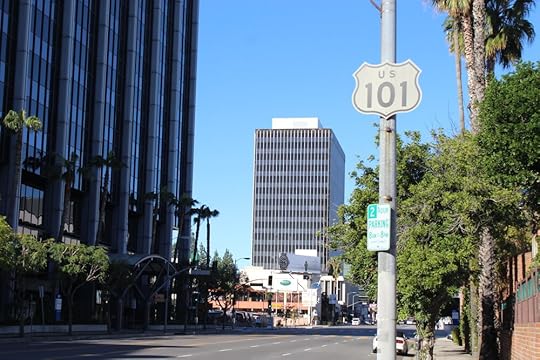
Ventura Boulevard in the San Fernando Valley.
Driving the highway
That same year, I started exploring Highway 101, taking trips — and photographs — up and down the length of the highway in California, from the Mexican border up to Eureka. I’d taken similar trips while working on a book about Highway 99 through the heart of the state, and what I found along 101 was no less fascinating.
U.S. 101 was, like 99, a major north-south route filled with history, one that helped connect and define California in the 20th century. Both were part of the first federal highway system, founded in 1926, and 101 still bears the black-bordered white shields with black lettering that mark it as a federal highway. (U.S. 99, by contrast, became a state highway in California during the 1960s, with the advent of a new interstate system, marked with red-and-blue shields).
Highway 101 was based in part on the old Spanish mission trail, El Camino Real, and passes through more varied and beautiful territory than any other highway in the state: the majestic Redwood Highway in Northern California, the scenic Central Coast, the former citrus groves of Orange County, then surfside to San Diego. The Ventura and Hollywood freeway sections are both iconic in their own right.
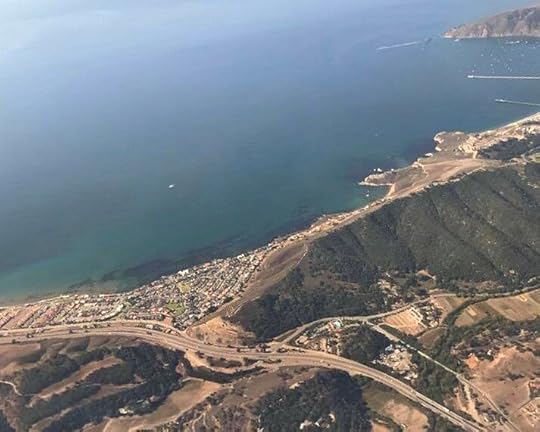
U.S. 101 from the air, near Shell Beach on the Central Coast.
101’s path
The 21 old missions tie U.S. 101 together from San Diego de Alcala in the south to San Francisco Solano in the north, binding the highway together historically. In some places, the highway is a two-lane country road. In others, like the Los Angeles area, it’s a multilane modern freeway.
Still other sections run through cities that were little more than wayside stops when the highway was built. In San Diego County, it still reflects the sun-and-surf culture along a segment between Oceanside and San Diego that parallels its “replacement,” modern Interstate 5. There, it passes historic movie theaters, the iconic Del Mar racetrack, and of course the Pacific Ocean.
Old 101 was replaced by Interstate 5 south of south of Hollywood, but it follows the same course past Disneyland and Knott’s Berry Farm. In Hollywood, it diverges again northbound into the heart of Los Angeles, then curves westward in the San Fernando Valley, through aging suburbs birthed with water drawn from the Owens Lake in the early 20th century.
It continues west along the coast past Ventura and Santa Barbara, through the old Summerland oil fields, offering views of the Channel Islands along the way, before heading north again across rolling green hills, then up through the lettuce fields of the Salinas Valley. Then it’s north to the Golden Gate and on to the redwoods.
The road, its sights and its history are as varied as the regions through which it passes.
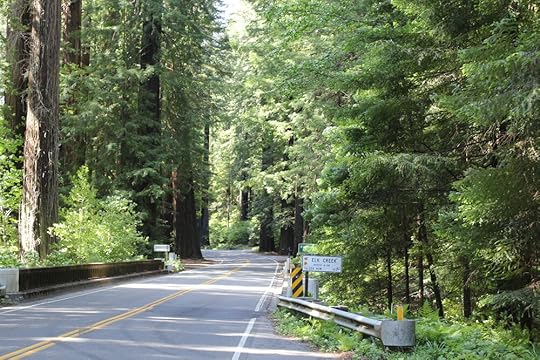
Avenue of the Giants.
Highlights
During my travels, I saw a visited a number of fascinating places and learned a lot about the highway and its history. It would take a book to share them all (which is, I suppose, why I wrote a book!), but here are a few highlights.
Most beautiful drive: Avenue of the Giants, an old section of U.S. 101 that has been bypassed and its now signed as State Route 254. It runs for just over 31 miles through the towering redwoods — the “giants” — in Humboldt Redwoods State Park. Attractions include the 950-year-old Immortal Tree; the 370-foot-tall Dyerville Giant in the Founder’s Grove; and the Chandelier Tree, which is so wide at its base that you can drive through it.
Best meal: My wife and I couldn’t possibly visit even a small fraction of the eateries along the highway during our trips, and I’ll always have a soft spot for the original El Torito on Ventura Boulevard. (Unfortunately, it’s no longer there, but there’s a newer restaurant in the chain down the road in Sherman Oaks.) Then there’s Pea Soup Andersen’s in Buellton, which has been serving my favorite flavor of soup since 1924. But in my most recent travels, the prize goes to a delicious hamburger lunch at the Benbow Inn. The beautiful and historic hotel was built in Garberville in 1926, the same year the highway was dedicated, and it’s worth a visit even if you don’t have time for lunch.
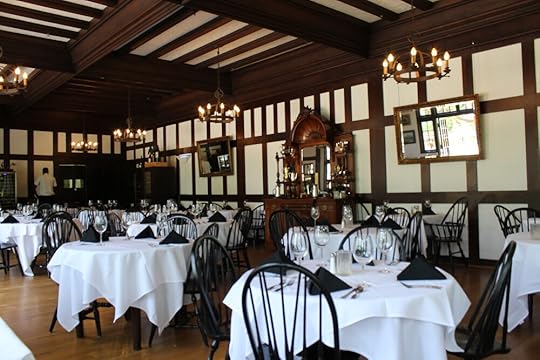
Benbow Inn dining room, Garberville.
Most famous sites: The Golden Gate Bridge funnels traffic from U.S. 101 in San Francisco north to Marin County, and vice versa. When it opened in 1937, it was the longest and tallest suspension bridge in the world, and remains the most recognizable in the nation, even adorning the uniforms of the NBA’s Golden State Warriors. Disneyland opened along a section of U.S. 101 that later became part of Interstate 5, and you can still see its Matterhorn ride from the freeway as you pass by.
Quirkiest attractions: Confusion Hill, a roadside stop that opened in 1949, features a “gravity house” that creates optical illusions, a mountain train and a giant totem pole. Madonna Inn in San Luis Obispo offers themed guest rooms and suites with names like the Caveman Room and the Golfer’s Room. There are giant statues of Paul Bunyan and Babe, the Blue Ox at the Trees of Mystery attraction in Klamath.
Revisiting the past: Beyond the 21 Spanish missions built between 1683 and 1834, there’s the first roadside inn ever to be labeled a “motel”: The Motel Inn in San Luis Obispo, originally known as the Milestone Mo-Tel. The motel closed in 1991 and most of it has been demolished, but the mission-style bell tower and motel sign remain. The 101 Café in Oceanside, with a fifties-style nostalgic feel, was actually built far earlier, in 1928. And there’s a now-abandoned, ornately decorated service station on old 101 in Goleta that was shelled in the only Japanese attack on the mainland during World War II.
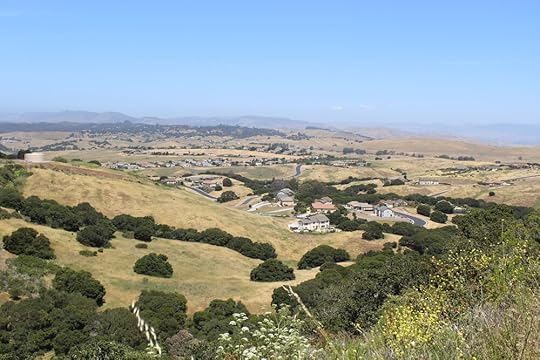
View from the San Juan Grade.
The road itself: Traveling the highway became a scavenger hunt of sorts, as I searched for old sections of the road that had been bypassed or abandoned. The San Juan Grade, a winding section of road across the mountains between the Salinas Valley and San Juan Bautista, is still open to traffic and offers a glimpse of what the road looked like in the 1920s, though the highway itself has long since bypassed it, in favor of a more direct route. You can still walk out onto abandoned viaducts along the Eel River and past Confusion Hill, and you can explore sections of the old concrete road below the modern Cuesta Grade, just north of San Luis Obispo. Business routes that precede the present highway pass through many cities and towns along the way.
If you’re thinking about traveling U.S. 101, there’s plenty to see. My book not only explores the history of the road, but provides a tour of the highway. It’s illustrated with numerous pictures in color and black and white. If you enjoyed my book on Highway 99, I know you’ll like this one, too. Both are also available on Kindle.
All photographs by the author.
June 2, 2020
Please stop using "after" at the end of a sentence
Language evolves, but every now and then, it devolves. I mean, English is confusing enough as it is, so why do we insist on making it even more baffling?
Case in point: the growing tendency to use after at the end of a sentence. A buddy tells me, “I got in the car, and I went to the store after,” I’m left holding my breath.
And?
After what?
Where’s the word you’re modifying? Go on. Spit it out. I’m waiting.
But my buddy isn’t saying anything more, because apparently, he thinks “after” is the last word. It’s like a TV cliffhanger that never gets resolved because the show got canceled.
I keep holding my breath until I turn blue, finally exhaling when I realize he’s referring to the first part of the sentence: He went to the store after he got in the car. Oh. OK. Why couldn’t he have just said that?
Acceptable, but not preferableMore people lately seem to be using the word “after” this way, at the end of the sentence. According to the experts, it’s acceptable. But that doesn’t mean it’s right. Most people who hear “after” at the end of the sentence are left hanging, expecting something more. It’s one of the most infuriating trends in modern speech — especially since there’s a perfectly good alternative: afterward. If you see that word, it completes the speaker’s thought without any ambiguity. You know it refers back to the first part of the sentence.
(Some people use “afterwards,” as if creating some sort of faux plural gives the word more oomph. Trust me, it doesn’t.)
If you think “afterward” sounds too formal or antiquated, you can also clarify things by adding a word that explicitly refers back to the beginning of the sentence: “after that.” It’s more conversational, and it’s perfectly fine.
So, why not use one of these two options? Why insist on using “after”? Probably for the same reason we say “fab” instead of “fabulous,” or “info” instead of “information.” We’re too lazy utter an extra syllable or two. I get that. As long as most people know what you mean, I’ve got nothing against that. Everyone knows “limo” is short for “limousine” — even if not everyone can afford one. And so many people use “memo” now, a lot of them probably don’t even know it’s short for memorandum.
Clarity disparityThe problem with using “after” at the end of a sentence is that it’s not clear whether you’re planning to say something more, or whether you’re just referring back to the beginning of the sentence. Even if I’m reading and see a period at the end of the sentence, it’s still weird, because I recite the words in my head, so it sounds to my inner ear as though something’s wrong. When I see the period, it feels like I’ve been cruising along on the freeway at 70 mph and crashed headlong into a stalled-out truck in front of me that I didn’t see until the last minute.
Oopsie.
But don’t we often use “before” at the end of a thought or sentence? “I’ve never been here before” or “I didn’t know that before.” There’s no ambiguity there, though, because it always modifies the same unspoken word: “now.” I’ve never been here before now. I didn’t know that before now. That’s not the case with “after,” which seldom, if ever, modifies an implicit “now.”
Grammarians insist it’s acceptable to use “after” at the end of a phrase or sentence. But it’s also lazy and confusing, so please stop saying that!
The goal is to communicate clearly, after.
Sorry. I meant to write “after all.”
May 14, 2020
Quotes and dialogue: 10 tips on how to use them effectively
Quotes are great. They’re often my favorite part of a novel. In the form of dialogue, they move a story along like almost nothing else, and they break up those chunks of heavy gray description that can weigh a book down if the author isn’t careful.
But quotes don’t write themselves. Some authors use them well; others, not so much. So here are some simple, practical suggestions about how to use quotes effectively.
1Emphasize dialogueA good novel should have both, but there’s an advantage to dialogue: It lets you inside a character’s head without a lot of tedious description. When the characters themselves tell you what they’re thinking, you get their thoughts from their own lips. And the way they tell you what they’ve got to say gives you even more insight: into their motivations, their emotions, their biases, their limitations.
In practical terms, quick-hitting dialogue is a lot easier on the eyes than dense blocks of text from an author who presumes to know what his characters are. Of course, the author does know. After all, those characters were born in the author’s head. Still, a narrator who describes what a character is thinking seems like a secondhand source. Readers want a front-row seat; at least, I know I do, and dialogue provides that.
This does not mean dialogue is the only way to get inside a character’s head. In a first-person story, especially, you can get inside the character’s head without it. But it’s still the most natural, direct way of communicating what’s on the character’s mind.
It’s also a good idea to break up dialogue with description, and vice versa. Extremely long sections of dialogue can feel more like a screenplay than a novel, while extended description can feel static, like a visit to an art gallery.
2 Write conversationallyRemember that the people are talking. Writing dialogue is not just taking some description and slapping a couple of quotes around it. It’s a way of describing what characters are thinking, what they want to communicate, and who they are without some third-party analysis.
This isn’t as easy as it seems. In watching a well-reviewed TV show the other day, I noticed a teenage character say something like, “We will need to trek over to that mountain.” What teenage uses the word “trek” in a sentence (unless the character’s a science fiction nerd talking about Star Trek)? This was probably a case of description masquerading as a quote that was placed in the character’s mouth — a particular risk with screenplays, which lean heavily on dialogue.
One of the most important things to keep in mind when writing dialogue is that it’s meant to be spoken. That doesn’t change just because it’s on a printed page. As you’re writing, recite it to yourself (or even aloud) to be sure it sounds natural to your own ear. But be careful: Don’t go to the other extreme and rely on buzzwords and catch phrases you’ve heard just because they sound like dialogue. Stay original.
3 Define each character’s voiceThis can be one of the biggest challenges for a writer. You know how you talk, so it’s easy to simply transfer your own conversational style to your characters. But if you do that, they’ll all sound alike — and like you.
Be sure the words spoken come from the mind of each particular character. If you’ve put a lot of effort into developing a unique character, you’ll have an easier time defining his or her voice. If, however, the character is two-dimensional or poorly developed, it will be tempting to fall back on stereotypical accents and rely heavily on clichés as crutches when writing dialogue.
Strong character development is the key to engaging and convincing dialogue.
4 No speeches, pleaseYou’re not writing a speech for some self-important politician. You’re writing for someone who’s reading to be entertained or informed. Long blocks of text, whether they’re descriptive or in quotes, can seem daunting to a reader — especially in the age when tweets are in and Shakespearean soliloquys are out.
Just looking at a dense block of gray on a page can feel exhausting. (This is another reason snappy dialogue, with its frequent paragraph breaks, can move a story along so effectively. It’s like running a treadmill instead of struggling up a hill.)
Besides, it’s not realistic. Most people in a conversation don’t drone on ad nauseam. Those who do tend to get tuned out, right? So why should you expect a reader to keep paying attention to a character who does the same thing?
If you have to break a quote up over two or three paragraphs, ask yourself whether it’s worth it — and whether there might be a better way to present that information.
5 Make clear who’s talkingDon’t keep the reader guessing about this. How often have you seen a quote go on for four or five sentences before finally identifying the speaker? “She said,” shouldn’t always go at the end of the paragraph. Inserting the attribution after the first sentence breaks up the quote and keeps things moving.
It doesn’t hurt to change things up occasionally by leading with the attribution, either.
Just don’t leave readers wondering who’s talking if it’s not clear in the flow of the narrative. It can become a distraction. The more they focus on trying to answer that question, the less attention they’ll be paying to what’s on the page.
6 Minimize dialogue tagsOn the flipside of No. 5, if it’s already clear who’s talking, you don’t need a dialogue tag. If you’ve got a back-and-forth between just two characters, inserting “she said” after each line slows the section down and quickly becomes tedious. Don’t be condescending to the reader. Let the dialogue speak for itself.
For the most part, dialogue tags (aka attribution) should be reserved for cases where it’s not clear who’s talking. If three or more people are engaged in a conversation, they can be helpful in sorting things out. The same is true if you’re starting a section of dialogue and it’s not clear who’s going first.
If you decide to use a dialogue tag, “said” is usually fine. You don’t need to switch things up by using words like “criticized” or “gasped” or “enthused.” These are fine occasionally, but they’re often overused in a quest for variety. (If you must use “exclaimed,” please don’t use it with an exclamation point. That’s redundant.) The main point to keep in mind is that these varied tags draw attention away from the dialogue itself, which is the last thing you want to do.
The best writing lets the dialogue speak for itself, conveying the speaker’s tone, emotion and vocal inflections without relying on dialogue tags and exclamation points.
7 Avoid jargon (except…)On the one hand, a character’s words should reflect his or her background. On the other, the reader should be able to understand them. There can be a tension between these two goals if the reader and character come from two different worlds, and it’s up to the author to bridge this gap as seamlessly and effortlessly as possible.
Sometimes, genre can help your audience make the necessary connection. Readers of science fiction are likely to know what a character means in referring to wormholes, cyborgs and quantum drives are. Fans of noir fiction will probably understand a character who talks about a “button man” or a “canary.” But in general fiction, you can’t make those assumptions.
Unfamiliar and unclear jargon will stop readers in their tracks or send them scrambling for a dictionary. But explaining that jargon in the author’s voice will slow things down, too. That’s why the jargon is used best when it 1) flows naturally from the character and 2) can be understood based on the context.
The same thing goes for accents. If your character’s accent is so thick you have to convey it with multiple odd spellings, readers may feel like they’re reading something in a different language. The energy it takes to translate thick accents inside the reader’s head can be tiring or distracting, and may or may not be worth it. Use accents sparingly and with discretion.
A related topic: Swearing. You have to balance how natural, and expected it might be from mouths of certain characters with how acceptable it is to your readers. You can’t please all of the people all of the time. So, be true to your characters and trust that your work will find an audience that appreciates your authenticity. Or, write to your audience and create characters who will speak naturally within that framework.
8 Avoid fadsRemember the mullet? Maybe you do. What you might not remember is that it was actually popular for a while (at least in some circles). The same goes for beehive hairdos, per rocks and The Partridge Family.
It may be popular today to write in the present tense, but will it be a decade from now?
Characters don’t speak in computer shorthand. They’re not going to go around saying “LOL” or “AFK.” You might want to think twice about using here-today, gone-tomorrow pop culture references. If you try too hard to make your characters sound hip or trendy, you might accomplish just the opposite. It’s entirely possible for something to be all the rage when you’re writing Chapter 1 and yesterday’s news if your book’s published months later.
Another downside: Such references often look forced. Don’t try too hard.
9 Quotes shouldn’t boring (even in nonfiction)You don’t see much dialogue in nonfiction. Quotes, however, serve the same primary purpose: They allow the source to speak directly to the reader.
In nonfiction, though, the author doesn’t have as much control. You’re not dealing with a fictional character, so you can’t simply make something up or change it to suit your purpose. You have to remain true to what the person actually said.
Even if it’s awkward. Or grammatically incorrect. Or boring as hell.
Nonfiction does have a reputation as sleep-inducing. The authors of those tedious textbooks from your school daze made them educational, but not engaging. (No wonder kids don’t like homework.) So, it’s become almost come to be expected. Many authors use an “academic” tone because they’re writing for an academic audience; but still others emulate that style because they want to sound impressive or knowledgeable.
That’s not good if you want people to actually read what you’ve written: About only thing more boring than academic writing is the fine print in a contract.
The way quotes are used in nonfiction doesn’t help. They’re not usually part of a dialogue. Most authors include them for the sake of authority: “If Dr. So-and-So from Harvard says it, it must be true.” But even if the author isn’t writing a textbook, quotes from professors, scientists, lawyers or other experts will likely seem like they belong in one.
Yawn.
Those experts are not, generally, professional writers. If you, as the author, devote too much space to quoting them directly, your writing won’t seem professional — or original. It’ll seem dense and derivative.
The solution is to limit the use quotes from such sources, and to choose those quotes that are the most lively and conversational. If you know what they’re saying and can say it more clearly, do so. There’s nothing wrong with paraphrasing, as long as it’s clear that’s what you’re doing, and the message isn’t lost in translation.
10 Nothing is absolute (even this rule)There are exceptions to almost any rule you can come up with. It all boils down to this: If you keep your dialogue compelling, authentic and easy to understand, you’ll be golden.
May 8, 2020
Recommended reading for highway history buffs
I’ve been researching America’s highways for nearly four years now, traveling more than 10,000 miles in my search for history.
When I’m not on the road, I spend hours combing through newspaper files, online articles and books for sources for the most interesting stories.
Many of the books published on historic highways — especially Route 66 — are travel guides, but a few offer extensive information on the history behind the roads, and those are the ones I’m spotlighting here. Titles are arranged alphabetically.
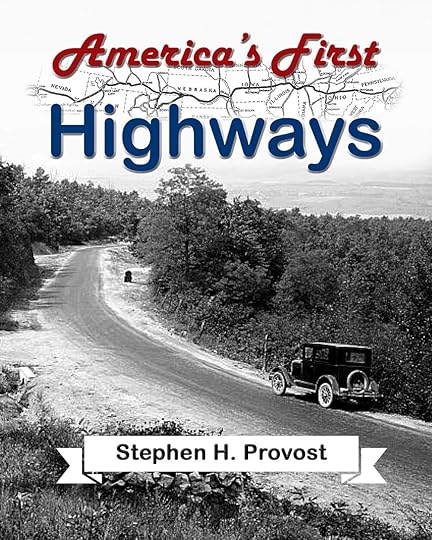
America’s First Highways
Stephen H. Provost
Dragon Crown Books, 2020
Paperback, 290 pages, 8 x 10 inches
I set out to write this book after discovering I couldn’t find a single volume that examined the auto trails movement as a whole. There were a few books (some of which are on this list) that focused on individual trails, but I came up empty looking for any comprehensive work on these privately funded roads that preceded the federal highway system.
My research took several turns and resulted in two-part story. Part One looks at what led up to the trails: 18th-century stagecoach routes, the railroads, the Good Roads movement and early automakers. Part Two examines the trails themselves, with full chapters on the Lincoln and Dixie highways, along with extensive sections on the Jefferson and Lee highways, the Yellowstone and Ozark trails, among others.
There are stories of the “great race” from Paris to New York, the old plank road east of San Diego, Dwight Eisenhower’s Army trek over the Lincoln Highway and the auto camps that lined the early roads.
America’s First Highways includes more than 200 photos, some by the author but many vintage images from university and government archives. Pick this one up for a detailed and enjoyable overview of the auto trails phenomenon. It’s the second installment in my America’s Historic Highways series, a companion to Yesterday’s Highways (see below).
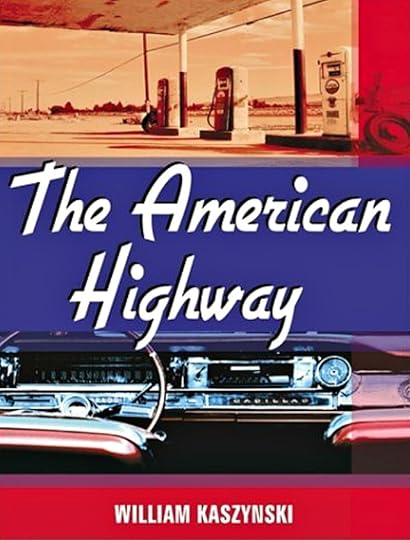
The American Highway
William Kaszynski
McFarland & Company, 2000
Hardcover or paperback, 237 pages, 8 x 11 inches
A very good overview with lots of black-and-white illustrations, Kaszynski’s book is divided chronologically, with sections covering “The Early Days” (1900-1919), “The First Generation” (1920-1945), “The Golden Age” (1946-1969) and “The Interstate Era” (1970-2000). There’s a good, though short, section on auto trails that follows a brief overview covering the history of roads.
Another plus: Each of several major gasoline chains and roadside eateries gets its own short section, and there’s a good section on motels, too. The photo captions are sometimes a bit long, but they pack in some good information that augments what’s in the text.
The paperback is $39.95, but it’s also available for less on the secondary market, where you can find it in hardcover.
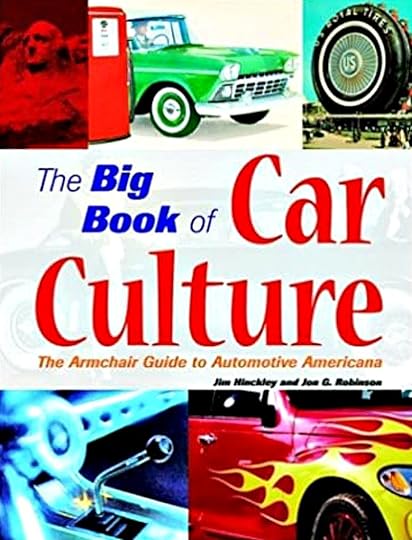
The Big Book of Car Culture
Jim Hinckley and Jon G. Robinson
Motorbooks, 2005
Paperback, 320 pages, 8 x 11 inches
This is a glossy-paged book packed with photos and brief articles on a variety of subjects arranged in six sections:
Only Twenty Miles to ...
Safety, Comfort and Style
The Ride
The Culture of the Road
Gasoline Alley
The Open Road
This isn’t the book to get if you want a comprehensive look at any aspect of the highway, but if you want a grab bag of diverse topics ranging from gas pumps to license plates, from the Lincoln Tunnel to the Las Vegas Strip, this is a breezy, fun read. None of the articles is particularly long, and most don’t go into much depth, but there are lots of illustrations — with color throughout — fun bits of trivia on the expected and the unexpected alike.
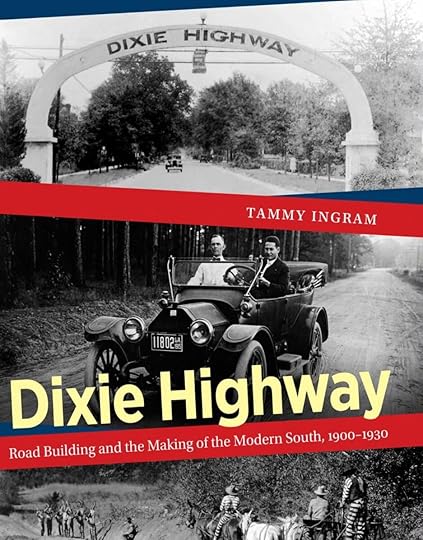
Dixie Highway : Road Building and the Making of the Modern South, 1900-1930
Tammy Ingram
University of North Carolina Press, 2014
Hardcover, paperback or ebook; 272 pages, 6 x 9 inches
This very readable, yet information-packed book is divided into five chapters:
Building a Good Roads Movement, 1900-1913
The Road to Dixie, 1914-1916
Roads at War, 1917-1919
Modern Highways and Chain Gang Labor, 1919-1924
Paved with Politics: Business and Bureaucracy in Georgia, 1924-1927
Of them, I found the first two chapters the most fascinating, and the final chapter the least so. Of particular interest to me was information on how the highway routes were chosen, Carl Fisher’s role and the fights among various towns for a place on the highway. The sorry state of roads in the South, along with the role of World War I and chain-gang labor in improving Southern highways are also examined.
The research is thorough and the writer’s tone is conversational. The text is illustrated by a few photos, old advertisements and postcards. Several maps are also included — and particularly useful.
This is probably the definitive work on the Dixie Highway, a road that doesn’t get nearly as much attention as it deserves for the role it played in developing our highway system — and our nation.
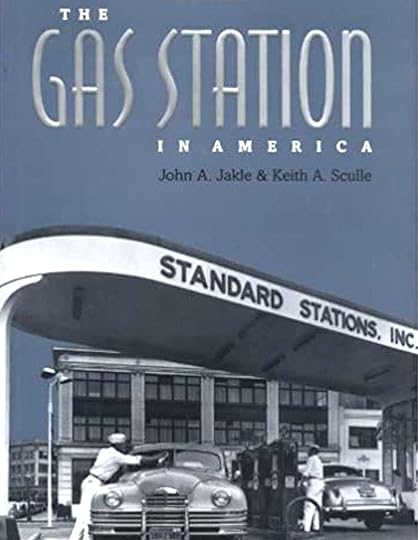
Gas, Food, Lodging
This trilogy by John A. Jakle and Keith A. Sculle examines, in turn, service stations, roadside eateries and motels/inns. If you’re interested in American road culture, I challenge you to find more information in one place on any of these subjects.
The three I’ve read in the authors’ Gas, Food, Lodging series have all been excellent, and I can recommend all three. They’re a little more academic than some books out there, which makes sense because the authors are both professors: Jakle specializes in geography and landscape architecture at the University of Illinois at Urbana-Champaign, while Sculle teaches history at the University of Illinois at Sprinfield. Each volume is packed with more information on chains and trends, along with statistical information, than you’ll find most places:
The Gas Station in America
Johns Hopkins University Press, 1994
Hardcover or paperback, 288 pages, 7 x 9.5 inches
The Motel in America
Johns Hopkins University Press, 1996
Hardcover or paperback, 408 pages, 7.5 x 10.5 inches
Fast Food: Roadside Restaurants in the Automobile Age
Johns Hopkins University Press, 1999
Hardcover or paperback, 416 pages, 7 x 11 inches
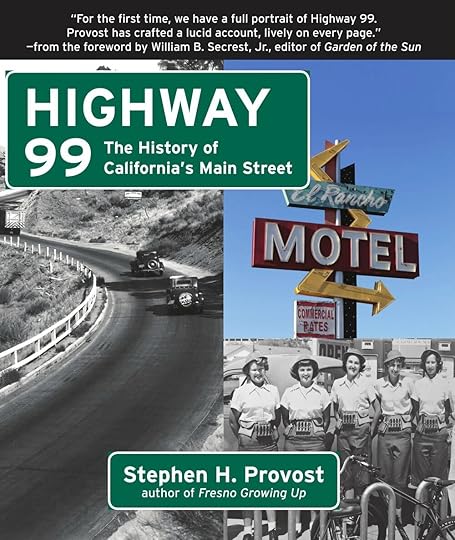
Highway 99 : The History of California’s Main Street
Stephen H. Provost
Craven Street Books, 2017
Paperback or ebook, 233 pages, 8.5 x 10 inches
I set out to write the definitive history of U.S. Highway 99 in California and drove the length of the road, from the Mexican border to Yreka, taking photos, doing interviews and collecting information. I grew up along the highway, riding with my parents from Fresno to Orange County and back again several times a year and I wanted to preserve some of the memories I had — and find out more about California’s north-south version of Route 66.
I walked the cracked concrete on the Old Ridge Route between Bakersfield and L.A. I hiked out to the ruins of San Francisquito Dam. I drove Golden State Boulevard and San Fernando Road, old alignments of the modern highway.
I researched scores of news articles, books and other sources to create a three-dimensional portrait of the highway in two parts. The first tells the story of the road’s history, complete with the disasters that altered the shape of the road and the Dust Bowl migrants who traveled it. Gas stations, coffee shops and motels get full chapters. Then, the second part provides a tour of the highway, from south to north, stopping briefly in each town along the way.
The first book in the California’s Historic Highways series, this glossy-paged tome includes a section of color photos by the author. The text throughout is illustrated by historical and modern images.
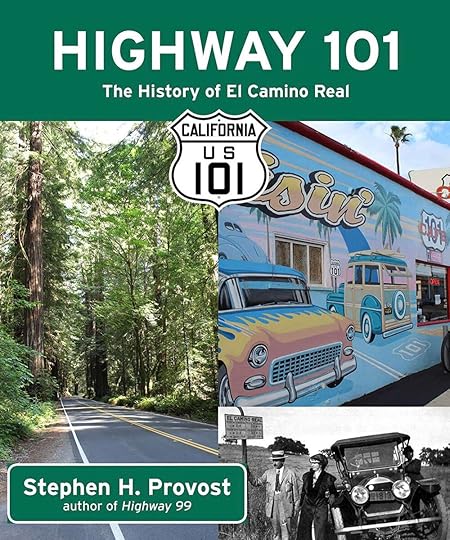
Highway 101 : The History of El Camino Real
Stephen H. Provost
Craven Street Books, 2020
Paperback or ebook, 270 pages, 9 x 10 inches
The second book in the California’s Historic Highways series follows much the same format as Highway 99. Part I tells the story of Highway 101 in California, from its origins as a wagon road connecting the Spanish missions to its new era as a federal highway. Part II offers the reader a literary road trip with stops along the coast in Carlsbad, at the Hollywood Bowl in Los Angeles, the eclectic and eccentric Madonna Inn in San Luis Obispo, the Golden Gate Bridge and the majestic redwood along the Avenue of the Giants.
There’s even a section about the Pacific Coast Highway, State Route 1, which parallels and sometimes joins 101 as it meanders up the coast. You’ll find out about “muffler men,” Disneyland and the short-lived Pacific Ocean Park marine amusement park in Santa Monica. You’ll learn about the fancy gas station that was targeted in the only Japanese strike to hit the U.S. mainland during World War II.
Like Highway 99, this companion volume comes complete with a central color well of vibrant photos from the author himself (yeah, that’s me).
Highway History
Richard F. Weingroff
U.S. Department of Transportation, Federal Highway Administration — fhwa.dot.gov
Online
This isn’t a book, but it might as well be. In fact, there’s probably enough material here for several books, and the best part is, it’s free.
Richard F. Weingroff has written numerous articles about highway history, all of which are available for viewing on the site. Weingroff is information liaison specialist for the FHA/DOT and became the agency’s “unofficial historian” in the 1980s. He’s written articles on the Jefferson Highway, the Lincoln Highway, and several other auto trails; the interstate highway system; President Eisenhower’s role in improving the nation’s highways, and dozens of other topics.
The Jefferson Highway : Blazing the Way from Winnipeg to New Orleans
Lyell D. Henry Jr.
University of Iowa Press, 2016
Paperback or ebook, 220 pages, 6 x 9 inches
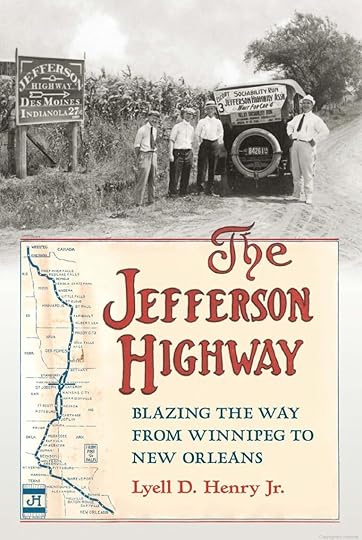
Henry’s book is to the Jefferson Highway what Ingram’s work is to the Dixie, with a heavier dose of historical photos, which is welcome. Did you know the guy behind this particular road was also the publisher of Better Homes & Gardens? Or that the Jefferson Highway was born in Iowa? You may never have heard of the highway at all, and if you haven’t, you’ll find a host of interesting information in Henry’s book.
The author is a professor of political science, so his writing is sometimes a tad academic, but on the whole, he writes in a conversational and easy-to-read style. The third and fourth chapters, which cover how the highway was built and marked (with signs) contained the most interesting info, at least to me, with the latter chronicling the decline and eventual fall of the road as numbered federal highways took its place.
The book is divided into two parts. The first five chapters delve into the history of the highway, which, for the uninitiated, ran from Winnipeg up in Manitoba, Canada, down to New Orleans. The last three chapters focus on “Looking for the Highway,” which is great if you want to take a tour. The section also includes photos of notable roadside sites and sights.
Ridge Route : The Road that United California
Harrison Irving Scott
Independently published, 2015 (updated edition)
Hardcover, 410 pages, 6 x 9 inches
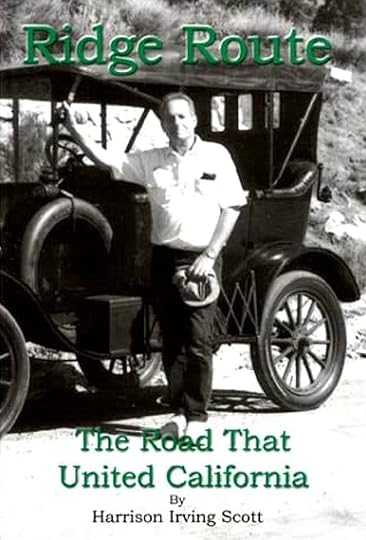
This book was a labor of love, and it shows. Scott has devoted decades to preserving the concrete pavement across the Tehachapi Mountains that first united Northern and Southern California, starting in 1915. The Old Ridge Route is a relatively short road (compared to, say, Route 66) that served motorists for a brief period of time — it was bypassed less than two decades after the first concrete pavement was laid down. Is there enough information on such a road to fill an entire book? Rest assured, there is, and Scott does a great job of covering all the bases.
Scott says in his preface that eight years of research went into this book, and it shows. A full 25 chapters cover everything from road construction to roadside inns, with sections on the tragic yet intriguing Saint Francis Dam disaster and a crazy winter snowstorm in 1922.
At $39.95, this book is a bit pricier than some, but its glossy pages and plethora of fine historical photos make it worth the investment for any highway buff.
Route 66 : The Highway and Its People
Susan Croce Kelly (text) and Quinta Scott (photos)
University of Oklahoma Press, 1988
Hardcover or paperback, 210 pages, 9 x 10.5 inches
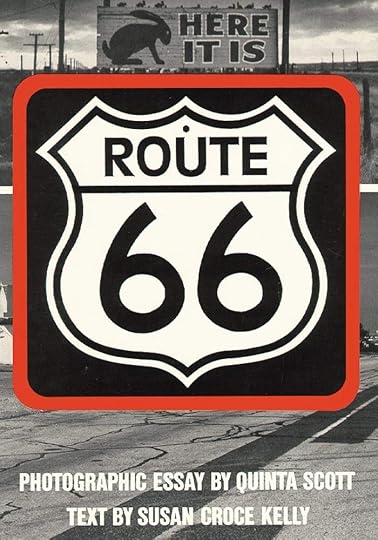
This is a hybrid book, featuring lots of great photos and plenty of illuminating text. It includes some great historical background on the formation of Route 66, along with interviews with many who lived along the road — a perspective you don’t find in most books of this type. Chapters focus on how the road was conceived and paved, and the impact of the Dust Bowl and World War II, among other subjects.
The main text is sprinkled with photos, but there’s also a 61-page glossy section at the heart of the book that’s just photos. They’re all in black and white, which adds to the nostalgic, wistful and sometimes almost ghostly feel of a highway that’s disappearing, piece by piece. There are scores, perhaps even hundreds of books out there on Route 66. If you have to choose just one, get this one.
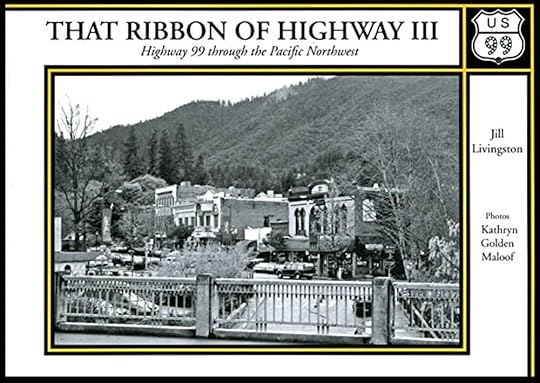
That Ribbon of Highway
Jill Livingston (text) and Kathryn Golden Maloof (photos)
Living Gold Press, 2010
Paperback in three volumes, 288, 288 and 252 pages, 8 x 6 inches
A solid overview of Highway 99 in three volumes, this series offers plenty of photos and some interesting facts, presented in brief sections that are similar to what you’ll find on the Living Gold Press website (which is, incidentally, a great resource on highway history that goes far beyond U.S. 99, with sections on such diverse topics as Woody Guthrie and Dorothea Lange, Giant Oranges and water towers).
These books include a nice selection of photos and graphics, which reproduce well, and the short sections make for easily digestible reading, almost like a trivia book. The illustrations are also strong and helpful. The shape of the book itself is a little odd — it 8 inches horizontal by 6 inches vertical — which takes some getting used to for those accustomed to more standard formats, but on the plus side, makes it easy to pack if you’re going on a road trip.
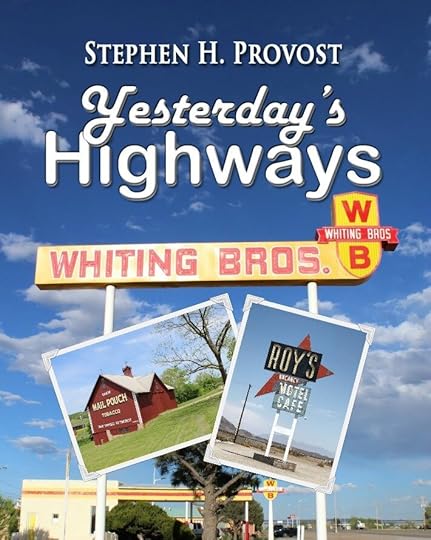
Yesterday’s Highways
Stephen H. Provost
Dragon Crown Books, 2020
Paperback, 264 pages, 8 x 10 inches
This book was an outgrowth of a 2019 road trip along Route 66, Lincoln Highway (mostly U.S. 30), and several other highways across the country. I envisioned this project as a photo book and took hundreds of photos with that as my goal. After I got back and started researching those photos, however, I found so much information that I decided to expand my mission to create a book with plenty of historical info, as well.
This book doesn’t stop at the edge of the highway, but focuses on the landmarks by the side of the road, delving into the history of service stations, motels, eateries and roadside attractions. Sections on the old Whiting Bros. gas chain along Route 66, White Castle, Howard Johnson’s, the Valentine diners and the Pig Stand are among the bits of information you’ll find here.
This isn’t a travel guide, but anyone who wants a preview of what you’ll see on a trip down Route 66 or the Lincoln Highway will find this book interesting. I chose to focus on those two highways more than any others because, taken together, they represent the best — and most iconic — U.S. highways from the golden age of the American road.
10 keys to productive writing, from an author of 30 books
There’s a ton of advice out there for writers, some of which I agree with and some of which seems like utter B.S. I’ve been writing professionally for 35 years, and I’ve written 30 books in the pass decade, and I’ve heard good and bad advice from authors both more and less productive than I.
Terry Pratchett said, “The first draft is just you telling yourself the story.” That strikes me as simple, profound and altogether true. So does this one from Walt Disney: “That’s what we storytellers do. We restore order with imagination. We instill hope again and again and again.”
But then, Roald Dahl said, “Writing is mainly perspiration, not inspiration.” While this can be true at times, I find it deflating. I want to have fun when I’m writing, not just “grind things out.” In that light, it may seem ironic that some of the following tips deal with disciplining yourself to write.
If you think about it, though, discipline is the opposite of exhaustion (and perspiration). It’s a means of setting up a system so that, once you start following it, it becomes almost second nature. It might never be entirely effortless, but it sure won’t be exhausting. It should be less so.
With that in mind, here are my 10 tips for staying productive and fulfilled as a writer.
1Don’t try to multitaskThink you can multitask? One study found just 2.5% of people can do so. Others say it’s altogether impossible. You can’t do two things at once, so don’t try. My theory is that multitasking is just a euphemism for being distracted as fast as you can. Have you ever done wind sprints during sports training? I have. You get real tired real fast.
Now, imagine that your mind is doing wind sprints, darting back and forth from one thing to another. You’ll feel worn out before you know it. It’s even tiring to remain alert to several things at once. Ask a gazelle at the watering hole or a mom trying to keep tabs on several kids at once. This level of alertness can’t be sustained for long before you wear yourself out. And if you’re worn out, you can’t be productive.
Worry is a form of attempted multitasking, which is why you can’t get much done when you worry.
2Live in the momentSince you can only do one thing in any given moment, focus on that thing — whatever your current priority is. If you’ve plopped yourself down at your computer, that priority is writing. Now, extend that moment. Set aside a block of time, a series of moments, and focus exclusively on that priority for the duration.
We do this all the time in 8-to-5 jobs, so it’s nothing new. You might set aside a 25-minute block of time, then take a 5-minute break. Or write for 50 minutes, then take 10 minutes off. Set your clock as you see fit, but I suggest making your “on” time at least twice as long as your “off” time. Otherwise, you’re setting yourself up to get sucked in by distractions.
3Create specific goalsSome editors charge by the word, others charge by the hour. As a writer, you have the same choice: You can set goals based on time or volume. You might want to give yourself a goal of producing 3,000 words in a day, for example, or you might want to set a deadline: “I want to complete this book in two months.” (If you do the latter, be sure to leave time for editing and, if you’re self-published, formatting, etc.)
Either method can work, and they can work together: If you decided to write 3,000 words a day, you could finish the first draft of a 90,000-word novel in a month if you worked every day, straight through — or in a little less than a month-and-a-half if you took weekends off.
A personal note about deadlines: I work best when I have an external deadline. If I set my own deadlines, I don’t take them as seriously because I know I can change them whenever I choose. But if I know my publisher needs a manuscript by a specific date, I’ll almost always submit it well ahead of schedule.
If you don’t have a publisher, you can create your own external deadlines. Maybe you want to finish a self-published book in three months because you’d like to start earning extra income for Christmas gifts by September. Or, you could set a release date on Amazon for kindle copies that can be preordered in the meantime (you can’t do this with paperbacks at this point, unfortunately). Either way, you’ve created an external deadline — a “finish line” to keep you motivated.
One word of caution: Don’t overwhelm yourself. Don’t create goals that are so unrealistic you’ll throw up your hands and walk away. You might try setting goals that are just a tad beyond what you think you can do, in order to stretch yourself.
4Then, follow throughGoals won’t help you much if you don’t work to achieve them. If you’re continually blowing deadlines, missing writing days or falling short of target word counts, you should probably reassess either your goals or your method for achieving them.
On the other hand, if you don’t hit a goal every now and then, don’t sweat it. Just start over again the next day. It’s easy to get discouraged and give up altogether. But if you really want to pursue writing consistently and you’re in it for the long haul, you can’t give in to that discouragement. This isn’t a diet or a New Year’s resolution.
If you’re a writer, that’s your professional identity. It’s not just what you do, it’s a huge chunk of who you are. Take pride in that. I don’t get to stop being a 6-foot-5 bald guy just because I don’t feel like it on a given day, and I don’t get to stop being a writer, either.
5Set up a schedule*I include the asterisk here because all writers are different. For many, it will be helpful to designate specific writing days. Do you want to write five days a week? Six? Seven? If you’re a full-time writer, starting work at the same time each day can accomplish two things. First, it gives your writing the respect it deserves, because this isn’t just a hobby, it’s your profession. Second, it will get you into a routine and give you one less thing to think about.
Where does the asterisk come in? It’s for those writers who are so continually inspired they don’t need the external motivation of a schedule. Maybe a deadline or word-count goal is enough. Or perhaps you’re the kind of writer who often wakes up in the middle of the night with an awesome idea, heads directly to your computer and churns out 5,000 words like it’s nothing. For you, flexibility might actually help your creative process. Don’t be afraid to play to your strengths.
6Immerse yourself in the storyDon’t be afraid to put yourself in the world you’re creating or writing about. There are two advantages to this. First, if you’re “there,” you’ll be able to describe the world you’re creating more vividly, because you’re experiencing it — which is what you want the reader to do. Second, you’ll insulate yourself from distractions, worries and other issues associated with the “real world.”
For me, immersing yourself in a story is like diving into the swimming pool, rather than dipping your toe in to find out whether it’s warm enough. When I’m having trouble motivating myself to write, I’m dipping my toe in to see whether “I feel like it” or if “it’s worth it.”
Without exception, I’ve found that, in order to be productive, I’ve got to dive in. Otherwise I’ll think or worry yourself out of it. Or, I’ll wear myself out doing so and, by the time I’ve finally decided to start writing, I’m too tired to do so.
One great thing about creating a world, for me, is that I’m in control of it. If my real life feels out of control, I can find a refuge there — plus I’m creating something and might even be able to sell it. What could be better than that?
7Have more than one motiveSome authors say they write to make money, while others say they write for pure enjoyment. But what happens if you’re books aren’t selling (on the one hand) or if you’re not enjoying writing (on the other).
If you’re like most writers, both of these things will happen. That’s why it’s helpful to view writing as a two-cylinder engine. Sometimes, you’ll be firing on both cylinders: You’ll be enjoying what you write and making money from it. Other times, only one cylinder will be functioning on one, but you’ll still be moving forward, and that’s what counts.
You can also think of it like an alternating current: Sometimes, the energy will be flowing toward sales. At other times, it will be flowing toward inspiration. But the important thing is that it’s always flowing.
In practical terms, I love immersing myself in a story, and I’ve also dedicated myself to completing a certain goal on such-and-such schedule. If one of those two motivations don’t work on a particular day, I can fall back on the other, and that keeps me going.
8 Distinguish distractions from new inspirationI have, at times, been inspired by more than one thing at the same time, which has led me to work on two projects concurrently. I write blogs while I’m working on books, for example. I also wrote The Only Dragon and Please Stop Saying That! concurrently. The point is, it’s all writing. And no, it’s not multitasking: I’m still focused on one or the other for a sustained, if shorter, block of time.
You may still want to prioritize one project over another based on your own criteria (deadlines, potential for sales, etc.). But it’s different than being distracted by non-writing-related stuff like social media, online gaming, music playlists, and scrolling the net.
That doesn’t mean you never do that stuff, it just means you confine it to before or after hours, or during those 5- or 10-minute breaks between your writing blocks. As long as you do that, you’ll be golden.
9 Don’t be afraid to revisit an idea — or notSometimes, you might set a story or idea aside when it’s partly done. If you’re looking for inspiration, consider combing through old files for half-finished stories or work you might have put on the back burner.
I wrote A Whole Different League in three chunks over about three years, starting with about 20,000 words, then going back a year later and adding more, then finishing it up with a flurry. When I was writing a collection of short stories called Nightmare’s Eve, I went back to my files and found an unfinished tale that I found intriguing. I’d started it so long ago I hadn’t the faintest idea how I’d planned to end it, but I supplied a new ending and included it in the book.
It’s also OK to abandon a project if it just isn’t working (unless you’ve signed a contract for it, that is). I’ve started a couple of stories that just hit dead ends, and a couple of others that would have required more work to fix than I would have spent on starting something else from scratch. You’ll have a good idea what’s worth revisiting, what’s worth salvaging, and what isn’t. Use your judgment.
10Figure out what works for youKnow thyself. Some of these tips, and tips from other writers, may work for you. Others may not. Figure out what works for you — and do that! Just don’t use it as an excuse to ignore everyone else’s advice. You don’t know everything. You might find something you’ve never considered fits you better than anything you’ve tried so far.
Staying true to yourself probably seems obvious, but I find it’s worthwhile to remain aware of it, so I can remind myself that I have my own unique strengths, and my own reasons for writing that aren’t exactly what anyone else’s are. I’m not the best writer in the world, but I know I’m good, and I also know I can tell a story the way no one else can. The same is true for you.
Reminding myself of these things, and staying true to my skills and vision helps me stay productive more than anything else.
May 2, 2020
Remote work? Even in pandemic, newspaper stays clueless
Why has journalism been in trouble for the past 15 years or so?
Simple: It can’t or won’t adapt.
If it can’t, that’s understandable. If it won’t, that’s something else entirely.
Print journalism has faced a host of challenges, ranging from more competition (first cable TV, then the internet) to declines in ad revenue. Then there are shifting demographics: Younger people just aren’t as interested in reading — or subscribing to — the daily newspaper.
Publishing companies have made a host of attempts to shift gears, most of which have been unsuccessful, and most of which have involved 1) downsizing via layoffs and 2) trying to earn more ad revenue online. Because online ads cost a lot less than print ads, you need to sell a whole lot more of them to make the same amount of money.
That’s particularly hard when the brick-and-mortar retailers that were newspapers’ bread and butter for decades have been slow to adapt, too. Some don’t have as many ad dollars to spend as they once did, and many others have gone out of business.
One of the biggest expenses in running a newspaper, after payroll, is the cost of the physical plant. If you don’t own your building outright, you have to pay a mortgage or rent. Plus, you have to pay for utilities, to keep all those computers running and lights on, not to mention air conditioning during the summer and heating costs in winter.
Some newspaper chains adapted by consolidating printing offsite, while others sold cavernous buildings that housed a quarter of the workforce they once did — thanks to the aforementioned layoffs.
I was one of those layoffs, and after 30-plus years in the business, I now do contract work in the comfort of my own home. I don’t make as much money as I once did, but I don’t need as much money, either, having traded in the high-rent insanity of the Golden Shakedown State for realistic and reasonable rural Virginia.
Same old storyDespite all this, I still check in on traditional journalism from time to time, and it seems that little has changed.
Being on the lookout (but not desperate) for contract work, I still open those emails from Indeed.com every now and then if something catches my eye. This morning, something did.
A major newspaper was hiring for a position that seemed right up my alley. The ad called for journalist with at least five years of experience as a copy editor, and the position focused on travel. Having just taken a 7,500-mile trip last year to collect material for a travel book called Yesterday’s Highways, I found my interest piqued.
Until, that is, I got to the sentence that stated, “This position is based in our ... newsroom and is not eligible for remote work.”
My interest was suddenly un-piqued.
I was left scratching my head and wondering when newspapers were going to get it — if they ever were. I mean, seriously: Here we are in the middle of a once-in-a-century pandemic, and everyone who lives near the newsroom in question is under stay-at-home orders.
Copy editors aren’t essential workers. They’re not delivering packages, stocking supermarket shelves or working in meat plants. They can work from home. I know, because I do. Every day. Yet here was an ad for a copy editor that put the kybosh on remote work right from the get-go.
I’ll be the first to admit, I don’t know the specifics of why the publication in question would limit applications to those willing to work at its plant. I didn’t call to ask. Working remotely was a deal-breaker for the paper, but not working remotely was a deal-breaker for me. Why should I expose my 56-year-old prone-to-bronchial-infection self to a major metropolitan area where the virus is all over the place?Especially when, regardless of the company’s rationale, it just doesn’t make sense
Working remotely, however, does, because:
Technology can be adapted to accommodate remote work.
Meetings, planning and oversight can be done remotely.
Work such as copy editing can most certainly be done from home.
Oblivious, meet OblivionThese adaptations really aren’t all that hard, but it doesn’t matter if you don’t want to adapt. It doesn’t matter that you’d save money on utilities. Or that workers value flexibility, and they’re more likely to stay in a remote position than an on-site job. Or that remote workers tend to be self-starters who are more productive than desk jockeys nervous about their boss looking over their shoulder. What matters is “we’ve always done it this way.”
Except that “always” is coming to an end. Newspapers have been in decline for more than a decade, with even the largest companies struggling to stay afloat, fending off bankruptcies by way of layoffs and mergers. Meanwhile, they’re giving their dwindling subscriber base less news — and their shrinking circle of advertisers fewer subscribers. It’s like the shrinking hamburger at the fast-food place that still costs the same as it ever did.
You’d think they’d welcome remote work as another means of cutting costs.
Guess not. At least this place didn’t — I can’t comment on how others are responding.
But I’m not surprised. If there’s one thing that some companies put even ahead of profits, it’s “corporate culture.” That’s just a fancy term for, “We’re going to keep doing it this way, whether it works or not.”
It wasn’t working before, and it’s sure not working now, as the COVID-19 crisis has only made things worse. A story in The Guardian quoted one expert as saying U.S. newspapers are facing “hundreds, not dozens” of closures in “an extinction-level event.”
I don’t know about you, but I’d rather work from home than go extinct, which is kind of what we’ve been doing on an individual level during this crisis. It was too late for a lot of newspapers even before the coronavirus hit. The astonishing thing is that, even now, the bias against remote work seems to be stronger than the will to survive.
And that’s pretty damned sad.
May 1, 2020
New book tells the story of America's First Highways
What did highways look like 100 years ago?
It’s hard to tell these days. But one thing’s for sure, they didn’t look a thing like today’s interstates.
You can still see vestiges of what highways looked like in the middle of the 20th century. If you drive down Highway 99 in California, you can cruise along old segments like Golden State Boulevard in the San Joaquin Valley or San Fernando Road south of the Tehachapi Mountains. You can see old U.S. Highway 101 on the Avenue of Giants through the Redwoods or along the coast south of Oceanside.
Then, of course, there’s Route 66. Traces of the iconic road from Chicago to Santa Monica are slowly disappearing, but road trips are still on every highway enthusiast’s bucket list. I crossed it off mine in 2019, but I’d gladly do it all over again. The excursion helped form the basis for my book Yesterday’s Highways, a look at the federal highway system founded in 1926: the roads, filling stations, diners, motels and the legacy of our nation’s first official road network.
But what about the roads that came before that?
There’s not nearly as much left of them to find, in part because they were usually dirt or gravel paths— sometimes nothing more than rutted paths through sagebrush carved by narrow tires on Model T’s. (The Old Ridge Route south of Grapevine in California is one example on an early concrete route, which I featured in my book on Highway 99.)
These early roads gave birth to privately funded auto trails. Marked by paint on telephone poles and fence posts, they bore names like the Jefferson and Jackson highways, the Pike’s Peak Ocean to Ocean Highway, the Red Ball Route and the Yellowstone Trail. The most ambitious of these were coast-to-coast projects, intended to give early motorists an alternative to the railroad.
At the turn of the century, most country roads were built for horse-and-buggy outfits intended to travel just a few miles. They took you to or from the train station — and no farther. But as automobiles started to become more common (and more reliable), there was a growing clamor to drive them more than just “into town.” To hit the open road.
In response, a group visionaries, entrepreneurs and opportunists arose to create a chaotic network of trails that crisscrossed the country. Sometimes they shared the same road. Sometimes the road shifted from one route to another — more than once. Sometimes the only road was a line on a map that amounted to wishful thinking and hopes for the future.
America’s First HighwaysA friend suggested that I focus on the history of these auto trails in Yesterday’s Highways, but I could tell they deserved a volume all their own. I was surprised to find that no one had written a comprehensive history of this period (at least as far as I could find). There were books about the Jefferson Highway, the Dixie Highway and, especially, multiple volumes on the most famous auto trail: the Lincoln Highway. But I couldn’t find anything that told the whole story: from the people who paved the way for the trails to the creation of the trails themselves and their ultimate demise.
So I decided to write one. The result is America’s First Highways, a companion volume to Yesterday’s Highways and, thus, the second in a series I’ve decided to call America’s Historic Highways.
You’ll read about the first person to drive from coast to coast in an automobile (with a goggle-wearing bulldog) and the around-the-world contest that inspired the movie The Great Race. And about the man who built a road of wooden plants in Southern California across the kind of sand dunes you’d find in the Sahara Desert.
You’ll also find stories of Dwight Eisenhower’s 1919 cross-country trip that helped convince him of the need for an interstate highway system; and the auto camping craze that led to the first motels.
Did you know Henry Ford once set the land speed record ... on a frozen lake? Or that the National Football League was founded in an auto dealership? Or that the man behind the Lincoln Highway built the Indianapolis Motor Speedway and made Miami Beach a winter resort?
I uncovered stories like these. Then, I scoured the internet for historic photos in the public domain, retrieved few pictures from my own cross-country journeys and took a few more for good measure. Then I contacted the Boca Raton Historical Society & Museum for permission to use a classic photo of a camel-shaped highway arch, and the University of Michigan Library, which graciously granted me permission to use a number of Lincoln Highway photos from the Transportation History Collection in its Special Collections Research Center.
The result is a volume packed with details and more than 200 historic and modern images. It’s my fourth book on the nation’s highways and my 30th book overall, and I’m pleased to present it for sale at Amazon.com and look forward to displaying it at fairs and book shows here on the East Coast in the coming year.
What’s next? My book on U.S. Highway 101 is due out May 19, and I’ve already got an idea for another highway-themed book. It’s in the conceptual stage now, but stay tuned for details in the coming months.
April 30, 2020
Knowing when to quit: Why I decided to stop writing fiction
Less than 12 hours ago, I hit “send” on my latest book. It just appeared for sale on Amazon, and I’m very pleased with how it turned out. It’s my fourth book in four months this year, and I’ve got another one coming next month.
It’s No. 30 overall for me, if you include four short educational workbooks I produced a while back. I’m happy with that, too.
Which is why this may come as a surprise, at least at first blush: I’ve decided to stop writing fiction.
And I’m OK with that.
To clarify: My latest book is a nonfiction book. So was my first published work, and roughly two-thirds of my books overall.
But the decision to stop working on novels wasn’t an easy one. I’ve wanted to be a novelist since my junior year in high school, when I wrote a short story called The Adventures of Krack, the tongue-in-cheek tale of a medieval knight. The story itself has long since been lost or discarded, and the only things I remember about it are the title and the theme — and the fact that the assignment called for three handwritten pages, and my story wound up being 11.
I knew then and there that I enjoyed doing this, that I wanted to do this for a living.
The challengeI also knew that writing books as a career was, shall we say, challenging, and I wanted a steady paycheck. So I became a journalist. This was, I thought, a reasonable compromise: I’d still be working with words, but I’d also have a guaranteed income. It worked out nicely until the bottom fell out of the newspaper business and I found myself unemployed.
Suddenly, I had time to pursue my real dream of being a novelist.
It didn’t work.
Let my qualify that: I’ve published eight works of fiction, including a children’s story and a short-story collection. My traditionally published work has gotten good reviews in the press. So has my self-published stuff. My books get between 4 and 5 stars on Amazon. People generally tend to like my stuff ... if they read it. And there, as they say, is the rub, as it is for many of my peers. In three words: not enough readers.
One review of Memortality declared that “readers will assuredly want — if not expect — more.” I gave them a sequel, but alas, neither book sold particularly well, so the third installment in the planned trilogy languished as my motivation waned, even though I had it all plotted out.
I’ve tried since then, gotten excited all over again about another original idea and a new cast of cool characters — only to meet with the same result.
Same old storyStories of disappointing sales are not unusual among authors. They tend to elicit one of two responses: Either you should keep writing for the sheer love of it, and the money be damned, or you should keep writing precisely in order to make money (even if you're not making any now).
The first message goes like this: “It doesn’t matter whether your books sell or not, as long as you enjoy it. If you can afford to write, do it. Don’t sweat the sales figures.” The folks who say this sort of thing are well-meaning, and there’s some truth to what they say, but what they miss is that writing is about communication. If you’re not communicating with anyone, what’s the point? You might as well write a diary.
The second group says money does matter. The reason you haven’t broken though, they kindly suggest, is that you’re doing something wrong. There are plenty of people in this category just itching to make money off your desperation to succeed: “All you have to do is buy my how-to book (one of several thousand on the market), take my masterclass, pay me to market it. ...”
The vast majority of these ideas are regurgitated and repackaged common sense that most serious authors have already tried dozens of times. It’s like picking up a greatest hits collection from an over-the-hill band when you already own all their releases. Pointless.
These two groups have one thing in common: They both think you should keep writing. Plaster those rejection notices on the wall. Look at how many J.K. Rowling got before she hit it big with Harry Potter. It’s a popular and “positive” message, but it creates a false narrative: If you love what you’re doing, you’re dedicated and you’re good, you’ll succeed. As Journey sang, “Don’t stop believin’. Hold on to the feelin’!”
Sometimes, though, you can’t hold on. Or, maybe, it’s better not to. To quote John Lennon from Watching the Wheels: “No longer riding on the merry-go-round. I just had to let it go.”
Crisis? What Crisis?That’s the point I’ve reached.
For years, I’ve been listening to that second group and flagellating myself for not getting it right, even as some of my peers have hit upon success. Online book tour? I’ll try that. Snazzy cover? Hey, that looks really good. It’s bound to sell! Self-publish? Sure thing. Get an outside publisher? Check.
Send a press release? TV appearance? Radio show? Convention? Book signing? Networking? Reviews? Cool blog? (Hey, that’s what this is!)
But what if none of that works? At what point do you realize that not everyone is J.K. Rowling — that she’s the exception to the rule, not the template? This should be obvious. How many authors, after all, are worth nearly $1 billion? Yet bestselling authors routinely “encourage” their less successful peers with assurances of “if I can do it, you can, too.”
They mean well, but they’re not telling the whole truth. It’s almost like a lottery winner saying, “If I won the Powerball, you can, too.” That’s technically accurate, but the odds against it are overwhelming.
Now, I’ll grant that writing a book takes a lot more skill than buying a lottery ticket, but so does (for instance) playing basketball. At one point, I practiced more than 200 days in a row. I’m 6-foot-5 and reasonably athletic. Does that mean I’m going to be the next Stephen Curry? That I’m going to make the NBA? That I’d even be the best player in a playground pickup game? No, no and no.
My point is, we’re so determined to hold on to our dreams, we indulge in a kind of magical thinking, assuring ourselves that if we work hard enough, get good enough and check all the right boxes, we’re bound to succeed.
Until we don’t.
Decisions, decisionsNow, you may think that I’m writing this out of resentment. I’m announcing to the world that I’m giving up on writing fiction. Isn’t that like the guy who rage-quits on social media or, to use another timeworn basketball analogy, takes his ball and goes home?
Not this time. There’s no doubt, I’ve gone through a lot of resentment, bitterness and frustration over this, and I know some of it’s still there. But that’s not why I’m writing this. For one thing, I’m under no illusion that this blog will be widely read, or that many people will care about whether I keep writing fiction or not. I don’t have that expectation.
In fact, this is all about letting go of false expectations and looking at things with a clear eye and a positive outlook going forward. I realized that I don’t have a positive outlook about fiction anymore, to the point that it’s no longer even enjoyable. So why keep doing it? Why not devote my time and energy to things I do enjoy? There’s no shame in that, despite what the “don’t stop believin’” crowd may tell you.
That’s the reason I’m writing this: To tell you that it’s OK, if you’ve come to the end of your creative journey, to move on to something else. Even if it was your childhood dream. Even if you were sure this was what you were destined to do in life. Acknowledging that is unbelievably hard — harder, in some ways, than continuing to fight for it.
Don’t stop because you’re bitter or resentful. Don’t rage-quit in a bid for sympathy. Quit because you see a better path, and then go for it!
Never say neverEvery writer is on a unique journey. You shouldn’t quit just because someone else suggested it as an option, any more than you should keep trying because someone else encouraged it. Those are your decisions. They shouldn’t be made by trolls who write scathing reviews or con artists who try to sell you a bill of goods about being “the next big thing.”
Yes, it’s a good idea to look at what works and what doesn’t — and to adjust your approach to writing or your marketing strategy based on that. But you know what? You can try so hard at so many different things that, if they don’t work out, you spend more time second-guessing yourself than you do writing. Then you’ll start beating yourself up over it, which can send you into an endless roller-coaster that’s not good for your mental health or your productivity as a writer.
I realized I’d reached that point, and I didn’t want to be there anymore, which is why I decided to stop writing fiction. I’d started another novel and, 12,000 words in, I realized my heart just wasn’t in it, and I didn’t see a pathway to making it a success: to communicating with actual readers.
That’s when I decided to stop asking endless questions and making endless adjustments, because I realized it wasn’t doing me any good. At a certain point, I had to feel good enough about myself to stop asking why it didn’t work and just accept the most frustrating answer of all:
I don’t know.
And I may never know.
And, I realized, that’s OK.
I still reach readers with my nonfiction and, while I can’t make a living with that alone, at least I’ve developed a small and somewhat dependable niche.
None of this is to say I won’t write more fiction at some point in the future, but it’s not to say I will, either. If I come up with a killer story idea that grabs me by the throat and demands to be written, who am I to argue? But I’ll have to feel like it’s worth my while.
Right now, it simply isn’t. I’ve got better things to do.
So, at least for now:
The end.
April 3, 2020
Highway author's top 10 road trips (plus 2)
I’ve spent bits and pieces of the past few years traveling around the country on various highways, and now, here I am, confined to quarters by the coronavirus outbreak. Fortunately, I’ve got my memories and a few photos to keep me company, so I thought I’d share a few of those with you in the form of my favorite stretches of highway ... so far. (I’ve still got a lot of road trips ahead of me, once this thing lifts.)
So far, I’ve produced three highway books: on Highway 99 and Highway 101 in California, and a tome called Yesterday’s Highways about the federal highway system founded in 1926. Next up: America’s First Highways, a look at America’s auto trails, the privately run hodgepodge of half-built highways that crisscrossed the country in the early days of the automobile.
So, without further ado, here are my top 10 stretches of highway, in reverse order, and certainly subject to change once I’m back on the road again.
12. Old Plank Road, California
This isn’t exactly a trip on a highway, it’s more a trip to a highway. The Old Plank Road is a stop along Interstate 8 in Imperial County, Southern California, heading east toward Arizona. There’s not much left of it today, but you can still see some of the original wood planks from the roadway, as well as a reconstruction of what it once looked like, The wooden road was built in 1915 to help cars traverse the shifting sands of the Algodones Dunes, then rebuilt a year later. There’s a fascinating story behind it all, including a road race to establish the best route for the road, which you’ll find in Highway 99: The History of California’s Main Street, as well as in America’s First Highways.
11. National Old Trails Road, California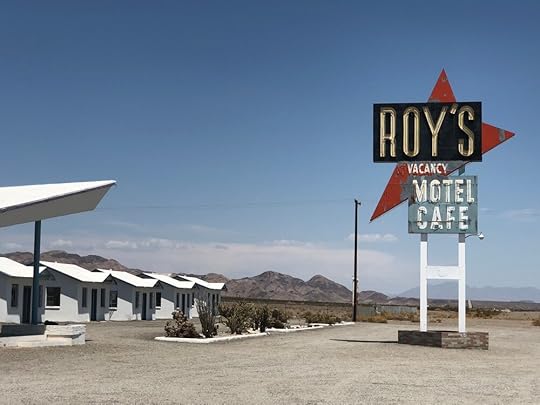
This stretch of highway was known as Route 66 for four decades, and there are still highway shield signs stenciled into the road along the way, but these days, street signs (and Google Maps) call it the National Trails Highway. It’s a variation on its earlier name, the National Old Trails Road — a series of “old trails” pieced together to provide a way across the continent. Some were little more than rutted wagon-wheel paths, and there’s that same feeling of loneliness to this stretch of highway that there must have been back then. It almost feels like you’re driving on the moon, until you come to an old, abandoned filling station or Roy’s Motel and Café (pictured above), which is still open in the otherwise abandoned hamlet of Amboy. It was 114 degrees when I was passing through on this section of road in a car without air conditioning. Needless to say, I bought a lot of water at Roy’s. You’ll find more about this trip in Yesterday’s Highways.
10. Lincoln Highway, Pennsylvania
I got a chance to explore this section of what’s now called U.S. 30 but started out as the Lincoln Highway, the early 20th century’s most ambitious cross-country route. Planned by Carl Fisher, the same man who built the Indianapolis Motor Speedway and transformed Miami Beach from a backwater hamlet into a booming resort, the Lincoln Highway ran from New York to San Francisco. There’s a lot to see on many sections of the road, but Pennsylvania was my favorite. You’ll pass through historic Gettysburg — and past the site of the historic battle (pictured above) — and you’ll cross one of the most impressive Columbia-Wrightsville Bridge. When it was dedicated in 1930, it was the world’s longest multiple-arch concrete bridge, and the fifth built at that location. The old Lincoln Highway will also take you past Latrobe, childhood home of Arnold Palmer and Fred Rogers, and birthplace of pro football and the banana split. But the highlight for me was the beautiful Allegheny Mountains, rolling hills that find the perfect balance between repose and majesty. For more on the Lincoln Highway, check out Yesterday’s Highways and my forthcoming book, America’s First Highways.
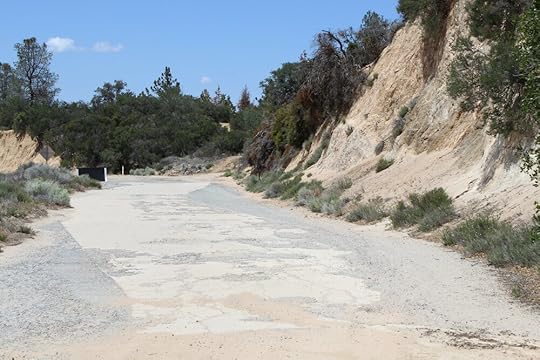
You can drive some of the way along the first highway to span the Tehachapi Mountains, linking Northern and Southern California, although part of it’s blocked off by the U.S. Forest Service. What you can see is fascinating. When it was established back in 1915, a number of local businesses set up shop along this narrow, winding path at the top of the world. Most of them abandoned it when an alternate route went in at a lower elevation to the west in the early 1930s, and only a very few remnants of that first era remain visible. Still, you can imagine what it must have been like to drive along the concrete road at 15 mph (the speed limit) and hope you didn’t run into a truck coming the other way around Dead Man’s Curve, which you can still see from above if you take a detour through Lebec. You can travel portions of the 1930s-era alternate route, too, although it was eventually bypassed itself by Interstate 5. Part of it’s down at the bottom of manmade Pyramid Lake. For more details on the Old Ridge Route, check out Highway 99: The History of California’s Main Street.
8. Highway 101, San DIego County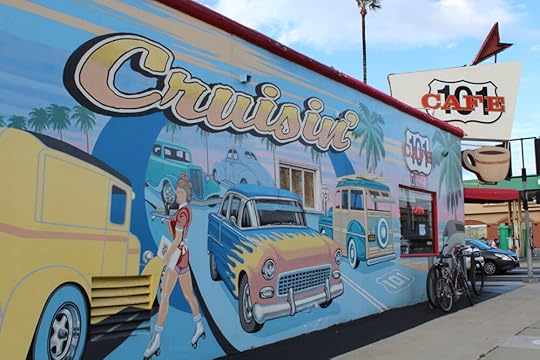
If you want a look at what the first federal highway system was like, before the age of the interstates, this section of highway is a great example. Sure, you can continue down Interstate 5 if you’re traveling from L.A. to San Diego, but why not take your time and drive south from Oceanside through, Carlsbad, Encinitas and Del Mar on a section of road that’s still signed as U.S. 101. The 10-mile Oceanside-Carlsbad Freeway at the north end of the route was started in 1950 to improve the flow of traffic and was the first modern highway in the San Diego area. Still, it passes directly through both cities’ downtown area and, farther south, offers beautiful views of the ocean. The section through Del Mar and past the historic racetrack/fairgrounds is gorgeous, and you’ll pass iconic businesses like the 1928 La Paloma Theatre in Encinitas and the 101 Café (pictured above), built that same year in Oceanside. The latter is worth a stop to check out the cool ’50s-throwback mural on the side of the building. More: Highway 101: The History of El Camino Real.
7. Blue Ridge Parkway, Virginia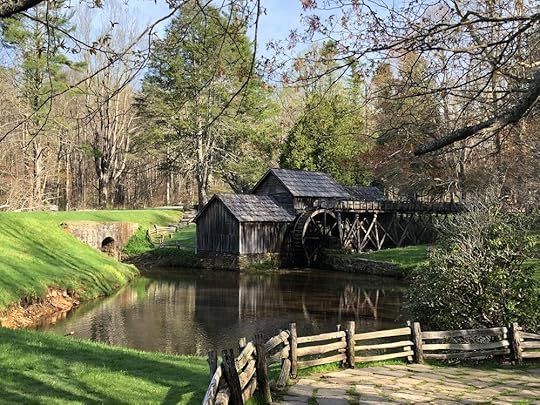
This 469-mile parkway through Virginia and North Carolina runs along the spine of the Blue Ridge Mountains. Most of what you’ll see is natural beauty, and boy, is there a lot of it. Green rolling hills, scenic overlooks, trees and wildflowers abound. Mountain ridges hug rolling meadows on this scenic drive. There’s aren’t many historic buildings along the way, but it’s worth stopping to check out Mabry Mill (pictured above), a site that features a sawmill, blacksmith shop and other buildings that date from the early 1900s. I haven’t driven the North Carolina section of this road yet, but I suspect it’s every bit as beautiful.
6. Highway 99, Dunsmuir, California
The town of Dunsmuir is a hidden gem, where you’ll find some of the cleanest water around. The old alignment of former U.S. Highway 99 takes down of Interstate 5 as you head north into town along Dunsmuir Avenue and past the historic California Theatre, which dates back to 1926. We stayed outside town at the Cave Springs Resort, a historic auto camp with cabins that date back to 1923 but that’s still running as a motel today. Railroad Park Resort, just south of Dunsmuir, offers lodging and eats inside refurbished railroad cars. Also south of town, you can check out the wild rock formations known as Castle Crags, which live up to their name. And the pine trees? They’re all around! More: Highway 99: The History of California’s Main Street.
5. U.S. 11 / Lee Highway, Virginia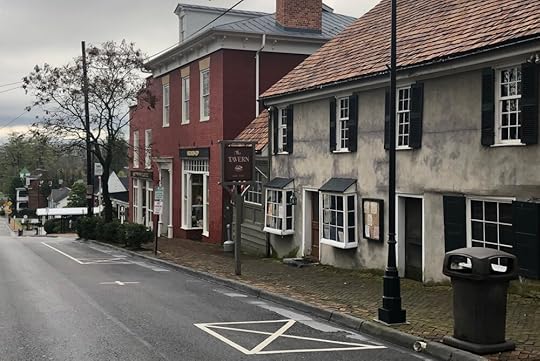
This section of highway follows the course of an early cross-country auto trail called the Lee Highway, named for Confederate Gen. Robert E. Lee. But west of Wytheville, it doesn’t seem much like a highway at all. Long since bypassed by Interstate 81 just to the north, it’s one of the most enchanting two-lane country roads you’ll find. Out of the blue, you’ll pass an old drive-in theater like the Hiland in the aptly named Rural Retreat. It opened in 1952 and is still operating today. Or you’ll find yourself passing the 1832 Old Stone Tavern in Atkins, that dates back to the time when the highway was a stagecoach route. There’s another historic theater in Abingdon, the Moonlite, which opened in 1949 and was placed on the National Register of Historic Places in 2007. Unfortunately, it closed six years later. Abingdon itself is a treasure trove of history, featuring an old theater, an 18th century tavern (foreground above), a grand 19th century women’s college and much more. This highway would make the list for Abingdon alone. More: America’s First Highways.
4. Pacific Coast Highway, California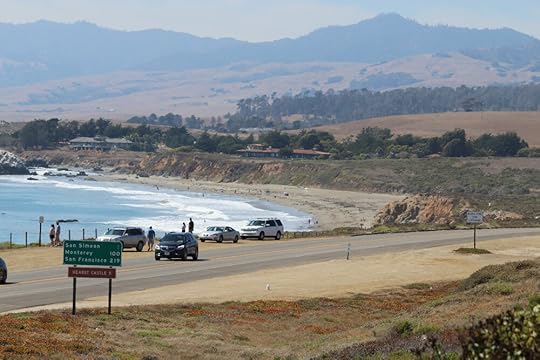
It’s hard to pick a specific section of this highway, which is routinely rated as the nation’s most picturesque. The section through Malibu is plenty interesting, too. But this segment, which features Big Sur, the iconic Bixby Creek Bridge, an elephant seal rookery, and the ever-intriguing Hearst Castle (with zebras grazing by the side of the road!), is everyone’s favorite. I lived a couple of miles away from State Route 1, as it’s technically known, for about six years, so I got spoiled. While working as a journalist, I even covered the road’s reconstruction after a couple of big mudslides washed sections of it into the ocean. The road north of San Simeon is full of curves and hairpin turns that offer breathtaking views of the ocean. It will take you a lot longer to get up the coast than it will if you travel the inland route (U.S. 101), but the scenery you’ll see is worth the extra time. More: Highway 101: The History of El Camino Real.
3. Route 66, Desert Southwest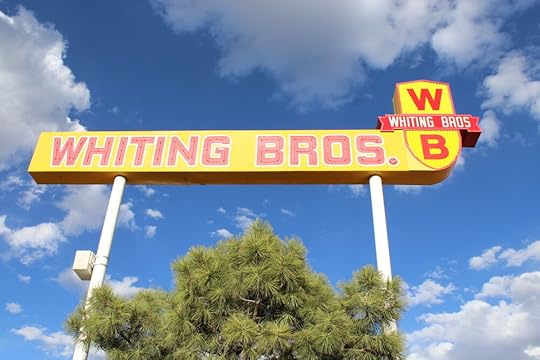
It’s about 500 miles from Glenrio, Texas to Winslow, Ariz., and you can make the trip in about a day. If you don’t stop. But you’ll want to stop many times along the way to check out what’s left the heart of Route 66. Glenrio’s a ghost town at the Texas-New Mexico state line, where you can find dozens of abandoned businesses: motels, diners and homes. It was an entire town, but virtually no one lives there now that Interstate 40 made Route 66 an afterthought – except to nostalgia buffs. Just a few miles west in Tucumcari, you’ll find plenty of old motels and service stations, some of them refurbished and plastered with colorful murals. The highlight here: the still operating Blue Swallow motel, with its distinctive neon sign, that opened in 1940. You’ll see plenty of other old Route 66 businesses along this stretch of highway, including several of the now-abandoned Whiting Bros. service stations that once dominated this section of road. The chain was once based in Holbrooke, and just west, in Winslow, you’ll find a statue inspired by the Eagles’ song Take It Easy, with its reference to “standin’ on the corner in Winslow, Arizona.” More: Yesterday’s Highways.
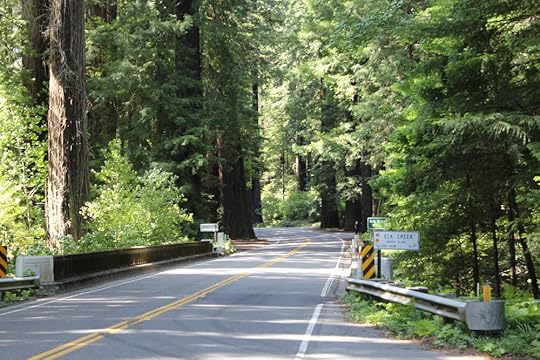
There’s simply nothing like the 140-mile section of U.S. 101 through Northern California known as the Redwood Highway. Starting at the south end of this segment in Ukiah, you’ll pass by the historic art deco Regal Ukiah Stadium 6 cinema, built in 1948, and the World’s Largest Redwood Tree Filling Station, carved out of a tree felled in 1936, when the station started pumping gas. Then, in Willits, you’ll pass beneath the distinctive neon arch. But the real attractions are the trees themselves, which line a section of the older U.S. 101 (now State Route 254) called the Avenue of the Giants. It parallels the current 101 from Phillipsville north to just short of Stafford. Before you get there, stop at the Benbow Inn in Garberville which dates back to the 1920s and offers some high-class atmosphere and the best hamburger you’ve ever eaten. Trust me. Other stops along the way include the drive-through Chandelier Tree and Confusion Hill, a 1949 tourist stop in Piercy. There’s too much to mention here, but there’s plenty in my book Highway 101. More: Highway 101: The History of El Camino Real.
1. Road to Hana, Maui
This will always be my favorite. I’ve driven it three times, at three different times of my life, and it never fails to disappoint. Yes, you have to make your way carefully over nearly four-dozen one-lane bridges and around more than 600 curves, but that’s part of the road’s charm. It will take you four hours to get to Hana, which might take you an hour if you could take a straight shot. The thing is, you can’t. Besides, Hana Highway is about the best evidence ever that it’s about the journey, not the destination. There’s not really much in Hana, a sleepy town of barely 1,200 people, but along the way you’ll pass through the nation’s only true rain forest. Along the way are gorgeous seasonal waterfalls, eye-popping ocean overlooks, bamboo forests, black sand beaches and lava tubes. Plus, it’s just fun to drive. It’s almost like a roller-coaster: Merchants even sell T-shirts that proclaim you’ve driven the Road to Hana. This one should be on everyone’s bucket list. (For a bonus trip, drive up the crater road to Haleakala, Maui’s extinct volcano. You’ll view the island and surrounding ocean from above the clouds. But take a jacket. It’s cold up there!)
All photos © Stephen H. Provost, 2015-2020