Stephen H. Provost's Blog, page 3
July 12, 2021
San Luis Obispo, Cambria featured in two new books
Cambria and San Luis Obispo. They were just naturals to be the next two books in my Century Cities series.
They say “write about what you know,” so I thought, why not? Besides, I couldn’t think of two more fascinating places to include in my growing series that chronicles small- and midsized American cities and towns in the 20th century.
Cambria CenturyI first visited Cambria as a child, when my parents took me there in 1970s and 1980s. I ate at Linn’s on Main Street and visited the Toy Soldier Factory and the kite store. I never imagined I’d return in 2015 to run the weekly newspaper.
I spent three years as managing editor of The Cambrian, and during that time, I learned a lot about the town’s history and background. I walked up and down Main Street more times than I could count, visiting antique stores and attending performances at the Pewter Plough Playhouse. I have fond memories of the merchants’ open-house Hospitality Night during the Christmas season; of judging Pinedorado floats and chili contests.
I covered sporting events and graduations; health district, school board, and community services district meetings. I listened to and reported on debates about water and tourism. And I made a number of friends.
A learned a lot during that time, but I learned even more during my research.
For a little village, a lot has happened in Cambria. It’s on the road to Hearst Castle and the most scenic stretch of Highway 1, where you can see zebras roaming beside the freeway and elephant seals lounging in the sun. But it’s also a destination in its own right, where a rare stand of Monterey pines meets the sea, and where dozens of lively shops and galleries lie nestled at the base of the green Santa Lucia foothills.
Before doing my research, I didn’t know much about the quicksilver mines and old saloons that made Cambria part of the wild, wild West. I’d visited the Rodeo Grounds, but I didn’t know how big a draw rodeos were in the 1920s and ’30s, when thousands of people would show up from the community and beyond to take part in festivities like “Raising Helldorado” (years before the annual Pinedorado festival was born).
Cambria is relatively isolated at what was once the end of the highway, but it’s also the gateway to San Simeon, which in turn is at the doorstep to Hearst Castle. Then there’s Harmony, the former dairy town and arts enclave just to the south that’s had 18 residents for as long as anyone can remember. I included events from those communities, too.
Did you know Cambria once had its own movie house and (despite an aversion to national chains), a tiny park on Main Street, and an A&W Drive-In?
Cambria Century will take you to William Randolph Hearst’s castle and Art Beal’s anti-castle overlooking the West Village. You’ll return to the Toy Soldier Factory, the Pewter Plough Playhouse, the Chuck Wagon, Exotic Gardens, Lyons’ Red & White store, Camozzi’s, the Rigdon Building, Bank of America, and the Bluebird Inn.
San Luis Obispo CenturyI was introduced to San Luis Obispo on a trip to the coast with a buddy just after graduation, and my lasting memory of that trip was a visit to Leon’s used books on Higuera (now sadly gone).
I applied for — and didn’t get — a job in The Tribune’s sports department back around 1990. Then, a couple of decades later, I applied for — and did get — a job on the copy desk there. The newspaper had moved in the meantime, from a downtown cinder-block to perhaps the nicest building I’ve ever worked in, a modern, naturally lit office on South Higuera.
I worked there for six years as a copy editor, columnist, and assistant news editor. In that time, I got to know that city pretty well, and it struck my as one of the few places that had actually figured out how to do downtown revitalization right.
But as with Cambria, I discovered a lot more that I didn’t know when I decided to look back on a century of history.
From the historic Mission to the one-of-a-kind Madonna Inn, from Ozzie Smith’s heroics to Weird Al’s weirdness, San Luis Obispo has seen its share of landmarks and highlights in the 20th century. It’s home to the world’s first motel and one of the West Coast’s most vibrant classic theaters. It’s a university town and home to one of the oddest attractions you’ll find anywhere: “Bubblegum Alley.”
San Luis Obispo has played the stand-in for My Blue Heaven and has been dubbed “The Happiest Place in America,” but it’s also been the scene of less-than-happy events like kidnappings and drunken riots.
San Luis Obispo Century takes you back to the building that once housed a garage, William Randolph Hearst’s personal taxi service, a hotel annex, and newspaper offices before it was torn down to make room for Mission Plaza. It includes the story of a mostly forgotten raceway where speed records fell, revisits the exploits of Ah Louis and the history of U.S. 101.
You’ll visit one of nation’s the few surviving drive-in theaters, and relive traditions like Riley’s Department Store, Scrubby and Lloyd’s Burgers, and Foster’s Freeze.
Each of these new volumes includes more than 100 images, both historic from across the years and modern from my own camera lens.
As with all my Century Cities books, the events are presented in chronological order so readers can see how the community grew and changed over the years. The timeline includes a mix of major happenings, quirky events, and slice-of-life vignettes.
I’m living on the opposite coast in Virginia now, but these books were my way of revisiting and paying tribute to two towns that played a big part in my life through much of the 2010s. Like my other Century Cities books, and my entire catalogue, they’re available on Amazon. I hope you enjoy them and, if you do, that you take a moment to leave a rating or a review.
As Bob Hope would have said, thanks for the memory.


July 4, 2021
7 myths about authors
Why “7 myths about authors”? It all goes back to when I worked at a newspaper: I learned pretty quickly that most readers had no clue about what went in to putting out what was known as the “daily miracle.” It wasn’t a miracle at all. It was part of a process that required teamwork, determination, creativity, attention to detail, research, and the ability to meet deadline.
But all readers cared about was the end result. And if there was something they didn’t like about it, they’d let you know. It’s much the same with books.
At the newspaper, whenever I got a fair criticism, I took it to heart and made it a point to do better next time. When I got an unfair criticism, I did the same thing — but in the back of my head, a snarky little voice would silently utter the following words: “You try it then!”
The truth is, it’s not just newspapers that are mysteries to the people who buy them. Most of us don’t have a clue how much thought, preparation, skill, and hard work goes into what anyone else does for a living.
These days, I write books, and it’s the same way. Most readers don’t know what goes into being an author, the frustrations we face and the time it takes. You’ll hear things like, “I always wanted to write a book.” But they never did, either because they didn’t want to take the time necessary to make it happen or because they didn’t know how to go about it.
That’s OK. And it’s OK that readers don’t know much about what happens on our end, either. But that’s why I thought I’d write this piece: to give them an idea about what it takes, and to put to rest some misconceptions about us and what we do.
We’re all celebritiesQuick: How many authors can you name off the top of your head? Stephen King, J.K. Rowling, James Patterson, maybe a few classic writers like Mark Twain and Charles Dickens...
Most people haven’t even heard of many authors on the New York Times bestseller list — unless they were celebrities or political figures already: people who got signed to publishing contracts not because of their writing ability (many of them have co-writers or ghostwriters), but because they already had marketable names. You’ve probably heard of even fewer authors signed by the so-called Big Five publishing houses.
Yet for some reason, the odd notion persists that authors are somehow celebrities just because they’re authors. The opposite is true. No one’s heard of most of us, and many of us are introverts who’d much rather be sitting in front of our computers than gladhanding and getting photographed. Most of those who are celebrities already were, and for many of them, publishing a book is more is more about vanity and branding than actually writing.
You’ll find our books at Barnes & NobleAccording to Berrett-Koehler Publishers, a book as “far less than a 1% chance” of being stocked in an average bookstore. There are so many books fighting for such limited shelf space — especially with brick-and-mortar bookstores dwindling in number — that it’s a heavy lift to get your book a place, and most bookstores won’t carry self-published books at all.
I once had two books at my local Barnes & Noble at the same time, and saw another one of my titles on the shelf at B&N in Los Angeles, 200 miles down the road. I was stoked. But what did that mean in the end, other than a bit of excitement and pride?
To find out, read on.
We all have publishing contractsThere was a time when finding a publisher was the only way to get your work out there, and the only way to get a publisher was to find an agent willing to represent you. But that’s not true anymore.
The vast majority of authors these days don’t have agents and haven’t been signed by publishing houses. Instead, they put out their own books through companies like Kobo, Lulu, Ingram Spark, and the most widely used platform: Amazon’s self-publishing arm, KDP (formerly CreateSpace).
I’ve had half a dozen books traditionally published, and I’ve been pleased with the results, aesthetically. The company I signed a contract with was able to format several of my books with color photos and glossy pages — something I couldn’t have afforded to do myself. They also hooked me up with some media interviews. Pretty cool. But, again, read on.
We’re all wealthyIt all comes down to this: Most of us don’t. We have day jobs that pay the rent, and if you crunched the numbers in terms of hours, we probably make less than minimum wage on our books, especially when you factor in expenses like advertising, editing, cover design, and so forth. Traditional publishers do some of that for you, but you still have to do a lot of your own marketing, and even then, you may not wind up with much in your pocket.
Those books I had traditionally published and the ones that appeared at Barnes & Noble? They didn’t make me anywhere near enough money to live on. And even if you factor in the other 25 books I’ve published myself, I make far more money doing contract writing and editing than I do from all my books combined.
And if you think that’s surprising, consider this: Most authors don’t go into the business with a background as a professional writer and editor. I had about 25 years of work as a journalist under my belt before I published my first book. That’s how hard it is to make money as an author.
A 2018 Authors Guild survey of more than 5,000 professional writers in the United States found that their median income was $6,080 in 2017, with just $3,100 being from book income alone — less than one-quarter the federal poverty level for a single-person household.
We don’t need reviewsReviews help any product gain visibility on Amazon, but for some reason, readers seem more reluctant to review books than other products, which has always mystified me.
Stephen King’s The Stand had 20,000 reviews as of July 4, 2021, which sounds like a lot (and it is for an author) until you notice that the third generation of Amazon’s Echo Dot smart speaker had more than 41 times as many: 862,000. A set of queen-size Mellanni bedsheets had nearly 234,000, and a hair-straightener from HIS had almost 71,000.
Most people put more time and effort into reading a book than they do into listening to a speaker, straightening their hair, or lying down to sleep. So you’d think they’d be willing to spend a little more energy writing a review for a book they’ve read than they would for those other products. Not so.
Maybe they think we don’t need the help, but if so, I’d refer them to the misconception directly above this one.
Plus, we like to be appreciated — probably more than a hair-straightener does.
We’re either superheroes or slackersTwo misconceptions exist about an author’s workload, and they’re both equally wrong.
On the one hand, I’ve been approached by people who are almost awestruck at the fact that I’ve written a book (I’ve written more than 30). “I could never do that!” they say, marveling at the immense amount of work that must have gone into it. And yes, writing a book is a lot of work. But so is building a house, repairing a car, putting out a newspaper... pretty much any job that requires an honest day’s effort.
On the other hand, there’s this idea floating around that authors are a bunch of flighty layabouts who spend most of their time wringing their hands over writer’s block and crumpling up unsatisfactory half-written pages and tossing them into overflowing trash bins.
That’s not true, either. There’s really no such thing as writer’s block. Any author who claims to suffer from it either isn’t getting up and walking around enough, has grown bored with their own story, is being distracted by something else, or actually has been writing so much they’ve gotten burned out.
Authors are neither miracle workers nor slackers. We’re people who do a job and want to make some money, make a difference, and be appreciated for what we do.
We’re all the sameMany readers seem to be under the impression that — unless a writer’s a celebrity — the only things that differentiate one author from another are the genre they write in, and personal preference (“whether I like their stuff or not”). Of course, you have to read their books to form a preference.
In the days when virtually all authors went through publishing houses, those publishers served as gatekeepers. Yes, they made mistakes, and often big ones: J.K. Rowling’s submissions were rejected repeatedly, as just one among many examples. The process was highly subjective — and frustrating for those who didn’t make the cut. But at least the reader could (usually) count on a certain level of quality.
These days, when anyone who wants to publish their own books can do so, quality is all over the board, ranging from high eloquence to incoherent rubbish. All authors are not the same, but because we’re all on the same playing field, there’s very little to differentiate us unless we have a name, and unless you actually open one of our books.
With more than 1.7 million books self-published in the U.S. in 2018, who has time for that? You don’t even have time to judge a book by its cover anymore.
What it all boils down to is authors are people who do a job that they believe in. We want to be paid, and we want to be appreciated. That shouldn’t be too hard to understand. In that way, we are all the same — not just authors, but human beings: That’s all most of us really ever want.
Stephen H. Provost has written more than 30 books and published more than 25 on his own imprints, Dragon Crown Books and Century Cities Publishing. All are available at Amazon.
May 11, 2021
If you liked "Fresno Growing Up," you'll love "Fresno Century"
First, the bad news: Fresno Growing Up is out of print. After three successful press runs, it’s no longer available new from Amazon or the publisher.
Now, the good news: I’ve written another book about the history of my hometown, and if you liked Fresno Growing Up, you’re going to love Fresno Century.
Fresno Growing Up, published in 2015, looked at the city’s history during time Baby Boomers were born and grew up, roughly from 1945 to 1985. Fresno Century expands on that period and examines the entire 20th century.
It’s the second book in my new Century Cities series, which is devoted to exploring and celebrating the history of midsized and smaller American cities during the 20th century.
Fresno’s not so small anymore, and there’s a lot of history to cover. I’ve revisited some of what I explored in Fresno Growing Up, but with new information on subjects like the Fresno Rockets championship softball team and the rise and fall of Fulton Mall.
There are also many entirely new topics. Did you know about the man who once delivered Fresno newspapers to Madera residents from an airplane — and ended up founding one of America’s most successful companies? Or the guy who opened a gas station at the age of 20 and built it into one of Fresno’s most successful businesses?
You’ll find out about Fresno’s iconic buildings, like the Hotel Fresno and the Helm Building, and you’ll relive Fresno State’s victories in its first bowl game way back in the 1930s and in the Freedom Bowl over mighty USC.
What basketball Hall of Famer once competed in the West Coast Relays at Ratcliffe Stadium? What was the biggest store in town before Gottschalks came along? Why did the team with the best record ever in the California League have to win its last six games just to qualify for the playoffs? You’ll find out answers to these questions and much more in Fresno Century.
This new book comes packed with more than 125 photos — both contemporary and historic — you wouldn’t have found in Fresno Growing Up. And like all books in in the Century Cities series, it’s told in chronological order, with a chapter devoted to each decade of the 20th century, and each chapter organized by year and topic.
If you want to find out when The Famous Department Store or opened its doors in Fresno or when Michael Jordan made his first appearance at Selland Arena, you’ll find it in these pages.
For those of you who missed Fresno Growing Up, this is a great chance to get your hands on an even bigger piece of Fresno history.
Fresno Century is the second book in the Century Cities series, following Roanoke Century, and it’s now available on Amazon.
May 9, 2021
Roanoke book kicks off series on 20th century American cities
You may have noticed I’m not blogging as much lately, but that doesn’t mean I haven’t been writing. On the contrary, I’ve been working on a new project.
It’s not just a book, it’s a series of books. In fact, it’s a whole new imprint.
After spending a few years hopping back and forth between writing history and novels, I decided to stop straddling the fence (at least for the time being) and dive into the deep end of nonfiction pool.
Over the past month, I’ve been hard at work creating the first two books for Century Cities Publishing, a new imprint of my publishing company, Dragon Crown Books, devoted exclusively to exploring and celebrating the history of midsized and smaller American cities during the 20th century.
Enough has been written about New York and L.A. and San Francisco; less has been said about the places where most of us either lived or grew up before we moved to one of those big cities. That’s a niche I decided to fill.
I’ve already written two books spotlighting cities: Fresno Growing Up in 2015 and Martinsville Memories in 2019. But the Century Cities series is going to be a little different: There’s a clear template that I’ll be following for each of these books, which will serve as tour guides through the history of the 20th century for each city I plan to highlight.
Each volume will consist of 10 chapters, one for each decade from 1900 to 1999, and each chapter will be broken up into years and topics, so if something interesting happened on the football field in 1946, you’ll find it under “1946” and “Football.” It’s all chronological.
Some entries will be as simple as a single sentence, perhaps relating the population growth that year or the results of a mayoral election. Others will go into greater detail, weaving fascinating stories of the people and institutions that defined these cities and towns — or at least made them a lot more interesting.
Like my highway books, they’ll be illustrated with as many memorable images as I can find or create (photography is part of the fun).
The cover of each book will feature iconic landmarks that define each community, and the title will be the city’s name, followed by the word “Century.”
For example, Roanoke Century, the first in my series, features a panoramic view of the city, St. Andrews Roman Catholic Church and the H&C Coffee sign on the front cover, with the Roanoke Hotel, Towers Shopping Center sign, and Dr Pepper “bottlecap” sign on the back.
Do you remember when Dr. J (Julius Erving) played in Roanoke? When Santa's train stopped at the Miller & Rhoads Department Store downtown? When a native son starred in one of the biggest holiday movie classics of all time? Did you know that, once upon a time, Roanoke was home to the state's biggest football stadium and its first indoor mall? Whether you answered, "I didn't know that," or whether you just want to be reminded, that’s the kind of information you’ll find in Roanoke Century.
The city once known as Big Lick was home to the Norfolk & Western railroad and a thriving textile industry. It was called “The Magic City” because it grew so fast, then "The Star City of the South" when a giant neon star appeared on Mill Mountain overlooking a thriving and historic downtown.
This is the kind of information you’ll find in Roanoke Century, and, for the other cities I’ll be exploring, in all the Century Cities books.
These titles will all be available on Amazon under their city names and as part of the Century Cities series. I’ll be announcing more as time goes on.
April 2, 2021
7 ways to make your photo road trip a success
I recently returned from a road trip to take photographs for my latest book, Highways of the South, and I had a blast. I took hundreds of pictures, many of which appear in the book, and I had a great time exploring the region — even more so because hadn’t been able to travel for about a year, because of the pandemic.
But I got both my vaccine shots in February, and I decided it was time to hit the road. This kind of road trip was actually perfect, because I wouldn’t be in contact with many people: I wasn’t visiting anyone or going to any big events, and with a couple of minor exceptions, my only points of direct contact were at hotel check-ins counters, gas pumps, and drive-throughs. (When I came across anyone, I wore a mask.)
On a photo trip, all you have to do is pull off to the side of the road, look for a few good angles, shoot your shot, and get back in the car. Heck, there were times when I just drove into a parking lot or stopped by the side of the road and snapped a few quick pics without even leaving the driver’s seat.
In the end, it wasn’t much different than other trips I’ve taken. It involved the same steps, and it occurred to me that, since it was so much fun and so successful, I’d share them here. I qualify as a professional photographer, technically speaking, because I’ve gotten paid for the pictures I take — both by newspapers and for the books I’ve written. But I’m not a trained photographer: I learned mostly through trial and error.
Over the past seven years, I've take dozens of road trips, short and long, to shoot photos for eight different books. I've learned quite a few lessons in that time, so I thought I'd share the seven most important ones with my readers.
So, I’m not sharing these ideas as a hotshot shutterbug (I’m not!) but as a road-tripper who’s learned a few lessons while doing this for the past seven years. So, without further ado, off we go!
Pick your windowChoosing when to travel is important. You’ll be dealing with several factors, and they all have to line up. One of the tricky things about setting up a photo trip is that you can’t plan for some of them (such as weather or health emergencies) too far ahead, if at all, but you’ll still have to do some planning. That means arranging for time off from work and picking the proper season. When it comes to photography, this involves at least two things: Weather and lighting.
You won’t know what the weather’s going to be like more than 10 or 14 days out — and even then, it’s not exact. So you’ll want to plan your trip during a season when there’ll be the lowest chance of bad weather. This can vary depending on the region: Some places have mild winters, relatively speaking, and more summer rains than others. Be aware of regional weather patterns, and plan accordingly.
It wasn’t too smart of me to travel Route 66 through Amboy in the Mojave Desert without air conditioning in the middle of summer, when it was 114 degrees. It felt like I went through a swimming pool’s worth of water that day to stay hydrated.
The other important thing to consider is lighting. You’ll have more available light during the summer months during the winter, which means more photo opportunities.
If you get up at daybreak and keep going until sunset, you can take advantage of interesting shadows on both ends, so plan for stops that optimize sunrise/dusk photos at locations where they’re most striking. Ruins of old abbeys in Britain and striking rock formations like Monument Valley in Arizona come to mind. This can be tricky and requires good timing.
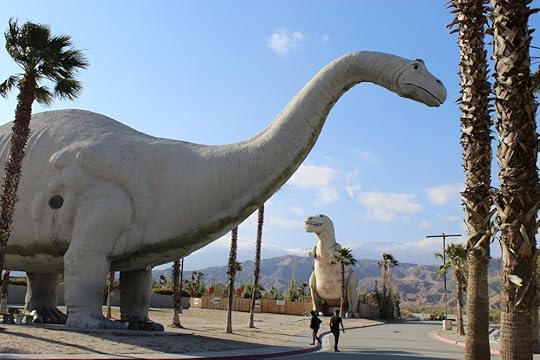
Cabazon dinosaurs, Southern California.
Choose your targetsSelect the kind of photos you want to emphasize and create an itinerary based on your choices.
For my trip around the South, I did a loop from Virginia through Tennessee to Kentucky, then back down through Tennessee again to Alabama and Georgia before returning via the Carolinas. All told, it took me five days and four nights, which really packed things in during a brief span of time.
Chances are, you’ll have an idea of what you want to see before you set out. But a general idea isn’t enough, because you’ll be sure to miss things. I still regret not seeing Rosslyn Chapel on a trip to Edinburgh, Scotland, 25 years ago because I didn’t know it was there. I haven’t had the chance to get back since, and I’m not sure I ever will.
Do Google searches with the appropriate keywords to find out what’s worth seeing. Before my recent trip, a search under “Dixie Highway” sent me to a PDF of an online tour from Louisville down to Horse Cave on U.S. Highway 31E. It included a series of historical stops and formed the basis for that portion of my trip.
If you’re looking for roadside photo ops, the Roadside Architecture website is invaluable. It contains locations of old signs, gas stations, diners, cinemas, drive-ins, statues, and other items of visual and historical interest in all 50 states. There’s also RoadsideAmerica.com, “your guide to offbeat tourist attractions,” which rates them on a scale from 1-5. Both sites include bits of trivia and historical background.
If natural wonders interest you, Atlas Obscura has a fairly extensive list. And if you’re looking for just plain beautiful highways, you can find a list of my favorite highways on this very site. Tour books work, too.
Look for the unexpectedJust because you’ve got an itinerary, that doesn’t mean you should ignore unexpected jewels you find along the way. In fact, some of the most fun you’ll have on a photo trip can be keeping your eyes peeled for a great photo subject you hadn’t planned on shooting and didn’t even know was there.
I’d estimate that at least one-third of the shots on my recent road trip weren’t planned, but were things I encountered along the way that I hadn’t expected.
I had forgotten to mark down a vintage motel, Horseshoe Camp, along U.S. Highway 31W in Kentucky, and only saw it out of the corner of my eye as I zoomed past, heading south toward Tennessee. The feelings of excitement (that I’d seen it) and relief (that I hadn’t missed it) combined to create a huge rush.
An added bonus: If you’re always on the lookout for a cool shot, you won’t get tired or fall prey to highway hypnosis. Being on the hunt will keep you awake and alert the entire time.
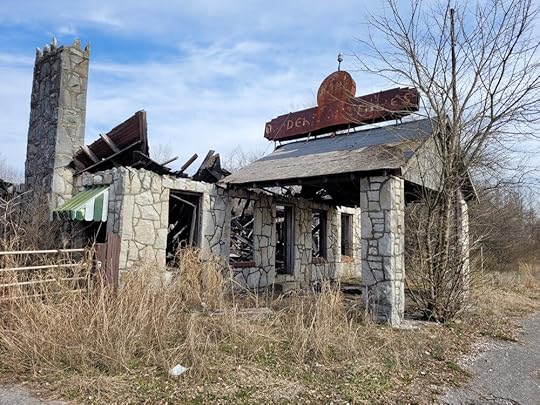
Horseshoe Camp Modern Cottages, Bowling Green, Ky.
Adapt to changing conditionsNo matter how well you plan, you can’t foresee everything. I’ve encountered isolated storms that weren’t in the forecast, such as snow flurries in the mountains at Boone, N.C. Crashes on the highway can cause delays; so can road work.
A detour or accident can add a half-hour or more to your drive time.
You should plan on encountering at least one alternating lane closure on any extended trip — I hit three in five days on my recent trip — unless you stick to the interstate, and what fun is that? Old highways and rural roads are a lot more fun, and far more fruitful when it comes to finding photos. (One of my favorite tips: If you’re looking for roadside gems, highways labeled “Business” or “Alternate” are good bets.)
Stay up to date on road conditions with a traffic app, and on weather conditions with a weather app. I use one called Weawow, which is customizable and easy to read.
Also, be aware that gas prices will change from place to place, based on different state taxes, refinery closures, and availability. Whenever I cross from Virginia into North Carolina, I can count on a 20-cent-per-gallon price jump, followed by a 20-cent decrease when I hit South Carolina. A foray into Pennsylvania when I was shooting photos for America’s First Highways was a real eye-opener: Prices there were a lot higher.
Allocate enough timeThis can be difficult. One thing I’ve learned is that I usually leave less time than I need, especially on day trips: I seldom get as far as I thought I would before I have to turn around and head home.
The previous two tips pretty much guarantee you’ll have to leave more time than you think you will. You’re bound to see something unexpected you want to shoot, and sometimes, you’ll be past it by the time you realize it, so you’ll have to circle back to it — which will take even more time.
The worst thing you can do is check Google Maps for the time it will take to get from where you are to your ultimate destination, and confine yourself to that timetable. That allows zero time to accomplish what you’ve set out to do: take pictures. Remember, you have to stop the car to do this.
A good rule of thumb is to allow at least half again as much time to get to your ultimate stop as Google indicates, or twice as much time to be safe. If Google says it’s two hours away, allow for somewhere close to four. If you get there sooner, you can go over what you’ve shot or rest up after a busy day on the road.
Once you know how long you’re likely to take, you can plan out where to stay. Some travel sites and chains give you a bonus night free on your 11th reservations and offer “secret deals,” so take advantage of those. Or if you’re roughing it, scope out RV parks and campgrounds ahead of time.
Have the right equipmentThis can mean different things for different photographers. Camera phones have become so good they can create crisp, vivid images comparable to what you’d get with a traditional camera. You can get perfectly good — even great — photos using the latest phone cameras (or are they camera phones?), whether you’re talking about an iPhone or an Android like the Samsung Galaxy.
Phone manufacturers have realized how much people value their products’ picture-taking abilities, so they’ve priced their models accordingly: You’ll pay a pretty penny for a phone with a high-end camera, so be sure to prioritize what kind of photos you want. How high is the resolution, and which colors come out best? Those are just a couple of questions you’ll want to ask, because they can vary.
There are, however, some ways in which there’s just no substitute for a traditional camera. Versatility is one. You can change lenses and filters to adapt, and you can adjust things like exposure manually. The zoom lenses on the latest cameras are decent, but they don’t hold a candle to what a traditional camera’s telephoto lens can do.
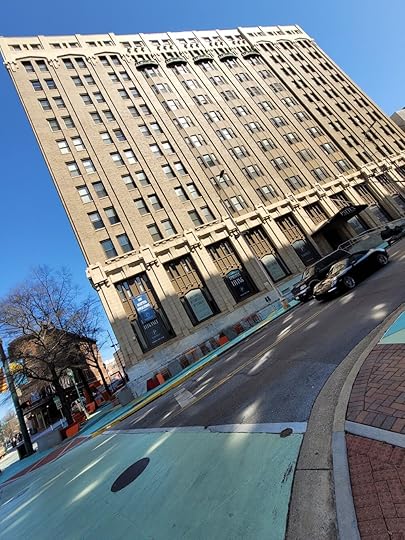
Hotel Patten, Chattanooga, Tenn.
Explore different anglesI don’t know how many times I’ve walked away from a scene, convinced I’ve gotten a good shot, only to see a photo of the same place online that was taken from an angle I hadn’t considered.
The moral of this story is simple: Take some time to walk around and explore your subject from a variety of angles. Here are some possibilities to consider:
Cross the street.
Turn your camera at an angle.
Take shots from the sunny and shady sides of an object.
Try framing it with a tree branch, rock outcropping, or archway; then take a few shots without the frame.
Take photos of the entire object, then try closeups of some components.
Center the object or play it off to one side.
Try using empty space to make it pop.
So, there you have it: My seven tips on how to make your photo trip a success. I’m sure you have some of your own you can add, too. If you plan ahead and cover all the angles — figuratively and literally — you’ll wind up with enough good photos to fill a book. I did, several times over.
Stephen H. Provost is the author of and principal photographer for five books on U.S. highways, and three additional books on local and American history. All are available in paperback, and some in ebook form, on Amazon.
March 31, 2021
The apostrophe no one gets right
The apostrophe no one gets right
File this under “the more things change... the more clueless people stay.”
I came across an article filed by NBC News a few minutes ago on South Dakota Gov. Kristi Noem getting caught in the middle of a culture war between social conservatives and business interests in South Dakota.
The subject of the article isn’t the point, but I’ll preface what I have to say with a couple of key excerpts, so you can see where I’m going.
“The legislation would have prohibited transgender women and girls from participating in girl’s and college sports in the state.”
“It is also the latest salvo in a nationwide Republican-led effort to keep transgender athletes out of women’s and girl’s sports...”
What’s wrong with these sentences? Look at the words “women’s” and “girl’s” in the second example. They’re both possessives, but they indicate, as written that, the sports in question belong to women in general, but only one girl.
This can’t be right. NBC News has achieved aesthetic consistency by putting the apostrophe before the “s” in both cases, at the expense of consistency on substance. It’s not just a typo, either. The reference to “girl’s” athletics is used not once or twice in the article, but three times.
 Apostrophe apocalypse?
Maybe I shouldn’t be too hard on the folks at NBC News. We live in an age when apostrophes are routinely forced into plurals and even verb tenses, but expunged from company names like Starbucks and Popeyes Louisiana Kitchen. (The founder — who wasn’t named Popeye and named his business after a character in The French Connection, not the spinach-eating sailor* — once said he was “too poor to afford the apostrophe,” but whose online selections are on Popeye’s menu.
But the problem of what to do with the words “boys” and “girls” when describing athletic teams and events isn’t new. In fact, writers have been grappling with this apocalyptic (sarcasm intended) style problem for decades, yet they still haven’t figured out how to use this particular apostrophe consistently. I know because it’s a problem I confronted 35 years ago in my first job as a reporter, covering high school sports for the Tulare Advance-Register in California.
Back then, I was told by the journalism style gods that I was to refer to the Los Angeles baseball team’s infield as the “Dodgers infield,” because “it didn’t belong to the Dodgers.” The word “Dodgers,” I was duly informed, was an adjective that described it. This would have made sense, except the fact that when a pronoun (“baseball team”) is substituted for the proper name, it became possessive. You can look back at the previous sentence to see what I mean:
If you say it’s the team’s infield, to be consistent, you have to say it’s the Dodgers’ infield.
(It is, however, Dodger Stadium: That’s the formal name. It’s also, however, the Dodgers’ stadium, because it belongs to the team. It is not, however, in any instance, “Dodgers Stadium.” Thankfully, we have no such issue with the Cincinnati Reds, who don’t play at Red Stadium, which — although it does have red seats — is known as Great American Ball Park under the team’s current licensing agreement with an insurance company. But I digress.)
 Pigheaded patrons of style
Such inconsistencies mattered not a whit, though, to the journalism style gods, who told me that the same adjectival principle applied to the use of words like “girls” and “boys” to describe various sports. We were “supposed to” write about girls basketball and boys soccer, without any apostrophe to indicate a possessive. The word, I was told, must be understood to be an adjective.
“Poppycock,” I said. “If that’s so, then why is there an apostrophe when we write about men’s basketball and women’s soccer?”
(I may not actually have used the word “poppycock,” but it sounds good here.)
To this day, no one has been able to answer that question. Do these sports suddenly become possessive when applied to adults rather than minors? Or are the adherents of the pro-adjective, anti-possessive crowd simply too pigheaded to admit that they’ve backed themselves into a corner: that, in order to be consistent, they’d have to employ the preposterous descriptors “men soccer” and “women basketball”?
No matter how strongly the pro-adjective forces feel, they can never bring themselves to do this, because they don’t want to be the object of scorn and derision. Even in the Wild West of modern journalism, where copy editors have been banished to wander aimlessly as outlaws through a tumbleweed-strewn wasteland of unemployment, readers would still notice how stupid that sounds and make fun of whoever wrote something it.
The ludicrous idea of talking about “women shoes” or “men cologne” exposes the plain fact that these words were always meant to be possessive, and therefore, they need an apostrophe. There’s no shame in admitting this. It would clear up one of the most intractable inconsistencies in journalism quite easily. But admitting they’re wrong isn’t something the gods of journalism rarely do readily, unless political pressure is applied.
There’s nothing political about this. It’s a simple matter of consistency, or lack thereof.
A simple solutionWe can now circle back to the NBC News article, which, to its credit, acknowledges that these words should be possessive when placed before words describing gender and sport, regardless of whether we’re talking about adults or young people.
What it gets wrong is how many people are doing the possessing. If you’re talking about women in the plural, you have to talk about girls in the same way. And that means you have to use the plural possessive form: “girls’,” with the apostrophe after the “s.”
This isn’t rocket science, brain surgery, or even a challenge akin to keeping your facts straight on Star Trek canon. You’re not dealing with multiple universes here. You only have two things to stay consistent about: sports played by adults of different genders, and sports played by youths of different genders. Easy peasy.
Which is why it’s so befuddling to me that something I figured out as a rookie reporter 35 years ago continues to stump people who’ve been in the business for decades.
One final note: When I became sports editor of the Tulare Advance-Register after two years as a reporter, I adopted a style policy of referring to girls’ and boys’ basketball, with the apostrophes gloriously and unapologetically displayed after the “s.” I did so proudly, and I did so consistently. Why? Because I was in a position to make the rules, and I figured it was better to be right (and consistent) than follow the crowd.
Yeah, that still gets me in trouble.
*A tidbit I learned in researching my latest book, Highways of the South.
Featured photo by David Groehning, Creative Commons 2.0 license
March 30, 2021
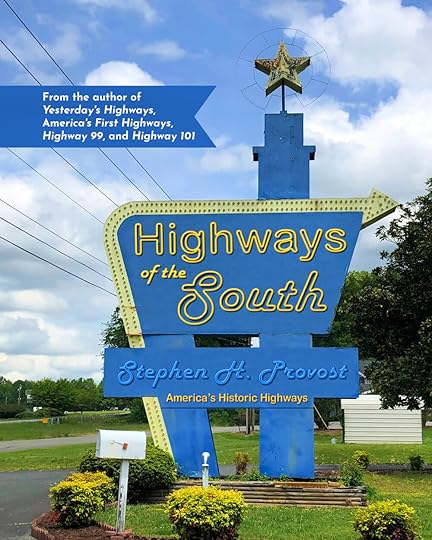
Book traces rich history along the ‘Highways of the South’
Highways have fascinated me for some time because of all you can find there. They’re essentially a microcosm of American life, which both reflect and preserve our rich history.
That’s what hit home for me most as I was researching Highways of the South, the third volume in my series titled America’s Historic Highways (which in turn complements my work on California’s Historic Highways) and my fifth highway book overall.
If you think about it, these roads are like a time capsule, except everything’s jumbled together. You might pass a service station from the 1940s, doing business as a used-car dealership and sitting next to a new Chick-fil-A, which is across the street from a Piggly Wiggly that was built around 1970.
Down the street’s a shopping mall where business was booming in the ’80s, but which is nearly deserted now. And on the edge of town is a worn screen which is all that’s left of an old ’50s drive-in; now the property’s being used as a salvage yard.
You never know what kind of history you’ll find behind a particular roadside site. Did you know that South’s first major network of highways, the Dixie Highway, got its start in a meeting at the Patton Hotel in Chattanooga, or that the first miniature golf course was built just a few miles away, on Lookout Mountain?
Did you know the Lakewood Amphitheater in Atlanta sits on a spot once occupied by Lakewood Speedway, a pre-NASCAR race track used by so many bootleggers it was once called “the house that whisky built”? Or that Thomas Jefferson owned the Natural Bridge in Virginia?
On a corner in Reidsville, N.C., you’ll find a vintage gas station that probably dates back almost a century and has been transformed into a hot dog and ice cream shop. On a stretch of U.S. Highway 31W near Bowling Green, you’ll come across a gutted stone ’30s-era motel called Horseshoe Camp. And that’s just the tip of the iceberg.
 Scavenger hunt
My highway books are the product of my own love for the open road and the thrill I get whenever I find something new and interesting along the roadside. As I’ve said before, it’s like a scavenger hunt, with bonus Easter eggs that turn up along the way, entirely unexpected but no less appreciated than the objects of my quest.
On several trips around the Southeast, I found a treasure trove of fascinating places, many of which I included in my new book. In fact, includes some 400 photos, many of which I shot myself, along with historical images from the Library of Congress, National Park Service, Florida State Archives, and other sources.
But the book isn’t just photos. At more than 300 pages, it details the history of the places you’ll see in those photos, as well as the people behind them. As mentioned, the highways reflect the culture that created them, and nowhere is that truer than in the South.
The echoes of segregation and prejudice are still there, and it’s not just in the Confederate flags that fly along the roadside or the Civil War monuments erected in many courthouse squares. It’s in the names of some highways as well: The Lee Highway and the Jefferson Davis Highway. Many early highways were built by sharecroppers and inmates who didn’t have another choice, and some Black neighborhoods were bulldozed to make way for our modern interstates.
In many ways, the highways connected us; in others, they pulled us apart, sending some fleeing to the suburbs and trapping others in aging inner cities.
In Highways of the South, I sought to capture the beauty and grandeur of these roads, while also acknowledging their dark side. There are stories of courage and achievement to be told, from the publication of the Green Book to the success of Holiday Inn; from the Krystal slider to the KFC drumstick. There’s also nostalgia for what the highways once were, and sometimes a longing for what they’ve left behind.
There are mysteries, too; to some I found answers, but others remained unsolved. The sign on the front cover, for example, looks suspiciously like an old Holiday Inn sign, but it’s been there since at least the 1960s in front of a different motel altogether, the Star Light. And there were once, it seems, two Krispy Kremes; their connection is as interesting as it is complex. They’re both still there: One a corporate behemoth and the other a single store that spells its name differently.
 Rich history
Those who live outside the South have certain impressions of it, some of them true, but many nothing more than two-dimensional caricatures. I know, because I live here, having lived most of my life in a very different region: the West Coast.
Since moving here, I’ve come to the conclusion that, no matter where you live, you owe more to the South than you probably realize, from the food you eat to some of the expressions you use in everyday conversation.
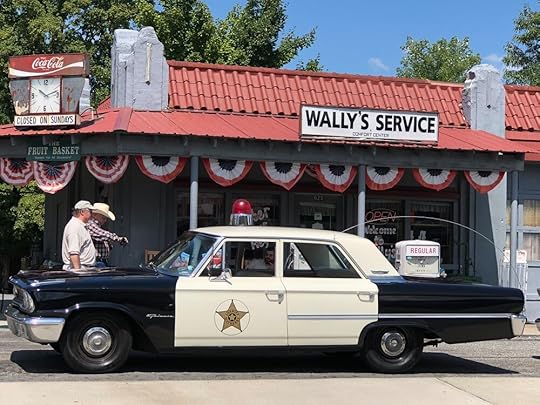
The South has given us fried chicken and barbecue; NASCAR, country music, and Mayberry (based on a real city in North Carolina called Mt. Airy, that’s a couple of hours’ drive from my home).
It’s a region rich in history and tradition, steeped in pride and tainted by prejudice. To travel the highways of the South is to travel through history, as you pass dinosaur statues and giant chickens; Lucky Strike smokestacks and “come to Jesus” billboards; Waffle Houses and Muffler men. You can even sleep in a wigwam or see seven states from Lookout Mountain.
You’ll find all this and more in Highways of the South, which covers some subjects not touched upon in my previous books in this series, while revisiting others in greater detail.
I hope you enjoy reading it as much as I enjoyed putting it together.
Highways of the South is available in paperback on Amazon.com, along with the first two volumes in the series, Yesterday’s Highways and America’s First Highways.

February 19, 2021
7 reasons reboots are bad for us
King Solomon must be laughing in his grave. He cynically wrote 3,000 years ago that there was nothing new under the sun. But he never could have imagined we’d prove his point so well with that modern malignancy known as the reboot.
I don’t like reboots. In fact, I don’t even like the word. It’s just one letter away from “robot,” and a lot of reboots are pretty robotic. Every time I see it, I’d like to take my own boot and kick it to the curb.
I firmly believe that reboots are bad for us. They’re the empty calories of entertainment: all sugar and not much nutrition. Here’s why:
Reboots are lazyWhy bother to put any effort into a story when all you have to do is recycle something that’s already been done? You just need enough money to buy or repackage an old idea, then churn it out in endless permutations.
I’m a big fan of Star Trek, and I enjoyed Star Wars as a kid. But seriously, how many of these movies/TV shows do we need at once? I didn’t need a new Captain Kirk. I liked the old one just fine. And Benedict Cumberbatch playing Khan? Please! He made a much better Smaug.
The same thing goes for superhero movies. How many reboots do Spider-Man or Superman or Batman need? And did Disney really need to remake its animated classics as live-action or CGI-filled knockoffs?
The phrases “too much of a good thing” comes to mind, except not all this stuff is good. Some of it is downright awful.
They stifle creativityWith so much energy (and money) being ploughed into retelling the same old stories with the same old characters, there’s no room for original ideas to get any traction.
All the promotion goes into the reboots, because companies don’t want to take a chance on anything that’s the least bit creative. They know what sells, and they stick with that. The result is that innovative stories don’t get told, or, if they do, they never get seen or read because no one knows they’re out there.
Much of the talent that could be producing new material goes into recycling the old, because that’s where the money is. Imagine if Mark Twain or H.G. Wells hadn’t written their novels, but had taken money to be ghostwriters for wealthy socialites instead. It’s not a pretty picture.
Artists get the shaftThose of us who try to tell original stories get smacked down, and hard. The starving artist trope is an old one, but it’s never been truer than in the era of the reboot.
Innovation isn’t an advantage anymore, it’s an albatross. It’s an anvil around your neck. There’s about as much upside in trying to tell an original story as there is in buying a lottery ticket or wishing on a star. Even most well-known authors dare not write outside the genre that made them famous, for fear of disappointing fans who were expecting something different. It’s like being typecast.
Artists live to shatter expectations, but reboots exist to fulfill them. They set up an endless loop of dopamine-induced cravings that can only be satisfied by the same old, same old.
Think outside the box at your own peril.
I’ve started three series of novels based on original ideas that I haven’t finished because they haven’t sold. Where’s the incentive to do so? At least my latest didn’t end with a cliffhanger after two books, the way my previous one did. Lesson learned.
Loss of creative controlReboots take ideas out of the hands of artists and put them in the hands of corporate shills who know less about storytelling than they do about making money.
Big corporations have enough money to pay creative people for their ideas, so they can dumb them down for what they think will create a demand for mass consumption. At least those artists are lucky enough to get some cash for their hard work, and that’s a very good thing. But it’s bad for the rest of us, who have to settle for watered-down, cookie-cutter adulterations of the original.
This is why we get director’s cuts, which allow us to see movies the way they were originally intended — but only because they allow studios to reissue another version of the same film (another form of reboot), so they can make more money.
Plagiarism, please?It may not be plagiarism, but it’s pretty damn close. How often have original ideas been recycled to help wealthy corporations make a killing, while the artists themselves receive a pittance, both in terms of remuneration and recognition?
Back in the 1950s and ’60s, Black artists put out some amazing music that was “covered” by white copycats who made the bulk of the profits because they could reach a larger audience. The original artists got next to nothing for their troubles.
I don’t like rappers “sampling” earlier cuts for the same reason. Would “Ice Ice Baby” have been a hit without Queen and David Bowie’s “Under Pressure”? Would “U Can’t Touch This” have sold millions of copies without Rick James’ “Super Freak”? I think we all know the answer.
Reboots discourage learningIf you’re continually watching the same thing over and over and over again, how can you learn anything new?
Learning requires exposure to different information. Digesting those same empty calories time and again is more akin to brainwashing: You’re being conditioned to buy what they’re selling, and it’s a lot more cost-effective for them to churn out the same stuff ad nauseam than it would be to actually develop original ideas.
They’re like pushers eager to get you hooked. And it’s working.
Conformity is everythingIt’s hardly surprising that reboots are so popular in an era when tribalism and blind loyalty are running roughshod over independent thought.
New ideas challenge us to think differently. But we don’t want to be challenged. We’d rather take comfort in the familiar and reinforce our own biases — whether they’re about entertainment, politics, or anything else.
Reboots are just another source of noise in the echo chambers we’ve created to insulate ourselves from anything different than what we want to believe. We don’t have to think for ourselves anymore; we pay others to do that for us, whether they’re politicians or big entertainment companies. The more they tell us what we want to hear, what we expect to hear, the less thinking we have to do. Then they have us right where they want us.
I know I’m shouting into the wind on this one. Reboots will keep being made because they keep making money.
But if you want to help promote original ideas, independent thought, and real artistry, save a little of the hard-earned cash you might have spent on Star Wars CXVII or Phase 290 of the Marvel Cinematic Universe and take in an independent film instead. Or buy a book by a little-known author.
Every little bit helps.
February 17, 2021
Why do we let something as trivial as a comma divide us?
Human beings will use any excuse to go tribal, even over the most trivial issues. You don’t need examples from politics to demonstrate this, although such examples are seemingly endless. All you need to do is consult a grammar nerd.
At least people who argue over things like Star Wars vs. Star Trek, Coke vs. Pepsi, or dogs vs. cats can make a cogent case that, at least on some level, the debate matters. (For the record, Star Trek is better than Star Wars because it’s more cerebral, Pepsi tastes better than Coke, and cats are less trouble than dogs — plus, they purr.)
But if you really want to get a writer or editor riled up, all you have to do is mention the Oxford comma. The rivalry between Oxford and Cambridge, the actual schools, is nothing compared to the battle over this tiny mark that appears (or doesn’t) before the final item mentioned in a series.
Is it “red, white and blue” or “red, white, and blue”?
OH MY GOD!
It’s worse than asking a heads person to call tails at the flip of a coin or a stripes person to play solids in pool. It’s like asking a Dodgers fan to root for the Giants, or a Metallica fan to listen to “Baby Shark” on an endless loop.
Journalists vs. authorsThis battle largely pits journalists, who shun the Oxford comma as though it were Ebola, against authors, who cleave to it the way Gollum clings to his “Precious.”
From journalists, I’ve heard the excuse that it takes up space on the page. But even in this era of the incredible shrinking newspaper, that’s like offering to knock a penny off the price of a car makes a damn bit of difference. It does not. Why not stop using question marks instead(?) They’re wider!
Bereft of any rational rationale for banishing the serial comma (as it’s also known), newspapers fall back on the “because they said so” excuse.
“They,” in this case, is the publishers of the supposedly venerable Associated Press Style Guide, which has issued some pretty stupid decrees over the years — only to reverse itself frequently and without warning. Some compound modifiers are hyphenated, and others aren’t, for no particular rhyme or reason, although the editors seem increasingly allergic to hyphens, as they are to Oxford commas. Maybe they just don’t like punctuation marks. Bigots!
They’re fine with using “alumni” as a plural for" “alumnus,” and “data” is perfectly acceptable as both the plural and, erroneously, the singular form of “datum.” (Well, Data on Star Trek was a single android.) But don’t try writing “stadia” as the plural of “stadium.” Or “aquaria” as the plural of “aquarium.” Just add the “s” instead, because this is Merica, and Latin is a dead language, unless you’re a doctor or a scientist. (Those people are just stupid, right? We live in the 21st century! Carpe diem!)
Authors and their editors, by contrast, are adamant that the Oxford comma must be employed, ostensibly to avoid confusion. It doesn’t bother them that dropping that final comma would cause zero confusion in the vast majority of cases. I suspect they just want to establish themselves as superior to those lowbrow journalists by employing this flourish as a conceit.
Conflicting instructionsPoint of order: Mark Twain was a journalist before he was a novelist. So were Charles Dickens, and H.G. Wells, and Neil Gaiman, and John Scalzi. So was I.
Yes, you caught me. I did want an excuse to put myself in that elite company, but it is true: I spent 30 years as a journalist and I’ve written 30 books, so I’ve been in both camps. Newspaper editors have demanded that I omit the Oxford comma, and literary editors have demanded I use it. Some bloggers insist on it; others resist it. And they all make it seem more important than climate change or homelessness or the fact that a whole bunch of species went extinct last year.
No one seems to like my idea: Use it where it’s needed to avoid confusion, and omit it otherwise. That would require people to actually think for themselves, which is probably asking too much in this era of knee-jerk tribalism, Trumpism and identity politics. See? You don’t need a comma between “Trumpism” and “identity politics” to avoid confusion. Trumpism and identity politics cause enough confusion all on their own.
I admit, internal consistency is important, but can’t we have external consistency, too?
Of course not. That would require one side to give in, and heaven forbid journalists would lower themselves to the level of purveyors of fiction (otherwise known as fake news), or that authors should demean themselves by adopting the rules of dying industry that produces disposable print. You might as well ask a Democrat to listen to a Republican, or vice versa.
So I suppose I’ll just have to keep going along with obstinate editors who demand the Oxford comma’s inclusion or exclusion based on nothing more than their own particular bias, which they probably learned from someone else with the same proclivity.
It’s stupid. It’s nonsensical. And it’s the perfect illustration of where we are as a society.
Now, please pass the Pepsi so I can watch Star Trek with a cat in my lap.
Stephen H. Provost is the author of Please Stop Saying That!, a humorous look at jargon and clichés, available on Amazon in paperback and ebook.
January 19, 2021
10 clichés of genre fiction, from vampire councils to clueless saviors
If you’ve read or watched enough fantasy and horror, you’ve seen them: those well-worn clichés and tired tropes that date back to the earliest days of speculative fiction.*
“Omigod! Facepalm! Noooooooooooo!”
Slams book shut.
Throws remote control across the room, striking the poor, unsuspecting black cat who, if she’d been in that awful movie, would have been someone’s familiar, because, y’know, that’s just how it’s s’pose ta be!
Vows never to watch anything that bad again.
Switches to cable news channel.
... ten minutes later, starts scrolling Netflix for more bad genre fiction or picks up the tried-and-true classic to reread it for the 100th time.
I feel your pain. So, in the interest of comfort and commiseration, I’ve assembled a list of my ten most facepalm-inducing clichés from genre fiction.
Et tu, Anakin?After watching Star Trek for a while, I realized that Starfleet, for all its lofty ideals, seemed to be run by corrupt bureaucrats who always served as foils for our favorite swashbuckling captains. From that nutjob Commodore Decker in the original series to Admiral “Robocop” Marcus in the reboot entry Into Darkness, the writers just couldn’t help themselves.
They weren’t alone, either. Star Wars had its Galactic Senate. The Klingons have their high council. Witches convene in dark covens as routinely as most of us do the laundry. Bloodthirsty vampires (or faeries or wizards) bicker and scheme in their assemblies, never getting anything done because they’re so busy stabbing each other in the back. Wait. That sounds like the U.S. government these days.
This one’s been so done to death (and beyond, in the case of vampires) that it’s been gloriously parodied in What We Do in the Shadows, which is a lot more enjoyable than almost any of the above examples.
Save me! I’m so helpless! (Except I’m not.)Damsels in distress relying on knights in shining armor to save them are so yesterday. The modern female protagonist more powerful than any man... she just doesn’t know it. So, she still needs a guy to affirm her power and instruct her on how to use it.
Sigh.
You’ve come a long way, baby (cue that 1970s Virginia Slims cigarette commercial).
Not really. This is even more annoying and sexist than the old-fashioned damsel trapped in the tower or under a sleeping spell, waiting for a kiss from Prince Disarming. At least Rapunzel knew she needed help. These modern heroines are clueless: They’ve got the power to fight their own battles, but they don’t know it, so they need some “wise” dude to tell them!
Talk about reinforcing the false narrative that women need a guy’s affirmation to be their awesome selves. And that guys are somehow smarter. Worst of all, this narrative is often promoted under the guise of being romantic. It’s not. At least I don’t think so, and I’m a guy.
Eeny meeny miny moe...Speaking of romance, the storyline of the woman who must choose between two dashing suitors is another one I can do without.
It’s supposed to be seen as empowering, because the woman makes a choice (imagine that!), and the guy she doesn’t choose is heartbroken. Except it makes her freedom to choose all about romance, as though that’s the only important decision she’ll ever make.
Besides, it’s usually a false choice, anyway. Writers often telegraphy who the “right” choice will be, because it’s “fate” or “destiny.” The other guy never had a chance, and the woman never had an actual choice. So much for self-determination. Team Edward? Team Jacob? Spare me. We knew how that was gonna turn out all along.
I’m not the chosen one. I’m not! I’m not! I’m not!A young boy (it’s usually a boy) growing up on a farm in the middle of nowhere has powers he never dreamed of, and he’s destined to save the world.
He needs someone to convince himself he’s truly important, even though he doesn’t think he is and doesn’t want to be. Responsibility? Meh. I’d rather drive a podracer (The Phantom Menace) or get my kicks hacking computer programs (The Matrix).
But the young prodigy he needs a mentor to unlock his true potential. Usually, the mentor ends up dying — or mysteriously vanishing/fading away — once the young acolyte realizes his destiny and masters his power... which only makes sense, because he’s no longer needed in the story. Plus, it’s a great way to tug on the heartstrings of your audience, so, hey, why not?
Who needs Dumbledore now that Harry’s got his game on? Obi Wan? He’s so yesterday now that Luke’s got skills with his light saber.
Maybe I shouldn’t be too hard on writers who resort to this particular cliché. Mentors tend to be older than their pupils, so they’re supposed to die first. And this isn’t just a cliché, it’s an archetype so entrenched in our consciousness that it appears in our oldest myths. Still, that’s no reason to keep falling back on this crutch. Mentors have magical staffs, which are a whole lot cooler than crutches, and should be powerful enough to keep them alive.
Oh, no! Catholics!To look at horror films, you’d think we lived in the Vatican. Catholics account for barely one-fifth of the adult population in the U.S., and it’s declining. But supernatural horror is overrun by demons, antichrists (often cherubic-faced little boys), possessed nuns, vampires, and ghosts of sinners past.
Beleaguered priests and exorcists battle these terrors valiantly with weapons ranging from holy water to the sacred relics. But, predictably, none of them are ever any match for the pure evil that confronts them.
These stories are like reading a letter to Dear Abby that reads, “I just gave birth to the Antichrist, but my priest is a vampire and the holy water didn’t kill him. Any advice?”
These stories are not only among the most cliché-ridden out there, they also have the distinction of being idiotic and offensive at the same time. They insult Catholics by suggesting they’re powerless against the devil, and non-Catholics couldn’t care less: They don’t believe in any of that stuff in the first place.
Historical sleight-of-handRepeat after me: The people accused of practicing witchcraft in Salem, Mass., were not real witches. They did not know how to practice magic. They were falsely accused as part of a political feud between pious farmers and more cosmopolitan seaport residents.
Yet some storytellers insist on claiming that these innocent victims had real magic up their sleeves.
Think about it: If they’d had real powers, they probably would have used them to defend themselves instead of getting executed. And if they really were casting spells that caused children to get sick, have seizures, and hallucinate, that’s pretty sadistic.
To suggest that innocent people were actually guilty of these things, after all, just for the sake of entertainment, is historically and morally irresponsible. Yes, it’s “just a novel,” but more people read novels than history textbooks.
If you’re going to draw on history, at least try to get it right.
Goblins and ogres and trolls, oh my!It’s vampires vs. werewolves. Again.
Occasionally, you find an original piece of fiction that crosses the streams by, say, putting dragons and vampires together on the same page or teaming a genie with a chimera and a pirate captain. That’s a good thing. More please.
But when will we get past the metaphorical racism that’s endemic to so many of these stories? Instead of “cowboys and Indians,” you have light elves vs. dark elves and knights battling dragons. Most of the time, you know who you’re supposed to root for: You can tell the players without a scorecard.
Orcs are always bad. So are goblins, ogres, trolls, dragons and witches. Come to think of it, trolls usually are bad, at least online. But that’s another story.
At least things have gotten a little better lately. Klingons still have that corrupt high council of theirs, but at least they can join Starfleet, and Vulcans aren’t always those paragons of virtue we once thought they were. Some vampires are still evil, but others sparkle. Silly, perhaps, but at least it’s not the same old, same old.
The uber-angsty romanceSpeaking of sparkly vampires, I’ve had quite enough of stories and characters that take themselves way too seriously — especially in the name of romance.
Forbidden romance is particularly popular. Vampires and humans aren’t supposed to mix, because it puts the humans in danger but also tempts them: The romantic attraction can be a gateway to the “forbidden fruit” of immortality. But there’s a price.
Can the vampire resist the temptation to “turn” his beloved? (The vampire’s usually a guy, probably because men are expected to be the pursuers in traditional romantic encounters.) The whole interaction may just be an idealized metaphor for romantic tension and allure, as well as a cynical allegory about marriage: Once you’re bitten, there’s no turning back.
None of these ultra-heavy metaphors leave much room for a sense of humor. It’s all life-and-death and emo angst. It’s fine for a while, but eventually, you just say, “Enough!”
One-dimensional baddiesYou know him well, and it’s usually a “him”: that one-dimensional asshole, the very embodiment of evil, entirely corrupt, and utterly irredeemable. The devil is really popular. So is the Antichrist. So are sociopaths and megalomaniacs.
If this sounds like our wartime tendency to dehumanize the enemy to assuage our guilt at killing them... Well, just think about that for a moment. The moment we put a human face on the “other,” we start feeling guilty about putting a bullet in their head. We’re not just fighting the enemy, we’re battling our own empathy.
But on a pure storytelling level, one-dimensional villains are boring as hell. There’s no real motivation or backstory; it’s as if they were just born as fully formed dastardly demons (and those child antichrists so popular in horror really are!).
Fortunately, good storytellers have started to move away from this cliché with flawed, conflicted heroes and antiheroes on the one hand, and complex, often highly traumatized villains on the other. Two great examples: The switched-at-birth Antichrist of Good Omens, who brings some humanity, humor, and sweetness to the tired trope of devious, sociopathic pre-teens Hollywood’s been trotting out for decades; and Joaquin Phoenix’s broken, tortured take on the Joker.
Related: The tendency to up the ante on villains as a book or movie series progresses. Each one has to be more maniacal, more menacing than the last — even if the last was portrayed as the ultimate threat to humanity and the universe. They feel like making the villain more powerful, rather than more interesting, is the only way to keep the audience interested.
I blame superhero comic books for this one — not that they started it (check out the Rocky movies for another example), but they’ve sure made it de rigueur for action storytelling.
The humble or bumbling sidekickEvery Batman has his Robin, every Frodo has his Samwise, every Skipper has his Gilligan, every Picard has his Riker.
Does Ron really have to be that inept compared to Harry? Well, at least he gets the girl.
The funny thing is, these people are often more accomplished than the main protagonist. Sam’s the real hero of The Lord of the Rings, and Hermione’s the brains behind Harry & Co. But Sam’s too overweight and humble to be the main hero, and Hermione’s just not “destined” to do so (plus she’s *gasp* a girl).
Much of the time, Harry himself seems a bit clueless — especially next to Hermione, the brilliant student who has all the answers. She’s Agent 99 to Harry’s Maxwell Smart, but as with other “chosen one” narratives, the Potter storyline reinforces the idea that it’s better to be lucky (and male) than good (and female).
This is far from a comprehensive list. You probably have some clichés of your own you’d like to add.
Here’s some good news, though: An accomplished good storyteller will avoid most of these pitfalls, and will inject enough originality into those that do find their way onto page or screen to make the old seem new. Or at least interesting. Few would argue that Tolkien or Rowling aren’t dynamite storytellers, and that Marvel movies are consistent, if formulaic blockbusters.
But the even better news is that Good Omens and Joker have found huge, enthusiastic audiences, too. Storytelling, like every other craft, evolves with time, and as they demonstrate, it’s only getting better.
*A broad term that refers to anything beyond our mundane “real world” experience: science fiction, fantasy, supernatural horror, time travel, alternative history, etc.