James Osborne's Blog, page 9
February 22, 2017
What Was It Like, Grandpa?
Our wilderness farm was a fabulous place to grow up. No one told us we were poor. It wouldn’t have mattered anyway.
We spent most of our waking hours outside, playing or doing chores. We’d go inside, reluctantly, for meals and at night, or when it was raining in summer or too cold in winter.
In the evenings, my sisters and I huddled around the light of a dim kerosene lamp to do our homework, and play cards and endless board games, on a heavy kitchen table covered by a white oilcloth with tiny floral patterns.
That kitchen was the social center in our home. Its most dominant feature was an enormous cast iron cook stove… rarely cool for long periods, and never during the day. That black and steel monster had an insatiable appetite for firewood, especially in winter when it was the primary heat source for our lightly insulated two-story clapboard home. [image error]
It’s unthinkable today, but we didn’t miss being without a telephone, or running water, or even sewer. Our parents improvised to provide whatever we needed, just as the other families did in the area.
Water came from a rusty iron pump on one side of the back yard. Dad had to climb down into the 40-foot well one day to find out why the valve at the bottom seemed plugged. The rotting wood ladder nailed to the inside of the well prompted a bout of handwringing by Mom until Dad re-emerged with the problem solved: a mouse had had the nerve to fall into the well and clog the valve.
One part of our bathroom was a tall narrow structure of weathered wood guarding the end of a long path behind our garage. [image error]The other component was a big galvanized tub everyone used on Saturday night, starting with the youngest. Poor Dad.
We did have a window to the outside world, although we weren’t aware we needed one. It was a battery-powered mantle radio perched on a corner shelf, in the kitchen of course. To conserve the battery, Mom or Dad would turn it on for an hour or two in the evening, once or twice a week. [image error]Our imaginations soared as we listened to the earliest episodes of Batman, and to classics like The Lone Ranger, or to Lux Radio Theatre, a precursor to PBS shows like Masterpiece Theatre.
Sure it was primitive, in retrospect, but we loved every minute of it!
Summer days were awesome! When not busy with chores we had a wide variety of interesting things to choose from. Among these:
Adding floors to our tree house built high up in a clump of Aspen in the cow pasture,
Work on the creaky raft that we sailed on a pond behind the outhouse (yes! amazing we didn’t drown, or worse),
Picking wild strawberries or blueberries and savoring their intensely distinctive flavors,
Swimming in a shallow pond formed by a burned out patch of moss (muskeg) on one corner of our farm,
Laying on our backs in the garden, chomping on freshly pulled baby carrots while watching clouds swirl and dance above us. We were supposed to be weeding.
Exploring the unspoiled beauty of the forests of evergreen and Aspen trees surrounding our small farm. [image error]Often we would flush out flocks of partridge or be terrified when aggressive ruffled grouse rushed at us while protecting their nests,
Climbing tall slender Aspen and swinging from one to another 10 or even 20 feet up (no, there were no nets or special landing pads).
City kids who came to visit thought it really cool to help with the chores. We let them think so, and encouraged them to take our place to:
Fork hay for the cows and horses,
Spread grain for the chickens and turkeys,
Feed our calves and pigs a mixture of skim milk and chopped grain.[image error]
Turn the handle on a machine used to separate the milk that came from our dozen cows into skim milk and cream, the latter an important source of cash.
Gather eggs from the chickens, then wash and count them
Draw water from the hand pump in buckets and haul it to the troughs for the cows, horses and pigs.[image error]
None of our visitors were quite as keen to help clean cow manure from the barn. Instead they’d go searching for newborn kittens in the hayloft.
And those starry eyed visitors, mostly cousins, would line up to try their hands at milking a [image error]cow. The big attraction was learning how to squirt milk from a cow’s teat to kittens lined up in the barn aisle, their mouths open wide in anticipation.
Mercifully, our cousins lost interest quickly in another chore – chopping wood to feed the never-ending appetite of that big old cast iron kitchen stove. Good thing, though. A few of the visitors sometimes came closer with the axe to their legs and feet than to the wood they were supposed to be chopping.
For us, these chores weren’t quite so cool. We had to do these every day. The chores were aptly named. Full disclosure: our parents did far more of these chores, and others, than we ever thought of doing, but we complained a lot more.
Another chore was weeding our humungous garden in summer. The job seemed to never end. Our parents planted a full acre or more in vegetables. We understood those veggies were a key part of our diet from mid-summer until they were all used up by the following spring. Our job included watering the long rows of vegetable plants by hand – no running water, remember? [image error]Buckets of water came from that infamous pond and that hand-operated cast iron pump, the source of potable water for the entire farm.
Admittedly, thinning the rows of veggies and battling the weeds had its bright side: fresh tiny carrots thinned from the rows were scrumptious once wiped clean on your pants or shirt, as were fledgling radishes, and juicy little green peas squeezed from fresh pods… delicious. But raw green beans and lima beans were understandably unattractive, as were lettuce, corn, turnips and the hills of potatoes that generated more potato bugs than you could possibly imagine. With thumb and forefinger we turned them into fertilizer. We tried to remember to not lick our fingers!
Another ‘glass half-full’ chore was that shoveling of manure from the barn… a smelly, dirty job to be sure. It was the presence in the barn of the newborn calves and kittens that made the job worthwhile. It was a challenge to keep from being distracted. There was yet another positive role for that lowly manure. Dad used it to fertilize our fields of oats and barley that fed the calves, horses, pigs, chickens and turkeys… that of course fed us.
Summers were intense and far too short.The return of fall also meant a return to school. What stung the most was the loss of freedom, but the upside was spending time with other kids. The nearest boy my age was a two-mile walk away.
Winter was more challenging in retrospect than it seemed at the time.
Before going to bed in winter, our parents would stoke the kitchen stove and the small pot-bellied stove in the living room with coal heaped on top of hot wood embers. These smoldered all night keeping the stoves warm for a while. They were cold by morning. Many winter mornings, the water in a chipped enamel washbasin on a stand next to my bedroom would have a thick coating of ice. Sometimes the temperatures outside dropped to 40 below F, occasionally even lower.
Our two stoves yielded a byproduct: ashes. Removing them was my job. Occasionally, I’d take them outside while some were still hot. One night while dumping them during a blizzard a red-hot coal sought a home down the top of my laced up leather boot. I’ve no idea how I managed to kick off that boot so quickly.
History abounds with stories about walks to school in winter. Suffice to say that our father instructed my sisters and I how to keep from getting lost in a blizzard while en route to and from our one-room school. [image error]We were told that when faced with deep swirling snow, one of us must hold onto the top of a fence post, while holding hands with the others, until one of us could spot the next post, usually eight or ten feet away. Some blizzards made it difficult to see the tops of the posts poking up through the deep snow.
Almost every challenge in farm life can have a positive side, if you allow it. Those blizzards were no exception. Snow driven by the howling winds drifted into a creek valley next to our school, filling one side with hard-packed snow. Those drifts quickly became skillfully crafted caves, the products of the creative future builders among us 15 to 20 pupils distributed across grades one to eight.
The snow in winter also made it easier for Dad to collect firewood, fence rails and fence posts. That’s where our two big horses came in. [image error]That team could pull a double-bunk sleigh through deep snow in the woods where our big tractor couldn’t begin to navigate. Their hooves, the size of large pie plates, acted like snowshoes on the five or six feet of snow.
My older sister and I loved to go with Dad on those excursions. He’d cut standing trees already dead to be used as firewood. And he’d cut tall thin live trees called Tamarack (aka, Larch) for fence posts and rails. We learned that Tamarack is more resistant to rot than others. One summer, my sister and I were exploring the bush when we came upon one location where Dad had been cutting trees the previous winter. The stumps had been level with the snow height then. Now they were higher than either of us could reach. Deep snow.
In a way best understood by farm kids, my bike represented another positive byproduct of a potential negative. One fall day my friend arrived at school with a new bike. I was envious. After intense pestering, my parents promised a bike, on one condition. If I kept a newborn runt pig alive so it could grow to marketable size, the money we got for it would go toward a bike. One glance into the maternity pen made it clear the runt was too small to compete with his dozen or so siblings for his mother’s teats. It would have starved to death unless given personal attention.[image error]
Mom fitted a nipple onto an Orange Crush bottle filled with cow’s milk. At first that little guy tried to run away. When caught, he squealed so loud his mother raised her head in alarm. A danger sign! Mother pigs defending their young can be extremely dangerous.
It took a couple of days until the runt realized I was his food bank. Soon he came running the second he saw me. I fed him two or three times a day for weeks, sitting with that little guy on my lap. In hindsight, he looked like Piglet from Winnie-The-Pooh. I was surprised to discover he had a sweet smell, much like a newborn baby! Yes! Really! Well, that is, until he grew big enough to run outside and play in the mud holes with his dozen or so siblings. One day, off he went to market with the others and, voila! My shiny new red and white Road King bicycle appeared shortly thereafter.
Don’t let anyone tell you recycling is new. Back then, old department store catalogues gained new leases on life in two ways. Most important, they were pressed into service in the outhouse, after that softer rolled up white stuff ran out. [image error]The pages made from pulp paper were much preferred to the glossy pages with color photos. But those glossy pages were also repurposed; some were placed under the kindling used to start fires in the kitchen and living room stoves.
Now, kindling needs to be dry to catch fire quickly and burn as intended. One winter evening after returning at 30 below from visiting neighbors we found our house filled with smoke. Panic! Our first instinct was the house was on fire? Turns out, kindling had been cut outside from a woodpile covered in two feet of snow. The kindling got wet. Our mother had put some damp kindling into the hot oven so it would dry to start the fires the next morning. While we were away, it had burst into flame in the oven. Whew!
A few of our older neighbors were still using horses for most of their farm work, even to plow fields, haul seeders and harvesters, and pull hay mowers and rakes. The key summer assignments for our pair of heavy horses – Pat the black Percheron (we think) and Mike the gray Clydesdale (probably) – were in our hay meadow.[image error]
The ground in the hay meadow was too soft to support a tractor, so the big boys were pressed into service pulling our mower to cut the hay, and a big rake used to gather it into rows and then into piles. We loaded the hay by hand with pitch forks onto a flat wagon with side rails the horses pulled over to a hay stack, where the hay was then offloaded, again by hand. Yes, labor intensive.
Our clever Dad, always the inventor, created a rig for our tractor that worked much like today’s forklifts. Trouble was, he could use it only in the fall and winter when the ground in the pasture was firm enough to support our heavy iron-wheeled tractor.
Today, teams of heavy horses, also known as draught horses, are seen mostly at country fairs. Have a look at the harnesses on those magnificent beasts. As kids, none of us were strong enough to lift a harness off the ground, much less place it on one of those big handsome docile animals. Watching our father harness Pat and Mike was a sight to behold—requiring strength, knowledge and precision.[image error]
“You came from a farm, so you must ride horses,” I was asked often after we’d moved into town. The answer was “yes”, but I never told them the kind of horses we rode occasionally. Pat and Mike’s backs were so broad we could barely stretch our legs wide enough to straddle them. Riding one of them, with our feet tucked into the heavy leather harness while holding on for dear life, was like trying to ride a Greyhound bus bouncing over a rough winding road.
Education at the time was inexact, even haphazard. A new teacher took charge of our single classroom almost every year. Teachers were in short supply and thus especially difficult to attract to the backcountry.
One year, a young male teacher arrived fresh out of Normal School… it was a system invented by government to address an endemic shortage of pedagogues. Graduates from high school were given six weeks of training, then unleashed upon unsuspecting pupils and families as if they were real teachers. They became known as Six-Week Wonders. Ours devoted more of our time to field trips, sports days and building snow caves than to anything resembling an education. Mind you, he’s a convenient excuse for my life long numerical illiteracy.
Here again, a positive byproduct emerged. One of those field trips took us even farther into the wilderness, to a remote cabin occupied by a lone hermit. He looked scary at first to young children, with his bright shiny eyes, homemade leather cap perched atop long unruly brown hair, a scraggly gray beard, angular features and skinny physique. Modern vernacular would describe Anton Rumstead as a reclusive artisan who scratched out a subsistence living from hunting and trapping, and the sale of his brilliant miniature wildlife carvings.
[image error]That early-June day had turned out to be unseasonably hot when we arrived at Mr. Rumstead’s log cabin. We found him sitting on the rough-hewn wood steps, shirtless and darkly tanned, carving away at a block of wood. Even our teacher seemed apprehensive at first. Then Mr. Rumstead looked up, gave us a warm smile and welcomed us to his home.
He patiently showed us some of the remarkable likenesses he’d carved and meticulously painted, including a moose complete with huge antlers, a family of wolves with young pups, and a black bear munching on a fish.
Later, he allowed us to cool off by swimming in a nearby pond surrounded by a stand of Aspen trees.
Needless to say, when you live in the wilderness, some medical procedures became do-it-yourself things. One day I fell and created a deep cut under my left eye. Blood flowed like sacramental wine on Palm Sunday. Before I knew it, I was on my back on the kitchen table, Dad holding me steady while our mother dipped thread and a sewing needle into a saucepan of boiling water. Our father was a remarkably calm man, except that day. Regardless, he stitched me up with a skill that could have drawn envy from a micro-surgeon, and did years later.
That knowledge came in handy a few years later. Our folks were away visiting neighbors one Sunday when I decided to practice woodcarving. [image error]The plan was to carve a walking stick using Dad’s super sharp hunting knife. What had not been in the plan was a deep two-inch cut above my left knee.
Now, attending to that cut soon was in third place among four reason to panic about my parents’ likely reaction when they got home. First place belonged to cutting a hole in my new pants, purchased with some of my parents’ limited financial resources. Second went to getting blood all over the left pant leg. Third was them having to repair said cut, and somewhere down in fourth place was the scolding I would get deservedly for borrowing Dad’s knife without permission.
Well, there’s nothing like a good role model. I found some adhesive tape and cotton balls and went to work. So yes, I patched up that cut, sloppily no doubt, hoping that by stopping the flow of blood I wouldn’t get into too much trouble at least for the cut. One vivid memory was wondering how long the strips of adhesive tape needed to be to pull together both sides of that cut. Remnants of that misadventure remain visible today.
Turns out I was correct to anticipate a stern scolding from my three other transgressions. My memory’s not clear whether I cleaned the wound… probably not. I didn’t understand then what antiseptic was all about. I did dab some iodine on the repair job.
There’s much to be said for today’s modern conveniences and advances in communication, science, medicine, health care, safety and the respect for differences, at least by some. Seventy years ago the Internet hadn’t even come close to entering the wildest dreams of sci-fi aficionados, much less the lexicon of the day. Today, we’d feel hard pressed to live without it.
So there you have it… there really was life before cell phones!
A lot of positives came along with having started life back then. We learned about solving challenges, about self-reliance, and about the difference between material things and values that really matter.
*
Back Story: Occasionally my childen and grandchildren have asked about what life was like on the remote farm where I grew up. This is a brief glimpse. Some of the stories mentioned above have been told in more detail elsewhere on this blog and in my published collection of short stories, Encounters With Life: Tales of Living, Loving & Laughter (http://amzn.com/162526271X)
*
“What Was It Like, Grandpa?” is Copyright © 2017 By James Osborne. All Rights Reserved
*
Image Credits: media-cache-ak0.pinimg.com; thumbs.picclick.com; livinghistoryfarms.files.wordpress.com; www.delsjourney.com.jpeg; http://www.nature.org/ourintiatives; http://www.hoard.com; workinghorsetack.com; allposters.com; http://www.thumbstime.com; keyword-suggestions.com


February 7, 2017
The Anatomy of Prejudice

A recent news report told the story of a reformed Skinhead who now volunteers his time telling high school students about prejudice and extremism.
“We live in a world that is very complicated,” he begins. “Extremists want their world made simple. It insulates them from the truth… from reality.”
This wish for simplicity has parallels elsewhere.
In the rust belt of the US, the owner of a deli described his support for Donald Trump’s ban on Muslims this way: “Do you lock your door at night? I do. I don’t want just anyone to walk in. They (Muslims) are not being properly vetted.”
Is he right? Let’s see.
First, prospective immigrants to the United States must go through a vetting process that is among the most, if not the most, extensive in the world. [image error]This applies to every person seeking entry to America. Second, the image evoked by ‘lock your door’ deliberately reduces what is a complex issue that few comprehend into a misleading simile that anyone can grasp.
The practice of making simple what is complex is not new. We have become conditioned. This is the goal of product branding… bringing positive emotions to a visual graphic. [image error]It is also what political campaigning has become: attaching to your candidate a host of strongly affirming trigger words, while attaching to opponents negative labels that evoke loathing and distrust.
Some folks want simple concepts they can love… or hate. But when simple concepts are advanced to define complex issues, truth often takes a vacation.
Thus, should we be surprised that this is also the strategy of terrorists? They must love it when our fellow citizens believe their barbaric actions slaughtering innocent men, women and children were sanctioned by a religion they claim to represent, but do not in any way. Some of our fellow citizens want to believe that Islam is at fault, not just the perpetrators. It is their way of explaining their fear of the unknown and covering for a lack of knowledge.
Those who have studied the Quran know the holy book of Muslims is all about peace and respect for others. I have. That book does as much to promote these virtues as does the Bible, the holy book of Christians.
The terrorists are succeeding because of our thoughtless prejudice. They are directing otherwise intelligent and caring citizens into making enemies where none exist. [image error]We would do well to remember that when we accuse others of being enemies, even if they are not, we are extending an invitation for them to oblige.
Is it so difficult for some to grasp these simple realities?
Apparently it is. To do so would involve placing strongly held prejudices in peril of being exposed for the myths that they are. The truth will do that.
Yes, evidently, we have learned nothing from history.
The irrational fear and hysteria swirling about for the past few years targeting Muslims is reminiscent of similar mindless travesties throughout history, both recent and distant:
Fear and ignorance are at the heart of the subjugation and persecution of African Americans that persist even now, 150 years after slavery was abolished.
Unsubstantiated fear led to the incarceration of hundreds of thousands of innocent people of Japanese descent during the Second World War, and the confiscation of their properties. Not one traitor was ever found.
Institutional ignorance enshrined for centuries in law has resulted in the persecution of the LGBTQ community, and that hysterical bigotry is wide spread to this day.
Government-led denigration of aboriginal peoples in the United States, Canada and Australia, as elsewhere, led to centuries of official programs to crush these incredibly rich cultures. Those efforts failed due to the strength of character of these remarkable peoples, from whom we have much to learn.
In the early 1930s a ‘nobody’ emerged from the political wilderness in Europe to anoint himself dictator after he won an election by successfully invoking fear and hatred, and the promise of a brighter future, among normally rational and responsible citizens. His target: the Jewish people. He murdered more than six million of them.
We can go back a few centuries to when armed horsemen slaughtered hundreds of thousands of people across Europe and the Middle East simply because they were not Christians. [image error]These were knights of the Crusades; the Roman Catholic Church organized and sanctioned them.
And we can step back even farther… a few millennia: History tells us that a kindly and caring person was murdered on the orders of a Roman emperor who came to fear this young man, because the emperor was ignorant of what Jesus was really all about.
What do we find common to all of these, and the many other examples to be found throughout history?
Differences
Ignorance
Fear
Hysteria
The pattern: difference begets ignorance, and ignorance begets fear, and fear begets hysteria, and hysteria begets catastrophe.
Humans have always been apprehensive about what is different… they fear what they do not understand. That’s normal. What is not normal is demonizing those and that which they do not understand. This often springs from their own self-confidence issues.[image error]
What also is not normal is an unwillingness to exercise the intelligence and the moral fiber needed to step beyond uncertainty, and to dissipate that fear with verified truth and knowledge. Those who do not seek knowledge prefer to wallow in their ignorance by seeking out only that which reinforces their prejudices, including people who are likeminded.
Make no mistake, those four elements are in play today, and most certainly are among people who insist on shielding their ignorance from erosion by truth and knowledge. This was made all too clear graphically by the massacre at a Muslim mosque in Quebec City on January 29.[image error]
As Sheema Khan wrote in The Globe and Mail following the funeral services: “Our elected leaders have set the tone toward healing. These profound acts of kindness help repair the social fabric that extremists desperately seek to rupture. Their goal is to sow hatred, division and fear. We must not let them succeed.”
Yes, Muslims are different than most of us. And so are the color and make of your car likely different from mine. So what? Period. Full Stop. Isn’t it time for us to learn and to emerge from our ignorance?
Perhaps we need to remind ourselves and others that ‘different’ is nothing more than ‘different’… until proven otherwise beyond all doubt. The consequences of not doing so is prejudice, and the consequence of that can be catastrophic as we saw in Quebec City: six innocent men murdered, six women now widows, 17 fatherless children, 19 people wounded.
—
Ignorance and prejudice are the handmaidens of propaganda. Our mission therefore is to confront ignorance with knowledge, bigotry with tolerance, and isolation with the outstretched hand of generosity. Racism can, will and must be defeated.
— Kofi Annan, former secretary-general, United Nations
#
“Whither Thy Prejudice” is Copyright © 2017 By James Osborne. All Rights Reserved
—
Image Credits: athletebrandmanagement.com/nfl-player... blog.peertransfer.com/2013/03/01/; carmenteresiano-2010.blogspot.com/p/features.html; quotesgram.com/prejudice-quotes; shariaunveiled.wordpress.com/2013/12/... http://www.allpsychologycareers.com/topics/racial-prejudice; http://www.quintonreport.com/2015/02/05


Whither Thy Prejudice
[image error]
A recent news report told the story of a reformed Skinhead who now volunteers his time telling high school students about prejudice and extremism.
“We live in a world that is very complicated,” he begins. “Extremists want their world made simple. It insulates them from the truth… from reality.”
This wish for simplicity has parallels elsewhere.
In the rust belt of the US, the owner of a deli described his support for Donald Trump’s ban on Muslims this way: “Do you lock your door at night? I do. I don’t want just anyone to walk in. They (Muslims) are not being properly vetted.”
Is he right? Let’s see.
First, prospective immigrants to the United States must go through a vetting process that is among the most, if not the most, extensive in the world. [image error]This applies to every person seeking entry to America. Second, the image evoked by ‘lock your door’ deliberately reduces what is a complex issue that few comprehend into a misleading simile that anyone can grasp.
The practice of making simple what is complex is not new. We have become conditioned. This is the goal of product branding… bringing positive emotions to a visual graphic. [image error]It is also what political campaigning has become: attaching to your candidate a host of strongly affirming trigger words, while attaching to opponents negative labels that evoke loathing and distrust.
Some folks want simple concepts they can love… or hate. But when simple concepts are advanced to define complex issues, truth often takes a vacation.
Thus, should we be surprised that this is also the strategy of terrorists? They must love it when our fellow citizens believe their barbaric actions slaughtering innocent men, women and children were sanctioned by a religion they claim to represent, but do not in any way. Some of our fellow citizens want to believe that Islam is at fault, not just the perpetrators. It is their way of explaining their fear of the unknown and covering for a lack of knowledge.
Those who have studied the Quran know the holy book of Muslims is all about peace and respect for others. I have. That book does as much to promote these virtues as does the Bible, the holy book of Christians.
The terrorists are succeeding because of our thoughtless prejudice. They are directing otherwise intelligent and caring citizens into making enemies where none exist. [image error]We would do well to remember that when we accuse others of being enemies, even if they are not, we are extending an invitation for them to oblige.
Is it so difficult for some to grasp these simple realities?
Apparently it is. To do so would involve placing strongly held prejudices in peril of being exposed for the myths that they are. The truth will do that.
Yes, evidently, we have learned nothing from history.
The irrational fear and hysteria swirling about for the past few years targeting Muslims is reminiscent of similar mindless travesties throughout history, both recent and distant:
Fear and ignorance are at the heart of the subjugation and persecution of African Americans that persist even now, 150 years after slavery was abolished.
Unsubstantiated fear led to the incarceration of hundreds of thousands of innocent people of Japanese descent during the Second World War, and the confiscation of their properties. Not one traitor was ever found.
Institutional ignorance enshrined for centuries in law has resulted in the persecution of the LGBTQ community, and that hysterical bigotry is wide spread to this day.
Government-led denigration of aboriginal peoples in the United States, Canada and Australia, as elsewhere, led to centuries of official programs to crush these incredibly rich cultures. Those efforts failed due to the strength of character of these remarkable peoples, from whom we have much to learn.
In the early 1930s a ‘nobody’ emerged from the political wilderness in Europe to anoint himself dictator after he won an election by successfully invoking fear and hatred, and the promise of a brighter future, among normally rational and responsible citizens. His target: the Jewish people. He murdered more than six million of them.
We can go back a few centuries to when armed horsemen slaughtered hundreds of thousands of people across Europe and the Middle East simply because they were not Christians. [image error]These were knights of the Crusades; the Roman Catholic Church organized and sanctioned them.
And we can step back even farther… a few millennia: History tells us that a kindly and caring person was murdered on the orders of a Roman emperor who came to fear this young man, because the emperor was ignorant of what Jesus was really all about.
What do we find common to all of these, and the many other examples to be found throughout history?
Differences
Ignorance
Fear
Hysteria
The pattern: difference begets ignorance, and ignorance begets fear, and fear begets hysteria, and hysteria begets catastrophe.
Humans have always been apprehensive about what is different… they fear what they do not understand. That’s normal. What is not normal is demonizing those and that which they do not understand. This often springs from their own self-confidence issues.[image error]
What also is not normal is an unwillingness to exercise the intelligence and the moral fiber needed to step beyond uncertainty, and to dissipate that fear with verified truth and knowledge. Those who do not seek knowledge prefer to wallow in their ignorance by seeking out only that which reinforces their prejudices, including people who are likeminded.
Make no mistake, those four elements are in play today, and most certainly are among people who insist on shielding their ignorance from erosion by truth and knowledge. This was made all too clear graphically by the massacre at a Muslim mosque in Quebec City on January 29.[image error]
As Sheema Khan wrote in The Globe and Mail following the funeral services: “Our elected leaders have set the tone toward healing. These profound acts of kindness help repair the social fabric that extremists desperately seek to rupture. Their goal is to sow hatred, division and fear. We must not let them succeed.”
Yes, Muslims are different than most of us. And so are the color and make of your car likely different from mine. So what? Period. Full Stop. Isn’t it time for us to learn and to emerge from our ignorance?
Perhaps we need to remind ourselves and others that ‘different’ is nothing more than ‘different’… until proven otherwise beyond all doubt. The consequences of not doing so is prejudice, and the consequence of that can be catastrophic as we saw in Quebec City: six innocent men murdered, six women now widows, 17 fatherless children, 19 people wounded.
—
Ignorance and prejudice are the handmaidens of propaganda. Our mission therefore is to confront ignorance with knowledge, bigotry with tolerance, and isolation with the outstretched hand of generosity. Racism can, will and must be defeated.
— Kofi Annan, former secretary-general, United Nations
#
“Whither Thy Prejudice” is Copyright © 2017 By James Osborne. All Rights Reserved
—
Image Credits: athletebrandmanagement.com/nfl-player... blog.peertransfer.com/2013/03/01/; carmenteresiano-2010.blogspot.com/p/features.html; quotesgram.com/prejudice-quotes; shariaunveiled.wordpress.com/2013/12/... http://www.allpsychologycareers.com/topics/racial-prejudice; http://www.quintonreport.com/2015/02/05
December 30, 2016
Happy New Year!
[image error]
My friend James Murray, a fellow author and editor from San Antonio, Texas, posted the following New Year’s greeting on his website. It’s exceptional! I would not presume to attempt saying it any better…
MY WISH FOR YOU IN THE NEW YEAR
M ay peace break into your home;
M ay thieves steal your debts;
M ay the pockets of your jeans b ecome magnets for $100 bills;
M ay love stick to you like glue;
M ay laughter assault your lips;
M ay happiness spread across your face;
M ay your tears be that of joy;
M ay the problems you had this past year forget your address.
In short . . .
May 2017 be the
BEST YEAR OF YOUR LIFE!
[image error]
To You and Yours!!
(Image Credits: freepik.com/free-photos-vectors.jpg, and happybirthdaycakeimages.com/new-year-...)


December 24, 2016


November 28, 2016
The Dolphins at Monkey Mia
To swim with the dolphins. That’s all 15-year-old Tamara wanted from her family’s four-week visit to Australia.
Tam had learned about these highly intelligent sea mammals in her ninth grade biology class. She fell in love with them.
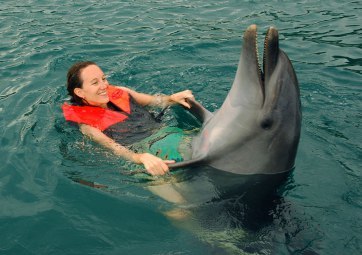
Tam felt that a chance to swim with dolphins would be reasonable compensation. After all, she had to endure long hours of adult-level visits by her parents with their friends in half a dozen cities around Australia. And there was further justification: having to share the time allocated for kid-oriented entertainment with her 12-year-old brother, with his own definition of things to see and do.
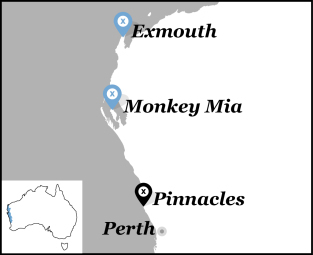
The family was told that dolphins were known to gather from time-to-time in a lagoon near a town called Monkey Mia. It would involve a rugged two-day trek up the west coast from Perth, where they were on their last visit with friends. They had been cautioned that if they decided to go, no one could be certain that any dolphins, being ocean-going wild animals, would be visiting the world famous marine park while they were there. The dolphins tended to arrive and leave at random; there seemed to be no predictable schedule.
Tam was not to be deterred. The obligatory visits over, her family and friends from Perth set off on a grueling 550-mile trip north over crude roads, heading for Monkey Mia with little more than an outside chance they’d actually get to see dolphins.
 Each family of four rode in a Toyota Land Cruiser their hosts had nicknamed ‘Whoopee’s’. The rough dirt roads soon provided painful confirmation of the reason for that term of dubioous endearment.
To make the trip especially interesting, the other family also came equipped with a teenaged daughter, meaning they had the company of two young women both launched on that stressful hormonal journey called puberty. And each family also came equipped with pre-pubescent sons, both of whom were convinced they’d rather be almost anywhere else but being forced to tolerate (in their words) a long, boring road trip to gaze upon an ocean they’d seen more than enough of already.
Early on the first day, the travellers were to learn the journey would not be without even more challenges. The route they were following consisted of little more than two parallel ruts in the dirt, the legacy of earlier vehicular traffic. At first glance these ruts seemed to be fairly shallow.
Contrary to appearances the ruts were in fact axle-deep in places and filled with an abundance of powdery red dust. This required occasional stops along the way in the blazing hot sun, while one high-centered vehicle was pulled free of the ruts by the other.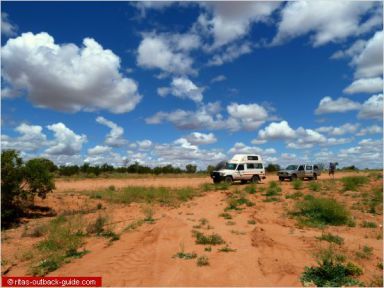
In later years, paved thoroughfares would speed travellers to their destination. But for now, these travelers were obliged to endure suffocating clouds of rust colored dust with the audacity to infiltrate nose, eyes, mouth, ears and food, and to permeate clothing all the way into sweat-soaked underwear.
Their hosts/guides reassured Tam’s family the weather would break soon. And so it did. The two-vehicle convoy was greeted by the leading edge of the rainy season. It solved the dust problem, but created another. Trying to stay dry took second place to the need for extracting one Land Cruiser then the other from a succession of mud holes into which the primitive road disappeared from time to time.
Another lesson: in due course it became abundantly obvious that the remnants of red mud were not easily removed from clothing that happened to be any color lighter than red mud.
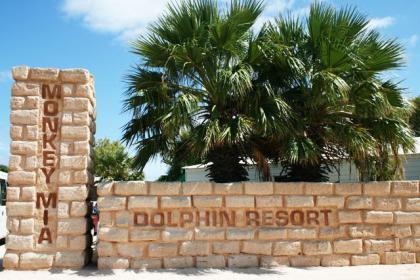
The travellers arrived at the Monkey Mia wildlife refuge in the early afternoon of the second day, mindful they had a four-hour drive back to the nearest accommodation, possibly over a rain-soaked road.
For now, it was sunny and clear as Tam and her excited family dismounted and ran for the lagoon.
“Wow!,” said a wildlife conservation officer who would serve as their host. “Are you ever in luck! I think I see some dolphins coming this way! There haven’t been any here for at least two weeks! ”
Tam and the officer were on a rise of land overlooking the iridescent navy blue water of a lagoon the size of a football field.
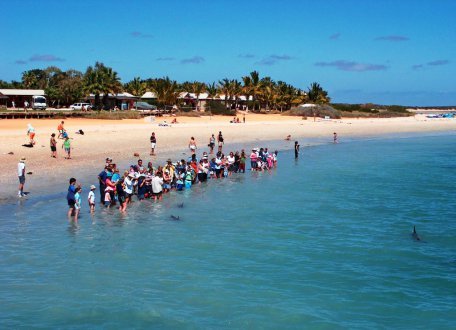
“Yeah, I see some dorsal fins out there,” the officer said squinting through powerful binoculars. Tam and her family hurried down to the lagoon. She charged into the water first.
Tam waded out on shimmering white sand in the clear water until it was above her waist.
“Look!” her mother called guardedly, not wanting to frighten the dolphins she’d spotted swimming into the lagoon.
“Look!” her mother called again, more loudly this time, her voice propelled by the excitement that now also gripped her daughter.
Tam peered down into the water. Swimming toward her was an adult dolphin. Beside it was a baby. It was small, perhaps only a few weeks old. It stayed close to the adult, obviously its mother.
The sight sent shivers of excitement through Tam’s body.
Wow! she though. Oh wow! Is this ever awesome! This has to be the best day of my life!
She glanced over her shoulder at her family. They were smiling and waving with excitement as they waded into the lagoon. Even her pesky little brother seemed to be as excited as her.
And then her day got even better. The baby came up and swam around her legs. It wasn’t much more than two feet long. She reached down and felt it’s soft bck as it headed back to the safety of it’s mom.
Then a second adult e ntered the lagoon. It swam over to her and nudged the hand she was holding out just above the surface of the water. Tam returned the gesture, touching the dolphin’s nose. She expected it to shy away. She was surprised when the dolphin remained, as if wanting to make friends. Tam swam around the big marine mammal cautiously at first, and then moved closer.
 She gently ran her hand up the dolphin’s nose to its head and then stroked the soft skin along its back to the dorsal fin. The dolphin stayed there, seeming to enjoy the attention and the affection that Tam was feeling as she swam along side, patting and rubbing its back.
Maybe it’s sensing my love, she thought. She had no doubt this was so. Then the dolphin rose and shook its head, as if acknowledging the feelings in Tam’s heart.
She watched as the mother and her baby swam around the lagoon, much to the pleasure of the assembled visitors, now crowding into the water along the shore. All three dolphins began swimming among the legs of their human visitors, circling around and back, allowing themselves to be stroked and patted. They seemed to revel in the attention and the affection of their shore-bound fellow mammals.
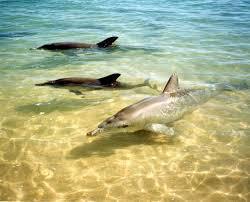
Tam’s family and the others applauded. She overheard one of the wildlife officials tell the spectators that through their tracking program they believed the second dolphin was a sister of other adult, thus the baby’s aunt.
Much too soon, Tam heard her father call out it was time to go. He reminded her the family had a long drive ahead of them.
Moments later, as if the three dolphins had heard that call, they made a last tour of the lagoon among the spectators and then headed out to sea, their visit over.
As Tam and the crowd watched with delight, the two adult dolphins breached, leaping high into the air as if to bid them farewell.

The best day of Tam’s life had just got even better.
*
“The Dolphins at Monkey Mia” is Copyright © 2016 By James Osborne. All Rights Reserved
*
Notes:
‘The Dolphins at Monkey Mia’ is written in a form called creative non-fiction. That is, the story is built around true events but some details have been enhanced for your reading pleasure.
The images are stock images. They were not taken during the events described. Some are of the Monkey Mia Dolphin Refuge, others were taken elsewhere and used for illustrative purposes.
Image Credits: animal.showtellyou.com; travelonline.com; air.ap.teacup.com; yha.au.jpeg; coolwallpaper786.blogspot.com; spaceelephant.com; escapeartist.com; ritas-outback.com; potolkimaker.com; news.cos.ucf.edu; http://www.panoramaio.com; http://www.aboutaustralia.com; WesternAustralia.com; http://www.discoverwa.com.au; beautifuldeepocean.blogspot.com; http://www.oceanadventure.com


October 28, 2016
Winnie-the-Pooh: The Forgotten Connection
Special thanks to CBC Radio for an interview that resurrected this little known story about the origins of Winnie-the-Pooh. Here’s a summary.
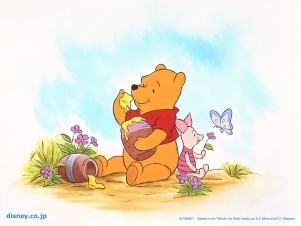
Winnie-the-Pooh was born in Canada! Well, sort of.
It all began in 1914. The First World War was underway in Europe. The Canadian Army was in desperate need of trained personnel to care for the thousands of horses used by the cavalry.
A young veterinarian in Winnipeg heeded the call.
Harry Colebourn soon found himself on a train with scores of other young men destined for the army base in Val Cartier, Quebec. A few hours into their journey the train stopped in White River, Ont., to take on water and coal for the steam engine. Like many other soldiers, Harry stepped off the train to stretch his legs.
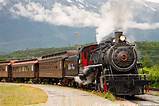
Standing beside the tracks was a man who turned out to be a trapper. He was holding a tiny black bear cub, only a few days old. He had trapped and killed its mother. Harry loved animals of every kind. He offered the trapper $20 for the cub. That was a handsome amount in 1914. They made a deal.
Harry took the cub on board the train. He named her Winnipeg, but soon shortened it to Winnie. Harry could not have known that in a few years she would become the namesake for the most famous bear in the world.
During their time in Val Cartier, Harry fed her at first with a baby bottle, he played with her, and he took her with him wherever he could. Winnie slept under Harry’s cot in their troop tent.
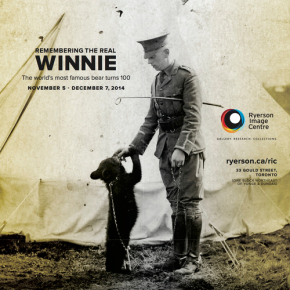
Soon, Winnie became the mascot for Harry’s regiment, the famous Fort Gary Horse (Winnipeg) Regiment.
After basic training in Val Cartier, the troops boarded the S.S. Manitou to England. Capt. Harry somehow snuck Winnie along with him on the ship.
Harry and his regiment trained on the Salisbury Plains of England for about four months. Then came the day when his regiment was ordered to the front lines in France. He was told Winnie could not accompany him.
Harry made a deal with the London Zoo to look after Winnie until his return. He made a note of it in his diary dated Dec. 9, 1914. Legend has it that Harry drove Winnie from the Salisbury Plains to London with a car he borrowed and somehow got the near-adult sized Winnie to ride in.
During the years that followed, Harry visited Winnie every time he got leave. He planned to take Winnie home with him to Winnipeg after the war. That was not to be. Harry returned home to Winnipeg in 1924, alone. We’re not sure why.

We do know that during those years at the zoo, Winnie became something of a celebrity. Her gentle nature and fondness for people earned her a special enclosure. There, Winnie enjoyed doing tricks for visitors, and children and adults were allowed to play with her. She even gave them rides on her back.
A zookeeper at the time said Winnie was the only bear they ever had that they fully trusted.
One of Winnie’s visitors was a young boy who stopped often at the zoo with his father. The boy’s name was Christopher Robin Milne. His father was a writer whose work at the time was gaining prominence. His name: Alan Alexander Milne, better known as A. A. Milne.
As it happened, Christopher Robin had a stuffed bear at home along with a collection of other stuffed animals, all with names except his stuffed bear. He had been unable to settle on a name. After his visit to the zoo, he named it Winnie.
In an interview last fall, Harry’s great granddaughter, Lindsay Mattick of Toronto, told Anna Marie Trimonti of CBC Radio that Christopher Robin would bundle up Winnie along with his other stuffed animals and take them for adventures in the woods near their home.
Those adventures inspired his father to create Winnie-the-Pooh and the fictional Christopher Robin, as well as Eeyore, Tigger, Piglet and the host of other critter-characters that A.A. Milne made famous.
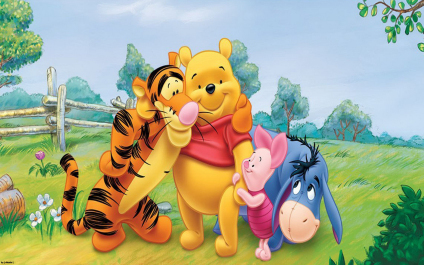
The first Winnie-the-Pooh book was published in 1926, ninety years ago. Winnie has since become known as the most famous bear in the world.
As the well-known radio commentator Paul Harvey used to say, “And now you have the rest of the story”.
*
“Winnie-the-Pooh: The Forgotten Connection” is Copyright © 2016 by James Osborne. All Rights Reserved
*
Source Credits: 1. CBC Radio, interview of Lindsay Mattick by Anna Marie Trimonti, carried on Michael Enright’s radio show “Rewind”, Oct. 24, 2016 ; 2. Lindsay Mattick is the great granddaughter of Capt. Harry Colebourn and the author of “Finding Winnie”, a book celebrating the 90th anniversary of Winnie-the-Pooh; 3. Earlier interviews on CBC Radio of Ann Thwaite, author of a biography of Winnie, “The Brilliant Career of Winnie-the-Pooh”, by Peter Gzowski, Barbara Frumm and by Eleanor Wachtel, which were incorporated in Michael Enright’s program, “Rewind”.
Image Credits: 1. Winnie – disney.co.jp; 2. Harry & Winnie, Ryerson Image Centre (ryerson.ca/ric); 3. Steam Engine – http://news.softpedia.com; 4. London Zoo – http://www.weblo.com; 5. Winne & friends group – pcwallart.com;


October 6, 2016
‘Is That You?’
The elderly woman walked up and took the book from my hand.
“Is that you?” she asked, pointing to the back cover.
Her eyes sparkled with intelligent energy.
“Yes, Miss,” I replied brightly.
At the word ‘Miss’ she flashed a mischievous look my way.
The woman was 80 if a day. That goofy sense of humor of mine had kicked in. No spring chicken, as my Dad would say.
Hey, book signings can get tedious at times. Occasionally it’s good to find a little self-entertainment to pass the time.
“What’s it about?” she said abruptly, waving my book.
I explained.
“Why did you write it?” she persisted.
Sounds interested, I thought. Maybe I can make a sale.
“Well,” I began. “We in the West are too blaise about terrorism.”
“How so?” she demanded before I could continue.
“We’ve heard so much about terrorism we’ve all become numb… we’re blanking it out.” I replied. “We don’t want to hear about it.
“That’s a terrible idea,” I added. “It’s exactly what the terrorists hope we’ll do. They want us to ignore them, until it’s too lake. They want us to think we’re safe from those psychopathic barbarians. Well, tell that to the families of the victims in San Bernardino or the Paris massacre, or Nice, or of 9/11, or of the London subway bombings. The list of atrocities in our back yard is getting longer all the time. We don’t seem to care… or want to.”
“Oh,” she replied.
Damn! I’m losing her, I thought, cursing my exuberance. I dumped too much on her.
“Do you like reading?” I asked, then thought: What a dumb question of someone holding two books under one arm and mine in the other hand.
She looked at me. She appeared to be deciding whether to answer my foolish question politely or otherwise.
The two books were clutched so tightly in her arm I couldn’t tell what kind – mystery, thriller, romance, gardening, self help?
“What genres do you prefer?” I asked. She and I both knew I was on a desperate quest now for redemption, lame though it was.
“Non-fiction and romance.” She didn’t elaborate.
Kiss that book sale goodbye, I thought.
“We’re heading south on Tuesday,” she offered. “Need some reading material… some good reading material.
She emphasized ‘good’.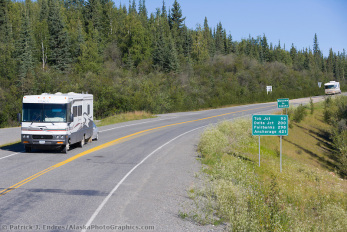
“My husband does all the driving. I do all the reading.”
The woman smiled and held up the two books. Both were steamy romance novels. I recognized the authors, knew their reputations. I cursed them silently, with respect of course.
“I need something to keep me occupied while Alfred’s driving,” she added confidently, almost assertively, tucking the novels back into her embrace.
She’d surprised me. Many readers of romance novels seem shy about their literary tastes. She was assertive, almost defiant. I liked her spirit. I began to like her, sale or no sale.
“Well, that just shows you have a really warm heart,” I offered, trying to be generous. Okay, I was sucking up.
Could it be that redemption is possible? I wondered.
“I think you’ll find The Ultimate Threat is a bit gruesome for someone with your kindly nature,” I ventured. Okay, okay, more sucking up.
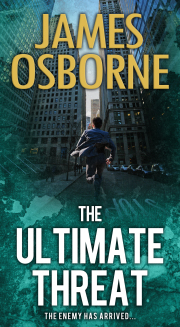
“How so?” she said. “What’s so bad about it?”
“There’s lots of violence. It’s kind of gory in places,” I said. “You know, bad people doing bad things to nice people, innocent people. But it has a Hollywood ending.
“I know how the book turns out,” I added, smiling.
She looked at me sharply. Another lame attempt at humor had nosedived. We both knew it.
“You ever read Stehen King?” she demanded. I was surprised that she even knew his name. “Or James Patterson? Or Lee Child? Or Michael Connolly?” she added.
Good gracious! I thought. All of those authors are masters of murder and mayhem.
“Yes, as a matter of fact, I do,” I replied, recovering slightly.
“I’ve read just about everything they’ve written,” she said, her assertiveness showing again. “Have you?”
“I’ve read some of each,” I replied truthfully, and sheepishly, feeling now decidedly out ranked concerning readership.
An elderly man walked up beside her.
“Are you ready to go, dear?” he asked.
I assumed he was Alfred. Both wore wedding rings. And like her, he was vibrant and exuded ‘healthy’.
“Here,” she said, handing him my novel. “Read what it says on the back. I left my glasses in the car.”
The man, glasses in place, began reading my biography out loud.
“Not that!” she said sharply. “I don’t need that. I’m looking right at him! Read me the other stuff.”
He read the blurb – the promo that publishers put on the back to help sell books.
“Hmm,” she said, turning to me. “Will I like it?”
“Well, ma’am…” I began.
“I liked the ‘Miss’ better!” she interrupted, a sparkle back in her bright blue eyes.
“Yes, Miss,” I resumed: “I can tell you that one reviewer said she couldn’t put it down… kept reading even while eating her lunch. Another said it should be made into a movie.”
“We’ve got a long boring drive in that damned motorhome,” she said. “Will it help me pass the time?”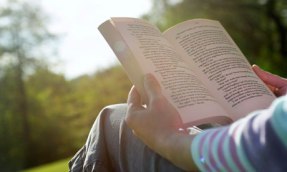
“I’m sure it will,” I said hopefully. “Where are you headed?”
“Palm Desert,” Alfred piped up.
“Been going there long?” I asked.
“Five years, this will be our fifth, actually,” he corrected himself.
“Have you ever visited the city museum on Highway 111?” I asked. “Not huge but it’s outstanding. Or Joshua Tree National Park. Fabulous place!”
“Why no,” he said, genuinely interested. “How do you know about those places?”
“Been to both a couple of times,” I said. “Visited friends in Palm Springs. The museum has sme amazing exhibits contributed by talented people who retired in the area, one of them a former movie star, George Montgomery. And you’ll find Joshua Tree National Park is a fantastic place to learn all about local history, the desert, and the flora and fauna.”
“Well, thank you!” he said, his eyes bright and lively. “All I ever do is golf. Been looking for something else. I really like museums and parks. This is terrific!
“Hey!” the woman interjected. “Remember me?”
She glanced at her husband.
“Here, give me that,” she said, reaching for the novel in Alfred’s hand.
She thrust it at me.
“Sign it!” she said. “And I’d better like it!”
“What’s your name?” I asked.
She told me. I signed:
“To Kirby,
With Best Wishes,
Safe Travels,
James Osborne.”
A sale… after all.
*
“Is That You?” is Copyright 2016 By James Osborne. All Rights Reserved.
*
Image Credits: alaskaphotography.photoshelter.com; pixgood.com;the guardian.com; twitter.com/boulderbooks; englishexercises.org


September 7, 2016
Worth Sharing
Good news is scarce in today’s world. It’s heartwarming when stories like the following emerge from otherwise horrendous events. It was written by an American flight attendant who was aboard Delta Flight 15 on September 11, 2001. The story has been authenticated by Snopes and is just too good not to share as we approach the 15th anniversary of 9/11 and those acts of depravity that changed the course of modern human history.
*
By Anonymous Flight Attendant
“On the morning of Tuesday, September 11, we were about five hours out of Frankfurt, flying over the North Atlantic.
“All of a sudden the curtains parted and I was told to go to the cockpit immediately to see the captain.
“As soon as I got there I noticed that the crew had that All Business look on their faces. The captain handed me a message. It was from Delta’s main office in Atlanta and simply read, “All airways over the continental United States are closed to commercial air traffic. Land ASAP at the nearest airport. Advise your destination.”
“No one said a word about what this could mean. We knew it was a serious situation and we needed to find terra firma quickly. The captain determined that the nearest airport was 400 miles behind us in Gander, Newfoundland.
“He requested approval for a route change from the Canadian traffic controller and approval was granted immediately — no questions asked. We found out later, of course, why there was no hesitation in approving our request.
“While the flight crew prepared the airplane for landing, another message arrived from Atlanta telling us about some terrorist activity in the New York area. A few minutes later word came in about the hijackings.

“We decided to LIE to the passengers while we were still in the air. We told them the plane had a simple instrument problem and that we needed to land at the nearest airport in Gander, Newfoundland, to have it checked out.
“We promised to give more information after landing in Gander. There was much grumbling among the passengers, but that’s nothing new! Forty minutes later, we landed in Gander. Local time at Gander was 12:30 PM …. that’s 11:00 AM EST.
“There were already about 20 other airplanes on the ground from all over the world that had taken this detour on their way to the US.
“After we parked on the ramp, the captain made the following announcement: ‘Ladies and gentlemen, you must be wondering if all these airplanes around us have the same instrument problem as we have. The reality is that we are here for another reason.’
“Then he went on to explain the little bit we knew about the situation in the US. There were loud gasps and stares of disbelief. The captain informed passengers that Ground control in Gander had told us to stay put.
“The Canadian Government was in charge of our situation and no one was allowed to get off the aircraft. No one on the ground was allowed to come near any of the aircraft. Only airport police would come around periodically, look us over and go on to the next airplane.
 “In the next hour or so more planes landed and Gander ended up with 53 airplanes from all over the world, 27 of which were US commercial jets.
“Meanwhile, bits of news started to come in over the aircraft radio and for the first time we learned that airplanes were flown into the World Trade Center in New York and into the Pentagon in DC.
“People were trying to use their cell phones, but were unable to connect due to a different cell system in Canada . Some did get through, but were only able to get to the Canadian operator who would tell them that the lines to the U.S. were either blocked or jammed.
“Sometime in the evening the news filtered to us that the World Trade Center buildings had collapsed and that a fourth hijacking had resulted in a crash. By now the passengers were emotionally and physically exhausted, not to mention frightened, but everyone stayed amazingly calm.
“We had only to look out the window at the 52 other stranded aircraft to realize that we were not the only ones in this predicament.
“We had been told earlier that they would be allowing people off the planes one plane at a time. At 6 PM, Gander airport told us that our turn to deplane would be 11 am the next morning.
“Passengers were not happy, but they simply resigned themselves to this news without much noise and started to prepare themselves to spend the night on the airplane.
“Gander had promised us medical attention, if needed, water, and lavatory servicing.
“And they were true to their word.
“Fortunately we had no medical situations to worry about. We did have a young lady who was 33 weeks into her pregnancy. We took REALLY good care of her. The night passed without incident despite the uncomfortable sleeping arrangements.
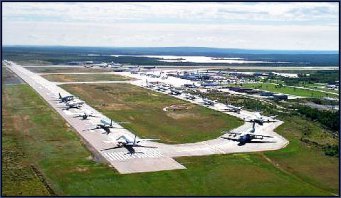 “About 10:30 on the morning of the 12th a convoy of school buses showed up. We got off the plane and were taken to the terminal where we went through Immigration and Customs and then had to register with the Red Cross.
“After that we (the crew) were separated from the passengers and were taken in vans to a small hotel.
“We had no idea where our passengers were going. We learned from the Red Cross that the town of Gander has a population of 10,400 people and they had about 10,500 passengers to take care of from all the airplanes that were forced into Gander!
“We were told to just relax at the hotel and we would be contacted when the US airports opened again, but not to expect that call for a while.
“We found out the total scope of the terror back home only after getting to our hotel and turning on the TV, 24 hours after it all started.
“Meanwhile, we had lots of time on our hands and found that the people of Gander were extremely friendly. They started calling us the “plane people.” We enjoyed their hospitality, explored the town of Gander and ended up having a pretty good time.
‘Incredible Hospitality’
“Two days later, we got that call and were taken back to the Gander airport. Back on the plane, we were reunited with the passengers and found out what they had been doing for the past two days.
“What we found out was incredible…..
“Gander and all the surrounding communities (within about a 75 kilometer radius) had closed all high schools, meeting halls, lodges, and any other large gathering places. They converted all these facilities to mass lodging areas for all the stranded travelers.
“Some had cots set up, some had mats with sleeping bags and pillows set up.
“ALL the high school students were required to volunteer their time to take care of the ‘guests’.”
“Our 218 passengers ended up in a town called Lewisporte, about 45 kilometers from Gander where they were put up in a high school. If any women wanted to be in a women-only facility, that was arranged.
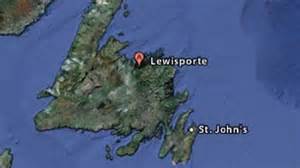
“Families were kept together. All the elderly passengers were taken to private homes.
“Remember that young pregnant lady? She was put up in a private home right across the street from a 24-hour Urgent Care facility. There was a dentist on call and both male and female nurses remained with the crowd for the duration.
“Phone calls and e-mails to the U.S. and around the world were available to everyone once a day.
“During the day, passengers were offered ‘Excursion’ trips.
“Some people went on boat cruises of the lakes and harbors. Some went for hikes in the local forests.
“Local bakeries stayed open to make fresh bread for the guests.
“Food was prepared by all the residents and brought to the schools. People were driven to restaurants of their choice and offered wonderful meals. Everyone was given tokens for local laundromats to wash their clothes, since luggage was still on the aircraft.
“In other words, every single need was met for those stranded travelers.
Tears of Joy
“Passengers were crying while telling us these stories. Finally, when they were told that U.S. airports had reopened, they were delivered to the airport right on time and without a single passenger missing or late. The local Red Cross had all the information about the whereabouts of each and every passenger, and knew which plane they needed to be on and when all the planes were leaving. They coordinated everything beautifully.
“It was absolutely incredible.
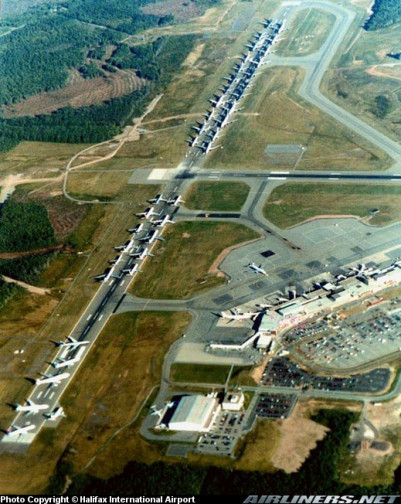
“When passengers came on board, it was like they had been on a cruise. Everyone knew each other by name. They were swapping stories of their stay, impressing each other with who had the better time.
“Our flight back to Atlanta looked like a chartered party flight. The crew just stayed out of their way. It was mind-boggling.
“Passengers had totally bonded and were calling each other by their first names, exchanging phone numbers, addresses, and email addresses.
“And then a very unusual thing happened.
“One of our passengers approached me and asked if he could make an announcement over the PA system. We never, ever allow that. But this time was different. I said ‘of course’ and handed him the mike. He picked up the PA and reminded everyone about what they had just gone through in the last few days.
“He reminded them of the hospitality they had received at the hands of total strangers.
“He continued by saying that he would like to do something in return for the good folks of Lewisporte.
“He said he was going to set up a Trust Fund under the name of DELTA 15 (our flight number). The purpose of the trust fund is to provide college scholarships for the high school students of Lewisporte.
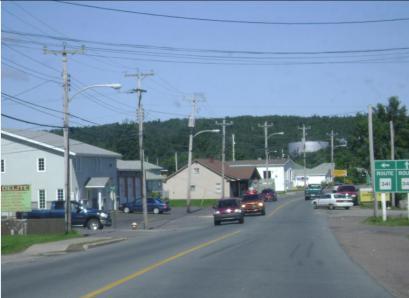
Lewisport, NL, Canada
“He asked for donations of any amount from his fellow travelers. When the paper with donations got back to us with the amounts, names, phone numbers and addresses, the total was for more than $14,000!
“The gentleman, a MD from Virginia , promised to match the donations and to start the administrative work on the scholarship. He also said that he would forward this proposal to Delta Corporate and ask them to donate as well.
“As I write this account, the trust fund is at more than $1.5 million and has assisted 134 students in college education.
“I just wanted to share this story because we need good stories right now. It gives me a little bit of hope to know that some people in a faraway place were kind to some strangers who literally dropped in on them.
“It reminds me how much good there is in the world.”
*
NOTES: 1. The author’s name is unavailable, for whatever reason, but deserves credit. 2. This is one of those ‘good news’ stories that needs to be shared. Makes you proud to be Canadian.
*
Photo Credits: http://andyworthington.co.uk, http://www.geofffox.com; http://www.pic2fly.com; http:enwikipedia.org; http//www.cbc.ca/news/canada.


August 22, 2016
Sad Story, Happy Ending
The boy was close to tears as he climbed down from the golf cart parked next to the pro shop.
Bobby noticed the youngster’s distress and walked over. The boy was dressed for golf: the shoes, shirt, glove… the whole enchilada.
“Are you okay?” Bobby said.
The boy didn’t answer. His cobalt blue eyes were filling; his mouth quivered.
Bobby guessed the boy was eight or nine years old, and part of a group of promising pre-teen golfers in a by-invitation tournament. The boy was separate from the group. The others were chatting and laughing in an outdoor cafe, waiting for the last foursomes to finish. It was obvious he was avoiding them.
“Don’t cry,” Bobby said gently, leaning down to console the boy.
“I lo-lost it!” the boy said. He brushed nervously at bunches of brown hair that escaped his baseball hat. “It’s my Dad’s! He’s gonna be mad! I don’t know how it got lost!”
“What’s your name?” Bobby said.
“Curtis,” the boy replied. “Curtis Parfinuk.”
“Okay, Curtis,” Bobby said. “Can you tell me what happened?”
“My Dad’s rangefinder,” Curtis replied. “I lost it somewhere out there on the golf course. I had it on 14. I’m sure I did. I think I used it there. I can’t find it now.”
“Wait here for a sec,” Bobby said. He walked stiffly over to the pro shop, ignoring the sharp pains pulsating through his lower back, the legacy of an old work injury.
“Hey Myles,” he said, thrusting his head and shoulders in the door. “I need to borrow the Marshall’s cart. Okay?”
“I thought you were off duty?” Myles replied.
“Yeah, I am,” Bobby replied. “But we have a boy here with a problem. Lost his Dad’s rangefinder. I want to take him back out to see if we can find it.”
“Of course,” Myles said. “Hope you find it. Those things are expensive!”
Bobby walked back to where Curtis was now seated in a row of golf carts, facing away from the other kids, hiding his red, swollen eyes. He was rummaging through his golf bag. 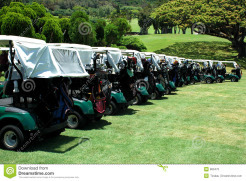 Bobby guessed that Curtis had searched that bag half a dozen times or more since noticing the rangefinder was missing.
“Come with me,” Bobby said.
“Where are we going?” Curtis asked.
Before Bobby could answer a female voice called out.
“Oh, there you are!”
Bobby sensed Curtis tense up even more.
“I’ve been looking all over for you!” the woman said to Curtis.
“Hi, I’m Jennifer,” she said turning to Bobby, holding out her hand. “Curtis’ Mom.”
“I’m Bobby,” he replied. “I’m the course Marshall here. Well, I’m off duty now. I should tell you, Jennifer, your son has a bit of a problem”
“What’s wrong?” Jennifer said, giving Curtis a concerned look. It was the typical worried maternal once-over that mothers are prone to do. “Are you okay?”
“Yeah, Mom,” Curtis said, struggling with his composure. His voice wavered. “I’m okay. But I lost Dad’s rangefinder on the golf course.”
His eyes began filling.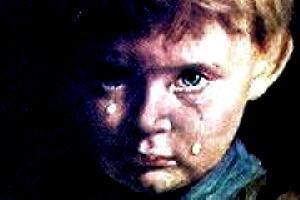
“Oh my god!” Jennifer said. “You father’s going to be furious. He just bought it last week. Only used it a couple of times, if that. Paid almost $400. Top of the line… Bushnell. Oh my!
“Your Dad’s not going to be happy with you, Curtis!” she added.
Curtis looked at his Mother. He said nothing. Her words cracked his fragile composure. Tears began running down over the freckles on both his cheeks. Embarrassed, he wiped his face with tanned fists.
“Jennifer,” Bobby said, “Would it be okay if I took Curtis back to look for the rangefinder?”
“Would you?” Curtis said, his eyes suddenly bright with gratitude.
“Of course,” Jennifer replied. “You won’t be too long I hope? We’re expecting company. I’ll get a coffee in the clubhouse.”
“Hop in,” Bobby said to Curtis. He nodded to Jennifer and gave her a ‘who knows’ shrug in answer to her question. The boy climbed into the cart beside Bobby, bits of grass still clinging to his shiny golf shoes.
“When did you first notice the range finder was missing?” Bobby asked as they began driving the golf course in reverse order.
“I kinda remember using it on the 14th hole,” Curtis said. His voice trembled. “But  when I went to use it on 16, it was gone.”
“We’ll start there,” Bobby said.
When Bobby and Curtis pulled up, four men were putting out on the 16th green.
“Anyone happen to see a lost rangefinder?” Bobby asked the men, expecting the answer he got.
“Nope,” said one, holding the flag. The other three shook their heads; the putts they were preparing to make were holding their attention.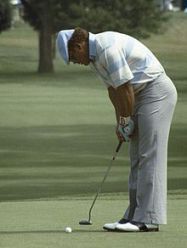
“Okay,” Bobby said to Curtis. “We’re off to 15.”
The pair got the same response from golfers on 15, and again on 14. For good measure, Bobby checked with golfers on 13 and 12. Same answer.
Finally, Curtis said:
“We’d better go back, sir. Mom’ll be getting impatient. My parents have some friends coming for supper.”
They rode back in silence.
Jennifer was standing outside the pro shop when they arrived, shielding her eyes from the afternoon sun with her right hand and making a token effort to conceal her impatience.
“Did you find it?” she asked, glancing between them, seeing the answer on their faces.
Curtis looked down at his hands, saying nothing.
Bobby sensed Curtis was on the verge of tears again. He looked at Jennifer and gave her a confirming shake of his head.
Bobby watched as Curtis followed his Mother into the parking lot. Dangling absently from his left shoulder was his pale blue golf bag with white trim. 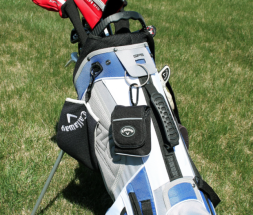 Bobby walked over to the pro shop to tell Myles about their unsuccessful quest.
“I dunno, Myles,” he said. “I’ve got a gut feeling about this. I dunno.”
Bobby pulled out his cell phone. He had made a decision.
“Hi Sweetie,” he said. “I’m gonna be a little bit late.” He explained to his wife Sharon what had happened. Reluctantly, the throbbing pain in his lower back would have to wait for a massage from her magic fingers, as she’d done so many times before.
Bobby hung up and looked at Myles.
“I need the cart again, okay?”
“Help yourself,” Myles said.
The tall Lombardy poplar and bushy Ponderosa pine trees were casting long afternoon shadows across the lush green fairways as Bobby retraced the route that he and Curtis had followed half an hour earlier. He kept changing position to ease the jostling of the cart aggravating the sharp pain in his lower back.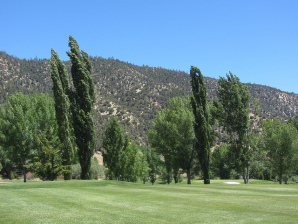
He stopped again and again to check with golfers on the fairways and putting greens, and got the same disappointing answer. He crossed more fairways and visited more greens than before. With each stop, his quest became more discouraging. Yet something… some instinct had somehow kept him from giving up.
Finally the throbbing in his back and the late hour could be ignored no longer.
Reluctantly, Bobby pulled the cart over and stepped out to ease his sore back, before heading back to the pro shop. Standing usually helped a little. The sign, ‘Course Marshall’ was still attached to the bottom of the windshield. He had stopped in a grove of trees a safe distance to one side of the 15th green.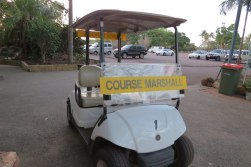
Bobby watched a pair of carts approach, two men in each. One cart stopped beside the green, the other turned in his direction. It pulled up and stopped next to a kidney-shaped sand trap guarding the near side of the green.
“How’re ya doin’?” Bobby asked. “Having a good round?”
“So so,” the driver said. His passenger smiled and nodded toward a ball embedded in the sandy bunker.
“Can I ask you something?” Bobby said.
“Sure,” the driver replied.
“A young boy lost his Dad’s rangefinder a couple of hours ago, somewhere around here… a Bushnell,” Bobby said “Any chance you might have seen it?”
The driver and passenger looked at each other and grinned. The passenger reached into the basket behind the cart seat with his left hand.
“Would this be it?” he asked. “We found it in the tall rough on 14, about 90 yards from the tee box just before that big water hazard.”
Bobby could see it was a Bushnell… confirmation enough.
“You’re gonna make a young golfer very happy,” Bobby said as the rangefinder was handed over.
Curtis had given Bobby his family’s home phone number. He dialed it.
An unfamiliar male voice answered. Bobby explained why he was calling.
“I’m Brad,” The man said. “Curtis’s father. He’ll be mighty glad you called. We were just discussing how he was going to pay for it. I’ll put him on.”
Bobby heard a choke in Curtis’s voice as he told him the rangefinder had been found.
“Oh thank you, Mister… ah, Mister…” Curtis said, his voice super-charged with excitement.
“Just Bobby, okay?” Bobby said.
“Okay,” Curtis said. “I don’t know how to thank you.”
“You just did,” Bobby said responding to the joy in Curtis’ voice. “I’m really pleased we were able to home in on the rangefinder… and get it back home.”
The multiple meanings appealed to Bobby’s wry sense of humor .
“You can pick it up in the pro shop. Ask for Myles. Have a nice evening.”
“Boy, I sure will… now!” Curtis said.
Bobby’s mind’s eye pictured an ear-to-ear smile on Curtis’s cherubic face. As a father and grandfather, the image warmed his heart.
On the drive home, the pain in Bobby’s back had eased… a lot.
*
“Home on The Rangefinder” is Copyright © 2016 By James Osborne. All Rights Reserved
*
Image Credits: bestgolfrangefinder.org; dreamstime.com; flickr.com/photos; omegon.eu; rockbottomgolf.com/busdhnell; sports.phillipmartin.info; digplanet/wiki/JimThorpe; panoramio.com; xyzeeq8.blogspot.com/2012/03/; bee-media.blogspot.com/2011/04/sad-boy