James Osborne's Blog, page 11
March 29, 2016
VOICES FROM THE VALLEYS: A Great Cause
Doctors Without Borders / Medécins Sans Frontières is the beneficiary of a recently published anthology of 51 short stories and poems. All proceeds from the sale of Voices From The Valleys will go toward supporting their hugely important work around the world helping those in urgent need of medical attention.

This exciting anthology was compiled and edited by Jodie Renner from Penticton, BC, a talented author and editor, and wonderful teacher whose caring heart is as big as they come.
Allow me to tell you a little bit more about Jodie:
As evidence of her commitment to this project and to MSF, Jodie has devoted countless hours of her time and thousands of dollars of her own money (she won’t say), to see this project through to completion and to steer it along on its journey helping MSF. Here’s the link: http://amzn.com/B016C8YLFS
Jodie did me the great honor of choosing to include in this anthology one of my favorite short stories. Dragonflies and The Great Blue Heron is a personal love story. It traces the loss to cancer of my first love, Judi, and the miraculous chain of events that led to finding and falling in love with Sharolie, who agreed to marry this aging scribe… and that is no small miracle!
Dragonflies and The Great Blue Heron is also the signature story for my collection of short stories.  Encounters With Life – Tales of Living, Loving & Laughter won the award for Best Short Story Collection of 2015 (open) in an international poll of readers conducted by the non-profit website Preditors&Editors.org. Just in case you can’t resist a look, or even a buy (insert ‘happy face’), here’s that link: http://amzn.com/162526271X
All of us authors whose stories were chosen by Jodie for inclusion in Voices From The Valleys have also agreed to donate our stories for this worthwhile purpose.
Here’s a quote from the blurb on the book:
“This high-quality anthology features entertaining short fiction, fascinating memoirs and articles, and thought-provoking poetry by 51 talented BC writers depicting experiences, real and fictional, from the ‘50s to today, throughout the interior of British Columbia, Canada.”
I do hope you will check out Voices From The Valleys and consider supporting Medécins Sans Frontières / Doctors Without Borders. The worthy causes don’t get much better.
 Thanks
*
A thought:
I’ve come to realize it is better to measure who I am not by what I own but by how I treat myself and others; that will always be a work in progress.
*


March 17, 2016
A Special Day
May the luck of the Irish follow you and bring good fortune to your life from this day forward!



February 5, 2016
With all the nice things happening lately, it’s time for...

With all the nice things happening lately, it’s time for a modest celebration… time for another giveaway.
Thoughts crossed my mind about giving away a sports car or an expensive gold watch, but mercifully those extravagant thoughts were fleeting and soon lost in the mists of time. (Ever check what authors earn from their books? Brutal!)
So, I thought of something even better! Free copies of my novel, The Maidstone Conspiracy will be given away via the readers’ website called, ‘Goodreads’. Now isn’t that even more exciting than a sports car or a watch? Okay, don’t answer.
To enter the draw, here’s all you have to do:
Click on this link (https://www.goodreads.com/giveaway/show/170818-the-maidstone-conspiracy) and follow the instructions.

Free copies of The Maidstone Conspiracy will be going to five lucky winners after the draw ends on March 1. ‘Goodreads’ conducts the draw and notifies the winners. After that, Goodreads sends me the names and I arrange for copies of The Maidstone Conspiracy to be sent out to each of the lucky winners.
Hope you’ll be enticed by the blurb on the back cover:
Paul and Anne Winston are swept up in a storybook romance… until they face death at the hands of an unknown assassin … and a battle to preserve the massive business empire they’re creating. The Maidstone Conspiracy is a gripping murder mystery artfully blended with a tantalizing love story. Woven into the breathtaking twists and turns of this action-packed adventure are unexpected betrayals and enticing international intrigue… leading to a surprise ending.
You may recall The Maidstone Conspiracy was honored recently in a world-wide poll of readers. It was tied for third place for Best Mystery Novel of 2015. The poll was conducted by the non-profit website Preditors & Editors (‘Preditors’ is deliberately spelled wrong. Someone thought it was clever.) 
In another Goodreads draw last year I also gave away copies of Encounters With Life — Tales of Living, Loving & Laughter. It was voted Best Short Story collection in the open category in the P&E poll. And my debut novel The Ultimate Threat, also my debut giveaway, was very successful. Voters in the P&E readers poll were kind enough to place The Ultimate Threat second for Best Thriller Novel of 2015.
These giveaways have attracted so much interest (almost 1,400 entered the draw for The Ultimate Threat) I wish Goodreads would allow repeat giveaways. No chance. They’re so popular there’d be an even longer lineup for giveaways. But, please stay tuned here: there will be giveaways on Amazon soon for all three books.
These giveaways are a modest way of saying thank you for all the support you’ve given me, and of course they’re a great way to promote interest in the books. It’s a beast of a war out there, competing with an estimated 300,000 new books that hit the market every year. Yep, that’s why Amazon has more than 6 million books in its catalog.
But, hey, you know something? Despite all those daunting odds, I can’t imagine enjoying anything more at this stage of my life than writing. I’ve much to be thankful for, and YOU top that list!
Have a great day — and don’t forget to enter the Goodreads draw! Here’s the link again: https://www.goodreads.com/giveaway/show/170818-the-maidstone-conspiracy.


January 22, 2016
It’s A Hat-Trick + 1

I’m very pleased to tell you that my short story collection and two novels have been chosen for awards in an international readers’ competition.
Encounters With Life—Tales of Living, Loving & Laughter, a collection of my short stories, was awarded first place in the Short Story open category.

My debut novel, The Ultimate Threat was awarded second place in the Best Thriller Novel category, and my newest novel, The Maidstone Conspiracy, tied for third place for Best Mystery Novel.
It’s an understatement to say it’s an exciting experience to be this fortunate so soon after my first book was published — in June 2015.


But I’m pleased the awards came from a remarkable organization. It’s a non-profit group called Preditors&Editors.org, founded in 1997 to help readers and writers avoid the swindlers who, sadly, abound in the publishing and media production industry. P&E is part of a larger non-profit group that specializes in skill development for those in writing, music, poetry, art, video, photography, social media and a host of other creative fields. Assistance is provided regardless of an individual’s financial means.

This is the 18th year for the awards competition. Each year, readers and writers from around the world are invited to vote for their favorites in more than 35 categories.
Voters in the poll also presented me with a huge surprise – I was awarded third place in the Best Author category from among more than two-dozen finalists. I had no idea that someone had nominated me — still don’t know who it was — but I’m mighty flattered.  It’s humbling to be included among best selling authors as well as a group of aspiring writers who I’m confident we’ll be hearing a lot more from and about in the years ahead
I’m pleased that The Ultimate Threat received attention. The motivation behind writing it was to raise a warning note. The story anticipates what could happen if the terrorist group ISIS was to lead an insurgency in North America, and how it could be stopped. Since The Ultimate Threat was written, some portions of the fictional scenarios envisioned in it have shown an an eery similarity to events in other parts of the world. The spread of terrorist attacks even in recent months gives one pause.
As some folks may recall the novel spent several weeks on Amazon’s best sellers list. That success led to it being listed on the websites of Chapters/Indigo in Canada and of the US big box bookstore chains Barnes & Nobel and Books-A-Million.
Finally, many folks who follow this blog were kind enough to vote for my entries, and I thank you both for your votes and for letting me know. I am deeply grateful. Awards help to sell books, and most of us authors do appreciate that. ;-)
Life is good!


January 8, 2016
Dinner From Hell
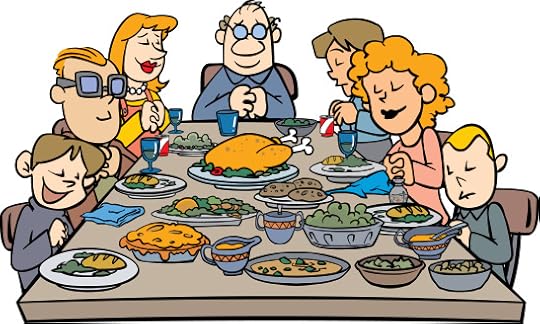
Some family gatherings are best forgotten. This would be one on them.
The fact is William didn’t want to be there in the first place. A visit to his wife’s family was not among his favorite experiences.
But 40 years of marriage, he reasoned, teaches you to do things for your spouse just because they need you to do them.
And so it was.
There was William, sitting next to his wife Sarah, whom he adores, 700 miles from home on a blistery fall day, surveying a motley collection of in-laws and outlaws assembled around a dining room table.
What began as a somber family gathering to mourn the passing of Sarah’s mother had morphed into a spontaneous Thanksgiving dinner, an event William would later describe as the ‘Dinner From Hell’… with good reason.
At the head of the table presiding over the hungry throng was Harold. He is Sarah’s 89-year-old stepfather. He’s also the reason the family had gathered in the first place. Harold was driving a car a few months earlier involved in an accident that injured Sarah’s elderly mom, Millie, ultimately leading to her recent passing.  He admitted to falling asleep at the wheel.
The family had assembled to discuss settling Millie’s estate. It turned out to be more complicated than expected. You see the family is suing Harold and his insurance company. But since Harold was Millie’s husband he is also a major beneficiary. Thus, it’s reasonable to assume he would be entitled to some of the settlement from the family’s lawsuit against him. Or is he? No one is absolutely sure.
Confusing? Stay tuned!
Now, William was not the least bit fond of Harold. In the 20+ years they’d known each other William simply could not warm up to his stepfather-in-law’s abrasive personality. Being a gentle soul and an accomplished musician to boot, William found Harold’s unrepentant redneck views about religion and politics beyond intolerable. It was a struggle, but William kept his counsel when needed for Sarah’s sake.
To digress for a moment:
William and Sarah had arrived a week earlier, Sarah being the executor of her mother’s estate. Soon after their arrival, Harold announced what he considered a brilliant idea to fill the time while Sarah was busy driving around to meetings with lawyers and officials, and before other family arrived. Knowing William would not have a vehicle during the day to pass the time, Harold invited William to come with him on a road trip, saying it would be a perfect opportunity for them to bond.
Being a virtual captive in Harold’s car was not William’s notion of a bonding opportunity, nor was it high on William’s list of things he’d prefer to do with Harold. In fact, some of the things he’d like to do to Harold were illegal.
Harold explained the purpose of the road trip was to retrieve money he’d lost beside a highway several hundred miles away into the mountains. It wasn’t just the risk of having to overnight with Harold, however remote, nor was it the risk of putting his life in the hands of a self-confessed narcoleptic driver. It was the rest of the story that became the game changer:
“It must have fallen out of my back pocket,” Harold said of the $70 lost during a drive with Millie a year earlier. “You see I had the trots. At one point I had to pull over urgently to do my business in the bushes. I ran into the trees beside the highway and dropped my pants. That’s when the clip with the money must have dropped out.”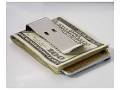
“How in the world can you ever expect to find your money?” William said. “There are miles and miles of roadside to search!”
“I’m pretty sure I know where it is,” Harold said. William was much less confident.
He gave Harold’s idea the nanosecond of serious contemplation it deserved and responded with an unequivocal “No!” Here’s why: He quickly realized he’d be searching through high grass on the edge of a forest beside a busy highway at a location of questionable accuracy for a weathered money clip, the most identifiable landmark for which would be a year-old pile of human excrement.
Back to the dinner:
The attendees were as one might expect… Sarah’s siblings plus any spouses in good standing, as well as a random assortment of grandkids… oh yes, and a few other relatives hoping to cash in on any spillage from the lawsuit.
The event was at Harold’s place, an aging modular home with a kitchen floor that sagged precariously in one area. He explained the dishwasher had leaked for some time before being discovered, eroding the particleboard subfloor. Someone had installed laminate over the linoleum in a failed attempt to solve the problem. Now, the laminate creaked and sagged along with that section of the floor. Harold seemed unconcerned that one day he might disappear through it.
William was sitting beside Sarah at the long rickety dining room table, heavily laden with food, including an enormous plate piled high with turkey meat, heaping bowls of mashed potatoes, scalloped potatoes, Brussels sprouts, cheese sauce, sweet potatoes and mixed vegetables, along with gravy, stuffing, cranberry sauce, and an abundance of other accouterments.
As the serving bowls were being passed around, the contents disappearing with dizzying speed, William couldn’t help but take notice of his fellow participants:
Seated to Sarah’s right was her older sister, Nora, a dementia patient on a day pass unsure of where she was and what was going on. She kept looking up at Sarah as if she ought to know her. Next was Nora’s daughter, Jamie, making a valiant attempt to feed her combative mother, but hampered by early onset Parkinson’s. A spoon made it to the appropriate mouth… fairly often.
(Politically incorrect, you say? Listen folks, this is based on a true story. I kid you not.)
Among those across the table was Sarah’s younger sister, Allison, whose weight required assigning her to the sturdiest chair in the house, causing those in the know to place bets on how long the chair could maintain its structural integrity. Allison would admit to being “a little over 225”, claiming less. William estimated closer to 375 pounds, certain the truth was more.
Images kept flashing through William’s mind of Allison as the Michelin ‘man’, challenging his ability to keep a straight face.  Later, back home he’d describe Allison’s physical appearance to friends and neighbors while puffing out his cheeks and modest belly to their fullest. He also admitted later that the diversion had made the dinner a somewhat less insane experience to endure.
Sitting to Allison’s left were her two pre-teen children, each from different fathers, a boy and a girl, both seemingly determined to emulate their mother’s huge appetite and consequent size. Seeing the two children reminded William that one of their grandfathers, he wasn’t sure which, had recently undergone a sex change operation. He cautioned himself mentally against any temptation to enquire of the children which sex had disappeared in favor of what gender.
On Allison’s right was her current boyfriend, Bert, father of neither child, a pony-tailed ex-drug running former biker, whose overburdened second helping plate made clear his determination to match her weight some day soon.
Both Allison and Bert warned the assemblage of spiritedly chomping relatives they had a need for constant vigilance. Bert, who admitted to having served jail time on drug charges, said that he might be a target for assassination by his former gang members for having deserted their fold. 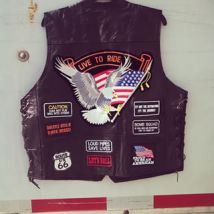 This helped to explain the bulge in the back of his pants, tucked beneath the black leather vest emblazoned with gang ‘colors’ he insisted on wearing.
Completing the table circuit was Harold’s natural daughter, Mary Sue, whom William described as being one-card short of a full deck. He was surprised when Mary Sue insisted on sitting beside her father given the prevalent believe that he’d raised her amid an unrelenting barrage of put-downs, the assumed cause of their perpetual feuding. William concluded their reconciliation might have resulted from Mary Sue having become a successful author. Her accomplishment was a startlingly well-written novel about a recovering hooker, no simple task for a high school dropout with acute dyslexia. William was less surprised when she freely admitted the lead character was patterned after a quite recent period in her own life.
William could hardly believe the speed at which the enormous mounds of food disappeared. Not 20 minutes after the motley crew had gathered at the table, most were belching and passing wind in futile efforts to ease their over-stuffed bellies, secure in the embrace of the living room sofa, armchairs and the floor—all the while wondering aloud about dessert. That left Sarah and William to clear the table and bring out multiple pumpkin pies, plumb pudding and ice cream, with sprinkles of course.
Pumpkin pie would not be the same without whipped cream. The fridge yielded one kind of whipped cream and it wasn’t the dairy variety.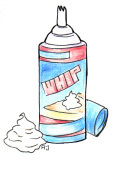
An enormous aerosol-type spray can of a white substance masquerading as whipped cream was positioned on the table beside the pumpkin pies.
To say Allison was impatient for dessert would be an understatement. Upon spying the whipped cream she vaulted from the couch, where she’d commandeered most of it, with the speed of a frightened deer and all the grace of a wounded hippo. Immediately she seized the whipped cream.
William watched in astonishment as Allison upended the caldron of pie topping, tossed her head back, and proceeded to fill her opened mouth to overflowing with the faux whipped cream.
Enough! William’s mind shouted. Time to head for home.
And so they did.
#
Note: The forgoing is based on a true story, proving beyond a reasonable doubt that “you just can’t make this stuff up”. Names of the guilty have been changed to protect the guilty and the rare few who happen to be innocent.
#
Photo Credits: Car accident, writingfactory.blogspot.com; money clip, google.com, can of whipped cream, nin luethekirin; whipped cream eater, dreamstime.com; hooker, www.tuvez.com; vest, online-instagram.com; Michelin, com; thanksgiving family dinner, PDFPronto.com.
#
Copyright 2015 By James Osborne. All Rights Reserved.


December 14, 2015
I Am Aylan

My name is Aylan. A friend is writing this for me. I can’t because I drowned. I was three years old.
After ISIS and other people attacked our city in Syria, my Daddy and Mommy decided to find a better life for our family. My Daddy’s sister in Vancouver said nice things about Canada. My parents decided to take my big brother Galip and me, and go there. We didn’t make it.
This is my story:
Our home in Syria was really nice. When the war came in 2013, Daddy and Mommy took us to Turkey. We left everything behind. Daddy was not allowed to work in Turkey.

Rex Features Ltd.
From time to time, Daddy was able to find some food for us, and places to stay. Sometimes we were allowed to stay in camps. They were smelly and dirty, and very crowded. Often we slept in the woods. Most nights we went to sleep shivering. Our stomachs ached from being hungry. We moved around a lot.
The winter of 2014-15 was very hard. We didn’t have many warm clothes. We were cold all the time.
In the early spring, Daddy said he heard that the fighting had stopped in our hometown, Kobani. We went back. While we were away, all of our things were stolen. Our house had been damaged. We had to start over.
But being back made Galip and me happy. We lived with Mommy’s parents for a while until Daddy and his friends fixed our home enough to move back. It was good to have a warm place to sleep again, and lots of food and a yard.  We had a few toys to play with and things to climb on.
Galip told me how he used to play before, with lots of toys and swings, and a teeter-totter and climbing things. I was too little then. But now, Galip and me were having fun playing together. I was a happy little boy again.
In June, the bad people came back. They attacked our town again. Our house was bombed. It was destroyed. We were lucky to be alive. My Mommy’s parents were killed when their house was bombed. Daddy’s brother was killed, too. Some other family and neighbors were also killed. Lots of people were hurt. The bad men took away the young women in our neighborhood. Their families were frightened for them. They don’t know where they have been taken or what is happening to them.

My parents took us back to Turkey. To get away from Kobani without being caught by ISIS, we had to leave all of our things behind again. Back in Turkey, everything had become worse. Before, thousands of people like us were there. Now there were hundreds of thousands living in many camps, in the woods and along highways. Everyone had become desperate. Some people called us awful names.
It was becoming unsafe in Turkey. There were lots of bad people, but not as bad as those at home who we called ISIS or Daesh. Mommy and Daddy were afraid of them. They killed many people for no reason at all.  In Turkey, the bad people tried to steal our food and blankets, and our money. They made Mommy and Daddy angry. We were not as afraid of being killed by them though, but they made us unhappy.
Somehow, my Daddy was able to contact my aunt in Vancouver. He and my Mommy smiled a lot after my aunt loaned us C$6,000. She said that she would do everything she could to help us come to Canada.
Our family was happy again, for the first time in a long time. That might sound odd. We had nothing. We were hungry. We were cold. We had no place to live. But now we had hope… so we were happy.

Daddy and Mommy got all of the papers that my aunt said we would need to go to Canada. We were very excited when she described how nice Canadians are. It took many hours for my Mommy and Daddy to fill out the papers. Then, they were told that the only other thing we needed was a form signed by an official in Turkey saying we were refugees.
Mommy and Daddy became sad when they could not find someone who would sign the paper. We did not understand why. Officials from Canada said we could not come to Canada unless that form was signed.
Maybe that’s why Daddy decided to look for another way for us to reach safety. Twice my Daddy tried to get a boat to take us to an island called Kos. It’s part of Greece. Daddy said we would be safe there. He said he would keep looking for a boat.
Mommy didn’t want to go. She was afraid of the water and boats. She didn’t know how to swim. Mommy told Daddy that if something awful happened on the boat she would not know what to do or how to help.
Daddy said we could not go back to Syria. The war had destroyed everything. There was no life for us there. But things were also getting worse in Turkey. He said our best hope was to go to Greece and then to somewhere else in Europe. Once there we could decide to build a new life in Europe. Or better yet, we could try again getting to Canada where my aunt is living. She had offered to sponsor us.
Mommy was frightened but agreed reluctantly to ride in a boat. On his third try, Daddy was lucky and found a boat. He paid money to someone who promised to take us to the island of Kos. It was only 5 kilometers away. The boat was not very big, a dingy really. It was supposed to carry only eight people. But when the dingy was pushed into the sea 16 people climbed into it.

The waves were pretty high as we started out. The dingy was less than a kilometer from shore when a storm came up. That’s how we found out there were only a few lifejackets. The dingy began to bob up and down a lot. Everyone became frightened.
Water started coming into the dingy. Then the engine quit. The man who was steering disappeared. We don’t know if he fell overboard or jumped. Daddy tried to steer. Without an engine it didn’t work out very well.
The wind got worse and the waves kept getting higher and higher.
Suddenly the dingy flipped over. The wind must have caught it at the top of a wave. Everyone was thrown into the water. All of our bags, coats, blankets, and food disappeared into the water.
Daddy grabbed Galip and me and Mommy. He held onto the dingy with one hand while holding us tightly between him and Mommy with his other arm. She was very scared.
The wind whipped the waves fiercely. The four of us were bobbing around out of control as the terrible wind screamed louder and louder. It was very hard for Daddy to hold on. Then, suddenly we couldn’t see Daddy anymore.
I don’t remember much after that. I drowned. So did my big brother. So did my Mommy.
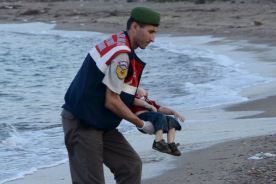
My lifeless body was found on the sandy beach in Turkey we’d left less that an hour earlier. My brother’s body was found on the shore close to mine. They found my Mommy’s body farther down the shore among some rocks.
I wasn’t the only toddler to drown that day. Other children on the dingy died too. We will not be the last.
Daddy took our bodies back to Kobani. He buried us there. He said his life is over now that he’s lost us. He wanted to be buried with us.

If we could tell him– my Mommy, Galip and me — we would want Daddy to go on with his life. We would want him to be with his sister in Canada, and to make a new life. We heard so many nice things about that country… but now we cannot come to live with him.
Many people from Syria are being welcomed into Canada. My Daddy’s brother and his family are among them. Maybe he will go too. I hope so.
Bye bye,
Aylan
***
Comments:
“I Am Aylan” is based on the death of Aylan Kurdi (also called Alan) in the Aegean Sea this past summer. Photographs of his body on a Turkish beach galvanized world attention. The purpose of this story is not to relive those horrendous events but to bring into focus, as we sit comfortably in our homes, the unimaginable hardships being experienced by those innocent families forced to become refugees through no fault of their own. Aylan’s story is symbolic; it is being repeated tens of thousands of times even as you read this. They are among more than 4.5 million refugees in the greatest human tragedy since the Second World War.
Above all, “I Am Aylan” is intended to challenge those who would deny sanctuary to these innocent men, women, children and elderly, for no reason other than prejudice based upon ignorance. This is just what ISIS intends — divide us. So here is the challenge: Visualize yourself in the refugees’ circumstances – if you have the courage to do so… and then give thanks for your incredibly good fortune to live in the peaceful, caring country that you do.
Canada has committed to welcoming 25,000 refugees, and may double that number. Good for Canada! I’m proud to be a citizen of, and to have served in uniform for, a country with the moral rectitude to open its arms with such compassion to fellow human beings.
***
Note: This story is creative non-fiction – that is, while most of it comes from news reports about the lives and tragic deaths of Aylan, his older brother Galip and his mother, Rehana, some gaps were filled with conjecture drawn from the source materials.
***
Photo Credits: Photos of Aylan Kurdi that galvanized world attention were taken by Nilufer Demir, 29, a photojournalist for a Turkish news agency. I choose not to use her disturbing and most famous photo of Aylan lying dead on the beach. It is certain to be a candidate for a Pulitzer Prize. Other photos are courtesy of Rex Features Ltd., The Guardian, The Independent and The Telegraph, all of London, UK, Maclean’s Magazine, Portmoneto.com, and home.bt.com.
#
“I Am Aylan” is Copyright 2015 by James Osborne. All Rights Reserved.


November 29, 2015
The First Chapters
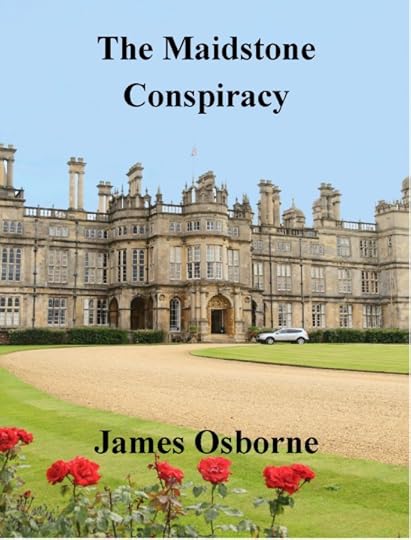
To whet your appetite for this delicious blend of murder mystery and love story, here are the first five chapters (… and you can get the rest, of course, at: http://amzn.com/B016OUM81S)
THE MAIDSTONE CONSPIRACY
PROLOGUE
Colorado Springs, CO
April 12, 2010
“I’m heading home,” Paul Winston said. “Promised the kids some baseball after school.”
“See ya tomorrow,” replied Bill Daniels, his senior vice-president.
Paul walked down three flights to street level. He strolled casually toward his pickup parked at the curb nearby, caught up in the sights and sounds and smells of early summer.
A few steps from the truck the wealthy entrepreneur felt himself hit from behind, forcing his body against a parking meter. Paul reached out to keep from falling. He couldn’t hold on, landing on his back. Paul looked up. A disheveled-looking man stood over him. An old revolver was clutched in his right hand.
Good God! he thought. That son-of-a-bitch just shot me!
“What the hell?” Paul tried to challenge his young assailant. The words were a garbled wheeze. The unshaven face above him was familiar, but he couldn’t quite place it.
Paul watched helplessly as the shabbily dressed man raised the old weapon. His mind was shouting at him to flee but his body wouldn’t respond. The gun jumped, and then jumped a second time. Paul heard loud bangs as two bullets slammed into his chest with enormous force. He couldn’t breathe.
“Right! That’ll fix you, ya greedy bugger,” he heard the man say. “Bloody well serves you right!”
‘Why?’ Paul tried to ask, noticing the British accent. Only his mind could form the words.
CHAPTER ONE
Durham, NC
20 Years Earlier
Paul Winston was studying hard for the last of his MBA final exams at Duke University’s business school when his cell phone rang.
“Hello?” he said. There was no response. He sensed a presence at the other end, but no sound. “Hello?” he said again. “Who’s there? What’s going on?” There was a muted cry of anguish.
“Oh, Paul!” He heard Emily’s voice cry out, convulsed with grief.
“What is it, Emily?” he said. “What’s going on? Are you all right? Do you need help?”
“It’s Mom!” his sister cried. “It’s Mom and Dad!” she corrected herself. “They’re gone,” she sobbed. “They’re both gone! A crash! Dad’s plane! They were killed, Paul. They’re dead. Oh my God, Paul!”
“What?” Paul said. He struggled to grasp what he’d just heard. “What… what happened? How?”
“The plane, Paul,” Emily said. “It crashed and exploded. Dad was landing at the ranch… on the airstrip. Mom was with him. George said the plane blew up while landing. He says Mom and Dad must have died instantly. Oh my God, Paul! Can you come right away, please? There’s something not right about this. I just know! I need you, now!”
Paul tried to console his sister while she struggled to share with him the few details she knew about the tragedy. They sat in silence on the phone for a few moments then exchanged words of comfort, knowing nothing they could possibly say would bring them solace.
Finally, Paul said, “I’m on my way, Emily. I’ll see how soon I can get a charter and let you know. Are the police there?”
“Yes, they’re here,” she said. “But something’s wrong. I’ll explain when you get here. Hurry, Paul!”
“I’m on my way, Emily,” he repeated, too shocked to think of anything else to say.
Paul called Jerry Appleby, the head of the charter aircraft company at Raleigh-Durham International Airport that Paul’s father had helped finance years earlier. Paul explained what had happened. Once his Dad’s friend managed to get past his shock, he told Paul a Learjet was due to land soon from a one-way trip. He would have the plane prepared immediately for Paul’s flight west across the country.
Paul’s next call was to a friend at the Colorado State Patrol.
“I’m so very, very sorry, Paul,” Josh Schroeder said. He and Paul had been buddies through high school. “For what it’s worth, Paul, I will personally see we do everything we can to find out what happened. Right now, all we have are a lot of questions and not many answers. We both know your Dad was an excellent pilot. This doesn’t make any sense at all.”
Paul was at the top of his MBA graduating class at Duke University’s Fuqua School of Business in Durham, NC. He’d enrolled at the request of his father, Ted Winston, a successful Colorado entrepreneur and rancher, after being asked to take over the family’s rapidly growing business interests. At 28, he was the eldest of three children. Both of his sisters were married and pursuing their own careers.
During the 17-mile taxi ride to Raleigh-Durham airport, Paul tried to shake off the fog of grief clouding his mind. He needed to think clearly. He knew that as the eldest of the three, his sisters would look to him for leadership through this horrendous calamity that had befallen their family.
CHAPTER TWO
Colorado Springs Airport
“This is terrible… horrendous, Paul. I’m so very sorry,” George Underhill said as they met at the Colorado Springs airport. The ranch foreman’s eyes were red. He grasped Paul’s hand and then put a muscular arm around his shoulder. They walked together into the executive flight terminal building.
“What in the world happened, George?” Paul asked, struggling to hold his composure. “How could this happen? Dad had thousands of hours on that plane. He’s landed hundreds of times at the ranch. This makes no sense, George! What went wrong?”
“We don’t know yet,” George said. “People from the NTSB (National Transportation Safety Board) have just arrived. Maybe they can give us some answers. The Sheriff’s Department has the site cordoned off.”
“Where are Mom and Dad?” Paul said. “Where did they take them… their bodies?”
“Colorado Springs,” George said. “The coroner took them, and the sheriff has ordered autopsies. It’s normal in accident cases.”
“Paul!”
He turned quickly after hearing Emily’s voice calling out. His diminutive sister was running across the small reception area. She collapsed in his arms. Her cries of grief drew everyone’s attention.
“Oh, Paul,” she said after a few moments, tears streaming down her face. “Thank God you’re here! Let’s go home!”
“Where’s Roberta?” Paul said.
“She’s out at the ranch,” she said. “She drove out with Stephen and their kids.”
He wasn’t looking forward to seeing Roberta. There’d been a strain between him and their youngest sister since they’d been teenagers. Paul didn’t understand why, and Roberta steadfastly refused to discuss it. He’d finally decided to just let it go.
That wouldn’t be quite so easy now, he thought.
Emily grabbed Paul’s arm and began pulling him toward the entrance.
Paul glanced back at George. The big ranch foreman raised an eyebrow and tilted his head sideways sympathetically.
CHAPTER THREE
Earnscliffe Manor
Maidstone, England
While Paul’s chartered jet was landing in Colorado Springs, Lord Percival Winston, the 11th Earl of Prescott, was dying. His frail body lay in a huge four-poster bed dominating the master suite at Earnscliffe, a 500-year-old manor house nestled among the picturesque hills of Kent, southeast of London.
“Willard,” he whispered to his cousin, “It’s time.
Lord Percival’s breathing had become shallow but he still managed to whisper a few words from time to time, despite the cancer ravaging his internal organs. He’d just ordered all life support disconnected.
“Don’t talk like that, Percy,” Willard said, mostly for the benefit of the few family and staff gathered at his bedside. “You’ll be up and about again before you know it. This is just a setback. It’ll pass.”
Percival managed a weak smile. At 83, he was the eldest of five children. His only surviving sibling, Ted, was the youngest. Their other brother and two sisters had been small children when they were killed in the Blitz during the Second World War. Percy regretted that he and his late wife Mary had been unable to have children. He missed her terribly, the love of his life. She’d died 17 years earlier.
I wonder if Willard has any idea what comes next? Percival thought.
He was aware that Willard expected a large inheritance. That wasn’t going to happen. Percival had seen to it. He’d told his second cousin many times that for 25 years he’d been living off the inheritance he might have hoped to receive. Lord Winston had grown tired of giving Willard handouts. In his mind, that amounted to more than the inheritance Willard had any right to expect. So, in the absence of a direct heir, Percival had bequeathed the bulk of his considerable wealth and his title to his only sibling, Ted Winston, in America.
Willard refused to believe he was not the natural heir, even though being a second cousin put him some distance from the usual lines of succession. He wasn’t about to let matters rest. Secretly, he’d made plans to challenge the will after Percival’s death. Willard knew he wouldn’t have long to wait.
CHAPTER FOUR
Two Months Later
Two-Dot Ranch, Colorado
“Looks like an avgas leak may have caused the explosion,” the man said. “We’re positive that sparks coming from the starboard brake while landing ignited a leaky fuel line. This caused the explosion that killed your parents.”
Ray Alvarez was not one to mince words. He was in charge of the NTSB team investigating the deaths of Ted and Catherine Winston. “We’ve not ruled out foul play,” Ray said.
“Why is that?” Paul said.
“We found evidence the fuel line going into the starboard engine may have been tampered with,” Alvarez said. “The same with the brakes. In fact, CSP is treating this as a probable homicide. The Colorado Bureau of Investigation is also looking at the evidence. We’ll hear back in a few weeks.”
“Are you serious?” Emily said, her eyes wide. “Who would want to kill Mom and Dad? They were just ordinary people… really nice people who were always going out of their way to help others. This makes no sense.”
“These things rarely do,” Alvarez said as he rose to leave. “I’ll make certain you’re kept informed.”
“Thank you, Mr. Alvarez,” Emily said as she led him to the door. “We really appreciate you coming all the way out here to give us your report. That was very kind of you.”
Alvarez nodded. As the NTSB investigator walked across the wide veranda of the big two-story stone ranch house, Emily noticed a brown van coming toward them on the long gravel road that led from the highway to the ranch.
“Looks like someone’s sent us a package,” she said over her shoulder to those gathered to meet with Alvarez: Paul, Roberta and her husband Stephen, Emily’s husband Jeremy, ranch foreman George Underhill and his wife Elizabeth.
Earlier in the day, they’d also attended the release in Colorado Springs of the coroner’s report on their parents’ deaths. Listening to the report had been difficult. It had stopped short of identifying a cause, normal procedure for coroner’s reports, but they were disappointed just the same.
Emily watched as the UPS van pulled up. The deliveryman jogged from the van across the wide paved driveway, up the six steps and across the 20-foot covered veranda.
“Sign here,” he said. The unusual package was addressed to her brother. It had a regal appearance, and bore a return address in the United Kingdom.
Paul opened the package while the others were busy discussing what Alvarez had shared with them.
“Holy smokes!” he blurted out, commanding everyone’s attention.
Paul chuckled, sitting back in what had been his Dad’s favorite armchair.
“Well now, if that don’t beat all,” he added. “Will you look at this?”
Paul held up a regal-looking letter. He handed it to Emily, who scanned it and then said, barely containing her excitement:
“Paul, is this for real? It says you’re now an English nobleman, an earl. Is it true… that you’re the most direct descendant of Dad’s brother… of Uncle Percy?
“You know?” Emily added, “I never gave it much thought when Dad used to tell us stories about his older brother, that he was an English nobleman, like Grandpa Winston used to be. It says here that Uncle Percy’s official name was Lord Percival Winston, the 11th Earl of Prescott.
“This letter says he passed away about two months ago,” Emily said to the rapt attention of those gathered. “It’s from his solicitor, that’s ‘attorney’ to us Americans. I wonder why nobody from the family over there called us? Anyway, Uncle Percy had no children… no direct descendants, so apparently this means that you, Paul… you’re the next in line to inherit his title and his estate.
“All I can say is congratulations, big brother!” she said, a smile lighting up her face.
Paul stood to his full six-foot, two-inch height and stretched, stunned by the news. Everyone was grateful to hear some good news for a change. They understood that the title would have gone to his father, Ted, had he and Catherine not died in the plane crash. That thought cast a somber mood on the moment.
The group congratulated Paul, and then assembled around Emily wanting to read the letter from the English solicitor she was passing around. All except Roberta, who stood apart, looking askance at her brother.
“What does this all mean?” she demanded, repeating her sister’s question with an entirely different tone. There was a hard edge in her voice. She sounded like the trial lawyer she’d become. Her crisp words belied a mixture of envy, annoyance and impatience. “Are you the only one getting an inheritance from Uncle Percy’s estate? What about us? Will you be moving to England? Does this mean George will be taking over running the ranch on his own? Who’ll be running Mom and Dad’s other businesses?”
“Hold on, Roberta,” Paul said. His face had a strained smile, struggling to be patient. “I’m not sure about any of this right now. It’s all rather sudden. I don’t know what to make of it yet. First, we’ll have to find out if this thing is authentic… not someone’s idea of a cruel joke. I’ll call that English solicitor in the morning. It’s after business hours there now.”
The next morning, Paul phoned his late uncle’s solicitor, Malcolm Witherspoon, in London, then called his sisters together in their parents’ den:
“Mr. Witherspoon confirmed what we know: that Dad would have inherited Uncle Percy’s title and the bulk of his estate… had he still been alive. Evidently, how this works is that the eldest of each succeeding generation of Winstons inherits the title and whatever goes with it.
“Mr. Witherspoon told me that Uncle Percy’s will expressly continues a centuries-old tradition that requires each subsequent Earl to swear under oath to, above all, use any inherited financial resources to preserve Earnscliffe Manor and the honor of the title. Failure to do so means forfeiture to the next nearest relative. Beyond that, the sitting Earl or, in the case of a woman now, the Countess, is free to use inherited monies as he or she considers appropriate.”
“That’s not the least bit appropriate,” Roberta protested. “We’re heirs too!”
“I really don’t care,” Emily piped up. “And we are not heirs, Roberta. Paul is the rightful heir, period. Regardless, we each have the money and the shares Mom and Dad left us in the ranch and their businesses. Thanks to them, Jeremy and I have more than we could ask for. To be blunt, Roberta, I’d rather have Mom and Dad and Uncle Percy back rather than be discussing their wealth. Besides, all of us have successful careers. So who cares? And good on our big brother, the soon-to-be Earl of Prescott! How exciting is that?”
“Well, I don’t think it’s right!” Roberta shot back.
“Frankly,” Paul said. “I have no idea whether the financial resources involved are all that substantial or not. We’ll just have to wait to find out. I could be inheriting a financial disaster. Mr. Witherspoon wouldn’t go into detail on the phone. He promised to courier me more information. The first thing I need to do is check out what all of this means, in detail, and then go from there. I’ll keep both of you in the loop. That’s the best we can do for now.”
Until attending Duke University, Paul and his Dad along with foreman George Underhill had operated the thriving 5,400-acre spread called Two-Dot Ranch, one of the largest beef cattle operations in southwestern Colorado. Paul was unmarried and immensely popular among single women for miles around. Many young beauties dreamed of marrying this budding businessman/rancher with movie-star good looks. His charm, laid-back manner and ear-to-ear grin had left a trail of sparkling eyes and fluttering hearts among scores of eligible young women and tears when he’d left for Duke. After his parents died, the school had granted Paul his MBA based on the high honors marks he’d maintained throughout the two-year program.
* * *
During the weeks following the emotional trauma of their parents’ funeral and the probate of their wills, Paul had to grapple with another decision – whether or not to leave the life he was being groomed to pursue, especially with the cause of their parents’ deaths still under investigation.
“What do you think, Emily?” Paul said over the phone one day. “Should I go?” It was his fifth or sixth call to Emily – he’d lost count – since receiving the letter from England. His sister and her husband, Jeremy, had returned to their home and careers in Somerville, Massachusetts, near Boston.
“Paul,” Emily said, chuckling warmly to the brother she loved dearly. “My answer is the same as the last five times you called and asked me the same question. Yes! Absolutely! Go to England. Become an earl. What the heck? What have you got to lose? Not a thing!”
“Have I called you that much?” he said, embarrassed. “Sorry. It’s a hard decision, Emily. George thinks I should go… assures me he’ll be fine running the ranch on his own. I know he can. Besides, he has an added incentive now, with Dad and Mom leaving him a 10 percent interest.”
“Go, big brother!” Emily said. “Go, for heaven’s sake!”
“One other thing, Emily,” Paul said. “My friend Josh called this morning about the crash to brief me on the investigation. Josh says the fuel line on Dad’s plane was definitely sabotaged. The forensic unit at the CBI is convinced Mom and Dad were murdered, Emily. CSP has started a full homicide investigation.”
After a long silence, Emily said: “Have you told Roberta?”
“I called her,” he replied. “She just said, ‘That’s what I expected.’ A bit odd. She didn’t seem all that surprised and rushed me off the phone. Maybe she’s into a big trial or something else right now.
“Anyway, Josh told me they have few leads, that the investigation is close to stalling. He told me we should try getting on with our lives,” Paul said. “He told me to go ahead and move to England; promised to keep me posted.”
“He’s your friend,” Emily said, “and he’s giving you good advice.”
Paul knew it would not be easy to leave behind his hometown, growing business interests and thriving ranch. He and George had debated the pros and cons during those weeks. George argued that even if Paul changed his mind, the experience would be well worth it. Besides, he was still young and had the option of returning home anytime.
Although in his uncle’s will the beneficiary was his late father, Paul decided that he would honor the request that the new Earl relocate to England, at least for a while, and pursue the responsibilities of an English nobleman. He admired his uncle’s foresight at having included the phrase at least for a while among his wishes and not making permanent relocation a condition. Paul was certain that’s what his father would have done and would have wanted him to do.
Before moving to England, Paul gathered his parents’ various business interests under a holding company separate from the ranch. He called it Prescott Enterprises in honor of his uncle. Paul also asked George to become general manager of the ranch instead of foreman. After all, he now was a partner and would be in charge. George had worked hard over the years. His new status represented quite an achievement. George was the son of a hard-drinking cowboy and a promiscuous barroom ‘entertainer’ who never married. He’d been a street kid, forced to support himself before reaching his teens.
Paul admitted he was curious about living in England given his heritage, especially what life would be like as a nobleman. Paul and his sisters held dual citizenship, all three having been born in England like their father. They hadn’t been back since they were small children. He was intrigued by the prospect of living in an ancient manor filled with a host of servants.
From conversations on the phone with Percy’s solicitor, his uncle’s will apparently had left him a few rental properties and some financial resources.
CHAPTER FIVE
Earnscliffe Manor,
Maidstone, England
The news had spread like wildfire. Excitement rippled through the social elite of picturesque Maidstone and area. The newest Earl of Prescott was about to take up residence in one of the city’s most imposing landmarks, nearby Earnscliffe Manor. The historic estate was nestled in the lush rolling hills of Kent, aptly nicknamed The Garden of England.
Earnscliffe had been home to the earls of Prescott for centuries. His uncle’s many friends and admirers, his neighbors and the Manor staff joined together to plan a gala evening reception and ball welcoming the 12th Earl. It would be the social event of the season. The guest list included nobility, ambassadors, prominent politicians and local dignitaries. Planners arranged for a grand entrance in the great hall of the meticulously restored manor, where Paul would be formally presented to the 147 invited guests.
Willard Winston, Paul’s distant cousin who occupied a luxurious gatehouse on the estate, volunteered to advise Paul about preparing for the welcoming party. Paul was grateful for his cousin’s help. He was unfamiliar with English customs, particularly concerning formal events like this. Willard, who was 23 years older than Paul, told the charming bachelor it was essential that he make his appearance with a date. Willard offered to find a suitable young woman to join him.
“Are you quite certain about this, Willard?” Paul asked. “I don’t know anyone here yet. Is it appropriate for me to appear to be dating one of their eligible young women so soon after my arrival?”
“Most definitely, old boy!” his English cousin reassured him enthusiastically. “Most of your other guests will come as couples. You and your date will fit right in. This way you’ll be sure of making a splendid show of it! And it will be a melding of cultures, and all that, you know. You’ll be a sensation, you’ll see… you’ll make a huge impression on everyone!”
And quite an entrance it was. He walked down the steps of the grand staircase from his second floor master bedroom with Sylvia McCracken of Maidstone clinging to his left arm. The room fell ominously silent. There were audible gasps and a few giggles.
Paul sensed immediately that something was terribly wrong. He caught the eye of the butler, Carlson, just back from vacation, who motioned him discretely to a side room. He excused himself from Sylvia, who was already slightly tipsy.
“Lord Prescott,” Carlson began. “May I be permitted to speak candidly?”
“Of course,” Paul said.
“Thank you,” Carlson said. “May I ask your lordship how you came to have Ms. McCracken as your date for this evening’s celebration?”
“My cousin, Willard, made the arrangements for me,” Paul replied. “Since you were away on leave, he took the initiative and invited her on my behalf. I just now met her. Is something wrong?”
“Yes, Milord,” Carlson said. “I believe there is. I must tell you, sir, that Ms. McCracken is the proprietor of the most famous, ah, how should I say it? Forgive me, sir… the most notorious house of ill repute in all of Kent. I can’t imagine what in the world inspired your cousin to do so.”
“I can,” Paul said. He struggled to control his anger toward Willard.
When Paul returned to his guests and to ‘Sylvia, The Madam,’ he sensed bemused reactions from the assembled guests, and then restrained exchanges with Paul or, mostly, polite silence. Some guests were unable to contain their amusement. A few quiet chuckles were heard. Others were chagrined. Most left early.
The next morning at breakfast, Willard could barely contain his merriment over the cruel trick he’d pulled on his American cousin… second cousin he corrected himself, wanting to put as much distance between the branches of the family as he could manage.
“Right! Just like the bloody hillbilly he is!” Willard laughed heartily to his wife, Alice. They were having breakfast in the spacious kitchen of their historic two-story sandstone home surrounded by tall oak trees on the edge of the Earnscliffe Estate.
Willard slapped the table with glee, reliving the night before. He was delighted with himself for embarrassing his ‘cowboy cousin.’ Alice was dismayed. She saw Willard’s nasty trick as his immature way of venting his anger over Paul having inherited the bulk of the late Lord Winston’s estate. Willard was livid about the comparatively modest bequest their uncle had left him.
As the closest relative living in England, Willard assumed he was entitled to inherit virtually all of the extensive assets. At the very least, he expected to inherit their home and a substantial sum of money. To his dismay, he couldn’t find a lawyer willing to pursue the legal challenge he wanted. In Willard’s opinion, the late Earl had seen fit to leave him an insulting pittance, which was not true. In fact, his inheritance consisted of a generous income and the use of the two-story, four-bedroom gatehouse rent-free for the rest of their lives. Willard also conveniently overlooked the fact that he and his family had already lived there rent-free for more than 25 years. During that time, Willard had dabbled in numerous failed pursuits, mostly financed by Percival who tried to get Willard to become self-supporting, to no avail.
“Well, you know,” Alice said pleasantly, “We really must be civil to the young fellow, my dear. He is, after all, our landlord now.”
“Bloody hell,” Willard exploded. “Just imagine, us beholden to that uncivilized Yankee fool,” he ranted. “Good God! He’s a fucking cowboy, for Christ’s sake, Alice! It’s a damned embarrassment to the family name, that’s what it is! It’s a bloody insult to England!”
Willard stomped out of the room and headed for his den, muttering. He had more immediate problems. Their trouble-prone son Reginald, better known as Reggie, was due for parole from prison. He’d been convicted of trying to sell valuable artifacts stolen from Earnscliffe Manor. It was Reggie’s latest brush with the law.
As if I don’t have enough deal with, Willard grumbled as he dialed the phone on his desk. On top of it all, we have a thief… a criminal in the family. Bloody hell!
“Blantyre House Prison, warden’s office,” a bored female voice answered the phone.
“My son is due for release tomorrow,” Willard said. “I’m wondering what time I might pick him up.”
“Has he completed his FLED?” the voice snapped back.
Her attitude did nothing to improve Willard’s state of mind.
“His what?” Willard asked.
“His FLED. His FLED… His Full License Eligibility Date – FLED,” said the now irritated voice. “Prisoners must have that form filled out to be released.”
“I expect so,” a flustered Willard responded. The irony of the acronym escaped him. “My son called me that he’s to be released tomorrow morning on parole. Is there a scheduled release time?”
The voice replied curtly: “We start daily releases sometime after breakfast. I cannot tell exactly when a given prisoner will be released. You’ll just have to wait. Freed prisoners exit through the front gate.”
She hung up on him.
Two years earlier, police had found Reggie, their troublesome 22-year-old son, passed out drunk behind the wheel of his aging car. He’d driven off a country road into a ditch on the outskirts of Maidstone. Artifacts stolen from Earnscliffe Manor were in the back seat. Police and the news media, in Maidstone as well as surrounding Kent County, had been notified of the theft immediately by the curator at Earnscliffe, who’d hoped the thief or thieves would be intercepted before they got too far. It worked.
A police search of the vehicle also discovered a World War II Webley Mk IV revolver in the car’s boot. Reggie professed surprise. He was unable to produce a license for the weapon or a permit to transport it. A records search of the serial number identified the owner as Reggie’s father, who’d served briefly as an officer in the Grenadier Guards. When police arrived at Willard and Alice’s home to inquire about the Webley, Willard explained that he had obtained the old revolver as a memento while serving with the Guards. It wasn’t being transported legally, and the police knew it. But at least Willard had registered it, as required by law. The constables who visited Willard, feeling intimidated by his apparent titled stature, had dropped further action. Their supervisor agreed.
Local police forces often looked the other way when persons connected to the nobility committed minor infractions, as they had for Willard and Reggie. But they were unable to overlook Reggie’s theft of the artifacts from Earnscliffe, since the theft was not minor and all of the local news media had already reported it. Police did follow procedure by recording the serial number of the Webley. Before returning the weapon to Willard, they also had the forensic lab at New Scotland Yard in London conduct ballistics tests and take photos of the rifling marks, impressions made on bullets by the lands and grooves inside the barrel. The rifling marks matched nothing on record, but the photos were added to the files anyway.
***
Hi There:
Hope you have enjoyed this excerpt. You can order an ebook or a paperback copy at: http://amzn.com/B016OUM81S.
Best Regards,
James Osborne


November 19, 2015
This Truly Is Amazing Grace

If there ever could be a modern definition for Amazing Grace, here it is.
In the aftermath of the Paris massacres on Nov. 13, a young man whose wife was among the 129 killed by terrorists posted a profound message on Facebook. The words of Antoine Leiris convey a message that all of us would do well to emulate.
This is what he had to say to the killers of his beautiful young wife, Hélène Muyal-Leiris. Others have titled it: “I Will Not Give You The Gift of Hate”.
You won’t have my hate.
On Friday night you took the life of someone exceptional, the love of my life, the mother of my son, but I will not hate you. I do not know who you are and I do not want to know. You are dead inside. If the God for whom you blindly kill really made us in his image, then each bullet in my wife’s body is a wound to his heart.”
So I will not give you the gift of hate. Even though it is what you were hoping for, responding to hatred with anger would be to fall to the same ignorance that made you the people that you are. You want me to be scared, to distrust my fellow citizens, and to sacrifice my liberty for security. I will play on.”
She was as beautiful (in death) as she was when she left on Friday night, as beautiful as when I fell forever in love with her more than 12 years ago.
Of course I am devastated by grief, I will concede you that small victory, but that will not last long. I know that she will watch over us always and that, one-day, we will meet again in that paradise of free souls where you will never be admitted.
Now it’s just the two of us, my son and I, but we are stronger than all the armies of the world. In fact, I do not have any more time to waste on you, I need to go and get Melvil, who is waking up from his nap. He is only 17 months old, he will eat his afternoon tea as always and then we will go and play as always, and this little boy’s entire life will be an affront to you by being happy and free. For he will not hate you either.
#
Credit: Excerpt from an article in The New York Times on Nov. 17.


November 10, 2015
A Quiet Kind of Hero

This story is about one war veteran, and pays tribute to all veterans on Remembrance Day:
Les Marriott was a war veteran. The Second World War had ended a decade earlier, and now he was our Scoutmaster. As it turned out, we would learn from him a great deal more than how to ‘Be Prepared’.
Mr. Marriott was a natural leader and dedicated to helping boys learn life skills. This was evident during quiet times that often wrapped up our weekly Scout meetings. He would encourage us to ask questions and talk about almost anything.
Mostly, our questions and discussions were about proficiency badges or upcoming Scout jamborees, and sometimes even about girls. He would listen carefully, and then patiently answer all of our questions. He seemed determined that no one ever went home with a question unanswered. Occasionally, someone would ask about his experiences in the war. Mr. Marriott told us he’d been in the Royal Navy but was reluctant to tell us more. He would gently redirect attention back to Scout matters.

One summer, our Scout troop was breaking camp after a week in the mountains of a national park. My friend Don and I were taking down the big tent we’d used for meals and meetings. Don was at the back pulling tent pegs when I heard him shout. He came running around to the front. His right hand was gripping his left arm – his left wrist was spurting blood.
Mr. Marriott heard the shouting and ran towards Don, scooping up a flat stone about two inches in diameter as he went. He thrust it into Don’s left armpit and pushed the arm down to his waist. The blood flow dropped to a trickle.
The troop’s first aid kit was in Mr. Marriott’s tent. He sent me to get it. Within minutes, Mr. Marriott had Don’s wrist bandaged and had applied a tourniquet around his forearm. He gave Don firm instructions how to release and tighten it.
Don and I were the senior Scouts, then called troop leaders. Mr. Marriott gave us lots of responsibility. We were supervising a group of younger scouts packing up camp, when Don hurt his wrist. He’d cut it on a broken glass bottle someone had discarded beside a tent peg. It was hidden by long grass. Mr. Marriott told Don to sit quietly. Thereafter, the radiant smile that rose from Don’s half-prone face told everyone he was going to be just fine… and not at all sorry about missing out on the rest of the work of packing up.
Over lunch before heading home, Mr. Marriott explained to all the scouts what he’d done to stem the flow of blood from Don’s wrist, and why it was so important to act quickly. It was a valuable lesson for Scouts. Once more, Mr. Marriott had seized upon a real-life opportunity to help young boys learn more of life’s valuable lessons. The stone in Don’s armpit had been carefully placed to press down on an artery, acting like a temporary tourniquet. And he explained why the real tourniquet had been located where it was, and that releasing it every minute or two was essential to maintain vital blood circulation to the arm.
His experience showed. And it raised questions about his war experiences. After lunch and much persuasion, he finally told us a story that none of us was ever likely to forget.
Mr. Marriott said he had been stationed on an aircraft carrier during most of the Second World War. He was assigned to the hangar deck, just below the flight deck from which fighter planes took off and landed. There he repaired instruments on the planes between combat missions.

Their convoy was in the South China Sea when it was attacked by several squadrons of Imperial Japanese fighter planes, known as Zero’s. Allied planes launched from the aircraft carrier engaged the enemy. Other ships in the convoy had their anti-aircraft guns blazing away. The battle raged on for what seemed like hours. Numerous ships were strafed with enemy machine gun fire. A few were damaged by bombs or torpedoes dropped from repeated waves of enemy planes.
Finally, the fighting eased as the enemy fighter planes left the battle, probably low on fuel. Mr. Marriott was stationed at the stern of the carrier, an area that received and stowed returning aircraft. It included an aircraft elevator, one of two on the ship connecting the hangar deck with the flight deck.

With the enemy planes apparently gone and the defending allied fighters coming back on board, Mr. Marriott heard his name called. He turned to see his buddy gesturing him to an open steel door. It led to a narrow catwalk high above the ocean on the back of the huge ship outside the hangar deck.
He joined his friend outside for a smoke. They’d closed the door to reduce wind gusts getting inside. Besides, they were under standing orders to close all doors and hatches during combat.
The two seamen were halfway through their cigarettes when they suddenly heard the distinctive sound of an enemy plane. An unexpected squadron of enemy fighters was approaching just above the surface of the ocean, too low to be identified on radar. The two men heard anti-aircraft fire begin to burst above them from their ship and from others.
A split second later, they heard a massive explosion and saw the steel door bulge outward. They learned later that an enemy plane had dropped a bomb down the open aircraft elevator. The two men fought to push the door inward enough to squeeze through. They came upon a horrific scene of bloody devastation.
Despite the battle raging in the skies above them, and exploding ammunition from a dozen or so burning aircraft destroyed by the bomb, they ran into the smoke-filled darkness looking for survivors. Their frantic calls got no response.
The two men scoured their section of the hangar deck. About 20 men had been on duty during the battle. Their search located five men alive, all unconscious in blood-soaked clothing, badly injured. They administered emergency first aid while awaiting help from overwhelmed medics. All the other sailors were found dead, a few from bomb fragments or flying debris, but most from concussion caused by the huge bomb that hit the lowered aircraft elevator.
Mr. Marriott explained quietly to us – pausing a few times to compose himself – that some remains of the others had to be scraped off the metal bulkheads and walls. They included friends.
He said that he was alive purely by coincidence.
We as Scouts had learned another lesson that day – and had also acquired a deep respect for his reluctance to talk about his war.
“Dad never said anything to us about the war,” Mr. Marriott’s daughter Janice said many years later. “He never brought it up.”
But I learned from her some startling information about his early life. Turns out, Mr. Marriott had survived far more than just that war. Born and raised in England, he had been virtually abandoned as a child, sent to a ‘work farm’ during the depression of the 1930s when his parents were unable to support him. Then in his mid-teens he was again forced out, driven away from the work farm when the owner could no longer provide work or food.
At a young age, Mr. Marriott somehow made his way to Canada and worked at various menial jobs until he returned to England a few years later, working as a stoker to earn return passage on a ship. He arrived there in desperate physical shape, his clothing in rags, pants held up with twine. Not long after that, the Second World War broke out.
When it was over, he returned to Canada where he married, raised a family and turned his instrument training into becoming a jeweler, and owner of a jewelry store that came to be known for its meticulous commitment to quality workmanship. No surprise there. Many of his customers were fellow veterans who, like him, rarely spoke about the horrors they had experienced.
Each, a quiet hero.
—
“A Quiet Kind of Hero” is Copyright 2015 By James Osborne All Rights Reserved
#
Photo Credits: Aircraft carrier HMS Vengeance courtesy of http://www.uboat.net; Imperial Japanese “Zero” courtesy of http://www.world-of-warplanes.wikia.com


A Quiet Hero
This story is about one war veteran, and pays tribute to all veterans on Remembrance Day/Memorial Day:
Les Marriott was a war veteran. The Second World War had ended a decade earlier, and now he was our Scoutmaster. As it turned out, we would learn from him a great deal more than how to ‘Be Prepared’.
Mr. Marriott was a natural leader and dedicated to helping boys learn life skills. This was evident during quiet times that often wrapped up our weekly Scout meetings. He would encourage us to ask questions and talk about almost anything.
Mostly, our questions and discussions were about proficiency badges or upcoming Scout jamborees, and sometimes even about girls. He would listen carefully, and then patiently answer all of our questions. He seemed determined that no one ever went home with a question unanswered. Occasionally, someone would ask about his experiences in the war. Mr. Marriott told us he’d been in the Royal Navy but was reluctant to tell us more. He would gently redirect attention back to Scout matters.
One summer, our Scout troop was breaking camp after a week in the mountains of a national park. My friend Don and I were taking down the big tent we’d used for meals and meetings. Don was at the back pulling tent pegs when I heard him shout. He came running around to the front. His right hand was gripping his left arm – his left wrist was spurting blood.
Mr. Marriott heard the shouting and ran towards Don, scooping up a flat stone about two inches in diameter as he went. He thrust it into Don’s left armpit and pushed the arm down to his waist. The blood flow dropped to a trickle.
The troop’s first aid kit was in Mr. Marriott’s tent. He sent me to get it. Within minutes, Mr. Marriott had Don’s wrist bandaged and had applied a tourniquet around his forearm. He gave Don firm instructions how to release and tighten it.
Don and I were the senior Scouts, then called troop leaders. Mr. Marriott gave us lots of responsibility. We were supervising a group of younger scouts packing up camp, when Don hurt his wrist. He’d cut it on a broken glass bottle someone had discarded beside a tent peg. It was hidden by long grass. Mr. Marriott told Don to sit quietly. Thereafter, the radiant smile that rose from Don’s half-prone face told everyone he was going to be just fine… and not at all sorry about missing out on the rest of the work of packing up.
Over lunch before heading home, Mr. Marriott explained to all the scouts what he’d done to stem the flow of blood from Don’s wrist, and why it was so important to act quickly. It was a valuable lesson for Scouts. Once more, Mr. Marriott had seized upon a real-life opportunity to help young boys learn more of life’s valuable lessons. The stone in Don’s armpit had been carefully placed to press down on an artery, acting like a temporary tourniquet. And he explained why the real tourniquet had been located where it was, and that releasing it every minute or two was essential to maintain vital blood circulation to the arm.
His experience showed. And it raised questions about his war experiences. After lunch and much persuasion, he finally told us a story that none of us was ever likely to forget.
Mr. Marriott said he had been stationed on an aircraft carrier during most of the Second World War. He was assigned to the hangar deck, just below the flight deck from which fighter planes took off and landed. There he repaired instruments on the planes between combat missions.
Their convoy was in the South China Sea when it was attacked by several squadrons of Imperial Japanese fighter planes, known as Zero’s. Allied planes launched from the aircraft carrier engaged the enemy. Other ships in the convoy had their anti-aircraft guns blazing away. The battle raged on for what seemed like hours. Numerous ships were strafed with enemy machine gun fire. A few were damaged by bombs or torpedoes dropped from repeated waves of enemy planes.
Finally, the fighting eased as the enemy fighter planes left the battle, probably low on fuel. Mr. Marriott was stationed at the stern of the carrier, an area that received and stowed returning aircraft. It included an aircraft elevator, one of two on the ship connecting the hangar deck with the flight deck.
With the enemy planes apparently gone and the defending allied fighters coming back on board, Mr. Marriott heard his name called. He turned to see his buddy gesturing him to an open steel door. It led to a narrow catwalk high above the ocean on the back of the huge ship outside the hangar deck.
He joined his friend outside for a smoke. They’d closed the door to reduce wind gusts getting inside. Besides, they were under standing orders to close all doors and hatches during combat.
The two seamen were halfway through their cigarettes when they suddenly heard the distinctive sound of an enemy plane. An unexpected squadron of enemy fighters was approaching just above the surface of the ocean, too low to be identified on radar. The two men heard anti-aircraft fire begin to burst above them from their ship and from others.
A split second later, they heard a massive explosion and saw the steel door bulge outward. They learned later that an enemy plane had dropped a bomb down the open aircraft elevator. The two men fought to push the door inward enough to squeeze through. They came upon a horrific scene of bloody devastation.
Despite the battle raging in the skies above them, and exploding ammunition from a dozen or so burning aircraft destroyed by the bomb, they ran into the smoke-filled darkness looking for survivors. Their frantic calls got no response.
The two men scoured their section of the hangar deck. About 20 men had been on duty during the battle. Their search located five men alive, all unconscious in blood-soaked clothing, badly injured. They administered emergency first aid while awaiting help from overwhelmed medics. All the other sailors were found dead, a few from bomb fragments or flying debris, but most from concussion caused by the huge bomb that hit the lowered aircraft elevator.
Mr. Marriott explained quietly to us – pausing a few times to compose himself – that some remains of the others had to be scraped off the metal bulkheads and walls. They included friends.
He said that he was alive purely by coincidence.
We as Scouts had learned another lesson that day – and had also acquired a deep respect for his reluctance to talk about his war.
“Dad never said anything to us about the war,” Mr. Marriott’s daughter Janice said many years later. “He never brought it up.”
But I learned from her some startling information about his early life. Turns out, Mr. Marriott had survived far more than just that war. Born and raised in England, he had been virtually abandoned as a child, sent to a ‘work farm’ during the depression of the 1930s when his parents were unable to support him. Then in his mid-teens he was again forced out, driven away from the work farm when the owner could no longer provide work or food.
At a young age, Mr. Marriott somehow made his way to Canada and worked at various menial jobs until he returned to England a few years later, working as a stoker to earn return passage on a ship. He arrived there in desperate physical shape, his clothing in rags, pants held up with twine. Not long after that, the Second World War broke out.
When it was over, he returned to Canada where he married, raised a family and turned his instrument training into becoming a jeweler, and owner of a jewelry store that came to be known for its meticulous commitment to quality workmanship. No surprise there. Many of his customers were fellow veterans who, like him, rarely spoke about the horrors they had experienced.
Each, a quiet hero.
—
“A Quiet Hero” is Copyright 2015 By James Osborne All Rights Reserved
#
Photo Credits: Aircraft carrier HMS Vengeance courtesy of http://www.uboat.net; Imperial Japanese “Zero” courtesy of http://www.world-of-warplanes.wikia.com