James Osborne's Blog, page 10
August 22, 2016
Home on The Rangefinder
The boy was close to tears as he climbed down from the golf cart parked next to the pro shop.
Bobby noticed the youngster’s distress and walked over. The boy was dressed for golf: the shoes, shirt, glove… the whole enchilada.
“Are you okay?” Bobby said.
The boy didn’t answer. His cobalt blue eyes were filling; his mouth quivered.
Bobby guessed the boy was eight or nine years old, and part of a group of promising pre-teen golfers in a by-invitation tournament. The boy was separate from the group. The others were chatting and laughing in an outdoor cafe, waiting for the last foursomes to finish. It was obvious he was avoiding them.
“Don’t cry,” Bobby said gently, leaning down to console the boy.
“I lo-lost it!” the boy said. He brushed nervously at bunches of brown hair that escaped his baseball hat. “It’s my Dad’s! He’s gonna be mad! I don’t know how it got lost!”
“What’s your name?” Bobby said.
“Curtis,” the boy replied. “Curtis Parfinuk.”
“Okay, Curtis,” Bobby said. “Can you tell me what happened?”
“My Dad’s rangefinder,” Curtis replied. “I lost it somewhere out there on the golf course. I had it on 14. I’m sure I did. I think I used it there. I can’t find it now.”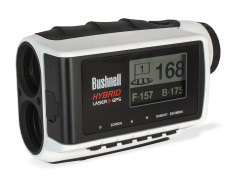
“Wait here for a sec,” Bobby said. He walked stiffly over to the pro shop, ignoring the sharp pains pulsating through his lower back, the legacy of an old work injury.
“Hey Myles,” he said, thrusting his head and shoulders in the door. “I need to borrow the Marshall’s cart. Okay?”
“I thought you were off duty?” Myles replied.
“Yeah, I am,” Bobby replied. “But we have a boy here with a problem. Lost his Dad’s rangefinder. I want to take him back out to see if we can find it.”
“Of course,” Myles said. “Hope you find it. Those things are expensive!”
Bobby walked back to where Curtis was now seated in a row of golf carts, facing away from the other kids, hiding his red, swollen eyes. He was rummaging through his golf bag.  Bobby guessed that Curtis had searched that bag half a dozen times or more since noticing the rangefinder was missing.
“Come with me,” Bobby said.
“Where are we going?” Curtis asked.
Before Bobby could answer a female voice called out.
“Oh, there you are!”
Bobby sensed Curtis tense up even more.
“I’ve been looking all over for you!” the woman said to Curtis.
“Hi, I’m Jennifer,” she said turning to Bobby, holding out her hand. “Curtis’ Mom.”
“I’m Bobby,” he replied. “I’m the course Marshall here. Well, I’m off duty now. I should tell you, Jennifer, your son has a bit of a problem”
“What’s wrong?” Jennifer said, giving Curtis a concerned look. It was the typical worried maternal once-over that mothers are prone to do. “Are you okay?”
“Yeah, Mom,” Curtis said, struggling with his composure. His voice wavered. “I’m okay. But I lost Dad’s rangefinder on the golf course.”
His eyes began filling.
“Oh my god!” Jennifer said. “You father’s going to be furious. He just bought it last week. Only used it a couple of times, if that. Paid almost $400. Top of the line… Bushnell. Oh my!
“Your Dad’s not going to be happy with you, Curtis!” she added.
Curtis looked at his Mother. He said nothing. Her words cracked his fragile composure. Tears began running down over the freckles on both his cheeks. Embarrassed, he wiped his face with tanned fists.
“Jennifer,” Bobby said, “Would it be okay if I took Curtis back to look for the rangefinder?”
“Would you?” Curtis said, his eyes suddenly bright with gratitude.
“Of course,” Jennifer replied. “You won’t be too long I hope? We’re expecting company. I’ll get a coffee in the clubhouse.”
“Hop in,” Bobby said to Curtis. He nodded to Jennifer and gave her a ‘who knows’ shrug in answer to her question. The boy climbed into the cart beside Bobby, bits of grass still clinging to his shiny golf shoes.
“When did you first notice the range finder was missing?” Bobby asked as they began driving the golf course in reverse order.
“I kinda remember using it on the 14th hole,” Curtis said. His voice trembled. “But  when I went to use it on 16, it was gone.”
“We’ll start there,” Bobby said.
When Bobby and Curtis pulled up, four men were putting out on the 16th green.
“Anyone happen to see a lost rangefinder?” Bobby asked the men, expecting the answer he got.
“Nope,” said one, holding the flag. The other three shook their heads; the putts they were preparing to make were holding their attention.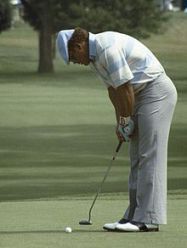
“Okay,” Bobby said to Curtis. “We’re off to 15.”
The pair got the same response from golfers on 15, and again on 14. For good measure, Bobby checked with golfers on 13 and 12. Same answer.
Finally, Curtis said:
“We’d better go back, sir. Mom’ll be getting impatient. My parents have some friends coming for supper.”
They rode back in silence.
Jennifer was standing outside the pro shop when they arrived, shielding her eyes from the afternoon sun with her right hand and making a token effort to conceal her impatience.
“Did you find it?” she asked, glancing between them, seeing the answer on their faces.
Curtis looked down at his hands, saying nothing.
Bobby sensed Curtis was on the verge of tears again. He looked at Jennifer and gave her a confirming shake of his head.
Bobby watched as Curtis followed his Mother into the parking lot. Dangling absently from his left shoulder was his pale blue golf bag with white trim. 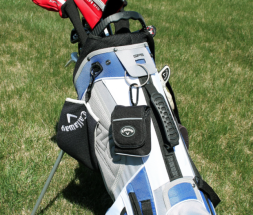 Bobby walked over to the pro shop to tell Myles about their unsuccessful quest.
“I dunno, Myles,” he said. “I’ve got a gut feeling about this. I dunno.”
Bobby pulled out his cell phone. He had made a decision.
“Hi Sweetie,” he said. “I’m gonna be a little bit late.” He explained to his wife Sharon what had happened. Reluctantly, the throbbing pain in his lower back would have to wait for a massage from her magic fingers, as she’d done so many times before.
Bobby hung up and looked at Myles.
“I need the cart again, okay?”
“Help yourself,” Myles said.
The tall Lombardy poplar and bushy Ponderosa pine trees were casting long afternoon shadows across the lush green fairways as Bobby retraced the route that he and Curtis had followed half an hour earlier. He kept changing position to ease the jostling of the cart aggravating the sharp pain in his lower back.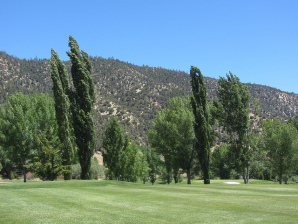
He stopped again and again to check with golfers on the fairways and putting greens, and got the same disappointing answer. He crossed more fairways and visited more greens than before. With each stop, his quest became more discouraging. Yet something… some instinct had somehow kept him from giving up.
Finally the throbbing in his back and the late hour could be ignored no longer.
Reluctantly, Bobby pulled the cart over and stepped out to ease his sore back, before heading back to the pro shop. Standing usually helped a little. The sign, ‘Course Marshall’ was still attached to the bottom of the windshield. He had stopped in a grove of trees a safe distance to one side of the 15th green.
Bobby watched a pair of carts approach, two men in each. One cart stopped beside the green, the other turned in his direction. It pulled up and stopped next to a kidney-shaped sand trap guarding the near side of the green.
“How’re ya doin’?” Bobby asked. “Having a good round?”
“So so,” the driver said. His passenger smiled and nodded toward a ball embedded in the sandy bunker.
“Can I ask you something?” Bobby said.
“Sure,” the driver replied.
“A young boy lost his Dad’s rangefinder a couple of hours ago, somewhere around here… a Bushnell,” Bobby said “Any chance you might have seen it?”
The driver and passenger looked at each other and grinned. The passenger reached into the basket behind the cart seat with his left hand.
“Would this be it?” he asked. “We found it in the tall rough on 14, about 90 yards from the tee box just before that big water hazard.”
Bobby could see it was a Bushnell… confirmation enough.
“You’re gonna make a young golfer very happy,” Bobby said as the rangefinder was handed over.
Curtis had given Bobby his family’s home phone number. He dialed it.
An unfamiliar male voice answered. Bobby explained why he was calling.
“I’m Brad,” The man said. “Curtis’s father. He’ll be mighty glad you called. We were just discussing how he was going to pay for it. I’ll put him on.”
Bobby heard a choke in Curtis’s voice as he told him the rangefinder had been found.
“Oh thank you, Mister… ah, Mister…” Curtis said, his voice super-charged with excitement.
“Just Bobby, okay?” Bobby said.
“Okay,” Curtis said. “I don’t know how to thank you.”
“You just did,” Bobby said responding to the joy in Curtis’ voice. “I’m really pleased we were able to home in on the rangefinder… and get it back home.”
The multiple meanings appealed to Bobby’s wry sense of humor .
“You can pick it up in the pro shop. Ask for Myles. Have a nice evening.”
“Boy, I sure will… now!” Curtis said.
Bobby’s mind’s eye pictured an ear-to-ear smile on Curtis’s cherubic face. As a father and grandfather, the image warmed his heart.
On the drive home, the pain in Bobby’s back had eased… a lot.
*
“Home on The Rangefinder” is Copyright © 2016 By James Osborne. All Rights Reserved
*
Image Credits: bestgolfrangefinder.org; dreamstime.com; flickr.com/photos; omegon.eu; rockbottomgolf.com/busdhnell; sports.phillipmartin.info; digplanet/wiki/JimThorpe; panoramio.com; xyzeeq8.blogspot.com/2012/03/; bee-media.blogspot.com/2011/04/sad-boy


August 8, 2016
Anatomy of a Death Threat
We’ve all seen news reports of people getting death threats. Have you wondered what it’s like? Here’s one family’s experience. The names are fictitious; the events are not.
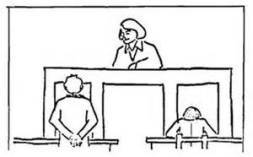
“A man called my home and threatened to kill my family,” your honor. That made it personal… very personal.”
Barry Lawson was testifying at the trial of a man accused of threatening to murder his wife, their three children and then him.
The prosecutor told the jury that at the time Berry was the media contact for a large company embroiled in an acrimonious labor strike.
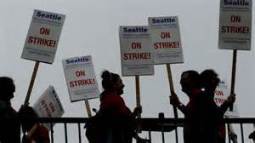
“The truth is, the strike was just an elaborate ruse,” the prosecutor added.
“As bizarre as it may seem, the real purpose of the strike was a secret plan to embarrass the company and the government. It was a misguided effort by union leaders to gain public support for a political party. The plan backfired.”
He said that leading up to the strike, union officials had misled members into believing the walkout was all about wages and benefits. The death threats came after Barry had exposed their plan in the news media, effectively turning the tables on the union officials.
The prosecutor told the court tensions had been running high as the strike dragged on. Weeks had turned into months with no resolution in sight. Incidents of violence on the picket lines were increasing as cash-strapped employees began returning to work.
Barry testified that after receiving several crank phone calls, recording devices had been installed to monitor phones in his office and home. All recordings were turned over to police.
Several examples of the crank phone calls were played in court, followed by the death threat. This is what the jury heard:
“Lawson, your wife and kids are dead meat!” an angry male voice shouted. “You hear me, you bastard? I’m gonna blow their fucking heads off, and I’m gonna to watch you suffer for a while! Then I’ll be coming after you, asshole!”
When the recording ended, silence descended on the courtroom. Police testimony earlier revealed that a search of the accused man’s house had uncovered a cache of illegal weapons and ammunition. They also found hand-drawn maps of Barry’s back yard and home.
“As you heard,” Barry testified, “the man’s voice on the recording was angry and determined. He left no doubt in my mind about his intentions. I couldn’t risk not believing him. This call was more than just a few employees venting their frustration… those are to be expected during a strike. This call raised the stakes about as high as it gets.”
“Please tell the jury what happened next,” the prosecutor said.
 Barry replied, “After I hung up, my wife Anne asked, ‘Who was that?’ It was obvious she’d been watching the expressions on my face while I was on the phone. I told her, ‘Oh, just a wrong number.’ It was a lie. I had never lied to her before. Then, she asked, ‘Are you okay?’ I could see she was worried; apparently I wasn’t doing a very good job of covering my anxiety. She had answered the phone a number of times during the strike and got some of the crank callers. Anne is a caring and very positive person, but strong willed and not easily frightened. However this time, her eyes revealed a uncharacteristic unease.
“I told Anne it was just because I was tired, and said: ‘I’ve got some work to do.’ That was another lie.
“I went to our den and phoned the head of the company’s security. I told explained what had happened. In a couple of hours armed guards were posted around our house. For the duration of the strike, teams of guards shadowed my wife to and from her office, our three children to and from school and their other activities, and me to and from work. The guards tried to be discrete, but sometimes it wasn’t possible.
“Anne objected. Understandably, their presence added to her fear and to the children’s fear. At first, I told them it was just a precaution. That was partly true and partly another lie. I realized then she had every right to know about the death threats. I told her the truth.”
The prosecutor said: “Please tell the court what effect, if any, all of this had on your children and your family.”
“Our children sensed our fear,” Barry replied. “One evening after the guards had been assigned, I was tucking our youngest daughter into bed when she asked me, ‘Daddy, who are those men? Did we… did I do something wrong?’
“The other two children also wanted to know why strange men seemed to be hovering around them all the time, and why they couldn’t play outside at home, or at school like the other kids during recess, or visit with friends after school and on weekends.
“Anne and I made excuses. We kept saying it was just a precaution. We didn’t want to frighten them more than they already were. The children weren’t fooled. Anne and I could see they knew that we weren’t telling them the truth. That’s the worst part. Our secrecy was eroding their trust in us.”
Later outside court, Barry explained that in the weeks leading up to the walkout, union leaders had gained the ear of several top reporters with falsehoods about the company, just as they had misled their membership. Much of the news coverage became decidedly pro-union.
After the strike began, union officials stepped up their false accusations about the company. The pro-union media dutifully reported them. Company executives understood union leaders were trying to goad them into a verbal fight in the media.
Barry said the company had adopted a strategy of providing only factual information to the media; there would be no counter accusations or incendiary rebuttals. It wasn’t easy to ignore the provocation, but a larger goal was more important: trying to create a calmer environment that would help foster an eventual settlement.
Then came a potential turning point.
A breakthrough had been reached in secret talks between negotiators for both sides. They had agreed to a tentative settlement on key issues. The company decided to go public.
That evening, the news media carried reports of the tentative deal, but also carried angry rebuttals by union leaders. The union president, a belligerent political activist, specifically denied that any agreement had been reached. He also claimed the company had refused numerous “generous concessions” offered by the union.
None of it was true. What’s more, he didn’t realize that he’d just set himself up for a fall. Company officials decided to seize the opportunity.
By this time, negotiators for the company knew that their counterparts were committed to reaching an agreement. Union negotiators even told them they were confident the vast majority of the membership would support a ratification vote on the tentative deal. Union and company negotiators exchanged signed confidential letters setting out key terms for the tentative pact.
These letters, plus the union president’s false claims, had given the company an opportunity for a media turnaround, potentially opening the way for a settlement of the strike despite the union leadership.
Barry called it a ‘gotcha opportunity’.
The day after the union president’s angry denials of the tentative agreement, Barry invited members of the news media to his office, one at a time. Each was allowed to read the original copies of the letters. They spelled out the agreed upon terms, the very ones that the union president had claimed publicly did not exist. Among those invited were the reporters whose coverage had been strongly pro-union and anti-company.
Within hours, the tone of news reports on all of the media had reversed. The draft settlement shown to reporters, and the union president’s false accusations, had become a top news event for days. He and his henchmen were exposed for their partisan politicking, a misguided action that had compromised the best interests of the union membership.
The media’s outrage for being hoodwinked was a sight to behold, Barry said later in a report to the company’s executive committee. The news reports and media commentators were especially critical of the union leadership for forcing their own members to live for months on strike pay, a fraction of their regular income. Members were struggling just to feed their families, much less pay mortgages, car loans and other expenses. Not surprising, support of the union members for their top officials crumbled.
It took almost two weeks but a group of union members eventually forced a ratification vote on a new contract followed by a special leadership election. The contract was approved, and the president and his cronies were voted out of office.
Barry told the court that prior to the death threat, there was another, more visible and tangible incident.
With the credibility of the union leadership gone following exposure of their plot, Barry became the target of their anger.
In court, he testified that after the news of the tentative settlement broke he was making coffee early one morning when he heard an unusual sound coming from the street: ‘Thump, Thump, Thump’. The noise continued over and over. ‘Thump, Thump, Thump’… ‘Thump, Thump, Thump’.
He looked through the living room window of their suburban bungalow. A dark blue four-door sedan was parked across the street. Both windows on the driver’s side were down. He saw four men in the car.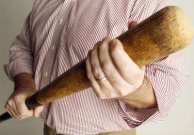
Barry testified that he recognized the driver. It was the union president. Behind him in the back seat was a man known as a union ‘enforcer’. The source of the noise was a baseball bat the union president was banging against the car door with his left hand while looking toward Barry’s house.
When they saw him at the living room window, the man in the back seat stuck a sawed-off shotgun out the car window and pointed it toward Barry, pretending to fire it.
“They drove away as I was calling the police,” he testified. “That obvious attempt to threaten me was more annoying than anything. At the time, I remember thinking: ‘These guys don’t seem to know when to quit.’ In hindsight, I have to admit I brushed it off a bit too quickly. After that we received the death threat.”
Barry told the jury that throughout the strike, crank calls on his office phone had become commonplace. Most calls promised some form of physical harm—broken kneecaps and cracked skulls were popular—coming from people venting their frustration.
“I’d been through this a few years earlier with a previous employer,” he said. “Colleagues in other companies with similar experiences had assured me such calls were all bluster and no substance.”
Police evidence showed that one crank call was traced to the company’s head office. The caller was working just a few floors from Barry’s office. Others were scattered elsewhere; the callers appeared to be unrelated. Barry had asked company security and police to withhold taking action during the strike to avoid adding to tensions.
“But that phone call at home was in a category all by itself,” Barry told the court. “When death threats are directed at your wife and children, a whole different set of emotions takes over. Then it becomes very personal. All bets are off. Period!”
The company’s security director, a retired law enforcement executive, told the trial that he had worked with the city police to track down the culprit. Not surprising, the accused turned out to be a union member, although no direct connection with the union leadership was ever established.
“Is it over now for your family?” the prosecutor asked.
“Not at all,” Barry said.
“Since all of this happened, our family has been living with fear. I’m not sure it will ever be over for our children. All have frequent nightmares. The youngest refuses to play in the back yard, or anywhere else outside. Every time the phone rings it startles us and we look at each other, remembering that call. Where ever they go, my wife and children said they feel constantly on alert for possible danger; there is no danger but that doesn’t remove their fear.”
It took the jury only a few hours to reach a guilty verdict.
During sentencing a few weeks later, the judge expressed little concern that the man was married with a young family. He said the cache of weapons and documents found in the man’s home left no doubt about his intentions.
The judge also noted the man had a history of emotional instability that on numerous occasions had created problems for his wife and two small children. Pre-sentence reports listed repeated complaints to police about domestic violence.
“When the judge pronounced sentence, his wife didn’t appear all that upset that he would be incarcerated for a few years,” Barry said later.
The judge told the man that other complaints pending against him, including spousal abuse and child assault, would be stayed if he underwent psychiatric treatment while serving his three-year sentence. The man agreed.
A few months earlier, the deposed union president and the thugs in the car that morning had been found guilty of uttering threats. Their trial judge placed them on probation,
ranging from one to two years. They were lucky the charges were not for a more serious criminal offence—the sawed-off shotgun wasn’t found during the police investigation, so its role in the incident couldn’t be proven in court.
Later, Barry admitted: “My gentle, kind-hearted wife rarely uses harsh words. But she made an exception after learning I’d been less than truthful to her about the death threats, and rightly so. Such language!”
*
‘That Made It Personal-The Anatomy of a Death Threat’ is Copyright © 2016 By James Osborne. All Rights Reserved
*
Notes: 1. ‘That Made It Personal – The Anatomy of a Death Threat’ is a departure from the genres normally seen on this blog, i.e., mostly humor and some adventure. I decided it was time to let this one out into the universe. 2. The story is creative non-fiction. That means the names of the characters in the story and some scenes are fictitious; the key events described are not.
*
Image Credits: DavidReyIllustrations.com; hominicious.com; american3rdposition.com; thinkstockphotos.co; http://shop.wellen-noethen.de


‘That Made It Personal’-The Anatomy of a Death Threat
“A man called my home and threatened to kill my family. That made it personal, your honor, very personal.”
Barry Lawson was testifying at the trail of a man accused of threatening to murder his wife, their three children and then him.
The prosecutor told the jury that at the time Berry was the media contact for a large company embroiled in an acrimonious labor strike.
“The truth is, the strike was just an elaborate ruse,” the prosecutor added.
“As bizarre as it may seem, the real purpose of the strike was a secret plan to embarrass the company and the government. It was a misguided effort by union leaders to gain public support for a political party. The plan backfired.”
He said that leading up to the strike, union officials had misled members into believing the walkout was all about wages and benefits. The death threats came after Barry had exposed their plan in the news media, effectively turning the tables on the union officials.
The prosecutor told the court tensions had been running high as the strike dragged on. Weeks had turned into months with no resolution in sight. Incidents of violence on the picket lines were increasing as cash-strapped employees began returning to work.
Barry testified that after receiving several crank phone calls, recording devices had been installed to monitor phones in his office and home. All recordings were turned over to police.
Several examples of the crank phone calls were played in court, followed by the death threat. This is what the jury heard:
“Lawson, your wife and kids are dead meat!” an angry male voice shouted. “You hear me, you bastard? I’m gonna blow their fucking heads off, and I’m gonna to watch you suffer for a while! Then I’ll be coming after you, asshole!”
When the recording ended, silence descended on the courtroom. Police testimony earlier revealed that a search of the accused man’s house had uncovered a cache of illegal weapons and ammunition. They also found hand-drawn maps of Barry’s back yard and home.
“As you heard,” Barry testified, “the man’s voice on the recording was angry and determined. He left no doubt in my mind about his intentions. I couldn’t risk not believing him. This call was more than just a few employees venting their frustration… those are to be expected during a strike. This call raised the stakes about as high as it gets.”
“Please tell the jury what happened next,” the prosecutor said.
Barry replied, “After I hung up, my wife Anne asked, ‘Who was that?’ It was obvious she’d been watching the expressions on my face while I was on the phone. I told her, ‘Oh, just a wrong number.’ It was a lie. I had never lied to her before. Then, she asked, ‘Are you okay?’ I could see she was worried; apparently I wasn’t doing a very good job of covering my anxiety. She had answered the phone a number of times during the strike and got some of the crank callers. Anne is a caring and very positive person, but strong willed and not easily frightened. However this time, her eyes revealed a uncharacteristic unease.
“I told Anne it was just because I was tired, and said: ‘I’ve got some work to do.’ That was another lie.
“I went to our den and phoned the head of the company’s security. I told explained what had happened. In a couple of hours armed guards were posted around our house. For the duration of the strike, teams of guards shadowed my wife to and from her office, our three children to and from school and their other activities, and me to and from work. The guards tried to be discrete, but sometimes it wasn’t possible.
“Anne objected. Understandably, their presence added to her fear and to the children’s fear. At first, I told them it was just a precaution. That was partly true and partly another lie. I realized then she had every right to know about the death threats. I told her the truth.”
The prosecutor said: “Please tell the court what effect, if any, all of this had on your children and your family.”
“Our children sensed our fear,” Barry replied. “One evening after the guards had been assigned, I was tucking our youngest daughter into bed when she asked me, ‘Daddy, who are those men? Did we… did I do something wrong?’
“The other two children also wanted to know why strange men seemed to be hovering around them all the time, and why they couldn’t play outside at home, or at school like the other kids during recess, or visit with friends after school and on weekends.
“Anne and I made excuses. We kept saying it was just a precaution. We didn’t want to frighten them more than they already were. The children weren’t fooled. Anne and I could see they knew that we weren’t telling them the truth. That’s the worst part. Our secrecy was eroding their trust in us.”
Later outside court, Barry explained that in the weeks leading up to the walkout, union leaders had gained the ear of several top reporters with falsehoods about the company, just as they had misled their membership. Much of the news coverage became decidedly pro-union.
After the strike began, union officials stepped up their false accusations about the company. The pro-union media dutifully reported them. Company executives understood union leaders were trying to goad them into a verbal fight in the media.
Barry said the company had adopted a strategy of providing only factual information to the media; there would be no counter accusations or incendiary rebuttals. It wasn’t easy to ignore the provocation, but a larger goal was more important: trying to create a calmer environment that would help foster an eventual settlement.
Then came a potential turning point.
A breakthrough had been reached in secret talks between negotiators for both sides. They had agreed to a tentative settlement on key issues. The company decided to go public.
That evening, the news media carried reports of the tentative deal, but also carried angry rebuttals by union leaders. The union president, a belligerent political activist, specifically denied that any agreement had been reached. He also claimed the company had refused numerous “generous concessions” offered by the union.
None of it was true. What’s more, he didn’t realize that he’d just set himself up for a fall. Company officials decided to seize the opportunity.
By this time, negotiators for the company knew that their counterparts were committed to reaching an agreement. Union negotiators even told them they were confident the vast majority of the membership would support a ratification vote on the tentative deal. Union and company negotiators exchanged signed confidential letters setting out key terms for the tentative pact.
These letters, plus the union president’s false claims, had given the company an opportunity for a media turnaround, potentially opening the way for a settlement of the strike despite the union leadership.
Barry called it a ‘gotcha opportunity’.
The day after the union president’s angry denials of the tentative agreement, Barry invited members of the news media to his office, one at a time. Each was allowed to read the original copies of the letters. They spelled out the agreed upon terms, the very ones that the union president had claimed publicly did not exist. Among those invited were the reporters whose coverage had been strongly pro-union and anti-company.
Within hours, the tone of news reports on all of the media had reversed. The draft settlement shown to reporters, and the union president’s false accusations, had become a top news event for days. He and his henchmen were exposed for their partisan politicking, a misguided action that had compromised the best interests of the union membership.
The media’s outrage for being hoodwinked was a sight to behold, Barry said later in a report to the company’s executive committee. The news reports and media commentators were especially critical of the union leadership for forcing their own members to live for months on strike pay, a fraction of their regular income. Members were struggling just to feed their families, much less pay mortgages, car loans and other expenses. Not surprising, support of the union members for their top officials crumbled.
It took almost two weeks but a group of union members eventually forced a ratification vote on a new contract followed by a special leadership election. The contract was approved, and the president and his cronies were voted out of office.
Barry told the court that prior to the death threat, there was another, more visible and tangible incident.
With the credibility of the union leadership gone following exposure of their plot, Barry became the target of their anger.
In court, he testified that after the news of the tentative settlement broke he was making coffee early one morning when he heard an unusual sound coming from the street: ‘Thump, Thump, Thump’. The noise continued over and over. ‘Thump, Thump, Thump’… ‘Thump, Thump, Thump’.
He looked through the living room window of their suburban bungalow. A dark blue four-door sedan was parked across the street. Both windows on the driver’s side were down. He saw four men in the car.
Barry testified that he recognized the driver. It was the union president. Behind him in the back seat was a man known as a union ‘enforcer’. The source of the noise was a baseball bat the union president was banging against the car door with his left hand while looking toward Barry’s house.
When they saw him at the living room window, the man in the back seat stuck a sawed-off shotgun out the car window and pointed it toward Barry, pretending to fire it.
“They drove away as I was calling the police,” he testified. “That obvious attempt to threaten me was more annoying than anything. At the time, I remember thinking: ‘These guys don’t seem to know when to quit.’ In hindsight, I have to admit I brushed it off a bit too quickly. After that we received the death threat.”
Barry told the jury that throughout the strike, crank calls on his office phone had become commonplace. Most calls promised some form of physical harm—broken kneecaps and cracked skulls were popular—coming from people venting their frustration.
“I’d been through this a few years earlier with a previous employer,” he said. “Colleagues in other companies with similar experiences had assured me such calls were all bluster and no substance.”
Police evidence showed that one crank call was traced to the company’s head office. The caller was working just a few floors from Barry’s office. Others were scattered elsewhere; the callers appeared to be unrelated. Barry had asked company security and police to withhold taking action during the strike to avoid adding to tensions.
“But that phone call at home was in a category all by itself,” Barry told the court. “When death threats are directed at your wife and children, a whole different set of emotions takes over. Then it becomes very personal. All bets are off. Period!”
The company’s security director, a retired law enforcement executive, told the trial that he had worked with the city police to track down the culprit. Not surprising, the accused turned out to be a union member, although no direct connection with the union leadership was ever established.
“Is it over now for your family?” the prosecutor asked.
“Not at all,” Barry said.
“Since all of this happened, our family has been living with fear. I’m not sure it will ever be over for our children. All have frequent nightmares. The youngest refuses to play in the back yard, or anywhere else outside. Every time the phone rings it startles us and we look at each other, remembering that call. Where ever they go, my wife and children said they feel constantly on alert for possible danger; there is no danger but that doesn’t remove their fear.”
It took the jury only a few hours to reach a guilty verdict.
During sentencing a few weeks later, the judge expressed little concern that the man was married with a young family. He said the cache of weapons and documents found in the man’s home left no doubt about his intentions.
The judge also noted the man had a history of emotional instability that on numerous occasions had created problems for his wife and two small children. Pre-sentence reports listed repeated complaints to police about domestic violence.
“When the judge pronounced sentence, his wife didn’t appear all that upset that he would be incarcerated for a few years,” Barry said later.
The judge told the man that other complaints pending against him, including spousal abuse and child assault, would be stayed if he underwent psychiatric treatment while serving his three-year sentence. The man agreed.
A few months earlier, the deposed union president and the thugs in the car that morning had been found guilty of uttering threats. Their trial judge placed them on probation,
ranging from one to two years. They were lucky the charges were not for a more serious criminal offence—the sawed-off shotgun wasn’t found during the police investigation, so its role in the incident couldn’t be proven in court.
Later, Barry admitted: “My gentle, kind-hearted wife rarely uses harsh words. But she made an exception after learning I’d been less than truthful to her about the death threats, and rightly so. Such language!”
*
‘That Made It Personal-The Anatomy of a Death Threat’ is Copyright © 2016 By James Osborne. All Rights Reserved
*
Notes: 1. ‘That Made It Personal – The Anatomy of a Death Threat’ is a departure from the genres normally seen on this blog, i.e., mostly humor and some adventure. I decided it was time to let this one out into the universe. 2. The story is creative non-fiction. That means the names of the characters in the story and some scenes are fictitious; the key events described are not.
*
Image Credits: DavidReyIllustrations.com; hominicious.com; american3rdposition.com; thinkstockphotos.co; http://shop.wellen-noethen.de
July 12, 2016
Share The Good News!

Here’s a brilliant idea! Anyone who posts a good news story on Facebook gets a free book. Seriously!
Melissa Miller, the CEO of Solstice Publishing Inc., posted a note today saying she’s fed up with the constant flood of negative stories in the news media, and wants to do something about it. My sentiments exactly.
So, as a countermeasure, Melissa is offering a free e-book to everyone who posts a good news story on Facebook.
“We are spreading positivity,” Melissa said. “And if we can bring a smile to somebody’s face who is having a really bad day, by them seeing a positive story for a change instead of opening their Facebook page and seeing yet another depressing news story, then we did a good thing.”
Dozens of fellow Solstice authors have come forward to support her idea and offered free copies of our books. I’m donating a copy of “Encounters With Life: Tales of Living, Loving & Laughter”.
To qualify for a free book, simply go to Facebook, click on #sharegoodnews or go to http://solsticepublishing.com and then post your good news story. It’s that easy. No tricks, no come-on’s, no gimmicks, no hidden agendas; just an honest — and powerful — response to all of the media crap being thrown our way these days. I love it!

What do you think? I’d like to hear from you.


June 7, 2016
The Driver’s License
We’d moved from the country. Out there most kids by the age of 12 were driving around on their farms… driving tractors, for sure, and even cars. I did. So did my older sister.
Farmers needed help from kids big enough to drive a tractor. Being ‘big enough’ was defined like this: can you reach the pedals with your feet?  What made that possible for many of us at first were wood booster blocks clamped to the pedals.
Empty farm pastures are great places for learning how to steer without hitting anything or anyone, and how to use the brakes, and especially getting the hang of accelerating and shifting gears.
It was a good thing no other vehicles, or people, were in the pasture where my sister and I took our first lurching trials behind the wheel of our tractor and then the family car. Lucky also, there were no light standards, or curbs, or stop signs, or cement barricades, or chain link fences to cause us grief. Sometimes we had to dodge trees. We missed them, most of the time. And there were cow patties. We couldn’t resist. Dad laughed along with us as tires squished through a few.
Soon after, our family moved to a small town.
By the age of 14 my legs had grown some, enough that I no longer needed booster blocks to reach the pedals, if only just. The blocks had become smaller as my legs grew longer. It was a milestone day when Dad removed those blocks. Besides, my sister didn’t need them anymore either. Our parents were happy about it, too. They found the blocks a nuisance when they were driving the family car.
Two years later, at the ripe old age of almost 16, I was thinking about ‘getting legal’. To be honest, by then I’d been driving around town for more than a year without a driver’s license, whenever my folks gave permission to use their car.  At first, one of them came along. Soon, I was allowed to drive for short periods by myself, mostly to pick up things at the grocery store or get the mail. I was pumped, and kept hoping one of my friends would see me! I took big detours. Sometimes I was lucky.
People in our small town shrugged their shoulders at young drivers like me piloting a car on our own. Everyone understood it wasn’t legal; the rules were more relaxed back then, 60 year ago.
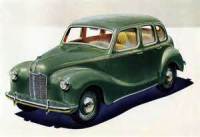
A few months after turning 16, Dad finally gave in to my persistent begging and agreed to help buy a cheap car of my own. Full disclosure: he paid for the awkward-looking, well-worn Austin four-door I’m sure no one else wanted. I promised to pay him back. And I’m pretty sure I did… eventually.
So here I was driving around town without a license, and now with my own car. I had to overcome some embarrassment to drive that ungainly little puddle-jumper. My sad excuse for a vehicle was not cool. But the compelling urge to have ‘wheels’ of any kind triumphed.
The rich kids in our high school were driving around in customized cars and souped up convertibles.  A couple of them accused my car of looking like a shoebox with wheels and windows. Their jokes came too close to the truth. They hurt. One target for their barbs was the car’s signal lights. Well, they were not exactly signal lights. When indicating a left or right turn, instead of flashing lights front and rear like most cars, little orange plastic arms popped out of the doorposts on each side. Yeah, definitely not cool.
  But their catcalls did me a favor, really. I became protective of my unattractive little Austin, and developed a thicker skin… and even an affection for the damn thing, sort of.
My allowance barely covered the cost of gas. Good thing Dad owned a gas station. He gave me a charge account. I paid that off… well, I’m pretty sure about that, too.
When you have a car – even an ugly little oddity like my Austin – it’s amazing how quickly your circle of friends grows. I almost lost track of who was who at first. The biggest challenge was making sure my ‘new best friends’ didn’t elbow out my real best friends. We called our group of real friends our ‘gang’; that term enjoyed a far more innocent connotation back then. Like others who had cars, my real friends always got first dibs on rides home from school or for weekend excursions to our favorite swimming hole.
One friend in our gang was Billy Shields. His father was the town police chief. Sometimes on weekends, I’d pick Billy up at his house en route to our many adventures. Often his dad would be home. The irony of that juxtaposition didn’t register with us at first. Billy’s father never said a word about my weird car or its unlicensed driver. Nice man.
Billy was tall and slender. Not yet 16, he was already over six feet and thus attracted jokes from the rest of our group, all of us shorter and everyone blatantly envious about his impressive altitude. 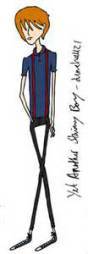 To keep him humble, I suppose, we told Billy he was so skinny that if he turned sideways, he wouldn’t cast a shadow. And long suffering Billy also provoked peals of laughter every time he struggled to tuck his ungainly frame into the front seat my tiny car, his preferred spot.
Our gang’s favorite weekend recreation in summer – when we weren’t at the swimming hole – was driving around downtown trolling for girls. We really went there just to look, at first. Nature made us do it, of course. We were too young to be dating seriously. The girls knew exactly were to position themselves in order to be seen, making sure all of us hormone crazed males couldn’t miss them and their faux indifference to our presence and interest.
At those early stages of the mating game, another irony escaped us – there’d be no room in the cars, especially mine, even if one or more girls responded to our come-on smiles. We simply could not ask any of our friends to hop out of the car to make room.  That would be an unforgivable violation of respected protocol… at least, then. Not all that much later, however, when we had girlfriends, the protocol reversed, of course: single friends were not as welcome as before when girlfriends were in the car, unless they had their own girlfriends with them. Everyone understood.
Finally, along came my 16th birthday. I’d like to claim that a deep-seated respect for certain laws motivated me. The truth is I procrasticated, long enough that my father sat me down one day. His face bore that curiously combined look of affection and no nonsense that always grabbed my attention. In a tone that made clear the matter was not open for discussion, he said:
“Son, you’re 16 now. I want you to go and get your driver’s license.”
“Sure Dad,” I said as he handed me my weekly allowance, plus a few extra dollars I would need to pay for the license.
The next day was Saturday. Government license bureaus were open on Saturdays then. On arrival, I was the only one in the small brightly lit waiting room of the storefront license bureau, except the man behind the counter.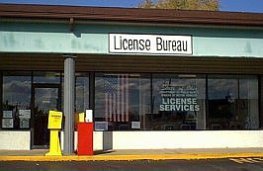
“Can I help you?” he said. The trim middle-aged man looked vaguely familiar. Probably the father or uncle of someone I know from school, I thought. It’s like that in small towns.
The man held out his hand.
“I’m Robert Jensen,” he said.
I shook his hand, proud at being treated like an adult. I introduced myself and said, “I’m here to get my driver’s license.”
“Sure,” Mr. Jensen said. “Here you go.”
He handed over a sheet of paper. It was a questionnaire. Then he gave me a brochure and said, “Read this first and then complete the questionnaire. Bring it back to me with your birth certificate.”
I scanned the three-fold color brochure. The heading said ‘Rules of The Road’. There wasn’t much in it I hadn’t experienced by then or didn’t know about. The questionnaire held no surprises either. The whole process took all of five minutes.
Mr. Jensen looked surprised when I handed back the questionnaire so quickly. He scanned it carefully, nodded and smiled, then held out his hand for my birth certificate. He used a rubber stamp on another piece of paper and handed it to me: my driver’s license.
“That’ll be $2,” he said.
I gave him the two one-dollar bills Dad had given me.
“Congratulations, son,” he said. “You can drive now.”
“Thank you,” I said, feeling relieved to be legal and anxious to leave.
“Would you like me to call someone to pick you up?” he asked.
A bell on the front door jingled and a familiar voice boomed out behind me.
“That won’t be necessary,” the voice said.
“Hi chief,” Mr. Jensen said looking over my shoulder.
I turned. Standing behind me in his on-duty uniform was Billy’s dad.
“What do you mean, Chief?” Mr. Jensen added.
“His car’s parked right outside,” Billy’s dad said.
“What?” Mr. Jensen said firmly, looking sternly at me.
“Yeah,” I said trying to act demure. “I drove here by myself.”
“Give me that license back!” he said firmly. A smile that sparkled from his eyes contradicted the tone in his voice.
The license was in my pocket. I put my hand over it, determined it was going to stay right here.
“Oh, alright, you’re legal,” Mr. Jensen said. “Get the hell outta here!”
As I opened the door to leave I heard over the jingling bell chuckles coming from the two men behind me.
*
“The Driver’s License” is Copyright 2016 By James Osborne. All Rights Reserved
*
Photo/Image Credits
All images courtesy of Google Images: www.salemlicensebureau.com/main/htm; inspire99.cm/drivers-license-test.html; kitfoster.com; gomighty.com/goal/6508/; finalfashion.ca; http://www.curbsideclassic.com; minutemancd.wordpress.com; dreamstime.com/image29955038; nywolf.b.ogspot.com/2012


May 14, 2016
We’re Closing In!

Well folks, we’re on a campaign… hopefully a short one, for now.
My debut novel, The Ultimate Threat, now has 27 reviews on Amazon. That’s very encouraging and gratifying. And I can’t think of a good reason for not trying for 30.
You see, with that many reviews the folks in the book industry begin to take notice, among them people who hold the promotional strings at Amazon. That is, The Ultimate Threat will begin to pop up among books suggested by Amazon to their site browsers. This is a big deal!

Now, math that even I can handle says three more reviews is all that’s needed to close in on that august status. So, I’m making a request of you. Would those who’ve been kind enough to buy a copy, online or in print, consider posting a review? Should you be so inclined, here’s the link: http://amzn.com/1514283948
Amazon allows you to post a review even if you purhased your copy in print or ebook from someone other than Amazon, like Chapters in Canada or Barnes & Noble in the US, or from my punlisher, Endeavour Press Ltd. in London, UK. And your review can be anonymous.
Unsure how to do it? Go to the website using the link above.  Scroll way down until you see the reviews. You’ll see a little box asking if you want to post a review. (Of course you do!) All it takes is two or three sentences, and Voila! you have a review. For inspiration, check out some of the other reviews, even the not-so-flattering ones. Hey, they’re entitled to their opinions (the scoundrels!).
The Next Step
And then we’ll be poised to go for the next plateau. It’s a biggie.
While it’s still too early to get excited about that one, I’m hoping one day to be able to tell you we’ve reached 50 reviews. Wouldn’t that be something? That’s when book editors at places like the New York Times Review of Books, Washington Post and Los Angeles Times start taking notice.
Until a book reaches that milestone it is unlikely to get much widespread notice among the 300,000 books published each year, in English alone, or the six million plus already in print. Nor can we expect The Ultimate Threat to draw the attention of script writers, producers or directors — unless or course you happen to be a famous criminal, a celebrity or a high-profile politician. And I’m not planning on becoming any of these anytime soon. So 50 reviews is nirvana, and that’s when the sky can start to be the limit.

So kind readers, I hope you will consider joining us on this incredible ride by sharing a review, an honest one if you please.
We’re on the verge of the first big milestone and just over halfway to achieving the really big goal. Will you please take a few minutes? Thanks!
Here’s the link again: http://amzn.com/1514283948 (Hey, I used to be in marketing!)
***
Coming Next: Something Really Different
Most of the stories posted on this blog over the years have followed light-hearted themes in one of these genres: humor, romance or adventure.
The next story you will see posted here, in a week or so, will be quite different. It’s called: “That Made It Personal: The Anatomy of a Death Threat”. It’s based on a true story.
Stay tuned!


April 24, 2016
Thank You!

Wow! You put on quite a show for the free ebook giveaway of The Maidstone Conspiracy. Thank you!
We don’t have the exact number yet, but your downloads on Sunday rocketed the novel into 12th place in the Kindle store in the mystery/espionage category in the US and into #2 in Canada (Tales of Intrigue category).
Those are awesome numbers for a one-day-only promotion. And that makes all of you especially awesome!
The Amazon rankings have gone back to the paid rankings, but if you’d like a sneak preview of the novel, here’s the link: http://amzn.com/B016OUM81S
For those who downloaded The Maidstone Conspiracy, may I repeat my request: could you take a few moments to post a review. All it needs is a couple of sentences.
The reason why I’m so persistent with this is that reviews are extremely important to writers. They have a huge influence on sales and on whether future novels get published. As I said earlier, they are, of course, nowhere nearly as important as you, dear readers, but getting close.
Thank you! Have a great day.
JO


It’s Free!!!
Yes, indeed, it really is FREE!
For today (Sunday, April 24) only!
Thanks to my publisher, Solstice Publishing Inc, you can download an ebook copy of The Maidstone Conspiracy, absolutely free!
Here’s the link: http://amzn.com/B016OUM81S
May I ask a favor in return? If you download a copy, I’d appreciate greatly if you could take a few moments to post a review. All it would take is just a few sentences.
Reviews are hugely important to writers… of course, they are nowhere nearly as important as you, dear readers, but getting close.
Thank you! Have a great day.
JO
April 3, 2016
Curling Up On Their First Date

I’m pleased to tell you the story below has just been accepted for an anthology to be published in June. It’s a love story, a very personal one. Hope you like it.
*
He saw her name on the sign-up sheet. His heart raced. It had been like that ever since he’d seen her for the first time.
Hey, maybe this is how I get a date! Greg thought, his excitement growing.
The notice posted on the employee bulletin board invited staff to join the company’s mixed curling league that fall. There it was! Jenny’s name was on the list! He added his, nine names below hers. He was annoyed at himself for not having seen the notice sooner; he could have signed his name closer to hers.
Getting a date with Jenny had been a challenge. The curling league would be a long-range gamble, but he’d been striking out repeatedly even with invitations just for a coffee. The reason she kept giving was that she lived out of town and had to catch a ride home immediately after work. She even declined his numerous offers to drive her.
From the day Jenny had started with the company, Greg hadn’t been able to take his eyes off her lovely face and attractive figure. He would never forget the day. Until then, the 24-year-old had been determined to be a bachelor. He was focused on his career. Now here it was, months later and he was absolutely smitten, becoming more and more enamored with each passing day.  Although office romances were frowned upon at the time, everyone knew. He pretended others in the office didn’t know, and they pretended too.
Greg was a young reporter. He’d begun his career four years earlier at a small newspaper out west, recently acquired by a newspaper chain. He’d been transferred east, to one of the chain’s larger papers where he hoped to further develop his career.
Greg’s boss was the city editor, an egocentric overbearing blowhard with a reputation for being obsessively competitive. To suggest he was feared and hated were understatements. Geoff was a self-admitted, unrepentant bully who’d do almost anything to win.
The day that Geoff noticed Greg’s name on the list of prospective curling league players a thought had struck him. He strode over to Greg’s desk.
Everyone was startled. Never before in recent memory had Geoff deigned to personally visit the desk of a lowly young reporter. 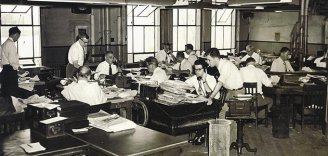 He would beckon and they would come. Period. In fact, he made it clear to all young reporters that in his view they were among the lower forms of life on this planet, allowed to exist only through his personal dispensation.
Holy shit! Greg thought, seeing Geoff heading his way through the corner of his eye. In this era before computers, the deafening sound of clattering typewriters eased noticeably. He knew Geoff’s unusual behavior could only mean that something extremely serious was up, like maybe he was about to be fired for some reason, real or imagined.
What have I done? He thought, crouching low over his typewriter, fear skyrocketing higher by the second. Worse yet, if he was fired he’d no longer get to see Jenny!
“You’re on my curling team!” Geoff announced loudly to the startled young reporter and everyone else in the vast newsroom. He sat at an adjacent reporter’s desk, shooing away the hapless occupant with an indifferent backhanded wave.
“Do you want to be the Skip?” he asked. Then he answered his own question, as usual. “Of course, you do. You’re gonna skip. I don’t mind. We’re gonna have a great team, a fabulous team!”
Geoff promptly stood, a smug look on his face, and strode back to his place at the head of the long rectangular-shaped editing desk. The cacophony of typewriter noise returned to its pre-deadline feverish level. Everyone in the newsroom feigned being busy, pretending not to have witnessed Geoff’s extraordinary side trip.
Curlers and fans will know the position of ‘Skip’ is the head of a four-member curling team, and normally the best player on the team.
Greg was stunned. He was caught by surprise… felt blindsided. He didn’t know how to answer Geoff, or whether to, or what to say. He said nothing. There were other things, or rather another person, preoccupying his every conscious minute.
Months later, when the start of the curling season approached, Greg was delighted to see Jenny’s name appear on a notice listing the six teams that comprised the company’s league. He had hoped to be on the same team as her, but accepted the fact this was far too much to expect. But then Geoff’s proclamation at his desk had made any prospect of him sharing a team with Jenny a nonstarter.
All the teams had titles, chosen according to the last name of the skip, except Geoff’s team, which bore his name. No one was surprised. Greg noted with dismay and an abundance of foreboding that he was listed as the skip. It reminded him that he needed to do something about that.
Greg’s mind was far too consumed with trying to think of a way to get a date with Jenny to concern himself with Geoff’s curling team. Furthermore, Greg had been in and out of the newsroom for several weeks, assigned to an investigative reporting team that, mercifully, had taken him out from under Geoff’s oppressive thumb. But he had also missed desperately seeing Jenny as much.
Meanwhile, Geoff had busied himself bragging to everyone that his team was going to defeat all the other teams. After all, he said, he had a ‘ringer’. Greg was from the west, and Geoff was convinced the best curlers in the country came from the west.
Meanwhile, Greg spent every free moment imagining Jenny’s team playing against him and Geoff’s team. When that happened they’d be on the same sheet of curling ice together. Greg’s excitement grew. He could hardly wait.
Greg daydreamed about standing beside her while their opposing teams played each other. He knew it would be almost impossible for him to be calm while trying to make small talk with her.  What was he going to say? How in the world was he going to keep a conversation going long enough for The Big Question – asking her for a date, again? Each time he tried to think about asking her, his mind went blank with fear. What if he froze while trying to talk with her? What if he became tongue-tied? It would be mortifying. And what if she rebuffed him, like she always did in the office? What then? The thought filled him with dread!
Two weeks before the curling league’s first games, Geoff called a strategy meeting of his other team members. He went on for half an hour about what he thought the team should do to outfox the other teams – not always ethically – and win the trophy. Then he turned to Greg:
“Well, you’re our Skip!” he said. “What do you think of that?”
“Darned if I know, Geoff,” Greg replied. “I’ve never curled a game in my life.”
Geoff’s eyes grew big. They bulged as he stammered and stuttered, emitting a fine spray of saliva, struggling for words. The two other team members ducked the spray while struggling hard to suppress chuckles. They failed. What Greg knew about curling could be engraved on the head of a pin. He had watched part of a game while interviewing a contact for a news story once. At the time, he’d noticed how people threw curling rocks, and had been curious why others kept sweeping the ice. That was it – his entire knowledge of this strange game.
“What the goddamned hell do you mean?” Geoff thundered, regaining his voice. “You told me you knew how to curl! You lied to me, you little son-of-a-bitch!”
“No, Geoff,” Greg said firmly, but with much trepidation. “I said no such thing! And you never asked.”
The first games of the curling league began with Greg assigned to the team’s most junior position, called ‘lead’. He messed up his first attempts at throwing a curling rock, much to Geoff’s rising anger, no doubt further aggravated by Greg being preoccupied. Greg had noticed Jenny was playing lead as well; he could barely take his eyes off her. He’d learned from others this was her first time curling also.
Hey! Greg thought, we have something in common, and it’s something to talk about!
During the game, Geoff kept yelling at him, “Sweep, damn it! Sweep!”
Again and again, Greg’s attention kept straying elsewhere. It was a challenge for him to pull his eyes back from where he kept watching Jenny curl, two sheets of ice away.
Finally, all the teams had finished their games for the evening. Everyone was grouped in a reception area at one end of the building near the exit. Some curlers were leaving. Greg panicked. He’d lost sight of Jenny. She’d been with Elaine, the woman who’d started in the newsroom the same time as Jenny. Then he saw Elaine. They exchanged a few pleasantries while Greg scanned the room. Elaine was tall. Jenny was tiny, difficult to locate in a crowd. She wasn’t to be found.
Finally, discouraged and disappointed, Greg moved toward the exit, fearing she’d left already. He looked out the door into the parking lot. No sign of her. He took one last look over his shoulder before leaving. He caught Elaine’s eye. She tilted her head. Greg looked in that direction. There was Jenny, her back to him, speaking with another man, another single reporter. Sharp pangs of jealousy coursed through his body!
Greg walked as casually as he could manage past the two, happily chatting away, trying to manoeuver subtly but obviously into Jenny’s field of view. It didn’t seem to be working. The spirited conversation continued. He was disappointed, and more jealous than ever. Finally, after what seemed like an eternity, he felt compelled to accept defeat and head for his tiny apartment to commiserate on his lost love interest.
“Oh, there you are!” said a wonderfully familiar voice behind him. He stopped breathing; his heart skipped a beat as he turned. “Elaine said you were looking for me. Well, here I am!”

Jenny promptly accepted his invitation for a coffee and his offer to drive her home. Thereafter he considered their first sort-of date as a double-header, both a coffee and a drive. Jenny would admit later she was secretly hoping Greg would sign up for the curling league.
During the drive to her home in a nearby town, Greg invited Jenny on their first real formal date, to see a newly released movie called ‘The Sound of Music’. She accepted. Greg’s heart soared.
 Finally!
For months he’d been blaming a dumb gaff he’d made the day after they’d met, for failing to get a date with Jenny. She’d been hired as the first female ‘copy boy’ after convincing the managing editor she could do the job as well as any boy. Jenny even offered to work for free the first two weeks to prove it. She was hired.
The two key assignments of ‘copy boys’ were to pick up news stories written by reporters and take them to the city editor and other editors for review, and to haul armloads of newspapers from the pressroom in the basement to the newsroom on the third floor, where they distributed the papers to reporters and editors.

On her second day of work, Jenny had worn a black dress. Tiny pieces of paper, like shredded confetti, had come off the newly printed and trimmed newspapers, and were clinging to her dress.  Trying awkwardly to make conversation Greg had suggested to Jenny, with the best of intentions, that a black dress might not be an appropriate color for the job.
He found out later she’d gone home that evening and worked for hours to clean the specks of paper off her dress, her best dress, and then wore it the next day just to spite him.
Unbeknownst to either, Jenny’s mother Rachael had picked up immediately upon the significance of that emotional reaction to a boy that Jenny had said she ‘disliked a lot’. Despite the insight, Rachael was surprised at how quickly the relationship between her eldest daughter and this still-unknown young man had blossomed.
A few weeks later, Jenny invited Greg for supper one Sunday to meet her family. She thought it was a good idea for her mom and her six siblings to get to know him.
You see, by then Jenny had decided she was going to marry Greg. It’s just that, well, Jenny’s mother didn’t know it yet, and neither did Greg.
*
“Curling Up On Their First Date” is Copyright 2016 By James Osborne. All Rights Reserved
*
Credits: All photos and images courtesy of Google Images.
*
Stories Behind The Story
During a recent family gathering for Easter our eldest daughter asked me, “Dad, why don’t you write a story about how you and Mom met?” The question surprised me. I’d published one on this blog in 2013. I took another look. Much was missing from that one. It’s a more complete story now.
A few days later my publisher, Solstice Publishing Inc., invited submissions for a new anthology, to be called “Summer Lovin'”. I sent them the fictional version of ‘Curling Up On their First Date’ that’s posted here. Then I learned stories were to be 5,000 to 10,000 words. Mine was 2,100. Oops; should have checked. I sent an apology to the Editor-In-Chief for wasting her time, suggesting she ignore the story. I added a hopeful note, “It’s your call.” She replied: “Yes, it is my call. I really like the story. A contract is attached.” I chuckled. How about that!


There are two more behind the story below. But first, I’...

There are two more behind the story below. But first, I’m pleased to tell you this one has just been accepted for an anthology to be published in June. It’s a love story, a very personal one. Hope you like it. It’s called:
Curling Up On Their First Date
He saw her name on the sign-up sheet. His heart raced. It had been like that ever since he’d seen her for the first time.
Hey, maybe this is how I get a date! Greg thought, his excitement growing.
The notice posted on the employee bulletin board invited staff to join the company’s mixed curling league that fall. There it was! Jenny’s name was on the list! He added his, nine names below hers. He was annoyed at himself for not having seen the notice sooner; he could have signed his name closer to hers.
Getting a date with Jenny had been a challenge. The curling league would be a long-range gamble, but he’d been striking out repeatedly even with invitations just for a coffee. The reason she kept giving was that she lived out of town and had to catch a ride home immediately after work. She even declined his numerous offers to drive her.
From the day Jenny had started with the company, Greg hadn’t been able to take his eyes off her lovely face and attractive figure. He would never forget the day. Until then, the 24-year-old had been determined to be a bachelor. He was focused on his career. Now here it was, months later and he was absolutely smitten, becoming more and more enamored with each passing day. Although office romances were frowned upon at the time, everyone knew. He pretended others in the office didn’t know, and they pretended too.
Greg was a young reporter. He’d begun his career four years earlier at a small newspaper out west, recently acquired by a newspaper chain. He’d been transferred east, to one of the chain’s larger papers where he hoped to further develop his career.
Greg’s boss was the city editor, an egocentric overbearing blowhard with a reputation for being obsessively competitive. To suggest he was feared and hated were understatements. Geoff was a self-admitted, unrepentant bully who’d do almost anything to win.
The day that Geoff noticed Greg’s name on the list of prospective curling league players a thought had struck him. He strode over to Greg’s desk.
Everyone was startled. Never before in recent memory had Geoff deigned to personally visit the desk of a lowly young reporter. He would beckon and they would come. Period. In fact, he made it clear to all young reporters that in his view they were among the lower forms of life on this planet, allowed to exist only through his personal dispensation.
Holy shit! Greg thought, seeing Geoff heading his way through the corner of his eye. In this era before computers, the deafening sound of clattering typewriters eased noticeably. He knew Geoff’s unusual behavior could only mean that something extremely serious was up, like maybe he was about to be fired for some reason, real or imagined.
What have I done? He thought, crouching low over his typewriter, fear skyrocketing higher by the second. Worse yet, if he was fired he’d no longer get to see Jenny!
“You’re on my curling team!” Geoff announced loudly to the startled young reporter and everyone else in the vast newsroom. He sat at an adjacent reporter’s desk, shooing away the hapless occupant with an indifferent backhanded wave.
“Do you want to be the Skip?” he asked. Then he answered his own question, as usual. “Of course, you do. You’re gonna skip. I don’t mind. We’re gonna have a great team, a fabulous team!”
Geoff promptly stood, a smug look on his face, and strode back to his place at the head of the long rectangular-shaped editing desk. The cacophony of typewriter noise returned to its pre-deadline feverish level. Everyone in the newsroom feigned being busy, pretending not to have witnessed Geoff’s extraordinary side trip.
Curlers and fans will know the position of ‘Skip’ is the head of a four-member curling team, and normally the best player on the team.
Greg was stunned. He was caught by surprise… felt blindsided. He didn’t know how to answer Geoff, or whether to, or what to say. He said nothing. There were other things, or rather another person, preoccupying his every conscious minute.
Months later, when the start of the curling season approached, Greg was delighted to see Jenny’s name appear on a notice listing the six teams that comprised the company’s league. He had hoped to be on the same team as her, but accepted the fact this was far too much to expect. But then Geoff’s proclamation at his desk had made any prospect of him sharing a team with Jenny a nonstarter.
All the teams had titles, chosen according to the last name of the skip, except Geoff’s team, which bore his name. No one was surprised. Greg noted with dismay and an abundance of foreboding that he was listed as the skip. It reminded him that he needed to do something about that.
Greg’s mind was far too consumed with trying to think of a way to get a date with Jenny to concern himself with Geoff’s curling team. Furthermore, Greg had been in and out of the newsroom for several weeks, assigned to an investigative reporting team that, mercifully, had taken him out from under Geoff’s oppressive thumb. But he had also missed desperately seeing Jenny as much.
Meanwhile, Geoff had busied himself bragging to everyone that his team was going to defeat all the other teams. After all, he said, he had a ‘ringer’. Greg was from the west, and Geoff was convinced the best curlers in the country came from the west.
Meanwhile, Greg spent every free moment imagining Jenny’s team playing against him and Geoff’s team. When that happened they’d be on the same sheet of curling ice together. Greg’s excitement grew. He could hardly wait.
Greg daydreamed about standing beside her while their opposing teams played each other. He knew it would be almost impossible for him to be calm while trying to make small talk with her. What was he going to say? How in the world was he going to keep a conversation going long enough for The Big Question – asking her for a date, again? Each time he tried to think about asking her, his mind went blank with fear. What if he froze while trying to talk with her? What if he became tongue-tied? It would be mortifying. And what if she rebuffed him, like she always did in the office? What then? The thought filled him with dread!
Two weeks before the curling league’s first games, Geoff called a strategy meeting of his other team members. He went on for half an hour about what he thought the team should do to outfox the other teams – not always ethically – and win the trophy. Then he turned to Greg:
“Well, you’re our Skip!” he said. “What do you think of that?”
“Darned if I know, Geoff,” Greg replied. “I’ve never curled a game in my life.”
Geoff’s eyes grew big. They bulged as he stammered and stuttered, emitting a fine spray of saliva, struggling for words. The two other team members ducked the spray while struggling hard to suppress chuckles. They failed. What Greg knew about curling could be engraved on the head of a pin. He had watched part of a game while interviewing a contact for a news story once. At the time, he’d noticed how people threw curling rocks, and had been curious why others kept sweeping the ice. That was it – his entire knowledge of this strange game.
“What the goddamned hell do you mean?” Geoff thundered, regaining his voice. “You told me you knew how to curl! You lied to me, you little son-of-a-bitch!”
“No, Geoff,” Greg said firmly, but with much trepidation. “I said no such thing! And you never asked.”
The first games of the curling league began with Greg assigned to the team’s most junior position, called ‘lead’. He messed up his first attempts at throwing a curling rock, much to Geoff’s rising anger, no doubt further aggravated by Greg being preoccupied. Greg had noticed Jenny was playing lead as well; he could barely take his eyes off her. He’d learned from others this was her first time curling also.
Hey! Greg thought, we have something in common, and it’s something to talk about!
During the game, Geoff kept yelling at him, “Sweep, damn it! Sweep!”
Again and again, Greg’s attention kept straying elsewhere. It was a challenge for him to pull his eyes back from where he kept watching Jenny curl, two sheets of ice away.
Finally, all the teams had finished their games for the evening. Everyone was grouped in a reception area at one end of the building near the exit. Some curlers were leaving. Greg panicked. He’d lost sight of Jenny. She’d been with Elaine, the woman who’d started in the newsroom the same time as Jenny. Then he saw Elaine. They exchanged a few pleasantries while Greg scanned the room. Elaine was tall. Jenny was tiny, difficult to locate in a crowd. She wasn’t to be found.
Finally, discouraged and disappointed, Greg moved toward the exit, fearing she’d left already. He looked out the door into the parking lot. No sign of her. He took one last look over his shoulder before leaving. He caught Elaine’s eye. She tilted her head. Greg looked in that direction. There was Jenny, her back to him, speaking with another man, another single reporter. Sharp pangs of jealousy coursed through his body!
Greg walked as casually as he could manage past the two, happily chatting away, trying to manoeuver subtly but obviously into Jenny’s field of view. It didn’t seem to be working. The spirited conversation continued. He was disappointed, and more jealous than ever. Finally, after what seemed like an eternity, he felt compelled to accept defeat and head for his tiny apartment to commiserate on his lost love interest.
“Oh, there you are!” said a wonderfully familiar voice behind him. He stopped breathing; his heart skipped a beat as he turned. “Elaine said you were looking for me. Well, here I am!”
Jenny promptly accepted his invitation for a coffee and his offer to drive her home. Thereafter he considered their first sort-of date as a double-header, both a coffee and a drive. Jenny would admit later she was secretly hoping Greg would sign up for the curling league.
During the drive to her home in a nearby town, Greg invited Jenny on their first real formal date, to see a newly released movie called ‘The Sound of Music’. She accepted. Greg’s heart soared.
Finally!
For months he’d been blaming a dumb gaff he’d made the day after they’d met, for failing to get a date with Jenny. She’d been hired as the first female ‘copy boy’ after convincing the managing editor she could do the job as well as any boy. Jenny even offered to work for free the first two weeks to prove it. She was hired.
The two key assignments of ‘copy boys’ were to pick up news stories written by reporters and take them to the city editor and other editors for review, and to haul armloads of newspapers from the pressroom in the basement to the newsroom on the third floor, where they distributed the papers to reporters and editors.
On her second day of work, Jenny had worn a black dress. Tiny pieces of paper, like shredded confetti, had come off the newly printed and trimmed newspapers, and were clinging to her dress. Trying awkwardly to make conversation Greg had suggested to Jenny, with the best of intentions, that a black dress might not be an appropriate color for the job.
He found out later she’d gone home that evening and worked for hours to clean the specks of paper off her dress, her best dress, and then wore it the next day just to spite him.
Unbeknownst to either, Jenny’s mother Rachael had picked up immediately upon the significance of that emotional reaction to a boy that Jenny had said she ‘disliked a lot’. Despite the insight, Rachael was surprised at how quickly the relationship between her eldest daughter and this still-unknown young man had blossomed.
A few weeks later, Jenny invited Greg for supper one Sunday to meet her family. She thought it was a good idea for her mom and her six siblings to get to know him.
You see, by then Jenny had decided she was going to marry Greg. It’s just that, well, Jenny’s mother didn’t know it yet, and neither did Greg.
*
“Curling Up On Their First Date” is Copyright 2016 By James Osborne. All Rights Reserved
*
Credits: All photos and images courtesy of Google Images.
*
Stories Behind The Story
During a recent family gathering for Easter our eldest daughter asked me, “Dad, why don’t you write a story about how you and Mom met?” The question surprised me. I’d published one on this blog in 2013. I took another look. Much was missing from that one. It’s a more complete story now.
A few days later my publisher, Solstice Publishing Inc., invited submissions for a new anthology, to be called “Summer Lovin'”. I sent them the fictional version of ‘Curling Up On their First Date’ that’s posted here. Then I learned stories were to be 5,000 to 10,000 words. Mine was 2,100. Oops; should have checked. I sent an apology to the Editor-In-Chief for wasting her time, suggesting she ignore the story. I added a hopeful note, “It’s your call.” She replied: “Yes, it is my call. I really like the story. A contract is attached.” I chuckled. How about that!