K.E. Garland's Blog, page 28
May 24, 2021
Monday Notes: 3 Reasons I Didn’t Watch the Derek Chauvin Trial
As I write this, it is Day 10 of the Derek Chauvin trial, I haven’t watched any of it, and I don’t feel guilty, either. Here’s why.
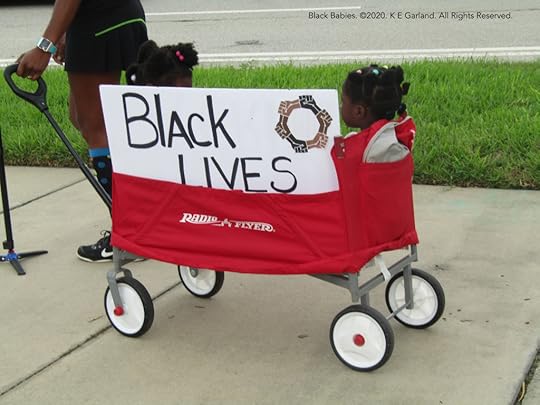 @kwotedbykegarland
#1 Racial trauma: “Racial trauma refers to the mental and emotional injury caused by encounters with racial bias and crimes.” It can occur directly, such as when people experience racism and microaggressions at the workplace, or it can occur indirectly, such as watching a white person repeatedly be acquitted for murdering a black person during public trials (e.g., George Zimmerman, Darren Wilson, Timothy Loehmann). Racial trauma is real, and I decided ahead of time I had no intention of putting myself through it again.
#2 Who’s being tried? Every time there’s one of these public court cases, it seems as if the unarmed, deceased person is on trial, not the person who committed the crime. With George Zimmerman, there was a discussion of how menacing Trayvon Martin looked with his hoodie, and even though Zimmerman stalked him, there was confusion about who was standing who’s ground. With Darren Wilson, there was talk of Michael Brown selling illegal drugs. Even though I haven’t watched the Chauvin case unfold, I’ve been in the room when newscasters have recapped the day’s events. Apparently, there was a conversation about the drugs found in George Floyd’s body as a rationale for why he died. I can’t. It seems ridiculous to go through these theatrics when the world literally watched how Floyd died.
#3 The outcome: Again, I’m writing this on April 9th, and I don’t know what the outcome is going to be. This makes me afraid and distraught. I fear what will happen should the American court system follow its own historical precedence, which is to acquit the perpetrator (i.e., Roy Bryant and J.W. Milam). Will there be riots if Chauvin is acquitted? Will it be American “business as usual?” Have vaccinated people gone on about their lives with no care for justice and its repercussions? I’m distraught that I even have these thoughts. The fact that I cannot trust the U.S. justice system to be just is disturbing. What does it mean for all of us, who collectively witnessed a murder, where the murderer may not be penalized? I promise you this is a thought that some Black people have had. We are all holding our collective breaths, because we understand what could happen. Conversely, if Chauvin is convicted, what does it mean that the world had to witness one man’s murder just for there to be justice?
All this upsets me, and I can’t expend my emotions in a daily frenzy, worrying about what it all means.
Tomorrow, May 25th is the one-year anniversary of George Floyd’s murder. I’m glad to see that Derek Chauvin was convicted on all three counts: second-degree unintentional murder, third-degree murder and second-degree manslaughter. I hope this means we’re turning over a new leaf in the United States, and even though this is an inspirational blog, I’m sad to say I’m not hopeful.


May 19, 2021
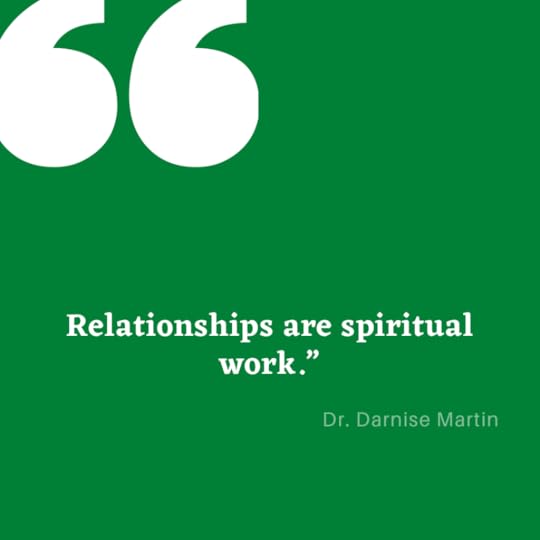 Dr. Darnise Martin
May 17, 2021
Writer’s Workshop: Improve FLOW by Removing 3 Words
I love writing that flows. When I read a book, I like to feel as if I’m riding a wave or listening to a smooth melody where the notes come together in concert to create beautiful harmony. When writing flows, you don’t want to abandon it. In fact, you may re-read sentences just to appreciate the beauty.
How do writers combine words to create flow? One way is to follow a specific rule. Now, I know in the last Writer’s Workshop I told you to dismiss rules, but I should’ve added the word sometimes.
So, here’s the advice: Remove these three words as much as possible: that, adverbs ending in -ly, and the.
THAT is considered a filler word, meaning it just adds space on the page. As much as possible go through your writing and try to delete “that.” It will make your writing and message much cleaner. Here’s an example:
She had made Daddy promise that he would come straight home.
*She had made Daddy promise he would come straight home.
Do you see what I mean? The word “that” doesn’t add more meaning to this sentence. It just increases your word count. This isn’t to say you never need “that” in writing. Sometimes there’s no way around it. But if you can do without “that,” remove it.
ADVERBS ending in -ly can also be cumbersome. The rule here is to replace -ly words (i.e., quickly, smoothly, etc.) with actual descriptions of what you’re talking about. Here’s an example of replacing adverbs.
“Well, I guess I’ll sit out here and keep you company. You sure look pretty.” He smiled sheepishly and nodded approvingly.
*“Well, I guess I’ll sit out here and keep you company. You sure look pretty.” He smiled and nodded at approval of my dress.
Sheepishly and approvingly drag the sentence along. Here you have two choices: remove the adverb altogether or remove the -ly and add descriptions instead as this author did.
THE is a little trickier, which is why I’ve left it for the end. Although it is natural to use “the” when speaking, a lot of times this small word can bog down your writing. “The” is not always necessary. Don’t believe me? Go check out your favorite piece of writing. I bet “the” is used sparingly. Here’s an example of what I mean:
We cut out the clothing we thought would look good on me.
**We cut out clothing we thought would look good on me.
Here, “the” isn’t needed. If you can understand the sentence without using “the,” then ditch it.
I hope these three tips help to improve your writing, but I suggest trying one rule out at a time and only after you’ve written a draft. Editing and writing at the same time can oftentimes destroy your flow.
*The first two examples come from Mbinguni’s Looking for Hope, which I also recommend reading.
**The third example is from Sister Souljah’s A Deeper Love Inside.
Both were written perfectly in their books. I added the fake, bold first draft example.
If you’re interested in hearing more about my personal writing process and flow, then my talk with the Pasadena City College English Department may interest you: PCC Visiting Writer K. E. Garland.
Writer's Workshop: VoiceMarch 22, 2021Writer's Workshop: IntroductionsJanuary 25, 2021Writer's Workshop: Studying the CraftFebruary 22, 2021May 10, 2021
Monday Notes: Navigating the Change
Hey good people! I took a thirty-day break from this site because I’ve been working on a new one. And, regardless of what people think of my abilities, I can only do one thing at a time 
The new site is called Navigating the Change, and just like it sounds, it’s about all things menopausal.
A few months ago, you may remember me revealing that I was having some menopause “issues.” I divulged that info in a post called “Control in the Midst of Too Much.” Well, that was September. Since then, my life got hella interesting. And by interesting, I mean awful. I was ill-prepared for the turn my body took without my permission.
I spoke to every woman I was close to about this issue. I was raised in a family of older women, so I silently harbored anger for not one soul mentioning these bodily changes to me. In between, I read and researched all types of things to understand what was happening and how I could learn to function.
It was a lot.
Then, I got mad all over again. Menopause is a huge shift in women’s lives that can last anywhere from five to ten years. Did you hear me? FIVE to TEN years! That’s a lot of years to be sweaty and irritable, and as I read and experienced, there’s more to it than being sweaty and irritable. In fact, some people may never experience that, while others have all of the things.
Either way, I launched a new site last week for all of the above reasons. Navigating the Change will include the following:
stories and poetry from women who have experienced menopause at any phase,photographs of real women thirty-five and older who are fearlessly being themselves (because older celebrities are not the only ones who can look fantabulous),information from doctors,information from wellness experts,workout videos specifically for women over forty-five and specifically for Navigating the Change,low-sugar, low-salt, and low-carb recipes from food bloggers and chefs,product reviews so we know what works and how well, anda monthly feature from yours truly called Diary of a Menopausal Woman.If this is something that sounds interesting to you, then subscribe so you can receive updates that will post 2-3 times per week. Read what you want and discard the rest.
If this is something you think would interest someone else, then please pass the information along.
If you have something to offer or you want to partner because you have a business that supports one of the goals I’ve mentioned (e.g., a story, poem, photo, doc/well expert info, recipe, or product review), then Submit to Navigating the Change so we can collaborate.
If none of this sounds good, then that’s cool, too lol That’s one of many reasons I thought a separate blog might be beneficial.
Just to be clear, I’ll still be blogging here. The new site is more nuanced, themed, and collaborative.
Follow Navigating the Change across all platforms (except you know where because of you know what):
WordPress: navigatingthechange.comIG: @navigatingthechangeTwitter: @navthechangeMay 3, 2021
Monday Notes: Parenting from the Heart
When my youngest daughter, Desi was about nine years old, I volunteered to read How the Grinch Stole Christmas to her third-grade class.
That afternoon, I thought her teacher was going to introduce me. She didn’t. Instead, she pointed toward the chair and asked the students to sit “crisscross applesauce” and listen to me.
I sat. I read. I left.
Desi was a bit miffed.
“How come you didn’t say you were my mom?” she asked later that night.
“So, you wanted me to say, ‘Hi everyone! I’m Desi’s moooom?’” I exaggerated.
“Well, not like that. Maybe just tell them in a regular voice.”
Immediately, I knew what happened. It wasn’t just her teacher’s fault that no one knew who I was. It was mine. My oldest daughter, Kesi would’ve never wanted her friends to know I was her mom coming to read to the class. But Desi was different. She always seemed outwardly proud of me and whoever she saw me as. She wanted people to know I was her mom. I should’ve recognized this.
That’s what I think parenting from the heart, a phrase I read on Talking All that Jaz, means. One way to parent from the heart is to see your children for who they are.
It took a long time for me to get that. Even now, sometimes Desi will stop me and say, “I’m not my sister,” and I have to acknowledge that and readjust my conversation with her.
Parenting from the heart also requires not only recognizing your child has a distinct personality, but also allowing them to be their own person with the type of guidance they need, not the type of general guidance found in parenting books or the type of guidance passed down from your great-great grandmother (who didn’t grow up with cellphones and other distractions). I’d also like to add that you can’t be the parent to your child that you needed. You have to be the parent they need. And that requires seeing them for who they are.
For example, Desi is a highly intelligent, free-spirited, eccentric person. Though she was accepted and primed to leave the nest, she decided not to attend college. Dwight and I understood we shouldn’t force her to go and we shouldn’t put the same expectations on her coming-of-age process that were put on us. It’s a different time period and she’s a different person. Instead, she is free to explore her life and determine who she wants to be as an adult, not who we want her to be. Her sister has a similar freedom, but the process looks different. They both know we love them and they have our full support.
Parenting from the heart can be liberating. In my opinion, it’s a softer approach that frees both the parent and the child from outside influences. There seems to be a deeper connection that feels like I see you and I trust you to create your own path, instead of I made you and you should follow this pre-made journey because I’ve been here longer and know what’s best. The latter seems a bit arrogant.
Finally, parenting from the heart requires strength because watching children go left when maybe it was easier to go right can be scary. But I think it’s worth it. I’m no psychologist, but I suspect that people who learn it’s okay to make a so-called mistake when they’re younger, grow to be adults who live fearless lives. Let me know if you have a citation for that.
What do you think it means to parent from the heart, instead of the ego? Let me know in the comments.
And if you’re in the States, Happy (almost) Mother’s Day! May you always have heart-centered interactions with your mother or child 
April 12, 2021
March 22, 2021
Writer’s Workshop: Voice
My first blog post was “Why I Refuse to Judge Any Mother.” In it, I describe my observations of a friend’s mother, juxtapose her mother with how I felt about my own mother, and then explain how I hope my own daughters will see me as a mother—when they eventually begin to reflect.
Out of all the texts I received, I appreciated my journalist friend’s the most.
“Kathy, this is good,” she said. “You have what they call voice. In grad school, they used to always talk about how you should have voice in writing. You have it.”
In literature, “voice” refers to the rhetorical mixture of vocabulary, tone, point of view, and syntax that makes phrases, sentences, and paragraphs flow in a particular manner.
https://www.masterclass.com/articles/how-to-find-your-writing-voice
Whenever I write, I want the reader to experience exactly what I was thinking or feeling.
But how do I do this?
Brace yourself.
I may tell you something that goes against what you’ve been told before:
I pretty much write how I talk and think. Even that last sentence is an example. I promise you a grammar program will tell you to remove “pretty much” because it’s unnecessary, but I left it in because that’s how I talk and think. If we were together, and you asked me how do I write? I’d say I pretty much write how I talk and think.
What is also helpful is my brain’s duality. I was raised in a family that valued so-called standard English, so I grew up learning the syntax appropriate for news personalities and job interviews. However, I was also raised on the west side of Chicago, which by all accounts is the hood. I quickly learned how to switch the verb “to be” around or to insert a cuss word so as not to be accused of talking like a White girl. I’m not special. Many Black people know how to codeswitch in this way.
What this means for my writing is I can create a sentence that appeals to White folks and Black people…or should I say Black folks and White people. You see how just interchanging those two words—folks and people—shifts meaning and tone?
I also want my writing to be accessible. I want to have a conversation with you. In order to do that, I have to write how I would talk if we were together having a latte, green tea, or Caipirinha. So, sometimes I stop, and address you directly. Maybe I’ll add a question, like what do ya’ll think to invite you into this conversation we’re having, while also throwing in the Southern dialect I’ve acquired from living in Florida for over two decades.
Most of my in-real-life friends who read my blog say, “Girl, I could hear you saying…” And that’s what I want.
To reiterate, if you’re concerned with developing voice in writing, then you have to determine what “vocabulary, tone, point of view, and syntax” you want to use and why. Only you know what that is.
And remember, voice, kind of like personality, cannot be imitated because it’s something only you possess. (Full disclosure: I sat here for five minutes flip-flopping between the word possess and own).
Do you worry about voice in writing? Does it matter?
Writer's Workshop: IntroductionsJanuary 25, 2021Journey to the Center of My Heart: Trusting My Inner VoiceSeptember 15, 2017Monday Notes: 5 Ways to Become a WriterAugust 31, 2020March 17, 2021
March 15, 2021
Monday Notes: Lesson Learned from Publishing an Academic Book
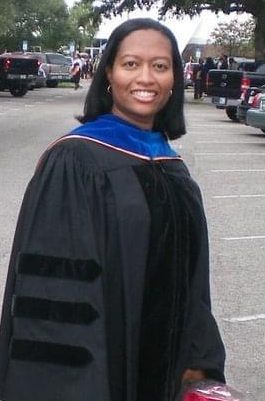
Ever since I graduated with a PhD in August of 2010, I felt like a failure. This isn’t to say I awoke every day and beat myself up about my lot in life, but rather, every time the academic year would begin, I’d be in a physical and psychological slump. It was an energy thing.
It began when I attained my first job at Georgia College and State University in Middle Georgia. Though the actual job was ideal, the location and circumstances were not. Middle Georgia is racist, both explicitly and implicitly; living there was like a step back into the 1950s or 1850s; take your pick. Also, my degreed and experienced husband was never able to get a job there, so we agreed to live apart and see each other on the weekends.
Two years later, a colleague sent me a temporary job at Florida State University, which I applied and interviewed for and took. They “loved me so much” there that they eventually hired me for what I thought was my dream job, a tenure track, assistant professor position in English Education. The problem was again two-fold: institutionalized racism existed and I’d chosen to commute 360 miles so that our family could live together.
Some people can deal with blatant institutionalized racism; I am not one of them. Three years later, I’d decided all of it was too much. I accepted a job elsewhere making twenty thousand dollars less and teaching more classes that weren’t in my niche. The first day of orientation I sat in the bathroom stall and cried. Then, I went to take my ID photo. To this day, my picture shows me as a red, puffy-eyed, hot-ass mess.
I’d failed. But I kept doing all things academic.
At first, I presented at conferences and published in academic journals just in case. I knew I’d need to show my scholarly worthiness just in case I wanted to attain another job at a different type of institution.
“Are you sure you’re done with academia?” one of my colleagues emailed after asking if I wanted to be nominated for some national platform situation.
He and others ignored my answer and continued to co-write and push me on the path we’d all begun.
I published at least once a year and eventually became the chair of a special interest group.
You may be wondering, like my cousin, how someone like me could feel like a failure. Let me tell you. It’s easy to do when you have a strict plan for your life.
When I graduated in 2010, life was laid out. I would find a job as an English Education professor at Prestigious X University. Five years later, I’d be associate professor. Five years after that, full professor. All the while, I’d be publishing my ass off and presenting research all over the world. It’s easy to let yourself down when you’ve got your whole life figured out.
So, each year I wallowed in a slump, while preparing for a just in case situation.
Life became clearer around November 2018. That’s when I met three ladies at a conference in Houston. We each presented our work, which was related to sports media, critical literacy, and diversity.
Afterwards, one of the women said, “We should write something together.”
In January 2019, Lexington Books emailed me with interest in turning my presentation into a book idea. I want to repeat that. I didn’t seek them out. They emailed me. Consequently, I suggested to the other three women that this be the “something” we write together: a book. That led to us creating a call and inviting others to join us.
This month, our book, Stories of Sport: Critical Literacy in Media Production, Consumption, and Dissemination will be released.
Here’s what I’ve learned: Everything is made up, and we can do ourselves a disservice living within made-up rules. Part of the reason I felt like a failure was because I couldn’t see any other way to be a scholar other than what I was told and shown. Those made-up rules clouded my judgment and created my own idea of so-called failure.
Everything is made up, and we can do ourselves a disservice living within made-up rules.
kegarland
I didn’t need to work at X University to attain a book deal. I didn’t need to follow a specific trajectory to publish as a scholar. All I needed was to trust my path and do what I enjoyed…writing.
Oh, and I secured tenure at my current institution. It turns out that’s not as important as I thought, either.
 Purchase Stories of Sports: Critical Literacy in Media Production, Consumption, and Dissemination and use the code LEX30AUTH21 to receive 30% off.
 quoted by