Geraldine DeRuiter's Blog, page 3
February 22, 2022
Murderville is Ridiculous. I Can’t Stop Watching.
Trying to fit Murderville – the new streaming reality series on Netflix – into a neat box is not an easy task. It’s part police comedy, part low-stakes improv, a sort of Who’s Line Is It, Anyway? meets Police Squad (and my apologies to those of you too young to understand either of those references. My bones, dear children, they creak). At times, it feels distinctly modern: everyone is so desperate for something new to binge, that something this weird and half-assed could only exist in the status quo. Other times, Murderville feels like an odd throwback – the imperfections harkening to a time when television programming was commercial-laden and grainy, and the crew was proudly, visibly intoxicated. But how to classify it, and the feelings of nostalgia it brings up, are all ancillary to the most important part about Murderville: it is exceedingly, astoundingly stupid.
And I cannot stop watching.
Each episode features a celebrity guest (a collection of stars so random, I’m assuming they just owed someone on the crew a favor) tasked with solving a murder alongside hapless, gravel-voiced homicide detective Terry Seattle, played by a mustachioed Will Arnett.
“My name’s Terry Seattle,” he growls. “And no, I’ve never been.”
Seattle has all the hallmarks of a grizzled detective about to hit rock bottom: he’s haunted by ex-partner’s Lori’s unsolved murder, (her official police photo – of a smiling Jennifer Aniston – looks down at him, and the skeleton of her rabbit, which Seattle let die of neglect, still sits in a cage in the corner of their office); his soon-to-be-ex-wife is also his chief; and he keeps getting paired with a rotating cast of rookies as they attempt to solve a string of grisly murders. It’s a send-up of every detective show cliché rolled up together, as Arnett chews the scenery and flails around like there’s a wasp in his mismatched suit. He contaminates every crime scene and shouts non-sensical insults at the chief’s new romantic interest. It’s deeply uncomfortable and ridiculous and you find your spine contracting with secondhand embarrassment.
It’s also sort of great, especially in light of *flutters hands* well, everything.

Because if you’ve been a person on the planet over the last few years, you’ve probably noticed a pervasive sense of doom and foreboding following you everywhere. Every now and then we think that things are starting to get better, but then a new variant pops up, and it’s named after a Greek letter, which is alarming because there are 24 of those. All of this makes it extremely difficult to watch to television, especially for those of us who, on a good day, already feel like we have ants crawling all over us. Which is unfortunate, because watching television in the safety of your home is one of the few things that won’t infect you with the latest Greek letter.
I’ve tried watching old sitcoms as a form of escapism, but they felt frustratingly out of touch. I found myself ominously muttering things like “Just you wait,” to characters on programming from the mid-2000s, like I was some sort of plotting archvillain (which, hey … if the monocle fits). I watched an old episode of Community where someone mentioned Obama and nearly threw the remote at the TV. We didn’t how good we had it, wandering around outdoors and hugging people.
Current programming wasn’t much better. It just led to a bunch of weird questions. Did the pandemic happen in this reality? Did it end sooner? Are any of the characters going to mention it? Shouldn’t they be wearing masks?
But Murderville, somehow, manages to avoid feeling painfully oblivious – even though so many of its players are. Perhaps because there’s nothing about the show that even pretends to have an air of verisimilitude. Everything is clearly a soundstage. The sets are so flimsy you can practically see the particle board wavering. The actors all seem to be channeling different iterations of Nicolas Cage. One of the suspects is definitely drunk. Suspension of disbelief, for a show this absurd, has to be entirely willing. And for the willing, it also becomes therapeutic. Because outside of the confines of the Murderville set, we all know the pandemic still looms. But right now, the most pressing issue is still who drowned the health inspector in a bowl of soup?

Because when things are bad, what’s better than really bad television? Watching Murderville, I don’t think about the pandemic. Hell, I don’t think at all.
Sometimes the guest star catches the killer. Sometimes they get it dead wrong. Sometimes someone starts cracking up in spite of themselves. Occasionally, it’s the corpse. (These bloopers and mishaps bring an authenticity to a show that seems to revels in its own fakeness. Every unscripted laugh is like the Kool-Aid man crashing through the fourth wall.) That’s the other delightful thing about Murderville: it’s a show about murders that somehow isn’t about death. Every corpse is undoubtedly alive, and often struggling not to laugh as they are gently poked and prodded by Arnett and his partner. It’s weirdly uplifting, to laugh in the face of death like this, when it’s been on our minds so steadily these last few years.
The clues laid out in each episode of Murderville range from painfully obvious to fleetingly obscure. (Those of us who have watched too many police procedurals or who are even loosely familiar with the legal system may be too jaded to play along at home. I couldn’t fathom how the suspects weren’t lying to police or how evidence wasn’t considered circumstantial, at best.) Those who wish to avoid copaganda have little to fear: there’s nothing about the show that bears any semblance to actual police work, much less glorifies it. It’s more like terrible murder-dinner theater, playing out on your TV, with about the same level of consequences. In the thirty odd minutes in between, you get to watch celebrities wear terrible wigs, stir soup with their arms, and pretend to be the President of Finland.
What’s most significant about this show is how insignificant it is. It’s barely above Cop Rock. It requires no mental energy to consume it. It’s insipid, and silly, and occasionally gross. And I can’t stop watching.
The post Murderville is Ridiculous. I Can’t Stop Watching. appeared first on The Everywhereist.


December 28, 2021
The Joy of Missing Out
A funny and unexpected thing happened, once I was through being sad about missing the holidays with my family.
The admission comes with a hefty dose of guilt. But after the downheartedness started to wane, we sort of … had an lovely time?
I know, I know. Look, I sort of feel like a jerk typing it out. Everyone knows that as an adult, the holidays are about spending time with your family and feeling guilty. You aren’t supposed to have fun. You’re supposed to quietly navigate the minefield of familial drama that began decades before you were born.
Okay, fine. I’m being a little glib. Because there is a lot of fun stuff, like watching the younger generations open presents and hearing how school is going and sneaking sweets with them because they are the only ones who truly appreciate sugar the way I do. I even sort of wanted to hear my mom and her sister have the same screaming fights (“We’re not fighting, darling, we’re Italian, that’s just how we talk.” – my mom) they’ve been having since 1973. It sort of stabs at my heart hat I didn’t get to do that. Truly. (Shoves stale Christmas cookie into her mouth.) IT WAS AWFUL.
But also: it was not that awful?
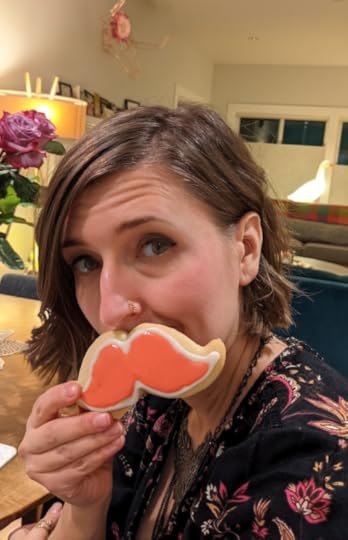
I’m only making mustache cookies from now on for Christmas.
These past two years have been all about missing out on so many things: birthdays and weddings and even funerals. The FOMO has been strong. Hell, it’s not even the fear of missing out. It’s the acceptance of it. That life has changed, and that there are things we just wouldn’t get to do. Your heart starts to scar over after a while. It barely hurts anymore. Or maybe it does, and you’re just too tired to feel it. But what I hadn’t experienced in a long time was JOMO – the joy of missing out. Of being able to appreciate sitting on the couch in my bathrobe, staring at the snow. That only comes from making a choice (logical though it was) to stay home.
It helps that there’s light at the end of the tunnel. This variant, while highly contagious, seems less devastating (crosses fingers, knocks on wood, throws salt over shoulder, draws cryptic shapes on the ground with charcoal). And after nearly two years, Walter Reed has announce they’ve developed a new vaccine that will be effective against all variants of Coronavirus. That makes it a lot easier to cancel plans. Or, as Rand noted, to reschedule them for a few months from now, when not so many people will be traveling, and we’ll know a lot more.
And so, we had a quiet Christmas. We decided to get dressed up, in a way that we can’t when we go see family, because California is often too warm, even in December, and it’s too much trouble to pack nice clothes, and besides: in the chaos of my family preparing a holiday meal, whatever we are wearing is sure to get spilled on. He made dinner, like he usually does, but this time he was wearing a tie.
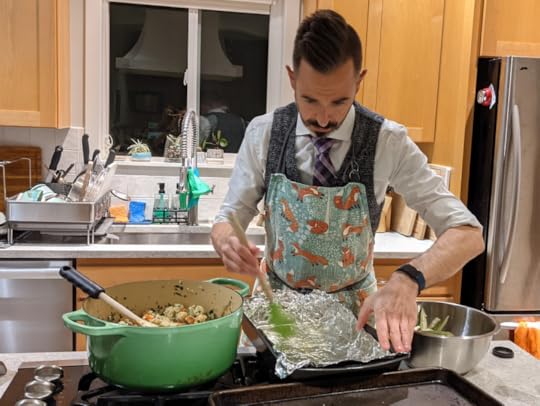
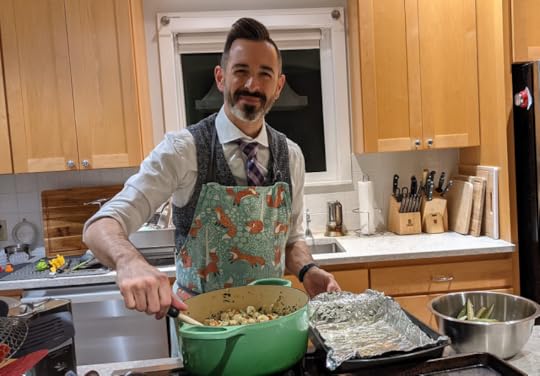
We danced around the kitchen while he cooked, and I played Christmas music for about two hours, which is roughly our annual maximum intake of Christmas music. I called my family, and sent them well wishes, and then Rand and I swabbed our noses and two of our friends did the same, and we sat down to dinner. At no point did anyone throw an entire pile of mismatched cutlery (some of which has been chewed raw by the garbage disposal) on the table in a huge heap, shouting, “THE TABLE’S SET.” The stuffing was not inexplicably sweet like that one time my mother threw the glaze that was supposed to go on the ham into it. No one cried.
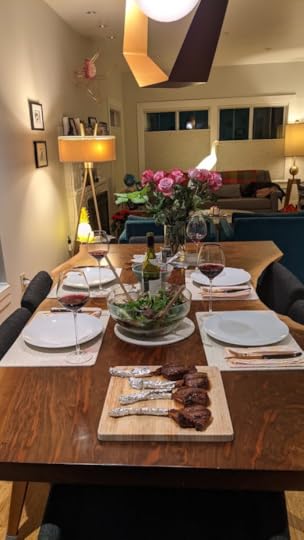
We ate dessert and watched a movie and changed into pjs. And nothing awful happened.

“I’m worried,” my cousin said, “that after the Christmas you’ve just had, you won’t want to come down and spend it with us.”
“No, no,” I said, twirling around my living room like a Disney princess. “We miss you all so much. We’ll be back down soon.”
But this year, stuck at home? Look, I’m just saying: there are worse things. There really are.
December 25, 2021
Christmas. The Happy and Sad Parts.
Last Christmas stands out as one of the worst of my life. Perhaps more even than the year when my father had just died, because at least then we were around family. But last year Rand’s grandmother had just died, and we were alone, and there wasn’t an end to that loneliness in sight.
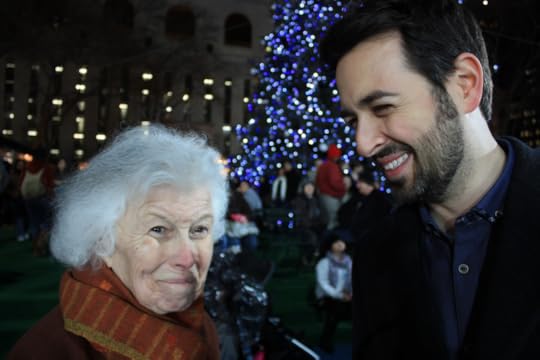
Christmas 2011, New York.
I remember we tried to smile through it, but the grief and the sadness were there, hovering over everything. You can practically see it in the pictures.

This year, we’d planned to go down to California to see my family, but as omicron cases started rising, and as every single destination we’d intended to visit became a hotspot, we ended up cancelling our trip. I cried exactly once, the night I realized I’d miss my nephew’s third birthday, and Christmas with relatives for another year. I cried because last year was so awful, and I didn’t want to do it again. And then I felt too frustrated and depleted to even cry, and I just sat around, like a slowly deflating parade balloon, melting onto the couch.
My cousin sometimes talks about a Christmas he remembers from when we were young – one I’m too small to properly recollect. It was in an old duplex we lived in when we first moved to Seattle, when my family first moved to America. If I’ve matched the pictures from the right year, there’s snow on the ground, and my uncle has thick sideburns, and I have the sort of receding-hairline mullet that grow on toddlers when they are bald for too long and their parents refuse to cut the hair that finally grows in. My cousins usually ran around like feral raccoons, and I was destined to watch from afar, deemed too young and too female to join in. But the holidays and the cold meant they were confined to the house, and in the pictures they are clustered together, and I am with them.
One of my cousins would tell me, years later, that in that moment, he was the happiest he had ever been, and also so sad. I asked him why.
“Because I knew it would never be like that again. All of us together like that.”
This concept seemed impossible to me the first time he said it – that we would never all be under the same roof. But the years passed; older relatives died, and we younger ones drifted apart like flotsam on the surf. I try to reach back and hold on to the memory of that Christmas, but it’s too far gone for me. It’s more just a feeling, a tugging in my heart, a sense of everything in its place, and also of loss, all at once. I don’t even know if I have the photos anymore. They may have been lost in the fire at my mother’s house. I’m not sure.
Sometimes the longing and the heartache feel like they’ll crush you, and yet you feel so grateful, because you know it means your heart still works. You can feel so happy and sad at the same time. That’s where I am this year. I smile through it, because god, there’s so much to smile about. I’m with Rand, in our home, and there’s a promise of snow tonight, and yesterday I may have made the world’s gayest Christmas cookies.
How you can not smile at that?
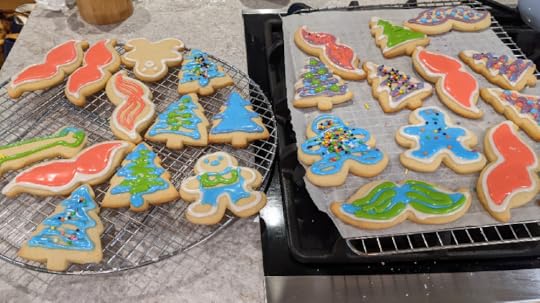
The gayest Christmas cookies, ever.
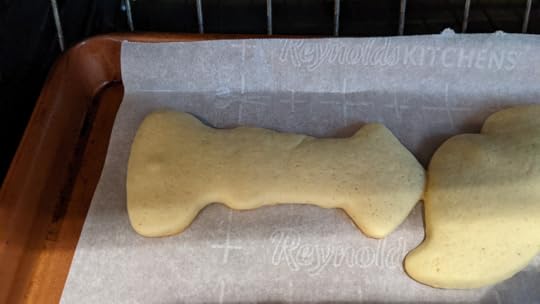
This was supposed to be a Space Needle cookie cutter. I … yeah.
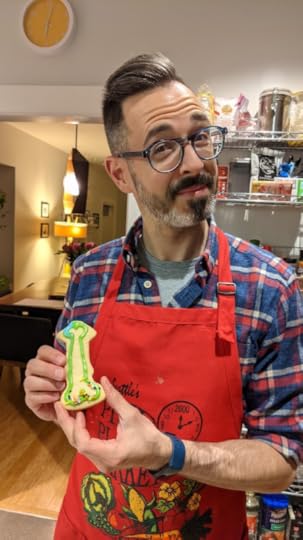
Him: Baby, did you … did you use sprinkles for pubes? Me: I call them “Jingle Balls.”
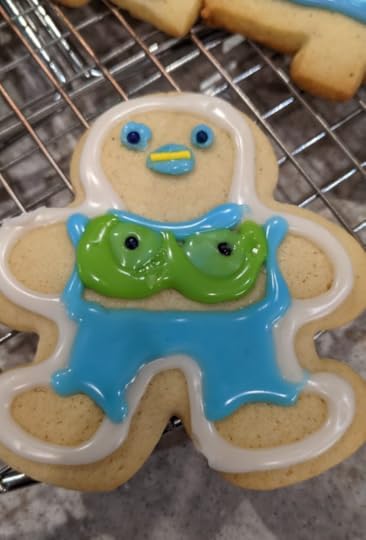
This one is my horcrux and I love her.
Maybe that’s the whole lesson here, if there is one. You think of the people who’ve left you, and you hold on to the memories, squeezing them in your heart. It hurts but holy hell you wouldn’t give it up for a second.
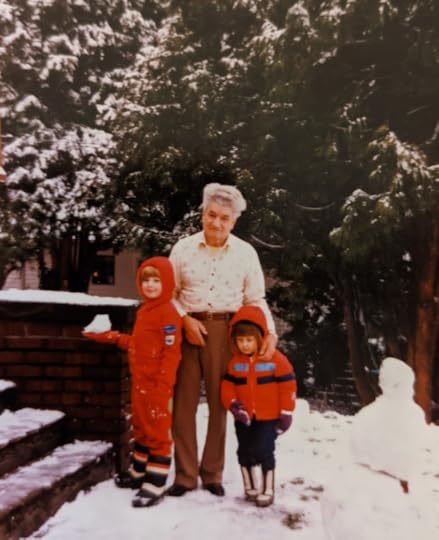
If you are lucky (and god, am I lucky) there is always good to be had. And even if it passes, even if it’s fleeting, there’s always more good on the horizon. Sometimes it just happens, and sometimes you have to try like hell to make it for yourself, but just look. There are ridiculous cookies and a twinkly-eyed man in an apron, cooking for you. And I tell myself to enjoy it, because it may never be like this again. But then I remember: it’s been 21 Christmases now, and he’s still here.
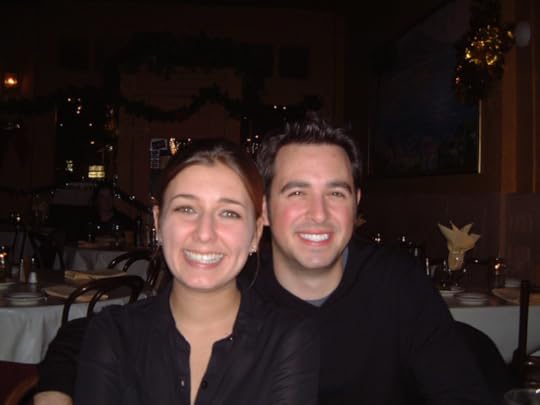
Christmas 2001.
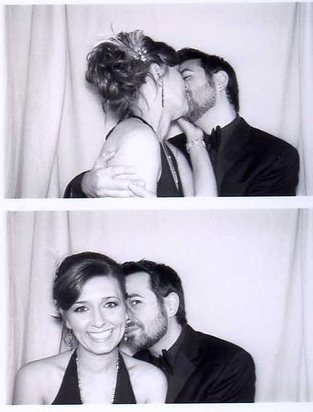
Christmas 2011.

Christmas 2015.
December 14, 2021
What We Talk About When We Talk About Food.
In the last few days, I wrote a review that escaped out of my hands and started running all over the internet, and it was not unlike that time when I was ten and my hamster got out of its cage and pooped everywhere. What I could not have imagined – what I at my most creative could never have foreseen, my sweet babies, was that the chef from Bros would reply to my review. I was not aware that blog posts merited rebuttals from chefs (this sort of thing never happens to Pete Wells.) (I am not, I realize, Pete Wells.) He demanded that his statement be printed in its entirety.
He began, as all good manifestos do, with a picture of a man on a horse.
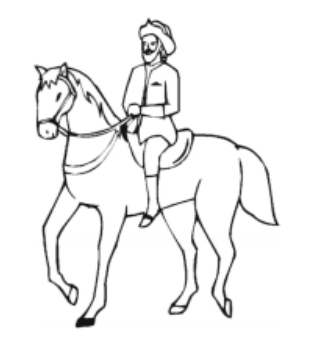
I must admit, at this point, I was somewhat demoralized; I have spent an entire career trying to be funny and this punchline is better than any joke I have ever written. This was brilliant. I mean, the set-up was an absolute nightmare, but holy hell that punchline.
In Chef Floriano’s rebuttal he explained that “Preparing food that is liked is like making a drawing of a man on a horse. It is not that hard, but most people will admire you.” He dismissively noted that “Many people are able to make good food. Your grandmother could do it. My wife does it great.” Which is a pretty condescending thing to say when your wife is one of the chefs at Bros.
He then posted another image of a horse – this time it was Jacques-Louis David’s painting of Napoleon Crossing the Alps. Some people are master chefs, and have numerous Michelin stars, he wrote, and he likened this painting to those restaurants. But he’s “bored” with it.
At this point, I began to wonder what the hell was going on and what this had to do with food. It was like our meal at Bros, in manifesto form. I also found myself offended on behalf of a French neo-Classical painter who has been dead for two hundred years, because this week has been nothing but surprises.
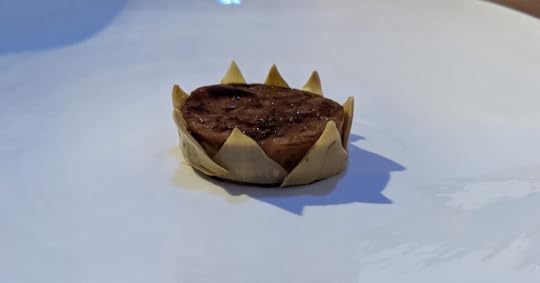
Fish sausage and artichoke course, Bros.
Then came the last page of his response. Another painting, this one abstract, in which Chef Floriano waxed on about contemporary art. And he listed a series of philosophical questions which, had I included them in a fictionalized version of this story, would be removed by any decent editor on the grounds of being too unrealistic.
“What is art? What if food? (sic) What is a chef? What is a client? What is good taste? What looks beautiful?”
“What is a man on a horse?”
It felt like he was trying to get himself declared incompetent to stand trial, and truly, well done, sir. Go commit more culinary crimes, no jury will convict you.
But the thing is, when I look past the misogyny, and arrogance, and the dripping condescension of the piece (and holy hell is there a lot of it) I actually agree with the statement that he’s making about art.
“Does art have to be beautiful? Not necessarily. It has to challenge you to understand. If it’s beautiful, that’s even better.”
And, that’s true. I can’t argue with that statement. Look, one of the great gifts of my miraculously charmed life is that I have been able to spend time in galleries and museums and installations all over the world. And there is no doubt that art can be challenging. Often the best art is. It makes you feel something, even if that something isn’t necessarily good. It sparks a reaction. It causes discussions. It can be painful or horrifying or upsetting. Sometimes it’s beautiful, but not always.
I agree with him when it comes to art.
But a restaurant is not a museum, or an art gallery. If anything, the stakes are even higher, because you aren’t simply creating, you are creating something for someone. Every meal that comes out of the kitchen at Bros. is for a paying customer. It is for someone who has a minimum expectation of what a meal should be. A meal might be innovative, or cutting edge, or require a great deal of technical skill (and indeed, many of the dishes at Bros. were). But if it is insubstantial, or contains something that the customer is allergic to, or it simply doesn’t taste good, then what the hell does it matter if the chef thinks that he’s created art? He’s still failed at being a chef.
But beyond that, it’s a baffling sort of gatekeeping, to tell someone that the reason they didn’t enjoy a meal is that they didn’t understand art. That the reason the meal was awful was because we don’t appreciate the avant garde. It’s a sort of culinary gaslighting.
You’re not still hungry. You’re just hoi polloi.
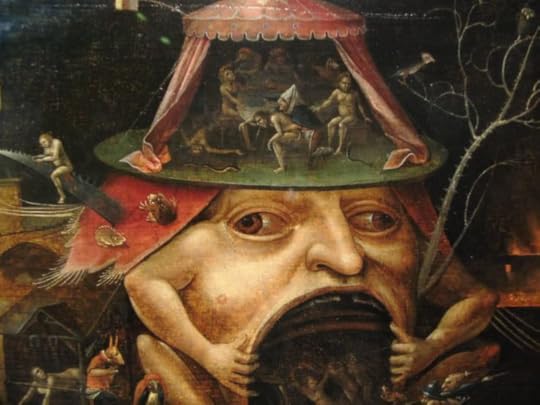
Hieronymus Bosch, Christ in Limbo (detail), circa 1575
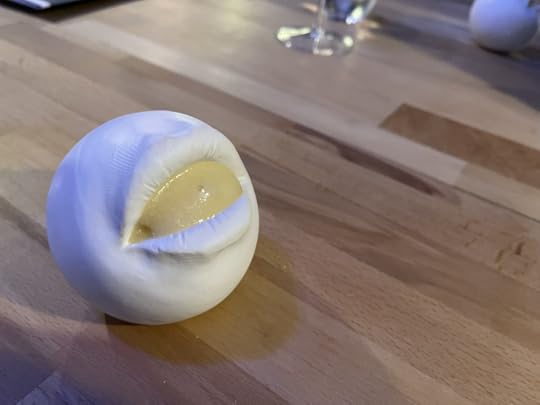
Mouth ramekin, Bros restaurant, 2021. Photo credit: Elle-Rose Moogan.
Over the last week, I’ve been accused of not understanding a meal that I ate. By Chef Floriano in his rebuttal (where he doesn’t deign to call me by my name but instead refers to me as “Mrs. XXX” – an attempt to insult me which has inadvertently resulted in giving me the best nickname I’ve ever received). By Chef Isabella, as she laughingly said that we just “didn’t get it”. I’ve had readers hypothesize that my inability to appreciate this meal is due to me not understanding Italian culture or speaking the language fluently. This strikes a particularly deep nerve. Growing up, I was teased for my mother’s accent. I was ridiculed for speaking a weird language and talking with my hands, for having a strange (i.e., foreign) family with odd traditions. And now the criticism leveled against me is that I am too American, and not Italian enough, to appreciate what was served to me. It’s a strange thing, to know that you simply can’t win. But also, it’s extremely irrelevant: these shouldn’t be requirements for enjoying a meal. And even if they were: I meet all the prerequisites.
(Someone went so far as to say I was too puritanical to appreciate the food that I ate, the first time in history such a criticism has been leveled at me.)
But if one is to argue that appreciation of a meal lies in understanding the artistic vision behind it, then some onus is on the chef and the staff to communicate that vision to the patrons. They cannot simply turn their nose up at our questions and our dietary restrictions and later on, our criticisms. And even if those artistic explanations were provided, they still haven’t succeeded at creating a positive dining experience. Because as Dan notes here, “a meal needs to satisfy on a basic level.”
I’m all for food that gets customers to think, to step out of their comfort zone — as with any art. But a meal also needs to satisfy on a basic level, even if it’s not conventional. Is there a place for a restaurant meal that punishes the customer? I don’t believe so.
— Dan Saltzstein (@dansaltzstein) December 12, 2021
And besides that, the beauty of good art and good food is this: you shouldn’t need to understand something to love it.
If food is a type of art, it is one that cannot exist without taking into account the relationship between the artist (the chef) and the consumer of their art (the client). Cooking, if done properly, is inherently an empathetic act. It’s an act of love. And if I am to reflect on all of the best meals that I’ve had – whether they were roadside stands or Michelin-starred restaurants, they shared one common theme: the person preparing the food cared about the people around them. They cared about their customers, and they cared about their staff. And that radiated through everything.
The chefs at Bros don’t seem to value empathy. They actually seem to eschew it.
I don’t waste time, I don’t care about others, I’m focused on what is important. I’m always fucking showing what I’m made of!
@Brosrest #bros #bebros #brosland @GuideEspresso pic.twitter.com/L8gl8M9mnH
— Floriano Pellegrino (@FloPellegrino) May 31, 2021
It did strike me that the entire crew apart from the woman head chef (who is also his wife) was male. And the service hinted at a culture of fear (the odd silence, the unwillingness to engage with you in Italian, all of it).
I hope someone does the necessary journalism here.
— Rand Fishkin (@randfish) December 12, 2021
It’s unfortunate. I think if they cared a little bit about the people around them, I think if that talent and innovation and artistry also included a bit of love and humility, they’d probably create something truly remarkable. But cooking from a place of love is a remarkably challenging thing. Not everyone can do it. My grandmother could. And my husband? He does it very well.
The post What We Talk About When We Talk About Food. appeared first on The Everywhereist.
December 8, 2021
Bros., Lecce: We Eat at The Worst Michelin Starred Restaurant, Ever
There is something to be said about a truly disastrous meal, a meal forever indelible in your memory because it’s so uniquely bad, it can only be deemed an achievement. The sort of meal where everyone involved was definitely trying to do something; it’s just not entirely clear what.
I’m not talking about a meal that’s poorly cooked, or a server who might be planning your murder—that sort of thing happens in the fat lump of the bell curve of bad. Instead, I’m talking about the long tail stuff – the sort of meals that make you feel as though the fabric of reality is unraveling. The ones that cause you to reassess the fundamentals of capitalism, and whether or not you’re living in a simulation in which someone failed to properly program this particular restaurant. The ones where you just know somebody’s going to lift a metal dome off a tray and reveal a single blue or red pill.
I’m talking about those meals.
At some point, the only way to regard that sort of experience—without going mad—is as some sort of community improv theater. You sit in the audience, shouting suggestions like, “A restaurant!” and “Eating something that resembles food” and “The exchange of money for goods, and in this instance the goods are a goddamn meal!” All of these suggestion go completely ignored.
That is how I’ve come to regard our dinner at Bros, Lecce’s only Michelin-starred restaurant, as a means of preserving what’s left of my sanity. It wasn’t dinner. It was just dinner theater.
No, scratch that. Because dinner was not involved. I mean—dinner played a role, the same way Godot played a role in Beckett’s eponymous play. The entire evening was about it, and guess what? IT NEVER SHOWED.

Rand holding up one of the courses – a paper-thin fish cracker – in its entirety.
So no, we can’t call it dinner theater. Instead, we will say it was just theater.
Very, very expensive theater.
I realize that not everyone is willing or able to afford a ticket to Waiting for Gateau and so this post exists, to spare you our torment. We had plenty of beautiful meals in Lecce that were not this one, and if you want a lovely meal out, I’ll compile a list shortly.
But for now, let us rehash whatever the hell this was.
We headed to the restaurant with high hopes – eight of us in total, led into a cement cell of a room, Drake pumping through invisible speakers. It was sweltering hot, and no other customers were present. The décor had the of chicness of an underground bunker where one would expect to be interrogated for the disappearance of an ambassador’s child.
Earlier that day, we’d seen a statue of a bear, chiseled into marble centuries ago, by someone who had never actually seen a bear. This is the result:
[image error]
And this is a perfect allegory for our evening. It’s as though someone had read about food and restaurants, but had never experienced either, and this was their attempt to recreate it.
What followed was a 27-course meal (note that “course” and “meal” and “27” are being used liberally here) which spanned 4.5 hours and made me feel like I was a character in a Dickensian novel. Because – I cannot impart this enough – there was nothing even close to an actual meal served. Some “courses” were slivers of edible paper. Some shot were glasses of vinegar. Everything tasted like fish, even the non-fish courses. And nearly everything, including these noodles, which was by far the most substantial dish we had, was served cold.
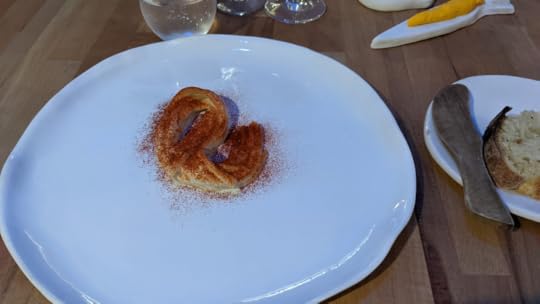
I’ve added the bread plate for scale. This was the largest course of the 27 (We got six noodles and one piece of bread each).
Amassing two-dozen of them together amounted to a meal the same way amassing two-dozen toddlers together amounts to one middle-aged adult.

A course for *two* people at Bros.
I’ve checked Trip Advisor. Other people who’ve eaten at Bros were served food. Some of them got meat, and ravioli, and more than one slice of bread. Some of them were served things that needed to be eaten with forks and spoons.
We got a tablespoon of crab.
[image error]This was a main course. It’s about a tablespoon of food.
I’ve tried to come up with hypotheses for what happened. Maybe the staff just ran out of food that night. Maybe they confused our table with that of their ex-lover’s. Maybe they were drunk. But we got twelve kinds of foam, something that I can only describe as “an oyster loaf that tasted like Newark airport”, and a teaspoon of savory ice cream that was olive flavored.

A sliver of oyster loaf with foam. David’s face here says more than I ever can.
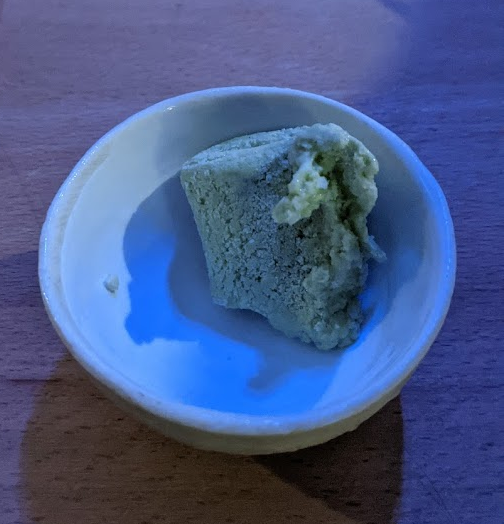
Teaspoon of olive ice cream.
I’m still not over that, to be honest. I thought it was going to be pistachio.
There is no menu at Bros. Just a blank newspaper with a QR code linking to a video featuring one of the chefs, presumably, against a black background, talking directly into the camera about things entirely unrelated to food. He occasionally used the proper noun of the restaurant as an adverb, the way a Smurf would. This means that you can’t order anything besides the tasting menu, but also that you are at the mercy of the servers to explain to you what the hell is going on.
The servers will not explain to you what the hell is going on.

Rand tries to figure out what part of this dish is edible.

He cannot.
They will not do this in Italian. They will not do this in English. They will not play Pictionary with you on the blank newspaper as a means of communicating what you are eating. On the rare occasion where they did offer an explanation for a dish, it did not help.
“These are made with rancid ricotta,” the server said, a tiny fried cheese ball in front of each of us.
“I’m… I’m sorry, did you say rancid? You mean… fermented? Aged?”
“No. Rancid.”
“Okay,” I said in Italian. “But I think that something might be lost in translation. Because it can’t be-”
“Rancido,” he clarified.
Another course – a citrus foam – was served in a plaster cast of the chef’s mouth. Absent utensils, we were told to lick it out of the chef’s mouth in a scene that I’m pretty sure was stolen from an eastern European horror film.
[image error]
For reasons that could fill an entire volume of TimeLife Mysteries of the Unknown, THIS ITEM IS AVAILABLE FOR SALE AT THEIR GIFTSHOP. In case you want to have a restraining order filed against you this holiday season.
Now, at this point, I may have started quietly freaking out. A hierarchical pecking order was being established, and when you’re the one desperately slurping sustenance out of the plaster cast of someone else’s mouth, it’s safe to say you are at the bottom of that pyramid. We’d been beaten into some sort of weird psychological submission. Like the Stanford Prison Experiment but with less prison and more aspic. That’s the only reason I have for why we didn’t leave during any of these incidents:
When a member of our party stood up during the lengthy stretch between courses to go have a cigarette outside, and was scolded to sit down.When one member of our party was served nothing for three consecutive courses, because they couldn’t figure out how to accommodate her food allergies.When Rand was served food he was allergic to, repeatedly, because they didn’t care enough to accommodate his.When a server reprimanded me for eating. These reconstituted orange slices (one per person) were a course. I asked if I could eat the real orange that had been served alongside it (we’d all gotten one, and I, at this point, was extremely hungry). “Yes,” the server said, annoyed. “But you aren’t really supposed to.” He let me have two segments and then whisked the fruit away.[image error]
No, we just sat there while the food was portioned out a teaspoon at a time, a persistent and sustained sort of agony, like slowly peeling off a band-aid. That’s the problem with a tasting menu. With so many courses, you just assume things are going to turn around. Every dish is a chance for redemption. Maybe this meal was like Nic Cage’s career – you have to wait a really long time for the good stuff, but there is good stuff.
BUT NO. We kept waiting for someone to bring us something – anything! – that resembled dinner. Until the exact moment when we realized: it would never come. It was when our friend Lisa tried to order another bottle of wine.
“Would you like red or white?” the server asked.
“What are we having for the main?” she inquired.
His face blanched.
“The… main, madame? Um… we’re about to move on to dessert.”
We sat for a moment, letting this truth settle over us. Because by now it had been hours, and at no point had we been served anything that could be considered dinner. (There was one time when I thought it might happen – the staff placed dishes in front of us, and then swirled sauces on the dishes, and I clapped my hands, excitedly waiting for something to be plated atop those beautiful sauces. Instead, someone came by with an eyedropper and squirted drops of gelee onto our plates).
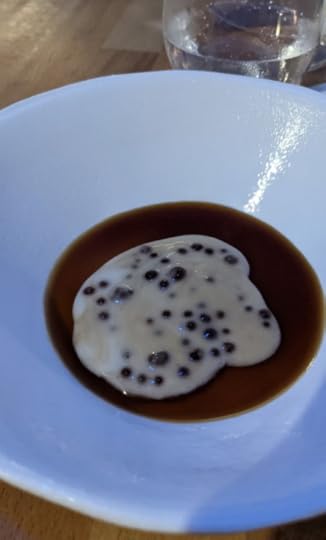
The meat droplet course.
“We’ve infused these droplets with meat molecules,” the server explained, and left.
I don’t know if our experience was the norm. I’ve looked TripAdvisor’s photo for Bros, and other people who’ve gone there seem to have been fed actual food. Like, even this person, who was served the same weird meat droplet course, at least got it with a triangle of foamy-looking bread. Do you know what it’s like to envy someone for a piece of foamy looking bread? IT’S NOT GREAT.
“There’s no … main?” Lisa said to us in disbelief after the server had retreated.
“Hey,” I said, my hand resting on her arm. She was shaking slightly from low blood sugar. “It’s okay.”
“They haven’t fucking fed us,” she said, her eyes wide.
“I know, I know,” I said, “But look. We’re in this amazing country. And I don’t know about you, but nothing is going to stop me from enjoying tonight.”
She nodded.
“Because I’m surrounded by my favorite people,” I said, and I squeezed Lisa’s hand for emphasis, “and I’m at my favorite restaurant.”
Lisa sputtered laughing. No more food was coming, but there was something freeing in that. Because this meal had never been about us to begin with. It sure as hell wasn’t about the food. And there is something glorious about finally giving up.
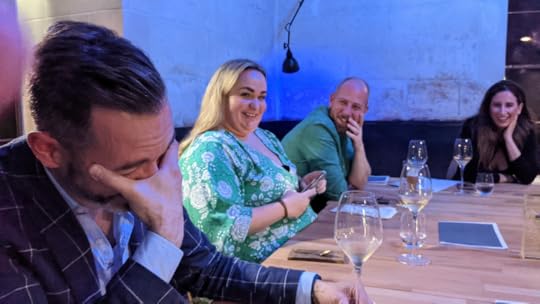
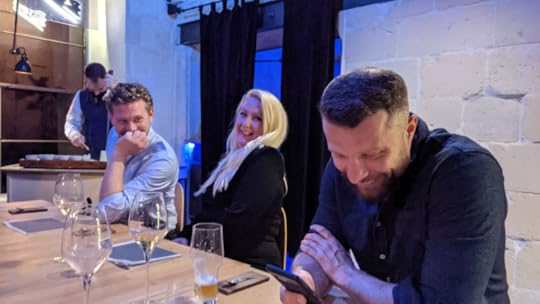
We sat through a few more courses including a marshmallow flavored like cuttlefish, and a dish called “frozen air” which literally melted before you could eat it, which melt like a goddamn metaphor for the night.
[image error]
And then someone came in and demanded we stand and exit the restaurant. Thinking we were getting kicked out, we gleefully followed. Instead, we were led across the street, to a dark doorway and into the Bros laboratory. A video of the shirtless kitchen staff doing extreme sports played on a large screen TV while a chef cut us comically tiny slivers of fake cheese.
Rand was, of course, allergic to it.
The bill arrived. The meal cost more than any other we’d eat during our trip by a magnitude of three. They’d given us balloons with the restaurant’s name across it and the chef emerged and insisted on posing with us for a Polaroid that we did not ask for. We were finally released into the night, after every other restaurant had closed, ensuring that no food would be consumed that evening.
“That was abhorrent,” we all agreed as we shoved the balloons into a dumpster (I’d made everyone take one, with the baffling logic that they’d somehow help offset the cost of the meal). We howled at how ridiculous it was, and how they’d poisoned Rand. How maybe we should have known that a restaurant named “Bros” was going to be a disaster.
It was like an awful show that we had front row tickets to. But wasn’t there something glorious about sharing it together, the way that a terrible experience makes you all closer?
“No,” someone said, and we laughed even harder.
P.S. – The next day, one of the staff tried contacting the only single female member of our party via Instagram messages. “Hey, I served you last night!” he wrote. She immediately blocked him.
Bros., Via degli Acaya, 2, 73100 Lecce LE, Italy
Cost: a rather mortifying 130-200 Euros per person
Note: the TripAdvisor reviews show a lot of elaborate courses, and these were all way, way more food than anything we ate. I cannot express to you how little we were fed, and I’m not a particularly big eater. Allergy and dietary restrictions were largely ignored.
Recommendation: Do not eat here. I cannot express this enough. This was single-handedly one of the worse wastes of money in my entire food and travel writing career bwah ha ha ha ha ha ha oh my god
The post Bros., Lecce: We Eat at The Worst Michelin Starred Restaurant, Ever appeared first on The Everywhereist.
December 7, 2021
20 Years.
Last week, Rand and I crossed a milestone. I didn’t realize it; I was sitting at my computer, bones turning to dust, when he shouted from the bottom of the stairs, “HAPPY ANNIVERSARY!”
“Holy crap. Twenty years!” I shouted back at him. And I ran down and hugged him, and we kissed, and we did this odd little dance while shouting “TWENTY YEARS” over and over again. It’s a huge chunk of time to spend with someone, especially when you’re 41. Nearly half my entire life, and all of my adulthood. I try to imagine a life without Rand, try to imagine a world where we hadn’t met, but it’s impossible. There’s no way to It’s a Wonderful Life this. It’s like try to separate paint colors after you’ve mixed them together.
Two decades since our first date, when we sat across from one another at a candlelit Italian restaurant in the University District. The restaurant is long gone. I don’t even know if the building is still there. We were so young – so round-face and thin (how? I ate trash. Rand would drive me to Krispy Kreme late at night, several times a week, and we’d buy a dozen glazed donuts). Everyone told me about this phenomenon, that I’d see old photos of myself and stare at them in disbelief, but I remained skeptical. To be 21 is to be invincible and eternal. I figured I would remain as I was for a thousand years. The way I moved through the world, the way my body worked, the persistent tugging in my heart – I couldn’t say what it was then, but now I know: it was just the feeling of being young. Of being both convinced of who I was and blindingly unsure at the exact same time. Of having no idea where I was going and rolling right along, day after day after day.

It feels like I was in love with someone I barely knew. It feels like I was someone I barely knew – dizzy and drunk on grocery store wine and those first thousand kisses. I want to talk to her, as insufferable as I know she was. I want to steer her in the right direction, but I realize that I already had the opportunity to do that. Her mistakes were mine. And when it came down to it, where it was really important, we figured it out. Which is miraculous, because I couldn’t even figure out bangs most of the time.
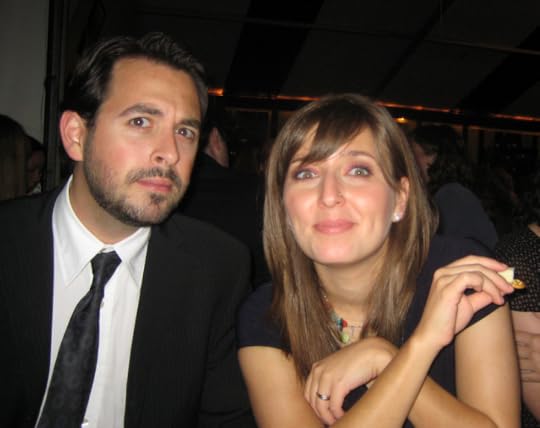
It all feels so improbable. That we made it this far. It’s overwhelming. I crush pillows beneath my fingers and I hug him until his rib cage pops and threaten to bite off his nose or his earlobes because sometimes the only reasonable response is a little light cannibalism.
Sometimes I yell at him.
“Twenty years!” I shout. “Twenty years, and what do I have to show for it but a beautiful house and lots of friends and trips around the world and a lifetime of beautiful experiences. Twenty years wasted on you and for what? Endless love and romance and all my dreams coming true?”
“Yes. Twenty years and that is all you have.”
“YOU RUINED MY LIFE. I COULD HAVE BEEN MISERABLE.” And I will theatrically storm out of the room.
“Come back here, you monster,” he will say.
Twenty years of loving someone who is both the same and not the same as the person I first met. Someone who is – if such a thing is even imaginable – even kinder and funnier and more patient and – holy cats – better-looking than they were then. Someone who carries all our history with him, who knew me through those awkward moments that characterized my god-forsaken twenties (and thirties. And present-day). My past is traced in his face. His grey hairs are mine. I mean, they’re probably my fault, at least.
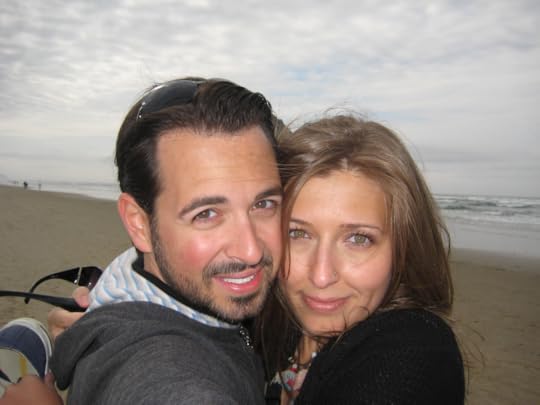
Oregon, September 2008.
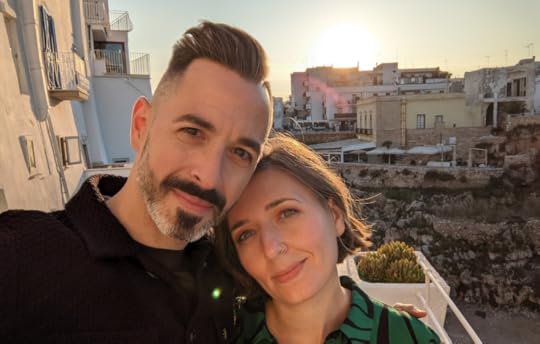
Italy, November 2021.
Twenty years. It feels like a lifetime, but it went by so fast. And I know one day I’ll look back at us, just twenty years into this relationship, and marvel, again, at just how young and in love we were.
[image error]
The post 20 Years. appeared first on The Everywhereist.
December 6, 2021
Rival Gallery Owners in Love.
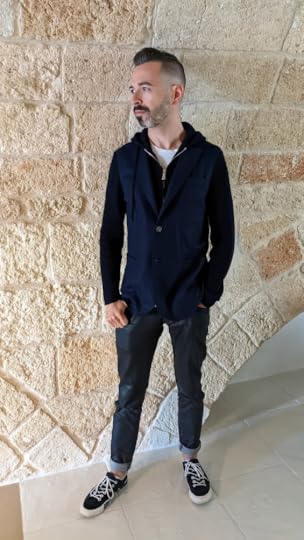
Here is the problem with having a very stylish husband: two years into this pandemic, I look like I’m about to clean the garage while Rand walks around like something out of a damn manual on how to become more dashing with every passing decade. To be fair, the delta between our clothing has always been a little bit off – I’ve always dressed a little bit like I was recovering from a cold, whereas he looks like this almost immediately after waking up:
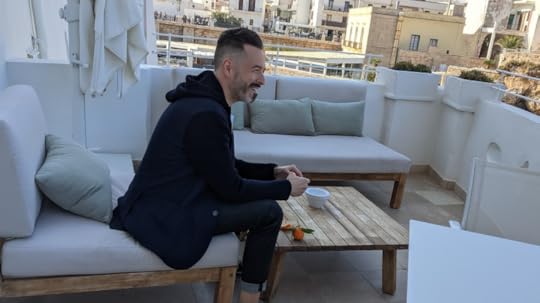
I mean, what the hell.
But I was determined on this trip to not be outdone, or at least, not at much. Not once would someone ask if I’d left the house in a hurry because it was on fire. This was my solemn vow. And besides, it had been years since I’d worn anything but yoga pants (despite not actually doing yoga). So on this trip I packed actually clothes! Dresses! Trousers! THINGS THAT NEEDED IRONING DESPITE NOT HAVING AN IRON. I was hellbent on beating Rand Fishkin at his own game, or at least getting an honorable mention for putting on something that was not entirely made of spandex. And thus was born a series of photos I like to call: rival art gallery owners who fall in love. (Warning: Obnoxious photos of us to follow and also, I might be high on DayQuil.)
Ahem.
He runs a classic gallery on the Upper West Side that specializes in, I don’t know, oil paintings of naked philosophers. She’s doing something in Brooklyn involving nihilistic cats. They hate each other … or do they???
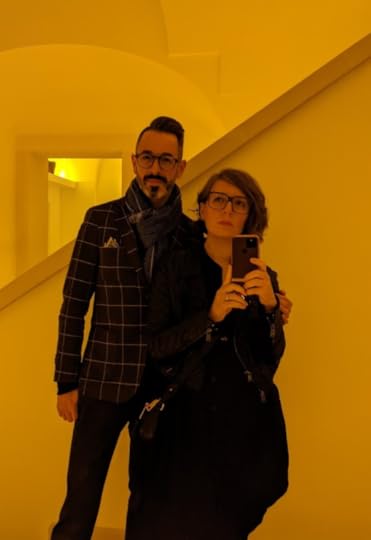
“Look, Fishkin, you’re never getting that cardboard box installation by Marcel Duchamp that supposedly contains a dead cat. Do you hear me?”

“I thought we were just grabbing a pizza?”
[image error]
The extremely awkward conversations where a romantic subtext is avoided.
“Do you ever think there’s more to life than this?”
“Than art? No.”
“Not love, then?”
“Well, that’s a kind of art, isn’t it?”
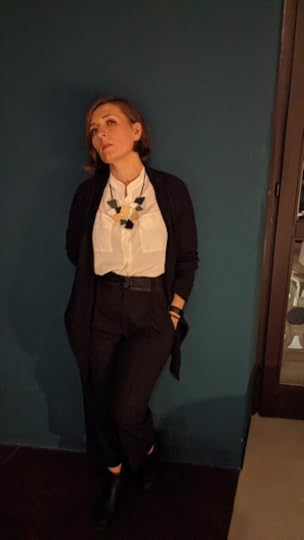
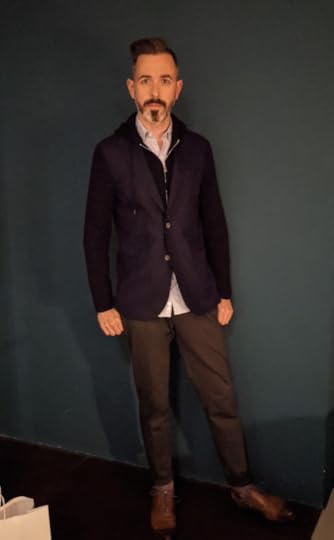
That part where she starts make terrible jokes to dispel the building romantic tension.
“Does this shirt make you want to get handsy?”

Him: “Puns are the lowest form of art.”
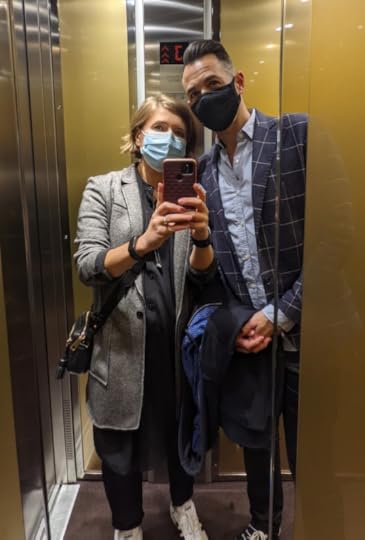
That super awkward moment when they end up in an elevator together.
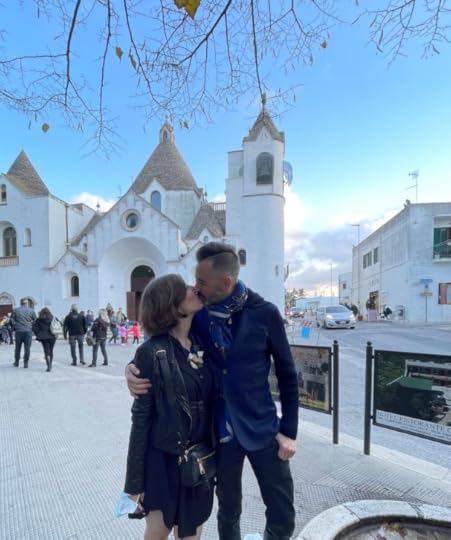
And the part where they just end up together, because, well, sometimes that happens.
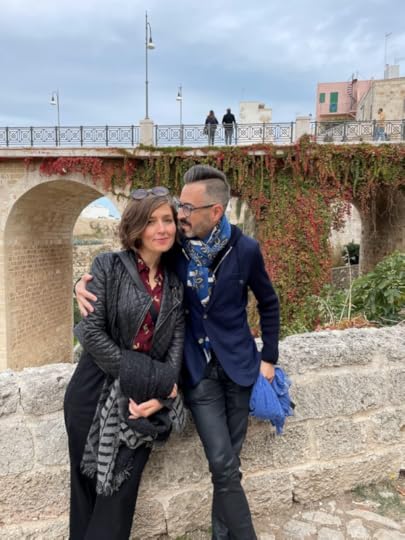

P.S. – Big thanks to Emily, who took a lot of these photos. <3
The post Rival Gallery Owners in Love. appeared first on The Everywhereist.
December 3, 2021
And Then We Went to Italy.
In October of this year, we left for Italy. Our last trip there was scheduled for March of 2020. I think about that a lot – about the alternate reality in which that trip was still possible. I remember the date of our departure approaching, and my concern about this new flu spreading across Europe. I remember Rand finally cancelling our tickets, that mixture of relief and worry.
“What if we ended up cancelling them for no reason?” I asked.
“I don’t think we’ll regret it,” he said.
This time around, whether or not we’d go remained a question until our actual departure. The hope I’d felt this past summer was gone as quickly as it came, the rates of the Delta variant rising. I kept asking Rand if it was safe, if it was responsible. Italy’s caseloads were lower than ours. They were taking precautions – demanding proof of vaccination – that only a few states had started instituting.
The day of departure arrived; we decided to go. There were about 30 people on our transatlantic flight.
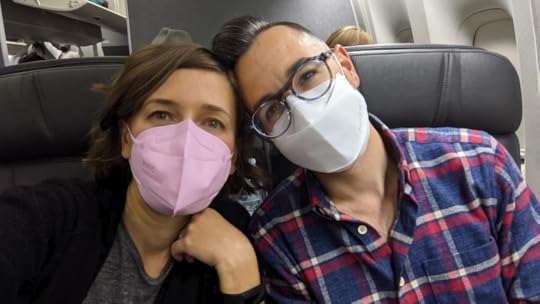
I kept expecting something to happen when we landed, that someone would look at our documentation and tell us that we’d done something wrong, that we couldn’t actually enter Italy. I had everything we were told we needed: passenger locator forms for the EU and the UK (we were transiting through Heathrow), proof of vaccination, and a negative Covid result taken within 72 hours prior to our arrival.
Still, I was convinced there’d be a delay or a miscommunication, something we’d overlooked, or worse, perhaps, something that the agent we were talking to simply didn’t accept. I imagined us in a quarantine, or simply sent back on the plane we flew in on. But instead, we walked through passport control, and I looked out over the rooftops from our hotel, and neither of us could quite believe it.
I don’t really remember that first dinner, jetlagged and exhausted. Apparently I had something with porcini and Rand had fritto misto, and we ate inside, nervously, for the first time in a very long while.
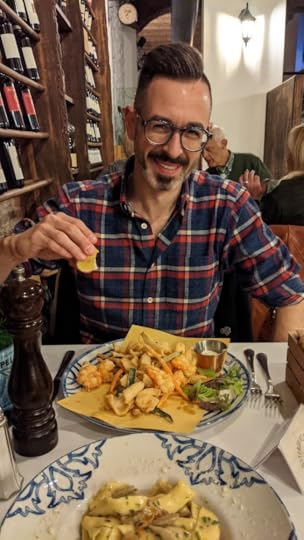
To eat indoors, or to go to many museums and indoor facilities, you have show a government-issued Green Pass – a scannable QR code on your phone, that proves your vaccination status. It’s only available to EU citizens, and there’s no electronic equivalency or pass that you can get as a visitor, so we carried our vaccine cards with us, in little plastic sleeves. They worked everywhere, though sometimes I had to explain what they were. The more touristy an area, the more familiar they were with our cards. In our entire time in Italy, we had no problems with our paper cards at all, except once (a cafe owner in Bari refused to serve us without a QR code, and demanded we leave immediately regardless of our vaccination status).
What stunned me was how normal Italy felt. Lombardy, where Milan is, had been hit hard by the pandemic – not many more cases than King County, but they happened early on, before anyone knew what the Covid was, or how it was spread, and so the death count was much higher. Bergamo – where we’d visited years before – was devastated by the virus. Thousands dead in only a few weeks. I asked our friends and family what the last few years had been like. They told us about the lockdowns, about how their growing toddlers had learned to walk inside their apartments and had never seen grass. How no one could leave their homes – one person from every household was allowed to go shopping once every few weeks. If you had a dog you could venture 200 meters from your house. The streets were empty and silent, they said, except for the sound of ambulance sirens.
Now the country’s vaccination rates are now among the highest in Europe, ticking up even further as the government instituted workplace vaccination mandates that are among the strictest in the world. And the Green Pass requirements for eating in bars and cafes and museums and gyms has bumped this number further up as well.
People still wore masks everywhere – indoors and on the street. But life felt so … normal. The mandates have helped restrict the spread of Delta, which can lead to breakthrough cases even among the vaccinated, and is currently responsible for millions of cases worldwide (with the U.S. at the helm). People were out, socializing, and going to cafes and restaurants again.
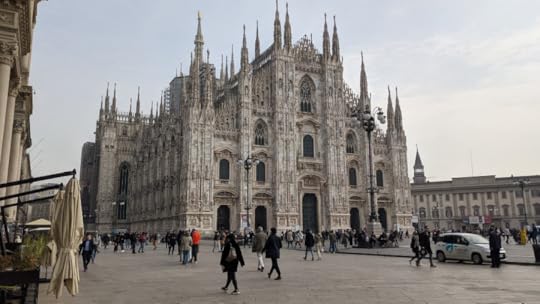
There was a moment, Rand told me, in the height of Covid, when he wasn’t sure if we’d ever make it back to Italy or my family again. I kept telling him it wasn’t a possibility, mostly because I didn’t want to think about it. But walking through the streets, it was safe to admit: I’d felt the same way. We ate too much pasta and we hugged my family and we cried. Everything was new again, and everything was magical, the way it used to be, when travel was new to us; an appreciation for a place that comes only when you think you’ll never see it again. I promised myself I’d hold onto it for as long as I could.
The post And Then We Went to Italy. appeared first on The Everywhereist.
September 24, 2021
We Leave the Country For the First Time in Two Years.
It’s weird to be a travel blogger who doesn’t travel.
Actually, I don’t actually know if I can call myself a travel blogger anymore, but what’s the alternative? If I just say “blogger” without that key little word prefacing it all, it feels like I might unravel like a sweater. A blogger? No. That’s not a thing. That’s some who is simultaneously a thousand years old and also unemployed. That’s profoundly stupid.
I will put a pin in that existential crisis and revisit it later.
Last week, Rand took me to Canada. It’s not far – a three hour drive to Vancouver, closer than Portland, but in the opposite direction. From there we took the ferry to Victoria. It was our anniversary, it was my birthday, it was the first time we’d left the country in more than two years, it was so many things. The border had only recently opened to Americans, provided they had proof of a negative Covid test, which we did not. We promptly forgot about that until the last minute, and then, panicked, drove a hour out of our way to get our noses swabbed. Somehow the thing that was looming over everything, all the time, was the thing that slipped our minds. We got our negative results. We drove across the border.
And just like that, we were someplace new.
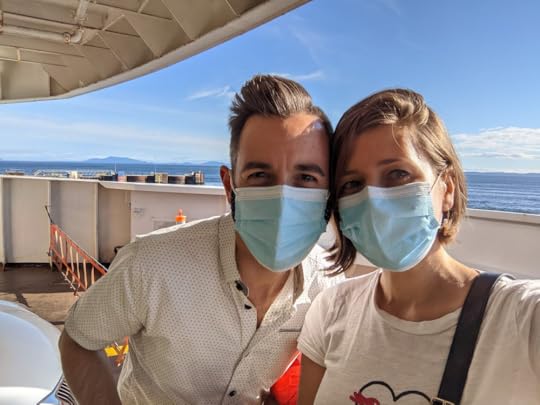
Okay, maybe not “just like that.” Maybe it was a lot of time and money and stress, but STILL. Still.
It’s funny – in the past I’ve rarely blogged about British Columbia, if at all. It just felt too similar to Seattle, to Washington (they even still refer to it as the Pacific Northwest, even though it’s like, southern Canada). I know it’s different – of course I know it’s different – they have socialized medicine and they’re all subjects of the Queen and everyone is so polite and there’s Cadbury’s chocolate and butter tarts. There’s way less gun violence and even the places that are further south than America are somehow colder? But if you try to explain this stuff to someone else who’s further from all of it – if you try listing these difference to, say, someone in Europe (and I have, many times before) they will stare blankly at you. I remember asking a Brit if they could tell the difference between American and Canadian accents.
“You sound exactly the fucking same,” they said.
So I don’t write about Canada all that much, which isn’t fair, but there you have it. I’ve never been good at nuance. I owe forty million people an apology, or I would if people still read blogs (DO PEOPLE STILL READ BLOGS?).
But if there’s an upside to these last few years, it’s that travel feels different now, and those small trips, the ones we’d gloss over, the ones we took for granted before, feel huge. They loom so big. I mean, look. Look at how beautiful the world is. It’s so easy to forget.

I’m not trying to sugarcoat it – the last eighteen months have sucked, and I say this as someone who has had it easy. They’ve been a flaming dumpster full of turds, and it’s not even over – the real “over” isn’t really anywhere in sight. But if there’s some small good thing that I can take away from all this, maybe it’s that I’ll hold the world a little more closely and tenderly than I did before.
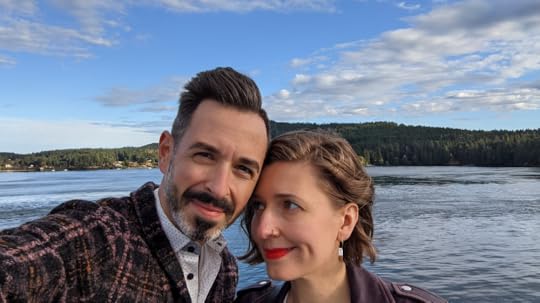
“I’m so happy,” I told Rand again and again. So happy to be out in the world, so happy to see our friends who lived so close but who we hadn’t been able to see in years. So happy to be eating Cadbury’s chocolate and navigating foreign currency and hearing people apologize for absolutely everything. I stole little bottles of shampoo and conditioner out of hotel bathroom and threw them into my suitcase.
“What are you doing?” Rand asked. This was unprecedented behavior.
“It all smells so nice,” I said. I wanted to remember it. He laughed and stared at me as though I was a stranger, because I sort of was.
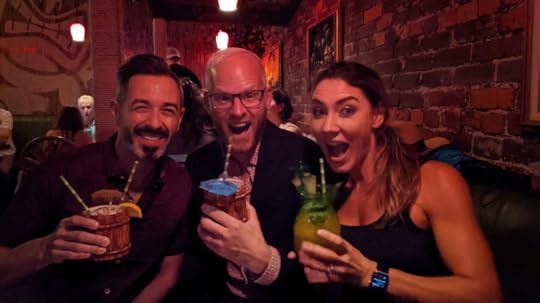
And we saw friends and we were all ridiculous and weird and giddy because it had been a long time.
In Station Eleven, by Emily St. John Mandel, there’s a point, long after society has collapsed due to a widespread pandemic (I KNOW, I KNOW), where someone is trying to explain international borders to a child. A dot on a map they understood – the demarcation of a city’s limits. But boundaries between countries – the mere concept of countries – this was harder to grasp. I thought there was something beautiful in that, once you got past all the sadness of like, everyone dying: the idea that the world was entirely cracked open.
And I realized that, for the most part, that’s how it always felt to me. I moved from place to place as though international borders didn’t exist. That blue passport got me almost anywhere. The invisibility of privilege – it’s a hell of thing. This last year and a half, or maybe it’s two years now, or maybe it’s been three decades, honestly, who is even counting anymore, everything has felt so small and claustrophobic and confined and I say that as one of the luckiest people on Earth. Do you hear me? I’m been so, so lucky. Jesus. It’s enough to make anyone feel like an asshole.
And then the world opens up a little more, and it’s almost too much for you to take. Because things are just too good. The air smells so nice and the world is so big and all of it feels like it’s yours, somehow. Like yours alone, but something huge that you get to be a small part of. That’s it. That’s what it is: you get to be a part of everything again. And what do you do besides just get weird and weepy and want to tell everyone that you’re grateful? (It’s all a bit insufferable, really. God, are blogs just terrible? Are they just Chicken Soup for the Digital Soul? Is this why we all switched to TikTok videos of people desecrating recipes?)
There was a time when I wouldn’t have written about a trip to Vancouver, or to Victoria. When Canada felt just too close.
It doesn’t feel that way anymore.

September 19, 2021
LulaRoe Has Taken Over My Local Thrift Store.
I am an avid thrift shopper; I have been for years. As a kid, we went out of necessity, and I lived in fear that my classmates might figure it out. One girl (popular, perfect, so, so pretty) seemed to have it out for me – she’d interrogate me about my clothes, one time forcefully pulling the back of my shirt to examine a tag. She thankfully could glean nothing from it, but it was too much a risk for me. I needed to come clean, on my own terms, before someone else outed me.
So I leaned into it. I wore polyester shirts from the 70s, wool mini skirts from the 60s, things that had obviously belonged to someone else. I don’t have many photos from this time, because we weren’t great at documenting my life, and besides, my mother’s house caught fire a few years back, anyway. But here is a grainy picture from a yearbook, and there I am, second from left, like a grunge version of Cher from Clueless, smiling in knee-high socks and a midriff. Defiant, and scared out of my mind, and thank god, failing miserably to blend in.
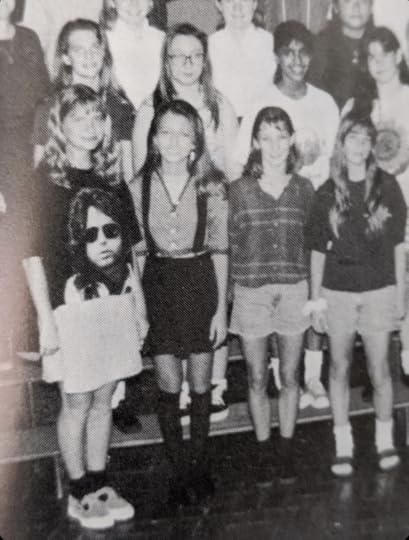
Me, front row, second from left. I haven’t dressed better, before or since. I wish I could tell her that.
I can’t really describe to you the soft spot I feel for that person I was, the way I want to hug her, the way I can almost feel her, so tiny and gangly limbed, clomping around on chunky heels like a newborn gazelle. I don’t know if I still go to the thrift store to honor her, because that sounds absolutely crazy – she’s thirteen, she’s long-gone, she’s a ghost.
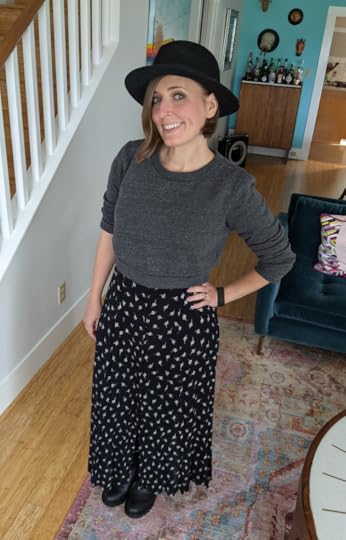
I want to tell her that it’s all going to be okay. And that even now, her clothes used to belong to someone else.
Maybe I go simply because it’s fun. Maybe 28 impossible years later, it’s still an act of defiance. I pick through other people’s cast-offs. I look up the original prices of things, and gleefully tell Rand.
“Look,” I tell him. “Look how much this jacket would have cost me if I’d purchased it new.” As though I am doing something grand for our family. As though I am providing. And he smiles, because what else can you do when someone you love is being so, so weird? You just smile and let them do it and tell them how amazing it is that they got J Crew pants for $6, even though you are now at a point in your life where you can shop at J Crew for real. Jesus Christ, you can buy so many things at J Crew.
But instead, I go to the thrift store. I have systems, I have rules. When I get home, anything I’ve bought goes straight into the wash, including me. It’s fucking great as long as you don’t mind a little cat hair and days when everything inexplicably smells like cheeseburgers and feet.
But lately, something weird has been going on.
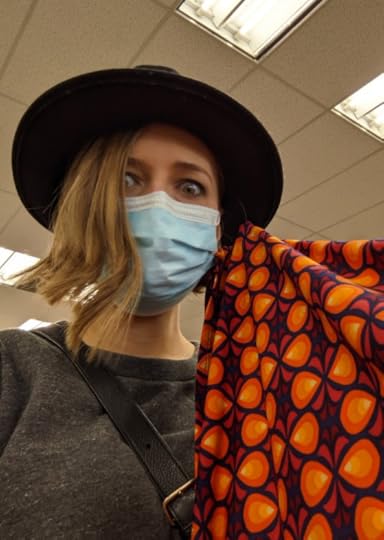
Me, trying to comprehend this print.
I’ve seen terrifying and bizarre things at the thrift store over the years. I double check trousers before trying them on, because sometimes people give them away without washing them and they don’t wear underwear and I’ll let you just imagine. I’ve found cat barf (I hope it was cat barf) and all sorts of biohazardous things, and one time a lady shopping next to me found a bunch of tiny dried fish in the pocket of a coat (she bought the coat and slipped the fish into another jacket, and I regarded this move with horror and admiration). But these clothes I’ve seen recently are … well, they are just so outstandingly ugly.
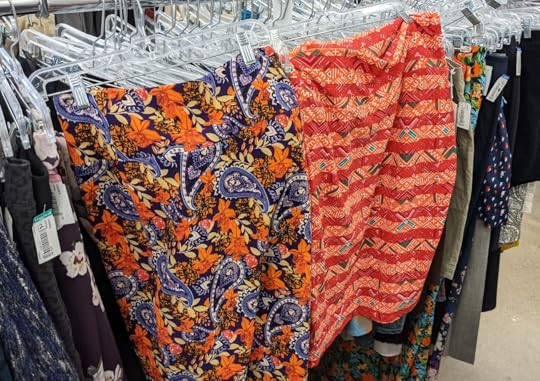
I tried to think of plausible scenarios where the patterns and colors made sense. Nothing did. Baffled, I went to go look at purses instead.
But over the last few weeks, this garish clothing has spread like a spandex pox over my local thrift store. Shirts and skirts and dresses, all so bizarrely ugly, and not a good sort of ugly, but a strange, sad, I-think-maybe-humanity-should-go-extinct kind of ugly. All made from the same weird scrunchy polyester material that makes your crotch sweat just looking at it. The labels stare back at me, LulaRoe printed on every one.
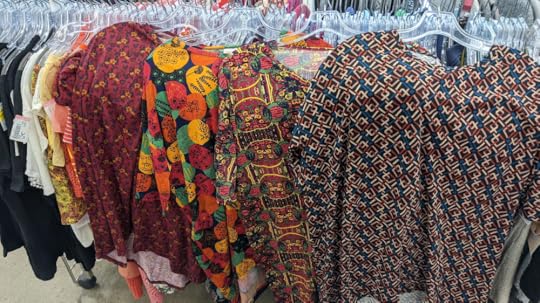
Next time someone asks me what my migraines feel like I’m showing them this picture.
If you are an American living through this panini, and inclined to watch a homegrown tirefire that is different from the one you are currently experiencing, you’ve probably already seen LulaRich, the 4-part documentary series on Prime. The series digs into the cult-like mechanics of the clothing company, and how women would get sucked into buying and selling thousands of dollars worth of the product, often incurring massive debt to do so. The ending’s not as satisfying as I’d hoped; still, you’ll laugh, you’ll grimace, you’ll be utterly confused, and that’s just while looking at the clothes.
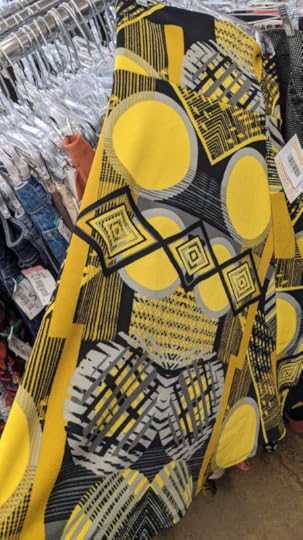
“LET’S JUST CUT AND PASTE EVERYTHING ON OUR CLIPBOARD!”
And now it seems that someone is dumping all of their unsold LulaRoe inventory at my local Goodwill. Thousands and thousands of dollars of what I am pretty sure is highly flammable clothing. Every rack was so full that I could reach in and grab handfuls of brand-new LLR clothing without even needing to look.

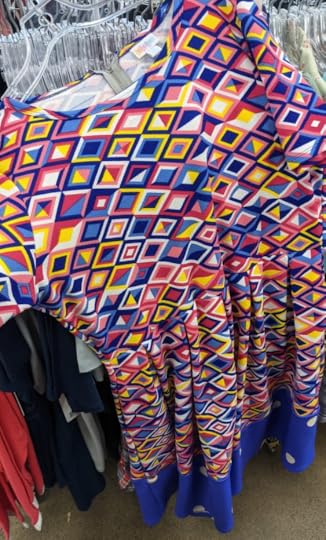
This is a dress, presumably made for an adult woman who enjoys maritime signal flags and also sweating.
I was never targeted by this particular pyramid scheme, though a few people who hated me in middle school reached out to me on Facebook and attempted to sell me smoothies designed to make you poop your way to skinniness. But it’s strange to see it all here. These awful clothes, designed to make people fit in, to make them look all the same, in the place where I’d learned to do the opposite.
I pushed pass the skirts and shirts, and kept searching for something better. Everyone else seemed to as well.