Geraldine DeRuiter's Blog, page 2
October 19, 2023
The Power of Self-Doubt
A few weeks ago, Rand and I went out to dinner at a restaurant we hadn’t tried before. The menu was mostly Pacific Northwestern – so, lots of fish and expensive – with a few Italian dishes thrown in. We settled on a couple of things, one being arancini – tiny little fried balls of risotto. It’s a Southern Italian dish, but not one my family ever made at home. Risotto was rarely consumed in my house growing up. My grandfather refused to eat it, out of what I now suspect was a long-standing and entirely justified grudge against Mussolini. (Because the wheat for flour had to be imported, the fascist dictator tried to get Italians to abandon pasta for rice, which grew well in Northern Italy. This plan did not go over well.)
The word arancini means oranges – the singular being arancio. (Which is sort of how the fried balls of rice look – nubby and spherical and orange-brown in color). So while I didn’t eat the dish growing up, I’m very familiar with the word itself. I grew up speaking Italian. And now, well, I write about food.
“We’ll take an order of the arancini,” I said, pronouncing it a-ran-chee-nee.
“See nee,” the waiter muttered.
I stared at him, confused as to what this command meant.
“Sorry?” I asked.
“See nee,” he repeated. And he looked distinctly annoyed, and a little embarrassed for me. “It’s a-run-see-nee.”
And with that, my soul quietly left my body.
My Italian is corrected on a daily basis, usually by a family. I’m not a perfect speaker, largely because Italian grammar is an absolute beast. My aunt taught college-level Italian for years and some days even she’s stumped. And pronunciation of words can be really hard, because the rules in Italian are so different than the rules in English. The letter c is particularly confusing for English speakers.
The letter c is pronounced like a hard k in Italian if it’s followed by an a, o, or u. Think carbonara or Coppola.
But if the c is followed by an i or an e it makes the sound we would associate with a ch in English. Think DaVinci. (I literally cannot think of another example that made it into English)
From there, it gets WILDLY confusing. Because if you want to make that hard k with an i or an e following it, you have to add an h. So chianti isn’t pronounced chee-ahn-tee but kee-ahn-tee. (Here’s a site that does a great job of explaining it better than I ever will.)
The weird thing is, growing up speaking Italian, I often know how to pronounce something, I just don’t know why. It’s like how we know lots of rules as English speakers that are innate, but we can’t explain them (like why “south” and “uncouth” don’t rhyme). The bottom line is this: unless someone asks me, I will not correct someone’s pronunciation of Italian words, because it doesn’t really matter!!! Also, I’m not a pretentious jerk like that. (I’m a pretentious jerk in other ways.) Making mistakes is part of learning a language or even speaking one you know well – we’re all constantly doing it.
But.
As soon as the waiter corrected me, I thought: Maybe he is right?
Maybe I, and everyone in my family, and the entire country of Italy have been pronouncing it wrong this entire time? MAYBE IT IS A-RUN-SEE-NEE?
(It is not.)
I LITERALLY WENT TO GOOGLE TO FIND OUT IF ITALY WAS WRONG AND THIS KID WAS RIGHT. AND GOOGLE SAID HE WAS.
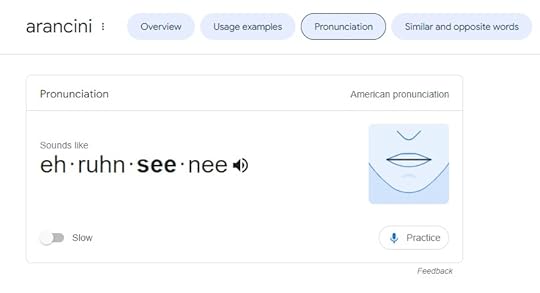 At this point, I was quietly losing my mind. I was officially being gaslit by the internet. It’s like if someone came up to you and said, “Actually those long yellow fruit are pronounced beneenees,” and you’re like, “You know what, that doesn’t sound right, BUT YOU SOUND SO CONFIDENT AND GOOGLE IS CONFIRMING IT, maybe I’m just low on potassium and my brain isn’t working. I SHOULD EAT MORE BENEENEES.”
Like, this is a language that I have been speaking since I have known how to speak. And I was ready to throw out FORTY-THREE YEARS OF KNOWLEDGE because a 24-year-old whose retirement plan is definitely crypto told me otherwise.
I looked closer at the Google instant answer. In the corner it said “American pronunciation.” And in the links below were tons of Italian cuisine sites explaining how to pronounce the word.
I was pronouncing it correctly. Or at least, the Italian way. (Again, none of this matters.)
But my self-confidence was so easily rattled by someone who didn’t know what they were talking about, just because they seemed so sure of themselves. It made me literally question how to pronounce the word orange. In the face of someone (let’s be honest: usually a dude) with a contradicting belief and a condescending attitude, I immediately throw everything I know out the window. They believe in themselves more when they’re totally wrong than I do when I’m right.

The confidence gap – the discrepancy in self-confidence between men and women – is prevalent throughout our society, and along with it comes imposter syndrome – the idea that maybe we haven’t earned or aren’t worthy of our achievements and success. A year before she published Lean In, Cheryl Sandberg told The Atlantic, “There are still days I wake up feeling like a fraud, not sure I should be where I am.”
CHERYL SANDBERG, WHO IS SUPER SUCCESSFUL AND SOLD A BUNCH OF BOOKS TELLING US ALL TO BELIEVE IN OURSELVES, WAKES UP FEELING LIKE A FRAUD. So honestly, what hope do the rest of us have?
Several studies reported in that same article found “men overestimate their abilities and performance, and women underestimate both” even when their performances did not differ in quality.
It’s a huge and prevalent problem. Women are very afraid of being wrong, because there are serious consequences when we are. One study reported by The World Economic Forum found that women and minorities face much harsher consequences for workplace mistakes than their male counterparts. According to an article in Elle Magazine, women often hold ourselves to higher standards and take failures personally. “Often, low self-confidence and negative stereotypes about women’s abilities create a vortex pulling women’s achievement lower.”
According to The Atlantic, competence is kind of irrelevant when it comes to confidence. Confident people believe in themselves, whether or not it’s justified. And you can’t just pretend, because other people will apparently be able to tell you’re full of it. So we can’t fake it until we make it. We actually have to believe in ourselves.
This is a terrifying proposition. I’m doing my best in the face of it. Reminding myself that maybe one viral post or story would be a fluke. But several is not. I’ve written a book about travel and growing up in an Italian family, and another about food and feminism that’s coming out next year (pre-order it now!). Maybe book deals and bylines in major papers don’t just happen. Maybe some of it is luck, but some of it is talent and skill. Maybe I know a thing or two about food, and feminism, and words.
Maybe I can stop saying maybe.
A few weeks later, I found myself at a pumpkin patch with friends. A small petting zoo was in the middle.
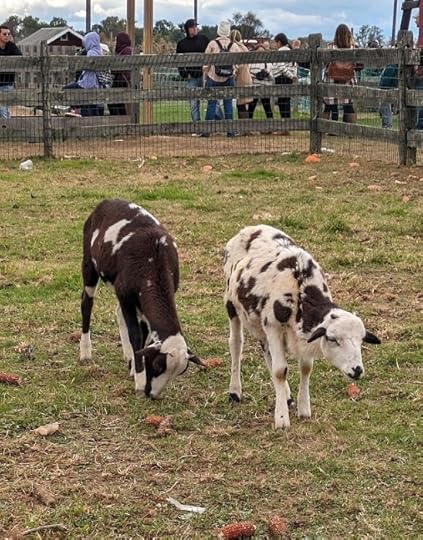
A toddler ran up excitedly.
“COWS!” he shouted.
“No,” his mother said gently, “Those are not cows.”
“Those are cows,” his father said, sauntering up.
“Those are cows?” she repeated. “Oh. Maybe I don’t know what cows look like.”
I turned around to look. The pen was filled, exclusively, with goats.
The post The Power of Self-Doubt appeared first on The Everywhereist.


September 28, 2023
A Girl’s 18th Birthday is Not a Countdown Timer
I have to warn you, this post is about Dane Cook.
This is exceptionally depressing. Honestly, most days, I don’t think about Dane Cook – not even enough to hate him. Any knowledge I have of him has been gained through some sort of pop culture osmosis. I think he made a weird creepy movie about being a stalker a few years ago. I think he’s a comedian, maybe? I don’t know of any specials he’s done, or jokes he’s told, or TV shows been on, or anyone who genuinely likes his work. But let’s accept this strange truism: Dane Cook is, apparently, rich and famous and successful for (insert reason here).
But the reason that I have decided to give a flying fuck about Dane Cook for the first time in my life, is that six years ago, he started dating a teenager. Cook was 45, and his girlfriend had just conveniently turned 18, even though she’d been to parties at his house before then. But apparently nothing untoward happened prior to her turning 18 – he was just a forty something man who was friends with a child. And then she legally became of age, at which point he realized that there was a romantic spark (gasp!), they began dating, and six years later, we get to look at wedding photos of a beautiful bride and her dad’s golf buddy.
I posted this on Threads:
Post by @theeverywhereistView on Threads
And I honestly and truly did not think that there would be Dane Cook defenders in my mentions, but of course there were, because it’s the internet. It’s just a collection of horrible, pervy hills that people are willing to die on, including one where everyone is screaming “If she’s 18, and he’s 45, it’s not illegal.”
And when you’re defense is “It’s not technically illegal!” then you might need to take a beat.
Because it might not be illegal, but it’s still really fucking wrong.
It’s not like a maturity switch is flipped when you turn 18. I remember that landmark birthday passing and feeling not different than I did at 17 or 16. My body didn’t change. My brain didn’t change. My friends and my boyfriend didn’t change. I didn’t magically undergo some process that meant that overnight I was ready to be hanging out with every single adult, carte blanche. Not everyone understood this. That regardless of whether or not I was legal, I was still a kid who needed to grow the fuck up. I remember a man stopping me while I was walking by myself one afternoon in Miami. I held up my age like a shield. “I’m 18,” I’d said, hoping it would get him to go away. “Well, that’s okay,” he’d replied. He was 37, and had recently broken up with his girlfriend, because her kids were too much.
And I remember thinking that they were far closer to my age than he was.
I’m old enough to remember the countdown timers for the Olson Twins turning 18, some relics of which still exist in dark corners of the Internet:
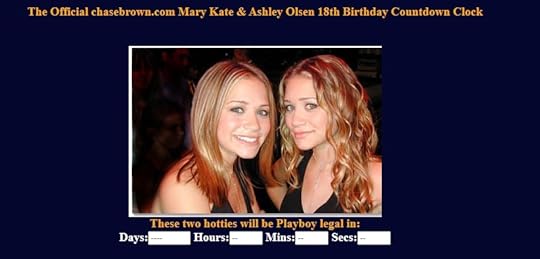
It was universal; it happened to all of us – not merely beautiful celebrities. It was something that we all sort of accepted, something girls experienced more than guys, but even the boys were not exempt. We were teenagers, and someone in their 30s felt that it was completely appropriate to pursue us. And I remember feeling weird about it, but not in a way that I could really articulate. I thought that perhaps I was just immature, and that’s why I didn’t want anything to do with someone fifteen years older than me. Maybe it was fine? Maybe I didn’t get it? Maybe we were adults, even if the guy worked at Microsoft and owned a house and we still lived in the dorms and couldn’t buy booze? And some of them laid claim to my friends, whisked them off to a world that I didn’t understand.
And I thought it was a feminist thing, to not question it. That we were adults, after all, in charge of our own bodies, and our own choices.
Now that I am old, though still not as old Dane Cook was when he started dating a literal teenager, I realize just how fucked up it all was. That none of it was okay. That yes, we were adults, that yes, our bodies were our own, but we still shouldn’t have had men who were twice our age trying to fuck us. That anyone who readily cited age of consent laws was telling on themselves – the only thing stopping them from dating someone even younger is the law. They’re youth vampires, trying to suck the life from teenagers so they can feel virile. These people see younger partners as things to own and control, as trophies to put on shelves, as conquests, as not actually people.
This isn’t the first time Cook has pursued a much younger woman. Apparently he’s had a pattern of it. When he was 38, he was romantically linked to actors Julianna Hough and Amanda Cerny who were 22, and 20, respectively. Cook’s own Instagram feed revealed that numerous underage girls have been in attendance at game nights he’s hosted at his house (which is how he met his wife, when she was underage.) And he’s one in a long line of famous men pursuing teenagers. Jerry Seinfeld was 38 when he started dating 17-year-old Shoshanna Lonstein, who was still in high school. The late Paul Walker started dating Jasmine Pilchard-Gosnell when he was 33 and she was 16. Wilmer Valderrama isn’t the worst alum from That 70s’ Show (the bar is in hell) but he’s dated numerous actors who were significantly younger than him – Mandy Moore, Lindsay Lohan, Demi Lovato – when the latter were all teenagers.
A story recently broke about Russell Brand – allegations of rape and assault, with one woman noting that she was 16 when he started pursuing her in what was technically a consensual relationship with a man twenty years her senior. She was above the age of consent in the UK, but not in the US. “It’s not against the law” is a pretty fucking shitty defense in light of all that. It becomes a nebulous thing, determined by state or national laws. Is it okay that a thirty-something man is fucking a 16-year-old if it happens in England but not in the United States? Are we somehow okay with that man waiting two years to have sex with that same teenager? Because the problem with sleeping with teenagers isn’t merely that it’s against the law. It’s that if you are in your thirties, you shouldn’t be talking to girls who don’t have the life experience to realize how fucking creepy you are. And that’s the whole point, of course. That’s a big part of why they are pursuing women (hell, children) this young – because anyone can be manipulated by an adult they care about, but teenagers are especially vulnerable. Imagine the influence that grown-ups had over you when you were a kid. Imagine how caught up you were in your first relationship. Now imagine those things colliding.
It’s legitimately fucking terrifying. And it’s not something that you grow out of. If someone has a relationship with you as a kid, the way you view them doesn’t magically morph and change because you get a few years older.
The argument that comes up again and again is that both parties might truly care about one another. But an adult who really cares about you wouldn’t try to have sex with you when you’re still figuring out who you are. The full grown men who are pursuing highschoolers who find themselves concerned about ages of consent show that they aren’t afraid of harming another person; they’re just afraid of consequences.
It makes this SNL sketch seem way less farcical.
The post A Girl’s 18th Birthday is Not a Countdown Timer appeared first on The Everywhereist.
September 20, 2023
Hey, Lauren Boebert, I get it: Theater is Super Horny.
Several years ago, I crossed paths with the rusty, hateful jalopy that is Lauren Boebert’s internet presence. The Representative had recently shoved a few firearms onto her bookshelf with the care of someone trying to shove dirty laundry into their suitcase at the end of a trip. I decided to display menstrual products on my shelves with the same abandon, just to see how conservatives might react. And as you can imagine, the responses were completely measured and logical.

HA HA HA HA HA HA. Just kidding. I got called a stupid cunt. The replies were so vitriolic and unoriginal that I actually wrote a blog post rounding them all up, because I’d heard them all before. The representative herself decided to get involved, with this comment, which is transphobic and also incoherent?

Like, I don’t know that anyone is claiming that there are 57 genders, but if there were, I think that some of those people would menstruate, and some wouldn’t, so we wouldn’t need separate products for all of them, and I wasn’t even talking about gender, and also and holy shit, I am becoming more vapid the longer I contemplate this. This level of hate is like an intellectual black hole. It actually sucks the thought out of you.
Anyway.
Recently, Representative Boebert has made headlines for getting kicked out of a performance of Beetlejuice, the musical, for what was originally reported to have been singing along too loudly and vaping inside the theater, but now has been revealed to have been singing along too loudly, vaping, being roaring drunk, making lots of noise, taking photos, and engaging in some consensual frottage with her date during the show.
For some reason, the most surprising part of this story is that there’s a Beetlejuice musical, which I literally have never heard of? And somehow it’s so popular that Representative Lauren Boebert, who is apparently an enthusiastic theater goer, knew the words to the songs?
Anyway, there has been a good amount of criticism of the Representative, especially after some leaked night vision security footage from the theater looked like a racy outtake from a VH1 reality show called CONGRESSIONAL HOUSE OF LOVE. It feels particularly hypocritical given that Boebert has specifically talked about the erosion of “traditional family values” and how drag library lunch hours were somehow harmful to children (translation: she thinks gay people are bad), and then she went on to fill her partner’s cannoli in a crowded theater surrounded by kids.
Her behavior specifically illustrates why people need to be exposed to the arts – so that they later don’t expose themselves to the arts. Because theater represents the creative apex of our species – it is poetry, unfolding before us, in flesh and blood and voice and actions. It is the most beautiful things humanity creates: prose, music, dance – coming together in real time, for us, as we sit like literal royalty once did.
And if you aren’t used to that, it can get you pretty horned up. I mean, the horniest people ever are drama and theater nerds, and the horniest and nerdiest of these undergo a metamorphosis (usually during sophomore year of college) to become exceptionally hot actors. And then the most talented of those hot horny nerds is what you see on stage before you when you go support local theater. It’s social sexual Darwinism for people who look good in hats and like to play professional make-believe. I saw Hamilton with the original cast, and for a show about a bunch of historical figures who didn’t have indoor plumbing, it involves a lot of indoor plumbing if you know what I mean. And yet to my knowledge none of us – the thousands who were there that night, and the millions of people who went to see the show before and after – got kicked out for, ahem, filling one another’s ink quills while rapping about history. Because – and here’s where things might get confusing – even if the script says that the actors can do something, you, as an audience member, cannot. It’s actually shockingly similar rules to a strip club! Whatever happens on the Beetlejuice stage stays on the stage. So you, as a mere spectator, aren’t allowed to smoke or yell or get naked or do any necromancing.
I understand this is a problem, because how could you not want to get freaky while watching a guy with mounds of student loan debt and four credits to his IMDB page dances around while dressed like this:
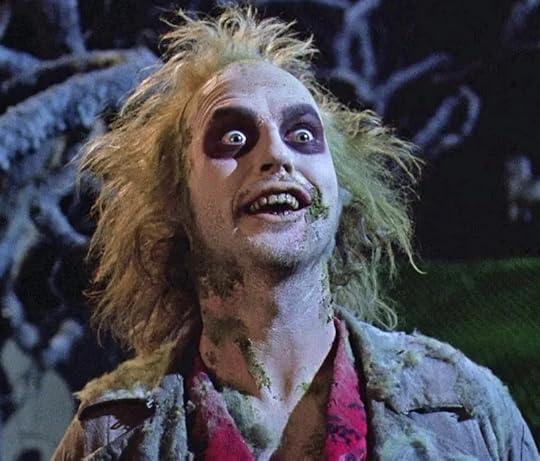
Honestly, he would test the most resolute of all of us. But the thing is, the rest of know how to behave. We have a sense that maybe our actions, if we are not careful, might hurt those around us.
And this is the fundamental problem with Representative Boebert’s whole brand of thinking, not just around this night but around everything – the problem with her specific definition of “freedom.” It’s about her doing whatever she wants, no matter who is harmed by it. It’s about throwing guns haphazardly on a shelf because that’s what she wants to do, even though one could reasonably fall off and hurt someone. It’s about vaping in a crowded theater around families. It’s about acting in a way that makes everyone around her uncomfortable, because that’s what she wants.
In all of that, she’s missing the whole point of theater, of arts in general. To connect to others. And to be reminded that the world is so, so much bigger than ourselves.
The post Hey, Lauren Boebert, I get it: Theater is Super Horny. appeared first on The Everywhereist.
August 28, 2023
Congratulations on Finishing Your Book, You Absolute Loser.
Congratulations! You just finished your book, and while we always knew you could do it, the odds in Vegas suggested that this was extremely unlikely, and some of us are out a lot of money this morning. But never mind! That’s irrelevant! Lifelong dreams have been accomplished, so does it really matter who gets thrown into the back of whose car and gets their fingers systematically broken?
Ahem. Where were we? THE BOOK. It is done. Go ahead and throw out that copy of The Artist’s Way that you bought and never actually opened. You don’t need it. You are cured from whatever creative malaise that book was attempting to solve and if it strikes again, you can, I don’t know, start drinking absinthe or something. That book is for losers and failures, something that you are not, because you took a bunch of words and spat them out into a Google doc while openly weeping. AND NOW YOU ARE DONE. Life goal accomplished. You crossed the finish line. THIS IS IT. The apex of your life.
But also, what if this doesn’t make you happy?
Ha ha ha ha ha, no, that’s ridiculous! If publishing a book – your lifelong dream since you were a kid – doesn’t make you happy, it means your unhappiness is a nebulous and intractable thing that cannot be solved with accomplishments, and that you are doomed.
So this better fucking make you happy.
Anyway, it’s filed away! It’s gone to print! No more changes can be made now. Nope. Not a single one.
Should you have taken out that line about eating dogs? It’s too late to change it, but like, are people not going to read your book because of that?
No, that’s silly.
They aren’t going to read your book because it’s bad.
Oh, god. It’s so bad, isn’t it? Like, truly bad.
Is it too late to return your advance? You should really check. Google “can I return my book advance to the publisher because I’m a coward who can’t write”. Huh. It looks like there are no results for this kind of thing because you are the first person to be this much of an unhinged Muppet.
Do you realize that this is what people dream about, and you are complaining? As an exercise, you should probably sit with that thought and write down ten reasons why this makes you a bad human being. The first one should be 1) Because I’m an ungrateful poodle.
HA HA HA HA HA, oh my god, I just realized that you changed your ex-boyfriend’s name to an alias, and the name you randomly picked is actually the name of some other guy you went to school with, and now everyone is going to think you got it on with that guy, who was, by all estimates, WAY WORSE THAN YOUR EX. HA HA HA HA HA HA HA HA LET’S GO LIVE IN THE WOODS.
Take your keyboard out of your mouth.
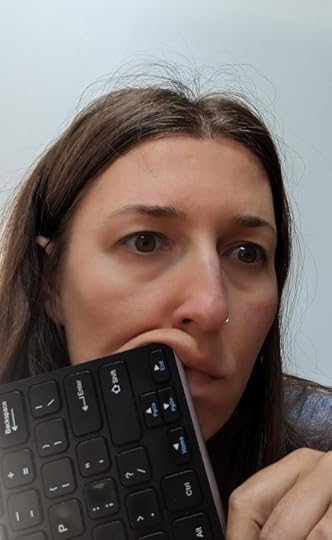
This post isn’t that funny, by the way. Did you mean for it to be funny? It’s not that funny. The book is funnier than this, right? It’s a feminist treatise about sexism and misogyny and how that defines our relationship with food, but also it needs to a goddamn romp. Especially because assholes love to say how feminists are humorless – so it needs to have people crying with laughter but also make them want to tear down the Patriarchy upon which the culinary world is built. Otherwise you will have failed as both a humor writer and in upholding your beliefs. So, good luck with that.
Oh, also, technically, you’re unemployed now. I mean, you were unemployed before, I guess, but like, you’re really unemployed now. Before, people were like, “How’s the book going?” and you would say “Oh, it’s fine” but inwardly you wanted to scream, “I DON’T KNOW, BOB, HOW IS YOUR FACE GOING?”. Which admittedly doesn’t make much sense. Much like Chapter 7.
Now when people ask “How’s it going” you can say, “The book is done!” and then they ask you what you’re writing next and WHAT THE HELL ARE THEY TALKING ABOUT? Do they go up to people who’ve just had surgery and say “Oh, when are you doing that again?” Do they walk up to people with newborns and shout, “WHEN ARE YOU HAVING ANOTHER ONE?”
Actually, they probably do do that to people with newborns. Also, did you just compare writing a book to having a baby or having surgery? Because that seems problematic. In a big way. Oh, god, did you say things like that in the book? Did you disparage new parents or surgical patients? You should probably go look through the entire manuscript again and find out. It would be good to know if you did. Not because you can change those things, but so you can freak out about it while you are trying to go to sleep.
But also: are you gonna write another one? Because people don’t just, like, write a book or two. They write like a dozen books. You should probably go find your copy of The Artist’s Way that you threw out the window with reckless abandon. And then go write a dozen books.
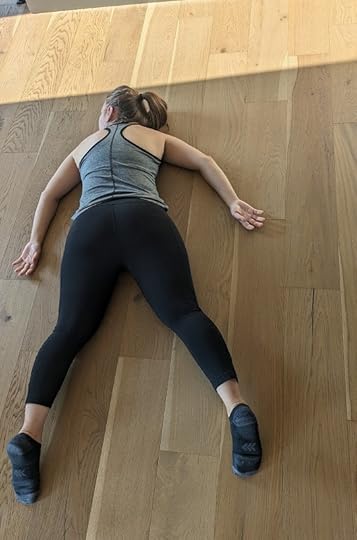
I bet if you wrote a dozen books, you’d be happy.
P.S. -For realsies, though, I did just finish my second book, which will be out next year. If you want a couple of reminders about when it’s coming out (I promise, I won’t be an excess asshole about it) you can join my Super Cool Email Club in the nifty box below or by clicking that text link.
The post Congratulations on Finishing Your Book, You Absolute Loser. appeared first on The Everywhereist.
July 13, 2023
It’s The End Of the Bird As We Know It: Thoughts on the End of Twitter
Last week, Twitter … did something. I don’t actually know the machinations of it, to be honest, and I’m at the point where I’m a little too fatigued to care. I heard whispers of something amiss. That Google could no longer crawl the site; that people were getting notifications that they’d exceeded their daily recommended allocation of tweets, a limit which never existed before. This time, I didn’t even bother logging in to check what the problem was. In recent months, it’s felt like a problematic teen that I’ve struggled to coparent with several million other people; I, finally, had had enough. Let it do what it wants. It’s going to end up dead in a ditch if it keeps up like this.
I’ve announced the end before, time and again, when he took over, when I lost my verified status, when my mentions started to once again fill with hateful vitriol and bot accounts because everyone who oversaw user safety had been fired. I said my good-byes, and slowly made my way to other social media platforms which promised to be better versions of it, but I kept wandering back. Afraid to leave out of the fear that when I did, things would never be quite the same again. But that fear ignored a simple truth: that the site has already changed, that so many of the people I loved had already left, that the safeguards put into place to protect us were long gone. The party’s over. Unwilling to leave gracefully, like so many others have, I’m waiting to be kicked out.
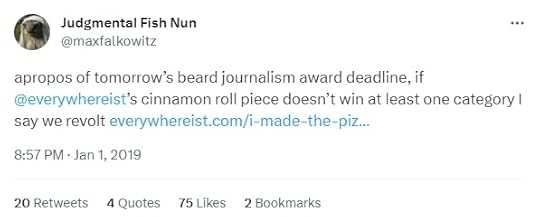
It is, of course, insufferably self-indulgent to eulogize the inanimate. To do so is purely a reflection of our own egos, of what the thing meant to us. But it’s impossible not to bask in ourselves, especially about a platform that demanded we do just that. Twitter has shaped my professional life for the last decade and a half. As a writer, it was the largest audience I had. The strength of the platform helped me sell not one but two books, both of which went to auction. I got assignments writing for major publications after editors saw my tweets. Twitter was the reason I submitted my work for a James Beard Award, based on a message from Max Falkowitz (and further loving intimidation from my friend Naomi):
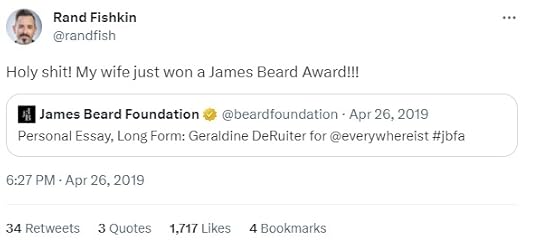
And it was there that I learned that I won, while standing on a sidewalk with Rand in Victoria, BC, slowly refreshing my feed on my phone. I’d been invited to the ceremony in New York. Convinced I didn’t have a chance, I decided not to make the trip all that way to simply find out I’d lost. I remembered what my friend Laura (who, along with many dear friends, entered my life via Twitter) told me: if you win, you won’t care where you are. (She was right, of course.)
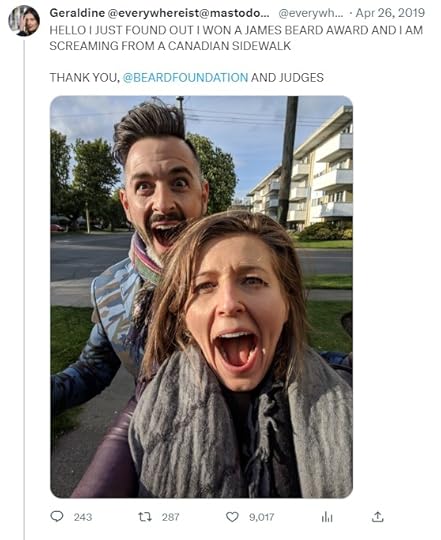
This wasn’t unique to me – Twitter made it so that we misfit poets were able to have careers that once seemed impossible. We now had a platform on which to telegraph our work out to the world, to announce tour dates and gigs and speaking events and book launches and shows. The things we made had a chance to go viral, to be seen and shared by important people who might change our lives. Zoe Sandler, who eventually became my agent, found me because of an article I shared. My contacts at major publications first learned of my work by reading a post that went viral on Twitter. My second book proposal rested, in part, on articles that saw a much wider audience because of who retweeted them, on praise from luminaries in my field, parceled out 140 characters at a time.
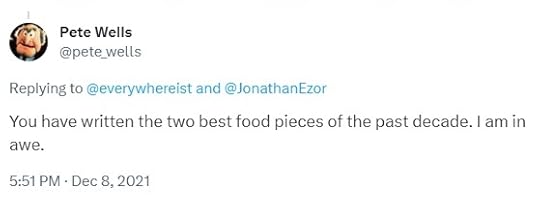
I first joined the site in 2007, pre-dating even this blog, under the handle of @mysteryguest. The platform then required users to send tweets via text, and I would type them out in T9 from my flip phone. Where photos were not embedded and quote tweets did not exist. That account still exists, filled with glimpses into my life as a 20-something that makes me feel as though a thread is winding itself around my heart again and again, drawing tighter. The feeling of longing for the young person I once was.
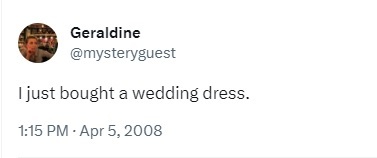
Mixed with this longing is the relief that comes from no longer being that person. That’s the monkey’s paw catch of all of it. Back then, all I wanted was the life I have now: the book deals, the bylines in major publications, the press engagements, and the travelling around with the love of my life. This is the dream. It’s here. I’m one of the luckiest people in the world, and Twitter played a crucial role. But when I look back through it, I find the fossils of my youth, the years when I was all potential. Here, from the other side of my accomplishments, I find myself wishing for that world, one full of uncertainty and newness, when everything was still in front of me. I feel like maybe I could have done more. Or done things differently.
26 to 43 is an immense journey; mine is charted on a single social media platform.
Twitter was not just a tool we used in our careers, but a scrapbook for our lives. My friend announced his son’s birth. I shared news of my brain tumor and impending surgery. I’ve seen engagements, and weddings, and funerals announced. Lives lived, in an endless stream. We shared news events, we celebrated and grieved together, we watched as the world slowly slipped into something ugly (or perhaps the ugliness was always there, and some of us were just becoming aware of it) and some of us tried to rally against it. And some of us just tweeted, and thought that was enough.
I am glossing over the bad. This is what we do in eulogies – we sugarcoat things. So I do not mention the time my account was hacked, or all the times I was targeted with a firehose of hate, or the guy who threatened to burn down my home; I seem to have a convenient, specific case of amnesia about the users who’ve doxed my friends, and sent the FBI to their doorsteps. The way Twitter became a breeding ground for Nazis and fascists, how horrible people convened and terrorized others off the platform. How it fueled my depression and anxiety and completely destroyed my productivity, so that the only times I ever wrote were on the platform, in a desperate plea for engagement. How in the weeks and months (and possibly years) after the 2016 election (which coincided rather brutally with my father’s death) I sat and stared at my phone for hours, unable to move. But I assumed, somehow, that goodness would win. Like any abusive relationship, I thought I could change it. I just needed to stay on Twitter, feeling awful and doing nothing else.
And in the end, I mistook it for living.
It’s hard to think about rebuilding, about going somewhere else, about having your career thrown into chaos when you’ve spent the last decade and a half amassing an audience on a platform you assumed would exist forever. My second book is coming out next year, easily the greatest accomplishment of my life, and I feel like I’m screaming into the darkness about it. I’ve started up accounts on mastodon, on Threads (I’M INCLUDING LINKS BECAUSE I HAVEN’T LEARNED ANYTHING), on whatever the next big thing will be (“Follow me on all of them!” I plead, along with everyone else). This is what we are supposed to do, this is how the internet has trained us. We have to compete to survive, if that’s how we’ve built our careers. Perhaps none of these sites will fill the Twitter void. And perhaps that’s for the best. Maybe it’s time to put the bird to rest. It was wonderful to us for a while, and it was also horrific, and it’s gone now, and we’re messed up about it, because that’s what grief is.
I remind myself that life was happening elsewhere; it always was. That even the friends I made on the platform are not there anymore, but are with me, real and wonderful and solid. The things we’ve built are bigger than the site. Twitter amplified my work, but I was still the one who created it, on this blog.
I come back here, to where it all began, and I get back to the thing I should have been doing all along. I write.
The post It’s The End Of the Bird As We Know It: Thoughts on the End of Twitter appeared first on The Everywhereist.
December 15, 2022
A Meeting Between Eartha Kitt and a Record Exec Regarding “Santa Baby”
October, 1953. New York City.
Record Exec: So Eartha, we just heard the preliminary recordings for “Santa Baby.”
Eartha: Lucky you.
Exec: Uh, yes. Thank you.
Eartha: You’re welcome. I assume we’re done here.
Exec: Uh, no. There’s more that we need to discuss.
Eartha: Well, lets make it snappy. I promised Orson Welles we’d eat canapes off of Marlon Brando at 3 and I can’t be late.
Exec: …
Eartha: The canapes get soggy.
Exec: …
Eartha: Orson hates soggy canapes.
Exec: So, uh, … the vocals are great.
Eartha: Of course they are.
Exec: The issue is that … well, the mood of song.
Eartha: The mood is perfect. It’s Christmassy, or whatever. It’ll make people feel (she flutters her hands dismissively).
Exec: Yes, but … some of the lyrics. You tell Santa to, uh, ‘hurry down the chimney.’
Eartha: (Lights a cigarette, takes a long drag.) Yes. He’d better.
Exec: It’s a bit … suggestive.
Eartha: Yes. The chimney being widely-known to be the vaginal canal of any home.
Exec: (coughs loudly) Ah, uh, excuse me. It’s just that … it doesn’t quite capture the holiday spirit.
Eartha: What on earth are you talking about? It’s basically a shopping list. It’s a Capitalist dream. Even Joe McCarthy’s flag pole will get a little straighter after he listens to it. What’s more Christmas than that?
Exec: It’s supposed to be a flirty song about someone asking Santa for everything on their list, because they’ve been good.
(Eartha merely raises an eyebrow. The exec starts sweating profusely.)
Exec: Uh, and see. The thing is. The way you sing the song … it sounds like … like you want to … uh … like perhaps you’ve … Like you want to …
Eartha: Like I’m going to fuck Santa?
Exec: … Yes.
Eartha: Of course it does. That’s the whole point.
Exec: (Gasps and whimpers softly.) But … but it sounds like you are going to have sex with Santa in exchange for all of these gifts you’re asking for.
Eartha: Would you rather I go uncompensated for my efforts?
Exec: Well … right. (Starts dabbing forehead with handkerchief.) Okay, the thing is … we can’t play that on the radio.
Eartha: Of course you can.
Exec: People are going to be deeply uncomfortable with the idea of you wanting to have sex with Santa.
Eartha: Why?
Exec: Because!
Eartha: …
Exec: Santa doesn’t have sex!
Eartha: (Barks out a quick laugh, slamming her hand on the table.) Everyone has sex, sugar plum. Santa is a sexual being as much as you or I. You’ve heard the poem. He was chubby and plump – a right jolly old elf. What on earth do you think that is referring to? A creature who is sneaking into your home in the quiet of night to impregnate your mother, your aunts, possibly your grandmother if she’s up for it, and return the following year to collect the infants and leave gifts in return.
Exec: I… I’m sorry. What?
Eartha: Where do you think those little elves toiling away in his workshop come from?
Exec: You … you think the elves are-
Eartha: The inevitable result of St. Nick’s carnal passions. Of course.
Exec: Santa’s elves are not his children!
Eartha: If you have another theory I’m willing to hear it. The only thing native to the Arctic are polar bears and walruses, not tiny pointy-eared toymakers. Either Santa has populated the North Pole with the fruits of his loins or he’s enslaved an entire species of tiny elves and dragged them to a frozen hellscape to build toys for children. Pick your poison.
Exec: The elves make toys willingly!
Eartha: Really.
Exec: (Exhales heavily.) Santa is not a father.
Eartha: Would you like me to ignore how unbelievably thick you’re being right now? He’s literally Father Christmas.
Exec: (Shakes his head as if to clear it.) You’re suggesting that Santa is the father of all of his elves, which he had with various housewives across the globe? And no one else notices that they’re carrying his children for a year?
Eartha: Look, I don’t know the details of an elf gestation period. But I’ve known women who were completely able to conceal their pregnancies by simply carrying around large, strategically placed bowls of fruit for most of the 1940s.
Exec: And Mrs. Claus is okay with this arrangement?
Eartha: I should think so. I’m no gingerbread home wrecker.
Exec: Well (rubs forehead) … even if Santa has sex, people don’t want to be thinking about it.
Eartha: Well perhaps they should start, because it’s a fact of life, darling. This is the hard truth behind Christmas. Why do they think that old elf is so jolly, anyway? Because there are women who are willing to tie his plump wrists to their bedposts and ride. his. sleigh.
Exec: Eartha-
Eartha: Please. Call me Ms. Kitt.
Exec: (Flustered.) Ms. Kitt. We need music that people can play for their families. For their children.
Eartha: I guarantee you, my little peppermint stick, people will play that song for decades and it won’t occur to them what they’re listening to. They’ll decorate the tree and the children will play with their toys and eat cookies and finally grandmama will raise her head and say “Is this song about fucking Santa?” and they’ll tell her to be quiet and give her another dose of laudanum.
Exec: Aren’t you at all worried about your career in this scenario?
Eartha: My previous single was called “I Want to Be Evil.” So, no.
Exec: We’re going to get boycotted. The southern radio stations are saying they won’t play it.
Eartha: Honey, please. The south was gonna ban whatever I did. It just means people will have to buy the record. (Stands up from table.) I’ve got to go. Orson’s waiting and Marlon’s probably sweating all over my rumaki. Release the song.
Exec: You’re … you’re sure?
Eartha: Trust me. It’s going to be the biggest holiday hit of 1953.
The post A Meeting Between Eartha Kitt and a Record Exec Regarding “Santa Baby” appeared first on The Everywhereist.
November 21, 2022
You Do Not Need to Make a Pumpkin Pie From Scratch. Ever.
I need to tell you something. Something very important.
Are you sitting down? It’s not strictly necessary. You can stand if you want. Do you need a pen? I guess you don’t need one of those, either. This isn’t a particularly long message. Are you ready? Okay.
You don’t need to make a pumpkin pie from scratch this Thanksgiving.
Actually, you don’t need to make a pumpkin pie, ever.
*waits for a moment while the weight of this information sinks deeply in*
Do you understand what I’m saying? Every year, the Pumpkin Lobby (note to self: maybe see if this is actually a thing) gets together and convinces the world that every single novelty food item made between September 21st and November 30th must contain pumpkin. And that’s … fine? I sort of like pumpkin! It’s sweet and spicy and tastes like you’re eating the candle section of TJ Maxx, which I am problematically okay with. But the Pumpkin Lobby got greedy. It wasn’t enough that everything you ate had to contain pumpkin, you also had to buy pumpkins and lug them into your home as whimsical fall decoration. So everyone who comes in will think that they’ve entered an autumnal fairyland and ignore the fact that a lot of the gourds look exactly like goblin genitalia. (Are pumpkins and gourds the same thing? I DON’T CARE. THEY FALL UNDER THE PUMPKIN LOBBY’S DOMINION, PROBABLY.)
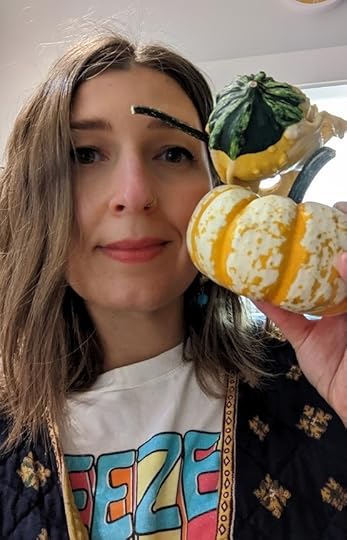
WHY AM I HOLDING THEM THAT CLOSE TO MY FACE?
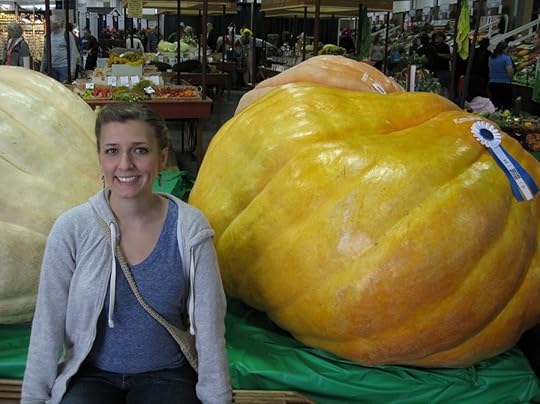
Archival photo of me, circa 2012 or so, trying not to look terrified in front of a giant pumpkin. (Pumpkin fact: they can sense fear!)
And then, because they were not done with you yet, the Pumpkin Lobby (a thing that definitely exists!) decided you HAD TO MAKE YOUR OWN PUMPKIN PIE or the holidays would be ruined. So you bought can after can of pureed pumpkin, which only serves one purpose (to those of you saying “No, it doesn’t” – stop lying to yourselves) and put it in some godforsaken shelf at the back of your kitchen, where it will remain until you move or die.
Some of you endeavored to make pumpkin pie yourselves. It took approximately fourteen hours and inexplicably dirtied every pan in your kitchen. It came out of your oven with a fissure like the San Andreas across the top of it. I say this as someone who bakes a lot: pumpkin pies are notoriously labor intensive and hard to get right. Any custard-based pie is. If you overcook it, it turns grainy and somehow watery? If you undercook it, it feels like you’re eating baby food and will make everyone just a little bit violently ill. Plus, you have to cool it for approximately 4 days because there’s nothing worse than warm pumpkin pie. You have to know precisely when to take it out of the oven, which is slightly before you think you need to take it out, and anyway, that information isn’t important because YOU DO NOT NEED TO MAKE A PUMPKIN PIE. (Don’t get me started on the crust.)
It is takes forever, and the result, I have found, is more or less just as good as when you buy it from the store.
“Oh no,” you say. “That cannot be.” You go on to tell me a beautiful story about your family pumpkin pie recipe. I nod. It is very lovely.
You also don’t need to make it. Will it be better than the store bought version of the pie? Maybe. But only slightly. Will it be worth the effort? Absolutely not. The delta between the best and worst pumpkin pie in the world is not that big, friends. I guarantee you no one, no single person on the planet, has ever said, “Oh, my favorite dessert is pumpkin pie.” That is an entirely new sentence, never uttered.
A friend of mine once took a pumpkin – the whole, round, adorable … vegetable? (Note to self: look up what pumpkins are.) He scooped out the insides, cooked it up, pureed it, mixed it with spices and eggs and cream and poured it into a homemade crust and baked it lovingly. And after it was over, after the days he spent working on it, he looked at me and said, “None of that was worth it.”

A perfectly lovely, non-pumpkin pie I made.
Listen to me. Listen carefully. I am reaching through the internet and I am taking your head in my hands. I am trying to help you and ease your burden during this hellscape holiday season. Or maybe I am just trying to help myself. Either way, this is important. The best bakers I know will make fruit pies for the holidays, and then they will go out and buy a pumpkin pie. After all, it feels traditional to have one at the table (or maybe it just feels like someone from the Pumpkin Lobby will hurl a decorative gourd at your knees if you don’t). And I suppose if you want to make one from scratch, you can. But you don’t have to. You really don’t.
You never, ever need to make a pumpkin pie
P.S. – (whisper-shouting) You don’t need to make cranberry sauce, either.
The post You Do Not Need to Make a Pumpkin Pie From Scratch. Ever. appeared first on The Everywhereist.
July 13, 2022
I Tried 21 Flavors of Mountain Dew For Some Reason.
Explaining why I embarked on a quest to consume as many different flavors of Mountain Dew as possible is not an easy task. Why am I voluntarily drinking a beverage whose ad campaigns seem to vaguely suggest sexual violence? Why am I forcing my kidneys to undergo the aging technique used in that Benjamin Button movie to make Brad Pitt look like a testicle? Why am I doing this twenty-one times?
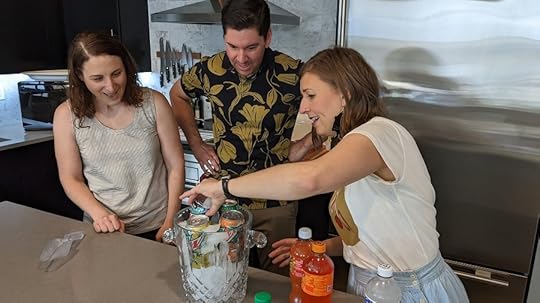
I’ve tried to find the logic in my actions, and as best I can tell, it’s this: sometimes, the world becomes a dark place, and you desperately need a distraction from all of it. Sometimes, you need to be reminded that your body is still yours, and that you can do with it what you want, no matter what anyone else says. Am I actually blaming my Mountain Dew escapades on the Supreme Court’s decision to overturn Roe v. Wade? No, of course not.
But like, those fuckers didn’t help. I’m not normally compelled to drink Mountain Dew Overdrive, which professes to have “a bold, charged citrus punch” flavor, and has a bear that looks like it’s an anti-vaxxer on the label. I can only assume Kavanaugh is somewhat responsible.
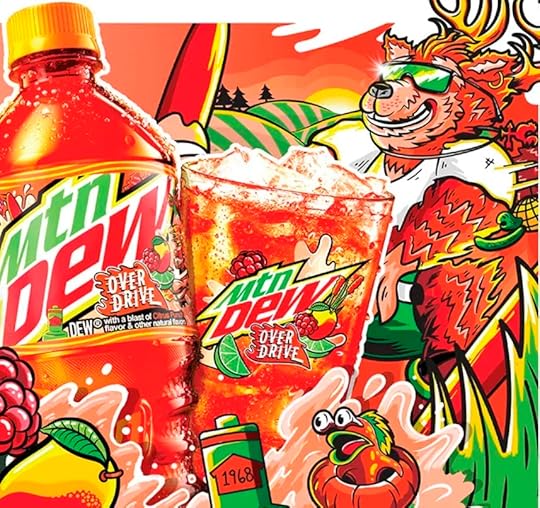
What is going on with the fish? Is that a fish?
And so, I hunted down 21 flavors of Mountain Dew, or Mtn Dew, as it was recently and unnecessarily rebranded. You are probably saying to yourself, “I did not know so many flavors of Mtn Dew existed.” That is a reasonable response. If someone can name more than three flavors of Mtn Dew off the top of their head, they probably aren’t fit to live in society. What I’m saying is that this project has ruined me.
Mtn Dew has a following so devoted it makes Catholicism seem like a casual hobby. Fans of the drink post photos of their collections online, bottles and cans in a Lisa Frank array of hues. I stare at a picture taken in someone’s wood paneled basement, in a subreddit specifically for Mtn Dew enthusiasts (because the internet, for all its faults, has guaranteed us this: no matter how esoteric our passions, we need never feel alone). Meticulously arranged, some have been custom made, because the beverages in question are only available in fountain drinks. Other fans weigh in, inquiring where to purchase rarer bottles. I try to understand what would propel someone to buy a stale, questionably-stored bottle of Mtn Dew from eBay.
Three weeks later, I’m doing it myself.
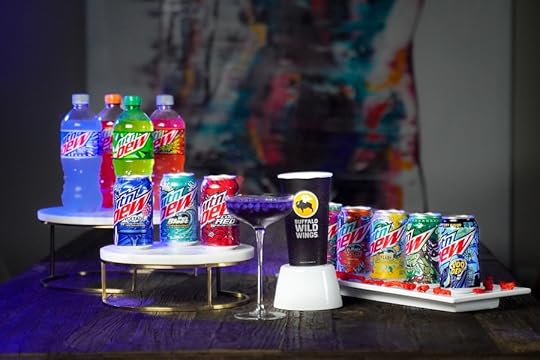
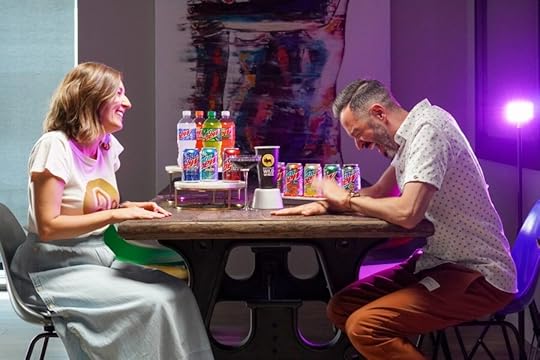
Some of the Dews sampled in this endeavor.
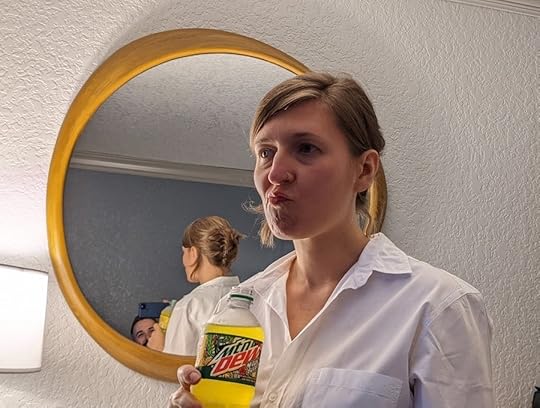
I first crack into a bottle in a Florida hotel room, a setting where nothing good has ever happened. Under the guise of scientific rigor, I try Original Mtn Dew first. The taste is vaguely familiar, reminiscent of something, though I can’t quite say what that something is. Sprite claims to have flavors of lemon-lime, Crush is a saccharin orange, and Coca-Cola tastes like, I don’t know, cocaine? And while the soda has, for decades, claimed to “take flavor to the extreme,” original Mtn Dew never actually professes to taste like anything. There is something brilliant in this – if you aspire to nothing, you disappoint no one.
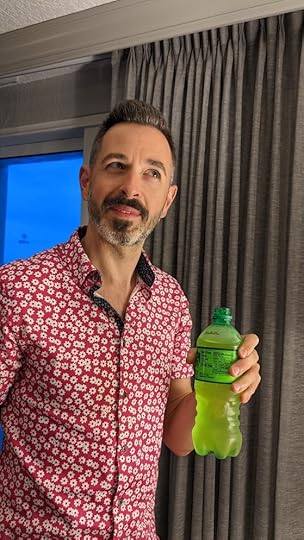
My husband takes a sip and realizes: he has never tried Mtn Dew. Not once.
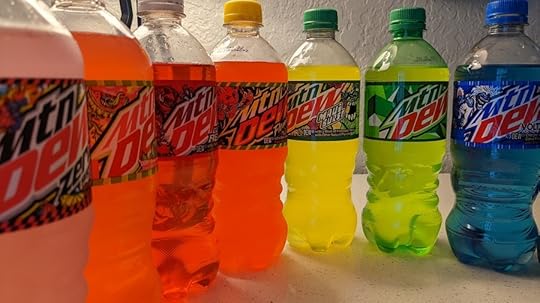
What followed was a journey deep into beverage purgatory, a strange sort of limbo where things taste like nothing but sugar, occasionally like bubble gum, and invariably like defeat. The focus groups for these products consisted of a cardboard cut out of Randy “Macho-Man” Savage and a beer koozie that says “Don’t Blame Me, I Voted For Titties”. I have listed the flavors in no particular order because there is no ranking system here. They are almost all equally bad, and half of them are the same drink. It is an egalitarian system of suckiness, wherein even the best variant of Mtn Dew is still just Mtn Dew. Also, “Mtn” isn’t even how you abbreviate the word “mountain.”
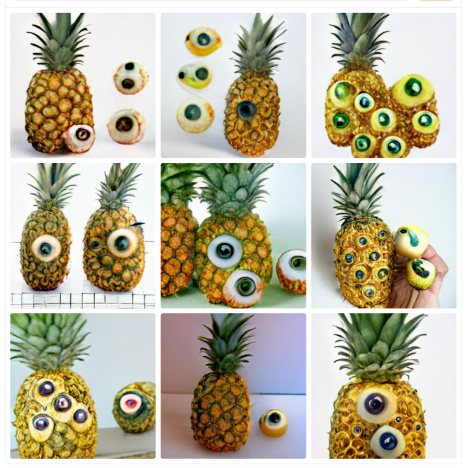
Maui Burst (pineapple) – Dollar General Exclusive. You know how, sometimes, those AI image generators create a Hieronymous Bosch visual of horrors based on a few innocuous prompts? That’s what Maui Burst taste likes. Instead of pineapple soda we got pineapples with eyeballs that feed on children’s nightmares.
It contains no juice and I’m pretty sure the label is racist.

This giant Tiki head feels … problematic.
Code Red (cherry) – Have you ever eaten a maraschino cherry and thought, “I want to drink the syrup that this was floating in”? Of course you haven’t. You’re not a toddler. This flavor has a sort of mythical status among Dew fans, and was briefly discontinued because rats that drank too much of it kept creating their own crypto-currencies. The mascot is a ‘roid-raging iguana.

Voltage (blue raspberry plus ginseng) – There is no such thing as a blue raspberry. The idea of making raspberry flavors blue started in 1958 as a way of differentiating it from other red flavors. None of this matters, because voltage doesn’t taste like raspberries. It does, however, taste blue. Like a melted rocket pop. My husband noted it had a faint amaro flavor, because he is lying to himself.
(At this point, four Mtn Dews in, my notebook simply reads, “I am so sad”)
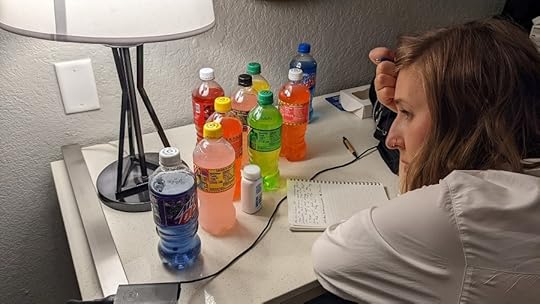
Me having an existential crisis.
Purple Thunder (berry plum) – Circle K exclusive. This was … not that bad? Had I actually rotted out my brain? It tasted a little like a purple Skittle, which I’ve been told is actually the exact same flavor as every other Skittle. Reminiscent of purple Kool-Aid. Husband said it had a “cola-like complexity.” I threated to make him drink more Code Red.
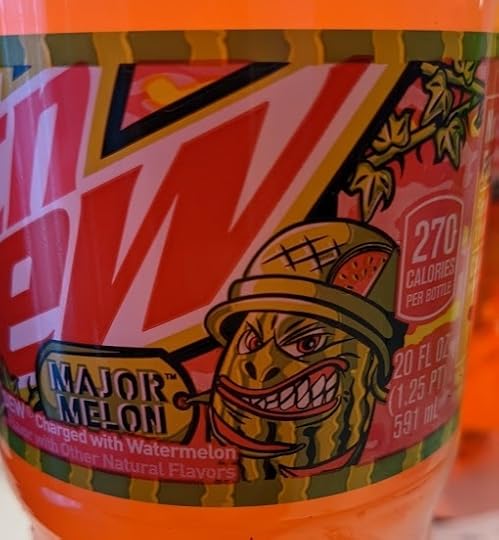
Major Melon (watermelon) – In the swirling abyss of garbage drinks, we found rock bottom. It tasted like liquified watermelon Bubble Yum. The mascot is a watermelon that does war crimes.
Spark Zero Sugar and regular Spark (raspberry lemonade) – There was only one bottle left of regular Mtn Dew Spark at the Circle K in Melbourne, Florida, and it was covered with an unidentifiable dark substance. At this point, my body had become a carnival ride, so it seems weird that I would care. But that’s how I ended up with this zero sugar flavor which tasted like aspartame and literally nothing else. As my husband put it, “It’s like someone made the diet in Diet Coke into a drink.” I eventually found the regular variant of Spark, which tasted like a wet pixie stick.
Mtn Dew Flaming Hot (spicy citrus) – I’m an old-fashioned gal. I like my sodas cold, my Cheetos flaming hot, and my sodas not to taste like my Cheetos. This flavor, inspired by, yes, hot Cheetos, is either the apex or the nadir of our society. Scientists kept asking if they could, but they never stopped to ask if they should. My husband noted that the flavor was “aggressively nasal” (the spiciness feels like extra carbonation). If you drink this, be warned: you may start crying, finally confident in the knowledge that humanity is done for.
Note: The following Mtn Dews were purchased in a gas station in Philadelphia, where my friend Wil insisted we get fried chicken that came with a sodium warning. While we were there, two women and a man inside were shooting a video on a flip phone, and I heard a phrase that will live on in infamy: “Go back to the hot dogs and we’ll take it again.”
LiveWire (orange) – Am I losing my mind? Is LiveWire not that sweet? (No, it has 1.5 times the amount of sugar an adult human should consume in a day.) Is my body merely growing accustomed to the Dew, the way we do to heat, to pain, to the loneliness of existence?
Baja Mango Gem (mango) – The mascot is some sort of sea demon, it smells like liquid penicillin, and tastes vaguely of marshmallows. The bottle tells me to grab all the Baja flavors to win a treasure. Perhaps the treasure is the Mtn Dew itself. If it is, I will set fire to my rental car.
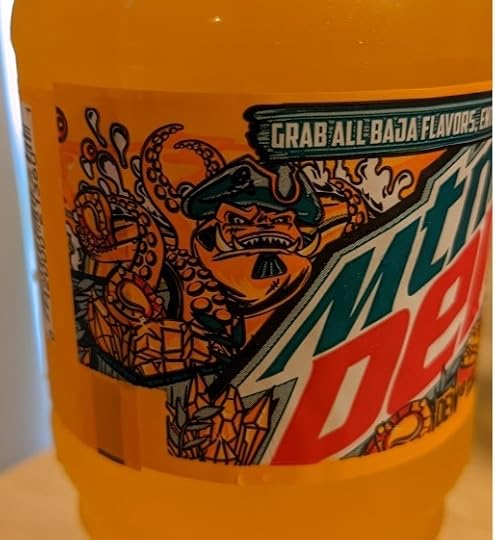
Baja Gold (pineapple) – This is just Maui Burst, repackaged. No way around this: I now have “Mtn Dew Maui Burst vs Baja Gold” in my search history.
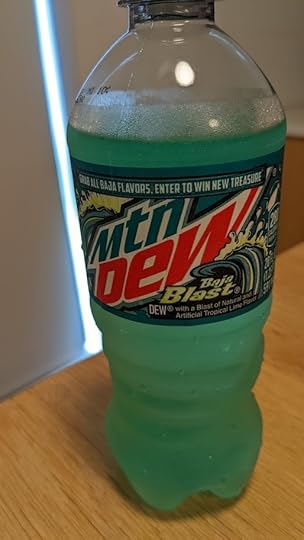
Baja Blast (tropical lime) – Have you ever wanted to taste something the same color as Windex, but allegedly less likely to make you go blind? This tastes like bland fruit punch and is somehow vaguely vegetal. Later, I look at my notes. “Meaningless,” I’ve written. I’m not sure if I’m referring to the drink or my own Dew-ridden existence.
Dark Berry Bash (berry) – Applebee’s exclusive. The great thing about Philadelphia is that no one gives a fuck, so when you walk in to a bar at Applebee’s at noon on a weekday and order a Mtn Dew to go and no food, they’re like, “Fine, whatever.” According to the website, Berry Bash will “take your tastebuds on a trip” “in the depths and darkness of space” where “flavors collide” and for a second I’m confused as to whether you’re supposed to drink it, or space-fuck it.
It tastes fine.
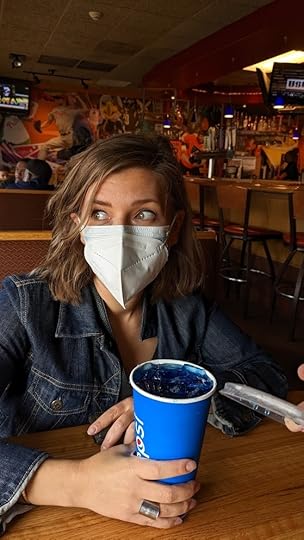
It is the exact same color blue as the cup. This feels … alarming.
Note: Upon finding out that we needed to hit up a Buffalo Wild Wings to track down an elusive Dew, my friends Scott and Lizzie, in a show of friendship that warms my brittle heart, decided to join us. They also helped us take photos with Mountain Dew and friggin lasers (Scott is a food science geek and you should definitely check out his weird adventures). Also, we ate a lot of chicken wings and now my blood is pudding.
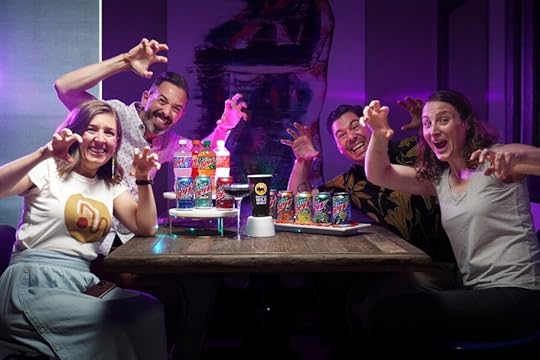
Legend (blackberry citrus) – Buffalo Wild Wings exclusive. It is a strange thing to find yourself in a Buffalo Wild Wings for the first time, and the reason you are there is for Mtn Dew, something which you do not actually enjoy. It causes you to take stock of your life as you stare into the inky depths of this drink. Others described the taste as “a melted popsicle”, “a less sweet Blue Gatorade”, and “a depressed grape.” It tastes like Berry Bash, and Purple Thunder. Either it’s having an existential crisis, or I am.
Overdrive (citrus punch) – Look, does it even matter what I say here? Do you actually care what Overdrive tastes like? No. It tastes like every single other Mtn Dew, and it tastes like nothing. At this point in the project, I have a scorching UTI, because I’m pretty sure my kidneys have shut down. This is my urethra:

Baja Punch (tropical punch) – Discontinued. Have you ever thought to yourself, “I wish my teeth were softer”? Because I have a solution.
Baja Flash (pineapple coconut) – Discontinued. In every project, there is a point where things get so bad, they become a truly spectacular kind of awful, and that is what Baja Flash is. It smells like sunscreen, like the liquid hedonism of spring break. There is something illicit about drinking it, like eating an entire tube of Chapstick. “This is rad,” I whisper, cackling, as I take another sip.
Thrashed Apple (green apple) – The flavor of this drink is fleeting and crisp, like a fall day. At least, I thought it was, until everyone else at the table told me I had Mtn Dew-induced scurvy. It tasted like carbonated apple cider. This was the clear winner for me, and by winner, I mean “It doesn’t make me want to cry.”
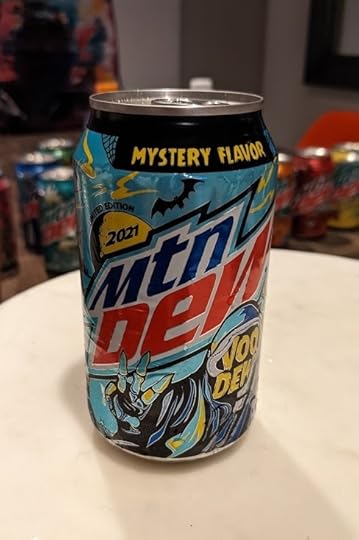
VooDoo 2021 (mystery flavor, revealed to be fruit candy chews) – Discontinued. Apparently, every year for Halloween, Mountain Dew creates a mystery flavor with a candy theme (past flavors include candy corn, and, I don’t know, razor blades tucked into apples, probably). The only way to track this down was to purchase an expired can on eBay. This brings up an important question: does Mtn Dew demonstrably degrade over time? And friends, the answer is: please let this project be over soon.
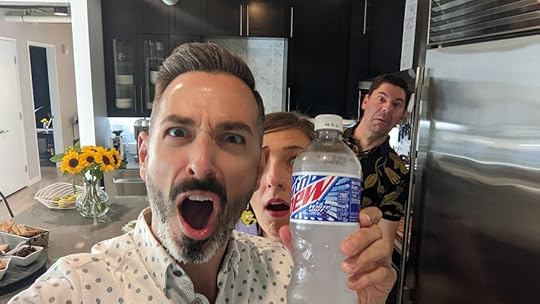
White Out (citrus) – This is apparently the white whale of all Mtn Dew flavors, nearly impossible to find, and another item that I got from a stranger online (sorry, Mom!). I could no longer tell you what I was tasting, perhaps in part because I’d decided to use flaming hot Cheetos as a palette cleanser between sips. (My body is a decaying temple.) Everyone else said that this iteration of Mtn Dew was inoffensive, and not unlike Squirt, though with less of a overt grapefruit taste. I don’t know. Honestly, does it matter? Does anything matter?
—————
The Roman emperor Nero was said to have played the fiddle while his city burned. It’s a myth, of course – the fiddle would not be invented for another 1,500 years. It’s just an allegory for when the devastation around us is so bad that we do nothing. While I worked on this project, the news ticked steadily on with a litany of terrible headlines. My foray into the depths of Dew was a welcome distraction – a technicolor, carbonated parade, a symphony of sugar water. If this was America at its worst – terrible beverages, in unnatural colors – we would live in a wonderful place.
This is the fiddle I play as the flames encircle me. It is super extreme.
The post I Tried 21 Flavors of Mountain Dew For Some Reason. appeared first on The Everywhereist.
April 29, 2022
Why Free Speech Isn’t An Excuse
As my online persona has grown over the last decade and a half, so has the volume of hate I have received. I have received letters at my home, had politicians come for me, and received every threat you can imagine, including one individual who told me that I was “too ugly to rape.” (Please, tell me, what is the corollary to this statement?)
After the Batali piece came out, my Twitter account was hacked, and I decided I needed to approach the issue from the distance of academic detachment, lest it overwhelm me entirely. I started researching the nature of online hate. I poured through academic journals. I tried talking to some of the people who sent me hateful comments (something I don’t recommend). I cried in my car a few times at the sheer terror of engaging with people who said they wanted me dead. I asked one guy why he bothered following me, and he replied that he needed to remember “that people like me existed.” Even though, in his opinion, I shouldn’t.
I ended up giving several talks on the subject of online abuse, the ways people try to defend it, and what we can do to combat it. One of the main excuses for why toxic speech should be allowed on social media platforms is that the company allowing it is trying to preserve “free speech”. This is what Elon Musk, who recently bought Twitter for an amount that is roughly Bolivia’s GDP, claims he wants to prioritize when he says things like this: 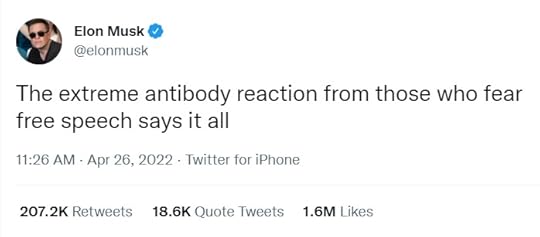
Musk has said as long as it’s legal, he’s going to allow it.
Let’s be clear: people who are afraid right now aren’t scared of free speech, they’re scared of abusive speech, on a platform that they use both professionally and personally. There are several problems with Musk and his defenders labeling themselves as “champions of free speech” as they create the potential for Twitter to become even more toxic that it is.
The first and foremost is this: Twitter is non-governmental entity with no obligation to uphold free speech. It’s just an excuse to allow for more toxic discourse (which platforms often try to optimize for, as it increases engagement).
The first six words of the first amendment are as follows: “Congress shall make no law …” Which means that the only entity that has an obligation to uphold the first amendment is the government – they can’t legally stop you from exercising that right. But companies, websites, publications, and individuals get to set their own rules for what they’ll tolerate. If someone wants to write on your blog their love of Nic Cage, you can freely tell them no. You aren’t violating their free speech, because their freedom of speech was never guaranteed on your blog. They are entirely free to go say it elsewhere.
Twitter is an American company, but it operates internationally – users are all over world. As such, Twitter functions somewhat differently in all those countries, according to their specific laws. For example, if you are using Twitter in Germany, where hate speech is outlawed, you can’t tweet hateful comments without risking having your account banned. They’ve cracked down so much so that some users have changed their location to “Germany” to avoid online abuse. So Twitter can and does take action (technically already violating U.S. free speech laws) when the local laws demand it in order to avoid fines and financial penalties.
They’ll take a stand against abuse when it serves their needs – but they won’t do it for their users.
The second issue is that much of the hate speech we’re talking about doesn’t fall under the first amendment. If speech threatens violence or harm, or it’s libelous, it’s not protected speech – and it can and should be removed from a platform. Musk says that he’ll allow any speech that is legal, but Twitter already allows a lot of illegal speech (and Musk’s talking about fewer restrictions, not more). Most of us have probably already reported a death or bodily threat and received Twitter’s automated reply that it did “not violate their standards.” And there’s tons of speech that falls into a grey area – it’s not quite illegal, but it is libelous. So Musk’s criteria is utterly meaningless.
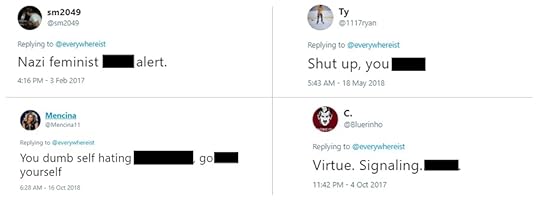
Under Musk’s rules, all of these comments would be allowed.
Thirdly, allowing hate and toxicity on a platform actually causes more damage to free speech. If Musk – and those like him – really cared about free speech, then they’d realize that the best way to preserve that is to protect their users. Studies show that the groups that receive the most online hate are traditionally underrepresented and marginalized groups – people of color, and those in the LGBTQIA communities, who are more likely to self-censor because they fear online abuse. And those are the groups who are most likely to leave platforms when action isn’t taken against their abusers. The resulting community that is left on the platform risks becoming a hateful monoculture. This is already happening now with Twitter, as users leave the platform in droves.
And that’s the biggest problem with this line of thinking: once you allow toxicity and abuse to flourish under the protection of the first amendment, you actually create less free speech overall.
There are proven ways to stop the toxicity on Twitter. Deplatforming abusers (banning them permanently) has been empirically proven to work. It removes the offender, protects the abused, and lets other users know that abuse will not be tolerated. Establishing community guidelines and holding users to them is also incredibly effective. But in order to do that, a company’s leader needs to care about making it a better place. And that doesn’t seem to be Musk’s goal.
The post Why Free Speech Isn’t An Excuse appeared first on The Everywhereist.
March 24, 2022
How Letterkenny Makes Locals of All of Us
I’ve recently finished watched all ten seasons of Letterkenny – the Canadian cult comedy now available in its entirety on Hulu – a feat which is less impressive than it sounds, as each is a mere seven episodes long. Still, this required a measure of commitment from an American West Coaster, to sit through those early episodes, occasionally with the captions turned on. The humor of the show – which follows the travails of various stratified groups within the town (the hicks, the hockey players, the Mennonites, and the “skids” – the meth-head social misfits who dance outside the local convenience store) is not just Canadian, but highly specific to the eastern provinces and to the Ottawa Valley. According to my highly scientific Twitter research, the show is laser-accurate in its depiction of the region and the archetypes within. A friend who went to university in the area told me that every single character was a version of his friends at that tender age (two of them, remarkably, even sharing names with the show’s inseparable and vacuous hockey players). The stereotypes, I am told, are spot-on, a sort of pastiche that manages to capture reality better than reality itself.
As an outsider, looking in, appreciating the humor of the show is akin to learning a new language. Sometimes this borders on the literal – I have a Letterkenny glossary open on my phone, to decipher the slang that peppers every exchange. After so many seasons, I’m able to translate the humor, but not understand it fully. It is an inside joke that has been explained to me. I chuckle because I know the origins, but not because I’ve experienced them. But there is something about the show that rises above the provincial humor – some part of the patois that appeals to the wider circle of pop culture … I think. Because I’ve kept watching, even as an outsider.
In an exercise that has become almost philosophical, I find myself asking the same question again and again: is Letterkenny actually good? Can it appeal to a broader audience? The answer is, definitively, yes and no and I have no idea.
Because the show is – when placed in the vacuum of not understanding its deep-cut social commentary – an exercise in contradictions. It is both bingeable and barely watchable, clever and asinine, surprisingly progressive and appallingly, horrifically not, all at once. The show’s moral agents regularly engage in violent brawls (I have searched my soul relentlessly as beer bottles shatter on the back of heads, and still, I have no idea what I want the outcome of those altercations to be). The acting (if it can be called that) is so, so bad, and yet there are performances which cannot be improved upon – they are a peculiar sort of perfection. There is whip-smart dialogue delivered by actors who barely enunciate, so that much of it is garbled entirely. There is no plot to speak of, and the rare time that pivotal action does occur, it happens off camera, so I found myself wondering if I’d missed an episode. I hadn’t. It is merely that key conflicts and resolutions often happen off-screen, and we only learn about them later. The show’s approach to storytelling is either completely broken or just borderline Shakespearean. The Canadian broadcast television equivalent of Exit, pursued by a bear, of a messenger arriving last minute to tell us that the evil Duke has been captured and that the once-doomed nuptials are back on.
Or maybe it’s just lazy. Honestly, it’s hard to say.
There are brief moments of surprising tenderness, and one wonders if they stand out merely because of contrast. This moment, where Squirrely Dan reconnects with an old crush from his adolescence, is stunningly sweet.
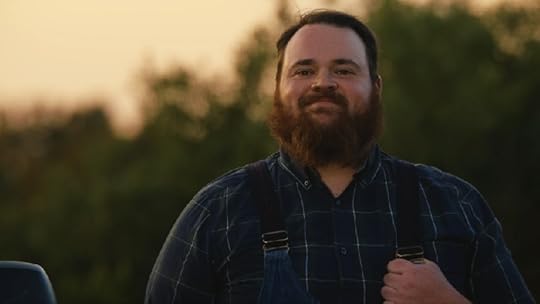
It’s also at the end of an episode full of so many dick puns that I legitimately lost track of them all.
Another time, a character’s hair cut was such an unexpected reveal that I literally gasped. And that’s when I realized something was at play. That after so many episodes, I had not assimilated to life in rural Ontario, but I had assimilated to Letterkenny itself. That I’d become familiar with the quirks of life in this particular small town; with a bar that constantly burns down, with the local town beauty that everyone pines for (“Bonnie McMurray!“), with the auctioneer that is just shy of seven-feet-tall. My favorites emerge. Roald, one of the drug-addled skids, who perpetually wears black overalls and skuttles around like an underfed racoon, giant-eyed and desperate. He occasionally tries to lead his friends on the right path, like a methed-up Frodo. Gail, the raunchy local bartender who communicates partially in pelvic thrusts. A brief glance online tells me that there is a large subset of male Letterkenny fans who hurl misogynistic garbage at her for the same reasons that I adore her: she is unapologetically sexual, she gives zero fucks, and through ten seasons, she refuses to smile. (Lisa Codrington plays her with a hip-swaggering confidence we rarely see in women on television, moving her long limbs with a languid, almost serpentine quality. She hurls the same sexual aggression that women have been dealing with for millennia back at the men who usually wield it, and it is a painful sort of poetry.)
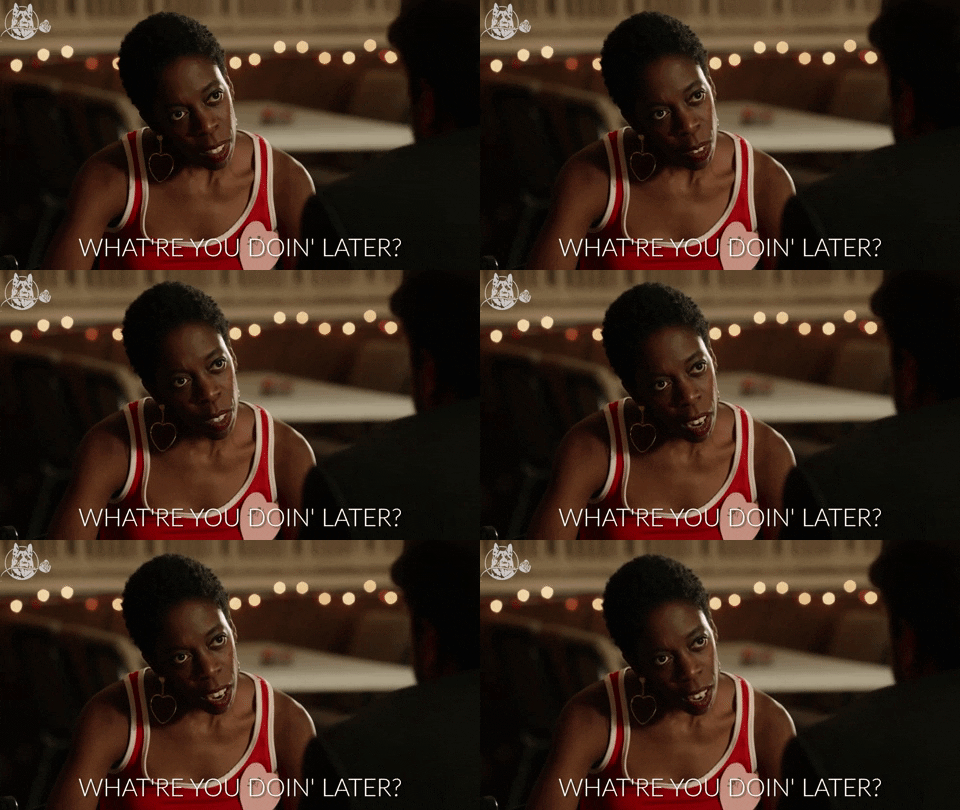
There’s Tanis, the foul-mouthed powerhouse of the local native community, who occasionally sports a hickey like a badge of honor and responds to most inquiries with a smirk and a shrug. She alternates between flirtatious and utterly bored, like Mae West if she spoke Mohawk. And the aforementioned Squirrely Dan – the town’s moral philosopher, who is often quoting Professor Tricia of his Women’s Studies class, and delivered a delightful if ultimately sacrilegious explanation of the first Easter.
I found myself returning to show, if, for nothing else, to see these familiar faces, drawn by the tug of a small town that I’ve never known. This might be the show’s greatest triumph: that it turns you from an outsider to almost a local. I find myself using the catchphrases without meaning to, find myself tapping a glass on the bar twice. Rand and I were talking, and one of us said “to be fair” – which resulted in a chorus of “to be faaaairs” and both of us laughing – a quirk of the show I cannot explain the appeal of, even now. The wordplay is infectious – it works its way into your every day like an accent, one that’s near-impossible to lose.
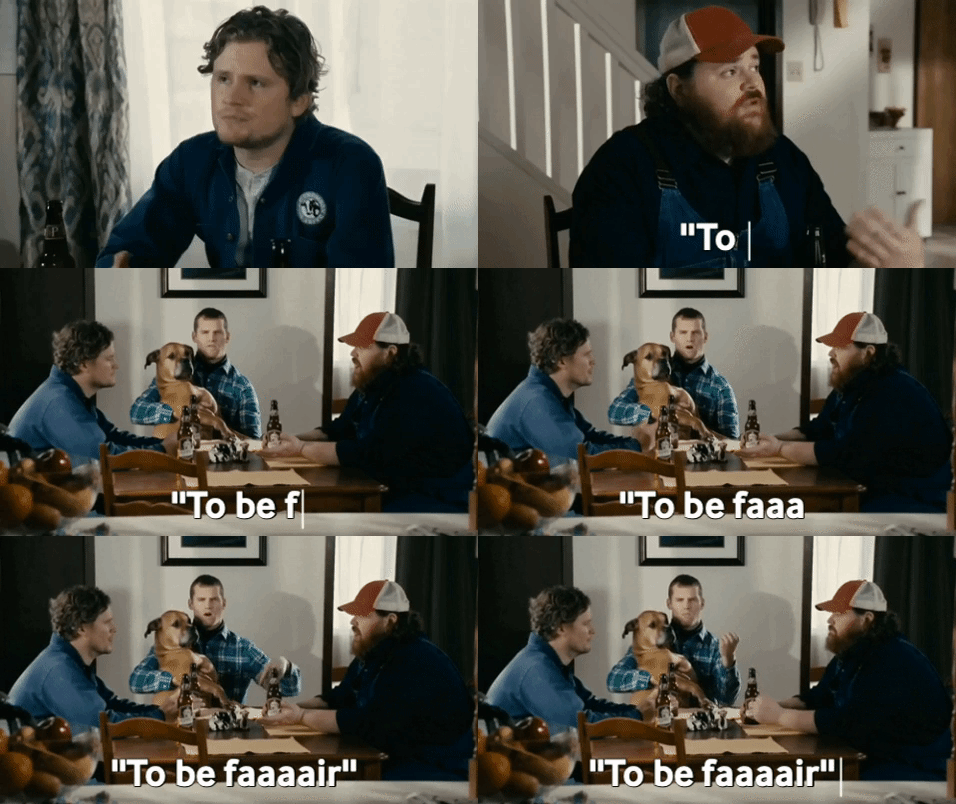
I get the distinct impression – watching the cast, members of all the disparate groups, the skids and the hockey players and the hicks, climbing into a pickup truck – that filming an episode of Letterkenny may be occasionally more fun than actually watching an episode. But there is nevertheless joy in getting a glimpse of dysfunctional town that still looks out for itself, of thinking you might get to be a part of it. Stewart may shriek, and McMurray will say something horrifically misogynistic, and Shoresy will implore us to give our balls a tug – but if a brawl erupts with the degens from upcountry, they will have your back. And perhaps that is the prevailing lesson of Letterkenny: that here, no one hurts you but us.
The post How Letterkenny Makes Locals of All of Us appeared first on The Everywhereist.