
Abigail Carter's Blog, page 6
February 4, 2014
5 Tricks For Taking Your Mind Back From An Internet Vortex
 I am tucked neatly inside Willow cottage, here for a Hedgebrook Board retreat. Outside, pale blue streaks across an otherwise stony sky. The smell as I walked up the path to the cottage was particular to Hedgebrook, to the Northwest, a smell I call “rainforest.” I don’t know what makes it exactly – dampness mixed with pine needles and eucalyptus and cedar, and another kind of evergreen shrub I can’t identify that has a musky smell, exotic and foreign, like the scent of frankincense or maybe myrrh.
Inside the cabin, I hear a clock ticking, which is mysterious because the only clock I see is digital. The tiny bar fridge hums every 10 seconds, and of course I can no longer hear the crackling of the logs burning beside me because I have let the fire go out. I am a terrible fire tender.
As writers, we have grown used to checking spellings using online dictionaries, Googling, Wikipedia-ing and using all manner of online resources at our fingertips. For a writer, “unplugged” is a frightening notion.
It is wonderful being here again. Every detail seems heightened by my senses. I was here for three days last summer, when one of the residents was delayed in her arrival. In that time, I finished my novel. Well, at least the second-to-last draft of my novel. I felt guilty to be hidden away inside Willow when the sun was shining. It’s much easier to be here in February, where do you don’t feel compelled to dash outside to capture a ray of warmth on your cheeks.
I saw Ruth Orzeki last week, talking about her book A Tale for the Time Being. The first time I saw Ruth speak was at Vortext, a Hedgebrook event. I don’t know if it’s her easy manner, the fact that she is a Zen Buddhist priest or that she’s Canadian (or lives there anyway) that captivated me. I just know I would enjoy having her to myself for a few hours to talk about things like time, how to unplug from online life, Buddhism, and Hedgebrook.
During her reading, she spoke about the ubiquity of time, a major theme in her book. She spoke of her main character identifying herself as a “Time Being” but how we also look at that phrase as a state – as in “for the time being.” She quoted some Japanese Zen monks from the fourth century for having made this distinction and that made me smile at its Japanese,-ness, like a Haruki Murakami (Wind up Bird Chronicle) novel. When I got home and started reading her book, a section jumped out and has stuck with me. The character of the young girl Nao (I loved realizing her name pronounced in English (Now) is also a statement of time) is speaking about entering a small temple in the middle of Tokyo and how it feels sacred to her.
“The temple was a special place. There was the smell of moss and incense, and sounds too – you could actually hear the insects and birds and even some frogs – and you could almost feel the plants and other things growing. We were right in the middle of Tokyo, but when you got close the temple, it was like stepping into a pocket of ancient humid air, which had somehow gotten preserved like a bubble in ice, with all the sounds and smells still trapped inside it.”
From the perspective of Willow cabin, it seems obvious that Ruth wrote that portion of her book at Hedgebrook. Ruth talked about coming to Hedgebrook for three weeks, nervous about having to leave her online life behind. There is no Wi-Fi at Hedgebrook and cell service is spotty at best. As writers, we have grown used to checking spellings using online dictionaries, Googling, Wikipedia-ing and using all manner of online resources at our fingertips. For a writer, “unplugged” is a frightening notion. Ruth conceded she experienced a kind of withdrawal from her Internet crutch and continued to reach for her computer or phone to “look up” something until one day she realized she had finally stopped needing her crutch. By the end of her stay she discovered she had “gotten her mind back.” I felt a moment of jealousy that she was able to recognize that moment, really feel it. I wanted my mind back too!
I am all too aware of this addiction many of us have to the Internet. A five-minute “email check” turns into four lost hours that is difficult to account for. Until the Internet – or maybe it’s Facebook or Google, specifically, I’m not sure – I have never had a real addiction. I never smoked, I don’t drink coffee (I honestly don’t know how I haven’t been kicked out of Seattle), I do things in moderation (I think). Yet I recognize my computer use as an addiction.
And so I see it’s important to find ways to ratchet down the brain when you don’t have a cottage in the woods or the ability to step back into 1946 at your disposal.
Stepping back into my 1946 time capsule on Vashon, allows me a few days to practice withdrawal, but this never seems an adequate amount of time to complete the process. I smell all those old, preserved smells trapped inside that old house, imagine the ghosts that once inhabited it’s rooms, pour over passages of Betty MacDonald’s book, Onions in the Stew, as a way of fully immersing myself into another life, another lifetime, being a Time Being. As if pretending to be in another time, when addictions like the Internet didn’t exist can make my present mind a little less cluttered.
And so I see it’s important to find ways (OK, this post is making me think of things I already do) to ratchet down the brain when you don’t have a cottage in the woods or the ability to step back into 1946 at your disposal. Here’s how I *try* to be a Time Being in my everyday life by pretending to live in 1946:
Spend ridiculous amounts of time staring out the window. Sometimes I’m thinking, but other times I really am just staring. Zoned out. I’m sure the mailman must wonder about state of my mental health. I study the buds on the shrubs outside, watch the humming bird who comes to the empty bird feeder (disgusted, no doubt by the lack of vittles), watch the tops of trees wavering in the wind.
Have a dog or small animal that annoys the hell out of you throughout the day with toys to throw and who sits on your lap/computer and forces you from being able to see the screen properly. Fish are not as good for this, but are excellent for #1.
Make tea. See? I’m not so crazy for not liking coffee. Unlike coffee, you can drink tea all day long, which makes you get up and make it and then later it makes you go pee a whole bunch of times. Voila! You have risen. And I’m pretty sure they had tea in 1946.
Take a break from the computer and read a book (not a Kindle if possible, since they didn’t have those in 1946). You can justify almost any reading as “research” that you need to do for your work. People Magazine is “Research,” OK? Just don’t argue with me on this.
Cook dinner from scratch. I am rather old fashioned in this one. I like to cook, so it’s easy. Sort of. The hardest part is remembering to take stuff out of the freezer before 4:30pm. Or to go grocery shopping. A little trick: Do the groceries after school and drag the kid along so he can help carry bags. Caveat: Be prepared for the grocery bill to double with all the junk food you inadvertently collect as you breeze through the aisles. When you have a constantly hungry 14-year-old boy loitering around the kitchen, it’s easy to follow this tip: Get up from the computer by 5:00pm and start making dinner or you will have a kitchen that looks like a mini junk-food drive-by cyclone by 5:45pm.
We all have our little ways of taking our lives back to a simpler time. I find I often forget I even do them, and convince myself that I am a victim of complete Internet domination that there is no hope for me. I convince myself that all my short-term memory is shot, I no longer can keep up with email and my handwriting has gone to hell. But when I write these things down (I know, it should be with a pen), I realize that I am more of a Time Being that I realized, which is a relief.
The post 5 Tricks For Taking Your Mind Back From An Internet Vortex appeared first on Abigail Carter.


January 20, 2014
Some Lessons on Memoir Writing
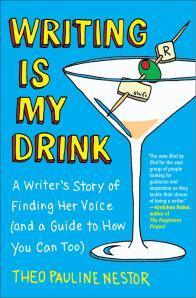 I attended a writing workshop this weekend in Sonoma hosted by Theo Nestor, my friend, memoir teacher and author of Writing Is My Drink. I went, because I’m beginning to formulate my next book, a memoir I hope to write about my house on Vashon, the one-time home of Betty MacDonald, author of The Egg and I
 , and the Mrs. Piggle-Wiggle
 series of children’s books.
So far, I have this vague notion for a memoir about the house, which would include some autobiographical info about Betty, who for some strange reason has never had a proper biography written about her. She was, after all, one of the first memoirists, writing in a humorous way about her life during the 1940s, a time-machine look into another era.
1. Ask the questions
One of the things I was reminded about in the workshop, and the reason I was there in the first place, was to formulate the basis for the book. It really comes down to a couple of pointed questions. The tip that Theo provided was to “adopt the attitude that your life is important and ask the question, ”If you were really important, what would you be writing about?” What is the most essential thing you need to share through your story?
When I think about what I should be writing about in relation to the house, I think about what it is the house means to me, which I can more or less summarize in one word:
Sanctuary.
I get lost in another time reading Betty’s books and visiting her house (weirdly, I still think of it as her house and not mine) provides me with a similar escape. The moment I enter the house, it’s as if I have opened the door of the wardrobe in The Lion, the Witch and the Wardrobe, into a whole different world. I can physically feel myself relax. I get excited about cooking, and writing (with pen and paper), about curling up on the couch to read a real book.
In my regular life, I spend hours behind my computer only to stand up after hours of addictive-like behavior feeling dazed and foggy, and my only reprieve comes in the form of a small dog who incessantly leaves her toy at my feet for me to throw.
I refuse to hook up Internet access at the house because I know the moment I do, its magic will be lost. I need Vashon to remain my escape from a plugged-in world into a time where life was simpler, or at least lived in real time.
2. Dance into your writing
Tanya Taylor Rubinstein was one of the day’s speakers and she speaks from the perspective of a solo performance artist. My favorite moment of her talk was when she began to wiggle around the stage, doing what a writer might call a “five minute write” but in oral story form as she waved her hands around and did a little twirl and a wiggle. “It’s a whole different way of coming at the story, and if you’re stuck it might help you.” She then had us find a partner, look them directly in the eyes and tell that partner a story about a moment that changed our life. To stay in the moment, I told my partner the moment I found the Vashon house and she shared with me a powerful story of the moment she discovered she had breast cancer. By the end of five minutes I knew I had made a new friend.
3. Be “Passionately Confused”
I also liked Theo’s idea that you must be “passionately confused” about your topic. Here the question is “what is the obsession that is imbedded in your story?” What are you curious about? It is this questioning that will make your memoir compelling because as you discover answers, your reader will as well. This is the crux of memoir, the transformation of the narrator. The narrator at the beginning of the story cannot be the same as the narrator at the end and you must be clear about what that shift is. Candace Walsh, another of the speakers backed this idea up when she advised to “live the questions now. Live your way into the answers.”
As Theo spoke and the other speakers, Candace Walsh and Tanya Taylor Rubinstein continued their workshops, I began jotting down ideas about what the themes in the book might be: slowing down, motherhood, spirituality, my relationship to money, healing, food, feeling overwhelmed by life, marriage, sex.
4. Let your subtitle frame your subject matter
Another of Theo’s points was that the subtitle of a book often frames the overall idea embedded within the book, kind of like a thesis statement in an essay. It sums up the essence of what a memoir is really about. Examples of this include: “Orange is the New Black: My Year in a Women’s Prison” and “Poser: My Life in 23 Poses.” I’ll be living my way into writing the subtitle too, it seems.
5. Fame/writing memoir won’t change you
The excitement of the day was a talk by Anne Lamott, who shared her own brand of wisdom. I have long admired her work – poignant, humorous, thoughtful, and slightly sarcastic, and maybe it was because she was recovering from the flu, or something else is going on with her, but I found her words to be threaded with sadness. She told us to not expect the writing to change us, or perhaps it was to not expect fame to change us, it wasn’t quite clear. I do believe that the process of writing memoir does change you. If you follow Theo’s wisdom on the matter, writing memoir is all about the transformation.
So perhaps it was the fame thing. I have never cared about fame, and if anything I shun it. What I seek is the change in a reader who has read my work. A transformation, a comfort, a healing. It struck me as I sat in that huge hotel ballroom how many stories were represented there – hundreds of big, tragic stories that each sought an outlet. To be a memoirist of Ann Lamott’s fame must take a certain amount of strength of spirit, a sense of responsibility to those stories. What came across to me was how fragile Anne Lamott is, and how fame must be debilitating to her in a lot of ways.
6. Carry a pen and paper at all times
I did like her advice to always carry a pen and paper wherever you go and was charmed by the idea that she writes on her hand and then “transcribes her hand” when she gets home. I am horrible with writing little things down, maybe too busy living in the moment, to remember to stop it and jot it down on a piece of paper and so I felt somewhat lacking without my Moleskin and Montblanc. Still, I so admire her turns of phrases, her metaphors and no doubt, her jotting is where they come from. Time to get a notebook and a pen!
And so, I came away from Petaluma percolating with new ideas and resolutions to jot, which was my goal for the weekend. I also made some lovely new friends who I look forward getting to know, at least inside this screen, my little virtual 2014 world.
The post Some Lessons on Memoir Writing appeared first on Abigail Carter.
January 5, 2014
Learning to Drive in the Slow Lane
I miss the magical thinking of grief. That heady intensity of thought, the ability to see serendipity in all things, of having an excuse to let the little things slide because they don’t really matter anymore. I realize that grief is really a prolonged state of change and magical thinking is a result of this change. And by magical thinking, what I really mean is growth. Spiritual. Emotional. Mental. Whatever way you slice it.
Looking back on my life, I realize change was ever-present – traveling between parents on weekends, moving homes and changing schools frequently. To cope, I kept my friends constant and my family close. But eventually, I found that I needed frequent bouts of change in my life, or I grew restless. I remember my desperation during my adolescence to grow up and become an adult, someone in control of her own world, a control I now see was pure fantasy. When things were bad, I knew all I had to do was wait a while, and things would surely change. Sometimes I created my own change: I thought nothing of flying off to Europe or Australia on my own after high school and college.
Grief was simply another life change I needed to adapt to, albeit, not a very fun one most of the time. I think now that my resilience came from knowing on some level, that like everything in my life so far, even grief was a stage, that entropy would eventually wash it into a new era. Our move to Seattle, of course was another version of this hunger for change, and now that I’ve been here for a while, I am conscious of this impulse to move life along.
The down side of thriving on change: Impatience.
On the Carter side of my family, we are all known for being speedy at whatever we do: my grandmother was a speedy quilter, my father, a speedy draftsman. As a project manager, I was speedy at getting things done. What you give up though in the quest for speed is the quality of your work, which project management taught me was a bad thing. I had to learn to slow down, check all my work carefully, proofread.
Jim and I are now nearly two years (!) into our relationship. Many mornings we sit at my dining room table, each absorbed in our respective computer worlds, comfortable in our pattern, our easy rapport, our lack of desire to get anywhere, since we are exactly where we need to be.
Jim has taught me many things about the value of slow, which is odd given he’s a firefighter. Perhaps it’s because he’s a firefighter. Ever the speed queen, I mostly drive like a bat out of hell, but now I drive in the slow lane (as much as it sometimes kills me) after Jim told me that almost every highway accident he attends as a firefighter occurs in the fast lane, a place where it’s impossible to swerve to the shoulder to avoid things coming at you, often from the opposite direction.
He can run long distances, not because he sprints, but because he uses the slow and steady tortoise method. Slow and steady has become a metaphor for our relationship in a way, but I find myself sometimes chafing, my desire for speed and change an opiate.
My relationship with Arron was filled with the milestones of a young marriage: moving in together, marriage, living abroad, buying a house, children. There was always a big change around the corner to keep things exciting. A later-in-life relationship has fewer milestones through which to navigate, through which to grow together, to test limits and boundaries within the other. I find myself wondering about the next big change that Jim and I might undertake together – moving in? marriage? buying a house? Travel? And I have to stop myself.
Being adaptable to change served me well in overcoming loss, but I still need to work at keeping my inner Roadrunner in check – to not push time and to remember to allow those quiet moments at the dining room table to happen, content in the knowledge that change will come as surely as entropy is an inevitable life-force.
Magical thinking in the post-grief era.
PS: As my New Year’s Resolution, I have decided to join International Institute of Not Doing Much. At least I might, after I take my time thinking about it for a while.
The post Learning to Drive in the Slow Lane appeared first on Abigail Carter.
December 19, 2013
Getting Through Mistfit Toy Syndrome With A Little Help From The Thanksgiving Elves

It’s that time of year again. I’ve been having my annual internal battle with myself to remain upbeat and positive about the holiday. I’ve planned a party, baked cookies, bought a Christmas tree and Satsumas. I’m almost done with my Christmas shopping.
But that nasty little Christmas gremlin is still in there, festering. I tell myself it’s residual grief – Christmas and his birthday crammed together in an extra-special helping of grief-nog. But if it was really a grief-nog hangover, then why don’t I get this during other holidays?
Maybe it’s the gifting thing that gets me down. I know this is going to sound stupid, and surely it’s a residual effect of a child of divorce or bad TV Christmas specials, but I actually feel sorry for the misfit toys and gifts (thanks Rudolf!). All those unwanted, unloved sweaters and candles that will never be lit, that sit on shelves, gathering dust, lonely… I can’t write any more, it’s going to make me cry. Clearly I related to those misfit toys on some deep, unconscious level. I’m the girl who cried when my family, during a Christmas trip to Mexico thought it would fun to bash the crap out of a cute bunny pinata. Yeah, I’m THAT girl. Don’t judge me.
By the way, I just have to love on this post about The Island of Misfit Toys. The doll is a trannie. What’s not to love about misfit toys?
My only solution to avoiding Misfit Toy Syndrome is to trick myself into thinking it’s Thanksgiving. All those lovely FB posts saying what we are all grateful for? We need more of that at this time of year.
So, Thanksgiving elves, here’s what I’m grateful for:
A girl who flew home last night from the east coast (not without a little drama), safe and sound and oh, so grateful to be home to have her mama do her laundry and cook her favorite Jambalaya.
A boy who wakes up each morning an inch taller and a smidge wiser and who makes me laugh when he pulls faces that are the exact replicas of his father’s.
A friend who loves and supports me even in her depleted candied-brain state.
A boyfriend who I cherish for his wisdom, patience, kindness, his love of me and my family, and the way he manages to make filthy every single article of clothing he owns.
A dog who can jump four feet in the air, thinks nothing of stepping on your face to get anywhere she needs to go, who flops down beside the heat register below the kitchen sink looking dead and who “speaks” alien.
A family who can make me spew champagne through my nose in laughter, enable my near-obsession with the 4th Line Theatre, howl at the moon with me, guide my sense of fashion, and say it like it is.
I hope that despite my Christmas gremlin and bad case of Misfit Toy Syndrome, I can give just a little bit of all that back this year.
Happy Thanksgiving everyone and “To All A Good Night!”
The post Getting Through Mistfit Toy Syndrome With A Little Help From The Thanksgiving Elves appeared first on Abigail Carter.
November 27, 2013
What I Love About Grief
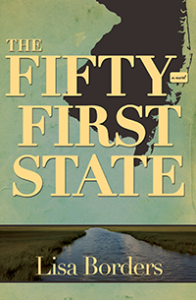
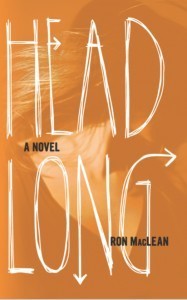
The other night I did a reading at Elliot Bay Books and read from Alchemy of Loss with two other authors, Lisa Borders and Ron MacLean who have both written fictional stories themed around grief and loss. Both are from Boston and when they decided to do a West Coast book tour together, they put out a call for an author in Seattle who’s written about loss and my name came up. Go figure.
The common thread linking the three of us together was obviously grief and loss, but also individual, creative responses to grief. Each of our readings was entirely different. I was able to speak directly to my own response to grief, since I am my own character in my book. Ron’s book, Headlong, is a thriller whose protagonist comes back to town to care for his father who’s had a stroke. The excerpts he read were witty and poignant, two men in a complicated relationship facing pre-grief. Ron said that of all the sections in the book, these scenes were the most difficult to write.
Lisa had everyone riveted as she read the prologue and first chapter of her book, The Fifty First State chronicling two siblings as they cope after the sudden death of their parents in a car accident. He story was seeded by the death of several people close to her over a short period of time.
What struck me was the depth of emotion that all three works elicited as a group. I have been so removed lately from the world of grief and loss, that I have forgotten the magic that hides there. The raw authenticity that can’t help leaking out whenever anyone is able to unmask those raw emotions we all work so hard to hide from one another.
It’s that magic that I love about grief.
OK, so now, I’ll do what I can to link all this to Thanksgiving, which is one of my favorite holidays. I like a holiday where the entire focus is on what you are grateful for, with no complication of having to give gifts and go crazy decorating. And being grateful is part of the magic of grief. When you’re split wide open by death, it’s amazing how much more you are able to appreciate life.
I’d love to add that the traditional feast on this holiday is also one of simplicity, but as anyone who has had to cook an entire turkey dinner for 25 knows, it’s not. But whatever. It gets everyone into the kitchen for an entire day, where all the best conversations happen, and tears can be hidden in the guise of chopping onions.
I look forward to laughing at comedy night with my best-friend-with-brain-cancer; shedding tears as I chop onions with my sister-cousin; equipping my cute-heroic-wonderful boyfriend to wrangle otters; doting on my awesome-surly-awesome son who will pout and beg to leave the island, and, of course reading two amazing books with grief as a theme.
Happy Thanksgiving all! May you all weep with grief and joy (while chopping onions, of course).
The post What I Love About Grief appeared first on Abigail Carter.
October 30, 2013
5 Life Lessons I’ve Learned From Starting a Start-up

Kelsye in the Writer.ly booth at AWP in Boston, March, 2013.
For the past year or so, I’ve been playing the game of start-up land, an interesting and bumpy terrain. Writer.ly has taken over my life, but in a good way. Writer.ly is a marketplace that connects writers with editors, book designers, marketers – all the people that a writer might need to get their story into the world.
Kelsye, my co-founder and I met in a writing group where we talked about helping other writers find help. Kelsye came up with the idea for the Writer.ly and asked me if I wanted to join. With pure widow impulsiveness I said “yes.” That was over a year ago, and lo and behold we have actually built and are running a successful working website.
There have been some wonderful highs and some nice bigs dips, as you would expect with any start-up and so I thought it would be interesting to take note of some lessons I’ve learned along the way. I was struck by how these lesson could really be applied to more than just start-up land, but to life in general.
1. Nothing is insurmountable.
Before Writer.ly, if I’d wanted to do something big, I was usually pretty good at saying to myself “I couldn’t possibly do THAT!” And so I didn’t. Now, that just seems silly. There’s always a way. You just might have to be a little creative to find it.
2. Use the free tools that you have on hand
When we want to add a new service to Writer.ly but don’t quite have the resources to do it exactly the way we want, we put it together with tools already at our disposal. It may not be pretty behind the scenes, but it works and gets the job done. Most of the time, you don’t need the latest gadgets and software to do what needs to get done. Sometimes, the simplest tool will do.
3. Never underestimate the power of your network
Those random people that you meet and chat with and then forget are, in more cases than not, the people that can introduce you to folks who can help and advise you along the way. Keep them close. Connect on social media or keep a file of names and emails. You never know when those people might come in handy.
4. Ask for help
Never have I been so bold in asking the straight up questions like “Can you introduce us to that person?” Or “What would you do in our situation?” In almost every case, people want to help. Just don’t forget to pay it forward when someone comes asking your for help.
5. Be passionate about what you’re doing
The fact that Kelsye and I are clearly passionate about Writer.ly and helping our fellow writers shows in everything we do with the company. People feel that passion and it has been the success of our fundraising and marketing efforts.
The post 5 Life Lessons I’ve Learned From Starting a Start-up appeared first on Abigail Carter.
October 16, 2013
The “Moving In Together” Question
 Sitting in a warm October sun at a picnic table at an outdoor bar in Portland, the statement just sort of popped out.
“You could always just move in.” I’m pretty sure I blushed when I said it. He had been talking about his house and the possibility of selling it and moving on, or renting it. It was idle lunch-time conversation, but then it took a right turn.
Our first concern was for the boy-man living in my house. Would he object to such an invasion? We moved on to the ways Jim might feel more at home in my home rather than feeling like a permanent guest.
Timing was another: he has barely finished his man-cave reno and wants to enjoy staying in it (presently this amounts to one night a week) for a little longer. This is not going to be an imminent change, but a gradual one, like much of our relationship has already been. There is a float plane in his garage that needs attention after all.
We basked in the sun, full of bar burgers that would later haunt us, Portland cool wearing our sunglasses and a dog at our feet in equal bask mode, silent, content, each pleased with the conversation and what it meant.
“Maybe when the plane project is finished…” he said. “In the spring.”
“No rush,” I said. “Whenever it feels right.”
A week later, as the boy-man and I were sequestered in a car headed north for Canadian Thanksgiving, I started the conversation:
Me: “Jim and I are thinking about moving in together…What do you think?”
Him: “I don’t really care.”
Me: “It wouldn’t be weird for you?”
Him: “No. Why would it? It wouldn’t really change anything, would it?”
Me: “No. I guess you’re right, it wouldn’t really change much.”
So that’s how it happens. It’s not a U-haul sidling up to the house to unload collections of beer mugs and tools, but a pair of shoes left at the front door, a few extra pairs of jeans in the laundry, a new chauffeur for the kid and doggie playdates in a garage with a float plane in it.
September 26, 2013
Welcome to My New Blog
Welcome! In an attempt to separate me, the author from my book, I now have two sites: The one you are now on: www.abigailcarter.com and The Alchemy of Loss: www.alchemyofloss.com. Mostly, I needed to do this in anticipation of launching my new book, Remember the Moon. I still have a little more editing to do and have been receiving incredibly positive reviews from my beta readers:
“The book stuck with me, and I found myself talking about it to my husband and friends and dreaming about similar things.” – Nancy A.
“OH…….MY……….GOSH!!!!!!!!!!!!!!!!!!! I am so sad it is over!
Just finished your book!!!! Great story, fast read……and WONDERFULY FABULOUS!!!! I think you could have a best seller on your hands.” – Tammie L.
“It was a fast read and I actually would read it again and reflect a little more on your take of the spiritual components to life.” Kim N.
“Remember The Moon is a creative and unique premise as it relates to the “afterlife…” and what happens after death.” – Margie S.
So exciting! And now for an unveiling… There is a very special story about the cover: Years back, right after The Alchemy of Loss was published, I did a radio interview with Shelagh Rogers in Canada. A while later I received an email from a woman in Vancouver who was enduring her own trauma, had heard my interview and immediately bought my book. We became real-life friends.
She is an incredible painter in Vancouver and she sometimes shows her work in Seattle and whenever she does, I go to see her. She became the inspiration for the mother character, Maya in my book who is also a painter. Whenever I wrote the scenes of Maya painting, I would pop open Sheri’s site and look at her paintings as inspiration.
Last spring I went to one of her shows around the same time I was writing the last chapter of the book and as I finished, with Maya painting, I thought how cool it would be to commission Sheri to paint the cover for the book. Of course when I asked her, her response was “I have a better Idea. I do the painting for you, and you keep it. I don’t want anything for it. Your words are very moving, Abby. Somehow your angels know my angels.  ”
”
I sent her my words and she came up with…drumroll…this:
[image error]
“Remember the Moon” by Sheri Bakes
Isn’t it beautiful?
I couldn’t be more excited! I am forever in awe of how life and connections and wonderful things unfold. Sheri, you are truly my angel-sister. Love you.
September 10, 2013
What do you tell a sixth-grader about 9/11?
“Attack From Above” drawn by Carter at age 6
A friend contacted me the other day on behalf of a teacher friend who was trying to figure out what to teach this year on 9/11. It was the first class this middle school teacher would have whose kids were born after 9/11 (2002). Funny to think of a whole generation of kids not ever knowing a pre-9/11 world. This teacher wanted to know what she could say to her students.
An interesting question. What do you tell a sixth-grader about 9/11?
My first instinct was to ask my son, but he wasn’t at all helpful. Teenagers are like that. I thought about when he was a first grader, coming into his first true understanding of the magnitude of what happened. It was different for him because he didn’t have the emotional baggage of grief over the loss of his father in quite the same way – he didn’t remember his dad. So for him, the event was a learning exercise, like learning about volcanoes or dinosaurs – both subjects he learned with a vengeance that year.
Out came the Time-Life magazine with all the pictures of the building in various states of destruction including the horrific ones that of course were the ones that fascinated him the most. When he decided to take the magazine to school for show-and-tell one day, I had to warn the teacher not to let him show those pictures. He talked about the height of the buildings, the level at which the planes hit, and a whole range of facts and figures that were what helped him make sense of the senseless. How do you explain to a kid how big an acre-sized floor is?
A middle school teacher might talk about the world before and after, but would even that make sense to a 12 year-old whose world changes on a daily basis both given their age and the fact that they are surrounded by a world that moves at warp speed?
Honestly, “learning” about 9/11 is like my generation learning about Pearl Harbor or the Holocaust. Both horrifying and abstract. We cannot imagine the worlds that existed before such events, we can barely understand the repercussions since those repercussions are all we know.
And yet, there is this obligation that every year at this time we must dust off 9/11, pull out the memorabilia from the Rubbermaid boxes and pass it on to a new generation. Or remember. Or try not to forget. Or learn. Or something. Anything, but forget.
I am told that 60 Minutes ran a piece on Sunday about the memorial museum in NYC and that Arron’s face appears with a group of faces. I haven’t seen it, but I’ve been asked if I sent anything in for the museum, or recorded my kids speaking. I am obviously a crappy 9/11 widow, because I haven’t sent anything in. Nope. I have become completely apathetic about 9/11. Maybe it’s a coping strategy, or maybe it’s that I would prefer not to remember that day in my life. What it has become for me is a day to reflect on how far I’ve come.
I look back with sadness on that woman with two small kids, trying to figure it all out, messily trying to pick up the pieces. I shake my head in awe, wondering how she coped, how she managed to raise those two kids into some pretty awesome almost-adults.
I guess in many ways, 9/11 was a beginning of a new life for all of us. Some of us remember the life that once was, some of us don’t.
Maybe the reality is that it can only be seen by those select few who still remember. To a whole younger generation it will be just another chapter in a history book, an event that gets dragged out year after year, a little more tattered and torn, a little less color each time.
And yet, no matter how tight I try to pack it all away in that Rubbermaid box, for me, as for so many people, this day twelve years ago is a moment seared into our very DNA, indelible. It’s one of those blips in history, like Pearl Harbor that I imagine must be so big, it can be seen from space.
September 3, 2013
Read My New Book – Become a Beta Reader!
My new novel is finally getting close and now I am looking for people to read it. I figured what better place to look than my loyal, wonderful blog readers.
A Beta Reader is someone who reads a book ahead of publication and gives the author feedback which will ultimately make the story better.
By being a beta reader, you’ll get to read my book before the rest of the world, plus I’ll send you a free digital version when the book is published. I’ll also include you in my acknowledgment page.
As a beta reader, you promise to:
1. Read the manuscript and make general notes or comments by Sunday, September 29th. This will happen on an online Google Drive document. (NOTE: This is a full length book. Approximate 80,000 words). I am NOT looking for proofreading or copyediting, but rather comments on the overall story and ideas for how I might improve it.
2. Write and post a review on Amazon the day the book is released. (Currently, I’m aiming for Tuesday October 15th, 2013) You’ll get a reminder email with the link to make it easier. This is an HONEST review. 5 stars would be awesome, but you are not expected to give a positive review.
I am only selecting a small number of beta readers to get the free copy of the book. If you are able to read and comment on the manuscript by the September 29th and can post a review on October 15th, please give me your name and email below.
Thank you! Your help is HUGELY appreciated!!
Become a Beta Reader!Your Name *Your Email * VerificationPlease enter any two digits *Example: 12This box is for spam protection - please leave it blank:


![[image error]](http://author.abigailcarter.com/blog/wp-content/uploads/2013/09/DSC_4285.jpeg)
![[image error]](http://abigailcarter.com/wp-content/uploads/2013/09/Carters-Tower-Drawing-2.jpg)