Cynthia Chapman Willis's Blog, page 8
July 6, 2011
Deadlines
Deadline: The final time or moment when something MUST be finished.
There are lots of deadlines in our lives, right? And, if you're like me, you might even give yourself deadlines. These can be useful, but also stressful. Ugh.
When I was a textbook editor, our fearless leader drilled into our heads that editors and writers must always "meet or beat" deadlines. In other words, there's a reason the word dead appears before line, as in cross that line and you're dead, sister.
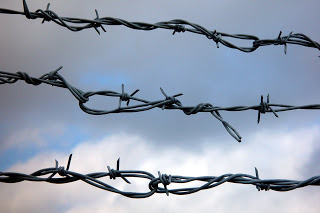
Now, whenever a deadline is hovering, this mentor's voice rings in my ears. I picture a deadline as a concrete barrier laced with barbed wire. This explains why, when I was working feverishly on revisions for Buck Fever and a family emergency blew in, requiring a long road trip, I revised in the backseat, which I'd tricked out with lighting and a makeshift desk. No exaggeration. Sure, revising for twenty-four hours in a cramped space while cruising an interstate highway wasn't much fun, but I met my deadline. And that was rewarding.
Tell me: How do you meet or beat deadlines? Or don't you? *winks*


June 29, 2011
Shhhh, I'm Reading a Quiet Novel

How do you define a quiet novel? I've always thought of a quiet novel as a story with more emotional conflict than physical confrontation and action. One where the main character strives to solve a problem that is important for that character and his or her immediate family or associations, but may not be world or life threatening. Death probably isn't a factor. A quiet story is probably a more subtle story. It may be intense but perhaps constrained. I've read that a quiet novel is a mellow tale most likely with calm, restrained prose. With a quiet novel, a reader's heart rate may not race. Blood pressure may not peak. However, the reader might be touched by the beauty, the passion, the intensity, the seriousness of the plot, and the writing of a quiet novel.
What do you think defines a quiet novel?
Writer Shannon Hitchcock blogged about a workshop she attended on the quiet novel (it's a great post): http://shannonhitchcockwriter.blogspot.com/2011/01/erin-murphy-and-audrey-vernick-talk.html
I'd LOVE to know your thoughts on quiet novels. Care to share?

June 22, 2011
Bits of Randomness
With the transition from spring to summer, which includes the end of the school year (of course), I find that I'm tying up loose ends. I've just finished up my last week of school visits, Skype visits, and bookstore visits. Happy dancing time. That's not to imply that I didn't enjoy these events. They were all big fun and I met lots of amazing and wonderful people. However, I'm itching to write, revise, crawl into my office and lock the door against any and all distractions. My head tells me I must promote and get out into the world with my novels, but often my heart nags me to write the next novel. It's an ongoing battle. Errr, should I admit that?
Anyway, I have a couple bits of random information to share. For example, I've
 added a "News" page to my website. It will show updates on events and novels and stuff—whatever "stuff" means. Here's the link: http://cynthiawillis.com/newsletter.html Of course, my timing on this isn't great given that I've just finished a whirlwind few months of events, but I'm happy to have this bulletin board page.
Next up, I want to offer up a big thank you to Susan Fields http://susanfieldswriter.blogspot.com/ for the Irresistibly Sweet Blog Award. This requires that I list seven random facts about myself. Here goes: I love socializing, but I really hate rudeness. I love music, but couldn't hold a note if it had a handle. I love horses and horseback riding, but I haven't been on a horse in years. And for me, a perfect day always includes some sort of reading and writing.
Finally, and especially for you writers out there, here's a great article about a six-year-old girl pursuing her publishing dreams. Yup, six-years old. Wow: http://www.mycentraljersey.com/article/20110618/NJBIZ/306180016/Children-pursue-their-publishing-dreams
Okay, those are my random updates. Do you have any random bits of information and "stuff" to share?

June 15, 2011
When a Subplot Takes Off with its Writer
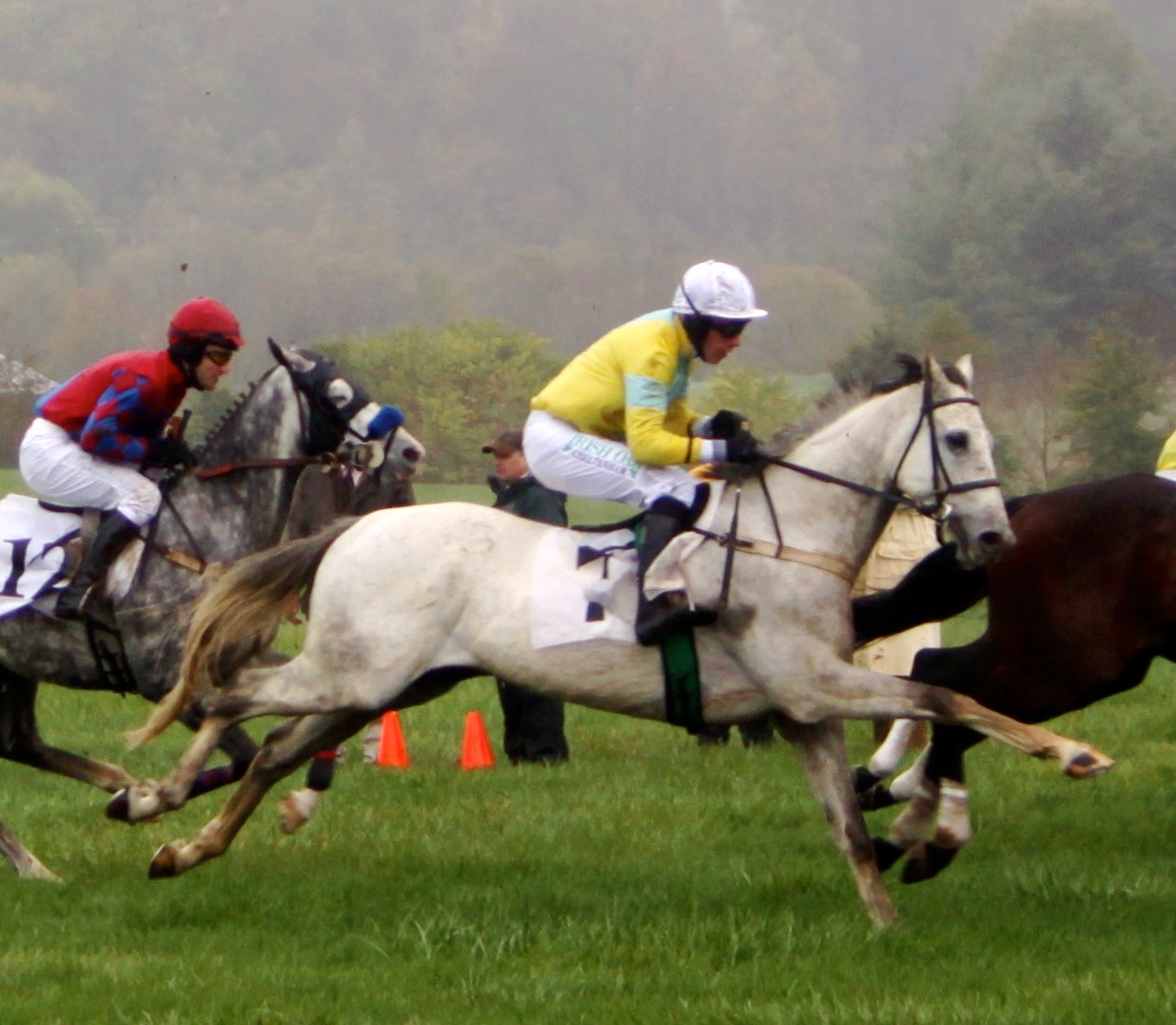
Sometimes writing a subplot reminds me of a horse I used to ride. If I didn't pay attention, that horse would grab the bit between his teeth and take off with me at a flat out gallop. He nearly threw me more than once—which was, of course, what he was going for. For better or for worse, I've had more than one subplot take me on a similar ride.
Like a ride on that horse, a subplot can begin calmly--just long enough to throw a rider or writer off guard. For me, though, when the narrative journey experienced by a secondary character or characters becomes complicated, when things get sticky, my subplot can grab the bit and take off. If I let it go, it might become it's own story and turn into a thrilling ride. Or it might run me into a tree (like that horse tried to do more than once). Either way, this sort of messes with my original work in progress. This is the heart of the problem. Is reigning in the subplot the way to go? Hmmmm.
Writers: Have you ever had a subplot take off with you?
Readers: Have you ever become more interested in the subplot of a story rather than the main story line?

June 8, 2011
Inspiration
We all need a little inspiration now and then, right? I've been busy with school and library visits for the last few weeks. These are always fun, but every so often a visit becomes more than fun. It becomes inspiring. Here's an example . . .
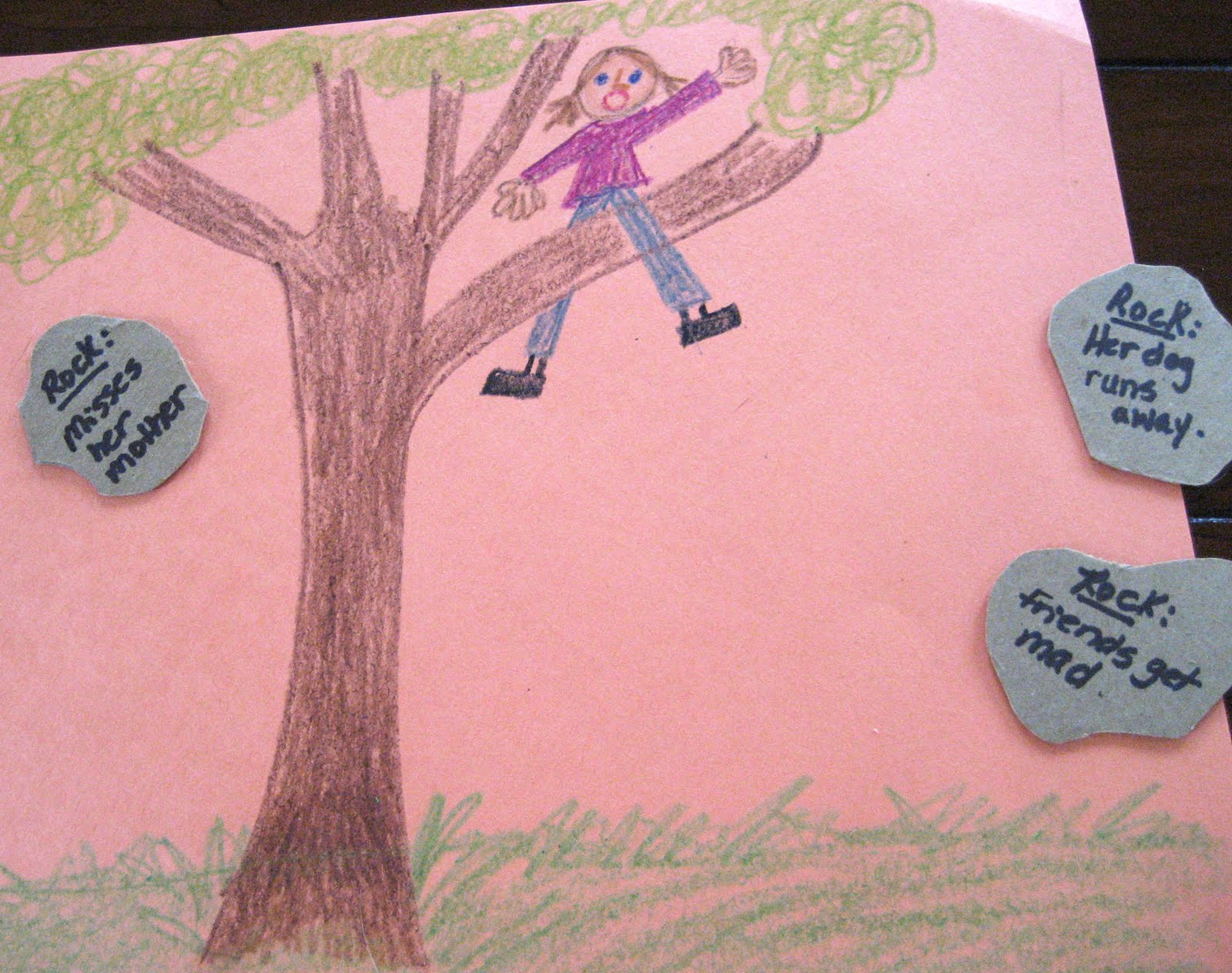
A couple weeks ago, while chatting with fourth-graders about their writing and my writing (swapping thoughts and notes and such), I shared how writers sometimes talk about the importance of putting a character up a tree (meaning get that character in some serious trouble). I, of course, added that after a character is in a tree, a writer should throw rocks at that character (meaning hit that character with even more problems). The kids hadn't heard this before, so we had a good time chatting about this visual in relation to our stories.
About a week later, an email from the librarian from that school pops up in my inbox. Apparently, these amazing young writers had been drawing trees with their story characters in the branches. And then, these clever writers cut out rocks from cardboard and labeled each with additional story-related problems to "throw" at their characters in the trees. Taking this exercise even farther, these crafty writers took turns sharing their stories with each other while displaying their characters in the trees along with the assorted rocks. After listening to each story, the audience suggested even more rocks to throw at each character. How brilliant and fun is this?
The librarian ended her email to me by very sweetly writing "You truly inspired us!" The truth is, they inspired me.
Now, I'd love to hear how you have been inspired lately.

June 1, 2011
Got Layers?
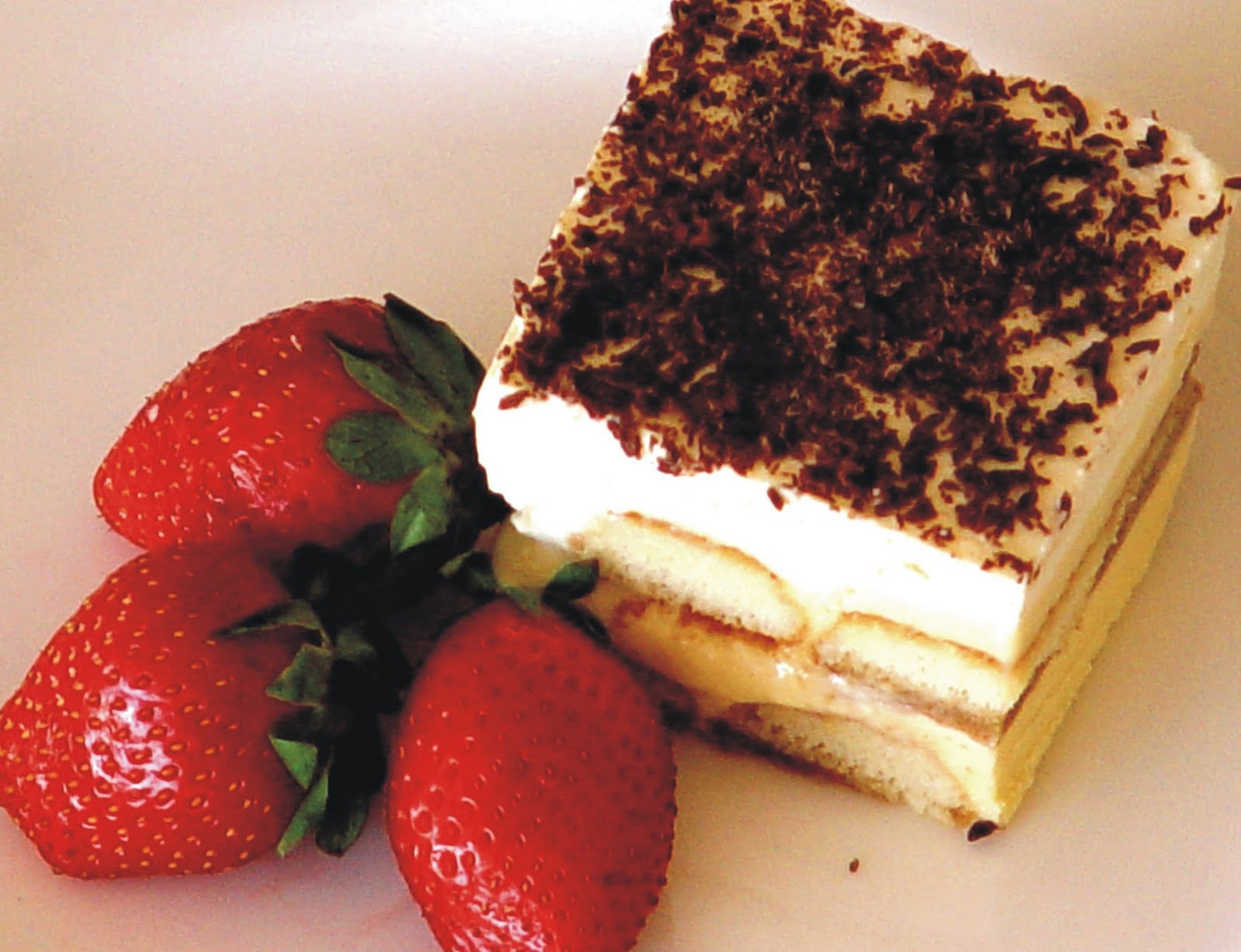
Despite the yummy photo, this is not a post about layers of cake. Sorry. Today, I'm talking plot layers--not as many calories. Do you take note of a character's plot layers when you're writing or reading? I don't always consciously take note of these layers as much as I should. So, I revisited some of my favorite writing books (not cookbooks).
A plot layer is a plot line given to a character, usually the protagonist (as compared to a subplot, which is a secondary plot line involving different, usually secondary characters). More than one plot line is necessary to create a character with depth, intensity, and complexity. To me, this translates into a character that comes alive. My favorite kind of character.
For example, imagine a high school freshman a tad on the insecure side. Let's say he's on the school track team and struggling to achieve better times in his sprints. He loves running and competing, but most of his friends are not into track. So, our protagonist's love of track is causing conflicts with his friends. Maybe he finds himself often torn between training and hanging out with his buddies. On top of this, let's say that our freshman's parents don't like the direction that his friends are going in. The parents suspect the friends will be getting our protagonist into trouble. He can't afford trouble if he wants to stay on the track team, and keep his parents content, but he's had these friends forever. In addition, maybe our protagonist is also sporting a major crush on a certain girl. How about if he knows she'd be impressed if he won his races?
Our freshman protagonist is dealing with layers of internal and external conflicts. Isn't this the way with most of us? There are plenty of plot layers for everyone that I know. To be real is to have layers.
Think about your favorite characters from your reading or writing. Do they have layers?
Okay, NOW it's time for cake. ; )

May 25, 2011
Summertime
First of all, a big thank you to Deane at http://www.deanabarnhart.blogspot.com/ for the blog awards!

Now, as I'm sure you all know, Memorial Day is creeping up on us. Never mind that I'm not at all sure where May went to, I love this holiday when we commemorate U.S. soldiers who died while in service to our country. There isn't enough gratitude. Did you know that Memorial Day was first enacted to honor Union and Confederate soldiers? After World War I, the day expanded to honor all American soldiers who died for this country. That alone makes Memorial Day very special.
However, Memorial Day also unofficially kicks off summer, right? And with summertime comes a change in work habits for many. Schools close their doors and some office hours change (I'm thinking of publishing houses and some agents, in particular). Also, the days are longer. I don't know about you, but the more sunlight I have, the more I read and write. It's a beautiful thing. But there are also those summertime distractions. Like opportunities to hit a beach or a pool, to meet friends for outdoor lunches, to garden, and to just be outside. For me, writing outside is never as productive as writing in an office, so spending more time outside isn't quite as productive. Reading outside, though, is one of my favorite things.
How about you? How will your life change during the summer?
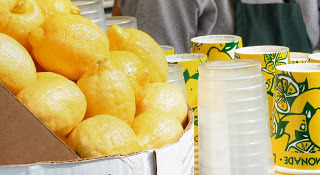
Happy Memorial Day to everyone! *toasting you with a lemonade*

May 18, 2011
The Best Advice Ever?
At a recent library visit, a young reader asked me the following question:
What is the best piece of advice that you've ever been given?
I love this question, but it's sort of massive, when I think about it. I mean, the best advice ever? Wow. My first thought was that Don't run into traffic was pretty decent advice once upon a time, when I was five-ish. Now, though, it sort of seems like pointing out the obvious.
Since my library visit was an author thing, I answered in terms of writing. I said that the best advice anyone ever gave me was to read as much as possible and to write just as much--all while being persistent about going after my dreams of having my writing published.
This is the best piece of writing advice I've received. Without a doubt. But on the way home from my library visit, I kept remembering other bits of wisdom thrown my way: My grandmother warning me to NOT get too involved with a certain guy (because, she thought, he had a weak handshake), my mother advising me about the pitfalls of blindly following a crowd, a sales lady pointing out that wearing yellow or orange of any shade would not be a good idea for me, other voices pointing out the benefits of staying away from certain drinks and junk
 food. All great pieces of advice that rescued me at one point or another. Still, since writing is my love, I think I'll stick with my original answer as the best piece of advice ever. Being persistent about going after your dreams isn't such a bad idea, is it?
How about you? What is the best piece of advice that you've ever received?

May 11, 2011
Lessons from Alfred Hitchcock
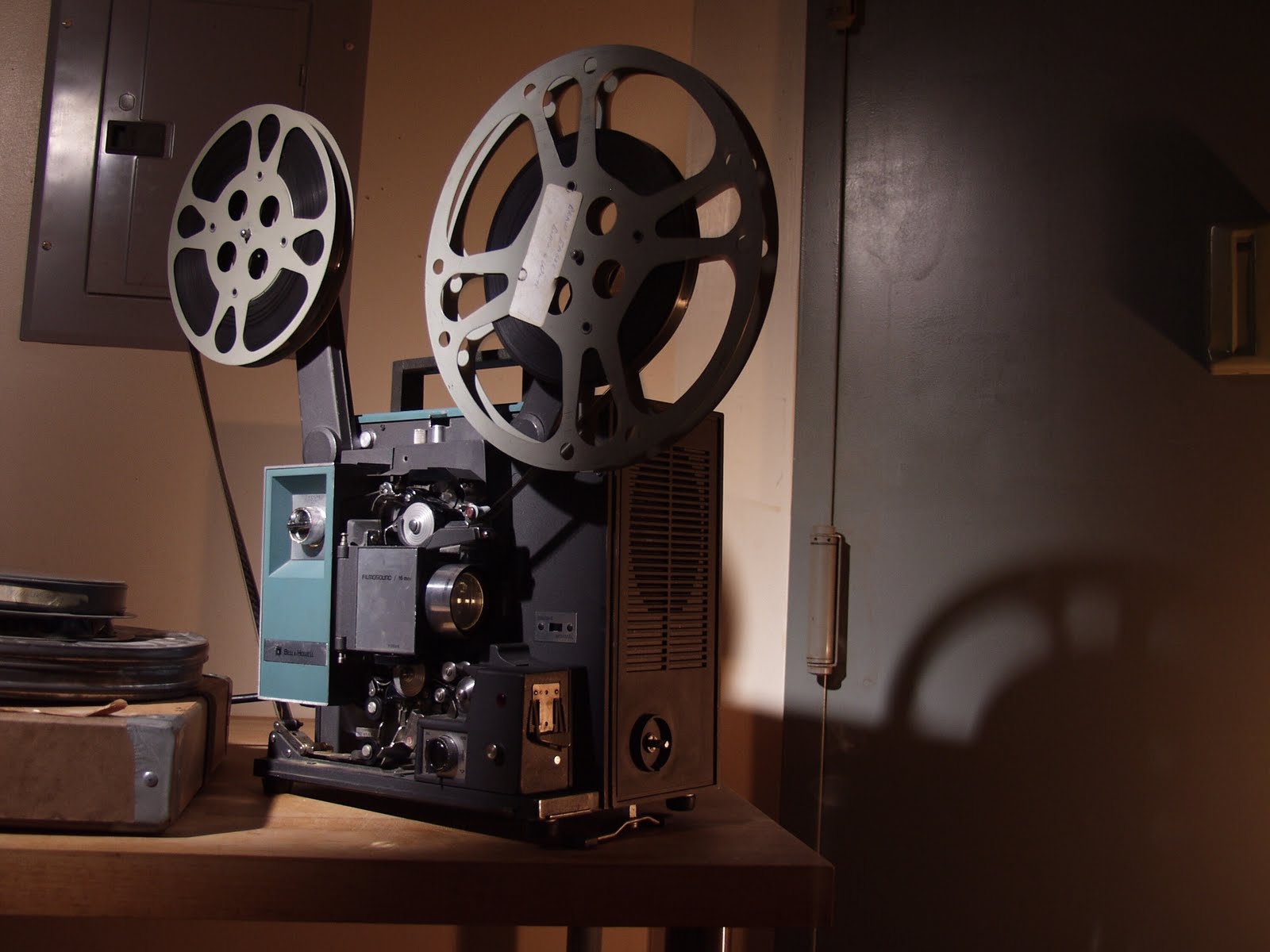
I've learned a lot about writing from reading about screenwriting. So, when someone recently mentioned Alfred Hitchcock as the master of suspense, I couldn't resist looking into some of his techniques. I thought I'd share some summarized tid-bits of what I found that could apply to novel writing.
Everything should be done for the audience. Each scene should affect them, should engage them, and pull them deeper into the story. The characters should tease and make the audience desperately want more.
This might seem obvious, but I, for one, cannot be reminded of this enough.
Emotion is the goal of each scene. Be aware of the emotions coming from the characters. As an assist, think about what musical score would capture or elicit the emotions for each scene.
I love this idea of considering the music that would accompany each scene.
Help the audience to feel as if they are a part of the story or one of the characters in the story. In a suspense film, the viewer should be considered to be a part of the film. Let the audience make discoveries.
A character should be the exact opposite of what the audience expects him to be. Dumb blondes should be smart and rationale. A cute kitten might be a rabid killer.
Ah, misdirection. . . . intriguing.
Alfred Hitchcock once said: "People don't always express their inner thoughts to one another… conversation may be quite trivial, but often the eyes will reveal what a person thinks or needs. The focus of the image should never be on what is said, but rather on what the character is doing..."
Wow, is this great advice or what?
What do you think about these snippets of wisdom from the great film-maker?

May 4, 2011
What Do Librarians Want?
Happy Children's Book Week!
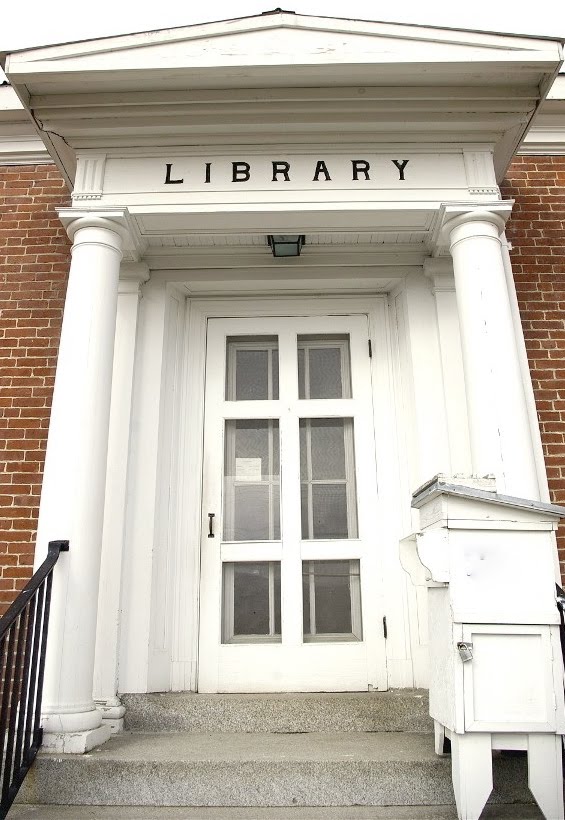
In honor of this week, I thought that I'd share what I've learned about what librarians who work with kids and young adults want from authors and publishers. Ready?
Due to limited budgets for bringing authors into libraries and schools, Skype sessions are becoming more popular. These cyber visits are becoming a great way for kids to meet an author (as long as the technology is available and behaves). Of course, not a lot of books get signed. . .
Book trailers seem to be useful. I didn't have a book trailer for Dog Gone made, but librarians have told me that the trailer for Buck Fever has been a hit with kids and teachers. And, when I'm presenting in a library (or school), I've found that showing the book trailer is a good way to begin.
A middle school librarian once mentioned that she'd welcome any information that would let her know if the story content was appropriate for her readers. By appropriate, she meant stories without sex, violence, drugs, etc. But you probably knew that.
Some librarians welcome bookmarks, but not necessarily posters and other give-away stuff. On the other hand, book cover images are great for grabbing attention. Apparently the book cover paired with information about the story can be really helpful.
ARCs (advanced reader copies) are, of course, highly sought after. However, when ARCs are not available, sample chapters of a novel seem to be the next best thing. The idea here is that the text of the story often says more about it than reviews or book summaries.
Thoughts? Anything to add? Any surprises?
For more information about Children's Book Week, visit: http://www.bookweekonline.com/about
I hope you enjoy it! : )