Cynthia Chapman Willis's Blog, page 6
November 23, 2011
Gratitude
It's blog day, but it's also the day before Thanksgiving. This explains why I am typing with greasy fingers, sporting a soggy dishtowel that smells vaguely of celery over my shoulder, and brushing baking powder out of my hair. So, forgive me if I keep this short. I'm sure Martha Steward would agree that cranberry sauce on a keyboard would not be a good thing. And besides, I am well on my way to freaking out over a large turkey that
 refuses to thaw. This may mean a game of bob the bird in a very large bucket of water. This is never pretty. Believe me, I know.
Anyway, as I thaw, freak out, bake, stir, and chop (trying to keep my fingertips out of the stuffing), many thankful thoughts mingle inside my head. I love Thanksgiving (yes, I know, you probably thought otherwise based on the first paragraph). Not only is the day a great excuse to pig out with friends and family, it is delicious to focus on being grateful. At the risk of becoming more gooey than the pecan pie I just pulled out of the oven, I am thankful for all of you, my blogging buddies. Not only do I appreciate your follows, but I have learned, laughed, and loved your comments as well as your wonderful posts. What a great community.

So, tomorrow (oh heck, who am I kidding—today, too) I will raise my glass in gratitude for my passion for writing, all the amazing and wonderful books out in the world, and all of you amazing readers and writers who generously share your experiences, thoughts, and love of books and writing.
Wishing you a warm and wonderful Thanksgiving full of gratitude, even if you have already celebrated it or it is not a traditional holiday where you live.
Cheers!


November 15, 2011
Movie or Book?

The release of The Hunger Games movie trailer got me thinking about great novels and their movie counterparts. When you've read a great novel and it becomes a movie, which do you end up enjoying more? It seems logical that a writer would answer "book," right? Well, not always.
I saw the movie The Outsiders long before I read S.E. Hinton's amazing novel. This is sort of odd since the novel was published in 1967 and Francis Ford Coppola released his movie in 1982. Nonetheless, I loved that movie. I really cared about the characters. When I read the novel, years later, I still had Matt Dillon, Ralph Macchio, Patrick Swayze, Emilio Estevez and the rest of the cast in my head. I think this enhanced the reading experience for me. In the end, though, I preferred the movie.
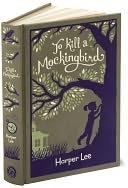
On the other hand, I didn't love the movie version of To Kill a Mockingbird. You might be gasping at this (the way you might have gawked at my liking The Outsiders movie a wee bit more than the book). I know, I know—everyone loves Gregory Peck as Atticus in To Kill a Mockingbird. But because I adore the novel, I had Scout, Jem, and Atticus etched in my head before I popped the movie into the DVD player. Even the great Gregory Peck couldn't mess with my preconceived notions. Sorry, Mr. Peck. *shrugs*
Generally, I am disappointed by the movie version of a novel I love. Not so for the Harry Potter movies. I was mad about Harry and the Potter books, and thrilled with the movies. I do, however, try to put a chunk of time between reading a novel and seeing the movie version. I still haven't seen The Help, a novel I adored (ADORED).
How about you? Does your love of a novel influence your opinion of the movie version, for better or for worse? Any thoughts on why?
For those of you who have read The Hunger Games: Are you anxious to see the movie or a bit leery? In case you're not sure, here's the movie trailer: http://trailers.apple.com/trailers/lions_gate/thehungergames/
Enjoy!

November 8, 2011
How Far is Too Far?
According to Mark Twain: "Truth is stranger than fiction, but it is because
Fiction is obliged to stick to possibilities; Truth isn't."
This quote starts to make my brain hurt. I understand the satire, but still, it makes me ponder. If a story is obliged to stick to possibilities, how far is too far when it comes to these story possibilities? Part of me believes that a really talented author can make me believe anything. Yet, anyone who reads narrative fiction has probably had the unfortunate experience of having his or her sense of suspended belief sour into disbelief. This is never pretty. Is this because fiction didn't stick to possibilities, as the great Mark Twain told us?
I think about all the times someone has said to me, usually after some real-life scene when at least one person has behaved really badly or in an absurd or embarrassing way: "Oh, you should write about that." Almost as often, I reply: "Readers would never buy it. Seeing is believing." Truth can be stranger than fiction.
What do you think about Mark Twain's quote? Is anything possible in fiction? If not, how far is too far when dealing with the possibilities? Can you think of an example?
P.S. Does your brain hurt yet?

November 1, 2011
Advice and Ex-President Zombies
Doling out advice can be a lot like handing out Halloween candy. I came to this conclusion this past weekend, at a killer Halloween party. There, an ex-president zombie discovered that I was not just a black cat, but also an author of middle-grade novels. He asked me how he could best transform his ideas for children's stories into best-selling books. Good question, right? Still, that zombie sort of caught me off guard. Maybe
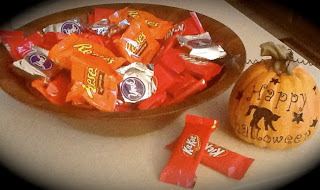 because I was having tail issues (it's not easy impersonating a cat), or maybe because I didn't expect the undead to be into kid lit. Foolish.
As I wrestled with my wayward tail, I offered advice the way I hand out Halloween Candy. I suggested that Mr. Zombie President check out The Society of Children's Book Writers and Illustrators, I pointed out that going to conferences is an excellent way to break into the business of writing books for children, and I recommended Gail Carson Levine's Writing Magic as well as Writing Young Adult Fiction for Dummies, by Deborah Halverson. Since my zombie friend gobbled these suggestions (What else would a zombie do?), I rambled on about novels and picture books he might read. By the time he ambled off, he seemed grateful (as grateful as a zombie and ex-president can be).
The next morning, while downing a couple mini Milky Way bars with candy corn chasers for breakfast (which do not fall under the dairy and veggie sections of the food pyramid... please don't judge), I wondered if I gave out the best advice.
What do you think? What would you have said or suggested to our ex-president zombie friend?
What is the best advice you've ever received?

October 25, 2011
Do We Wear Masks?
"People are NOT what they seem to be before we really get to know them," an acquaintance of mine said with great authority. She went on to say that the true, hidden natures of most people are concealed behind masks of polite behavior and what they think is expected of them. However, once the pressure is on, the masks come off. True natures are revealed.
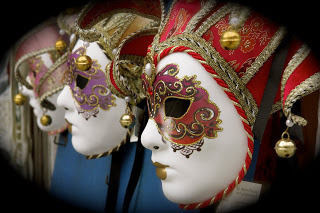 "The more stress people are under," my friend said, "the less guarded they are. And then their actions reveal them."
For better or for worse, this conversation brought me back to a certain tragedy I had been a part of, once upon a time. In this incredibly stressful situation, people were under immense pressure. Anxiety times one thousand. Despite all the fear and the horror, people acted with amazing kindness and heroism. However, I've also witnessed some pretty hideous shenanigans from people under crazy amounts of stress. Were all of these folks, in both situations, showing their truest selves? Do we reveal who we really are by the spontaneous choices that we make under duress?
Of course, this applies to the characters in stories, too. After all, they should be having rough times. They should be up to their foreheads in trouble and tension and stress. So, if my friend is right, there should be lots of opportunities for writers to show the truths behind their characters.
What do you think? Do the choices people or characters make under pressure reveal their true natures or simply other facets of their personalities?

October 18, 2011
Go Team!
I've been thinking a lot about teamwork, especially the camaraderie in the world of writing and publishing. Maybe because a part of my heart is breaking for a talented writer friend who is having a tough time, as another part of me rejoices for a different writer pal who, after a rough go of it, is spinning with exciting publishing news. Where would we be if we couldn't share our lows and our highs with each other?
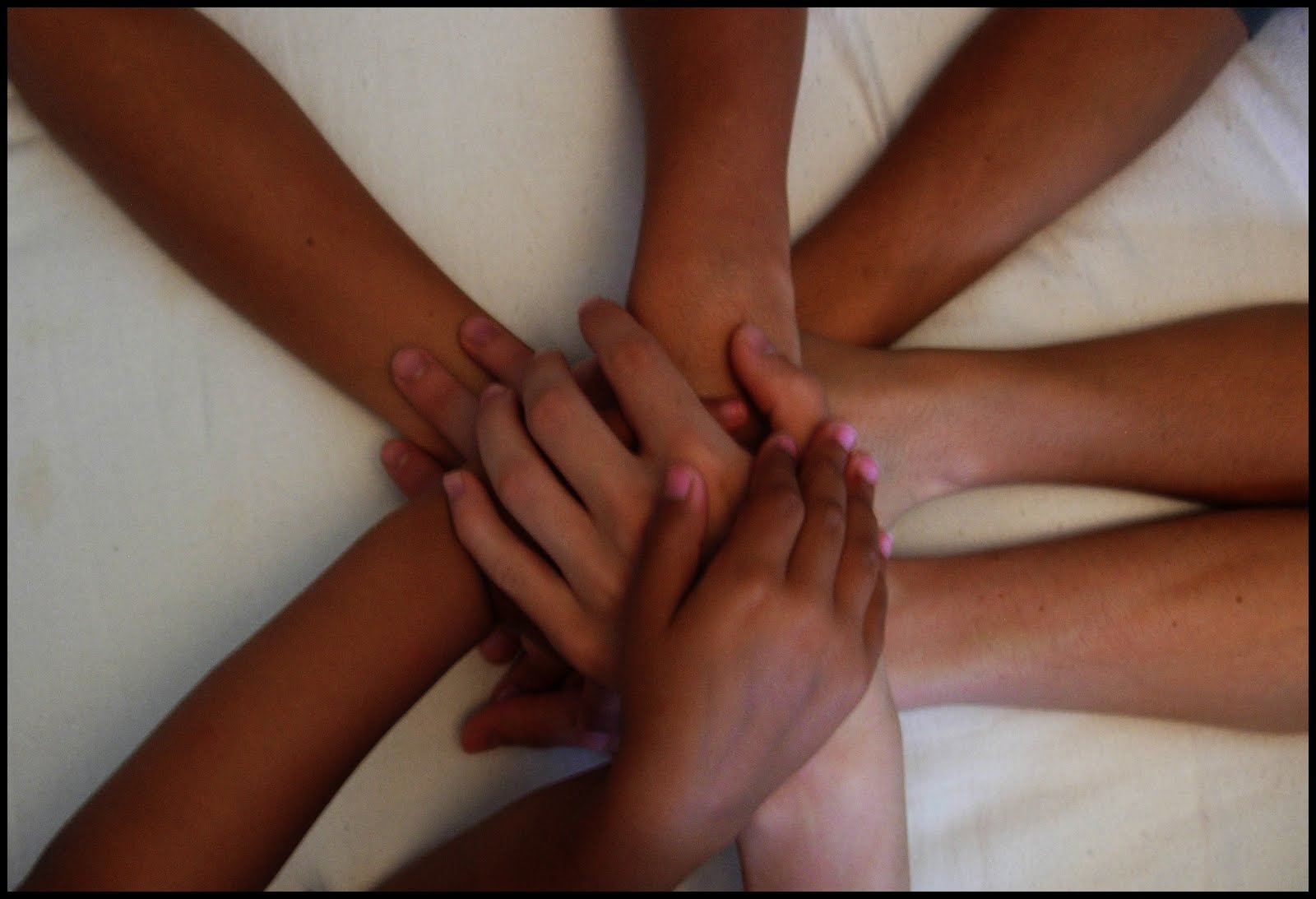
I've also been feeling the love of teamwork in regard to promotion, which is not my favorite word. When my novels came out, promoting could be lonely and painful. However, I was lucky enough to be adopted into a fabulous group of authors that work together to promote. The KidLit Authors Club (http://kidlitauthorsclub.com/HomePage.html) was started by authors who realized that promoting solo can be miserable, but promoting as a group can be a blast.
A couple weeks ago, for example, I attended an all-day book festival. Had I been alone with my books, I would have felt awkward and uncomfortable. Think stray dog in need of a home. Sitting at tables with other authors, though, chatting and laughing and sharing books (our own and each others) with people made the day fun. I think we actually attracted readers to our tables because we were enjoying ourselves so much. Teamwork and camaraderie in action.
If you're a blogger, or a fan of Twitter, Facebook, Goodreads, or other similar sites, you know all about the rewards of connecting with others. Going through trials and triumphs with kindred spirits—people who understand the good, the bad, and the sometimes ugly of life—makes such a difference.
How has teamwork and camaraderie made a difference in your life? I'm guessing it has.
Footnote: Speaking of teamwork, I am now overseeing the Twitter account for the KidLit Authors Club. If you follow us ( @kidlitauthors ), I promise to follow you back! : )

October 11, 2011
Save the What? When?
I have been reading a book on screenwriting called Save the Cat! I love cats, but I wondered what a book about screenwriting had to do with felines. Blake Snyder, the author of this book with the orange tiger kitty swinging across the front, explains that the "save the cat" scene in a movie is when the audience observes the hero doing something that makes him likable--such as saving a cat. This action defines the character as a good guy. Score.
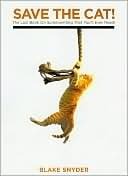
I got the impression that this saving business should happen sooner rather than later, as in when the audience first meets the main character, at least in a movie. But is this necessary in a novel?
I can't help thinking about one of my favorite classics—A Christmas Carol by Charles Dickens. In this fabulous tale of redemption, Ebenezer Scrooge is far from saving any cats when the reader meets him. Yet, at least for me, Scrooge is still a compelling character. Yes, he's cynical (you know: "bah humbug"), but he is also lonely and empty.
It seems to me that Charles Dickens sets Scrooge up to be such a crusty dude that the reader senses that change must come. The story becomes more interesting because the reader wants to understand why Ebenezer has developed into such a callous of a human being.
So, by the time ol' Ebenezer finally has an epiphany, at the end of the story, and saves a cat, the reader practically cheers (or, at least, this reader did). The reader has been hoping that the wicked can turn kind-hearted, and Scrooge has. By the close of the story, he has saved multiple cats and this works.
What do you think? In a novel, does a character need to save a cat right away? Is Charles Dickens the only guy who can pull of making a main character pretty unlikeable and yet compelling until the very end of a story?

October 5, 2011
Got Tension?
Tension. We wade through it every day. It's in the smallest moment of conflict and (of course) the rip-the-hair-out-the-head melt down. If someone asked me on any given day if I would like another helping of tension, I'd back away screaming "Noooo!" But give me a novel that lacks tension, big or small, and I'll scream the same.
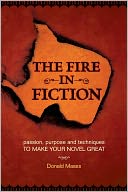
Without tension, the novel becomes a kind of sleeping pill, right? That's why these statements from The Fire In Fiction, by the amazing Donald Maass fascinated me:
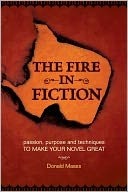
"What many do not grasp, though, including many published novelists, is that what keeps us turning hundreds of pages is not a central conflict, main problem, or primary goal."
"Keeping readers constantly in your grip comes from the steady application of something else altogether. Micro-tension."
"Micro-tension is the moment-by-moment tension that keeps the reader in a constant state of suspense over what will happen, not in the story, but in the next few seconds."
Wow, these statements resonated with me. When I start reading a book and emotional conflict happens on the first page, I'm in. Maybe there is a rivalry between characters or a misunderstanding that can't be ignored. Suddenly the dialogue between these characters has snap and crackle and pop. There is friction as a result of animosity, jealousy, passion, or other churning emotions. What is going on inside them is intriguing. This, it seems to me, could be an example of micro-tension--a moment of tension that keeps me reading and anxious for what is going to happen next, as in immediately next. It isn't necessarily about the overall plot or even the stakes of the scene. It's more focused on the conflicting emotions of the characters.
Of course a writer needs to pay attention to how to build the loud tension of the main character's struggle for the ultimate goal, and all the opportunities for big tension in the story's plot, characters, and setting. In between these building blocks of story, though, it makes sense that there can and should be the smaller conflicts called micro-tension. The mortar between the building blocks that holds them together.
What do you think?
For all your writers out there: Have you considered the concept of micro-tension? Do you incorporate it into your writing?
For you readers: When has micro-tension had you flipping pages while reading?
Last but miles away from least: A huge thank you to Ashley at http://ashley-nixon.blogspot.com/2011/09/blog-award-whoo.html?showComment=1317679295538#c7788470722401726733 and to Nutschell at http://www.thewritingnut.com/ramblings/blog-awards/#comment-4597 for gifting me lovely blog awards (and nice words about this blog). Big smile. : )

September 28, 2011
Music or Karaoke?
 When I listen to a great song, I am often amazed by the lyrics. Every word counts, works hard, and sometimes does double duty.
Good writing has rhythm, whether the writing is a song or a novel. The reader rides waves of sounds. Achieving this musical quality in writing can be tough, though. If a sentence is not constructed well or is riddled with mistakes, the result could be more clunk than melody. If a sentence is not divided well with commas, dashes, colons, etc., it could hit the ear like bad karaoke.
Echoes in a story can also ruin the music of it. Maybe a character's name or pronouns such as he and she are repeated too often. Maybe the writer has a tendency to use the some words too much. *Raises her hand sheepishly.*
Too much alliteration can also snuff the rhythm and good writing.
I find that reading my stories out loud is the best way to find those places where the writing loses its rhythm and song. The rough patches hit my ears like gravel poured out of a metal can. Cutting often helps to fix these sound and rhythm issues. If I simplify (the writing not the thought or content behind it), the music sometimes comes back into the sentences.
William Stunk and E.B. White wrote in The Elements of Style: "A sentence should contain no unnecessary words, a paragraph no unnecessary sentences, for the same reason that a drawing should have no unnecessary lines and a machine no unnecessary parts."
What do you think? Does music come from making every word count? As in
 poetry? As in lyrics? When you are reading a novel, how much does the music of the writing affect your reading experience? If you write, how do you infuse music into your work?
September 21, 2011
Left? Right? Or Straight Ahead?
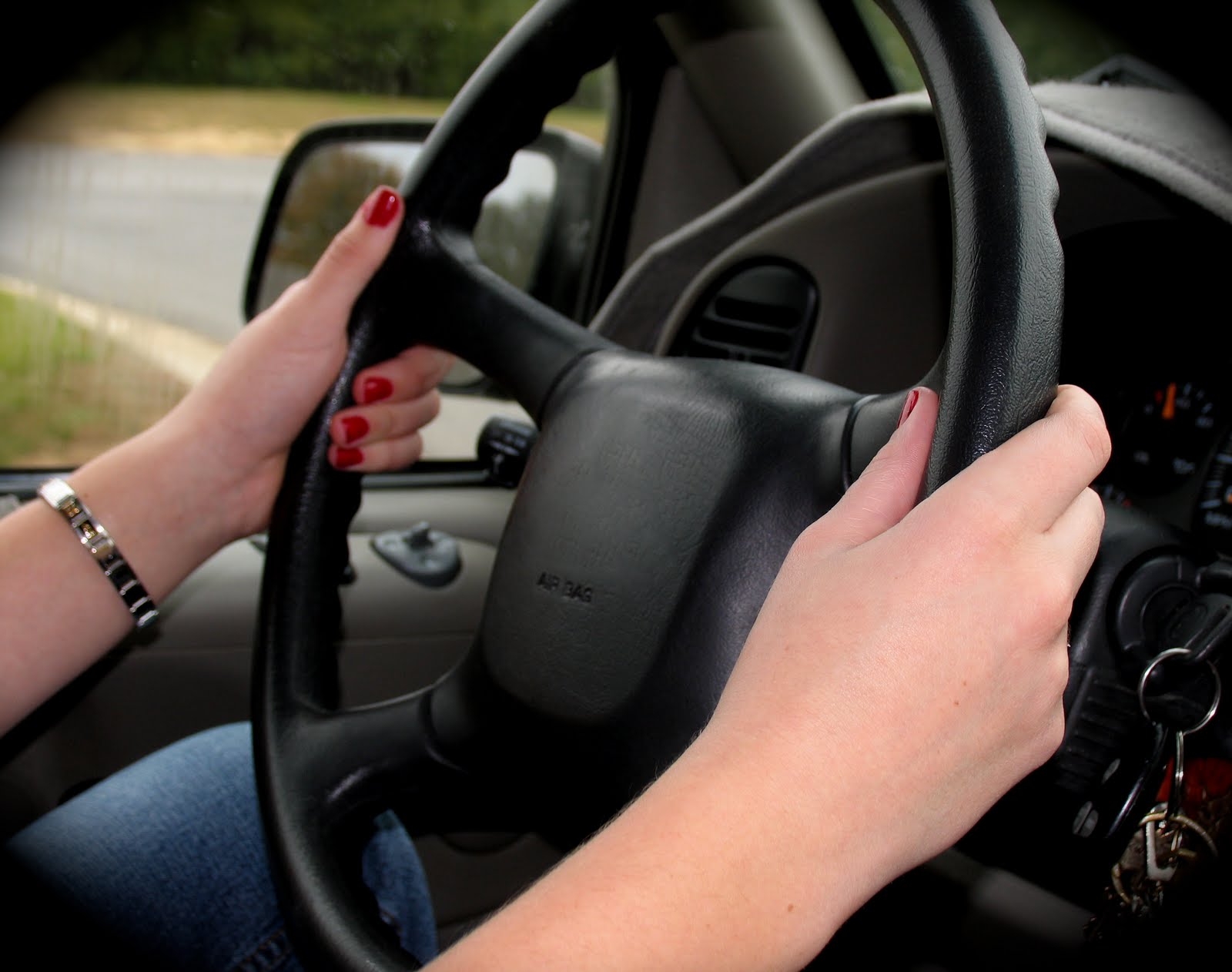
In really great stories, we read about select moments, but end up feeling like we've been on a journey that includes part of a life or lives. We know characters inside and out, right? Authors take us on these rides. To do this, they make choices, hopefully selecting the best route to the moments and events that illuminate the characters' personalities, backgrounds, and predicaments. Given the same characters, situations, and general background information, different writers would probably write different stories. I think this is fascinating. Whether a writer turns left at an intersection, swerves right, or goes straight ahead is influenced by that writer's values, beliefs, and view of the world. The writer is the reader's driver.

If you are a writer, how much thought do you give to the choices that pop up during the journey of your story? At least during the first draft, I don't ponder endlessly about my options. I have an idea where I am going, using my outline as a road map. I consider how each turn will change my protagonist's situation, how it will generate conflict and move the plot forward. Beyond that, I sort of go with my gut, which leads to plenty of dead ends (too many, really). By the end of my stories, though, I know they reflect my passions, views, and values, whether I like this or not.
When reading, do you ever wish an author had turned left instead of right? I will admit that I have, on occasion, wished an author had jigged instead of jagged. Or, I have prepped myself for a hard left turn, only to be swung right. That can be fun, actually.
**************************
* Shameless Self-Promotion Alert: I just had to share this wonderful review of Buck Fever by author Kenneth G. Bennett: http://kennethgbennett.com/
(I just love a nice review.) : )