Cynthia Chapman Willis's Blog, page 3
July 3, 2012
Interesting (I think) 4th of July Writing Tidbits
Happy almost July 4th everyone! In honor of Independence Day, I thought I’d share some facts that I find interesting about the writing of The Declaration of Independence. Here’s hoping that they might interest all of you writers and readers, too.
Did you know that Thomas Jefferson was one of five men appointed to write The Declaration of Independence? John Adams of Massachusetts and Roger Sherman of Connecticut, Benjamin Franklin of Pennsylvania, and Robert R. Livingston of New York joined Mr. Jefferson. Doesn’t that sound like a powerful writer’s group?
Thomas Jefferson, however, was asked to write the first draft. I’m guessing he was more of an outliner than a pantser.
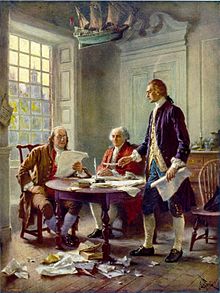 This writing project took him less than three weeks. This bit of information, frankly, makes me a little sheepish about my slow writing pace. Upon completing the final draft (after many), Mr. Jefferson showed it to Benjamin Franklin and John Adams, who input their own revisions. The Congress, of course, made more alterations and deletions. The process of revision continued through all of July 3 and into the late morning of July 4. And I’ve read that Mr. Jefferson was not thrilled with the final product. Still, when the Declaration of Independence was finished, church bells rang out in Philadelphia. Don’t we all celebrate once those final revisions are made, for better or for worse?
Fifty years later, Thomas Jefferson died on July 4, 1826, as did John Adams. It’s true: Two of the men who crafted The Declaration of Independence died on the same day, and on the 50th anniversary of the adoption of the document. Kind of wild, don’t you think?
And now I leave you to your fireworks (for those of you celebrating the birth of the USA) with a few quotes on the value of reading and writing:
“I cannot live without books.” ~ Thomas Jefferson
“The most valuable of all talents is that of never using two words when one will do.” ~ Thomas Jefferson
"Either write something worth reading or do something worth writing." ~ Benjamin Franklin
“Let us dare to read, think, speak and write.” ~ John Adams
“I read my eyes out and can't read half enough...the more one reads the more one sees we have to read.” ~ John Adams
Can you add any fun, Independence Day writer facts?
Happy fourth of July whether you celebrate Independence Day or not!


June 20, 2012
Visits and Visitors
 Photo by Raywal65 at Morguefile.com Happy Wednesday!
 It is a very happy Wednesday for me. I am thrilled to be over at The Writing Nut for the Wednesday Writer’s Workspace. I’d love for you to come on over and check it out, if you have the time. http://www.thewritingnut.com/
Also, I won’t be around next week (my mom is coming to visit). I’ll be back July 3rd. Just a little bloggy break.
Happy reading and writing, my friends!

June 12, 2012
Book Mania Anyone?
Last week I attended BEA (BookExpo America). I’d never been to this conference before. In summary: Wow.
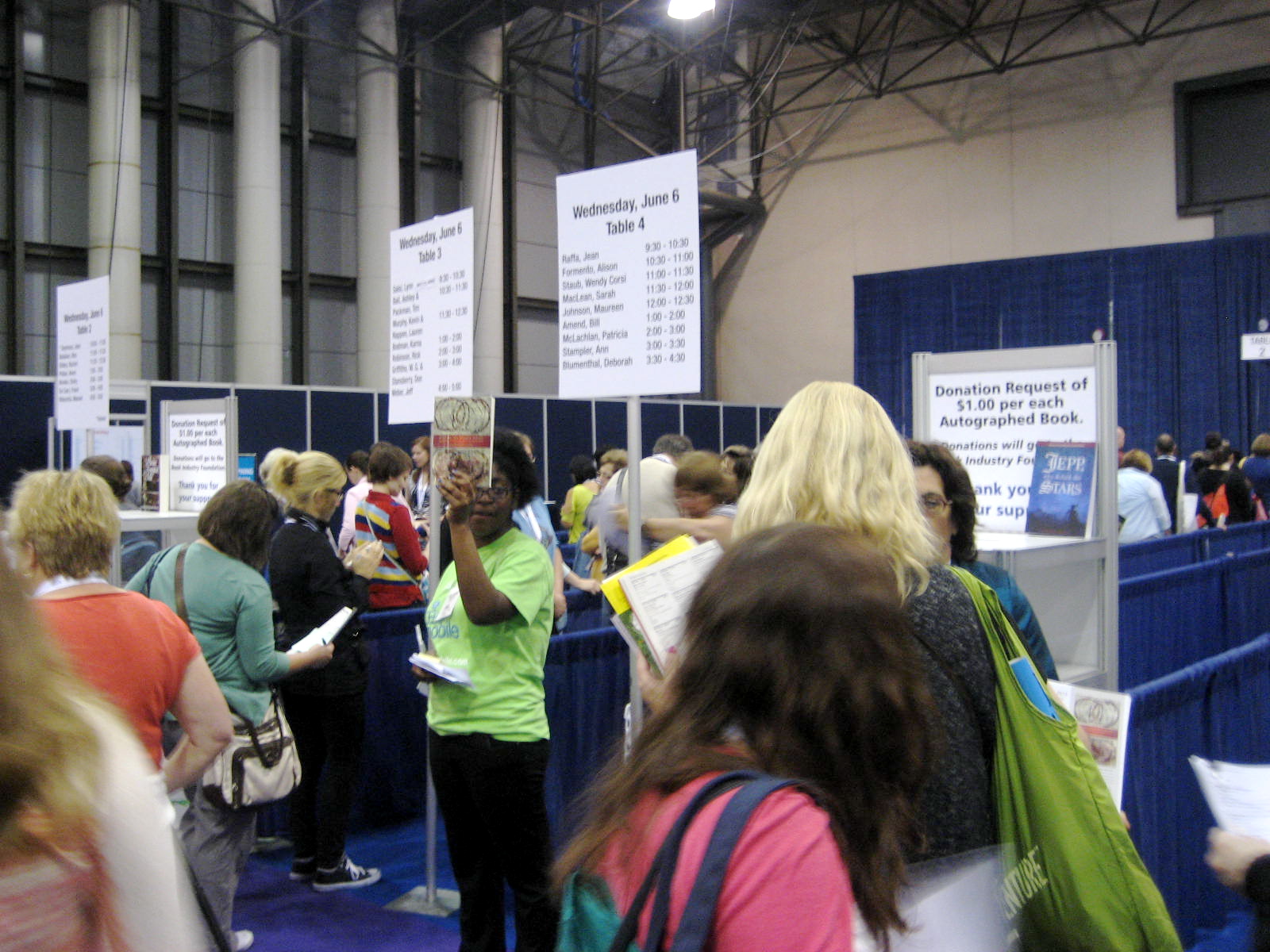
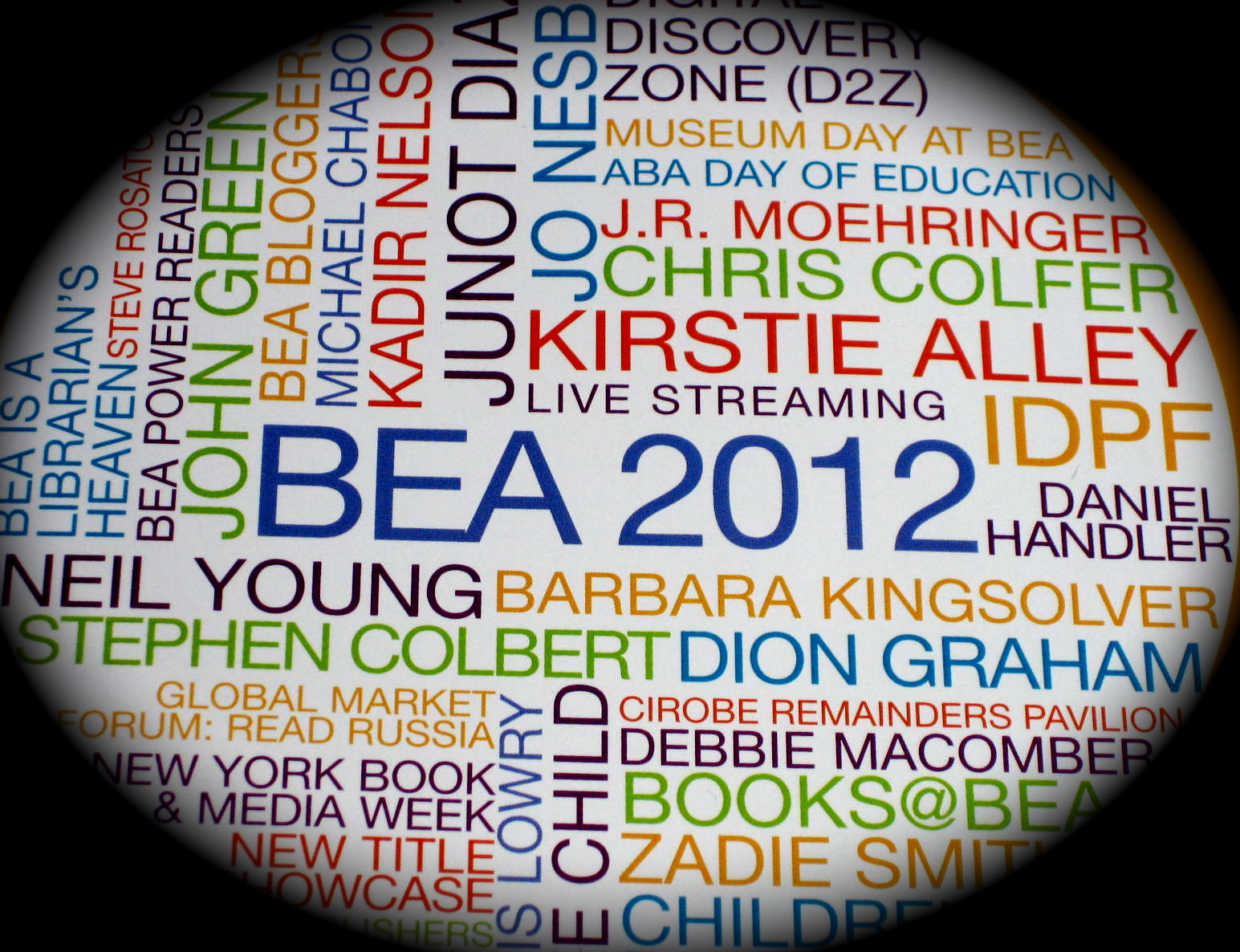 First of all, this ginormous convention took place in the mega huge (think multiple airplane hangers) Jacob Javits Center in New York City. And every inch of this place was crammed with publishers, areas for workshops and seminars, signing booths where authors gave away copies of their newly released or soon to be released books (many signed at the publisher booths, as well), and vendors selling food and drink (with prices that required buyers to sell kidneys).
 The day began early with the Children’s Book and Author Breakfast, a ticketed event that sold out months ago. Chris Colfer (who plays Kurt Hummel on Glee), the master of ceremonies for the breakfast, woke us up with his wit and sense of humor (while plugging his middle grade novel, The Land of Stories). John Green, Lowis Lowry, and Kadir Nelson also spoke, each amazing, as I’m sure you can imagine. As a bonus, everyone in the audience walked away with copies of the latest books from these authors. Sweet!
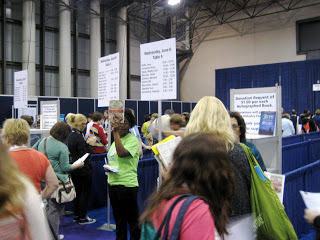 A glimpse of a few signing booths.For the rest of the day, my writer pals and I cruised, perused, and attended workshops and interviews. Moving about was often challenging given the dense crowds and snaking lines of people waiting to have often free books signed. I practically tripped over Chris Colfer as he signed copies of his novel. I spotted Jane Seymour (actress) signing books, and I became lost in what might have been a flash mob around Rachel Ray (celebrity chef and daytime TV show hostess). I also heard R.L. Stein talk about his famous Goosebumps series and middle grade novels. To top all this off, I scored a better seat for the interview with Patti Smith and Neil Young than I’ve ever enjoyed at a concert (and believe me, this was a one interesting conversation).
All this and I walked away with enough books to dislocate at least one shoulder. I hadn’t planned on this, but every time I paused, someone handed me a book. I am not kidding when I tell you that I turned more away than I accepted. In the end, sacrificing a shoulder or two seemed like the right thing to do.
For more info and a more professional take on the BEA scene as it pertains to the children’s book industry, check out this Publisher’s Weekly article: http://www.publishersweekly.com/pw/by-topic/childrens/childrens-industry-news/article/52446-bea-2012-big-books-for-kids-surveying-the-scene.html
Now tell me, have you ever attended BEA, or a mega book conference or event such as this? If not, would you want to check it out (keeping the crowds and chaos in mind)? If you have been to BEA or a like conference, what did you take away from the experience?

June 5, 2012
Symbols
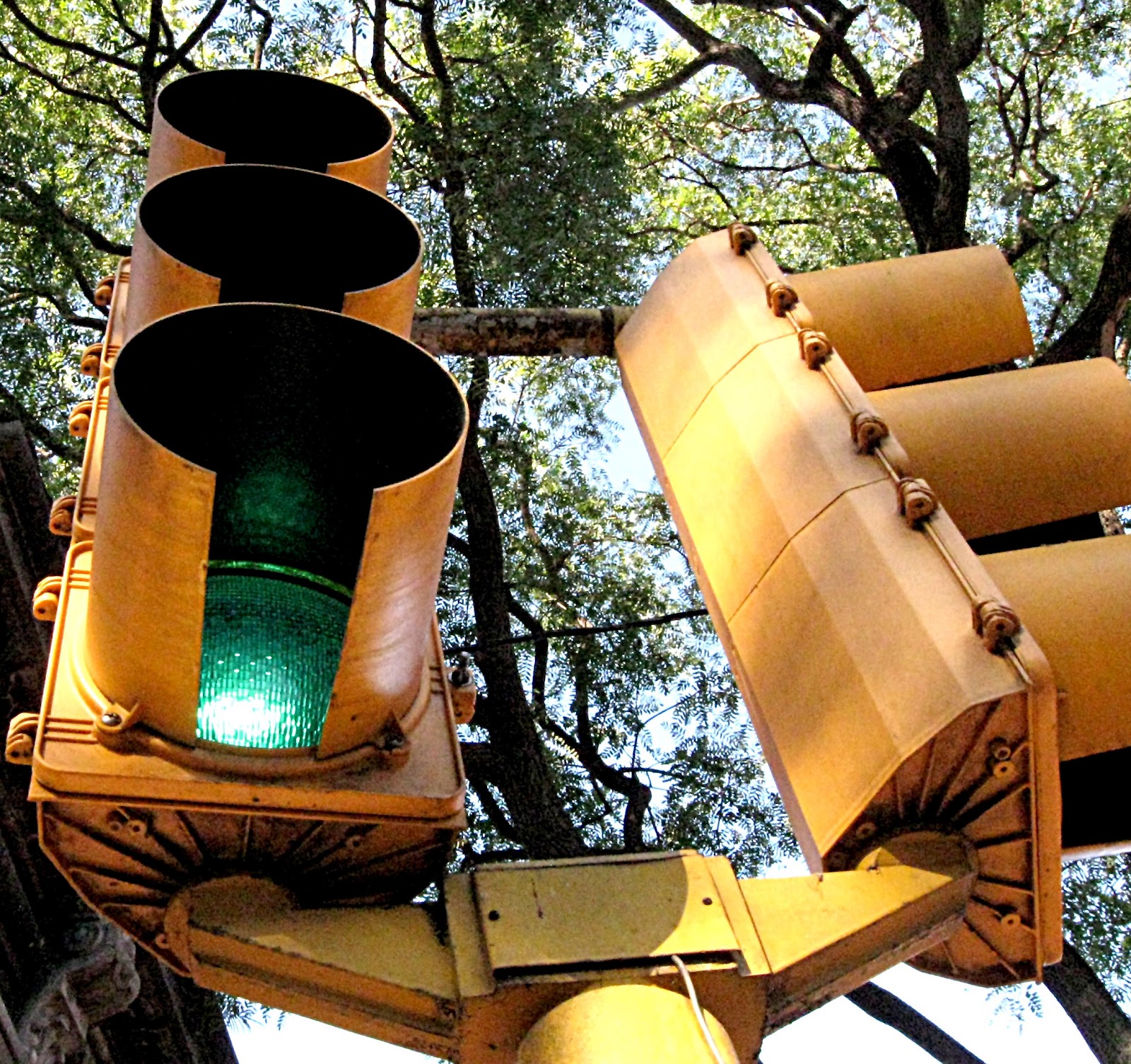 Traffic light photo by alvimann at Morguefile.com Do you notice symbols when you are reading? Or, for that matter, in the world around you? They can sometimes be easy to overlook, I think.
 Do you incorporate them into your writing? Symbols can add meaning, highlight the underlying theme, or even nudge a reader to make certain connections. I like symbols best when they occur organically and throughout a story, as long as they are not stuffed into the text with a heavy, over-enthusiastic hand. Like mine. When I revise, I often have to delete a symbol or two (or three) that I like too much.
I love coming across symbols while I am reading. Maybe a character has a beloved bicycle that she rides in the beginning of a story. The bicycle ends up at the back of the garage as the story rolls along. This could be a subtle indicator of what is going on in the character’s life. Maybe the bike symbolizes the character being neglected or distracted from what she loves. Maybe the bicycle shows that she’s growing out of a bicycle-riding stage. The bicycle could be just a bike, or it could be a symbol or reflection of what is going on in the character’s life.
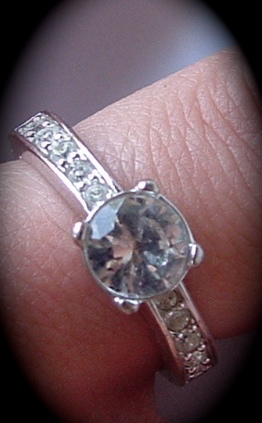 Ring photo by lisafanucchi at Morguefile.comSymbols don’t have to be objects, either. They can be phrases, gestures, or character traits. The trick, for writers, is to be sure that the symbols sprout in a natural way from the story. Whenever I force a symbol into a story, it’s obvious. As in there’s an orangutan sitting at the kitchen table obvious. It’s best to pull symbols from what the story offers.
 What are some of your favorite symbols from your reading and writing? I still think about that famous pie from The Help. And, of course, who could forget Frodo’s quest for that symbol of all symbols—the ring?

May 29, 2012
Plot Versus Character
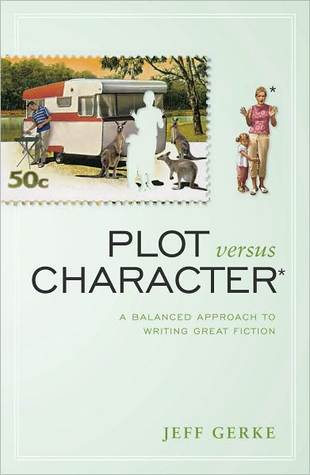 Somewhere in my travels through the bloggy universe, I read a five star review of a book titled Plot Versus Character: A Balanced Approach to Writing Great Fiction by Jeff Gerke. Since I love books on craft and can’t resist anything with great fiction in the title, I picked up a copy. Of course it ended up on a books to be read shelf, but, since I wasn’t absorbing its information by simply sharing office space with it, I recently read the thing--and I loved it.
Mr. Gerke maintains that there are two types of novelists. Those for whom plot comes naturally and those for whom characters come naturally. Frankly, I don’t think I fit into either category, but whatever. The point is this: the plotter must find “the plot of the main character’s change,” while the character-inspired novelist must build plot by “finding the story within the main character.” Either way, the main character’s layers and inner journey is the spine of the novel.
The book is divided into sections: “Memorable Characters” followed by “Marvelous Plots,” and a final section that discusses the union of plot and characters. Within these sections there are diagrams, examples, suggestions, tricks, and tips. For example, Mr. Gerke recommends that writers read a book on psychology and temperament titled Please Understand Me II by David Keirsey. I am halfway through this fascinating book on personality types and I’ve just about worn out my highlighter. There’s no doubt that the information in this book will help me to develop deep, layered characters with substance.
So, if you’re up for an interesting read on developing multi-layered characters with riveting inner journeys capable of fueling a three act story structure, grab a copy of Plot Versus Character: A Balanced Approach to Writing Great Fiction. It’s worth the read.
Or have you read it? If so, what did you think about it? Have you read Please Understand Me II by David Keirsey?
Have you read any other good books on craft lately?

May 22, 2012
Filter Words
 Are you familiar with filter words? Not filler words. Filter words. These are the words that filter the reader’s experience through a character’s point of view. During the Highlights Foundation Whole Novel Workshop that I attended in March, we talked about filter words. The term, apparently, comes from Janet Burroway, a novelist who co-wrote Writing Fiction : A Guide to Narrative Craft, which is, according to its description, “The most widely used and respected text in its field.”
Filter words include see, hear, feel, think, realize, watch, look, seem, know, and sound (to list a sampling). Although they can have their proper place in writing, they can also put distance between a character and the detail the writer wishes to present. For example, I see the horse run from the field into the barn without the filter words would read The horse runs from the field into the barn. Which sentence is more clean and sleek? Which sentence do you prefer? I feel the cold wind bite into my neck would transform into The cold wind bites into my neck.
Filter words can tell a reader what is happening rather than letting the reader experience the scene. They can put distance between the reader and the character’s experiences. And we know this isn’t a good thing.
Have you read about or heard about filter words? What are your thoughts about them? Have you read or heard about Writing Fiction: A Guide to Narrative Craft by Janet Burroway and Elizabeth Stuckey-French? Do tell! : )

May 14, 2012
Random Act of Kindness BLITZ!
A smile. An encouraging word. A thoughtful gesture. Each day people interact with us, help, and make our day a bit brighter and full. This is especially true in the Writing Community.
Take a second to think about writers you know, like the critique partner who works with you to improve your manuscript. The writing friend who listens, supports and keeps you strong when times are tough. The author who generously offers council, advice and inspiration when asked.
So many people take the time to make us feel special, don't they? They comment on our blogs, re-tweet our posts, chat with us on forums and wish us Happy Birthday on Facebook.
Kindness ROCKS!
To commemorate the release of their book The Emotion Thesaurus, Becca and Angela at The Bookshelf Muse are hosting a TITANIC Random Act Of Kindness BLITZ. And because I think KINDNESS is contagious, I'm participating too!
I am blitzing Shannon Hitchcock because we've been friends, writing critique pals, and conference buddies for years now. Shannon always makes the time to review whatever I'm working on and chat with me about it when I'm stuck. Awesome. So, as my random act of kindness, I'm offering Shannon a Barnes & Noble gift card because she loves to read (of course). If you have a minute, why not stop by Shannon's blog to see for yourself how great she is? www.shannonhitchcockwriter.blogspot.com
Do you know someone special that you'd like to randomly acknowledge?
Don't be shy--come join us and celebrate! Send that person an email, give that person a shout out, or show your appreciation in another way. Kindness makes the world go round. :)
Becca and Angela have a specialRAOK gift waiting for you as well, so hop on over to The Bookshelf Muse to pick it up.
Have you ever participated in or been the recipient of a Random Act Of Kindness? Let me know in the comments!

May 8, 2012
Whoa, Where Is This Writing Going?
The Kentucky Derby this past weekend had me thinking about riding and writing.
In the world of writing, there are those that plan and outline before the first draft and those that dive head first into the first version of a story. These days, I figure out my story ideas and get to know my characters as I outline plots before hacking out the first drafts. But whether a writer outlines and plans, or dives into a story, there are times when that story runs away with a writer. This is a lot like having a horse take a bit between its teeth and gallop off into oblivion with the writer on its back.
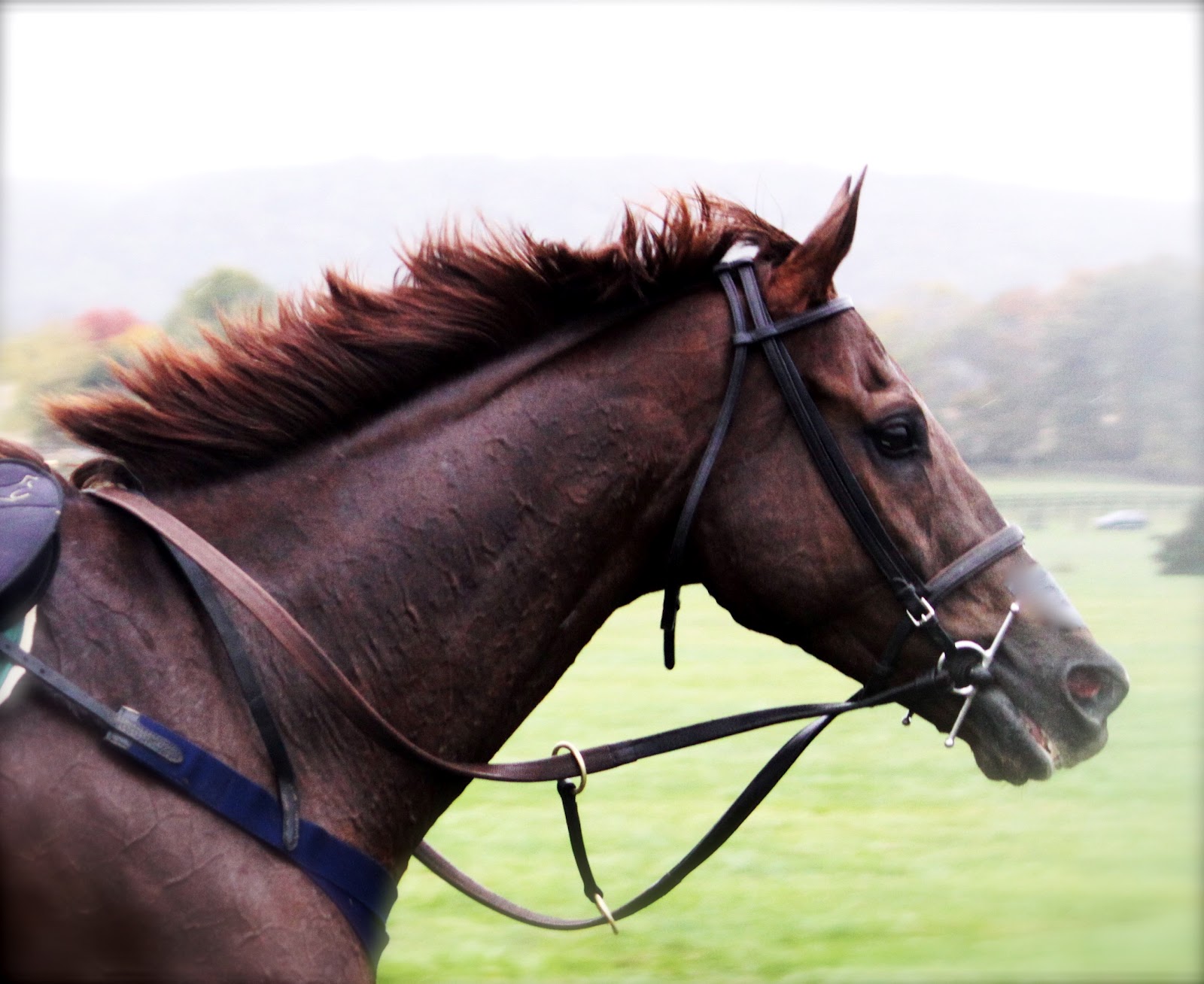 Photo credit: This lovely photo is by jade at www.morguefile.comSure, wild rides can be scary, but they can also be exhilarating. Runaway writing can offer new insights and revelations. A writer, like a rider on a rebellious horse, could end up in a better place if the writer doesn't fight to reign in or pull up the runaway.
 When my writing takes off on me, I remind myself that writing an outline doesn’t mean I can’t or won’t change it. The subconscious often knows best and sometimes takes the bit. Keeping an open mind and not being shackled to an outline or any preplanning can lead to a tangent that might be just a wild ride, or might also lead to a much better story. Why not drop the reigns and find out?
Have you had stories take off on you? If so, what have you learned from these wild rides? If you outline or prep, do you reign in a story that takes off or scrap the pre-planning and enjoy the ride?

May 1, 2012
Write a Synopsis When?
I’ve heard and read that writing a synopsis for a story before writing the first draft can sometimes be helpful. Last week, as I carved out a synopsis for an almost finished work in progress (sculpting a slab of granite with a butter knife would have been easier), the wisdom of writing the synopsis ahead of the story made more sense to me. If I had some sort of synopsis sketched out based on my original intent for this novel, I would have had a launch pad of sorts. Believe me, I would have killed for that last week.
 photo by Clarita at www.morguefile.com
I am also wondering if sketching out a synopsis ahead of time might be a way of outlining or feeling out if a story idea has enough potential to morph into a full fledged novel. A pre-story synopsis might help a writer figure out her intentions for a story, maybe help her figure out the merit and meat of an idea, along with its perimeters. Yet, without the commitment. The story could still change during the writing. After all, what a writer needs to craft a synopsis is what he or she needs to put together a first draft: The protagonist and his or her goal, the antagonist and his or her goal, the protagonist’s internal or emotional conflict, his or her flaw, and the setting.
Okay, I know that there are many writers that work out the story while writing. I am impressed and amazed by this, by the way. And yes, each writer must figure out the way that works best for his or her story and muse, but maybe sketching something out ahead of time could be useful and motivating, even if just as a warm up exercise.
What do you think? Are you scoffing at this idea? Or is it, at least, a little bit intriguing? Or, maybe more than a little bit intriguing? Do tell!

April 24, 2012
Who Couldn’t Use a Smile?
Last week I read The Fault in Our Stars by John Green. Raise your hand if you’ve read this novel. If you’re hand is lifted, I bet it's clutching a soggy tissue. Holy waterworks is this novel amazing. I loved the way John Green delved deep into the heavy-duty issues of sickness and health, life and death, yet sprinkled in wit at the exact moments when the
 Photo by Grafixar at www.morguefile.comreader (or, at least, this reader) needed relief in the form of a smile. As in life, when situations get tough, a grin, a snicker, or a laugh is welcome medicine.
Yet, wit can be tricky. It’s about perception. It’s intelligent rather than slapstick. And although what I find hilarious may not be what another person finds funny, some elements of wit seem almost universal. Don’t you smile or snicker at an unexpected perspective or absurdity? Don’t you giggle or at least grin at a surprise understatement? This sort of wit often stems from characters and their actions. So, it can make these characters more endearing. The Fault in Our Stars is a great example of character wit. And yes, these characters are endearing--thus, the tissues.
Have you read a novel ripe with wit? Do you appreciate it in writing?
If you are a writer, do you incorporate wit into your writing? If so, what sort of wit works best for you?