Steve Hely's Blog, page 105
August 9, 2017
Ireland should take in two million refugees
[image error]
I’ve developed a radical policy idea. This is my position paper.
The Republic of Ireland should take in two million refugees.
Here’s my case.
Ireland is empty
Seriously, walk around the place. There’s like nobody there.
[image error]
Almost nobody
Here’s Ireland overlaid on Pennsylvania:
[image error]
Pennsylvania has 12.78 million people. Similar landscape and climate.
Ireland has 4.773 million people.
Ireland has fewer people today than it did in 1841.
[image error]
Not busy
What a wild fact. What other country is like that? Can we really trust that 1841 census?
My source here is the Central Statistics Office of Ireland:
[image error]
Ireland is empty because people moved away.
There were all the people that died in the massive famine.
[image error]
But post-famine emigration is really what depopulated Ireland. The whole story of Ireland is people moving away.
Even James Joyce looked for a life elsewhere.
The people of Ireland were themselves once refugees.
They weren’t always looked fondly on either.
[image error]
from this great (?) Atlantic collection of racist anti-immigrant cartoons
They were considered to be dirty and dangerous fundamentalists from a scary religion.
Now look at them.
[image error]
“Her father, Alfred Roy Carey, was of African American and Afro-Venezuelan descent, while her mother, Patricia (née Hickey), is of Irish descent.”
Says The Washington Post:
According to the Census, there are 34.5 million Americans who list their heritage as either primarily or partially Irish. That number is, incidentally, seven times larger than the population of Ireland itself (4.68 million).
That’s just the USA. There are something like two million Irish Australians and four millionish Irish Canadians.
What a great chance for Ireland to return the favor!
What a cool national mission for Ireland!
And remember, we’re just restoring Ireland to its historical population level.
[image error]
some people could live here
Possible counter argument:
But that will destroy the unique national character of Ireland!
Meh.
First of all, maybe they won’t, maybe they’ll adapt to it. Or, as immigrants have done everywhere, offer new foods, traditions, ideas, and stir themselves into an overall blend.
[image error]
You telling me Athlone isn’t happy to have Thai restaurant Kin Khao? Check out the reviews!
Second of all Irish culture is pretty darn resilient, there’s dudes in Southie three generations removed who’ve never visited the place who have shamrock tattoos and sing some fraction of the songs while they get drunk together.
[image error]
The Irish are great preservers
Third of all Irish culture has been well-preserved already.
[image error]
You can count on the Irish to do a fine job preserving. source, shoutout to Wiki user Dilif
You can count on the Irish to do a solid preservation job.
(This song about boiling a policeman and spreading him like pavement is a fair example of Irish culture*.)
and
Frankly Irish culture could use a bit of a jolt.
Previous pinnacle of Irish culture?
Taking in two million refugees is a challenge.
But Ireland is up to it. This country is one of the best ever producers of nurses, caregivers, teachers, cops. It could be a a national project that would bring out the best in them.
[image error]
You don’t think largely ceremonial president Michael D. Higgins could inspire and lead his countrymen in this task?
In conclusion, Ireland should take in two million immigrants.
[image error]
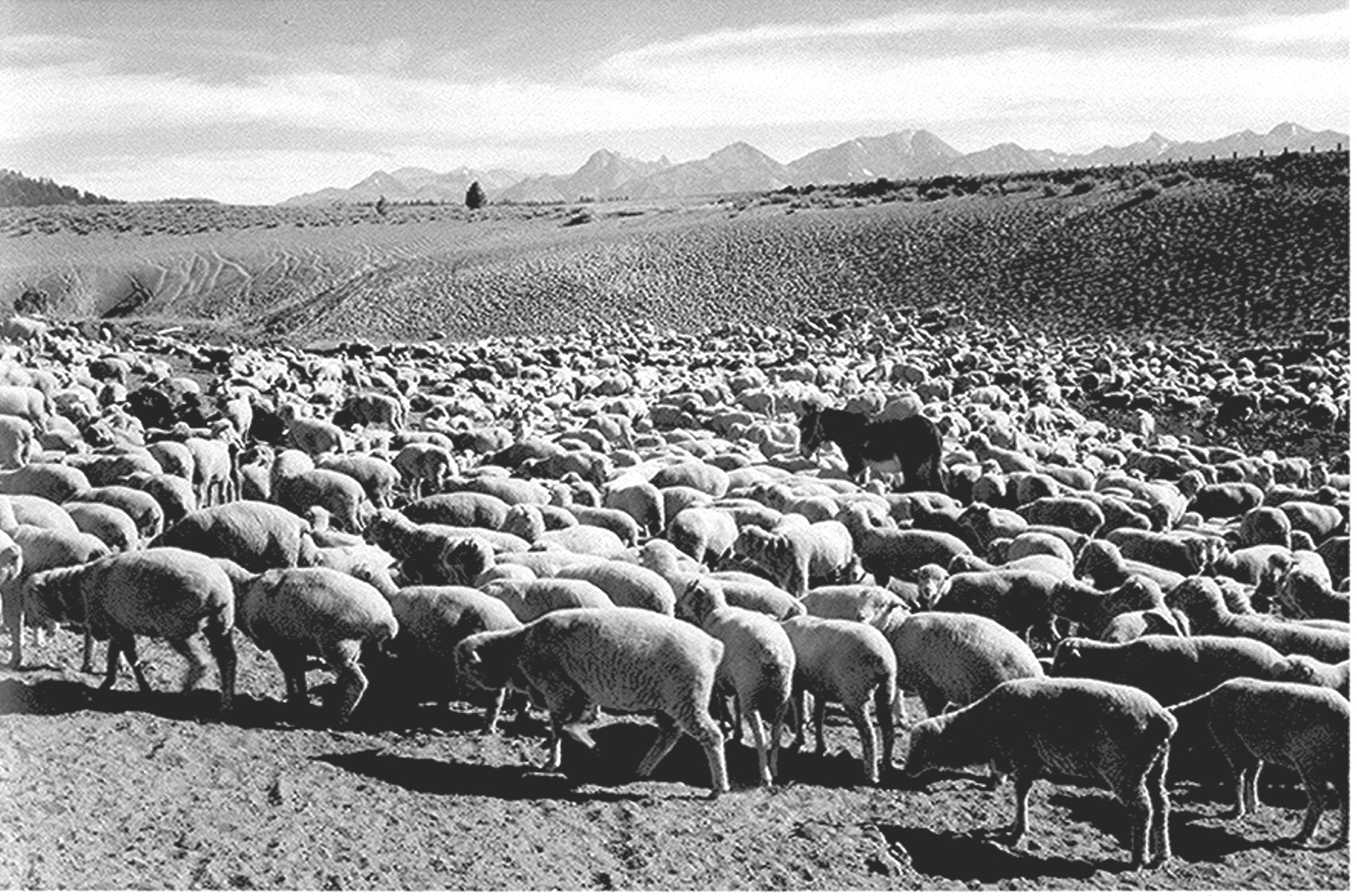
Honestly it’s mostly sheep over there.
By the way, not asking Ireland to do anything I wouldn’t do myself. You could argue California has already taken in two million refugees. I haven’t crunched the numbers yet but I think we could take in a million more.
* I’m aware the song was written by a Scottish person


August 7, 2017
How big are England and Ireland compared to California?
[image error]
The UK: 65.64 million people. 93,629 square miles.
California: 39.25 million people. 163, 996 square miles.
[image error]
Ireland: 4.773 million people. 32, 595 square miles.
In 1841 the population of Ireland (just counting what’s now the Republic, not the whole island) was 6.53 million.
[image error]
abandoned house near Killary photoed by Helytimes
Ireland is like a ghost town.
Today’s radical policy suggestion:
Ireland should take in two million refugees. Much as the world once took them in. It’s time to return the favor. Two million refugees would return the nation to pre-1841 population.
Today’s question:
Are there other countries where the population is significantly smaller today than it was around 1840?
(maps via the great site Overlap Maps which is run by Sunflower Education, a publisher of books for homeschoolers)

August 3, 2017
The Irish comic tradition
source. Barry McGovern / Johnny Murphy in Irish comic storyteller Samuel Beckett’s play
Just read this one.
[image error]
[image error]
It’s true. Bannon, as presented in this book, is funny. Makes it harder to dislike him.
At one point he describes Paul Ryan as
a limp-dick motherfucker who was born in a petri dish at the Heritage Foundation.
[image error]
(source)
This vivid turn of phrase after speaking to an embattled Roger Ailes:
Bannon was surprised at his desperation. “He was babbling,” he later told an associate. “He was in the fucking mumble tank.”
Bannon’s key insight:
[image error]
Monster, filthy, sick, beast – these are terms Bannon throws around as compliments, what bro doesn’t? But on the other hand he starts to sound a lot like a dark wizard delighting in his devil-powers as he launches demons at the world.
[image error]
[image error]
Anyway, fast, entertaining and insightful book.
Was interested in the perspective of Peter Schweitzer, who wrote Clinton Cash.
[image error]
Could you argue the same about journalists and Trump? Both love Twitter.
[image error]

Old Dale, CA
[image error]
The people who populated this remote mining region were tougher than a tortoise shell and twice as dusty. To describe some of these hard scrabble miners as rugged individualists is like describing the Coen brothers as a couple of kids with cameras.
The miners defined the term colorful character, some of whom would made a cholla cactus seem cuddly by comparison.
Little is left but a grave
By April 1896, Dale had two small mills and an arrastra to process ore, a general store, an assayer’s office, a blacksmith shop, a saloon and a house of ill repute.
No structures remain in any of the settlements today. Everything has been salvaged, stolen, vandalized or burned to nothing but ash piles and rusty nails. Roofless adobe walls have melted back into the sands from which they rose.
Blow sand that had covered the arrastra at Old Dale has recently been excavated. Contrary to being pleased by the amateur archeological work, Wharff is wary, concerned that the people who did the digging may return to unearth the stones, looking for any traces of stray gold that may be left below the rock floor of the historical structure.
[image error]

August 1, 2017
Hoover Boys
[image error]
our Chicago correspondent sends us this find:
[image error]
The authors:[image error]

How much do Americans care about military experience in their politicians?
[image error]
Reading this Politico article about Seth Moulton. It’s assumed as a truth that “a war record appeals to voters.” But how much does it matter?
I haven’t seen a detailed study of this, but let’s look at presidential elections. Since 1988, the more impressive military record has lost to the less impressive one.
2016
Trump beats Hillary (no military service by either one, but Trump avoided the draft and Hillary was on the Senate Armed Services committee)
2012
Obama beats Romney (no military service)
2008
Obama beats McCain (no military service beats war hero)
2004
W beats John Kerry (went AWOL during the war beats war hero, partly by going right at Kerry’s war record)
2000
W beats Al Gore (went AWOL beats served in Vietnam)
1996
Clinton beats Bob Dole (draft avoider beats war hero)
1992
Clinton beats George H. W. Bush (draft avoider beats war hero)
1988
George H. W. Bush beats Dukakis (war hero beats Army veteran)
This is the only time in the last ten elections that the more impressive military service beat the less impressive one
1984
Reagan beats Walter Mondale (no service beats Army veteran)
1980
Reagan beats Carter (no service beats former US Navy officer)
This is a small sample of course and each of these elections was its own weird thing of course.
My theory is that reporters and pundits assume that being a war hero is more important to voters than it is.
I find this interesting because it feels like, logically, deciding to put yourself in harm’s way in service to your country is a good demonstration of character for someone running for a public service office. But I don’t think elections work through logic. Also I think America’s ideas about our own military are confusing and sometimes contradictory.
Again, I don’t know the answer, sometimes here at Helytimes we’re just asking questions! Consider this a classic “Is This Interesting?”

July 25, 2017
Lippincott’s Pronouncing Gazeteer of the World
[image error]
from
[image error]
a book no home should be without

Root ecosystem, Lauren Elizabeth!
[image error]

July 20, 2017
Ansel in Playboy
This Open Culture post leads me to Ansel Adams interviewed in Playboy, found here:
I’ll explain it this way: Both William Henry Jackson and Edward Weston photographed the American West extensively. But in my opinion, only Weston’s photographs qualify as art. Jackson, for all his devotion to the subject, was recording the scene. Weston, on the other hand, was actually creating something new. In his work, subject is of secondary importance to the total photograph. Similarly, while the landscapes that I have photographed in Yosemite are recognized by most people and, of course, the subject is an important part of the pictures, they are not “realistic.” Instead, they are an imprint of my visualization. All of my pictures are optically very accurate–I use pretty good lenses–but they are quite unrealistic in terms of values. A more realistic simple snapshot captures the image but misses everything else. I want a picture to reflect not only the forms but what I had seen and felt at the moment of exposure.
Playboy: Give us an example.
Adams: My Moonrise, Hernandez, New Mexico has the emotion and the feeling that the experience of seeing the actual moonrise created in me, but it is not at all realistic. Merely clicking the camera and making a simple print from the negative would have created a wholly different–and ordinary–photograph. People have asked me why the sky is so dark, thinking exactly in terms of the literal. But the dark sky is how it felt.
[image error]
When photographer Alfred Stieglitz was asked by some skeptic, rather scornfully, “How do you make a creative photograph?” he answered, “I go out into the world with my camera and come across something that excites me emotionally, spiritually or aesthetically. I see the image in my mind’s eye. I make the photograph and print it as the equivalent of what I saw and felt.” That describes it well. What he called seeing in the mind’s eye, I call visualization. In my mind’s eye, I am visualizing how a particular revelation of sight and feeling will appear on a print. If I am looking at you, I can continue to see you as a person, but I am also in the habit of shifting from that consciously dimensional presence to a photograph, relating you in your surroundings to an image in my mind. If what I see in my mind excites me, there is a good chance it will make a good photograph. It is an intuitive sense and also an ability that comes from a lot of practice. Some people never can get it.
[image error]
More:
Playboy: When did you know you could accomplish it?
Adams: I had my first visualization while photographing Half Dome in Yosemite in 1927. It was a remarkable experience. After a long day with my camera, I had only two photographic plates left. I found myself staring at Half Dome, facing the monolith, seeing and feeling things that only the photograph itself can tell you. I took the first exposure and, somehow, I knew it was inadequate. It did not capture what I was feeling. It was not going to reflect the tremendous experience. Then, to use Stieglitz’ expression, I saw in my mind’s eye what the picture should look like and I realized how I must get it. I put on a red filter and figured out the exposure correctly, and I succeeded! When I made the prints, it proved my concept was correct. The first exposure came out just all right. It was a good photograph, but it in no way had the spirit and excitement I had felt. The second was Monolith, the Face of Half Dome, which speaks for itself.
[image error]
More:
They were the ones Weston called the fuzzy-wuzzies. They would go out into the street and find some old bum with a matted beard, and they’d get a tablet of Braille and make the old man put his fingers on the Braille. They would place him in an old chair, looking up through a cloud of cigarette smoke that was illuminated by a spotlight. The title would be Mine Eyes Have Seen the Glory. That must have been done a thousand times. There were also slimy nudes.
[image error]
Owens Valley From Sawmill Pass
I am an Ansel Democrat:
Playboy: You said that earlier. We assumed you were speaking rhetorically. Weren’t you?
Adams: Definitely not. We are on a disaster course. A revolution may happen first; and, of course, that may be a disaster anyway. I don’t say it would be a Soviet revolution, but it could very well result in a different order of society. It could be a socialist setup that might work for a while. We don’t know. The point is, I think there may be a revolution if there is not greater equality given to all citizens. We have consistently considered the employer, especially the large corporations, as the most valuable part of the American society. We have consistently overlooked the enormous importance of the farmer, the technician, the educator, the artist, the laborer. I’m not calling for a revolution; I’m calling for greater equality to all citizens. If that doesn’t happen, something will.
You see, I believe in a Federalism under which you would pay your taxes to a properly elected and conducted central Government that would, in turn, provide essential services–which would include medical care and other essentials–to the population. I do think there is a basic obligation for everyone to make his maximum contribution to society, but we talk about opportunity for everyone, and the fact is that it is perfectly obvious that equal opportunity does not exist. It’s about time we woke to that fact and clarified the whole social-political structure. Or we’ll be awakened.
Remember, ten percent unemployment, no matter how high that is, is an average. There are places and segments of the population with much higher unemployment. People will not continue to tolerate those conditions. What we need is a new set of political commandments that call to attention some of the basic provisions of the Constitution that are often overlooked by our contemporary leaders. There are inalienable rights that are supposed to be guaranteed. It is absolutely criminal that our Government has consistently supported rightist governments that deny citizens’ rights while being paranoid about any liberal concept, which is the concept upon which our country was founded. But, remember, it took a revolution here.
[image error]
Girl and a Volleyball at Manzanar War Relocation Center
And finally, his martini recipe:
Playboy: While we’re on the subject, that is some strong martini we’ve sampled. Will you share your recipe with us?
Adams: The martini I am drinking now is simply diluted–that way, I can have several. But the ones you’re sipping come from a Hotel Sonesta bartender in Cambridge. You take a good-sized glass and fill it with fine vermouth. Then you marinate some big lemon peels in there for days. As the vermouth evaporates or is used up, replenish it. All you need is a glass, ice, vodka and a lemon peel. Rub the lemon peel around the rim of the glass, drop it in, and you have a very dry martini.
[image error]

July 17, 2017
Luckie
[image error]
If you’re like me you saw this and wondered who Luckie Park is named after
I didn’t have to look far:
[image error]
“This Luckie Reilly may be a relation,” I thought. Sure enough:
[image error]
It’s this Dr. Luckie that the park is named after. Here’s some good info about him in the Morongo Basin Historical Society’s newsletter:
[image error]
There’s a mural of him:
[image error]
That’s from Google Earth. Better picture at Action 29 Palms – The Mural People.
I wonder if this James Luckie was the son or grandson of James Buckner Luckie, who was a doctor with the Army of East Tennessee in the Civil War, and performed one of the first ever triple amputations. More info and (warning) a photo on this German language (?) wikipedia page.
Luckie Reilly sounds great. From a 2006 article about her, “10 Things To Know About Luckie Reilly,” in the Hi-Desert Star in 2006:
10. Susan continues to weigh in on local land-use issues, sometimes speaking her mind at City Council meetings and through letters to the editor. “I’ve been an activist for years,’ she says. “I’ve opposed power plants, polluting industries and waste dumps in the desert. You can’t just sit back and watch things go to heck!”
[image error]