
Kathy Howard's Blog: Unshakeable Faith for Life, page 88
August 9, 2012
Jesus Knew the World Would Hate Chick-fil-A
 Last Wednesday I happily waited in a drive-thru line that wrapped around the building and into the neighboring parking lot. It was Chick-fil-A Appreciation Day and I wanted to show my support for the Christian-owned fast food chain. (By the way, I showed my support on Saturday too!)
The Chick-fil-A Controversy

Chick-fil-A president & COO, Dan Cathy
In recent years, more and more American corporations have sided with same-sex marriage. Companies like J.C. Penney, Kraft, Microsoft, Starbucks, and Coca-Cola have shown their support with advertising, donations, and employee policies. (See this AP article for more info.) But Chick-fil-A and its president Dan Cathy have continued to stand on biblical principles.
Chick-fil-A has been actively supporting pro-family, Christian groups with charitable donations for a long time, but just last month comments made by Cathy in a Baptist Press interview sparked a firestorm of controversy. Here is Cathy’s response to the reporter’s question about the company’s support of the traditional family.
“Well, guilty as charged,” said Cathy when asked about the company’s position. “We are very much supportive of the family — the biblical definition of the family unit. We are a family-owned business, a family-led business, and we are married to our first wives. We give God thanks for that. “We operate as a family business … our restaurants are typically led by families; some are single. We want to do anything we possibly can to strengthen families. We are very much committed to that,” Cathy emphasized. “We intend to stay the course,” he said. “We know that it might not be popular with everyone, but thank the Lord, we live in a country where we can share our values and operate on biblical principles.”
A multitude of media and gay rights groups strongly rebuked Cathy and Chick-fil-A twisting his remarks into “hate speech.” The mayors of Boston, Chicago, and San Francisco proudly declared the chain was not welcome in their cities. As the controversy heated up, Mike Huckabee declared August 1 to be “Chick-fil-A Appreciation Day” and the country began to take sides.
Why are people mad at Chick-fil-A?
Why such strong feelings over a chicken sandwich? It shouldn’t surprise us that our culture applauds Starbucks for officially supporting gay marriage legislation while it condemns Chick-fil-A for supporting the traditional family. Jesus told us this would happen.
On the night He was betrayed, Jesus spent those last hours preparing the disciples for what lay ahead for them. Jesus warned them that since the “world” hated Him, it would also hate and persecute those who belong to Him (John 15:18-21). So, why did – and why does – the world hate Jesus? The world hates Jesus because His righteousness reveals its sin (John 7:7).
When we live holy lives that reveal the righteousness of Christ the world will hate us for the same reason – our lives expose the sin of the world. When Christians take a stand for Christ and firmly follow biblical principles, the world will respond with persecution. Jesus knew Chick-fil-A would be persecuted by mainstream society in America because it took a stand for biblical principles.
Maybe I’ll take a little heat for this post too. That would be alright.
Have you ever been ridiculed or condemned for taking a stand for Christ or for living out biblical principles?Share and Enjoy:[image error][image error][image error]


August 6, 2012
God Speaks Today
 How many different ways do you communicate with people? Facebook, Twitter, and Outlook are all open on my laptop right now. And my I-Phone is lying beside me on my desk. I am prepared to communicate! At just about any time you can reach me by text, phone, Tweet, FB post, or email.
One more thing. My Bible is also open to the book of Hebrews:
In the past God spoke to our ancestors through the prophets at many times and in various ways, 2 but in these last days he has spoken to us by his Son, whom he appointed heir of all things, and through whom also he made the universe. 3 The Son is the radiance of God’s glory and the exact representation of his being, sustaining all things by his powerful word. After he had provided purification for sins, he sat down at the right hand of the Majesty in heaven. 4 So he became as much superior to the angels as the name he has inherited is superior to theirs. Hebrews 1:1-4, NIV
God speaks to His people
What?! The Creator of the universe reveals Himself and His ways to lowly mankind. This fact fills me with awe and wonder. God speaks to me – and to you – through His written word and through the Word.
How often do we stop and reflect on this incredible truth? God speaks to you. God speaks to me. God speaks…
God speaks through His Son
Jesus is the “radiance of God’s glory.” The Greek word doxa, translated as “glory,” refers to the luminous manifestation of God’s person. Jesus is the visible revelation of God’s nature and ways. Jesus physically and verbally represents God the Father. You want to know the Father? Get to know Jesus.
Sustaining, Superior Savior
The author of Hebrews wanted to make sure his readers did not minimize Christ. He packed the opening of his letter with powerful words to describe our Savior.
Let’s talk about the greatness of Jesus today! What descriptive words for Jesus do you see in these verses? What do they mean to you today?Share and Enjoy:[image error][image error][image error]


August 1, 2012
To Judge or Not to Judge
Last week’s post about holiness (“Holiness is Not a Shade of Grey”) initiated very passionate discussions on my site, Facebook, and Twitter. Most comments echoed the need for holiness in every area of a Christian’s life. Other comments raised the question of judgment, even citing Jesus’ words from Matthew 7:1. For instance, is it wrong for one believer to tell another believer she shouldn’t read “Fifty Shades of Grey?”

freedigitalphotos.net
“Do not judge.” I’ve been studying and praying about this since last week so I could address the question in a biblical way. One of my constant prayers and desires is that whatever I teach or write will be accurately aligned with the truth of God’s Word. So I’ve been in the Word and in prayer. Today’s post – the result of this study and prayer – seeks to answer the question:
When, if ever, is it okay for a Christian to correct another Christian’s behavior or call specific behavior “sin?”
Do not judge?
Here are the two primary Bible passages referenced in last week’s discussion against “judging”:
Do not judge, or you too will be judged. (words of Jesus) Matthew 7:1, NIV
There is only one Lawgiver and Judge, the one who is able to save and destroy. But you—who are you to judge your neighbor? James 4:12, NIV
Wait, do judge?
Sounds pretty straight-forward, right? Well, consider these words spoken by the same people in the same biblical book:
If another believer sins against you, go privately and point out the offense. If the other person listens and confesses it, you have won that person back. But if you are unsuccessful, take one or two others with you and go back again, so that everything you say may be confirmed by two or three witnesses. Matthew 18:15-16, NLT
My brothers and sisters, if one of you should wander from the truth and someone should bring that person back, remember this: Whoever turns a sinner from the error of their way will save them from death and cover over a multitude of sins. James 5:19-20, NIV
The Bible never contradicts itself
Now what? Those who acknowledge the Bible as the accurate, authoritative Word of God also believe the Bible does not contradict itself. Apparent “conflict” will always stem from our incorrect understanding of a passage or issue and never in God’s truth. One of these two mistakes are often the culprit:
We fail to consider the entire counsel of Scripture.
We try to interpret one verse or passage outside of the larger context.
The Whole Counsel of Scripture
As we read through the entire Bible, we see these clear truths we can apply to the question of “judging.”
God calls His people to holiness. (Eph 5:3, 1 Peter 15-16, 1 Thess 4:4,7, 1 John 3:3)
God commands believers to encourage each other to holiness and hold each other accountable in our personal relationship with Christ. (2 Timothy 4:2, Colossians 3:16, Hebrews 10:24, James 5:16)
God commands other believers and the church to point out sin and call individuals to repentance. (Matt 18:15-17, James 5:19-20, Gal 6:1-2, 1 Cor 5:1-5)
It is to be done with love and gentleness. (Gal 6:1, Eph 4:15)
The goal is the protection, restoration, and welfare of the believer who has sinned. (Matt 18:15, 1 Cor 5:5, Gal 6:1, James 5:20)
Context of the passage
In the larger context of Matthew 7, Jesus does not condemn what we might call “judging” in every sense. To follow His command in verse 6, we will have to make a discerning judgment call. Instead, Jesus condemns a hypocritical, self-righteous attitude that points out others’ failures without first dealing with their own.
In the larger context of James 4, James himself points out the sins of the believers and calls them to repentance (James 4:1-10). In verses 11-12, James continues his call to righteous behavior. The problem James condemns is “slander,” a type of judging that is harsh and unkind.
Conclusion about “judging”
Both Jesus and James condemned a harsh, critical “judging” of people’s motives. This kind of “judging” is motivated by a self-righteous, hypocritical attitude. In the whole of Scripture, God clearly commands Christians to lovingly point out sin and exhort each other to holiness. It is not our place to determine their motives, but it is our responsibility as a member of the body of Christ to gently identify behavior that God has already judged to be “sin.” The goal is to reconcile that person with others and with God and to keep the sin from spreading to others (1 Cor 5:5-7, Heb 12:15, James 5:19-20).
So, when and how should we approach another believer about sin?
First, check to see if there is sin in your own life.
Check your attitude. Only act if your goal is the welfare of the other person.
Make sure God calls this behavior sin. Only God has the right to determine right and wrong.
Speak in love and gentleness with the goal of protection and restoration.
Stop judging by mere appearances, but instead judge correctly. John 7:24, NIV
Let’s Talk. How do you think our “tolerant” culture has affected the way the church approaches this difficult topic?
Other posts you may find helpful:
Steve Fuller “What did Jesus mean when He said ‘Do not judge?’”
Jeff Lacine “The Local Church: A Safe Place to be Judged”
Bible study author and teacher Laurie Cole Front Porch Friday video, “Judge Not?”
Share and Enjoy:[image error][image error][image error]


July 30, 2012
Sin is a Slippery Slope
 I did it to myself. I chose the wrong path. I saw the sign with the little black diamond and thought I could handle it. “After all, I’m a decent skier.” (If you aren’t laughing yet, you should be.)
After just a few yards, I realized I had made a terribly dangerous decision. The hard-packed snow felt slick as ice. If I fell, I wouldn’t stop until I hit bottom. I had visions of my body lying broken and bleeding at the bottom of this precipitous slope. So, I did the only thing I could. I carefully – and prayerfully – sidestepped back up to the top of the run. I didn’t care what people around me thought. My life was at stake!
Warning about the world and its ways
The apostle Paul knew that sin, like that black diamond ski run, is a slippery, dangerous slope. In his letter to the Christians in Ephesus, he warned them about the danger:
17 So I tell you this, and insist on it in the Lord, that you must no longer live as the Gentiles do, in the futility of their thinking. 18 They are darkened in their understanding and separated from the life of God because of the ignorance that is in them due to the hardening of their hearts. 19 Having lost all sensitivity, they have given themselves over to sensuality so as to indulge in every kind of impurity, and they are full of greed. 20 That, however, is not the way of life you learned 21 when you heard about Christ and were taught in him in accordance with the truth that is in Jesus. 22 You were taught, with regard to your former way of life, to put off your old self, which is being corrupted by its deceitful desires; 23 to be made new in the attitude of your minds; 24 and to put on the new self, created to be like God in true righteousness and holiness. Eph 4:17-24, NIV
Most of the Christians in Ephesus were Gentiles. They had indulged in immorality and gave themselves to sexual excess. But then Jesus saved them and God called them to turn away from their former way of life and embrace a new life in Christ – a life of righteousness and holiness.
We become desensitized to sin
Paul warned the Ephesian believers about the great danger of returning again to worldly behavior. Sin is a slippery slope. The more we give ourselves to immorality, the easier it is to yield to it. Our hearts grow insensitive and hard. Our thinking becomes darkened and futile. We move deeper and deeper into sin and farther and farther away from God.
We see this biblical truth played out in the world around us. As people become desensitized to the current level of sin and immorality the culture must sink to a new low in order to shock and titillate. Then when people have accepted that as normal the culture takes another step down.
Our enemy wants to sweep believers along with the world. Satan helps us rationalize participating in popular culture. “It’s not as bad as…” “It’s only fiction…” “I need to know what everyone is talking about…” Then when we become desensitized to that, he tempts us to take another step away from holiness.
“Fifty Shades of Grey” is a symptom of a deeper problem
Last week, I posted a blog asking why Christians are reading the best-selling, erotica novel “Fifty Shades of Grey.” I had many comments on the post, on Facebook, and Twitter. Most took a stand on the side of holiness. Many admitted that their Christian friends or family were reading it and raving about it. And a few said we shouldn’t judge. (By the way, I feel strongly that speaking out against what God calls sin is not judging. Watch for a post about this topic on Wednesday.)
Christians must actively pursue the holiness God desires. We must purposefully and continually choose to reject our old, sinful ways of the world and obediently follow Christ. Reading this book or welcoming other immoral ideas into our minds is like standing at the top of a black diamond ski run. It could be the beginning of a dangerous journey.
We must carefully guard our hearts and minds because the world constantly clamors for our attention and devotion. If we don’t we just may end up at the bottom of the slope.
In what ways can we actively pursue holiness? What precautions can we take to guard our hearts and minds against sin and immorality?
Share and Enjoy:[image error][image error][image error]


July 25, 2012
Holiness is Not a Shade of Grey
Recently two Christian women (one middle-aged like me and one a young mom) passionately shared with me their confusion over why so many of their Christian friends are devouring the New York Times best-selling novel “Fifty Shades of Grey.” Honestly, I have the same question.
“Fifty Shades of Grey” should be black and white to Christians.
Just in case you have no idea what I’m talking about, let me quickly fill you in. “Fifty Shades of Grey,” the first in a trilogy, is the debut novel by British author E.L. James released this April. Here’s a quick summary of the book I copied from Mary Kassian’s blog (I provide a link to her post below):
The books in question are erotica that explicitly describe sexual bondage, discipline, sadism and masochism (BDSM). The story follows an unfolding affair between a recent college graduate, the virgin Anastasia Steele, and handsome young billionaire entrepreneur, Christian Grey, whose childhood abuse left him a deeply damaged individual, and who enlists her to share his secret sexual proclivities. Steele is required by Grey to sign a contract allowing him complete control over her. Because of her fascination and budding love for him, she consents to a kinky sexual relationship that includes being slapped, spanked, handcuffed, and whipped with a leather riding crop in his “Red Room of Pain.”
 I just checked Amazon’s stats. “Shades of Grey” was number one in books. Oddly enough, the book received some harsh reader reviews regarding the quality of the writing. So, how did the trilogy grab spots one, two, and three on the New York Times bestsellers list? Sex does indeed “sell.” Unfortunately, sex sells to Christians too.
“Shades” is classified as “erotica,” which by definition means “sexually explicit literature or art.” Let’s stop right here. Honestly, based on the book description and the dictionary definition of “erotica,” Christian women have no business reading this book. But they are.
Holiness and obedience is a choice we all make
I will honestly tell you that I have read books and watched movies that I later regretted because the content was inconsistent with my faith. Either the language or behavior mocked God or directly contradicted His holiness. Sometimes I turned off the television, left the theater, or threw away the book. But not always.
However, I believe I can honestly say that in recent years I have not picked up a book or bought a ticket or tuned into a program knowing in advance that the “entertainment” would defy God’s standards of morality and truth. And I do not have to read “Fifty Shades of Grey” to know it glorifies what God clearly says is wrong.
I’ve heard the arguments. It’s just fantasy. I’m not participating, I’m just reading fiction. I need to know how to speak to the culture. If you are considering reading this book, please, please read these articles I’ve listed below first. These posts were written by Christian women in ministry who know what they’re talking about. They explain how this written word affects our thinking and harms our relationships with our husbands and future husbands. How it fosters a change in behavior. How it desensitizes us to sexual immorality. Check these out:
On the True Woman blog Dannah Gresh gives biblical and sound scientific evidence why reading this kind of material is harmful to women and our marriages.
Crystal Renaud on her site for Dirty Girls Ministries. Crystal offers help, hope, and healing for women and girls with pornography and sexual addiction.
Author and Bible teacher, Mary Kassian on her blog Girls Gone Wise. Mary gives 7 solid reasons why a Christian woman – or any woman for that matter – should not read this book.
Lest you think this is just the opinion of “ministers,” check out this blog by Dana Suggs. She is a mom, photographer, and Christian blogger writing from the perspective of an average Christian woman who loves to read.
Here’s one more honest and entertaining view by Christian mommy blogger Melissa Jenna.
As long as I’m on my soapbox, I might as well work up a good lather and mention one other popular, but very worldly item Christian women are gobbling up – the movie. “Magic Mike.” “Plugged In” describes this film as “pornographically minded.” But should we expect anything different from a movie about male strippers? Yet believers are paying money to see it.
What does holiness look like?
Here’s what I want all of us – you and me, too – to think about: What does holiness look like?
God calls us to be holy as He is holy (1 Peter 1:15-16).
Jesus said we are to be in the world as His sanctified ambassadors, but we are not to be products of the world (John 17:15-18).
Paul tells us to “Flee from sexual immorality” because we are not our own, we’ve bought and paid for with the blood of Christ (1 Cor 6:18-20).
Jesus clearly told us that lustful thoughts are the same as adultery (Matt 5:28).
God’s Word is black and white. So why do we keep trying to blend God’s truth. Holiness is not grey – not any shade of grey.
I know today’s post may sound harsh to you, but this topic is heavy on my heart. I really want to hear your thoughts. And I would love for you to share this post.Share and Enjoy:[image error][image error][image error]


July 23, 2012
Why do bad things happen?
Where was God last Friday at midnight when a disturbed young man opened fire in an Aurora movie theater? Did God care when suspect James Holmes killed twelve and wounded dozens more in this shooting spree?
Tragedies like this one always raise these kinds of difficult questions. Yes, we live in a fallen world where evil is prevalent. And although I believe God is able to prevent these horrific acts of evil, sometimes He doesn’t.
 Why does God allow evil?
I certainly don’t have all the answers. In fact, only God does. However, the Bible teaches many truths about God we can cling to in times like these. For instance, God has the power and authority to act. He is involved in His creation. He knows and cares about every aspect of our lives. I know these things are true and accept them even when I still have questions.
About a year ago, I wrote a serious of blogs about why God allows difficulties in the lives of believers and how He uses them. These biblical truths also apply to the question of why God allows evil.
Why, Oh Why?
Here’s a quick summary and link to each post.
The Bible clearly teaches that God’s faithful children will experience trials and difficulties. Why, Oh Why Introduction
God promises and is able to bring good out of difficulty in the lives of those who love Him. Why, Oh Why Part 2
God can and will use our pain and trials for His greater purpose. Why, Oh Why 3
God uses the pain, grief, and difficulty He allows into our life to purify and strengthen our faith. Why, Oh Why 4
Even when we can’t see the reason for our sufferings we can still stand on the character, power, and love of God and place our trust in Him. Why, Oh Why final
Pray for Colorado Victims
Let’s continue to pray for the victims and the families of the Aurora shooting. May God comfort, strengthen, and fill them with the peace only He can give.
I’d love to see the comments full of prayers for these that are hurting. Will you add your prayers for them below.Share and Enjoy:[image error][image error][image error]


July 16, 2012
Don’t Forget the Gospel
Distractions surround me. Facebook lures when I’m writing. The sun through the window beckons me outside when I should be cleaning house. And Steinmart seems to block my path when I’m out running errands.
Gospel Distractions
Unfortunately, many things also distract believers from what should be our primary focus. Church tradition, programs, and committees sometimes complicate the simple truth of the Gospel message. We get sidetracked from the issue of “first importance.”
This happened to the Christians in Corinth too. Full of sin and fractured by factions, this body of believers argued over which spiritual gifts were the greatest and too the Lord’s Supper in an unworthy manner. They had allowed many things to distract them from the most important thing, so Paul reminded them:
Now, brothers, I want to remind you of the gospel I preached to you, which you received and on which you have taken your stand. 2 By this gospel you are saved, if you hold firmly to the word I preached to you. Otherwise, you have believed in vain. 3 For what I received I passed on to you as of first importance: that Christ died for our sins according to the Scriptures, 4 that he was buried, that he was raised on the third day according to the Scriptures. 1 Cor 15:1-4, NIV
Death, Burial, and Resurrection of Jesus

Jesus on the cross
This is the heart of our faith and our only hope: Jesus crucified, buried, and resurrected. Without this message there is no need for church buildings, youth camp, or women’s ministry. If Jesus did not die for our sins and defeat death through resurrection, we might as well lock up the church doors and fire the pastor.
But, – praise God – we have a crucified and risen Savior! Everything we say, do, and live for should center on this truth of “first importance.”
What distracts you from the Gospel? How can we keep our focus on the death, burial, and resurrection of Christ?Share and Enjoy:[image error][image error][image error]


July 12, 2012
The Walking Dead – “Fruit of the Spirit” lesson 5
 This is the fifth in a series of lessons from Galatians 5:16-26 on the Fruit of the Spirit. You may view the entire lesson here or download it in Word or a PDF.
I know what you’re thinking. Images of horror movies and the undead have probably crept into your mind. Just for fun, I Googled “The Walking Dead,” the title of today’s lesson. Did you know there’s a TV series with the same name? This drama on AMC tells the story of a post-apocalyptic world ravaged by a zombie epidemic.
Thankfully, our fifth lesson in the “Fruit of the Spirit” has nothing to do with zombies. But we do need to talk about death – our own, in fact.
Plant: We can’t produce the fruit of the Spirit
Here’s the truth of it: We cannot produce the fruit of the Spirit. We cannot – with any consistency – live a life characterized by love, joy, peace, patience, kindness, goodness, faithfulness, gentleness, or self-control.
You may be able to muster up a loving act now and again. I might work up enough will-power to control my fleshly desires in one instance today. But our lives will never abundantly exhibit the characteristics of Christ by our own strength and works. In today’s lesson we will explore how a life full of the Spirit’s fruit is possible.
Read Galatians 5:22-25. Are we told to produce the Fruit of the Spirit? (Circle one) Yes No
In lesson two, “What is Fruit?” we learned that “fruit” is the natural by-product of the Holy Spirit. Only the Spirit can produce these characteristics in our lives. As we allow Him to take control, His life will be manifested in ours.
Cultivate: We must die to self
Identify two things in the passage we should be doing.
Paul used the “active” voice in verse 24 when he wrote “have crucified the sinful nature.” This signifies an act that a believer has done and must continue to do to herself.
What do you think “crucifying our sinful nature” looks like in everyday life?
Remember this is something we can do. We can choose to turn away from our sinful desires. Because of the presence of the Holy Spirit, we have the power to resist temptation and choose the way out God provides (1 Corinthians 10:13).
Before we take a closer look at the second thing we should be doing, read Romans 8:11-14. According to this passage, what “obligation” do we have as believers? Check all that apply.
___ To follow our sinful nature and submit to its desires
___ To turn away from the deeds of our sinful nature
___ To submit to the leading of the Holy Spirit
Grow: Walk by the Spirit
According to Romans 8:11, why do we have this obligation?
Paul reinforces this reasoning in Galatians 5:25. Since the Holy Spirit has given new life to our sin-dead souls, we are obligated to follow His lead. This is the second thing we should be doing. Depending on your translation, you may read “keep in step with,” “follow the Spirit’s leading,” or “let us walk by.” Here’s how Strong’s Greek and Hebrew Dictionary defines the Greek word stoicheo, that is translated in these various ways:
1) To proceed in a row as the march of a soldier, go in order; metaph. to go on prosperously, to turn out well
2) To walk; to direct one’s life, to live
Considering the definition of “walk,” what does it mean to “walk by” or “keep in step with” the Spirit?
Read Galatians 2:20 below from the New Living Translation:
My old self has been crucified with Christ. It is no longer I who live, but Christ lives in me. So I live in this earthly body by trusting in the Son of God, who loved me and gave himself for me.
How does this verse help us understand what it means to “walk by the Spirit.”
On my own, I would produce nothing but sinful works. Even my “good fruit” would be rotten. My flesh is too weak and sinful and to produce the characteristics of Christ. Kathy must “die.” I have to get out of the way and let the Holy Spirit live Christ’s life through me. It’s the appropriate response to the One who saved my life. And my eternal hope.
Let’s talk: What is the hardest thing for you about following the Spirit? What helps you submit to His leadership?Share and Enjoy:[image error][image error][image error]


July 11, 2012
Beautiful, Bountiful Harvest – “Fruit of the Spirit” 6
When we began this study, I mentioned my lemon tree. How it budded and bloomed. How the little lemons began to grow. Six weeks later the lemons aren’t ready to harvest. The fruit is still growing; the lemons still green. Fruit production takes time. But I will drink lemonade!
Like physical fruit needs time to grow, the fruit of the Spirit will not ripen in our lives overnight. We must work consistently to crucify the old nature. We must continually refuse to give in to our fleshly desires and yield our will to the Spirit’s. We can say “no” to our sinful nature, accept the “way out” God provides, and follow the Holy Spirit’s leading.
As we grow, the characteristics of Christ – fruit of the Spirit – will be manifested in our lives. As the Spirit transforms us more and more into the image of Christ, we will produce a beautiful, bountiful fruit harvest!
Plant: Knowing the Fruit
In Week Two, we discussed the meaning of “fruit.” The Greek word “karpos” refers to the natural product of the Holy Spirit, who lives inside every believer. The word is singular, signifying that “fruit” is a unified whole. The Expositor’s Bible Commentary suggests we think of the fruit as a “bunch of grapes instead of separate pieces of fruit.” As we grow in Christ-likeness we will produce all the characteristics of His nature.
If you memorized Galatians 5:22-23, then you know the 9 characteristics of the Spirit’s fruit. List them below. If you didn’t memorize the passage, read it now, then list them.
Let’s consider the meaning of each characteristic. Place the letter of a definition in the blank before the correct characteristic. (To double-check, the answer key is at the end of the lesson!)
___ 1. Love
Cultivate: Find out More
Let’s take a quick look at an example of each characteristic in action. Read the following Scripture passages. Make observations on the operation of these characteristics.
Galatians 5:13-14 (love):
John 16:22 (joy):
Romans 5:1 (peace):
2 Timothy 4:2 (patience):
Titus 3:4 (kindness):
Romans 15:14 (goodness):
2 Thessalonians 1:4 (faithfulness/faith):
2 Timothy 2:24-25 (gentleness/gentle):
2 Peter 1:5-6 (self-control):
Grow: Ready for a Harvest
We’ve talked facts and definitions. Now, let’s get personal. It’s time to do a fruit check. This is between each of us and God. Spend some quiet time with Him now and reflect on each characteristic of the fruit of the Spirit.
Ask God to show you the quality of the Spirit’s fruit in your life. Think about some recent circumstances. In the space below, jot down times you feel the Spirit’s character was manifested and times you allowed your natural, sinful character to take over.
Although we will battle our fleshly nature for the rest of our lives, we become more sensitive to the Spirit’s leading as we mature and learn to recognize His voice. As we end our study together, I pray God will encourage, strengthen, and grow you in the days ahead!
Let’s talk: What did you learn in this study that has encouraged or challenged you the most?
Fruit of the Spirit definition answer key. 1c, 2f, 3h, 4a, 5g, 6b, 7d, 8i, 9eShare and Enjoy:[image error][image error][image error]


“When You Need a Miracle”
You may have a health problem, a financial need, or a troubled relationship. Maybe you’ve lost hope. Don’t know where to turn. Feel like giving up.
Do you believe miracles are possible?
God is a God of miracles. But we forget. We believe in the miraculous events of the Bible, yet we fail to expect God to work powerfully in our lives today. Why is that?
“When You Need a Miracle: How to Ask God for the Impossible”
In her powerful new book, “When You Need a Miracle,” Linda Evans Shepherd reminds us of several important truths we sometimes seem to forget:
God loves us.
God cares about every aspect of our lives.
God hears our prayers and answers them.
Nothing is too hard for God.
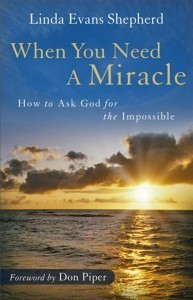 Believer, God still performs miracles today! We can ask our Father to act on our behalf. In “When You Need a Miracle,” Linda explains how to reach out to God and ask for a miracle. Through solid biblical teaching and real-life stories of answered prayer, Linda walks with readers on a journey to renewed hope in God and His activity in our lives.
Linda also highlights the truth that God is not a spiritual vending machine. We cannot control Him or how He answers our prayers. He will work to bring about His saving purposes in the world and in ways that bring His best to the lives of His children. Therefore, God’s miracles may not come packaged in the ways we would expect, but they do come in ways that will transform our lives.
“When You Need a Miracle” shows readers how to approach God and ask for the impossible in a way consistent with Scripture. If life’s circumstances have left you discouraged and hopeless, this book is for you. Linda brings God’s truth about prayer, His love for us, and His power together in a way that will encourage your heart, strengthen your faith, and renew your hope in miracles.
Praise for “When You Need a Miracle”
“I’m a woman who needs a God-sized miracle in a family situation. Linda’s book gave me all of the tools for asking, waiting, and receiving extraordinary answers to prayer–not always in the way I was expecting–but with life-changing, transformational results. Read this book and you will agree that miracles still happen.”–Carol Kent, speaker and author of Between a Rock and a Grace Place
Buy “When You Need a Miracle” at Amazon now!
Linda Evans Shepherd
Linda Evans Shepherd is the author of over thirty books including and the co-author of the popular series the Potluck Club and the Potluck Catering Club. Linda is an international speaker, media personality and leader of the Advanced Writers and Speakers Association. She’s married and has two children. Learn more about Linda, her speaking, and her ministries.Share and Enjoy:[image error][image error][image error]


