Lee Woodruff's Blog, page 4
June 15, 2012
FACETIME
That was the initial thrust behind the timing of a mother/daughter spa trip. I’ve been thinking about doing this ever since my baby girl was born, 18 years ago. And now she is home from her first year in college. All in all she’s had a pretty good experience, with the expected ups and downs of leaving the nest for the first time. She’s worked hard and made friends, all while trying to live up to the decidedly unhelpful “these are the best years of your life” advice that we parents have parroted to them for the last decade. That’s a lot of pressure to put on someone as they tie the bandana on the stick and head out the door to live with four strangers in a room the size of a handicapped bathroom stall.

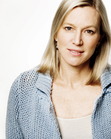
Photo by CATHRINE WHITE
The last two years of high school she was a partial stranger to us, distant, most of her in shadow. I understood she was hard at work uncoupling from me, sawing off the umbilical cord, sometimes with a dull, Swiss Army knife. Mother nature has programmed our children during this period to be as judgmental, sullen and eye rolling as possible, presumably to make it hurt less when they finally blow the pop stand. We were all ready for her to go, mostly her. And I honestly don’t think my daughter would have wanted to spend a stretch of time with me anywhere back then. I had nothing to offer beyond my cooking, cleaning, step n’ fetch-it skills and my vague resemblance to a punching bag. So the thought of going to a spa with her in those years would have felt like a Club Med trip with Stockholm syndrome and no alcohol.
But a year away had made a world of difference. And when a work trip with her father fell through, impulsively I called a spa within driving distance to check out their advertised deals. Maybe we could both jump-start our health and well-being, our mind-body energy and our mother-daughter mojo with a little downward dog and green juice? This was high on my bucket list.

Each of us has ways in which we have terminally crimpled our children’s wiring through our own life experiences, shortcomings, fears or phobias. Let’s just say that growing up with parents scarred by a depression-era mentality, my sisters and I inherited what we’ll call a Scotch-Yankee, tight-fisted approach to spending. Admittedly, we are cheapskates, some of us sisters more than others. (Ahem, OK, me.)
And as the daughter of skinflints, I still proudly cling to some of the pioneer-settler tenants of my childhood: you want the extras? Work for it. Go bag a few groceries, rake some lawns and babysit a few snot-nosed kids up the street. In short, I’m not the kind of Mom who regularly throws mani-pedis around. I’m not stuffing bills at my kids like sorority sisters at a bachelorette party. Believe me, no one is suffering in my household. No one has rickets or scurvy, no one is digging through the Salvation Army bins to accessorize at the gas station. No one has holey underwear. My children have what they need and much more, and the truth is they don’t continually ask me for a lot. By now you are getting the correct impression that it wasn’t characteristic or typical of me to bestow my largesse on this grand of a scale.
So when I called my daughter, jubilant and bursting with excitement over my spontaneous spa generosity, her first question, uttered with prison guard level suspicion, was “Why?”
“Well, I just want to spend some time with you,” I stammered defensively. “I thought this would be fun.”
Silence. “Sure. Sounds good.”
My sister called me later that night, the one who lives near my college student in Boston.
“I thought you should know that your daughter called to ask me if anything was wrong,” she reported and my eyebrows shot up. “Wrong?” I answered panicked.
“She told me you had invited her to a spa and she wondered if you’d gotten some kind of major medical diagnosis or if there was anything bad happening with you and Bob that she didn’t know.” It took me a minute to process that and then I didn’t know whether to laugh out loud or be crushed.

True, we are raising children in a somewhat scary time. They are growing up surrounded by the low level muzak of September 11, war, economic uncertainty and divorce exploding around us like carpet bombs. OK, it’s not so different from eras of the past. My childhood was punctuated by elementary school duck and cover drills, the Cold War, Kent State, and the polarizing horror of Vietnam. There’s always some sword of Damocles hanging over our heads, isn’t there? But I honestly don’t remember being so anxious. Perhaps I was. And while I’d tried to do my best to shield my children from life’s harsher glare, they had experienced the uncertainty of outcomes, the fear of infirmity and the grief of death up close.
Still, did it have to take an act of God for me to invite my own offspring for a little loofa get-away with an enzyme facial? Times were tough, all right. But her reaction caused me to second guess my mothering. Had I actually been more “communist block mother” than nurturing and cozy? I imagined myself to be a rule enforcing but sporadically indulgent parent. And what about those hours of glue gunning I’d undertaken with them? The homemade Halloween costumes, the bunny head cake at Easter and the Jell-O American flag on July 4th? Had my puritanical approach been so extreme that my child’s first response to a fun trip was to cock her head suspiciously and look for a chemo IV?
As I went to bed that night, still reflecting on my daughter’s reaction to my proposition, I remembered hearing Maria Shriver speak at her California Woman’s Conference. She had described coming to a life juncture where she needed to define herself, to figure out what was next. Up to that point she had always been someone’s daughter, wife or mother. An award-winning journalist, Maria had stepped back to raise a growing family but as her children became more self-sufficient, she was ready to re-evaluate a new direction.

As part of her vision quest she decided to sojourn to a desert spa for reflection. This solitary repose was so uncharacteristic, that when she told her kids where she was headed, her daughter’s first response had been to ask if she had cancer.
I felt slightly better remembering the Maria story. I felt in good company at least. Maria was a smart cookie, a good Mom and a Kennedy to boot. Her girls hadn’t been deprived and warped by a cold Mother Scrooge. I’ll be they’d owned every American Girl doll accessory and unlike mine, probably never wore hand-me-downs. In short, they’d had a life of privilege and still her daughter had leapt to the same awful conclusions as mine. I felt better.
When I called my daughter the next day I relaxed as I listened to her growing excitement about our trip. She had already visited the website, reviewed the activities we could do together and determined what classes and hikes we would take. And me? I can hardly wait for our weekend. I’ve been daydreaming and picturing it since she was a wee lass. I’m already imagining what it will feel like to have her to myself, the essence of that old “little girl” who is making her way back to me, as she peers out of the body of a beautiful young woman.


May 23, 2012
DO JUDGE A BOOK BY ITS COVER
But the writing is just the beginning. With the traditional publishing industry undergoing liposuction in every way, the marketing, the talking it up, the endorsing, and the window dressing are even more critical. That makes the cover (always an important factor in selecting your next read) of critical importance.
Choosing a cover feels a bit like deciding what outfit to be buried in. It’s an eternal, fairly final choice. Unless of course you write “The Help “ and you get a do-over on the paperback cover, swapping out the mysteriously ambiguous ravens for a picture of the movie stars.
So when choosing the cover do you go bold? Or do you stick with the little black dress? Do you tantalize or reveal? If your book touches on a serious subject do you make the cover more…airy? Do you merely hint at a suggestion of real life sadness? Flap copy is designed to preview the contents of the book, but let’s be honest, don’t we all judge a book by its cover? Aren’t we quick to flick our eyes over what appeals and then pick it up for closer inspection?
This is the era of Facebook and Match.com. We can go right to the visual and decide if we want to fondle the goods or click on by. The cover of a book is the eye candy for the IQ inside. It’s the hooked worm on the bobber.
And the cover is where the author (unless they wield major New York Times Book Review list-rattling power) is merely one voice in a chorus of marketing experts.
With my first two books, “In an Instant” and “Perfectly Imperfect,” this process was largely out of my hands. My photograph appears on each of the covers, something that still makes me slightly uncomfortable. It’s like the wealthy WASP homes I visited as a child where the ubiquitous oil portrait of “mother” in white dress and garden background lurked over the mantle. You will never find a picture of me over my fireplace. Not even if I was the Queen of England. I’m not judging here, I’m just…inwardly cringing at the thought.
I framed a black and white photo of myself that was taken with one of the last giant portrait Polaroid cameras left in the world. It was shot by iconic photographer Mary Ellen Mark and I am most proud of this picture because it was an award I got for being a mother first and an advocate second. You can bet your sweet bippy that professional make up artists and stylists helped curate the illusion of a better me. But I will tell you that this picture hangs in my closet. I’m frankly about the only person who gets to see it besides my husband.
In that photograph I’m fierce and strong, a warrior mother, my arms are on my hips like Linda Carter and I’m ready to Wonder Woman a lobbed spear right back at the bad guys. But on the cover of my first book I’m in a bowel movement brown sweater looking… terribly sad.
“In an Instant” was an honest book about our family’s journey and recovery after my husband’s injury in Iraq. It’s also a love story of sorts. So the cover had to say—“hey, remember the anchor guy on TV who got hit by a bomb, along with his devoted and egregiously sad wife? The story lies within these pages… come get the poop.” And then the color of the sweater kind of underscored the poop part for folks if they managed to mistake my winsome expression.
My second book, “Perfectly Imperfect,” is a book of essays about life, some funny while others are more poignant. I had hoped to have one lone, single inanimate object on the cover, like the jar of cream on Nora Ephron’s “I Feel Bad About My Neck.” I loved that cover. My husband gave me a hideous turquoise ring once and I wrote about it in one of the chapters. I fancied that ring in its heart shaped fuzzy red box on the cover of the book like a whimsical smirk. But since I am NOT Nora Ephron and people DON’T instantly recognize my name, it was decided that I myself would appear on the cover, (marketing calls this branding) bright colors and plaid sneakers and all.
The “Perfectly Imperfect” cover showed readers that I’d regained my sense of humor, cheered up and had bought more fashionable clothing than that of my previous fecal-brown V-neck sweater-wearing phase. The carefree yet scrunched expression on my face, a kind of “what the hey” look, was meant to invite readers to sit a spell. Looking at myself, forever preserved on the cover like a fly in amber, I am reminded of the need for more roughage in my diet, or perhaps a Metamucil colonic.
For “Those We Love Most,” a work of fiction, the sky was the limit in terms of cover choice. Smarter marketing minds at my publisher Hyperion Voice would need to put their heads together.
“It can’t look sad” was what I heard. And the first cover concept was an Adirondack chair on a porch with flowers and sunlight. It looked mystical, hopeful and partially spiritual, like someone was going to slide down Jacob’s ladder from heaven and show back up at the dinner table. But it just didn’t feel right. Not to mention there wasn’t actually one porch in the book.
What about a mere suggestion that something is amiss? I asked. But the rougher stuff, the loss had to be nuanced a bit—you don’t want to scare anyone off. We are just throttling out of an economic recession and people want to escape into bondage, Hermes scarves, S & M and futuristic worlds. If you believe the research, that is.
Another version of the present cover had pink flowers that seemed to originate in Hawaii, despite the fact that the book takes place in the Midwest. It reminded me of some of the 70’s feminine hygiene boxes—before they invented the wing technology and got all graphic and real-world on the outside. But this newer book cover had legs. We were refining and changing.
In the end we got a cover that feels inviting and homey, like I hope my house feels. In fact the eerie thing is that without ever having seen my home, the artist captured my mudroom almost exactly. I figured that was some kind of sign.
So here it is. The cover. I hope it speaks to you too. I hope that when you and others are walking through a book store or airport or scrolling through a website or blog you hear a little… “You hooooo… over here” from my book. And I hope you will be compelled to pick it up.

May 8, 2012
TOO OLD TO BE A MOM?
Wasn’t it supposed to be a blissful experience entering mother hood again at 40? Wasn’t I supposed to have more patience and understanding about “the long haul” and “how fast it all goes” with my twins? And yet here I am, shrieking as my hormones retreat, as snappish and churlish as one of those cringe-worthy reality show teen moms prevented from a night of clubbing by their colicky unwanted off-spring.
OK, maybe it’s not quite like that with me. That was a tad dramatic. But as I swam my laps this morning trying to re-balance, I wondered idly if I really was too old to have kids this young? Was biology nature’s way of saying, “you won’t have the energy for this in a few years?” And yet how many of us are successful at making life fall in line with the perfect time to marry, procreate or change careers? Is there ever a perfect time?

Photo by CATHRINE WHITE
I smile gently at the young women who emphatically tell me when they want to marry and how many kids they will have. I long ago learned that we don’t write that script. The friend with the repeated miscarriages knows that, the couple that can’t conceive, the mother who loses her son to a brain tumor, the wife whose husband up and leaves. The greatest part of life is our ability to dream big, but most of us are unprepared when things go awry or when dreams don’t come true.
When our first attempt to become parents at age 31 resulted in our son, my husband got on the bus to fatherhood with extreme speed. He was thrilled and so was I, but then again I knew it wouldn’t change his life in nearly the same way that it would change mine. But when our children didn’t come in the intervals we planned, when there was a loss and then a dry patch and then some sorrow, we were blindsided when the bad thing happened to us. And why shouldn’t it have? What made us any different from the family down the street? It’s not human nature to always feel so generous, though. The fickle finger of fate and the Ouija board are supposed to land somewhere else for the hard stuff.
When my twins were born at age 40, our “Team B” as my husband calls them, I resolved to work less and Mom more. I would be the chilled out mother I never quite got to be the first time around with the older two because I had been so concerned with trying to balance it all. And while it didn’t exactly happen that way when the girls were born, (chilled isn’t an adjective normally associated with Moms of multiples) I learned to relax into my choices, to stop trying to mute the working part in front of my stay at home friends or dial down the mother part in other facets of my life. I learned to accept that I am a person who likes her sack stuffed really full. What other reason could there possibly be for continuing to stuff more in it? Saying “yes” mostly felt better.

There is no question that as an older mother I have more patience than the 31-year old I once was who never thought she’d be spontaneous again. A six-year gap between Team A and Team B equipt me with a fish eye lens. I don’t sweat the small stuff and I do try to cherish the ride a bit more. On my second chance, I didn’t want to talk about mucus and home made baby food, I wanted to discuss my middle-agedness, my politics, the struggles of aging parents and husband’s snoring. I was never great at board games or watching Dora videos with my older kids and this time around I didn’t feel the need to pretend. I am no longer half-way apologetic or conflicted about working when I’m focusing on being a Mom. I regularly absorb the whiff of envy from friends when I spend a night away in a nice hotel with room service and first-run movies. I’m proud of my ability to earn my own wage at a career I love, even as I miss a few soccer games and a basketball tournament or two.
Motherhood is a selfless business. And like so many parts of being an adult, there are repetitive parts, as same-old as emptying the dishwasher or folding laundry. No wonder we grumble or watch our heads spin at times like a bobble-head on a dashboard. No wonder we lose our tempers. We all do. There are some who will swear that the right time to have children is when you are younger and full of energy. But in my 20’s I would have been too selfish, less patient, yearning to accomplish things yet un-named. I would have resented the recalcitrant child, the ungrateful eye roll or lip curl that soaks through their very being because that’s precisely what they are programmed to do. Anna Quindlen, one of my all-time favorite writers, says that “sometimes taking care of children full-time feels like a cross between a carnival ride and penal servitude.” Do any right-minded adults really enjoy a two-hour marathon of Candy Land or repeated rounds of Lego towers? Be honest.
Still, I wouldn’t trade this for anything, even as my friends with their newly childless homes are crowing about their lack of schedules and the fabulous sex they are re-discovering with their husband (yes, their husbands!). I’m still packing lunches and right now boys are still just something to giggle about behind cupped hands. I know that’s about to change. We’ve just had our first discussion about shaving legs and puberty lurks in the bathroom corners. I can smell it like basement mold. Most days, the can of whoop-ass aside, I feel incredibly lucky to be experiencing this second wave of motherhood. The first chapter feels like a temp job in retrospect. Time wrinkles and buckles, telescoping as the calendar flips ever forward.

There will only be a short time left when they will ask me to crawl in bed and cuddle, a limited time they’ll still believe I might have something important to contribute in the way of advice. But they’ll be back. Yes, they’ll come crawling back someday on their bellies as I did when I had children of my own. I take comfort in that. It’s already happening with my older two, the slow subtle gravitational pull of interest in what perspective their father and I might have to offer.
I’ll be 60 when the younger two go off to college. And Lord, that used to sound ancient. Now I can picture myself like one of those old Euell Gibbons ads for Grape Nuts as he leaps around the outdoors, brown as a berry. I may be gnarled and gnarly, but I’ll be at graduation day standing as proud as the 40 something parents. That will be me, the one doing the Bronx cheer. I’ll be celebrating and mourning in equal parts, not only for the days to come, but for the unsung ones that have flown by.
April 21, 2012
BIRTHING A BOOK – THOSE WE LOVE MOST
The book-as-baby analogy, birth as a metaphor for publishing a novel, is just a little too pat. Some talented folks who write diligently each day can conceive of and pop out a book annually. And when I grow up, I aspire to do that too, to write for three hours a day, every day. But that doesn’t seem possible right now. I wear too many hats, and the truth is I enjoy it. I’m not good at saying no or making the outside world go away.
Me? The author? I’m more the elephant model of gestation. Elephants take 22 months to give birth. The alpine salamander has a three-year pregnancy and the frilled shark is 3.5 years. That was certainly more akin to my style in creating this first novel. The goal is to get a little faster.
On September 11th, “Those We Love Most” will come out. This process, about as long as the Spiny Dog Fish takes to reproduce, has been roughly three years in the making.
Over the past few months I’ve been toying with how to describe my book in a few sentences. Here is what I have so far…… “Those We Love Most” is about generations in a family, the seasons of a marriage, and whether or not a relationship can survive secrets. It deals with how one moment of inattention can result in paying the ultimate price. In the story, as so often in life, everyone is both right and wrong. What endures is faith in the people we love despite their loyalties or betrayals. Ultimately it is a love story, love of family, spouse, lover, friend and even stranger. And it’s about forgiveness and resilience, the getting through it. Most all of us can relate in some form.

Recently, I read about a survey that claimed during these tipsy economic times, people want to read stories about fantasy, happy endings and sex. And I understand the “take me away Calgon” effect of imagining yourself bound and gagged with silk Hermes scarves. I get that escaping into a fight-to–the-death nihilistic futuristic world might remove us from the reality of the mortgage, the potential for job loss, the stale marriage or life’s paper cuts of disappointment. But I tend to be drawn to stories about real life and the complexities of human emotions. I enjoy reading all kinds of genres but I love discovering a book that details how we move through and overcome the hard things life can throw at us to find lessons and community and resuscitation.
It’s these stories that connect us as human beings. They are the ones that make us say “ahh, me too” or “if they can do it so can I” or even “look how much worse I could have had it.”
I love the fiction of Anna Quindlen, Sue Miller, Jacquelyn Mitchard, Ann Hood or Sue Monk Kidd with their searing autopsies of interior lives. The authentic dialogue of Adriana Trigiani's generational characters brings them to life. I hated coming to the end of “Little Bee” and “The Namesake,” nodded my head with Annie Lamott’s honest memoirs and marveled at Ann Patchett's prose and intricately woven tales. The characters in the fiction of Lionel Shriver, Ian McEwan and Jonathan Franzen stayed with me for days.
“Those We Love Most” grew out of a real-life experience. I was out of town and a friend called me in a panic. I can still picture that hotel room I was in all these years later. A seventeen-year-old driver in her town had struck a child, and she wanted to know if I would talk to the parents and provide some hope based on my own family’s experiences. After I hung up, I kept thinking about that one pivotal “in-an-instant” moment and all the lives that had been affected by a split-second action. That call formed the basis for a fictional story about how one pebble dropped in a pond ripples out in many directions.
The intricacies within families—the secrets people hold, the love that ebbs and flows in marriages and relationships, and the bond between a parent and child—are themes all of us can relate to. The business of living is chock-full of so many extremes, and while there are parts of my book that deal with sadness, real life is defined by a bubbling stew of love and loss, joy and sorrow, betrayal, triumph, and achievement.

I wanted to examine the process of life coming unglued and then look at all the strengths and the wonderful qualities that lie within us to do the right thing for the ones we love most.
There are a few months before I give birth. I’m getting the nest ready, booking engagements for the fall and preparing to usher this new project onto the stage. I hope like hell people want to read it. And I look forward to sharing it with you. I hope I have the opportunity to cross paths with you on this birthing journey in one manner or another.
Stay posted for the next installment about "Those We Love Most." I'll be dishing about the cover selection process and how it feels a little like picking the outfit you will be buried in.
March 26, 2012
KEEP YOUR OAR IN THE WATER
A mere two years later, our son was born into a time of personal transition. My husband was leaving the security of the legal world and the moneyed track to be a broadcast journalist. If I'd had any desire to stay home with this new baby, it was snuffed out by our new economic reality. We qualified for food stamps in the state of California.
Moving around the country to bigger TV markets, having another baby, keeping my freelance writing and marketing business stoked was an enormous juggling act. There were many times I envied the Moms who played tennis and lunched, the ones who didn't feel the weight of financial contribution. But mostly I loved my life. I was energized and appreciated by forces outside the home. I liked what I did and I moved among a slipstream of disparate and engaging female friends. Before motherhood, I hadn't thought a lot about whether or not I'd be a stay-at-home mother or try to work, there were no pre-conceived notions. My role just kept evolving amidst the backdrop of our family and a larger picture. I had no real master plan.

Today I sense a polite backlash among the present generation of young women who have watched their Moms buckle under the duel pressures of jobs and motherhood. They have shrewdly observed that the "sharing" of household duties by working parents still skews more like 70-30 in the most equal of unions. There is an often-unarticulated criticism, a whisper about the generation of mothers who came before who put careers first and motherhood on hold, stressed by the reality that you can't have it all. At least not all at once.
It's hard for younger women today to understand and appreciate the jackhammering that was done by previous female pioneers to even get to this point, the luxury and ability of women to choose. The striving for equal pay and management positions seems so very quaint now, so "Mad Men" and yet it was not so long ago. I still remember marching in a boss's office my heart thumping, to tell him I'd discovered my male colleague, with the very same job and tenure, made $10,000 more than me. I got a raise.
Many young women think of "feminism" as a radical, cleaving and dirty word. All that militarist bra-burning. Yet it was that stridency, the elbowing and the path paving that allowed women today to expect to sit on boards and run for office, to go into space or attain a high rank in the military. If you want to make a revolution you have to break a few eggs, said Chairman Mao. Sometimes you get an omelet.
My young daughters instantly fathomed the solution to the head-scratching riddle during my childhood about the injured child admitted to the ER. The doctor, who was not his father, recused himself from operating because it was his son. Q: What is the relationship between the doctor and the boy? A: She is his mother.
 photo by Cathrine White
Few people got that answer correct in the 1970's. And yet today it's a quaint and dated joke. For all of the glass ceiling busters and groundbreakers, the throwbacks and the backlash, motherhood and career have moved slightly off the combative "either-or" arena and have mellowed into a "what's right for me?" choice.
Young women today tell me they will not delay childbearing. They have seen too many women wake up at 40 wearing the "I forgot to have kids" sandwich board. And I hold my tongue. There is no cookie-cutter approach to any of this, no one-size fits all. And when those young women have children who leave the home and they yearn for a reinvention, trying to explain the two-decade gap in their resume to a prospective employer can be disheartening. The mothers of my older children's friends confide that the empty nest has brought a search for meaning, an internal ransacking of who they are now and a need to re-purpose that is soul-searching and often stressful.
On a recent episode of CBS's "The Good Wife," a young law associate shame-facedly reveals she is addressing wedding invitations at work and discloses that she is engaged, newly pregnant and quitting the firm to become a wife and mother.
"But you can do both, you don't have to give up the law," says the older, wiser, now single Alicia Florick, who has returned to the workforce after her husband's Spitzer-like public infidelities are revealed. "But I love my fiancé," is the young ingénue's doe-eyed answer.
A priceless expression crosses the face of the older, experienced woman who has learned the importance of being able to care for not only herself, but also her children. It is one I recognize on my own face as I think about my once bright naiveté, the beauty of that expectation that we can nudge life in the direction we wish by just applying a little will power and positive thinking. And how we hope it will. And yet the young lawyer has not allowed for the possibility that the child she is carrying might not grow to term or be healthy, that her fiancé might not always love her or be able to provide for her. It is the great divide between 20 something and 40 plus, the canyon between innocence and experience.

I recently lunched with a friend who'd been blind-sided by the economy, her husband's job loss, depression and subsequent raiding of their savings. She had left her job 22 years ago to raise the kids and was wondering now, in the midst of divorce, how she would pay the next tuition check. She is an indomitable, resourceful woman and she will undoubtedly reconstitute herself in a new world order. Our talk turned to raising our girls, the messages we would give them based on our life experiences and the choices they would inevitably make about partners and marriage, careers and kids. How would each of our experiences as working and stay-at-home Moms shape their own visions for their lives?
"Keep your oar in the water somehow," she said wistfully. "That's the advice I'm giving my daughter." And, thinking about my own life, I nodded my head in agreement.
March 9, 2012
A Young Musician Follows His Dreams
This weeks contribution from my sis Nancy.....
The Friday assembly at Rippowam Cisqua School was a full circle moment in our family. Alum and singer song-writer Collin McLoughlin returned to the place where he fist got up on a stage to sing. I can remember his role as "Tartan" the male lead in the school musical 14 years ago.
In those days, Collin was a frail fifth-grader, wearing a furry caveman costume which barely covered his scrawny shoulders. He belted out the songs with a high-pitched quaver and it was a lightning bolt moment for us as parents. His dad and I had never heard him sing before.
That was just the beginning. Collin addressed the Rippowam audience with a motivational speech about following dreams, a timely topic, since the bonus track on his newly released EP is called "Chasing Dreams." The day the new album (entitled "Stark Perspective") was released on iTunes, it was the second most downloaded in the singer songwriter category on the world charts.
Mr. Fonera, Collin's former Rippowam music teacher, was the first to put a guitar in his hands as part of the music program. He attended the Friday assembly and seemed to enjoy what must have been a satisfying "teacher moment."

Collin briefly outlined his personal "post-Ripp" journey, which took him through Wooster Academy, and then on to Colgate University. Although a philosophy major, he explained how writing and singing music enabled him to enter and win contests while at college.
"We started out doing 'crunk' rock," he told the kids. "It is distorted guitar and crazy heavy drums with rap singers and choruses, which are what I wrote and sang."
After a generous donor created a state of the are recording and broadcast facility at the college, members of his band, who were not considered part of the music department, gained access to the premises under cover of darkness when a sympathetic janitor, who was also a fan, let the group in to record and write music off hours.
Eventually, Collin was granted permission by the administration to use the new space and launched Broad Street Records, a Colgate-student run record label still in existence today. The label promotes and encourages all Colgate musicians to record and produce their own music, some of which was then broadcast on the college radio station and website.
"I wanted everyone to have a chance to be heard even if they weren't officially going into music as a career," said Collin, who found he loved managing the label.

The college asked for permission to utilize some of Collins original acoustic soundtracks for use on their website as background.
Winning student votes in a school competition earned their Colgate group, entitled, Nautical Young opening slots for popular artists on tour like Lupe Fiasco, Wale, and K'naan. When the group graduated, its members scattered to follow new career paths.
Collin launched a solo career, opening for and collaborating with popular artist on tour like Sam Adams, and spending the first summer playing shows in club settings like The Bitter End in New York City and Cafe Lina in Saratoga Springs.
Collin addressed the Rippowam students and spoke about finding a passion in life. He advised them to "try everything" saying that a school like Rippowam teaches students to place and equal value on arts and athletics.

Collin described how his very first guitar lesson, still a mandatory part of the Rippowam seventh grade music curriculum, was less than inspiring. "Why didn't you like it?" came the questions from Mr. Perry, Collin's former science teacher. "Learning the basic building blocks of guitar chords means you have to start with very simple songs. To get to the next level, you have to stick with it and practice." He added, " I was impatient. You can only play so much row row your boat before you just want to upgrade to something from the radio."
The six foot two musician stood with an acoustic guitar strung over his shoulders and said, "Its Friday and I remember what that means around here. How are you all doing?" In and effort to elict more volume from the audience he grinned saying, "You can do way better than that, lets hear more." And the students complied, hooting, clapping and shrieking.
Playing concerts in venues that include boarding schools and colleges, his bookings take him as far away as California, and have helped to amp up them demand for his new music. In the past he has written dance tracks and acoustic, electronic ballads, many of which he has sold to record labels like Ultra.
Collin closed the show by playing a sneak preview on a big screen of his cover video "Not Over You," which has since been released.

Each student left with a copy of the very first CD of songs Collin recorded, containing music produced when he was just a few years older than the Rippowam audience. It was Collin's way of sharing an earlier piece of himself and restating his message, "It is never too early to start following your own dreams."
Guest Blog by Nancy McLoughlin
So proud of my nephew! Vote for him in the Billboard Battle of The Bands! (Click below for the scoop..) Lee
http://www.billboard.com/features/northeast-battle-of-the-bands-2012-1006354752.story#/features/northeast-battle-of-the-bands-2012-1006354752.story
February 29, 2012
SIGNED, SEALED AND DELIVERED...
....And this fall....it's yours! 

I did it. Ta-daa! My first novel, "Those We Love Most" will be out September 11, 2012. It's my wedding anniversary, among other important milestones.
And as I put the edited manuscript in a big padded envelope and filled out the UPS label (too scary to trust to regular mail) I thought I'd feel a total kick-up-my-heels sense of joy. A kind of Sound of Music, bodice-heaving, running over the hills with glee kind of approach. It wasn't exactly like that.
Don't get me wrong. Finishing a book is a big old dealy-bop. Stapling that envelope shut is the culmination of a lot of hours, creation, frustration, editing, re-writes, self–doubt, deleting and erasure chewing, although frankly few writers I know still use erasers.
I've always been a sporadic writer. My huckleberry pie life is cut up into lots of different slices, drawn and quartered on any given day; mom, wife, journalist, writer, advocate for injured service members, public speaker. I'm a daughter as well and right now that involves a measure of caretaking and coordinating as my parents fail and falter in different degrees and disparate ways. And somewhere in there I'm a girl friend too. And I've always valued my female friendships, even as we all lamented how much work and family often came between more than a few plans to do lunch or grab a drink. So many of my posse have been just as absorbed in the rat-a-tat-tat of the child rearing years as I have been. We are only now, most of us, poking our heads out of the foxhole and blinking in the coming dawn of the empty nest.
But I digress. This is about my book. The book I always wanted to write and the writing process. Oh geez, you say. Boring. The writing process? ZZZZZZZZZ. I'm going to delete. And you may. But for any of you who have struggled to realize a dream or long held the notion that there is a finite time line for what you want to accomplish, hang on a tick. Stay with me. I am here to say that anything, really, is possible. But this is also about realizing dreams. It's about second acts. And if you want it badly enough, you WILL find a way to get it done. Whether it's getting your pilot's license or doing your first stand-up gig or composing a song. I'm living proof. And I'm certifiably over 50. Fabulous freaking fifty.
The truth is I stopped and started this novel a number of different times. There were points I didn't believe in my ability to weave a tale that any of you would want to read. This is a round-about way of telling you that at one point I thought the book sucked. But then all of a sudden it didn't. Last summer I found myself with a stretch of time and I got busy. Instead of writing in the corners of my life, on airplanes, in hotel rooms, and occasional early weekend mornings, I got a little serious. I wrote whatever was coming out, and out it poured, rushing head-long into a decent story, with characters I'd come to care about.

(the desk where I love to write..)
And while the result still required some shaping and pruning, my friends at Hyperion publishing saw the possibilities. And so we shaped, we pruned. And we clipped a little more. One whole characters voice was scalpeled out. This is where you trust your editor like a lover. This is where you become partners and go to couples counseling.
But turning in the manuscript was only the beginning. The galleys will be out soon and they will go into the hands of illustrious book reviewers and journalists, other writers and bookstore influencers, bloggers and indie owners and the people who place the advance orders. This will feel a bit like my pre-pubescent self standing naked in front of the mirror after middle school school gym class. I will be a harsh chronicler of all my flaws. Art is, after all, a subjective thing.
But then the real work begins. The marketing and the talking it up, the book selling and the chatting. There will be tweeting and blogging, the readings and signings. I am an author who kind of likes being out on the road. I really do mean it when I say it's the people. But then again I'm still a relative virgin on book number three, the accomplished and prolific ones will tell me.
Will readers turn out to hear my fiction the way they turned out for the first and second non-fiction books to hear about our family's journey through injury and then recovery? "In an Instant" was a bird's eye view of the bleached bones of a disaster and a marriage. Everyone slows down on the highway to eyeball a roadside wreck. But will they care as much about this fictional family I have created and blown life into? I hope so.
Writing a book for me was a lot like giving birth to a baby after 40. In fact, in some ways it's much harder. First you mess around a little, hunt and peck and see what you've got. And then when the stick hasn't turned blue, when nothing much is happening on the pages, you get serious. You come up with a plan.
Suddenly the writing process needs to be plodding and methodical, a bit like taking temperatures for ovulation and shot for hormones and doctor's appointments and monitoring and… well, you get the drift. Writing a book is a lot like that. But there are moments of unbridled joy. You can feel it occasionally when the story is coming, when a line or a paragraph sings out to you like the buzz of a zip line. Every writer has experienced those tracts of time, those beloved fugue states, so much better than a chemical high. If only we truly knew how to conjure them up on demand.

Indulge me the tired old "giving birth" analogy as a writer. I've finished a damn book. I'm elated and cautious all at the same time. And as I move past the moment without celebration, without popping the sparkling apple juice at the dinner table or crowing too loudly on Facebook or tweeting, (OK, I posted it once) I am conscious the whole time that this process is a marathon, not a sprint.
I am still struck by something the writer Anthony Horowitz told me. He is the officially sanctioned British author for all future Sherlock Holmes novels and the beloved Alex Ryder series for kids. When I asked him what he did to celebrate completing a book he answered, "I take one full day off before I begin the next."
And so forgive me, dear reader, if I return to the next book, which is already tugging at my sleeve. I hope to meet you in the fall on the road, in a book store, at a forum or library or Skyping into your book group from my cramped home office. I thank you for reading and caring, for wanting to hold books in your hands or devour them digitally on a tablet. I hope you always have an appetite for stories. Stories, after all, are the things that connect us.
"Those We Love Most " – published By Voice – on sale September 11, 2012
February 13, 2012
Happy Valentine's Day
 And if cooking is a physical manifestation of love, then it was a heart-felt gift this past summer to receive my grandmother's well-worn 1943 original Joy of Cooking. Like a butterfly working it's way out of the cocoon, my mother has begun wriggling free of her possessions. It's an almost compulsive need to shed herself of her earthly weight before she is incapable of doing so, although thankfully there are no signs that she is flagging. She is a methodical person, a plotter and list maker like me, and she is determined to hand her three girls the physical pieces of our legacy in person.
When I eyeballed the cracked spine and no-nonsense pale blue and white cloth cover, I hesitated. True confession: I'm a sloppy cook book chef. I like to improvise too much and I'm lazy when it comes to precise directions. Blanching, poaching, measuring, sifting, these are all too fussy. I like to experiment a little, break the rules. Besides, I thought, I had already lovingly transcribed my favorite family dishes onto index cards in a recipe holder I'd made as a kid in 4-H. The book was delicate, the pages yellowed.
Inside the front cover was a notation in pencil from my grandfather. And then in my grandmother's alternatively loopy and cramped handwriting was a poem she had clearly copied as a younger wife, presumably to remind herself that the way to her young husband's heart was ultimately through his stomach.
"Crestfallen bride, you labored long
To bake that lovely cake
And heard your husband's
"Not so good as my mother used to make"
Before you shed your angry tears
Or hang your head in shame,
Remember – not too long ago
His father said the same"
I smiled when I read this anachronistically docile and sentimental ditty. Nana Stokes was anything but a blushing bride. She was a grand, strong, southern woman, a concert pianist who moved north when she married a Yankee. She had her funny eccentricities, her fur coat, her French words, her guided tours to foreign countries. But almost above all of that, she was a consummate cook whose love for us all manifested itself in her giant Sunday suppers. Long before people anguished over clogged arteries, gluten-free diets and veganism, she was a cooker of lard, that southern staple that made for feather-light fried chicken and pie crusts that flaked like croissants. She boiled okras and used bacon grease liberally. She salted watermelon and made berry sherbets and pound cakes with dairy cases of butter. She would have laughed in the face of canola oil or scoffed at Mrs. Dash.

My grandfather, a much quieter soul, was probably stunned into submission by her cooking. I imagine that it was her ability in the kitchen that held him at times, that endeared her to him, that smoothed out her rough, bossy edges and her strident voice. I wonder now, how he viewed her when she was hard at work, her tongue clucking, arms flailing around the timing of her roast, a shock of curly hair wilted onto her forehead by the blast of oven heat.
Even in the later years of their marriage, where habit and familiarity had frayed their patience, made them snappish and outwardly less considerate, her cooking brought all parties to the table on a Sunday after church. Food was the great equalizer. Being called to the table meant children washed their hands and grown-ups laid down their discussions before pulling up a chair and smoothing a napkin on their laps. Heads bowed, lips murmured, silverware clattered. Family time.
Flipping through the middle pages of The Joy of Cooking, a yellowed newspaper clipping fell out, and I reached to pick it up. Now this was more like the feisty grandmother I knew.
"Remember Christopher Morley's little stanza –
"The man who never in his life
Has washed the dishes with his wife
Or polished up the silver plate –
He is still largely celibate."
And there it was, I smiled to myself. The bookends of a bride's life captured in this best-selling bible of domesticity. She had left her father's house to marry with the unbridled hopefulness of a young woman. And she had evolved, like all of us, into a more realistic and gimlet-eyed wife. Her chosen stanza reflected the shrewder woman who had come to terms with a rich, mellowing love amidst the servitude and routine of real life. It was this wife who had wisely learned to barter a little nookie in the bedroom for some help in the kitchen.
Because lets face it, when all else fails, a cook can always withhold the dessert.
Love and Food: 'The Joy of Cooking' And Relationship Dynamics
And if cooking is a physical manifestation of love, then it was a heart-felt gift this past summer to receive my grandmother's well-worn 1943 original Joy of Cooking. Like a butterfly working it's way out of the cocoon, my mother has begun wriggling free of her possessions. It's an almost compulsive need to shed herself of her earthly weight before she is incapable of doing so, although thankfully there are no signs that she is flagging. She is a methodical person, a plotter and list maker like me, and she is determined to hand her three girls the physical pieces of our legacy in person.
When I eyeballed the cracked spine and no-nonsense pale blue and white cloth cover, I hesitated. True confession: I'm a sloppy cook book chef. I like to improvise too much and I'm lazy when it comes to precise directions. Blanching, poaching, measuring, sifting, these are all too fussy. I like to experiment a little, break the rules. Besides, I thought, I had already lovingly transcribed my favorite family dishes onto index cards in a recipe holder I'd made as a kid in 4-H. The book was delicate, the pages yellowed.
Inside the front cover was a notation in pencil from my grandfather. And then in my grandmother's alternatively loopy and cramped handwriting was a poem she had clearly copied as a younger wife, presumably to remind herself that the way to her young husband's heart was ultimately through his stomach.
"Crestfallen bride, you labored long
To bake that lovely cake
And heard your husband's
"Not so good as my mother used to make"
Before you shed your angry tears
Or hang your head in shame,
Remember – not too long ago
His father said the same"
I smiled when I read this anachronistically docile and sentimental ditty. Nana Stokes was anything but a blushing bride. She was a grand, strong, southern woman, a concert pianist who moved north when she married a Yankee. She had her funny eccentricities, her fur coat, her French words, her guided tours to foreign countries. But almost above all of that, she was a consummate cook whose love for us all manifested itself in her giant Sunday suppers. Long before people anguished over clogged arteries, gluten-free diets and veganism, she was a cooker of lard, that southern staple that made for feather-light fried chicken and pie crusts that flaked like croissants. She boiled okras and used bacon grease liberally. She salted watermelon and made berry sherbets and pound cakes with dairy cases of butter. She would have laughed in the face of canola oil or scoffed at Mrs. Dash.
My grandfather, a much quieter soul, was probably stunned into submission by her cooking. I imagine that it was her ability in the kitchen that held him at times, that endeared her to him, that smoothed out her rough, bossy edges and her strident voice. I wonder now, how he viewed her when she was hard at work, her tongue clucking, arms flailing around the timing of her roast, a shock of curly hair wilted onto her forehead by the blast of oven heat.
Even in the later years of their marriage, where habit and familiarity had frayed their patience, made them snappish and outwardly less considerate, her cooking brought all parties to the table on a Sunday after church. Food was the great equalizer. Being called to the table meant children washed their hands and grown-ups laid down their discussions before pulling up a chair and smoothing a napkin on their laps. Heads bowed, lips murmured, silverware clattered. Family time.
Flipping through the middle pages of The Joy of Cooking, a yellowed newspaper clipping fell out, and I reached to pick it up. Now this was more like the feisty grandmother I knew.
"Remember Christopher Morley's little stanza –
"The man who never in his life
Has washed the dishes with his wife
Or polished up the silver plate –
He is still largely celibate."
And there it was, I smiled to myself. The bookends of a bride's life captured in this best-selling bible of domesticity. She had left her father's house to marry with the unbridled hopefulness of a young woman. And she had evolved, like all of us, into a more realistic and gimlet-eyed wife. Her chosen stanza reflected the shrewder woman who had come to terms with a rich, mellowing love amidst the servitude and routine of real life. It was this wife who had wisely learned to barter a little nookie in the bedroom for some help in the kitchen.
Because lets face it, when all else fails, a cook can always withhold the dessert.
February 1, 2012
Healing Amongst Black & White Photographs
Guest Blog by Cathrine White
Photos By: Cathrine White © All rights reserved
Life offers us so much through blessing us with gifts both seen and unseen. After dropping my kids off at school, I sit in silence on a chilly winter morning. I cherish the time spent in my sunroom where I am surrounded by photographs and memories from where I have come. For this, I hold extreme appreciation and gratitude.

When I was asked to share my journey with the Woodruff family, I wondered how I would possibly describe what it has meant, taught and given me. It is all so very personal, as I hold so dear the unique bonds that I feel fortunate to have around me. However, I can say this, sometimes in life we are given opportunities to open our hearts and show our kindness with what we know best.
Photography was born within me from a very young age. I don't have a memory when it was not a part of me. I never had professional schooling, it just became a voice of expression and energy. Today it continues to bear witness to my joy, happiness, growth and hardship. For within every picture I have taken, there resides a story, a human soul that I aim to capture in all its truth and grace.
'Documenting' the story of Lee and Bob was given as a gift of friendship and celebration after Bob's devastating trauma that almost tore their family apart. Almost. But the story I captured did not end in sadness and despair. Instead it was about the resilience of not only the human body, but the human spirit. It told the echoing tale of family ties, the power of love and the simplicity of prayer as the only plan that comes to mind. Their family, their marriage, is bound deeply by faith, strength and determination. Their spirit is so easily seen in those initial photos I took, and that same spirit was a catalyst for the friendship that has blossomed into what it is today.

In hard times, all we want is to find usefulness and to help in any way that we can. For me, offering my photography was the only way I knew how to be useful. That day, there was an awareness and gratitude that I imagine can only be felt after you have come so close to loss, experienced darkness and felt such uncertainty. When asked how I capture the moments the way I do, my answer is this - it's a combination of energy and joy within me, a tremendous connection to what is right in front of me. When I pick up my camera, I absorb that connection in a way that is beyond seeing it - it is feeling it, becoming one with it. It is as healing for my own soul as it can be for the subjects I shoot, a moment of pure synchronicity. The word 'namaste' seems so fitting - I honor the space within you that is most like that space within me.
That morning with those first moments of captured energy, became the beginning of many amazing moments of black and white photographs. The years have gone by and we have grown a beautiful friendship. To me, and so many others, the photographs truly reflect their time of healing.

It continues to be a very special experience to grow with Lee and Bob. Their family's transformation has been a force of its own. They are a true testament to strength and humility. I hope my photographs will always be a memory for what once was and how far they have come and continue to move forward in their personal lives, as well as their efforts to raise awareness with Remind.org.
With Gratitude,
-Cathrine White
Cathrine lives in New York with her husband and three children and their pug Biggie. She travels between L.A and New York for her passion. To connect and view more of Cathrine's work please go to her website and blog:
http://cathrinewhitephotography.com/www/blog/New York Los Angeles
917.721.7604