
Lea Wait's Blog, page 88
June 1, 2022
Reading the News, Then and Now
Kaitlyn Dunnett/Kathy Lynn Emerson here. Every once in a while a chart like the one below pops up in my Facebook “news” feed.

It rates the bias of various news sources and is valuable because “news” reports are no longer required by law to be truthful.
I’m not a news junkie and never have been, but back when I was in high school our senior English teacher required us to subscribe to the New York Times for a short period of time. I don’t remember, fifty-seven years later, how much of it I read, but I do recall that my parents, both registered Democrats in our mostly Republican New York town, subscribed to Time, Newsweek, and U. S. News and World Report and had copies of both the Middletown Record and the New York Daily News delivered to the house. Those I did read, at least in part. In addition, we watched the evening news on television. I don’t recall which station we regularly watched, but I can remember listening to broadcasts by both Walter Cronkite and Huntley & Brinkley. It is with good reason that Cronkite was considered the most trusted man in America. Back then, news was actually news. Opinions were clearly labeled as such.

Fast forward to today. I confess I stopped reading print newspapers and magazines a long time ago, but we’ve always watched the local affiliate of NBC here in Maine for both local and national nightly news. If it was biased, I wasn’t consciously aware of it until the 2016 Presidential election.
That was about the same time I broke down and went on Facebook (under my pseudonym and for strictly, I thought, promotional purposes). It didn’t take me long to realize just how political social media was, or to get involved in reposting items that aligned with my own beliefs.
 I’m sure you can see where this is going. Yes, dear reader, I do get most of my news from Facebook these days, but I like to think I’m both selective and savvy about the sources I accept. These days I look for well-considered and documented “reporters” on current issues. The standouts are Heather Cox Richardson’s daily summaries (with historical background) of events, mostly political. She’s a scholar, a college professor, and a Mainer. I trust her conclusions absolutely because she backs them up with both history and logic. Two other posts I regularly read are written by veteran newsman Dan Rather (“News and Guts) and by Steve Benen for “The Maddow Blog,” associated with Rachel Maddow’s in-depth reporting on NBC.
Are they biased? Of course they are. But they are far more reliable than, say, Fox News. I like to believe I think for myself, but no one can come to any conclusions if they don’t have facts.

Where is Walter Cronkite when we really need him?

Kathy Lynn Emerson/Kaitlyn Dunnett has had sixty-four books traditionally published and has self published others, including several children’s books. She won the Agatha Award and was an Anthony and Macavity finalist for best mystery nonfiction of 2008 for How to Write Killer Historical Mysteries and was an Agatha Award finalist in 2015 in the best mystery short story category. She was the Malice Domestic Guest of Honor in 2014. Her most recent publications are The Valentine Veilleux Mysteries (a collection of three short stories and a novella, written as Kaitlyn) and I Kill People for a Living: A Collection of Essays by a Writer of Cozy Mysteries (written as Kathy). She maintains websites at www.KaitlynDunnett.com and www.KathyLynnEmerson.com.


May 30, 2022
Looking Forward to a Maine Summer
Dear Readers,
From time to time, we pool our resources to share some of the things about Maine that make it special for us. We could begin a discussion of Maine summer with traffic or the lack of staff at our favorite restaurants, but Maine in summertime is so wonderful that the breezes and the gull cries and the scent of evergreen tends to blow away all those complaints. Instead, here are some of the things we’re looking forward to this year:
Kate Flora: I have a hammock that hasn’t been out of storage in two years. This year is it coming out and I have a stack of books I’ve been collecting so I can lounge there and read. I will probably add to that stack books by my fellow writers that I get at the Maine Crime Wave on June 11th. Summer will definitely involve cocktails on the dock, a trip to the Coastal Maine Botanical Gardens in Boothbay, and an annual event that Maine writers love: Books in Boothbay, where the Maine writing community gets together. Last weekend I spoke with a retired Maine warden about hiking up Katahdin, something I want to do before I get too old (unless I already am) but that will require getting in far better shape, so it may only be a summer dream.
Some of us at Books in Boothbay:
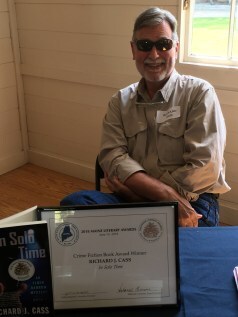
Dick Cass
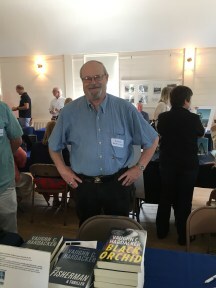
Vaughn Hardacker
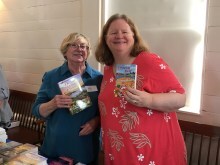
Lea and Barb at Books in Boothbay, July 14, 2018

Sandra Neily
Kaitlyn Dunnett/Kathy Lynn Emerson:
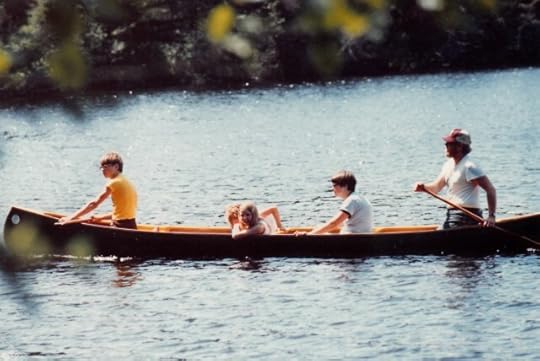
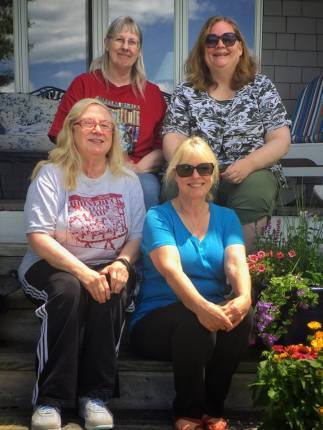
Since I’m old and not all that healthy, I’m still not leaving home much this summer, but I will be at Maine Crime Wave on June 11 and am looking forward to seeing folks I’ve not seen for a while. I’m on a panel on writing in more than one genre. Shouldn’t be a stretch! The only other plan is to spend some time with old friends (dating back to college days) who have a camp on a lake in Monmouth. They live most of the year in Massachusetts to be near their daughters now, but the best thing about people you’ve known for decades is that you can pick up right where you left off the last time you got together. The photo is of them and their kids on one of the many camping trips we went on together in past Maine summers, this one in 1983.
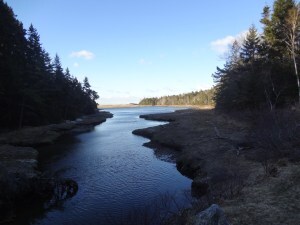
By 10 AM you’ll have tons of company here. Not at dawn.
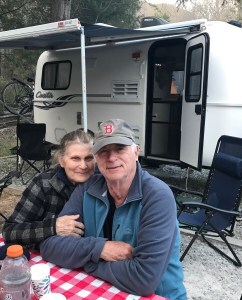
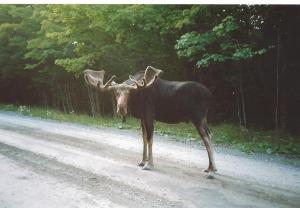
Sandra Neily here: Because so many Maine lovely places are often summer-crowded (and Covid just added to folks’ love of our places) I am usually on site by 6 AM. When our public beaches have just wheeling seabirds. [image error] Our fabulous land trust trails are mostly deserted. (Maine has more land trusts than any other state. Find them here.) And early, our public boat launch sites on the ocean are a great place to have a cuppa and a donut and wade in cold sea water and listen to the osprey. I look forward to fly fishing, 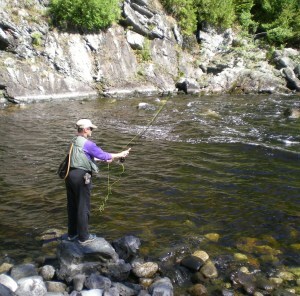 grandgirls, some trailer trips with Bob, moose in the road, and my deck flowers really flowering.


Maggie Robinson:
We just had a crew come to do a spring cleanup, so my garden is less than glorious. The busy buzz of leaf blowers over two days resulted in a massive pile of leaves and some stunned, drooping plants. To add salt to the wound, all 200 purple tulip bulbs planted out front were eaten right to the ground by the deer who live down the street. But everything is green, and I look forward to hanging out in my own backyard for most of the summer. I’m one of those crazy people who actually likes to weed, although I’ve been trying to add more perennials to fill in the gaps.
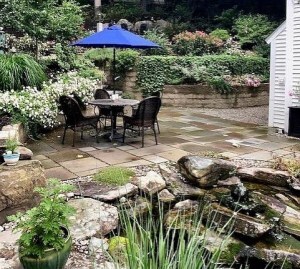
Our kids are renting a camp near Oquossoc in August, so we’ll probably drive up for the day. Until then, I’m chaining myself to the desk in hopes of finishing my current manuscript. I make no promises, LOL.
Maureen Milliken: Summer in Maine is wonderful and short, so I don’t like to spend a lot of time away from it.
Like many summers, I’ll spend a few days at Baxter State Park, one of the best places Maine has to offer. Some years, we go as a family group, but I like going by myself, enjoying nature and reading books.
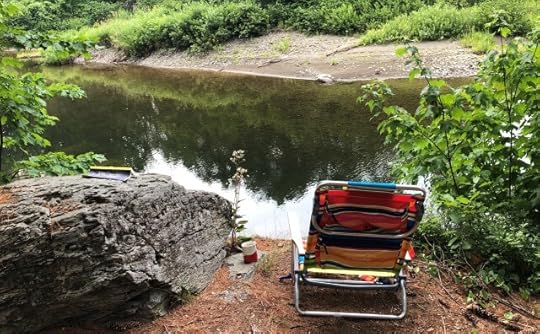
Who needs to climb Katahdin? All I need is a chair, a book, some coffee and nice spot to enjoy Baxter State Park.
I also like hanging on my porch, doing the same. In remained about the same for many years, but a COVID-fueled redecorating that began summer of 2020 is finally fully coming together.

My favorite Maine spot? The porch, of course!
While I don’t have any more free time in summer than I do the rest of the year, I feel like I spend more time reading (though in truth I read every day, all year round).
I also like to do another of my favorite things, which is drive around and see Maine. These little day-trip road-trips also help me think about the book I’m working on as I drive.
I live in one of those towns with a population that doubles in summer with people from away coming to enjoy our lakes and other stuff. We have concerts on the Village Green, a farmers market, monthly craft fairs, loon-calling, a beanhole supper. You know the drill.
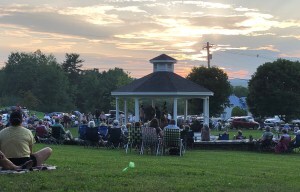
Summer’s bells and whistles are great, but Maine would still be awesome without them.
One great thing about living here, rather than being one of those deprived people who live somewhere else and spend 50 weeks of the year (or 48 or whatever) dreaming about that little fraction of time they can be in Maine, is that we’re here. It doesn’t have to be some frenzied event-filled extravaganza. It just is.
I’ll end with a quote that anyone who’s read my posts here over the years will be familiar with. It’s from the great E.B. White, writing about the very town I live in. Whay applied more than 80 years ago when he wrote it still applies now:
Summertime, oh summertime, pattern of life indelible, the fade-proof lake, the woods unshatterable, the pasture with the sweetfern and the juniper forever and ever, summer without end; this was the background, and life along the shore was the design, the cottages with their infinite and tranquil design, their tiny docks with the flagpole and the American flag floating against the white clouds in the blue sky…
Matt Cost: Maine is such a treasure trove of gems in the summer that it is hard to pick amongst them. One of my favorite things to do is to combine a book presentation with a scintillating place in the state and turn it into a getaway for my wife and myself.
One of my favorites was a few years back at the library in Southwest Harbor. I’d never gotten to the quieter side of Mt. Desert Island before for anything but a drive by, but it quickly became my favored side of things.
Last summer I had twenty-five book presentations around the state to select from. Our top three were Greenville, Boothbay Harbor, and Rangeley. Two lakes and a port town. We spent three nights in each, two motels and a house. We explored, swam, boated, and went hiking. We ran into people who attended my presentations outside in the wilds and chatted more.
I am not yet sure what this summer will hold for adventures and presentations but I’m sure something will line itself up. After forty-seven years in Maine, there is still plenty to find, more to learn, and people to enjoy.
Write on.
May 27, 2022
Weekend Update: May 28-29, 2022
Next week at Maine Crime Writers there will be a group post (Monday), a guest post (Tuesday), and posts by Kaitlyn Dunnett/Kathy Lynn Emerson (Thursday), and Kate Flora (Friday).
In the news department, here’s what’s happening with some of us who blog regularly at Maine Crime Writers:
Another reminder that our “Where Would You Put The Body” contest soon. Don’t be left behind. Have your camera ready. Who knows when you’ll spot the perfect place. Here’s where to send that photo. Put “Body Contest” in the subject line, identify the place the photo was taken, and email to writingaboutcrime@gmail.com
Another reminder: Registration for the Maine Crime Wave, taking place on June 11th, ends on June 3rd. Don’t miss a chance to hear how we work and rub elbows with your favorite Maine crime writers. https://www.mainewriters.org/crime-wave-registration
We recently learned that the Lincoln County Historical Association will soon open an exhibition Women Writers of Lincoln County and the exhibition will be dedicated to our dear friend Lea Wait. What a wonderful way to honor a writer who cared so much about the history of her adopted home.
Next week our group post will be about looking forward to our Maine summer. What are you looking forward to?
An invitation to readers of this blog: Do you have news relating to Maine, Crime, or Writing? We’d love to hear from you. Just comment below to share.
And a reminder: If your library, school, or organization is looking for a speaker, we are often available to talk about the writing process, research, where we get our ideas, and other mysteries of the business. We also do programs on Zoom. Contact Kate Flora
May 26, 2022
Mentors and Friends
As many of you know, both my parents died last year, my father in November and my mother in December. Everyone who’s been through any form of grief knows what a strange animal it can be. One of the things I’ve found myself reflecting on is the importance of examples and mentors in our lives, not just our families, but the people in the larger communities who, for no obvious reason, supported us in ways that might not even be obvious until decades later.
One of my important mentors in writing only entered my consciousness when I became the World’s Oldest MFA Student at the University of New Hampshire. It wasn’t until much later I realized the impact he’d had on my writing. I wrote this on the occasion of his death in October of 1990.
* * *
I didn’t meet Tom Williams the first time I was supposed to. In September of 1989, I entered the writing program at the University of New Hampshire, a thirty-eight year old graduate student with one published short story to my credit. The summer before I went to Durham, I read The Moon Pinnace, the only one of his novels in the library. It didn’t move me, but I suspect it was more my failure than the novel’s. A month before classes began, a note from the English Department chair advised me that Mr. Williams wouldn’t teach that semester. This was the summer, I later learned, he was diagnosed with the lung cancer that killed him.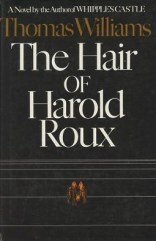
When I met him finally, it was February, his final semester of teaching. He limped into our group’s first meeting in the attic room in Hamilton Smith Hall, in the deep heart of a New Hampshire winter. I expected to hear that he’d fallen on the ice. He explained, not without smirking at the melodrama, that he’d broken three ribs coughing.
Tom’s most compelling quality was his honesty. It was central to his concept of himself and thus to the face he turned to the world. He did not fear saying uncomfortable things and that made him difficult for some people to be with, though I never knew him to be unkind.
That honesty might have given him disciples, except he maintained a distance between what he expected of himself and what he expected of you. He was honest about the costs of honesty, and did not disapprove if you couldn’t pay them. The few times I saw anyone emulate him, he seemed embarrassed.
The gift of his teaching was the ability to locate the heart of an unsuccessful story, the germ that even the writer had not recognized, and lay it bare. One student writer submitted a story about a white man eating Thanksgiving dinner in a black neighborhood restaurant in Hartford, Connecticut, complete with waitress speaking homilies in urban dialect. Tom calmed those of us who mistook the story for its writer’s politics, then showed us that the story’s core was the connection between the waitress and the man, the writer’s only fault in obscuring that connection. No story was a cliché unless it was badly told.
Knowing Tom was a hunter and a fisherman, I brought him an essay I’d written about hunting for a local magazine. It was slight, but one of the first pieces I’d published, and I thought I’d captured my ambivalence about killing for food or sport. One day, I found it in my wooden mailbox in Hamilton Smith with a note attached, as if he had not wanted to mar my copy with writing of his own. “Very nicely done,” he wrote in pencil. “Not that any words of explanation will penetrate the holy sanctimony of the Friends of Animals.” I’ve thought of framing that note, but somehow it feels inappropriate, a little dishonest.
I knew he’d gone back into the hospital in October, but I was unprepared to hear he’d died. On that rainy leaf-blown day, I pulled a slip of paper out of my mailbox expecting a meeting notice. A secretary in the English Department had photocopied the news of his death three times on a piece of paper, then ripped each sheet into thirds. As an economical man, I think Tom would have approved.
A memorial service in the UNH Alumni House attracted well-known writers – John Irving, Andre Dubus, Ernie Hebert – but two speakers moved me more than any of the stars. Tom’s son Peter read a poem his father had published in Esquire:
The giraffe is disappearing
from the world
without a word
Who are we to say its legs
are mismatched
and look as if they are on backwards
How it runs graceful as a rocking chair
escaping in a dream
Think of a lovely girl who has
six fingers
on one of her hands
You must let that strange hand
Touch you
Because Tom generally spoke seriously, I did not think of him as having a light side. That he was capable of such a delicate line delighted me.
Later, a lifelong friend spoke of encountering Tom on a river in northern New Hampshire. Tom was sitting on a rock, smoking a cigarette, and when the friend asked how he’d done, he said he’d caught his limit. Seeing only nine trout laid on the wet river grass, the friend questioned his arithmetic, until Tom opened one of the gutted trout to show a tiny one inside. To have spent time with him and not known him capable of silliness made his loss even worse.
One of my favorite poems is James Wright’s Lying in a Hammock on William Duffy’s Farm in Pine Island, Minnesota. The last line, turning all the imagery back on its head, reads “I have wasted my life.” It was fear of failure that kept me from writing about Tom for a long time. I feared not being able to say honestly what his teaching meant to me.
What made it possible was remembering a comment he once made about why he wrote fiction: “Nobody is going to listen to what I say anyway, so I might as well try to tell the truth.” This is the lesson I learned from him, that the attempt to be honest, more than its success or failure, makes the difference. He speaks it over my shoulder every day.
When it comes to writing, or life, channel a little Bart Simpson
I’ve had an urge for quite a while to start an Instagram account that has photos of towns in Maine named after the world’s great cities. The idea of Athens, Rome, Vienna and more translated to tiny towns with dirt roads and white clapboard buildings pleased me.
So, recently, I created one.
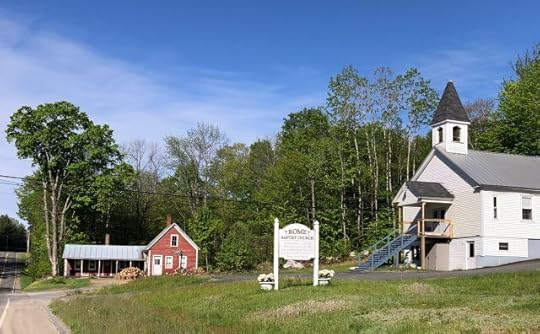
Rome, Maine.
This urge didn’t come from practice. I have an Instagram account, but don’t use it as much as I could (should). I could’ve used another social media platfrom, but my brain told me Instagram.
The photos aren’t great art. The account doesn’t have many followers. There’s no promotional or monetary aspect to having it. An acquantaince, after I “invited” him to follow it through Instagram asked me what the point was. The point is, there is no point. I just wanted to do it, so I did.
Creating the account, like many things with my writing (“Why do you reference ‘Laverne & Shirley in your book? That’s too obscure!” etc) has one purpose. I wanted to do it, felt compelled to, so I did. I knew doing it would make me feel good.
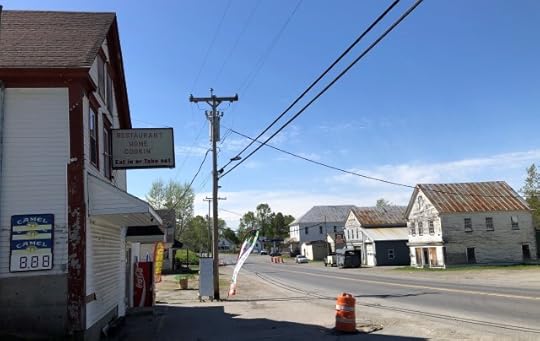
Athens, Maine
It reminds me of the “Simpsons” episode where Bart says “I do what I feel like.” It’s a simple statement of his life philosophy, stated in a matter-of-fact way that implies “Why would anyone even ask?”
When I sold my house in New Hampshire, the new owner said at the closing, “I don’t get what your theme was with the kitchen.”
“I did stuff that made me feel good,” I told her.
And that, no surprise, befuddled her. I felt a little bad for her — I figured she must be one of those people who asks “Is it OK to use this color?” before painting a room. I’m so glad to be part of the “any color is OK if you like it” population.
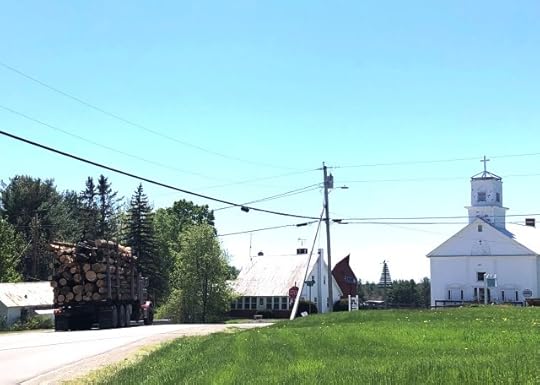
Vienna, Maine
The Instragram account worldcitiesofMaine — you can access it by clicking here — isn’t great art. It won’t make me any money. It won’t do anything except allow me to scratch an itch I’ve had for years. As well as allow me to do something I love, which is drive around and see Maine and take photos of stuff with my phone.
What does this have to do with writing? More than you may think. People will fall all over themselves making sure you know you have to “kill your darlings.” For the unitiatated, that means to get rid of stuff you really like and that makes you feel good that you’ve put in a book just to indulge yourself. But here’s a pitch for the fact you need darlings in the first place before you can get rid of them. And some of them may end up working, giving your book the voice and character that just adhering to the “what colors are OK to paint the kitchen” world wouldn’t.
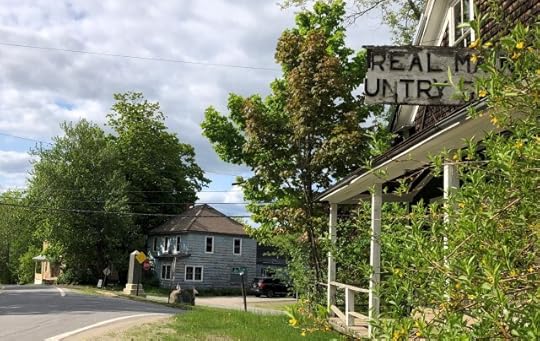
Palermo, Maine
If you have an itch that needs scratching, writing-wise, do it. It frees your brain and allows your imagination to roam. It allows you to get in touch with the part of you that’s not governed by people who are confused by why you’d write that, think that, say that.
When it comes to following your heart and imagination, err on the side of heart and imagination and creativity, not on the side of the voices that don’t get your head. You can always rein it during the revision process if it doesn’t work.
And if it’s not writing we’re talking about, why rein it in? If something feeds your head and heart, that doesn’t bother anyone else (except maybe their idea of what someone “should” do as dictated by societal norms) don’t feel like you have to justify it. How it makes you feel is enough.
May 23, 2022
Researching and Writing Place by Matt Cost
It took me far too long into my life to realize the significance of place in the writing process. It started off by writing a historical novel about Cuba without ever having gone there. It then evolved into beginning a mystery series set in my hometown of Brunswick.
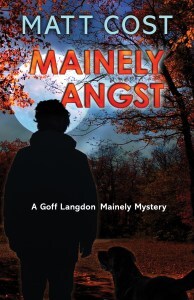
Not that there is anything wrong with Brunswick. I set my Mainely Mystery series here because I know the town so well. I’d had children in Brunswick. Owned businesses in Brunswick. Taught school in Brunswick. And now I write in Brunswick.
This was why I chose to write about Joshua Chamberlain, as he was a Brunswick legend, and I had easy access to Bowdoin College and the Chamberlain House for research. But then I realized that it would help to visit the battlefields upon which he fought, as well as Washington D.C. where he spent a chunk of time during the war.
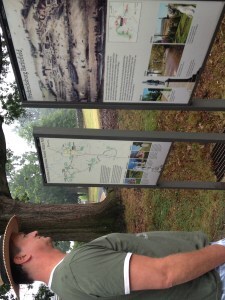
And visiting these places was fun. All in the name of research, of course. I frequented and toured Gettysburg, the battlefield where Chamberlain became a legend, so much that my son ended up going to Gettysburg College. No, really.
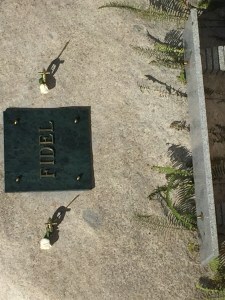
In 2016 I finally got the opportunity to go to Cuba. I developed an itinerary that followed the revolutionary war trail of Fidel Castro and his band of bearded guerrillas. For two weeks I crisscrossed the island nation and gained a deeper sincerity about the place I was writing about. It was trudging to the top of the Sierra Maestra through the jungle and rugged terrain in a 95° day with extreme humidity and this was in December that I fully realized how 300 men were able to repulse and turn back an army of 10,000 soldiers.

Cuba was such an eye-opening experience that I chose New Orleans as the setting for my next historical. Sure, the theme of writing about the fight for social equality in the south after the Civil War fascinated me, but New Orleans was purely selfish. It gave me and my wife the opportunity to vacation there, researching place and setting during the day, enjoying food, drink, and music at night. What a bewitching place, both past and present.
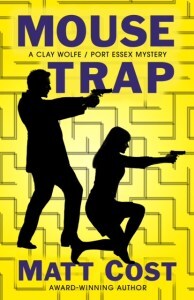
With my Clay Wolfe/Port Essex series I chose something new. I created a fictional town set on the coast of Maine. Sure, it might have a loose basis in Boothbay Harbor, but very loose. The town is the figment of my imagination. I’ve created a map of Port Essex, and every time I add a place or street, on the map it goes. Over the past couple of years, it has grown, and become real.
What’s up next? I’ve decided it would be fun to merge the two writing loves of histories and mysteries into one. Velma Gone Awry; An 8 Ballo Mystery, will be coming out next April and is about a PI in 1923 Brooklyn. As my daughter lives there with her wife now, I thought it’d be great setting to visit and research at the same time. And what an astounding place Brooklyn was in the 1920’s. Speakeasies, jazz, writers, baseball, the shimmy, and a plethora of legendary people.
The long and short is we as writers can pick our place. Whether it be our hometown, places we’d like to visit, or creations of our own—place is of our choosing.
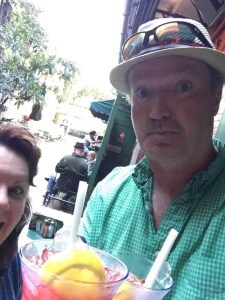
Matt Cost was a history major at Trinity College. He owned a mystery bookstore, a video store, and a gym, before serving a ten-year sentence as a junior high school teacher. In 2014 he was released and began writing. And that’s what he does. He writes histories and mysteries.
May 20, 2022
Weekend Update: May 21-22, 2022
Next week at Maine Crime Writers there will be a posts by Matt Cost (Monday) Sandra Neily (Tuesday), Maureen Milliken (Thursday) and Dick Cass (Friday).
In the news department, here’s what’s happening with some of us who blog regularly at Maine Crime Writers:
Kate Flora: Giving a cool talk to the Lincoln County Historical Association about crime writers, including my dear friend Lea Wait. It’s a zoom event. Use the Facebook link to sign up. THURSDAY, MAY 26, 2022 AT 6 PM – 7 PM
https://www.facebook.com/events/688619385739381
Also doing a panel in Warwick, RI next Tuesday at 2:00, in case you’re curious about how we write true crime:
Check it out—Maine Crime Wave is on for 2022
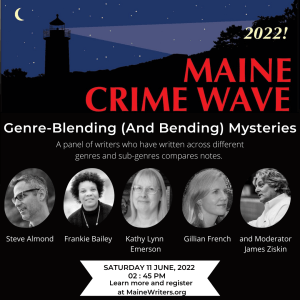
https://www.mainewriters.org/maine-crime-wave
https://www.mainewriters.org/events/panelists-moderators-2022
A Reminder: Only a few more weeks to enter!!

An invitation to readers of this blog: Do you have news relating to Maine, Crime, or Writing? We’d love to hear from you. Just comment below to share.
And a reminder: If your library, school, or organization is looking for a speaker, we are often available to talk about the writing process, research, where we get our ideas, and other mysteries of the business. We also do programs on Zoom. Contact Kate Flora
Depending on the Kindness of Strangers
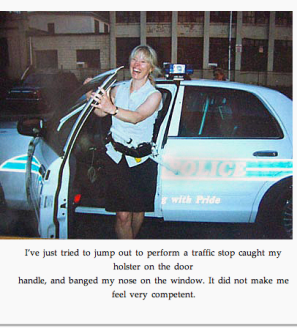 Kate Flora: I’ve been reflecting lately on the decades of my writing career and being surprised at how much I’ve forgotten. Back in 1983, when our second son was about to be born and I’d decided to step away from the practice of law for a few years, I bought a primitive Epson compute and started working on a novel.
Back then I didn’t belong to any writers groups. Not big crime-related ones like Mystery Writers of America and Sisters in Crime, and not even a small writing critique group. My vision of how writers worked was a solitary soul sitting at desk imagining a story and then writing it down.
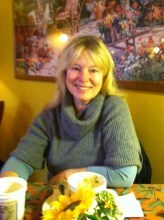
Me, back when this blog began
Over the years I occasionally found myself in small writing groups, and I did eventually join Sisters, and MWA, and the Maine Writers and Publishers Alliance. Mostly, though, I was by myself living in my head with my characters. As I gradually realized, though, crime writers need to know a lot about criminal investigations, along with the many bits of “lore” that inform the plots of our books. Our readers can be very picky about details and can be vocal if we get it wrong. That knowledge forced me out of my solitary comfort zone and into contact with people who could answer my questions.
For an early book that’s never been published, I needed to know about how police would conduct the exhumation of a buried body. I couldn’t post my query to the on-line chat group, but a police officer down in Newark, Delaware, Tom Le Min, posted it for me, forwarded the replies, and even put together that notebook for me of material on how to do the exhumation. That turned out to be valuable not only for the unpublished book, but when I had to write about exhuming Amy St. Laurent’s buried body in Finding Amy. It was a later conversation with Tom Le Min about a case in Newark that gave me critical pieces of Joe Burgess’s character.
Looking back, I do wonder what people thought of me and my questions. A prime example
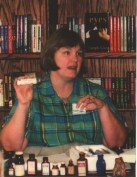
The Poison Lady
is a luncheon given in connection with my husband’s 25th Harvard reunion. While the alums were catching up, I realized that I had two people in the room who were ideal for answering questions about my work in progress. In An Educated Death, Thea is helping a client school deal with the fallout from a suspicious campus death. I wanted to know how the head of school would handle the situation—and the principal of Exeter was at the lunch. I borrowed a pad of paper and a pen and started asking Kendra Stearns O’Donnell my questions. She was brilliant and I came away with the kind of small details that make a story feel authentic.
And that wasn’t all. In the course of the book, someone tries to poison Thea to make her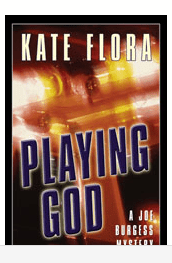 drop her inquiries into the student’s death. I had read my book on poisons, consulted with the amazing pharmacologist Lucy Zahray, and chosen one but now I had a captive ER doc in the room. I plunked myself down and asked about the specific physical effects the chosen toxin would have. I came away with a far better understanding of how Thea would feel as the poison began to work, and what symptoms she’d present with at the ER.
Each small step toward getting it right, scary as they were, made me a little braver. Over the years, to help Thea be brave and able to defend herself, I’ve taken a RAD/Self-Defense class through my local police department and a citizen’s police academy in a nearby town.
Even though each time I pick up the phone or send out a blind email asking a question or looking for help I am terrified, I have learned over and over how generous and helpful people can be.
For my first Joe Burgess book, Playing God, I sent an email to the Portland police department, asking their webmaster if there was someone there who could answer my questions. I got a helpful reply from Art Shaughnessy, lots of answers, and eventually a tour of the department. That led me to then Lt. Joe Loughlin, who became my go-to guy for answers, my writing partner, and a life-long friend.
That friendship led to Finding Amy, the Maine warden service, and Lt. Pat Dorian, who guided me through the warden’s portion of that story and then sent me up to Miramichi, New Brunswick, to write another story and acquire another amazing group of friends.
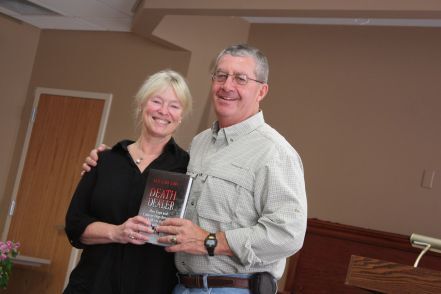
Kate and game warden Pat Dorion with Death Dealer at the Newport Library

At the Portage Restaurant with Chief Paul Fiander, Deputy Chief Brian Cummings, and Detective Dewey Gillespie
Late night chats in bars, including the cop who started out saying, “We don’t talk about that” and ended up telling me a very powerful story. Long evenings spent riding around in patrol cars talking about the motivation to become a cop. A funny chat in a police station about the insights of Gavin DeBecker’s The Gift of Fear. The time I cold called a diver and asked about how to bring up a body. It has all been an adventure I never anticipated. I am so grateful to all the people over the years who trusted me with their stories and who made the time to answer my questions so that I could write better books.
May 18, 2022
SPRING-THEMED BOOKS
Ah Spring! It is the time of first flowers, warm sun, and, of course, stories. Among those are some terrific spring-themed mysteries to savor. Here are a few:
A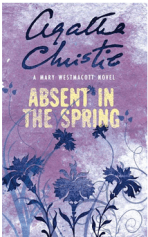 gatha Christie’s Absent In The Spring is a character-drive psychological analysis of a middle-aged woman stuck at a desert outpost who, for the first time, looks back at what she thought was a happy, fulfilling life. As her past unravels before her, she realizes her life, and she herself, were not what she believed, but rather, to quote Shakespeare’s Sonnet 98, she had been “absent in the spring” seasons of life.
A Dangerous Place by Jacqueline Winspear is a powerful story of political intrigue and personal tragedy when a brutal murder in the British military town of Gibraltar leads Maisie into a web of lies, deceit, and peril.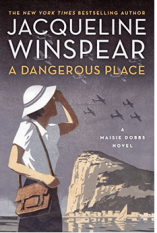
It is spring 1937 and four years after Maisie Dobbs set sail from England, leaving everything she most cared for behind. Since then Maisie has experienced love, contentment, stability—and the deepest tragedy a woman can endure. On the ship Maisie realizes she isn’t ready to return home. All she wants is the peace she believes she might find by returning to India. Against the wishes of the captain who warns her, “You will be alone in a most dangerous place,” she disembarks in Gibraltar. Though she is on her own, Maisie is far from alone: the British garrison town is teeming with refugees fleeing a brutal civil war across the border in Spain. But her sojourn in the hills of Darjeeling is cut short when her stepmother summons her home to England; her aging father Frankie Dobbs is not getting any younger.
Alice’s Ad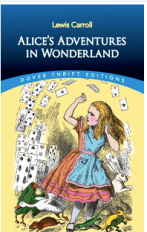 ventures in Wonderland, the 1865 English novel by Lewis takes place in May when a young girl named Alice falls through a rabbit hole into the fantasy world of human-like creatures. An example of literary nonsense, the story was written by English author Charles Lutwidge Dodgson under the pseudonym Lewis Carroll. The tale plays with logic, which is why it appeals to children and adults. The big mystery is, of course, what really happened to Alice?
I’ll end with Glass Eels, Shattered Sea, book number 4 in my own mystery series. The story begins on a warm spring night in Maine. Alongside a roaring river where glass eels battle upstream currents to find the perfect place to lay their eggs oceanographer Mara Tusconi and her cousin Gordy find an old eel fisherman with a bullet in his chest. Unknown to them, Mara and Gordy have stepped into the deadly and stunningly lucrative world of international eel trafficking.
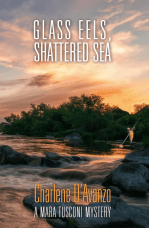 “Glass Eels” was a terrific book to research. I was amazed to learn that during the peak elver fishermen could make $3000-$4000 in one night! The eels’ life history is fascinating as well. They hatch in the Sargasso Sea’s warm waters south of Bermuda. Then they swim up rivers along our east coast where they spend most of their lives before migrating back to their birthplace to spawn and die. Little is known about eel spawning because scientists have yet to witness it – despite investing many hours and funds trying – because eels’ breeding grounds in the Sargasso Sea is remote and difficult to sample.
May 16, 2022
Elderly Banking

Vaughn C. Hardacker
Vaughn C. Hardacker here: Have you ever had to contact your bank? What a pain in the keester! However, I plan on hiring the author of the letter below to deal with mine from now on!Shown below, is an actual letter that was sent to a bank by an 82-year-old woman. The bank manager thought it amusing enough to have it published in the New York Times
Dear Sir:
I am writing to thank you for bouncing my check with which I endeavored to pay my plumber last month. By my calculations, three nanoseconds must have elapsed between his presenting the check and the arrival in my account of the funds needed to honor it. I refer, of course, to the automatic monthly deposit of my entire pension, an arrangement which, I admit, has been in place for only eight years. You are to be commended for seizing that brief window of opportunity, and also for debiting my account $30 by way of penalty for the inconvenience caused to your bank. My thankfulness springs from the manner in which this incident has caused me to rethink my errant financial ways. I noticed that whereas I personally answer your telephone calls and letters, — when I try to contact you, I am confronted by the impersonal, overcharging, pre-recorded, faceless entity which your bank has become. From now on, I, like you, choose only to deal with a flesh-and-blood person.
My mortgage and loan repayments will therefore and hereafter no longer be automatic, but will arrive at your bank, by check, addressed personally and confidentially to an employee at your bank whom you must nominate. Be aware that it is an OFFENSE under the Postal Act for any other person to open such an envelope.
Please find attached an Application Contract which I require your chosen employee to complete. I am sorry it runs to eight pages, but in order that I know as much about him or her as your bank knows about me, there is no alternative. Please note that all copies of his or her medical history must be countersigned by a Notary Public, and the mandatory details of his/her financial situation (income, debts, assets, and liabilities) must be accompanied by documented proof.
In due course, at MY convenience, I will issue your employee with a PIN number which he/she must quote in dealings with me. I regret that it cannot be shorter than 28 digits but, again, I have modeled it on the number of button presses required of me to access my account balance on your phone bank service. As they say, imitation is the sincerest form of flattery.
Let me level the playing field even further. When you call me, press buttons as follows: IMMEDIATELY AFTER DIALING, PRESS THE STAR (*) BUTTON FOR ENGLISH
#1. To make an appointment to see me.
#2. To query a missing payment.
#3. To transfer the call to my living room in case I am there.
#4. To transfer the call to my bedroom in case I am sleeping.
#5. To transfer the call to my toilet in case I am attending to nature.
#6. To transfer the call to my mobile phone if I am not at home.
#7. To leave a message on my computer, a password to access my computer is required. Password will be communicated to you at a later date to that Authorized Contract mentioned earlier.
#8. To return to the main menu and to listen to options 1 through 7 again
#9. To make a general complaint or inquiry. The contact will then be put on hold, pending the attention of my automated answering service.
#10. This is a second reminder to press * for English. While this may, on occasion, involve a lengthy wait, uplifting music will play for the duration of the call.


Your Humble Client
Regrettably, but again following your example, I must also levy an establishment fee to cover the setting up of this new arrangement. May I wish you a happy, if ever so slightly less prosperous New Year?
Your Humble Client
And remember: Don’t make old people mad. We don’t like being old in the first place, so it doesn’t take much to piss us off. . .
Author note: I have tried to get her name and contact information, but the bank said they can’t release it due to privacy constraints! Riiiight!
Lea Wait's Blog
- Lea Wait's profile
- 509 followers


![[image error]](https://mainecrimewriters.com/wp-content/uploads/2022/05/6DAA0758-D28B-41F3-A9B0-9B641A57A38A.heic)