
Chris Goff's Blog, page 58
November 10, 2016
WRITING THROUGH CHAOS

By Francine Mathews
For reasons I won't go into, I spent much of Wednesday, November 9, curled in a fetal position on my couch, experiencing anxiety, dread, and fear of all I cannot control. Or, as it's sometimes called, a panic attack. Adrenalin-flushed bloodsteam, stomach nausea, occasional full-body tremors. My dogs do the same thing when a smoke detector chirps. Only I had no lap to climb into.
At seven a.m., I drank my morning coffee. Caffeine is not advised in a panic attack.
By ten a.m., I was drinking chamomile tea instead and had turned on my gas fireplace for warmth and comfort.
By two p.m., I was able to "take a little soup," as Jane Austen might say--although in her case, it would have been a little thin gruel. Not having the attention span to research gruel recipes on the internet, I settled for heating a kale-vegetable concoction from Whole Foods.
 By four p.m. I was drinking wine, by the fireplace again.
And by six in the evening, I at last got a little work done. Not writing, you understand--but a chunk of reading for research that comforted me profoundly. I might not have been able to focus enough to create prose of my own, but I could take in the stately nineteenth-century passages of an Englishman's memoirs without my brain fluttering like a moth impaled on a hatpin.
And so the healing began.
Writers are creative and thus emotionally sensitive people. Particularly writers of fiction, who unleash their imaginative power in ways that sometimes horrifies even themselves. But at the same time, we're disciplined minds who channel that potency into complex storytelling. We like to think that as professionals, we can summon our creative forces and master the chaos at will. But that's not always the case. Sometimes during periods of upheaval, the words refuse to come. The page stays blank. The story goes untold.
Some call this writer's block. I call it being human.

Over the past several decades I've discovered that the answer to blockage is NOT to stare at my computer screen. It's NOT to write pages of forced paragraphs I'll end up deleting. My solution instead is to get out of my desk chair and pick up a garden trowel or a stack of dirty laundry or a jigsaw puzzle. These things have nothing to do with each other except for this--they occupy my hands, which ties up the control-freak in my brain.
I know very little about brain structure, but enough to realize that what I'm about to say is not real science or even accepted fact: that the left brain governs the linear and organizational, while the right side is supposedly abstract and creative. I have found, however, that when my creative (right) brain is stuck, my left (linear) brain goes into overdrive and attempts to analyze my problem to death. This never results in storytelling I love. It results in wasted hours, frustration, and the conviction that I am a failed writer.
What DOES unblock my muse is switching from one side of my brain to the other.
 I give the linear half of my mind a simple task to organize: shoveling dirt, for instance, and planting bulbs at a precise depth; sorting colors and delicates and whites into separate piles by family member; driving a predictable route on a familiar errand so unconsciously that I arrive at the grocery store or school pickup line without remembering how I got there. While my left brain manages the task, my right brain roams far and wide--and finds the knot snarled in the thread of my story.
 Creativity does not occur at the conscious level of the mind. Its powers are magical, whimsical, and uncertain. It cannot be summoned or entirely mastered. We can only be open to it--and sometimes, that happens most when we shut down the manic busybody inside our heads.
How do you jumpstart creativity, readers?
Cheers,
Francine
www,francinemathews.com


November 9, 2016
Thrillers And The Unreliable Narrator
by Jamie Freveletti
We're talking about weapons in novels all this week and my other Rogue Women Writers have covered just about everything and very well. Today I'll be writing about psychological weapons.
In novels there's a concept called The Unreliable Narrator. If you've read Gillian Flynn's Gone Girl or Paula Hawkins' The Girl On The Train then you probably have a sense of what it means. It's a main character in a book that tells the story from their eyes, but in a way that twists reality. You begin by believing the narrator in a story, but as it proceeds the reader begins to understand that they have been duped. That the facts as they were told them, or believed them to be, are not real. This type of protagonist in mystery and thriller novels has been dominating the best seller lists for the past couple of years.
Creating an unreliable narrator is an interesting exercise from an author's point of view. Unlike reality, where facts exist in a physical world, the author of a novel actually creates a fictional world, and so can present the facts in any way they like in order to hoodwink the reader. The reader accepts these facts, and after a bit of time the author drops hints as the story progresses to reveal to the reader the error of their assumptions. What makes this type of narrator fascinating is the benign way that evil is presented. Usually the narrator puts on the trappings of an upstanding member of society, but that is just a cover for the darker nature of this protagonist.
The other characters in the book believe in the protagonist with a sometimes blind acceptance, though if the author makes the characters deliberately obtuse, they risk losing the reader. It can be a fine line.
To say that the Unreliable Narrator has been popular lately is an understatement. The books, including the two that I have mentioned, have been blockbuster bestsellers. If you go to Goodreads and type in the term, you will find excellent lists of books of this nature. They make for some interesting reading on the nature of a character's ability to be led down blind alleys. Only in the end of the story, after the unreliable narrator has damaged the other characters, do the scales fall off the characters' eyes and the truth is revealed.
We're talking about weapons in novels all this week and my other Rogue Women Writers have covered just about everything and very well. Today I'll be writing about psychological weapons.
In novels there's a concept called The Unreliable Narrator. If you've read Gillian Flynn's Gone Girl or Paula Hawkins' The Girl On The Train then you probably have a sense of what it means. It's a main character in a book that tells the story from their eyes, but in a way that twists reality. You begin by believing the narrator in a story, but as it proceeds the reader begins to understand that they have been duped. That the facts as they were told them, or believed them to be, are not real. This type of protagonist in mystery and thriller novels has been dominating the best seller lists for the past couple of years.
Creating an unreliable narrator is an interesting exercise from an author's point of view. Unlike reality, where facts exist in a physical world, the author of a novel actually creates a fictional world, and so can present the facts in any way they like in order to hoodwink the reader. The reader accepts these facts, and after a bit of time the author drops hints as the story progresses to reveal to the reader the error of their assumptions. What makes this type of narrator fascinating is the benign way that evil is presented. Usually the narrator puts on the trappings of an upstanding member of society, but that is just a cover for the darker nature of this protagonist.
The other characters in the book believe in the protagonist with a sometimes blind acceptance, though if the author makes the characters deliberately obtuse, they risk losing the reader. It can be a fine line.
To say that the Unreliable Narrator has been popular lately is an understatement. The books, including the two that I have mentioned, have been blockbuster bestsellers. If you go to Goodreads and type in the term, you will find excellent lists of books of this nature. They make for some interesting reading on the nature of a character's ability to be led down blind alleys. Only in the end of the story, after the unreliable narrator has damaged the other characters, do the scales fall off the characters' eyes and the truth is revealed.
November 6, 2016
Weapons vs. Defenses
...by Karna Small Bodman
Our Rogue Women Writers current topic is weapons of all kinds. Many of us are writing about research we have done so that any descriptions we use in our thrillers turn out to be accurate -- not always an easy task considering the influence of television and movies showing all sorts of villains utilizing everything from guns to "new-fangled" gizmos to inflict damage to our heroes and heroines.
When I decided to finally sit down and create my political thrillers, I knew that I wanted to write about international intrigue and national security scenarios where various government or "rogue" militant groups try to create threats, take power, increase profits, seek revenge or maintain control in all sorts of nefarious ways. What kinds of "weapons" do they use in order to get what they want (or cause havoc for their perceived enemies)?
Looking back through history, one can see what whenever a new weapon is invented, a defense is developed at about the same time. The sword vs. the shield, the gun vs. a bullet proof vest, poison gas vs. gas masks, bombers vs. stinger missiles -- you get the idea. Now think about the most devastating weapon the "bad guys" could use today: a nuclear weapon. And yes, we needed a defense against one of those too.
When I served in the Reagan White House I became quite intrigued with the President's announcement of his Strategic Defense Initiative or "Star Wars" as one columnist dubbed it. I'll never forget listening to his famous speech announcing a new initiative to try to develop a system to destroy an incoming missile.
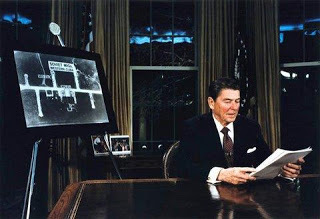
But that announcement was met with loud negative reactions from many quarters. Some diplomats at the State Department were saying, "Missile Defense? Who does he think he is - Superman - hitting a bullet with a bullet? That's crazy. It'll never work, so we'll just recommend trading it away in Arms Control Talks to the Soviets in exchange for some of their big missiles, and that will be good for us."
Then some of the officers over at the Pentagon were saying, "Missile Defense? We have no idea how that would work, but we'll put out a bunch of contracts with defense contractors to see if someone can come up with a decent program to carry out a Presidential order. It'll cost a ton of money. However, that'll force the Soviets to spend a ton of money to try to keep up with us which will bankrupt their system, and that will be good for us." (An of course, that happened!)
 I heard the President take a third position many times -- it was his "moral approach." Our policy at the time was "Mutual Assured Destruction" - we called it "MAD" -- that said in effect that if the Soviet (or any other bad outfit) launched a nuclear armed missile our way -- even by mistake -- it would kill millions of innocent Americans. And all we could do in retaliation, if it had a return address, would be to send one back their way, killing millions of their innocent people. He said that this is not the way he wanted to conduct his foreign policy.
 Add X-Band Radar He wanted to task our best scientists to try and develop a defensive system that would stop a missile before ANYBODY dies. And his great line was, "Wouldn't it be better to save lives than avenge lives?" And so the Missile Defense Agency was born which has been doing research, conducting tests, deploying interceptors along with sophisticated radar detection systems all over the world, including some that are sea-based like this one to the right.
We are now working with a number of countries including Israel, which has had great success with their own Iron Dome missile defense system. We also have arrangements with Japan, Germany, England, France, other Eastern European countries (finally) as well as Scandinavian allies.
 Ground-based systemRight now our MDA has developed land, sea and airborne systems that are quite exciting. In fact, in the last several years, they have had 65 successful tests against ballistic missile targets and are working constantly to protect the homeland as well as our troops deployed overseas along with our allies. We do have interceptors on the West Coast at Vandenberg Air Force Base, but none as yet on the East Coast. Don't you think it would be a good idea to invest in a system there?
All of this was, as I said in the beginning, so intriguing to me - having watched it all play out inside the West Wing as well as in Arms Control Talks with the Soviets in Geneva, I simply had to write a thriller about the concept - which was turned into my very first novel Checkmate. So yes, there are many scenarios where enemies of the United States might conjure up ways to threaten or attack us. The Soviets thought our missile defense system would work -- which was, in itself, a deterrent to their ever firing a nuke in the first place. And so I'll keep watching for more scientific breakthroughs in all sorts of defensive weapons and I, along with many other thriller writers, will undoubtedly try to keep writing about all of them in the future.
Now, please leave a comment and let us know about some "defensive weapons" you have read about that allow you to "sleep better" at night knowing they are available to protect you.
...by Karna Small Bodman
Our Rogue Women Writers current topic is weapons of all kinds. Many of us are writing about research we have done so that any descriptions we use in our thrillers turn out to be accurate -- not always an easy task considering the influence of television and movies showing all sorts of villains utilizing everything from guns to "new-fangled" gizmos to inflict damage to our heroes and heroines.
When I decided to finally sit down and create my political thrillers, I knew that I wanted to write about international intrigue and national security scenarios where various government or "rogue" militant groups try to create threats, take power, increase profits, seek revenge or maintain control in all sorts of nefarious ways. What kinds of "weapons" do they use in order to get what they want (or cause havoc for their perceived enemies)?
Looking back through history, one can see what whenever a new weapon is invented, a defense is developed at about the same time. The sword vs. the shield, the gun vs. a bullet proof vest, poison gas vs. gas masks, bombers vs. stinger missiles -- you get the idea. Now think about the most devastating weapon the "bad guys" could use today: a nuclear weapon. And yes, we needed a defense against one of those too.
When I served in the Reagan White House I became quite intrigued with the President's announcement of his Strategic Defense Initiative or "Star Wars" as one columnist dubbed it. I'll never forget listening to his famous speech announcing a new initiative to try to develop a system to destroy an incoming missile.
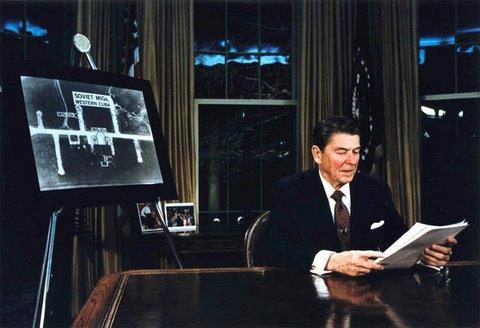
But that announcement was met with loud negative reactions from many quarters. Some diplomats at the State Department were saying, "Missile Defense? Who does he think he is - Superman - hitting a bullet with a bullet? That's crazy. It'll never work, so we'll just recommend trading it away in Arms Control Talks to the Soviets in exchange for some of their big missiles, and that will be good for us."
Then some of the officers over at the Pentagon were saying, "Missile Defense? We have no idea how that would work, but we'll put out a bunch of contracts with defense contractors to see if someone can come up with a decent program to carry out a Presidential order. It'll cost a ton of money. However, that'll force the Soviets to spend a ton of money to try to keep up with us which will bankrupt their system, and that will be good for us." (An of course, that happened!)
 I heard the President take a third position many times -- it was his "moral approach." Our policy at the time was "Mutual Assured Destruction" - we called it "MAD" -- that said in effect that if the Soviet (or any other bad outfit) launched a nuclear armed missile our way -- even by mistake -- it would kill millions of innocent Americans. And all we could do in retaliation, if it had a return address, would be to send one back their way, killing millions of their innocent people. He said that this is not the way he wanted to conduct his foreign policy.
 Add X-Band Radar He wanted to task our best scientists to try and develop a defensive system that would stop a missile before ANYBODY dies. And his great line was, "Wouldn't it be better to save lives than avenge lives?" And so the Missile Defense Agency was born which has been doing research, conducting tests, deploying interceptors along with sophisticated radar detection systems all over the world, including some that are sea-based like this one to the right.
We are now working with a number of countries including Israel, which has had great success with their own Iron Dome missile defense system. We also have arrangements with Japan, Germany, England, France, other Eastern European countries (finally) as well as Scandinavian allies.
 Ground-based systemRight now our MDA has developed land, sea and airborne systems that are quite exciting. In fact, in the last several years, they have had 65 successful tests against ballistic missile targets and are working constantly to protect the homeland as well as our troops deployed overseas along with our allies. We do have interceptors on the West Coast at Vandenberg Air Force Base, but none as yet on the East Coast. Don't you think it would be a good idea to invest in a system there?
 All of this was, as I said in the beginning, so intriguing to me - having watched it all play out inside the West Wing as well as in Arms Control Talks with the Soviets in Geneva, I simply had to write a thriller about the concept - which was turned into my very first novel Checkmate. So yes, there are many scenarios where enemies of the United States might conjure up ways to threaten or attack us. The Soviets thought our missile defense system would work -- which was, in itself, a deterrent to their ever firing a nuke in the first place. And so I'll keep watching for more scientific breakthroughs in all sorts of defensive weapons and I, along with many other thriller writers, will undoubtedly try to keep writing about all of them in the future.
Now, please leave a comment and let us know about some "defensive weapons" you have read about that allow you to "sleep better" at night knowing they are available to protect you.
...by Karna Small Bodman
November 5, 2016
YOUR BRAIN IS YOUR BEST TOOL

by KJ Howe
This week, we tackle tools of the trade. Firearms, night vision goggles, computers, tracking devices, disguises, and forged documents are key items that can help a response consultant--the industry term for a kidnap negotiator--in the field. But the most important tool for my response consultant character, Thea Paris, is her brain. Negotiation is a thinking person's game.
Every K&R case is different, so Thea has to adapt to the kidnapper's demands. Still, one common thread is that kidnappings are usually carried out by people who are driven by greed, using fear as a weapon to force families to do anything and everything to get their loved ones back. Kidnappers prey on that desperate urgency. And that's why hostages' families need an elite response consultant who can help negotiate for the release of the hostage.
Here are four tactics professionals use when dealing with kidnappers:
1. Never accept the kidnappers' first offer. The hostage's family wants their loved one back now, fast. But if you agree to the first offer--even if you can afford what they are asking for--then you open yourself to negative consequences. The kidnappers could sense they have a cash-rich customer on their hands, and they will consider the ransom a down payment to keep the hostage safe and ask for more. Also, if you capitulate quickly, you become a "soft target," and it is not uncommon for kidnappers to prey on the same families more than once, re-kidnapping the original hostage or kidnapping one of their family members. It's difficult to maintain control when you desperately want to bring a family member home. But keep in mind that you are the only buyer in the market for this commodity--the hostage--and that gives you some leverage. Haggling is an expected part of the process. Usually, the ransom ends up being around 10-15% of the original asking amount.
2. Be patient. Kidnappings often last days, weeks, or months, sometimes even years, as in the case of Peter Moore, the longest held hostage in Iraq, who was held in captivity for almost 1000 days. It's important for the hostage's family to prepare for the long haul. It can take time to negotiate with the kidnappers, find a compromise and arrange the exchange of funds for the hostage. This process can't be rushed.
3. Demand proof of life. Refuse to talk about money until you speak to the hostage or use another tool to confirm that the captive is still alive. When someone is taken, every two-bit hustler becomes a faux kidnapper, claiming to have the hostage to cash in on the family's desperation. The use of hostages holding daily newspapers for proof of life is old school. These days, kidnappers sometimes let family members speak to the hostages--or, establish "safe questions," ones only someone in the inside circle would know, along with answers so that if a kidnapping occurs, there is a surefire way of confirming the hostage is alive and being held prisoner.

4. Don't promise more than you can deliver. It's hard for families to remain practical when a loved one's life hangs in the balance. Be realistic when it comes to ransoms. Making an offer of money that you don't have can lead to a deadly, disastrous outcome.
In most cases, kidnappers want their ransom and prefer not to harm the hostage. That said, if things start to go sideways, the captors will be more likely to kill the hostage and move on to the next abduction. In many places in the world, kidnapping is a flourishing business with endless targets available. Stick to the game plan to ensure the safety of the hostage.
Thea Paris and her company, Quantum International Security, offer educational seminars for people traveling to areas where the risk of abduction is deemed high. Kidnap, Ransom & Extortion Insurance is an important tool to help protect travellers. This insurance will reimburse losses associated with a kidnap. Within pre-determined limits, the policy will cover the ransom payment, the victim's wages, family costs, medical treatment and psychological counselling for the hostage as well as the costs for a specialist response consultant. Think ahead and plan if you are travelling in high-risk zones. Kidnap avoidance training and/or K&R Insurance may be prudent investments. Preparation is key, and the best tool you have is your brain.
November 3, 2016
GUN SENSE
S. Lee Manning: Guns are important in the espionage thriller genre, and it’s important to get the details right. Television and even some authors get things wrong. When that happens, the story loses credibility.
My protagonist, Kolya Petrov, carries an HK.40 compact handgun. I am not a firearms expert, but in order to
 write a realistic gun battle, I took a three-day class – and turned out to be one of the better shots in the group. At the end, my instructor recommended a gun for my character. I bought the same gun – after going through the background checks necessary as a then-resident of New Jersey. I thought it important that I be able to fire, clean, assemble, and disassemble the same type of gun that my character used.
For today’s blog, I thought I would run through some of the mistakes that even I, as an admitted non-expert, have noticed in books and television shows.
Use the right term
The thing that contains cartridges and that you shove into the bottom of the grip of a semi-automatic pistol is a magazine, not a clip. I’ve heard clip instead of magazine on numerous television shows. It’s wrong. WRONG.
It’s cartridges, or rounds, by the way, not bullets. The bullet is what comes out of the muzzle of the
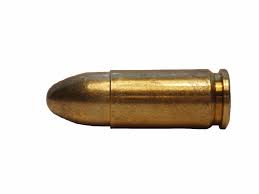 gun. The round or the cartridge is what’s loaded in the magazine. Do find out the size of magazines available for your protagonist’s weapon.
Gun enthusiasts have very specific meanings for the terms accuracy and precision. If you plan to use either term in connection with guns, be careful. Precision means a tight bullet pattern. You shoot four rounds, and they’re grouped together. Accuracy means hitting the desired target. You can be precise without being accurate, and accurate without being precise. Don’t blame me. I didn’t make this up.
A semi-automatic handgun is very different from a revolver. Figure out the differences – and don’t mix up the two.
Learn how it works
My HK.40 has a safety that I can push with my thumb when holding the gun. It will keep the gun from firing. There is no similar type of safety on a Glock. I’ve seen references in books to a safety on a Glock. Hmmm. No.
Glocks do have a mini-trigger safety – that I’ve read about, but never tried. Kolya is staying with the HK .40 – because I’m sure of how it works.
For a semi-automatic weapon to fire, there has to be a round in the chamber. You can snap the slide to bring a round into the chamber. However, once the gun has been fired, the next round moves automatically into the chamber. It’s one of the ways people kill themselves. They take the magazine out and assume the gun is unloaded. It’s not. It still has one round.
I remember reading a book where the author didn’t know that. The villain had just shot one person with a semi-automatic pistol. Somehow the hero managed to get the magazine out of the gun, and when the villain pulled the trigger against the hero’s chest, nothing happened.
Sigh. Roll eyes.
Don’t do stupid stuff
Don’t have your protagonist stick his gun in the back of his pants. Think about it. The whole purpose of having a gun is to be able to quickly protect yourself from a deadly threat. How fast can you get something out of the back of your pants? Try it. You can conceal a gun with a loose shirt or sweater on your hip perfectly well. You can also use a smaller gun that would fit in a pocket. In either case, it would be a lot easier to grab should it be needed.

You can also shoot yourself in the ass - which leads me to my next bit of advice.
Don’t have him stick it down the front of his pants. I’ve seen this one on television, and I just cringe. Yes, it does happen. Idiots do shoot their personal parts off. Almost a Darwin award – or whatever the equivalent would be for a stupid act that doesn’t kill you but keeps you from reproducing.
If your protagonist is in a gunfight, he’ll know how many rounds he has in his gun. He’ll count – if he’s a professional and not just an idiot. Okay, I admit to making this mistake before I took the class. Kolya ran out of ammunition – and was surprised. Wrong. He would know exactly how many rounds he had left. I went back and rewrote the scene.
If someone is firing a heavy gun, like an HK .40, she should use both hands to contain the recoil. It may look cool to shoot one handed, especially with the gun held sideways, but what you gain in cool, you lose in control. Also a mistake I made – and corrected.
Consult an expert – not me
Final piece of advice. Go to a gun store or a firing range. Find out what gun they’d recommend for a particular situation. When I wanted to choose weapons for the bad guys in Ride a Red Horse, the novel I’m currently writing, I visited my local gun shop and asked. I wound up choosing another Heckler and Koch.
Kolya approved.
Good hunting and good luck.
November 1, 2016
POWERFUL, PRICY, & ... DUMB?
 The U.S. Pentagon
By Gayle Lynds. This is a true story that's stayed with me for years. Why? Not only because it's crazy, and funny, and an example of political, military, and corporate hubris run amok, but also because I've never been able to fit it into one of my novels. I'm thrilled at last to share it with you....
Back in the 1970s during the height of the Cold War, fear of a hot war with the Soviet Union was realistic and terrifying. The Pentagon decided we needed a reliable way to secretly test our latest weapons against theirs. Thus was born the Foreign Materiel Acquisition program — FMA — with a walloping annual allocation of some $100 million from the Pentagon’s black budget, no questions asked.
FMA asked a few private U.S. companies with intelligence ties to set up dummy accounts in the same Beltway bank FMA was using. Then FMA went through the companies to hire foreign — not U.S. — arms traffickers so they could dodge the Foreign Corrupt Practices Act, which forbids Americans from bribing foreign officials. The bank transactions were efficient — and untraceable. The clandestine program to acquire Communist weapons was a fast success.
Meanwhile the U.S. Army had contracted for a cutting-edge antiaircraft cannon that was expected to become the mainstay of defense against Soviet missile-firing helicopters and close air-support fighters. It was called the Sergeant York or DIVAD, for Division Air Defense. With laser rangefinders and computer-controlled guidance, the Sergeant York was hailed as “the most sophisticated piece of equipment ever to roll onto a battlefield.”
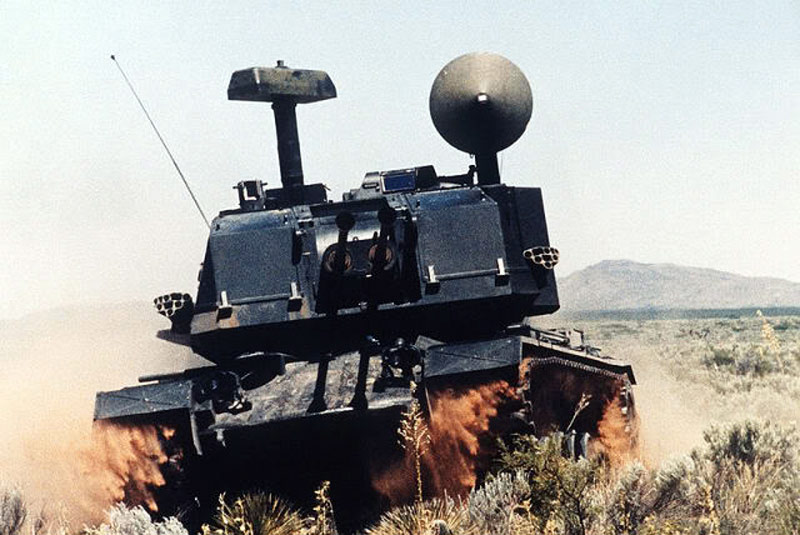 DIVAD, or the Sergeant York
Although there were rumors the Sergeant York was defective, the Pentagon remained enthusiastic. So much so that it decided it needed to acquire a challenging target against which to prove the futurist U.S. machine was worth its sky-rocketing costs.
So FMA hired one of its underworld arms brokers — allegedly the notorious Ernst Werner Glatt, ex Nazi, gunrunner, and CIA asset for some 40 years. Glatt not only managed to steal a new Soviet attack helicopter off the factory floor, a stunning feat in itself, but he also smuggled it successfully out of that fortress country and into the United States, giving the Pentagon the perfect aircraft on which to test the Sergeant York.
The Pentagon sent out invitations to military and political VIPs. Unfortunately, the test went poorly, showing the Sergeant York had problems with its radar and aim. There was also the embarrassing discovery that its guns couldn't fire as far as the Soviet chopper’s could. Then the Sergeant York's computers malfunctioned, and the canon swung away from the target and toward the reviewing stands. The generals and experts ducked and ran.
[image error] Caspar Weinberger
To make matters worse, a fan installed in the portable toilet turned on to blow odors away. The Sergeant York’s guns mistook the fan’s noise for that of a helicopter’s whirling rotors. The big machine rotated on its chassis, aimed, and blasted the outhouse into oblivion. No one was seriously injured. The loss in toilet paper was high.
The next year, after more than $1 billion had been spent developing the Sergeant York, Defense Secretary Caspar Weinberger killed it.
Still, the dramatic heist of the Soviet war bird was a blue ribbon for FMA, endorsing its worth. Over the years since, the shadowy program has continued to deliver secret armaments stolen or bought from enemies and friends alike, coasting past revelations of its alleged financial waste and criminal acts.
Today, FMA thrives and remains little known. But that’s because it’s still black, still subversive — and even more powerful.
With this post I begin the next series of Rogue stories. The topic is “Tools of the Trade” — disguises, weapons, tradecraft, you get the idea. To subscribe, just click here.
Do you have any favorite Cold War stories? Please share!
October 30, 2016
FRIGHT NIGHT
by Chris Goff
 Carved by Chris GoffI've never been really big on Halloween. Suffice it to say, I grew up on a mountain in Colorado with only two other houses around--and they were filled with old people. Any trick-or-treating I did required my mom or dad to bundle me into the car and drive me around. On top of it all, I can't remember a Halloween where my costume wasn't ruined by the need to wear long-johns and a coat. Imagine a genie or princess wearing heavy tights and a parka. Though, I have to admit, I once won a box camera in the Mountain Pharmacy costume contest dressed as an Indian maiden. I wore my Campfire Grills uniform with a black wig braided with two braids and my moccasins.
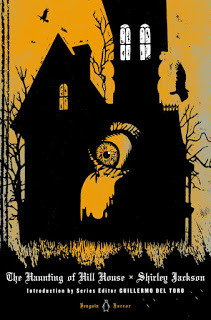 But prize-winning contests and all, most of my Halloweens were spent at home watching horror movies with one or two friends. My all time favorite was The Haunting of Hill House based on the 1959 novel by Shirley Jackson. The novel was a Finalist for the National Book Award, and if you haven't read the book or seen the movie, you should consider it! Stephen King provides a lengthy review of The Haunting of Hill House in his book Danse Macabre, a non-fiction review of the horror genre, and cites the book as one of the finest horror novels written in the 20th century.
The book was adapted for the movies twice—once in 1963 and once in 1999—both times under The Haunting. The 1963 version is a relatively faithful adaptation (the other isn't) that has reached cult status. Martin Scorsese placed it on his list of the 11 scariest horror films of all time and, to this day, it scares the crap out of me. I'm...well, suffice it to say I'm getting older, but if I wake up with any appendage hanging off the side of the bed, I freak! It's sort of like how The Exorcist ruined Ouija Boards for most of my generation.
That's not to say I never dressed up, or helped my children dress up for Halloween. I like to think I'm pretty creative! It's a trait I've instilled in many of my children. Here are a few of the examples of Goff Family members decked out for Halloween.
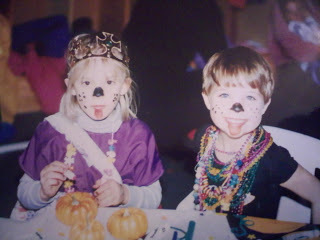
Addie (on the right) was the puppy Queen, pictured here with one of her subjects, her good friend, Megan,
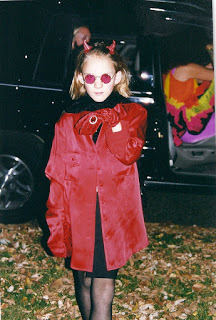
while here she was a little Devil.
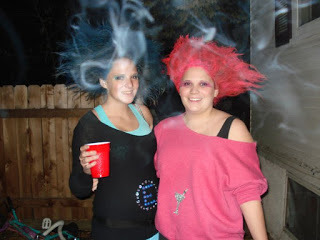
Here Danielle convinced her to dress up as a Troll and come up for college Halloween party at CSU. The wispy smoke effect is actually odd lights on the negative, courtesy of the ghost that haunted Danielle's house. (No kidding!! We had to call in Ghost Busters, who monitored the situation, and then declared the house haunted and left!)
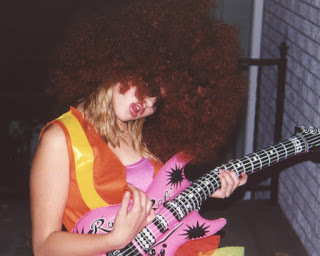
In this picture, I'm not sure if Mardee's supposed to be Carrot Top or just a rocker,
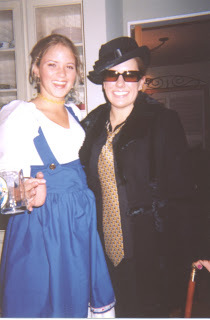
but I know she's St. Pauli's Girl here, as I made the costume.
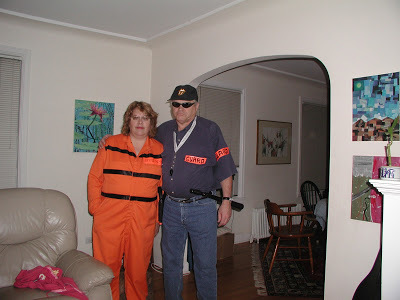
And finally, on the rare occasion that Wes and I dressed up for Halloween and attended a costume party, we went as—you guessed it—Martha Stewart and her prison guard. Note: I looked for a picture of me in my favorite costume of all time, and I couldn't find it. In college, I once went to a party dressed as Pinocchio. I wore the Lederhosen I bought traveling in Germany and rigged a nose I could actually make grow. I told all kinds of lies that night—in-training to be a writer.
What was your favorite horror novel, or movie, or Halloween costume? Please share!
 Carved by Chris GoffI've never been really big on Halloween. Suffice it to say, I grew up on a mountain in Colorado with only two other houses around--and they were filled with old people. Any trick-or-treating I did required my mom or dad to bundle me into the car and drive me around. On top of it all, I can't remember a Halloween where my costume wasn't ruined by the need to wear long-johns and a coat. Imagine a genie or princess wearing heavy tights and a parka. Though, I have to admit, I once won a box camera in the Mountain Pharmacy costume contest dressed as an Indian maiden. I wore my Campfire Grills uniform with a black wig braided with two braids and my moccasins.
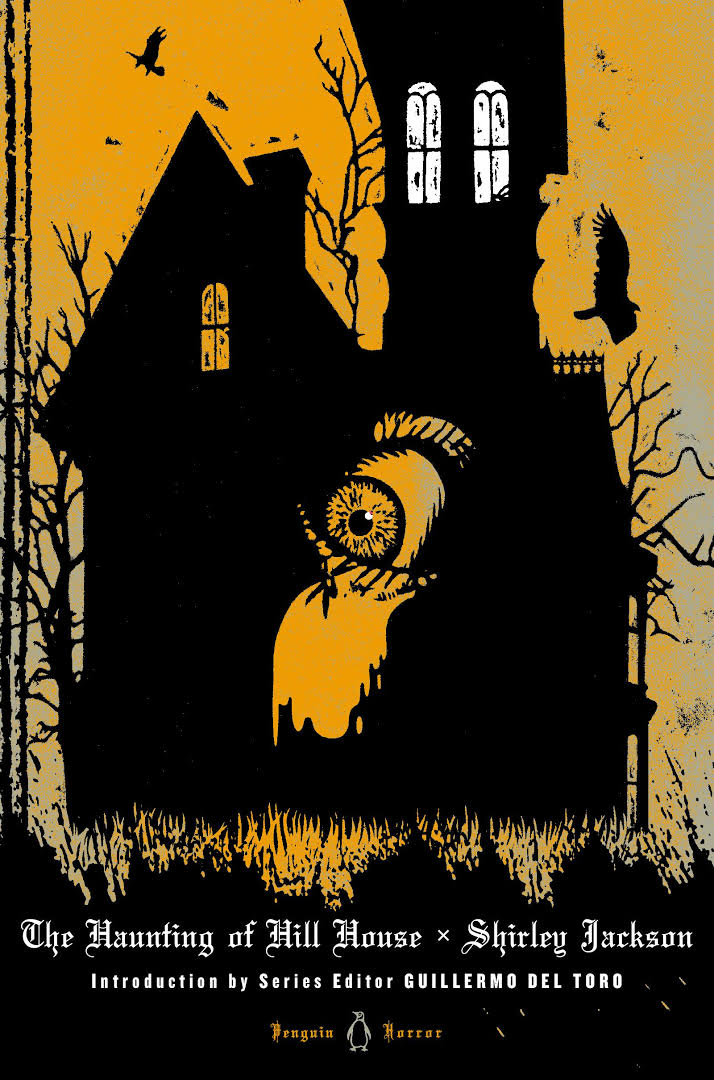 But prize-winning contests and all, most of my Halloweens were spent at home watching horror movies with one or two friends. My all time favorite was The Haunting of Hill House based on the 1959 novel by Shirley Jackson. The novel was a Finalist for the National Book Award, and if you haven't read the book or seen the movie, you should consider it! Stephen King provides a lengthy review of The Haunting of Hill House in his book Danse Macabre, a non-fiction review of the horror genre, and cites the book as one of the finest horror novels written in the 20th century.
The book was adapted for the movies twice—once in 1963 and once in 1999—both times under The Haunting. The 1963 version is a relatively faithful adaptation (the other isn't) that has reached cult status. Martin Scorsese placed it on his list of the 11 scariest horror films of all time and, to this day, it scares the crap out of me. I'm...well, suffice it to say I'm getting older, but if I wake up with any appendage hanging off the side of the bed, I freak! It's sort of like how The Exorcist ruined Ouija Boards for most of my generation.
That's not to say I never dressed up, or helped my children dress up for Halloween. I like to think I'm pretty creative! It's a trait I've instilled in many of my children. Here are a few of the examples of Goff Family members decked out for Halloween.

Addie (on the right) was the puppy Queen, pictured here with one of her subjects, her good friend, Megan,

while here she was a little Devil.

Here Danielle convinced her to dress up as a Troll and come up for college Halloween party at CSU. The wispy smoke effect is actually odd lights on the negative, courtesy of the ghost that haunted Danielle's house. (No kidding!! We had to call in Ghost Busters, who monitored the situation, and then declared the house haunted and left!)

In this picture, I'm not sure if Mardee's supposed to be Carrot Top or just a rocker,
but I know she's St. Pauli's Girl here, as I made the costume.

And finally, on the rare occasion that Wes and I dressed up for Halloween and attended a costume party, we went as—you guessed it—Martha Stewart and her prison guard. Note: I looked for a picture of me in my favorite costume of all time, and I couldn't find it. In college, I once went to a party dressed as Pinocchio. I wore the Lederhosen I bought traveling in Germany and rigged a nose I could actually make grow. I told all kinds of lies that night—in-training to be a writer.
What was your favorite horror novel, or movie, or Halloween costume? Please share!
October 29, 2016
THE GLAMOROUS LIFE OF AN AUTHOR
by Sonja Stone
True Confessions from the Trenches.
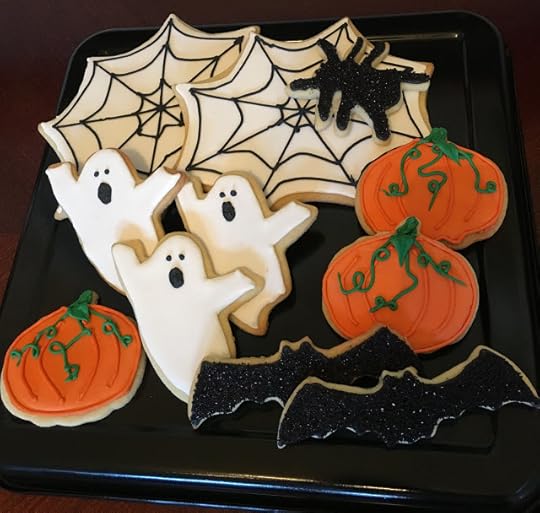 I do everything obsessively, including decorating cookies.As a child, Halloween was my favorite holiday (second only to Christmas). I enjoyed dressing in disguise, stealing through the neighborhood incognito (spy fanatic, remember?). But my love of costumes paled compared to my love of free, unlimited candy. That’s right: I was a sugar addict. Every year I’d collect my share in a pillowcase, take it all home, dump it on the living room floor for inspection. Discard any open packages, trade with my sister: my smarties for her peanut butter cups. Then I’d sneak behind the couch and stuff myself until my parents realized I’d gone missing.
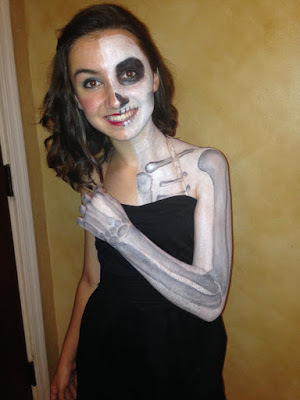 I'm a cookie artist AND a makeup artist!As an adult, I loathe Halloween. I try to maintain a healthy lifestyle, and I’ve never liked the idea of hooligans running round the city all night. I turn out my lights and set a huge bowl of candy on the front porch with a sign that reads, “Please take one piece only!” Then I watch through the peephole as the very first trick-or-treaters dump the entire bowl into their knapsacks. I’m the crotchety old man of the neighborhood.
Thanksgiving, however, is another story entirely. It’s the one day a year I host an event (introvert). The same three families have been gathering at my house to celebrate Thanksgiving for over a decade. I’m a traditionalist: turkey, gravy, garlic-roasted mashed potatoes, broccoli casserole (more cheese and Ritz crackers than actual vegetables), sweet potatoes with marshmallows and brown sugar, cranberry sauce. Then the deserts: apple pie, pumpkin pie made with fresh roasted pumpkins, pumpkin creme brûlée, pumpkin ice cream (made from scratch), and a pear and cranberry crisp.
Interestingly, every year I have a major writing deadline that falls within days of Thanksgiving. It never fails. And in case I haven’t mentioned it: I’m not much of a multi-tasker.
So back to the headline: The Glamorous Life of an Author.
I just handed in the first draft of my manuscript (the sequel to DESERT DARK). For the three weeks or so leading up to the submission, I went completely MIA. This was my schedule: wake up, drink coffee, start writing, drink more coffee, write, forage for food (not homemade), write, drink iced tea, write, write, write. Notice what’s missing: doing the laundry, exercising, returning phone calls, doing dishes, posting on social media, being a productive member of society in any way/shape/form. I’m not gonna lie to you: it got pretty ugly.
So the past few days (since the glorious moment I hit ‘send’), I’ve spent catching up on life. A dentist appointment, grocery shopping, paying bills, unpacking boxes—from my move in JUNE. My iPhone reports that I have 19 new voicemails, 12 unread text messages, and 1,543 unopened emails.
Here’s what I don’t understand: every single one of my blog sisters seems to manage writing, family life, socializing, and leisure time while STILL making deadlines and authoring amazing thrillers.
As we enter into the holiday season (though at 91 degrees here in Phoenix, it doesn’t feel like fall), I would like to state publicly my End-of-Year-Resolution (that’s not a thing; I just made it up): For the remaining two months of 2016, I will strive for more balance in my life. Because I’ve discovered that all work and no play might make Jack a dull boy, but it makes Sonja a raving lunatic.
What about you? Does anyone else struggle with the work-life balance (please say yes)? Leave your confessions in the comment section below!
True Confessions from the Trenches.
 I do everything obsessively, including decorating cookies.As a child, Halloween was my favorite holiday (second only to Christmas). I enjoyed dressing in disguise, stealing through the neighborhood incognito (spy fanatic, remember?). But my love of costumes paled compared to my love of free, unlimited candy. That’s right: I was a sugar addict. Every year I’d collect my share in a pillowcase, take it all home, dump it on the living room floor for inspection. Discard any open packages, trade with my sister: my smarties for her peanut butter cups. Then I’d sneak behind the couch and stuff myself until my parents realized I’d gone missing.
 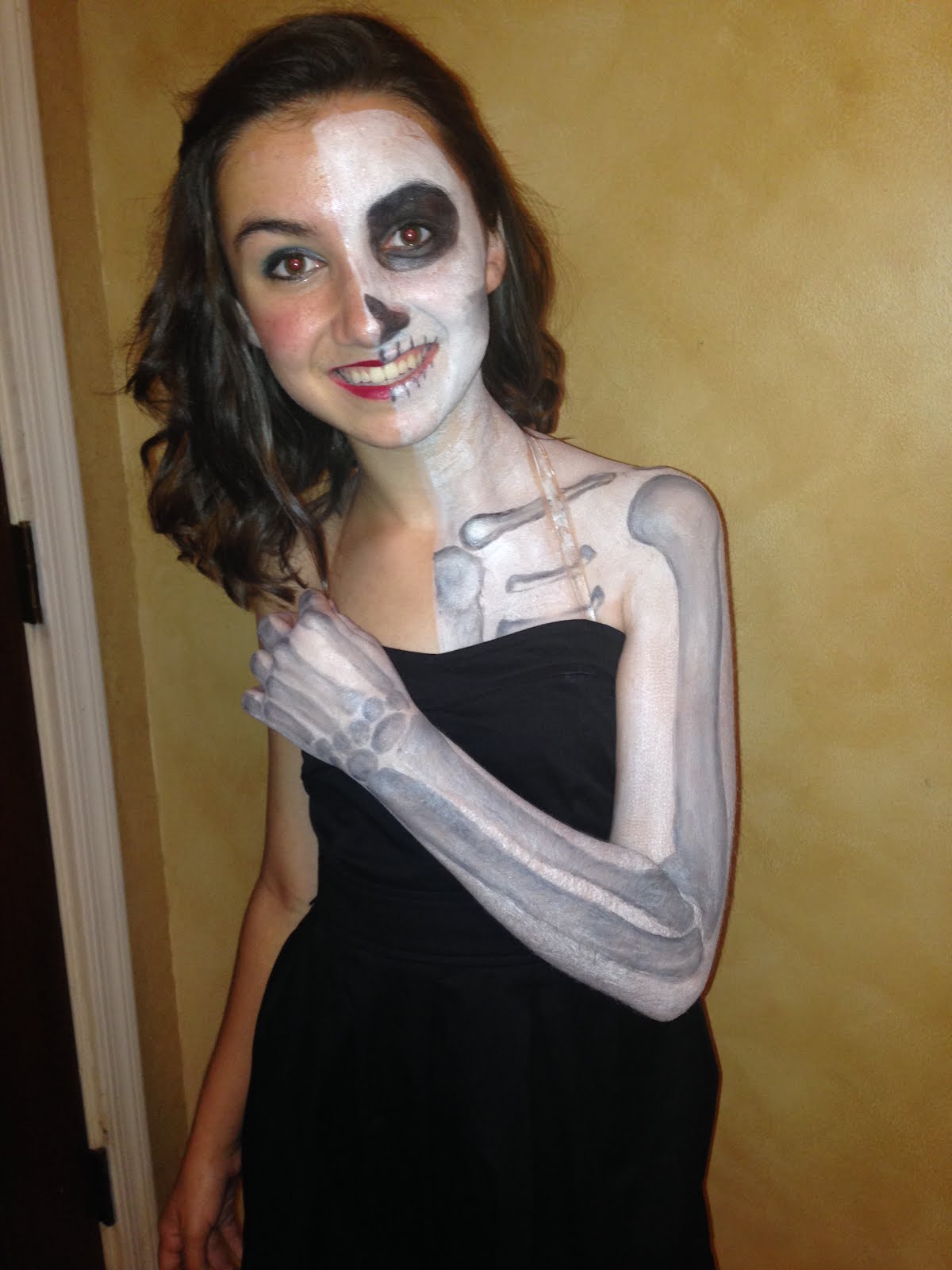 I'm a cookie artist AND a makeup artist!As an adult, I loathe Halloween. I try to maintain a healthy lifestyle, and I’ve never liked the idea of hooligans running round the city all night. I turn out my lights and set a huge bowl of candy on the front porch with a sign that reads, “Please take one piece only!” Then I watch through the peephole as the very first trick-or-treaters dump the entire bowl into their knapsacks. I’m the crotchety old man of the neighborhood.
Thanksgiving, however, is another story entirely. It’s the one day a year I host an event (introvert). The same three families have been gathering at my house to celebrate Thanksgiving for over a decade. I’m a traditionalist: turkey, gravy, garlic-roasted mashed potatoes, broccoli casserole (more cheese and Ritz crackers than actual vegetables), sweet potatoes with marshmallows and brown sugar, cranberry sauce. Then the deserts: apple pie, pumpkin pie made with fresh roasted pumpkins, pumpkin creme brûlée, pumpkin ice cream (made from scratch), and a pear and cranberry crisp.
Interestingly, every year I have a major writing deadline that falls within days of Thanksgiving. It never fails. And in case I haven’t mentioned it: I’m not much of a multi-tasker.
So back to the headline: The Glamorous Life of an Author.
I just handed in the first draft of my manuscript (the sequel to DESERT DARK). For the three weeks or so leading up to the submission, I went completely MIA. This was my schedule: wake up, drink coffee, start writing, drink more coffee, write, forage for food (not homemade), write, drink iced tea, write, write, write. Notice what’s missing: doing the laundry, exercising, returning phone calls, doing dishes, posting on social media, being a productive member of society in any way/shape/form. I’m not gonna lie to you: it got pretty ugly.
So the past few days (since the glorious moment I hit ‘send’), I’ve spent catching up on life. A dentist appointment, grocery shopping, paying bills, unpacking boxes—from my move in JUNE. My iPhone reports that I have 19 new voicemails, 12 unread text messages, and 1,543 unopened emails.
Here’s what I don’t understand: every single one of my blog sisters seems to manage writing, family life, socializing, and leisure time while STILL making deadlines and authoring amazing thrillers.
As we enter into the holiday season (though at 91 degrees here in Phoenix, it doesn’t feel like fall), I would like to state publicly my End-of-Year-Resolution (that’s not a thing; I just made it up): For the remaining two months of 2016, I will strive for more balance in my life. Because I’ve discovered that all work and no play might make Jack a dull boy, but it makes Sonja a raving lunatic.
What about you? Does anyone else struggle with the work-life balance (please say yes)? Leave your confessions in the comment section below!
October 27, 2016
GROWN-UP TREATS FOR THE FALL SEASON
 Jessica Emily Marx for The New York TimesBy Francine Mathews
I've never been a girl who loves Halloween. But I'm totally infatuated with autumn: crisp walks, brilliant blue skies here in Colorado, the smell of decaying leaves and cooling dirt as the dogs stir up the undergrowth with their paws. I love the way Nature gets down to the bare bones of things. Tree branches, liminal against the distant mountains. The last roses dwindling to hips and swelling against the coming cold.
And one of the best things about the shift in season is the change in cravings and the way I think about food. The way I browse through grocery stores and plan menus. I eat simply in summer--everything fresh, light, often cold or raw. White or rose, instead of red wine. But when the temperatures drop, I suddenly want comfort. For me, that takes the form of roasted cauliflower with parmesan and thyme; chicken curry; butternut squash soup with bacon and kale; beef ragout and pappardelle.
Or the salted caramel brownies pictured above.
This is not my recipe. It's Julia Moskin's from the New York Times Cooking section, which is one go-to source of inspiration in any season of the year. These brownies take time. They involve careful attention, because homemade caramel is a challenge if you've never done it before, but the result is so hands-down enslaving you'll never bother with another brownie recipe again. I made them to bring to my book group this evening, but I ate one for breakfast.
BREAKFAST.
They'd be a great substitute for dinner, too, with a glass of bourbon or tawny port by the fire.
All of which is not to say that I turn out the lights and draw the shades when the Trick-or-Treaters stop by. I skip the fake witches and trailing spider webs and plastic gravestones on the front lawn (staples of our Denver neighborhood), but I set out some fall color in the form of pumpkins and flowers, another grown-up treat.

 I have a thing about carving pumpkins, too. If you're going to go to all the trouble of scooping out those slimy seeds, why not have some fun with it? Over the years I've saved pictures of my favorites. There was the mummy. The cat arching against the moon. The witch flying into the stormy sky. And of course, the Scary Airedale. I downloaded a template for that one from the internet. I'm sure your pet is out there somewhere, too, waiting to be immortalized in a hollow burning gourd.What's your grown-up treat for autumn? Have a wonderful fall, everyone!
Cheers,
Francinewww.francinemathews.com
October 25, 2016
Ghosts and Monsters Oh My!
by Jamie Freveletti
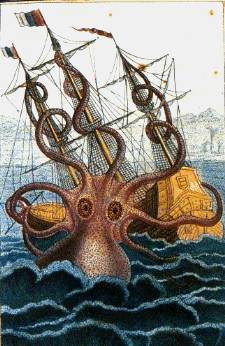 Kraken, by Pierre Denys de Montfort
Halloween is upon us, and our topic today is Ghosts and Monsters. I'll admit, I love a good ghost story and I also love a good mystery. Not surprising, huh? But when you have a mystery solved as recently as 2013, well that's the best of all possible worlds!
What surprises me about ghosts and monsters is how similar the stories are throughout history and between far flung cultures. Either humans are hard wired the world over to imagine the same things, or these things actually exist, but we haven't proven them.
One of my favorites is MOTHMAN. This guy scares the hell out of everyone who claims to have seen it. And why wouldn't it? First seen in 1966 in West Virginia and then later by a couple near a TNT plant, it is said to look like a man with black wings, red eyes and brown skin. The sightings tapered off in 1967, but returned again in 2011 when a man claimed to see one near the Fukushima nuclear plant that melted down after the tsunami. Since the Mothman is said to be a harbinger of death, such a sighting seems to be laced with fear about the very real chance that the plant would explode.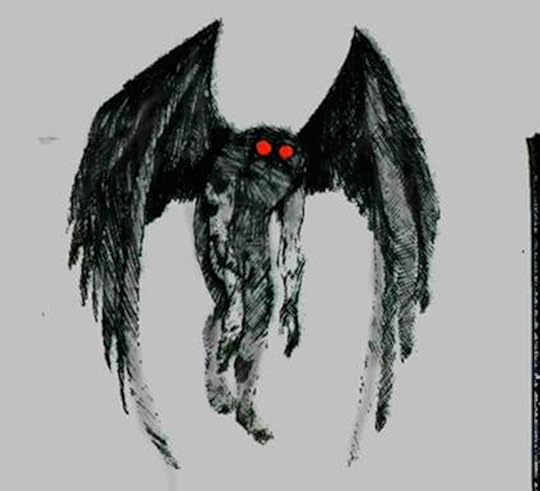 MothmanAs for ghost photos, the best are taken before photo shop became an easy way to create eerie images. One of the most interesting is The Brown Lady of Raynham Hall. As the story goes, the ghost is of Lady Charles Townshend, imprisoned in Raynham Hall by her husband for a suspected infidelity. The famous photo was taken by journalists in 1936 who were photographing the house for a magazine story. Present day photo experts say that this is simply a double exposure, but the two that shot the image insisted that they saw the ghost. Several people over the course of years also claimed to have seen her. One, a novelist named Captain Frederick Marryat stayed at the house around 1835 and claimed that he saw her glide by holding a lantern. He jumped from behind a door and shot at her, and insisted that the bullet passed right through. (You have to love a novelist with an itchy trigger finger, don't you?)
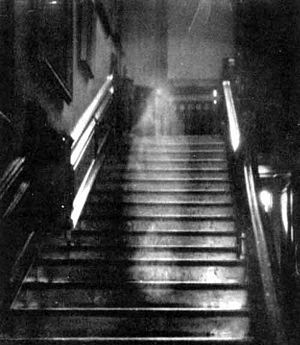 The Brown Lady of Raynham Hall
Mariners had the best tales of strange beasts and scary monsters. From mermaids, to the Sirens to the Kraken, a giant squid that grabs at ships, those mariners had an interesting life. Most of the mermaid stories are explained by experts as a sort of mirage imagined by sailors after they had spent long months at sea and when drinking mistook a manatee for a beautiful woman. Now, I ask you, would you mistake these two, no matter how drunk you were?

 I thought not. Whatever those mariners saw, it wasn't a manatee, in my opinion. And finally, the mariners were right in those Kraken claims. In 2013, a group of scientists, including Edith Widder, took an actual photo of a giant squid.
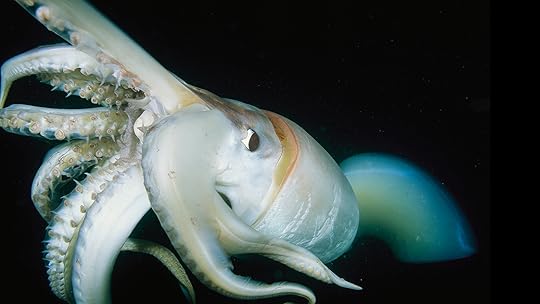 Giant squid about the size of a two story houseSo before you rule out mermaids, let's remember that hundreds of years ago those sailors were right. Makes you wonder, doesn't it?
HAPPY HALLOWEEN!
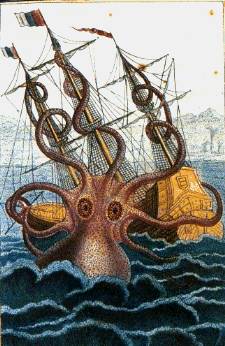 Kraken, by Pierre Denys de Montfort
Halloween is upon us, and our topic today is Ghosts and Monsters. I'll admit, I love a good ghost story and I also love a good mystery. Not surprising, huh? But when you have a mystery solved as recently as 2013, well that's the best of all possible worlds!
What surprises me about ghosts and monsters is how similar the stories are throughout history and between far flung cultures. Either humans are hard wired the world over to imagine the same things, or these things actually exist, but we haven't proven them.
One of my favorites is MOTHMAN. This guy scares the hell out of everyone who claims to have seen it. And why wouldn't it? First seen in 1966 in West Virginia and then later by a couple near a TNT plant, it is said to look like a man with black wings, red eyes and brown skin. The sightings tapered off in 1967, but returned again in 2011 when a man claimed to see one near the Fukushima nuclear plant that melted down after the tsunami. Since the Mothman is said to be a harbinger of death, such a sighting seems to be laced with fear about the very real chance that the plant would explode.
 MothmanAs for ghost photos, the best are taken before photo shop became an easy way to create eerie images. One of the most interesting is The Brown Lady of Raynham Hall. As the story goes, the ghost is of Lady Charles Townshend, imprisoned in Raynham Hall by her husband for a suspected infidelity. The famous photo was taken by journalists in 1936 who were photographing the house for a magazine story. Present day photo experts say that this is simply a double exposure, but the two that shot the image insisted that they saw the ghost. Several people over the course of years also claimed to have seen her. One, a novelist named Captain Frederick Marryat stayed at the house around 1835 and claimed that he saw her glide by holding a lantern. He jumped from behind a door and shot at her, and insisted that the bullet passed right through. (You have to love a novelist with an itchy trigger finger, don't you?)
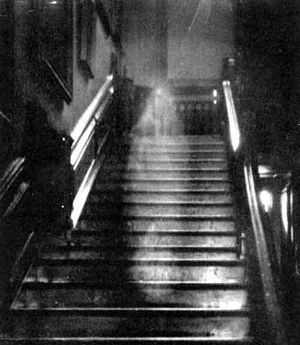 The Brown Lady of Raynham Hall
Mariners had the best tales of strange beasts and scary monsters. From mermaids, to the Sirens to the Kraken, a giant squid that grabs at ships, those mariners had an interesting life. Most of the mermaid stories are explained by experts as a sort of mirage imagined by sailors after they had spent long months at sea and when drinking mistook a manatee for a beautiful woman. Now, I ask you, would you mistake these two, no matter how drunk you were?
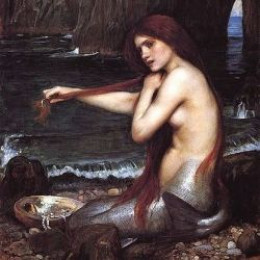
 I thought not. Whatever those mariners saw, it wasn't a manatee, in my opinion. And finally, the mariners were right in those Kraken claims. In 2013, a group of scientists, including Edith Widder, took an actual photo of a giant squid.
 Giant squid about the size of a two story houseSo before you rule out mermaids, let's remember that hundreds of years ago those sailors were right. Makes you wonder, doesn't it?
HAPPY HALLOWEEN!



![[image error]](https://3.bp.blogspot.com/-DC4clhwDy5k/WBg7qcshpGI/AAAAAAAAAzE/RF5BkJ5vH8ktLisK-mE3Uz7dv44SnI6_QCEw/s1600/Caspar_Weinberger_official_photo.jpg)