Chris Goff's Blog, page 53
February 17, 2017
The Art of Play
by Chris Goff
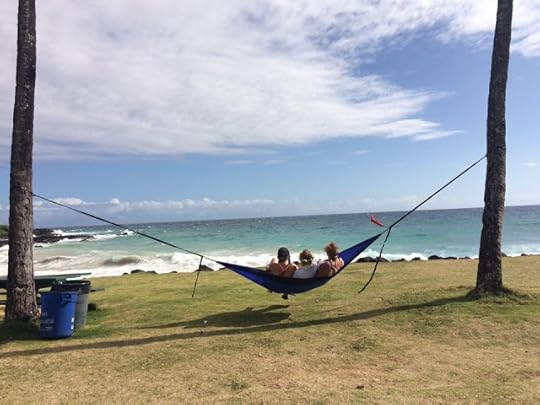 Hammocking at Brenneke's. We saw multiple whales breaching that day! Amazing!My husband and I are just back from Kaua'i and our daughter Danielle's wedding, and I thought I'd share some of the photos. My daughter and her new husband live on island, so for them this is home. For their family and friends from the mainland (to put things in perspective, the bride has five siblings), it's called "a destination wedding." As you can see from the photos, we made the most of it!
 Ziplining with Outfitters Kaua'i (the bride's employer).
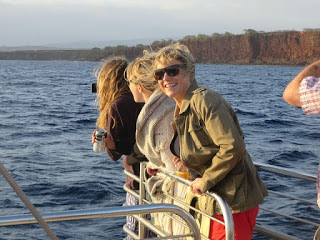 Whale-watching with Blue Dolphin. We saw lots of tail.
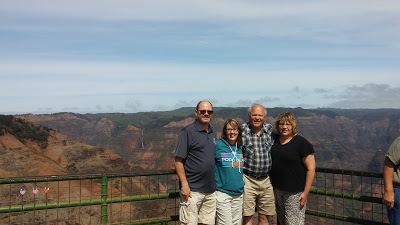 The top of Waimea Canyon.
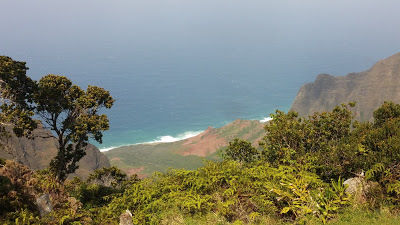 and the view of the Napali Coast
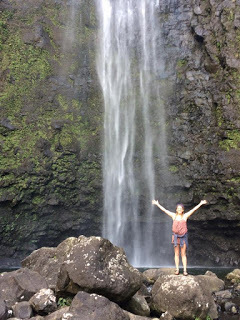 Waterfalls
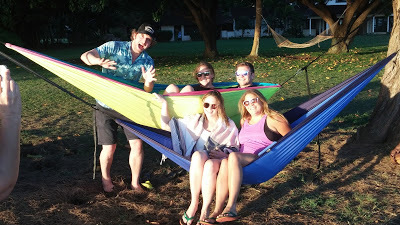 Hammocking at Waimea Plantations (best "hotel" ever).
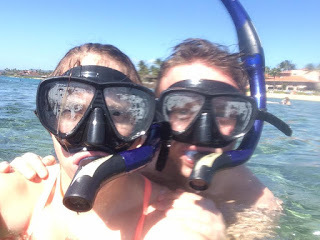 Snorkling at Poipu Beach
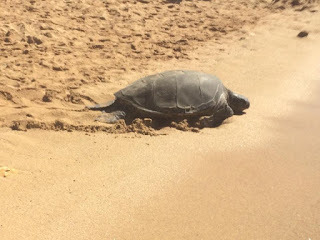 Turtle heading for the snorklers. Some were lucky enough to swim with them.
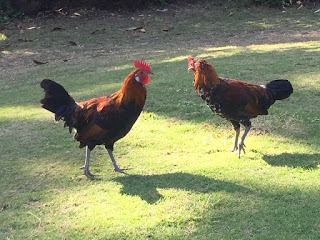 Chickens on the beach--only in Kaua'i
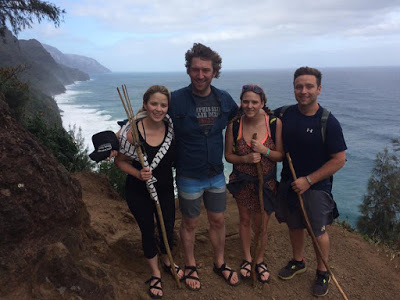 Hiking the Kalalau Trail to the Napali Coast.
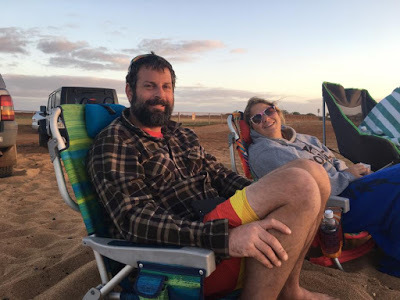 The bride and groom in their natural habitat--Salt Pond Beach.
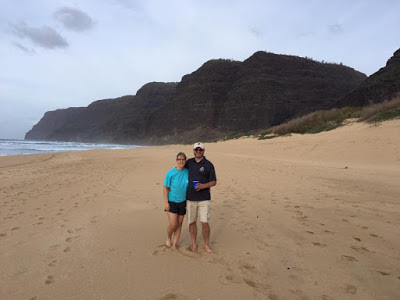 The favorite brother (the only son) on Polihale Beach--the farthest south you can go.
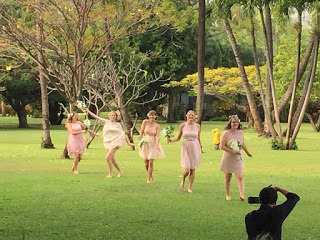 The bridesmaids(a sister-in-law and four sisters) dancing barefoot to the wedding.
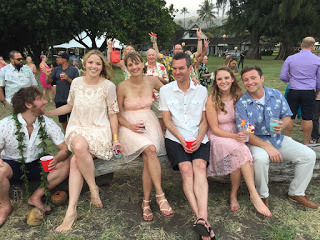 The sunset reception, followed by dinner under the tent.
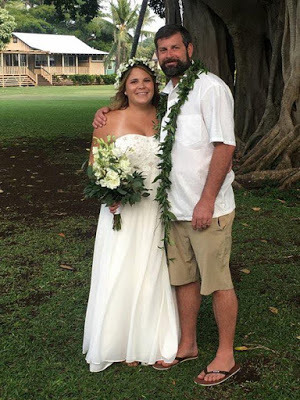 Mr. and Mrs. DavisNow, with the trip behind us it's time to get back to work. Please check back on Sunday for my regular post. Mahalo and Aloha!
 Hammocking at Brenneke's. We saw multiple whales breaching that day! Amazing!My husband and I are just back from Kaua'i and our daughter Danielle's wedding, and I thought I'd share some of the photos. My daughter and her new husband live on island, so for them this is home. For their family and friends from the mainland (to put things in perspective, the bride has five siblings), it's called "a destination wedding." As you can see from the photos, we made the most of it!Ziplining with Outfitters Kaua'i (the bride's employer).
 Whale-watching with Blue Dolphin. We saw lots of tail.
 The top of Waimea Canyon.
 and the view of the Napali Coast
 Waterfalls
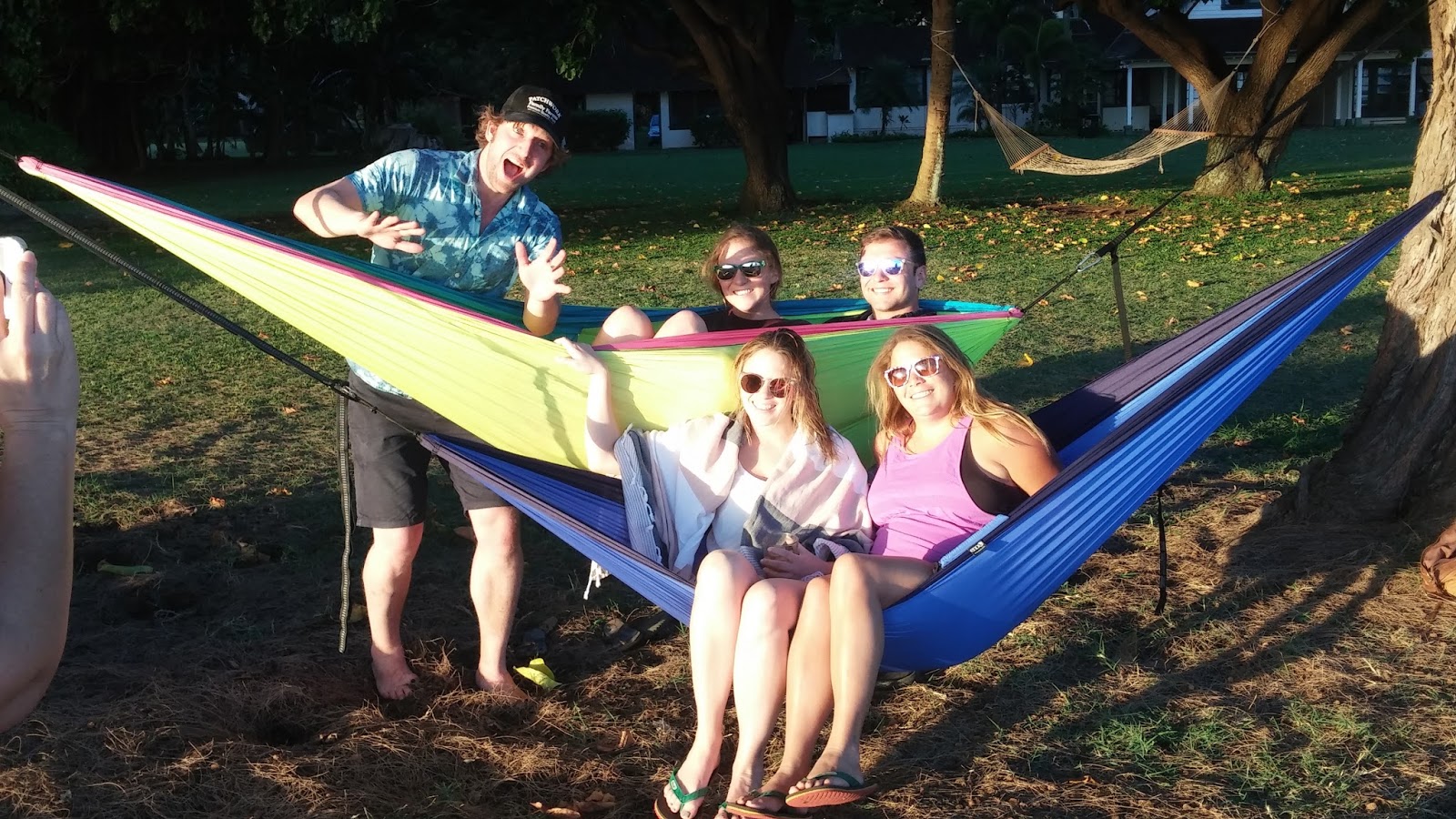 Hammocking at Waimea Plantations (best "hotel" ever).Snorkling at Poipu Beach
 Turtle heading for the snorklers. Some were lucky enough to swim with them.
 Chickens on the beach--only in Kaua'i
 Hiking the Kalalau Trail to the Napali Coast.
 The bride and groom in their natural habitat--Salt Pond Beach.
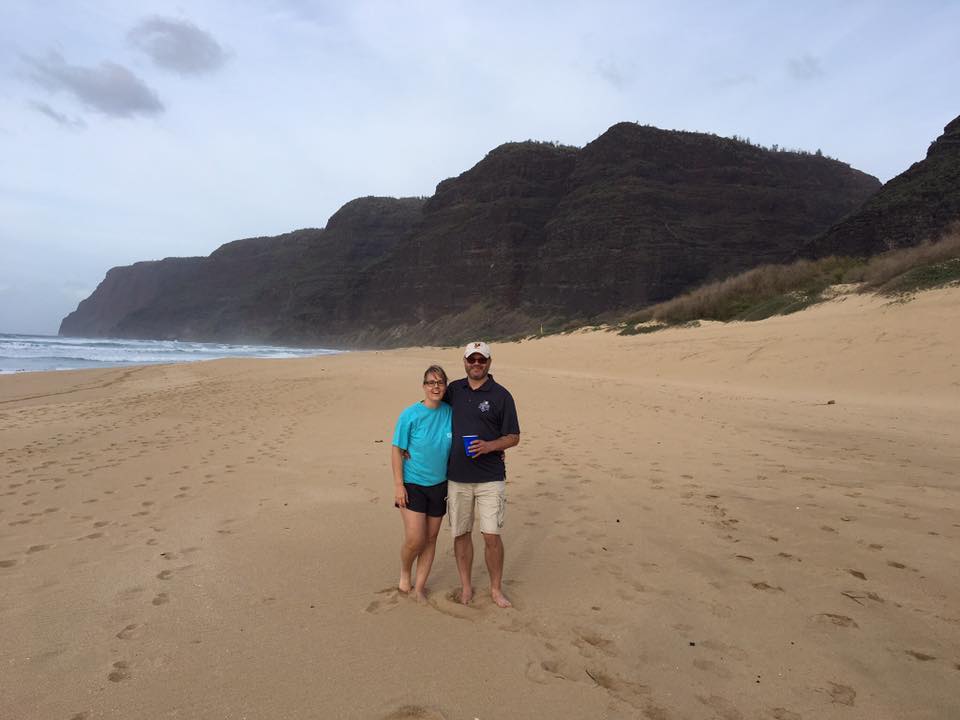 The favorite brother (the only son) on Polihale Beach--the farthest south you can go.
 The bridesmaids(a sister-in-law and four sisters) dancing barefoot to the wedding.
 The sunset reception, followed by dinner under the tent.
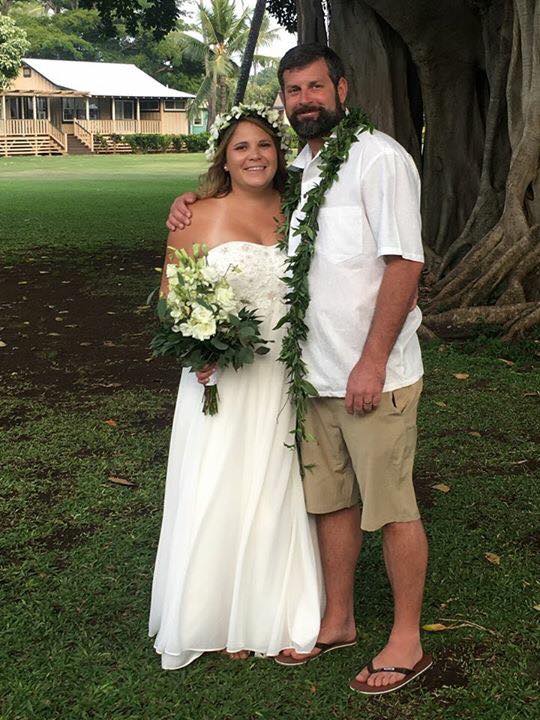 Mr. and Mrs. DavisNow, with the trip behind us it's time to get back to work. Please check back on Sunday for my regular post. Mahalo and Aloha!

February 13, 2017
THE BEST VALENTINE'S GIFT IN THE WORLD
by Sonja Stone
An unexamined life is not worth living. --Socrates
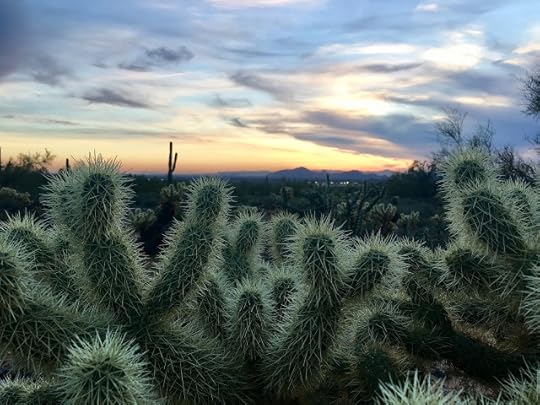 The weekend started with a beautiful evening hike in the McDowell Mountains.PERSONALITIES IN LOVEIn honor of Valentine's Day (a holiday that, as a general rule, I loathe), I'm gonna talk about couples in relationships. Specifically, couples in relationships based on their Enneagram numbers.
For those of you not familiar with the Enneagram, it's basically a system of typing personalities, a little like the Myers-Briggs, which I talked about in WRITING THE YOUNG ADULT THRILLER.
The Enneagram system describes 9 basic personality types. The full test is rather lengthy, but there's a quick version here, if you're interested. If you already know your type, you can read about your personality traits in full on The Enneagram Institute's website. There's a great feature on this site that talks about relationships (specifically, how any two types interact with one another).
As my Valentine's gift, this past weekend my boyfriend treated us to an Enneagram Couples Workshop. We spent 17 hours learning about our personalities, how we interact based on our inherent beliefs and motivations, where our strengths lie and where our blind spots hide. This was a really thoughtful gift. Not only do I love exploring personalities (and talking about myself), but my bf and I got to spend basically the whole weekend together.
Some of you know that I'm not really into "feelings." I'm comfortable with anger, but sadness, vulnerability, tenderness... I don't have a lot of use for those. My boyfriend and I joke that we have reversed gender roles--he's the extroverted feeler and I'm the introverted thinker. Our Enneagram types further confirm this hypothesis: I'm an 8 ("The Challenger"--confrontational, direct) and he's a 2 ("The Helper"--demonstrative, people-pleasing).
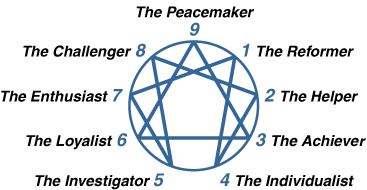 The Enneagram with 9 Basic Types
EVERYTHING IS RESEARCHThe reason I bring this up on a blog authored by eight thriller writers is this: I'm currently working on the sequel to my young adult spy thriller, DESERT DARK, and I've really been struggling with the relationships between the characters. It's an issue I had with the first novel, too. My agent would send back my draft with notes scribbled in the margin: "Okay, the action is great, but what is she feeling here?"
What is she feeling? I really don't know. Does it matter? She's angry--do I care what's underneath? Is it relevant that her anger stems from fear of losing someone she loves? She's pissed and she's got a knife. Sounds like everything's going swimmingly to me!
Of course, I know that it DOES matter. I know that feelings are ALL that matter. I don't know this because it's what I believe; I know it because people who can better express their feelings tell me so. People I respect and seek counsel from, people I love, people I pay $150/hour to listen to me ramble (I don't ramble, I'm very direct. Because I'm an 8 on the Enneagram. Get in, get out, get on with it).
During one of our breaks at the conference, I took a second to jot down the personality type of each of my main characters. I'm really excited to do a little research and see how all of the types interact with one another (admittedly, this may be just another creative procrastination ploy cooked up by my if-you're-not-working-you're-wasting-precious-time brain, but either way, I'll probably learn something, right?).
So back to why I loathe Valentine's Day and the gender reversal thing. My boyfriend says, "What do you want for Valentine's Day?" I say, "Nothing. It's a stupid holiday fabricated by consumerism and does nothing but make people feel bad about their current relationships because it's impossible to live up to the hype." He nods. After a moment of silence I ask, "Um, what do you want for Valentine's Day?" Then he answers the same way that disillusioned lovers have been answering for millennia. "If you loved me, you would know what I want."
FYI, being in love doesn't grant me extrasensory perception.
P.S. THE WEATHER Our topic this past month has been weather and how it weaves its way into fiction. My blog sisters have done a great job exploring this. K.J. Howe talked about self-care in the winter months, Jamie Freveletti ran down a few of the classics inspired by the Dust Bowl, and S. Lee Manning offered practical tips for incorporating weather into your fiction.
I've heard weather and setting should be treated as their own character, but since I can barely eke out an emotion for an actual human, I leave this to the more skilled. Also, I live in Phoenix. It's 70 degrees and sunny. It will BE 70 degrees and sunny until mid-May, at which point the climate will change to 120 and sunny, where it shall remain until late October. Then--you guessed it--70 and sunny. Have you gleaned the pattern?
P.P.S. THE BOYFRIENDFirst of all, for the record, I'm pretty sure he was kidding about that whole if-you-love-me-you'd-know thing. Secondly, I'll admit, I'm thrilled he ignored me when I said not to get a gift. I meant it, and I would've been fine without one, but we had a great (educational) time. In case you're wondering, I got him a gift certificate for a massage and a facial. And filled the empty flower box in front of his house with geraniums, snapdragons, petunias, and alyssum, which really was an act of love, because I think annual flowers are a ridiculous waste of resources. I mean, if they had some medicinal value, sure. But planting something just for the sake of it looking pretty? Something that will die and never come back?
Because of our weekend-long workshop, I understand WHY I think that's ridiculous, and I also understand why my boyfriend thinks such things are a necessity. Apparently, you can teach an old dog new tricks. :)
Do you enjoy Valentine's Day? Are you a romantic like my boyfriend, or a skeptic like me?
photo credit, Enneagram: https://www.enneagraminstitute.com/ho...
An unexamined life is not worth living. --Socrates
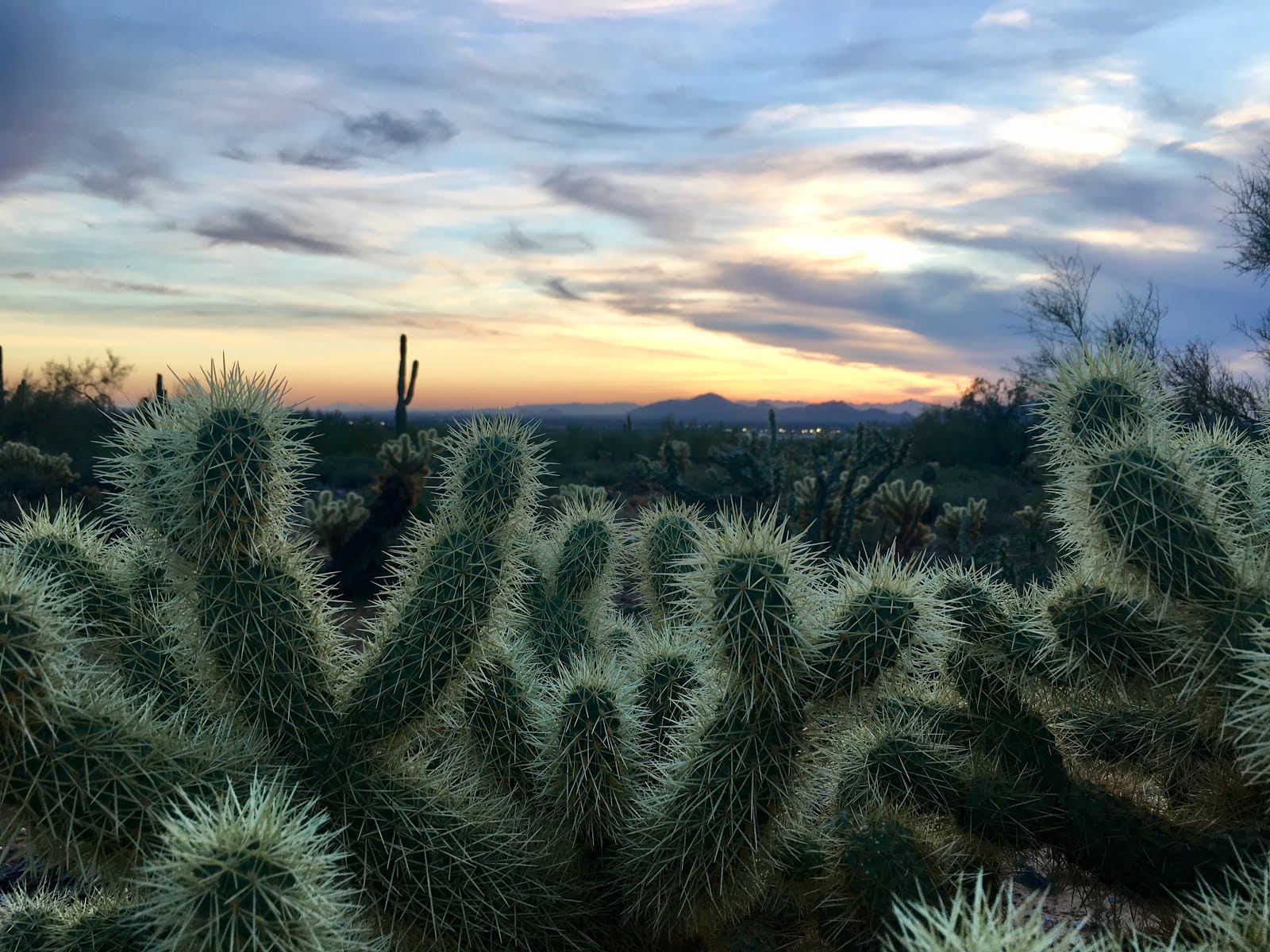 The weekend started with a beautiful evening hike in the McDowell Mountains.PERSONALITIES IN LOVEIn honor of Valentine's Day (a holiday that, as a general rule, I loathe), I'm gonna talk about couples in relationships. Specifically, couples in relationships based on their Enneagram numbers.
For those of you not familiar with the Enneagram, it's basically a system of typing personalities, a little like the Myers-Briggs, which I talked about in WRITING THE YOUNG ADULT THRILLER.
The Enneagram system describes 9 basic personality types. The full test is rather lengthy, but there's a quick version here, if you're interested. If you already know your type, you can read about your personality traits in full on The Enneagram Institute's website. There's a great feature on this site that talks about relationships (specifically, how any two types interact with one another).
As my Valentine's gift, this past weekend my boyfriend treated us to an Enneagram Couples Workshop. We spent 17 hours learning about our personalities, how we interact based on our inherent beliefs and motivations, where our strengths lie and where our blind spots hide. This was a really thoughtful gift. Not only do I love exploring personalities (and talking about myself), but my bf and I got to spend basically the whole weekend together.
Some of you know that I'm not really into "feelings." I'm comfortable with anger, but sadness, vulnerability, tenderness... I don't have a lot of use for those. My boyfriend and I joke that we have reversed gender roles--he's the extroverted feeler and I'm the introverted thinker. Our Enneagram types further confirm this hypothesis: I'm an 8 ("The Challenger"--confrontational, direct) and he's a 2 ("The Helper"--demonstrative, people-pleasing).
 The Enneagram with 9 Basic Types
EVERYTHING IS RESEARCHThe reason I bring this up on a blog authored by eight thriller writers is this: I'm currently working on the sequel to my young adult spy thriller, DESERT DARK, and I've really been struggling with the relationships between the characters. It's an issue I had with the first novel, too. My agent would send back my draft with notes scribbled in the margin: "Okay, the action is great, but what is she feeling here?"
What is she feeling? I really don't know. Does it matter? She's angry--do I care what's underneath? Is it relevant that her anger stems from fear of losing someone she loves? She's pissed and she's got a knife. Sounds like everything's going swimmingly to me!
Of course, I know that it DOES matter. I know that feelings are ALL that matter. I don't know this because it's what I believe; I know it because people who can better express their feelings tell me so. People I respect and seek counsel from, people I love, people I pay $150/hour to listen to me ramble (I don't ramble, I'm very direct. Because I'm an 8 on the Enneagram. Get in, get out, get on with it).
During one of our breaks at the conference, I took a second to jot down the personality type of each of my main characters. I'm really excited to do a little research and see how all of the types interact with one another (admittedly, this may be just another creative procrastination ploy cooked up by my if-you're-not-working-you're-wasting-precious-time brain, but either way, I'll probably learn something, right?).
So back to why I loathe Valentine's Day and the gender reversal thing. My boyfriend says, "What do you want for Valentine's Day?" I say, "Nothing. It's a stupid holiday fabricated by consumerism and does nothing but make people feel bad about their current relationships because it's impossible to live up to the hype." He nods. After a moment of silence I ask, "Um, what do you want for Valentine's Day?" Then he answers the same way that disillusioned lovers have been answering for millennia. "If you loved me, you would know what I want."
FYI, being in love doesn't grant me extrasensory perception.
P.S. THE WEATHER Our topic this past month has been weather and how it weaves its way into fiction. My blog sisters have done a great job exploring this. K.J. Howe talked about self-care in the winter months, Jamie Freveletti ran down a few of the classics inspired by the Dust Bowl, and S. Lee Manning offered practical tips for incorporating weather into your fiction.
I've heard weather and setting should be treated as their own character, but since I can barely eke out an emotion for an actual human, I leave this to the more skilled. Also, I live in Phoenix. It's 70 degrees and sunny. It will BE 70 degrees and sunny until mid-May, at which point the climate will change to 120 and sunny, where it shall remain until late October. Then--you guessed it--70 and sunny. Have you gleaned the pattern?
P.P.S. THE BOYFRIENDFirst of all, for the record, I'm pretty sure he was kidding about that whole if-you-love-me-you'd-know thing. Secondly, I'll admit, I'm thrilled he ignored me when I said not to get a gift. I meant it, and I would've been fine without one, but we had a great (educational) time. In case you're wondering, I got him a gift certificate for a massage and a facial. And filled the empty flower box in front of his house with geraniums, snapdragons, petunias, and alyssum, which really was an act of love, because I think annual flowers are a ridiculous waste of resources. I mean, if they had some medicinal value, sure. But planting something just for the sake of it looking pretty? Something that will die and never come back?
Because of our weekend-long workshop, I understand WHY I think that's ridiculous, and I also understand why my boyfriend thinks such things are a necessity. Apparently, you can teach an old dog new tricks. :)
Do you enjoy Valentine's Day? Are you a romantic like my boyfriend, or a skeptic like me?
photo credit, Enneagram: https://www.enneagraminstitute.com/ho...
February 12, 2017
THE PRESIDENT'S BOOK OF SECRETS: A Review and Interview with Author David Priess
 By Francine Mathews
The phrase "President's Daily Briefing" has suddenly dropped into the national dialogue since the election of Donald J. Trump as the 45th president of the United States. Its existence for years was secret, but as nothing is sacred to the twenty-four hour digital news cycle, the term is now freely tweeted by Cabinet members and armchair pundits alike. Often referred to by insiders as simply "the Book," or by its initials as the PDB, the daily intelligence digest delivered to the chief executive has evolved in scope, format and platform since its postwar birth--primarily as a result of the individual demands of successive presidents and their varying appreciation of intelligence analysis.
The PDB's impact and evolution is beautifully mapped and explicated by David Priess in The President's Book of Secrets: The Untold Story of Intelligence Briefings to American's Presidents From Kennedy to Obama (New York: Public Affairs, 2016). Kennedy's desire to refer to a pithy intel digest he could carry in his pocket--particularly when he spent weekends in Warrenton, VA on wife Jackie's leased horse farm--helped to shape the Book's origins. Nixon, who believed the CIA had been plotting his ruin for years, had little time, trust, or interest in the daily brief--a judgment reinforced by the Agency's failure to predict Egypt's invasion of Israel on October 6, 1973. Jimmy Carter asked for more "divergent views" in the analysis, rather than consensus opinion, while his National Security Advisor, Zbigniew Brzezinski, faulted it for lacking "broad, sweeping, bold insights into the future"--particularly as related to Carter's bete-noire, Iran.
President Reagan's decision to elevate his CIA Director, William Casey, to Cabinet level blurred the divide between policy-support (intelligence's vital role) and policy-formulation, leading some consumers of the book, such as Secretary of State George Schultz, to view the analytic judgments as too politicized. George H.W. Bush, whom Priess calls "The Spymaster President," reverted to subordinating his DCI to the Cabinet and stressed the need for analytic objectivity. Bush relished his time with the Book--it was the first thing he saw each morning--and made a habit of posing follow-up questions to his CIA briefer. The professorial Obama shifted the format from print to digital delivery on a tablet, with links to supporting documents he could read in depth. The most telling response he offered his briefers when they leaned forward to speak? "Let me read."
Much of the content of the Book over the decades remains classified, of course, and so Priess's accounts often glide past the substance of briefings to focus on the process. Nonetheless, one of the most compelling passages is his description of PDB briefers' experiences on September 11, 2001, as planes flown by terrorists plummeted through the Pentagon and World Trade Center: a brutal metaphor for the collision between analysis and Ground Truth. The creation of the post of Director of National Intelligence after 9/11 has led to the latest tweak in the PDB--it is now a community product overseen by the Office of the DNI, and reflects the coordination and consensus of the IC's seventeen member-agencies.
Priess is an award-winning CIA intelligence analyst and a former PDB briefer himself, who worked under Presidents Clinton and George W. Bush. (Indeed, Bush penned the forward to this book in a way that is both a tribute to briefers and the affection that he, as a former Director of Central Intelligence, continues to feel for the security community.) Priess holds a doctorate from Duke in political science, and his primary aim in this work is to add to the growing field of studies in intelligence. He interviewed every living president and vice president, as well as more than one hundred other people involved in either the production or the consumption of the PDB. The resulting history is both erudite and anecdotal. For that reason alone, his book belongs on the shelf of any student of the security community or its interaction with successive administrations.
“You know, I'm, like, a smart person. I don't have to be told the same thing in the same words every single day for the next eight years. Could be eight years — but eight years. I don't need that,” Trump said. “But I do say, ‘If something should change, let us know.”It is impossible to read The President's Book of Secrets today without addressing the elephant in the room: What will be the fate of the President's Daily Briefing during the current administration? The ascension of Donald J. Trump to the presidency, and the ambivalence he has displayed toward the Intelligence Community in recent weeks, suggests that it will certainly evolve again in format as well as delivery. Not surprisingly, the entire world has been asking David Priess for his views, from the New York Times to Fox News and MSNBC. David Priess was kind enough to answer a few questions for Rogue Women Writers:
 Dr. David Priess,
Gerald R. Ford Presidential LibraryRWW: In relating the transition of the "book" from its inception under JFK to the present, you make clear that it has evolved according to each president's briefing needs and personal style of engagement with the material. But an underlying theme is the fact that a president's degree of trust in the CIA's collection and analytic judgments determines his willingness to entertain intelligence briefings at all--with Richard Nixon being the most aloof and George H.W. Bush perhaps the most welcoming. How do you expect the PDB to evolve under the incoming administration?
DP: Nixon did, indeed, forgo in-person intelligence briefings during his time in office--but that's the norm, rather than the exception, across the history of the President's Daily Brief. Only Ford (for one year) and the Bushes (for all of their respective terms) took in-person PDB briefings each working day; other took briefings irregularly or not at all.
While Nixon is the closest parallel to Trump in terms of his attitude coming in toward the intelligence community, Nixon and Trump differ on one important variable: Trump has been more open to intelligence briefers in 2016-17 than Nixon was in 1968-69. At the NBC News forum in September 2016, Trump called his campaign intelligence briefers “experts.” During the transition, he sat down for top-secret sessions, apparently each week, with briefers from the ODNI — far more direct exposure to intelligence officers than Nixon had during his transition. And on December 11, he told Fox News that these were “very good people that are giving me the briefings.”
That, combined with the fact that Trump has provided more insight into what might work better for him than anything intelligence officers got directly from Nixon, provides hope for a more productive relationship around the President's Daily Brief than many expect.
RWW: Technology has fundamentally altered the format of intelligence delivery, much as it has the news cycle, with the ability to digitally update briefing points on a continual basis. Personally, I can see upsides and downsides to this. On the positive side, policymakers can be alerted to critical security issues in real time. On the downside, digital updates may reduce the need for personal briefers to the point where the more nuanced dialogue between Intelligence Community and the president is lost. Finally, the perceived need to update judgments in real time may encourage a rush to analytic judgment. What do you think?
DP: If the point of the President's Daily Brief were only to present up-to-the-minute facts to the president, then this might be a concern. The daily intelligence book can include such timely information, of course, but the bulk of the PDB across the decades has been analysis--which could have been many hours, days, or even weeks in the making. The advantage of having a briefer in the room comes much less from his or her ability to deliver late-breaking updates than from his or her ability to answer questions, discuss analytic nuances, or provide information that would not have come out without conversation.
RWW: How has the shift in the PDB's production center--from CIA to ODNI--and the resultant coordination among all 17 agencies on analytic judgments, changed the product? Is it stronger for the incorporation of diverse opinion, in your view, or has it the potential to become a least-common-denominator book?
DP: The PDB's shift to ODNI management certainly expands the potential analytic contributions for the president. Perspectives that might not have made it into the book back in the days when it was written only by CIA analysts now regularly appear, giving the PDB's readers a wider perspective than they had before. But the basic approach to providing assessments in the book appears to have stayed the same. As John Negroponte, the first DNI, told me, "I'll be damned if I can tell you that it's really that different" because of ODNI management.
RWW: If the Trump administration abolishes the ODNI, as is rumored, do you expect the PDB to be reclaimed by the CIA?
DP: Regardless of who edits and manages it, the President's Daily Brief serves a useful purpose that any president should find helpful: an objective, timely, and hopefully accurate input that offers insights into foreign policy opportunities and national security threats. I have no doubt that the CIA would be able to handle the PDB's management again should such a need arise.
RWW: How would you appeal to this primary consumer if you were still in the job?
DP: The president has said in interviews that he likes one-pagers and bullet-point lists more than 200-page reports. Such information is pure gold for the analysts writing for the PDB, the editors shaping its assessments, and the briefers delivering it to the commander-in-chief. For more than 50 years, the intelligence community has tailored the look and the content of the PDB to the current occupant of the Oval Office; there's no reason to stop that now!
RWW: Thanks so much, David--We appreciate your time, and the extraordinary work you've put into this book.
THE PRESIDENT'S BOOK OF SECRETS has sold out in hardcover, but is available on digital edition and paperback. Order it here on amazon or anywhere you prefer to buy books.
February 8, 2017
Weather and Environmental Disasters and the Fiction Stories That Follow
 Dust Bowl, 1930's
by Jamie Freveletti
This image of a dust storm barreling down on a farm in the 1930's is a chilling one. This largely man-made environmental disaster was a result of over plowing combined with drought conditions and a collapsing market for wheat.
In the years before the stock market crash, eager farmers flowed west to take advantage of cheap land and the need for wheat. Gas powered tractors made plowing the heavy buffalo grass of the prairie easy. Fields that formerly consisted of prairie grass were plowed under and wheat put in their place despite the fact that the prairie was not an ideal place for this type of crop due to its recurrent drought conditions.
But the high prices for wheat collapsed along with the stock market crash of 1929. Two years later, in 1931, drought followed. Unlike buffalo grass, which had adapted to the cycle of rain and drought and could survive both, wheat was a crop that required a steady supply of water. The wheat dried up, leaving the dust and dirt to be whipped up by winds. And the environmental events that followed are shocking to read.
Dust clouds as high as 10,000 feet rolled over the land. The storms created so much static electricity that blue flames would dance from barbed wire fences and merely shaking hands could create an electrical shock so powerful that it could knock them to the ground. The electricity in the air would short out cars and radios. Drivers would drag chains from their car to ground it to the land.
The dust choked livestock and killed many of them. Cows and chickens died and soon the young and elderly did as well from inhaling the particulate that coated their lungs. Dubbed "Dust Pneumonia," hundreds died of it. Dust storms, or "dusters" as they were called, were so dark that to be enveloped in one meant that you would not be able to see.
And then came the grasshoppers and jackrabbits. The drought loving insects swarmed over the fields, eating everything in sight. Jackrabbits as well. With their natural habitats destroyed, these animals descended on the fields in search of food.
 Credit: Marshall County Kansas Historical Society It took years and the environmental efforts spearheaded by Franklin Delano Roosevelt's New Deal programs to address this man made disaster. This governmental intervention, and the advent of conservation efforts along with better farming methods, eventually quelled the environmental disaster.
And some of our finest fiction and music grew from these hard times. John Steinbeck's The Grapes of Wrath and Woody Guthrie's Dust Bowl Blues among them.
And today we have our own share of environmental disasters. The tsunami that struck the Fukushima nuclear power plant and caused it to melt down, as well as hurricane Katrina that devastated New Orleans. And in 2016 Oklahoma experienced 1,000 earthquakes of 3.0 magnitude or above as a suspected result of oil and gas activity and fracking. (They had only 2 in 2008). Regulations are being put in place to handle the wastewater by product that the Oklahoma government linked to the problem in 2015.
All of these real events inspire authors to tell the stories of those facing a the wrath of nature. And the theme of that wrath is the same: nature will win, because it does not discriminate. Nature is all powerful, and controlling it is not an option. As a writer we're told to heighten conflict whenever possible, because conflict makes for a great story. Well, there's no greater conflict that this.
Check out the excellent articles and facts below:
The Dust Bowl, Ken Burns, PBS http://www.pbs.org/kenburns/dustbowl/
When Storms Converge, article by David C Brown, https://jfbrownrealestate.com/when-st...
Ten Things You May Not Know About The Dust Bowl: History , http://www.history.com/news/10-things...
Why Oklahoma Can't Turn Off Its Earthquakes, https://www.bloomberg.com/news/articl...
February 7, 2017
WINNER ANNOUNCED IN THE JANUARY 2017 GIVEAWAY!
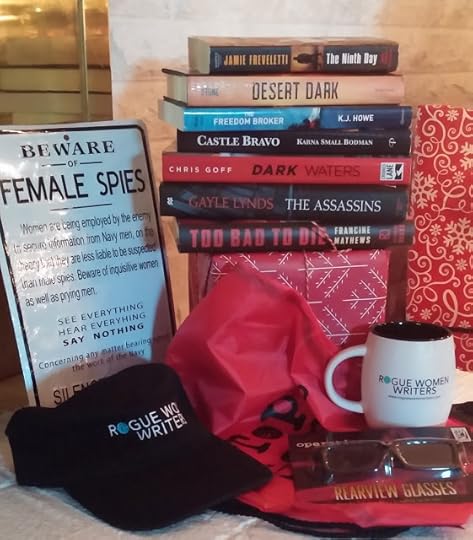
One hundred and twenty-three folks entered our January giveaway and one lucky person is walking away with eight signed Thrillers and some Rogue Women Swag! Our congratulations to TOM NORUSH. His resolution: "To read more mysteries!" Please check back for more Giveaways and/or sign up to follow the blog, so you don't miss your chance to enter and win!

February 5, 2017
Welcome Guest Author Lisa Black
....Submitted by Karna Small Bodman
We are delighted to welcome New York Times Bestselling Author Lisa Black as our guest blogger.
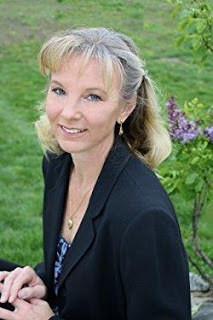 Lisa Black
Lisa has spent over 20 years in forensic science, first at the coroner's office in Cleveland, Ohio and now as a certified latent print examiner and CSI at a Florida police department. Her books have been translated into six languages and one has been optioned for film and a possible TV series. In keeping with our current theme of the effects of weather on our writing, Lisa tells us how her own experiences have played out in her exciting thrillers:
Cleveland weather is the reason I now live in Florida. Not that I had a problem with it--I’m not affected by SAD and I find rain soothing--but my husband fussed to the point that he insisted we move 1400 miles south, so that now he can fuss about the heat and the wind and the summer monsoons. Anyway.
The fun thing about Cleveland is that it has four distinct seasons (instead of two, rainy and dry, as in boring old Florida) and each has its extremes to serve as a moody and violent backdrop to my stories. The weather becomes a character in itself, opposing and confounding my heroine every chance it gets.
Let’s get winter out of the way. Winter is brutal, there’s no other term for it. One morning I left to go to work when it was twenty below zero. Not wind chill, actual temperature (and parked in the driveway my little Ford Escort, bless her heart, started right up). That’s why I had my victim freeze to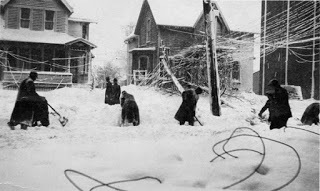 death in Evidence of Murderin the blanketed, eerie silence of a copse of trees by the lake. Then there’s the snow--tons and tons of it, barreling down from the sky, turning to slush when the temperature warms and to ice harder than diamonds when it drops. We have Lake Erie to the north of the city and that causes ‘lake effect’ to influence the heavens, dumping feet on one side of town and only inches on the other. No one really knows what ‘lake effect’ is, but in Cleveland we blame everything that happens on it.
But then there’s spring. April showers continue through May, June, July…actually it never stops raining during the summer, one reason that farms in Ohio can do so well in a good year.
Then comes summer. It’s the northern border of America, right, so it can’t get that hot? Wrong. It can be as sweltering as Florida can--the only difference is it doesn’t usually last for six months. Tempers flare and air conditioners go on the fritz. But the charm of Cleveland weather lies in its unpredictability. The first June in our second house we threw a pool party for my husband’s birthday. It was 45 degrees. The pool created its own fog as its steam rose. The last June in our second house,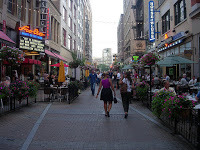 my husband was already in Florida and being the cheapskate I am, I refused to turn on the central air. It was 11 pm in an upstairs room with the windows open and a fan blowing and I had just showered, and yet I still remember the sweat rolling off me in sheets. I used this face of summer in Takeover, having started with a vision of my character crossing the sun-baked asphalt street toward the bank robbers, exchanging herself for her wounded detective fiancé.
Fall is everyone’s favorite, and certainly mine. The air gets crisp, the leaves burst into a cacophony of colors, the sky becomes a deep cobalt. I can’t say anything bad about fall, and it’s not just because my birthday is in September. But September, in particular, has its dark side too. Over my years at the coroner’s office I noticed a jump in homicides during the month. One September there were only six days on which we did not have a homicide victim come in, and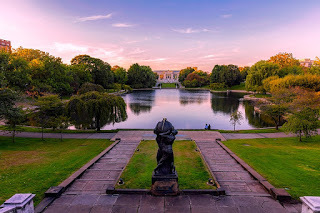 on two days we had two. The August heat and the Christmas holidays might make people a little crazy, but I believe September does too. From the time we are small we start back to school at this time
And then I write about it.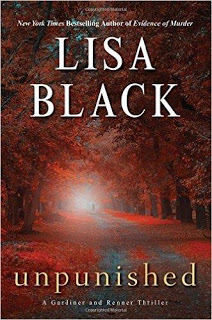 Lisa's new thriller, Unpunished, has just been released. Thank you, Lisa, for sharing your ideas and writing style with all of here on Rogue Women Writers. For our friends and readers, leave a comment about stories you recall where the weather really was an important "character!"....Karna Small Bodman
We are delighted to welcome New York Times Bestselling Author Lisa Black as our guest blogger.
 Lisa Black
Lisa has spent over 20 years in forensic science, first at the coroner's office in Cleveland, Ohio and now as a certified latent print examiner and CSI at a Florida police department. Her books have been translated into six languages and one has been optioned for film and a possible TV series. In keeping with our current theme of the effects of weather on our writing, Lisa tells us how her own experiences have played out in her exciting thrillers:
Cleveland weather is the reason I now live in Florida. Not that I had a problem with it--I’m not affected by SAD and I find rain soothing--but my husband fussed to the point that he insisted we move 1400 miles south, so that now he can fuss about the heat and the wind and the summer monsoons. Anyway.
The fun thing about Cleveland is that it has four distinct seasons (instead of two, rainy and dry, as in boring old Florida) and each has its extremes to serve as a moody and violent backdrop to my stories. The weather becomes a character in itself, opposing and confounding my heroine every chance it gets.
Let’s get winter out of the way. Winter is brutal, there’s no other term for it. One morning I left to go to work when it was twenty below zero. Not wind chill, actual temperature (and parked in the driveway my little Ford Escort, bless her heart, started right up). That’s why I had my victim freeze to
 death in Evidence of Murderin the blanketed, eerie silence of a copse of trees by the lake. Then there’s the snow--tons and tons of it, barreling down from the sky, turning to slush when the temperature warms and to ice harder than diamonds when it drops. We have Lake Erie to the north of the city and that causes ‘lake effect’ to influence the heavens, dumping feet on one side of town and only inches on the other. No one really knows what ‘lake effect’ is, but in Cleveland we blame everything that happens on it.
But then there’s spring. April showers continue through May, June, July…actually it never stops raining during the summer, one reason that farms in Ohio can do so well in a good year.
Then comes summer. It’s the northern border of America, right, so it can’t get that hot? Wrong. It can be as sweltering as Florida can--the only difference is it doesn’t usually last for six months. Tempers flare and air conditioners go on the fritz. But the charm of Cleveland weather lies in its unpredictability. The first June in our second house we threw a pool party for my husband’s birthday. It was 45 degrees. The pool created its own fog as its steam rose. The last June in our second house,
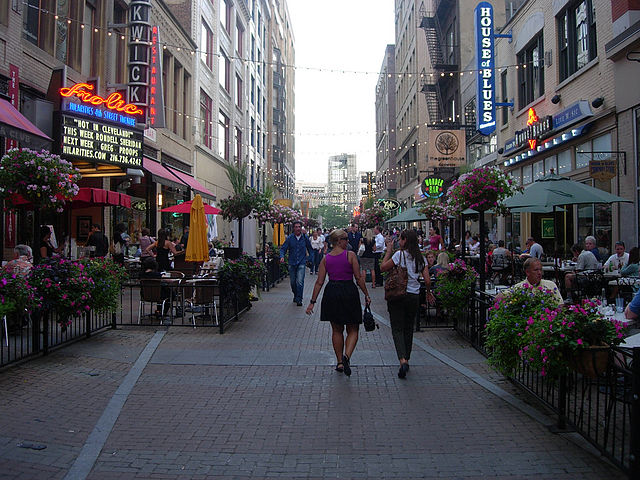 my husband was already in Florida and being the cheapskate I am, I refused to turn on the central air. It was 11 pm in an upstairs room with the windows open and a fan blowing and I had just showered, and yet I still remember the sweat rolling off me in sheets. I used this face of summer in Takeover, having started with a vision of my character crossing the sun-baked asphalt street toward the bank robbers, exchanging herself for her wounded detective fiancé.
 Fall is everyone’s favorite, and certainly mine. The air gets crisp, the leaves burst into a cacophony of colors, the sky becomes a deep cobalt. I can’t say anything bad about fall, and it’s not just because my birthday is in September. But September, in particular, has its dark side too. Over my years at the coroner’s office I noticed a jump in homicides during the month. One September there were only six days on which we did not have a homicide victim come in, and
 on two days we had two. The August heat and the Christmas holidays might make people a little crazy, but I believe September does too. From the time we are small we start back to school at this time
 And then I write about it.
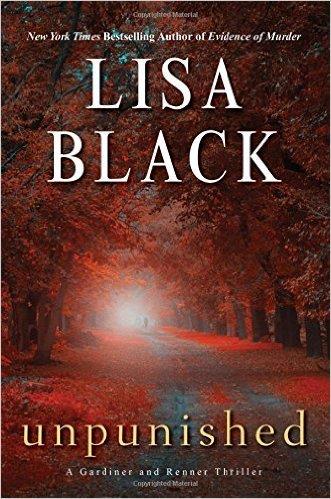 Lisa's new thriller, Unpunished, has just been released. Thank you, Lisa, for sharing your ideas and writing style with all of here on Rogue Women Writers. For our friends and readers, leave a comment about stories you recall where the weather really was an important "character!"....Karna Small Bodman
 January 31, 2017
WHAT DOES YOUR BAROMETER SAY?
by K.J. Howe
Weather is a powerful force in both real life and in fiction. Humans are very sensitive to temperature changes, weather shifts, and the elements. Ice storms, hurricanes, tornadoes, and tsunamis demonstrate that mother nature can leave us rather vulnerable.
In fiction, weather can be a valuable tool to create havoc for your characters. I've set scenes in the Sahara, where dehydration and sun stroke are setting in, and tensions are rising. Other backdrops include frozen mountaintops where the frigid temperatures can cause hypothermia. Weather affects our physical safety, but it can also profoundly affect our mood.
Fall means shorter days, longer nights, and cooler temperatures. When Daylight Savings Time hits, we tend to burrow in at night, stay at home more, enjoying movie nights, takeout, and family gatherings. Like those smart bears, we hibernate. But why? What do cold, dark days do to our internal chemistry? And why do we feel so energized in sunshine? And how about the sluggish feelings we have on rainy days?
There is a scientific reason behind each reaction to the weather, and by understanding these responses, we can better prepare ourselves for shifts in climate.
Seasonal Affective Disorder
SAD is a mood disorder that usually kicks in between October and April when daylight becomes scarce. Your body craves mid-day naps, your brains produces lower levels of serotonin, the neurotransmitter that affects mood, appetite, sleep, and sexual desire. If you're feeling down because of SAD, try setting your bedroom lights on a timer so they come on before you wake up, tricking your brain into thinking it is actually a sunrise. Or purchase a light therapy box that will give you year round sunshine.
Cold Temperatures
When the snow falls, you tend to feel unmotivated to get up early, hit the gym, and tackle your day. Cold temperatures reduce your sensory feedback, dexterity, muscle strength, blood flow, and balance, which can impact your ability to perform complex physical tasks. To combat these doldrums, pile on layers of clothes, do 15 minutes of stretching first thing in the morning, so the added warmth and movement will stimulate blood flow and get you in a better frame of mind to work out. Bundle up, and get yourself moving. You won't regret it.
Sunshine
It's tough to imagine any downside to sunshine, as it always lifts your mood. That said, sunlight has been associated with higher spending patterns. Yes, that's right, better to shop on cloudy days unless you're in the mood to break the bank.
Rain
 When torrents of rain fall, your serotonin levels dip and your carbohydrate cravings skyrocket. You tend to reach for pasta and other comfort foods, as carbs spike your serotonin levels. But the surge of happiness doesn't last, as the levels drop soon afterwards, leaving you feeling deflated. When you feel that carb craving come on, reach for vegetables like parsnips, potatoes or pumpkin instead of pasta. They offer the same benefits as spaghetti, but also offer vitamins, minerals and fiber.
Rain isn't easy on people. Not only does it cause sadness, it can also cause pain. When the pressure in the atmosphere decreases, clouds and rain become more likely. Bodily fluids move from blood vessels to tissues, causing pressure on nerves and joints, which leads to increased pain, stiffness, and reduced mobility. For workouts on rain days, pilates or yoga might work better than running on your treadmill.
Fresh Air
Feeling low? Go outside. Experts share that 30 minutes outside in pleasant weather can improve mood, memory, and creativity. Even in cold weather, taking a brisk walk can make you happier and more productive.
Knowing how we react psychologically to weather can really impact how we plan our days. And if we use this insider knowledge in our books, our characters' reactions to the changing climate might resonate with readers. Consider some of the best books you've read lately. Did the author use weather as setting, or even become a character itself? Weather profoundly affects us all, and that's why it's a great bonding topic when we first meet someone. Wishing you sunny days...except for when you're shopping!
Weather is a powerful force in both real life and in fiction. Humans are very sensitive to temperature changes, weather shifts, and the elements. Ice storms, hurricanes, tornadoes, and tsunamis demonstrate that mother nature can leave us rather vulnerable.
In fiction, weather can be a valuable tool to create havoc for your characters. I've set scenes in the Sahara, where dehydration and sun stroke are setting in, and tensions are rising. Other backdrops include frozen mountaintops where the frigid temperatures can cause hypothermia. Weather affects our physical safety, but it can also profoundly affect our mood.

Fall means shorter days, longer nights, and cooler temperatures. When Daylight Savings Time hits, we tend to burrow in at night, stay at home more, enjoying movie nights, takeout, and family gatherings. Like those smart bears, we hibernate. But why? What do cold, dark days do to our internal chemistry? And why do we feel so energized in sunshine? And how about the sluggish feelings we have on rainy days?
There is a scientific reason behind each reaction to the weather, and by understanding these responses, we can better prepare ourselves for shifts in climate.
Seasonal Affective Disorder
SAD is a mood disorder that usually kicks in between October and April when daylight becomes scarce. Your body craves mid-day naps, your brains produces lower levels of serotonin, the neurotransmitter that affects mood, appetite, sleep, and sexual desire. If you're feeling down because of SAD, try setting your bedroom lights on a timer so they come on before you wake up, tricking your brain into thinking it is actually a sunrise. Or purchase a light therapy box that will give you year round sunshine.

Cold Temperatures
When the snow falls, you tend to feel unmotivated to get up early, hit the gym, and tackle your day. Cold temperatures reduce your sensory feedback, dexterity, muscle strength, blood flow, and balance, which can impact your ability to perform complex physical tasks. To combat these doldrums, pile on layers of clothes, do 15 minutes of stretching first thing in the morning, so the added warmth and movement will stimulate blood flow and get you in a better frame of mind to work out. Bundle up, and get yourself moving. You won't regret it.

Sunshine
It's tough to imagine any downside to sunshine, as it always lifts your mood. That said, sunlight has been associated with higher spending patterns. Yes, that's right, better to shop on cloudy days unless you're in the mood to break the bank.
Rain
 When torrents of rain fall, your serotonin levels dip and your carbohydrate cravings skyrocket. You tend to reach for pasta and other comfort foods, as carbs spike your serotonin levels. But the surge of happiness doesn't last, as the levels drop soon afterwards, leaving you feeling deflated. When you feel that carb craving come on, reach for vegetables like parsnips, potatoes or pumpkin instead of pasta. They offer the same benefits as spaghetti, but also offer vitamins, minerals and fiber.
Rain isn't easy on people. Not only does it cause sadness, it can also cause pain. When the pressure in the atmosphere decreases, clouds and rain become more likely. Bodily fluids move from blood vessels to tissues, causing pressure on nerves and joints, which leads to increased pain, stiffness, and reduced mobility. For workouts on rain days, pilates or yoga might work better than running on your treadmill.
Fresh Air
Feeling low? Go outside. Experts share that 30 minutes outside in pleasant weather can improve mood, memory, and creativity. Even in cold weather, taking a brisk walk can make you happier and more productive.
Knowing how we react psychologically to weather can really impact how we plan our days. And if we use this insider knowledge in our books, our characters' reactions to the changing climate might resonate with readers. Consider some of the best books you've read lately. Did the author use weather as setting, or even become a character itself? Weather profoundly affects us all, and that's why it's a great bonding topic when we first meet someone. Wishing you sunny days...except for when you're shopping!
January 29, 2017
WINTER IS COMING (NOT)
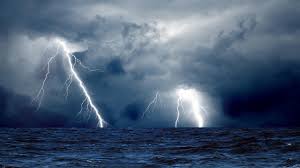 S. Lee Manning: The topic for this month is weather and how it affects us as writers and readers. Or how we use weather as a character. Or how’s the weather? Or you don’t need a weatherman to know which way the wind blows. (If you’re not from the 60s, look it up.)
Confession: writing this blog is a lot harder than I thought it would be. Already wrote and threw one draft out after looking at my husband’s face while he was reading it.
What idiot came up with this topic – oh, wait, it was me.
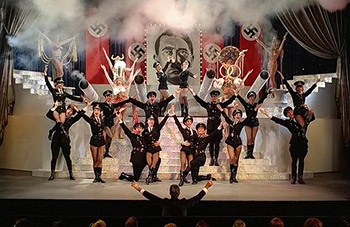 I thought it’d be interesting. Weather as character. After all, what would Game of Thrones be without the line, intoned with fear, “Winter is Coming” – and a lot of half frozen creatures coming over a wall of ice. What would The Long Hot Summerbe without a long hot summer – and a young, shirtless Paul Newman trying to cool down? What would The Producersbe like without “Springtime for Hitler?” What would Europe look like today if 75 years ago, there hadn’t been a Russian winter?
Weather matters. In real life, it matters a lot. That’s why I’m sitting in a condo here in Margate, Florida, where there’s always someone blowing leaves or cutting grass or playing television too loud, because everyone here is old and can’t hear worth a damn – instead of holed up in my office in Vermont with views of woods and mountains, and acres of land between me and my closest neighbor. It’s 77 degrees here, noise and all, and in Vermont, in the calm and beauty of the mountains, it’s a balmy 17 degrees. Weather matters.
It’s just hard to write about.
Think about it. It affects us and our moods, and what we do, and how we dress, but how long a conversation do you really have about weather?“Sure is cold today.” “Sure is.” “Gonna get colder.” “Sure is. Maybe snow.”“Yup.” Then you go on to talk about something more likely to get you into a fight but more engaging, like politics or religion…(or climate change, which is again about weather but which I’m not writing about today, even though it’s real).
So, I’m going to do what I always do when faced with a blog and have no idea what to write. I’m going to make a list. And here you are, six suggestions on how to write about weather.
1. Be realistic. If the novel starts in October in New Jersey, check out what typical temperatures are – and typical weather. Don’t have it snow. It snows in Vermont in October – sometimes – but not in Jersey, usually. Well, caveat, there was a Halloween snow a few years ago in Trenton, back
 when I still lived there. It knocked out our power for a day – but that was weird and atypical, although the weather is getting weird and more atypical all the time. (Climate change?)Go for typical weather.
2. Be consistent. If you have snow on page 50, don’t have anyone cutting the grass on page 60, unless they flew from Vermont to Florida; then it’s fine. Otherwise, nope. Climate change is real, but it doesn’t work that fast.
3. Extreme weather can play into the plot. It can be another obstacle that the protagonist has to fight and overcome. Work it. Have the hero battling a hurricane or trapped in a blizzard – with the villain. And five cats. Winter is coming. Oh yeah, definite reader interest, especially with the five cats.
4. If your character is driving in Vermont in the winter, and she’s not an idiot, put her in a Subaru or a 4x4 pick-up truck. Okay, this isn’t so much a suggestion about writing as it is about traveling in Vermont in the winter. Don’t drive there in a mini-van, even if you bought a min-van, because you drove a carpool and had two kids and two German Shepherds and a cat, because you’ll be on the side of the road, watching the Subarus whizz by you, laughing, until you trudge through five feet of snow to find a farmer with a tractor who will tow you to a paved section of road. Not that I know anyone who did that. (Whistling.)
5. Unless you’re making the weather into a plot device or a symbolic device, don’t spend too much time on it. Scroll above to reported conversation about weather. Not that interesting.
6. Like any other rules for writing, take every one of these suggestions with a grain of salt – which is kind of how I wrote them anyway.
Now, armed with my suggestions, you are ready to face any weather related writing. Or not. But I’m ready to wrap this up, because it’s 77 degrees, and I’m going for a walk. Winter may be coming, but I’m in Margate, baby.
Be safe out there.
January 25, 2017
READING CAN GET YOU INTO TROUBLE!
 The Council Bluffs, Iowa, Public Library, finished in 1905 & now a museum.
By Gayle Lynds:
I’m tall. That’s for those of you whom I’ve not yet had the pleasure to meet. Yep, five-foot-ten. I love parades, theater seating, and looking for my husband because I can see over almost everyone’s heads.
The Council Bluffs, Iowa, Public Library, finished in 1905 & now a museum.
By Gayle Lynds:
I’m tall. That’s for those of you whom I’ve not yet had the pleasure to meet. Yep, five-foot-ten. I love parades, theater seating, and looking for my husband because I can see over almost everyone’s heads.I grew fast, eventually having to take my mother along to vouch that I wasn’t too old for folks to give me Halloween candy. As fast as I grew, so did my love of reading. Books were my friends, my teachers, my allies, my secret under-the-covers companions to ward off the evil hand that lived in the dark under my bed.
My mother, Marian Hallenbeck, loved books as much as I. She introduced me to the Council Bluffs Andrew Carnegie Public Library before I could read. We didn’t have money for books, but library cards were free. My mother and the librarian were acquaintances. Her name was Mildred Smock.
Mildred was stylish. Although she was thin, there was something sturdy about her, especially when she picked up a stack of hardbacks. She had a good face, long fingers, and a brown bob that curled more than it bobbed. She wore serviceable pumps and dark dresses with narrow little belts. Her expression was serious. To a child, she was intimidating. It never occurred to me that her looks were merely her dust jacket, that there was far more inside.
Summers were grand. The day after the last day of school, I’d ride the city bus downtown to the library. With awe, I’d enter the Mark Twain Room of children’s literature. The first time I returned the books I borrowed by myself, Mildred checked them closely for abuse. Mildred followed the rules, and she expected everyone else to do so, too.
She and I seldom talked, except when she’d stop me and put a book in my hands. And then she was gone, while I’d be entranced by a new author or genre to follow.
I worked my way through the stacks, devouring novels, adventure tales, fantasies, and mysteries. By the age of nine, thanks to Mildred, I went through a period of biographies and histories — Marco Polo, the Empress Josephine, Mozart, Madame Curie, the kings and queens of England.
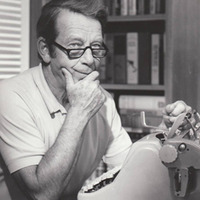 William Campbell Gault at work.
Then I discovered the sports section and the novels of a fine writer who eventually became my friend — William Campbell Gault, of Santa Barbara. From him I learned about baseball, football, hockey, soccer, and the life lesson that all great athletes must learn: never give up.
When I was eleven, I got very lucky — a neighbor joined the Doubleday Book Club and gave me her books as she finished them. The world of popular literature opened up to me with Pearl Buck, Graham Greene, Daphne Du Maurier, and James Michener. I was riveted by the breadth of their stories. So many interesting characters trying to solve problems, create new lives, and operate in cultures that were foreign and fascinating.
I remember my mother discussing my latest reading habits with my Aunt Margaret, who was concerned about the sex in adult books.
“Don’t worry,” my mother assured her. “She won’t understand what’s going on.”
As every child knows, there’s power in eavesdropping. After that conversation, I was suddenly interested in the sex scenes. Thank you, Mom.
As I neared the age of twelve, I was almost five-feet-seven and looked like a teenager despite no makeup. I kinda liked that, except I could no longer convince bus drivers and ticket-sellers at movie matinees that I was young enough to pay the kid price.
As soon as school was out that summer, I rode the bus through the June sunshine to the library and climbed the familiar granite steps. I had that wonderful stirring in my stomach. What great tales would I find?
In the children’s section, I walked up and down the aisles. I’d read many of the books. Devoured them, really. But now all of them seemed somehow too familiar.
I turned on my heel and left. I wanted books like I’d been reading. Adult books. But there was a problem — Mildred of The Rules. She knew I was too young to enter the adult stacks.
I spotted her at the card catalog, her back to me as she bent over, working. I skirted the room and sneaked into the tall shelves packed with hard covers. Oh, to be able to read every one!
Thus began my short life of crime.
Avoiding Mildred, I checked out my prizes with other librarians, even though my library card was marked for the children’s section. My tall height and teenager looks had its advantages. For a month I sailed through.
Then one day I set my latest choices before the young librarian at the checkout counter.
“Your card?” She picked up the books.
As I handed it to her, Mildred’s voice sounded. She was coming around the corner. “Wait. Is that Gayle again?”
I felt a chill. “Yes, Miss Smock.”
Her stride was purposeful. Serious as always, she picked up the novels. She examined them. “What’s your telephone number?”
I had no choice. I had to give it to her.
She dialed and identified herself to my mother. Then she did the unexpected, the shocking, the act of the book saint: Mildred Smock winked at me.
“Would you object if I gave Gayle an adult library card?” she asked my mother.
And that was that. She’d been monitoring me all along and realized I wasn’t going back to the Mark Twain room. Thank you, Miss Smock.
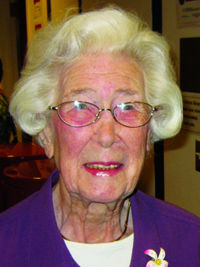 The great Mildred Smock in later years
While I grew up to be a writer, Mildred Smock continued on at the library, enriching people’s lives book by book. She began as a clerk in 1941, rose to be director in 1957, and after more than a half century, retired in 1992. Continuing to contribute to the community in numerous ways, she died in 2014, much lauded and much loved. Her extraordinary gifts continue to echo.
What season of the year do I like to write? Summer, of course. As June rolls around, I feel that wonderful stirring in my stomach. I want to read a great tale. But first, with patience and humility, I want to write one. Thank you again, Miss Smock.
With this post, we Rogue Writers begin a series about seasons and how they affect us and our writing. Are there any topics you’d like us to address? Please let us know!
January 21, 2017
AN EAST WIND IS COMING
Nothing changes if nothing changes.by Sonja Stone
 A rogue woman in the making!
Happy Sunday! We have a few announcements to share:
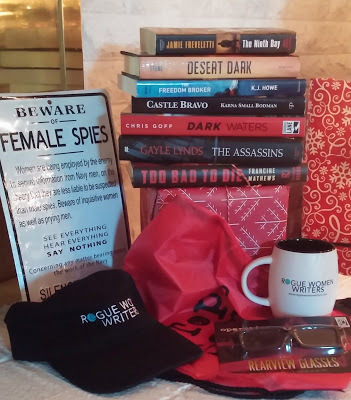
1. YOU STILL HAVE TIME TO WIN A SPY BAG FULL OF ROGUE WOMEN GEAR!
It’s easy to enter (and completely free)! Just CLICK HERE and leave a note in the comment section.
2. OUR NEW POSTING SCHEDULE
Slightly less exciting (but still noteworthy) is the decision of the Rogue Women to mix up our blog schedule a bit. Moving forward, we’ll be posting on Wednesdays and Sundays. As a reminder, lest you plunge into withdrawal, we’re all on Facebook, and you can visit OUR PAGE to chat with us and view our upcoming events. Which brings me to…
3. ROGUE WOMEN ON THE RUN
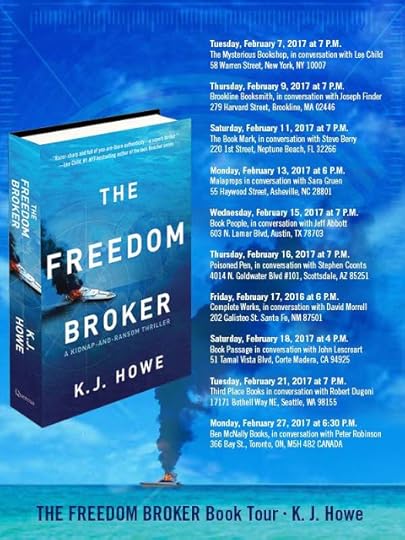
K.J. Howe is beginning her cross-country book tour to promote her debut novel, THE FREEDOM BROKER! For those of you who’ve never met K.J., she’s absolutely delightful—the Miss Congeniality of the Rogue Women. She also happens to be an excellent writer. If you have a chance to meet her in person, I highly recommend you do so. I’ll be at The Poisoned Pen in Scottsdale to see her and Stephen Coonts!
SPEAKING OF ROGUE WOMEN
Yesterday, citizens in approximately 675 cities around the world gathered to march in support of Human Rights. Over 4.5 million people congregated to demonstrate their support to women, people of color, members of the LGBTQ community, Muslims and other diverse faiths, immigrants, Native peoples, those with disabilities, sexual assault survivors… the list goes on.
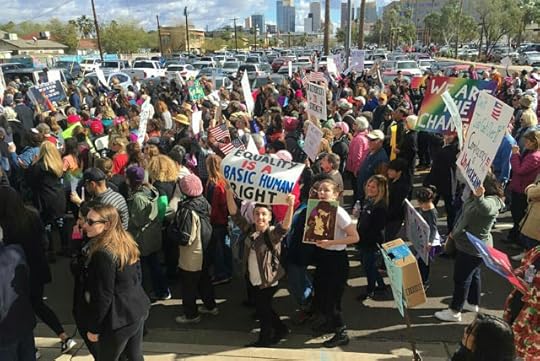 March on Phoenix
To those who participated: thank you.
Historically, as a nation, when we stand together, we protect the civil liberties of all.
This is our America. WE THE PEOPLE
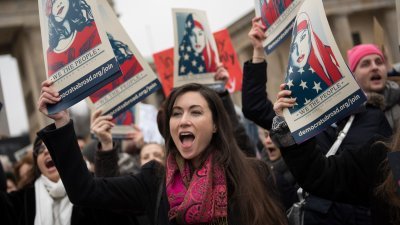 Berlin, Germany
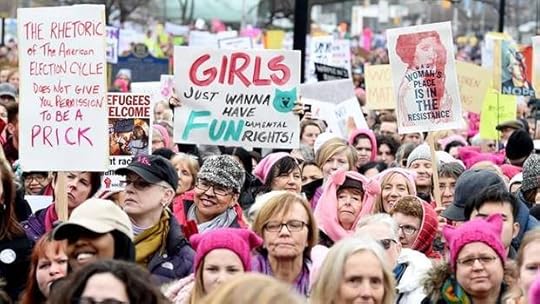 Toronto, Canada
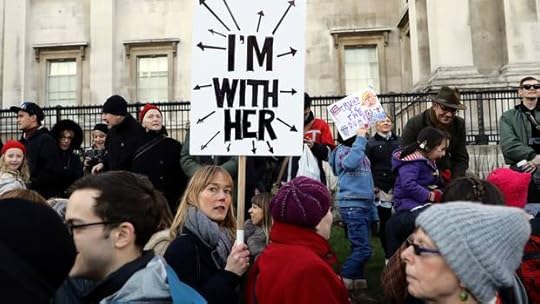 Trafalgar Square, London, Britain
PHOTO CREDITS:Women are Perfect and WE THE PEOPLE graphics from www.equalhumanity.org
Berlin, Germany Pix11.comToronto, London: The Globe and Mail
Did you attend a rally this weekend? Leave a comment below!
 A rogue woman in the making!
Happy Sunday! We have a few announcements to share:
1. YOU STILL HAVE TIME TO WIN A SPY BAG FULL OF ROGUE WOMEN GEAR!
It’s easy to enter (and completely free)! Just CLICK HERE and leave a note in the comment section.

2. OUR NEW POSTING SCHEDULE
Slightly less exciting (but still noteworthy) is the decision of the Rogue Women to mix up our blog schedule a bit. Moving forward, we’ll be posting on Wednesdays and Sundays. As a reminder, lest you plunge into withdrawal, we’re all on Facebook, and you can visit OUR PAGE to chat with us and view our upcoming events. Which brings me to…
3. ROGUE WOMEN ON THE RUN
K.J. Howe is beginning her cross-country book tour to promote her debut novel, THE FREEDOM BROKER! For those of you who’ve never met K.J., she’s absolutely delightful—the Miss Congeniality of the Rogue Women. She also happens to be an excellent writer. If you have a chance to meet her in person, I highly recommend you do so. I’ll be at The Poisoned Pen in Scottsdale to see her and Stephen Coonts!

SPEAKING OF ROGUE WOMEN
Yesterday, citizens in approximately 675 cities around the world gathered to march in support of Human Rights. Over 4.5 million people congregated to demonstrate their support to women, people of color, members of the LGBTQ community, Muslims and other diverse faiths, immigrants, Native peoples, those with disabilities, sexual assault survivors… the list goes on.
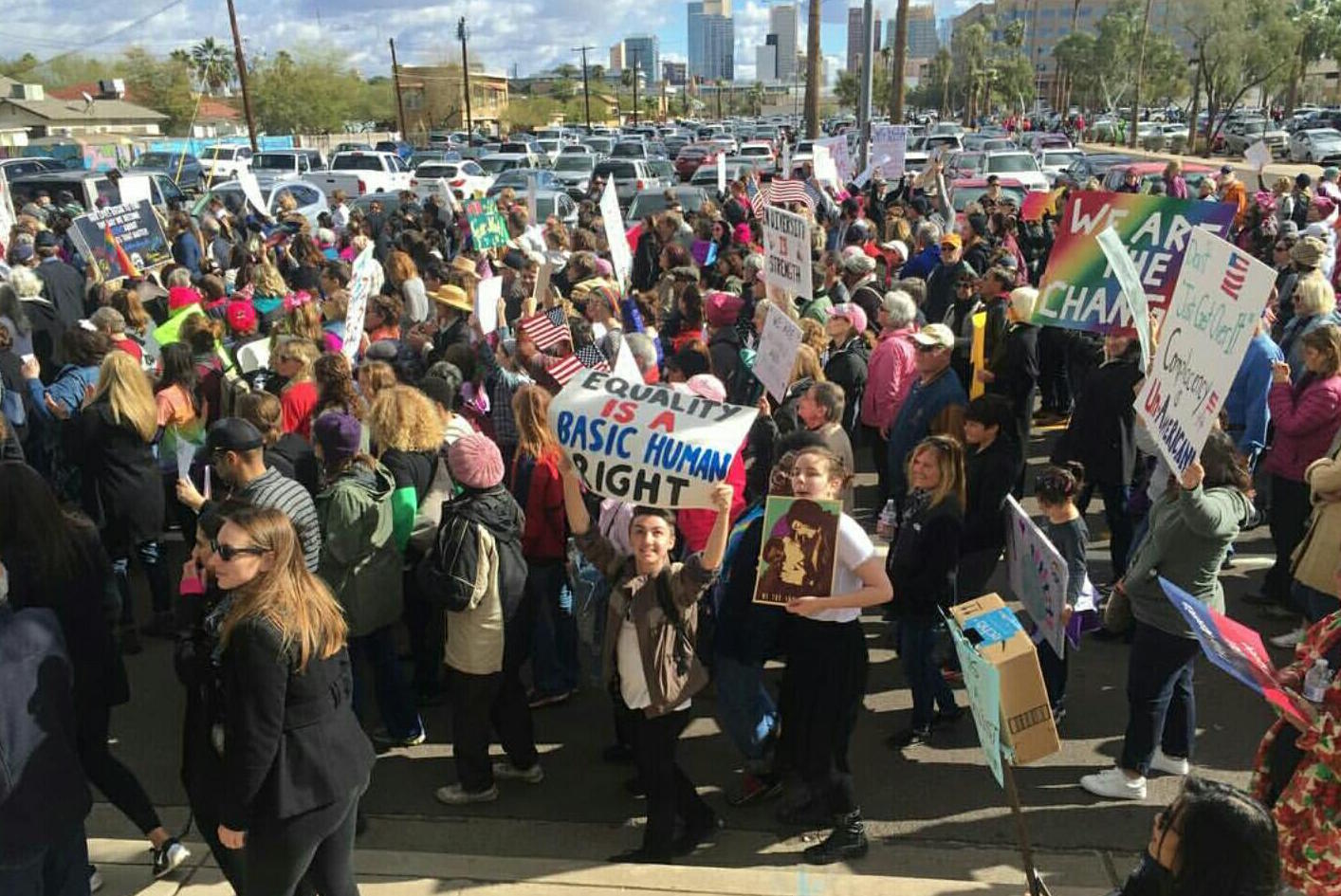 March on Phoenix
To those who participated: thank you.
Historically, as a nation, when we stand together, we protect the civil liberties of all.
This is our America.
 WE THE PEOPLE
 Berlin, Germany
 Toronto, Canada
 Trafalgar Square, London, Britain
PHOTO CREDITS:Women are Perfect and WE THE PEOPLE graphics from www.equalhumanity.org
Berlin, Germany Pix11.comToronto, London: The Globe and Mail
Did you attend a rally this weekend? Leave a comment below!