Chris Goff's Blog, page 52
March 22, 2017
HOW THE JACKAL BECAME MY WRITERLY INSPIRATION
By
Gayle Lynds
..... In the mid 1980s I was writing and publishing not only literary short stories but books in a genre the industry considered among the lowest of the low — male pulp fiction.
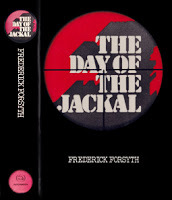 First UK edition, 1971
Some called my ability to do both artistic range. But it puzzled and slightly offended others, and after a while I began to wonder myself — was there something wrong with me? Maybe I was literarily schizophrenic. Okay, let's ask the real questions: Who was I? What in heck did I think was I doing?
And then I got lucky and was able to dig deep. I found my muse, my inspiration, maybe it was really my siren's song — I stumbled on The Day of the Jackal by Frederick Forsyth.
What follows is a tale of hubris and, perhaps, redemption.
Published first in the United Kingdom in 1971, the novel dramatizes the desperate hunt for an international assassin hired by a secret paramilitary organization to kill French president Charles de Gaulle in 1963. The assassin is so clandestine even his employers know him just by a code name – the Jackal.
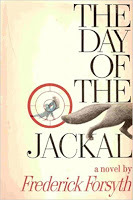 First US edition, 1972
From the French police inspector under unrelenting pressure to stop the Jackal, to the young war widow who seduces an elderly government bureaucrat to extract from him the inspector’s plans, the author guides us unerringly into the hearts and fears of the story’s characters – on both sides of the political drama.
First US edition, 1972
From the French police inspector under unrelenting pressure to stop the Jackal, to the young war widow who seduces an elderly government bureaucrat to extract from him the inspector’s plans, the author guides us unerringly into the hearts and fears of the story’s characters – on both sides of the political drama.
In the end we resonate with all of Forsyth’s characters not necessarily because we approve but because he reveals each’s humanity, and once we understand we can’t help but care at least a little – a feat of high artistic skill.
I’d avoided reading The Day of the Jackal when it was first published because, although many attempts were made on De Gaulle’s life, he died quietly, a private citizen in his own home, in 1970 — seven years after the novel’s purported events.
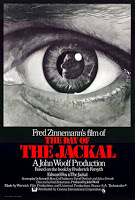 Movie poster, 1973
The daring of Forsyth’s concept and marvelous conceit that an author could create not only believable but compelling fictional suspense about an assassination that never happened had been lost on me. Instead, it buttressed my naive arrogance – if the book was a hot bestseller, it couldn't be good.
Movie poster, 1973
The daring of Forsyth’s concept and marvelous conceit that an author could create not only believable but compelling fictional suspense about an assassination that never happened had been lost on me. Instead, it buttressed my naive arrogance – if the book was a hot bestseller, it couldn't be good.
Fast forward to the mid 1980s: I'd begun writing pulp adventure novels and experimenting in them with literary techniques from my short stories. At the same time, I had two young children to support, and words-on-paper isn’t a food group. (The literary journals paid in copies, while the pulp fiction paid in checks just large enough I could buy extra copies of the journals.)
That was when a paperback copy of The Day of the Jackal stared at me from the shelf of a thrift store. It had been read so many times the spine was cracked and the pages tattered. Obviously it had riveted readers. I wondered why. I bought it.
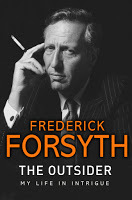 Forsyth's autobiography, 2013
As I read, I felt as if I had finally come home. Forsyth’s prose was rich and smooth, often lyrical. The characters were memorable. The insider details of the workings of the French government were not only accurate but, under his hand, fascinating. The Jackal’s violence was remorseless, as it should have been.
Forsyth's autobiography, 2013
As I read, I felt as if I had finally come home. Forsyth’s prose was rich and smooth, often lyrical. The characters were memorable. The insider details of the workings of the French government were not only accurate but, under his hand, fascinating. The Jackal’s violence was remorseless, as it should have been.
My love of history, culture, geopolitics, and fine writing had finally come together in the pages of this exemplary novel. I was more than grateful; I was inspired. My future in international espionage was sealed. Thank you, Mr. Forsyth.
With this post, I begin the next month of blogs by my fellow Rogues. From music to literature, we're revealing what inspires us, gives us ideas, pushes us into the next book or story.
We'd love to know what inspires you....
 First UK edition, 1971
Some called my ability to do both artistic range. But it puzzled and slightly offended others, and after a while I began to wonder myself — was there something wrong with me? Maybe I was literarily schizophrenic. Okay, let's ask the real questions: Who was I? What in heck did I think was I doing?
And then I got lucky and was able to dig deep. I found my muse, my inspiration, maybe it was really my siren's song — I stumbled on The Day of the Jackal by Frederick Forsyth.
What follows is a tale of hubris and, perhaps, redemption.
Published first in the United Kingdom in 1971, the novel dramatizes the desperate hunt for an international assassin hired by a secret paramilitary organization to kill French president Charles de Gaulle in 1963. The assassin is so clandestine even his employers know him just by a code name – the Jackal.
 First US edition, 1972
From the French police inspector under unrelenting pressure to stop the Jackal, to the young war widow who seduces an elderly government bureaucrat to extract from him the inspector’s plans, the author guides us unerringly into the hearts and fears of the story’s characters – on both sides of the political drama.
First US edition, 1972
From the French police inspector under unrelenting pressure to stop the Jackal, to the young war widow who seduces an elderly government bureaucrat to extract from him the inspector’s plans, the author guides us unerringly into the hearts and fears of the story’s characters – on both sides of the political drama.In the end we resonate with all of Forsyth’s characters not necessarily because we approve but because he reveals each’s humanity, and once we understand we can’t help but care at least a little – a feat of high artistic skill.
I’d avoided reading The Day of the Jackal when it was first published because, although many attempts were made on De Gaulle’s life, he died quietly, a private citizen in his own home, in 1970 — seven years after the novel’s purported events.
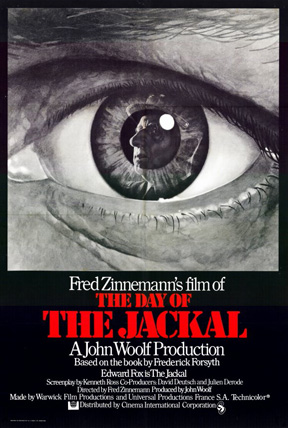 Movie poster, 1973
The daring of Forsyth’s concept and marvelous conceit that an author could create not only believable but compelling fictional suspense about an assassination that never happened had been lost on me. Instead, it buttressed my naive arrogance – if the book was a hot bestseller, it couldn't be good.
Movie poster, 1973
The daring of Forsyth’s concept and marvelous conceit that an author could create not only believable but compelling fictional suspense about an assassination that never happened had been lost on me. Instead, it buttressed my naive arrogance – if the book was a hot bestseller, it couldn't be good. Fast forward to the mid 1980s: I'd begun writing pulp adventure novels and experimenting in them with literary techniques from my short stories. At the same time, I had two young children to support, and words-on-paper isn’t a food group. (The literary journals paid in copies, while the pulp fiction paid in checks just large enough I could buy extra copies of the journals.)
That was when a paperback copy of The Day of the Jackal stared at me from the shelf of a thrift store. It had been read so many times the spine was cracked and the pages tattered. Obviously it had riveted readers. I wondered why. I bought it.
 Forsyth's autobiography, 2013
As I read, I felt as if I had finally come home. Forsyth’s prose was rich and smooth, often lyrical. The characters were memorable. The insider details of the workings of the French government were not only accurate but, under his hand, fascinating. The Jackal’s violence was remorseless, as it should have been.
Forsyth's autobiography, 2013
As I read, I felt as if I had finally come home. Forsyth’s prose was rich and smooth, often lyrical. The characters were memorable. The insider details of the workings of the French government were not only accurate but, under his hand, fascinating. The Jackal’s violence was remorseless, as it should have been. My love of history, culture, geopolitics, and fine writing had finally come together in the pages of this exemplary novel. I was more than grateful; I was inspired. My future in international espionage was sealed. Thank you, Mr. Forsyth.
With this post, I begin the next month of blogs by my fellow Rogues. From music to literature, we're revealing what inspires us, gives us ideas, pushes us into the next book or story.
We'd love to know what inspires you....


March 19, 2017
The Cone of Silence
by Chris Goff
 My first exposure to the spy world came in the form of Ian Fleming and Helen MacInnes novels, the Bond and Flint movies, and Get Smart, I Spy and Man From U.N.C.L.E.
 My best friend Cynthia and I were so enamored with the spy world that we created our own spy organization. We called it XCPLE (pronounced X-C-piddle-E), and don't ask me what it stood for. I'm not sure I knew even back then. We built our spy headquarters in the woods behind the house where I grew up, dragging a hooked rug (I'm sure my mother cherished) out into the forest and secreting it in a copse of pine trees, where scraps of the rug still remain. We built a communications system, developed a secret code and begged our mothers to buy us spy gadgets—disappearing ink pens, tiny cameras, decoder rings, toy guns. The year I turned ten, for Christmas, I asked for a pair of shoes with a hiding place built into the heel.
Four years later, came the Beatle invasion. Cynthia and I abandoned XCPLE to form a girl band using my mother's wicker laundry basket fitted with pot lids as the drum, my father's Martin guitar and broomsticks tied to music stands as microphones. Still, I never swayed from devouring spy fiction and I admit to having an unhealthy obsession with the Cold War era.
How much do you know about spies?

Fellow Rogue Woman, Gayle Lynds, has a great Spy IQ test on her website you can take to find out how much you know. I did fairly well. But that said, when I was a full-fledged member of XCPLE, there was a history of spying I knew nothing about. Clearly I wasn't getting all the facts from Get Smart. For those who need or want a Spy 101, or those who need a refresher, here's a quick recap.
Since the beginning of time, leaders have had spies. As Chinese general Sun Tzu wrote in his famous treatise The Art of War: "Enlightened rulers and good generals who are able to obtain intelligent agents as spies are certain for great achievements."
The earliest recorded spy activity goes back to the times of the Pharaoh Rameses. The Bible references surveillance for the purpose of gathering information. The Royals used spies and spy craft, developing codes for passing information. During the American Revolution, secrecy and subterfuge were keystones of both the British and the Revolutionaries (think Benedict Arnold and Ann Bates), and, during the Civil War, spies took photographs of enemy batteries. In 1907, a German inventor named Julius Neubronner invented the "pigeon camera"--the precursor to today's drone. He produced a small, automatic camera that could be strapped to a homing pigeon and set to take pictures at specific times. With the onset of the Cold War, President Franklin D. Roosevelt appointed William J. Donovan, the first "Coordinator of Information." Then, in 1942, Roosevelt made him head of the Office of Strategic Services (OSS)—the forerunner to the CIA.
 Now, with a restructured intelligence community, there are currently 17 distinct U.S. intelligence agencies, each operating under a shroud of secrecy and funded by classified budgets reported by Business Insider Magazine to be somewhere around $75 billion. We have a Director and Deputy Director of Central Intelligence, a Director of the Central Intelligence Agency, and a Director of National Intelligence. We still have the CIA, FBI, NSA, INR, Air Force ISR, NSB, INSCOM, and more, on a list of acronyms I'll never remember.
 So what's the truth?
Classified information about spies and spy gadgets is hard to come by. No doubt the world has grown more complicated, and technology has allowed for advancements in espionage capabilities. We see glimpses of real gadgets in today's movies—the spy cams, cell jammers, encryption devices, night vision, aerial snooping, anti-bugging, spy coins (during the Cold War, these were used to carry a spy's cyanide pill). And then there's the "Switchblade" technology—remember the plane with the invisibility cloak technology that was described in the movie I Spy (2002)? Not real! There are the contact lenses that have cameras in them, allowing spies to each see what the other sees. Not...actually, this one I'm not sure about.
When it comes to writing spy fiction, I think Lee Child had it right when he said in an interview posted on Tangled Web UK: "It can drive you nuts. You've done the work, you've done the research and you know you are right. But in a sense it's not about being right, it's about being convincing."
XCPLE
If, like me, you ever wanted to be a spy, pretended to be a spy, or just love espionage and spy gadgets, I recommend you pay a visit to the International Spy Museum. Then come back and tell me your favorite spy gadget and I'll tell you mine.
March 14, 2017
EVERY NIGHT IS LADIES NIGHT
AKA: Why Women Make Good Spiesby Sonja StoneAs many of you know, March is Women’s History Month. To celebrate, my blog sisters have written about the unsung intelligence officers throughout history—women who have risked their lives for their countries and causes.
History has proven time and again that women make excellent spies. We used to be underrated and overlooked, which gave us a natural edge. Women are cunning and clever, careful and courageous. We’re strong, soft and serious. And we carry great accessories.
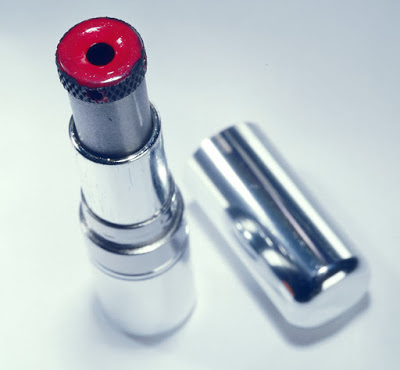 The KGB's Cold War lipstick fired a .177-caliber round
At the risk of sounding melodramatic, several of my rogue sisters deserve recognition this month. Francine Matthews actually served in the CIA. Several others have climbed the corporate ladder with hammers in hand to pound against the glass ceiling. Karna Bodman was the highest ranking woman in the White House during the Regan administration. Gayle Lynds, together with David Morrell, founded International Thriller Writers, and she’s worked tirelessly to ensure that we, as women writers of international intrigue and espionage, are treated with the same respect as our male counterparts. Gayle and Robert Ludlum co-created the Covert One series, and Jamie Freveletti was later selected by the Ludlum estate to write for the series. KJ Howe, the Executive Director of ThrillerFest, has received rave reviews for her debut novel, THE FREEDOM BROKER, while promoting awareness for Type 1 Diabetes. Jamie and S. Lee Manning are both former lawyers, and S. Lee championed for rights that changed state legislation. Chris Goff’s debut thriller, DARK WATERS, has been nominated for a handful of prestigious awards, and she continues her hands-on research as she travels the world.
I want to take a moment to thank the women who came before me. Women who diligently fought for the right to vote. Women who bravely entered the corporate world. Women who selflessly stayed home to raise a family. And the women who seemingly did it all: worked full time, nurtured the children, cooked the meals, paid the bills... Women like my mother, my sister, my dearest friends.
Lastly, a thank you to the men standing by our sides. The men who supported our fight for equality, who welcomed us into the workforce, who do the dishes after dinner. Some of you make excellent spies, too. ;)
Photo credits: https://www.buzzfeed.com/gabrielsanchez/insane-gadgets-from-the-world-of-international-spies?utm_term=.hxw2708qx#.weBLAOmEp
History has proven time and again that women make excellent spies. We used to be underrated and overlooked, which gave us a natural edge. Women are cunning and clever, careful and courageous. We’re strong, soft and serious. And we carry great accessories.
 The KGB's Cold War lipstick fired a .177-caliber round
At the risk of sounding melodramatic, several of my rogue sisters deserve recognition this month. Francine Matthews actually served in the CIA. Several others have climbed the corporate ladder with hammers in hand to pound against the glass ceiling. Karna Bodman was the highest ranking woman in the White House during the Regan administration. Gayle Lynds, together with David Morrell, founded International Thriller Writers, and she’s worked tirelessly to ensure that we, as women writers of international intrigue and espionage, are treated with the same respect as our male counterparts. Gayle and Robert Ludlum co-created the Covert One series, and Jamie Freveletti was later selected by the Ludlum estate to write for the series. KJ Howe, the Executive Director of ThrillerFest, has received rave reviews for her debut novel, THE FREEDOM BROKER, while promoting awareness for Type 1 Diabetes. Jamie and S. Lee Manning are both former lawyers, and S. Lee championed for rights that changed state legislation. Chris Goff’s debut thriller, DARK WATERS, has been nominated for a handful of prestigious awards, and she continues her hands-on research as she travels the world.
I want to take a moment to thank the women who came before me. Women who diligently fought for the right to vote. Women who bravely entered the corporate world. Women who selflessly stayed home to raise a family. And the women who seemingly did it all: worked full time, nurtured the children, cooked the meals, paid the bills... Women like my mother, my sister, my dearest friends.
Lastly, a thank you to the men standing by our sides. The men who supported our fight for equality, who welcomed us into the workforce, who do the dishes after dinner. Some of you make excellent spies, too. ;)
Photo credits: https://www.buzzfeed.com/gabrielsanchez/insane-gadgets-from-the-world-of-international-spies?utm_term=.hxw2708qx#.weBLAOmEp
March 12, 2017
DEATH AND TAXES

By Francine Mathews
April is the cruelest month, T.S. Eliot assures us, but March can be pretty lousy, too. I feel April's pain on the fifteenth each year, but I spend laborious hours all March assembling the information for my tax accountant to deliver his terrible news. I realize this falls into the category of First World Problems--and that if I only kept up with my Quicken entries all year long it'd be a snap to do--but hey, I have a lot on my hands. Books to read, books to write, clothes to wash and children to send off to college. And then there's the loss of people I love. That seems to happen with brutal frequency in the month of March. My mother, for example, died on the fifteenth--the Ides of March--and so did my uncle, several years before her. It is a date rife with foreboding for me as well as Caesar.
Hence today's Meditation, which purports to be about Death and Taxes. I confess right now that the title is a bait and switch--I intend to talk solely about Death.
I lost a good friend a few weeks ago. I will call her simply My Friend, out of respect for her privacy and that of her family. Hers was a death foretold--whose, really is not?--but it crept up on all of us who loved her. A bout of indigestion at a July 4th barbecue, diagnosed twelve hours later as Stage 3 pancreatic cancer. She lived eight months after Independence Day and spent most of it exploring what she called "a better dying." As she had taught all of us for years how to live a better life, I wanted to learn from her in this as in everything. But the apprenticeship came to end early one Saturday morning. Yesterday, hundreds of us gathered in an intimate and lovely old Episcopalian church to weep as a soprano sang "Swing Low, Sweet Chariot."
Bear with me. I need to tell you about My Friend. It will help me come to terms, a little, with her absence, and perhaps a little with my own life. It may even help you to come to terms with yours.
When I first walked into her house years ago I was startled by the existence of a woman drunk on words. I had heard from a mutual acquaintance that My Friend was an aspiring writer; it was the proximate reason for us to meet. But the truth is, aspiration had nothing to do with it. My Friend lived in a sea of words, ran her fingers through them like a bowl full of jelly beans, caught them on her tongue like fresh snowflakes. She painted quotations from Ecclesiastes on the risers of her stairs. Her comfortable porch cushions were covered with hand-lettered phrases (my favorite: "Bunter, Launch the Lagonda!" from a TV production of Peter Wimsey.) And her remarkable walled garden was lined with massive zinc panels, hand-painted with stanzas from Andrew Marvell's 17th-century poem, "The Garden." I called these the Stations of Eden because the poetry led you through the various beds and garden rooms My Friend had formed with her own hands. The entire back terrace of raised beds and iron sculptures was paved in herringbone brick--and I say herringbone, because it requires involvement and thought. My Friend loved the pattern. But to achieve it, each brick had to be hand-cut at a correct mitered angle. So My Friend bought a brick saw. She measured and cut every brick before laying each of them in the earth. A quarter-acre of art, rugs and patterns and paths of brick, woven among the flowers and the Andrew Marvell:
Here at the fountain’s sliding foot, Or at some fruit tree’s mossy root, Casting the body’s vest aside, My soul into the boughs does glide; There like a bird it sits and sings, Then whets, and combs its silver wings; And, till prepar’d for longer flight, Waves in its plumes the various light.
She wrote poetry her whole life long as a way of processing the oddities and emotions and gifts of life; she embraced everyone she met; and never did I hear her say a negative thing about another human being. Her novel, unpublished, is a work of art.
And now my bitter confession: I wasted the time I had with her. Being a busy person, as she was herself, I found many reasons to put off our meetings. I would think in my mind: I must see My Friend again soon. I must walk the dog with her. Drop her a note. Push open her picket fence gate and walk up her stone steps to sit on her vine-covered porch and talk a while.
I never did it enough, and now I can never do it enough again.
In the months following her diagnosis, we struggled against the inevitable and our own inability to change the outcome. We traded spurious good news and clutched at straws. When you feel powerless, you look around for something to do. Another friend organized a cooking schedule. We all signed up. In the months remaining to My Friend's life, I needed this more than anything--the dates on the calendar that said I could spend the day in my kitchen, making soup. Making dinner for My Friend's family. Of course she was a marvelous cook herself and a great gatherer of love around her table, and so dropping containers of steaming pasta and polenta and curry and beef ragu on that front porch was all each of us who loved her could do to feel better about ourselves. Less lonely. Less out of time.
Ten days before she died, My Friend sent us all Valentines that she and her husband had hand-drawn and written to each other, with phrases of her most beloved poet, Walt Whitman.
Then with the knowledge of death as walking on one side of me, And the thought of death close-walking the other side of me, And I in the middle as with companions, and as holding the hands of companions, I fled forth to the hiding receiving night that talks not.When she was truly gone, those of us she left behind appeared out of the woodwork to help her daughter, who is in large measure My Friend still walking on this Earth, to move tables in from the brick terrace that was waking in Spring, from the porch where she will never sit again, now, propped up by those cushions with words. We scrubbed the tables and moved chairs and swept floors and threw open french doors to sunlight and March wind. We held her dog close when he whined. We arranged flowers. It was necessary to me in particular to buy a lot of flowers (see picture at the head of this post, from my kitchen a few days ago), and leave them in bowls scattered around the house. So that when everyone assembled to love all that remains of My Friend, the Garden was there, too.
I have tried to absorb the lessons of A Better Dying these past few days as I have walked on from My Friend's picket gate and the people she has left at the foot of Marvell's tree. In order to have A Better Dying, I need to live a Better Life. Be curious and embracing of everyone I meet. Take time to measure and cut, as things ought to be measured and cut. Be drunk on words. Serve love every night and morning at my table, even if I'm the only one eating there.
I leave you with one of My Friend's final poems.
Packing
I'm certainly not taking any of this torso claptrap. No need for anyorgan reticules, kiss purse cavities, old coils of strap,stones that have stuck in where they were thrown.I will fit effortlessly into the overhead, my contents shifting as I sluffoff most of my skin in the lapsarian swoon that is prologue to practically every-thing.I will take the precious orbs of my eyes in case they can conjure anyof what glory they have beheld, but if mortal passionsare under suspicion by the authorities, I will relinquish themto my beloveds--those days when we beheld each other on the turning world.
Francine
March 8, 2017
Wiretapping and Spies and Writing Thrillers
By Jamie Freveletti
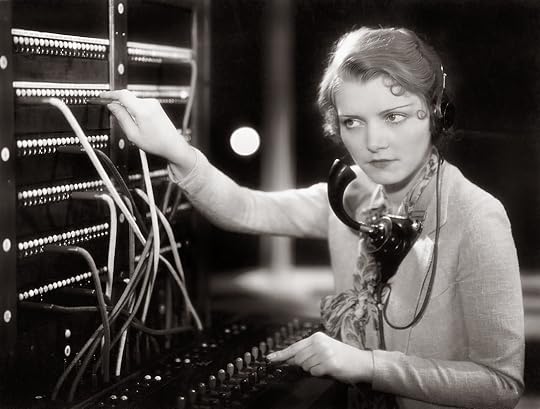 1930's Telephone OperatorWiretapping is in the news this week and I have been following with interest the articles regarding the need for warrants --or the lack of them. Of course, as a former attorney I am always interested in the procedure and protocol for anything that our government does. But also, as a writer of spy fiction, I think that I, and probably some of the other Rogue Women Writers on this blog, could probably tell you that there are numerous ways to access a smartphone and a whole host of them are utilized without a warrant. How do we know this, you ask? Research! Those of us that write spy novels spend quite a bit of time researching the issues that are important for the type of novel that we're writing. We have to, because our readers love to learn about the life of a spy, and the only way to add such detail is to research it. In fact, as I write this Wikileaks announced that it will release 9,000 pages of CIA documents purporting to give up their wiretapping secrets. I'll be reading those pages and will write a follow up to this post when I'm done.
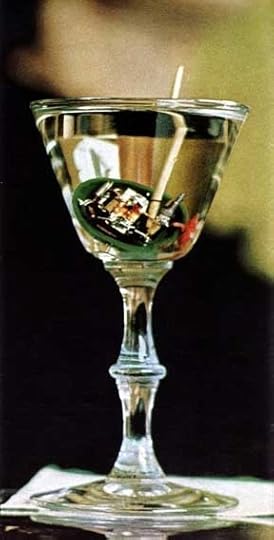 1965 Martini Olive BugBack in the day, a person wishing to wiretap someone had a lot of ways to get it done. As early as the 1930's a device called the "Detectifone" could be hidden in a room and record a conversation much like a dictaphone would. The 1950's and 1960's saw the emergence of small, ingenious devices: watches, (think Dick Tracy), pens and cigarette boxes, and, yes, even a martini glass. In 1965 private detective Hal Lipset created the martini olive bug.
Now the devices are far more advanced and we, as citizens, have unwittingly assisted in the effort by carrying the equivalent of a GPS locator device in our pockets. Yes, I mean that smartphone. And it's not just the government that spies on us, it's our apps as well. Like Uber? Have the app on your phone? That company is currently being questioned with regard to its use of alleged software called "greyball" where the app records your location and collects data. It then uses the data to determine whether you are a threat to Uber. Let's say you spend too much time in City Hall or government buildings (just about every litigator does), the greyball software then decides that you potentially work for taxi or government regulators and might be trying to hail an Uber to see if the company is operating in violation of local laws. If you activate the app it pretends that it's calling a car, but doesn't. The "driver" cancels over and over again. It's an open question whether this data collection is illegal, because you may have agreed to it on the terms of service page for the app.You can read more about greyball and Uber's denial of any illegal use here.
And finally there's the hated Stingray device. There's a current lawsuit here in Chicago over this one. The stingray pretends that it's a cellphone tower and dupes your smartphone into connecting with it. It collects your texts, information, and some say can even pretend to be you and send a text from your phone to another in your contact list. Police departments across the country own them and deploy them. They can collect information off a whopping 65,000 people when pointed at a crowd. A stingray was allegedly deployed during a Black Lives Matter protest here in Chicago. But while most of us would never know if a stingray grabbed our phone, in this case the stingray got stung, because it hit the one person at the protest who could figure it out. The device zeroed out the phone of a lawyer who, as part of his pro bono work (we all have to do a certain number of free cases each year to keep our licenses) attended protests on behalf of legal aid in order to act as an observer. He knew immediately what had happened and the suit, which claims among other things that the search was a violation of the Constitution's Fourth amendment against unreasonable searches and seizures, is currently winding its way through the court system.
A thriller writer not only has to research the ways one can be tapped, but also needs to know how a spy or other person can avoid the tap. In the case of the stingray? Wrap your phone in aluminum foil before you head out.
James Bond would approve.
.jpg) 1930's Telephone OperatorWiretapping is in the news this week and I have been following with interest the articles regarding the need for warrants --or the lack of them. Of course, as a former attorney I am always interested in the procedure and protocol for anything that our government does. But also, as a writer of spy fiction, I think that I, and probably some of the other Rogue Women Writers on this blog, could probably tell you that there are numerous ways to access a smartphone and a whole host of them are utilized without a warrant. How do we know this, you ask? Research! Those of us that write spy novels spend quite a bit of time researching the issues that are important for the type of novel that we're writing. We have to, because our readers love to learn about the life of a spy, and the only way to add such detail is to research it. In fact, as I write this Wikileaks announced that it will release 9,000 pages of CIA documents purporting to give up their wiretapping secrets. I'll be reading those pages and will write a follow up to this post when I'm done.
1930's Telephone OperatorWiretapping is in the news this week and I have been following with interest the articles regarding the need for warrants --or the lack of them. Of course, as a former attorney I am always interested in the procedure and protocol for anything that our government does. But also, as a writer of spy fiction, I think that I, and probably some of the other Rogue Women Writers on this blog, could probably tell you that there are numerous ways to access a smartphone and a whole host of them are utilized without a warrant. How do we know this, you ask? Research! Those of us that write spy novels spend quite a bit of time researching the issues that are important for the type of novel that we're writing. We have to, because our readers love to learn about the life of a spy, and the only way to add such detail is to research it. In fact, as I write this Wikileaks announced that it will release 9,000 pages of CIA documents purporting to give up their wiretapping secrets. I'll be reading those pages and will write a follow up to this post when I'm done. 1965 Martini Olive BugBack in the day, a person wishing to wiretap someone had a lot of ways to get it done. As early as the 1930's a device called the "Detectifone" could be hidden in a room and record a conversation much like a dictaphone would. The 1950's and 1960's saw the emergence of small, ingenious devices: watches, (think Dick Tracy), pens and cigarette boxes, and, yes, even a martini glass. In 1965 private detective Hal Lipset created the martini olive bug.
Now the devices are far more advanced and we, as citizens, have unwittingly assisted in the effort by carrying the equivalent of a GPS locator device in our pockets. Yes, I mean that smartphone. And it's not just the government that spies on us, it's our apps as well. Like Uber? Have the app on your phone? That company is currently being questioned with regard to its use of alleged software called "greyball" where the app records your location and collects data. It then uses the data to determine whether you are a threat to Uber. Let's say you spend too much time in City Hall or government buildings (just about every litigator does), the greyball software then decides that you potentially work for taxi or government regulators and might be trying to hail an Uber to see if the company is operating in violation of local laws. If you activate the app it pretends that it's calling a car, but doesn't. The "driver" cancels over and over again. It's an open question whether this data collection is illegal, because you may have agreed to it on the terms of service page for the app.You can read more about greyball and Uber's denial of any illegal use here.
And finally there's the hated Stingray device. There's a current lawsuit here in Chicago over this one. The stingray pretends that it's a cellphone tower and dupes your smartphone into connecting with it. It collects your texts, information, and some say can even pretend to be you and send a text from your phone to another in your contact list. Police departments across the country own them and deploy them. They can collect information off a whopping 65,000 people when pointed at a crowd. A stingray was allegedly deployed during a Black Lives Matter protest here in Chicago. But while most of us would never know if a stingray grabbed our phone, in this case the stingray got stung, because it hit the one person at the protest who could figure it out. The device zeroed out the phone of a lawyer who, as part of his pro bono work (we all have to do a certain number of free cases each year to keep our licenses) attended protests on behalf of legal aid in order to act as an observer. He knew immediately what had happened and the suit, which claims among other things that the search was a violation of the Constitution's Fourth amendment against unreasonable searches and seizures, is currently winding its way through the court system.
A thriller writer not only has to research the ways one can be tapped, but also needs to know how a spy or other person can avoid the tap. In the case of the stingray? Wrap your phone in aluminum foil before you head out.
James Bond would approve.
March 5, 2017
More women who were great spies!
....posted by Karna Small Bodman
Several of my "Rogue" colleagues have been writing about clever women spies. I would like to add to that list as there have been so many whose clever exploits led to battles won and traitors discovered. Throughout history women have been able to gather and pass along secret information because the "prevailing wisdom" held that since women were less educated, they couldn't possibly understand war plans, the use of weapons and certainly not technology. Ah, the perils of underestimating the talents of a woman!
Let's go back to the Civil War when both sides received vital intelligence from female informers. Take the case of Rose O'Neal Greenhow. A well-known hostess in the nation's capital, she actually ran a large Confederate spy ring, was able to ferret out information about troop movements and gave invasion plans to the South -- thus ensuring their victory at Bull Run.
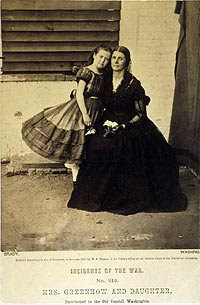 Rose O'Neal Greenhow & daughter in prison
She eventually was put under surveillance by Allan Pinkerton, head of the new Secret Service, confined in the Old Capitol Prison, finally deported to the South, but she never quit. She was sent to Europe to raise money for the Confederacy, and on her return voyage, her ship went aground and lore has it she drowned weighted down with gold sovereigns. When her body washed ashore, she was buried with military honors in Wilmington.
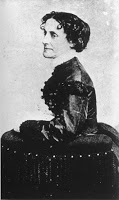 Elizabeth Van Lew
Not to be outdone, the North had its share of women who managed spy networks as well. Elizabeth Van Lew helped Union prisoners escape, men who, in turn, gave her information on Confederate troop movements which she was able to pass on to Union commanders. She even got a Union sympathizer appointed to the prison staff. Her spy ring became known as the "Richmond Underground" where she had operatives working as clerks in the War and Navy Departments of the Confederacy. She developed a cipher system using invisible ink and hid messages in hollow eggs. Clever indeed!
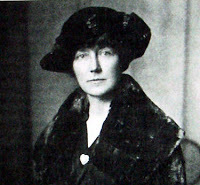 Marguerite HarrisonMoving on to WW I we have the exploits of Marguerite Harrison. As a reporter for the Baltimore Sun and the Associated Press, she also offered her services to the Chief of a Military Intelligence Division. Fluent in French, German, Italian and some Spanish she was sent overseas to assess Bolshevik economic strengths and weaknesses. At various times she posed as a radical, interviewed Trotsy, listened to Lenin and sent valuable intelligence back via military couriers. But a news story was leaked about a successful American woman spy in Russia which led to her arrest by the Cheka, predecessor of the KGB. She was thrown into Lubyanka prison, but with pressure from some of her influential contacts, including a US Senator, she was finally set free, along with other American prisoners, in an exchange for food aid to Russia.
Now we come to recent spy activities. I'm sure you know the name Aldrich Ames, the notorious Cold War spy and traitor to the United States. But did you know that it was a small team of CIA officers who doggedly investigated and uncovered his actions, a team led by a woman, Jeanne Vertefeuille. Along with another female CIA analyst, Sandy Grimes, she followed the high rate of Russian double agent disappearances and knew there had to be a mole in the organization. It turned out to be an eight-year investigation that led her to Ames's treachery and involvement in a number of those officers' executions. Ames had exposed them in exchange for millions of dollars.
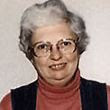 Jeanne VertefeuilleWe certainly owe our gratitude to the many women throughout our history who engaged in various forms of espionage and spy-craft. Some of these stories have been the genesis of thrillers written by my Rogue colleagues. I also want to give my personal thanks to Gene Poteat for his 30 years of service to the CIA where he was awarded their Intelligence Medal of Merit among many other honors throughout his career. His research and advice gave me the inspiration to write this article about great women spies. All of us here at Rogue Women Writers would welcome your comments.
....by Karna Small Bodman
Several of my "Rogue" colleagues have been writing about clever women spies. I would like to add to that list as there have been so many whose clever exploits led to battles won and traitors discovered. Throughout history women have been able to gather and pass along secret information because the "prevailing wisdom" held that since women were less educated, they couldn't possibly understand war plans, the use of weapons and certainly not technology. Ah, the perils of underestimating the talents of a woman!
Let's go back to the Civil War when both sides received vital intelligence from female informers. Take the case of Rose O'Neal Greenhow. A well-known hostess in the nation's capital, she actually ran a large Confederate spy ring, was able to ferret out information about troop movements and gave invasion plans to the South -- thus ensuring their victory at Bull Run.
 Rose O'Neal Greenhow & daughter in prison
She eventually was put under surveillance by Allan Pinkerton, head of the new Secret Service, confined in the Old Capitol Prison, finally deported to the South, but she never quit. She was sent to Europe to raise money for the Confederacy, and on her return voyage, her ship went aground and lore has it she drowned weighted down with gold sovereigns. When her body washed ashore, she was buried with military honors in Wilmington.
 Elizabeth Van Lew
Not to be outdone, the North had its share of women who managed spy networks as well. Elizabeth Van Lew helped Union prisoners escape, men who, in turn, gave her information on Confederate troop movements which she was able to pass on to Union commanders. She even got a Union sympathizer appointed to the prison staff. Her spy ring became known as the "Richmond Underground" where she had operatives working as clerks in the War and Navy Departments of the Confederacy. She developed a cipher system using invisible ink and hid messages in hollow eggs. Clever indeed!
 Marguerite HarrisonMoving on to WW I we have the exploits of Marguerite Harrison. As a reporter for the Baltimore Sun and the Associated Press, she also offered her services to the Chief of a Military Intelligence Division. Fluent in French, German, Italian and some Spanish she was sent overseas to assess Bolshevik economic strengths and weaknesses. At various times she posed as a radical, interviewed Trotsy, listened to Lenin and sent valuable intelligence back via military couriers. But a news story was leaked about a successful American woman spy in Russia which led to her arrest by the Cheka, predecessor of the KGB. She was thrown into Lubyanka prison, but with pressure from some of her influential contacts, including a US Senator, she was finally set free, along with other American prisoners, in an exchange for food aid to Russia.
 Now we come to recent spy activities. I'm sure you know the name Aldrich Ames, the notorious Cold War spy and traitor to the United States. But did you know that it was a small team of CIA officers who doggedly investigated and uncovered his actions, a team led by a woman, Jeanne Vertefeuille. Along with another female CIA analyst, Sandy Grimes, she followed the high rate of Russian double agent disappearances and knew there had to be a mole in the organization. It turned out to be an eight-year investigation that led her to Ames's treachery and involvement in a number of those officers' executions. Ames had exposed them in exchange for millions of dollars.
 Jeanne VertefeuilleWe certainly owe our gratitude to the many women throughout our history who engaged in various forms of espionage and spy-craft. Some of these stories have been the genesis of thrillers written by my Rogue colleagues. I also want to give my personal thanks to Gene Poteat for his 30 years of service to the CIA where he was awarded their Intelligence Medal of Merit among many other honors throughout his career. His research and advice gave me the inspiration to write this article about great women spies. All of us here at Rogue Women Writers would welcome your comments.
....by Karna Small Bodman
February 28, 2017
KIDNAPPERS, UNDER THE RADAR
by K.J. Howe
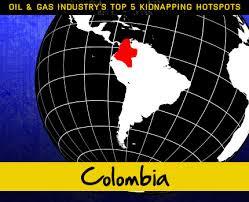 Have you ever heard the term response consultant? If not, you’re not alone. A hidden world exists in the private security field, and I have spent the last three years researching this dark arena. Response consultant is the industry term for kidnap negotiators, and these heroic individuals travel to the globe’s hotspots, risking their own lives to help bring hostages home.
Kidnapping, also known as K&R—kidnap and ransom—has become an international crisis, with over 40,000 reported cases every year. In many third world countries, displaced military and police are turning to kidnapping as a way of putting food on the table. They have the required tactical skills to manage the abduction and captivity of hostages, and kidnapping can be quite lucrative. And terrorists are also filling their coffers by abducting people. The prime targets for kidnapping are wealthy business people and their families, professionals traveling abroad, tourists, journalists, and aid workers.
 To survive a kidnapping, people need to fight against their instincts—because our natural reaction in our hypothalamus when threatened is to fight or flee. Both of these responses can result in serious consequences for hostages. Instead, people in captivity need to find ways to endure countless hardships, poor hygiene, lousy food, restrictions on their movements, endless boredom, and a constant, pervasive fear for their lives and find a way to maintain the hope that one day they will be free to enjoy life again. I wanted to create a series that would explore the different facets of kidnapping, hopefully bringing attention to this growing international crisis so we can bring more hostages home.
Kidnapping is a purgatory of sorts, the rest of the world going on with their normal lives while hostages’ lives are frozen in time, every decision of every day governed by their abductors. To learn all that I could about kidnapping, I interviewed response consultants as well as former hostages, reintegration specialists, K&R insurance experts, and Special Forces soldiers who deliver ransoms and execute rescues. I’m constantly working to further my education, as I want to bring verisimilitude to my series highlighting kidnap negotiator Thea Paris. THE FREEDOM BROKER is the first book in the series.
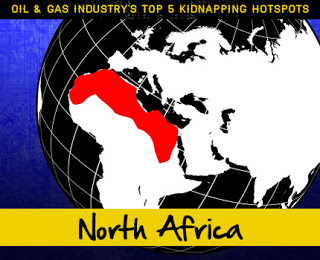 Thea is a woman working in a what has traditionally been a male-dominated world dominated, but she stands her ground, works hard, and is extremely capable in her job. She is also personally motivated to help hostages, as her brother was kidnapped in front of her when she was only eight years old. When her father is abducted before the most important deal of his career, Thea is determined to bring him safely home. But the kidnapper doesn’t send the traditional ransom demands, but instead texts Latin quotes, leaving Thea embroiled in the case of her life.
There are many different types of kidnapping, and I hope to explore them throughout the Freedom Broker series. When I first decided to write about kidnapping, I took a bit of a risk and attended a K&R conference. I slowly developed relationships with the generous and heroic people who work in this industry. They were kind enough to introduce me to other individuals with a background in different aspects of kidnapping, and so on from there. I’m deeply grateful to all the experts who spent time patiently educating me.
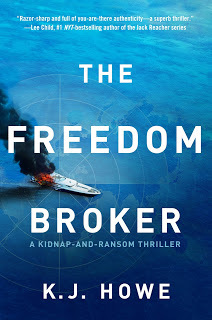 I hope that readers will take Thea into their hearts. Although she is strong, smart, and capable, she is also vulnerable, both physically and emotionally, like all of us. She has type 1 diabetes, and she keeps it a secret because she doesn’t want to be treated differently by her team. And her blind loyalty to her father and brother is tested in THE FREEDOM BROKER. I hope that readers will relate to her fears and cheer her on as she strives to bring her kidnapped father back home.
Interested in learning more about the kidnap hot zones? Please visit my website at www.kjhowe.come to see a map of the most dangerous kidnapping zones in the world.
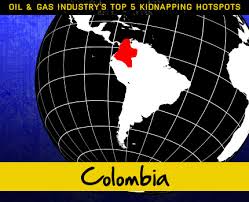 Have you ever heard the term response consultant? If not, you’re not alone. A hidden world exists in the private security field, and I have spent the last three years researching this dark arena. Response consultant is the industry term for kidnap negotiators, and these heroic individuals travel to the globe’s hotspots, risking their own lives to help bring hostages home.
Kidnapping, also known as K&R—kidnap and ransom—has become an international crisis, with over 40,000 reported cases every year. In many third world countries, displaced military and police are turning to kidnapping as a way of putting food on the table. They have the required tactical skills to manage the abduction and captivity of hostages, and kidnapping can be quite lucrative. And terrorists are also filling their coffers by abducting people. The prime targets for kidnapping are wealthy business people and their families, professionals traveling abroad, tourists, journalists, and aid workers.
 To survive a kidnapping, people need to fight against their instincts—because our natural reaction in our hypothalamus when threatened is to fight or flee. Both of these responses can result in serious consequences for hostages. Instead, people in captivity need to find ways to endure countless hardships, poor hygiene, lousy food, restrictions on their movements, endless boredom, and a constant, pervasive fear for their lives and find a way to maintain the hope that one day they will be free to enjoy life again. I wanted to create a series that would explore the different facets of kidnapping, hopefully bringing attention to this growing international crisis so we can bring more hostages home.
Kidnapping is a purgatory of sorts, the rest of the world going on with their normal lives while hostages’ lives are frozen in time, every decision of every day governed by their abductors. To learn all that I could about kidnapping, I interviewed response consultants as well as former hostages, reintegration specialists, K&R insurance experts, and Special Forces soldiers who deliver ransoms and execute rescues. I’m constantly working to further my education, as I want to bring verisimilitude to my series highlighting kidnap negotiator Thea Paris. THE FREEDOM BROKER is the first book in the series.
 Thea is a woman working in a what has traditionally been a male-dominated world dominated, but she stands her ground, works hard, and is extremely capable in her job. She is also personally motivated to help hostages, as her brother was kidnapped in front of her when she was only eight years old. When her father is abducted before the most important deal of his career, Thea is determined to bring him safely home. But the kidnapper doesn’t send the traditional ransom demands, but instead texts Latin quotes, leaving Thea embroiled in the case of her life.
There are many different types of kidnapping, and I hope to explore them throughout the Freedom Broker series. When I first decided to write about kidnapping, I took a bit of a risk and attended a K&R conference. I slowly developed relationships with the generous and heroic people who work in this industry. They were kind enough to introduce me to other individuals with a background in different aspects of kidnapping, and so on from there. I’m deeply grateful to all the experts who spent time patiently educating me.
 I hope that readers will take Thea into their hearts. Although she is strong, smart, and capable, she is also vulnerable, both physically and emotionally, like all of us. She has type 1 diabetes, and she keeps it a secret because she doesn’t want to be treated differently by her team. And her blind loyalty to her father and brother is tested in THE FREEDOM BROKER. I hope that readers will relate to her fears and cheer her on as she strives to bring her kidnapped father back home.
 Interested in learning more about the kidnap hot zones? Please visit my website at www.kjhowe.come to see a map of the most dangerous kidnapping zones in the world.
February 26, 2017
Honoring those who went unnoticed
S. Lee Manning: The best spies are the people who are least noticed. The handsome dashing man or gorgeous woman may be appealing in fiction – so of course some of us, including me – have them as protagonists –but standing out can be a liability in espionage. Spies need to fly under the radar. Who better to do so than the people we don’t generally notice: the servants or, in the case of American history, African-American slaves?
In this round of blogs we are writing about history and spies. February is also Black History Month. In honor of that, I want to use this opportunity to recognize some of those who often went unrecognized: the African-American spies in the early days of the United States. Given the limits of this post, I've only named a few.
The Revolutionary War
The story of Nathan Hale, the American spy, caught and hung by the British who said the famous words, “I regret that I have but one life to lose for my country,” is well known. The story of James Armistead (1760-1832) not as much, although the information he provided may have helped turn the war for the Americans.
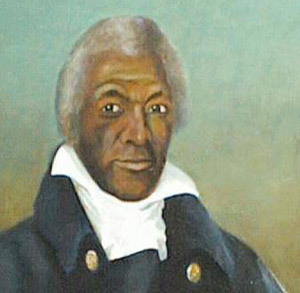 James ArmisteadArmistead, born a slave in Virginia, was loaned out by his master to General Lafayette. He infiltrated General Cornwell’s headquarters by pretending to be a run-away slave and volunteering to spy on the American forces. Lafayette had sent other spies to infiltrate the British, but only Armistead succeeded. He traveled between British camps, learning information from officers who spoke openly of strategy in front of him – and he’d write detailed notes to be delivered to Washington. Reports he sent to Lafayette were instrumental in Lafayette’s military victory at Hampton, and Washington’s victory at Yorktown.
After the war, he was returned to his master. In 1784, Lafayette, outraged that Armistead had not been freed, wrote a testimonial letter that resulted in an act of the Virginia Legislature freeing him.
The Civil War
African-American efforts as spies and scouts were vital to the success of the Northern forces.
George Scott, a runaway slave, provided solid intelligence on Confederate positions to General Butler before one of the first large-scale battles of the war. On his way north after running away, he noticed that the rebels were erecting battlements. Union officers were impressed but wanted confirmation. He accompanied an officer on dangerous scouting missions, risking his life, but obtaining vital information. General Butler incompetently handled the resulting battle, but Scott, like all good spies, was only responsible for the intelligence.
John Scobell, a Pinkerton operative, worked behind the lines, masking his efforts by playing the role of cook, laborer, or servant. He would contact members of the local black community to get information on troop movements and strength, and to act as couriers back to the Union lines.
Black women played a large and sometimes unrecognized role in obtaining intelligence that helped the Union win the war.
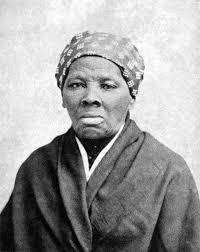 Harriet TubmanHarriet Tubman is the most well-known. She is getting some of the recognition she deserves for her role in fighting slavery and will soon be the first woman whose picture will grace American currency. Did you know she was also a spy? She worked as a scout for Union forces, donning disguises and leading mission behind enemy lines to report on Confederate troop movements.
Mary Elizabeth Bowser is less well known. Born a slave, she was freed by her former master’s daughter, Elizabeth Van Lew, and who, as a Union supporter and spy master, recruited Mary to spy for the North. Mary, a highly intelligent woman with a photographic memory, changed her name to Ellen Bond, and went to work as a servant in the home of Jefferson Davis, the President of the Confederacy. Considered a dim witted black, she was able to listen to conversations and read and memorize papers on Davis’ desk. She then passed the information on to Elizabeth Van Lew or to a baker who delivered bread to the Confederate White House. Near the end of the war, Davis began to suspect her and she fled.
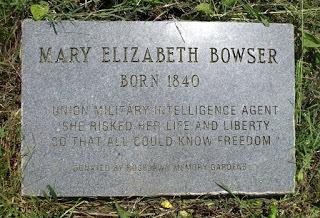
In 1995, Mary Elizabeth Bowser was recognized for her vital work and inducted into the US Army Military Intelligence Corp. Hall of Fame.
Mary Touveste was a freed African-American woman who made her living as a servant. In that role, she obtained a job in the home of a Confederate engineer in Norfolk, Virginia, who was working on turning the Merrimac into an iron clad war ship. Over the course of several months, she was able to copy some of the plans and documents for the ship. In February, 1862, a few weeks before completion of the Merrimac, she disappeared with her copies of the documents – and got them into the hands of the Union Secretary of the Navy. The Union quickly completed its own ironclad, the USS Monitor. Mary Touveste thereafter disappeared from history. It is not known whether she acted on her own or had been recruited as a spy.
A salute to these brave African-American men and women of history, and to the others - some known, some forgotten - who put their lives on the line, and sometimes died, in the dangerous pursuit of knowledge that is the espionage game. They had to go unnoticed to succeed as spies – but it is incumbent on all of us to notice them now.
In this round of blogs we are writing about history and spies. February is also Black History Month. In honor of that, I want to use this opportunity to recognize some of those who often went unrecognized: the African-American spies in the early days of the United States. Given the limits of this post, I've only named a few.
The Revolutionary War
The story of Nathan Hale, the American spy, caught and hung by the British who said the famous words, “I regret that I have but one life to lose for my country,” is well known. The story of James Armistead (1760-1832) not as much, although the information he provided may have helped turn the war for the Americans.
 James ArmisteadArmistead, born a slave in Virginia, was loaned out by his master to General Lafayette. He infiltrated General Cornwell’s headquarters by pretending to be a run-away slave and volunteering to spy on the American forces. Lafayette had sent other spies to infiltrate the British, but only Armistead succeeded. He traveled between British camps, learning information from officers who spoke openly of strategy in front of him – and he’d write detailed notes to be delivered to Washington. Reports he sent to Lafayette were instrumental in Lafayette’s military victory at Hampton, and Washington’s victory at Yorktown.
After the war, he was returned to his master. In 1784, Lafayette, outraged that Armistead had not been freed, wrote a testimonial letter that resulted in an act of the Virginia Legislature freeing him.
The Civil War
African-American efforts as spies and scouts were vital to the success of the Northern forces.
George Scott, a runaway slave, provided solid intelligence on Confederate positions to General Butler before one of the first large-scale battles of the war. On his way north after running away, he noticed that the rebels were erecting battlements. Union officers were impressed but wanted confirmation. He accompanied an officer on dangerous scouting missions, risking his life, but obtaining vital information. General Butler incompetently handled the resulting battle, but Scott, like all good spies, was only responsible for the intelligence.
John Scobell, a Pinkerton operative, worked behind the lines, masking his efforts by playing the role of cook, laborer, or servant. He would contact members of the local black community to get information on troop movements and strength, and to act as couriers back to the Union lines.
Black women played a large and sometimes unrecognized role in obtaining intelligence that helped the Union win the war.
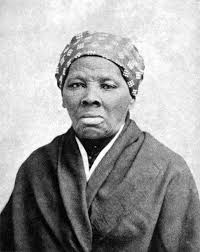 Harriet TubmanHarriet Tubman is the most well-known. She is getting some of the recognition she deserves for her role in fighting slavery and will soon be the first woman whose picture will grace American currency. Did you know she was also a spy? She worked as a scout for Union forces, donning disguises and leading mission behind enemy lines to report on Confederate troop movements.
Mary Elizabeth Bowser is less well known. Born a slave, she was freed by her former master’s daughter, Elizabeth Van Lew, and who, as a Union supporter and spy master, recruited Mary to spy for the North. Mary, a highly intelligent woman with a photographic memory, changed her name to Ellen Bond, and went to work as a servant in the home of Jefferson Davis, the President of the Confederacy. Considered a dim witted black, she was able to listen to conversations and read and memorize papers on Davis’ desk. She then passed the information on to Elizabeth Van Lew or to a baker who delivered bread to the Confederate White House. Near the end of the war, Davis began to suspect her and she fled.
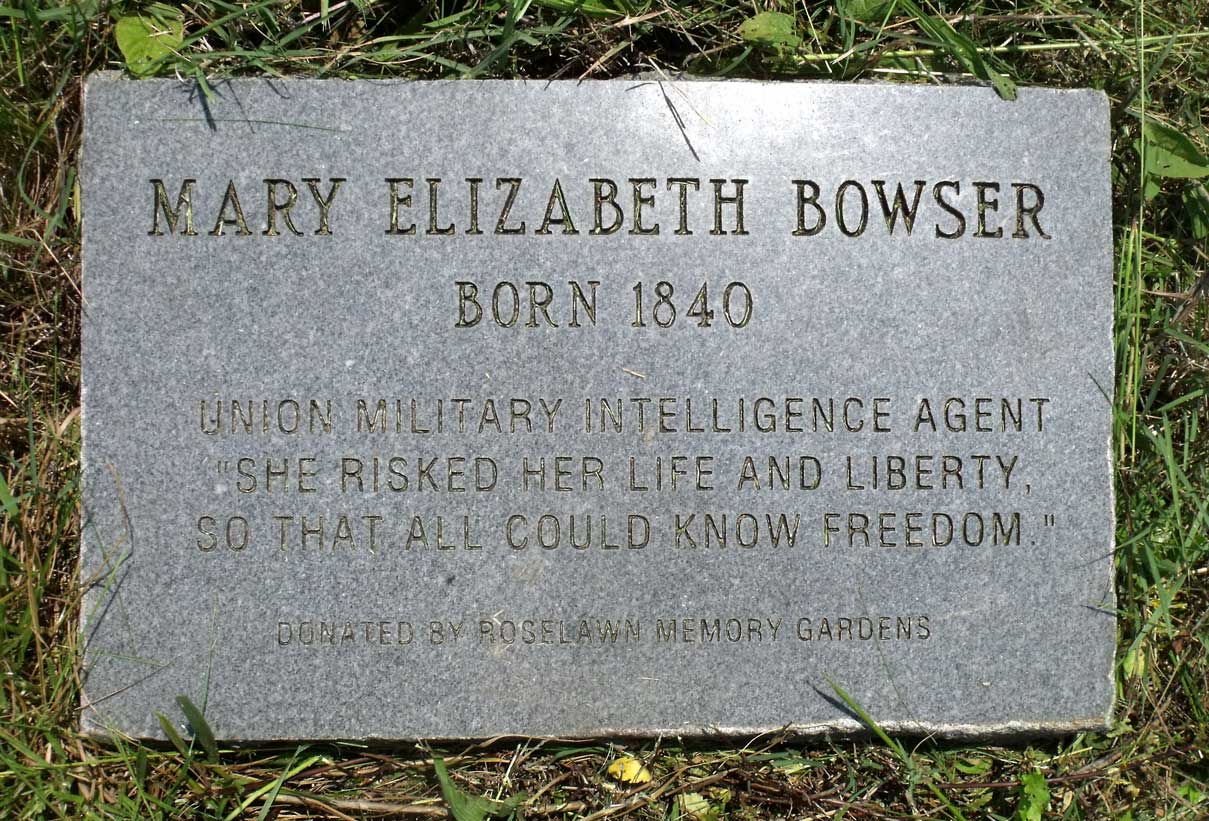
In 1995, Mary Elizabeth Bowser was recognized for her vital work and inducted into the US Army Military Intelligence Corp. Hall of Fame.
Mary Touveste was a freed African-American woman who made her living as a servant. In that role, she obtained a job in the home of a Confederate engineer in Norfolk, Virginia, who was working on turning the Merrimac into an iron clad war ship. Over the course of several months, she was able to copy some of the plans and documents for the ship. In February, 1862, a few weeks before completion of the Merrimac, she disappeared with her copies of the documents – and got them into the hands of the Union Secretary of the Navy. The Union quickly completed its own ironclad, the USS Monitor. Mary Touveste thereafter disappeared from history. It is not known whether she acted on her own or had been recruited as a spy.
A salute to these brave African-American men and women of history, and to the others - some known, some forgotten - who put their lives on the line, and sometimes died, in the dangerous pursuit of knowledge that is the espionage game. They had to go unnoticed to succeed as spies – but it is incumbent on all of us to notice them now.
February 22, 2017
FROM MOSES TO CAESAR – MY TOP FIVE ANCIENT SPYMASTERS
 Artist's reconstruction of the ancient Acropolis in Athens
By Gayle Lynds
Artist's reconstruction of the ancient Acropolis in Athens
By Gayle Lynds
True or false? ... In the 19th century, Austria and Russia were on the verge of war. In hopes of working out an agreement, the emperor of Austria and the czar of Russia agreed to meet secretly one foggy night on a barge in the middle of the Vistula River. Concerned about security — and that nothing would leak out about their meeting — each took only one trusted attendant.
Still, despite all of their precautions, the very next day the entire conversation appeared in The London Times. Why? Because both of the attendants were British spies.
Are you smiling? That’s because we’re somehow not surprised. I doubt it’s a factual story — I’ve never been able to validate it. But doesn’t it somehow ring true? We live in a world that accepts espionage as a given.
But then, intelligence gathering — espionage — dates back thousands of years.
Here are five ancient leaders whose use of intelligence changed the course of history, and sometimes not to their benefit.....
1. Moses – likely born between 1391 and 1592 BCE Moses was not only the founder of Israel, he made the earliest recorded covert assignment, according to the Old Testament: "And the Lord spake unto Moses, saying, send thou men that they may search the land of Canaan."
 Moses sends spies into Canaan
So Moses picked twelve, one from each of the tribes, and ordered them into Canaan, “the Promised Land,” on an undercover mission to collect intel.
After being gone quite some time, the spies returned. Only two claimed Canaan was a land of milk and honey, the Canaanites had grown fat and lazy, and God would help the Israelites defeat them. But a vast majority of the spies — ten — reported fearfully that the Canaanites were too strong to be conquered. The Israelites believed the majority, refused to invade, and, as God’s punishment, spent the next forty years wandering in the desert.
Moses the Spymaster had made a costly mistake — he'd chosen his spies on the basis of tribe not on skill and determination. And then he hadn’t sent another round into Canaan for a more nuanced and thorough investigation. Verdict: Moses was learning, the hard way.
2. Darius the Great, born c. 550 BCE
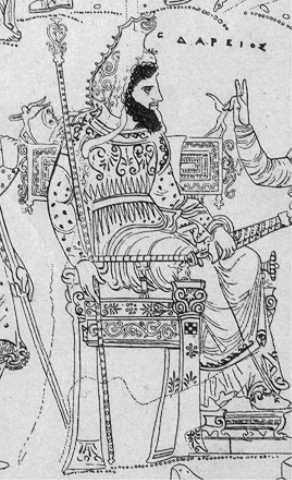 Darius I, imagined by Greek painter
Back in the day, Darius the Great conquered and ruled most of the ancient world. He was well known for employing spies called “the eyes and ears of the king.” They kept watch over the civilian and military leaders who ran his vast empire, sending their reports through his postal service on roads he’d built to connect his vast empire.
Darius I, imagined by Greek painter
Back in the day, Darius the Great conquered and ruled most of the ancient world. He was well known for employing spies called “the eyes and ears of the king.” They kept watch over the civilian and military leaders who ran his vast empire, sending their reports through his postal service on roads he’d built to connect his vast empire.When he captured a major Ionian city called Miletus, Darius gave it to a Greek named Histiaeus to rule. As time passed, Histiaeus grew wealthy and powerful, which made Darius nervous. So Darius ‘invited’ Histiaeus to live with him in Persia.
That continued a while, until Darius gave the city away again. Furious, Histiaeus wanted his city back. So he concocted a clandestine plan, which began with shaving the head of his most faithful slave and tattooing a message on the skin. It was an early form of steganography, or secret writing. As soon as the hair grew back, he sent the man off to the city’s new ruler, who also happened to be his son-in-law.
The son-in-law ordered the hair shaved and read the Histiaeus's command to go to war. The result was the Ionian Revolt. Be careful what you wish for. The Ionians’ ingenious secret messaging worked, but Darius's spies figured out what was about to happen, and he won the rebellion.
3. Aristides the Just, born c. 530 BCE Darius wasn't satisfied with winning the Ionian Revolt.
He wanted to punish the Athenians and other Greeks for
helping the Ionians. So in 490 BCE he assembled a
massive force and invaded, landing just north of Athens.
 Aristides the Just
One of Greece's commanding generals was Aristides, who was also a statesman. Naturally, he employed spies. One of them heard that a Persian undercover agent had sneaked into camp. So Aristides ordered every soldier, shield-maker, doctor, and cook to account for another person there. In that way he uncovered the infiltrator.
Soon the two armies met on the Plain of Marathon. In a straight line and at a dead run, the Greek warriors attacked the overwhelming Persian force. As the Greek generals expected, the middle of their line weakened and gave way, while their flanks encircled and butchered the trapped Persians. The Persians had been completely surprised — none of their spies had uncovered the unusual military plan. An estimated 6,400 Persians died that day, while the Greeks lost 192.
The victory gave the fledgling Greek city states confidence in their ability to defend themselves and belief in their continued existence. The battle is considered a defining moment in the development of European culture, and of course espionage played an important role.
4. Hannibal of Carthage, born 247 BCE
Hannibal was one of the greatest spymasters in history. He created an intelligence network that infiltrated enemy Roman camps and used secret hand signals to identify themselves to one another. He was also a renowned military commander. His most famous campaign was during the Second Punic War (218-202), when his army crossed the Alps on elephants and fought its way toward the biggest, glitziest prize of all — Rome.
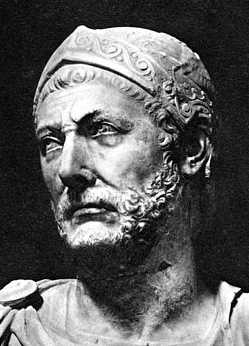 Marble bust reputedly of Hanniba
At the time, Rome’s dictator was Fabius — AKA: Quintus Fabius Maximus Verrucosus. Fabius refused to meet Hannibal in battle because of Hannibal’s military superiority. Instead, Fabius chose harassment and guerrilla assaults to wear down the intruder’s forces while conserving his own.
Frustrated, Hannibal was unable to close in on Rome. Then his spies reported the city was filled with rumors because of Fabius’s refusal to fight. They were saying Fabius was in Hannibal’s pay. Hannibal must have smiled at the news. He sent his soldiers on a rampage across the countryside, destroying and burning everything in their path — except Fabius’s properties.
As soon as the news reached Rome, Fabius issued proclamations he was no traitor. But his people didn’t believe him, and Hannibal gained valuable psychological advantage and respite from Fabius’s delaying tactics. Still, Hannibal never conquered Rome. He returned to Carthage unscathed — and also legendary.
5. Julius Caesar, born 100 BCE
In Ancient Rome, major political players built their own surveillance systems to provide intel about the schemes of their fellow movers and shakers. Politician and orator Cicero complained frequently
 Julius Caesar, in British Museum
that his letters were the prey of others: "I cannot find a faithful message-bearer," he wrote to a friend. "How few are they who are able to carry a rather weighty letter without lightening it by reading?”
Julius Caesar, in British Museum
that his letters were the prey of others: "I cannot find a faithful message-bearer," he wrote to a friend. "How few are they who are able to carry a rather weighty letter without lightening it by reading?”It’s no surprise that Julius Caesar put together an elaborate covert network to keep himself informed about the plots against him. On March 15th, 44 AD, he was walking to the Curia of Pompeii when a note from one of his spies was urgently thrust into his hand. It contained a list of senators and their plans to kill him.
But Caesar was in such a hurry that he didn’t stop to read it. Within the hour, he was assassinated. Lesson: What good is first-rate intel if you don’t read it!
Do you have a favorite spymaster from the ancient world? Please leave a comment and tell us all about him or her.
February 19, 2017
The Fickle Winds of Fate
by Chris Goff
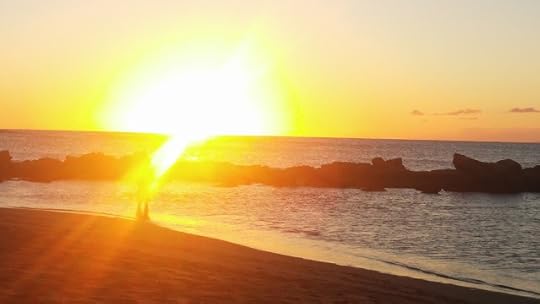 Sunset at Salt Pond Beach, local playing uke, cue whales. We saw four breach that afternoon!I'd love to know who coined the phrase "the fickle winds of fate," but I'll be damned if I can find a reference. All I know is, weather can wreak havoc with a writer. On a personal level
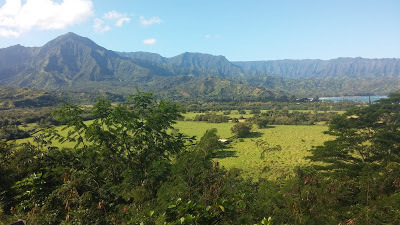 Headed North toward Hanalei.Mentally, for weeks now, weather has been wreaking havoc with my writing.
On January 21st, my husband and I flew to Kaua'i, Hawaii, two weeks prior to our daughter's wedding. She lives there, but for all of her siblings (she has five) and all of her mainland guests, this was a destination wedding. Despite Mt. Wai'ale'ale, Kaua'i's second highest peak, being billed locally as the wettest spot on earth, the temperatures on the island range anywhere from 78° to 85°F year round. And—at least on the south side of the island—the sun nearly always shines. Perfect weather for sunbathing, swimming, snorkeling, whale-watching cruises, hiking, ziplining, hammocking and weddings. Writing, not so much.
For two weeks plus, I did nothing but play and spend quality time with the husband, the kids, family, friends, and my granddaughter (the grandson is on semester abroad and couldn't be there). And then there was home. Granted, Colorado isn't a bad place to live. We get sunshine 300 plus days a year. What we don't have is a beach! We have had record temperatures the past two weeks, which has helped my reentry; still, it's been hard to focus. I've decided I'd be more prolific if I lived in, say, Michigan. My youngest daughter (who teaches middle school in Grand Rapids and suffers from S.A.D.—seasonal affective disorder) says it's been brutal getting back to her routine, despite the weather making it desirable to be indoors.
I have no doubts that some writers suffer from S.A.D., most commonly known as winter depression (it can happen in the summer, too, but that's more rare). The winter blues occur as the days get shorter, light becomes scarce and the weather grows cold.
Nothing a trip to Kaua'i wouldn't cure!
All kidding asideWriters and poets through time have used weather and seasons to set the scene, drive a plot, and mimic emotion.
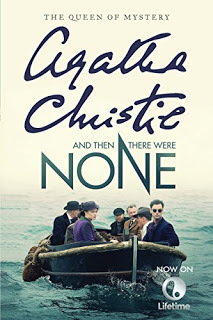 My first weather encounter in crime fiction came in Agatha Christie's And Then There Were None. In this book (first published in 1939 under a different title), a group of people are lured into coming to an island under different pretexts. Some are there for employment opportunities, others to meet up with old friends, and others for a late summer holiday. The guests all have one thing in common—they all have committed some heinous act, either escaping justice or having never been charged for their crimes. During dinner on the first night, they are informed by a gramophone recording that they have been brought to the island to pay for their sins. They are the only ones on the island, and they cannot escape due to the distance to the mainland and inclement weather. Then, one by one, they are all killed; each in a manner that seems to mimic an old British nursery rhyme, now entitled "Ten Little Soldier Boys." The story ends with a twist, and is Christie's bestselling novel with more than 100 million copies sold. It is also the world's bestselling mystery and one of the bestselling books of all time.
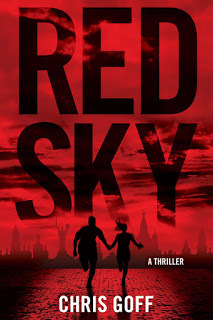 Some of today's best crime writers have also used weather to set mood, isolate characters or drive plot. Read: Whiteout by Ken Follett, Shutter Island by Dennis Lehane, Stormy Weather by Carl Hiaasen... Read RED SKY, my most recent novel, due out June 13. In it, I use weather to set scene and to make it more difficult for my protagonist, Raisa Jordan, to acquire much needed intel.
My guess is, we can all quote the biggest catchphrase for bad writing, coined by Edward Bulwer-Lytton in his 1830 novel, Paul Clifford. His opening sentence—wait for it—"It was a dark and stormy night..." Writer's Digest described it as "the literary poster child for bad story starters;" while, on the flipside, the American Book Review ranked it No. 22 on its "Best First Lines from Novels" list. Needless to say, the opening has spawned a number of Worst First contests offering prizes to the writer who writes the worst first sentence of an imaginary novel. Side noteWhen I first started writing, I attended a workshop offered in Glenwood Springs, CO, taught by none other than Lawrence Block and Joanne Greenberg. During the week we were there, the two held a contest for the worst first opening line of a novel. I won an honorable mention and a roll of Lifesavers for my entry, "He knew she knew that he knew she knew...."
Bottom lineWeather is out there. It affects us all on a daily basis—getting us outdoors or keeping us in, making us happy or making us sad. It affects the earth, helping plants to grow or making them shrivel. It can wreak havoc in the form of super storms, isolate us on deserted islands or provide a fresh blanket of snow for a spectacular getaway on skis (preferably the antagonist's, making it worse for our hero or heroine). Weather is not something that can be omitted. If your character sees the moon and stars, the sky must be clear. If the ground is wet and slippery, it's likely raining or storming. If your protagonist is wearing a parka, it must be cold; if she's rockin' a bikini, it must be warm. Weather affects everything, but it's something we write inherently. Used with intent, it can produce great things. Think Swiss Family Robinson.
 Sunset at Salt Pond Beach, local playing uke, cue whales. We saw four breach that afternoon!I'd love to know who coined the phrase "the fickle winds of fate," but I'll be damned if I can find a reference. All I know is, weather can wreak havoc with a writer. On a personal level
 Headed North toward Hanalei.Mentally, for weeks now, weather has been wreaking havoc with my writing.
 On January 21st, my husband and I flew to Kaua'i, Hawaii, two weeks prior to our daughter's wedding. She lives there, but for all of her siblings (she has five) and all of her mainland guests, this was a destination wedding. Despite Mt. Wai'ale'ale, Kaua'i's second highest peak, being billed locally as the wettest spot on earth, the temperatures on the island range anywhere from 78° to 85°F year round. And—at least on the south side of the island—the sun nearly always shines. Perfect weather for sunbathing, swimming, snorkeling, whale-watching cruises, hiking, ziplining, hammocking and weddings. Writing, not so much.
For two weeks plus, I did nothing but play and spend quality time with the husband, the kids, family, friends, and my granddaughter (the grandson is on semester abroad and couldn't be there). And then there was home. Granted, Colorado isn't a bad place to live. We get sunshine 300 plus days a year. What we don't have is a beach! We have had record temperatures the past two weeks, which has helped my reentry; still, it's been hard to focus. I've decided I'd be more prolific if I lived in, say, Michigan. My youngest daughter (who teaches middle school in Grand Rapids and suffers from S.A.D.—seasonal affective disorder) says it's been brutal getting back to her routine, despite the weather making it desirable to be indoors.
I have no doubts that some writers suffer from S.A.D., most commonly known as winter depression (it can happen in the summer, too, but that's more rare). The winter blues occur as the days get shorter, light becomes scarce and the weather grows cold.
Nothing a trip to Kaua'i wouldn't cure!
All kidding asideWriters and poets through time have used weather and seasons to set the scene, drive a plot, and mimic emotion.
 My first weather encounter in crime fiction came in Agatha Christie's And Then There Were None. In this book (first published in 1939 under a different title), a group of people are lured into coming to an island under different pretexts. Some are there for employment opportunities, others to meet up with old friends, and others for a late summer holiday. The guests all have one thing in common—they all have committed some heinous act, either escaping justice or having never been charged for their crimes. During dinner on the first night, they are informed by a gramophone recording that they have been brought to the island to pay for their sins. They are the only ones on the island, and they cannot escape due to the distance to the mainland and inclement weather. Then, one by one, they are all killed; each in a manner that seems to mimic an old British nursery rhyme, now entitled "Ten Little Soldier Boys." The story ends with a twist, and is Christie's bestselling novel with more than 100 million copies sold. It is also the world's bestselling mystery and one of the bestselling books of all time.
Some of today's best crime writers have also used weather to set mood, isolate characters or drive plot. Read: Whiteout by Ken Follett, Shutter Island by Dennis Lehane, Stormy Weather by Carl Hiaasen... Read RED SKY, my most recent novel, due out June 13. In it, I use weather to set scene and to make it more difficult for my protagonist, Raisa Jordan, to acquire much needed intel.
My first weather encounter in crime fiction came in Agatha Christie's And Then There Were None. In this book (first published in 1939 under a different title), a group of people are lured into coming to an island under different pretexts. Some are there for employment opportunities, others to meet up with old friends, and others for a late summer holiday. The guests all have one thing in common—they all have committed some heinous act, either escaping justice or having never been charged for their crimes. During dinner on the first night, they are informed by a gramophone recording that they have been brought to the island to pay for their sins. They are the only ones on the island, and they cannot escape due to the distance to the mainland and inclement weather. Then, one by one, they are all killed; each in a manner that seems to mimic an old British nursery rhyme, now entitled "Ten Little Soldier Boys." The story ends with a twist, and is Christie's bestselling novel with more than 100 million copies sold. It is also the world's bestselling mystery and one of the bestselling books of all time.
Some of today's best crime writers have also used weather to set mood, isolate characters or drive plot. Read: Whiteout by Ken Follett, Shutter Island by Dennis Lehane, Stormy Weather by Carl Hiaasen... Read RED SKY, my most recent novel, due out June 13. In it, I use weather to set scene and to make it more difficult for my protagonist, Raisa Jordan, to acquire much needed intel.My guess is, we can all quote the biggest catchphrase for bad writing, coined by Edward Bulwer-Lytton in his 1830 novel, Paul Clifford. His opening sentence—wait for it—"It was a dark and stormy night..." Writer's Digest described it as "the literary poster child for bad story starters;" while, on the flipside, the American Book Review ranked it No. 22 on its "Best First Lines from Novels" list. Needless to say, the opening has spawned a number of Worst First contests offering prizes to the writer who writes the worst first sentence of an imaginary novel. Side noteWhen I first started writing, I attended a workshop offered in Glenwood Springs, CO, taught by none other than Lawrence Block and Joanne Greenberg. During the week we were there, the two held a contest for the worst first opening line of a novel. I won an honorable mention and a roll of Lifesavers for my entry, "He knew she knew that he knew she knew...."
Bottom lineWeather is out there. It affects us all on a daily basis—getting us outdoors or keeping us in, making us happy or making us sad. It affects the earth, helping plants to grow or making them shrivel. It can wreak havoc in the form of super storms, isolate us on deserted islands or provide a fresh blanket of snow for a spectacular getaway on skis (preferably the antagonist's, making it worse for our hero or heroine). Weather is not something that can be omitted. If your character sees the moon and stars, the sky must be clear. If the ground is wet and slippery, it's likely raining or storming. If your protagonist is wearing a parka, it must be cold; if she's rockin' a bikini, it must be warm. Weather affects everything, but it's something we write inherently. Used with intent, it can produce great things. Think Swiss Family Robinson.