Madeline Smoot's Blog, page 8
October 28, 2016
Book Review: Reawakened
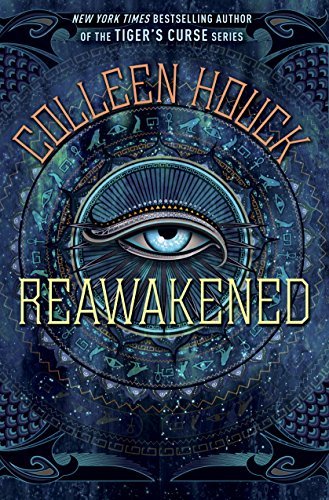 By Colleen Houck
After stumbling upon a half-naked, very hot (no pun intended) Sun God at the NY Metropolitan Museum of Art, Lily gets sucked into his battle against the Egyptian god Seth. Moving between the world of elite New York and the ruins of Ancient Egypt, the story pits the ancient Egyptian gods in their never ending battle for supremacy.
Honestly, I’m not sure how I came across this book. It’s something that I only have as ebook, so I must have stumbled on it through an online recommendation. I am glad I found it though. The action is well-paced and the romance is compelling without being overdone. For authors looking to add romance to their fantasies, this book does a good job of incorporating the two without letting one element overpower the other.


October 11, 2016
The Joy of Reading
As authors, it can be hard to read for fun. It’s hard to not notice the character arc or the plot structure. Turning off your brain so you’re not analyzing the theme can be a challenge. And although there are definite benefits to critical reading texts, it can take the joy out of reading.
Since one of our goals as authors is to bring the joy of reading to others, it would make sense for us to experience the joy (again) for ourselves. Here are some suggestions for rekindling a love of reading:
Read outside your genre. I find I’m less likely to read critically if I’m reading something I don’t write like adult techno-thrillers or parenting memoir books. These books can be highly entertaining and I can appreciate them as texts.
Speed Read (so to speak). When I read quickly, there just isn’t time for my brain to do a complicated analysis of the text. There’s just time to let the words build pictures in my mind before I move on to the next scene.
Read books you love. The books you love to read might not be the types of books you write. However, sometimes we get in the trap of only reading books related to our market. Taking time to go back to those books we enjoy, even if they are a guilty pleasure, can help bring joy back to reading.
Ultimately loving to read again is important because it will be reflected in your writing. People who are fulfilled in their reading life often bring that joy to their writing life.
September 26, 2016
Book Review: The Lunar Chronicles
[image error] By Marissa Meyer
I am possibly one of the last to do so, but I finally got around to reading the 4 main books in the Lunar Chronicles Series. Basically, the books are retellings of Grimm Fairy Tales set in a techno future with the Earth pitted against the humans on the Moon. The books revolved around Cinder and her compatriots as she tries to right an old wrong. To say more would be to fill this review with spoilers.
I certainly understand why these books are so popular. I enjoyed them quite a bit. I’m always a sucker for retold fairy tales, and these did not disappoint. By far, my favorite book was Cinder, but I enjoyed all of the books that I read in the series. However, once I was done with the overall plot line, I did not feel the need to read the short stories or the other associated materials.
I would recommend this book for those who like retold fairy tales, especially those who are thinking of writing one themselves. This was a novel way to approach an old subject matter, and I appreciated that.
Review: The Lunar Chronicles
[image error]By Marissa Meyer
I am possibly one of the last to do so, but I finally got around to reading the 4 main books in the Lunar Chronicles Series. Basically, the books are retellings of Grimm Fairy Tales set in a techno future with the Earth pitted against the humans on the Moon. The books revolved around Cinder and her compatriots as she tries to right an old wrong. To say more would be to fill this review with spoilers.
I certainly understand why these books are so popular. I enjoyed them quite a bit. I’m always a sucker for retold fairy tales, and these did not disappoint. By far, my favorite book was Cinder, but I enjoyed all of the books that I read in the series. However, once I was done with the overall plot line, I did not feel the need to read the short stories or the other associated materials.
I would recommend this book for those who like retold fairy tales, especially those who are thinking of writing one themselves. This was a novel way to approach an old subject matter, and I appreciated that.
September 8, 2016
The Case for a Good Editor

No one’s going to argue that when it comes to creating a book, the most important person is the author. After all, it is the author that brings the story to life, that brings the idea to the page. But just like with any career, there are people that can make that idea the best it can be. Right now, I am specifically thinking about editors.
Now, let’s be honest. I’m biased towards editors, and not just because I am one. I feel that editors are some of the most crucial, yet often overlooked part of the publishing (and especially the self-publishing) process. Let’s take a look at what editors add and why they are so important:
Objective Eye: Editors are not emotionally attached to your work. Unlike an author who has slaved over a manuscript, the editor hasn’t invested the same kind of blood, sweat, and tears. They can give an unbiased (or as unbiased as something as subjective as writing can be) opinion on what is working and what is not.
Experience: You’ve written five or six manuscript, but an editor has worked on at least 10 times as many (at a conservative guess). They know what works and what doesn’t. And most importantly, they can tell you these things.
Fresh Perspective: Although critique groups are wonderful, they probably have not seen your complete manuscript at one time. They also have the benefit of being able to have you explain what you are trying to do. An editor works only with the manuscript. They know only what is on the page. Using their experience and objective eye, they can have meaningful insight not just on the manuscript itself, but also on other considerations .
Of course, finding a good editor — at least an editor that’s good for you — is a challenge. Like any business relationship, you have to find a person that fits your working style. However, once you do find that person, you’ll discover just how indispensable they are for your writing process.
August 23, 2016
Book Review: A Study in Charlotte
[image error] By Brittany Cavallaro
A Study in Charlotte updates the Holmes/Watson mythos for modern teens.
Jamie Watson, yes, the descendant of THAT Watson has just started boarding school in Connecticut not far from his estranged father. His interest though isn’t in repairing his family relationship but in meeting and befriending Charlotte Holmes, yes, the descendant of THAT Holmes. The two are off to a rocky start until someone starts murdering their classmates and doing their best to frame it on Charlotte. Unfortunately, not only is Charlotte the obvious suspect, she’s the ONLY suspect. Far from the aid of her brilliant family and her contacts in Scotland Yard, Charlotte with the help of Jamie must figure out who is behind the crimes before someone she actually cares about is hurt.
I’m always curious and yet somewhat skeptical when I pick up another reinterpretation of the Holmes/Watson mythos. Some are better than others. This one falls firmly in the better category. Holmes and Watson stay fairly true to the originals while still being their own unique characters. The mystery is worthy of a Holmes, and not obvious or obviously obscured by Watson. I found the book endearing from the beginning to the end. My biggest complaint is that, at the moment, there is only one in this series.
August 9, 2016
Going Back to Writing
I took the summer off from blogging, from reading kid books, and from writing. This wasn’t an intentional decision. I didn’t sit down and decide that I wanted a break. Instead, life sort of caught up with me. All of the sudden it was August and Back to School Season was upon me.
Well, I’m not going back to school, but I am going back to writing.
I have a new WIP that I’m quite excited about. Set in the same superhero world as my teen WIP, this middle grade lets me play with some familiar characters and some new ones. The goal is to do two chapters a week, which seems like a low bar (about 2k words), but it has to be fit around CBAY’s publishing schedule and homeschooling. So, I’ve come up with some strategies to meet this goal:
Critique Group Accountability
I have joined (in fact I’m the point person) for a local critique group. We meet almost every week, and I plan to have a new chapter each week. Since my goal is two chapters, this at least makes sure I get half-way there.
Deadlines
I have plans for this book. Big plans. There’s a conference I’m attending at the end of October, and I may get this one critiqued. I have other hard deadlines I want to meet, so I’ll need to stay on top of this.
Writing Retreat
This weekend I head to the biannual writing retreat I attend. Last time I got 23k words written on my superhero YA. I hope to get a very solid amount written on this one as well.
Lots of pre-planning.
I have all of the characters and their quirks, backstories, etc. mapped out. I have half of the plot figured out. This doesn’t mean that it won’t change, but I have a solid base in place. Lots of people don’t need this kind of structure, but I’m not one of them. The more I have developed in advance, the better I write.
My goal is a 30-40k novel in no more than 5 months. Now, let’s see if I can stay on track.
June 3, 2016
Book Review: Princess of Thorns
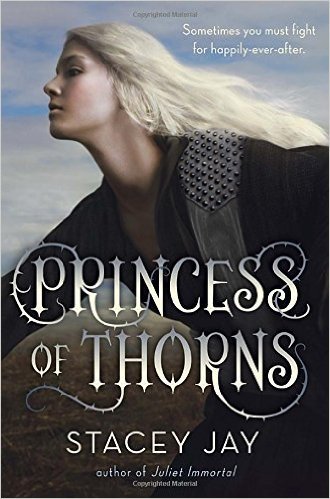 By Stacey Jay
Princess of Thorns is an interesting mash-up of the Sleeping Beauty and Swan Prince fairy tales.
Aurora, the daughter of the famed Sleeping Beauty, has been blessed or cursed depending on your viewpoint by her mother just before her mother’s death. With these fairy gifts, Aurora has the power to take back her throne from the usurping Ogre Queen and the ability to save her world from darkness. To do so, she needs the help of Niklaas, a prince who is doomed to become a swan on his eighteenth birthday if he can’t get Aurora to marry him. With aligned interests, the two should be able to work together, but that wouldn’t make for a very interesting story. Instead, the two work at cross-purposes and flat out lie to one another in an effort to preserve their secrets and respective curses.
I found this book to be quite an enjoyable read in the vein of Stacey Jay’s other works. Although there is plenty of action and adventure, at its heart, this book is a romance. Through the first person narration, we get to see as each character comes to terms with their own failings and feelings.
I would recommend this book to anyone who enjoys either retold fairy tales, teen romances, adventure books, or all three.
May 24, 2016
What Novelists Can Learn from Screenwriters
Some of my favorite writing resources weren’t written by novelists or for novelists; they are the books written by screenwriters for plotting a movie. These books have some of the clearest, most helpful words ever written on the subject of plots.
“How can that be?” I know you are wondering. “Novels predate the movies by a substantial bit.”
That’s true, but theaters predate novels by even more time, and a screenplay is just a play for the screen. (And a teleplay is a play for television. Funny how those words work.) Of course, there are differences in plays written for live performance and those written for the movies, but the fundamentals of plotting remain the same. And these narrative structures are the ones we’ve grown up seeing and have come to expect in our ficiton.
After all, unless you are one of the few people that reads 1 or more books a DAY, then you probably are exposed to more movies and television shows than novels. For better or worse, all of this conditioning means that we expect certain things to happen in our fiction (whether it’s a novel or a sitcom) at certain times. In my experience, screenwriting guides do the best job of sharing the information. Below are my three favorites:
[image error][image error] Story Maps by Daniel Calvisi
This is by far my favorite, and the one that I recommend the most. Calvisi does an excellent job explaining his system and using well-known movies to illustrate his point. The thing I like best though, is that his story maps can be used for just about any type of plot you can devise. Whether working on a romance, fantasy, or contemporary novel, this system will work for your book.
[image error] [image error] The Writer’s Journey by Christopher Vogler
An excellent resource, especially for authors of fantasy/science fiction or anything with an epic scope. Although you could use this for any type of tale, the language does lend itself best for works falling in the Fantastic genre.
Based on Campbell’s Hero’s Journey, this book breaks down into readable bits everything you would need to create your own compelling, epic journey.
[image error] [image error] Save the Cat by Blake Snyder
I like this book for a lot of reasons. It has a great way of breaking out a plot and looking at it in a different manner. I don’t find it quite as flexible as Story Maps, but I do think there’s a lot of really great stuff in this book. I especially love the way he has you look at character interaction throughout your work.
May 11, 2016
Big Day!

Today is a big day for this little old blog. On this day exactly, ten years ago, I began blogging about editing for a small press over on Blogger. Over time, that blog has moved locations, changed looks and merged with my parenting blog, but you can still find every Buried in the Slush Pile post and page I’ve ever written here on this site. Click on the Buried in the Slush Pile link on the homepage or in the menu, and it’ll bring up the archive for every editing/writing post I’ve ever done. Ten years worth.
Ten years.
Granted, the number of posts has varied by year. My output drastically decreased after I had a kid. (Shocker, I know.) But it’s hard to wrap my head around the fact that I’ve been editing (and talking about editing) for over 10 years.
In honor of today, I’ve put together a list of my favorite recent posts:
6 Questions to Ask When Planning Your Novel
Your Children’s Book’s Two Audiences
Where the Money Goes (The updated version)