Madeline Smoot's Blog, page 7
August 14, 2017
Motivated Villains
I attended RWA 2017 last month, not as a speaker, but just as a normal attendee. There’s something freeing about attending workshops and classes for writing that is outside your genre. For one thing, it’s a not so gentle reminder that good writing is good writing no matter who your ultimate audience is. But the best part is that different genres approach craft differently, and it’s nice to look at writing from other perspectives.
For instance, after being at RWA, I’ve been thinking about the antagonist (or villain) of my works very differently. Like I told the subscribers in my newsletter earlier this month, I’ve always considered my antagonist purely as a function of the story. He/she (or it) exists solely as the monkey wrench that wrecks my protagonists’ easy journey to meeting their goals or having their wants/needs fulfilled. In many ways, this kept my antagonists from becoming fully developed characters. Sure, I was making them realistic and taking them away from a stereotype. Yes, they were still thwarting the protagonist in interesting and novel ways. Still, I was cheapening both them and their stories.
Instead, I now consider my antagonists’ wants and needs and their goal in the same way that I do my protagonists. After all, every antagonist considers themselves the hero of their own story. No one considers themselves the villain, and most of the time, antagonists are not the pure embodiment of evil. They are their own distinct persons, and they need to be respected as such.
So, ask yourself the following questions, and take the time to explore your antagonists. After your protagonist, they are the most important character in your story.
What is my antagonist’s motivation. Why do they do what they do?
What does my antagonist need? What do they need to do to get this?
What is my antagonist’s external goal?
How do my antagonist’s goals and my protagonist’s goals directly contradict one another? How does this cause the story’s conflict?


July 15, 2017
So, you think you’re a …
The thing is, it doesn’t really matter. At some point, regardless of whether or not you are a plotter or a pantser, you will have to outline your book. It’s just a matter of when.
[image error]Plotters outline up front. They figure out in advance what they want the story to do and where they want it to go. It can be a way to save time during the writing and editing because they already have a plan in place. (I confess that I am a firm plotter. I know, it’s hard to believe what with my fly by night and loosey goosey attitude towards life in general. Oh, wait. That’s literally anyone else.)
[image error]Pantsers do still often need to outline, they just do it after the first draft. That’s when they sit back down, read through, and see if there manuscript is working the way they want. They have beta readers see if they story seems to flow the way it should, and if (or when) it doesn’t, that’s when they outline their existing story to see what they may be missing.
In the end, whichever kind of writer you are depends on what works best for your mood and temperament. I’m a tried and true plotter. That’s just the way it is. But however you write, you will at some point need an outline. Fortunately, I have the thing for you.
While still working on my story planning masterpiece, Story Slices, I came up with the following outline, that you can download for free.
So which is it? Are you a plotter or a pantser?
March 17, 2017
Book Review: The Creeping Shadow
[image error] By Jonathon Stroud
This book is the fourth in the Lockwood & Co series that follows a group of teen ghost hunters as they try to rid London and the surrounding countryside from the paranormal problem that’s been hunting the world for just under 100 years. Fast paced and well-plotted this entire series is a must read for anyone who is writing middle grade or YA adventure. (They’re also just good reads!)
What I love about Stroud though is his amazing ability to craft a first sentence/first page/first chapter/first scene. This author knows how to create a compelling hook. Every single one of his books, even this one, the fourth in a series, sucks you in by the very first page. If you do nothing but go to the library and read the first page or two of all of his books, you’ll still get to see a master at work. However, while you are there, you might as well check out the Lockwood & Co books. They are a fun YA (if you like the light horror genre).
March 3, 2017
Marketing Your School Visit

In a couple of weeks, I’ll be speaking at the North Texas SCBWI Schooled on School Visits Event. I’ll be talking about a number of things including MG/YA school visits and doing joint visits with other authors.
And I’ll be talking about marketing. I always end up talking about marketing.
Just like with your book, you must let the world know that you are out there, ready to talk to rooms full of students. So, how do you connect with those librarians and teachers who can book you into their schools?
Handout postcards or flyers at local librarian events.
In Texas, that means attending the annual Texas Librarian’s Association (TLA) conference. Whether your publisher arranges a signing or you have time in a joint booth like the one put on by the regional SCBWIs, make sure to have postcards or flyers with your school visit information. Also in Texas, the regional Education Service Centers (ESCs) put on local librarian programming in the form of day long conferences. Offer to speak at one of these or have a table in their lobby. This is a great way to get facetime with librarians and even show them a bit of your school visit.
Word of Mouth
Once you’ve done a successful school visit, remind the librarian to recommend you to other schools who may need authors to visit.
Run Promotions
There are a number of things you can do to help build up your school visit business. You can:
Offer to do Skype visits for free
Run discounted rates
Offer free visits in return for X number of book sales
Run contests for librarians
Using a Booking Agent
There are professionals out there who will find you school visits, negotiate all the details, and just tell you when to show up. Of course, they take a percentage of your fee for doing all of that work, but they can be worth every penny. Many Texas author that I know use the Booking Biz. They are also a good source for information on school visits.
Once you’ve gotten a school visit booked, you have to negotiate the details in a contract. Check out School Visits Experts for great information on what should be in your contract.
After that, you have to deliver with a fantastic school visit. But that? That’s the fun part.
February 27, 2017
Book Review: Pitch Perfect: How to Say It Right the First Time, Every Time
[image error] By Bill McGowan
This book is not specifically about pitching your book to agents and editors. It’s broader than that. The skills in this book are applicable whether you are sitting in a pitch session or are about to do your very first school visit. It’s about delivering content in the most efficient, most interesting way possible.
I highly recommend this book. Yes, it’s perfect if you are about to pitch to an agent or editor at a conference, but it’s also a fantastic guide for handling all interpersonal communication. I’m in the process of incorporating some of the best practices into my own presentations and interactions. Beware though, you’ll want to read this with a notebook by your side. This is the kind of book where you want to take notes.
February 8, 2017
Running a Critique Group
One of the best things for your writing is to get feedback from other knowledgeable authors. The easiest way to do this is to set up a critique group. Then, you and like-minded individuals can get together to review and strengthen each other’s works. Of course, the easiest and best thing is to join an existing group. However, that’s not always an option. So, if you find yourself gathering some author friends together and starting your own, here are some ways to keep organized:
Keep a spreadsheet of members and their emails. As people’s lives get busy, the members of the group will probably come and go. Keeping a list somewhere other than in your email kept help keep your sanity.
Agree in advance how you want your group to work. Do you read in advance and bring critiques to the meeting? Do you critique “off the cuff” when you get there? Do you read some of your work at the meeting? Different strategies work for different people.
Have a point person. This doesn’t have to be a leader per se, but you do want someone who organizes the meetings and keeps track of who is in the group/can attend any particular meeting.
Even if you already have a critique partner or dedicated beta readers, it never hurts to consider joining a critique group. You can never get to much feedback. (You don’t have to follow all of it, but it doesn’t hurt to receive it.)
January 29, 2017
Book Review: Tut: The Story of My Immortal Life
[image error] By PJ Hoover
After being betrayed by his uncle, Tut has been stuck in the body of a fourteen year old for, well, ever. With his immortal protector Gils and Horus and a bunch of funerary shabitti (who are a lot more useful than they sound), he has been just trying to blend in and live his never-ending life. Unfortunately, his uncle and the worshippers of Set have different ideas. The day Tut became immortal, his evil uncle did too, and after 3000 years, his uncle has been released. And after 3000 years stuck in a tomb, Tut’s uncle has had plenty of time to plot and plan his revenge.
With a thorough grounding in mythology, Tut is a fun read for any age. Of course, perfect for fans on the various Rick Riordan series, this book also appeals to anyone who loves adventures and mysteries. The next book comes out next month (Feb. 2017), and I, for one, cannot wait to read it.
**Disclaimer** I have published some of PJ’s other books (The Emerald Tablet comes to mind), but that didn’t bias my review above. At least I wasn’t biased beyond being predisposed to liking a book by an author I already enjoy, but I’m not sure that’s a bias that can be avoided.
January 19, 2017
The Lost Art of (Hand)writing
Most of the time I write on my computer. It’s more convenient; it’s easier to edit. However, I’ve taken to keeping a handwritten daily log/idea journal, and the results have been amazing. It turns out there’s something about handwriting that can help solidify a story idea. And it’s not just me that thinks this. I hear there’s actual neuroscience behind the benefits of handwriting.
Now, I will admit that I don’t write huge amounts of my story by hand. After all, it can be kind of slow. Often I’ll write the first few bits of a scene or a bullet list of ideas. My journal is also a cross between a daily planner and a writing journal. It’s what works for me, but you’ll want to find what works for you.
For inspiration, search Instagram or twitter for #bulletjournal. Here are some of my favorites:

January 18, 2017
Dragons & Witches
 Purchase: IndieBound | Amazon
 | Barnes & Noble
Paperback, Anthology, Fairy Tales
$9.95
Purchase: Amazon | Barnes & Noble | Kobo | iBooks
Ebook, Anthology, Fairy Tales
$4.99
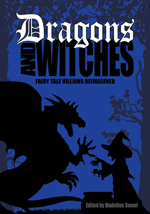
Dragons and witches have traditionally been the creatures of nightmares, the villains of fairy tales that are intended to haunt readers long after the stories have finished. Ten authors reimagine these villains in different guises and styles and in new and meaningful ways. In the end readers will be left wondering, are bad guys always bad?
Edited by Madeline Smoot
Including Stories by Susan Bianculli, Sarah Lyn Eaton, Ariane Felix, J.G. Format, Valerie Hunter, Mari Mancusi, Kath Boyd Marsh, Joy Preble, C.H. Spalding, Renee Whittington
November 19, 2016
Book Review: NeuroTribes
[image error] By Steve Silberman
This book takes a look at autism from its original identification last century to how autism is approached today. This is a good overview book for people who are directly impacted by autism (by a child’s diagnosis, for instance) or for those who want to know more about the behavioral traits that now affects a large minority of children here in the US.
I appreciated Silberman’s comprehensive look at autism as a subject. This isn’t a book that tells people how to react to certain behavioral situations; this isn’t an autism “how to.” Instead, this book helps put autism into context. I found both the historical information and the current information to be relevant. I highly recommend this book for just about anyone with even the slightest curiosity about autism and neurodiversity.