Madeline Smoot's Blog, page 2
January 6, 2024
New Year, New Writing Goals – Part 1
The Earth has spun around the Sun one more time, and you know what that means.
Time to restart our goals for the year.
The thing is, we often don’t make goals we can actually accomplish. At least, I used to make goals that I couldn’t actually accomplish. So a while back I sat down and figured out the difference between the goals I achieved and the ones that sort of fell away. And I realized that all the goals that worked were the result of answering 3 different questions. Today, we’re going to focus on the first one.
Question 1: What do I want?So, first off, what do I want?
This is where you figure out your actual goal. But, we’re not going to write just anything here.
We want goals that are realistic. I would love to write 24 books this year. And although that goal might be entirely possible for someone like PJ Hoover (one of my CBAY authors), it’s entirely unrealistic for me.
You also want something that is actually achievable. To use my example before, I simply cannot write 24 books in one year, even if I only write picture books. I don’t write daily. Last year I only managed 84,000 words for the year, right at ½ of my original goal.
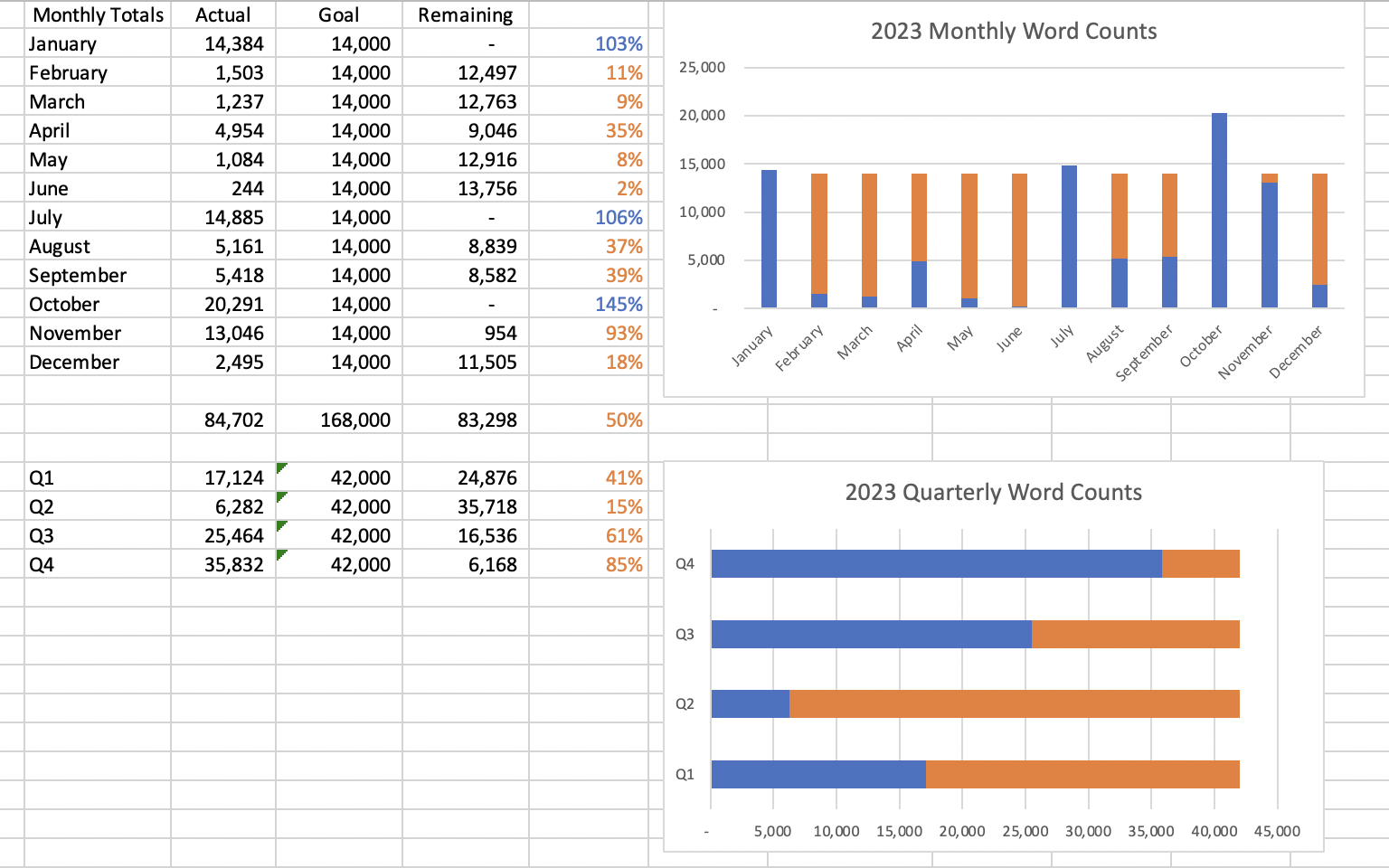
So, obviously, I’ll be scaling down my word count goal to 90,000 words this year. It’s a little more than I wrote last year, so it’s growth, but it isn’t out of the realm of possibility for me to achieve.
And then once you have realistic goals you can actually achieve, then you want goals that are actionable. For example, I would love to win the lottery. That would be amazing. But that’s not something I can actively work towards. Yes, I can buy a ticket, but then everything else is up to chance. Winning the lottery (since I’m not a movie level criminal with the ability to cheat the system) is not something I can work towards. It’s outside my control.
But the same token, getting an agent this year is not a good goal, because it too is outside my control. I can’t control what agents are looking for in manuscripts and clients right now. I can’t control the number of submissions they get and how tired they might be when they get to mine. And as someone who used to get those submissions and read through the slush pile, I can also tell you that I can’t control the mood the agents will be in when they pick up my query. And yes. That does affect things.
So a better goal is something like: start querying. Yes, it will help me towards my dream of getting an agent, but a goal like Start Querying is one that is completely in my control. I determine whether or not I start that journey. I make the query letter, I do the research, I send those queries out. So, I am the one who the success of the goal depends on, not someone else like an agent.
Finally, consider why you want the goal that you are working towards. For example, I could have a goal of wanting to make a million dollars this year. I mean, it’s debatable how realistic or achievable this is, but it’s definitely actionable. But why do I want a million dollars? If the answer is so I can travel, then maybe the goal should be to travel more. But even then I might want to consider my motivation some more. Why do I want to travel? Where? What is it I want to do? If the answer is actually I want to go to Bali and to a ball in Vienna, then maybe instead of the goal: make a million dollars, I need to have 2 goals: Go to Bali and Go to a ball in Vienna.
So, now, shut your eyes and ask yourself:
What do I want?
And then write it down.
(We don’t want to forget our goals!)


November 11, 2023
Madeline’s Tips for Writing a Ton in a Short Time
Sometimes you don’t have tons of time to produce lots of writing. You may have run up against a hard deadline. You may be trying to build your self-published backlist. You may be participating in #NANOWRIMO and trying to write a whole novel in a single month.
Whatever the reason, sometimes you need to get a big old first draft written in a little tiny bit of time.
So here’s some things you should and should not do to write your children’s book in a short amount of time:
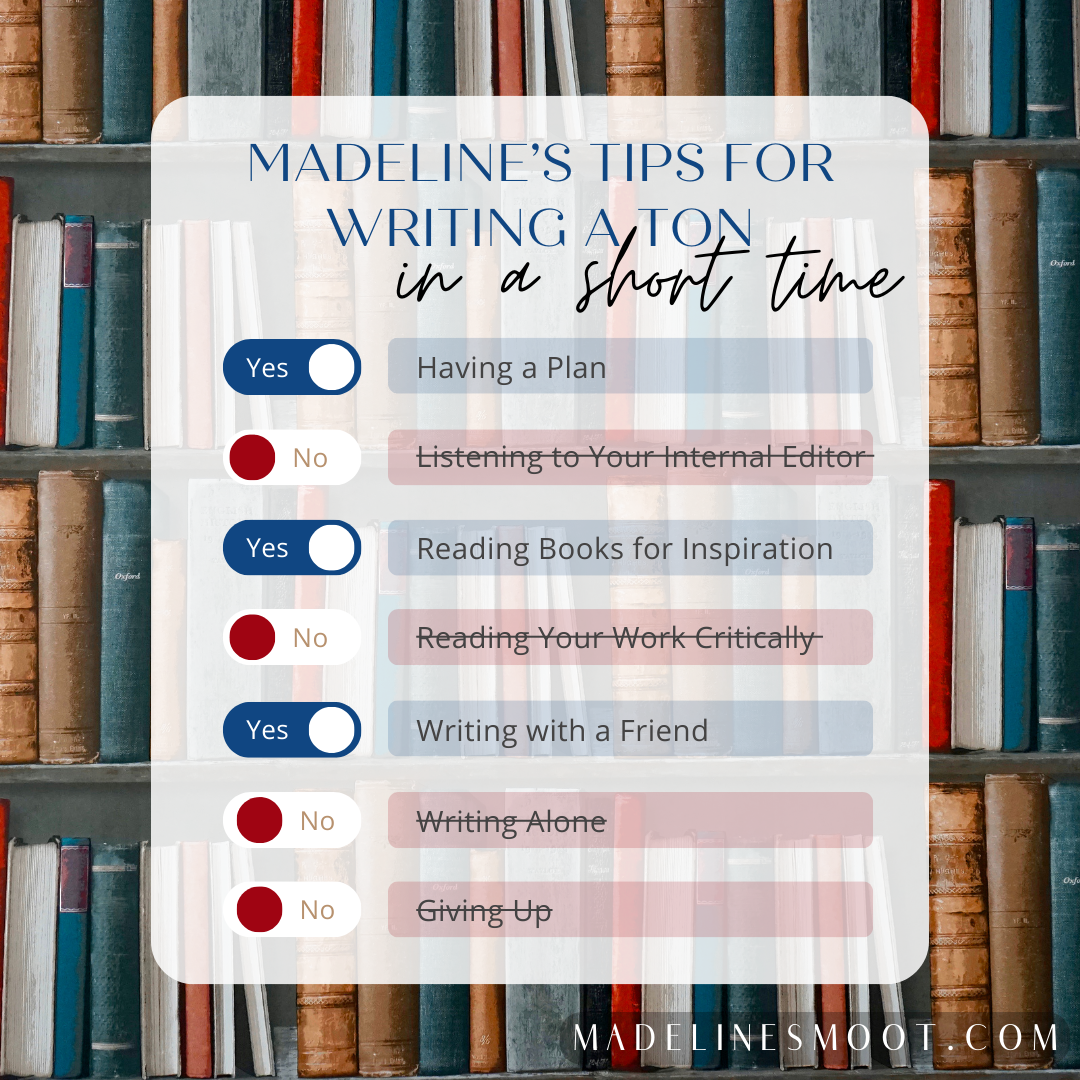
DO—Have a Plan!
Even if you are the pantsingist pantser that ever pantsed the writing of a book, you need to have some sort of idea in mind of the kind of book you’re writing. I’m not saying to outline. I realize that this is a non-starter for you. But, have an idea of where your book starts and where your trying to end it. Things may change, but you’ll spend less time staring off into space if you have these two basics in your mind before you start.
DON’T—Listen to Your Internal Editor
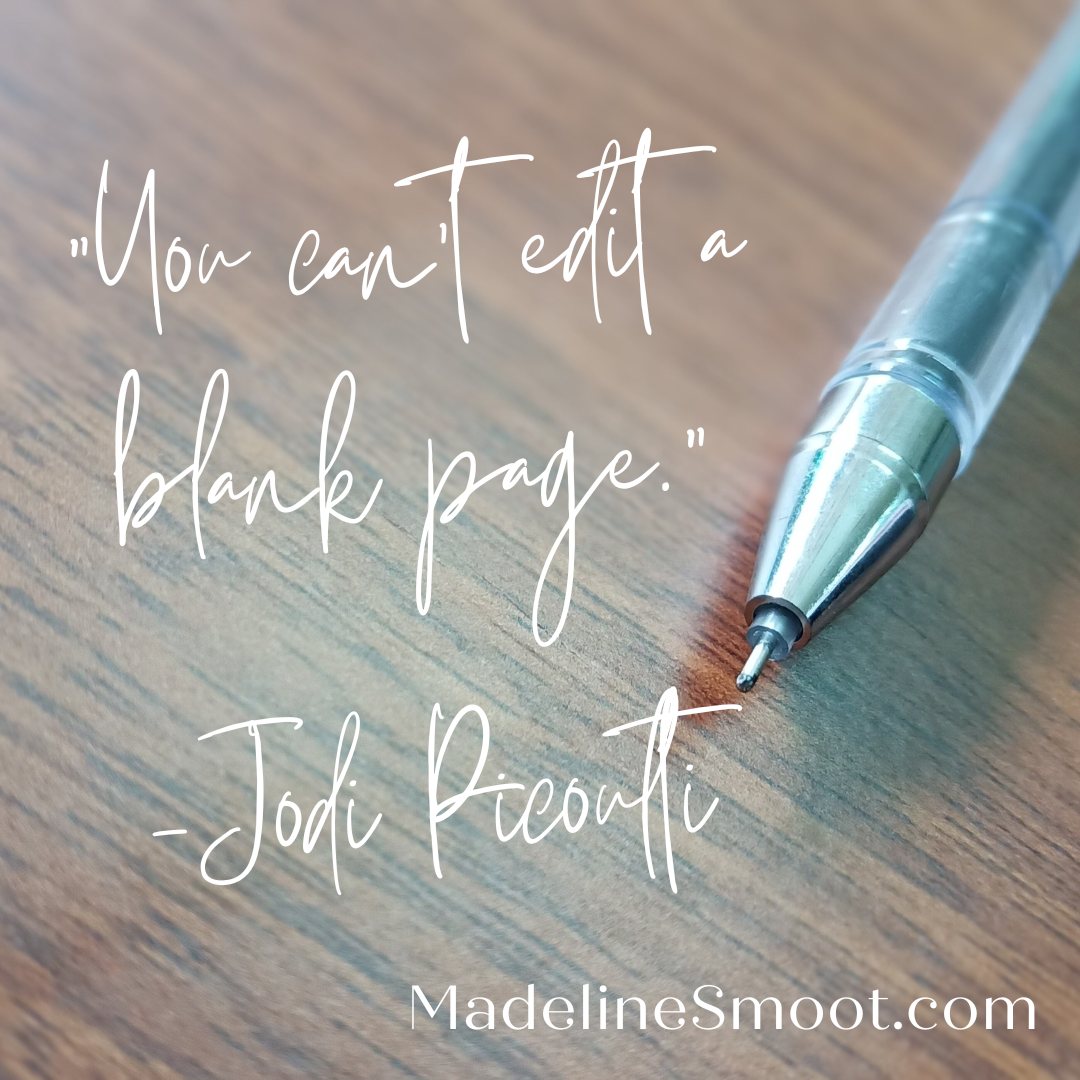
There is a time and place to edit as you go. The first draft is not it. This is true of all first drafts, but it’s especially true of all first drafts being written in a time crunch. You simply do not have time to agonize over every word. Write the wrong ones if the right ones won’t come. You can always go back and fix them. What’s that quote?
DO—Keep Reading
Personally, I’m bad about this. I go through reading phases and writing phases when really I need to do a little of both every day. Reading is inspiring, even when you read things that aren’t in the genre you’re writing. Maybe especially if they aren’t in the genre you write. And just because you need to write 50k words in 30 days doesn’t mean you should stop reading.
DON’T—Read Your Work Critically RIGHT NOW
You will absolutely need to critically read your work at some point, but NOW IS NOT THE TIME. It’s like the whole thing with the internal editor. You’re trying to get as many words on the page as quickly as you can. That means you are not going to waste time rewriting. In fact, I would tell you to not read any of your work at all, but you’ll probably need to read what you wrote the day before in order to get back into your story.
DO—Write with Friends
Too often writing can feel like us alone, just our laptops and our words against the world. It doesn’t have to be that way. Do write-ins either in person or online with writer friends. Find your community in critique groups or at conferences. Because most importantly,
DON’T—Go it Alone
You want to build community during the writing stage because you’ll need it in the revising phase. You’ll need other eyes on your manuscript while you edit, and you’ll need someone cheering you on when you get bogged down in the dreariness that can be revising. We are not the solitary geniuses staring at our keyboards. We are a community of them striving to tell our stories to the world.
And remember, no matter what, DON’T GIVE UP. You’ve got this, no matter why you’re writing at a furious pace. You’re still going to produce an amazing book.
October 26, 2023
2023 Impromptu #NANOWRIMO Schedule and Events with Madeline
It’s almost upon us …
#NANOWRIMO is almost here.
For those of you that don’t know, every November authors get ambitious and try to write an entire novel (or at least 50k words of one) in one month. And not just any month—November, the month that officially kicks off the 6 week winter holiday season. It’s a month filled with family and shopping, so naturally, it’s the perfect month to dedicate copious amounts of time to writing.
Or maybe not.
But that’s what makes it fun and truly a challenge. And it’s a great way to send off this writing year.
I last did #NANOWRIMO in 2017 when I wrote 52k words. I’m pretty sure that’s when I wrote A Harmless Lie and a Dangerous Spy’s first draft. But that was a while back, and I don’t remember for sure.
This year I’ve decided to do it again, and I’m going old school with a brand-new project on day one.
But that means, I need to do some prep work. And it occurred to me that if anyone else is doing #nanowrimo that they might want to do some prep work too. And then I realized that these kinds of things are always more fun with friends, so I figured we should do a bunch of writing get-togethers.
And thus, the Impromptu #NANOWRIMO was born.
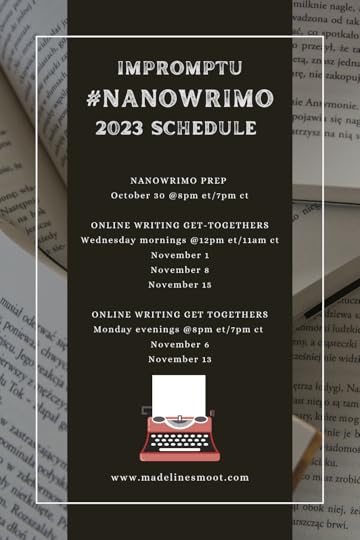
So, for the first next three full weeks, we’re going to be working together to really get our writing routine solidified so that we can meet our goals for the month.
We’re going to kick off everything on Monday with a FREE prep session where I’ll have FREE planners for both my planners and my pantsers among us. (Don’t worry, it’s different depending on what style of writing you prefer.)
And then, we’re going to get together regularly on Zoom and write. Come to as many or as few as you can. It’s totally FREE and meant to keep us from being completely isolated during our writing frenzy.
Finally, we’re going to all officially register on the NANOWRIMO site and become each other’s buddies so we can cheer each other along.
So, if you want to join me in this whirlwind of a writing month, then REGISTER HERE>> so I can send you the emails with the zoom links and the planners.
I can’t wait to see you there!
2023 #NANOWRIMO Schedule and Events
It’s almost upon us …
#NANOWRIMO is almost here.
For those of you that don’t know, every November authors get ambitious and try to write an entire novel (or at least 50k words of one) in one month. And not just any month—November, the month that officially kicks off the 6 week winter holiday season. It’s a month filled with family and shopping, so naturally, it’s the perfect month to dedicate copious amounts of time to writing.
Or maybe not.
But that’s what makes it fun and truly a challenge. And it’s a great way to send off this writing year.
I last did #NANOWRIMO in 2017 when I wrote 52k words. I’m pretty sure that’s when I wrote A Harmless Lie and a Dangerous Spy’s first draft. But that was a while back, and I don’t remember for sure.
This year I’ve decided to do it again, and I’m going old school with a brand-new project on day one.
But that means, I need to do some prep work. And it occurred to me that if anyone else is doing #nanowrimo that they might want to do some prep work too. And then I realized that these kinds of things are always more fun with friends, so I figured we should do a bunch of writing get-togethers.
And thus, the Impromptu #NANOWRIMO was born.
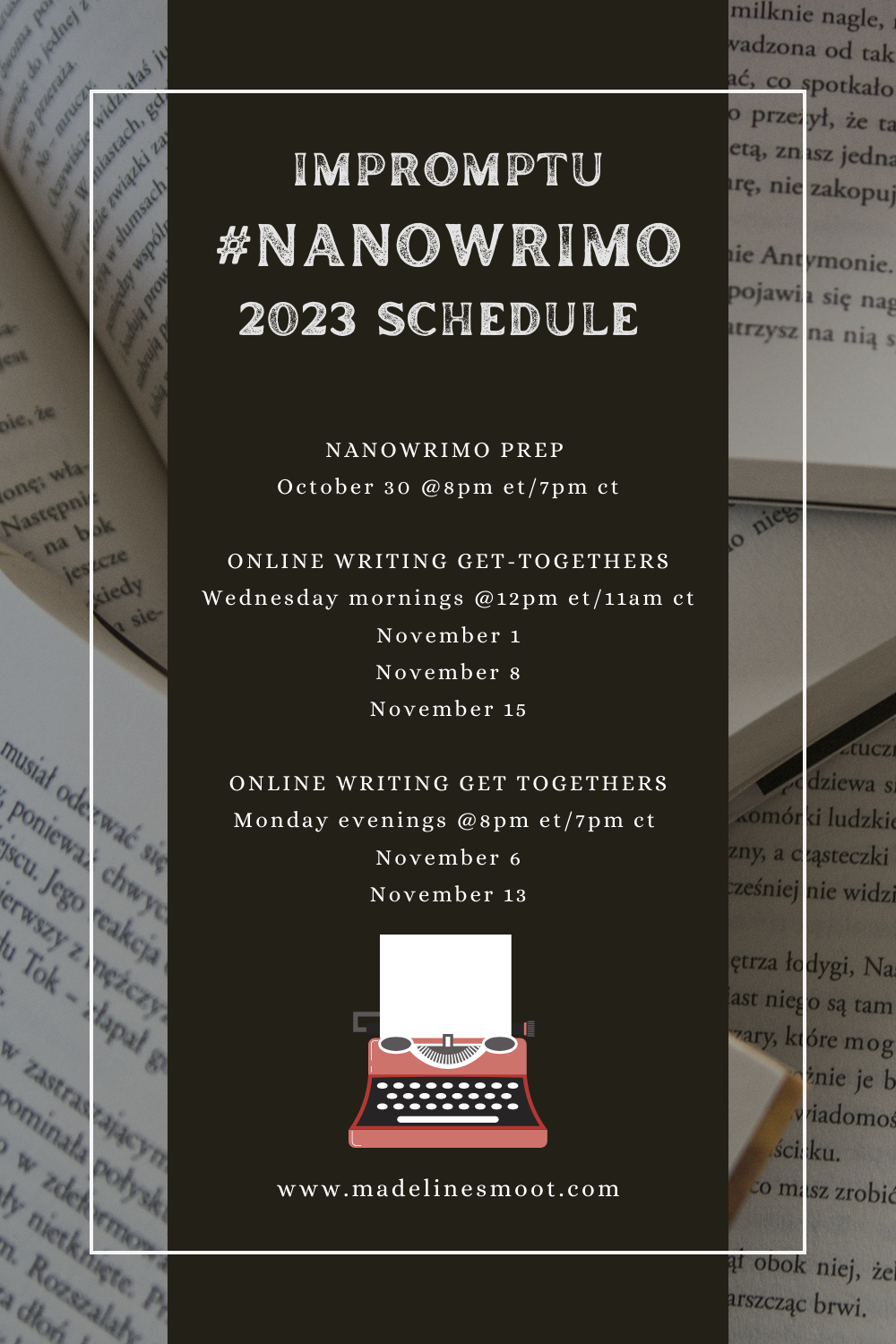
So, for the first next three full weeks, we’re going to be working together to really get our writing routine solidified so that we can meet our goals for the month.
We’re going to kick off everything on Monday with a FREE prep session where I’ll have FREE planners for both my planners and my pantsers among us. (Don’t worry, it’s different depending on what style of writing you prefer.)
And then, we’re going to get together regularly on Zoom and write. Come to as many or as few as you can. It’s totally FREE and meant to keep us from being completely isolated during our writing frenzy.
Finally, we’re going to all officially register on the NANOWRIMO site and become each other’s buddies so we can cheer each other along.
So, if you want to join me in this whirlwind of a writing month, then REGISTER HERE>> so I can send you the emails with the zoom links and the planners.
I can’t wait to see you there!
October 13, 2023
One Page Summary: Questions to Ask
One page summaries can be deceptively simple. After all, you’re just distilling thousands of words into 500. What could go wrong?
Ask any author that’s sat down to write a one page summary only to have it be five pages, and they’ll tell you just how difficult it can really be.
So, I’ve put together a list of the key questions your one page summary should answer. Will your one page summary have more information than this? Probably. But at the bare minimum a reader should know the answer to these after reading yours:
• Who is this book about?
• What do they want, and what do they need?
• What (or who) is stopping them?
• What will they lose if they fail?
• How do they change?
• How do others affect them, and how do they affect others?
• How does it all work out?
Now, you’ll notice, none of these were about your specific story beats. They should absolutely be in your summary, every single one of them. But these questions speak to the heart of your story. And you never want to leave that out.
So, as you are wading through the details of your story, trying to determine which ones make the cut, prioritize the ones that speak to these questions. Those are the bits of information that can’t be left out.
September 29, 2023
One Page, One Summary
It’s time for everyone’s favorite part of a query! The one page synopsis! Yay!!
I can just hear the phones clicking shut and fingers slamming on the ctrl+Q keys to avoid this topic. No one likes the one page synopsis. No one.
But why are they the bane of every author’s existence?
Because after having written a novel of 10,000 or 30,000 or even 100,000 words, you then have to take your epic tale and condense it into 500 paltry words. It’s infuriating. It’s depressing.
It’s necessary.
The thing is, you’re going to need to talk about your children’s book in 500 words or less from now until the end of time. You need to be able to tell people a quick retelling of your story so that they’ll want to read your book. The one page synopsis is like your elevator or other types of pitches, just a little longer and with spoilers.
So, what are you putting in that synopsis?
For starters, your entire plot. You aren’t leaving anything out. Theoretically you’ve already outlined your book, so use the plot points from that outline. This will make sure you don’t miss any story beats or forget an important subplot.
Then, you’re going to make sure you’ve included all your major characters (by name) with indications of their goal-motivation-conflicts and character arcs. Again, if you listed these during the revision process, it’ll go much faster.
Finally, you’ll have an indication of the stakes for the story. They should already be present since they are an integral part of the plot and character arcs. So, if they don’t seem to be there, it’s a good idea to consider tweaking your summary again.
In the end, the one page summary is just another chance to tell the agent or editor that you are querying just how amazing your children’s book is. You can encapsulate that entire story in 500 words or less. I just know it.
August 31, 2023
Four Questions, One Query Letter
Query Letters answer four questions.
Seriously. That’s it.
That’s all they do.
Yes, you’ll see posts (including mine) that will talk about query letters and break them up into paragraphs. But those paragraphs are answering four fundamental questions:
1. Why is this agent/editor the person for this book? (Or why is this book good for this agent/editor?)
This is where you get to showcase your knowledge of the person you are querying, where you can show that you did your research. This is the perfect paragraph to throw in a couple of comps. For example, if your book is perfect for fans of that new YA that just hit the bestseller lists, then tell the person you’re querying that information.
2. What is your book about?
Time to put that summary to use. You want the person you’re querying to get an idea of the story they’ll find in your manuscript.
3. Why is this book important? (Or why should the world/readers/the person you are querying care about this book?)
This speaks to the heart of the story. Why are you choosing to tell this story in this way? Who are the readers that are going to connect with it? Why is this a story that needs to be told now?
4. Who are you to be telling this story?
This is where you relay your RELEVANT bio. If your book is about runaway teens and you’ve been a social worker helping them for the last 78 years, this is where you put that information. If you’ve been published in some way, if you have run a bookstore, those details go here. And sometimes you don’t have something relevant to the story you are telling. That’s okay too. It’s also fine to say that this is your debut novel or that you have successfully self-published but have decided to branch out into traditional publishing. The important part is that the information is relevant.
So, if you find yourself struggling with trying to tell the world about your book, ask yourself those questions. Then answer honestly and watch that first draft of your query letter take shape.
August 25, 2023
Striking Inspiration
As creatives, we often have no shortage of ideas. In fact, one of the challenges can be sticking to an idea and seeing it all the way through to the end. I don’t know how many times I’ve been mid-book only to get what feels like an even better, more interesting idea.
Sometimes inspiration strikes you.
But sometimes you have to strike it.
There are times when you look at all the ideas you’ve had, all those ideas that seemed genius in the moment, and the thought of turning that into a children’s book leaves you just kind of meh. That’s when you need to actively seek out a new idea.
You have to strike out and create your own inspiration.
So where do you look?
Literally everywhere. Everything, even the most mundane thing can inspire you in some way. But that is perhaps not the most helpful of advice.
So, if you find yourself stuck, staring into space, then you’re going to one to start in one of two places:
· Your main character or
· Your world
If you are starting with your main character, then who is this person? And what do they want?
Right now, my dog is curled up next to me taking a nap. So, let’s pretend I want to write a story about her. So, we’ll call her Dog, and she could want any number of things. She’s part lab with a bottomless stomach. She could want food. She’s currently napping. She could want a better bed, specifically she could want to trade beds with the humans. There are so many relatable stories I could tell from picture book through middle grade just about my one dog.
And if you are starting with your world, then what is that place like? What are the rules that run it?
I don’t mean that you have to create an epic fantasy world or an alien planet. Your world could be a high school drama club. The rules could be that what happens in drama is the drama. Or maybe, the queen bee that de facto runs it has decided that only she gets to be the star. Everyone else has to figure out their supporting roles around her.
All of that was stuff that I came up with off the top of my head while writing this. In fact, I stopped halfway through this article to go start a picture book idea I had – starring my dog.
I know that you have a treasure trove of inspiration just waiting to be revealed. Next time you get stuck, just spend a second or two searching through it. You’ll be surprised by what you might find.
August 14, 2023
The Stars of Your Story
When it comes to writing a children’s book (or a YA), the characters are the most important part! No matter how cool your concept is, if your characters aren’t compelling, readers won’t care enough to go on the journey with them.
So, who is the book about? Here are the key people to keep in mind:
Primary Characters: The main character (your star character) and the main antagonist are the primary characters in your book. The main character is usually the hero or anti-hero, and the main antagonist is the person standing in their way.Secondary Characters: These characters are extremely important, even if they’re not the main focus of the story. They provide someone for the main character to interact with.Stock Characters: You can use some stock or types of characters, such as the Nerd or the Bully, the Mentor or the Hero, as a sort of shorthand. However, it’s important to avoid stereotypes and to give these characters some complexity beyond their type.Other Antagonists: You may have other antagonists that provide conflict in the story, but they are not the main focus.But just having characters isn’t enough. They are more than just props in the cool world you wrote. When it comes to developing your characters, it’s important to start with your main character. So,
Focus on One Character: While you may have multiple primary characters, it’s important to focus on one main character, the star, as the one with the most character growth and the one that is instrumental to the climax. Even in an ensemble book, there tends to be one that truly shines.Don’t Forget Their Goals! (or Motivations): This is the way the reader can identify with your character. Even if they aren’t the most likable people in the world, we still can understand their motivations for wanting the things they want, their goals. Your characters aren’t just drifting through the world you made. They have a purpose, and your reader should know what that is (even when your character doesn’t).**And don’t forget your antagonists here. They have wants and needs and motivations and goals too!**Develop All Characters (at least a little): While focusing on the main character, it’s important to develop all of the characters in your book to some extent. This is what keeps your children’s book from feeling flat and uninteresting.
So how do we develop our characters? By making them grow, or in this case because they are kids and teens, grow up.
Character Arcs for All! Okay, not literally, but the main characters definitely have to have one, and most of the secondary characters will have small arcs too.Change Is Good. We are not static people, and neither are our characters. They can learn things about themselves or circumstances can force a change, but no matter what they are changing, their character arcs will reflect that.Maybe Meet a Milestone? Since we are talking about kids and teens, they do hit developmental milestones all the time. You don’t necessarily need one in your children’s book, but they can add a richness to your story if they are appropriate.Remember, the characters are the heart of your children’s book, so take the time to develop them fully.
June 30, 2023
Query Letter Basics
It’s been a bit since I’ve talked about query letters for kid’s books, so I thought it was time to review them again. I always think that the best query letters answer two questions: What is this book about? & Why should I care?
However, there’s way more to a query letter than just that. A query letter is basically a business letter to a potential business contact. That means we’re going for professional, not cute. This is the time to show that you are a mature professional-oriented person. Your manuscript can be as fun, creative, and innovative as you want. Your query letter should not be.
This is not to say that you’re writing stodgy, jargon-filled sterile letters. Your personality and voice should still shine through. It just means that this isn’t the time to use the weird fonts or embedded gifs or memes. Standard grammar, punctuation, and spelling are preferred in a query letter as well as standard information broken into roughly four paragraphs and a conclusion. Those paragraphs are:
Paragraph 1: This paragraph is about why this agent/editor is right for your book and why your book is right for the agent. This is the place to personalize the query to them and show that you are thoughtfully submitting. It also is a good time to let them know what existing books yours is similar to. For example, if I was querying my book A Harmless Lie and a Dangerous Spy, I would say that this is a book for fans of Stalking Jack the Ripper or Paper Girls of Paris. This is also the paragraph to say what market segment and genre your book falls into. My book is a YA historical romance.Paragraph 2: This is a summary of your book. This isn’t like the teaser type copy that you see on the backs of paperback books. This is a summary that gets at the heart of your book and can give away the end. Sometimes this paragraph is actually broken into two.
Paragraph 3: This paragraph tells the agent why your book is important. This is a great place to touch on your themes and any social issues your book may address. Basically, this paragraph answers the question, why should I care about this book?
Paragraph 4: This is your bio. However, it’s more than just a bio or your writing history. It’s a place to say why you are the person to have written the book. It’s a good place to explain the connection or emotional connection you have to the story, the material, or the theme. If you wrote a book about wildlife preservation, for example, this is a good place to reveal your biology degree or the time you’ve spent working or volunteering at a zoo. Even if your connection to the book isn’t that blatantly obvious, you are connected to your book in some way. All of our books are a little piece of ourselves. This paragraph is a good place to show that.
Conclusion: You just need to thank the agent for considering your work. This is also a good place to explain that your manuscript is complete and the word count.
From there, just lay the letter our in a standard email format. This would be single spaced with a line between paragraphs, standard for your email program font, with a greeting at the beginning, and your name and some contact information at the end.
Remember the agent or editor wants to know what your book is about and why they should care. Your job is to tell them that information and then let your amazing manuscript speak for itself.