Madeline Smoot's Blog, page 10
November 20, 2015
5 Questions to Ask About Your Character

Now there are some things all main characters should have in common regardless of whether they were written for the adult or children’s market. They should.
Have wants and needs
Grow in some way (emotionally or spiritually)
Be realistic
Not be a stereotype of some kind
However, there are some extra things to consider when writing for kids. Here are five questions to ask yourself about your main character.
Is your character a kid?
I know this one seems self-explanatory, but you would be surprised the number of children’s books that don’t have a kid as the main character. This is especially true in animal fantasies. People seem to think that just because a book features an animal as the main character, it must inherently be for kids. An animal book for kids has a child-like character as the main character. Think of Charlotte’s Web as opposed to Animal Farm. Both feature animals living on a farm. But Charlotte’s Web’s Wilbur is clearly a little boy. The pigs in Animal Farm are clearly adults.
Is your character age-appropriate?
If you say your main character is six, then that kid needs to act six. Developmentally, six year olds are not yet ready for sarcasm. So, if your main character is a sarcastic know-it-all, the kid is going to read older than six. You can change this by either changing the child’s age or removing the sarcasm.
Does your character grow (up)?
This is not a hard and fast rule, but in general, a main character in a kid’s book doesn’t just grow emotionally, they grow up. They reach and pass different emotional milestones. They become a little older, not just chronologically, but emotionally.
Is your character likable or relatable (or both)?
The key here is that you need to have a way for your reader to connect with your character. The easiest way is to have a likable character that the reader wants to succeed. However, even if the character is unpleasant, you can still connect with the reader if the reader can relate to the character in some way.
Is your character worth reading about?
Sometimes when we are more interested in the plot or world building or something, the character suffers. The adventure the character goes on may be wonderful, but if the character is a stereotype or unmotivated, then the story just won’t work. You have to have a character worth rooting for, or the reader won’t come with the kid on the journey.


October 26, 2015
6 Questions to Ask When Planning Your Novel
Every person who has a kid in school or has been a kid in school or has met a kid in school knows the 5Ws and an H. Let’s all say them together: Who, What, When, Where, Why, and How. Who knew that this concept that we learn in kindergarten could later be used as a guide for planning a novel? It’s true though. You can make a very simple story plan with just those six questions:
Q: Who?
A: Characters. If you don’t have any characters, you don’t have anyone to talk about.
Q: Why?
A: Theme. Your theme tells you why your characters act the way they do.
Q: What?
A: Conflict. Without conflict, you have nothing. Your conflict is what your characters are doing.
Q: When?
A: Arcs. Your story and character arcs will tell you when stuff will happen in your story. (Beginning, Middle, or End?)
Q: Where?
A: Plot Structure. You’ve figured out all of these fascinating things about your story. You have people who are doing things for excellent thematic reasons. Now, where are they doing it? Plotting your novel will help you figure it out. And finally…
Q: How?
A: Scenes. Your scenes are where all the other questions come together. Figuring out your key scenes in advance can help you realize what’s missing before you write that first draft.
September 25, 2015
Your Children’s Book’s Two Audiences

Every book has multiple audiences, no matter the market. There’s a primary demographic and a secondary demographic. These are the audiences your publisher (or you) might think will be drawn to your book.
That’s not what I’m talking about.
I’m not talking about possible market segmentation. I’m talking about the people who will actually read your book, and in the children’s market, that’s two broad audiences: Kids AND Adults.
That’s right. Kids and Adults. Adult books have it easy. They just have to appeal to adult sensibilities. Your children’s book, though, has to appeal to:
Adults:
Industry Professionals—These are the gatekeepers to publication, the agents, editors, marketing departments, etc that determine if your book will go to market. Even if you self-publish, you will still hire an editor and a book designer.
Reviewers—There are a few places where kids and teens review books, but by and large most review organizations (certainly the big ones) are staffed by adults.
Educators—These are the teachers and librarians (both school and public) who will mostly likely be the ones to introduce your book to kids.
Parents/Grandparents/Guardians—These are the people who actually buy the books for kids and teens. Every other adult on this may love the book, but if the person with the wallet hates it, you have most likely lost a sale.
That’s an awful lot of adults you have to please before you get to your actual target market: the kids.
As a result, you have to create a book that appeals to both the adults and the kids. Even books that seem to be geared almost entirely to kids (think Captain Underpants here) still have to have some appeal to adults. And since kids (and teens) have different sensibilities from adults, this can provide quite a challenge.
However, it’s a challenge I’m confident you are up before. Besides, if you wanted to write something easy, you’d be writing books for adults.
(I kid. Writing books for adults is just as challenging, just in different ways.)
August 25, 2015
Book Review: Hero
 Hero
Hero
By Alethea Kontis
I love fairy tales and and fairy tale reimagining. This book is another great story in that tradition. Saturday Woodcutter is the sister of the famous adventuring Jack and her days of the week named sisters. All of the sisters have stories similar but not quite the same as familiar fairy tales.
Hero is the second book of the series. In this one, Saturday follows in her brother footsteps, literally, into a witch’s lair. There she finds a trapped boy disguised as a girl in need of rescuing. The two work together to liberate themselves from the witch and stop her from ending the world.
I enjoyed reading Hero. The book has lots of great allusions to traditional fairy tales, and it was fun to associate the different characters with different tales. I also enjoyed how traditional tropes were circumvented in this book. Overall, it was a quick, fun read perfect for a raining day.
*I reviewed this book off of a copy I purchased at an event.
July 23, 2015
I Love Bookstores.

Right now, I’m at RWA completely out of my element. I don’t know the books everyone talks about. I don’t know the authors. I’m even unfamiliar with some of the conventions used in crafting their work.
And yet, I’m still somehow very much at home.
I am surrounded by people who love books. They may love books that are different from the ones I love (not very many people here are familiar with Diana Wynne Jones), but they love books. And that’s all that matters.
That got me thinking about those places where we get books. As you get reminded at a conference like this, the publishing industry and the way books go to market has changed a lot in recent years. It’s even changed since I started blogging way back when on my little blogger account. Nowadays, you can buy books online from huge sites, from niche sites, or even “rent” them from private online libraries. You can walk into a big box store and find discounted best sellers or visit a traditional brick and mortar bookstore. And let’s not forget used books. It’s now easier than ever to find that out of print book from childhood that used to live only in our memories.
And we could sit here and debate what model is best for authors or publishers or the industry as a whole, but I would argue that all of them in all of their incarnations are good for one person. Me. The Reader.
And that makes me love all bookstores in all of their forms. I love the depth of online stores and their ability to carry just about everything. I love the indies and their dedicated booksellers who can talk books with me for (what feels like) hours on end. I love the national and regional chains where I know what to expect when I step in their stores (because, yes, familiarity can be comforting). And I love the used books shops where I can rediscover books that might otherwise have been consigned to the trash.
There may not be a place in the market for every single bookstore ever opened, but there is a place for them in my heart. One of my goals while I’m here in New York is to visit several bookstores, and I’ll be posting them on my Facebook page. Let me know some of your favorite bookstores so we can start a list of some of the best places to buy books.
July 22, 2015
Currently, Lately, and Going Forward
My friend Carla wrote a lovely post today inspired by this post. In these posts both women muse a little bit about the current state of their lives. I’ve decided to enter into the conversation by posting my own thoughts about the State of Madeline.
Lately:
I had big plans at the beginning of the year. I was going to post regularly, get my newsletter finally going, finish my Story Slices book, redesign the Writing Sprints book, get back to freelancing, get CBAY a new distributor, and generally be a publishing bad-ass. Oh, and get the kid in Kindergarten.
And then I started getting sick again. Worse than anything I had in the past.
It was like a thyroid issue, but it wasn’t my thyroid (according to the bloodwork).
My moods were up and down; my weight bounced around by 15 pounds; somedays I was lucky if I had enough energy to get out of bed. Writing was out. Reading was out. There were times that watching TV was just too hard.

I have lots of photos from school since I spent so much time there.
The first things to go were the blog posts and the newsletters. Both books got put on hold. I didn’t even attempt to freelance, and I put off finding a distributor. We did get child in Kindergarten, but he needed more support than the school could provide. I ended up going to Kindergarten almost every day too. This would have been more disruptive to my life if I didn’t have the energy to do much more than sit and mediate my kid’s play all day.
The doctor’s were mystified. The anti-depressant didn’t really help. I didn’t respond the way I should to the supplements that were supposed to fix the serotonin problem I theoretically had.
Let’s not mince words. Life sucked.
And then one morning at the country house I went to look for something under the sink in the master bath. And I found mold. Green, yellow, black, and white mold.
Suddenly, everything made sense. You see, my body doesn’t process mold well. Instead of having just an allergic reaction, my brain gets affected by mold. And our bathroom — our brand new two year old bathroom — had a lot of mold.
Currently
The mold is in retreat. We’ve killed everything we can find, and we’re still opening walls to find and kill more. The leak causing the water damage has been found and sealed. I spend as much time in town as possible and very little at the country house. My health is steadily improving, and my energy levels reflect this. Since April, I have:
Gotten CBAY Books a new distributor. I’m excited to be going with IPG (who I have a little bit of a crush on as a company). Everything will be fully switched over and available through all distribution channels again as of August 1. The fall list has been pushed to the spring to accommodate sales seasons. That puts me far ahead for the season.
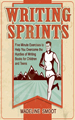
The new cover!
I have redesigned Writing Sprints. I’m doing a final proof of the final section right now. The new version should be available as of August 15. I love the new cover.
I have been writing. This is huge. Admittedly, I’m just playing with my superhero YA and not any of my actual projects, but I’ve been getting back into the rhythm of 1000 words a day.
And today, I’m posting on my blog. I wasn’t sure I would manage that again in 2015.
Going Forward
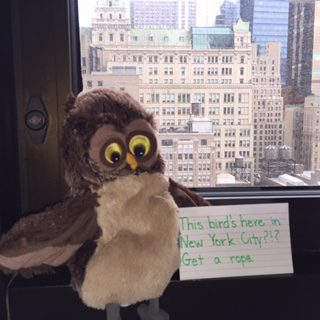
My son’s owl is visiting NYC with me and sending home notes.
I’m in New York right this very minute about to attend the national RWA conference. I’m a huge fan of this group even though Romance is not my genre. They have some of the best business and marketing session I have ever seen, and I’m going to hit many, many of them over the next three days. Some of the strategies I’ll take home and share with my authors; others are going to be geared more towards me; many of them I’ll share here as well.
Because yes, I’m going to try to start blogging again. For now, it’ll be nothing grand. Twice a month to begin with and hopefully moving to once a week. We’ll have to see from there. But things are looking up:
For CBAY: I’ll be attending TLA, ALA, and BEA at the very least next year with IPG. This is a huge chance to get the books in front of eyes that have never seen them before. I’m also increasing the number of titles available to reviewers on NetGalley.
For my writing: I have 3 collaborations I’m supposed to be working on. I plan on starting those back up. Also, Story Slices (my little guide on story organization and plotting) is almost finished. I should be able to have it up by the end of the year.
For my kid: The small one is thriving at homeschooling. Today he requested that we start the art curriculum. Up until now we’ve been focusing on reading, spelling, and math. My husband and I take turns doing both teaching and taking the leads on certain subjects, so it’s not all up to me. I love it. The child seems to like it too.
For life: I’m feeling optimistic again — something I hadn’t felt for awhile.
My kid had to learn a blechy, sappy song for his kindergarten graduation, but I did like one of the lines:
“The future’s looking good to me.”
Amen.
January 28, 2015
When You Publish for the First Time…
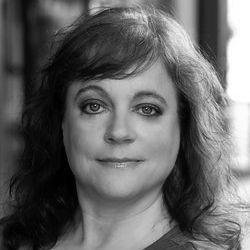
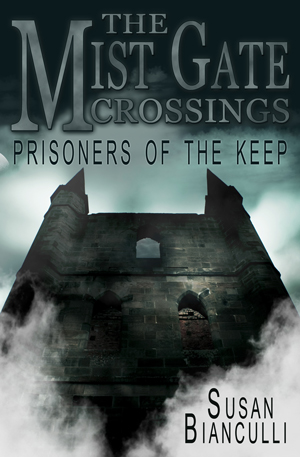 Hi! My name is Susan Bianculli, and this is my first time writing for someone else’s blog.
That sounds like the beginning of a first date, doesn’t it? But it’s true; I am a first timer in so many things. I can also say that it’s my first time getting published – my first book is just releasing (and maybe have it even go into print if it does well!)
I have so many emotions about it. One is excitement – my story is going out to the public! Another is fear – my story is going out to the public! Another is being proud – my story is going out to the public! That one fact gives me so many mixed emotions that you could ask me that question several times a day and maybe get a different answer each time depending on my mood at the moment.
Writing is a long road. I started on my story when my son was in Kindergarten, and revised it relentlessly. It wasn’t until he was in 3rd grade that, after submitting my manuscript to the contest Madeline had, made my story see the light of day. Now my son is halfway through 4th grade, and after much heavy editing, Prisoners of the Keep (The Mist Gate Crossings) , my Young Adult action adventure fantasy novel, is going live.
Writing is also a harder road than you might think. Your mileage may vary, but it takes a lot of time (no, really, a LOT of time), inspiration, and energy to write. For me to make my writings coherent I need all three in equal measure. Sometimes, that’s hard to obtain. A fourth, silence, also helps me. But writing also takes the willingness to dramatically cut down, or cut out, words you’ve poured your heart and soul into when – notice I say when, not if – they end up taking you into a dead end. Or if someone you trust reads them and tells you they don’t really work. Which then means the words need to go. I’ve ‘killed my darlings’ repeatedly, to paraphrase a quote that William Faulkner helped make famous. The ‘darlings’ referred to in the quote are not necessarily characters, but words. When you have too many words, or not the right ones, out they must go. And sometimes that hurts.
Writing is a journey of self-discovery. You will never know if you can, or can’t, write unless you try. To paraphrase a writer friend of mine, Erica Allarie: “Writing is like walking around without your skin on – it leaves you inherently vulnerable.” I know I am feeling vulnerable about putting Mist Gate out there – I’ve put my heart and soul into it. But vulnerableness is what lets artists of all stripes connect with the people of the world, and show what is important to them. We need more writers, story-tellers, singers, painters, etc. in the world, so if you have a story somewhere inside you, embrace the vulnerable and let it out!
Susan Bianculli is the author of The Mist Gate Crossings: The Prisoner of the Keep releasing from CBAY Books in January of 2015. Follow Susan and her series on the Mist Gate Crossings Facebook page.
January 26, 2015
Debuts I Have Known
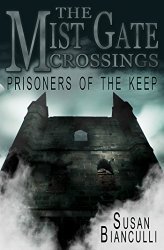 This week is a very exciting week over at CBAY Books. Tomorrow we launch a brand new series, The Mist Gate Crossings. This is our first YA ebook original, and we have all sorts of exciting things planned for this series — not the least is a 99 cents debut price for the next month.
But all of this planning and plotting for Mist Gate has gotten me nostalgic for other debut books I’ve worked on in the past. And since I’ve only worked at small presses, that has actually been a large proportion of my work. So, today, I thought I’d highlight some of my favorites from the past:
(And just to be clear, for these purposes I’m defining debut as someone’s first book. For example, I’m very partial to David Michael Slater’s Sacred Books, but since he had already published picture books, I don’t consider him a debut author/book.)
Picture Books:
Little Bunny Kung Fu
This was the very first picture book I ever worked on. I still have the stuffed rabbit that goes with the book.
 Patrick the Somnambulist
I’ll admit that I did very little with this project other than sort of oversee the timelines. This is back from when I was Children’s Editorial Director back at Blooming Tree Press. But I have always thought this book was adorable with wonderful illustrations.
Easy Reader:
There’s a Yak in My Bed
Easy reader’s are probably really hard to write. I wouldn’t actually know because I have never really tried to write one. They are a bear to edit though. I’m quite proud of the wonderful job the author did with this one.
Chapter Book:
Both of these books were just super fun. I love quirky stories, and both of these have that.
 The Secrets of the Cheese Syndicate
You can never have too many books featuring monsters from Greek mythology. Oh, and there’s magical cheese. Magical cheese. Need I say more?
Trapped in Lunch Lady Land
Today (1/26/15) Amazon has this book on sale for 44% off! I’m just as surprised as you.
Middle Grade:
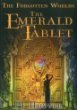
 The Emerald Tablet
This is the very first true debut novel I ever published for CBAY Books. It will always have a very special place in my heart.
YA:
Broken Worlds
Although this is very different from everything else I’ve worked on (it has more twist and turns than a mountain switchback trail), it’s one of the most intriguing.
Dry Souls
Even more topical now than ever in our drought stricken world, this book was my first YA debut for CBAY.
January 22, 2015
Where the Money Goes
There’s this odd misconception out in the world that publishers and authors are rich. We both have money to burn and can afford huge outlandish parties to celebrate our books.
I wish.
Here’s a breakdown of where money goes at a small press.
Let’s do the math.
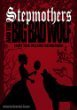
 Say you have a paperback book, like this one for instance. It’s retail price is $9.95 but to make it easier we’re going to say it costs $10. (To be accurate, right now, Amazon has it on sale for 29% off. I’m just saying.)
Of that $10, 50% goes to the retailer like Amazon or Barnes & Noble or to a wholesaler like Ingram or Baker & Taylor. (Actually the discount can vary. It can be as little as 47% for returnable indies like BookPeople or as high as 60% when sold non returnable to wholesalers, but for the purposes of this conversation, we’ll go with the easy 50%).
That means that of that $10, $5 goes to Amazon or whoever, and $5 comes to me the publisher.
From that $5, I pay the author a royalty of 10%. So 50 cents goes to the author.
I also have a distributor. Since I’m a tiny micro press, I can’t afford to have a sales force. My distributor has one as well as doing the fulfillment of orders. For that I pay a complicated fee structure based on monthly gross and net sales, but it averages to 20% a book.
So from the $4.50 I have left after paying my author, I give the distributor $1.
This leaves me with $3.50. Unfair, you’re thinking, this leaves you with 7x what the author made.
Ah, but I’m not done.
It costs money to physically make that book you’re holding.
There’s $2.15 per book in printing. 50 cents per book in catalog fees if I want that sales staff I’m paying for in my distribution fees to actually be able to sell the book. 50 cents a book in marketing expenses. (NetGalley for example is $500 to have your book available there.)
So, from my $3.50 I’m actually only earning 45 cents a book. 45 cents. You notice that this is less than the author. And that 45 cents has to either pay for the stock art for the cover (if I made it) or it goes out to an illustrator. It also has to cover my time and energy, editing, copyediting, proofing, graphic design work and the time I spend marketing.
 So, after selling 1000 paperback books, my author has made $500, I have maybe made $450. If I only put in 80 hours per book, I’ve made less than $6 an hour. But let’s be honest, all the money my company makes goes right back in to fund the production of new books. My current salary is 0.
But what about ebooks? you ask. Those don’t have printing expenses and people are making fortunes off of those. Why dont you pay your authors more?
I do pay them a higher percentage. But again, let’s do the math.
I price my ebooks at $3. The ebook market is highly price driven. Since my authors are unknown, I have to widen the field to the largest numbers of customers possible. That means a $3 price point.
From that $3, again, the retailers take 50%.
I get $1.50. I pay a 50% royalty on ebooks, so my author gets 75 cents. Yeah! Thats more per book.
I also get 75 cents, but again, I have to pay my pesky distributor its 20% or 30 cents.
I’m back to 45 cents. I make the same money with a paperback as I do with an ebook.
And if its an ebook original, there are expenses associated with it.
For the ebook original coming out on Tuesday, I had a cover expense of $50. That means that I have to sell 112 books to break even. After 112 books, my author has made $84. I’ve made 40 cents.
$84 and 40 cents.
Writing and publishing. It’s a labor of love, not a labor of profit.
To better illustrate all of this, I made the following info graphic. Now the really astute of you will notice that the numbers on it are not identical to the numbers I wrote about above. For example, the author royalty on the info graphic is only 5%. That’s because the 10% royalty I pay an author is calculated after the retailer/wholesaler takes its discount. With a 50% discount on a print book, that works out to 5% of the retail price. Now when someplace like Apple iBooks only takes a smaller discount, obviously the author makes more. (So everyone buy your ebooks from Apple!)

For a printable version, click here.
(Already a subscriber to my newsletter? You have this info graphic plus all of the other free stuff in the email sent 1/22/2015.)
January 19, 2015
I Get By With a Little Help From My Friends: Some Experts Give Advice on Submitting to Agents
Since I submitted to an agent last week, I decided to ask some of my wonderful Austin author friends for a little friendly advice. Here’s some of the gems they shared with me:
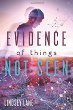
 “Sometime during the copy edits of my debut novel Evidence of Things Not Seen, I realized that every question in the margin was not telling me to change something or suggesting that I had done something wrong. Au contraire. Every question was asking me to take more authority in my manuscript and to make sure that my vision for it was as clear as it could possibly be. When you are searching for an agent, you are looking for someone to see the promise in your manuscript and in you as a writer. Every query letter you send out is asking that agent to join you in that vision you have for your manuscript. If the query doesn’t net a ms. request and if the manuscript doesn’t get an offer of representation. Don’t take it personally. Send it to the next agent on your list. And always be willing to take another look at the manuscript and query letter to make sure that the vision you have for yourself and your manuscript is on the page.”
– Lindsey Lane, author of Evidence of Things Not Seen
To learn more about Lindsey and her book, visit her at her website, Facebook or on Twitter.
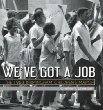
 “My advice is: Don’t tell an agent who expresses interest that you didn’t think you were ready to be represented! That’s what I told Erin Murphy the first time we talked. We were both taken aback!”
– Cynthia Levinson, author of We’ve Got a Job: The 1963 Birmingham Children’s March, 2013 IRA Young Adult Nonfiction Award
To learn more about Cynthia or her books, visit her on her website. To learn more about We’ve Got a Job, visit its website.
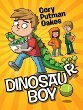
 “Do your research, be professional, and settle in for the long haul. It can be an arduous process, but it’s worth it in the end!”
– Cory Putman Oakes, author of Dinosaur Boy
To learn more about Cory and her books, visit her website, her Facebook or her Twitter.
Keeping all this wonderful advice in mind, I’m back to researching agents and sending out queries. To keep it organized, I use a spreadsheet to keep track of the agent’s information and what I’ve sent. To get a blank version of the spreadsheet I use to query agents, click here.
Happy submitting!