N.E. White's Blog, page 6
March 26, 2025
How to Self-Publish a Book, The N.E.W. Way (Part 3)
I haven’t scared you away yet?
Yay!
That means you are ready to self-publish, bless your doomed heart.
But first, if you haven’t read them, you might want to start with Part 1 of this blog post series. Or, you know, go get a degree in English or something. Really, learning from me will just teach you how not to do it. Or how to do it badly.
Regardless, here’s the continuation of how I managed to self-publish three books.
Step 6 — Cover DesignYay! The really fun bit! Designing your cover.
Okay, I know not everyone thinks this is the fun bit, but I do. I love playing with cover ideas for my books. When writing my tales, I always imagine the scenes a certain way. And trying to capture the mood in my head onto a cover can be tricky, but so satisfying when it works out.
You, as a writer, cannot be expected to have the graphic artist skills to professionally create your cover. But you should have a clear idea of what your cover should convey. You’ll need to know these things whether you create the cover yourself or end up hiring someone.
So, what do you need to convey with your cover?
Two of the things I think your cover should evoke in a reader are: genre and theme. At a glance, they should have an idea of whether they are in for a mystery, thriller, or fantasy. Or even more basic: fiction or non-fiction. And they should get a sense of whether this will be an adventurous, seductive, or contemplative tale.
Take the time to review the covers of some of your favorite books that match the genre and theme of your book. What colors do they use? Do they have a white or dark background? Do they have illustrations or photo-realistic pictures or graphics? Are the main characters depicted or not?
Jot down the things you like about those cover and that you think do a good job of conveying what sort of story the reader is in for. Also, keep a file with the covers you like so you can either refer to them in your design or give to a graphic artist as a starting point when they develop your cover.
Great. Now you’re ready to create the best cover, right?
Hold just a second!
In my mind, there are two other things a cover must absolutely do without fail. You can get the genre wrong. You can get the theme (or promise of the read) wrong. The colors can be horrendous. But above all else: clearly present the title of your book and the author’s name.

I know, I know. The last two seem like a no brainer. But how many times have you looked at a tiny thumbnail of a book cover on your phone and squinted, wondering what the heck the title said and what the author’s name was?
Notice my book cover there on the right? It should show up tiny on your screen. Can you read the title? How about my pen name? Are they clear?
They should be!
Throughout the entire process of developing the cover with my graphic artist, I checked time and time again to make sure I could read both items at a “standard” thumbnail size (usually around 150px by 150px, but it varies by site).
As someone with poor eyesight, take it from me. If I can’t read it, I’m not buying it.
Which brings me to…
Font choice.
You may be thinking: What the font? (Ha – that’s a thing.)
Or maybe: Oh, how boring.
Or possibly you’re just like me and have been wading through this entire blog post series until I got to this.
Sorry to disappoint, but choosing a font for your cover should probably be left to the professionals. If you’ve hired a graphic artist, let them pick it and only disagree if it is unreadable or doesn’t fit your genre.
If you are choosing it yourself, get ready for the hard truth: fonts cost money. Sometimes, the good ones cost a lot of money. If you’re on a budget, maybe that fancy TEFF Lexicon (over $3,500!) probably isn’t the best choice.
There a many many fonts out there free for commercial use. Use them. Pick one that speak to your genre (i.e., if your story is a fantasy, maybe pick a font with some interesting cap letters) and that you like. Because, in the end, your cover is not only a reflection of your story, but you as an author, too.
But, above all else, be sure it’s (all together now) clear and readable.
Oof. Well, it has happened again. I’ve waffled on for too long. Next steps: the dreaded Blurb (and other topics).
Until then, write like the fonts are biting at your heels.


March 24, 2025
Reedsy Discovery – Round 3
Can you believe it? I got another really nice 4-star review over on Reedsy Discovery. (swoon)
And it is up for voting! (please, go vote for it)
If you are so inclined, Mapmaper–Book 3 is up on Reedsy Discovery right now waiting for your upvote (so it will be featured on their main page).
Here’s what the very lovely Cat Wyatt had to say about it:
As always, I must acknowledge how much I loved the core elements of the Mapmaker series. The magic is fascinating, the politics are rich (and lethal), and the inspiration (Roman mythology) was the perfect foundation. Likewise, I loved that Aleeya is a mapmaker. It all blended so well.
By the way, if you have Kindle Unlimited, both Mapmaker Book 2 and Book 3 are free to read on Amazon.com until April 6th, 2025. If you haven’t read Book 1, it is currently available for the low price of $4.99 (eBook), but will go on a 0.99 cent promotion April 11th, 2025. Check ’em out!
And if you missed it, I just posted the start of a series of blog posts that summarize how I write a book.
Humble bow,
Nila
March 17, 2025
Careful what you say


 View all responses
Ah, it seems the daily prompts have captured my interest.
This is a good one.
The best compliment I’ve received is a variation of one I’ve gotten from time to time throughout my life. Each time I receive the compliment, from disparate sources, I am humbled.
I’m sure you’ve gotten it before, too. If you haven’t, let me be the first:
Your words have changed me.
Yes, they have.
You see, we all influence each other. In small and large ways. With every word or nugget of information we impart, we enrich (hopefully) the people around us. Each and every interaction with someone else is important and effects people–forever.
For better or worse, your written or spoken words change people’s perception, attitude, and/or knowledge. Sometimes those interactions ripple out from you in ways you’d never know unless someone stops for a moment and let’s you know.
The first time that happened to me was in my late twenties. After some years apart, a dear friend of mine told me that my early college no-nonsense-attitude towards gyms changed her perception of working out. She no longer feared she’d be hit on or ridiculed at the gym. After something I had said (or did), she realized going to the gym was about her and her health, not about whatever anyone else thought about her. (Though yes, we all know the type of person who goes to gyms exactly for those reasons.)
Anyway, it changed her whole attitude about physical exercise in general. It freed her to do and try sports she wouldn’t have done otherwise. She said to me, “You changed my life.”
When she said those words, I was shocked. I had no idea what it was that I said to push her into that line of thinking. But yes, she’s right. I’m the sort of person who will do whatever I want and damn what anyone thinks of me.
That’s not to say I’m frivolous about it, but if I want to ride my bike across an entire country like New Zealand even though I’m a bit of a fat slob who honestly shouldn’t wear lycra…
So Friggin’ What?
Who cares if I’m slow? And fat? I’m riding my bike across New Zealand! That’s amazing! You only live once. Do what you want.
 Old picture of me and my bike on New Zealand’s South Island–45th Parallel
If folks poo-poo on your parade, tell them to keep that shit private.
I have been blessed to have changed other peoples’ lives in a positive way. And even more blessed that they later thanked me. Most of the time, we probably never learn if and how that happens, but know that your words have meaning and power and can change the world.
Use them wisely.
March 12, 2025
What is it about Romans?


 View all responses
I don’t normally respond to WordPress’s Daily Writing Prompt, but I saw this one and it struck a cord.
Because the one movie I’ve seen over and over is…
Guess.
Go on.
I’ll wait.
(For those who have read my Mapmaker Trilogy, this should be fairly easy.)
Gladiator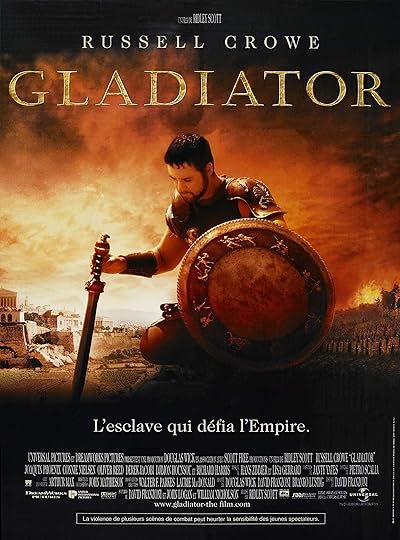 Photo courtesy of someone on Pinterest. Thanks!
It should come as no surprise. It’s a great movie and, well, it’s quintessential Roman. With all the good and bad we associate with the Roman leaders and people of that time period (roughly mid to late Roman Empire).
The highlight of my fire ecologist career was presenting in Florence, Italy (yes, that one) during the 2022 Fire Ecology Across Boundaries Conference.
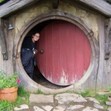
 That’s me! On the right! In Florence, Italy. Photo credit: my husband.
Anyway, that trip spurred me to finish my Mapmaker story because it had initially been inspired by Roman mythology and culture (just the good bits and a little of the bad bits). After seeing the real thing, I just had to finish the story. Mapmaker may not live up to the source, but there it is.
But let me tell you, Rome and Roman culture, or what’s left of it for us to see, is truly jaw-dropping and inspirational.
 I like this picture because that fly gives ya some perspective.
  Notice the scaffolding in the far distance–that’s the original height. Photo credit: me.
And the art. I mean, real art. Phew. Gosh. I’m not on any part of the artist spectrum, but even I found the paintings, sculptures, and architecture inspiring.
 Hercules slaying the Centaur Nessus, white marble, survived from Roman times, repaired in 16th century. Photo credit: me. (Sorry I got you random other tourists in the shot, but there were just too many of us!)
Have any movies inspired your own story or stories?
March 7, 2025
The Grace of Friends
At this moment, I am so proud I have to share.
At the beginning of 2024, if you had told me that in a year’s time my first* trilogy would be shelved in a real bookstore, I would have cackled an old lady maniacal laugh (olml) and bit your ankle for taunting your elders.
Last January, for the third time in I don’t know how many years, I was struggling to re-write my manuscript. A friend (Sean Betzer) suggested I join Scribophile and consult with the most dedicated group of writers on the internet. I tentatively tried the waters, didn’t immediately sink, so went full scuba!
It wasn’t easy to read just how ugly my baby was. It hurt. A lot.
But since I turned 55 years old, I’ve also come to realize that there will always be people who think my baby is ugly–even when I think she is the most gorgeous thing on the planet. (She is gorgeous. Check out the picture below.)
And frankly, I’m gonna die soon so it is now or never.
I knuckled down, accepted the suggestions that resonated with me, and in the wee hours of the night, wrote three books.
They are now sitting in a bookstore:
 Mapmaker Trilogy on shelf in Trident Booksellers & Cafe in Halifax, Nova Scotia (be still my heart and thank you, Charlotte Ashley)
The owner of the bookstore, Charlotte Ashley, is the best. There are no words to describe the humbling and exalting feelings she graced upon me when she said, “Yes,” to my books.
And then actually put them on a bookshelf in her store. [image error]
What?! (Still can’t believe it.)
So…
If you live in Halifax, Novia Scotia, please support your local bookstore and go buy my books at: https://tridenthalifax.ca/!
Until next time, reach for Mapmaker on that bookshelf.
Nila
*By the way… Second trilogy is in the works! (olml)
 Cover concept for The Legend of Damndrake (coming soon).
February 28, 2025
Living Large
I hope my blog post series about how I self-published my Mapmaker trilogy brought some clarity to this whole process.
To be honest, this writing thing is an exhausting hobby. Getting a book out of your head literally takes years. Polishing your story so that it reads halfway decent, another year. Then self-publishing? A six-month gauntlet.
But when a reader says (super casually and in no way meant to be an emotional bomb), “By the way, I liked your book.”
It’s. All. Worth. It.
The other day, my brother texted me those words. I wasn’t prepared for the emotional release of gratitude–to myself! I was so happy I made the extra effort to bring my story to him in a format that he could easily read.
 Picture of my brother’s collection of Mapmaker Books 1-3, Large Print editions.
You see, my brother has difficulty focusing on small print. It’s not a huge disability, but he often searches out large print books so he can enjoy the reading experience rather than get frustrated. I knew this, so when it came time to self-publish my book, I thought, well, he’s the only one that will probably read my books, so I best make sure he can.
Using software like Atticus made it easy to re-format my normal paperback into an 18-point behemoth, so why not?
I had to fiddle with the cover and that frustrated me, but in the end, they came out readable–which is the important bit.
While the large-print edition of Mapmaker has only sold to my brother, I still think it was worth the effort. So, when preparing your manuscript for self-publication, remember there are folks who may appreciate a larger font.
Until next time, read large.
February 26, 2025
How to Self-Publish a Book, The N.E.W. Way (Part 2)
So… you want to self-publish a book, eh?
You might want to start with Part 1 of this blog post series. Or, you know, go get a degree in English or something. Really, learning from me will just teach you how not to do it. Or how to do it badly.
Regardless, here’s the continuation of how I managed to self-publish three books.
Step 4 — Interior DesignThis is the fun bit! At least, I find the subtle design options one has for the interior of a book to be mesmerizing. I can spend hours contemplating the benefits of one font versus another.
(Oh, there’s a distinct different between fonts and typefaces, but I use the terms interchangeably. I know, you can kill me later.)
But let’s not get too ahead of ourselves. The first thing you need to decide about the interior of your book is the format (or formats) of your book.
Will you self-publish in ebook (digital) format? This is the most modern and convenient format in today’s market. I’ve done away with most physical books. I save my miniscule real-life bookshelf space for reference books or truly amazing books (most of these are non-fiction). I almost exclusively only read on my Kindle. That means ebooks only for me!
Even so, there are still a lot of folks who like a paperback. What about a hardback?
And have you ever considered a large-print paperback for the visually impaired?
My brother has a hard time with small type. So… I offer a large-print paperback.
All those formats mean you may have different template requirements for each with subtle differences to optimism how the text is delivered, whether that’s on an ereader, 6″ x 9″ sized paper, or something else.
There are hundreds of Microsoft Word templates out there you can use. Search the web but use caution for hidden viruses. There’s also the possibility that the distribution site you choose (see Step 5 below) may offer book templates you can start with in a file format you can easily use (usually Microsoft Word).
But I find Microsoft Word tedious and finicky. So, I use Atticus.
What is Atticus?
It’s a pared down book formatting software that allows you to apply formatting styles to an entire manuscript. You enter in your barebones text with key headers, section, and page breaks, then it does the rest. I got it primarily so that I could use custom chapter images and section breaks, but I found it particularly useful in formatting for large print, making it easy to choose between trim sizes.
Give it a try. It may work for you.
Another popular choice is Vellum, but it’s a bit more expensive and I think it is Macintosh exclusive.
Step 5 — Choose a distribution siteKnowing the formats you want to use for your book often leads you to where you may want to self-publish said book in all the formats you have chosen above in Step 4. Or vice versa. You may choose your distribute site first and that will dictate what book formats you’ll publish. Either way, these two steps often go hand in hand.
Additional note: most book distribution sites publish most, if not all, book formats.
However, keep in mind you don’t have to go with just one distribution site. You can opt to self-publish in as many places as you like. But that means you have to keep track of all those accounts and ISBNs!
What’s an ISBN (International Standard Book Number), you ask? Read on!
In this section, I’ll explain Amazon.com the most thoroughly (because I know this best) and mention two other popular sites (Draft2Digital and IngramSpark). However, I’m sure there are other book distribution sites I am unaware of. Please leave a comment if you have a favorite you’d like to share.
Amazon.com
Oof – everyone loves Amazon and hates it, too. We love to hate it and hate to love it. They are the huge elephant in the room we all have to feed and step around.
The huge advantage to using Amazon.com to distribute your book is the very fact that the vast majority of books (in all formats) are sold through Amazon. In 2023, Amazon’s book revenues totaled somewhere around $470 billion (yes, with a ‘b’), while Barnes & Nobles (the second largest book retailer) was only around $4 billion. The difference is staggering.
Since most folks go to Amazon to buy their books, well, don’t you think that’s where you should try to sell your books?
Okay, I convinced you to sleep with the devil. How to do it?
Well… that involves a set of sub-steps, that require a lot of attention to detail. I won’t go through them here, but feel free to comment below with any specific questions and I’ll do my best to answer them. I suggest reviewing these pages on the Kindle Publishing Guidelines. It’ll help clear up a the mystery of self-publishing.
Hint: it’s a lot of work. Be prepared to learn the hoops.
The same goes for Draft2Digital and IngramSpark. They each have their own requirements that you’ll have to master to ensure your book gets the best change of reaching your readers.
But to touch on ISBNs, they are the unique identifier assigned to each and every book regardless of format. So, your paperback gets an ISBN. Your large-print paperback of the exact same book gets a different ISBN. Your hardback, again, of that same book, gets yet another unique ISBN. Even ebooks get identification numbers but they don’t need to be ISBNs (ASINs are used for any ebook on Amazon).
And here’s the clincher – ISBNs cost money. You can buy them here (get them in bulk!). Ooooorrr, if you publish through Amazon, they’ll give all your book formats a free ISBN. (Kind of makes it hard not to go with Amazon, huh?)
By the way, Atticus provides guidelines for formatting your manuscript for both Amazon and IngramSpark.
Now, after you’ve spent hours learning how to format your book and diligently learned all the things needed to actually publish on your chosen book distribution site (i.e., genre, keywords, logline, the blurb, cost, specifications unique to that distribution site, etc.), now what?
Well, again, this blog post has gone on too long. Next, I’ll get to your book’s cover (exciting!) and marketing (not so exciting!).
Until then, write as if the world is on fire. (Kind of feels that way, huh?)
February 16, 2025
This is It
[enter stage right to thunderous applause…]
Thank you… thank you.
Oh! No need to stand.
A standing ovation is it? You all are too kind. Too kind, I say. Please, sit. Sit! We’ll be here all night long if you keep clapping… Heh… um…
That’s how I imagine I’d start my acceptance speech. I’d be all humble. All teary-eyed and grateful. Then I’d go on and on and on about all the wonderful things I’ve done. I’d wax forever about the first story I wrote in grade school that my English teacher said was great and made me read it out loud to everyone in the classroom. I’d casually insult all the editors who’ve rejected my work. Especially the one who literally told me to stop writing. I might remember to mention some friends along the way. Maybe a shout out to those who’ve helped. And I’d wrap it up by thanking my mom.
For what, you might ask?
I don’t know.
Maybe the award for being amazing? There’s one of those for each of us, right? (Ha! I can dream.)
Or maybe…
Someone’s giving out awards for hobby writers who just finished self-publishing their magnus opus, dope, I mean, their first trilogy?
That’ll be me!
I can see you rolling your eyes. Oh, please! Get over yourself, Nila. Yes, you’ve completed a thing, but lots of people do. You are no different.
Yeah, yeah, I know. But it is something–for me. I can finally share my story with the world. I couldn’t’ be prouder!
Join me in this moment as we bask in the glory of a finished thing.
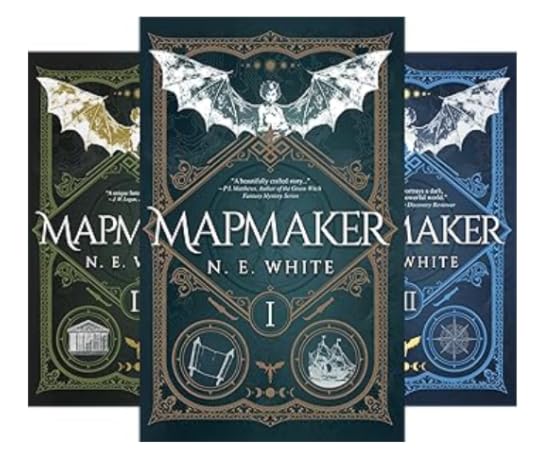
It may not be a great thing. Probably doesn’t even reach ‘good’ level, but it is a finished thing.
[cue celestial music]
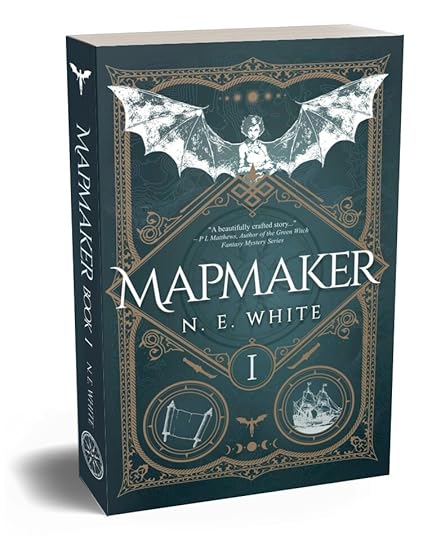
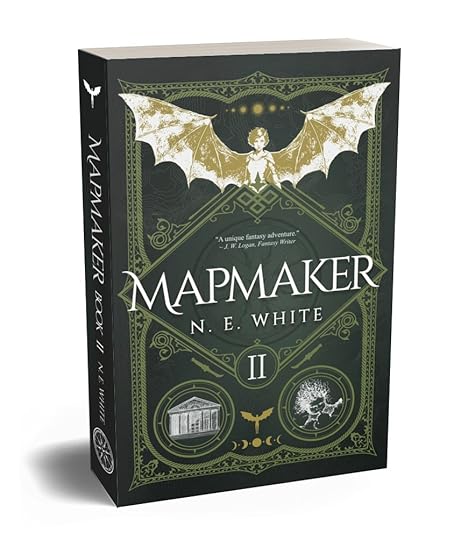
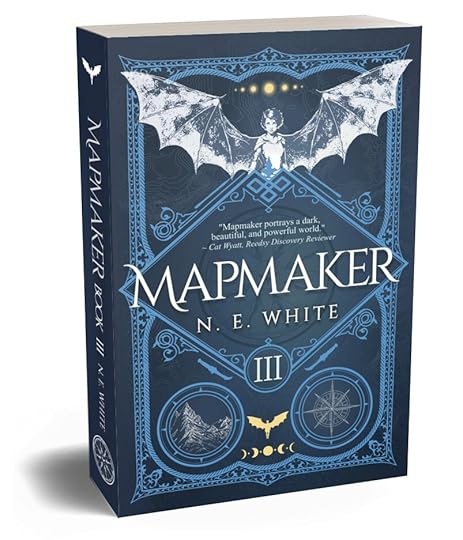
The journey has been long and hard, my friends, but thanks a thousand times over to everyone who encouraged and helped along the way. I am blessed to have you all in my life.
Until next time, go read my books! They are all currently free to read in Kindle Unlimited.
February 5, 2025
Reedsy Discovery – Round 2
Ack! I forgot to mention this to you, dear readers, but if you are so inclined, Mapmaper–Book 2 is up on Reedsy Discovery right now waiting for your upvote (so it will be featured on their main page).
Here’s what Cat Wyatt had to say about it:
It’s well-crafted and yet so emotionally raw. The combination of which gets under your skin and won’t let go. So, if you’re sitting down to read the first novel in this world, be prepared to dive straight into book 2; you won’t want to walk away until you’re done.
By the way, if you have Kindle Unlimited, both Mapmaker Book 1 and Book 2 are free to read on Amazon.com until March 5th, 2025. Check ’em out!
And if you missed it, I just posted the start of a series of blog posts that summarize how I write a book. More to come later.
Humbly yours,
Nila
How to Self-Publish a Book, The N.E.W. Way (Part 1)
Hehe, see what I did there? The “N.E.W.” way, meaning my way. That’s me being clever.
Anyway, I’m not an expert, but since I managed to write three books this past year, I thought I’d share my process in ten easy steps.
Step 1 — Write a book.Holy crap, Nila. That’s step one?
Yeah, I know. Writing a book can take a person years, even decades, to finish. And there are so many things to learn as a writer about the craft of writing, about yourself, and about your potential readers. All of that is not gonna fit in a nifty little blog post.
While I can’t narrow down writing an entire book to ten easy steps, I can point you to some books that might help. They include books on plotting, editing, and suggested wording. These are not the only books on writing you should read. I have quite a few other books on writing, but these three are the ones I repeatedly go back to.
Save the Cat! Writes a Novel: The Last Book on Novel Writing You’ll Ever Need by Jessica Brody – the title is a bit presumptuous, but the author does a great job of laying out the basic plot points and story arcs needed to create a satisfying read. She does it with humor, lots of examples, and bullet points. I’ve read other “how to write a novel” books, but this one is by far the most thorough and succinct.Self-Editing for Fiction Writers: How to Edit Yourself into Print (Second Edition) by Renni Browne and Dave King – this tome is very helpful to nix those annoying prose hiccups we all have. It offers concrete examples and exercises. It’s a bit of a mini-class on grammar which might make your eyes glaze over, but well worth it.The Emotional Thesaurus: A Writer’s Guide to Character Expression (Second Edition) by Angela Ackerman and Becca Puglisi – no, you shouldn’t only use this book to help describe your character emotions, but sometimes I get in a rut describing my character reactions in the same way over and over. Sometimes, a quick perusal of the ol’ emotional thesaurus can kick me out of that well-worn lane. Try it!Step 2 — Edit Said BookThis seems to go without saying, huh?
But often when you think you’ve edited your beast into submission, you haven’t really edited your book. Not until you share it with discerning readers (i.e., other writers or beta readers).
The Self-Editing book I mentioned above will only get you so far. You need discerning (notice I used that word again) readers who will pick your story apart: find those glaring plot holes, nix those repetitive phrases or sentence structures, and confirm or refute whether your pacing and tone mesh well for your story.
Those things are incredibly hard to see yourself. We’re just blinded by the brilliance of our stories. Not so other writers or readers!
Here’s where sites like Scribophile come in (a peer-to-peer writing critique site).
Yes, you could hire a development editor (like I did) and pay hundreds of dollars (like I did) for that well-paid editor to essentially say you got everything wrong (like I did). Then you’ll chunk the whole thing and start over, essentially wasting all that money (yes, like I did).
Or you could pay the modest yearly fee of $150 to a peer-to-peer critique site like Scribophile.
No, the system is not perfect, but if you can hunt down and catch a few like-thinking critique partners, the feedback you’ll receive can be invaluable. Or, at least, worth the one to two thousand you’d spend on a developmental editor.
Step 3 — Hire a Copy EditorHehe. About ready to cut my head off, aren’t you?
There’s a difference between a developmental editor and a copy editor. In this step, I’m referring to a copy editor.
In general, a copy editor comes after you’ve revised, revised, and revised some more. Then polished your text until it shines. And then tweak the text based on beta-reader feedback. Essentially, your book is just about ready for prime time and that’s when you hire the copy editor.
The copy editor’s job is to look at each and every sentence individually to correct spelling and grammar. They’ll also check for story consistencies, i.e., you spelled grandma’s name ‘Jenny’ in Chapter 2 versus ‘Jonni’ in Chapter 3 and all of sudden she’s turned into grandpa. That sort of stuff. The copy editor will also make sure your punctuation (commas, em dashes, quote marks) and formatting (italics for inner thoughts (or not) and other stylistic choices) is correct. Overall, they make sure the entire work is consistent.
The copy editor will not edit to ensure the writing flows smoothly or suggest different wording (unless it is super bad). That’s the developmental edit or stylistic edit (more money). You can, of course, hire an editor to do those initial editing steps that help correct your story (plotting, character arcs, pacing, and tone), but again, that’s super expensive.
Now, after you’ve managed to find a copy editor at a reasonable price, established a working relationship, and accepted all their edits, now what?
Well, this blog post has gone on too long. I like to keep these under a thousand words and we are rapidly careening up to that limit, so I’ll cover the next (exciting!) steps in another blog post.
Until then, write as if you life depends on it.