
Warren Adler's Blog, page 58
August 8, 2011
Should Novelists Review Another Novelist's Novels?
 I have always been wary of novelists reviewing other novelists, especially in places that attract serious readers of serious novels like the New York Times Book Review which, despite its diminishing influence, still has an effect on the reading tastes for the discriminating consumer of books.
Perhaps I am uncomfortable with the practice because mainstream non-genre novel writers are, despite loud protests to the contrary, in fierce competition with other mainstream novelists. They compete for attention, notoriety, praise and prizes in a kind of nebulous pantheon of imagined immortality and secretly hope to be part of the literary canon of the future.
Many, not all, believe they are destined for that role and because of that, maintain that they are the true keepers of the faith of literary excellence and taste, and their opinions are sacrosanct. They seem to believe, too, that they are therefore qualified to judge the literary merits of their fellow novelists many of whom, ironically, probably harbor similar ambitions. They are, therefore, contenders and there is a good argument for keeping them out of the critical loop of judging other contenders.
A case in point was a recent review in the Times of a novel by John Burnham Schwartz titled Northwest Corner. It is a sequel to Reservation Road an earlier novel by Mr. Schwartz, which became a fairly successful movie. Apparently, it was a novel that gave Mr. Schwartz some heft as a serious novelist. The review was written by Julie Myerson, who Google tells me is a British novelist who also writes non-fiction and has won a number of prizes in Britain.
That said, I have never met Mr. Schwartz and have never read his novels or those of Ms. Myerson. Thus, my judgments are based solely on Ms. Myerson's review of the novel in the Times Book Review, which clearly underlines the wariness that I have cited.
The review by Ms. Myerson is one of the most mean-minded, snide, sanctimonious and dismissive diatribes I have ever read in a book review written by one allegedly serious novelist about another serious work. Worse, I don't understand why the editors of the Times Book Review, which ascribes its own biases to the publication, let it pass.
Since I am a practitioner myself, having written many mainstream novels that have run the gauntlet of reviews from glowing to terrible, and been subjected to the highs and lows of humiliation and praise, I offer this defense, however ineffective, to the novelist victim who goes naked and alone into the harsh jungle of public criticism.
In her review, Ms. Myerson accuses Mr. Schwartz of not working hard enough. She calls his character's emotional states "lazy and forced" and hates the way his chapters end. She declares his similes and metaphors "clumsy." She openly ridicules some, like "hard and cool as a Greek statue" and "hemophiliacs walking through a forest of thorns," both of which I find rather interesting and original.
She accuses him of bad recall, whatever that means, and composition offenses too numerous to mention here. Worse, she ends her review with this ugly stab in the creative stomach: "If such writing can pass for muscular fiction, what hope is there for authors who spend long hours deleting easy clichés and pointless similes, working hard to create something that feels fresh and startling and true?"
I assume she means herself and her self-crowned works of genius. My guess is that she is suffering from the "how comes." How come this guy gets to be thought of as a serious novelist whose books become movies while I, a "genius" who deserves such a reputation, fall short?
Moreover, Ms. Myerson's review sounds like the kind of payback one delivers to a former lover or spouse, which is probably not the case, but it sure sounds like it.
If one proclaims herself the standard bearer of literary excellence and is allowed to spew such invective against another artist in an allegedly serious review publication, one wonders if the editors of this publication have some unrevealed agenda. I am far from a conspiracy buff, but I cannot understand why the editors would choose to publish a review that is so far beyond the pale of what might pass as a negative review. This review was a literary assassination.
When a novelist or any artist creates his or her art, he or she knows full well they are fair game for critics and must learn how to deal with both the pummeling and the praise. It comes with the territory. But then, even torture has its limits.
Nevertheless I cannot believe that Mr. Schwartz's novel, vetted by a respectable publisher, edited with some degree of attention, written by a serious author and ultimately gaining the attention of the Times editors to be worthy of a review can possibly deserve such a brutal assessment. Something else seems at work here.
In this case, perhaps I should point my sword of indignation at those editors for allowing this murder to occur on their watch. To avoid such accusations in the future it might serve the editors well to cease using novelists as reviewers of other novelists work or, at a minimum carefully vet the reviewer to uncover any personal antagonisms or secret agendas.
Yes, dueling literary figures abound in the history of the literary art. Open contempt, jealousy and outright hatred often brought out rivers of recriminations and antagonisms among authors. Somehow this example seems different and unsavory.
Besides having been in Mr. Schwartz moccasins on various occasions, I know the feeling of helpless suffering that one must endure at the hands of a vicious self-righteous egotistical public scold.
As for Mr. Schwartz's novel, because of Ms. Myerson's so-called review, I fully intend to read it and make my own decision as to its merits.


August 4, 2011
In the Media, How Many Wrongs Make a Right?
Years ago, in the wake of Watergate, I wrote a novel titled The Henderson Equation which dealt with the following premise:
If media, meaning a powerful newspaper, had the persuasive power to bring down a President, why is it not possible for a newspaper to create the President of its choice?
Some people who have recently read that novel have suggested that I was prescient, since the action of the story centers around a powerful newspaper who, after bringing down a President and flushed with power, attempt to create a President of their own choice. Admittedly it was a kind of roman a clef suggested by the Washington Post's bringing down Richard Nixon. (See this blog in warrenadler.com archives).
They point out that the book parallels the current mess in the UK where editorial executives of the now defunct The News of the World, once a diamond in the crown of Rupert Murdoch's News Corporation, are accused of countenancing illegal Internet hacking, phone tapping and bribery to enhance their stories, get a jump on their competitors and target politicians who they deem unworthy.
In the Watergate episode two young reporters at the Washington Post, Woodward and Bernstein, supported by the Post's crusading editor Ben Bradlee, and with the approval of its management, spent extraordinary time and effort to expose unethical conduct in Nixon's campaign for re-election in 1972, resulting in high level people going to jail for malfeasance, lying, and assorted illegal acts and violations.
There is no question that Nixon's duplicity deserved censure or worse. To make matters more bizarre he had tape-recorded his own malfeasance by invading his own privacy. He and those around him were clearly guilty. The issue for the media poses the old question: "How many wrongs make a right?"
Above all other considerations, the high minded effort to expose the "truth" about the corrupt practices employed by Nixon and his cohorts, the underlying motives of the owners and editors, however righteous and moral, was a deliberate and focused exercise of media muscle to enhance it's power, prestige and earnings and, at the same time, expose chicanery, which they and many of us now assume has become the grand mission of contemporary journalism.
In the case of the Washington Post, they did it because they could. They chose their target and proceeded through obtaining information by subterfuge, deception and clandestine means to gather the evidence that destroyed the Nixon Presidency. One can only speculate why they chose Nixon, although in retrospect it seems obvious. They truly hated him.
Is anyone really shocked by the revelations of the apparent abuse of power by Murdoch's editors in the conduct of their editorial business? The objective of any media is to reach ears and eyeballs of its audience. Every media on earth employs similar tactics in varying degrees, despite legal checks within their administrative structure. A determined reporter in search of a story is like a bloodhound. Once they have caught the scent, he or she is unstoppable. It is in their DNA. Editors salivate over a "scoop."
That may seem like an absurdly blanket indictment, but the competition for stories fishing for those ears and eyeballs is intense, and the technological loopholes to obtain information are endemic in the news business and everywhere else. Face it, the barriers to privacy are crumbling, offering often irresistible temptations to determined journalists.
Wiretapping, hacking into computers, bugging targets, bribing sources for inside information, or whatever new incarnation is invented, has been a rogue element of the media business from its beginnings. If we could ask Thomas Jefferson, he might offer some insight into this fact. He was the target of a newspaperman on the grounds, allegedly true, that he was cohabiting with his underage slave.
Yes, there are laws on the books that make many of these tactics illegal, but Freedom of the Press is sacrosanct and insists on its integrity despite attempts to tarnish it by over ambitious media people who might well employ "wrongs" to expose "rights." Their defense mantra is that they are seeking "truth". They probably are, and some will try any means, legal or illegal, to get at it.
Motives get very murky when media presses the button to go all out to "expose" alleged wrongdoing, however deserving of scrutiny. Would the Washington Post have gone all out to bring down Richard Nixon if the people who ran it admired him with the same fervor that their editors loved Jack Kennedy? Would Bill Clinton's affair with a young intern have been exposed from within if he had no political enemies?
In retrospect, did bringing down Richard Nixon's presidency establish the bar on political integrity and corruption, and serve as a warning to others to beware? The media's eagle eye is watching. May I suggest that the reader google "political corruption in America from Nixon to Obama" to see if that exposure has repressed such deceptive and illegal political conduct.
Prescient? Hardly. It is an old story repeated ad infinitum. Is the perfect the enemy of the good?
As to the question about how many wrongs make a right, is there a morally pure answer?
Even God hiccupped over that one.
Warren Adler is the author of 32 novels and short story collections published in numerous languages. Films adapted from his books include "The War of the Roses", "Random Hearts" and the PBS trilogy "The Sunset Gang." He is a pioneer in digital publishing and blogs on a regular schedule.
July 25, 2011
Our Comic Book Culture
 I'm not sure when I gave up my love for the comics. I suppose it was around thirteen or fourteen when I became far more interested in reading books for young boys, mostly in series like Bomba the Jungle Boy, The Boy Allies, the Hardy Boys, Tom Swift and others.
I would haunt the Stone Avenue Library in Brownsville, Brooklyn and walk home with as many books the library allowed, gobbling up the stories like popcorn. I suppose I still read the comics but with declining interest. Perhaps I preferred to imagine the characters instead of seeing them laid out for me with little balloons of dialogue.
The comics or, as they were called in those days, the "funnies" were always the first things I read usually stretched out on the floor of our Brooklyn living room. I reveled in the adventures of Dick Tracy, Gasoline Alley, Smilin Jack, Terry and the Pirates and others, and was thrilled by getting a future update when I took guided tours of the editorial offices of the New York Daily News, which carried them daily, specifically for the purpose of getting an update before they were published.
Then came "Big Little Books," little square bound books of comics and finally, the big splashy comic books where Superman and Batman and many other super heroes were born. Comics were fun, easy to read, perfect for young boys and girls. Reading them was one of the joys of childhood.
Then I grew up. Life became far more complicated and required more mature reading material, not only to purely entertain, but to provide insight into how one could navigate the shoals of adulthood. Literature, works of the imagination, both reading and creating them became my life's work.
And here we are. Comics are back. The superhero, both male and female, has returned and now attracts hordes of not only young children and teenagers, but adults of all ages. In fact, it appears to be dominating the film offerings this summer and gaining traction in books marketed as adult novels and is now a staple of live stages.
Yes, there are lots of people who take great pleasure in returning to their childhood and the simplicity of these cartoon figures in their latest incarnation. It has become a dominant and profitable aspect of the popular culture. Who can blame them? To escape from the horrors of our present reality is not a shabby idea and, above all, profitable. Adults longing to return to childhood have become big business.
This is not meant to be a putdown. People who indulge in these pursuits and a thousand others that new technology has spawned should not be criticized for these predilections. They are passionate about their involvement and will argue that what they do is significant and fulfilling. We all live in a cocoon of finite time and everyone is free to spend it as they wish.
But what about us, adults who choose to cope with the reality of living in this complicated and scary world, we determined questors who seek deeper understanding, insight and search for meaning into the human condition. We thirst for greater knowledge of our plight on this planet through art, literature, philosophy and science. There is great excitement in "knowing" and "coping" with the challenges we face as human beings. You won't find this in the comics in whatever incarnation.
Perhaps to some I am skirting the bounds of intellectual snobbery, but I must confess that the so-called popular culture is not relevant to many of us. It is too easy to dismiss our complaint as a function of age as if we were hopelessly lost in mores of an older generation, but the fact is that there are young people too who have become alienated by the popular culture.
There are lots of us who are not in the least interested in zombies, vampires, super heroes, rap music, cartoon films and mindless violence, or, heaven forbid, even Harry Potter. We understand we are not the target audience for such fare.
Unfortunately, there are fewer films for us to view, fewer serious books for us to read, fewer musical compositions for us to savor, fewer plays for us to see, fewer options available for us in the popular culture. It is not because fewer works are being created, but fewer are getting noticed, promoted, marketed and disseminated. Competition for recognition is fierce and choices are narrowing in a largely unfiltered environment fostered by technology.
Like the principles behind computers we, us, you know who I mean, are fractionalized, a small slice of a vast watermelon type culture. There are thousands of subcultures with devoted adherents who follow their inclinations with great passion and singleness of purpose.
America is less of a cohesive culture than it used to be. We used to be a circumscribed family with far more common interests. Technology changed all that. Our culture is chopped up in little pieces, hence my watermelon analogy.
Some say we are going through a phase that will sort itself out. I hope so, but I doubt it. But wouldn't it be nice to have a greater choice of adult films this summer?
Warren Adler is the author of 32 novels and short story collections published in numerous languages. Films adapted from his books include "The War of the Roses", "Random Hearts" and the PBS trilogy "The Sunset Gang." He is a pioneer in digital publishing.
July 21, 2011
Beyond Borders
 After years of agony, the demise of Borders was as predictable as the sunset. It was like the horse and buggy murdered by the horseless carriage. It is sad and hurtful to many people who worked there but no crystal ball was needed. Its time had come.
The brick and mortar chain stores are probably doomed and what remains will contract and eventually succumb as more and more readers morph to screen reading on devices.
Nevertheless, there exists a hardcore of print readers that will hold on to their attachment to the paper book as long as they are produced and viable economically. The smart people at Barnes and Noble know this and will balance their print business while they leverage their Nook business, meaning they will contract their brick and mortar stores as they build their online business.
The fact is that the publishing industry and its suppliers of content, the hardy band of authors without whom the industry would collapse, are going through a massive revolution, the outcome of which is uncertain but will surely bring innovations that will satisfy the vast reading public that, contrary to faulty popular conception, will continue to proliferate worldwide.
Things change. It is the primary fact of life. We can rail against it, beat our fists helplessly against the tsunami of transformation. It is useless to protest. Unfortunately, transformations are messy.
After all, the paper book business has been fairly constant over the years and what changes did come first were matters of scale. The conglomerates began to take over the business in the seventies, and then came the chains and the slow demise of the smaller book stores, and then the foreign conglomerates who bought up the choice American publishers.
Now comes the inevitable rule of unintended consequences. E-book devices will very soon be able to serve more than fifty percent of readers. At some point the hardcore print readers will constitute a smaller and small percentage of the reading public. My guess is that within five years the percentage of paper book readers will constitute no more than twenty-five percent of the potential reading public. The impact on publishers, brick-and-mortar bookstores, schools and libraries will be profound.
As an author, my primary interest is the serious mainstream novel and how its marketing and distribution will be affected by the ongoing changes. To fully understand its future, I try to monitor and understand the totality of what is happening in the trade book area. Admittedly my interest is narrow and often self-serving but the survival of our authorial brand depends on a keen understanding of how an author of such novels copes with the changes.
For genre readers, meaning people who read romances, mysteries, thrillers, fantasy, zombie, vampire and other genres and their subdivisions, the future prospects seem to be robust, although with a giant wave of self published genre books now hitting the e-book marketplace the situation could get difficult for every author of this material. Celebrity and scandal books will have their brief and probably significant money making opportunity, but they will be short-lived.
For readers of non-fiction political and historical books, they too will be impacted, but not as hard as mainstream serious novels whose authors will come up against a wild- west type of filtering system that will be tough on new writers in this field who have not been able to establish an audience. Even the prospects for serious and well published writers of long standing will require some very fancy footwork to keep them financially viable.
For the author, whatever his or her category, self-motivated marketing will be the key to sales. There have already been some much heralded results, but they have been rare, with much success dependent on price point maneuvering. Entrepreneurs who snap up available backlists of authors who still have some favorable imprint on the memory of readers might do well for awhile but they will have to be dealing in volume to make their venture financially feasible.
For the author of the mainstream novel, developing an enduring readership and legacy will be a challenge. Of course, my bias is that such an art form is a cultural necessity for a civilized society and provides essential insight into the human condition. Authors of such novels are compelled by mysterious and elemental forces to devote their lives to their creation just as visual artists and music composers are motivated by their own inner compulsions.
Like all artists the author seeks, above all, connection and communication with readers. For the committed author such connection has always been a challenge. It is now doubly problematic, especially for the self-published author except that he or she will now be able to "show" their work on all reading device platforms. Such work will soon be competing for the attention with a giant pool of millions of other works, both self-published and those offered by still surviving traditional publishers.
Of course, there is bound to be the inevitable innovation, the brainstorm of someone sitting out there alone in left field who concocts a scenario that changes everything. In the meantime it will be up to the author to find his or her way to the reader's attention.
As in all enterprises where luck, talent, enterprise and imagination is involved, the outcome is in the hands of the Gods.
July 16, 2011
Death and Taxes
 Whether wise old Ben Franklin said it or someone else, the idea that the only certainties in life are death and taxes appears to be the central dilemma of the modern age. The relationship is clouded with complexity. I will attempt to simplify it.
In our present budget crisis the relationship between the two are unassailable. Our health care programs, for example, are based on the assumption that we want to live as long as possible and spend whatever it takes to hold back the inevitability of a visit from the grim reaper.
Most of our health care expense is spent in the twilight years, that brief period at the point where we can be subjected to every modern device to keep us alive even if our prognosis is hopeless, which in the scheme of things is a cost effective nightmare. In the end, according to experts, all this expensive effort offers a mere marginal time frame in which our lives can be extended.
It has been calculated that by 2015 the cost of terminal care for Alzheimer's patients alone will rise to $189 billion and by 2050 to one trillion dollars. Unless a cure is found, it is a statistical possibility that about half of us who live beyond age 85 will have Alzheimer's or some form of dementia requiring expensive terminal care, some of it long term.
Indeed, unless we find a cure for cancer, stroke, heart disease, diabetes and a myriad of destructive illnesses, the costs to sustain the lives of the terminally or advanced sick by life extension machines will skyrocket beyond our wildest calculations.
Of course, in our culture we revere life and make every effort to sustain it as long as we can. We measure a full life in years and look upon any life cut short by disease, accident, murder or war as the penultimate tragedy of human existence. Unlike the brainwashed fools who strap explosive devices to their bodies and welcome death for themselves and others for reasons that defy logic, or the depressed and fed-up who commit suicide, most of us want to cling to the conscious life.
How the hard facts of economics impact on the future of our country is the central issue of our times. When Sarah Palin, like her or not, rails against the possibility of "death panels" she does indeed pose a quintessential economic and moral dilemma for the future. Unfortunately, although she raises a chilling unthinkable possibility, she is prescient but offers no panacea. Nor does anyone else.
The issue comes down to this: Is it possible to extract enough money from our citizens to pay the price for a tsunami of health care costs coming down the pike, most of which will be expended in the last months of life?
Which brings us to taxes. We all know that our economy depends these days on borrowed money. Most of it is borrowed from other countries, especially China. We know, too, that the majority of our income taxes, both Federal and State are paid by a very small percentage of the highest income earners in the country. More than fifty percent of our taxpayers pay no income tax at all.
This is a travesty. To be fair, everyone should pay something, even a token amount to show a sense of belonging and national pride. Such a suggestion surely may sound heartless and indifferent to the realities of being poor. Perpetual poverty is another dilemma that we have not been able to solve.
On the other hand the term "poor" should not be defined as a permanent condition. Millions have once been defined as "poor" and many have through dint of optimism, persistence and hard work climbed the ladder out of poverty. Having grown up in the great depression, a time when my dad was chronically unemployed and money was almost non-existent, I know the drill. It is an awful condition but one must never lose hope in the promise of America to advance our prospects. Without faith in that promise we are a doomed nation.
Simply raising taxes on those already paying the freight, who through imagination, hard work, innovation and yes, luck, might satisfy those with a bias toward the more successful among us, will not solve the problem. Any action that inhibits reward inevitably reduces risk. And reducing risk is a crushing blow to the entrepreneurs and dreamers among us who are the engine that, so far, made America unique and exceptional.
Closing loopholes, on the other hand, might be a good legislative choice and satisfy those who revel in the doctrine of "unfairness" and who continue to dub the financially able as slackers, accusing them of not paying their "fair share." I've always wondered what percentage of their income constituted "fair share." The irony is that even if those of higher incomes paid one hundred percent of their earnings to the taxman, it still would not solve the problem of overspending.
Most of our politicians on both sides of the aisle know this, but their solutions are unfortunately based on their own selfish and obsessive ambitions and have nothing to do with the reality of our dilemma. Yes, we are spending more money than we take in.
What our politicians are doing is playing a balancing act on a fault line. Most of all they fear losing votes if they take away money from their core constituencies, who, like the proverbial comic live-in brother-in-law, will fight like hell against the threat of being pushed out of the house and going out to work on his own. Voters are naturally averse to any politician who will not support a cherished government stipend.
Indeed, we can all see what is happening in countries like Greece, Spain, Portugal, Italy and Ireland among others. They are the canaries in the mineshaft. Governmental attempts at austerity send thousands into the street protesting any attempt to take away or reduce their so-called entitlements.
Will America's politicians stand up to the inevitability of the oncoming onslaught? I am holding my breath. Still, self-sacrifice is one national trait that has buttressed the massive changes for the good that has strengthened this country over the years. If there is any of this quality left in our spiritual reserves we will have to summon it up quickly or face inevitable disaster.
July 8, 2011
A Confession
For more than thirty years people have asked if my book The War of the Roses, a story about the nasty breakup of a marriage with bizarre and fatal consequences, is autobiographical. It is not. I have been married to the same lovely lady for sixty years.
Nevertheless, it is a perfectly legitimate question, since it can be argued that the primary tools used for the writing of fiction are observation, experience, memory and imagination.
A story begins with an idea, triggered by an observation, then grows in the mind like a plant grows in the soil or an embryo develops in the female body. It is perfectly natural for a reader to believe that the story told is based on the author's actual life's experience, meaning his or her biographical reality.
Invariably, people will ask an author where he or she has gotten his or her ideas. It is a simple question requiring a complex answer. My usual retort is "from watching people like you," which leaves most questioners somewhat puzzled.
However, I have gone one step further and spent considerable thought coming up with a more detailed answer which I have written about in a series of essays that can be found in the archives of my website. In these essays I have attempted to trace the origins of the thirty odd novels I have published over the past four decades.
It might be of interest for writers and readers to peruse these essays, for in recalling how I conceived the ideas for my novels, I have discovered insights that I had no idea existed in the heat of composition.
For example, in writing about the origins of The War of the Roses, I seemed to have unearthed its original motivation from my own subconscious effort to rail against the dangers of materialism and how greed and obsessive and overzealous acquisitiveness can ultimately destroy a relationship between a once loving couple.
At the time of the novel's composition we were living through what was called "the Yuppie" era, meaning that the upcoming generation, which having survived the so-called "change the world" decade of the sixties, were now into showing off the results of what they might have believed was their prosperity making advocacy.
In the seventies, when the book was written, incomes were rising. There was a rush to upgrade, live in a bigger house, buy a bigger car, and show off the trappings of newly acquired wealth and its symbols of luxurious living, like displaying the snobbery of knowing about fine wine, exotic food and the other emoluments of the upper crust life.
Other social upheavals were in the making as well, the explosion of assertive feminism was shaking the foundations of marriage. Success was measured in being able "to do one's thing" and being true to one's aspirations and desires without the restraints of yesterday's more conservative moral strictures.
The final scene of the novel depicts the main characters destroyed by their possessions, the ultimate realization of the story's underlying theme.
The novel, by the way, in its last image, tells of the two children of the Roses showing signs of the same greed that destroyed their parents. The moviemakers, perhaps wisely with far less cynicism, came up with a terrific image of generational closure, illustrating the antagonism and unforgiving nature of the couple even on the verge of death.
That morality tale is the subtext of The War of the Roses and may be the reason for the story's astounding durability both as a book and an extraordinary movie that plays somewhere in the world with astonishing regularity. It has also spun off into another novel The Children of the Roses, numerous theatrical productions in many languages, an Internet phenomenon with a remarkably active and visited website, and is currently under consideration for a live theatrical musical version.
An author never can predict how his or her novel will impact on the public. Some might take years to find its audience. Others will fade into eternal obscurity. As for The War of the Roses, it has entered the culture as the ultimate divorce story.
No. It is not biographical. Thank God.
July 7, 2011
A Book Worth Reading
Just finished reading "In the Garden of Beasts: Love, Terror and an American Family in Hitler's Berlin," by Erik Larson. It deals with the life, trials and tribulations of the American Ambassador to Germany, William E. Dodd, in the crucial years of Hitler's rise to power. In what must be a gargantuan feat of research, Larson has read everything he could gets his hands on in the period including memoirs from ex-Nazi's, communists, family friends and lovers of the Ambassador's flirtatious daughter Martha, to weave together a most remarkable tapestry.
To be frank, I was less interested in Martha's various affairs than I was in the machinations of the early days of Hitler's rise and the intrigues behind the scenes, which provided enormous insight into the capture of a nation by a band of cunning bastards who convinced most Germans that they were a master race and entitled by ethnic superiority to rule the world.
Larson makes Hitler and his cohorts come alive and reveals how their clever and single-minded ruthless push for absolute power brainwashed the citizens of one of the most intellectually advanced nations of Europe.
Looking back now to the horrors caused by these thugs, which eventually caused the death of millions including two thirds of Europe's Jewish population in a state sponsored mass murder, should be a wake-up call to those who dismiss the possibilities of such a tragedy ever happening again.
Indeed, one sees parallels in the contrived messages conjured by the Nazis in today's propaganda being spewed by Iranian and Islamic Jihad sources. Indeed, read carefully and you will find word for word renditions of Nazi propaganda directed against Israel and Jews.
I found Larson's narrative of those times one of the best renditions of this period that I have ever read. It was downright painful to read accounts of the American government's attitude toward the rise of Hitler and the anti-Semitism displayed by the American State Department. One sees in Larson's account the cowardice and foot dragging on the part of America, Britain and France that allowed Hitler to bluff his way into a monstrous war that killed millions.
While there are probably hundreds, perhaps thousands of books written about this era which took place more than eighty years ago, Larson's account comes out at a time when this history narrative has implications that might prevent a similar disaster of far more destructive consequences to all of us in this age of nuclear weapons.
June 25, 2011
David Mamet takes a U-turn
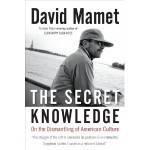 The new book by David Mamet, "The Secret Knowledge: On The Dismantling of American Culture" offers a most interesting confessional of sorts that reveals a new perspective on show business personalities that are lumped together under the category of "Hollywood liberals."
Mamet's new book reveals a fault line that might be opening on the so-called mindset of tinsel town's noisy band of activists of progressive persuasion who raise their voices and open their pocketbooks to politicians who cater to their point of view.
In past years the denizens of the non-left were macho men like John Wayne and Ward Bond, who because of their screen personas might have distorted the image of the right as hardheaded brainless jingoists without compassion and conscience. Ronald Reagan, the old union boss of the actors union, made the leap from a Roosevelt liberal to a Republican with an image that seemed less confrontational, although he was bludgeoned by the take no prisoners activists that made Berkeley a war zone in the sixties.
Then came Arnold, another macho Republican who captured the hearts of the California electorate despite the fact that he was connected to the most democratic of democrats, the Kennedy clan. Apparently, that influence had the effect of diluting his views and leaving office as yet another failed California Governor.
Now comes David Mamet, an artist intellectual that has spent his life up to now as a liberals liberal who admits to never having friends or acquaintances in show business who were anything but die-hard liberals.
Mamet gives us an essay by essay description of his changeover complete with reasons, explanations and insights drawn from deep reading of authors who offer their own explanation of how so-called progressive thinking has contributed to what he believes is an attempt to denigrate our culture.
Although some of the essays seemed strained and the prose at times convoluted, Mamet makes his points with flair and sincerity, and is overall convincing. He will not be the first to break the barrier that holds Hollywood types hostage to a cause that might be losing its viability.
In fact, I predict that many others will follow the same path. He is the canary in the mine warning that the herd instinct in Hollywood political culture might soon have to make the same u-turn Mamet has made.
One of the most interesting features of this book is the long list of authors who helped him develop his new point of view.
For him, this has obviously been a vast labor of the intellect and deep philosophical thought that brought this very talented man to his new political path. It is well worth going along with him on his journey.
June 22, 2011
Making Your Novel Picks
 With all the traditional filtering systems of the past that help determine the quality of a book diminishing at an accelerating pace, I have been thinking a lot about how a serious writer of non-genre fiction, meaning novels and short stories, will gain a loyal audience.
By serious novels, I mean those stand alone novels that told stories about characters that offered insight into the human condition, and broadened our knowledge of the times we live in and the world around us, and introduced us to authors who thrilled us with the richness of their imagination and the skill of their prose.
Would we have discovered the works of authors like Hemingway, Faulkner, Joyce, Maugham, O'Hara, Fitzgerald, Roth and many other modern masters if we had to come across them through the fragmentation and puzzling pathways of cyberspace? My references you will notice are personal and arbitrary. Undoubtedly, readers of my generation have their own personal favorites.
Academia, of course, was an essential part of the filtering system, but even academic picks are becoming fragmented in strange ways by the biases of the tenured and the lock step and untrustworthy uniformity of political opinion.
In the old filtering system professional book critics, publishers, librarians, politically neutral academics and respected authors would weigh in through newspapers, magazines and book clubs to offer their subjective assessments of the current crop of novels published by a finite number of publishers. Their judgments, of course, were always subjective, often biased one way or another, but they did reflect a more balanced view not based on any agenda, but their honest take on the value of the book. Not all books were "reviewed" but the process often came up with a consensus that helped the reader make an educated choice.
It was an imperfect system, but it did offer some semblance of logic and for years sustained that publishing area devoted to serious novels. The genre novel was considered outside the realm of serious recognition and never included on bestseller lists. Not that best seller lists, then and now, ever reflected quality literary output, but they did offer a path of recognition for the serious novelist that occasionally struck the gold of universal acceptance and acclaim.
Today the bestseller lists recognize the genre novel and have spawned an industry that, in many ways, has made it more and more difficult for the serious novelist to reach a wide public. Of course, one wonders if the bestseller lists are even relevant in these days of scattershot marketing in a landscape in which millions are self-publishing and using every ploy they can think of to gain recognition.
Marketing for authors has become an ever-widening cottage industry with entrepreneurs offering the promise of recognition for serious authors that rarely, if ever, attain their stated goals. Novelists today often pay for their reviews produced by self-appointed reviewers, and e-book sites offer review opportunities to readers to register their critiques of a writers work, a process frequently abused and unreliable.
There are, of course, serious writers out there both published by reputable publishers or by the authors themselves. Finding those novels worthy of one's time and effort is becoming, to say the least, challenging. Reading a novel is a big commitment of time although the sampling process of purchasing is helpful but not conclusive.
One must remember that writers who write what they consider to be mainstream stand alone novels believe mightily in their talent and the integrity of their work. Why then devote so much time and effort to their production if they thought otherwise? Many of them think of themselves as unsung literary heroes and some very well may be.
As a dedicated reader of serious novels, at least by my own definition, I am finding it increasingly difficult to find the signposts and detours that will lead me to such work. Unfortunately there is no GPS system and I find I am still relying on what is left of the old filtering system to find my target reading. And I am often disappointed.
Then again there are always the classics. Time is the most reliable filter of all.
June 21, 2011
Just the Six of Us
 We are six of us staying now in the house in Beaulieu. It is not an easy task to get six people corralled into doing a single thing, except dining. My son Jonathan and his wife are heavy duty athletes and demand strenuous activity. My son David has a back problem and Sunny and I are walkers of average enthusiasm and, of course, older. Tonight we are off to Monaco to dine, gamble, meet friends and listen to music, since today is a musical festival all over France.
Yesterday, a remarkable thing happened. We went to Cannes on a one day journey. It was crowded with people attending an advertising convention. Suddenly, out of this vast crowd in one of those coincidences that seem miraculous, we bumped into Nick Adler, my nephew, who was attending the convention Nick, who lives in LA, had no idea we were in France. He joined us for lunch.
Warren Adler's Blog

- Warren Adler's profile
- 111 followers

