Patrick O'Duffy's Blog, page 27
December 4, 2011
Play by play
There was a period there about two years ago when I started to see people using Kindles on nearly a day-to-day basis – on the bus, in the park, anywhere you might find time to read. E-readers were the new hotness, and it was cool that they were embraced (even in Australia, where they're more expensive and slower to arrive) and that reading was on the uprise.
Then iPads came along, and they swept over the Kindles and Kobos and Nooks like a wave, and about 20% of the commuters on my afternoon train home have one. And they mostly don't use them to read books, or magazines, or even the web; most of them use them to play games. Office workers playing Words With Friends, businessmen playing Ticket to Ride, shopgirls playing RTS games that I don't know well enough to identify. Reading is out; games are in.
And that's because games are awesome.
Yeah, see, you thought I was gonna come out critical of people not reading, but I fooled you with the rope-a-dope.

So good for my skin
Let me put my hand up and say that I love playing games, and pretty much not a day goes by that I don't play some kind of game, whether it be a videogame on my PC/XBox, an app on my phone, a board game, a card game, an RPG or just something entirely in my head that involves secretly pretending to be a spy under orders to investigate out what everyone else on public transport is playing. Games keep me young; that's why I look about 30 despite being 40 and have to get my hair thinned out every month. I played Batman: Arkham City all this weekend solely for the good of my health; that's my story and I'm sticking with it.
And why do we play games? Because we are, at heart, a species that loves to play – to do things that are fun and enjoyable solely because they are fun and enjoyable. From D&D to soccer to sex to dressing up as Harley Quinn even though you're not going to a convention, humans are playful beings, at least at those times when we're not fighting wars or denying homosexuals their fundamental human rights. We can play hard and play serious, but in the end it's still play; the point when you care so much about winning and/or making money from it that it stops being fun.
Which is how this loops back to writing. Because, for the most part, I don't find writing fun, and I don't feel playful when I write. Part of that is because I try to write Serious Stories About Serious Things; part of that is that I try to make money off it with the eventual aim of no longer editing maths textbooks every day until I want to stab a hypotenuse in the eye. And partly, probably mostly, it's because writing is an effort, and that's effort (and time) I could be spending playing games and having fun. Yes, I don't have fun writing because I've defined writing beforehand as being the opposite of fun; I'm away of the self-fulfilling contradictions.
But there is room to have fun when you write, and lately many of the blogs I read and tweets I follow and articles I see about writing make it look like I'm not the only one who forgets that. It's all so very serious and very focused, with posts about how to write and what to do, discussions on process, people feeling that they've let themselves down by not finishing NaNoWriMo… it's all a bit bleak. So maybe we need to stop every now and then, step away from the Serious Story, and just fool around on the page for a while, like a freeform jazz session, except the instruments are words and none of the performers are wearing pants.
I know it's a bit pot calling the kettle black, but I do give it a try now and then. Dave Versace, a regular commenter on this blog, wrote a review of Godheads in which he said that the stories 'Metatext Otis' and 'The Salbine Incident' were 'essentially literary jokes'. That's a very fair comment, especially for 'Otis', but from my end I didn't write them as jokes, I wrote them for fun (and for class credit, but that's a trifling detail). They were chances to play with ideas without worrying about story cohesion or voice or underlying theme; they were chances to shoot words off each other like I was rocking a pinball machine inside a dictionary. They do not accomplish much, but I smile when I remember the conceiving and writing of them, rather than the irked grimace that comes to my face when considering the more complex, more serious and generally more aggravating-to-write works I'm currently wrestling with.
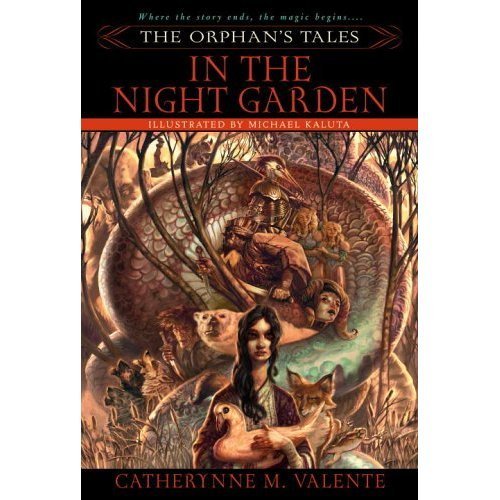 So every now and then I write just for play, especially with silly flash fictions that are all bang and swagger and ridiculous hats. But fun isn't just exercised through silly stories. Playfulness can also come out in voice and tone, in enthusiastic prose and tongue-in-cheek expressions, the kind of thing that often gets derided as self-aware cleverness. (As if it's a bad thing to be clever and self-aware.) Look at the language of The Yiddish Policemen's Union, the deft wryness of Middlesex, the circular storytelling of The Orphan's Tales, the delighted genre awareness of All-Star Superman; these are serious works that aim to be worthy stories, but in reading them I can't help but feel confident that the authors had a good time even while working hard. I so, so love books like that.
(And let's not even get into the joys of ergodic fiction, where readers actively play with story components to make a finished narrative. Because that's a whole other post, and I would love the chance to drone on about The Dictionary of the Khazars for 1000 words.)
I'm not trying to say that all writers should play D&D or study the storytelling structure of Angry Birds; there probably are arguments to made on those and similar statements, but this post ain't it. Nor am I saying we should write more Happy Fun Light Entertainment novels that can be easily digested on the beach or the toilet, because we have plenty of those and to be honest I don't much care for that kind of thing.
But I'm saying that maybe it's good to have fun when you write sometimes. I certainly need to have more of that.
Maybe then I'd write more.


November 27, 2011
Some post-wedding prioritisation
Well, it's a week later and I'm still married, which speaks volumes as to the patience of my new wife.
And a busy week it's been, as we've taken our American houseguests on excursions, shuttled back and forth between the airport, unwrapped far too many presents and drunk the last of the special wedding beer we commissioned for our guests. (They got most of it, okay?)
In particular, it's been far too busy a week to write, especially since there was someone sleeping in my study. And, let's be honest, it's been hard to write, or to think about writing, with the excitement and stress and work involved in the lead-up to the wedding. But that's done now, and in the wake of perhaps the most significant thing I've ever done, I've got a renewed determination to get stuck into my writing projects and to finish some of them for fuck's sake.
 So tonight, let's go through a bit of a to-do list, because I know how exciting that must be for you, my loyal fans and friends, to read and consider. These are too early for New Year's resolutions, and as we all know those exist solely to be broken before the bedstains dry on the first of January; I'm taking these seriously, and I encourage people to call me a slack bastard at those times when I ignore writing for trivial things like having fun, spending time with my wife or going to my day job in order to pay the rent.
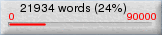
Arcadia: Languishing for too long in a half-finished – alright, only-barely-started – state, my number one priority is to regain my focus and momentum for this novel. I've written already about how the lack of a strong premise has made it tough going at times, and I've been stewing on that for a while, trying to pin down more concepts before getting back to writing. But you know what? Fuck stew. It's oily and full of carbs. Momentum is a whole lot more important than polish and clarity of vision in a first draft; all that really matters in a first draft is writing some fucking words. So I'm just going to dive back into this and write without angsting about it too much, and if that means I produce a draft that's uneven and full of notes like WRITE 200 WORDS OF SOMETHING HEARTWARMING YET UNCOMFORTABLE HERE, that's still better than a blank page. Anyway, here's the current progress marker; let's see if we can push that up to the 30K mark in the next month or two.
The Obiutarist: The new novella that I spoke about two weeks ago is underway, and I have a pretty good idea in my head for half of its contents. The other half… well, still working on that, but I can do more to work that out while writing from what I already know. The themes, the premise, the character voice and the other stylistic elements are strong in my head – things are always strong in my head – and I've got someone to talk to about the ins and outs of identify theft. Plus, you know, I've actually written a bit. A little bit. So while Arcadia gets first dibs, I'm still planning to devote some time every week to this one. Especially since my deadline for a finished, publishable version of this is quite a bit closer; I'd like to have that out by January. So I'll be juggling these two projects back-and-forth in a hopefully-amusing fashion for a while, and we'll see which one falls to the floor first and cracks open like a raw egg filled with poodle blood.
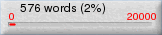
Other writing: Do I have time for other writing? Christ, probably not, but I have a couple of ideas for new short stories that I'd really like to work on. They're cool. So if everything else works, the heavens align, the good lord willin' and the creek don't rise, I should have a few things ready early next year. Whether I submit those to magazines/journals, sell them as 99c ebooks or just give 'em away in an effort to buy love get attention… well, I'll work that out later.
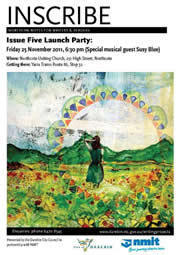 Speaking of other writing, I have an article in issue 5 of Inscribe, Darebin Council's biannual writing and literature magazine/journal. It's about self-epublishing, but rather than try to claim some kind of authority on the subject, I talk about what I've done and what I've learned, with an aim to share that experience and (hopefully) be of help to other writers in the area that want to go down the same path. Inscribe is a community effort aimed at motivating and promoting local writers, and there's some great stuff in this issue. If you live in the Darebin region, keep an eye out for Inscribe 5 in bookshops, cafes and the more intellectual bars; if you don't, keep an eye on the council website for when they put up a PDF version of it.
Oh yeah, and I need to keep up the blog posts. Possibly with less ranting and more insight/wisdom/cleverness. Which reminds me, I need to respond to some emails, discuss some ideas with my peers and line up an interview post in the next week or two.
Relentless self-promotion: Now, in addition to writing things people want to read (fingers crossed), I'd also like to convince more people that they want to read said things, and so I'm trying to lift my game about self-promotion, building a presence online and generally whoring myself out like a strumpet drenched in cologne. I bitched a while back about the lack of online ebook review sites, but I went on to do some research and found quite a few, which means that now I could instead write a blog post bitching about how few of them are currently taking reviews or getting back to me as to whether they want to look at my stuff. But I won't; I'm just gonna concentrate on getting Hotel Flamingo and Godheads out there and hope people talk about why they like them. Or don't. Don't is fine too.
(I'm contemplating dropping the price of Godheads to 99c, but I'm still thinking about that and I'll probably write a post about it first. The joy of a blog is that you can blog about anything before doing it. Or even before not doing it.)
I also set up an author page on Goodreads, which offers a few tools and options for writers that I'm going to start exploring. I don't know how useful they will be, as I'm not really sure how useful Goodreads is in general – enjoyable, yes, but useful? – but that's (of course) a blog post for another time. But in the interim, go check it out – and if you've read Flamingo or Godheads, please feel free (feel encouraged) to put a review or even a star rating for them onto Goodreads. It all helps. Probably.
Distractions that are generally much more fun than writing: I just bought Batman: Arkham City and borrowed Dragon Age 2 from a friend, so I admit that everything I've just said I would do may evaporate like beer spilled on a barbecue. But my intentions are so very, very good, and surely that must count for something.
Oh, and I should probably spend time with my wife.
…man, I really enjoy writing the phrase 'my wife.'
November 20, 2011
A short nuptial break
Hi folks,
Sorry, I didn't get a chance to work on a blog post this weekend. I was too busy getting married.
[image error]
More words about words later in the week.
Right now I'm going to go spend some time with my wife.
November 13, 2011
The Obituarist
'Social media undertaker.'
That's the concept that came to me back in… holy crap, January. I don't know what inspired it, but I suddenly thought that there could be a career – and a story, more importantly – in managing and then shutting down someone's social media or internet presence after their death. Just what that story would be wasn't clear, though. Something a little off-kilter, certainly, but would it be mainstream or genre? Horror or sci-fi? I'd had a vague concept in the back of my mind for years about a shut-in who slowly realises that the people he communicates with online are from alternate universes; the internet focus was an obvious connection between the two, but nothing immediately grabbed.
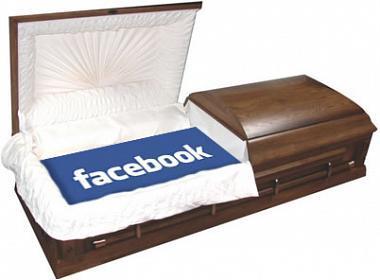
So I shelved the idea for a while. I shelve a lot of ideas. And by 'shelve' I mean 'forget' about half the time, unless I write something down immediately, even if it's just a blog post. This is why I carry a notebook. Which I don't use often enough.
Then in June, in one of those times when I put my imagination on cruise control and see where it goes, I came up with an opening paragraph. I do that a lot – just write 100-odd words to kick off an idea without thinking about it too much or knowing where it's going. I usually file them away and come back to them periodically to see if they inspire me to go further.
I've tweaked the opener a little, but here in all its glory is the start of what I decided to call The Obituarist:
Jay Moledacker was far more handsome in death than he ever had been in life. Okay, not true, but at the very least his Facebook profile picture was now a lot more dignified. Not difficult, since his profile picture while alive had been a photo of him vomiting onto a horse after a drunken racing carnival.
Now that he was dead – of an embolism, rather than being kicked by an outraged thoroughbred or whipped by an equally horrified jockey – he looked regal, elegant and a good six years younger. That's because I had to use his college graduation photo; everything after that point seemed to involve young Jay throwing up, getting punched in nightclubs or asleep on someone's kitchen floor with FUCKWIT written on his naked chest in mustard.
A life well lived. Well, a life. Lived.
And it had fallen to me to close it all down.
Which didn't stop my clients – i.e. his parents – from dicking me about on the invoice.
Looking at this, there are a bunch of signals in it about the kind of narrative that it would kick off – signals not just to readers but to me as I consider writing it. There's an obvious streak of humour, but it's not overwhelming, which is good because I can't write comedy. But there's also a slight hint of melancholy, or maybe resignation; it's the speech of someone who's aware of the funny and sad aspects of what he does. And there's a character voice right there to work with – kind of my default voice, I admit it, but hey, my default voice is generally pretty entertaining.
So that was interesting, and it made me think that the idea had legs – and, to some extent, made me think that a semi-realistic story would better suit that tone than a horror or high weirdness piece. But nothing immediately sprang to mind, and so I shelved it again.
Cut to last month, as I started the process of changing email addresses. Which is kind of a pain, because I used my old email address as part of my login for a bunch of sites, and it's connected to bank accounts and other important things, and if I don't take care when changing details someone could maybe use my old email to log into something and then work out my bank details and steal my identity and holy shit the core premise of The Obituarist pretty much unpacked itself into my head. Because it's not just a social nicety to clean up the internet footprints of the dead, it's a way of stopping identity theft, and that means there's the potential for crime and money and murder involved.
And there's a story in that.
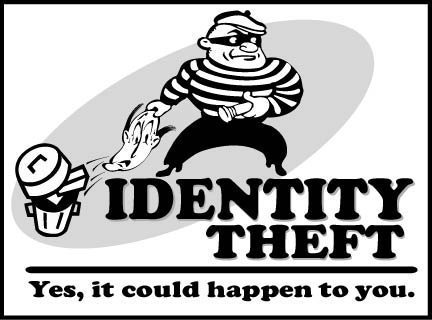 So I'm gearing up now to create The Obituarist (note: provisional title) as a novella to ideally write over the next couple of months and publish online by January/February. I'll post some more information about premise, theme, tone and the like in the next few weeks, but here's the basic pitch:
Kendall Barber (note: provisional name) used to be a professional scammer and identity thief. Then something changed in his life, and he decided to use those skills legitimately to become what he calls an 'obituarist', locking down the online lives of the newly dead.
But now his past is reaching out to catch up with him, just as he gets in over his head with a new client whose dead brother may have been murdered – if he's even dead at all. If Kendall doesn't play his cards right, he could wind up just as deceased as the usual subjects of his work.
On the other hand, Kendall may know more about what cards to play than anyone else realises…
20 000 or so words of slightly-surreal crime, touching on themes of death, identity and secrets, and taking more cues from Raymond Chandler than I should probably admit to in public. That's The Obituarist. Or will be, if I pull my finger out and write it over the next two months. Which is the plan.
Stay tuned for more updates.
November 6, 2011
Disarming the NaNoWriMo trap
November is a'comin' in, and that means a number of things. Temperatures in Melbourne suddenly skyrocket, blokes start growing fabulous moustachios in the name of men's health, Christmas ads explode all over your favourite shows and my wedding looms large on the radar.
I start wearing shorts again. Which is pretty major.
And, of course, it's the start of National Novel Writing Month, or NaNoWriMo, or NNWM if you prefer just writing in caps, or maybe INWM if you recognise that it's international rather than national, or… look, you know what I'm talking about. That thing where people dedicate themselves to writing a 50 000 word novel from scratch over the course of the month, that's taken off from a one-off activity among a small group to be bigger than pogs worldwide.
A couple of writers of my acquaintance have blogged about NNWM this last week. Alan Baxter is very critical of the whole thing and questions what participants are actually achieving, while Jay Kristoff focuses instead on how to get the most out of it if you decide to give it a shot. I've tended to lean more towards Alan's take on things for the past few years, feeling that NNWM is mostly a waste of time and effort. I think that it puts too much emphasis on output and not enough on craft, so that people get into the mindset that quickly writing an unpolished novel is more valuable than spending time deliberately constructing a good novel. It's all quantity rather than quality, and I think craft and quality are being neglected in the new wave of self-epublishing.
[image error]
The actual Komissar of the Writing Police
If I had my druthers, I'd prefer to see something like (Inter)National Short-Story Writing Month, where participants write a single 2-3 thousand word story in the first week and then polish and rework the fuck out of it for the remaining time.
But as it happens, I'm not the Kommissar of the Writing Police, and it's not up to me to tell folks that they're Doing It Wrong. Unless, I dunno, they're writing with their feet, or spending all their time writing Abbott/Rudd slashfic. (Because that is wrong. So very wrong.) If people are getting something out of NNWM – be it a finished book, writing practice or simply the feeling of accomplishing something – I'm not going to belittle that. (And, just to be clear, I don't think Alan is either). And hell, I understand the value of a deadline.
So okay, let's be upbeat about NNWM. People have fun with it, people find it rewarding; let's embrace that. If you're giving it a shot this year, I wish you well with it; I hope you get something out of it and I hope your manuscript is good, or pretty good, or at least that it doesn't suck.
But don't fall into the trap.
Publish and perish
The trap is thinking that NNWM is enough; that it's the end of a process, rather than the beginning. That's the spiked-pit-filled-with-piranha that leads people to spend the first of December slapping a crudely Photoshopped cover onto their just-finished manuscript, uploading the file to the Kindle Store and then wondering why no-one downloads it. And that's going to happen a lot this year and going forward, as the process of self-publishing becomes ever easier and the bar for what can be considered publishable drops ever lower. Work that might have been permanently consigned to the bottom drawer/hard drive, or perhaps given much-needed reworking and development, is immediately pushed out into a virtual marketplace that promotes variety over quality, and where bad work threatens to crowd out good until it becomes invisible.
NNWM is going to create a lot of bad ebooks. It's inevitable. But you don't need to be part of that dull, turgid tide.
The key to escaping the trap is this – think of NNWM as a tool, not a goal. It's a machine that refines your raw material – your ideas, your style, your passion – into a 50 000 word first-draft manuscript. That MS is a tool you can then put aside for a couple of weeks while you decompress, maybe do some Christmas shopping, and then use to make the second draft. You might rewrite it completely, you might only need judicious editing, you might burn it and get high on the fumes, but the important thing is that you feed the first draft into the hopper and push the assembly line along to the next stop. And the next. And the next.
Getting that first draft together is an achievement, and there is no tool more important in creating a strong book. So don't waste it; don't just dump it on the world's doorstep and run. Use it, wield it, rev it up and pull it apart. Because NNWM should not be something you do; NNWM is something you use. It's the trap and the escape hatch at the same time. Trip the lock, map the route, start climbing until you get to the top. And then keep going.
–
In closing, let's reflect on the irony of this post, namely that anyone giving NNWM a halfway decent burl is doing more writing than I am at the moment, thanks to the terrible one-two punch of preparing for a wedding and just being lazy and a bit crap.
So I'm going to put some money where my mouth is and start work on a new novella this month, as a side-project and occasional respite from Arcadia, with an eye towards having a first draft finished around Christmas and the ebook available by January.
It's called The Obituarist, and I'm going to talk about it some more next weekend. Tune in.
November 3, 2011
Blogtober
No-one yelled at me and told me to write something more interesting the last time I ran through my list of the worthwhile blog posts I'd read over the course of the month, so consarn it, I'm gonna do it again.
'Consarn' is a good word. I think I might name a D&D character that one day.
Cam Rogers has a short-but-smart breakdown of seven things he's learned about writing for kids. I can't say that I want to do any children's or YA work myself, but it's still good to consider what the differences in style and focus are.
Bogtober
Russell Bailey has another instalment in his Cavaliers of Mars sword-and-sorcery worldbuilding exercise, this time about the people of Mars. This is gaming directed, in the main, but I find it a really interesting exploration of tone and how it can be efficiently conveyed in an expository format. Plus, come on, Martians with swords.
Foz Meadows gives us a really fascinating essay on book piracy, whether it really hurts writers, the possible benefits of it and the potential benefits of the try-before-you-buy mentality. While mostly ambivalent about piracy / filesharing / whatever, I'm not quite as upbeat about the implications as Foz, but she argues a good case, and I like the way she tries to look at the issue from both a writer's and a reader's POV.
Kate Beaton has a comic about Kraven the Hunter. It's ace.
Louise Cusack talks about the value of critiquing other people's work and how it can give you insights into your own. She's right on that; editing and dissecting the work of a friend gives me immense clarity on my own work and how to make it better. Louise also touches on how to do a memorable book launch, which mostly made me jealous, since a book launch for an ebook is mostly a matter of uploading files while sitting in your underwear and eating Nutella straight from the jar.
[image error]
Flogtober
Ben McKenzie, the Man in the Lab Coat, writes about Ada Lovelace Day and interviews three women that work in the computer science and video games industry. It's a good read, and a reminder that female gamers and comp-techs really do exist and shouldn't be treated as mythical vagina mutants.
Jay Kristoff has been writing about suck – both how important it is, and then how to avoid it. Which may seem like something of a mixed message, but it's a great one-two punch about the need to overcome fear of failure in your writing, and then how to correct failures after the fact through judicious editing. Courage, then ruthless efficiency. And suck. Which is apparently a noun now.
Michael Pryor discusses the 'powerless hero' and the need to give a protagonist the power and willingness to act. I don't know that I agree with that, because I really enjoy stories about protagonists that have only one of those things and the difficult position it puts them in, but Michael argues his case well and it's good food for thought. I also very much liked his post about learning stage magic and what it taught him about writing. Because, in the end, everything can teach us something about writing.
Gamer emeritus Rob Schwalb, my former Green Ronin homeboy, talks about the myth of the new gamer and whether the introductory RPG sets on the market really fulfil a genuine need.
Pyramid Head-in-a-smock-tober
Alan Baxter talks about NaNoWriMo and why he doesn't get involved. I share some of his issues with the project/event, although I'm not as against it as he is, and in fact I might just write about it myself this weekend. But he makes some good points that are worth considering. And, as a slightly-after-Blogtober bonus, a great post about how he got two good friends to savage the crap out of his work and how it made the writing better.
And Chuck Wendig wrote approximately eleventy billion blog posts, started a collaborative word-building project, published two new ebooks, called out some author ebook writers for being fuckwits and probably fathered another kid for his ever-growing army of loyal minions. If I didn't respect him so much I'd have him killed. I still might. Anyway, too many fucking great posts to link to. Just stick his damn blog in your Google Reader feed already.
On a semi-related note, the new Google Reader design is a canoe filled with arse.
October 30, 2011
Off my game
So I started writing an acerbic polemic post tonight, but I've shelved it because it sucked.
As, frankly, have the last few posts. Well, perhaps 'sucked' is an overstatement, but they certainly weren't that inspired. Looking over them again, they feel forced and fairly pointless, like I'm not saying anything all that original or useful.
 Blogging has to be about a genuine attempt to share ideas, rather than just clocking in 1000 words every week in the salt mines, and I feel like I'm missing that point. I have ideas I want to talk about, definitely, but I'm giving them short shrift in the push to crank them out, and droning on about things that suck – which, let's be clear, definitely do suck – isn't inspiring my best writing or letting me share my passion about writing.
That and it's distracting me from actual writing. Arcadia needs a lot more love than I've been able to spare of late. And the ideas for the new novella continue to percolate.
So I'm going to change gears for a while. Still going to aim for a couple of posts a week, but more creative ones – short fiction, works-in-progress, talking about things that excite me. Things I can talk about without needing to act like I have a unique insight others need to take on board. I think that if I do that for a month or two, it'll give me time to think about more complex things and work them into a form worth reading.
Then I'll talk about the things that suck. They're not going away anytime soon.
Also, I have to be honest – I'm getting married in three weeks, and that's gotta take the lion's share of my attention for a while. These paper cranes ain't gonna string themselves.
October 27, 2011
Hubba hubba, who do you trust?
Many, many electrons have been killed in arguments about the decline of the old publishing models and the death of the gatekeepers and the new ebook democracy where we all have the power to publish really shit books for free and blah blah blah. I know; I've said my piece more than once on the subject.
He has judged your MS and found it insufficiently ominous
But something that tends to get lost in the shuffle as people argue about whether ebooks are better than physical books is the question of where you find the damn ebooks in the first place. Not where you buy them – we're all pretty clear about that – but how you learn that an ebook you might like has been published and is now lost in the overflowing intershelves.
Yeah, I'm talking about book reviews. Ebook reviews. E-reviews. Fuck, I can never keep up with the lingo.
In this, as in other things, Google fails us, because when you search for 'ebook reviews' or similar what you get are hundreds of hits about hardware and reading devices. Ditto 'ebook readers', 'ebook recommendations' and 'where the fuck can I find a good ebook'. We messed up when we named the platform after the thing you read on it; we should have called them something totally different, like boners. Except then you'd be Googling 'boner reviews' and ending up with something that doesn't resemble a Kindle Fire. Well, not the current model.
So what I'm wondering tonight – and hoping for comments, as I often (and not all successfully) do in these mid-week posts – is where you/we go to find ebook recommendations and reviews.
The Kindle Store
Yeah, right.
Don't get me wrong, ebookstores like the Kindle Store, iBooks, Smashwords and so on are great, because that's where you get the sweet digital wordcrack. And the reviews that go against books, while variable in quality (to put it mildly), can be useful in helping you work out whether a given ebook that you're looking at is worth the $2.99 of your hard-earned money.
But for finding the ebooks in the first place, store sites are pretty much useless. Genre subdivisions and user-generated tags are crude sorting tools that don't provide much nuance and require you to read reviewers' minds so that you pick the same words they used to categorise the work. The other core tool for pretty much every site is a star rating, which again is largely useless; it's far easier to find a book with just a single review, but that got five stars, than it is to find one with a hundred reviews but only a 4.75 rating. That book may as well be invisible, lost behind a thousand crap books that were well received by the author's mum.
Relentless self-promotion
Or Konrathing, as it is sometimes called. Talking loudly about your own new books, old books, upcoming books and books you dreamed about writing is a key activity for any ebook writer, and can easily eclipse actually writing books in the first place. (See the URL of this blog post for Exhibit Fucking A.) Like it or not, it has to be done, because it's not like the marketing department will do it for you. The marketing department is a cat, and he's busy licking his rear while become a Japanese internet sensation.
However, self-promotion is advertising and as such it's not very useful if you want an unbiased idea of whether a book is worth reading. More often than not, if you even pay attention to the self-promotion, you end up overlooking the work to examine the writer and the way they present themselves and their work. And that can be great; look at how Chuck Wendig creates and pushes his creative voice/persona. But it too easily takes the spotlight away from the work and gets in the way of finding out whether the stuff they write is as good as they sound.
Word of virtual mouth
The prevailing wisdom is that this is how the word gets out in the modern age – people talk about the books they like online and in social media, other people see it and check it out. Probably true, but not exactly the kind of thing that you can bank on as a writer or navigate effectively as a reader; it's little better than basing your TV viewing habits on how many Facebook sites are trying to get one million signatures to get it back on / back off the air.
At the same time, sure, I blog/tweet/update/iVerb about cool new ebooks being published by my friends and contacts, and about things I've read that I really like. This is what people do; we get enthusiastic about the stuff/people we like and tell other people/stuff about it. But I don't know how useful that is if I don't articulate why this news is worth disseminating.
I'm also skeptical about how useful sites like Goodreads and the like are for ebook readers, or in truth for readers in general. When I look at these sites I see a lot of hardcopy books being read, and not usually new ones at that; I also don't see much in the way of substantive reviews for them. In the end, they're not really about sharing information about the things you read, but about sharing the fact that you do read. The act itself is the thing being broadcast, like a personal affirmation that you like the things you like and want others to know that. And hey, that's human nature and there's nothing wrong with it, but it doesn't provide all that handy a service.
It was in NSW the whole time. Who knew?
Ebook review sites
Do these really exist? No, this isn't a rhetorical question – I really want to find some! I know they're out there, somewhere, but they shift and fade like Brigadoon. And even if you find one, it's a drop in the ocean, because they can only review so many ebooks a day/week/whatever, and I imagine most are labours of love that get put aside when time runs too short.
But damn, a smart, regularly-updated ebook review site with a stable and decently-sized readership base would be my Holy Fucking Grail. It's all I want for Christmas.
Dumb fuckin' luck
And sometimes you just see mention of an interesting-sounding ebook in a forum discussion or in someone's sig block or a stripper has a URL tattooed around her navel and you check it out and it's the best thing ever.
But that happens less often than you might think. Honestly, that stripper's novel needed a serious edit.
–
So anyway, all of this bitching and moaning about not being able to find ebooks to read is self-serving, because it's also bitching about how I struggle to get reviews and word-of-mouth for Hotel Flamingo and Godheads and how it's likely to be difficult for the new novella I'm currently planning and that you heard about here first OMG. Let's be honest, nearly everything on this blog is a desperate (but genuine and hopefully interesting) cry for attention and sales.
But still. It would be good to find stuff to read. And to help others find good ebooks, whether or not they're mine.
So chime in, please, with ideas, recommendations and stories about how you find the good word. I want to hear.
October 24, 2011
Narrative core-blimey 2 – Theme
Apologies for the late post, friends – Saturday night was my buck's party, and after being plied with videogame-themed cocktails for several hours at The Mana Bar, I was left in pretty rough shape on Sunday. Writing, forming coherent thoughts and sitting in one place doing nothing all proved… difficult.
So what were we talking about? Oh, yeah.
Theme
When you describe what your narrative is about in terms of theme, you can end up with statements that are vague and non-specific:
'It's about how the concept of secret societies have more power than secret societies themselves'
'It's about failure and how embracing it can have a power of its own'
'It's about the death of the American Dream'
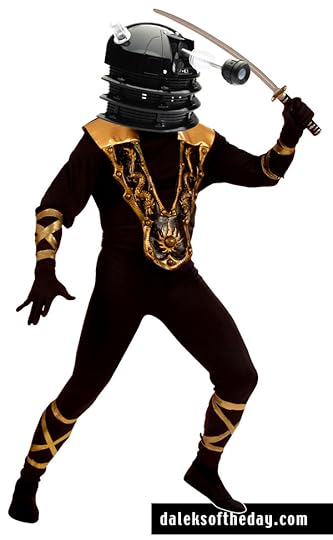
Oh Google Image Search, I wish I could quit you
The thing about those is that they while they're accurate summations of three of my favourite novels, they tell you pretty much nothing about what happens in those novels or indeed what those novels actually are. (Any guesses?) Which isn't surprising, because it's an attempt to describe the core meaning of a narrative, and meaning isn't concrete. Premise is anchored in tangibles, or at least as tangible as imaginary things can be; if you put a ninja or a Dalek or a ninja Dalek in your story, every reader will agree that that's what it is. But if your work is based in a theme, that means you're focusing on subtext instead of text, and everyone reads subtext differently, and the theme you think is strongly evident could be invisible to your readers.
Another notable difference about describing narratives in terms of theme first is that you decouple meaning from plot and character and make it the major element. That seems obvious, but think about what it implies – by putting theme first, you're saying that that's the reason people should read the book, and that the plot and characters are (to some extent) less important. And on the whole, people don't read like that; they enjoy reading books about interesting characters in interesting situations, rather than going to the bookstore and asking the staff if they have any novels about failure. They may, in the end, enjoy a thematically-focused book more than a premise-focused book because the material is more intellectually and emotionally meaningful, but first they've got to actually bother reading it. Themes carry weight, but they are blunt hooks.
I think that on the whole theme is tougher to work with than premise, because you write from a premise but towards a theme. With a premise, story elements emerge from the core concept, and then you hook them into the narrative as needed. With a theme, though, your first question is not 'what could happen in this scene' but 'what meaning should this scene have'? That becomes a target that you work towards, but you've got to come up with the story elements that communicate that meaning yourself. That can be tough; it's the number one stumbling block I have with Arcadia, where I have a great set of plans about theme and meaning but often flail about trying to work out what actually happens in each chapter.
And last, of course, a strong theme is really no better promise of a good book than a strong premise. Neither of them guarantees good writing, and there are many turgid or glib literary novels bursting with themes that can't save them from being shit books. All other things being equal, it's perhaps fair to say that if you have the skills to communicate a strong theme effectively through your work's subtext, you've probably got the skills to write a good book in the process. If all other things are equal. Which would certainly make my day job of editing maths textbooks a bit easier.
The Verdict
So what should you focus on in your work – theme or premise?
DIE CLIPPY DIE
Well, the right answer is the least helpful one – focus on the one that works for you. This isn't a box you click in Word at the start of the writing process that helpfully throws up a talking paperclip whenever you go off target. When you get struck by inspiration, that almost always comes as either a premise you want to expand or a theme you want to explore. You know what you want to write and what interests you, and trying to go a different direction, while certainly a worthwhile exercise, is something you have to want to do, not something you do because you think you should. Fuck should. Write what excites you and from/towards the place that excites you.
That said… on the whole I tend to come at things a lot from theme. Not just theme; it's hard to simply decide 'I want to write about failure' and then see what comes to mind. Themes tend to come wrapped around a kernal of premise, just as premises often (perhaps not always) are swaddled in sticky filaments of theme. But still, I find it hard to get really interested in an idea until a strong meaning attaches itself, because I prefer to read/write stories that say something underneath the scenes of hot Dalek-on-Dalek action. (And no, I'm not Googling for that, because I'm pretty sure I'd find it.)
But a good theme is hard work to explore, and like I said, I'm finding Arcadia a handful because the premise is vaguer than the meaning it supports. I need to develop that further – because, in the end, the strongest works are those that have both a premise and a theme. It's the best of both worlds (not getting an image for that either) – concrete elements that embed in the text and put roots into the subtext, with story events interacting with deeper meaning. That's the narrative Holy Grail for me; an exciting, engaging story that leaves you a tiny bit wiser at the end of it. It's what Wolfe achieved with The Book of the New Sun, what Marquez did with One Hundred Years of Solitude, what Grant Morrison almost managed to do with The Invisibles – and fuck it, if you're going to aim high, aim as high as you can, right?
Interestingly, 'the search for the Holy Grail' works as both a premise and a theme. Don't say I never give you anything.
–
Anyway, that's enough on that topic for the moment. I hope it was interesting, maybe even useful, although I suspect it wasn't concrete enough for that. I might come back to this topic another time and see if I can give more definite discussion, maybe workshopping an idea to find both premise and theme to back it up.
Or I might just talk more about Dalek sex. That'll drive up the pageviews.
Next weekend, though – angry ranty polemic time is back. Save the date.
October 21, 2011
Reader's choice
A couple of years ago the big argument was about whether ebooks would inevitably replace physical books. Depending on who you believed, print was so past dead the fumes were making our eyes water and physical books would go the way of the buggy whip within a matter of months, or ebooks were pathetic fads that everyone would abandon once the batteries on their Christmas Kindle went dead.
Now that the smoke and rhetoric has cleared, I think it's safe to say that ebooks are here to stay, but that printed books aren't going away any time soon. We live in an intersticial time when both forms are popular and both easily available, and as someone who likes both books and ebooks and most of all the text and words and ideas both carry and beam into my brain, this is a good thing. It's a crazy time when all the old rules are being questioned and the new ones still being written, when we have the opportunity to experiment, to play, and to get into interminable arguments about what format or publishing model or piece of equipment is superior to all others.
Case in point – e-readers. There are a bunch of different ones out there now with different features, and tablets that can be used as e-readers, and smartphones, and emulators for PCs, and they all seem to do different things and it just makes my head hurt. Some people say Kindles are best, some say the Nook is best, someone somewhere probably thinks the Kobo is best, other people think you're crazy for not just having an iPad, and now the Kindle Fire is coming and to be honest I'm not even sure what that is but it's very shiny.
[image error]
The new hotness GET IT FIRE HOTNESS YOU GET IT IT'S A JOKE SON
For my part, I run a Kindle emulator and Adobe Digital Editions on my PC and little eeePC, and that works pretty well. Well, mostly. The eeePC is great, but it's not designed for reading ebooks, and thus there are always little problems of readability, of page size, of display and of trying to balance it on my knee as the morning bus goes around a corner. And the other problem for me, as an ebook publisher, is that the display I see in the emulators doesn't really match the way the book will look in a proper handheld reader.
So I'm thinking of getting an e-reader of some description, preferably a cheap one (unless someone really wants to get us His and Hers iPads for our wedding, and if you do I am prepared to allow it). And the relative merits of each brand and type isn't as interesting to me as to what it does, why that's a good thing and what impact it all has on the most important feature, which is that it lets you crack open an ebook and slurp up the juicy words inside.
I guess what I'm asking isn't 'which e-reader' is best, but the more general question of what does an e-reader need to be and do? Forget the technical specs and the display sizes – what functionality do you, as users of these devices, want and need in order to read an e-book to your satisfaction? E-ink? E-paper? E-spines? Web browser? Tags and bookmarks? An actual physical book instead?
This is a call for comments. Forget the brand, forget the model, forget whether you can play Angry Birds between chapters. Tell me what matters to you as a reader of books, and why.
I have no idea what I will do with this information. But it all helps my buggy whip business.