Patrick O'Duffy's Blog, page 23
June 14, 2012
Launched from last weekend
Hi folks,
I promised new flash fiction and I will deliver, but not tonight – too busy this week with things like a day job, returning to the gym after a long absence and wishing I was dead because everything hurts after returning to the gym after a long absence.
Instead, tonight, I’d like to explode with links in a follow-up from last weekend’s Continuum convention. I had the chance to meet a lot of interesting writers, bloggers and podcasters over that weekend, whether as co-panelists or just from talking in the bar, and it’d be nice to tell all y’all about them and spread some of the love.
Deborah Biancotti chaired the ‘I Don’t Get It’ panel and was both charming and very skilled at getting people back on track when they’d gone off on tangents. She’s a Sydney-based writer; I haven’t read her anthology A Book of Endings but I’ve heard nothing but good things about it and I’ve liked the excerpts of other work I’ve read. She’s jumped into my to-read list right away.
Peter Ball was on the aforementioned panel and another panel on creating RPG worlds. He’s also a Brisbanite, a friend of a friend, a gamer and a comics reader, so frankly I’m kind of shocked it took us this long to meet. He likes Power Man and Iron Fist, tweets about terrible movies, blogs about writing and has two novellas on Smashwords. He’s good fucking value.
Ian Mond is a writer and podcaster, one of those overactive podcasters who knows all the other podcasters and they have like special podcastparties that I never get invited to and I should probably stop this sentence now. Anyway, he puts out two podcasts, The Writer and the Critic with Kirstyn McDermott (which won both a Chronos and a Ditmar award on the weekend) and the irreverent Shooting the Poo with some other people. We talked about comics and the problems with the DC reboot. I liked him.
Grant Watson was also on that same panel and agreed with me that Suicide Squad is basically God’s punishment on this fallen world, so he gets props. I listened to his comics podcast Panel2Panel this week and dug it; he has another podcast called Bad Film Diaries which I haven’t heard but I can guess what it’s about. Anyway, cool stuff.
Louise Cusack has been a guest of mine on the blog in the past, but I got a chance to actually meet with her and have a chat over the weekend, and she’s just lovely. We only touched base officially in the session where we were doing readings, along with Jo Spurrier and Danny Fahey, where we all bonded over the fact that pretty much nobody came to hear us. Oh well!
Jack Dann doesn’t need an introduction; he’s one of the giants of Australian speculative fiction. He was kind enough to moderate the panel on independent publishing. And he was really pleasant too.
Steven O’Connor is a YA writer who had his first novel lauded and launched by a major publisher who pulled the plug on the series before the sequel came out. Now he’s trying to get the rights back while learning the ins and outs of independent e-publishing. He was a really nice chap who’s been thrown in at the deep end and he’s blogging about his learning process, which is a valuable thing and worth reading about.
Russell Farr is the founding editor of Ticonderoga Publications, who have really gained market in the last few years to become one of Australia’s biggest independent spec-fic publishers. He was on the indie publishing panel to give insight into the non-ebook, non-going-it-alone approach, and he was gracious, open to discussion and a real class act. I want to be in his books now.
Tor Roxburgh is a really interesting lady who decided to publish her fantasy novels herself and managed the entire process like a professional publisher, from hiring designers to picking paper stock and booking an international printer. I saw her book, The Light Heart of Stone, at the EWF’s Pages Parlour and it is indistinguishable from a big publisher’s product. I hope to lure Tor onto here to talk about this in the next month or two.
Sean Wright is a book blogger and reviewer from South Australia who’s been saying some very positive things about The Obituarist online. We hung out in a hallway after the independent publishing panel to chat about that and the differences in structure, narrative and audience engagement between crime and speculative fiction. Hopefully that’s a conversation we can continue online later.
These are cool people. You should check them out.


June 11, 2012
Dead reckoning
It’s been a long and very busy May for me, what with a new book to sell and promote, and… wait, what? It’s already June? Like nearly two weeks into June? Well, shit. That just shows how deep in the self-publishing K-hole I’ve been these last 5-6 weeks.
‘Self-publishing K-hole’, by the way, is a phrase you will never see used in Amazon’s publicity for KDP Select.
[image error]Anyway, it’s been close to six weeks since The Obituarist came out, and I’ve tried to abide by my promise not to talk incessantly about it here and become a boring spammy snake-oil merchant. But I also promised, back when I started this blog, to be as open as possible about the process of not just writing but creating, promoting and selling my ebooks, in the hope that any data I can share might help someone else with their own efforts.
So it’s in that spirit of sharing, rather than shilling, that I’m here to pick apart the numbers of how The Obituarist is going so far, where it might go next, what conclusions we might draw from the ebb and flow of sales and whether I’m ever going to make enough money from it to justify writing the sequel I’ve already started plotting out.
(If that sounds boring, you have my permission to skip this weekend’s update. There’ll be new flash fiction later in the week – come back for that, it should be fun!)
As of today, I have sold 94 copies of The Obituarist, netting me a pre-tax royalty of something like $160. It’s hard to know exactly how much, because Smashwords and Amazon both work in US dollars (or in pounds for the three copies that sold through Amazon UK). Let’s assume that the currency conversion and the 5% that the IRS will retain more or less cancel each other out and stick with $160 for argument’s sake.
In case you’re wondering, THIS IS GREAT.
94 copies in about five weeks? I’m really goddamn happy about that! That’s more than double the number of copies of Godheads I’ve sold in a year, and not that much less than what I’ve sold of Hotel Flamingo in 18 months. And $160 is about a dollar more than what I’ve made from Flamingo‘s sales to date (thanks to dropping the price to 99c back in January). Right now this means that I’ve made a little more than half my expenses back, and I can assume that if I sell another 90 books I’ll be in the black and can start writing the sequel everyone keeps asking about.
It has a badger in it.
Of course, this is the initial sales point, and it’ll either slow down markedly or dramatically surge as I become SUPER FAMOUS WRITING DUDE. Which is more likely? Well, let’s look at the Amazon sales graph.

First thought – man, Amazon sales rankings make no fucking sense. They measure something like books sold in a specific period of time as compared to other books in the same category, which leads to things like The Obituarist having its highest ranking (about #22 000) the day after it was published, because it had sold half-a-dozen copies overnight, but being 50 000 spots lower a month later after selling a bunch more copies. I get the concept, but it’s weird.
Second thought – I can map the spikes and jumps to specific times I’ve promoted or talked about the book. For instance, the big jump on May 23 is when I was on Byte Into It to talk about the concept and the book. That gigantic jump – from #200 000 to #63 000 – is only four sales, but that’s just Amazon weirdness. So what I should do is confirm what gets the attention for those spikes and keep doing it, and I’ll talk about that below.
Third thought – I haven’t sold a single copy yet this month. Which isn’t good. For all that I get more money from Smashword sales, Amazon sales rankings are really important because they can increase a book’s visibility and improve the chances that someone discovers the book on their own rather than because I’m pushing it on them. So I need to turn this around soon.
And speaking of Smashwords, here’s a set of graphs from them:

Do they line up with the Amazon graph? Hmm. Kinda. You see some spikes and peaks in the same areas – like, obviously, the launch day – but not in others. That Byte Into It spike isn’t there, for instance – well, it might be, but it’s a sale of one copy if it is. Does that mean people who hear/read about the book are more likely to head to Amazon? Probably, and that’s something to take into account.
The next thing to note is how page views translate into sales and samples – or how they don’t. Again, lots of spikes at the start of the process, and lots of downloads to match, but later the page views fall faster and further than the downloads. This might mean people check it out when it hits the SW front page right after launch while not buying it; it might mean later interest comes from a smaller group of non-browsing customers who want this specific book; hell, it might mean that all the data-mining bots swarmed on it to gather data right away and now only boring humans care. There’s information there, but it’s hard to translate.
The good news is that I’m still selling copies on Smashwords in June while Amazon is quiet. The bad news is that I’ve sold like three copies – and yes, that’s better than zero, but I’m not setting fire to my underwear with joy about the difference.
In any event, it’s clear that May was an excellent month for me, but also that it was a launch month when the book’s visibility was high and when I was all over the internet talking about it. The last week has seen less of that and more of me talking about it in real space, such as at the EWF and Continuum, and that’s not been as effective. That’s not surprising – the best way to sell a book you find on the internet is to market and promote it on the internet. And I don’t regret that period, because it’s been good to tell people about it face-to-face – and, indeed, to talk to people full stop. People are cool.
But if I’m going to stop that slow spiral down to the bottom, I need to pull out a few more stops. And I have some ideas about what to do next.
Exciting new forms
The Obituarist is an ebook not because DIGITAL RULES DEADTREE DROOLS but because it’s hard to make a print novella commercially viable – but not impossible. I picked up a couple of discount vouchers for custom-publishing outfit Blurb during the EWF and I’m looking into the costs and possibilities of doing a small print run of physical copies. The tricky part will be working out whether the return will be worth the cost – not just of printing the book but of distributing it to customers and to local bookstores – and how much I’d need to charge to get that return. But it’s definitely something worth trying, even if in the end I only print 50 books; if nothing else I can give them away as Christmas presents to people I want to make feel guilty for not buying it already.
[image error]But that’s not all! I’m in discussion with awesome voice actor (and BFF) Ben McKenzie about doing an audiobook version! Ben actually read the first chapter aloud to the very, very small audience we had for our reading session at Continuum yesterday and he sounded amazing. We’re working out the costs, practical difficulties and potential for distribution and hopefully can come up with a plan in the next week or two. Believe me, when it comes together, I’ll be on here talking the hell out of it. You won’t miss out on Ben’s melodious voice and the charming, almost-but-not-quite-British inflection he brings to my book where people say ‘fuck’ a lot.
Make Goodreads my bitch
Goodreads is shaping up as one of the most important social media sites for books and readers, and I want to explore it much further to see what I can get out of it – and, just as important, what I can bring to it to make it more worthwhile for its users.
Obviously The Obituarist already has a page on the site, and people have been leaving reviews and putting it on their to-read lists, which is great – but I need to see what else I can do. One option is advertising; Goodreads has a number of pay-per-click advertising packages for authors. I will admit that I rarely – okay, pretty much never – bother clicking on ads on the site (or indeed many others), but that doesn’t mean that others don’t or that those ads can’t be useful as well as annoying. So I’m going to check those out and maybe give them a limited try to see how it all works.
 Goodreads also has a large number of discussion groups dedicated to crime, ebooks, Australian fiction and more, and I’m going to start checking those out and maybe joining a few. However, I’m not going to just join and then dump a HEY DOODZ BUY MY BOOK IT’S GREAT SEE YA post, because that’s just spammy bullshit. The thing I keep telling people who ask about ebook promotion – other than that they should really ask someone more qualified – is that it’s about being genuine and about being honestly interested in your book, your genre, your themes and your readers (or at least how they engage with those things). So joining those Goodreads groups – and for that matter similar groups elsewhere – needs to be a genuine attempt to be part of those communities. Which can be time-consuming, but it can also be rewarding, and not just in the Amazon-sales-spike fashion.
And hey, if you are on Goodreads and have read or are thinking of reading The Obituarist, it’d be pretty goddamn sweet if you could add it to your list or leave a review. Every bit helps. If you’re super keen you could recommend it to others, too, but obviously I’d never ask that of you. NEVER.
More interviews
The thing I’ve gleaned from the graphs above is that the most effective things I’ve done are the various interviews I’ve done about the book on other people’s blogs and on RRR. And that’s not surprising, because interviews and discussions are a chance to not sell the book but to talk about its themes and ideas, the whole digital afterlife concept, my take on Chandlerian crime and other topics – in other words, a chance to talk about and be enthusiastic about writing rather than just this one thing I’ve written. Enthusiasm is infectious, after all, and interviews are a chance to share the love without being a (say it with me) boring spammy snake-oil merchant. They’re also just plain fun to do.
I’ve had a ball doing the ones from last month, and I’m hoping more opportunities come up soon, especially with crime-focused blogs/podcasts or those based outside Australia. I’m working on that, but if you have such a blog, podcast or platform and would be interested in having me pop in for a while to rabbit on about death and Facebook, give me a holler.
–
Hang on, let me check the wordcount on this post OH HOLY FUCK.
Man, I could go on about this, but if you’ve stuck around for the last 1900 words then I don’t want to punish you by making you endure a thousand more. Let’s bring it back to the core concept – I’ve sold some books, I’m really happy, but I’m going to try to sell more without being any more boring about it than I am already.
Jesus, I could have just said that two hours ago and then gone to bed. The long weekend has left me verbose; we should all be grateful that the day job usually leaves me too exhausted to do much more than type a few paragraphs and dump in a LOLcat.
If any of this has been useful to you, I am a) shocked and b) glad. And if you think my ideas have gaps or holes, or that I really should learn to edit them down, then speak up! Please, help turn this blog’s comment function into more than a spam-trap and leave me your thoughts.
SO DELICIOUS
June 7, 2012
June moon spoon dune
Right, after running myself a bit ragged at the Emerging Writers Festival last weekend, the sensible thing would be to rest and recharge for a bit before going onto the next thing.
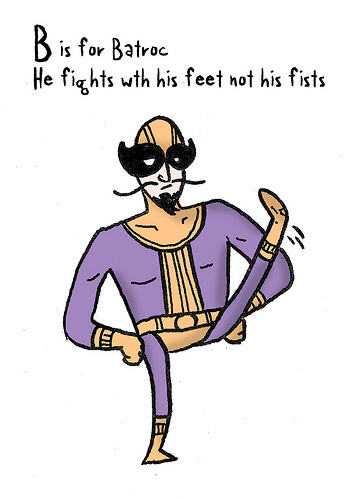
But ‘sensible’ is a dirty word in The O’Duffy Dictionary, one of several significant errors that have made it almost impossible to sell the damned thing. And because of this I’m jumping back into word action like Batroc the Leaper going to a poetry slam.
First up, Continuum! I have my program details, so here’s where and when you can catch me being on a panel and sounding all clever and writerly despite the fact that I wear shoes with Batman symbols on them.
9pm Friday – I Don’t Get It: Why is it that some fans just don’t like what everyone else does? And who better to ask than me, a person who doesn’t like anything? But I don’t hate much either, so rather than just reciting all the things I don’t care about, like Star Wars and Harry Potter, the other panelists (Peter Ball, Alan Stewart, Ian Nichols and Deborah Biancotti) are hopefully also going to talk about fan tribalism, internet belligerence and how silly it is to ‘hate’ a piece of media.
9am Saturday – Everything Old is New Again: AH GOD I HATE THE DC COMICS REBOOT SO MUCH AND YES I AM AWARE OF THE IRONY THANK YOU VERY MUCH. I’ll be talking to Ian Mond and Grant Watson (one of whom apparently likes the New DC 52) about just much the DC Reboot has sucked, how reading Geoff Johns’ Justice League made me hate characters I’ve loved for decades and why female, gay and POC readers might think DC’s vaunted ‘diversity’ tastes like a bowl full of lies and dirty hair.
4pm Sunday – Readings: I’m doing a reading! From something! I have no idea what, though, since I don’t know if The Obituarist is what folks at a SF convention want to hear. Possibly a story from Godheads, or maybe even some of that first chapter of Raven’s Blood as a work-in-progress. Hmm. Anyway, I’m last in the 4-5pm slot after Louise Cusack, Danny Fahey and Jo Spurrier, so that should be super fun.
8pm Sunday – Build it and They Will Come: Talking about RPG setting design with Peter Ball, Hespa and Darren Sanderson. My tack is that game settings are settings, not worlds, and that they need to be constructed and run to revolve around the player characters, a stance that some will agree with and other won’t. Maybe a chair will be thrown! Or perhaps not.
11am Monday – Independent Publishing and Speculative Fiction: Pretty much what it says on the tin. Me and my fellow panelists (Jack Dann, Tor Roxburgh and Steven O’Connor) will talk about how Australian spec-fic is moving into ebooks and small/independent presses and what that might mean in the future for writers and readers. I imagine there’ll be less shouting than at the DC Reboot panel.
So that promises to be a pretty busy long weekend. Especially as we also have interstate visitors and at least two parties to go to. Fun! Anyway, if you’re coming to Continuum, feel free to say hi, sit in on a panel or pester me until I admit that alright, Scott Snyder’s Batman is pretty good BUT THAT DOESN’T CHANGE ANYTHING.
–
 The other thing I’ll be doing this weekend? Writing, of course! Having just started my new novella, I’m going to immediately change gears and write a couple of short crime stories.
Why? Because last weekend I happened to discover The Crime Factory, a Melbourne-based publisher putting out both a regular journal and a number of anthologies of local and international crime fiction and criticism. I wandered past their table at the EWF’s Pages Parlour (a gathering of local small presses) for a chat and learned about what they’re up to. As a result, the guys asked me to submit a story for consideration in later projects and I’ve already got underway on a rather nasty piece or two. No promises or anything, but damn, it’s very nice to be asked to submit a story somewhere. Makes me feel like I’ve arrived.
More word on that if/when anything comes of it. And in the meantime, go check out the ludicrously cheap Crime Factory #10 and martial arts-themed Kung-Fu Factory (both just 99c on Amazon) and their anthology The First Shift as well. There’s some really good stuff in there; Kung-Fu Factory is worth it alone for the hilarious psychobilly piece ‘Crotch Rockets’ by Anthony Neil Smith.
–
Also, before I threw myself down the rabbit hole, I had a chance to talk to Jason Nahrung about crime, spec-fic and where things are going as part of the Australian Speculative Fiction Snapshot 2012 that he and a number of other bloggers and writers are making.
You can find our discussion here, where I try to come off like I know what I’m talking about and occasionally succeed. But don’t stop there – check out the other profiles on Jason’s blog and follow the links to read more on other blogs. It’s a really fascinating look at what’s happening in Australian speculative writing – where we’ve been and where we going – and I think Jason and his fellows deserve huge kudos for it, as does irascible author Ben Peek for starting the ball rolling a few years ago.
(And if you’re at Continuum, don’t miss the launch for Jason’s new novella Salvage at 7pm on Friday night!)
–
And if that’s not enough, I also plan to do a big analysis of The Obituarist‘s performance in May and go over the details in a weekend (well, Monday) blog post. There will be graphs.
SMELL THE EXCITEMENT.
June 3, 2012
Down the Rabbit Hole and out the other side
It’s Sunday night and I feel like someone has blasted my head off.
In a good way.
As I’ve mentioned a couple of times, the Emerging Writers Festival has been rolling all week, and this weekend was my turn to do my part. My job was to act as leader of the online Rabbit Hole group – a team of 20 writers each trying to write 30 000 words in two-and-a-bit days. There were physical teams in Brisbane, Melbourne and Hobart, who got to congregate in quiet rooms to clack-clack their keyboards in peace; my guys, on the other hand, were scattered across the country and writing from their homes and bedrooms, from public libraries and in public toilets. Well, maybe not that last part.
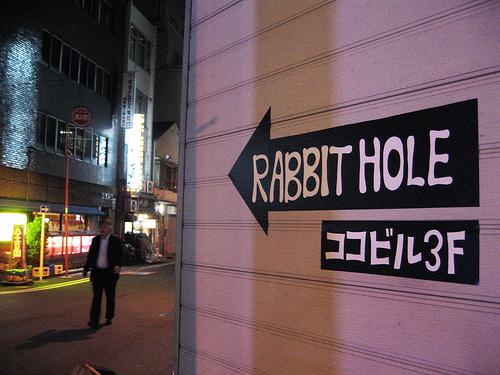 As part of my approach, I decided to start work on a new project and write alongside my team to lead by example. Did I write 30 000 words? No, not a chance. I wrote some stuff, sure, but my focus was and had to be on motivating and encouraging the online team, who didn’t have a space free from interruptions or the constant supporting presence of other writers around them. All we had was Facebook. The EWF set me up with a number of prizes and tools, and I did my best to use them to keep the online team members in the zone and laying down the words – which, in the end, took up way too much time to leave a whole lot for my own writing, and that’s just as is should be. I shucked, I jived, I coached, I cheerleaded (cheerled?), I handed out LOLcats and I USED CAPSLOCK LIKE IT WAS MANDATORY.
And in return, my team… my team…
Man.
There isn’t a word that works here other than incredible. I was gobsmacked by the output of my team members and how they just knuckled down and wrote, no matter what. We started at 6pm on Friday; by 8pm almost all of them had blasted through the 1000 word mark and many of them had written more than 3000 words. Then a bunch of them hit the 10 000 word mark by Saturday evening. Then some of them smashed the 20K mark this morning. And by the time we wrapped up at eight o’clock this evening three of them had clocked the 30 000 mark, which I swear I thought would be impossible. But I was wrong, wrong, WRONG. Because they didn’t let anything short of being thrown out of their space or having to go to hospital to get their appendix out (both of these things happened) stop them from writing everything they could. Writing like it was the one way to find God.
Collectively, my group of fifteen word soldiers laid down more than 250 000 words in twenty-two hours. Short stories, whole novellas, chunks of novels. Most of it’s not ready for prime time yet, sure. But it’s there, and they did it, and nothing can diminish that achievement.
I thought it was going to be an uphill battle. I thought I could lead by example and encourage others to follow along. What hubris. Instead, my team showed me that they don’t need encouragement or spot prizes or cheerleading; all they needed was a chance to put their knuckles up and fight. And everyone single one of them won the bout, no matter how much they wrote.
Getting to be there, to help them, to simply witness their dedication… it’s inspired me.
It’s inspired me to write.
–
If you’d like to see some of the work the Rabbit Hole team produced over the weekend, we set up a Tumblr to showcase work from the writers who produced more than 20 000 words over the course of the event.
Also, now I know how Tumblr works. Hmm.
–
Also at the EWF this week I did a quick walk-on at the Revenge of the Nerds slide night to sing for a few seconds about Community with my awesome friend Ben McKenzie. Then we had beers. It was good.
And today I rocked up to the Future Bookstore Open Mic, where the host graciously gave me enough time to read the entire first chapter of The Obituarist to the audience. Which confirmed for those present that I am terrible at reading aloud – I talk too fast, I slur my words and I try to use different voices for different characters and just end up sounding drunk. I got some laughs towards the end of the piece, which possibly means there were more jokes in that bit – or that I’d slowed down enough for people to understand what I was saying. Hard to be sure. Anyway, that wasn’t my finest hour, but it was worth the try.
–
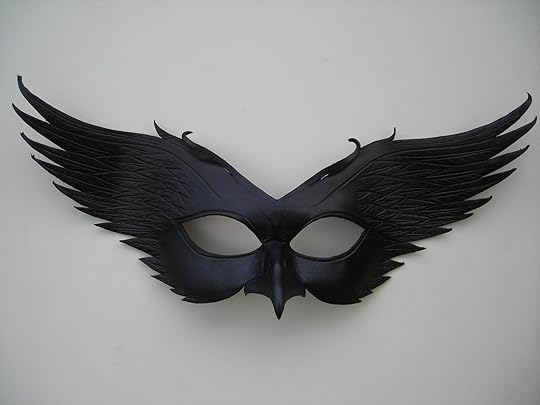 And while I didn’t manage to write 30 000 words over the weekend, I did manage something – I started a new novella! Called Raven’s Blood, it takes inspiration from two of my favourite things – Batman and Dungeons & Dragons - to kick off a possible trilogy of pulp-fantasy-YA-adventure stories. I think it’ll be YA.
Look, to be honest I’m not entirely sure what makes a book YA or what that label actually means, and I think that’s something I’d like to discuss in a future blog post. But it’s a story about a teenage girl trying to find her place in the world and I’m not using any of the usual swear words, so that’s probably a start, right?
Raven’s Blood is the story of Kember Arrowsmith, a seventeen-year-old tearaway in the city of Crosswater who’s in constant trouble as a member of a scandalous and semi-seditious theatre troupe. The only thing that saves her from harsher punishment is the fact that her father is Roland Arrowsmith, hero of the War Against the Host and now Mayor of the city. But when a dead man in a cloak of feathers gives her a message and then burns to ashes, Kember must find out what evil is stirring under the bridges of Crosswater – and what happened to the Ghost Raven, the masked avenger that once fought supernatural terrors and crime lords in the city’s shadows.
Here’s a slice from halfway into the first chapter:
The dead man was wrapped in a cloak of feathers, mostly black but speckled here and there with shades of grey or white – and all tinged red with spatters of blood. Two crossbow bolts protruded from his side, plunged deep into brown leather that had proved too thin to deflect them. The hood of the cloak had fallen back to show his face, but it was hidden under a black mask, a broad domino that flared sharp at the sides of his face.
The younger watchman took a step forward, slowly, almost like a step to genuflect in Chapel. ‘He’s dressed like… do you think it’s him?’ he asked.
‘Pull your head from your arse, boy,’ Jerrick snapped back. ‘He’s been gone for ten years and more!’
‘But I’ve heard stories…’
‘Swive your stories! Do your damn’ed job! Here, hold this rascal girl while I take a proper look!’ And with that Jerrick thrust Kember forward into his subordinate’s arms. The watchman staggered back, his grip loose as he fumbled with his sword, and if there was a time for Kember to escape it was now.
But she did not take it.
Jerrick bent to the side of the corpse, pears and witchberries breaking to pulp under his knees, to peel away the mask from the man’s face. Under the black felt was the face of a man in his mid-twenties or so, his eyes closed, his forehead marked with a scar.
‘I know this man,’ Jerrick said under his breath. And Kember said nothing, because she thought she recognised the face too. The face that suddenly sprang to life, eyes snapping open to fix on her, mouth opening to gasp and then croak, ‘Tell him! Tell him! The golem-men of Bridgedown, they found it! They –’
Whatever he had left to say choked off in his throat, though his mouth stayed open. More, it opened wider and wider, as did his eyes that rolled in terror and agony. He locked eyes with Kember and she could not look away as a light began to burn in his sockets, in his mouth, through his skin as it outlined his bones.
A light that blazed white through red, so bright and pure that Kember had to pinch her eyes near-shut to stand it. A light too bright for the world to tolerate.
She knew what would happen next. Every child knew what would happen next. The light would burn and burn, burn away the flesh and blood of the man, burn his bones till they fused to red glass, and then the skeleton would rise to its feet and kill and kill and kill until smashed to glittering pieces. Just as they did during the War.
The language is going to need a thorough revision; I want to make it a bit more ornate, possibly by incorporating some classical thieves’ cant terms, while at the same time keeping it direct and clear. But there are the bones of something here (irony intended) and I think I can have a lot of fun with it.
Not going to jump the gun just yet on how fast I’ll write this or when it’ll be ready; I think I can get a good draft done by the end of July but I’ve also got a lot on my plate over the next two months, including a week in Fiji(!). I’ll talk about it some more later, though, promise.
Next week – Continuum! And a look at what’s been happening with The Obituarist in the month since I published it and what to do with it next. With graphs!
May 27, 2012
The Emerging Writer – a review
I’ve mentioned the Emerging Writers Festival a few times lately, and that’s because it’s a great festival that really attempts to help writers and inspire/teach/motivate them to write. I’ve spent most of this weekend there (when I wasn’t making incoherent tweets about Eurovision) and I’ve been to some terrific panels, met and talked with other writers and generally just hung out to learn and share.
One of the tools the EWF uses for learning and sharing is the book it produces, and tonight I’d like to look at this year’s effort, because it really sets a new bar for polish and richness.
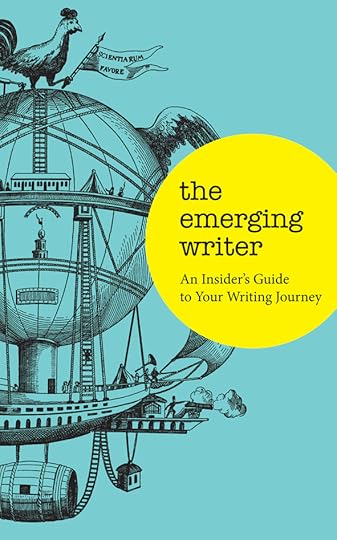 The Emerging Writer has essays and articles from a wide variety of contributors, including new and established writers, about whatever they felt like discussing. This isn’t a writer’s guide (except when it is), or a collection of anecdotes (except when it is) or an industry primer (except when it is). If I had to pick a single classification, I’d say that this is a book about the experience of being a writer. Editor Karen Pickering calls it a book of maps, and that’s a good metaphor – it has both maps to show where you can go and maps showing where others have been. Some even have hidden treasure.
The book is split into four chapters with admittedly loose themes:
Why? Thoughts not just on ‘why write’ but also ‘why try to write a certain way’, ‘why continue after setbacks’ and ‘why try to live up to your idols’. There’s also a healthy dose of ‘why not’ and ‘why you shouldn’t’ mixed in. Standouts include Christy Dena talking about not listening to fear-based advice, Geoff Lemon on facing rejection and Jacqui Dent on defining your identity.
What? Essays on what you write about – how you choose it, how you become involved with it and the approaches required by different subjects. Unsurprisingly, my favourite is Stephanie Honor Convery’s on the joy of writing fiction and actually making stuff up, but Rebecca Harkins-Cross’ piece on choosing to write memoir and Hugh McGuire’s on digital publishing are also very strong.
Where? Not as in ‘which room should you write in’ but articles on where you come from, what you consider to be your writing turf and how the local/online writing community informs your work. As an ex-Brisbanite I couldn’t help but enjoy Christopher Currie’s thoughts on the northern writing scene, but another standout was John Weldon’s piece the way online environments change the relationship between writer and audience, as was Alan Baxter’s piece on defining your digital presence.
How? How? How do you write? Can you even answer that question in a way that makes sense to anyone else? These essays include both practical advice and metacommentary and there’s a lot of good in both, from Esther Anatolitis’ essay on how to put yourself on your own writing retreat to Liam Peiper’s story on suing a former employer to get payment owed (with details on how to do it yourself) to Kirsten Innes’ great piece on why you should stop wanking on about writing and just goddamn write.
The Emerging Writer is neither advice handed down from a panel of experts or theory delivered as cant by wide-eyed neophytes. It’s honest, personal stuff written by writers to their emergent peers with the intent of sharing knowledge and experience. There’s comedy, there’s drama, there are cartoon and flowcharts and essays and every piece is genuine in a way that you rarely see in a writer’s guide.
It’s also worth noting that the book is really well designed and laid-out, which matters a hell of a lot to anal publishing types like me, and the physical version is very well produced and printed. This is a professional piece of work that can sit proudly on your shelf (or on your PC if you prefer PDF).
I’m really impressed with The Emerging Writer, if you can’t tell. Not every essay will speak to everyone, but every essay will speak to someone, and I think even experienced writers can learn something from it – if only the realisation that every writer takes a different path and overcomes different challenges to reach that all-consuming goal of coming up with words that don’t suck.
The Emerging Writer has its official launch next Friday, and after that should be available from various bookstores and online. Do yourself a favour and check it out.
May 24, 2012
On the radio-oh-oh
Hello my little droogies,
Just a couple of quick things tonight, as it’s been a hectic week that’s heading into a hectic weekend.
–
First, as threatened, I popped up on 3RRR’s Byte Into It program last night to talk about The Obituarist and the ‘social media undertaker’ concept – which, as it turns out, is more properly called the ‘digital afterlife industry’. Who knew? It was really fun appearing on the show and talking about those ideas and what I was trying to look at with the novella, and I’m really grateful to Sarah and the BII team for giving me the opportunity.
 The show went out last night and is now available to download here. I come in at about the 15 minute mark, making inappropriate comments about Scientology and sounding like I’ve swallowed the microphone. But check out the whole program if possible – it’s well worth a listen!
–
Secondly, I just got home from the gala opening of the Emerging Writers’ Festival, which was terrific! I got to hang out with my friend Ben, catch up with a variety of people I knew either in person or online – it’s great to finally put names and voices to email addresses – and enjoy an evening of comedy, poetry and speeches about the Festival.
I still have to get my butt into gear to book the panels I want to attend over the weekend, but I have been doing my best to help organise the online Rabbit Hole team. We have a Facebook group and nearly 20 eager and slightly nervous participants ready to do their best to write 30 000 words over a weekend. I’m trying to keep them motivated and focused with encouragement, blog posts and occasional prizes, but in the end they’re going to do the work and I’ll be very proud of them.
In fact, I’m kinda thinking about joining them, if only to lead by example. I know people are clamouring for a second Obituarist story, and that’ll probably happen at some point, but if I go down the Rabbit Hole I’d like to try something different again and to finally get into a genre I’ve read but never written – high fantasy.
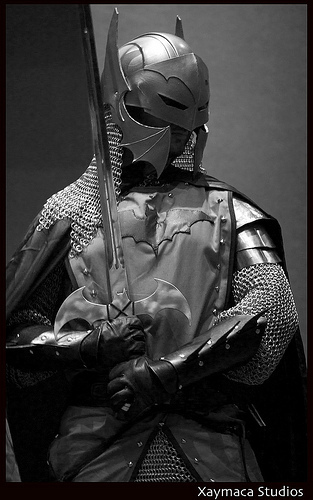
Specifically, high fantasy about D&D Batman fighting ringwraiths in pseudo-Elizabethan-London.
GIVE ME ALL YOUR MONEY NOW.
May 20, 2012
Welcome to the wonderful world of slack
Hi folks,
 Going to have to pike on the usual Sunday night update – we have friends visiting from Brisbane and we’re going out for dinner with them.
Next Sunday is also probably not going to happen as it’s EUROVISION FINALS NIGHT, which as always takes priority.
…and midweek updates will be tricky as I’ll be spending time at the Emerging Writers’ Festival on many nights.
I am slack. I know. Will desperately try to find a couple of hours somewhere to talk to you about something soon, though. I promise.
May 17, 2012
Continual continuity
Hello beautiful humans,
Just a quick mid-week post tonight to confirm that yes, I will be appearing at this year’s Continuum convention here in Melbourne. Put the poison down, untie that noose and cease the self-flagellation! You have been spared the terrible possibility that I would not be on a panel talking about how I really don’t have much of a connection with SF fandom!
I kid, I kid.
Well. I kid a little.
[image error]Anyway, here are the panels I am going to be on, assuming that things don’t change (which they might):
I Don’t Get It: Why is it that some fans don’t like the ‘classics’? Is it wrong to be wrong about what everyone agrees is right? I plan to talk about fan tribalism and why we get our dander up to defend our tastes even if they don’t need defending. I also plan to admit that I just don’t give a damn about Star Wars.
Build it and They Will Come: RPG setting design and how it relates to stories. Why yes, yes, I can talk about this, and how about ‘story’ and ‘setting’ are often orthogonal drives. Will I talk about Freeport? Almost certainly.
Independent publishing and speculative fiction: I do believe I can speak on this top and give insight. Step one, kiss your marketing budget goodbye or fuck it just spend it on bourbon hello hello is this thing on no don’t tase me bro.
Everything Old is New Again: It’s a panel about DC’s New 52 universe! I don’t really like it! Another panellist does! OUR DIFFERENCES WILL BE SETTLED IN THE OMEGADROME
But hey, more important than any of that – one of the guests of honour is Kelly Link! Whose writing is FUCKING AMAZING. If you aren’t familiar with it, then fuck on a crutch click this link right now and download her incredible anthology Magic for Beginners for free. Why are you still reading this when you could be reading her work ARE YOU MENTAL
…okay, yes, I will admit that I probably had too much to drink after work tonight. Honestly, it’s been a balltearer of a week.
I sleep now.
May 13, 2012
Welcome to Write Club
Ever been in a situation where you have a metric shittonne of writing to do in a really short time?
Maybe you’ve got an overdue assignment. Maybe you have a deadline in two days. Or maybe you’ve signed up for the Rabbit Hole event at the Emerging Writers Festival, with the aim of producing 30 000 words in less than three days, possibly even as part of the online team which is hosted and directed by yours truly.
 Yeah. Maybe that last one in particular.
Anyway, whatever the reason, there comes in a time in a writer’s life when you have to write a lot in a short time. There’s no real short-cut to this; you can’t just stare really hard at the monitor and make words appear through sheer force of will. Believe me, I’ve tried. But there are tools that can make the process that bit easier – they won’t make the words appear faster, but they can make the task feel less daunting and keep you focused on laying down the wordcount.
Here are some things that have worked for me – I think they can work for you too. They’re weighted a little bit towards creative writing, but most are just as applicable to writing non-fiction, theses, essays or schizophrenic manifestos.
Start from zero
Whether it’s a blank page or a new Word file, the best way to begin a bulk writing exercise is to start from scratch, whether than means beginning a new project or creating a separate document that can later be added to an existing one. Part of this is practical – the work you create when writing for volume is not going to be polished, and it’s better to partition it from the rest of your efforts until it’s been overhauled. More important is the psychological boost you get from a fresh start. If you have 10 000 words and add 5000, that’s a 50% improvement; if you have zero words and add 5000, that’s an infinity percent improvement.
Perfect is the enemy of finished
I get the urge to fine-tune a sentence or paragraph until you’re happy with it, but there is a time to do that and that time is not now. All that matters is getting words down on the page, one after the other, and there is no going back to make it beautiful or lyrical or remotely coherent. The work you produce when bulk writing is not a first draft, it is a zero draft; it’s a roadmap and a set of tools to help make a first draft later on. Quantity over quality is your mantra right now, and your inner editor needs to be gagged, blindfolded and dropped down a well for a while. Lassie can rescue them later. That dog can do anything.
Don’t touch that backspace key!
And when I say don’t edit, I goddamn mean it – that means no going back. Did you make a speeling mustake? Fix it later. Did you decide to make the hero’s cat a robot dog? Just change it and move on, remembering to find-and-replace ‘hairball’ with ‘USB bone’ tomorrow. Every second you spend deleting the last word you wrote just because it doesn’t make sense in any known language is a second you’re not spending writing another word. Suck it and and keep going; you are a word shark that must keep moving, and if you stop to fix the tense in your last sentence YOUR WORDGILLS WILL STOP WORKING AND YOU WILL DROWN.

Structure is your friend
Writing 30 000 words is terrifying. Writing 1000 words? That seems pretty easy by comparison. Now just do that 30 times! Breaking up your work into shorter chunks allows you to monitor your progress and feel good about reaching milestones. If your project allows it, spend some time before you start writing doing a rough plan of the structure, working how many thousands of words go into each stage/chapter/subdivision and how many of those there should be. A large number of small parts is better than a small number of large parts – if possible, have 30 1000-word chapters rather than 10 3000-word chapters. If that can’t be done, try to break down those big chapters into smaller subparts so you still have fast, regular goals to work towards.
Plan ahead – or fuck it, just make shit up
If you have an outline and a clear direction in mind for your work, then you can use that as a roadmap to get to where you want to go. Alternatively you can wander around at random, going down interesting side streets and mugging new ideas in alleyways, and still end up at your destination. As long as the words keep coming there is NO WRONG WAY to go about getting them. At the same time, it’s worth having a think about how you go about things and possibly whether it would help to borrow a bit from the other approach – to have a loose plan that you can then improvise within, or to allow yourself a little room to change direction when working to your outline. Pick the approach that works for you, because the process is less important than the goal.
Research before or after but not now
Is there a vital piece of information that informs your text? Cool. Did you research it already so that it’s fresh in your mind or printed out next to your computer? Great, put it in there. Haven’t done it yet? Then leave Wikipedia unopened in your browser window and keep writing, damnit. Time spent researching is time not spent writing and we have no patience for that right now. If you know you need to insert some data and you don’t have it, just write ***ADD 500 WORDS ON DOLPHIN PORN*** and keep going; you can come back later and flesh it out. Alternatively, if you want to keep the wordcount up, make up whatever facts you need to – it’s called fiction for a reason, people – and then fix the egregious falsehoods when you revise the text to make it readable by humans.
Don’t stop, change direction
 Sometimes you’re going to get stuck on a scene or a section and not be able to move forward; you need time to think it over and work through things. Don’t do that. Instead, put that part of the project to one side and start on something else. Shift to a new scene, a new location, a new character; skip to a different subheading of the essay and write on that topic for a while. Or just change it up where you are right now to shake you out of the rut – as Chandler famously said, ‘When in doubt, have a man come through a door with a gun in his hand’. Always keep moving; don’t let anything stop you!
Distractions are inevitable
Eventually something’s going to stop you. You’ll get a leg cramp, your pets will catch fire, your wife will demand something selfish like you driving her to the hospital. Hell, at some point you’re probably going to want to attend to those base human needs like eating, sleeping or checking Twitter. And you know what? That’s fine. Don’t try to remove all distractions before you start, because it won’t happen, and instead you’ll just end up procrastinating as you keep looking for more things to close down. Let it be. The key thing is not to avoid all distractions, it’s to minimise the attention and time you give them and to quickly regain your focus and momentum when you get back to work.
Reward yourself
And sometimes it’s just time to take a break because you’ve earned it. Did you hit a milestone and finish a chapter? Well done! Go have a beer or a make-out session or play Angry Birds for five minutes. You’re not a machine or a million monkeys with typewriters – well, probably not – and you deserve to treat yourself for working hard. Regular high-five-me-bro breaks are an important way to keep your focus and positivity up and to prevent burnout. The key thing is to step back, feel good about how things are going, finish the beer and then get back to work. And if you hit a point where you finish a section and decide to maintain the momentum and keep writing rather than flex off, then good on you – keep it going and make the next break even better.
No cheating
Is time growing short and the target too far away to reach? Want to just copy a chunk of text from another source or just write COCKDANCE COCKDANCE 500 times? Dude, I can’t stop you and I won’t know you’ve done it, but you know it’s bullshit. The only person you’re cheating is you because you’re giving up; the only person who can award you for reaching the finishing line is you, and you’ll know you don’t deserve any kind of medal. There are no short-cuts, there are no cheat codes. Better to make a genuine attempt then blow smoke up people’s arse. Because the only person breathing the arse-smoke is you.
There’s always another day
And if you can’t hit the target in the time frame, so what? This isn’t heart surgery, and no-one’s going to die if you don’t write 30 000 words in a weekend, not unless you’re in some weird and poorly-paced Saw sequel. No matter how far you get, what matters is that you made the attempt and laid some words down, be it 20 000 or 2000. Coming out the other side of a writing boot camp gives you a better appreciation of what you can achieve when you go all in, and leaves you with a mess o’ words that you can now tweak and revise and sculpt at your relative leisure.

Everyone’s a winner, baby. That’s the truth.
–
Are you inspired? Are you fired up? Are you still reading? For those who are, thanks for sticking around – I hope it was worth your while!
If you’ve got any other tips for pushing word weight, please leave a comment. Share what you know, if only to save me from writing another 1500+ words on the topic later.
May 10, 2012
He’s everywhere, he’s everywhere
On Sunday I said that I wouldn’t spend so much time talking here about The Obituarist, and by God I meant it.
So instead, I’m gonna talk about all the other places where I have been (or will be) talking about The Obituarist.
IT’S A RULES-LEGAL LOOPHOLE DAMNIT
…man, I have really got to get out of this sudden all-caps habit.
Anyway, here’s what I’ve been doing this week:
I talked to Foz Meadows about The Obituarist and the Chandleresque tradition of hard-boiled fiction. I also revealed that I studied Literature at Uni DON’T LOOK SO SHOCKED oh crap I’m doing it again.
I talked to Alan Baxter about The Obituarist and confessed that I like Batman a lot. Did that come as a shock to anyone? If so I’m very sorry.
And I talked to Kirstyn McDermott about, yes, The Obituarist and my thoughts on self-epublishing and the false divide between hardcopy authors and e-authors. It gets a bit serious in places.
Can I just say that this whole interview thing is AWESOME FUN? Because it is. It’s like getting drunk and talking about writing except that you’re sober (bad) and no-one interrupts you (good!).
 I should have a couple of more interviews coming up in the next couple of weeks; I’ll keep you posted as they come together. One that I’m UNBELIEVABLY EXCITED about isn’t in print – I should (fingers crossed) be on 3RRR Radio’s Byte Into It program on May the 23rd. How incredibly fucking cool is that! I promise to talk excitedly and largely incoherently about social media and identity theft and not spend too much time plugging my book.
And lest we forget, the other major activity on the horizon is the Emerging Writers’ Festival, and my involvement as the coach/cheerleader/chief bully for the online team at the Rabbit Hole writing boot camp event. I’m getting my ducks in a row for that and will be writing more on the topic this coming weekend.
So yeah. May. It’s been a pretty AMAZEBALLS month, and shows no signs of letting up soon.