Patrick O'Duffy's Blog, page 13
December 16, 2013
The game’s afoot (the foot’s a game)
I’ve had enough of talking about books right now.
You know what I want to talk about, with Christmas a ridiculous week-and-a-bit away?
Board games. Yeah.
I am, as we all know, a gaming nerd, primarily of the role-playing variety. But for various reasons it’s been hard to get all my peeps together regularly this year to fight monsters and psychic cowboys, and often we instead turn to various board games to fulfil our need to both be social and to defeat (or enable) evil.
Now personally, I like the heavily themed games with lots of sub-bits, cards, tokens, art and similar things, and happily there are a shitload of those to choose from. So in the leadup to Christmas, here’s a quick run-down of six games I like, what’s interesting about them and why they’re fun. Maybe you could buy one for the nerd in your life. S/he might like that.
S/he might not, ‘cos nerds be haters, but it’s worth a shot.
Lords of Waterdeep
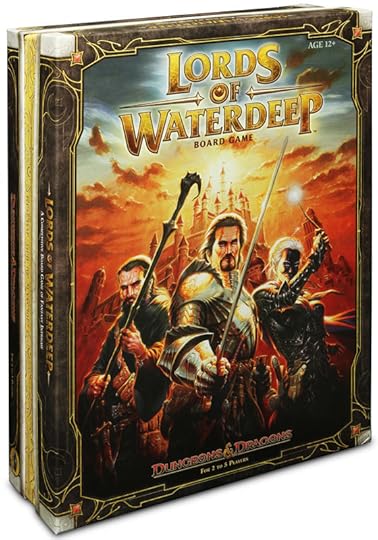 This is a game of fantasy intrigue set in the Forgotten Realms, that hoary old D&D setting that’s full of bullshit names and backstory stuff I can’t be bothered remembering. Fortunately, none of that is necessary for enjoying this game, which is a solid ‘worker placement’ game with a really steady, effective rhythm to it. Over eight structured turns you send agents to recruit faceless adventurers in taverns, then throw their lives away to fulfil quests, gain victory points and work towards your hidden agenda. What I like is that it’s a competitive game but not a confrontational one; you can briefly stymie another player but you can’t attack them, and most of the extra events and twists you can throw in help you while helping everyone else (to a lesser extent). It’s an interesting move away from the directness of most competitive games, and makes sure that everyone stays in the running to the end.
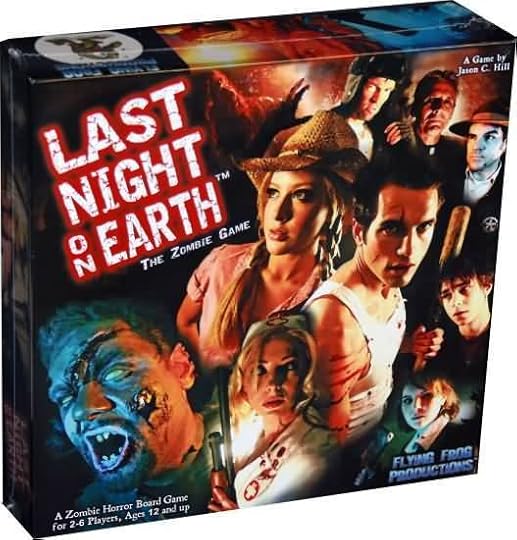 Last Night on Earth
This is a game about surviving a zombie attack on a small American town – or, more accurately, the cliche-laden movie about said attack. It’s an interesting mix of co-op and competitive, with the human players teaming up to escape the machinations of the zombie player(s). Unashamedly cinematic, the game throws in unfair twists to keep the citizens constantly on the run, even while allowing the occasional event in their favour. As well as its excellent production values, I love the pacing of the game; every session has always been a nail-biting race to the finish line, with victory (or gruesome defeat) coming at the very last minute.
Vampire: Prince of the City
This game may lack some of the colourful production values of the others, but it makes up for it with atmosphere and depth. Based on the Vampire: the Requiem RPG, you play elder vamps scheming against each other to become top dog of a city compromised of hexagonal districts. Unlike LoW, this game is highly confrontational; when you’re not attacking other players directly, you’re often working to undermine their plans, steal their resources and make their unlives miserable – except when you’re asking them to help you deflect a band of monster hunters or cover-up a plot gone wrong. I like that twist and turn to it, but what I really love is how well it evokes the tone and feel of the RPG; the two mesh so well that I’m planning to use them together at some point. (Hopefully soon.)
 Elder Sign
Sticking with horror, but drifting a little from the strict definition of ‘board’ game, this is a fast-paced, really fun Call of Cthulhu spin-off. It’s the trimmed-down cousin to games like Arkham Horror, but throws away all the sub-boards and endless sprawling fiddly bits for a focused game based on cards and special dice. Players explore a museum, fighting back cultists and spoooookiness until either the world is saved or Azathoth bursts from the grandfather clock to cornhole all of reality. Like Prince, I love the atmosphere of this game, but I also love its speed and general simplicity – there are enough fiddly bits to keep you engaged, but it all boils down to tense rolls of the dice to save the day.
Netrunner
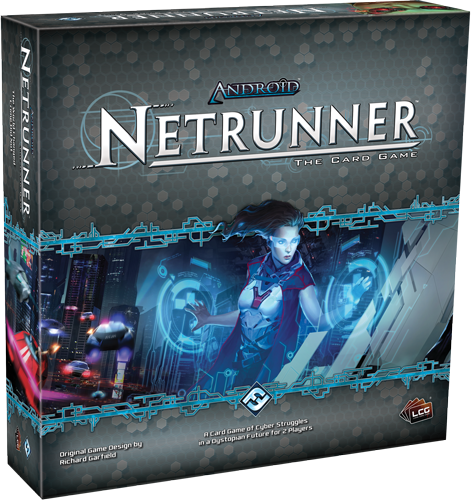 At this point I’m basically abandoning the board entirely, because it’s my list and I’ll do what I like. And what I like is this excellent two-player card game of cyberpunk hackers trying to pillage data from heartless corporations. Play style is different for each player; the Corp sets up hidden servers and protective programs, revealing them to surprise the Runner – who meanwhile is cobbling together programs, skimming resources and trying to stay as mobile as possible. Netrunner started life as a CCG, way back in the 90s, but has been overhauled into a complete, balanced game that still has room for expansion. I like that room for growth, but I also like that it’s just two-player, and the asymmetry of it; it’s really interesting to find a game that switches feel and strategy depending on which side you take.
 Fiasco
My last board game is a straight-up RPG – but hear me out, because Fiasco is special. Like a board game, there’s no Dungeon Master, no pre-prepared plot, no need for complex setup and no continuing play; instead it’s something that 4-5 players can pick up and run with minimal effort in 3-4 hours. A game of heists-gone-wrong, lethal love triangles and dysfunctional and destructive relationships, Fiasco uses frameworks called playsets to quickly create characters, situations and problems that then bounce off each other until something breaks. I love it because it’s so self-contained, so perfectly pick-up-and-play – and also because it’s incredibly affordable, with a super-cheap rulebook and dozens of free playsets online.
–
Anyway, those are six of my faves; let me know what you think of them, or if you’ve got a particular nerd game to throw up for consideration.
And now, if you’ll excuse me, I’m going to play with my new dog.
Yes. DOG.


December 7, 2013
Have yourself a Ghost Raven little Christmas
Christmas time is here
Happiness and cheer
Fun for all that children call
Their favourite time of the year
 Actually, wait a second – jumped the gun on that. Christmas is still about 2.5 weeks away, which is kind of a relief because I haven’t brought any presents yet.
But I come bearing gifts nonetheless – a gift for you! The gift of words!
Having just knocked off another good chunk of work on Raven’s Blood this morning, I thought it was a good time to show y’all a bit of what I’ve been working (far too slowly and haphazardly) over the last 18 months. So here, in its entirety, is the entire first chapter of Raven’s Blood, offered as an exclusive preview to all you folks who’ve stuck with me and this here blog for so long.
Hope you like it.
(Note: extract is short on Christmas cheer and long on horrible things.)
ONE
Two Warrant-guards had Kember in their grip, each one holding an arm, and she was trying to come up with an escape plan when the body fell from the sky and smashed through a run-down market stall in front of them. Screams and cries erupted throughout the Carnaby Court fruit market as blood and apricots spilled out across the cobblestones, panic washing across the crowd like a shock of cold river-water.
The guard on Kember’s right let go of her elbow to draw his sword. ‘Blood of the Host!’ he swore as he advanced on the wrecked stall. ‘What was that?’
In a finer world the one on her left would have done the same, but as in all things this world was less than it could be, and the grizzle-faced guard on her left was Sergeant Jesseck, a woman all too familiar with Kember and her habits. Surely this was what led her to not just maintain but tighten her grip on Kember’s upper arm in the face of such distraction. The milling crowd buffeted them like waves, and Kember tried to let them pull her away in their wake, but Jesseck stood resolute and her hand tightened like a vice.
‘Damn you, Jesseck,’ Kember said, ‘no need to rip my blessed arm off! How about you let me go and attend to your swordmate like a proper Warrant-leader?’
‘Quiet, girl,’ Jesseck replied. ‘We don’t need none of your lip this day! No disaster or murder will stop me from delivering you to the Mayor for judgement – and ’tis better you face his wrath than I do!’
‘Sergeant, come here! You’ve got to have a look at this!’ the watchman called from the smashed stall. Jesseck made her way across, dragging Kember by her side – without much difficulty, since she too wanted to see exactly what kind of disaster had livened up an otherwise ordinary early-spring day in Crosswater.
Before looking down, Kember looked up, just in time to see a figure silhouetted against the sky atop the nearest rooftop, three storeys above the street. A figure shaped like a man except for its massive left arm and shoulder, bulging out from its torso like a gargoyle jutting from a tower. But before she could utter a word the shape drew back and vanished from sight. She thought for a moment to tell Jesseck, but then forgot about that as soon as she looked down to see the body lying in a heap of broken fruit boxes and crushed apples.
The dead man was wrapped in a cloak of feathers, mostly grey but speckled here and there with shades of black or white, all stitched unto a silk backing – and all tinged red with spatters of blood. Two crossbow bolts protruded from his side, plunged deep into brown leather that had proved too thin to deflect them. The hood of the cloak had fallen back to show his face, but it was hidden under a black mask, a broad domino that flared sharp by his temples.
The younger watchman took a step forward, slowly, almost like a step taken to genuflect in the Lunar Temple. ‘He’s dressed like… do you think it’s him?’ he asked.
‘Pull your head from your arse, boy,’ Jesseck snapped back. ‘He’s been gone for ten years and more!’
‘But I’ve heard stories…’
‘Swive your stories! Do your damn’ed job! Here, hold this rascal girl while I take a proper look!’ And with that Jesseck thrust Kember forward into her subordinate’s arms. The watchman staggered back, his grip loose as he fumbled with his sword, and if there was ever a time for Kember to escape it was now.
But she did not take it.
Jesseck bent to the side of the corpse, pears and gooseberries breaking to pulp under her knees, to peel away the mask from the man’s face. Under the black felt was the face of an Easterling man in his early twenties, his eyes closed, his checks pocked with freckles and a few acne scars. ’I know this man,’ Jesseck said under her breath. And Kember said nothing, because she thought she recognised the face too.
The face that suddenly sprang to life, eyes snapping open to fix on her, mouth opening to gasp and then croak: ‘Tell him! Tell him! It was in the river! The golem-men of Bridgedown, they found it! They –’
Whatever he had left to say choked off in his throat, though his mouth stayed open. More, it opened wider and wider, as did his eyes that rolled in terror and agony. He locked eyes with Kember and she could not look away as a light began to burn in his sockets, in his mouth, through his skin as it outlined his bones.
A light that blazed white through red, so bright and pure that Kember had to pinch her eyes near-shut to stand it. A light too bright for the world to tolerate.
She knew what would happen next. Every child knew what would happen next. The light would burn and burn, burn away the flesh and blood of the man, burn his bones till they fused to red glass, and then the skeleton would rise to its feet and kill and kill and kill until smashed to glittering pieces. Just as they did during the War.
Kember screamed in panic, tried to wrestle herself from the watchman’s grip, but he was already backing away as fast as he could with her arm in his hands and screaming himself. Everyone left in Carnaby Court was doing the same, long-dead terrors rising from oblivion to wipe away all courage and thought.
But it didn’t happen. The light began to ebb, white fading into red and then to nothing, leaving only an awful heap of cooked flesh in the shape of a man, wrapped in a shroud of smoke that stank of blood and burnt feathers. No blood-glass skeleton ripped itself from the remains. It was only a lone man’s death, his terrible and grotesque death, and Kember knew she should feel sorry for him but she was too relieved at her own survival to spare him much thought.
As the remaining crowd slinked back into the market square and hubbub began to arise, Kember slowly, carefully slid her arm from the young watchman’s grasp. He was too fascinated by the impossible corpse to pay her heed, and she quietly turned to escape into the confusion. Only to find Sergeant Jesseck ready for her, clapping her wrists in gauntleted fists and pulling her in close.
‘Let’s go, girl,’ Jesseck said, and there was nothing forgiving in the woman’s eyes. ‘We need to go see the Mayor.’
–
A few notes, if you’re interested.
The core of this chapter has stayed the same since I first wrote it, but it’s gone through many iterative changes – as has pretty much the whole book, as I’ve been revising as I go rather than write discrete drafts. (Should probably write a blog post on that one day.) I’ve changed details and dialogue, fleshed out the descriptions of place a bit (and probably will again) and tried to make the scene more arresting and horrific – but still, this is largely what I wrote just after getting the idea for Raven’s Blood, and I can’t see it changing markedly.
Actually, wait – one major change is that Sergeant Jesseck was male in the first iteration of the story. But I got to a point later in writing where I felt that too much of the story revolved around male-female interactions with a paucity of female-female interactions, and that I couldn’t see a place to introduce a significant new female character in the story space I set up. So Jesseck changed gender – and became way more interesting to write about. In a setting where gender equality is standard – because stuff writing either gender as secondary citizens – it’s super fun to have the hard-bitten veteran also be someone’s grandmother, and for that to just be the way it is. I love it when Jesseck makes her way into scenes; she kicks all the arse.
This is a very different writing style than something like The Obituarist, or indeed pretty much anything else I’ve done. It’s a very direct style, with the story pointed right at the reader, and with more description than I usually prefer. But I think that’s a style that’s more appropriate for a YA audience, and as I continue with it I’m finding it more comfortable and enjoyable to write. It’s also got a few florid touches, both in dialogue and in voice, and that’s my attempt to conjure a slightly old-fashioned vernacular – nothing too authentically Elizabethan, but with just enough mannerism to convey that it’s a fantasy story. Hopefully it works; will find out soon enough.
Anyway, work continues apace on Raven’s Blood, and I think I’m on track to finish it by February. Assuming I keep at it.
And I think I will.
December 2, 2013
How to succeed in succeeding at things and other secrets
December brings many things. It’s the start of summer, or winter if you live in the parts of the world where displays of fake snow in store windows makes any kind of sense. It’s the point where stores put fake snow in their windows to mark the beginning of Christmas… actually, wait, I’m being informed that that started back in like October, so whatever. It’s the end of Movember, and millions of dudes around the world rejoice in the money they’ve raised for men’s health before shaving off their lopsided pornstaches.
And it’s the end of NaNoWriMo, a time when writers of all stripes look at what they managed to put together over November and either high-five themselves for crunching out the first draft of an entire model or berate themselves for falling short. The later of which is a crying shame, and I don’t mean ‘go cry in bed with shame while drinking vodka straight from the bottle and watching Murder She Wrote reruns’; let’s reserve that for messy break-ups or giving up on ever defeating the final boss fight in Dragon Age. (Just reduce the difficulty; no-one else will care.) Whether you finish your book now, next week or next year, you wrote a book – be proud of that.
(Chuck Wendig, naturally, has written a post about this; go read it and pretend I said something roughly similar and half as clever.)
But talk of winning and losing NaNo, or anything else connected with writing, makes me think about talk of ‘success’ and ‘failure’ as a writing, and what that means, and that’s something I’d like to talk about.
Lots of people on the interwebs will tell you how to be successful at writing, or acting, or bicycle repair or whatever – and a few of those pieces of advice are worth following, because they’re about craft and the actual process of laying down words/lines/grommets. But most start with the concept that ‘succeeding’ means ‘finishing a novel’ or ‘getting published’ or (all too often) ‘making bags of money’ and aim all their ideas there.
And I think that’s kind of bullshit.
 Not that I am against making bags of money, and if anyone would care to offer me a six-figure advance and a three-book deal on the back of Raven’s Blood then you and I should talk very soon. VERY SOON. But is that the only signifier of ‘success’? Is it getting a book on shelves? Getting the majority of the money from the sales of that book? Getting stories into major magazines? Getting optioned for a movie? Making people cry at the ending? Having your mum finally say that she’s glad you didn’t take up football?
All this rhetoric is going in one fairly predictable direction, so sing the refrain with me, kids – There’s No Such Thing as One Right Answer for Everyone!
I get why we hold up making money or getting published as the metric of success – they’re concrete, objective things that everyone can see you have achieved. Plus, money can be exchanged for goods and services, which is usually a worthy benefit. But society focuses so much on that metric that others – that the notion that there can be others – gets drowned out and maybe forgotten.
Not forgotten by everyone, thankfully. Short story writing is in a new boom period, despite the fact that no-one’s made big cash from short fiction since the days of Raymond Carver. Despite people saying blogging would be killed by Twitter it’s still around, still seeing great essays written by thousands of people who make no money from it. Hell, speaking as someone who simply does not get the idea of writing fanfiction, everything I hear about that community is that the people in it write for the sheer pleasure of expressing their fandom ideas and sharing them with others just as passionate, and that’s something I can get behind. (Please don’t spoil this by telling me that fanficdom is in fact a nest of vipers, I beg you.)
This is all very kumbaya-let’s-hold-hands-around-a-bonfire-made-from-copies-of-Ender’s-Game, I know. But I hate seeing writing peeps on Twitter and Facebook beat themselves up because they couldn’t juggle work, life and insane wordcount targets to finish their NaNoWriMo book. I hate hearing writers at GenreCon and the Emerging Writers Festival put themselves down because they’re not making a living from the thing they care about. And man, I hate it when writers describe themselves as ‘aspiring writers’ when they’re already writing! When what they aspire to is this vision of what a ‘real’ or ‘professional’ writer should be, instead of being proud of the work they’re doing and looking forward to developing their skills and discovering their voice.
So if you’ve missed a deadline, fallen 10K words short or can’t work out how to leverage your paranormal romance trilogy into a house deposit… well, work on those things. Goals can be met; obstacles can be overcome. But in the process, work out exactly what it is that you want to achieve with your writing, and just what helps you achieve that dream – and chase after that, rather than what someone else tells you is what you should be aiming for.
Before you call yourself a failure, work out what success means.
Before you get down because you haven’t succeeded, sort out how much further you are to that goal than you were before.
Before you decide that you can’t succeed, belay that shit.
–
PS If you’re wondering what I consider success, it’s two things:
I finish what I start. Which is too damn rare, given my slackerness, and I’ve given up too many projects half-finished or barely started. There was a period in the first half of 2013 where it looked like Raven’s Blood might fall prey to that curse of crapness, but fortunately I have rallied and I’m plugging away on it until it’s done. And to celebrate that, I’m probably gonna share some of it with you good folks before Christmas.
My work finds an audience. I don’t mean ‘people pay for it,’ although that’s nice – I mean that it’s read by people who enjoy it, who get something out of it, and who maybe understand what it was that I was trying to say or do with it. Hotel Flamingo and The Obituarist both found audiences, and while neither of those projects have made me much or indeed any more, I count them as successes and I’m happy that they’re out there in the world.
If I can manage those two things, I feel like I’m a real writer.
My aims are simple. But they’re heartfelt.
And I reiterate, I am willing to talk to anyone about six-figure deals. We can go down the pub. I’ll buy all the beers.
ALL THE BEERS

November 24, 2013
Aussie Amazon oi oi oh dear
So has everyone checked out the new Australian store for Amazon.com yet?
That’s a pretty big deal, right? Cheap books and DVDs and games and whatever the hell else Amazon sells, like ride-on mowers?
Actually, no; it just sells ebooks and Kindles.
Oh. That’s a bit less exciting. But hey, that means better access to Amazon’s ebook library, right, and better prices too? I bet Australian authors can start getting better royalties on self-published titles. And we can get our hands on those new Kindles, maybe even the Kindle Fire!
Actually, the range seems no better than what it was, and there are still lots of ebooks available in the US store that aren’t available in the Australian store. Price don’t seem to be improved; if anything, a lot of ebooks are more expensive than they were. You can buy a Kindle Fire, but that doesn’t mean you can use it to access the US media services that have been their big selling point; those are still geo-locked. And while local authors do get a better royalty now on local ebook sales, most Australian customers are still buying them from the US store because that’s where they have accounts. Also, Jeff Bezos is going to buy all of us and farm our organs.
…let’s all go hide in a barn and get drunk.

–
Thank you all for indulging my hilarious rhetorical dialogue. I bet Socrates would be proud.
So yeah, the new local Amazon store – what’s up with that? Something that could have completely changed – for good or ill – the Aussie book selling/publishing/self-publishing scene is instead kind of a damp squib of underachievement, and it’s not clear exactly what the multinational is actually trying to achieve with this effort.
In the interests of trying to work that out, and of just poking at the site, here are some things/issues/questions that leap out at me as being a bit strange.
Book pricing
Obviously, the first thing I did when I looked at the site was check my own ebooks, because false modesty is a sin. Hotel Flamingo, Godheads and Nine Flash Nine are all there and all priced at $1.03 each, which is a fairly nice conversion from 99 cents US. The Obituarist is also there, but it’s gone from $2.99 US to $3.99 Australian, which doesn’t make any kind of sense – why the big hike? And it’s not a one-off, either – I’ve checked a number of titles that are $2.99 in the US, such as Matthew Rossi’s Bottled Demon, Chuck Wendig’s Bait Dog and Kelly Thompson’s The Girl Who Would be King, to name three $2.99 books I’ve bought in the recent past, have made the dollar jump. Why?
It also seems to be just that price point, too – for example, F. Paul Wilson’s The Keep, which is $3.99 on the US store, is $4.16 on the Aussie store, which is consistent with the conversion of other prices. (Although that also raises the question of sales – The Keep was on sale in the US store for 99 cents this week, but that’s not carrying over to here; how are these sales being determined and are we going to see any benefit from them?)
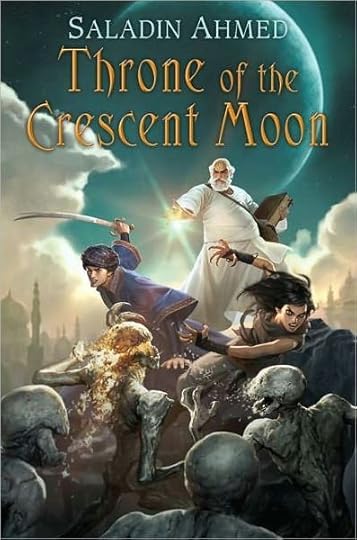
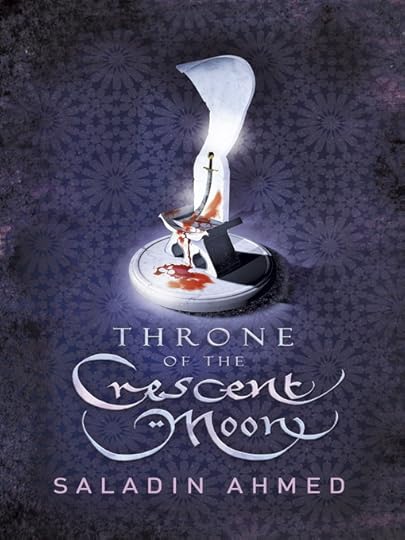
There are also cases where prices aren’t so much ‘converted’ as set by publishers, and there are definitely instances where we’re getting shafted on that. The ebook of Saladin Ahmed’s Throne of the Crescent Moon (which I’m really looking forward to reading) is $5.99 in the US store and a ridiculous $11.99 in the Aussie store; Markus Zusak’s The Book Thief, to pull a title from Amazon.au’s front page, is $6.85 in the US and $12.99 here. Why are these books – these ebooks – doubling in price? And why would anyone buy them from the Australian store rather than getting the much cheaper US file?
Geo-locked accounts
Well, they might if that was their only option, which would be the case if they registered their Kindle with the Australian store. Just as folks with US accounts can’t buy ebooks from Amazon UK, Kindle buyers who register their device with the .au store will be limited to buying from that store. But those of us with US accounts – which is to say, pretty much every single person in Australia who bought a Kindle in the last five years – don’t have to miss out on the fun; we have the option of transferring our devices to the .au store and joining the local market.
This begs the obvious question – why the hell would you do that? Why would Amazon’s existing customer base want to deliberately hobble their devices so that they could only buy a limited, more expensive subset of the titles they can buy now? You have to assume that there’s some kind of additional incentive there to switch, but so far I haven’t been able to find it.
Limited range
Oh, and speaking of the local store, it’s not just the price of the ebooks that’s an issue, it’s the number of ebooks you can buy in the first place. It’s a little hard to tell exactly the size of either ebook library, but they seem to be roughly the same – but when you look at the ebooks that the US places in separate libraries, that’s a different story. The US store offers things like newspapers, magazine subscriptions and Kindle Worlds (licensed fan-fiction), but those product categories aren’t available at the .au store – and some quick Aus-searching for random titles under those umbrellas turned up sweet FA. (Sorry, Gossip Girl fans.) You can get Kindle Singles (short stories/essays) in the local store, even though they don’t have their own category – but a lot of those 99 cent singles are $3.99 here and we’re back at the first question.
Limited services
Over and above the simple question of how many ebooks you can buy is how you buy them and what else you can do with them. Amazon has assembled a huge number of services for its US Kindle readers. Kindle Prime gives readers open access to a huge library of titles and lets them stream TV shows and movies; Kindle owners can lend ebooks to each other and borrow them from public libraries; Kindle Fires can buy and download movies to their tablets and watch them offline, with access to iMDB metadata to better search and explore vast film libraries.
Australian Kindle owners couldn’t access any of that before, and we’re not accessing any of it now. At least, not at the moment, and I have my doubts of it happening anytime soon. Sure, it’s a question of demand and supply; Amazon makes a marginal profit on these services, but the sheer number of users make it worthwhile; we can’t offer anything like as much demand here. But why not open up the market to add Australian customers to the potential market, rather than geolocking them off in a corner where they don’t have the opportunity to give you money?
Increased royalties for local self-epub
Okay, enough complaining – here’s a good thing. Amazon offer self-epublishers a base 70% royalty on sales, which is great – but it only applies to ebooks sold in an Amazon territory (and above a certain price, but that’s a separate issue). Outside those territories, authors only get a 35% royalty, which is a bit shit if you’re an Australian writer and the bulk of your potential audience is local. Adding Australia as an Amazon territory changes things; we can get the full royalty on our local sales, and that’s awesome.
Except that, as previously noted, nearly all the existing Aussie Kindle users have .com accounts right now and are unlikely to shift them to .au – and when they buy ebooks through the .com store, it’ll still be at the 35% mark, because only local sales through the local store will gather the full amount. So what looks like a great opportunity for local writers and self-epublishers is reliant on Amazon making the .au store an attractive proposition for consumers, which isn’t the case right now.
(For my part, I’d be sending people to the US store to buy The Obituarist anyway, because I don’t want them spending an extra dollar on it for no damn reason. And I’d really like to know who decided to hike the price of my book like that, ‘cos it wasn’t me.)
Buying a Kindle
Perhaps the one really attractive thing Amazon AU can offer is the chance to buy Kindle devices, including Paperwhites and Fires. You can get those locally too, yes, but Amazon are undercutting their local partners by about 10% or so and not charging for shipping, and we can assume that future devices are probably going to be available online well before Dick Smith and Big W get them.
But still, what are you getting? Compare the services available for the Kindle Fire in the US to those in the Australian store. A device that’s sold more as a media consumption tool than a working tablet looks kind of underwhelming when much of that media is unavailable, and the low price point just makes it a cheap way to do not very much. Amazon is in the business of providing both devices and content for them – so if the second part of that supply is lacking, the first isn’t going to take off either.
I also assume that buying a Kindle Whatever through the Aussie store is going to mean it comes locked to the Aussie store, with all the drawbacks already mentioned. Bugger that, frankly.
–
This has all been a bit grim and finger-pointy (not to mention very long and wordy), but in truth I don’t mean to be negative. Amazon have their good points and bad, and there are important discussions to be had about their workplace practices, control of the market and the damage they can potentially do to local booksellers and publishers – but at the same time they give customers what they want and provide a service that very few other retailers can match. As a writer, they’ve made it easy for me to get my independent work out there; as a reader, they’ve made it easy (sometimes I think too easy, but that’s my fault) to discover new books and new voices.
So I come not to bury Caesar, nor to praise him, but rather to question his business model. Because if there are all these drawbacks to the local store, what are the positives? What is going to drive Australian customers to this storefront, rather than the American one, and make the exercise worthwhile? What’s the deal?
The only thing that occurs to me is that Amazon will drive future local Kindle buyers here, rather than the US store, and do that by force – well, by locking access to the US store out for any new user with an Australian address, so that they can only buy ebooks at the .au store. Which sounds like a terrible idea, especially if you want to keep selling physical books and products to those customers, who would then need a separate account for the US store. And if they did that, they’d presumably want to extend it to existing Australian customers, which would be a massive problem for those Kindle owners – and one they’d be unlikely to accept happily.
What else is there? What’s the magic that makes this all work? It’s an important question, because by starting this process of moving into Australia, Amazon is going to permanently effect the local writing, reading, publishing and bookselling world. It would be good if that was a positive effect overall; it’d be a shame if it was negative, but it’s something that could (hopefully) be acclimatised to. But until we actually can work out what the hell they’re doing, we’re all operating in the dark.
–
2000 words on this topic tonight – the equivalent of an entire chapter of Raven’s Blood. My priorities are dumb.
But my questions, I think, are a bit less dumb. So if you’ve got answers – or indeed your own questions – then please leave a comment. This is something it’d be really good to talk about for once.
November 17, 2013
Hello Europe, this is Melbourne calling
Let the silence end, let the trumpets sound, let the word go out across the land – I have returned from my European tour!
…well, technically I got back last week, but I didn’t get home until really late on Sunday night and I was tired. So let’s just pretend that I snapped right back into my blogging schedule straight away rather than being a lazy arse for a week.
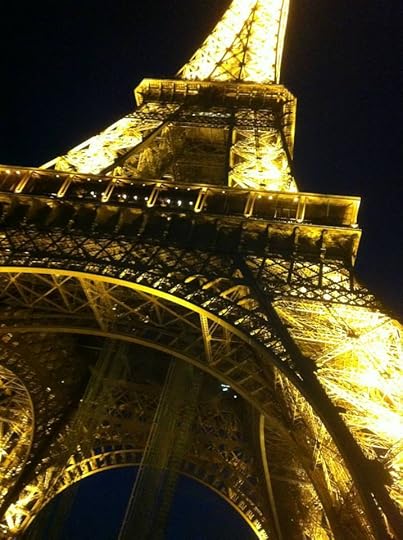 But yes, I’m back in Melbourne and into the daily grind after visiting Paris, Berlin and Helsinki, as well as coming home via Townsville (I had my reasons). It was a pretty awesome trip, spent wandering the sights with my lovely wife.
Highlights:
Exploring the Gardens of the Palace of Versailles
Witnessing the silent dead (and sleeping security staff) of the Paris Catacombs
Gazing at Monet’s Water Lilies in their original installation/gallery
Just so much art in general
Wandering the streets of Berlin and drinking its very cheap beer
The incredible DesignPanoptikum in Berlin, a ‘surreal museum of industrial objects’ that is basically the best place ever
Pretty much everything else in Berlin, which is like the 90s with wifi
Vodka with Cam Rogers and dinner with old White Wolf contact Mikko Rautalahti in Helsinki
Two days of non-stop beer and movies with Townsville friends to shake off the jetlag
Lowlights:
Getting gastroenteritis on the third day and being left too weak to properly explore Paris with my wife on our freakin’ honeymoon
Saying goodbye to said wife as we left Berlin, when I headed to Finland and she went to the USA
It was kind of amazing. There are photos over on Facebook if that appeals to you.
And now I’m back.
–
The other thing I did in Europe was sit in bars, cafes and restaurants, pull out my laptop and work on Raven’s Blood.
That’s right. Writing while on holiday. Writing while recovering from sickness. Writing when I could have been drinking instead. Drinking Euro-booze.
The influence of GenreCon appears to still be in effect, and I may have at last found the writing work ethic I’ve been missing all these years. I keep wrapping up a couple of chapters a week, which isn’t all that much in real terms (about 4000 words) but it’s text that I’m happy with and that’s likely to stay fairly stable as I revise, tweak and polish. More like third draft than first draft, I think. I hope.
Anyway, even as lots of writers I know are smashing their NaNoWriMo targets, I’m achieving the less-impressive task of just getting my work done – and indeed of looking forward to working on the book. Which is a personal milestone for me.
Another will be finishing it, of course. Please keep holding my feet to the fire for that.
–
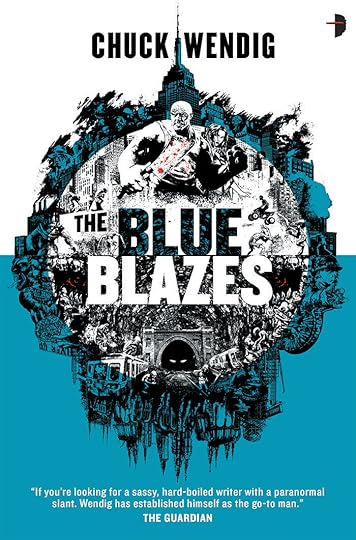 I also, while lying awake at 4am thanks to illness and jetlag, came up with the core premise and major character and plot elements of an entire horror/urban-fantasy (but mostly horror) trilogy called Underneath the Skin, which I can best describe as a mix between Silent Hill and Scarface. It’s a story about drugs, gangs and urban crime mixing with warped hell-scapes filled with blood, rust and atrocities; two underworlds colliding with one not-too-sympathetic protagonist in the middle.
(That could also describe Chuck Wendig’s rather awesome The Blue Blazes, except it’s totally different.)
Lying awake at night and thinking up plots is not that unusual for me – except that this time I wrote it all down in the morning, with notes for all three books and the progression of the main character. This is much better than what I normally do, which is forget all about it forever by lunchtime. So once Raven’s Blood is finished and I’ve taken care of The Obituarist II: Obit Harder, the next project may well be Scar Tissue, the first book of this new series.
That’ll happen any day now. Trust me.
–
And on that note – and because I don’t have a whole lot to say other than ‘hey doodz, I’m back’, I’ma gonna get back to work on the book. There’s a big fight scene I have to complete – and as we know, fight scenes are awesome.
I’ll be back another time to talk about Big Important Issues and similar stuff. After the crossbows and explosions are wrapped up.
October 20, 2013
Flash fiction – Hare-um scare-um
Hi there folks,
 I just want to make a quick post tonight to say that I’ve posted a new piece of flash fiction up on Smashwords for free download, available right now!
‘Hare-um scare-um’ is… well, here’s the blurb:
In the future, the Earth is still recovering from alien invasion, conquest and liberation; civilisation is shattered, the sky is broken and the world will never be the same.
But Nadger doesn’t understand any of that. All he knows is that it’s time to hide before the other kids find him!
I wrote this story a few months back for a flash fiction competition; it didn’t win, so I started looking around for paying flash markets to submit it to and couldn’t find any. (I’m not saying there aren’t any; just that I couldn’t find any.) Rather than give it to someone else to publish in return for exposure, I prefer to expose myself – and come on, stop that, you know exactly what I mean.
‘Hare-um scare-um’ is the first in a loose, irregular series called ‘Broken Sky Stories’ – flash pieces set in this post-apocalyptic pre-rebuilding Earth, a place where the old order is gone and a new order – maybe even a new reality – is still being put into place. That’s a concept that appeals to me; I tend to like the idea of writing about the aftermath of big events more than I do about the events themselves.
No promises as to how often I’ll write these – the only true answer is ‘as ideas come to me and I find the time and energy’. But hopefully that means at least a few times over the next 12 months or so.
–
Once again, ‘Hare-um scare-um’ is free at Smashwords now; it should propagate out to other ebook sites over the next few weeks. Well, except Amazon; they only like free books if they’re the ones setting the price point. So it goes.
It joins a number of other totally free/gratis/no-cost/ZOMG short stories on the site:
‘The Descent’
‘Watching the Fireworks’
‘The 86 Tram Disaster as Outlined in a Series of Ten Character Studies’
‘Hearts of Ice’
‘Pension Day’
‘The Obituarist: Inbox Zero’
You could download and read those too if you like. I wouldn’t mind.
I’ll also do a slightly nicer PDF version and put it up on the Downloads page of this site too at some point. That page is increasingly out-of-date; I really need to overhaul it soon.
–
 But not right away, because I’m going to Europe next week!
Paris!
Berlin!
Helsinki!
Townsville, which is not in Europe!
I’ll be gone for about two weeks, but the lead-up and wind-down from travel is likely to make blogging either intermittent or non-existent for close to a month. Rest assured that even if you don’t hear from me I am a) having a good time, b) working on Raven’s Blood, c) wishing more people would buy my ebooks and d) probably drunk.
Wish me luck, and I’ll catch you later in the year.
October 17, 2013
In media res
But it hasn’t all been writing about maps, travelling to Brisbane and vomiting in the Rydges toilets down here.
I’ve also been reading! And (shockingly) watching TV! So let’s talk about that for a bit tonight and throw some recommendations your way.
–
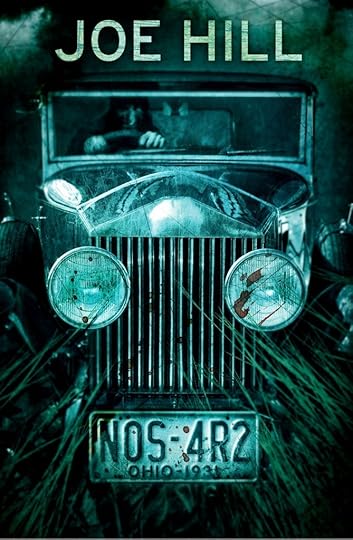 NOS4R2
Jesus christ, this fucking brainstabber of a book. This book tore my fucking head and heart out and showed them to me.
…that’s a positive recommendation, just so we’re clear.
The latest from Joe Hill – whose comic series Locke & Key I have gushed about before – is a massive doorstop of horror, a book that by its sheer size invites comparison to the work of his father. But other than a couple of ever-so-slight background Easter eggs for some of King’s novels (including Doctor Sleep, which I plan to read in Europe when I’m there), NOS4R2 is entirely its own beast, and what a terrifying beast it is, a smiling child with a mouthful of fishhook teeth that will cut your fingers off and laugh innocently at your pain.
I won’t bother reprising the plot – you can find that anywhere. But if I can just talk about craft… god, this book is amazing. The relentlessness of its thematic beats, the implications of its horror worldbuilding, the emotional stab-stab-gouge of what characters go through… it’s a masterwork, it really is. And an audacious and unpredictable one at that, one that flies in the face of much storytelling logic. The first 250 pages cover 20+ years of story; the next 300 or so cover about three days – but this lurch in pacing actually works to build up tension slowly and inexorably and then drive the book into your eyeballs like a wound-up spring.
INTO YOUR EYEBALLS. YES, EVEN IF YOU’RE ON A PLANE FROM BRISBANE AT ARSE O’CLOCK.
Read this book. Read everything Joe Hill writes. Let Christmasland and scissors-for-the-drifter sink hooks into your brain.
It’ll be fun. Horrible fun.
–
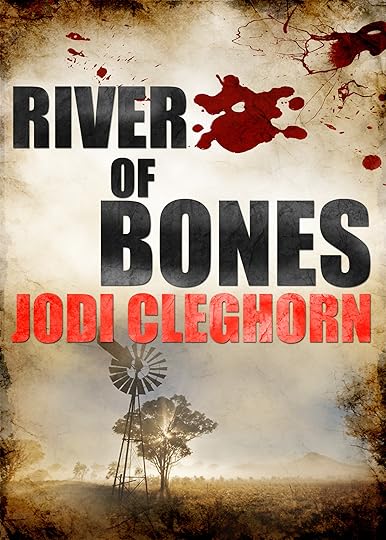 River of Bones
I went into the blood bank yesterday for a platelet donation, which my new job actually specifically provides as a form of paid leave. Whoots! And what better way to spend two nauseated hours with a giant needle sticking into my elbow vein than pulling out the old Kindle and gulping down a horror novella!?
Yes, yes, probably plenty of ways but shut up and bear with me.
I’d seen many recommendations for River of Bones on the internets, but wanted to get NOS4R2 finished (and back to the library) before starting it – and that was a good plan, because it meant that I moved from a sprawling and expansive horror story to a tight, narrowly-focused one. This is a fragmented, hallucinatory story about bad places and bad people, garbled memories and sexual danger, ghosts and men in black and the relentless heat of the Australian countryside – a terrific little gem with gleaming and poisonous edges.
It’s not perfect – I would have liked it to be 2-3000 words longer and have slightly better proofreading – but it’s a very well-crafted, very spooky piece of work, one that hints at larger, darker pictures but leaves you wanting, one that refuses to take the easy way out. You can get it on the Kindle Store for very little money and that is something that I think all of you should do right away yes now is good now yes.
(And as an aside, I met author Jodi Cleghorn at GenreCon and she’s just an excellent human. And one who understands the value of karaoke.)
–
 Lazarus
This is the new comic series from Greg Rucka and Michael Lark, and if that isn’t enough to send you directly to the comic store to pick up the first low-priced trade then I don’t even know why we’re friends, I mean GOD.
Anyway, Lazarus is a powerful cyberpunk thriller from two creators at the absolute top of their game. It’s about a world of haves and have-nots, where a handful of wealthy Families divvy up the world, and everyone not related to them is either a Serf or meaningless, disenfranchised Waste. It’s a story of Forever Carlyle, the genetically-enhanced enforcer of her family, the unkillable Lazarus that punishes their enemies. And it’s the story of what happens when a killing machine doesn’t want to kill; when she starts to realise that the people she loves don’t actually love her back.
The first collection of this series just dropped and it is terrific (and really goddamn cheap to boot). Rucka is one of my favourite comics writers and he is doing great work here – creating corrupt, venal systems but leaving it to his characters to find their own way within them and make their own judgements. And it’s a story wonderfully suited to Lark’s realistic art style and dynamic sense of storytelling – grounded and tactile while still dynamic and engaging.
This is great comics. No lie.
–
 Marvel’s Agents of SHIELD
Um… yeah. This thing.
Like all nerds I am incapable of watching any kind of TV show connected to my tribe, hoping against hope that this 40-minute chunk of video would validate 35-plus years of dreaming about the Justice League fighting Starro. Heroes broke my heart; Smallville pissed on my heart giggling; Arrow turkey-slapped my heart yelling stop hitting yourself, stop hitting yourself. But Agents of SHIELD would change all that! Joss Whedon! Avengers spin-off! The rich setting of the Marvel Universe!
As it turns out, my heart is unbruised but is considering just quietly drinking itself to death on Wednesday nights instead. Because this show is just bland bland bland; it’s just a whiter, duller version of Fringe with less imagination and more mediocre one-liners. All the crazy potential of the Marvel Universe is just ignored, with nothing but the occasional mention of ‘Stark’ and ‘Romanov’ and a couple of afterthought cameos, and what’s left is yet another procedural about attractive Americans solving not-especially-interesting crimes.
Hmm. Okay, I’m being a bit unfair. The show’s been steadily improving, and last night’s episode had a decent modicum of tension and energy. And next week’s has actually superhuman antics and a modicum of special effects at last! I just wish it wasn’t so unambitious and easy, so reticent to embrace the innate craziness of the genre. Because even the edges of the superhero genre are rich grounds for imagination – Powers and Gotham Central showed us that – and drilling a bit further down into that ground would give Agents of SHIELD a much-needed lift.
Oh well. It’s still going to be better than that young-Commissioner-Gordon-with-no-Batman series that’s apparently going to be a thing. Boy, that sounds like fun.
NOT.
October 14, 2013
GenreCon be gone (sniff)
So what did you folks do on the weekend?
…look, that was a rhetorical question and you probably shouldn’t bother answering it, because I want to talk about what I did on the weekend, and that was go to Brisbane for GenreCon! This genre-writers’ conference was an absolute blast and I’m still on a bit of a high, marred only by being totally goddamn exhausted by the trip.
Others will, I’m sure, have more detailed and thoughtful posts to write on the con, but this is my space and I ain’t got no time for ‘detailed’ or ‘thoughtful’ or ‘coherent’ or ‘pants’. Let’s just knock out some Bullet Point Fever.
The highlights
Going straight from the airport on Friday night to Fat Louie’s karaoke bar, chugging a pile of beers, smashing the living hell out of ‘Total Eclipse of the Heart’ and basically rocking the post-reception con crowd like a motherfuckin’ hurricane.
Chairing a panel on exploring and writing hybrid genres, which was a terrific topic and one that I found really fascinating. I was blessed with an exceptional panel – romance editor/publisher Kate Cuthbert, romantic thriller author Sandy Curtis and gothic horror/historical fantasy author Kim Wilkins. We had a big, lively crowd and a lot of energy, and the panellists really had a lot of terrific insights and ideas to discuss. It’s the first time I’ve chaired a panel like this, and I hope I did a good job; I asked questions, kept things moving and generally tried to stay out of the spotlight, and I think people seemed to enjoy it. Also, Kim Wilkins is goddamn HILARIOUS, and I nearly burst a frontal lobe when she started miming T-Rex erotica.
 Getting to finally meet Chuck Wendig, who I’ve known for years through our shared RPG work for White Wolf back in the day. While we’ve sporadically kept in touch, we haven’t actually met until now, and it turns out we get along pretty well. We had some beers, we talked about writing, we posed for photos and I think we had a pretty good time.
Getting to meet a whole bunch of other folks, some of whom I knew from Twitter (one of whom turned out to be my high school English teacher, much to our mutual amusement) and many that I didn’t. That was terrific, not just for professional networking purposes (although I did hand out a few business cards) but just because they were good folks and we got along well and then we all went to the pub. I like people who’ll come to the pub with me, especially writers.
My wife came with me. And that’s always a highlight.
The lowlights
Spending $70 on shitty hotel breakfasts that I didn’t realise weren’t included in the room cost and then vomiting up one of them anyway due to hangover.
Oh fuck, that fucking post-karaoke hangover. Fuck. Fuuuuuuuck.
Brisbane Airport and the Flight of the Damned getting home at arse-end o’clock last night.
…yeah, that’s pretty much it.
The takeaways
No, not the shitty pizza at the airport. A good con is one where you leave with something in your head as well as in your sample bag, and here’s the stuff that’s rattling around in mine right now:
At our hybrid genre panel, the authors all agreed that mixing genres (whether in terms of tropes or themes) requires you to read and engage with those genres, because you don’t read or appreciate them in the same way. (See Samuel R. Delaney’s notion of the ‘protocols’ of reading science-fiction.) While I know horror, fantasy and SF pretty well, and I’ve read my fair share of thrillers, crime and even Westerns, I’ve never read a romance novel of any kind, and I’m feeling that this is a lack, especially when it comes to evoking the romantic tension in Raven’s Blood. So I’m going to try to do some reading in the genre and learn from it. This may be difficult because I am Butch and Staunch and Manly GRRRR and have a rusty can of dog food for a heart, but I’m going to give it a shot. Kate Cuthbert has offered to recommend me some books; feel free to do the same if you have some favourites.
I attended an excellent workshop on the storytelling and narrative techniques of 80s and 90s action movies, where there was a lot of great discussion about what made films like Die Hard and Aliens great and how to use those strengths in our own writing. One of the strengths these films have is a clearly definable premise, and that’s something I kind of struggle to articulate with Raven’s Blood and with other, as-yet-unwritten ideas. I think I want to work on that, and on better defining the movements between acts in the novel so that the stakes and potential consequences are clearer.
 At a panel on juggling writing with the rest of your life, Chuck – who is writing and submitting four novels in the next 10 months because he is an insane word robot with coffee-meth for blood – talked about the difference between short-term happiness and long-term satisfaction; between doing things you enjoy for the moment and doing things that eventually make your life better. That’s a divide I’ve always struggled with, but hearing it spelled out like that really helped me get some clarity on my time/energy/focus issues and how in the end they come down to prioritising what actually matters. On top of that, there was the idea that you could retrain your brain to gain happiness from satisfaction, and that
blew my fuckin’ mind
. If I can make that happen, if I can stop being someone who values ‘having written something’ over ‘actually doing the work of writing something’… hell, people, then I can do anything. And I’m gonna try.
At a panel on juggling writing with the rest of your life, Chuck – who is writing and submitting four novels in the next 10 months because he is an insane word robot with coffee-meth for blood – talked about the difference between short-term happiness and long-term satisfaction; between doing things you enjoy for the moment and doing things that eventually make your life better. That’s a divide I’ve always struggled with, but hearing it spelled out like that really helped me get some clarity on my time/energy/focus issues and how in the end they come down to prioritising what actually matters. On top of that, there was the idea that you could retrain your brain to gain happiness from satisfaction, and that
blew my fuckin’ mind
. If I can make that happen, if I can stop being someone who values ‘having written something’ over ‘actually doing the work of writing something’… hell, people, then I can do anything. And I’m gonna try.The QLD Writers Centre team are fucking awesome. Meg Vann, Peter Ball and the rest of the team of ninjas pulled out a fantastic conference, full of energy and ideas and a willingness to just get things done. I’m really impressed by them, by the revamped State Library where they’re based, by the playfulness and neophilia of the recent Brisbane Writers Festival… it’s enough to make me miss living in Brisbane, just a little bit.
So was visiting Brisbane, to be honest. The place has changed, and it looks like it was for the better. I’m not leaving Melbourne, but I’m going to make more of an effort to visit all my friends, family and contacts up there more often. Preferably without braving the Flight of the Damned again.
–
Did I say a short blog post? Well, we all know I lie about that sort of thing every freakin’ time I post.
Anyway, take it from me if you weren’t there, it was a damn good event. The next one is in 2015, but there’ll apparently be pop-up mini-GC-events happening next year, including ones in Melbourne, Sydney and maybe some other cities. Make sure you catch them if they appear in your town; hunt them down like they’re some kind of multi-limbed creative Pokemon.
And hey, if you’re one of the folks I met at GenreCon, who’ve Googled me or started following me on Twitter, say hello! Read some blog entries, leave some comments, check out the free ebooks (and the cheap ones). Make yourself at home. Tell me a story.
TOUCH THE ELECTRIC WIRES
TOUCH THEM
October 7, 2013
A month of maps – Arcadia
Let’s wind up this month of maps by talking about failure.
First, my failure to calculate how many weekends there are in a month. Mea culpa.
Secondly, Arcadia - my unfinished novel of a small town dreamer adrift in a big city. I started writing this novel something like five years ago, and like most things I write I then proceeded very slowly through it in fits and starts. It was a tough write, due to its first-person narrator having a very specific voice and a mindset very different to my own; I had to really work hard to evoke the story in a way that felt compelling and honest to the protagonist. Even I found myself exhausted by it, and I put it to one side for a little while and wrote something else as a way of clearing my head; that turned out to be The Obituarist, and from there I segued (in the usual fits and starts) to Raven’s Blood, and Arcadia gathers electron dust in a corner of my hard drive, waiting to be dug out and started again.
I think that will happen. It’s a story worth telling. I hope that one day I have the stamina and the will to finish it.
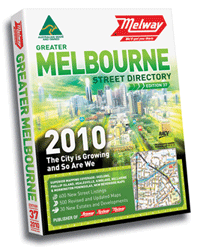
Anyway, Arcadia is very much a story about place and about perceptions of place. So do I have a map for it? I sure do:
Writing about real places
As the map suggests, Arcadia is set in Melbourne, unlike all the makey-uppy places all my other stories and projects have explored. It’s possible to set a story someplace real but then just skate over the details, and there’s nothing wrong with that, but suppose you want to go deeper. How do you go about exploring a real place through prose? There’s no right or wrong answer – or rather, there are probably lots of right and wrong answers, and every writer works them out for themselves.
I think a better question is why you might choose to do that. What’s the benefit of embedding a story firmly within a real location? Verisimilitude is one obvious answer; using a real place gives you a wealth of maps, photos, history and more to work into your story and make it feel real. But are there others? For me, the attraction is depicting the immaterial character of the place, to show the themes and tone that a city/town embodies, the vibe that those who live there feel every day. Melbourne got under my skin as soon as I visited it; it’s a beautiful city that generates and supports art, culture and history, but it can also be an ugly place of violence, crime, poverty and worse. Those conflicting elements feel like genuine themes to me – as if the city was a fiction made manifest – so I set stories here not just to explore those themes but to explore the idea that a real place can have themes; that the bones of story might underpin the skin and flesh of the world.
Yes, that’s a bit wanky. Surely this comes as no surprise.
How characters engage with place
 The flip side of talking about how writers engage with place is talking about how characters engage with it. Do they set out to explore their world or do they take it for granted? Do they think about the nature of their home and deliberately interact with its themes, or is it all done by accident? Do they have any interest in where they live, or where they’ll live in the future, or where they lived in the past? It’s okay if the answer is ‘no’; most of us get through every day with only the barest of nods to our local geography, and when stuff is going down in the plot then characters may have more important things to worry about. But on the other hand, there’s narrative potential in thinking about this.
A big part of the challenge of Arcadia was getting to grips with how my main character, Gwen, engaged with Melbourne. Raised in the country by a mother devoted to fantasy stories and her own rich internal fantasy life, Gwen thinks of Melbourne as a literal fantasyland – as Arcadia. Or more precisely, she wants to think of it that way; she wants to live in a fantasy world, rather than a world of disappointments and failures, and she tries throughout the novel (so far) to push as far into that world as her imagination will allow.
Similarly, maps matter to Gwen, if only because they matter in fantasy novels; they’re like artefacts intruding from the world of fiction into the real. When she gets her hands on a Melways street directory, she feels like it’s the key to all the stories, all the secrets of Neverland in one book – and when she reads it it’s with one eye in the Land of Dreams and one looking for a train station. It’s complicated to describe and harder to write, but it’s very much an attempt to create a story not just where place matters, but where what we think about geography matters. Like I said, I hope someday I can pull it off.
You don’t have to go to that extreme in your own work, but if you’re looking for a way to flesh out a character, thinking about how they think about their physical space is one way to go
Narrator navigation 101
You might also consider thinking about how they work out where they’re going in that space. Street directory? Ancient map? Google Maps? Apple Maps (poor fools)? Asking others for directions?
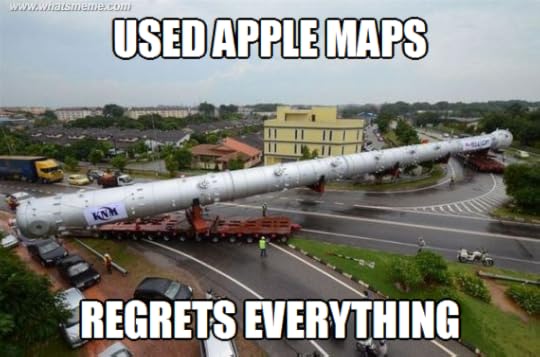
It’s a minor thing, but maybe think about how your characters get from A to B and how they determine where those letters are in the first place. Even if it never becomes plot-relevant – even if you never state it in the narrative – it can inform your portrayal of the character. And if you do give it some air – if you devote words to how they interact with their holy map around heretics, how they rely on their smartphone and get lost when it dies, how they steal a Melways from a service station despite it being out of what they thought was their moral nature – then you’ve got another lane of story to explore.
–
And with that, I’m going to stop talking about maps and place for a while. These essays have helped me crystallise some ideas that I’ve been contemplating for a while; I hope some of you found them useful too. If you did, please leave a comment to say so; if you didn’t, then just leave a comment and lie. Lying has merit too.
Next weekend I’ll be at GenreCon in Brisbane, attending workshops and panels, chairing a panel about hybrid genres, catching up with old friends and probably getting very drunk with Chuck Wendig. Say hi if you’re there and run into me! I’ll file a post-con report afterwards, if I can remember what went down and if any of the photos are SFW.
That Wendig is a sexy beast, after all.
September 29, 2013
A month of maps – New Jerusalem
Last week I talked about the map from my Exile Empire D&D game, confirming my nerd credentials and likely driving away anyone that saw my name in the GenreCon program and wanted to check out what the hell I do. Sorry, writing people – but I swear that this stuff is relevant. I swear. HONEST.
…and also I’m a giant nerd.
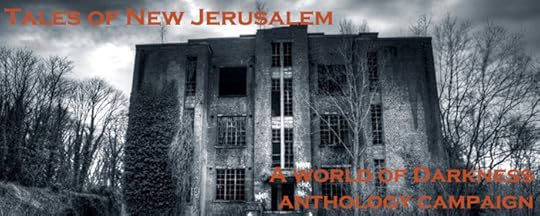
And this week I’m going to talk about another roleplaying game campaign, although this one hasn’t started yet – although that hasn’t stopped me from making an Obsidian Portal page for it, as discussed in my post about wiki writing last month. (Go back and read it if you like. It’s cool. I’ll wait.) Called Tales of New Jerusalem, it’s a World of Darkness game structured into small, self-contained arcs all set in the titular city, a place that’s been kicking around in my head for a while. New Jerusalem – a small, decaying city somewhere in the English-speaking world, and a place where all kinds of supernatural goings-on occur – is a place I want to define as a continuing setting, someplace with its own character and personality – just as I’ve tried to do with Crosswater and Port Virtue – and the campaign map is a big part of that.
This, then, is my map for the New Jerusalem game:

What the hell is that? That’s not a map!
That’s the board for Prince of the City, a Vampire: the Requiem board game. And sure it’s a map – look at all those locations! I’m not using the numbers around the edges, but all those moody, supernatural hexagons in the middle – hells yeah, that’s my city, along with a couple hundred photos of abandoned buildings and urban decay sitting in a subfolder.
Anything can be a map
What is a map anyway? Does it have to be physical or geographical? Does it have to be a two-dimensional image of a place? Does it have to show a territory? If you’re using a map as a writing aide or adjunct, then I don’t think so – it’s a way of navigating a narrative, before/during/after the writing process, and there are all kinds of ways of doing that. A game board is no better or worse than any other map, so long as I use it in ways that are actually effective – I can’t use this to work out a street route, but I can for defining and exploring the tonal connections between places or developing the character of locations.
If you’re trying to make a map for your work, be willing to go beyond the obvious. A wiki can work as a map, as can a directory full of video/audio files (with appropriate file names). You can stitch a map together from loose index cards with scenes and places on them, drawing connections and putting them in an order that makes sense to you. Hell, you can use the I-Ching or the Tarot as a thematic map, randomly or deliberately choosing images and ideas that click together in well-defined ways. I should know; I’ve done that for a couple of projects now, and it’s always a process that I find useful, albeit not one that might make much sense if spelled out for readers.
Maps are what you make them. What you make for yourself.
You don’t have to take the layout literally
Obvious this isn’t a 1-to-1 layout of the city – you can’t have a town where the south-east corner is all places of worship while all the people live in culturally divided blocks on the west side. And nor is the city centre a great grey space called Elysium where vampires hobnob and have tea parties without fear of retribution, although that would be pretty damn baller. Instead, this is more of a conceptual map, or even a tonal one – a way of naming and grouping kinds of places and locations to help with storytelling. It clumps place-types together as a reminder that a city will have these kinds of industrial locations, these kinds of business districts, and that exploring one might allow links to others.
Similarly, this map isn’t saying that the Cathedral District is just one big-arse church the size of a Melbourne suburb; it’s saying that the defining feature of that district is the Cathedral, whether physically (it’s really impressive), culturally (most people there are Catholic) or socially (the district is home to people who work and care about the operations of Christianity). When you use a conceptual shorthand, it’s a way of boiling things down to their essence – but you can always unboil (shut up, it’s a word now) things back to see the details that foam and set into the space. Lots of maps show the macro and let you drill down to the micro; some also encourage you to drill backwards from the small to the large. Which is pretty cool.
But you can if you want to
You know, then again… what if it was a 1-to-1 mapping? What kind of town do you have if the major synagogue is right next to a popular mosque? If the city morgue is just north of the local asylum? If the glamourous salons of the fashion circuit were just a few blocks from the piss-scented lights of the bus station?
Map can be story depictions or story generators, as we’ve discussed, and I for one get a lot of my story ideas from incongruity and the attempt to reconcile what seem to be conflicting concepts. A map like this is great for generating those kinds of ideas, for trying to make sense of the nonsensical and seeing what develops. Why is the financial sector next to the sewer district? Well, maybe stockbroking businesses moved into the area when prices were low and have now gentrified this cruddy, smelly part of town. The old plumbing unions are being pushed out by the almighty dollar, and families of sewer workers see their rents rising and jobs disappearing. Except that the old sewers push in under the financial district – and one guy with nothing to lose has found a map showing an underground route to the city’s biggest bank…
Sometimes there’s a power in taking things at face value – in saying ‘okay, let’s make it make sense’ and seeing what you can come up with. Just like a diphthong is a new sound caused by moving from one vowel sound to another (yeah, I’ve got a phonetics project on the go at my day job, you can tell), so a connection between two story elements can be its own unique story element – and it can be easier to make that connection when things are touching, even if only conceptually.
Connections and isolations
 Tales of New Jerusalem is an anthology game – rather than one big long storyline, like a novel, it’s a collection of short 3-4 session games with different characters but set in the same place and continuity. One storyline might take place just at the university, or in Chinatown – or might cover two or three locations, leaving the rest of the city for another time. Because of this, it’s not enough to just give the city its own character – each district and sublocation needs its own personality too, enough to be more than just a backdrop.
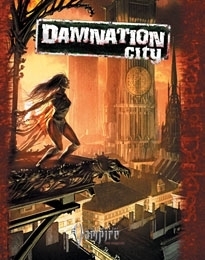
The tools for developing place-character in gaming aren’t the same as those in prose writing, but there’s overlap, and both types of creation can learn from the other. One of the best resources for developing modern urban locations in horror gaming is Damnation City, a Vampire: the Requiem book that is probably the single best product put out for the line. It’s all about realising the tone and feel of a city, from the macro to the microscale, from the past to the present, and – most important of all – communicating that tone to players as their characters engage with the setting and create story. It’s a hell of a read, it’s one of my creative bibles for the New Jerusalem campaign, and if you’re writing horror prose then you could do a lot worse than to think about some of the tools within in.
–
This is the second-last instalment of September’s month of maps, which is extending into October because I have many things to talk about and a poor grasp of calendarisation. Come back next weekend for the last of it, where I look at a disgracefully moribund project and remind everyone that I’m bad at meeting my own commitments. It’ll be fun! We’ll have hot dogs and talk about failure!
Also this week, you can find my Melbourne Fringe Festival reviews at Crikey, as I’ve been seeing comedy shows for their Laugh Track blog.
And in two weeks time, I head north for GenreCon! I’m as excited as hell! I’m almost certainly going to blog about it!