Rob Kitchin's Blog, page 180
May 3, 2013
The awful smell that accompanies pimping a book
 As a publication date nears, the anticipation of welcoming a new book into the world builds. Unfortunately it is accompanied by a dread of having to do the promotion work that goes with it. It is by far the thing I like least about being an author. An indication of this is that of the last 26 books I've had published, I think I've only done 5 book launches. I'm just not very comfortable with pushing the book into other people's faces. That's not to say that I don't do the promo work. I normally send round an email to folk I know, put up a couple of blog posts, do a few tweets and Facebook posts, tell people I meet about it, and occassionally have a book launch. But I'm a reluctant self-publicist. I'm in the process of sending out emails to other crime fiction bloggers offering a copy of Stiffed, the new novel published next Tuesday. I'm trying to do it in a way that makes it clear there are no strings attached with the offer -- these are after all my online friends and I don't want them to feel obligated in any way, but nevertheless there is this awful smell of pimping a book hanging around the email. I guess I'll just have live with it for a little while and get on with it. After all, it's only fair to the publisher who has taken a punt on the book that I try to attract as many readers as possible. I apologize in advance if you get cheesed off with the self-promo in the next couple of weeks, but be gladened by the fact that I'm living with a distinctly cheesy smell. I'll make sure that normal business re. book reviews, etc continues. Oh, and did I mention, my new novel, Stiffed, is published next week (can you smell that Stilton?)


Review of Big Data: A Revolution that will Change How We Live, Work and Think by Viktor Mayer-Schonberger and Kenneth Cukier (2013, John Murray).
 In 2008 the term ‘big data’ was barely in use. Five years later and it has become latest ICT-related buzzword, used to refer to the recent surge in the generation of huge quantities of diverse and dynamic data produced by social media, transactions and interactions across the internet, sensor and camera networks, a myriad software-enabled devices, scientific equipment, etc. Mayer-Schonberger and Cukier’s book aims to provide an initial survey and analysis of the big data phenomena and what they call datafication; the process of transforming all things under the sun into data from which value can be extracted. They argue that a data revolution is underway, with the nature of data production and analysis undergoing a paradigm shift in three ways. First, the volume of data being produced is being radically transformed, with a move away from sampling to try and capture entire populations (n=all). Second, by being exhaustive in scope, it is possible to embrace the messiness of data rather than seeking exactitude (as required, along with randomness, in sampling); as they put it “more trumps better”. Third, that the types of questions asked changes from why (causation) to what (correlation): “We don’t always need to know the cause of a phenomena; rather, we can let the data speak for itself.” In other words, the traditional deductive, hypothesis-led mode of analysis is replaced by an inductive approach wherein analytics examine the data for all meaningful patterns, rather than testing for particular relationships. This third shift, they argue, also means that there is no longer the need for domain-specific expertise. As such, the era of big data is producing massive, exhaustive, messy datasets that can be mined for insightful information that can be used to identify relationships within the data that can be capitalised upon, such as using the vast quantities of data produced by a supermarket chain about consumers and their transactions to identify patterns of purchases which can then be used to tailor marketing strategies and increase turn-over.
 Mayer-Schonberger and Cukier are right that there is a data revolution underway and they provide an initial overview of the big data phenomena. However, their analysis is weak in a number of respects. First, it ignores completely emerging debates about the kind of empiricism and data dredging they describe, which are deeply problematic in all kinds of ways, and the data-driven science being advocated by scientists. No scientist or analyst worth their salt believes that data simply speak for themselves free of theory. Second, the account is quite sketchy as to how analysts can make sense of big data and the new analytical techniques that are being developed. There is a science to big data in terms of devising the algorithms employed within machine learning and other big data analytics, yet the reader gets no real insight into how these work. Third, the book avoids tackling the deep and difficult epistemological questions that arise when a paradigm shift occurs. The book is clearly targeted at a non-academic audience, but nevertheless a grounded discussion of the philosophy of data and science in the era of big data is merited when such grandiose claims are being made. Fourth, they rightly acknowledge that big data raises all kinds of ethical issues, but their analysis lacks depth and critique and pushes a business-friendly, market-orientated line about self-regulation without adequately setting out the pros and cons of such a strategy. Finally, the text suffers from being overly repetitious and the referencing is dreadful: it would be possible to condense the entire book into just a couple of chapters and not lose any of the argument, and whilst there are notes in back of book there are no numbers in the text to link to them. Overall then, whilst the book provides an initial text about big data and does include some interesting and useful nuggets, the analysis in general is narrow and weak, and it seems more about championing an emerging ICT market than providing a thorough, critical overview of the nature of big data and its implications and consequences.

May 1, 2013
The woman who walked into the sea
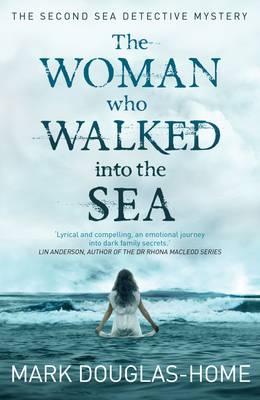 At the weekend I ordered Mark Douglas-Home's, The Woman Who Walked into the Sea. The first book in the series, The Sea Detective, was excellent and one of my reads of the year so far. Early reviews of the new book suggest it is even better, which has really whetted my apetite to get my hands on it. Hopefully it will arrive in the local bookstore shortly. If it does, expect a review later this month.
April 30, 2013
April's reading
 I reviewed nine books in April, which comes as a surprise as it didn't feel like a typical month of reading. That's especially the case given I also read a couple of non-fiction books that I've not yet got round to reviewing. It felt like a five book month! The standout read was Rubbernecker by Belinda Bauer.
The Polka Dot Girl by Darragh McManus ****
The Perfect Crime by Les Edgerton ***.5
The Devil in a Blue Dress by Walter Mosley ***.5
Die a Little by Megan Abbott ****
The Devil Doesn't Want Me by Eric Beetner ****.5
Rubbernecker by Belinda Bauer *****
Missing in Rangoon by Christopher G. Moore ***.5
Blood from a Stone by Donna Leon ***
A Man Without Breath by Philip Kerr ***
April 28, 2013
Lazy Sunday Service
 Stiffed is due to be published in May by Snubnose Press. Here is the first draft of the print cover wrap minus barcode and endorsement quote. Personally, I'm really pleased with the design and think Eric Beetner's done a really great job. Expect a couple more posts plugging said tome in the next few weeks, though I promise to keep them to a handful.
My posts this week:
It's just a job
Review of The Polka Dot Girl by Darragh McManus
Oxford Dictionary of Human Geography
Tinker, Tailor, Soldier, Spy
Review of The Perfect Crime by Les Edgerton
April 27, 2013
It's just a job
‘I’m pleading with you, Mikey. I won’t be here when you get back.’
‘It’s just a job. We need the money.’
‘It’s not just a job. It’s armed robbery!’
‘And what paid for all this?’ He gestured at the room. ‘You’ll be here or they’ll be big fucking trouble.’
‘Yeah, for you when you’re caught and thrown in prison! Then what am I meant to do?’
‘Keep your mouth shut and legs closed.’
‘For twenty years?’
‘For forever.’
‘You don’t have to do this, Mikey.’
‘Yeah, I do. It’s all planned; it’ll be fine.’
‘That’s what you said last time.’
A drabble is a story of exactly 100 words
‘It’s just a job. We need the money.’
‘It’s not just a job. It’s armed robbery!’
‘And what paid for all this?’ He gestured at the room. ‘You’ll be here or they’ll be big fucking trouble.’
‘Yeah, for you when you’re caught and thrown in prison! Then what am I meant to do?’
‘Keep your mouth shut and legs closed.’
‘For twenty years?’
‘For forever.’
‘You don’t have to do this, Mikey.’
‘Yeah, I do. It’s all planned; it’ll be fine.’
‘That’s what you said last time.’
A drabble is a story of exactly 100 words
April 26, 2013
Review of The Polka Dot Girl by Darragh McManus (Roundfire Books, 2013)
 Detective Eugenie Auf de Maur has risen quickly through the ranks of Hera City’s police department. Smart, brave and a little foolhardy, she compensate for her diminutive size by sheer force of will. But she may have met her match in the conspiracy surrounding the death of Madeleine Greenhill, a spoilt rich kid who has been fished out of docks wearing her favourite polka dot dress. Madeleine, a wild child who trawled the bars and nightclubs and mixed in dubious circles, was the daughter of Misericordiae, one of the city’s most feared matriarch’s, a student at one of its most exclusive colleges. Investigating the case is made more difficult by Madeleine’s circle of supposed friends closing ranks, Misericordiae desire for revenge, a hired thug trying to send the tiny detective to an early grave, a leak inside of the police department, and the distractions of a beautiful femme fatale. Once Genie has her teeth in case though, she doesn’t let go regardless of the consequences.
It’s always interesting when an author takes a genre and spins it in a new way. Recent examples includes Declan Burke’s Absolute Zero Cool, Duane Swierczynski’s Secret Dead Men, China Mieville’s The City, The City, and Jasper Fforde’s Nursery Crimes series. The twist in McManus’ Polka Dot girl is to tell a classically framed hardboiled tale in which all the characters are female -- not just the lead roles, but the entire cast. In conjunction with using prose that mimics the style of Chandler and Hamnett, and populating the story with all the cliched roles of the hardboiled genre -- the gutsy, wayward, headstrong detective, the attractive femme fatale, the self-destructive victim, the smart, conniving villain, the violent thug, and the trusted side-kick -- McManus produces a nice double-play: a satire on the masculinist tropes of hardboiled crime fiction at the same time as being an enjoyable hardboiled tale. The story itself rattles along a fair clip with plenty of tension and twists and feints, and the dialogue is spot-on and there are some nice observational touches. The plot is well constructed, though it’s sometimes sustained by a little too many plot devices (ignoring protocol, leaps of faith, coincidences of location, etc). Moreover, I was left wondering about the strange society in which the story takes place -- a city that has no men, yet is organised and operates exactly like our own cities with the same hierarchies, vices and social order, in which only female children magically appear. I kept thinking that surely a society without men would be structured in a different way? Regardless, The Polka Dot girl is an interesting and entertaining story that spins a unique take on the genre and is a must for those who enjoy their crime fiction with a satirical twist.

April 25, 2013
Oxford Dictionary of Human Geography
 The Oxford Dictionary of Human Geography, written by Noel Castree, Ali Rogers and myself, is officially published today. I received an advance copy late last week and I have to say that I'm really pleased with final product. Because we wrote the entries, rather than commissioning and editing them, there is a nice consistency in style.
Amazon UK have a special deal on at the minute - it's £7.79 rather than the usual £12.99 (40% discount). And here's the link to Amazon US ($18.95) and to Oxford University Press. Even without the discount, my sense is the price is a bargain for 2,100 entries, totalling some 315,000 words, on all the key terms in the discipline.
Here's the preface, which provides an overview of the book:
The study of geography can be traced back to Ancient Greece. It became a formal school and university discipline in the late nineteenth century and since then it has developed and diversified both conceptually and methodologically. In this volume we provide concise, straightforward definitions of the terms, concepts and methods that comprise human geography’s contemporary lexicon. It is designed to be used by students of the subject at all levels, so too their teachers. But it’s also intended to appeal to others who, for whatever reason, are curious about human geography and how it seeks to make sense of the extraordinary world we live in. It is not an encyclopaedia, but it offers more breadth and depth concerning the large and diverse body of knowledge of human geography than one finds in most dictionaries of geography, which try to cover both the human and physical aspects of the subject.
In the pages to come we’ve sought to present the debates and insights of our peers in the world of university geography, even as we’ve included entries on subjects more commonly associated with a geographical reference work. Consequently, readers will find entries on the likes of Afghanistan, Mecca and Tokyo alongside entries on terms such as placelessness, spatial autocorrelation and Tobler’s first law of geography. We’ve also included other kinds of entry that will, we hope, be of interest. For instance, there are biographical entries about the intellectual contributions of leading human geographers past and present, entries about key books that have influenced geographical thought, and key events, political agreements and organisations that have shaped the world and the discipline of geography. In the appendices at the back of the book you will find lists of peer-review human geography journals, geographical societies, and human geographers whose research has been recognised as outstanding by their peers, plus maps that show the location of place entries. We have been selective in our coverage of places, countries, events, organisations and agreements, only including entries on those that, in our view, were or are iconic or important in economic, cultural or political terms. Some readers may wish for a larger and wider selection, but this book is not intended to be a gazetteer. Many entries direct readers to websites where they can learn more. In other cases further reading and references are listed at the end of many entries. The majority of entries contain cross-references to others, allowing readers to follow their own paths through the dictionary. We hope these cross-references allow you to widen and deepen your understanding of human geography – even if your initial intention was to get clued-up about just one or two of our 2100 headwords. Finally, not a few entries offer considerable detail on the subjects in question because of their importance or complexity.
Just a few minutes dipping into this work will reveal that human geography is porous in two senses. First, its subject matter intersects with virtually every social science and humanities subject, from anthropology to philosophy to sociology, and human geographers are engaged in routine exchanges with their academic neighbours. In each case we try to show their relevance to human geography and how our understanding of them benefits from taking a geographical perspective. Secondly, human geography is in many senses an everyday phenomenon. Many of its key concerns are daily news – for instance, urbanization, deindustrialization and international migration. Likewise, its concepts are everyday ones, even if professional geographers utilise them in ways lay actors might not readily recognise (e.g. landscape, nature and place). These aspectss make a dictionary of human geography relevant to readers in ways that, say, a dictionary of physics or ancient history are not. We hope readers who study the subject formally, and those who hold a more general interest, will better understand their own human geographies by perusing the entries.
April 24, 2013
Tinker, Tailor, Soldier, Spy
 I recently watched the BBC adaptation of Tinker, Tailor, Soldier, Spy made in 1979 and based on the John Le Carre novel of the same name. It stars Alex Guinness as the weary and dour George Smiley bought back secretly from retirement to hunt for a mole at the top of the British secret service. The series is distinguished by its slow pace, silences, understated drama, and atmospheric lighting, a kind of anti-thesis to the rush and action of contemporary programmes. Often Guinness does little more than look tired, his conversation restricted to a few words, and he's complemented by a fine supporting cast. The plot unfolds gently, immediately wrapping the viewer in its embrace, punctuated with a handful of tense moments, thus mimicking the dull monotony of much spy work with its occasional pinch points. The overall effect is a highly compelling, engaging, thoughtful story. I've just ordered Smiley's People, made in 1982, which will hopefully be more of the same.
April 22, 2013
Review of The Perfect Crime by Les Edgerton (Stonegate Ink, 2011)
 Charles ‘Reader’ Kincaid is a career criminal and psychopath killer with the perfect plan to net millions at the expense of C.J. St Ives, a private banker. All he needs to do is assemble the right equipment, keep his booze-hound partner, Eddie, on the straight-and-narrow, and stick to his plan. The first jag in his perfect crime is to kill Jack Fogarty, a specialist electronics dealer whose brother, Grady, is a retired cop who vows to track Jack’s killer down whatever the cost. Trailing Reader from Ohio to New Orleans, Grady hooks up with a beautiful animal welfare officer and another retired cop-turned-bar owner who still has contacts on the local force. Reader soon becomes aware of his shadow but presses ahead with his plan, confident that Grady is an irritant that is easily dealt with. In turn, Grady starts to piece together Reader’s plan and to hatch his own designed to exact a non-judicial form of justice.
 The key to The Perfect Crime is the plot, which is clever and well executed, with a couple of nice feints and twists. Edgerton not only envisages the perfect heist, but he interweaves three, competing perfect plans each of which is not quite as perfect as its executioner thinks, pitching the protagonists against each other in the process -- the hapless, smarmy C.J. St Ives intent on ripping off his own bank, ‘Reader’ Kincaid who desires the millions in drug money being laundered by St Ives’ bank, and Grady Fogarty who wants revenge for his brother’s death at the hands of Kincaid and a better life for himself after years of poorly rewarded toil. It’s a compelling storyline that hooks the reader in and keeps the pages turning to the nicely resolved ending. The storytelling itself is quite workmanlike and the characterisation somewhat routine and cliche at times, with only Veronica, a retired local cop, breaking the mould. I inwardly groaned when a beautiful, young woman falls for Grady after a brief conversation; does every fifty something year old retired cop in the US snag women half their age? Regardless, it's the smart plot that makes this a book worth reading -- and which leaves you wondering if you could envisage and execute the perfect crime.