Rob Kitchin's Blog, page 170
September 6, 2013
Review of Stettin Station by David Downing (Old Street Publishing, 2009)
 November 1941, the Wehrmacht has ground to a halt outside of Moscow and the relationship between Japan and the US is deteriorating. John Russell, a British journalist with an American passport and long term resident of Berlin, can sense the winds of change. He’s loathed to leave his thirteen year old son or his long term girlfriend, actress Effi Koenen, but it’s clear he needs to try and find a way to out of the country whilst remaining in contact. One prospect is to act as a point of contact between the Americans and the Abwehr. Another is to gather evidence of significant interest to the Allies and, in particular, the communists so that he can use their escape lines. However, just as he’s putting both arrangements in place the Gestapo and SD re-awaken their interest in his presence and activities, potentially jeopardising his plans.
 Stettin Station is the third book in the John Russell and Effi Koenen series. The strengths of the tale are the characterisation, sense of atmosphere and place, and the historicisation. Russell and Koenen are well realised and rounded characters and they are accompanied by a broad spectrum of nicely penned others, including journalists, administrators, various forms of police, family, friends and other citizens. Downing manages to nicely blend the everyday realities and complexities of living in Berlin during the war with the politics and machinations of a police state and his role as a foreign journalist. The result is a story that captures the everydayness of getting on with lives in a state of perpetual background fear, and the tactics of surviving and resisting. Moreover, by utilising real events and occasionally real historical characters, Downing provides a semblance of authenticity. Where the book suffers a little is with regards to the plot. Whilst it is an interesting story the tale seemed largely a transitory one, moving the characters into place for the next instalment rather than having its own self-contained arc and denouement. Moreover, the ending seemed somewhat contrived and didn’t ring true to me. Nonetheless, Stettin Station is a solid addition to a very good series and I look forward to reading the next instalment.


September 4, 2013
Review of Echoland by Joe Joyce (Liberties Press, 2013)
 June 1940 and whilst Britain licks its wounds after the debacle leading to Dunkirk and France teeters on the edge of defeat, Paul Duggan has been transferred to G2, the Irish military intelligence division, given his knowledge of the German language and the string pulling of his uncle, a politician. Ireland is pursuing a policy of neutrality, though some favour siding with the Allies and others with the Germans in the hope of gaining a united Ireland. Duggan has been assigned the task of monitoring a German national who is sending cryptic and receiving saucy letters to the continent but otherwise seems inactive. He’s also been asked by his uncle to find his cousin who has gone missing and has possibly been kidnapped. Duggan slowly makes progress on both cases, aided by Special Branch detective, Peter Gifford, whilst trying to keep the hunt for his cousin a secret from his bosses. Nothing, however, is quite what it seems in the murky world of spies and politics.
Set in 1940, Echoland is set during a fascinating period of contemporary Irish history as it the country tries to negotiate its neutral role and its relationship to Britain and Germany. Joyce weaves an interesting plot involving G2 (military intelligence) and Special Branch as they keep tabs on the German legation, suspected German spies, and the IRA, who view the war as an opportunity to leverage a united Ireland. The plot is the strength of the novel, nicely intersecting two storylines – the hunt for a German spy and trying to trace the whereabouts of a politician’s missing daughter. Joyce’s storytelling is all tell and no show, detailing the action and dialogue of the main characters. Whilst this worked to a degree, the lack of reflection and historicisation rendered some of the story flat and lacking in atmosphere and tension and the characters one dimensional. For example, the reader is presented with lists of streets that the characters traverse, but very little description of them or the activities taking place, or the general mood of the populace or how the war was affecting them. Nor is there a wider sense of the lead up to Ireland’s political position at the time. There is practically no back story with respect to any character, with the lead character being curiously asexual, apolitical and naive, and at the end of the book I felt I knew as much about him as I did at the start. The result was a book carried by its plot, but one that lacked the atmosphere, depth and subtle tension evident in similar kinds of Second World War espionage tales such as those by Alan Furst, David Downing, Aly Monroe or Joseph Kanon (a selection here). Nevertheless, an enjoyable and interesting tale and I'd read the next instalment if it Echoland is the first in a series.

September 3, 2013
August reviews
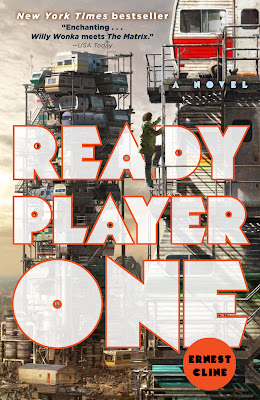 A mixed bag of read for August. My read of the month was Ernest Cline's Ready Player One, which proved to be a fun and well plotted and realised book.
The Third Rail by Michael Harvey **.5
The Sisters Brothers by Patrick deWitt ****
The Signal in the Noise by Nate Silver ****
Waiting for Sunrise by William Boyd ***
The Reckoning by Jane Casey ***.5
A Nail Through the Heart by Tim Hallinan ***
Ishmael Toffee by Roger Smith *****
The Barber Surgeon's Hairshirt by Douglas Lindsay ***
Ready Player One by Ernest Cline *****
The Lost by Claire McGowan ***.5
Black Seconds by Karin Fossum ****
September 2, 2013
Review of Love Songs from a Shallow Grave by Colin Cotterill (Quercus, 2010)
 It’s 1978 and Dr Siri Paiboun, Laos’ only coroner, is approaching his seventy fourth birthday. After a lifetime of serving the communist party and finally witnessing the Laos revolution he would like to retire. Instead, he is tasked with examining the body of a young woman found dead in a sauna on a former American base that now houses many of the present ruling elite. The woman has been stabbed through the heart with a epee, a small z carved in her thigh. Siri’s friend, Inspector Phosy, is tasked with investigating the case. The following day another young woman is found dead, similarly with an epee through the heart and a z cut on her thigh, shortly followed by a third case. It seems that there is a serial killer on the loose. As usual, Siri can’t help becoming involved in the investigation, but initially he’s baffled. He’s also distracted by disturbing dreams, Nurse Dtui’s domestic problems, and the endless rain. Just as he starts to make progress he’s asked to go on an official trip to Kampuchea controlled by the Khmer Rouge, which is when his real troubles start.
Love Songs from a Shallow Grave is the seventh book in the Dr Siri series. Of the four that I’ve read it’s the strongest in terms of the plot, which is very well constructed and executed, blending a nice mystery puzzle with a strong sense of place and fascinating historical and social context. Whilst the tale still has some of the comic charm of the other books, both of the intersecting storylines are dark, especially Siri’s time in Kampuchea, which is quite harrowing but well handled. And although the story principally follows the investigation and the official trip, Cotterill advances the personal lives of the stable of main characters Siri, Madame Daeng, Nurse Dtui, Inspector Phosy, former Minister Civilai, and Mr Geung. Indeed, a real strength of the book is that the full gang are present for nearly the entire tale, each with their own interesting subplot. Overall, a clever, dark and enjoyable tale with a fascinating geographical and historical context.

September 1, 2013
Lazy Sunday Service
Friday was a watershed moment in my professional career as I stepped down from three roles - as Director of National Institute for Regional and Spatial Analysis (NIRSA, after 11.5 years), Director of National Centre for Geocomputation (NCG, after 2 years), and Chair of Irish Social Sciences Platform (ISSP, after 6 years). I'll continue to work in NIRSA as a PI on various projects, but will not be running the place on a day to day basis. I can't say I'll miss all the crappy admin and politics, though I'll not be able to escape it all. Eleven and a half years in one role is more than enough and the change should hopefully be good for me and the institute. Looking back it's been a productive decade and I'm happy that I've handed over NIRSA in better shape than I inherited it. Raising the salary every year for 15-25 people has been a challenge, but somehow we've scraped it together. Onwards to the next challenges ...
My posts this week
A coming storm?
Review of The Third Rail by Michael Harvey **.5
Review of The Sisters Brothers by Patrick deWitt ****
Review of The Signal in the Noise by Nate Silver ****
My posts this week
A coming storm?
Review of The Third Rail by Michael Harvey **.5
Review of The Sisters Brothers by Patrick deWitt ****
Review of The Signal in the Noise by Nate Silver ****
August 31, 2013
A coming storm?
A soft pattern of knocks on a solid oak door. A few moments later it’s opened a fraction, then pulled wide. The young woman tumbles in, her dark hair tangled.
‘They’ve arrested Paul,’ she said. ‘This morning.’
‘You were there?’
‘I visited later. I was to collect the leaflets. We need to warn the others.’
‘Were you followed?’
‘No. I ... I made sure.’
‘You need to go home, Agáta, and act as if you know nothing. It’s the only way.’
‘And the others?’
‘Paul is strong and stubborn. We’ll do our best and hopefully it won’t be too late.’
A drabble is a story of exactly 100 words.
‘They’ve arrested Paul,’ she said. ‘This morning.’
‘You were there?’
‘I visited later. I was to collect the leaflets. We need to warn the others.’
‘Were you followed?’
‘No. I ... I made sure.’
‘You need to go home, Agáta, and act as if you know nothing. It’s the only way.’
‘And the others?’
‘Paul is strong and stubborn. We’ll do our best and hopefully it won’t be too late.’
A drabble is a story of exactly 100 words.
August 30, 2013
Review of The Third Rail by Michael Harvey (Bloomsbury, 2010)
 Michael Kelly is a former Chicago cop who now works as a PI. Whilst waiting for a train he witnesses a woman being shot and gives chase. Lured into an alley he's knocked unconscious. In the meantime, a second woman is shot at another station. A city taskforce is established to track down the gunman, with Kelly given a peripheral place on the team due to the killer contacting him. He’s hardly a team player, however, and sets about trying to catch the murderer, who quite clearly is playing a game with him related to a past event. With the whole city on edge, the killer strikes again, ratcheting up the pressure and stakes.
The Third Rail is the third instalment of the Michael Kelly series and the first I’ve read. The story is told at a quick pace using short chapters each with a tension point designed to keep the pages turning. This keeps the story moving along, but sacrifices character development and limits contextualisation. Kelly is a typical tough guy PI, is incredibly well connected, and just happens to find himself at the centre of a major incident which only he and his techie buddy can solve. Thrillers often teeter at the edge of credibility and The Third Rail wanders this line throughout, tipping over it at the end with a twist that was neither needed nor made much sense. Moreover, the task force investigation seemed overly amateur and divisive, and, interestingly, Chicago seems to have no surveillance cameras or useful witnesses. The result was a workmanlike thriller that lacked depth and resonance, with a plot and characters with whom I failed to connect.

August 28, 2013
Review of The Sisters Brothers by Patrick deWitt (Anansi, 2011)
 1851 and in the pioneer west Eli and Charlie Sisters are henchmen for the Commodore, a rich and powerful businessman with many interests. Their latest task is to travel from Oregon City to the gold mining claims near to Sacramento to locate Hermann Kermit Warm, a prospector that has allegedly stolen something from the Commodore. Whilst Charlie seemingly enjoys his infamous status as a hired killer, Eli is more circumspect until he’s provoked into a rage. Journeying south to find Warm, the brothers engage in a series of encounters with a range of colourful characters, leaving a trail of bodies in their wake. Increasingly, Eli questions how their lives are unfolding, the consequences of their actions, and their prospective future. As they close in on their target, it’s clear that relationship between the brothers is changing and things will not be the same once Warm is dispatched.
 The Sister Brothers reads like a Greek tragedy transported to the lawless, pioneer territories of west coast America in 1851. Eli and Charlie Sisters set off on a rites of passage trek in order to fulfil their quest to murder a prospector at the behest of their boss, the Commodore. As they journey south they drink, steal, kill, meet a diverse set of characters, become tangled in a set of odd situations, and bicker. Both brothers have known little other than the murderous trade they peddle, but Eli has taken to imagining another kind of life, aided by their journey. deWitt tells the brother's story in a dead pan, melancholic voice that does not romanticize or glamorize the pioneer west and has a nice sense of place and time. The plot unfolds a steady pace, providing a detailed character study of the brothers and the gradual transformation of their relationship. Both brothers are savage characters, yet by adding a smidgeon of emerging compassion and self-reflection to Eli, deWitt provides a connection through which the reader can empathise with them. Nevertheless, it took me a while to get into the story, which matures as it progresses. It was only in the last fifth of the tale, however, that the arc of the plot all dropped into place to become more than the sum of its parts. As such, the story had much greater resonance on completion than when I was reading it, and the more I reflect on it, the more satisfied I am with the tale. Overall, an enjoyable, thought-provoking read.

August 26, 2013
Review of The Signal in the Noise by Nate Silver (2012, Allen Lane)
 Nate Silver is best known for his website FiveThirtyEight and his predictions concerning US presidential elections, and for general media punditry concerning statistical inference. The Signal in the Noise is his first book and provides a critical appraisal of the art and science of predictive analytics. The strengths of the book are: very clear explanation as to how prediction is calculated, a wide selection of interesting examples, and good balance in detailing the relative strengths and weaknesses in predictions and the work of statisticians. The book is pitched at an interested lay-reader audience and rarely deviates from that level with Silver managing to convey relatively complex material in an accessible way. That’s not to say that the book is non-partisan. A central argument is the promotion of Bayesian statistics to improve predictive analytics, and he rightly takes to task many industries that use extensively prediction, such as finance, but do such a poor job of calculating what might happen in the future. The weaknesses of the book are that it is overly long and starts to become repetitious with too many examples that little add to the argument being made, and sometimes it fails to take account of factors outside of analytics as to why models and businesses fail (in the case of finance, cultural and structural issues as to how the industry is organized and run). Overall, a good introductory overview of making sense of information for the purposes of calculating predictions.
August 25, 2013
Lazy Sunday Service

 I picked up Jo Joyce's Echoland and Arnaldur Indridason's Strange Shores on Friday afternoon. I've had them on order for a while and I'm looking forward to reading both. Irish historical crime fiction set in the early to mid-twentieth century seems to be flourishing at the minute, with Echoland taking place in June 1940 (other examples include Kevin McCarthy's O'Keefe series, Brendan John Sweeney's Once in Another World, Benjamin Black's Quirke books, Stuart Neville's Ratlines). I suspect that Strange Shores will be a bittersweet read given it is the final book in the excellent Reykjavik series. I'm still behind in posting reviews so expect a flurry in the next few days, including Nate Silver's The Signal in the Noise, Patrick deWitt's The Sisters Brothers, Michael Harvey's The Third Rail, and Colin Coterill's Love Songs from a Shallow Grave.
 On Tuesday I was interviewed for RTE tv news, with another clip being used on the radio. I still prefer doing the live interviews as you never quite know how you are going to be edited, but this turned out okay, I think.
My posts this week:
Review of The Reckoning by Jane Casey
Winters Bone by Daniel Woodrell on Petrona Remembered
Review of Waiting for Sunrise by William Boyd
Marching to Inishglora