Roshen Dalal's Blog, page 10
January 13, 2017
Black Spot: A film on dam tunnels–Uttarakhand News-3
Sharing a news item on a new film on the dangers of dam tunnels in Uttarakhand
Darkness is the only end of Dam Tunnels
“Black Spot” – A film made on the impacts of Vishugaad – Peepalkoti tunnels on Alaknanda River released
“We have been ignored and treated merely as characters to laugh at. The tunnel is being built beneath our houses. How much damage it will do, nobody knows. The compensation for previous damages have not been made yet. If we protest then we will have to face the court cases. The Court has made restrictions on people’s visiting the Dams working sites. Now what to do?”, says Ramlal, a residence of Durgapur Village. Durgapur village is the part of Village Panchayat where dalit families reside. The THDC, Dam Construction Company, is building/ constructing tunnels for Vishnugaad – Peepalkoti Hydro Power Project Power House. Cracks have appeared on the walls of houses present above the tunnels due to high intensity blasts happened during the construction of tunnels, the future has become uncertain.
The condition of the Harsari hamlet of Haat Village is also the same. The other project affected villages are also facing the same threat and uncertainties. What is the guarantee that everything will be secure once the projects will be completed? The tunnel of Vishnuprayag dam has already brought disaster in Chai –Thai Village after years where NEPI Company had denied claims of any losses.
There has been no evaluation done of the impacts of these tunnel in World Bank fostered projects. This is how expenditure on rehabilitation and other issues is ignored. ‘We get the threats of arrest if we resist and protest for our rights. Are the Ganga dam affected region not in India?’, questioned Rajendra Hatwal.
Narendra Pokhariyal have been struggling since years for security of his Village and constant flow of the River Ganga but got only false promises and increased confusion. World Bank and State government is responsible for not giving the right solutions of the issues. The film “Black Spot” made by Media Collective tried to cover all these aspects. This Hindi film with subtitles in English is made by Hagen Desa.
This film reveals the reality of tunnel projects through the issues prevailing in Vishnugaad – Peepalkoti Dam affected area. When there is planning to bind Ganga – Yamuna – Kali – Saryu and all their tributaries in tunnels, then this film reveals the grim realities and likely impacts in front of development planners, government agencies and financial institutions like World bank, we expect that they will learn a lot from this and bring subsequent changes in their attitude taking people’s and environmental issues on higher priorities.
This film has been released by the villagers in Gopeshwar headquarter of Chamoli district.
Filed under: Uttarakhand Tagged: Alakananda river, Black Spot--a film, dam tunnels, Uttarakhand





January 6, 2017
Book review: A good book on wrestling!
I was looking up details on the food wrestlers eat [in India], and came across a fascinating book, The Wrestlers Body, by Joseph Alter.
This was published in 1992, so it doesn’t include the female wrestlers, and the recent movies, Sultan or Dangal, but it explores all aspects of a wrestler’s life in an akhara.
What do they eat? Most are vegetarian. Ghee, almonds, and milk are essential along with normal vegetarian food. No alcohol or tobacco, no drugs. No sex, they are supposed to be celibate. There are a lot of guidelines on how they should maintain this.
Their daily routine, worship of Hanuman, celebration of Nag Panchami, and a lot more is part of this book.
‘This is a study of wrestling as a system of meaning, and it must be made clear at the outset that I have not undertaken to study the technical aspects of the sport.’ says the author in his preface.
There are chapters on the akhara, the guru-chela system, patrons, and the discipline a wrestler requires.
The book is well-researched. I am not interested in wrestling or outdoor sports, nevertheless I really appreciated the book, and its insights into the philosophy and spirituality behind a sport, and how it transforms the individual.
Alter, Joseph S. The Wrestler’s Body: Identity and Ideology in North India. Berkeley: University of California Press, c1992 1992. http://ark.cdlib.org/ark:/13030/ft6n39p104/
Filed under: book review., Books, India





December 24, 2016
‘ No man has hired us’
Ever since I first read these words in his poem, they haunted me. I remembered them whenever I passed labourers standing in groups, at crossroads or corners, with their paint brushes or bags of tools, waiting for someone to hire them. Some of them used to get hired every day, but now they wait in vain. So sharing these words, from a different time and cultures, but so relevant to us in India today.
The voices of the Unemployed:
No man has hired us
With pocketed hands
And lowered faces
We stand about in open places
And shiver in unlit rooms.
Only the wind moves
Over empty fields, untilled
Where the plough rests, at an angle
To the furrow. In this land
There shall be one cigarette to two men,
To two women one half pint of bitter
Ale. In this land
No man has hired us.
Our life is unwelcome, our death
Unmentioned in “The Times.”
***
Filed under: Poems Tagged: Choruses from the rocks, Poems, T.S.Eliot





December 23, 2016
The Fodder Queens: Uttarakhand News-2
All over Uttarakhand farmers are suffering because of the note ban. Flowers are dying and vegetables and fruits are rotting, as no one has cash to buy them. The concept of a cashless or even less-cash economy can hardly work in a region in which some of the remote, snow-bound villages do not even have electricity, leave alone banks.
In this scenario, it was a relief to read about something better–a fodder cutting contest for the village women of Tehri Garhwal, with really attractive prizes. Women had to cut the maximum quantity of grass in two minutes, earning 10 points for each kilo of fodder. They were also given points for the quality of fodder, and for their knowledge of medicinal plants
The contest was held in Akhori village on 22 December 2016. Preliminary rounds were held in 200 villages, and 31 finalists were chosen from over 2000 participants. Forty-year old Vimla Devi from Chilyal village was the winner. She has been used to cutting grass, she and other participants do so every day. The fodder queen or Ghasyari, received a cheque of Rs one lakh, and a 160 kg silver crown! She cut 4.1 kilos. The first runner-up was Gyansu Devi of Dhansani village, with 51,000 and a 130 kg silver crown. Indira Devi of Akhori village was third. She received 21, 000 and a crown weighing 110 kg.
What will they do with the money? Vimla Devi wants to use it for the medical treatment of her husband, working in Chandigarh. Gyansu Devi will use it to educate her six children.
The Chetna Andolan organizes the competition. Trepan Singh Chauhan, its convenor, said that women were the best ecologists, preserving the environment in these hill regions.
Save
Filed under: Uttarakhand Tagged: fodder queens, I, Note ban, Tehri Garhwal, Uttarakhand





December 20, 2016
Writing and Bidyutprabha Devi
I have been busy with a forthcoming book on 70 years of independence. Of course, that period is already covered in my Puffin History of India vol 2, but this book’s focus is culture. I keep reading wonderful poets and stories in translation–some may be included in the book, some may not.
These two verses below are from Bidyutprabha Devi’s poem, Dilemma, translated from Odia, the language of the state of Odisha [earlier spelt Orissa]. Bidyutprabha is recognized as one of the best Odia women poets. Only writers know how wonderful writing is.
‘Writing is the balm
for all my pain.
It’s the glory of my sorrow.
Writing is rain-soaked woods.
It’s the music of cloud bursts
during the month of Shravana!
I wish I could speak of
the joy that gathers in my heart.
Like a flame
in the mouth of storm,
my poetry
A luminous lamp!’
(Translation: Sachidananda Mohanty (First published in Kavya Bharati, 1997]:-
Filed under: Poems, Writing Tagged: Bidyutprabha Devi, Odia women poets, Odisha, Poems, writing





November 15, 2016
Jawaharlal Nehru in Mt Abu
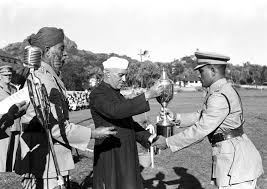
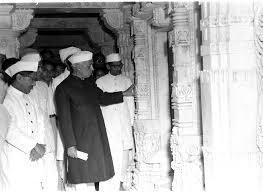
In Mt Abu: Police Officers Parade, and At the Dilwara temple.
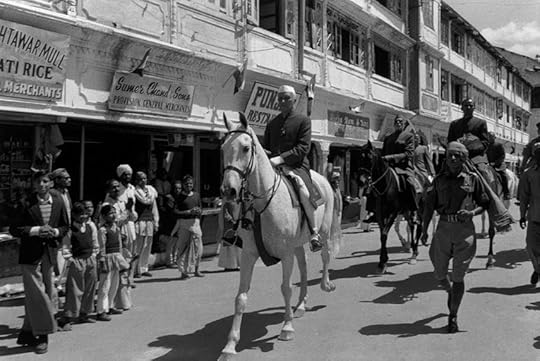
Mussoorie, 1958
Jawaharlal Nehru, India's first prime-minister, was born on 14 November 1889.
On his birth anniversary yesterday, I remembered meeting him and presenting him
with a bouquet of flowers, when I was a child. This was in Mt Abu.
But was this recollection correct?
Looking up the internet, I saw that he had indeed visited Mt Abu in October 1958.
The two pictures on the top are from this visit.
At this time the China war was yet to take place, and his popularity was at a height.
Below is a family picture with the young Indira.
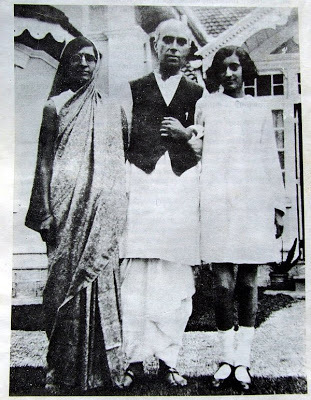
Save
Save
Save
Filed under: India, Jawaharlal Nehru Tagged: 1958, history, India, Indira Gandhi, Jawaharlal Nehru, Mt Abu.





November 5, 2016
Lament of the Flowers [ Pushpa Vilapamu] by Karuna Sri, [ Jandhyala Pappaya Sastri, 1912, -1992] translated from the Telugu
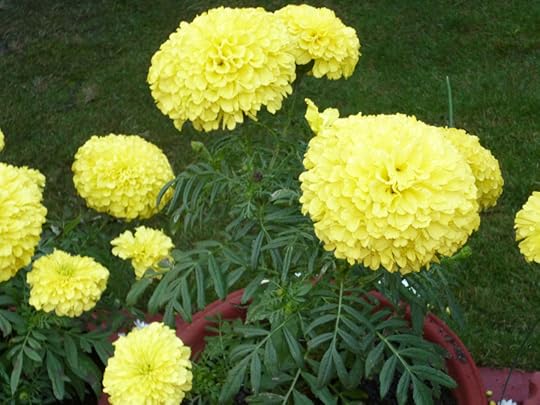
I came across this poem recently, in The Sahitya Akademi collections, and really liked it. It must be better in the original Telugu, but the translation is below:
—————————————–
Bent on worshipping you
I woke up with cock-crow:
Bathed, clad in pure white,
Entered an orchard to fetch flowers.
As I stood by a plant, held the bough
And touched a flower, lo: all the flowers raised
Their voices in chorus, wailing, ‘Must you kill us all?’
My hear sank, something flashed in me, as ‘Lament of Flowers’.
‘Will you nip us all and collect in baskets
As we play in the tender leaf-lap of our mother
And sell us to gain salvation? What use
Any worship, when you are heartless?
‘We are dull heads, you are wise;
You have intellect, imagination;
Has your heart turned to stone?
Doesn’t it yield a few flowers to offer to god?
‘While we breathe, we air the identity
Of our creeper- mother—enjoy rocking freely
In her hands–and as the hour approaches,
Contented we close our eyes–at her holy feet.
We facilitate the air dashing scents; feast the bees
That court us with sweet nectar; please the eyes
Of the likes of you; why this selfishness and–
Stop, don’t snap us–Do you sever mother and child?
‘You’re fine–cutting other’s throats for your sake—
How mean of you to acquire merit thus? Will the Master of all
Accept this bloody offering? Won’t the all knowing Lord
Receive our poor souls? Why an intermediary?
‘Strangling our throats with a thread of wool,
Sending needles through our hearts, they bind us
To deck their fashionable hairdos—
Alas, pitiless indeed is your fair sex!
‘Squeezing us in presses to the last drop
Of life, you men make attar
With our heart’s blood to was the foul
Smell of your bodies, O murderer!
‘Alas! All those luxuriating beasts of men
Sprinkle us on their beds, trample our tender bodies
Under their heavy feet–crush and crush– and next
Morning throw us out, all faded and unpetalled.
‘Offering all our priceless tender sweet lives
At your feet, aren’t we lost,lost? Having
Plundered our youth, beauty, you sweep us away
With a broom! Do men have any ethics?
You are born in the land of the Buddha,
Why is natural love just dead in you?
O murderer, murdering beauty,
Tainted indeed is your human birth.
For God’s sake leave your worship,
Don’t cut our innocent throats!
Oh! What grace can you earn
Killing us with your own hands?’
Thus admonished by the flowers–so
I thought–I had no hands to pick them;
To report the matter to the Lord
Thence I came, all empty-handed.
[1944, trans K Godavari Sharma.]
Save
Filed under: Books, Poems, Sahitya Akademi Tagged: Karuna Sri, Lament of the flowers, Poems, Telugu poet





November 4, 2016
Mountaineering Institutes in India

Tenzing Norgay’s ascent of Mount Everest (8848M / 29,028ft.) along with Edmund Hillary, in 1953 provided the desired impetus to mountaineering as an organized sport in India, Pandit Jawaharlal Nehru then Prime Minister and a visionary, wanted to channelize the abundant energy of the youth of the nation into a constructive field of mountaineering and hence planned to open a Mountaineering Institute.The Himalayan Mountaineering Institute (HMI) was founded in Darjeeling on 4th November 1954 by Pandit Nehru himself. In this manner Late Pandit Nehru ignited the spark of a new spirit for young Indians. The spark has already developed into a dazzling torch, lighting the path for those who accept the challenge of the Mountains and aspire to climb high.
Formation of Indian Mountaineering Foundation (IMF)
A Sponsoring Committee of the Cho Oyu Expedition was formed in 1957, the success of which on May 15, 1958, encouraged the Committee to sponsor…
View original post 2,858 more words
Filed under: Uncategorized





October 11, 2016
The descent of the gods of Uttarakhand
A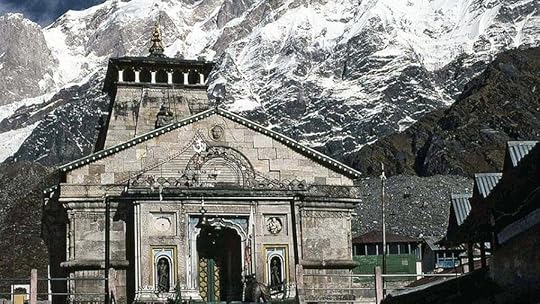
The mountains have received their first snowfall. As winter sets in, the temples in the high mountains of Uttarakhand are getting ready to close. The dates have already been announced. The gods and goddesses from these will move down to their winter abodes, and return again in May. Many rituals accompany this annual journey. After a special bath, puja and worship, the image of the deity is placed in a decorated palanquin, ready to be carried. A band accompanies it for some distance, then devotees and pilgrims continue the journey. After more rituals the deity is installed in its winter temple. Worship will continue there till the gods return.
Kedarnath, Badrinath, Gangotri and Yamunotri, are the most important temples, known as the ‘char dham’, though others close down too. Kedarnath is one of the names of the god Shiva, at Badrinath the god Vishnu is worshipped. Gangotri and Yamunotri represent the rivers Ganga and Yamuna.
This year, Gangotri, the abode of the goddess Ganga, will be the first to close on 31 October. Yamunotri and Kedarnath will close on 1 November, Badrinath on 16 November. The goddess Ganga goes to her winter temple in village Mukhba, the goddess Yamuna to Kharsali. The deity of Kedarnath descends to Ukhimath, and of Badrinath to Joshimath.
Pilgrims to the temples were fewer after the great floods of 2013, but reached 15 lakh [1.5 million] this year.
Filed under: Religion, Uttarakhand Tagged: Badrinath, Gangotri, Kedarnath, temples, Uttarakhand, winter closing, Yamunotri





October 7, 2016
Children’s Day and the Black Carp
In Japan, black carp were known for their courage and strength, and streamers and banners depicting these carp were used as symbols by samurai warriors. The streamers or ‘windsocks’ are known as Koinobori, while the carp are known as koi.
Today Koinobori are used on Children’s Day, 5 May. A pole is planted with a colourful streamer above, a black carp streamer below, representing the father, and then a red carp streamer for the mother, with smaller and different coloured streamers representing the children. Initially Children’s Day was known as Tango no sekku, or Boy’s Day, and was only to honour sons. It used to be celebrated according to the lunar calendar, but was fixed on 5 May, after Japan began using the lunar calendar. Girl’s Day was on 3 March. But in 1948, Boys Day was renamed Children’s Day, celebrating the happiness of both boys and girls, and 5 May became a national holiday. Apart from carp streamers, a kintaro doll too is depicted, riding on a carp. Kintaro is a folk hero, a child with superhuman strength. One of Kintaro’s fictional exploits, was the capture of a black carp.
In the Edo period , black carp were were popular with great artists who often depicted them in paintings or woodblocks.
Black carp have been selectively bred to create ‘brocade carp’. Selective breeding actually started in Japan in the 1820s, but today this has been refined, and these coloured carp are kept in ornamental ponds. White and red, known as Kohaku, are the most popular. Decorative carp are now avavilable across the world.
Masuji Ibuse [1898-1993], famous for his novel Black Rain, on the aftermath of the bombing of Hiroshima, also wrote The Carp, a story of friendship. Crazy Iris [Kakitsubata] is another of his works on Hiroshima, a species of Iris distorted by radiation.
Filed under: Art, Festivals Tagged: Black Carp, Children, Edo Period, history, Japan