
Myke Bartlett's Blog, page 145
August 16, 2015
“It’s never been a question to me that female stories should be...
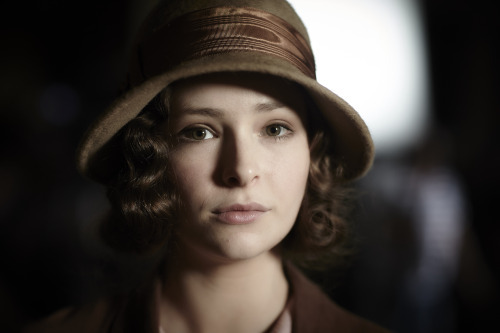
“It’s never been a question to me that female stories should be explored as extensively as male ones, so it is baffling when I see statistics that suggest our society doesn’t wholly support that.“
Ashleigh Cummings interviewed for The Weekly Review


August 10, 2015
“How do you deal with yourself when you’ve had a magnificent...
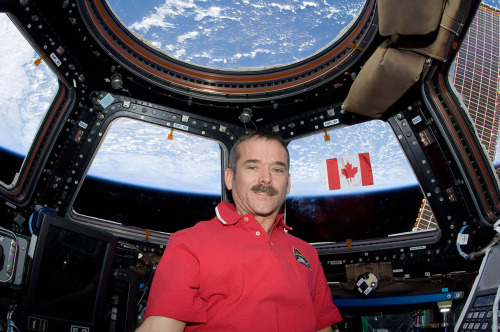
“How do you deal with yourself when you’ve had a magnificent experience in life? How do you not let everything else pale in comparison? How do you focus your life preparing for something that’s probably never going to happen, but not let that drive you crazy? “
Chris Hadfield interviewed for The Weekly Review
August 4, 2015
“People want you to be their dream girl in everything. But you...
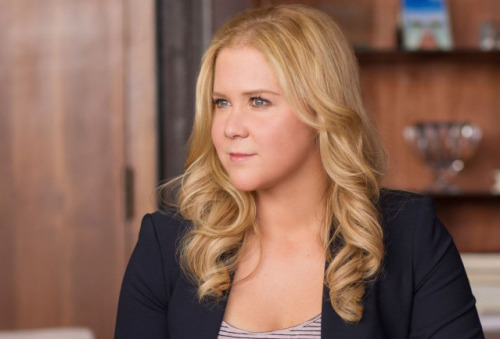
“People want you to be their dream girl in everything. But you put a camera on anyone 24 hours a day and they’re going to disappoint you.”
I interviewed Amy Schumer for The Weekly Review
July 30, 2015
“You’ve got to put everything through that process that makes...
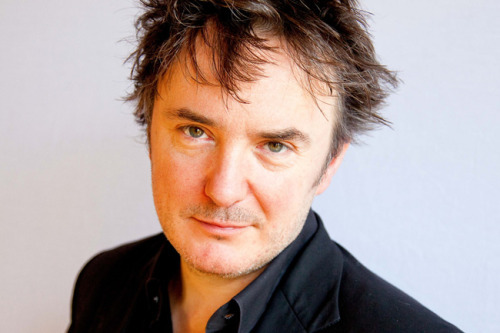
“You’ve got to put everything through that process that makes you laugh. You’ve got to detoxify this material, because some of it’s pretty damn bleak.”
I interviewed Dylan Moran for The Weekly Review.
July 22, 2015
(via https://www.youtube.com/watch?v=uRzDg...) I met Amy...
(via https://www.youtube.com/watch?v=uRzDgRlfmcY)
I met Amy Schumer and Bill Hader on the red carpet for Trainwreck.
April 2, 2015
YA Matters
;
While I was between gigs at the Melbourne Writers Festival last year, I was interviewed by the Centre For Youth Literature about Young Adult fiction, influences and other writerly things. I seem to recall making quite a good Kate Bush joke that appears to be languishing on the cutting room floor. It's always the jokes that get cut first. One of the videos is above, featuring a panoply of other, sickeningly talented writers.
March 1, 2015
INTERVIEW: THE SALONNIERE’S APARTMENTS
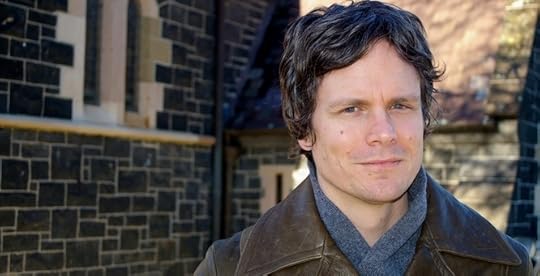
I was recently interviewed by THE SALONNIERE’S APARTMENTS about the writing life. It's the longest and most detailed interview I've given to date, with more than a few tidbits about the new project.
"I think the conscious decision I made five or six years ago was I don’t want this kind of life, I don’t really want the nine to five job. I want to try to do something more interesting. I want to try to do something more interesting. I want to try to actually live in a way that reflects my general approach to life, rather than just the idea of work being separate from your life."
http://thesalonnieresapartments.com/a-conversation-with-myke-bartlett/
On a similar note, I also wrote a piece for ABC's Splash site about writing:
"Unplug the headphones, put your phone in your pocket. Embrace boredom."
http://splash.abc.net.au/newsandarticles/blog/-/b/1521779
October 23, 2014
My Withnail Coat
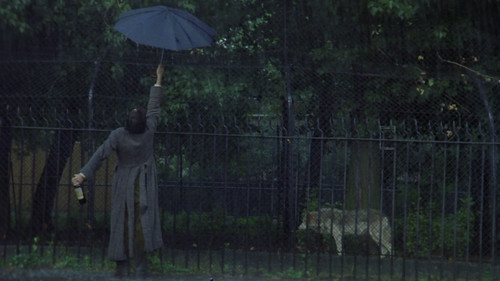
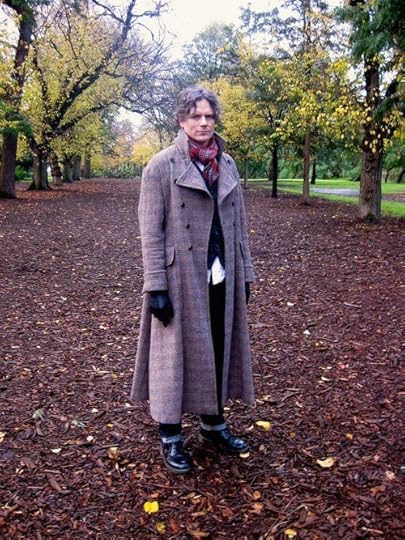
Spring has arrived in Melbourne, not with tender warmth but with a resentful sort of stickiness. Not for us a few months of tentative sunlight, like an old friend getting back in touch; instead we’ve been flung into an aggressive sort of heat, as if forced to resume an argument we thought we’d already won. The saddest part of this, of course, is it means my Withnail coat has been retired for another six months.
When I bought that coat, I wasn’t sure I’d actually wear it. My tastes in clothes have always tended somewhat to the flamboyant (I blame Tom Baker), but I worried the coat's regency stylings might be a step too far. I also didn’t particularly want to be flouncing around in costume. I love Withnail & I, for reasons I’ll mention below, but I’m not sure cosplay is really my thing. Besides, dressing up as a drunk, unemployed actor is a rather strange wardrobe choice.
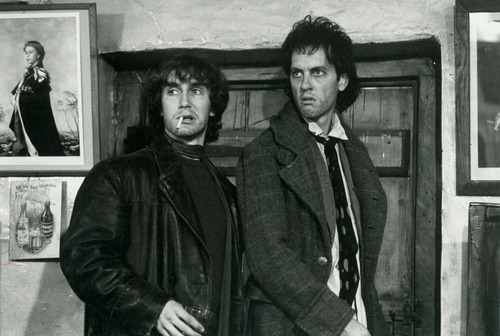
I bought the coat after interviewing its designer, Andrea Galer, for a magazine piece on famous film outfits. Galer has been selling handmade versions of the coat through her website for the last fifteen years. She mentioned a friend of hers was looking to sell a secondhand coat and it seemed an offer too good to refuse. Sadly, that coat was too small, but Galer ended up making me a new one to my measurements. It arrived during a brief cool patch last November, a thing of beauty, stitched from Harris Tweed. Over the next few months, I would occasionally take it down from the wardrobe and stroke it, as if it were a treasured pet or some rare apocryphal artefact.
Suffice to say, I was probably the only person in Melbourne delighted by this year’s cold winter. After my initial hesitancy, I ended up living in that coat. It was like walking around in a particularly light and comfortable suit of armour — or a portable duvet. This was a coat you could disappear inside, no matter how visible its distinctive cut might make you. As it turned out, I did quite enjoy flouncing around, whether in the dog park, a shopping arcade or a delightful weekend in the country. I wore it while working in my unheated studio, while attending several underheated film festival sessions, while drinking at riverside pubs. I ate in it, I sometimes napped in it. It has been two weeks since I last wore it and I miss it slightly more than I miss my sister, who recently moved to Germany.
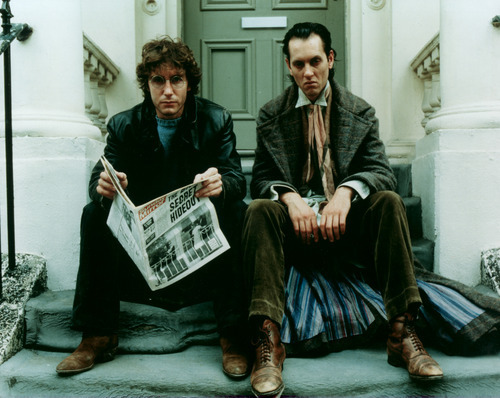
This week sees Withnail & I released for the umpteenth time since its premiere in 1987. I’ve already ordered the new limited edition boxset, which will mark the fifth time I’ve purchased the film in some format or other. I still fondly remember the initial UK DVD release, which had a booklet plastered with inaccurate quotes from the film, most notably: “I feel like someone shat on my head.”
There are very few films, books or albums that I’ve connected with quite as intimately as Withnail, which is odd as I was only vaguely impressed when I first saw it at 17. (A friend’s sister had shown me excerpts when I was about 11, but they only puzzled me.) Over the next week after my first viewing, lines kept repeating on me, to the point that I felt driven to watch the movie again the following weekend. On the small screen, it seemed a terribly profound and melancholic film. I was inspired to picture myself as a tragic poet, striding half-cut around moors and spouting Shakespeare. Years later, I saw the film on the big screen and realised it was actually a comedy.
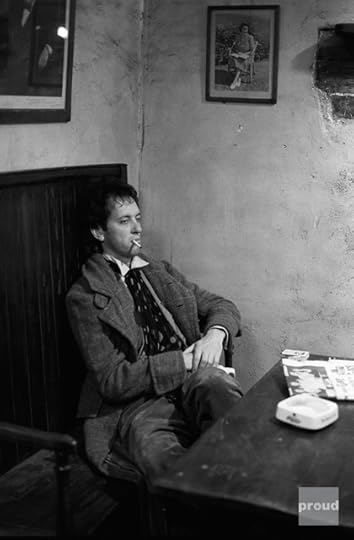
I think my connection to the film — one that has evolved over the last 20 years — is that it embodies a kind of splendid failure. At different times of my life, I’ve enjoyed its romanticisation of drunkenness or male friendship, but it is the romanticisation of failure that endures. There’s a sense that the world isn’t good enough for Withnail and Marwood, that they are born to live the sort of bohemian lives that the post-war, post-1960s world won’t have time for.
These men are literate, witty, educated and utterly unsuited for the realities of employment. When drug dealer Danny bemoans that Woolworths are selling hippy wigs, we realise that the fringes of society are shrinking. This new world isn’t for artists, poets, novelists or actors. (The line “free to those who can afford it, very expensive to those who can’t” seems to grow more true with each passing year.) As the sixties end, everyone is being thrust back into the centre, where they will be expected to compete and consume and conform. Of course, Withnail is never going to conform. At the film’s end, there he is in the rain, alone, railing against the world and delivering the best Hamlet the world is never going to see.
I might no longer be drunk, I might no longer be an actor, I might be employed, but I think that’s still where I want to be. On the edges, wherever the edges might be, in the cold rain, clinging to the railings and shouting at the wolves. And if I’m going to be in the rain, then I figure I at least deserve a good coat.
May 8, 2014
Latest things
I've been busy finishing first drafts and making school visits this last month, but I've still had time to file a few pieces here and there.
For The New Daily, I indulged my inner music geek and wrote a piece celebrating 20 Years of Britpop. They actually asked me to write about the anniversary of Kurt Cobain's death, but everyone else seemed to have that covered already. I also filed a short piece about Record Store Day Australia. With my film critic hat on, I waxed lyrical about George Clooney. I can't remember why.
For Screen Education, I wrote about gender in sci-fi and Gravity, a film I very much enjoyed last year. It's available to read (for free) here.
This month, I'm joining the faculty at The School of Life, teaching a class on How To Worry Less About Money. I was interviewed, along with school director Kaj Lofgren, by ABC Radio National. You can hear the interview here.
Finally, my weekly culture columns continue to appear at The Weekly Review. This week, I'm looking at Terry Gilliam's latest and the new album by The Horrors.
April 20, 2014
Over Our Bodies
Last year, I took part in a festival event called Fight Night, in which myself and more notable authors (Libba Bray and Garth Nix) went up against some emerging authors for a fiction slam down. The theme I was given was Romance. This caused me much anguish. I spent weeks trying to think of something romantic. When I no longer had any time left to think, I quickly reworked a piece I'd written when I was 21. Actually, I rewrote most of it on the tram to the event, but I can't find my scribbled-on copy.
This version is something of a compromise, which I share to make my blog feel less neglected. Let's call it Over Our Bodies. It's a bit over-written and angsty and doom-laden and earnest, but it was written in 1998. Those were the sort of times we were having in 1998. Myself, I find it quite funny. When I read it out, there were laughs, which is all I've ever wanted from my writing.
In short, it's about the end of a romance. Which, to me, is more interesting than the start. Something that irritates me about (some) YA fiction is the assumption that teenage love is forever love. Madness. I'd love to write a book about what happens after the happy ending. Maybe later.
It’s hard to remember how the fights began. He comes to suspect she would rather fight than not. But he too is implicated in crimes of escalation. A gesture, a willing misinterpretation, a row. Some evenings everything is a symptom of something else. Bitter feuds about good and evil arise from tiny disputes over sitcoms. The trivial becomes the essential, moral lines drawn with the fervour of fundamentalists and then crossed at will. Arguments are shapeless and violent, annexing whole continents of disputed territory. The next night, the argument is reversed; the territory reclaimed.
These are the things they fought about:
A missed turn.
Whose fault it was neither could decide which film to rent.
A left turn.
Whose mother was needier.
A fucking hook turn.
Which of them was most judgmental.
Slamming a car door.
University.
Holding a door open.
O camp.
Whose turn it was to apologise.
Leaving a party.
Staying at a party.
Friends.
Vegetarians.
Christmas.
New Year’s Eve.
Good Friday.
Easter Sunday.
Pancake Tuesday.
Pancakes.
God.
Whether Morrissey could sing.
When David Bowie turned crap.
James Bond.
The Smiths.
The Smiths again.
Which of them was Withnail. And which of them was I.
Which of them was most broken.
Which of them wanted to be most broken.
They fight in public for sport. Tearing themselves apart with glee. In cafés. In pubs. In supermarkets. In cinemas. In car parks. On the first night of a weekend away, in a small country town, outside a fish and chip shop. Turning boxer’s circles in the middle of the street. A crowd applauding from the kerb. Headlights ringing in the next round.
Afterwards, her watching sister says: You were enjoying that.
Now it is merely what they do, a mid-to-late evening ritual. Repeating the same scenes as if they are only rehearsing, trying to get them right. Love is never in question. Love raises the stakes. When love isn’t doubted, everything else is, and both of them are pushing. Pushing to find spaces where one of them ends and the other begins; where pain starts and the pleasure is done.
I like it when you’re angry, she says. There is sweat on her top lip.
It reminds me you’ve got guts.
Fuck you.
I hate you.
I love you.
Love is thick, love is sticky. Hot jam in the veins.
I love you, he says. She says. I love you. I can’t stop. I want to stop. I hate it. I can’t.
I love you. These are heavy words, dropped on tight air, pulling them into each other, onto each other, forever. I love you.
The happy times are nothing. A few weeks of cautious peace, old smiles and new leaves, before an abrupt resumption of hostilities. They wear each other down to the foundations and then keep digging. Neither can remember what they’re looking for. Drilling into empty graves that only spit out dust and memories. They are ghosts now.
I’ve just remembered who you are, he says one morning, sitting up in her bed. It’s summer, not too long before Christmas. The honeyed scent of jacaranda wafts through the flywire.
I can see you. The girl from school.
She says: I think I remember you too.
He says: I’m sorry, although he can’t remember a fight.
She says: So am I.
But it is too late. Already they are fading from view. By lunchtime, they are ghosts again.
Every day, he wakes up further from her. At night, he lies sleepless in her bed and wonders what keeps him there. What leads any ghost to haunt the same house, across endless nights? Pain, he thinks. Pain and fear. Fear that everything might mean nothing if the hauntings ever stop.


