
Darcy Pattison's Blog, page 7
August 14, 2016
Artistic Vision Determines Novel Revision: How to Tell the Story You Want to Tell
.goodreadsGiveawayWidget { color: #555; font-family: georgia, serif; font-weight: normal; text-align: left; font-size: 14px;
font-style: normal; background: white; }
.goodreadsGiveawayWidget p { margin: 0 0 .5em !important; padding: 0; }
.goodreadsGiveawayWidgetEnterLink {
display: inline-block;
color: #181818;
background-color: #F6F6EE;
border: 1px solid #9D8A78;
border-radius: 3px;
font-family: "Helvetica Neue", Helvetica, Arial, sans-serif;
font-weight: bold;
text-decoration: none;
outline: none;
font-size: 13px;
padding: 8px 12px;
}
.goodreadsGiveawayWidgetEnterLink:hover {
color: #181818;
background-color: #F7F2ED;
border: 1px solid #AFAFAF;
text-decoration: none;
}
Goodreads Book Giveaway
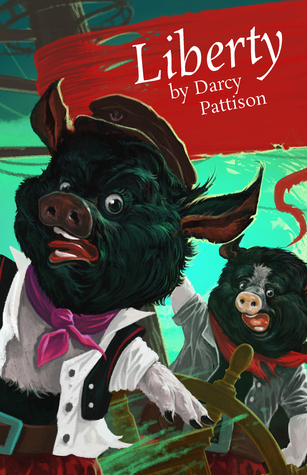
Liberty
by Darcy Pattison
Giveaway ends August 09, 2016.
See the giveaway details
at Goodreads.
Learning from a Different Art Form
Lately, I’ve been studying photography. My husband upgraded to a newer, fancier SLR camera, so I got his hand-me-down Canon Rebel, which is great for learning. And I’m learning a lot about my creative process, which comes back to tell me things about my writing. Let me try to connect the two endeavors for you.
My husband has, for many years, tried to teach me photography, but it’s always been dense to me. Enter photographer David Duchemin and his amazing book, The Visual Toolbox: 60 Lessons for Stronger Photographs. He explains the photography triangle of ISO, time and aperture in ways I finally understand. Duchemin suggests that you put the camera’s setting on manual and leave them there for all of his lessons. Wow, that’s a challenge!
But he takes it step-by-step and explains why you’d choose this of that setting. For example, one of the first exercises is to abandon the totally sharp image, and instead go for something abstract. I set my camera to a half-second of exposure time, which is very slow. It’s so slow that as I clicked, I could also move the camera in a circle or straight line to blur colors. The point, of course, if that I did it deliberately. He asks that you always know your purpose and then ask the camera to produce the image in your mind.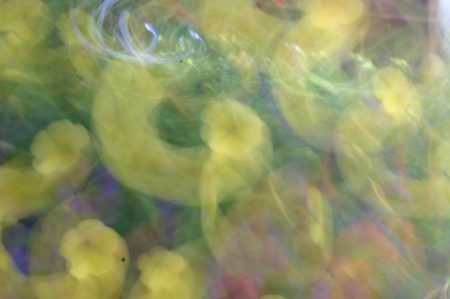 For this photo, I deliberately slowed down the exposure and moved the camera in an arc as I shot. The result is an abstract, deliberately out-of-focus shot, which is exactly what I set out to do. The vision for the shot demanded a certain technique to achieve this result. In other words, I was in control of the camera to make it produce the image I wanted.
In other words, the tool of a camera is under the control of an artist. It’s not just point and shoot, but what do you, the artist, have a vision for?
Duchemin’s accompanying book, Within the Frame: The Journey of Photographic Vision, extends the idea that the most important thing is the artist’s intent or vision.
“Shooting from the heart and telling the visual stories you love and care about is the first step in making your viewers care. If we do not tell stories in a way that people care about, we’ve failed. We’ve failed to create an image that connects on some level, failed to pull the viewer into the frame and show them something new. This doesn’t mean we shoot only those things that others want to see. It means we shoot the things that move us in ways that will move others.”
Because of Dechemin, I’ve been thinking about the writer’s intent or vision for a story. Certainly, stories develop as you write, but we all start with some vision of what the story could be. We should be writing “from the heart” and telling “stories you love and care about.”
He’s talking about centering the art of photography in a person, the artist.
The Author’s Vision of Story Holds Power
In writing, do we do honor the artist’s vision above all else?
I’ve watched.
A novelist attends a conference where an editor or agent reads ten pages and holds out a carrot: I’ll read the whole thing if you make this or that change. Notice that the editor/agent knows very little about the author and his/her vision for the story. They only know what they learned in ten minutes and from ten pages of the novel.
Too often, the author comes back from the critique, unconvinced that the requested change will create the story they’ve always wanted to tell. However, the carrot of possible representation and ultimate publication compels the author to change the story. But in making that change, has the story lost its heart and power to move a reader? Often, it does. The story is rejected, but the author moans, “I did what they asked.”
In that case, the agent is saying this sort of story will move me. But they often fail to see the raw power of the author’s passion in the story just as it was. Sometimes, I think it’s the agent/editor/reader’s failure to be vulnerable to a story. It’s like they are standing before the Grand Canyon and their hearts are unmoved.
I’m not saying that you shouldn’t revise for an agent/editor/reader. Of course, you need to check how well your story communicates what you wanted to say. But when the agent/editor/reader don’t share your vision for what the story should be, I’m asking, “Do you really want to revise for this person?”
It depends.
How hungry are you? Do you want publication more than you want to stay true to your artistic vision? I understand that sometimes it’s essential to sell! Writing to market is a good strategy for many authors who must earn a living. I wonder, though, if the stories lack the power of passion.
But if you do write to market every time, what has happened to your vision of a story that will move readers in some way? Will there ever be a time when you stand firm? This is the story I wanted to tell and I told it in the way I wanted to tell it.
My Story Told My Way
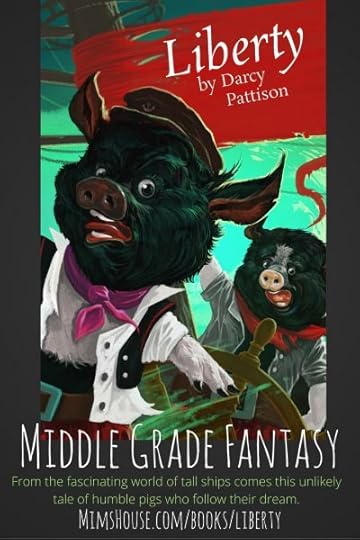 My latest novel, Buy the Paperback at 25% off by entering this code at checkout: 5FETYTVY.)
I’m the Queen of Revision! Sine 1999, I’ve led Novel Revision Retreats that have allowed many people to break through with their first sale. Kirby Larson attended the retreat, revised, and her novel, Hattie Big Sky, went on to win a Newbery Honor. I teach revision; I practice revision; I understand that revision is often the way to the best story you can tell.
However, on LIBERTY—which I published through my company, Mims House—is a story I’ve always loved. As I considered publishing it, I read through it again. I knew that it could be revised in certain ways. If an experienced editor read through it, they might ask for this or that revision. Perhaps, it should be restructured with the opening section refocused. Perhaps, the villain should appear much earlier. Perhaps. . .the list could go on.
But in the end, it was the story that I wanted to tell, told in the way I wanted to tell it.
I could see how those revisions would make the story, well, different. But would they make it better? No, I decided. They would make it a different story.
Photographers know that they can’t go out and re-take a shot. They might do processing through Photoshop or a similar program. They might crop the photo or blow it up. But in the end, the photo is what they shot.
What if an authors said, “The story I wrote is the story I wrote.”?
Writing is a strange art. We open ourselves to criticism more than any other creative art, and often let those outsiders form the basis of revision. I still believe in the need for revision. What I’m encouraging is that you enter into the critique process with a more balanced idea of what you will or won’t change. Be clear on your vision for a story.
Now, don’t be foolish: if an experienced reader/editor/agent makes comments, you’d be a fool to dismiss them out of hand. But don’t give up on your own passions! Don’t let the revisions—based on another’s opinion—take away the raw power of your story.
Duchemin said, “Shooting from the heart and telling the visual stories you love and care about is the first step in making your viewers care. If we do not tell stories in a way that people care about, we’ve failed.”
Revisions are meant for one thing and one thing only, to match up your vision with what’s on paper. When we write, there are inevitably two stories that result. There’s the story in your head, the one you meant to write. And there’s the story on paper, the story you actually told. Revision is the process of bringing those two stories into alignment. It should help you tell a story that “you love and care about” so that your readers will care.
If you abandon your heart’s vision, you will fail.
Part of this is what I’ve said before: don’t do what your editor tells you to do. Instead, go to the heart of the issue and find your own ways of addressing the problem.
Dechemin says the artist’s vision is the most important part of a photograph. I think the statement holds across different artistic domains. Novelists, the most important part of your story is your vision of the story you want to tell and how you want to make readers care. Cling to your vision! Don’t let anything shake you from it!
.goodreadsGiveawayWidget { color: #555; font-family: georgia, serif; font-weight: normal; text-align: left; font-size: 14px;
font-style: normal; background: white; }
.goodreadsGiveawayWidget p { margin: 0 0 .5em !important; padding: 0; }
.goodreadsGiveawayWidgetEnterLink {
display: inline-block;
color: #181818;
background-color: #F6F6EE;
border: 1px solid #9D8A78;
border-radius: 3px;
font-family: "Helvetica Neue", Helvetica, Arial, sans-serif;
font-weight: bold;
text-decoration: none;
outline: none;
font-size: 13px;
padding: 8px 12px;
}
.goodreadsGiveawayWidgetEnterLink:hover {
color: #181818;
background-color: #F7F2ED;
border: 1px solid #AFAFAF;
text-decoration: none;
}
Goodreads Book Giveaway
Liberty
by Darcy Pattison
Giveaway ends August 09, 2016.
See the giveaway details
at Goodreads.
The post Artistic Vision Determines Novel Revision: How to Tell the Story You Want to Tell appeared first on Fiction Notes.


August 9, 2016
Sailing with the Pigs: Where Do Ideas Come From?
.goodreadsGiveawayWidget { color: #555; font-family: georgia, serif; font-weight: normal; text-align: left; font-size: 14px;
font-style: normal; background: white; }
.goodreadsGiveawayWidget p { margin: 0 0 .5em !important; padding: 0; }
.goodreadsGiveawayWidgetEnterLink {
display: inline-block;
color: #181818;
background-color: #F6F6EE;
border: 1px solid #9D8A78;
border-radius: 3px;
font-family: "Helvetica Neue", Helvetica, Arial, sans-serif;
font-weight: bold;
text-decoration: none;
outline: none;
font-size: 13px;
padding: 8px 12px;
}
.goodreadsGiveawayWidgetEnterLink:hover {
color: #181818;
background-color: #F7F2ED;
border: 1px solid #AFAFAF;
text-decoration: none;
}
Goodreads Book Giveaway
Liberty
by Darcy Pattison
Giveaway ends August 09, 2016.
See the giveaway details
at Goodreads.
My fabulous brother-in-law HP owns a 2-cabin, ocean-going sailing ship that he docks at Bainbridge Island in Puget Sound. We’ve gone twice to sail with him, and it’s a blast. There’s something about letting the wind carry you across the water with no other means of propulsion. Wind in your face. Cold. Thrilling.
I wanted to write a story about sailing even before we went on HP’s boat. But after? Well, I had to, right?
Where Do Ideas Come From?
Why pigs? I sat down with my son one day and his friend. We were talking about my books and I said, “Tell me what I should write about.”
They answered, “Pigs.”
“Pigs? What do they do?”
“They go sailing.”
To that spark, I added my growing interest in sailing. I’ve always heard of “Sailing the Seven Seas.” What did that mean? Turns out there are about 54 seas named on Earth. There are seven which are the largest and are usually considered the most important, but the list varies from place to place. For me, nonfiction research like this helps flesh out the setting and bring ideas to life.
I love tall ships, too. When we were in Seattle, we saw the figurehead of one of the fastest tall ships ever. They set records sailing from places like California to India. Amazingly, one of the most popular and profitable cargo was ice! Fresh Pond in Maine was the source of much of the ice blocks. They cut huge ice blocks and packed them in pine straw in a ship’s hull. They couldn’t do the runs in the dead of winter because of weather. By the time they did an ice run in the spring, the weather was too warm. About 1/3 of the ice melted en route. But that 2/3s was packed into an ice house in a far flung place. And it sound like gold.
Another fascinating setting! The Ice Captain in my story sprang to life.
So, you’ve got pigs who start out on Mr. MacDonald’s farm, but you want them to sail. How do they get from middle-America to the sea? Again, I turned to geography and studied different routes. The tall shipa and ice ships set the story in mid 1800s, so I went looking again for settings that would work. Of course, the pigs would need to cross the Mississippi River going east. Voila! That would be a magical crossing to a land called Liberty, where any intelligent animal or creature could get ahead in the world.
Throw in a dark secret for the Ice Captain and the story started to come together.
Finally, after a long gestation, the book comes out tomorrow! Here’s the official blurb. Find it at your favorite online bookstore, or order locally. It’s also available from all education distributors in print or ebook.
Liberty by Darcy Pattison
When Santiago is thrust into the farm’s pigsty, Penelope is captivated by Santiago Talbert’s boast, “I plan to sail the Seven Seas.” Together, these extraordinary pigs escape the farm and cross into the land of Liberty, a parallel world where an intelligent human or animal can get ahead. They follow their dream to Boston harbor, where they try to convince sea captains that pigs can sail. First, though, Santiago learns mapmaking, while Penelope works on the docks loading ships. Eventually Penelope signs onto the Ice King’s crew as he cuts and packs ice to ship to the far-flung corners of the world.
When the fleet of ice ships sails, Penelope and Santiago join the crew of the flagship, captained by Captain Kingsley, the Ice King himself. A massive polar bear, he harbors dark secrets, and the pigs face the shocking truth: they alone can save the friendly sea serpents from the Ice King’s clutches.
From the fascinating world of tall ships comes this unlikely tale of humble pigs who follow their dream.
How to Order
PURCHASE ORDERS
DIGITAL

KINDLE

iBOOK

ePUB
Hardcover
Paperback
All formats are also available on Mackin, Follett, Permabound, and Ingram.
.goodreadsGiveawayWidget { color: #555; font-family: georgia, serif; font-weight: normal; text-align: left; font-size: 14px;
font-style: normal; background: white; }
.goodreadsGiveawayWidget p { margin: 0 0 .5em !important; padding: 0; }
.goodreadsGiveawayWidgetEnterLink {
display: inline-block;
color: #181818;
background-color: #F6F6EE;
border: 1px solid #9D8A78;
border-radius: 3px;
font-family: "Helvetica Neue", Helvetica, Arial, sans-serif;
font-weight: bold;
text-decoration: none;
outline: none;
font-size: 13px;
padding: 8px 12px;
}
.goodreadsGiveawayWidgetEnterLink:hover {
color: #181818;
background-color: #F7F2ED;
border: 1px solid #AFAFAF;
text-decoration: none;
}
Goodreads Book Giveaway
Liberty
by Darcy Pattison
Giveaway ends August 09, 2016.
See the giveaway details
at Goodreads.
The post Sailing with the Pigs: Where Do Ideas Come From? appeared first on Fiction Notes.
July 31, 2016
OOPS! Continuity in Your Novel
.goodreadsGiveawayWidget { color: #555; font-family: georgia, serif; font-weight: normal; text-align: left; font-size: 14px;
font-style: normal; background: white; }
.goodreadsGiveawayWidget p { margin: 0 0 .5em !important; padding: 0; }
.goodreadsGiveawayWidgetEnterLink {
display: inline-block;
color: #181818;
background-color: #F6F6EE;
border: 1px solid #9D8A78;
border-radius: 3px;
font-family: "Helvetica Neue", Helvetica, Arial, sans-serif;
font-weight: bold;
text-decoration: none;
outline: none;
font-size: 13px;
padding: 8px 12px;
}
.goodreadsGiveawayWidgetEnterLink:hover {
color: #181818;
background-color: #F7F2ED;
border: 1px solid #AFAFAF;
text-decoration: none;
}
Goodreads Book Giveaway
Liberty
by Darcy Pattison
Giveaway ends August 09, 2016.
See the giveaway details
at Goodreads.
Let’s say that Marilyn is introduced in Chapter 1 of your novel as a blond-haired, blue-eyed beauty. But in Chapter 10 when she reappears, she’s a brunette. Oops! It’s a break in continuity.
How does that happen? I was once in a school library where the librarian was administering Accelerated Reader tests, which text a student’s comprehension. I asked if I could take the test for my novel, The Wayfinder. I’m embarrassed to say, but I almost missed a question! That’s because I see the novel as a process, and at one point, I had changed the plot point in the question. I had to think hard to remember the FINAL version.
The process of revision is messy and sometimes, it results in several versions of the story in your head. So, it’s easy to remember that Marilyn was a brunette in an earlier version. The final draft that goes to the editor or is indie published, though, must have continuity.
Strategies to Maintain Continuity in Your Novel
I’m about to start writing Book 3 of a trilogy, where I’ll face this problem.
Here are some strategies I’ll use:
Re-read. My first task is to reread Books 1 and 2 so the details are in my short-term memory. I’ll try hard to pay attention to those pesky details, and at least remember if something occurred in Book 1 or 2.
Search. I’m working in Scrivener, which means all three novels are in the same folder. It’s simple to search for a detail: blond v. brunette. Or simply search on the character’s name and reread just that part. Scrivener is easier than opening three Word files to do the same thing.
Notes. Notes are helpful for very complicated things. I know some people advocate a series Bible, or a notebook or file that includes all the details of each character. I find that a time-waster, besides being impossible to keep updated. My drafts are too fluid for that. However, it’s a strategy that might work for some. Instead, I might have a one-page sheet with notes about a character important in the scene I’m writing.
Outside reader. Critique partners, editors, copy-editors–these are wonderful people in a writer’s toolbox. I have a couple friends who are excellent at catching my OOPS! moments in a story. They are coming to the story fresh and don’t have those leftover remnants of confusing memory.
If you still find continuity goofs, not to worry! Even the big boys make mistakes sometimes.
How do you make sure there’s continuity?
.goodreadsGiveawayWidget { color: #555; font-family: georgia, serif; font-weight: normal; text-align: left; font-size: 14px;
font-style: normal; background: white; }
.goodreadsGiveawayWidget p { margin: 0 0 .5em !important; padding: 0; }
.goodreadsGiveawayWidgetEnterLink {
display: inline-block;
color: #181818;
background-color: #F6F6EE;
border: 1px solid #9D8A78;
border-radius: 3px;
font-family: "Helvetica Neue", Helvetica, Arial, sans-serif;
font-weight: bold;
text-decoration: none;
outline: none;
font-size: 13px;
padding: 8px 12px;
}
.goodreadsGiveawayWidgetEnterLink:hover {
color: #181818;
background-color: #F7F2ED;
border: 1px solid #AFAFAF;
text-decoration: none;
}
Goodreads Book Giveaway
Liberty
by Darcy Pattison
Giveaway ends August 09, 2016.
See the giveaway details
at Goodreads.
The post OOPS! Continuity in Your Novel appeared first on Fiction Notes.
July 11, 2016
Dialogue: 4 Ways it Goes Wrong
September 9-11!
Get more information!
Dialogue is an essential part of fiction, the way an author shows a character through what s/he says. And it’s so easy to get it wrong. Here are some ways dialogue goes wrong and what to do about it.
Trivial. When character talk to each other, the reader doesn’t need to listen to the trivial, or unimportant, things we all say to each other. We ask about the weather, chat about the inconsequential details of our days, or just generally avoid talking about anything of substance. That type of dialogue clogs your storytelling and drags down the pace. Cut the trivial and only leave the meat of the discussion.
Boring. Even once you’ve cut the trivial junk, dialogue can still be boring. Deep philosophical discussions, complicated explanations, and dry, technical explanations all bore the reader. Instead, enliven the discussions with conflict, disagreements, or something that leaves the reader wondering what happens next. Think of each bit of dialogue as conflict brought to the surface of the story. Build a tiny narrative arc into each set of dialogue.
Unbelievable. After eliminating trivial and boring dialogue, you’ve still got to make sure it’s believable. Would the characters actually SAY that? When a character is too foolish, too opinionated, too extreme, then you have to wonder if it rings true to the reader. It’s a fine line to walk: you want the characters to be bold and bigger-than-life, but you must make those huge characters believable.
Too formal. Another thing that can go wrong is the wrong level of formality. While the principal of a school may talk formally, probably your characters voice will come through in a more informal way. Use contractions. Shorten sentences and use sentence fragments. Leave out the fancy words and let your characters loosen the ties and corsets.
Dialogue is crucial and you can easily get it right. Cut the trivial and boring, make sure the dialogue is believable, and let the characters relax. Don’t let a reader close a book after one chapter just because you blew the dialogue. Fix it now.
Join me for a NOVEL REVISION RETREAT
September 9-11!
Get more information!
The post Dialogue: 4 Ways it Goes Wrong appeared first on Fiction Notes.
July 3, 2016
Expert Help: Defeat the Black Hole
September 9-11!
Get more information!
Everyone knows that you can’t defeat a black hole. Right?
But what if you’re writing a science fiction story and you NEED your characters to defeat the black hole.
Um. Hard. Your readers won’t go there with you, unless. . .
Seek Experts
That’s exactly the situation I found myself in. I had set up a science fiction story with an impossible scenario because it was an exciting options. But then, I found myself being sucked (metaphorically) into a black hole. How could my characters defeat the undefeatable.
Fortunately, I had an expert in the family. My brother is a physics whiz and I asked him some simple questions that set him off on a path of speculation. In the end, he came up with something that he said “graduate students would seriously discuss the possibility.” That’s good enough for me! The results make the story more believable. You can read it next year when my sff novel, tentatively called BLUE MARBLES, comes out.
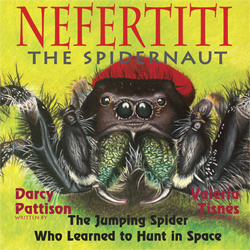 Writing a nonfiction children’s book means you rely on experts for accuracy. For NEFERTITI, three experts were crucial. | DarcyPattison.comAnother example is my October release, NEFERTITI, THE SPIDERNAUT: The Jumping Spider Who Learned to Hunt in Space. This is a nonfiction children’s picture book, the true story of a spider who went up to the International Space Station (ISS). Experts who helped included the scientist who actually set up and monitored the experiment, the astronaut who cared for the spider while on the ISS, and an arachnologist who made sure the spider info was correct.
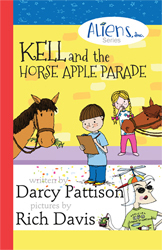 And a final example: In Kell and the Horse Apple Parade, an alien named Kell and his BFF, Bree, must plan a Friends of Police parade. I wanted kids to dress up like a super-hero(ine)s, but of course, I can’t rip off Marvel. Instead, I needed to create my own super-hero(ine)s. I turned to my nephew, who is the ultimate collector of everything HULK. He teaches sixth grade history and one semester he taught a special class on American Mythology; all the kids did was read from his collection of comics. (Wouldn’t you have LOVED him as a sixth grade teacher?) He suggested several unique super-hero(ine)s and that made a huge difference in the story.
From checking facts in a non-fiction to creating super-hero(ine)s to speculation on how to defeat a black hole, I’ve used experts in both fiction and nonfiction. They help me create a more coherent and more interesting world.
Find Your Expert
Where will you find your expert?
Family. In my case, I turned to my brother and my nephew first because they were both truly experts on something I needed. If you do this, be sure they are really the right person to ask and not just convenient.
Recommendations. Ask around for recommendations. The scientist involved in the spider project recommended the arachnologist. I often see writers asking their Facebook or Twitter followers for suggestions.
University, Museum, and More. Another source of information can be a college professor who is considered an expert in their field. The arachnologist works at a science museum. Sometimes googling can help you find the right information; but I also like to search google.com/scholar for scientific papers on a topic. When you find a name repeated or cited often, that could be a person to use. Then, do a search on google.com and choose Search Tools/Any Time/Past Year. That limits the search to only hits from the last 365 days. In other words, it’s current and recent information. Usually, you can find the current university where the person works and then use the university site to find contact info.
It’s Still Your Story
Of course, one danger of asking experts to make comments or suggestions is that they will make comments and suggestions. On everything!
You’ve asked them to comment from their perspective as an expert in a certain field. But that usually means they are very intelligent people and have an opinion on many other related things. You must thank them, both privately and in an acknowledgment in your book. However, you do not have to change everything they mention. Certainly, you must listen to everything and evaluate if it’s right for your book. But always remember that it’s your book. Only do what works for your story.
Experts can add credibility, accuracy and fun to your story. Use them wisely.
Join me for a NOVEL REVISION RETREAT
September 9-11!
Get more information!
The post Expert Help: Defeat the Black Hole appeared first on Fiction Notes.
June 20, 2016
Character Thoughts: Direct and Indirect Interior Monologues
September 9-11!
Get more information!
The infamous Show-Don’t-Tell mantra fails to take into account the importance of character thoughts. If you purely do action, dialogue and description, you have few tools to let the reader know the character’s inner life. Instead, you need to include thoughts at some point.
Direct Interior Monologue
When a character is thinking about something you can give the reader direct access to those thoughts.
“I like the blue dress best, she thought.”
Sometimes, you can even leave off the “she thought” part and give it as if the reader is inside the character’s head. These thoughts are in the character’s language and diction, not the narrator’s.
Indirect Interior Monologue
Direct thoughts become indirect thoughts when you do two things: change from present to past tense, and change from 1st person to 3rd person.
“She liked the blue dress best, she thought.”
The “she thought” part is still correct, even though it’s an indirect thought. And the language is still in the character’s voice.
These two methods of bringing a character’s thoughts to the reader have an important distinction: for direct thoughts, the character isn’t consciously narrating. Instead, s/he is just thinking. This isn’t a stream-of-consciousness because this isn’t just impressions and ideas as they come to the character. For a stream-of-consciousness, you might get this:
“It’s blue. Nice fabric. The red feels rougher. Blue matches my eye color, too.”
The reader still understands that the character likes blue best, but the thoughts are more immediate and show the chain of thoughts. Indirect interior monologue reflects the character’s thoughts, but it still maintains a distance because it’s still narrated, even if it’s narrated by the character. Direct interior monologue delves deeper into a character because the thoughts are presented directly.
Should You Use Direct or Indirect Character Thoughts
Yes.
That is, both techniques are common and are often intermixed within a narrative. It’s not a question of which technique is appropriate. Rather, where do you want the reader to go deeper into the character’s thoughts and emotions?
When something painful happens, do you want the reader to experience it fully with direct access to the character’s interior life? Or do you want to shield the reader a bit, and therefore, you’ll create some narrative distance with the indirect method?
Do editors often tell you that your characters aren’t coming to life? It may be that you are using the Show-Don’t-Tell strategy too strictly and never present thoughts and emotions of your character. Yes! You need to Show-Don’t-Tell, but if that’s all you use the results are more subtle and it’s easy for a reader to misread thoughts or misunderstand emotion.
Indirect and direct interior monologue allow the reader access to those emotions in a deep or deeper way. Let the reader FEEL with your character and the reader will stay with you!
Join me for a NOVEL REVISION RETREAT
September 9-11!
Get more information!
The post Character Thoughts: Direct and Indirect Interior Monologues appeared first on Fiction Notes.
June 18, 2016
Master Novel Workshop: A Report from Honesdale
September 9-11!
Get more information!
This week I met six amazing novelist and had the pleasure of leading discussions on the craft of writing at the Master Novel Class retreat at the Highlights Foundation. Wow! It was fun.
I’ve taught the Novel Revision Retreat since 1999 and I still have passion and energy to teach it and see how it impacts people. In fact, there are still a couple openings in this retreat in September!
But I wanted to teach a class that went beyond the scope of the usual things I teach. This one gave ME a chance to stretch.
Studying POV
I’ve studied POV before from the perspective given by David Jauss‘s article, in his book, On Writing Fiction: Rethinking Conventional Wisdom About Craft. And I wrote three blog posts analyzing The One and Only Ivan by Katherine Applegate in light of Jauss’s explanations of POV. But still, I didn’t feel like I had a handle on POV. I asked the authors to read the article and one night we discussed it in detail, which finally helped me understand it. I also did a POV chart, which really helped. Apparently, arranging ideas on some sort of chart helps me understand things better. The rest of the time, they experimented with when and where to use the ideas, such as moving from direct interior thoughts to indirect interior thoughts or vice versa.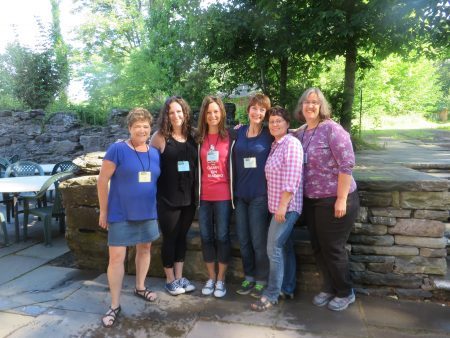
Hero’s Journey and Beyond
We started the discussion of plot by looking at basic plot structures, then moving on to the Hero’s Journey. Although some had used the Hero’s Journey, they might not have used it on their current WIP. They found places to add scenes, take out scenes and focus their plots.
Sensory Details and Dramatic POV
Other discussions centered on the importance of the sensory details to a dramatic POV. One writer found a new voice with the addition of details, while another jump-started a new voice with this technique.
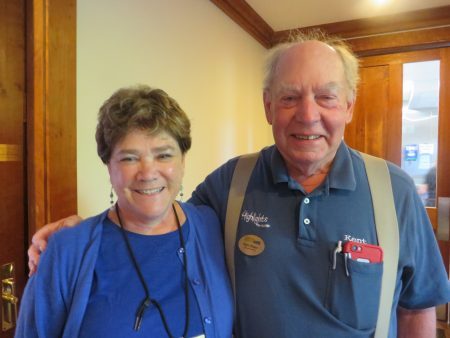
For me, as usual, one of the “highlights” was to be in such a lovely surrounding with an amazing support staff. If you’ve not been, the Highlights Foundation has one goal: to make a writer’s life easy while they work on their craft. Amazing facility and staff. And, of course, it was a great pleasure to visit with Kent Brown who keeps everything shipshape. Thanks, Kent! It’s an amazing place.
Join me for a NOVEL REVISION RETREAT
September 9-11!
Get more information!
The post Master Novel Workshop: A Report from Honesdale appeared first on Fiction Notes.
June 14, 2016
Picture Books and All That Jazz: A Report from Honesdale, PA
September 9-11!
Get more information!
A report from Highlights Foundation in Honesdale, PA.
On Friday, June 10, 2016, twenty picture book writers joined Leslie Helakoski and Kelly Bennett for Picture Books and All That Jazz 2016. It was a great weekend! See the Facebook album of photos.
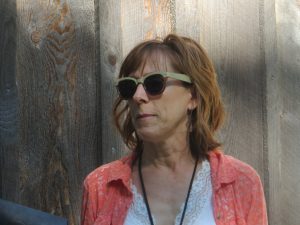 Author-illustrator Leslie Helakoski, co-teacher of Picture Books and All That Jazz 2016.
 Author Kelly Bennett taught about using Mentor Texts and helped with critiques.
The writers represented all levels from raw beginners to those on the cusp of selling something. Our job was to help them move along the journey of being a children’s book author.
The first night was intense: we spent three hours talking about the basics of picture books from length of printed book to the length of manuscripts that sell well. Character, plot, language–basic topics took most of the night’s material.
Some participants said that within the first hour, they were mentally rewriting their picture books!
Focusing Statement: Start Your Picture Book with a Bang
One helpful exercise was the Focusing Statement:
This is a story about ________________
Who more than anything else wants ___________________,
But can’t because:
1)
2)
3)
UNTIL _______________________________________.
When you get an idea for a picture book, it’s helpful to focus it by working on the narrative arc like this. If you have the focusing statement right, it shapes the story as you write.
Picture Book Language
On Saturday, discussion turned to the language used in picture books. Because they are read aloud, it’s not necessary to strictly limit your vocabulary choices. However, there’s a delicate balance of interesting words and maintaining clarity for the reader and audience.
My B.A. is in Speech Pathology and my M.A. is in Audiology. My favorite college class was phonics, or how the mouth changes shape to create various sounds. This knowledge of phonics has been extremely helpful in writing children’s books because the rhythm, voice and meaning are all affected by the sounds we choose. For example, if you are writing a lullaby, you don’t want to use harsh sounds such as d, t, k, g. Instead, choose words with liquid sounds such as l, w, r. At the PB&J retreat, we spent a session exploring how phonics affects the success of a picture book manuscript.
Picture Book Dummies
I love the process of cutting up a manuscript and pasting it into a dummy book. It’s easy to see if you have enough action images for an illustrator, or if you only have talking heads. When you read the manuscript as it will be laid out in a 32-page book, you suddenly see that this section is too long, that one is too short, and this one just doesn’t advance the story. Page turns become crucial. It’s a fun part of the process.
Picture Book Round Table Critiques
One fun part of the retreat is digging into the manuscripts. Participants were divided into three groups and assigned a table chaired by Kelly, Leslie, or myself. We read through each manuscript and talked about what was working, and then turned to the author’s next step in revising. The most common recommendation was the cut or tighten the prose. Some manuscripts went from 1000 to 350 words over the course of the weekend and the three critique sessions.
First Pages with Editor
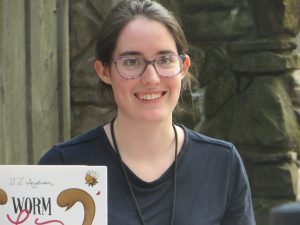 Asst. Editor Kelsey Murphy talked about tightening manuscripts and did a First Pages session.
As the weekend progressed, excitement built because on Sunday afternoon, we held a First Pages session with visiting editor Kelsey Murphy of Balzer & Bray (Harpercollins). This is a common session in writing conferences wherein the editor listens to someone read aloud the first page of a manuscript. Then she makes comments. Kelsey was generous with her comments pointing out what worked, why it might or might not work for her company, and generally encouraging the writer.
That wasn’t enough excitement, though, because while Balzer & Bray is usually closed to unsolicited submissions, Kelsey will take submissions for a month from this group. That kept the excitement high as writers worked to incorporate her comments in their next revision.
This is the third year that Leslie and I have taught the PB&J session at Highlights and it was exciting for us. The enthusiasm was high, writers bonded and created critique groups and everyone made great strides in their writing. A career isn’t built on a single book; instead it takes a concentrated effort over a long period of time. But the foundation laid this weekend for writers was amazing. Look out! These writers are going to do fantastic things!
Yes, we’ll be offering PB&J next summer at Highlights again. I’ll announce it on my blog when registration is open.
NOVEL REVISION RETREAT
September 9-11!
Get more information!
The post Picture Books and All That Jazz: A Report from Honesdale, PA appeared first on Fiction Notes.
June 13, 2016
Repeating Prose Elements: Did I Hear an Echo?
September 9-11!
Get more information!
HELLO! (Echo: Hello!)
As I child, I lived near the Continental Divide in New Mexico and we often played, “Echo!” Throwing words at a mountain is a great children’s game, but echoes can ruin your story.
Repeating prose elements
There are a couple major offending prose elements to be on your guard against as you write.
The subject verbed. The simple declarative sentence is a sturdy workhorse of narrative prose, but if used too often, it becomes boring. The problem often arises when an author attempts to replace weak “to be” verbs with more appropriate verbs.
Not: The sun was hot.
Instead: The sunlight sparkled.
Nothing wrong with that revision, and in fact, there’s a lot right with it. The “to be” construction just sits there, but the verb “sparkled” shows the scene with more clarity and detail. But if you repeat that over and over, it’s too repetitive.
The sunlight sparkled. The lake glittered. The mountain tops gleamed.
Those are great verbs, but the repeating prose elements are annoying.
Adjective, adjective noun. Another echoing sentence structure is the repetition of adjectives and a noun.
The deep, blue lake
The tall, immense mountain
The deep, dark woods
Besides being cliches, it’s the echoing structure that is boring. Watch for this and other echoing sentence structures.
Headwords. The beginnings of sentences are also ripe for repetition. I tend to overuse, “For example.” Other options might be “for instance,” “In one case,” and so on. The repetition of “The” at the beginning of the last two sentences might be tolerated as long as I don’t repeat it a third time. The echoing headwords problem is annoying!
Galloping “I”. I love the description of the use of the pronoun “I” as galloping. Often I see it in first person stories, but I know it can also creep into third person dialogue. The narcissism becomes annoying when you see the story rush past. I know my prose will never get lost in the “I” problem!
Verbal Tics. What words do you tend to repeat over and over? I have to watch for characters who “whirl” around and little “bits” of things. I’ve no idea why those words show up too often in my early drafts. I just make sure my tics don’t annoy you! (Have I said “annoy” too often? Are you annoyed yet?)
Leave the echoes to child’s play! Right? RIGHT. Right (right) ((right))
NOVEL REVISION RETREAT
September 9-11!
Get more information!
The post Repeating Prose Elements: Did I Hear an Echo? appeared first on Fiction Notes.
June 10, 2016
Book Notes: The War that Saved My Life
September 9-11!
Get more information!
Narrators come in different shapes and sizes, and levels of trust.
Katherine Patterson said that the everything the narrator said in Jacob Have I Loved was “tinged with green.” In other words, her unreliable narrator was jealous of her sister. Nothing she said could be taken as truth, especially when talking about her sister. The title didn’t come from anything in the book. Rather, it is a Biblical reference to the sibling rivalry between Jacob and Esau, sons of Isaac. At the end of his life, Issac blesses Jacob and fails to give Esau any blessing. Isaac is quoted as saying, “Jacob have I loved; Esau have I hated.” (Romans 9:13). The title of the story gives away the type of narrator we should expect.
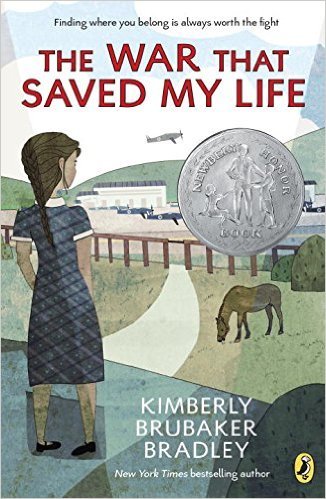 So, when I came to Kimberly Brubaker Bradley’s stunning book, The War That Saved My Life, it was interesting to watch the naive narrator. The book was named a 2016 Newbery Honor book, and Winner of the 2016 Schneider Family Book Award. The main character, Ada has never been out of the one-room London apartment where she lives with her mother and brother. Enter World War II, and the evacuation of children to the surrounding countryside. Ada was born with a club foot which her mother never allowed to be fixed because she was ashamed of having a cripple. The result is an eleven-year old who is naive.
Ada reports on events, such as her mother’s treatment of herself and her brother, Jamie, with a naive outlook. She doesn’t know how cruelly she has been treated. She doesn’t realize she’s been raised in great poverty. She doesn’t realize. . . many things.
But the narration explains things clearly enough that the reader knows. The author skillfully develops a deep sympathy for Ada and Jamie, as they are moved to a middle-class home in the country, where Ada discovers that she isn’t daft or dotty or crazy. She discovers that her brain is a long ways from her foot and being “crippled” doesn’t mean she’s stupid.
The story works because of the naive narrator. If the child narrating understood the depth of the mother’s cruelty, the story wouldn’t have worked. Bradley accomplishes this by using straight-forward descriptions without tinging the words with negative emotions. At least not till very late in the story.
If you want to use a naive narrator, or just study a different type of narrator, read this amazing book.
NOVEL REVISION RETREAT
September 9-11!
Get more information!
The post Book Notes: The War that Saved My Life appeared first on Fiction Notes.


