
Darcy Pattison's Blog, page 6
November 7, 2016
Interviews: Research for Fiction and Nonfictoin
The post Interviews: Research for Fiction and Nonfictoin appeared first on Fiction Notes.
The next time you need information for your story, fiction or nonfiction, pick up the phone.
Internet and library research only takes you so far. Sooner or later, you need an expert that means a phone interview. Here’s how to prepare for the interview, conduct the interview and use the interview.
First, think about how you like to interview. Some writers experiment with recording the interview with their iphone or special recording devices. I like to have my word processor pulled up and I type like mad as the person talks. This works for me because I’m a fast typist and I can do two things at the same time, type and talk. Decide how you want to document the interview and what tools you need.
Prepare for an Interview
Unless you have no time available, you must prepare for the interview by doing basic research. You should know the person’s name, approximate age, importance to your story, and what you need to know from them. Recently, I was researching a nonfiction picture book about a frog that was in a jumping contest. Crazy, right? The person who jumped the frog passed away last year, but I contacted his widow. Before the interview, I learned what I could about the woman, including her involvement in her husband’s frog projects.
Written questions. For my first frog interview, I had a about a dozen questions. I looked at my basic research and found gaps in the information. I try, however to start and end with open-ended questions. At the beginning, I ask, “Tell me about XXX.” At the end, I ask, “Is there anything else that you want to add? Did I leave out anything or do you need to explain something else for me to understand?”
Conducting an Interview
A friend once commented that there are four magic words at our disposal: “I’m writing a book.”
I alway add a disclaimer that the book isn’t guaranteed yet (unless, of course, I have a contract in hand). It may or may not happen. The outcome depends partly on this interview.
As we discuss the questions, I type the answers. I’m not worrying about spelling, but trying to get the flavor of their language. If there’s something quotable, I may ask them to repeat that and make sure I get it down accurately.
Using the Interview
Fiction. If this is for a story, you’ll likely weave the details and facts into the story. In that case, there’s no need to document when/where the interview happened. In fiction, you wouldn’t footnote the interview as a source. You wouldn’t be required to even acknowledge the expert; however, I think it’s a good idea to give the expert some appreciation.
Nonfiction. However, if you write nonfiction you should document the day that you interviewed the expert. Their statements are part of your bibliography and the information may need to be footnoted or otherwise acknowledged. You’ll likely want to include them in any acknowledgment or dedication.
Use facts from the interview to add details that make your story come alive. For the frog story, it was crucial to nail down the exact spot where they found a certain frog. The sequence of events can be straightened out by an interviewee. Add quotes where they create a certain mood, add interesting details, or commentary on the story.
For a recent novel, part of the story was set in an imaginary underground city. I researched architecture, power sources, food sources, marine life that might be typical in my location, unusual marine life that could be possible and could create excitement in the story (giant octopus with a poisonous ink), underwater breathing apparatus, decompression sickness, submarine wrecks, and much more. Novels demand a lot from a setting and that demands research. At any point, I could have and sometimes did, contact an expert and asked to talk about a specific topic.
Talking with an expert is the pinnacle of research. It has the added benefit of unexpected information and tangents that take you to fresh places. Next time you’re writing, pick up your phone and talk to an expert.
The post Interviews: Research for Fiction and Nonfictoin appeared first on Fiction Notes.
Join me at Highlights Foundation in 2017.
June 22-25, 2017,
PB&J: Picture Books and All That Jazz
June 19-22, 2017,
Self or Indie Publishing: Answering the Big Questions


October 31, 2016
Mentor a Writer: Lessons from Biking
The post Mentor a Writer: Lessons from Biking appeared first on Fiction Notes.
How are learning to ride a bike and learning to write great novels alike? Today’s post is an extended metaphor on my experiences with both.
Writing Mentors: What’s the Minimum Your Writer Needs?
Let me start with the end in sight. This photo shows me in the middle of a 25 mile ride this weekend. 25 Miles! It’s easy, now that I’ve worked up to it.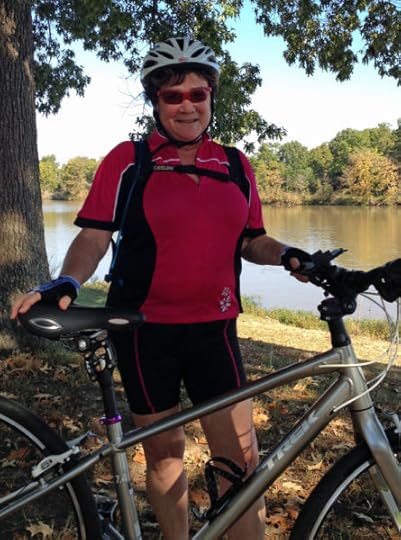
Darcy in middle of a 25 mile bike ride. | DarcyPattison.com
There comes a time in an adult’s life when you realize that you’ve stopped doing many of the activities that you used to take for granted. So it was with bike riding. As newlyweds, we rode often. But kids and life got in the way, until I realized that I needed to get back in shape. I was running 10-12 miles/week, just casually running 3 miles three or four times/week. But I also wanted to ride bikes again.
When I first started riding a bike again, my husband–Dwight, the expert–started by buying me a beginner’s bike. It was a step-through, upright, cushy-seat thing, but it was the only thing that made me feel comfortable. I could ride this bike for – 5 miles. It was an easy transition back into riding.
Here’s the amazing part. Dwight never, not once, made me feel stupid, inadequate, uncoordinated, or lazy. We just went out, rode as far as I thought I could go that day, and had a good time. (Of course, I was telling myself to push harder, go farther, etc. But HE never did.)
Also, we figured out the minimum I needed to successfully ride. I need water. We bought a camel-back, a reservoir of water that you carry in a simple backpack. With water, I can go far; without water, I can’t.
WRITING MENTOR:
AT FIRST, your writer doesn’t need the fancy computer or software. They only need something comfortable enough to get started.
Second, your job is to be a cheerleader. Period. Make writing possible in every way you can, and then, get out of the way. Let the writer write. At his/her own pace, with results that please them, not you. Just enjoy the thing that gives them joy.
Figure out the minimum needed for the writer to succeed and then make sure s/he gets it. Do they need an hour a day of quiet time to write? Make it happen.
Writing Mentor: Help Your Writer Improve
So, if Dwight wasn’t allowed to say anything even slightly motivational – since I would invariably take it as criticism – what did he do to help me improve?
We went biking consistently. Not every day or every week. But we consistently added that as an option for an activity. It was fun. We rode as far as I wanted/as I could and enjoyed the day. That’s it. No pressure, just fun.
And then, we started biking with friends, another couple. They stretched us into riding farther and faster. Soon, we were riding 20 miles at a time. Wow!
WRITING MENTOR:
Give your writer the time and space to consistently write.
Put your writer in contact with other writers who will help them improve. Send them to conference or retreats. Buy writing books for them to read. Pay for an online class. Do anything you can to help them network, make writing friends to share their trials and triumphs with, and to push them to go farther and faster.
Writing Mentor: Turning Pro
As I became a stronger, faster rider, I started comparing my friend’s bike and my old comfort bike. And then, she bought a new bike! Wow! It was time for me to upgrade. Not out of envy, but because I wanted to be even faster and stronger. I wanted to be a long distance bike rider.
Here’s a crucial time for a writer, when the hobby becomes a profession. It might come when your writer first starts writing, or when s/he makes that first sale. The attitude change can come at various points, but be ready when it does. Be aggressive when it does happen.
I bought a new bike. It was a long decision-making process. When we traveled, we rented bikes and rode a local trail, so I could compare various options. We looked and looked. Finally, I rode a rented version on a ten mile trail, and decided it was the best option I’d seen. I had a new bike that would help me go farther and faster. Except. . .
. . . buying the basic bike wasn’t enough. For long rides, it’s crucial that everything is comfortable. After a couple test rides, it was clear that it wasn’t comfortable enough for long distances. I hurt.
Over several months, we tried many things: new bike shorts, chamois cream (YUK! The Worst!), four different bike saddles, raised the handlebars 90 mm, and finally–the thing that really worked!–a stem for the saddle that had a shock absorber. We also put on a blue-tooth device to monitor speed. We tweaked aggressively.
Comfort. Speed monitoring. I now ride 25-30 miles without a problem. Slowly, my speed is improving. And I’m still having fun.
WRITING MENTOR
Recognize the moment when your writer needs to upgrade. This could be many things: upgrade computer, upgrade software (to Scrivener), change agents, or changing genres that you write.
Aggressively tweak! Be aggressive in tweaking everything until the writer is writing strong and fast and the career is going where s/he wants it to go.
For me, learning to ride a bike 25-30 miles comfortably has been a long process. It was only possible because my husband, Dwight, was kind, patient, attentive to my needs, and in the end, a companion on the way. That’s what we all need on this writing journey, a congenial companion. It may come from your spouse, parents, or a mentor. To whomever is filling that role, I offer them these simple guidelines and hope that your writing journey is full of joy.
WRITING MENTOR
Take joy in your writer’s accomplishments. You helped make it happen. I’ll say it for them: Thanks!
Thanks, Dwight.
The post Mentor a Writer: Lessons from Biking appeared first on Fiction Notes.
Join me at Highlights Foundation in 2017.
June 22-25, 2017,
PB&J: Picture Books and All That Jazz
June 19-22, 2017,
Self or Indie Publishing: Answering the Big Questions
October 24, 2016
Why People Forget Your Character – And How to Prevent It
The post Why People Forget Your Character – And How to Prevent It appeared first on Fiction Notes.
Interesting characters to populate your novel are crucial to your story’s success. And yet, too many times I find myself struggling to remember details of a character in a novel I read last year. Give your characters longevity and notoriety with these techniques.
Don’t let more than 40 pages go by without mentioning a character.
Characters who are important to the story include the protagonist, antagonist (villain), sidekicks or BFF, and a variety of characters needed to fill out a story. For example, if you’re writing a mystery, you’ll need a detective and probably some law enforcement officers (choose from FBI, county sheriff, city policeman, deputy, etc.). The policemen or policewomen need names. And once you introduce them with a grand entrance, you’ve got to keep reminding the reader of the importance of this character. David Farland says, “If you go more than forty pages without visiting a character, you’ve probably ignored them too long.” They don’t have to appear in a scene. Instead, you can have other characters talk about them or worry about them. Just don’t ignore them.
Give them a memorable name.
Every important character gets a name. Every unimportant character remains unnamed.
Worldwide names. Take a look at the 11,554 athletes representing their countries at the 2016 Rio Olympics. It’s a cross-section of names across the globe. Mix and match first names and last names for more interest.
Scrivener name generator. If you have Scrivener, use its built in , my new favorite tool for names.

Character Tags
Give characters some identifying characteristic.
See: eagle tattoo, fake leather jacket with fur collar, moves with the grace of a cat, sweaty face.
Hear: squeaky voice, drags feet when walks, operatic voice
Smell: BO, floral perfume, bad breath
Touch: silky hair, coarse beard, sharp fingernails
Emotional Life
Don’t be fooled by the advice to “Show, Don’t Tell.” No, a story doesn’t work if all you give us is narration. Instead, readers need a scene where a character wants something but (ususally) doesn’t get it. Give the reader dialogue, actions, reactions, and events that make a difference to the story line.
But while you’re at it, sometimes tell the reader what the character are feeling. It’s a delicate back-and-forth balance. If you don’t SHOW, it’s boring. If you don’t TELL, it can be emotionally shallow. You need both: SHOW, THEN TELL.
Deepen the Plot
Of course, it’s the interaction between the plot and character that really makes the character memorable. Give the characters deep, far-reaching problems. Put more at stake emotionally. Bring in family members to threaten. Widen the scope of the stakes. Answer the question, “If the character fails, so what?” Give the “so what” as much impact as possible.
The post Why People Forget Your Character – And How to Prevent It appeared first on Fiction Notes.
Join me at Highlights Foundation in 2017.
June 22-25, 2017,
PB&J: Picture Books and All That Jazz
June 19-22, 2017,
Self or Indie Publishing: Answering the Big Questions
October 18, 2016
Mark Gottlieb, Literary Agent, Trident Media
The post Mark Gottlieb, Literary Agent, Trident Media appeared first on Fiction Notes.
Yesterday, I posted a list of the Top Agents 2016 for Picture Books, Middle Grade and YA. Today, I’m excited to host an interview with Mark Gottlieb, Literary Agent of Trident Media.

What are your favorite books of 2016? Please list a picture book, a middle grade novel and a YA novel and explain why you liked it.
Picture book: KID CRAZY AND THE KILOWATT KING by Claudio Sanchez ( front man of the band Coheed and Cambria) and Arthur Mask. I loved it because it reminded me of LITTLE NEMO IN SLUMBERLAND and THE LITTLE PRINCE. In the story our hero thirsts for adventure in a bustling and colorful city and stands in front of a sour frumpy king to teach him a lesson in manners—namely the importance of the word “please,” instead of demanding things, and that simply asking politely gets you much farther in life.
MG novel: Hollywood Book Festival, New York Book Festival and San Francisco Book Festival Honorable Mention recipient, Andrew Buckley’s HAIR IN ALL THE WRONG PLACES, which reminded me of R.L. Stein’s THE WEREWOLF OF FEVER SWAMP, Curtis Jobling’s RISE OF THE WEREWOLF, and Tyler Posey’s “Teen Wolf,” and it’s a Scholastic Book Fair Pick, to boot! I enjoyed how the book used the myth of the werewolf to explore the animal side of boys as they transition through puberty.
YA novel: ALA/YALSA’s 2010 Top Ten author “J.R.R.R.” (Jim) Hardison’s FISH WIELDER, in which a legendary, enigmatic and often depressed barbarian warrior is hoping to get himself killed on a last adventure when he stumbles into a sinister plot; now it’s up to him, accompanied by his best friend, and his noble steed, to battle the forces of evil and face his greatest challenge: the dark secret of his own mysterious past. It’s an epic-fantasy series of novels in the tradition of Terry Pratchett’s DISCWORLD Series and Piers Anthony’s XANTH Series. At times it even recalls NARNIA.
What’s hot? What’s not?
Generally speaking, I’m seeing the fastest growth area in publishing in YA, probably because the secret about YA is that the readership is largely adults. The need there tends to be more contemporary/romantic YA with the leanings of a John Green book, whereas for boy readers it is more so accessible coming-of-age SFF in YA. Post-Apocalyptic YA has been slow for a while. Very few agents operate in the picture book space and even middle grade and chapter book space because of lower advances/price points. One has to bank on the PB/MG/CB winning awards or hitting bestsellers lists like our book WONDER by R.J. Palacio has done for Knopf. Also a lot of PB book ideas are developed in-house by editors, written and illustrated there. However, I do find a growing need for graphic novels among publishers of children’s books as GNs are being taught in schools more and more now…
Are you an editorial agent? How much input do you have in your client’s stories?
I generally know when a manuscript needs work and when it doesn’t. For instance, I’ve written ten-page editorial letters, and then I’ve written a few minor notes. Sometimes a manuscript comes in and it is very tightly-written and feels ready to me. So it really depends but I try my best to leave creative decision matters ultimately up to the author and/or editor in order to avoid stepping on any toes.
Are you more excited about commercial or literary success? That is, would you rather your client win a Newbery or Printz award, or would you rather they receive a six-figure advance?
Honestly, I am happy either way, since one will usually lead to the other. A six-figure advance can mean that a publisher is heavily-committed to a book’s publication in making it a bestseller/award-winner. And a relatively small advance/quiet publication that somehow leads to a major award can often lead to a bestseller with lots of royalties or future deals for that title with six-figure advances. Ultimately, it’s about believing in an author.
Would you consider representing a hybrid author, one who has self-published some titles?
Yes, so long as the self-published author had self-published to great success as a bestseller or won awards. If an author struggled in self-publishing, they should consider removing the editions from online and be quiet about the fact that they had self-published to little or no success.
Are you currently open for submissions? If so, what’s the best way to contact you? What genres/age level books do you handle? Are you looking for illustrators?
Yes, we are open for submission and prefer to receive submissions via our website’s submissions/contact us page form: http://www.tridentmediagroup.com/
I’m open to books across PB, CB, MG, YA and GN. I do look for illustrators, but tend to prefer author/illustrators.
The post Mark Gottlieb, Literary Agent, Trident Media appeared first on Fiction Notes.
Join me at Highlights Foundation in 2017.
June 22-25, 2017,
PB&J: Picture Books and All That Jazz
June 19-22, 2017,
Self or Indie Publishing: Answering the Big Questions
October 17, 2016
Top Children’s Literary Agents 2016-2017: Picture Books, Middle Grade and YA
As a subscriber to FictionNotes, you have access to the full list of Top Agents 2016. Download your pdf here.
The post Top Children’s Literary Agents 2016-2017: Picture Books, Middle Grade and YA appeared first on Fiction Notes.
Each year or so, I do a post about the top literary agents and compare how many titles were sold. I use the Publishers Marketplace database to discover which agents are selling the best. However, their information comes with an important caveat: all information is self-reported. Many agents only report their top sales. That means some agents may be under-valued and some over-valued in this report. This should only be the first step in investigating the agents.
Upward Trend in Sales: 258% Increase in Picture Book Sales Reported
The total number of reported sales of picture books has grown to an all-time high. As mentioned, we have no way to know if this is truly an increase in the number of sales, or simply more sales reported on Publisher’s Marketplace. Still, it’s encouraging to see that the numbers have increased by 258%.
2010 – 119 sales
2013 – 171
2015 – 234
2016 – 308
Middle Grade Sales – Up and Down
Middle grade sales, however, have been up and down. The current rate is up 43% over 2012, but down 8% from last year.
2012 – 83 sales
2015 – 129
2016 – 119
YA Sales – Up and down
YA sales are also up and down. The current sales are up 59% from 2013, but down 14% from last year.
2013 – 72 sales
2015 – 142 sales
2016 – 122 sales
Top 5 Children’s Book Literary Agents
These rankings are based on sales reported to Publisher’s Marketplace within the past 12 months.
Picture Book
Kirsten Hall, Catbird Agency
Steven Malk, Writer’s House
Ann Moore Armstrong, The Bright Group
Karen Grencik, Red Fox Literary
Lori Nowicki, Painted Words
Middle Grade
Daniel Lazar, Writer’s House
Ammi-Joan Paquette, Erin Murphy Literary Agency
Sarah Davies, Greenhouse Literary Agency
The next three were tied:
Jennifer Laughran, Andrea Brown Literary Agency
Caryn Wiseman, Andrea Brown Literary Agency
Kelly Sonnack, Andrea Brown Literary Agency
Young Adult
Sara Crowe, Pippin Properties
Jim McCarthy, Dystel & Goderich Literary Management
Jessica Regel, Foundry Literary + Media
Barry Goldblatt, Barry Goldblatt Literary
Mandy Hubbard, Emerald City Literary Agency
COMING TOMORROW: An interview with Literary Agent, Mark Gottlieb, Trident Media.
The post Top Children’s Literary Agents 2016-2017: Picture Books, Middle Grade and YA appeared first on Fiction Notes.
Join me at Highlights Foundation in 2017.
June 22-25, 2017,
PB&J: Picture Books and All That Jazz
June 19-22, 2017,
Self or Indie Publishing: Answering the Big Questions
September 25, 2016
Subplots: Keeping Other Story Lines in Check
Join me at Highlights Foundation in 2017.
June 22-25, 2017,
PB&J: Picture Books and All That Jazz
June 19-22, 2017,
Self or Indie Publishing: Answering the Big Questions
The post Subplots: Keeping Other Story Lines in Check appeared first on Fiction Notes.
I’m working on a science fiction novel right now, the second book of a trilogy, the Blue Planet Series. Book 1 is done, and Book 2 has a full draft that I’m revising. Book 3 is in outline form. The premise of the series is this: “Earth finally hears from space. “You only live on land; allow us to live in the seas.”
Book 2 has several subplots that I’m trying to rein in. The storyline takes off into a new setting, and it’s been hard to get them all in the same place at the same time. The first draft includes at least three different POV chapters to get everyone to the new setting. These subplots clutter up the last half of the story. I probably need to axe one, and just summarize how everyone reached the new place, and get on with the main plot.
But before I do that, I want to be sure I need to cut them.
Subplots can serve several roles in a story:
Another POV on a theme, something at a tangent.
A side story, such as a 3-chapter chase scene, with the results impacting the story.
Character development of a minor character to give them more weight.
The eventual outcome of the subplot must change the main plot’s outcome.
Examine the Role of Each Subplot

Each of my subplots will need to be examined to see what role they play in the story.
One subplot does add a different POV of the story’s theme. However, of the three chapters included, only one seems to be essential. For a single chapter, is it worth including in the story? That’s the question that I”ll be looking at for this subplot and I’m not sure where I’ll wind up. I might take that single chapter and expand it into an appropriate three chapter subplot. Or I might omit it. In fact, I’ll probably have to try both tactics.
Another question is when to give the villain his/her own subplot. When is it important to give the villain enough space to become the hero/ine or anti-hero/ine of his/her own story? Villains need to be developed enough to make worthy opponents, and sometimes we even want him/her to be understood. I’ve given my villain about three chapter, also, and another that includes his daughter, even if it’s not in his POV. I’ll have to consider if that’s the right balance for this story.
Finally, I’m asking if subplots actually add something essential to the main plot. They may be fine stories on their own merit, but they must play second fiddle to the main plot and provide some harmony to the melody. It’s a complicated dance in some ways, but in some ways, it’s a clear-cut decision. Either the subplot adds to the main plot – which means I can keep it. Or it doesn’t – which means it must be cut. I must be ruthless in these decisions, so the main plot works and works well.
The post Subplots: Keeping Other Story Lines in Check appeared first on Fiction Notes.
Join me at Highlights Foundation in 2017.
June 22-25, 2017,
PB&J: Picture Books and All That Jazz
June 19-22, 2017,
Self or Indie Publishing: Answering the Big Questions
September 18, 2016
Main Character: Who is Your Protagonist?
Join me at Highlights Foundation in 2017.
June 22-25, 2017,
PB&J: Picture Books and All That Jazz
June 19-22, 2017,
Self or Indie Publishing: Answering the Big Questions
The post Main Character: Who is Your Protagonist? appeared first on Fiction Notes.
A basic question for every story is this: Who is the main character?
Today, many novels alternate POV characters, especially in first person. Or, the novel has an assemblage of characters. This rarely works because the reader needs to have some home base from which to view the story. The choice of a main character affects the story in many ways. When the main character is also the point of view character, the reader sees the world through the main character’s eyes. Everything is colored by his/her POV and we understand that this is a biased story. Another character would have told it differently.
When the narrator is an observer, such as Watson telling Sherlock Holmes stories, it’s still important to know that Sherlock is the main character. That is the character who must solve the story problem, who changes in some way because of the story events, and who ultimately stays in the reader’s hearts. We like Watson, to be sure. But it’s Sherlock who enchants us.
How to Decide on the Main Character
There are two strategies which can help you decide on the main character.
Who Hurts the Most? Science fiction writer Orson Scott Card says the main character is the person who hurts the most. This strategy means that you’re reaching for the most emotional story you can possibly tell. The story events must impact the main character in such a way that s/he is devastated, challenged, disappointed, crushed, betrayed and so on. And yet, in spite of the deep hurt, they manage to solve the story problem themselves and find a way to deal with the emotional struggle and come out a new person.
It may mean a vital change in the main character role. Perhaps, there’s a family tragedy–let’s say a child drowns. Who hurts the most? The person who wasn’t watching the child, or the mother or father? Or perhaps the doctor who tried to revive the child? Only you, the author, will know the right answer. Why did you plan this particular story problem and who is the likely candidate to be overwhelmed by the story’s events?
Who cannot be eliminated? A second strategy is to start eliminating characters. Do this methodically, trying to tell or imagine the story without characters in turn. When you come to a character who cannot be eliminated, that’s probably your main character. In other words, this story demands certain people. In the story of Cinderella, we could eliminate the prince, the king, the queen, the father, or the fairy god-mother. But we need Cinderella and the step-mother. Without those two, the story dies. And of those two, who hurts the most? Of course, it’s Cinderella.
Once you’ve chosen a main character, you should think deeply about the character’s emotional arc. If Cinderella starts out selfish, she should end up as more generous. Think of character qualities possible for your character. Then consider the opposite side of that. Usually, the character begins with less admirable traits and ends with more admirable ones.
Some examples:
Selfish to Generous.
Apathetic to Passionate.
Sloppy to Organized.
Indifferent to Committed.
Within the context of your story, who hurts the most? What character cannot be eliminated without destroying the story? How does the main character change and grow? Once you know these things, you’re well on your way to a stunning novel.
The post Main Character: Who is Your Protagonist? appeared first on Fiction Notes.
Join me at Highlights Foundation in 2017.
June 22-25, 2017,
PB&J: Picture Books and All That Jazz
June 19-22, 2017,
Self or Indie Publishing: Answering the Big Questions
September 9, 2016
Book Notes: The Charmed Children of Rookskill Castle
Join me at Highlights Foundation in 2017.
June 22-25, 2017,
PB&J: Picture Books and All That Jazz
June 19-22, 2017,
Self or Indie Publishing: Answering the Big Questions
The post Book Notes: The Charmed Children of Rookskill Castle appeared first on Fiction Notes.
One thing that I harp about is the use of great sensory details. When a story is specific, it comes alive.
Janet Fox does an amazing job of choosing the exactly right details in her story, The Charmed Children of Rookskill Castle. She chooses details that create a mood and pull on your emotions.
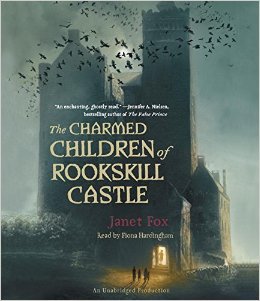 A fairy-tale like plot, there’s a great evil brooding over Rookskill Castle. Interestingly, this is another story of children leaving World War II, war-torn London and going into the countryside. But the castle-turned-school has centuries old secrets to hide.
When you create a creepy castle, mood becomes very important. You can’t go around saying things like, “Oh, she was so scared.” When you TELL the mood, it falls flat. Instead, you must choose the right sensory details.
Imagine a happy playground. What do you see, hear, touch, taste, smell?
Bright sun, red swing set, comfortably warm slide, popcorn and ice cream.
Now, imagine a scary playground. What do you see, hear, touch, taste, or smell?
Lightning streak, peeling paint, frigid slide, (no taste), smoke.
Do you see how a simple choice of details changes the mood?
Here’s Kat’s first look at the village near Rookskill Castle:
She saw something of the village, wreathed in mist, as they passed through–small and silent, no souls strolling among the thatched-roof cottages or in and out of the shuttered pub with the sign of a spread-winged blackbird: THE ROOK. The road wound upward from there, back and forth, like a hawk hunting, turn and turn again, the wheels making a hawklike squeal as they rotated in the muddy ruts. The drays puffed steamy breaths as they hauled their load up the hill. The smell of damp decay filled the air. (p.25)
What wonderful details!
See: mist, silent and small, no souls, shuttered pub, sign of spread-winged blackbird.
Hear: hawklike squeal, steamy breaths
Smell: damp decay
The voice is strong here, as the details are woven into a paragraph that starts and stops and leads us inevitably toward something evil. The rhythm patterns created by the choice of sentences of various styles and lengths lead us on, inevitable, up and up and up the hill toward something not quite right. This is masterful writing.
A second technique Fox uses is present-tense. The villainess, Leonore, is about to enslave the souls of the children who have fled the bombings in London and presumably found safety at Rookskill Castle. She’s evil. She’s doing evil things to children. Fox could have just let us hate the villainess because of her evil, but instead, she chose to give us enough information that we feel sorry for Leonore. It’s a risky thing because why should the reader care about someone so monstrous. But the choice to fully characterize the villain is part of the charm of this story.
To accomplish the almost impossible task, Fox uses alternating chapters in present tense. Leonore’s story unfolds as if in real time, even though the text clearly explains that it’s 1746. The result is a heroine of her own story that takes a wrong turn. She is trapped in situations that force her to terrible choices and hardens her soul. The storytelling voice is another masterful stroke in this amazing story.
The circling birds of Rookskill Castle could tell a tale. Back and back–time weaves a tapestry. It is 1746, and a terrible conflict lays waste to the land and people.
A girl, Leonore, contemplates her misfortune. She has not been able to fulfill her marriage vow. . . She cannot deliver a child to her lord. He plucked her from nothing for this alone, having disposed of the three unfortunate wives who came before her–he picked her for her peach-cream skin and thick black hair and her youth. Picked her from the village, after the other lairds refused him any more of their daughters. At least she has escaped her father’s fist, the bruises and the fearful hiding.
This narrative introduces the backstory of Leonore and makes her understandable, even if we still deplore her evil.
If you’re looking for a mentor text for great sensory details, the use of present tense, or how to make a villain understandable, this is a great choice.
The post Book Notes: The Charmed Children of Rookskill Castle appeared first on Fiction Notes.
Join me at Highlights Foundation in 2017.
June 22-25, 2017,
PB&J: Picture Books and All That Jazz
June 19-22, 2017,
Self or Indie Publishing: Answering the Big Questions
September 5, 2016
Research for Your Novel
I'll be speaking at the MidSouth SCBWI conference on September 15-18. If you're going, be sure to stop me and say, "Hi!"
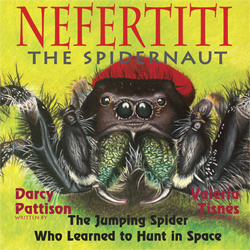
Coming in October: Preorder Now
The post Research for Your Novel appeared first on Fiction Notes.
Do you think that research is only for nonfiction writers? Wrong. Novelists must get their facts right, too. Here are some things I research.
Characters: Research Psychology and Tropes
I often research behavior from a psychologist’s point-of-view. I want to know the typical stages of grief. Or what are some common character traits of a leader. What does it mean for someone to be the third-born in a family.
I’m looking for typical behavior in a certain situation by a certain group of people. I don’t necessarily follow it exactly, but it gives me options and possibilities. When I researched the stages of grief, I found five typical steps (though some argue it’s four and some say six): Denial, Anger, Bargaining, Depression, Acceptance. IF I organized a story around these stages, Denial would be Act 1. Act 2 would include Anger, Bargaining, and Depression. That would leave Acceptance for Act 3. Do you see how that gives a novelist a loose structure to write within? Huge variations are possible at every stage, but by following this, I get the emotional journey of someone grieving.
Tropes are another easy place for inspiration. A trope is a typical literary device for a certain genre or situation. In other words, like the stages of grief, it tells you what COULD happen in certain places of your story.
Go to TVTROPES.org and click on FILTERS. You’ll see a variety of genres, narrative types and universal tropes. I clicked on Combat and found these tropes: Combat commentator, helicopter blender, curb stomp battle, there is no kill like overkill, all your colors combined, air jousting, apologetic attacker, shadow pin, impaled with extreme prejudice, and so on. These are typical tropes that COULD happen during combat. If you click through to one, it also gives examples of the trope in various genres.
This is a kind of character or plot research that helps me figure out plot, especially when I’m stuck on what comes next. I look at the possibilities for fights and then figure out which one works best in my story. By knowing that has gone before, I can more easily figure out how to do it in a fresh and different way.
Plot: Research Setting
Tropes work well for plot, as well.
Plot research often entails something about geography. Often a character is moving across a certain terrain and I need to know something of the landscape, plants, animals, distances, and so on. If it’s set in a real place on Earth, I look do a couple things. First, I look at photos on Google, Flickr, and Google Earth. I love Google Earth‘s ability to drive along certain streets. Or you could fly from your location to a designated spot. Fascinating stuff. While looking over a location, you can measure distances, pull up photos, and more.
For a recent story, I flew around Mt. Rainier, Washington. I virtually traveled roads, measured the distance between a couple places, and checked elevations. The story would be false and riddled with errors without the confirmation of details.
Culture: Research Time Appropriate Details
The culture, especially of historical fiction or science fiction, must be consistent and believable. For historical cultures, there’s just lots of reading to do. What sort of clothing, food, houses, transportation, etc. are used? For science fiction, think about Edgar Rice Burrough’s novels about Barsoom, the culture on Mars. He invented other races, strange animals, fascinating religions and political parties battling for control of Barsoom. They all ring true. Science fiction/fantasy writers must invent a culture and then remain consistent to it within the story. Historical and contemporary writers must nail the time period of their story. All of that takes research.
Especially in the beginning phases of writing a novel and in the revision phase, I do lots of research. When I’m chugging out words, not so much. I try to let the story flow at that point. So, I do enough world building to be able to write the gist of the story. Then, in the revision phases, I go back and research the tiny details that will give credence to the milieu of the story.
The post Research for Your Novel appeared first on Fiction Notes.
August 22, 2016
How to Write a Children’s Picture Book
The post How to Write a Children’s Picture Book appeared first on Fiction Notes.
What are your favorite children’s picture books? Are they books you remember from your childhood? Are they books you read to your kids? Picture books, maybe more than any other literary genre, call up fond memories. Sharing a picture book with your parents or with your kids–it’s more than just a book. It’s an experience, something that is part of your family.
Mem Fox says that one of the most important things to remember when writing is that “child in the lap” moment. Book should enhance the parent-child/adult-child relationship in some way. It should make the child turn around and give you a hug. Or maybe it evokes a shared sense of wonder at a true story. it’s the sharing that matters.
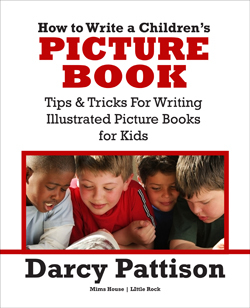
Writing a picture book with the “child in the lap” is just one of the many things I’ve included in my book, How to Write a Children’s Picture Book. It’s now updated with a new chapter on metafiction! And this popular ebook is now available as a paperback book. The workbook section at the end encourages you to actually work on those drafts!
Read the SLATE Editor’s attempts at writing a Children’s picture book. I think they would have benefitted from a quick read of this book!
Here’s the TABLE OF CONTENTS
PICTURE BOOK BASICS
Picture Book Structure: Why 32 Pages?
Does EPUB Change the 32-page Illustrated Picture Book?
Dual Audience for Children’s Picture Books
Picture Book Settings: Exotic v. Familiar
Children’s Picture Book Characters: Folk Tale or Modern Story
PICTURE BOOK GENRES
How to Write a Children’s ABC Book
How to Write a Read Aloud Friendly Book
How to Write a Rhyming Picture Book
Rhyming Picture Book Bibliography
How to Write a Poetry Collection Picture Book
How to Write a Picture Book Mystery
How to Write a Humorous Picture Book
How to Write a Children’s Picture Book Biography
How to Write a Creative Non-Fiction Picture Book
How to Write a Metafiction Picture Book
WRITE A PICTURE BOOK
Good Writing: The Basics
Plotting a Picture Book
Plan Your First Draft
17 Picture Book Topics to Avoid
10 Suggested Directions for Titles
Did You Write a Picture Book or Magazine Article?
Make a Dummy of Your Picture Book
From Shakespeare: 2 Ways to Look at Picture Book Structure
Revising Your Picture Book Text
5 Ways to Make the Reader Turn the Page
Phonics for Picture Book Writers
Create a Compelling Voice for a Picture Book
Page 32: The Last Page of a Picture Book
SUBMIT YOUR PICTURE BOOK
The Self-Publishing Question
The Biggest Mistake You Can Make in Submitting a Picture Book
The Illustrator Doesn’t Tell YOU What to Do
Titles and Subtitles Sell Your Work
How Do I Find an Editor’s Name for Submission?
RESOURCES
WORKBOOK
How to Order: How to Write a Children’s Picture Book
Now Available as a Paperback or Ebook

Paperback
KINDLE

ePUB
The post How to Write a Children’s Picture Book appeared first on Fiction Notes.


