
Darcy Pattison's Blog, page 18
September 25, 2014
30 Days to a Stronger Novel: Online Video Course
Read on Wattpad - Serialized NovelFrom September 11, 2014 - October 30, 2014.
Read one chapter/day.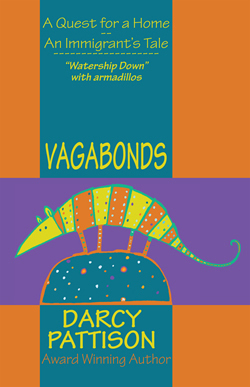
Click on cover to read the first five chapters.
Online Video Classes by Darcy Pattison
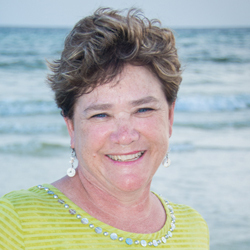
Writing teacher and author Darcy Pattison.
Starting in November, 2014, Darcy Pattison will offer online video writing courses through Udemy.com’s platform. See more about Darcy here, or download her bio here.Writing Teacher, Darcy Pattison will explain writing concepts, tips, strategies. Since 1999, Darcy has taught the Novel Revision Retreat nationwide, and many alumni have seen their first publication as a result.
The on-demand format allows you to fit the courses into your busy schedule. You access the videos any time day or night. Start the series anytime you need it. No need to wait for the start of the next month.
Group discounts available: your critique group can take the class together. Focus your group’s accountability, discussions, and output for a month.
Mims House Book and Online Course Updates
* indicates required
Email Address *
Online Video Courses
30 Days to a Stronger Novel
If this form isn’t working, click here to sign up.
NOVEMBER 1: 30 Days to a STRONGER Novel: $59
INTRODUCTORY PRICING: One of the most popular series on Darcy Pattison’s Fiction Notes blog has been her 30-day series on improving a novel. Now updated, the series offers 30 days of sage advice on strengthening your novel, for less than $2/day.
Each day includes:
A quote that inspires
Short, practical instruction from Darcy on a specific topic
A simple “Walk the Talk” action to take
 Over the course of the month, you’ll receive the entire text of Darcy’s book, 30 Days to a Stronger Novel (November, 2014 release).
We can’t guarantee that you’ll end the month with a publishable novel; but we can guarantee it will be a STRONGER novel.
VIDEO COURSE TABLE OF CONTENTS
Watership Down with Armadillos: Titles
Search Me: Subtitles
Defeat Interruptions: Chapter Divisions
Scarlett or Pansy: The Right Character Name
My Wound is Geography: Stronger Settings
Horse Manure: Stronger Setting Details
Weaklings: Every Character Must Matter
Take Your Character’s Pulse
Yin-Yang: Connecting Emotional and Narrative Arcs
Owls and Foreigners: Unique Character Dialogue
Sneaky Shoes: Inner and Outer Character Qualities
Friends or Enemies: Consistent Character Relationships
Set Up the Ending: Begin at the Beginning
Bang, Bang! Ouch! Scene Cuts
Go Away! Take a Break
Power Abs for Novels
White Rocks Lead Me Home: Epiphanies
The Final Showdown
One Year Later: Tie up Loose Ends
Great Deeds: Find Your Theme
The Wide, Bright Lands: Theme Affects Setting
Raccoons, Owls, and Billy Goats: Theme Affects Characters
Side Trips: Choosing Subplots
Of Parties, Solos, and Friendships: Knitting Subplots Together
Feedback: Types of Critiquers
Feedback: What You Need from Readers
Stay the Course
Please Yourself First
The Best Job I Know to Do
Live. Read. Write.
EARLY BIRD SIGNUP: Great Extras!
When you sign up for the Early Bird list, you are eligible for some great offers. When the course is live, we’ll send out an email to the EARLY BIRD list.
3 Written Critiques
The first three people to sign up for the course will receive the opportunity to submit ten pages to Darcy for a written critique.
5 Group Coaching Sessions
The first five critique groups who sign up for the course will receive the opportunity for a group Skype call where each person gets to ask Darcy a question about their manuscript.
1 Private Coaching Session:
All names will be entered in a drawing for a 15-minute private coaching session (Skype call) with Darcy to discuss your novel.
EARLY BIRD SIGNUP: Great Discounts!
At $59, the 30 Days to a Stronger Novel online video course is a steal: that’s less than $2/day, less than a cup of coffee for coaching by acclaimed writing teacher Darcy Pattison.
If you sign up for the Early Bird list, though, you’ll receive a special discount:
30% discount on regular price
40% discount for groups of 3 or more – sign up with your critique group for the best pricing!
For groups of 25 or more, contact Darcy for discount rates.
To be eligible for Early Bird Extras and Early Bird Discounts,
you MUST be on this Early Bird List
Mims House Book and Online Course Updates
* indicates required
Email Address *
Online Video Courses
30 Days to a Stronger Novel
If this form isn’t working, click here .
Please Share with Your Friends!


September 21, 2014
Don’t Plot Like I Do!
Read on Wattpad - Serialized NovelFrom September 11, 2014 - October 30, 2014.
Read one chapter/day.
Click on cover to read the first five chapters.
I’m warning you! Don’t plot like I do.
I’ve been working on the plot of a new novel for about six weeks and I’m still stumbling around. I’ll describe the messy process here and hope that you manage to shortcut your own process.
It started last year with an idea and a short story that gave backstory on the longer story. I’ve wanted to write a sf for a while and this idea has been germinating for a long time. Besides the problem of other projects, there’s the question of audience. I had to grapple with taking creative risks.
Take Creative Risks
One creative risk was the type of story I would tell. Would it be a character story or an action/adventure story?
I plotted out something, but my left brain kicked in and compared the plot to the 29 Plot Templates Regardless of which plot structure I looked at, there were so many holes in the story.
I got advice from Optimus Prime. Hey, I take help where I find it and Optimus was obviously handing out advice on plotting.
By now, though, I was getting bogged down. What was the purpose of all this plotting? I had to remind myself that I was telling a story.
The next disappointment was the worry about how slowly the work progressed.
Listen. I know a lot about novel structure, characterization, plotting, setting and many other topics about novels. I teach this stuff. But when I write, I struggle through the writing process. One of my strengths, though, is that I am open to switching strategies. It’s also my weakness, but while I’m in the throes of plotting, I feel like I am jumping from this method, to that paradigm, to yet another novel structure. In reality, I’m just checking out my story from multiple POVs.
A Sixth Grade Aside
When my daughter was in sixth grade, she wrote an essay. The teacher asked my daughter to write an evaluation essay about writing the essay. Write down the process you went through to write this essay, the teacher advised.
And I shook my head in despair.
No, there isn’t just ONE path through the writing process. It’s cyclical, curving back on itself to ask you to repeat this task or that task. Or perhaps describing it as a maze is a better metaphor. I follow false trails until they dead end. I get lost in the middle and can’t fight my way out. I start at the beginning one time and the next time, I start at the end. Somehow, though, the writing gets done. There are strategies, ways of approaching a draft, working habits, and so on. But for any given piece of writing, the process will vary and vary widely.
Messy Writing Process
This time, I’m doing well with trying to go from general to specific.
That got me to an eight-page outline. But the 29 Plot Templates revealed major holes. I realized that I needed to concentrate on sub-plots and figure those out before I returned to the main plot. I focused on the villain as the hero of his own story: why did he want revenge? I re-read articles about writing a revenge story and one comment struck me: “Killing him would be too easy.”
Of course! Revenge isn’t just about hurting or killing the person; it’s about making them suffer as the victim has suffered. I asked myself, “What would make my character hurt/suffer the most?” Of course, that is what I MUST make happen. Voila! A new plot twist grabbed me and I was off and running with the complications from that twist.
10 page outline. But still lots of plot holes.
Over the next few days, I’ll be looking at other subplots and milking them for all the conflict that I can. Will there be a romantic subplot? After an initial attraction, there needs to be deep reasons why they must stay apart. What reason is sitting there in my story already, just waiting for me to exploit it? It’s there. I just need an Aha! Moment to recognize it. I’m jumping all around, reading odd articles, re-reading the 10-page outline and looking for the right way to approach this.
I feel like I am being asked to carve a huge statue with a bobby pin.
I have at least three more subplots to work through and slot into the main plot. I’m sure there will still be plot holes then, but I expect there will be fewer.
Should I copy this process the next time I plot? No!
Each time, the writing process creates it’s own maze and demands a different path to story. I’m just trusting that the process will eventually spit out a viable story. I know that I’ll have to decide something about the audience and tone, and spend a while on characters and their back story. I know that some personal issues are likely to complicate the timing of the writing. I know I’ll make multiple starts before I really get going.
Don’t follow my writing process. It’s messy and ugly. Besides—it wouldn’t work for you. You must find your own way through the maze of words to find the story that only you can tell.
September 16, 2014
Serializing Fiction: Wattpad
Read on Wattpad - Serialized NovelFrom September 11, 2014 - October 30, 2014.
Read one chapter/day.
Click on cover to read the first five chapters.
I am going to be serializing my novel, VAGABONDS: An American Fantasy, on Wattpad for the next 50 days.
Why Wattpad
Wattpad is a social media platform for readers and writers. Writers post stories and readers comment.
That’s almost enough reason right there to be on Wattpad:it’s a place where readers and writers connect.
The latest statistics say that 16.9 million readers find time to read at least 30 minutes/visit on Wattpad. These are not casual, glance at your website and five seconds later, they click off. When a reader finds a story that interests them, they read. They engage. They comment and vote up. Some call this the “YouTube of Writing.” Popular titles can have over 10M reads and more than 10,000 comments. WOW!
Science fiction, YA, and Fantasy. Over 20 genres are represented on Wattpad, but the most popular categories are science fiction, YA, and fantasy. VAGABONDS definitely fits the popular genre of fantasy, and should have appeal to teen readers. I describe it as a “Watership Down with armadillos.”
The platform provides statistics on how many people read each chapter. In other words, if you have a 50 chapter book and you lose readers after chapter 23–you have valuable feedback on when and where you went askew in your story.
2014 has been a year of experimentation for me. I’ve tried multiple ways to connect my books with the right readers and this seems like a reasonable thing to try. I’ll report in November how the month went. In the meantime–go to Wattpad and read the six chapters. Vote it up!
September 15, 2014
Short Story Anthology: Fiction River Universe Between
Read on Wattpad - Serialized NovelFrom September 11, 2014 - October 30, 2014.
Read one chapter/day.
Click on cover to read the first five chapters.
I am excited to report that I have my first science fiction, adult-audience, short story published!
Last year, I attended a retreat in Oregon with Dean Wesley Smith and Kristine Kathryn Rusch as the main instructors. They own WMG Publishing, and one on-going project is a monthly short-story anthology. I was invited to submit, it was accepted and is not in a bookstore near you! Fiction River #8: The Universe Between collects original stories by a wide range of authors. My favorite is the first story by Lee Allred, who writes scripts for DC, Marvel, and Image Comics, among other credits. “Slow Answer” is about an alien race who takes over Earth, providing a near utopia for humans; the twist is WHY they’d taken over Earth, and the answer is why you should read this anthology.
My own story, “Are We Alone in the Universe?”, is also a science fiction story about first contact with an alien race. I wrote it as back story for the trilogy that I’m working on right now. The story is about the parents of my main character: how they met, how they fell in love, and the fallout of a forbidden love. I was thrilled when the story was accepted because it’s my first short story ever published, my first adult-audience story ever published, and my first science fiction story ever published. That triple-whammy makes it exciting.
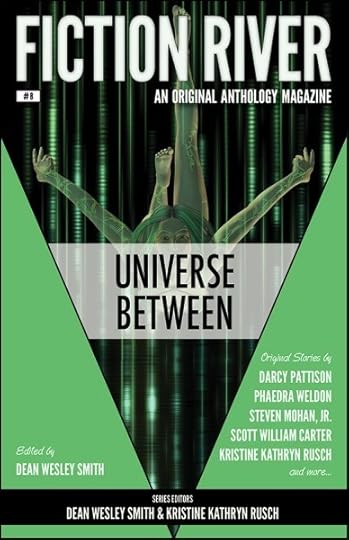
The Fiction River Anthology is available as an ebook, paperback, or Audible audiobook.
Support the Fiction River Anthology
Even more exciting today, though, is the Fiction River Kickstarter Project. To keep alive a short story collection publication, WMG Publishing established a Kickstarter, or crowd-funding, project. With 17/30 days left, they have already met their $5000 goal, AND their 10,000 Stretch Goal, and are going for gold.
Like many of the other Fiction River authors, I donated books for the Kickstarter project. I urge you to look over the project and think about contributing; even small contributions of $10 are welcome and helpful. However, if you’re really interested in helping, some of the rewards that involve my books are still available:
Pledge $60 or more
E-UNIVERSE BETWEEN AUTHORS PACKAGE: Receive a one-year electronic subscription to Fiction River, plus an electronic edition of Fiction River: Universe Between. You’ll also get electronic copies of books by some of the contributing authors of Universe Between. You’ll receive The Unjust, Dust, and Hope by Rob Vagle; The Haunted Bones by Phaedra Weldon; Body Check by D.H. Hendrickson; Kell, the Alien (a children’s book) by Darcy Pattison; and Love, Venusian Style by Richard Alan Dickson. Plus, your name printed in the acknowledgements section of each Fiction River volume for a year and on the Fiction River website with a special thank you for your kind support. Limited (1 of 1 remaining)
Pledge $125 or more
PRINT UNIVERSE BETWEEN AUTHORS PACKAGE: Receive a one-year print subscription to Fiction River, plus a print edition of Fiction River: Universe Between. You’ll also receive SIGNED print copies of books by some of the contributing authors to Universe Between. You’ll get Body Check by D.H. Hendrickson; Kell, the Alien (a children’s book) by Darcy Pattison; The Unjust, Dust, and Hope by Rob Vagle; and Love, Venusian Style by Richard Alan Dickson. Plus, your name printed in the acknowledgements section of each Fiction River volume for a year and on the Fiction River website with a special thank you for your kind support. Limited (1 of 1 remaining)
Pledge $500 or more
PAPER BANG FOR YOUR BUCK PACKAGE: All the print volumes of Fiction River from Volume 1 through the end of year three! But wait, there’s more! In addition, you will receive a SIGNED print copy of a book from each of the following authors who have contributed a print book to this Kickstarter: Mary Jo Putney, Marcelle Dube´, JC Andrijeski, Laura Resnick, Annie Reed, Kris Nelscott, Leah Cutter, Dean Wesley Smith, M.L. Buchman, Juliet Nordeen, Michele Lang, Melissa Yi, Ryan M. Williams, Sharon Joss, Brian Herbert and Jan Herbert, Jeffrey A. Ballard, Kristine Kathryn Rusch, Darcy Pattison, Lisa Silverthorne, Richard Alan Dickson, Brigid Collins, Karen L. Abrahamson, Thomas K. Carpenter, D.H. Hendrickson, Travis Heermann, Scott William Carter, Stephanie Writt, Joe Cron, Barton Grover Howe, Rebecca S.W. Bates, Richard Bowes, Louise Marley, Brendan DuBois, Ray Vukcevich, Carole Nelson Douglas, Julie Hyzy, Libby Fischer Hellmann, Kara Legend, John Helfers, Kerrie L. Hughes, Rob Vagle, Laura Ware, Patrick O’Sullivan, Dayle A. Dermatis, Kevin J. Anderson and David Farland. Plus, your name printed in the acknowledgements section of each Fiction River volume for a year and on the Fiction River website with a special thank you for your kind support. Limited (1 of 1 remaining)
Don’t think that big donations are the only way to go. Every level of support–even $1–is appreciated, and it’s helpful! Read more about the Fiction River Kickstarter Project.
READ the Fiction River Anthology — including my short story!
September 10, 2014
General to Specific: From One Sentence to a Plot
eBook Sale: August 26-31 only $0.99/regular $5.99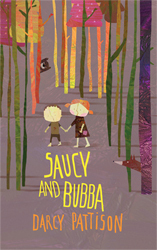
Available at these eBook stores
Mims House eBookStore
Nook
Kindle
Kobo
iBookstore
AUDIO BOOK (Unabridged): Now Available!
Available at these Audio Book stores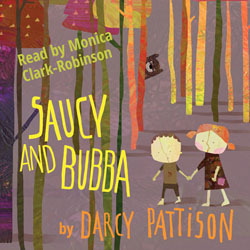
iTunes Store
Amazon
Audible
So, I have a general outline of my story but the writing still isn’t flowing. I realized that I need to break down major events into smaller sections, so I will know what to write.
I’ve gone through two stages of plotting or outlining, each one getting more specific. Here’s an example:
1. First, I stared with major plot points:
A volcano threatens to blow up, so Jake gets alien Rison technology to make it stop.
2. Second, I start to layout possible scenes.
At one point, he realizes he needs the alien technology, so he makes arrangements to get it. I wrote this: Later, at home, Jake contacts Mom, who gives him a contact on Rison who can ship him some technology and he orders what he needs to counter-attack the technology Cy used. Keeping up his volunteer work, Jake goes kayaking with Bobbie Fleming.
At this level, a scene may be summarized in a single sentence. However, it’s more helpful to break down both sentences further.
3. On the third pass, I’m looking to split up the action into several scenes, or at least flesh out the one scene a bit better.
Later, at home, Jake contacts Mom, who gives him a contact on Rison who can ship him some technology and he orders what he needs to counter-attack the technology Cy used. Conflict with Mom because he really wants to try swim team and she’s distracted b/c negotiations going so badly.
Keeping up his volunteer work, Jake goes kayaking with Bobbie Fleming. Bobbie Fleming, a harbor seal upsets Jake’s kayak. Of course, he has no problem with righting the canoe and getting back in and getting back to shore. But something nags at him, the waters feel more like home than the Gulf waters did. Something about being IN Puget Sound—there was something THERE. He had to find out what?
Plot is a way of examining story to see its underlying structure. Starting with a general idea and subdividing toward a specific plot often gives a writer the direction needed for the story to work.
Snowflakes and Phases
Need a more structured approach to something similar? The Snowflake Method, by Randy Ingermanson is a very structured approach that starts with a single sentence, and then splits that into two sentences, the two into four sentences, etc. until the story takes shape. It’s a structured outlining process with built-in steps for developing characters. Randy has a Ph.D. in theoretical physics, and his structured thinking shows in this method, which he’s turned into a software program and various books. If you need a very structured program, you may like the help you’ll get from the Snowflake Method.
Another option for approaching plot in a structured way is Lazette Gifford’s Phases system. You should read her original article about Phases here. She suggests that you write a numbered list of “phases” or short summaries of action. These can be scenes, transitions, thinking about what just happened and so on.
What I like here is the reference to the overall novel. Gifford suggests that you use MSWord’s auto-numbering feature to write phases for your novel.
For example, if you want to write 50,000 words, Gifford, in her free ebook, Nano for the New and Insane, breaks the 50,000 word length into phases:
60 Phases in the outline — 834 words per phase — 2 phase sections per day
120 Phases in the outline — 417 words
per phase — 4 phase sections per day
150 Phases in the outline — 334 words per
phase — 5 phase sections per day
300 Phases in the outline — 167 words
per phase — 10 phase sections per day
In other words, I can start with 60 phases and in that space, I should have a synopsis of the the beginning, middle, and end of the story. Or, if you’d rather, think of it as Acts 1, 2, and 3. Act 1 and 3 get about 15 phases each, which leaves 30 for Act 2.
That is comforting to me. I ONLY have to decide on 15 scenes (or discrete units) for Act 1. Act 1 looms HUGE for me, but 15 scenes sounds easy.
Phases allows me to do an easy, early check on the plot, too. Each phases needs moments of high arousal: excitement, inspiration, awe, anger, humor, action, disgust or outrage. Across the phases, I can easily check on how a subplot fits into the overall structure and how the subplot progresses.
Sixty phases is something that’s easy to see and understand. Once those are set, I may try to increase to 120 words, breaking down the plot into more specific actions.
If you’re doing NaNoWriMo, this also makes the task of 50,000 words in one day much easier.
Another thing I like about the Phase method is that it’s easy to see progress. I’m all about numbers and keeping score. On 9/5, I started with 23 phases; today, I’m up to 49 phases. My goal is 60 phases by the end of the week. Then I’ll look at it further to see if I want to go for 120 or if the 60 will be good enough to write from.
September 8, 2014
Momentum: Keep the Writing Coming
eBook Sale: August 26-31 only $0.99/regular $5.99
Available at these eBook stores
Mims House eBookStore
Nook
Kindle
Kobo
iBookstore
AUDIO BOOK (Unabridged): Now Available!
Available at these Audio Book stores
iTunes Store
Amazon
Audible
You’ve started! Hurrah!
Now, how do you keep going, especially when LIFE happens? As it invariably will!
Stop in the Middle
One strategy to keep momentum going is to stop in the middle of a sentence, paragraph, or scene. Those who recommend this suggest that you stop at an exciting moment, at a place that will be easy and apparent on how to proceed when you come back to it.
This makes sense. Creative people stop working on their craft at a very specific moment: they fail to start again. It’s rare for an artist/writer to stop working on a project. Of course, we all have drawers full of half-finished manuscripts. But the fact that they are half-finished might even be encouraging. No, instead, a writer may accomplish a big goal, say publication of the novel of their dreams. And then–nothing. Once that goal is accomplished, they fail to start again.
Leaving a work in the middle of something interesting means that you have a chance of coming back to it and actually picking it up again.
Keep Score
I am motivated by numbers. Give me a running tally of something and it motivates me to see that number increase. Writing is especially suited to keeping score: keep track of how many words you write each day and a running total for the project. You can do this manually, or with programs such as Scrivener. Some writers like to do this in public with a widget on their website or by posting on Facebook.
Know Where You Are Going
Whether you are a panster or outliner, it helps to keep in mind something about the coming story. For pansters, maybe it’s a vague idea of the ending of the story. For outliners, it’s the next chapter or scene. Either way, I find that looking forward helps me come back to the work fresh and ready to move on.
Dealing with Life
Your job, in the midst of everything that life throws at you, is to find a way to move forward. When I taught freshman composition, one semester, I had a student who had major life challenges. His wife was six months pregnant and on total bed rest or she might lose the baby. His daughter was autistic and each night he sat with her doing homework to keep her from literally banging her head against the wall. He worked full time. I suggested that maybe he should drop out a semester until life was calmer. But he said that his employment was contingent on him being in school and working toward a degree. He couldn’t quit school or he had no job.
“How do I find time to write an essay?” he asked.
The simple answer is, “I don’t know.”
All I could say to him was that I had great sympathy for his situation and would encourage him as much as I could. But in the end, if he didn’t turn in an essay, I couldn’t give him a grade.
And in the end, we all stand before the complications of Life and must find a way to deal with those Life issues and still do the work that we are given to do.
How do you find the time to write?
I don’t know. I have great sympathy for you and I’m cheering for you and hoping that you make the effort because the world needs to hear your voice.
But in the end, you must find the solution to your own Life issues.
When you do, send me your good news!
P.S. My student DID turn in essays and wound up with a B for the semester.
September 4, 2014
KDP Kids: Kindle Kids Book Creator
eBook Sale: August 26-31 only $0.99/regular $5.99
Available at these eBook stores
Mims House eBookStore
Nook
Kindle
Kobo
iBookstore
AUDIO BOOK (Unabridged): Now Available!
Available at these Audio Book stores
iTunes Store
Amazon
Audible
Amazon’s Kindle publishing program has just announced some new features that will affect children’s books and publishing.
Kindle Kids Book Creator
KDP has a new program designed to handle fixed layout ebooks with large full-page illustrations. In other words, children’s picture books.
I downloaded the program and had a look around. It appears to be an adaptation or repurposing of another Kindle program, the Comic Book Creator. Both deal with large images and a fixed layout. Aaron Shepard first used the Comic Book Creator in April, 2013, with some success.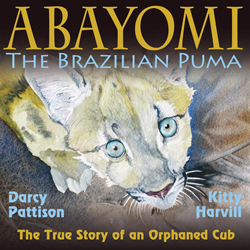
I created this ebook with the Kindle Comic Book creator program.
One addition to the Kids Book Creator is the capability of adding pop-up text. The KBC has a base text, either embedded in the image or added within the creator. On top of the base text, though, you can add a pop-up text. This will add some interesting variations and possibilities to children’s ebooks.
The program is simple to use. You start with a pdf file or images. Since the standard file for print production is a pdf file, that makes it easy. Just do your pdf in InDesign, or if you want the poor-man’s layout, do it with MSWord (at your own risk!). From InDesign, you save the file as a high-resolution pdf; from MSWord, you print to an AdobePDF. Using either program, you can add the needed text and control the layout easily.
Upload the pdf and it converts to the correct formatting for a Kindle ebook. You have the option to add/subtract pages, edit text and more.Then, Save for Publication and the program outputs a .mobi file, which is the standard Kindle file.
Advantages
The Kid’s Book Creator has a couple advantages. First, it’s easy. Upload a pdf and you get a .mobi.
Second, you have access to the original html and CSS files, if you have the skills to do that. That means you have some nice control over the layout.
Disadvantages
However, there are a couple major disadvantages. First, you only get a .mobi file. This is, after all, a Kindle program. It means that you can only upload the file to KDP. You must have an epub file for Apple iBook, Kobo, Nook, Smashwords or other platforms. You’ll put lots of effort into a file that is only useful on one platform.
Second, you must be very careful about the file that is output. On the KDP platform, you must choose either a 35% or 70% royalty schedule. If you choose 35%, there are no associated delivery charges. However, if you select the 70% royalty schedule, delivery charges in the U.S. are $0.15/MB. See the KDP chart here for charges in other countries. When I tested the Kids Book Creator, it gave me similar results as the Comic Book Creator program, files that were quite large.
I started with a usual 32-page picture book, formatted for print at 300 dpi. I uploaded the pdf to the Kid’s Book Creator and converted–without adding any pop-up text to add extra size. The resulting .mobi file was 8.2MB; that file would incur a delivery fee of $1.23. This severely limits the ability to price the book at the lower end of the spectrum, unless you opt for the 35% royalty. If an ebook is priced at $1.99, here’s the math:
$1.99 – $1.23 delivery charge = $0.76 x 70% royalty = $0.532 profit/book.
$1.99 x 35% royalty = $0.72 profit/book.
The key, of course, is to begin with a smaller pdf at the outset. To do it right, you should go back to the original images, reduce those and go on from there. Which almost defeats the ease of use for the program.
My preference will probably be to stick with InDesign to create the print files and save as pdf. I’ll probably do a high-resolution version and a low-resolution version. InDesign exports as an epub for all platforms except Kindle. Using the low-resolution pdf, I’ll try this new program for the needed .mobi files.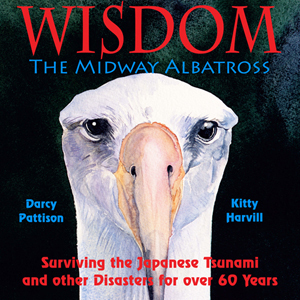
This Kindle ebook was created with InDesign and then converted to .mobi with the Comic Book Creator. The Kids Book Creator should work just as easily.
Updated Metadata
KDP has finally joined the other ebook platforms by adding metadata to indicate the age range and grade range for the book. It’s a welcome addition, if a bit late. The support for this is underwhelming, too. KDP calls it an “Age and Grade” Tools, but it’s a simple table with five age levels from babies to young adult. And of course, these are only suggested levels, you are still free to list your book as you wish.
Compared with iBook Creator
Enhancing ebooks with pop-ups, music, video or other multi-media isn’t new. And in some ways, the Kids Book Creator doesn’t add much to the range of ebooks. Apple’s iBook Creator has allowed introduction of video and much more for several years. Kindle’s new program adds only pop-ups. I’m intrigued with the possibilities here, but I doubt that the interactivity will make much difference for most books.
Education v. Trade Books
In a wider context, it’s interesting that KDP is jumping on the bandwagon for children’s ebooks at this point. As the School Library Journal reported in September, 2013, schools–or the education market for ebooks–have many options. Most of the ebooks available to school libraries are device-neutral by displaying books through a browser. According to an SLJ survey, 67% of school librarians buy ebooks from Follett, which uses a browser-neutral platform. For schools, the battle has been lost by Nook, Kindle, and Apple because few schools wants to put all their budget into a device that must be updated often and requires too much consensus across the district. All tablets and many ebook devices have browsers; a browser-based ebook makes sense.
Now KDP has turned its attention to children’s ebooks. Is it too little, too late? Or, will this merely deepen the divide between trade children’s ebooks and education-market children’s ebooks?
If you want to play around with the new Kids Book Creator, you can download it here.
September 1, 2014
Audio Books: Listen to This!
eBook Sale: August 26-31 only $0.99/regular $5.99
Available at these eBook stores
Mims House eBookStore
Nook
Kindle
Kobo
iBookstore
AUDIO BOOK (Unabridged): Now Available!
Available at these Audio Book stores
iTunes Store
Amazon
Audible
According to the Wall Street Journal, audio books have “ballooned into a $1.2 billion industry, up from $480 million in retail sales in 1997. Unit sales of downloaded audio books grew by nearly 30% in 2011 compared with 2010, according to the Audio Publishers Association.” Some reasons include the ease of listening on smart phones, lower prices, and a growing audience of people who prefer audio books.
I’ve always loved audio books, and in fact, I almost always have one going in my car. That’s why I’m thrilled with my news today that three of my titles are now audio books, with three more coming this fall. If you have audio rights to your books, you can also do this through ACX. They provide a platform for you to audition narrators, who will then produce the book. They are all for sale on iTunes, Audible and Amazon. At the time of this writing, Kell, the Alien is on sale at Audible for only $1.99.
The Girl, the Gypsy and the Gargoyle

Paula Bodin, actress and narrator of THE GIRL, THE GYPSY AND THE GARGOYLE.
The narrator, Paula Bodin, created multiple voices for this exciting version of the story.Paula Bodin is an actress and producer in LA who adores the SciFi/Fantasy genre. She’s voiced multiple characters in shows like Barbie: Life in the Dreamhouse, Monster High and Ever After High, brought Lady Door to life in the West Coast Premiere of Neil Gaiman’s Neverwhere, and is in numerous film/tv/web productions, including playing Wendy in The New Adventures of Peter & Wendy.
Paula says, “I hope you enjoy listening to this book as much as I enjoyed reading it!”

Buy the AudioBook
iTunes
Amazon
Audible
Listen to a Sample
http://mimshouse.com/wp-content/uploads/The-Girl-The-Gypsy-The-Gargoyle-Sample.mp3
Saucy and Bubba: A Hansel and Gretel Tale

Audio Book Narrator, Monica Clark-Robinson
Monica Clark-Robinson is a writer, actor, and voice-over artist living in Little Rock, Arkansas. She holds an MFA in Theatre from Michigan State University. Monica has acted locally for the Arkansas Repertory Theatre, Arkansas Shakespeare Theatre, and Murry’s Dinner Playhouse. She also writes for kids and teens, and was a finalist in the Society for Children’s Book Writers and Illustrators Karlin Picture book award competition. Monica has published a cookbook, titled “Vegan Kids Unite,” and she is a speech writer for local and national professionals. She also works as a voice-over talent for local audio production companies. In her “spare time,” she enjoys gardening, reading, and just hanging with her two awesome daughters and her handsome husband.

Buy the Audio Book
iTunes
Amazon
Audible
Listen to a Sample Audio
http://mimshouse.com/wp-content/uploads/SaucyandBubba-Ch1.mp3
Kell, the Alien
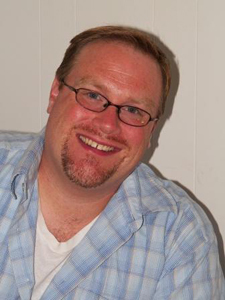
Josiah Bildner, audio narrator of the ALIENS, INC. series.
Josiah Bildner has been performing in theatrical performances since he was 10 when he played Bob Cratchit’s son in Dickens A Christmas Carol. He starred as the Wizard in the Wizard of Oz and Geppetto in Pinnochio in high school and received a drama scholarship at the University of Northern Iowa. After graduation Josiah worked as a director and audio/visual engineer at the NBC affiliate KWWL channel 7 in Waterloo Iowa. Josiah is also a storyteller at a children’s Education Through Music camp and during the school year he is a speech language pathologist. Josiah currently uses all those talents in the wonderful world of voice over. He can be heard voicing many audiobooks, from children’s sci-fi to adult horror, biographies of musical celebrities like Emil Richards and George Harrison to spiritual journeys of Buddhism and Judaism. Josiah Bildner loves voice over because it is the best of all worlds!
 Buy the AudioBook (Unabridged)
iTunes
Amazon
Audible
Listen to a Sample
http://mimshouse.com/wp-content/uploads/KelltheAlien-sample.mp3
Do you like audio books? How often do you listen to them?
August 25, 2014
Whole Novel Critiques: Because It’s Easy to Write a Chapter, but Hard to Write a Novel
Read on Wattpad - Serialized NovelFrom September 11, 2014 - October 30, 2014.
Read one chapter/day.
Click on cover to read the first five chapters.
Last month, I taught a Novel Revision Retreat at the Rolling Ridge Conference Center in North Andover, MA (see the photo album on Facebook), and I was reminded of the need for your critiquers to read your entire manuscript. Writing a chapter is easy. Really. Critiquing a single chapter tells you little about the story under question. Instead, it tells you something about your writing style, your voice, your choice of individual words and your strengths/weaknesses in crafting a sentence. But that critique tells you little about your storytelling skills.
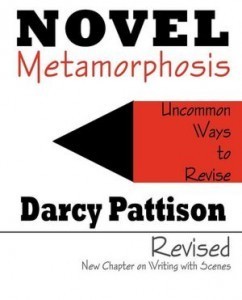
This is the workbook required for Darcy Pattison’s Novel Revision Retreat.
Feedback on a Whole Novel
In the Novel Revision Retreat, writers are divided into groups of four and within the group, they exchange manuscript. That means you’ll have three others who have read your entire manuscript. That is gold. Now, your feedback will be about the whole story.
Plot. Much of the discussion focuses on the overall plot. Writers have an inbuilt idea of story and how a story should progress. Lectures point out additional options, and then writers work on their own plot. Finally, they address both the outer narrative arc and the character arc in their group’s stories, and easily point out the holes in the stories. Feedback from three people, each with a different background, gives feedback about what people think are believable and authentic events. Within the groups, writers raise questions about the sequence of events, motivations of characters, questionable details about the event and more.
Character. Writers approach the characters in the novels they have read with hopes of meeting someone real, someone they would like to spend time with. If the characterization is off, they can pinpoint when and where that happens. They will hold the writer’s feet to the fire and make sure the writer goes back and re-imagines the character in a richer and deeper way.
Basic Skills Practicing basic skills of using great language, evocative sensory details is also crucial to the whole novel revision. We discuss ways to use sensory details to create mood and tone, and how to use zooms, pans and scans to control the focal length of the narrative.
Revision Plan After extensive revision discussions throughout the weekend, each writer goes home with a plan of action for his/her novel. This includes priorities for where to begin the revision, encouragement that some things are working, and sharpened writing skills that provide hope that this revision will be amazing.
One great outcome of such a retreat is the sense of community. Often a group forms an email critique group that continues into the future. Because they bonded in person over their novels, it’s easier to keep such a group going for a long time.
For information on hosting a retreat in your area, email darcy at darcypattison dot com. To see some of the alumni of the retreat and their books, see here.
August 21, 2014
Storytelling: One Surprising Approach to Plotting
Find Darcy Pattison Books in the iBook Store
Plotting is probably the hardest thing I do. I can explain to you 29 different plot templates. And I often write about plotting a novel. Theory, I know. And I know that I can plot a story pretty well. It’s just HARD.
The problem is that there are a series of inter-connected scenes which build to a climax. The structure of events, though, needs to progress from an introduction of a character goal, dramatizing problems and obstacles to getting that goal, and then, finally some resolution, either a happy or sad ending.
OK. I can slot events into a novel structure from a structural viewpoint. For example, at the mid-point of a story, the hero’s journey, the Snowflake method and other plot paradigms might ask you to provide a bleak moment for the main character. There should be a mini-death: the death of hope–the character will never reach your goal; the death of a feeling of safety, and so on.
Knowing that is easy. The exact type of mini-death that is best for the current WIP, and figuring out how to dramatize that event (Show, Don’t Tell), is hard.
Storytellers Statue on Buena Vista Street in Disney California Adventure Park. One of the most amazing American storytellers that ever lived.
We are in the Business of Storytelling
What’s my answer to this straight-laced method of working? Storytelling.
Several articles recently reminded me that I am not just a writer, but a writer of stories. I am getting way to hung up on the theory and I am forgetting that i can just tell the story and have fun with it. Sure–I know that certain plot elements will make the story stronger, but those things are killing my joy in writing. So, I started telling my story.
Once upon a time, there were two water worlds. One world—Rison by name—was dying, the result of misguided scientists trying to act as God and control the natural forces of the planet. The inhabitants knew their time was limited and sought a refuge, a new home. The other water world—called Earth—caught the Risonian’s attention because the inhabitants only lived on land. Surely, they could share their water, the only place the creatures from the dying world would ask for.
Ah, but therein lies the problem. Sharing.
How do creatures put aside their own fears and self-interest and share? And, how can creatures do so willingly? When would the long-term benefits outweigh the short-term problems.
This could cause a war: if you don’t give us room on your planet, maybe we’ll just take over your planet.
The voice isn’t right. There’s not an opening scene. But right now, none of that matters because I don’t know the story. The first draft is to tell you the story; every draft after that is the question of how to craft the story in the most dramatic and compelling way for your readers. Right now, I’m just trying to tell a story. Crafting that into a novel will come later. Come. Listen to my story. . .
A side note: Did you know that if you have an iPhone, you can ask Siri to tell you a bedtime story. She’s told me so many bedtime stories, that she refuses to do it again–unless I beg.


