Dan Jorgensen's Blog, page 369
April 14, 2019
A Writer's Moment: Emotion: A Powerful Force
A Writer's Moment: Emotion: A Powerful Force: “We all like stories that make us cry. It’s so nice to feel sad when you’ve nothing in particular to feel sad about.” – Anne Sullivan ...


Emotion: A Powerful Force
“We all like stories that make us cry. It’s so nice to feel sad when you’ve nothing in particular to feel sad about.” – Anne Sullivan
Emotion is a powerful force in writing, and life, as Anne Sullivan so clearly understood. She was a gifted teacher and communicator best known for her work with Helen Keller, a deaf, blind, and (early in their work together) mute child she taught to communicate.
Despite the physical strain on her own limited sight, Sullivan – at age 21 – helped Keller learn to understand words and their meaning, how to speak them, and the greater context of what they stood for in the world around her. Then she spent the rest of her life making sure that Keller would always enjoy that world and write about it too.
Born on this date in 1866, Sullivan was devoted to Helen Keller’s success, and was instrumental in Keller's becoming the first deaf-blind person in history to graduate from college. The story of Keller and Sullivan’s work with her was re-told in the best-selling book, Broadway play, and award-winning movie called The Miracle Worker. [image error]Anne Sullivan and Helen KellerHelen Keller not only was inspirational for those who were deaf or blind (or both), but for all of us through her example of perserverance and the willingness to “try life” despite being dealt what many would call a losing hand. And she always gave credit to Sullivan.
“Life is an exciting business,” Keller said, referring directly to her mentor and lifelong friend who died in 1936, “and most exciting when it is lived for others.”
Emotion is a powerful force in writing, and life, as Anne Sullivan so clearly understood. She was a gifted teacher and communicator best known for her work with Helen Keller, a deaf, blind, and (early in their work together) mute child she taught to communicate.
Despite the physical strain on her own limited sight, Sullivan – at age 21 – helped Keller learn to understand words and their meaning, how to speak them, and the greater context of what they stood for in the world around her. Then she spent the rest of her life making sure that Keller would always enjoy that world and write about it too.
Born on this date in 1866, Sullivan was devoted to Helen Keller’s success, and was instrumental in Keller's becoming the first deaf-blind person in history to graduate from college. The story of Keller and Sullivan’s work with her was re-told in the best-selling book, Broadway play, and award-winning movie called The Miracle Worker. [image error]Anne Sullivan and Helen KellerHelen Keller not only was inspirational for those who were deaf or blind (or both), but for all of us through her example of perserverance and the willingness to “try life” despite being dealt what many would call a losing hand. And she always gave credit to Sullivan.
“Life is an exciting business,” Keller said, referring directly to her mentor and lifelong friend who died in 1936, “and most exciting when it is lived for others.”
April 13, 2019
A Writer's Moment: 'Voice' Carries Your Poetic Words
A Writer's Moment: 'Voice' Carries Your Poetic Words: “Every time you read a poem aloud to yourself in the presence of others, you are reading it into yourself and them. Voice helps to carry w...
'Voice' Carries Your Poetic Words
“Every time you read a poem aloud to yourself in the presence of others, you are reading it into yourself and them. Voice helps to carry words farther and deeper than the eye.” – Seamus Heaney
Nobel Prize winner Heaney was born in Northern Ireland on this date in 1939. Author of more than 20 volumes of poetry, he is widely recognized as one of the 20thcentury’s greatest poets and writers. He died in 2013.
 Heaney's work is used extensively in school syllabuses internationally, including the anthologies The Rattle Bag and The School Bag (both edited with Ted Hughes). For Saturday’s Poem, here is Heaney’s,
 Digging
My grandfather cut more turf in a day
Than any other man on Toner's bog.
Once I carried him milk in a bottle
Corked sloppily with paper. He straightened up
To drink it, then fell to right away
Nicking and slicing neatly, heaving sods
Over his shoulder, going down and down
For the good turf. Digging.
The cold smell of potato mould, the squelch and slap
Of soggy peat, the curt cuts of an edge
Through living roots awaken in my head.
But I've no spade to follow men like them.
Between my finger and my thumb
The squat pen rests.
I'll dig with it.
Share A Writer’s Moment with a friend at http://writersmoment.blogspot.com
April 12, 2019
A Writer's Moment: Persistence Is The Writing Key
A Writer's Moment: Persistence Is The Writing Key: “The Truth of the matter is that people who succeed in the arts most often are the people who get up again after getti...
Persistence Is The Writing Key
“The Truth of the matter is that people who succeed in the arts most often are the people who get up again after getting knocked down. Persistence is critical.” – Scott Turow
Born this date in 1949, Turow had his first book Presumed Innocent, published in 1987 after starting his professional career as a successful international attorney. But, he wanted to write and had “an ache to create,” and turned to the keyboard, putting his thoughts and actions into written words. His most recent work is the New York Times #1 Bestseller, Testimony.
To date he has written a dozen bestsellers, many of which use the same characters in a fictitious area known as Kindle County along the Kindle River – a clever take on one of the things he’s been lukewarm about – the use of e-readers. Turow also has made a name for himself as a successful editor, a much sought-after speaker, and a musician.
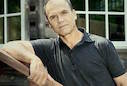 His books have been translated into more than 40 languages, sold more than 30 million copies worldwide and have been adapted into several films and television miniseries. He frequently contributes essays and op-ed pieces to publications such as the New York Times, Washington Post, Vanity Fair, The New Yorker, Playboy, and The Atlantic. Called by Time “The Bard of a Litigious Age,”
 A strong supporter of the public library system, Turow noted: “Widespread public access to knowledge, like public education, is one of the pillars of our democracy; a guarantee that we can maintain a well-informed citizenry.” Share A Writer’s Moment with a friend at http://writersmoment.blogspot.com
April 11, 2019
A Writer's Moment: Commentary That Packs A Punch
A Writer's Moment: Commentary That Packs A Punch: "In journalism, there has always been a tension between getting it first and getting it right." – Ellen Goo...
Commentary That Packs A Punch
"In journalism, there has always been a tension between getting it first and getting it right." – Ellen Goodman
A Massachusetts native, journalist, speaker and commentator Goodman was born on this date in 1941, and her reporting and commentary always "got it right."
Wanting to be a historian, she earned her first degree in that field but then quickly gravitated to writing after taking a “temporary” job in 1963 as a researcher at Newsweek magazine. With reporting credits for the Detroit Free Press and the Boston Globe, where she first tried out her award-winning social commentary column, she was a keen observer of the human condition, speaking out on social issues and presenting thoughts and ideas read by millions around the globe.
 The first woman to be published on a major newspaper's Op-Ed Page and the first to have a regular column, she joined the Washington Post Writers Group in 1976 where she won the Pulitzer Prize for Commentary. Author of 8 books, she also has earned the American Society of News Editors’ Distinguished Writing Award, the Hubert H. Humphrey Civil Rights Award, the National Women’s Political Caucus President's Award, and the Ernie Pyle Award for Lifetime Achievement from the National Society of Newspaper Columnists.
 “I think,” she said, “that having a job in journalism, despite all of the changes, is still a fantastic way to be – to make a living observing your society and having a chance to use your voice.” Share A Writer’s Moment with a friend at http://writersmoment.blogspot.com
April 10, 2019
A Writer's Moment: Letting His Readers Decide
A Writer's Moment: Letting His Readers Decide: “ I don't think anyone wants a reader to be completely lost - certainly not to the point of giving up - but there's something to b...
Letting His Readers Decide
“I don't think anyone wants a reader to be completely lost - certainly not to the point of giving up - but there's something to be said for a book that isn't instantly disposable, that rewards a second reading.”– John M. Ford
Born in East Chicago on this date in 1957, Ford was a science fiction and fantasy writer, game designer, and poet who contributed to numerous online discussions, often improvising poems to fit the discussion. He also was noted for the many “celebratory” parodies he did of other authors and writing styles.
After studying at the University of Indiana - where he was enrolled when his first short stories were published - Ford spent much of his adult writing life in Minneapolis where he was a major supporter of the Minneapolis Public Library. The Library established the John M. Ford Book Endowment in his memory following his death in 2006.
 Ford often wrote variations on the theme of growing up, learning about one's world and one's place in it, and taking responsibility for it to help make the world a better place. Among his many highly creative books were two “Star Trek” parodies -The Final Reflection and How Much For Just The Planet?
 He was a firm believer in letting the reader determine the best path to follow in interpreting a book, saying, “The ideal, it seems to me, is just to show things happening and allow the reader to decide what they mean.” Share A Writer’s Moment with a friend at http://writersmoment.blogspot.com