Dan Jorgensen's Blog, page 368
April 20, 2019
Sharing the Joy of Poetry
“I believe that poetry begins in childhood and that a poet who can remember his own childhood exactly can, and should, communicate to children.”– William Jay Smith
Born in Louisiana in April 1918, Smith was Poet Laureate to the Library of Congress from 1968-70, and Poet-in-Residence at prestigious Williams College for many years.
 The author of more than 50 books of poetry for adults and children, including the multiple award-winning children’s book Laughing Time, he was twice honored as a finalist for the National Book Award. For Saturday’s Poem, here is Smith’s,
 The World Below The Window
The geraniums I left last night on the windowsill,
To the best of my knowledge now, are out there still,
And will be there as long as I think they will.
And will be there as long as I think that I
Can throw the window open on the sky,
A touch of geranium pink in the tail of my eye;
As long as I think I see, past leaves green-growing,
Barges moving down a river, water flowing,
Fulfillment in the thought of thought outgoing,
Fulfillment in the sight of sight replying,
Of sound in the sound of small birds southward flying,
In life life-giving, and in death undying.
Share A Writer’s Moment with a friend at http://writersmoment.blogspot.com


A Writer's Moment: Sharing the Joy of Poetry
A Writer's Moment: Sharing the Joy of Poetry: “I believe that poetry begins in childhood and that a poet who can remember his own childhood exactly can, and should,...
April 19, 2019
A Writer's Moment: Expanding Upon Life's Mysteries
A Writer's Moment: Expanding Upon Life's Mysteries: “A novel is a mirror walking along a main road.” – Stendhal Born in 1883, Marie-Henri Beyle - who wrote under the pseudonym Stendhal -...
Expanding Upon Life's Mysteries
“A novel is a mirror walking along a main road.” – Stendhal
Born in 1883, Marie-Henri Beyle - who wrote under the pseudonym Stendhal - is one of the most original and complex French writers of the first half of the 19th century, chiefly known for his works of fiction. Perhaps his finest novel is the 1830 work The Red and the Black from which the above quote comes.
Before settling on the pen name Stendhal, he published under many names including “Louis Alexandre Bombet” and “Anastasius Serpière.” The only book that Beyle published under his own name was The History of Painting in 1817. Over his lifetime, in addition to many books – both fiction and non – Stenhal authored hundreds of stories, essays and published letters.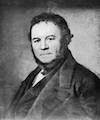
“A good piece of fiction, in my view, does not offer solutions,” Stendahl said. “Good stories deal with our moral struggles, our uncertainties, our dreams, our blunders, our contradictions, our endless quest for understanding. Good stories do not resolve the mysteries of the human spirit but rather describe and expand up on those mysteries.”
Share A Writer’s Moment with a friend at http://writersmoment.blogspot.com
Born in 1883, Marie-Henri Beyle - who wrote under the pseudonym Stendhal - is one of the most original and complex French writers of the first half of the 19th century, chiefly known for his works of fiction. Perhaps his finest novel is the 1830 work The Red and the Black from which the above quote comes.
Before settling on the pen name Stendhal, he published under many names including “Louis Alexandre Bombet” and “Anastasius Serpière.” The only book that Beyle published under his own name was The History of Painting in 1817. Over his lifetime, in addition to many books – both fiction and non – Stenhal authored hundreds of stories, essays and published letters.

“A good piece of fiction, in my view, does not offer solutions,” Stendahl said. “Good stories deal with our moral struggles, our uncertainties, our dreams, our blunders, our contradictions, our endless quest for understanding. Good stories do not resolve the mysteries of the human spirit but rather describe and expand up on those mysteries.”
Share A Writer’s Moment with a friend at http://writersmoment.blogspot.com
April 18, 2019
A Writer's Moment: Great Thoughts, Great Actions
A Writer's Moment: Great Thoughts, Great Actions: “Great thoughts speak only to the thoughtful mind, but great actions speak to all mankind.” – Theodore Roosevelt Outside of his politi...
Great Thoughts, Great Actions
“Great thoughts speak only to the thoughtful mind, but great actions speak to all mankind.” – Theodore Roosevelt
Outside of his political career, Roosevelt was both a voracious reader and tireless writer. He wrote thousands and thousands of letters and essays and had 25 books published about a range of subjects, including history, biology, geography and philosophy. His writing about the American West, in particular, has stood the test of time and is still often used by those seeking depictions of life on the frontier in those times. And, of course, his concern for our environment and protecting our land for future generations did more to shape of our current national park system than perhaps any other president before or since. [image error] When asked once about his decisive leadership in many of these things, he said, “In any moment of decision, the best thing you can do is the right thing, the next best thing is the wrong thing, and the worst thing you can do is nothing.” We can be grateful that he never chose to do nothing.
Outside of his political career, Roosevelt was both a voracious reader and tireless writer. He wrote thousands and thousands of letters and essays and had 25 books published about a range of subjects, including history, biology, geography and philosophy. His writing about the American West, in particular, has stood the test of time and is still often used by those seeking depictions of life on the frontier in those times. And, of course, his concern for our environment and protecting our land for future generations did more to shape of our current national park system than perhaps any other president before or since. [image error] When asked once about his decisive leadership in many of these things, he said, “In any moment of decision, the best thing you can do is the right thing, the next best thing is the wrong thing, and the worst thing you can do is nothing.” We can be grateful that he never chose to do nothing.
April 17, 2019
A Writer's Moment: Never Exclude Anyone
A Writer's Moment: Never Exclude Anyone: “I'm a reader for lots of reasons. On the whole, I tend to hang out with readers, and I'm scared they wouldn&#...
Never Exclude Anyone
“I'm a reader for lots of reasons. On the whole, I tend to hang out with readers, and I'm scared they wouldn't want to hang out with me if I stopped.”– Nick Hornby
Born in England on this date in 1957, Hornby is both a writer and lyricist, perhaps best known for his memoir Fever Pitch and novels High Fidelity and About a Boy, all adapted into feature films. Hornby's works, which frequently touch upon music and sport, have sold more than 5 million copies worldwide.
The author of 7 novels, 9 nonfiction books, numerous short stories and screenplays, and two television specials, including this year’s State of the Union, Hornby also has edited half-a-dozen anthologies. Honored with many writing and screenwriting awards, including the prestigious “E.M. Forster Prize” and the “British Sports Book Award for Outstanding Contribution to Writing,” the BBC named Hornby among its top 30 most influential people in British Culture.
 Hornby also is co-founder of the Ministry of Stories, a non-profit organization in East London dedicated to helping children and young adults develop writing skills, and to helping teachers inspire their students to write. “I don't want my books to exclude anyone,” Hornby said. “But if they have to, then I would rather they excluded the people who feel they are too smart for them!”
Share A Writer’s Moment with a friend at http://writersmoment.blogspot.com
April 15, 2019
A Writer's Moment: In Order To Shape The Future
A Writer's Moment: In Order To Shape The Future: “Memories are the key – not to the past, but to the future.” – Corrie ten Boom Cornelia “Corrie” ten Boom, both born and died on ...
In Order To Shape The Future
“Memories are the key – not to the past, but to the future.”– Corrie ten Boom Cornelia “Corrie” ten Boom, both born and died on this date (1892 and 1983, respectively), was one of the many thousands of ordinary people in World War II who risked their lives to save those who were being hunted by the Nazis as part of what would become known as the Holocaust. Captured and imprisoned for her actions, she survived the war to write about the experience in The Hiding Place. It was one of many books she wrote while following her own advice to “remember things from the past in order to help shape the future” – a mandate for all who choose a life of writing and communication. [image error]Corrie ten Boom Also acclaimed for her work on behalf many other causes, she founded a church to serve those with mental disabilities and became a champion for foster children. During her final year of life, she reflected on how she could have been killed or died at a much younger age and about the urgency she always felt to “do things for others.” She said simply, “The measure of a life, after all, is not its duration, but its donation.”