Laura Madeleine's Blog, page 2
February 24, 2020
Cardamom & Coconut Cake
Is there anything more comforting than the smell of freshly ground cardamom? Maybe a freshly baked cake or pastry, where the buttery baked smell combines with hot sugar and fresh, floral, spicy sweetness?
Niki Segnit, author of the one of my most-referenced food books, The Flavour Thesaurus, says that cardamom and coconut, especially in Indian rice puddings and barfi is so delicious that it is “not to be trusted”, tricking you into eating far more than you should… That’s an easy thing to do with this cake, which goes as well with coffee at elevenses as it does with tea late afternoon. Just have to bake another one!
Ingredients:
200g butter, softened200g caster sugar3 free-range eggs250g self-raising flour10 cardamom pods1 tbsp coconut cream (instructions on this later)
For the coconut filling:
3 tbsp coconut cream2 tbsp desiccated coconut2 tbsp icing sugar
For the syrup:
3 tbsp caster sugar 1/2 tsp vanilla essence (or vanilla bean paste)5 cardamom pods
Method:
To make coconut cream, put a can of full-fat coconut milk in fridge for a few hours. DO NOT SHAKE IT. When you open it, the cream should have risen to the top. Preheat the oven to 180C/350F/Gas 4. Grease and line a 23cm, 9 inch deep cake tin.Cream together the butter and sugar until light and fluffy.Add in the eggs one at a time, along with a tablespoon of the flour with each and beat well. Repeat with rest of the eggs, beating well in between. Using a pestle and mortar, bash the cardamom pods to split them open, then scrape out the seeds. Discard the husks and grind the seeds into powder. (Or you could bash the pods with a rolling pin or similar and grind the seeds in a clean coffee or spice grinder). Add to the mixture, along with the tablespoon of coconut cream and stir to combine. Add the remaining flour in thirds, folding in lightly in between. Dollop into the tin, smooth over the top and bake for 25-30 minutes, or until the top is golden and risen, and a skewer inserted comes out clean.
The filling:
Scoop the coconut cream into a clean bowl.Add the icing sugar and desiccated coconut and mix together. Cover and place in the fridge until ready to use.
The syrup:
Bash the cardamom pods open and grind in the same way as before. Place in a small saucepan, along with the caster sugar, vanilla and 5 tablespoons of hot water. Bring to a simmer and reduce over a medium heat until the consistency thickens. BE CAREFUL because hot sugar is HOT. When the cake is out of the oven, prick holes all over the surface with a skewer and spoon on the sugar syrup so that it all soaks in. Leave for a few minutes before turning out of the tin and leaving to cool on a wire rack. When completely cool, carefully cut the cake in two. Spoon the coconut filling onto the bottom half, spreading out to the edge, then sandwich the other half back on top. Decorate with icing sugar and try not to eat too many slices at once…
This recipe was first featured on the Domestic Sluttery newsletter.
If you liked this, you’ll find more where that came from on my newsletter. Exclusive recipes, research, snippets of work-in-progress. Sign up below!
[image error]


January 20, 2020
Breakfast Martini Cake
It’s orange season! And I love it. My local greengrocer is selling HUGE navel oranges 4 for £1, blood oranges (my favourite) are back, and jars of marmalade are appearing in my vicinity with startling regularity.
Sadly, I’m not a marmalade fan. Something about the combination of sugar and bitterness just doesn’t work for me, which is weird, because I love other bitter flavours. However, that doesn’t mean I don’t love orange and marmalade in stuff, including cocktails.
A classic Breakfast Martini involves marmalade, dry gin, triple sec and lemon juice. Someone once tried to make me one with just vodka and marmalade stirred in a glass, which I won’t recommend. But this cake combines tangy orange, sweet marmalade, buttery sponge and yes, some generous slugs of gin and Cointreau.
Breakfast Martini Cake
Ingredients:
200g butter, softened200g caster sugar3 free-range eggs220g self-raising flour25ml milk (or milk alternative)Zest of 1 orange1 tbsp muscovado sugarSegments of 1 orange2 tbsp marmalade (preferably thick cut)
For the martini topping:
Juice of 1 lemon2 tbsp muscovado sugar2 tbsp gin3 tbsp Cointreau (you could replace with orange juice if you like)2 tbsp marmaladeLemon zest, to decorate
Method
Preheat the oven to 190C/375F/Gas 5. Grease and line a 20cm, 9 inch deep cake tin.Cream the butter and sugar together until light and fluffy. Add the eggs one at a time, along with tablespoon of the flour with each to stop the mixture from splitting. Gently fold in the remaining flour until it is just incorporated and no streaks are showing.Stir in the milk and the orange zest.Sprinkle the muscovado sugar over the bottom of the prepared tin.Spread the marmalade over the top, then layer the orange segments in a pattern, whatever you feel like.Dollop the batter over the top, smooth over and bake for around 30-35 minutes, or until it’s golden and risen, and a skewer inserted comes out clean.Cool in the tin for a few minutes before flipping onto a plate and peeling off the paper.
The syrup:
Place all the ingredients in a small saucepan and stir together.Bring to a simmer and reduce for 10 minutes or so over a medium heat, until the consistency thickens.Whilst the cake is still warm, prick holes all over the surface with a skewer and spoon over the sticky, boozy syrup so that it soaks in.Decorate lemon zest, make yourself a real breakfast martini to drink with it.
This recipe was first featured on Domestic Sluttery.
If you liked this recipe, please consider signing up to my monthly newsletter, where I share news, promotions and research, and offer subscriber-only access to new recipes.
[image error]
January 6, 2020
At the Sauce Podcast
I was delighted to be a guest on episode 35 of At the Sauce; a brilliant food and drink themed podcast based here in Bristol. It was a joy to talk to Alex and Karis, especially knowing they’d recently interviewed one of my favourite food writers, Bee Wilson.
Check out the episode below. You can find other episodes with guests ranging from chefs to producers to other writers over at At the Sauce and you can also support their work via their Patreon. Thanks Alex and Karis!
It’s a heck of a newsletter this month, with a seasonal recipe perfect for Burns Night, news, a short story and more. Click below to sign up.
[image error]
January 4, 2020
Short Story: The Unravelling of Walter Sinos
Getting 2020 off to a pretty flying start, I’m delighted to say that literary journal Short Fiction chose my short story, “donating a little their way, so they can continue to run the journal as they have been since 2006.
December 11, 2019
Blackberry, Bay and Hazelnut Galette
I’ve been obsessed with blackberry and bay ever since reading about it in Bee Wilson’s wonderful article about jam for the Financial Times. There, she wrote about London Borough of Jam in Hackey, where owner Lillie O’Brien makes a blackberry and bay jam that is “dark, rich and full of back-to-school autumnal promise”. It was only then I remembered that I had read about blackberry and bay as a flavour combination before, in Olivia Potts’ Vintage Chef column. (She makes blackberry and bay jam filled doughtnuts. Aaaaah).
The joy of a galette is that they are super easy to make, and even easier to stick in the oven and forget about for half an hour. The bay leaf adds a subtle flavour; a kind of grown-up, botanical muskiness to the jammy berries.
It’s also incredibly easy to make this recipe vegan, as most ready-made pastry uses vegetable fat. Just replace the egg-glaze with nut or oat milk.
Ingredients:
1 packet of ready-made shortcrust pastry100g whole or blanched hazelnuts400g blackberries, defrosted if frozen1 large cooking apple1/2 tsp ground mixed spice6 tbsp muscovado sugar2 tbsp caster sugar2 dried bay leaves1 egg or 2 tbsp of milk, to glazeclotted cream, to serve
Method:
Preheat the oven to 190C/375F/Gas Mark 5. Line a baking tray with baking paper.Take the pastry out of the fridge and allow to come to room temperature.Place the hazelnuts in a dry frying pan and toast over a low heat for around 3-4 minutes. Keep your eye on them; they burn easily.If they still have their skins, tip into a clean tea towel and rub vigorously to remove. It doesn’t matter if some stay on.Use a hand blender or spice grinder to grind the nuts (I like to leave a few chunky bits) and set aside.Peel, core and roughly slice the apple. Place into a bowl with 200g of the blackberries, 4 tbsp of the muscovado sugar and the mixed spice. Toss together and set aside.Place the remaining blackberries in a pan, along with 3 tbsp of water, the caster sugar and the bay leaves. Place over a low heat, stirring regularly for around 8-10 minutes, until the sugar has dissolved and blackberries have broken down to form a compote-like texture. Remove from the heat and set aside.To assemble the galette, roll the pastry on a floured surface into circle slightly larger than a dinner plate. Transfer to the baking tray.Scatter all but 1 tbsp of the hazelnuts across the pastry, stopping about an inch from the edge, then scatter over 1 tbsp of muscovado sugar.Heap the apples and blackberries into the middle of the pastry.Take the bay leaves out of the compote, then spoon it over the mound of fruit.Fold the edges of the galette into the centre, leaving a hole in the middle.Brush the pastry with beaten egg or milk, then scatter with the remaining hazelnuts and sugar.Bake in the oven for around 40-45 minutes, until the pastry is golden-brown and the fruit is bubbling.Serve straight away, with a large scoop of clotted cream.
[image error]
This recipe first appeared in the November edition of my newsletter. Head over here to subscribe for exclusive recipes, news, photos, sneak previews of books, and more.
November 15, 2019
Talking Food With… Katy Moran
In my Talking Food series I’ll be featuring short interviews with authors, chefs, cooks, historians and food writers about their experiences of food, from memories to favourite recipes.
[image error]
Today, I’d like to introduce as my guest author Katy Moran. Katy is a former book editor who now lives in Shropshire with her husband and three children. Her first novel Bloodline was published in 2008 and was an epic adventure set amongst the warring kingdoms of the Dark Ages. After a series of successful Young Adult Novels, Katy has turned her attention to adult fiction. Her debut adult novel False Lights has been described as ‘Georgette Heyer meets William Boyd’ and as having ‘… a marvellously dark and compelling anti-hero and a truly gutsy heroine… a terrific read’. Katy’s latest novel, Wicked by Design, was published in September.
And if you follow either of us on Twitter, you’ll know that Katy and I were allies this summer in the fight against the never-ending courgette hoards.
LM: Hi Katy! Your latest book, Wicked by Design, is set in an alternate Napoleonic era. Do historical recipes and/or food history have a place in your research?
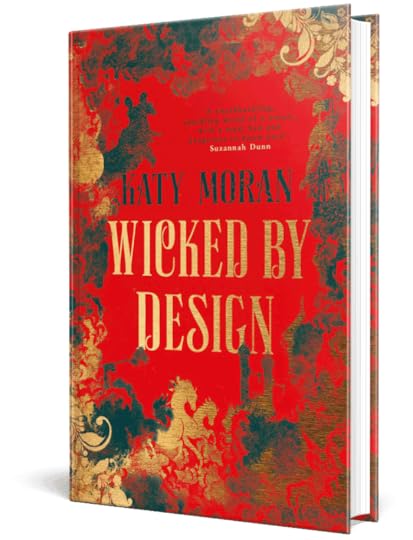
KM: Yes, I think that because my books are set in an alternative Napoleonic universe, details like period recipes and the food that people ate have an important role in grounding readers in the world and making them believe in it. In Wicked by Design, I seem to focus in on details of what people are eating or drinking at moments of extreme stress. There is a moment in St Petersburg when one of my heroes, Crow, is really falling to pieces at the supper table under the combined effect of grief, opium and too much brandy. Somehow, zeroing in on the details of the creamed spinach tart and beef olives that everyone else is eating throws his state of disintegration into contrast. (There is a recipe for beef olives in Hannah Glasse’s The Art of Cookery, published in 1747). Crow’s state and behaviour at this moment were also partly inspired by the music video for Johnny Cash’s cover of hurt, which features him surrounded by a feast; opulent but somehow repellent platters of rich food.
LM: Any favourite examples of food in fiction?
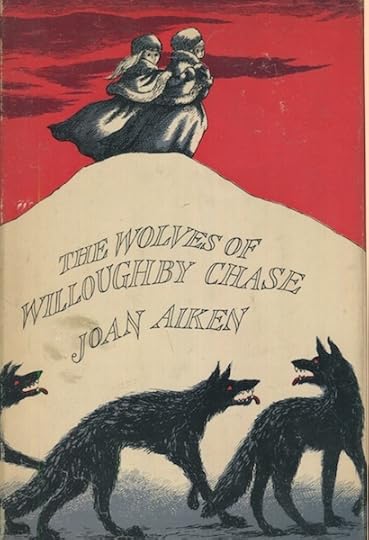
KM: Yes, I always remember Sylvia Green’s tiny ham rolls that she ate on the train north to Willoughby Chase, and the awful contrast with her unnerving travelling companion’s rich confectionery oozing with violet icing. Actually, The Wolves of Willoughby Chase by Joan Aiken was one of the inspirations behind my alternative timeline: ‘This book is set during a period of history that never happened’.
LM: Can you share a little about your research process? Are there any tips, tricks or strange practices you find yourself following?
KM: I work in a second-hand bookshop and much of my research is driven by books I stumble on while filing new stock in the history section, so my advice would be to visit a shop like the one I work in, that has a varied and esoteric selection of books. It’s one of the best ways to get yourself out of a plot hole, too. I always find answers that I’d never have come up with by approaching the problem head on.
LM: What is it that draws you to the Cornish coast as a setting? Can you share a favourite historical fact or piece of folklore from the region?
 Hell Bay, Bryher
KM: For one of the companion novels to Wicked by Design, I needed a setting in close proximity to an island. My husband’s father was born on Tresco, one of the Isles of Scilly, so that’s why one of my heroines, Hester, was brought up on the island of Bryher, and that’s how I arrived at the more general Cornish setting, too.
LM: Some quickfire questions! First, coffee or tea?
KM: Coffee!
Chocolate or cheese?
KM: Chocolate.
Breakfast or dinner?
KM: Dinner.
What’s your favourite beverage to relax with?
KM: A Gin & Tonic.
If you cook, what’s your favourite thing to make?
KM: I love baking and anything that involves the creative use of leftovers or hiding vegetables so that they are undetected by my children. Last night, I made a pie from the remains of a roast chicken and a baked ham, and the stock from the chicken is bubbling away in my kitchen. My kids spent the summer gorging on chocolate cake without a clue it was made with courgettes from the terrifying mountains that kept appearing in the garden. I’m not always this organised, though, and we’ll be having frozen pizza this evening.
LM: Can you tell us what you’re working on right now?
KM: Another novel set in the world of Wicked by Design, but eight years further on.
Thank you Katy! You can find out more about Katy at: https://katymoran.co.uk/ and follow her on Twitter @Katyjamoran.
If you liked this post be sure to sign up to my newsletter which I send out on the last Friday of every month. Subscribers get first access to new and historic recipes, Q&As like the one above, historical research, offers, events, and original fiction.
[image error]
November 6, 2019
Halwa Carrot Cake
I came up with this cake a few years ago for a friend from Pakistan who said he was missing carrot halwa (gajar ka halwa), and who also loves carrot cake. So, for his birthday I decided to try and combine the two… After a few test runs, and a lot of texting my friend Viv to ask about correct consistencies, I ended up with this; a take on a traditional carrot cake mixed with cardamom, saffron, pistachios, golden sultanas and a large helping of sticky, sweet halwa that’s good enough to eat on its own. This is one of favourite recipes, actually, and a perfect comfort food for dark, chilly winter nights. I’d be really interested to hear about other recipes or methods for carrot halwa too!
Ingredients
For the halwa:
8 cardamom pods 40g butter Handful golden sultanas Handful of cashews 250g of carrots (about 4-5), peeled and grated 200ml condensed milk (about half a tin) Pinch of saffron
For the frosting:
250g mascarpone 200g cream cheese 150g icing sugar (to taste) 1 tbsp lemon juice zest of 1 orange
For the cake:
200g butter 200g golden caster sugar 250ml milk 2 free-range eggs, beaten 200g carrots, peeled and grated 350g self-raising flour 1 tsp bicarbonate of soda A generous grating of fresh nutmeg or ¼ tsp ground Handful of golden sultanas Handful of pistachios, roughly chopped (save a few for the top)
Method:
First make the halwa. Smash open the cardamom pods, scrape out the seeds and grind them into a powder in a pestle and mortar. Melt the butter in a heavy-bottomed pan and add the cardamom. Stir for about a minute until fragrant.Tip in the sultanas and cashews, followed by the carrot. Stir together well, and gently fry over a medium heat, stirring often, for around 5 minutes or until the carrots are wilted and beginning to tangle together.Tip in the condensed milk and the saffron. Stir well. Reduce the heat and stir regularly until the mixture turns puddingy and almost all of the liquid has evaporated, about 5-10 minutes, depending on your stove. Remove from the heat, cover and set aside. Next make the frosting. Place the mascarpone and cream cheese in a bowl, and sift in the icing sugar. Stir or whisk together. Stir in the lemon juice and orange zest, saving a little zest for decoration. Cover and put in the fridge to firm up. For the cake, preheat the oven to 160C/325F/Gas Mark 3. Line a 23cm cake tin. Place the butter and sugar together in a pan and stir together over a medium heat until both are melted. Remove from the heat and set aside to cool for a few minutes. Then, add a large spoonful of the halwa and the milk and stir to combine. Whisk in the beaten eggs.Place the grated carrots, flour, bicarb, and nutmeg in a large bowl and mix. Pour in the butter mixture and fold together until no streaks of flour are showing. Stir in the sultanas and pistachios. Tip into the cake tin and bake for around 40-45 minutes, or until golden and risen and a skewer inserted into the middle comes out clean. If your oven is browning the top too quickly, cover in foil to allow the rest to catch up. Cool on a wire rack. Assemble by spreading the halwa in a layer across the top of the cake, then spooning over the frosting. Decorate with orange zest and chopped pistachios.
This recipe was first featured on the Domestic Sluttery newsletter. If you haven’t heard of it, they deliver brilliant content to your inbox twice a week. You can sign up here.
And if you liked this, you can sign up to my free monthly newsletter! Subscribers get first access to brand new recipes, historical fiction and food history research, interviews and even the occasional short story.
[image error]
October 23, 2019
Talking Food With… Lucy Hounsom
In my Talking Food series I’ll be featuring short interviews with authors, chefs, cooks, historians and food writers about their experiences of food, from memories to favourite recipes.
[image error]
Today, I’d like to introduce as my guest author Lucy Hounsom. Lucy is the author of The Worldmaker Trilogy. Her first book, STARBORN, was shortlisted in the 2016 Gemmell Awards for Best Fantasy Debut. Her fourth book, SISTERSONG, will be published by Pan Macmillan in 2021. She is a Waterstones bookseller and co-hosts the award-winning geek feminist podcast ‘Breaking the Glass Slipper’, which last weekend won Best Audio at the British Fantasy Awards 2019. She lives half the time in Devon with two cats and the other half in Skyrim.
And for people who don’t know… she is also my older sister. 
October 9, 2019
Blackberry Madeleines
Autumn is now officially here; the tomatoes have turned orange on brittle stems, the courgettes are finally ending their reign, and now is the time for golden quinces, autumn apples, and a few last, late blackberries clinging to brambles.
It was when we were on our way home, the sun sinking low and golden, that we found the blackberries. Hedgerow upon hedgerow, heavy with fruit. They squashed between our fingers, on our tongues. I still remember their taste, perfumed and sweet. Not the bright, Mat sweetness of a strawberry , but deeper, more mysterious, as if they’d drawn the cold, smoky nights into their juice, as if they’d seen midnight. – From Where the Wild Cherries Grow.
I love working with ingredients that are simple, that sing to people’s memories. The taste of blackberries, to me, will always be picking them with my father, or the taste of my grandmother’s crumble, the scratches and the beads of blood that you always have to pay for the fruit with. There is no sense in buying blackberries; commercially grown blackberries are too big, too tart, and never have the musky, almost feral sweetness that makes them so timeless and evocative.
So here we are, a nod to my own memories, and to Monsieur Proust’s, and a recipe for Blackberry Madeleines.
[image error]
Blackberry Madeleines
Ingredients
2 free-range eggs100g caster sugar100g butter, plus extra for greasing100g plain flour¾ tsp baking powder½ tsp vanilla bean extract, or 1 vanilla bean podLarge handful of blackberries (one for each cake)Icing sugar, to decorate
Method
Pre-heat your oven to 200C / 400F / Gas mark 6. Brush your madeleine or bun tin with melted butter and dust with a little flour.Whisk together the eggs and caster sugar until light and frothy. Melt the butter and leave to cool slightly, then stir in along with the flour, baking powder and vanilla bean extract.Leave to rest for a few minutes, then spoon into the prepared tins. Press a blackberry into the middle of each madeleine.Bake for around 8-10 minutes, or until risen and pale golden. Transfer to a wire rack to cool slightly, dust with icing sugar, and serve warm.
P.s. If you don’t have a madeleine tin, you can use a shallow bun tin or similar. This’ll make 12-14, depending on the size. Just keep an eye on your cakes as they cook.
This recipe was first featured in the excellent Domestic Sluttery Newsletter. If you liked it, do consider signing up to my own monthly newsletter. It features original recipes, historic recipes, research, Q&As with some of my favourite people, and more.
[image error]
September 30, 2019
Fig Cake with Fig Leaf Cream
In Tangier, at the very edge of the casbah overlooking the strait, is a house called Dar Zero. An old property, with white, crenelated walls, this is where Samuel Pepys lived in 1683, during the English occupation of Tangier (1661-1684), when he was employed as a secretary to George Legge, Lord Dartmouth, who had been tasked with abandoning Tangier and destroying its fortifications. In Dar Zero, Pepys wrote sections of his famous diaries, often seated beneath the shade of a huge fig tree that continues to grow in the garden to this day…
 Dar Zero, in the Casbah
Dar Zero is very much an inspiration for Dar Portuna, the grand house in An Echo of Scandal. So, in honour of Pepys and his fig tree, here’s a recipe that uses ripe, seasonal figs, alongside fresh fig leaves. It’s a riff on my favourite Smitten Kitchen strawberry cake. Fig leaves have a wonderful aroma, somewhere between floral vanilla, coconut and tobacco. Here, they’re made into a syrup and mixed with whipped cream, to create a gentle, fragrant indulgent pudding that’s perfect to eat as the last golden rays of summer sink into autumn.
[image error][image error][image error]
Fig Cake with Fig Leaf Cream
Ingredients:
For the cake:
100g butter, softened190g golden caster sugar 1 large egg 190g self-raising flour 120ml milk 1 tsp of vanilla bean extract 2-3 fresh figs (if you can’t find fresh you can used tinned, or dried figs soaked in a little water to plump them up a bit)1 tbsp of caster sugar
For the syrup and cream:
2-3 fresh fig leaves2 tbsp caster sugar250ml double or whipping cream
Method
The Cake:
Preheat the oven to 180C/350/gas mark 4. Grease or line a 10in pie dish, or a 9in springform cake tin. Beat the butter and sugar together until pale and fluffy. Add the egg, along with a tablespoon of flour to stop the mixture from splitting and beat in. Stir in the milk and vanilla extract.Gently fold in the remaining flour until no streaks remain.Pour the cake batter into the prepared tin. Cut
the figs into halves or quarters, depending on size, removing any woody
stems, then press gently into the surface of the cake at regular
intervals. Sprinkle the surface with the remaining sugar, so the fruit turns jammy. Bake
for 10 minutes before turning down the heat to 165C/325F/gas mark 3.
Bake for another 35-40 minutes, or until the surface is golden brown and
a skewer comes out cleanish.
The syrup and cream:
Rinse
the fig leaves, pat dry, and cut off any remaining stalk. Place them
under the grill for a minute or two, keeping a close eye on them and
turning when necessary: you want them to be gently toasted/browned but
not burned. This releases the scent of the fig leaves. Place 2 tbsp of caster sugar in a pan along with around 8 tbsp of water and the fig leaves (don’t worry if they crumble). Press the fig leaves into water and stir about until the sugar has dissolved. Bring to a gentle boil for 3-4 minutes, until the water starts to reduce to a syrup. Leave to cool, before straining through a tea strainer or muslin into a jug. Spoon 2-3 tbsp of syrup over the cake while it is still warm, so that it soaks in. Pour the double cream into a clean bowl. When the syrup is completely cool, stir 4 tbsp (or more, to taste) into the cream, then whip until soft peaks form.Serve the cake cut into wedges, with a dollop of fig leaf cream alongside.
This recipe went out first to subscribers of my newsletter, who get access to exclusive content, first look at new recipes, offers and giveaways. You can sign up below!
[image error]